Unlock your full potential by mastering the most common Evaluated and ensured compliance with food safety regulations interview questions. This blog offers a deep dive into the critical topics, ensuring you’re not only prepared to answer but to excel. With these insights, you’ll approach your interview with clarity and confidence.
Questions Asked in Evaluated and ensured compliance with food safety regulations Interview
Q 1. Describe your experience with HACCP principles and their implementation.
HACCP, or Hazard Analysis and Critical Control Points, is a preventative food safety system. It’s not about reacting to problems, but proactively identifying and controlling potential hazards throughout the food production process. My experience involves developing and implementing HACCP plans for various food manufacturers, ranging from small-scale bakeries to large-scale processing plants. This includes conducting hazard analyses, identifying critical control points (CCPs), establishing critical limits, and creating monitoring procedures. For example, in a meat processing plant, a CCP might be the cooking temperature of ground beef, with a critical limit of 160°F (71°C) to eliminate pathogens like E. coli. We would then monitor this temperature continuously, recording data and taking corrective actions if it falls below the limit. I’ve also been involved in the validation and verification of HACCP plans, ensuring their effectiveness in preventing food safety hazards. This often involves conducting internal audits and mock recalls to test the robustness of the system.
Q 2. Explain the role of a food safety auditor.
A food safety auditor is a vital role ensuring food companies meet regulatory requirements and maintain high safety standards. They perform independent assessments of a food facility’s food safety management system (FSMS). This involves reviewing documents like HACCP plans, standard operating procedures (SOPs), and training records. They also conduct on-site inspections, observing processes, equipment, and personnel practices. The auditor’s role isn’t just about finding problems; it’s about providing valuable feedback and promoting continuous improvement. They identify areas of strength and weakness, and offer recommendations for improvements to the FSMS. I’ve personally worked as both a lead auditor and as the audited party, giving me a deep understanding of both perspectives. For instance, during an audit I once identified a critical lapse in temperature monitoring in a cold storage facility. This allowed the plant to rectify the issue before a significant incident could occur.
Q 3. What are the key elements of a food safety management system (FSMS)?
A robust Food Safety Management System (FSMS) is built on several key elements, all interconnected and working together. Think of it as a well-oiled machine; each part is crucial for optimal function. Key elements include:
- Hazard Analysis: Identifying biological, chemical, and physical hazards that could contaminate food.
- Good Manufacturing Practices (GMPs): Basic hygiene standards, like handwashing, sanitation, and pest control. These are the foundation of food safety.
- Standard Operating Procedures (SOPs): Detailed instructions for all processes, ensuring consistency and reducing errors.
- HACCP Plan: As previously discussed, a systematic approach to identifying and controlling hazards at critical control points.
- Monitoring and Measurement: Regularly checking CCPs and other key parameters to ensure they stay within safe limits.
- Corrective Actions: Procedures to address any non-conformances promptly and effectively.
- Record Keeping: Maintaining detailed records of all activities related to food safety, providing traceability and accountability.
- Internal Audits: Regular self-assessments to identify gaps and weaknesses in the system.
- Management Review: Top management’s commitment to and review of the FSMS effectiveness.
Q 4. How do you ensure compliance with FDA regulations (or relevant regulations in your region)?
Ensuring compliance with FDA regulations (or equivalent in other regions) is a continuous process. It requires a thorough understanding of the relevant regulations and a commitment to implementing and maintaining a robust FSMS. This includes staying updated on changes in legislation and guidance. We use a multi-pronged approach: We maintain detailed records of all activities, conduct regular internal audits to identify any non-conformances, and implement corrective actions promptly. We also participate in industry training programs to maintain our expertise in food safety regulations. For instance, we regularly review the FDA’s Food Safety Modernization Act (FSMA) updates and ensure our practices align with the Preventive Controls for Human Food rule. Proactive compliance is less disruptive and more cost-effective than reacting to violations. Think of it like regular car maintenance – it prevents major breakdowns later.
Q 5. Describe your experience with food safety inspections and audits.
I have extensive experience with food safety inspections and audits, both as the inspected party and as a third-party auditor. This experience has provided me with a well-rounded perspective on best practices and areas for improvement. As the inspected party, I’ve successfully navigated numerous audits with minimal findings. This was a result of our proactive approach to food safety and our well-documented FSMS. In my role as a third-party auditor, I’ve conducted numerous audits across various food sectors. I approach each audit with a structured approach, using checklists and observation forms to ensure a thorough assessment. For example, I would meticulously check temperature logs, review cleaning procedures, and assess employee hygiene practices. My focus is on providing constructive feedback, not just identifying shortcomings.
Q 6. How do you handle food safety non-conformances and corrective actions?
Handling food safety non-conformances requires a structured and systematic approach. The first step is to identify the non-conformances during internal audits, inspections, or through customer complaints. Once identified, a thorough investigation must be conducted to determine the root cause. This may involve interviewing staff, reviewing records, and analyzing data. After determining the root cause, a corrective action plan is developed and implemented. This plan outlines the steps needed to prevent the non-conformance from recurring. Crucially, verification steps are also included to ensure the corrective action is effective. All actions, from initial identification to verification, are meticulously documented. For example, if a temperature deviation was found in a refrigerated storage area, the corrective action might involve recalibrating the thermometer, repairing the refrigeration unit, and retraining staff on proper temperature monitoring. The effectiveness of this action would then be verified through follow-up monitoring.
Q 7. What are your methods for preventing foodborne illnesses?
Preventing foodborne illnesses involves a holistic approach, encompassing various strategies across all stages of the food production and handling process. These methods work best when integrated into a robust FSMS. Key strategies include:
- Proper Temperature Control: Maintaining safe temperatures throughout the food chain, from receiving to storage to cooking and serving.
- Effective Sanitation: Regular and thorough cleaning and sanitizing of equipment and facilities.
- Good Personal Hygiene: Handwashing, protective clothing, and preventing cross-contamination.
- Pest Control: Implementing effective pest control measures to prevent pest infestation.
- Supplier Control: Selecting and monitoring suppliers to ensure they meet food safety standards.
- Employee Training: Regularly training employees on food safety procedures and best practices.
- Allergen Control: Implementing procedures to manage allergens and prevent cross-contamination.
Q 8. Explain your understanding of GMPs (Good Manufacturing Practices).
Good Manufacturing Practices (GMPs) are a set of guidelines and regulations designed to ensure that food products are consistently produced according to quality standards and are safe for consumption. They cover all aspects of food production, from raw material sourcing to final packaging. Think of GMPs as a comprehensive checklist to minimize risks and ensure food safety.
- Sanitation: Maintaining a clean and hygienic production environment is paramount. This involves regular cleaning and sanitization of equipment, surfaces, and the facility itself.
- Personnel Hygiene: Employees must adhere to strict hygiene protocols, including handwashing, wearing protective clothing, and avoiding cross-contamination.
- Equipment Maintenance: Regular inspection and maintenance of equipment are vital to prevent breakdowns and ensure consistent product quality. Malfunctioning equipment can lead to product contamination.
- Process Control: GMPs emphasize monitoring and controlling all stages of the production process to ensure consistency and prevent errors. This often includes documented Standard Operating Procedures (SOPs).
- Raw Material Handling: Proper storage and handling of raw materials are crucial to prevent spoilage and contamination. This includes appropriate temperature control and FIFO (First-In, First-Out) inventory management.
For example, in a bakery, GMPs would dictate how flour is stored (to prevent insect infestation), how ovens are cleaned (to remove food residue that could harbor bacteria), and how staff handle dough (to prevent cross-contamination from one batch to another).
Q 9. How do you ensure traceability throughout the food production process?
Traceability in food production involves the ability to track a product’s journey from its origin (farm, supplier) through each stage of processing and distribution, to the final consumer. This is crucial for identifying the source of contamination in case of a recall and is usually achieved using lot numbers, batch codes, and date stamps. Imagine it like a detailed passport for each product, documenting its entire life cycle.
We utilize a robust system integrating barcodes, RFID tags, and digital record-keeping. Each batch receives a unique identifier, recorded at every step: ingredient reception, processing, packaging, and shipping. This data is stored in a centralized database, allowing us to swiftly trace a product’s history should the need arise. This includes tracking the origin of all ingredients and suppliers, ensuring complete transparency and accountability.
For instance, if a problem is detected with a particular batch of finished goods, we can quickly trace it back to the specific raw materials used, the equipment involved, and even the individuals who handled the product at each stage. This level of traceability significantly reduces the impact of a potential recall and helps maintain consumer confidence.
Q 10. Describe your experience with allergen control programs.
Allergen control programs are critical for protecting consumers with food allergies. These programs aim to prevent cross-contamination of allergenic ingredients with other products. This involves careful ingredient selection, segregation of allergenic ingredients during processing, and meticulous cleaning procedures. A lapse in allergen control can have severe consequences, even death.
My experience involves developing and implementing comprehensive allergen control programs, including:
- Dedicated Equipment: Using separate equipment for processing allergenic ingredients, or cleaning equipment thoroughly between uses.
- Ingredient Sourcing: Verifying the allergen content of all ingredients from trusted suppliers.
- Labeling: Ensuring accurate and clear allergen labeling in compliance with regulations.
- Training: Providing thorough training to all staff on allergen awareness and control procedures.
- Sanitation Procedures: Implementing rigorous sanitation protocols to eliminate allergen residues from equipment and surfaces.
- Facility Design: Optimizing facility layout to minimize the risk of cross-contamination between allergenic and non-allergenic products.
In one case, we identified a potential cross-contamination risk from shared equipment. By implementing a new cleaning and sanitation protocol specifically designed for nut allergens, we eliminated the risk and ensured compliance with regulations.
Q 11. What is your understanding of food safety labeling requirements?
Food safety labeling requirements mandate that food products display accurate and comprehensive information, allowing consumers to make informed choices. These requirements vary depending on the jurisdiction but generally include:
- Product Name: A clear and unambiguous name of the product.
- Net Weight/Volume: The quantity of the product.
- Ingredients List: A list of all ingredients, listed in descending order of weight.
- Allergen Statement: A clear declaration of any common allergenic ingredients.
- Manufacturer/Distributor Information: Contact details of the manufacturer or distributor.
- Nutrition Facts: Information on the nutritional content of the product.
- Best Before/Expiration Date: The date by which the product should be consumed for optimal quality.
Compliance with these regulations is not only a legal requirement but also essential for building consumer trust and maintaining brand reputation. Any deviation can lead to penalties and damage to consumer confidence. We meticulously review labels to ensure all required information is accurate, prominent, and easily understandable, using plain language to avoid misinterpretation.
Q 12. How do you conduct a food safety risk assessment?
A food safety risk assessment is a systematic process to identify and evaluate hazards that could compromise food safety. It involves identifying potential hazards, assessing their likelihood and severity, and implementing controls to mitigate the risks. Think of it as a proactive approach to identifying potential problems before they occur.
The process typically involves these steps:
- Hazard Identification: Identifying all potential hazards at each stage of the food production process – from farm to table. This includes biological (bacteria, viruses), chemical (pesticides, toxins), and physical (glass, metal) hazards.
- Risk Assessment: Assessing the likelihood and severity of each hazard occurring. This often involves qualitative or quantitative methods.
- Risk Control Measures: Implementing controls to mitigate the identified risks. These can include Good Manufacturing Practices (GMPs), HACCP (Hazard Analysis and Critical Control Points) plans, and other preventative measures.
- Verification and Validation: Monitoring the effectiveness of the implemented controls to ensure they are working as intended.
- Documentation: Maintaining thorough records of the entire risk assessment process.
For example, in a meat processing facility, a risk assessment might identify the risk of E. coli contamination. The assessment would then determine the likelihood of contamination and its severity (potential illness and death). Control measures could include proper hygiene protocols, temperature control during storage and processing, and regular testing.
Q 13. What are your strategies for maintaining a safe and sanitary food production environment?
Maintaining a safe and sanitary food production environment is paramount for food safety. This requires a multi-faceted approach involving rigorous cleaning and sanitation, employee training, and preventative measures.
- Cleaning and Sanitation: Regular cleaning and sanitization of all surfaces, equipment, and utensils using appropriate cleaning agents and procedures. This involves a scheduled cleaning regime documented through SOPs.
- Pest Control: Implementing a comprehensive pest control program to prevent infestations and contamination. This includes regular inspections, preventative measures, and professional pest control services.
- Waste Management: Proper handling and disposal of waste to prevent contamination and attract pests. This involves designated waste receptacles, frequent removal, and appropriate disposal methods.
- Temperature Control: Maintaining appropriate temperatures for storage and processing of food products to prevent bacterial growth and spoilage.
- Employee Training: Providing regular training to all employees on food safety protocols, hygiene practices, and proper handling of food products. This includes proper handwashing techniques, use of personal protective equipment (PPE), and awareness of cross-contamination risks.
- Facility Design: Designing and maintaining the facility to minimize the risk of contamination. This includes using appropriate materials, facilitating easy cleaning and sanitation, and providing adequate ventilation.
For instance, we utilize color-coded cutting boards to prevent cross-contamination, and employees undergo regular training on proper sanitation and hygiene protocols. This layered approach ensures a safe and controlled environment.
Q 14. Explain your experience with pest control and prevention in a food processing facility.
Pest control is crucial in food processing facilities to prevent contamination and maintain food safety. A comprehensive program involves prevention, monitoring, and control measures.
- Prevention: This includes sealing cracks and crevices, eliminating sources of food and water for pests, and using pest-resistant materials in construction.
- Monitoring: Regularly inspecting the facility for signs of pest activity using traps and visual inspections. This involves documenting all inspections and findings.
- Control: Employing appropriate methods to eliminate pests, such as integrated pest management (IPM), which prioritizes non-chemical methods such as sanitation and physical barriers before using pesticides. If pesticides are used, they must be approved for use in food processing facilities and applied by trained personnel.
- Documentation: Maintaining detailed records of all pest control activities, including inspections, treatments, and any pest sightings.
In one instance, we implemented a comprehensive IPM program, combining sanitation improvements with strategically placed traps. This significantly reduced pest activity and eliminated the need for extensive pesticide use, ensuring a safer environment for both employees and the final product.
Q 15. How do you manage and maintain food safety documentation?
Maintaining comprehensive food safety documentation is crucial for demonstrating compliance and traceability. Think of it as a detailed story of your food handling process, from ingredient sourcing to final product delivery. My approach involves a multi-layered system.
Standard Operating Procedures (SOPs): Detailed written instructions for every critical process, from handwashing to equipment sanitation. These are regularly reviewed and updated. For example, our SOP for handwashing includes specific steps, timeframes, and the type of soap to use, leaving no room for ambiguity.
Records Management System: A digital or physical system for storing all relevant documents, including temperature logs, supplier certifications, pest control records, and employee training records. This ensures easy access and audit trail. We use a dedicated software that allows for real-time monitoring of temperature logs and generates automated alerts if deviations occur.
Traceability System: A system that allows for tracking food products through all stages of the supply chain. This is essential for identifying the source of contamination in case of a recall. We utilize batch numbers and lot codes to facilitate this tracking.
Regular Audits and Reviews: Internal audits are conducted frequently to ensure compliance with SOPs and identify areas for improvement. External audits are scheduled to validate our compliance with regulatory requirements.
Career Expert Tips:
- Ace those interviews! Prepare effectively by reviewing the Top 50 Most Common Interview Questions on ResumeGemini.
- Navigate your job search with confidence! Explore a wide range of Career Tips on ResumeGemini. Learn about common challenges and recommendations to overcome them.
- Craft the perfect resume! Master the Art of Resume Writing with ResumeGemini’s guide. Showcase your unique qualifications and achievements effectively.
- Don’t miss out on holiday savings! Build your dream resume with ResumeGemini’s ATS optimized templates.
Q 16. How do you train employees on food safety procedures and protocols?
Food safety training isn’t a one-time event; it’s an ongoing process. I believe in a multifaceted approach that combines various learning styles and reinforces knowledge regularly.
Initial Training: Comprehensive training covering all relevant food safety regulations, SOPs, and hygiene practices. This includes hands-on training in areas like proper handwashing, cleaning and sanitizing, and safe food handling techniques. We use interactive modules and visual aids to enhance understanding.
Refresher Training: Regular refresher courses to reinforce knowledge and address any new regulations or updates to SOPs. These are often shorter, focused sessions tailored to specific areas or challenges.
On-the-Job Training: Mentorship and regular supervision to ensure employees are applying their knowledge correctly. We use observation checklists and feedback sessions to identify and correct any deviations.
Interactive Workshops and Quizzes: Engaging activities to enhance knowledge retention and promote active participation. This ensures employees not only understand but also actively retain the training material.
Documentation of Training: Maintaining records of all training activities, including attendance, assessment results, and feedback. This is vital for demonstrating compliance and tracking employee proficiency.
Q 17. Describe a time you identified a food safety issue; how did you resolve it?
In a previous role, we noticed a slight increase in the number of customer complaints regarding a specific batch of our ready-to-eat salads. Upon investigation, we discovered a minor deviation from our cold chain management protocol – a temperature fluctuation during transportation.
Resolution:
Immediate Action: We immediately removed the affected batch from circulation and conducted a thorough internal audit to pinpoint the cause of the temperature fluctuation. We found a malfunction in the refrigeration unit of the delivery vehicle.
Corrective Action: The malfunctioning refrigeration unit was repaired immediately, and we implemented a more robust temperature monitoring system with real-time alerts. This included replacing the unit and adding GPS tracking to the vehicle to allow for continuous temperature monitoring during transport.
Root Cause Analysis: We performed a comprehensive root cause analysis to determine how the malfunction went unnoticed for so long. This led to improved maintenance protocols and more frequent equipment checks.
Employee Retraining: We reinforced our cold chain training program with emphasis on the importance of proactive monitoring and immediate reporting of any abnormalities.
Communication: We contacted customers who had purchased the affected batch, offered apologies, and provided refunds.
This experience highlighted the importance of proactive monitoring, detailed record keeping, and the value of a robust corrective action system.
Q 18. What are some common food safety hazards and how are they controlled?
Common food safety hazards can be broadly categorized into biological, chemical, and physical hazards. Controlling them requires a multi-pronged approach.
Biological Hazards (bacteria, viruses, parasites): Controlled through proper temperature control (refrigeration, freezing, cooking), sanitation procedures, employee hygiene (handwashing), and supplier verification.
Chemical Hazards (pesticides, cleaning chemicals, toxins): Controlled through careful selection of approved cleaning and sanitizing agents, proper storage and handling of chemicals, and adherence to pesticide residue limits.
Physical Hazards (glass, metal, plastic): Controlled through rigorous metal detection systems, visual inspections, and proper maintenance of equipment to prevent foreign objects from entering the food production process. Employee training plays a crucial role here too.
Example: E. coli contamination (biological hazard) can be controlled by ensuring proper cooking temperatures for ground beef and maintaining the cold chain during storage and transport.
Q 19. Explain your knowledge of different food safety standards (e.g., ISO 22000).
I’m familiar with several food safety standards, including ISO 22000, HACCP (Hazard Analysis and Critical Control Points), and various national and regional regulations. ISO 22000 is an internationally recognized standard focusing on food safety management systems. It emphasizes a holistic approach, integrating HACCP principles with other prerequisite programs (PRPs) such as good manufacturing practices (GMP).
Key aspects of ISO 22000 include:
Hazard Analysis and Critical Control Points (HACCP): A systematic approach to identifying and controlling potential food safety hazards.
Prerequisite Programs (PRPs): Fundamental operational and hygienic requirements that support the HACCP plan, such as GMPs, sanitation procedures, and pest control.
Management Responsibility: Defining roles and responsibilities, allocating resources, and ensuring commitment to food safety at all levels of the organization.
Continuous Improvement: Regular monitoring, reviews, and updates to the food safety management system to maintain effectiveness and address changes in the environment or business operations.
Understanding these standards allows for a proactive and systematic approach to food safety, reducing risks and improving consumer confidence.
Q 20. How do you validate cleaning and sanitizing procedures?
Validating cleaning and sanitizing procedures ensures their effectiveness in eliminating pathogens and residues. This involves a combination of methods.
Visual Inspection: A basic check to ensure all surfaces are visibly clean and free of debris.
ATP Bioluminescence Testing: A rapid test that measures the amount of adenosine triphosphate (ATP), an indicator of microbial contamination. Lower ATP levels indicate a cleaner surface.
Microbial Swab Testing: Swabs are taken from surfaces after cleaning and sanitizing, then cultured in a lab to determine the presence and levels of specific microorganisms.
Residue Testing: Tests that detect the presence of cleaning chemical residues on food contact surfaces.
Validation also includes documenting the procedures, the testing results, and any corrective actions taken if the validation fails. It’s vital to maintain these records, as they provide evidence of the effectiveness of the cleaning program.
Q 21. How do you ensure the effectiveness of your food safety program?
Ensuring the effectiveness of a food safety program involves ongoing monitoring and improvement. My approach centers on several key elements:
Regular Internal Audits: Conducting frequent internal audits to assess compliance with SOPs, HACCP plans, and other food safety requirements. These should be documented thoroughly.
Monitoring of Key Performance Indicators (KPIs): Tracking metrics such as temperature deviations, customer complaints, and the number of non-conformances to identify trends and potential problems.
Employee Feedback and Training: Actively soliciting feedback from employees to identify potential weaknesses in the food safety program and provide ongoing training to maintain expertise.
Management Review: Regularly reviewing the performance of the food safety program with management to assess effectiveness, identify improvement areas, and allocate resources accordingly. This also involves analyzing data and trend analysis.
Proactive Approach: Staying updated on new regulations, industry best practices, and emerging food safety challenges. This ensures the program adapts to changes and remains effective.
By continuously monitoring, evaluating, and improving the food safety program, we can minimize risks, enhance consumer confidence, and maintain compliance with all relevant regulations.
Q 22. Explain your understanding of critical control points (CCPs).
Critical Control Points (CCPs) are steps in a food production process where control is essential to prevent or eliminate a food safety hazard or reduce it to an acceptable level. Think of them as the most crucial points in your process where things can go wrong. Identifying them is key to preventing foodborne illnesses.
For example, in a canning factory, a CCP might be the heat treatment process. Insufficient heating could lead to bacterial contamination, so precise temperature and time control are crucial. Another CCP could be the sealing process; a faulty seal could allow contamination.
The Hazard Analysis and Critical Control Point (HACCP) system is a systematic, preventative approach to food safety that focuses on identifying, assessing, and controlling these CCPs. It involves a seven-step process: Hazard Analysis, CCP Identification, Establishing Critical Limits, Establishing Monitoring Procedures, Establishing Corrective Actions, Establishing Verification Procedures, and Establishing Record-Keeping and Documentation Procedures.
- Hazard Analysis: Identifying potential biological, chemical, and physical hazards.
- CCP Identification: Determining the points in the process where control is essential.
- Critical Limits: Setting measurable parameters (e.g., temperature, time) for each CCP.
- Monitoring: Regularly checking CCPs to ensure they’re within the critical limits.
- Corrective Actions: Defining steps to take if a CCP deviates from the critical limits.
- Verification: Confirming the effectiveness of the HACCP plan.
- Record Keeping: Maintaining detailed records of all steps.
Q 23. How do you manage supplier relationships from a food safety perspective?
Managing supplier relationships from a food safety perspective requires a robust system of checks and balances. It’s not just about getting a good price; it’s about ensuring the ingredients you receive meet stringent quality and safety standards. This starts with a thorough supplier selection process.
- Supplier Audits: Conducting regular on-site audits of suppliers to verify their food safety practices and facilities. We look for adherence to relevant regulations, proper hygiene practices, traceability systems, and effective pest control.
- Documentation Review: Reviewing supplier documentation, including certificates of analysis, traceability records, and food safety management system certifications (like ISO 22000).
- Sample Testing: Regularly testing incoming ingredients to ensure they meet our specifications and are free from contaminants.
- Communication & Collaboration: Open and consistent communication with suppliers to address any concerns proactively. We build relationships based on mutual trust and shared responsibility for food safety.
- Performance Monitoring: Tracking supplier performance based on key indicators, such as the number of non-conformances or the effectiveness of corrective actions. Poor-performing suppliers might be put on probation or even removed.
For instance, if a supplier fails to meet our hygiene standards, we’ll work with them to correct the issue, providing support and training where needed. However, if the problems persist, we’ll look for a new supplier to ensure the safety of our products.
Q 24. What is your experience with food recall procedures?
My experience with food recall procedures is extensive, encompassing every stage from initial detection to final resolution. A food recall is a serious matter, requiring a swift and coordinated response to minimize harm to consumers. It’s a process I’ve been directly involved in managing.
The process typically involves:
- Immediate Action: Quickly identifying the implicated product, isolating it, and stopping further distribution.
- Notification: Immediately contacting relevant authorities (like the FDA or equivalent) and initiating communication with retailers and consumers.
- Tracing: Utilizing robust traceability systems to identify the affected batch and its distribution channels.
- Recall Implementation: Coordinating the removal of the product from shelves and market.
- Consumer Communication: Communicating clearly and transparently with consumers regarding the recall, the potential risks, and what steps to take.
- Investigation: Conducting a thorough investigation to determine the root cause of the problem and implement corrective actions to prevent future occurrences.
- Follow Up: Monitoring the effectiveness of the recall and maintaining records of the entire process for future reference and improvement.
During one recall, we successfully traced a contaminated batch to a specific supplier and implemented corrective actions, preventing a wider outbreak. We had to work across multiple departments and with external partners, illustrating the importance of collaboration in these situations.
Q 25. How do you stay updated on changes in food safety regulations?
Staying updated on evolving food safety regulations is crucial. It’s a dynamic field, constantly adapting to new scientific findings and technological advancements. My approach involves a multi-faceted strategy.
- Subscription to Regulatory Updates: I subscribe to newsletters and alerts from relevant regulatory bodies (e.g., FDA, USDA, EFSA) to receive timely notifications of changes and updates.
- Professional Development: I actively participate in professional development opportunities such as conferences, webinars, and workshops, to stay abreast of current best practices and regulatory changes.
- Industry Publications: I regularly read industry publications and journals, seeking out articles and reports related to new regulations and emerging food safety concerns.
- Networking: I actively network with peers and industry experts, sharing knowledge and insights on regulatory developments.
- Internal Training: I organize and deliver regular training sessions to our team, ensuring everyone is up to date with the latest regulations and procedures.
For example, the recent changes in allergen labeling regulations necessitated a complete update of our product labeling and internal processes, highlighting the importance of constant vigilance.
Q 26. Describe your experience with developing and implementing food safety policies.
Developing and implementing food safety policies requires a structured approach, ensuring clarity, compliance, and accountability. I have extensive experience in creating and deploying comprehensive food safety programs.
My approach typically includes:
- Needs Assessment: Starting with a thorough assessment of our existing processes and identifying potential gaps in food safety controls.
- Policy Development: Developing clear, concise, and comprehensive policies that address all identified hazards and risks. These policies are aligned with relevant regulations and industry best practices.
- Implementation: Deploying these policies effectively, providing comprehensive training for our team, and ensuring everyone understands their responsibilities. This often involves creating Standard Operating Procedures (SOPs).
- Monitoring and Review: Regularly monitoring the effectiveness of policies through regular audits, reviews, and data analysis. This allows for continuous improvement and adaptation to new challenges.
- Documentation: Maintaining comprehensive documentation of all policies, procedures, and training records.
In a previous role, I developed a new food safety program for a food processing plant, resulting in a significant reduction in non-conformances and improvement in overall food safety performance.
Q 27. How do you measure the effectiveness of your food safety program?
Measuring the effectiveness of a food safety program requires a combination of quantitative and qualitative data. It’s not enough to simply have policies; you need to demonstrate that they work.
- Key Performance Indicators (KPIs): Tracking KPIs, such as the number of non-conformances, customer complaints, product recalls, and audit scores, provides quantitative measures of effectiveness.
- Internal Audits: Regular internal audits ensure consistent compliance with our policies and procedures.
- Supplier Performance: Tracking supplier performance based on metrics like on-time delivery, quality of ingredients, and food safety compliance provides insights into the supply chain’s safety.
- Employee Training Records: Keeping up-to-date employee training records ensures that everyone has the necessary knowledge to follow safe practices.
- Data Analysis: Regular data analysis allows identifying trends and areas for improvement. This might include identifying patterns in non-conformances or tracking the effectiveness of implemented corrective actions.
By analyzing these different aspects, we get a holistic view of the food safety program’s strength and identify areas needing attention. For instance, a sudden spike in customer complaints would trigger an immediate investigation.
Q 28. What are your strengths and weaknesses in ensuring food safety compliance?
My strengths in ensuring food safety compliance lie in my meticulous attention to detail, my proactive approach to risk management, and my ability to build strong relationships with suppliers and team members. I’m highly organized, able to manage complex systems, and adept at interpreting and applying regulations.
A weakness is that I can sometimes be overly cautious, leading to potential delays in decision-making. However, I’m actively working to improve this by developing a more efficient risk assessment framework, balancing thoroughness with efficiency.
I also continually strive to improve my communication skills, particularly in conveying complex technical information to individuals from diverse backgrounds. This ensures everyone is clear on their responsibilities and can work together effectively to maintain food safety standards.
Key Topics to Learn for Evaluated and ensured compliance with food safety regulations Interview
- Hazard Analysis and Critical Control Points (HACCP): Understand the principles of HACCP, including hazard identification, critical control point determination, and monitoring procedures. Be prepared to discuss practical applications in a food processing environment.
- Good Manufacturing Practices (GMPs): Demonstrate knowledge of GMPs, including sanitation, hygiene, and personnel practices. Be ready to explain how GMPs contribute to overall food safety and compliance.
- Food Safety Modernization Act (FSMA): Familiarize yourself with the key provisions of the FSMA, especially those relevant to your area of expertise. Discuss your understanding of preventative controls and how they are implemented.
- Allergen Control Programs: Explain the importance of allergen control and how to implement effective programs to prevent cross-contamination and ensure accurate labeling.
- Foodborne Illness Prevention: Understand common foodborne pathogens and the methods used to prevent their growth and spread. Be able to discuss practical measures for controlling temperature, humidity, and sanitation.
- Regulatory Compliance and Documentation: Discuss your experience with maintaining accurate records, conducting audits, and responding to regulatory inspections. Highlight your problem-solving skills in addressing non-compliance issues.
- Traceability Systems: Explain your understanding of food traceability systems and how they contribute to rapid response in case of foodborne illness outbreaks.
- Pest Control: Discuss effective strategies for preventing pest infestations and maintaining a clean and sanitary facility.
Next Steps
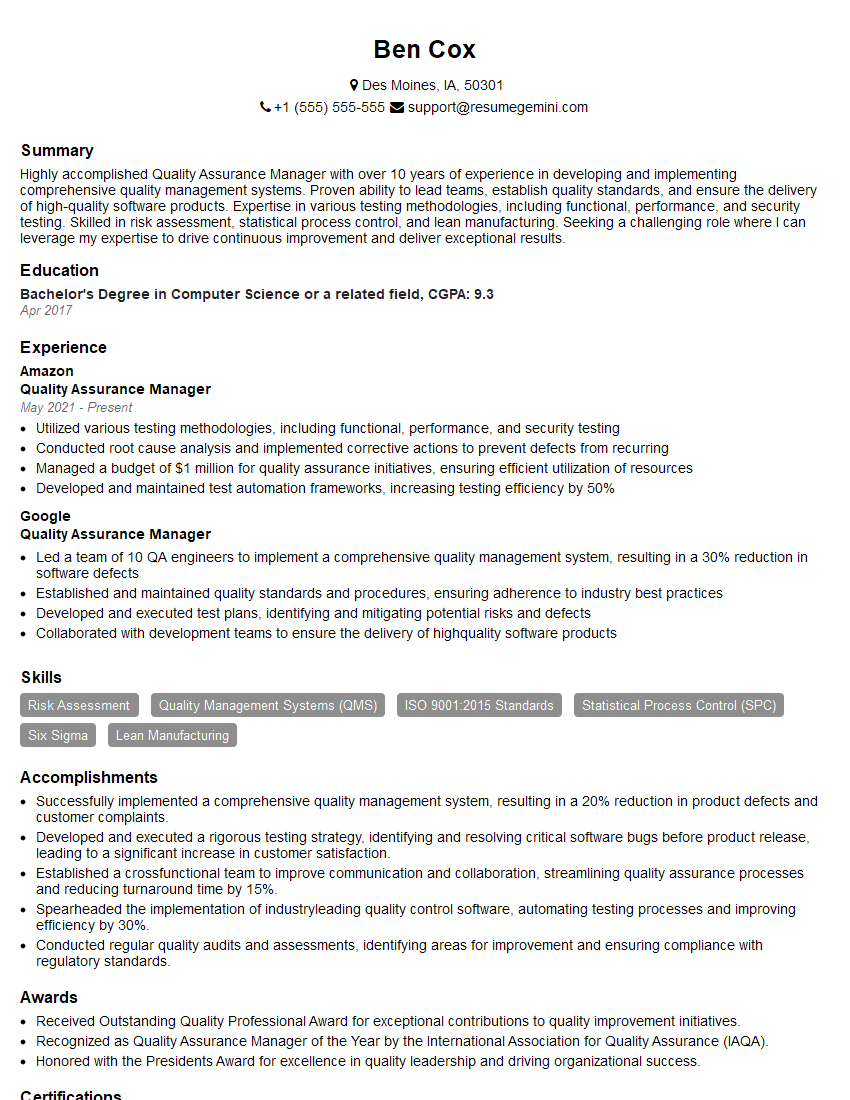
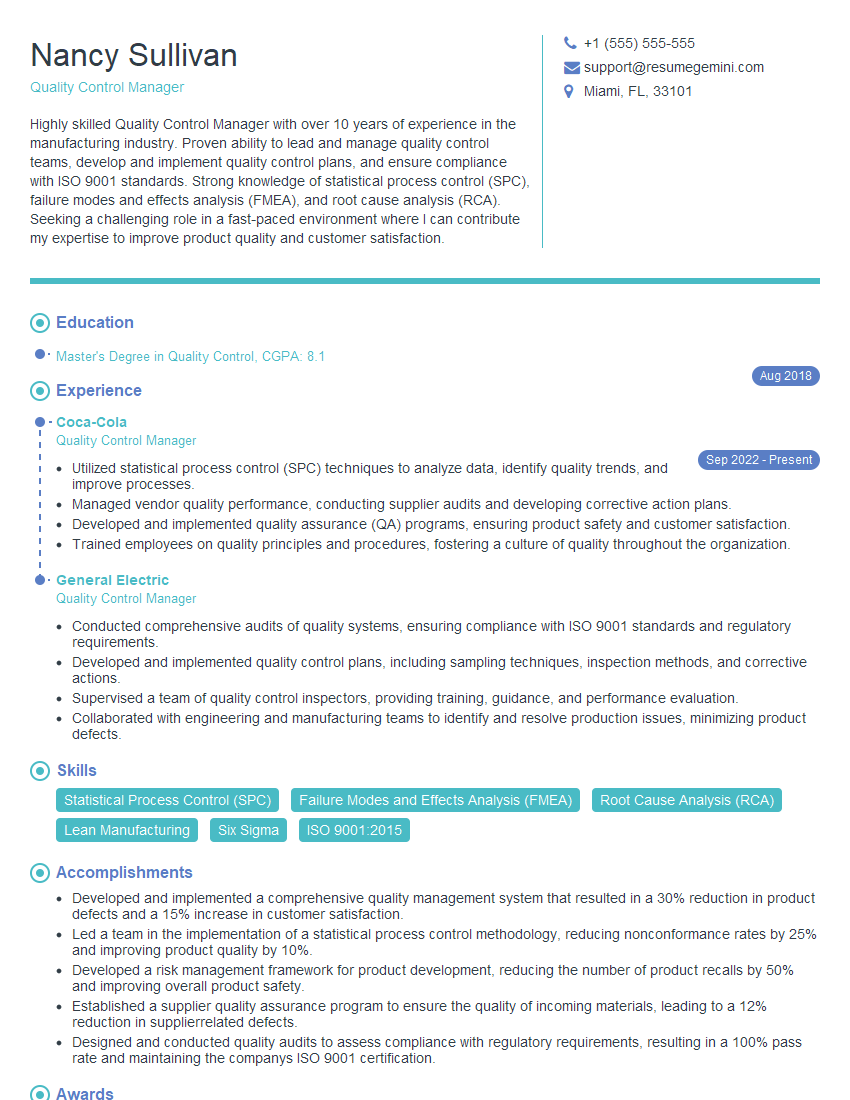
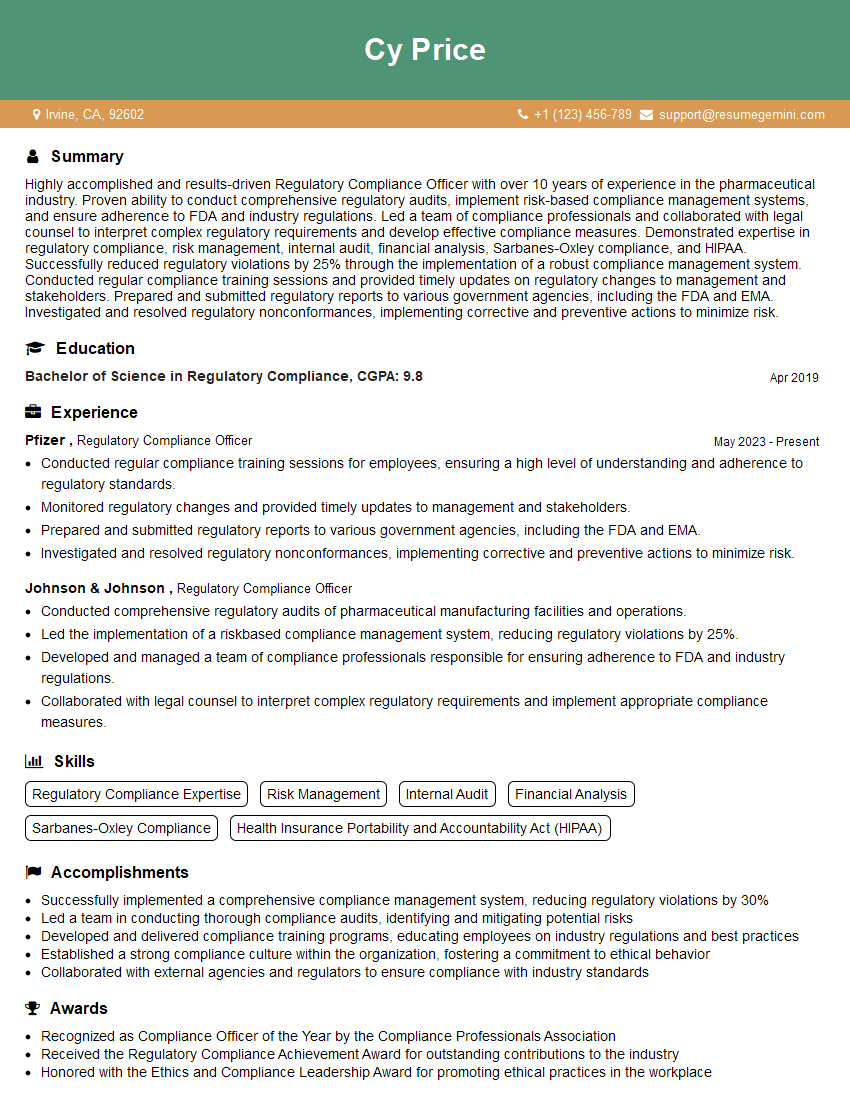
Mastering food safety regulations is crucial for career advancement in the food industry. A strong understanding of these concepts demonstrates your commitment to quality and safety, making you a highly valuable asset to any organization. To maximize your job prospects, create an ATS-friendly resume that highlights your relevant skills and experience. ResumeGemini is a trusted resource to help you build a professional and effective resume that will get noticed. Examples of resumes tailored to “Evaluated and ensured compliance with food safety regulations” are available to help guide you. Invest time in crafting a compelling resume – it’s your first impression with potential employers.
Explore more articles
Users Rating of Our Blogs
Share Your Experience
We value your feedback! Please rate our content and share your thoughts (optional).
What Readers Say About Our Blog
Really detailed insights and content, thank you for writing this detailed article.
IT gave me an insight and words to use and be able to think of examples