Cracking a skill-specific interview, like one for Experience in Corporate Social Responsibility, requires understanding the nuances of the role. In this blog, we present the questions you’re most likely to encounter, along with insights into how to answer them effectively. Let’s ensure you’re ready to make a strong impression.
Questions Asked in Experience in Corporate Social Responsibility Interview
Q 1. Describe your experience developing and implementing a CSR strategy.
Developing and implementing a CSR strategy involves a multi-stage process that begins with understanding the company’s values and aligning them with societal needs. It’s not just about ticking boxes; it’s about integrating responsible practices into the core business model.
Firstly, a thorough materiality assessment is crucial. This identifies the environmental, social, and governance (ESG) issues most relevant to the business and its stakeholders. This could involve surveys, stakeholder consultations, and analyzing industry best practices. For instance, a clothing company might prioritize ethical sourcing and fair labor practices, while a tech company might focus on data privacy and digital inclusion.
Next, we define specific, measurable, achievable, relevant, and time-bound (SMART) goals. For example, we might aim to reduce carbon emissions by 20% in five years or achieve 100% ethical sourcing of raw materials within three years. These goals should be integrated into existing business plans and operational processes.
Implementation involves embedding CSR throughout the organization. This includes training employees, collaborating with suppliers, engaging with communities, and reporting progress transparently. For example, we might implement a robust supplier code of conduct, invest in employee volunteering programs, or partner with local charities on community development projects. Regular monitoring and evaluation are critical to ensure the strategy remains effective and aligned with evolving stakeholder expectations.
Q 2. How do you measure the effectiveness of a CSR initiative?
Measuring the effectiveness of a CSR initiative goes beyond simply tracking outputs; it requires assessing the impact. We need to understand whether the initiative has achieved its intended goals and made a meaningful difference. This involves both qualitative and quantitative data.
Quantitative measures might include metrics such as the reduction in carbon emissions, the number of people trained, or the amount of money donated to charity. These provide concrete evidence of progress. Qualitative measures are equally important and might involve stakeholder feedback through surveys, focus groups, or case studies that illustrate the positive social or environmental impacts achieved.
For instance, if we launched an employee volunteering program, we’d track the number of volunteer hours contributed but also gather feedback from employees and community partners on the program’s impact and overall satisfaction. A strong approach involves combining both types of data to paint a holistic picture of success.
Q 3. What are the key performance indicators (KPIs) you use to track CSR progress?
Key Performance Indicators (KPIs) for CSR vary depending on the specific initiatives but generally fall under environmental, social, and governance categories. Some common KPIs include:
- Environmental: Greenhouse gas emissions (Scope 1, 2, and 3), water consumption, waste generation, energy efficiency, renewable energy usage.
- Social: Employee satisfaction and retention, diversity and inclusion metrics, community engagement, human rights performance in the supply chain, product safety incidents.
- Governance: Board diversity, ethical conduct, anti-corruption measures, transparency and reporting practices.
The choice of KPIs should align directly with the company’s material ESG issues and its CSR strategy goals. It’s crucial to track these KPIs consistently over time to monitor progress and identify areas for improvement. Regular reporting on these KPIs builds transparency and accountability.
Q 4. Explain your understanding of the Global Reporting Initiative (GRI) standards.
The Global Reporting Initiative (GRI) Standards are widely recognized guidelines for sustainability reporting. They provide a common framework for organizations to disclose their economic, environmental, and social performance. Think of them as a globally accepted language for communicating CSR achievements and challenges.
The GRI Standards are designed to ensure consistency and comparability of sustainability reports across different industries and geographies. They offer a comprehensive set of indicators that organizations can use to measure and report on their performance. Using the GRI framework demonstrates a commitment to transparency and accountability, building stakeholder trust. Adherence to GRI ensures that the reporting is comprehensive, reliable, and consistent, allowing for better comparisons between companies and stronger stakeholder engagement.
Q 5. How do you integrate CSR into a company’s overall business strategy?
Integrating CSR into a company’s overall business strategy is not an add-on; it’s a fundamental shift in how the business operates. It’s about understanding how ESG factors create both risks and opportunities. A truly integrated approach views CSR as a driver of long-term value creation, not just a cost center.
This integration can occur in various ways:
- Embedding CSR into strategic planning: Incorporating ESG considerations into the company’s strategic goals and objectives. For example, setting targets for reducing environmental impact alongside targets for revenue growth.
- Linking CSR to business units: Assigning responsibility for specific CSR initiatives to different departments or business units. For instance, the supply chain department could be responsible for ethical sourcing, while the marketing department could focus on communicating the company’s sustainability efforts.
- Incentivizing CSR performance: Linking executive compensation and employee incentives to the achievement of CSR goals. This ensures that CSR becomes a shared priority across the entire organization.
- Integrating CSR into innovation: Developing new products and services that address environmental or social challenges. This could involve creating sustainable packaging or developing technologies that promote social inclusion.
Successful integration requires strong leadership commitment, cross-functional collaboration, and transparent communication. It’s a journey, not a destination, requiring continuous improvement and adaptation.
Q 6. Describe a time you had to manage conflicting stakeholder interests regarding a CSR project.
In a previous role, we were implementing a community development project near one of our manufacturing plants. Local residents wanted improved infrastructure, such as better roads and a community center. However, some stakeholders, including a few local businesses, were concerned about the project’s potential impact on their operations – specifically traffic flow and land use.
To manage these conflicting interests, we adopted a collaborative approach. We organized several community meetings, facilitating open dialogue between all stakeholders. We actively listened to concerns, and we worked with a third-party mediator to help find common ground. We adjusted the project plan to mitigate the concerns of the businesses, for example, by optimizing traffic routes and ensuring minimal disruption during construction. This involved compromises from all parties, but it ultimately led to a mutually beneficial outcome: a successful community development project that minimized negative impacts on local businesses. Transparency and open communication were critical in navigating these conflicting interests.
Q 7. How do you identify and prioritize material ESG issues for a company?
Identifying and prioritizing material ESG issues requires a systematic approach. It’s not about selecting issues that are simply popular or trendy; rather it focuses on those that present significant risks or opportunities to the company’s long-term value creation.
The process involves:
- Stakeholder engagement: Conducting surveys, interviews, and focus groups with various stakeholders (employees, customers, investors, communities, suppliers) to understand their priorities and concerns.
- Materiality assessment: Using the information gathered through stakeholder engagement to identify the ESG issues that are most relevant to the company’s business operations and long-term sustainability.
- Risk and opportunity analysis: Evaluating the potential risks and opportunities associated with each material ESG issue. This might involve scenario planning and considering the potential impact of different factors.
- Prioritization: Ranking the material ESG issues based on their potential impact on the company’s business and its stakeholders. This might involve using a scoring system or a matrix that considers both the likelihood and impact of each issue.
Once the material ESG issues have been identified and prioritized, the company can develop strategies to manage the risks and capitalize on the opportunities. This might involve setting specific targets, investing in new technologies, or changing business practices. The process should be revisited regularly to account for evolving stakeholder expectations and new emerging issues.
Q 8. What is your experience with stakeholder engagement and communication related to CSR?
Stakeholder engagement in CSR is crucial for building trust and ensuring initiatives align with societal needs. It involves actively listening to and collaborating with various groups – employees, customers, suppliers, communities, and investors – to understand their concerns, expectations, and priorities regarding the company’s social and environmental impact. Effective communication is paramount, using transparent and accessible channels to share progress, challenges, and future plans.
In my previous role at GreenTech Solutions, I spearheaded a multi-stakeholder engagement process for our sustainability initiatives. We used surveys, focus groups, and town hall meetings to gather input from our employees and local communities near our manufacturing plant. This led to the development of a community gardening program, directly addressing a concern about local access to fresh produce. We also launched a transparent reporting system detailing our environmental performance, ensuring all stakeholders had access to the information.
For example, when dealing with potential controversies, we utilized social media monitoring and responded promptly to concerns, demonstrating transparency and a willingness to address problems proactively.
Q 9. How familiar are you with different CSR frameworks and standards (e.g., B Corp, UN SDGs)?
I’m deeply familiar with various CSR frameworks and standards. Understanding these frameworks is key to ensuring a company’s CSR strategy is robust and credible. The Global Reporting Initiative (GRI) Standards provide a comprehensive framework for reporting on economic, environmental, and social performance. The UN Sustainable Development Goals (SDGs) offer a universal agenda for addressing global challenges, providing a valuable roadmap for integrating sustainability into core business operations. B Corp certification is a rigorous process indicating a company’s commitment to social and environmental responsibility, meeting high standards across various aspects of its operations.
I’ve personally used the GRI Standards to structure our sustainability reports at GreenTech Solutions, ensuring consistency and comparability with industry benchmarks. We aligned our initiatives with several UN SDGs, focusing particularly on SDG 7 (Affordable and Clean Energy) and SDG 12 (Responsible Consumption and Production). Furthermore, we are actively exploring the requirements for achieving B Corp certification as our next significant milestone in our CSR journey.
Q 10. How do you ensure the accuracy and transparency of CSR reporting?
Accuracy and transparency are non-negotiable in CSR reporting. It’s about building trust and demonstrating accountability. To ensure accuracy, we implement robust data collection and verification processes, regularly auditing our data and using independent verification where needed. This might involve third-party audits of our environmental impact or social impact assessments of our community initiatives. Transparency is achieved through clear and accessible reporting, using plain language, avoiding jargon, and making the data readily available on the company website.
At GreenTech Solutions, we implemented a data management system specifically designed to track our environmental metrics and social impact data. We use this system to generate our annual sustainability report, and this report is publicly available, accessible, and is independently audited.
We also use clear and visual reporting tools such as infographics and videos to make the complex data easier to understand for stakeholders with diverse levels of familiarity with CSR issues.
Q 11. Explain your understanding of the relationship between CSR and financial performance.
The relationship between CSR and financial performance is increasingly recognized as symbiotic. While not always directly correlated in the short term, robust CSR strategies contribute to long-term financial value creation in several ways. Enhanced brand reputation and customer loyalty lead to increased sales, while attracting and retaining top talent reduces recruitment and training costs. Strong environmental performance can reduce operational expenses through improved efficiency and waste reduction. Furthermore, managing risks proactively, such as those related to climate change or human rights, can minimize financial losses and safeguard the company’s future.
Studies have shown a positive correlation between companies with strong CSR performance and higher stock valuations. Investors increasingly factor ESG (Environmental, Social, and Governance) factors into their investment decisions, recognizing the importance of sustainability as a key performance indicator. At GreenTech Solutions, our commitment to sustainability translated to reduced energy costs, attracting investors seeking environmentally conscious businesses, leading to increased investment.
Q 12. Describe your experience with supply chain sustainability initiatives.
Supply chain sustainability is vital for responsible business practices. It involves working with suppliers to minimize their environmental and social impact. This includes implementing ethical sourcing policies, promoting fair labor practices, reducing carbon emissions throughout the supply chain, and ensuring responsible waste management. It requires collaboration and transparency, fostering strong relationships with suppliers and implementing robust monitoring and auditing systems.
My experience at GreenTech Solutions involved developing a comprehensive supplier code of conduct, which outlines our expectations regarding environmental protection, labor standards, and human rights. We implemented a supplier assessment program to monitor compliance and provide support to suppliers in improving their sustainability performance. This process included regular audits and collaborative workshops.
For instance, we partnered with a supplier to upgrade their manufacturing facility to improve energy efficiency, reducing its environmental footprint, and building a more sustainable relationship.
Q 13. How do you address ethical dilemmas related to CSR?
Ethical dilemmas in CSR are inevitable. Addressing them requires a structured approach: First, clearly define the ethical challenge using a framework like the stakeholder analysis. Second, consider all stakeholders and their interests. Third, consult internal and external expertise, potentially involving legal counsel or ethical advisory boards. Fourth, develop alternative solutions. Finally, select the option that best aligns with the company’s values and long-term sustainability goals and then implement and monitor the chosen strategy.
For example, we faced a dilemma when a supplier was found to be using child labor. We engaged in open communication with the supplier, providing support and resources for remediation. We also worked with NGOs to address the root causes of child labor in the region. This involved a transparent communication strategy to all stakeholders, including a public statement detailing our approach to resolving the issue. Ultimately, the long-term impact of our ethical action reinforced our reputation for integrity.
Q 14. How do you engage employees in CSR initiatives?
Engaging employees is critical for successful CSR initiatives. It fosters a sense of ownership and ensures the company’s values resonate throughout the organization. Strategies include creating employee volunteer programs, matching employee donations, offering CSR-related training and development, and providing opportunities for employee feedback and input on CSR initiatives. It is about demonstrating that CSR is not just a corporate strategy but an integral part of the company’s culture.
At GreenTech Solutions, we established an employee volunteer program, allowing employees to dedicate paid time to volunteering at local charities. We also launched an internal CSR committee, comprising employees from different departments, to provide input and feedback on our initiatives. We found that involving employees at all levels not only increased engagement but also resulted in more innovative and effective CSR programs.
This participatory approach creates a culture of shared responsibility and fosters a sense of pride in contributing to positive social and environmental outcomes. We celebrated employee contributions through internal communication channels and company events.
Q 15. How do you measure the social impact of a CSR program?
Measuring the social impact of a CSR program requires a multifaceted approach. It’s not enough to simply state the number of trees planted or volunteers mobilized; you need quantifiable data that demonstrates a genuine positive shift. This involves defining clear, measurable, achievable, relevant, and time-bound (SMART) goals from the outset.
- Quantitative Metrics: These involve numerical data. Examples include the number of people reached by a program, reduction in carbon emissions, increase in community participation, or improvements in specific social indicators like literacy rates or access to healthcare (depending on the program’s focus).
- Qualitative Metrics: These capture the less tangible aspects of impact. This might involve conducting surveys to gauge beneficiary satisfaction, conducting focus groups to understand program effectiveness from their perspective, or analyzing media coverage and social media sentiment to monitor public perception.
- Baseline Data: Before launching a program, establish a baseline understanding of the current situation. This provides a benchmark against which to measure future progress. For example, measuring the pre-existing literacy rate in a community before implementing a literacy program allows for a proper assessment of the program’s success.
- Third-Party Validation: Consider involving independent third-party evaluators to assess your program’s impact objectively. Their reports can add credibility and enhance trust.
For example, a company launching a skills-training program for underprivileged youth might track metrics such as the number of participants completing the program, their post-program employment rates, and their reported improvement in self-confidence (through surveys).
Career Expert Tips:
- Ace those interviews! Prepare effectively by reviewing the Top 50 Most Common Interview Questions on ResumeGemini.
- Navigate your job search with confidence! Explore a wide range of Career Tips on ResumeGemini. Learn about common challenges and recommendations to overcome them.
- Craft the perfect resume! Master the Art of Resume Writing with ResumeGemini’s guide. Showcase your unique qualifications and achievements effectively.
- Don’t miss out on holiday savings! Build your dream resume with ResumeGemini’s ATS optimized templates.
Q 16. What is your experience with CSR risk management?
CSR risk management is crucial for preventing negative impacts that could damage a company’s reputation and financial performance. It’s about identifying, assessing, and mitigating potential risks associated with social and environmental activities, or even inaction.
- Reputational Risk: Negative publicity resulting from unethical practices, environmental disasters, or human rights violations can severely harm a company’s brand image.
- Operational Risk: Disruptions to operations due to environmental concerns, supply chain issues, or community conflicts can impact profitability and efficiency.
- Legal and Regulatory Risk: Non-compliance with environmental regulations, labor laws, or human rights standards can lead to hefty fines and legal battles.
- Financial Risk: Damage to reputation can impact investor confidence, access to capital, and even the company’s valuation.
My approach to CSR risk management involves a structured process:
- Identify potential risks: This includes thorough due diligence on projects, supply chains, and operations.
- Assess the likelihood and impact of each risk: Use a risk matrix to prioritize risks based on their severity.
- Develop mitigation strategies: Implement controls to reduce or eliminate the identified risks. This might involve improved monitoring systems, stronger supplier relationships, employee training, or community engagement.
- Monitor and review: Regularly assess the effectiveness of mitigation strategies and update the risk register as necessary.
For instance, a company sourcing raw materials from a region known for deforestation would conduct thorough audits of suppliers, implement stricter monitoring protocols, and potentially explore alternative sourcing options to mitigate environmental and reputational risks.
Q 17. How do you communicate the value of CSR to senior management?
Communicating the value of CSR to senior management requires demonstrating a clear link between CSR initiatives and business goals. It’s not just about doing good; it’s about doing well while doing good.
- Financial Performance: Highlight how CSR initiatives contribute to cost savings (e.g., through energy efficiency), increased revenue (e.g., through enhanced brand reputation and consumer loyalty), and improved operational efficiency.
- Risk Mitigation: Emphasize how CSR helps reduce legal, reputational, and operational risks, protecting the company’s long-term stability.
- Innovation and Competitive Advantage: Showcase how CSR initiatives can drive innovation, attract and retain top talent, and enhance the company’s competitive position.
- Stakeholder Engagement: Demonstrate how CSR strengthens relationships with key stakeholders, including investors, customers, employees, and communities, which can be vital for long-term success.
I use data-driven storytelling to present a compelling case. This involves using clear, concise language, visual aids (charts and graphs), and case studies to illustrate the tangible benefits of CSR initiatives. For example, showcasing a reduction in carbon emissions alongside a rise in investor interest, or demonstrating how a community engagement program led to increased sales and brand loyalty.
Q 18. Describe a time you had to overcome a challenge in a CSR project.
In a project focused on improving water access in a rural community, we faced unexpected challenges related to local political dynamics. Initial community engagement went well, but we encountered resistance from a powerful local faction who sought to control the project’s resources. This threatened to derail the entire initiative.
To overcome this, I implemented the following steps:
- Enhanced Stakeholder Engagement: We expanded our outreach to include all relevant stakeholders, not just the initial group. This meant holding additional community meetings, engaging with local leaders from various factions, and actively listening to their concerns.
- Transparency and Collaboration: We ensured complete transparency in project planning and resource allocation. We involved the community in decision-making processes and established clear communication channels.
- Negotiation and Mediation: We engaged a third-party mediator to help facilitate dialogue between conflicting parties. This allowed us to address concerns, build consensus, and find common ground.
- Adaptive Strategy: We adjusted our implementation plan to accommodate the concerns of all stakeholders, ensuring the project remained beneficial and equitable for everyone.
This situation taught me the critical importance of anticipating potential challenges during project planning and the value of adaptive strategies in navigating complex social and political landscapes.
Q 19. How do you stay updated on the latest trends and best practices in CSR?
Staying updated in CSR requires a proactive and multi-faceted approach. I utilize several methods to stay abreast of current trends and best practices:
- Professional Networks: I actively participate in professional organizations such as the Global Reporting Initiative (GRI) and the Business Roundtable, attending conferences, webinars, and workshops.
- Industry Publications and Research: I regularly read industry journals, reports (like those from the World Economic Forum and the UN Global Compact), and academic research on CSR and sustainability.
- Online Resources: I follow reputable online news sources, blogs, and social media channels dedicated to CSR and sustainability.
- Benchmarking: I analyze the CSR strategies and reports of leading companies in various sectors to identify best practices and emerging trends.
This continuous learning process allows me to remain informed about the evolving landscape of CSR, adapt my strategies, and implement innovative solutions.
Q 20. Explain your understanding of materiality assessment in the context of ESG reporting.
Materiality assessment in the context of ESG (Environmental, Social, and Governance) reporting is the process of identifying the environmental and social issues most relevant to a company’s business and stakeholders. It’s about prioritizing the ESG factors that have the greatest potential impact on the company’s financial performance, reputation, and long-term sustainability.
The process typically involves:
- Identifying potential ESG issues: This involves a comprehensive review of the company’s operations, value chain, and external environment.
- Stakeholder engagement: Gathering input from investors, customers, employees, suppliers, and community members to understand their priorities and concerns.
- Materiality matrix: Developing a matrix that plots the importance of each issue to the company against its importance to stakeholders. This helps to prioritize the most material issues.
- Reporting: Disclosing the most material ESG issues and the company’s performance on those issues in its ESG report.
By focusing on material ESG issues, companies can provide more focused and relevant information to stakeholders, enhance their transparency and accountability, and better manage their ESG risks and opportunities.
Q 21. How familiar are you with the Task Force on Climate-related Financial Disclosures (TCFD)?
I am very familiar with the Task Force on Climate-related Financial Disclosures (TCFD). The TCFD, established by the Financial Stability Board, provides a framework for companies to disclose climate-related risks and opportunities. It’s not merely a reporting standard; it’s a call for integrated thinking about how climate change affects the entire business.
The TCFD’s four core elements are crucial:
- Governance: How the company governs its climate-related risks and opportunities.
- Strategy: The company’s strategy for addressing climate change, including its resilience plans.
- Risk Management: The company’s processes for identifying, assessing, and managing climate-related risks.
- Metrics and Targets: The key metrics and targets the company uses to monitor and track its progress on climate-related goals.
Understanding and implementing the TCFD recommendations is vital for companies aiming to be responsible stewards of the environment and financially resilient in a changing climate. It helps companies understand their exposure to climate-related risks and make informed business decisions, ultimately increasing their long-term value and reducing potential losses from climate change impacts.
Q 22. What is your experience with developing a sustainability roadmap?
Developing a sustainability roadmap is like creating a detailed map for a journey towards a more environmentally and socially responsible future. It involves setting ambitious yet achievable goals, outlining specific actions, and establishing clear metrics to track progress.
In my previous role at GreenTech Solutions, I spearheaded the development of a comprehensive sustainability roadmap. We began by conducting a thorough materiality assessment to identify the environmental and social issues most relevant to our stakeholders and business operations. This involved analyzing our value chain, engaging with various stakeholders (employees, customers, suppliers, local communities), and reviewing industry best practices. We then established specific, measurable, achievable, relevant, and time-bound (SMART) goals across various areas, including carbon emissions reduction, waste management, ethical sourcing, and community engagement. The roadmap included detailed action plans with timelines, responsible parties, and budgetary allocations for each initiative. Regular progress reviews and adjustments were crucial for ensuring we remained on track. For example, our initial target for renewable energy usage was 25% within five years; we exceeded this target by 10% due to proactive measures and innovative partnerships.
- Materiality Assessment: Identifying key environmental and social issues.
- Goal Setting: Defining SMART goals with specific targets and timelines.
- Action Planning: Developing detailed plans with responsibilities and budgets.
- Monitoring and Evaluation: Tracking progress, making adjustments, and reporting results.
Q 23. How do you leverage technology to enhance CSR performance?
Technology is a powerful tool for enhancing CSR performance, providing data-driven insights, automating processes, and improving transparency. Imagine trying to manage a global supply chain’s ethical sourcing without technology – it would be a logistical nightmare!
I’ve utilized various technologies to boost CSR effectiveness, including:
- Supply Chain Management Software: Tracking materials’ origins, ensuring ethical sourcing, and minimizing environmental impact. This allows us to identify and mitigate risks associated with human rights violations or environmental damage in our supply chains.
- Carbon Accounting Software: Accurately measuring and monitoring our carbon footprint across different operational areas, allowing for targeted reduction initiatives.
- ESG (Environmental, Social, and Governance) Reporting Platforms: Streamlining the process of collecting, analyzing, and reporting on our sustainability performance to stakeholders. This ensures transparency and facilitates informed decision-making.
- Employee Engagement Platforms: Facilitating communication around CSR initiatives, encouraging employee participation in volunteering programs, and gathering feedback on our sustainability efforts.
For example, at my previous company, we implemented a blockchain-based system to track the journey of our raw materials, ensuring transparency and traceability throughout the supply chain and helping us meet our ethical sourcing commitments. This greatly improved our ability to respond to concerns about potentially unethical practices.
Q 24. Describe your experience with carbon footprint reduction initiatives.
Carbon footprint reduction is not just a trend; it’s a crucial aspect of responsible business operations. It requires a multifaceted approach, moving beyond simple cost-cutting measures to embrace sustainable practices.
My experience includes implementing various carbon reduction initiatives, such as:
- Energy Efficiency Upgrades: Implementing energy-efficient lighting, HVAC systems, and equipment to reduce energy consumption. This involved a detailed energy audit to pinpoint areas for improvement.
- Renewable Energy Transition: Switching to renewable energy sources like solar and wind power to reduce reliance on fossil fuels. We negotiated favorable contracts with renewable energy providers and secured government incentives.
- Waste Reduction and Recycling Programs: Implementing robust recycling programs, reducing waste generation through process optimization, and promoting the use of recycled materials. This includes partnering with waste management companies for proper disposal.
- Sustainable Transportation: Promoting the use of public transport, cycling, and electric vehicles among employees and optimizing logistics to reduce transportation emissions.
In one project, we implemented a company-wide carbon offsetting program, partnering with verified carbon offset projects to neutralize our remaining emissions. This demonstrated a clear commitment to minimizing our environmental impact and resonated positively with our stakeholders.
Q 25. What is your experience working with NGOs or community organizations on CSR projects?
Collaborating with NGOs and community organizations is integral to effective CSR. These partnerships provide valuable expertise, local knowledge, and enhance a company’s social impact. It’s not just about writing checks; it’s about building genuine relationships that result in mutually beneficial outcomes.
I have extensive experience working with various NGOs and community organizations on diverse projects, including:
- Community Development Initiatives: Supporting local schools, providing educational resources, and sponsoring community events. For example, we partnered with a local NGO to build a community center, providing a safe space for children and adults.
- Environmental Conservation Projects: Supporting reforestation efforts, promoting sustainable agriculture, and participating in clean-up drives. We collaborated with an environmental NGO to plant thousands of trees in a deforested area.
- Capacity Building Programs: Providing training and skill development opportunities to community members. We partnered with a vocational training center to provide skills training to underprivileged youth.
Successful collaborations require clear communication, shared goals, and mutual respect. It’s essential to understand the local context, the needs of the community, and the capabilities of the partner organization. Regular progress reviews and open communication are critical for maintaining effective partnerships.
Q 26. How do you ensure the long-term sustainability of CSR initiatives?
Ensuring the long-term sustainability of CSR initiatives requires more than just short-term gains; it demands a holistic and integrated approach that aligns with the company’s overall strategic goals. It’s about embedding sustainability into the DNA of the business.
Key strategies for long-term sustainability include:
- Integrating CSR into Business Strategy: Ensuring that sustainability considerations are integral to all aspects of the business, from product development to supply chain management. This means making sustainability a core business imperative, not just an add-on.
- Building Stakeholder Engagement: Regularly engaging with stakeholders to understand their expectations and incorporating their feedback into CSR strategies. This ensures that the initiatives remain relevant and impactful.
- Measuring and Reporting Impact: Regularly measuring and reporting on the impact of CSR initiatives to demonstrate progress and identify areas for improvement. Transparent and credible reporting is essential for building trust.
- Investing in Capacity Building: Investing in the training and development of employees to ensure that they have the skills and knowledge to implement and manage CSR initiatives effectively. Internal buy-in is critical.
- Securing Long-Term Funding: Allocating sufficient resources to support CSR initiatives over the long term. This may involve securing both internal funding and external partnerships.
For example, at one company, we developed a dedicated sustainability team with clearly defined roles and responsibilities, ensuring continuity and long-term commitment to our sustainability goals. This dedicated team ensured consistent progress and adaptation to changing circumstances.
Q 27. How do you handle criticism or negative feedback regarding a company’s CSR efforts?
Criticism and negative feedback are opportunities for improvement, not threats to be avoided. Handling them effectively requires transparency, responsiveness, and a commitment to continuous improvement. It’s a chance to demonstrate accountability and build trust.
My approach involves:
- Acknowledging and Addressing Concerns: Publicly acknowledging criticism and demonstrating a willingness to address concerns promptly and transparently. This might involve a public statement or a direct response to critics.
- Conducting Thorough Investigations: Conducting thorough investigations to understand the root causes of the issues raised and identifying areas for improvement. This may involve internal audits or engaging external experts.
- Developing Action Plans: Developing and implementing action plans to address the identified issues and prevent their recurrence. This might involve policy changes, process improvements, or staff training.
- Communicating Progress: Communicating the progress made in addressing the concerns to stakeholders. This might involve publishing updates on the company website or issuing press releases.
In one instance, we faced criticism for our sourcing practices in a particular region. We launched a thorough investigation, partnered with a reputable NGO to conduct an independent audit, and implemented corrective measures to address the concerns. We then publicly shared the findings of our investigation and our action plan, demonstrating our commitment to transparency and accountability. This transparent approach helped to rebuild trust and strengthen our reputation.
Q 28. What are your salary expectations for a CSR role?
My salary expectations are commensurate with my experience, skills, and the responsibilities of the role. Given my extensive experience in developing and implementing successful CSR initiatives, my salary expectations are in the range of [Insert Salary Range] annually. However, I am open to discussing this further based on the specifics of the role and the overall compensation package.
Beyond salary, I am also interested in a role that offers opportunities for professional growth and development, a supportive and collaborative work environment, and the chance to make a significant positive impact on the company and the wider community.
Key Topics to Learn for Your Corporate Social Responsibility Interview
- Defining CSR Strategy: Understanding the core principles of Corporate Social Responsibility, aligning business goals with social and environmental impact, and developing a comprehensive strategy.
- Stakeholder Engagement: Identifying key stakeholders (employees, communities, investors, etc.), building relationships, and effectively communicating CSR initiatives and their impact.
- Environmental Sustainability: Exploring topics like carbon footprint reduction, waste management, sustainable sourcing, and eco-friendly practices. Discuss practical applications in your field.
- Social Impact Measurement & Reporting: Learning methods to quantify the impact of CSR programs, using relevant metrics (e.g., SDGs), and creating compelling reports to showcase achievements.
- Ethical Sourcing & Supply Chain Management: Understanding ethical labor practices, fair trade principles, and the importance of transparency and traceability throughout the supply chain.
- Community Engagement & Partnerships: Developing and implementing community-based initiatives, collaborating with NGOs and other organizations, and fostering positive relationships with local communities.
- Risk Management & Compliance: Identifying and mitigating potential risks related to CSR activities, ensuring compliance with relevant regulations and standards (e.g., GRI, ISO 26000).
- CSR Reporting and Communication: Effectively communicating your organization’s CSR performance to various stakeholders through reports, presentations, and other channels.
- Integrating CSR into Business Operations: Discuss how CSR principles can be woven into the fabric of everyday business decisions and processes, fostering a culture of sustainability and social responsibility.
Next Steps
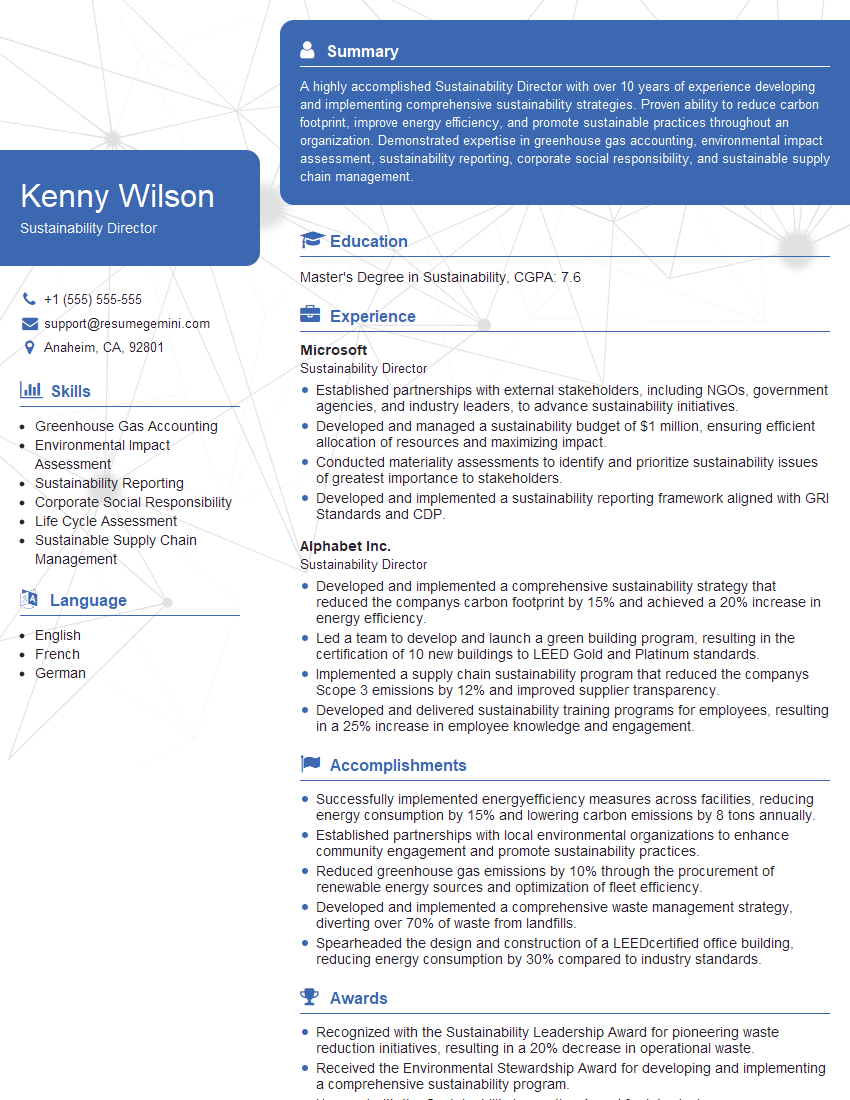
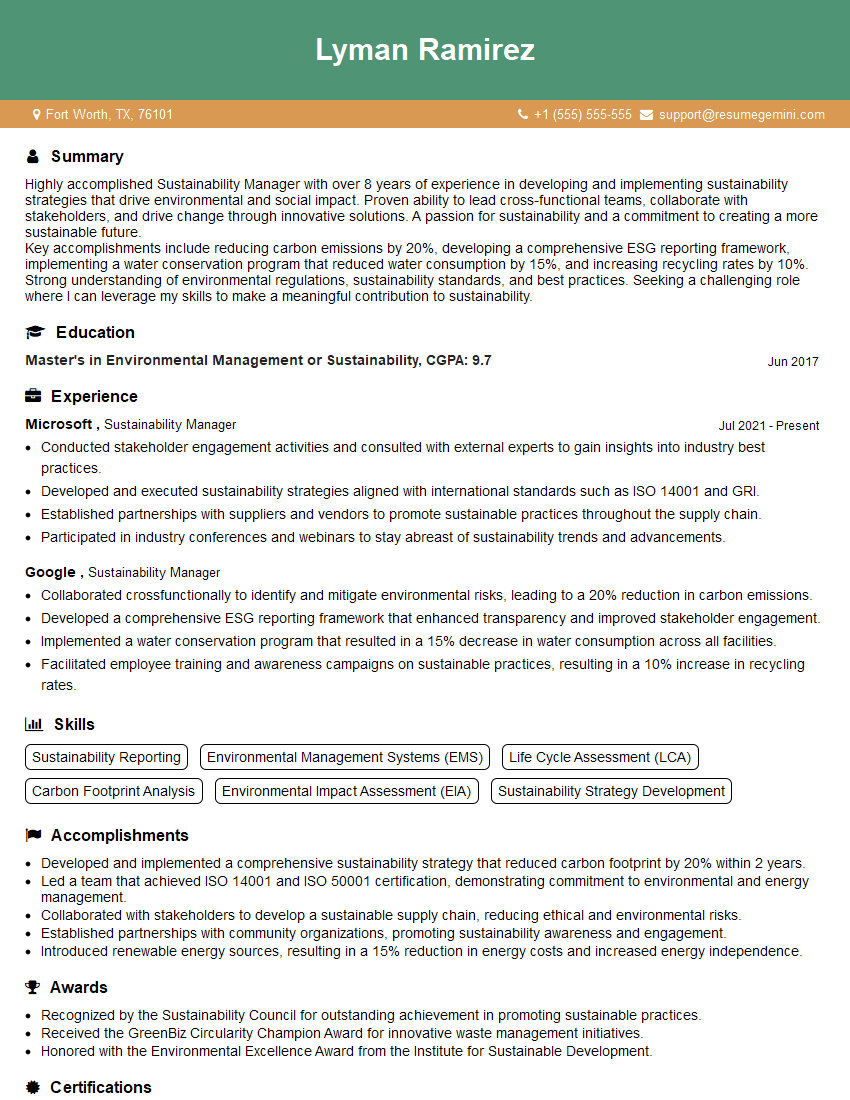
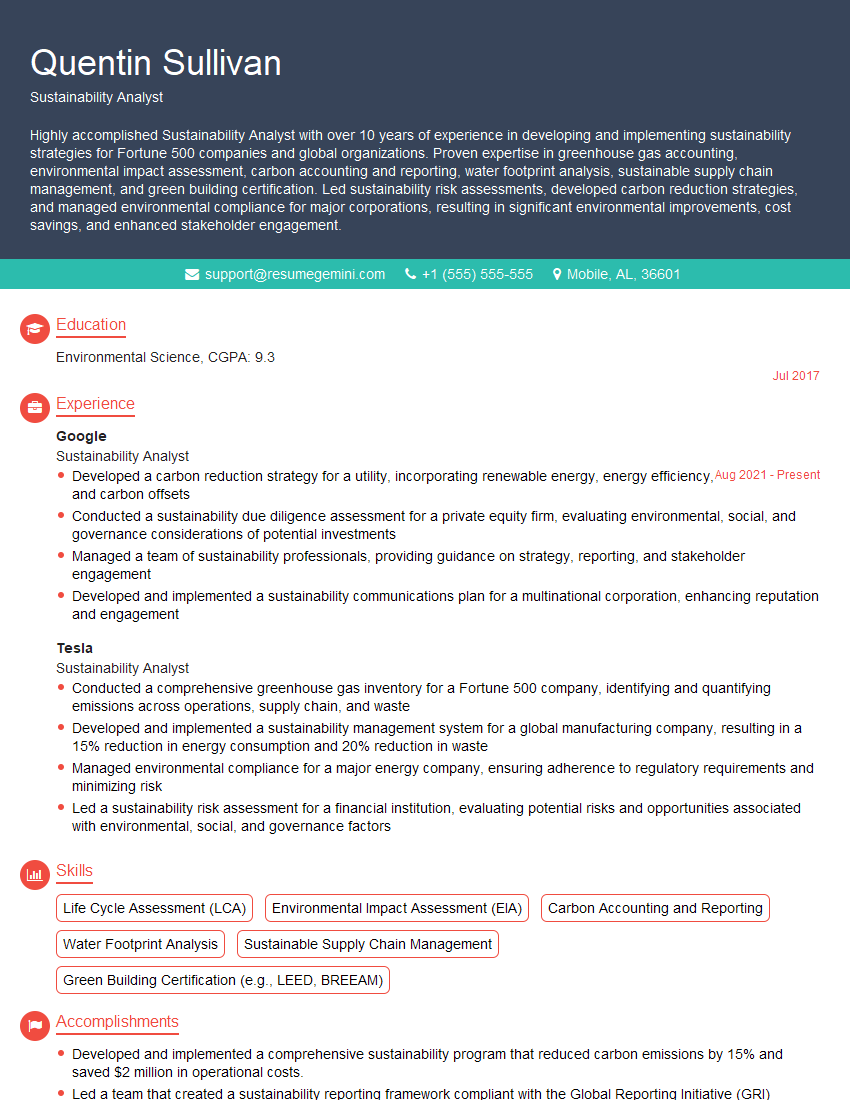
Mastering Corporate Social Responsibility is crucial for career advancement in today’s increasingly conscious business environment. Demonstrating a strong understanding of CSR principles and practical application will significantly enhance your job prospects. To stand out, create an ATS-friendly resume that highlights your relevant skills and experience. ResumeGemini is a trusted resource that can help you build a professional and impactful resume. We provide examples of resumes tailored to showcase experience in Corporate Social Responsibility to help you craft the perfect application.

Explore more articles
Users Rating of Our Blogs
Share Your Experience
We value your feedback! Please rate our content and share your thoughts (optional).
What Readers Say About Our Blog
Really detailed insights and content, thank you for writing this detailed article.
IT gave me an insight and words to use and be able to think of examples