Unlock your full potential by mastering the most common Experience in food safety research interview questions. This blog offers a deep dive into the critical topics, ensuring you’re not only prepared to answer but to excel. With these insights, you’ll approach your interview with clarity and confidence.
Questions Asked in Experience in food safety research Interview
Q 1. Describe the principles of Hazard Analysis and Critical Control Points (HACCP).
Hazard Analysis and Critical Control Points (HACCP) is a preventative food safety system based on identifying potential hazards and establishing controls to prevent or eliminate them. It’s a proactive approach, shifting the focus from detecting contamination to preventing it.
The seven principles of HACCP are:
- Principle 1: Conduct a hazard analysis. Identify potential biological, chemical, and physical hazards that could occur at each step of food production.
- Principle 2: Determine critical control points (CCPs). A CCP is a step in the process where control can be applied to prevent or eliminate a hazard or reduce it to an acceptable level. For example, cooking temperature is a CCP for eliminating pathogenic bacteria.
- Principle 3: Establish critical limits. Define measurable parameters for each CCP to ensure safety. For instance, a critical limit for cooking chicken might be an internal temperature of 165°F (74°C).
- Principle 4: Establish monitoring procedures. Implement a system to regularly monitor CCPs and ensure critical limits are met. This might involve using thermometers to check cooking temperatures.
- Principle 5: Establish corrective actions. Define steps to take if a CCP deviates from its critical limit. If the chicken isn’t cooked to 165°F, for example, it needs to be recooked.
- Principle 6: Establish verification procedures. Develop methods to confirm that the HACCP plan is working effectively. This could involve regular audits and employee training.
- Principle 7: Establish record-keeping and documentation procedures. Maintain detailed records of all HACCP activities. This documentation provides traceability and helps identify areas for improvement.
Imagine a canning facility: The hazard analysis might identify Clostridium botulinum as a potential hazard. A CCP would be the heating process. The critical limit would be a specific temperature and time to ensure spores are destroyed. Monitoring would involve using temperature probes. Corrective action could be discarding a batch if temperatures aren’t met.
Q 2. Explain the difference between foodborne illness and food poisoning.
While often used interchangeably, ‘foodborne illness’ and ‘food poisoning’ have subtle differences. Foodborne illness is a broader term encompassing any illness caused by consuming contaminated food or drink. This can include infections from bacteria, viruses, or parasites, as well as intoxications from toxins produced by microorganisms or naturally occurring toxins in food. Food poisoning specifically refers to illnesses resulting from ingesting preformed toxins in food, meaning the illness isn’t caused by the growth of microbes within the body, but rather the direct action of toxins already present in the food.
For example, Salmonella infection is a foodborne illness caused by consuming food contaminated with live Salmonella bacteria. The bacteria multiply in the intestines, causing illness. In contrast, Staphylococcus aureus food poisoning is caused by ingesting preformed toxins (enterotoxins) produced by S. aureus that were already present in the food before consumption.
Q 3. What are the common sources of food contamination?
Food contamination can stem from various sources, broadly categorized as biological, chemical, and physical:
- Biological: This includes bacteria (Salmonella, E. coli, Listeria), viruses (Norovirus, Hepatitis A), parasites (Toxoplasma gondii), and fungi (Aspergillus, Penicillium). These can be introduced through contaminated water, soil, equipment, or during food handling.
- Chemical: This includes pesticides, herbicides, cleaning agents, heavy metals, and naturally occurring toxins like mycotoxins. Improper cleaning practices, cross-contamination, or using contaminated ingredients can all introduce chemical contaminants.
- Physical: This involves foreign objects like glass, metal, plastic, hair, or insects that accidentally end up in food during production, processing, or handling. Poor hygiene practices and inadequate facility maintenance can lead to physical contamination.
For instance, cross-contamination during food preparation (using the same cutting board for raw meat and vegetables) can introduce biological hazards. Improperly stored cleaning chemicals leaking into food could lead to chemical contamination. A piece of glass accidentally falling into a jar of sauce would be physical contamination.
Q 4. How do you validate a cleaning and sanitizing procedure?
Validating a cleaning and sanitizing procedure ensures its effectiveness in removing soil and microorganisms. This involves a multi-step process:
- Establish the procedure: Clearly define the steps, including the type of cleaning agent, contact time, temperature, and rinsing procedures.
- Develop a sampling plan: Determine where and how samples will be taken to assess the efficacy of the cleaning and sanitizing procedure. This might involve swabbing surfaces before and after cleaning.
- Perform microbial testing: Analyze samples for the presence of microorganisms using techniques like plate counts or ATP bioluminescence. Compare the before-and-after results to determine the reduction in microbial load.
- Analyze data: Evaluate the results to determine whether the procedure effectively reduces microbial contamination to an acceptable level. Set acceptable limits based on regulatory requirements and industry best practices.
- Document results: Maintain detailed records of the validation process, including the procedure, sampling plan, test results, and interpretation. This documentation provides evidence of the procedure’s effectiveness.
For example, if we are validating a cleaning procedure for a food processing surface, we might swab the surface before and after cleaning, then plate the swabs on appropriate media to count colony-forming units (CFUs). A significant reduction in CFUs after cleaning indicates the procedure is effective. Failure to meet the pre-defined reduction level indicates that the procedure needs revision.
Q 5. What are the key components of a food safety management system?
A comprehensive food safety management system integrates various elements to ensure food safety throughout the entire supply chain. Key components include:
- Hazard Analysis and Critical Control Points (HACCP): A preventative system to identify and control hazards.
- Good Manufacturing Practices (GMPs): General guidelines for hygiene, sanitation, and facility maintenance.
- Standard Operating Procedures (SOPs): Detailed, written instructions for performing specific tasks.
- Supplier Management: Selecting and managing suppliers who adhere to food safety standards.
- Employee Training: Educating employees on food safety principles and practices.
- Traceability System: Tracking food products from origin to consumer to identify and control contamination.
- Internal Audits: Regular assessments to identify areas for improvement.
- Corrective Actions: Procedures to address any identified deficiencies.
- Record Keeping: Maintaining detailed records of all food safety activities.
A well-integrated system combines these components to create a robust approach that minimizes risks throughout the food production process. For instance, a strong supplier management program ensures safe ingredients, while employee training reduces the risk of human error, and a robust HACCP system controls critical processes.
Q 6. Describe your experience with microbial testing methods (e.g., PCR, ELISA, plate counts).
My experience encompasses a wide range of microbial testing methods. I’ve extensively used traditional plate count methods for enumerating bacteria and fungi, assessing microbial loads in various food matrices and environmental samples. This involves diluting samples, plating them onto selective and non-selective media, incubating, and then counting the resulting colonies. This provides a quantitative assessment of microbial populations.
I’m also proficient in molecular methods like Polymerase Chain Reaction (PCR) and Enzyme-Linked Immunosorbent Assay (ELISA). PCR is invaluable for detecting specific pathogens, even in low concentrations, by amplifying target DNA sequences. This is especially useful for rapid detection of foodborne pathogens like Listeria or Salmonella. ELISA techniques offer a rapid, sensitive way to detect bacterial toxins or viral antigens. Both PCR and ELISA offer higher sensitivity and speed than traditional plating, enabling quicker responses to potential contamination events.
Example PCR workflow: DNA extraction from food sample -> PCR amplification of target gene -> Gel electrophoresis to confirm amplification -> Result interpretation (positive or negative)
Q 7. How do you interpret microbiological test results?
Interpreting microbiological test results requires careful consideration of several factors. The results are not simply positive or negative; they represent quantitative or qualitative assessments of microbial populations or the presence of specific pathogens.
Plate counts provide colony-forming units (CFUs) per gram or milliliter, indicating the microbial load. These numbers are compared to regulatory limits and industry standards to determine if the sample is acceptable. High CFU counts might indicate contamination and necessitate corrective actions.
PCR results are typically interpreted as positive or negative for the presence of a specific target gene. A positive result confirms the presence of the target organism, while a negative result suggests its absence (but does not guarantee complete absence). A cycle threshold (Ct) value in qPCR provides information on the initial amount of target DNA; lower Ct values indicate higher initial concentrations.
ELISA results are often expressed as optical density (OD) values. These values are compared to a standard curve to determine the concentration of the target analyte (e.g., bacterial toxin). Higher OD values generally indicate higher concentrations of the target.
The interpretation also needs to consider factors like the method’s sensitivity and specificity, the type of sample, and the context (e.g., production environment versus finished product). All results should be considered within a wider food safety assessment, alongside other data points such as environmental monitoring or employee hygiene observations.
Q 8. Explain the importance of GMPs (Good Manufacturing Practices) in food safety.
Good Manufacturing Practices (GMPs) are a set of guidelines that ensure the consistent production of high-quality products while minimizing the risk of contamination. They are crucial for food safety because they establish a framework for controlling every aspect of food production, from ingredient sourcing to final packaging. Think of GMPs as the foundation upon which a safe food production system is built.
These practices cover a wide range of aspects, including:
- Hygiene: Maintaining clean and sanitary production environments, equipment, and personnel. This includes handwashing protocols, regular cleaning schedules, and pest control measures. For example, regularly sanitizing cutting boards in a meat processing plant is a key hygiene GMP.
- Personnel Training: Ensuring all staff are adequately trained in food safety procedures, understanding their roles in preventing contamination, and maintaining hygiene standards. A poorly trained employee might inadvertently contaminate a batch of product.
- Facility Design and Maintenance: Designing and maintaining the production facility to prevent cross-contamination and ensure appropriate storage conditions. This includes proper layout to prevent raw and cooked foods from mixing, and efficient waste disposal systems.
- Equipment Cleaning and Sanitation: Establishing procedures for regular cleaning and sanitizing of all equipment to remove potential sources of contamination. Failing to clean a food processor properly could lead to bacterial growth and food spoilage.
- Quality Control: Implementing checks at various stages of production to identify and address any potential problems or deviations from established procedures. This includes regular testing for microbial contamination.
By adhering to GMPs, food businesses significantly reduce the likelihood of foodborne illnesses and maintain consumer confidence in the safety and quality of their products. Failure to comply can lead to product recalls, legal action, and reputational damage.
Q 9. What are the key legislative and regulatory requirements for food safety in your region?
The specific legislative and regulatory requirements for food safety vary significantly by region. However, most jurisdictions have regulations based on internationally recognized standards, focusing on hazard analysis and critical control points (HACCP), and GMPs. In many regions, legislation mandates adherence to food codes detailing microbial limits, allergen labeling, and traceability throughout the supply chain. These codes often cover specific types of foods, like dairy products or ready-to-eat meals, reflecting their unique safety challenges. Examples include:
- Food Safety Modernization Act (FSMA) in the US: A preventative approach focusing on minimizing hazards through the entire supply chain.
- Regulation (EC) No 178/2002 in the EU: Establishes the general principles and requirements of food law.
- Similar national regulatory frameworks exist in countries across the globe often mirroring or complementing international standards such as Codex Alimentarius.
These regulations often involve regular inspections and audits to ensure compliance. Non-compliance can lead to significant penalties, including fines, product recalls, and even facility closures. Staying current with these changing regulations is vital for any food business.
Q 10. How do you investigate a food safety incident?
Investigating a food safety incident is a systematic process designed to identify the source of contamination, the extent of the problem, and implement corrective actions. It typically involves these steps:
- Immediate Response: Containing the incident by isolating affected products, informing relevant authorities, and providing medical assistance if needed.
- Traceback Investigation: Using available information (such as distribution records, purchase orders, and production logs) to determine the point of contamination within the supply chain. This could involve interviewing workers, suppliers, and distributors.
- Sampling and Analysis: Collecting samples from suspect food products, equipment, and environmental surfaces to test for the presence of pathogens. Microbiological analysis in a certified laboratory is a critical part of this stage.
- Root Cause Analysis: Identifying the underlying cause(s) of the contamination. This often involves detailed investigation of production practices, hygiene procedures, and storage conditions. Identifying the problem is as important as fixing it, because it prevents future issues.
- Corrective Actions: Implementing changes to production processes, hygiene protocols, or supply chain management to prevent the recurrence of similar incidents. This could include new training programs for employees, improved sanitation practices, or changes to ingredient sourcing.
- Reporting and Documentation: Preparing a detailed report documenting the investigation, findings, corrective actions, and preventative measures. This record is essential for accountability and to learn from the experience.
Throughout the investigation, collaboration with regulatory bodies is crucial. Accurate and detailed documentation is critical for both internal learning and external accountability.
Q 11. Describe your experience with food safety audits and inspections.
I have extensive experience with food safety audits and inspections, both as a participant and auditor. These audits provide a critical assessment of a food business’s compliance with relevant regulations and GMPs. I’ve conducted audits using various standards, such as GFSI (Global Food Safety Initiative) benchmarks. These involve reviewing documentation, observing practices, and interviewing staff. I understand how to perform thorough assessments covering all aspects of the food production system.
My experience includes:
- Conducting internal audits: Evaluating our own operations to identify areas for improvement and ensure compliance before external audits.
- Participating in external audits: Responding to questions from auditors, providing documentation, and addressing any non-conformances. This has helped me appreciate the audit process from the other side.
- Developing and implementing corrective actions: Creating and implementing plans to address any identified non-conformances or areas for improvement highlighted during audits.
- Developing audit checklists and procedures: Creating practical and useful audit documents that capture essential aspects of a food safety management system. A well-developed checklist ensures comprehensive coverage.
Through these experiences, I have honed my ability to identify potential hazards, assess risks, and implement effective preventative controls. The key is to view audits not just as compliance exercises, but as opportunities for continuous improvement of food safety practices.
Q 12. What are the different types of foodborne pathogens and their characteristics?
Foodborne pathogens are microorganisms that can cause illness if consumed in contaminated food. They’re diverse and exhibit varying characteristics affecting their survival, growth, and the severity of illness they cause.
- Bacteria: Such as Salmonella (often associated with poultry and eggs), Listeria monocytogenes (found in ready-to-eat foods and capable of growing at refrigerated temperatures), Escherichia coli (E. coli) O157:H7 (often associated with contaminated beef), and Campylobacter (common in poultry). These bacteria reproduce rapidly under favorable conditions.
- Viruses: Like Norovirus (spread through fecal contamination) and Hepatitis A (often linked to contaminated shellfish). Viruses need a host cell to reproduce.
- Parasites: Including Toxoplasma gondii (found in undercooked meat) and Giardia (often linked to contaminated water). These are complex organisms that differ widely in life cycles.
- Fungi: Certain molds and yeasts can produce mycotoxins that are toxic when consumed. These are often linked to poor storage and growth on foods.
The characteristics of these pathogens, such as their optimal growth temperature, water activity requirements, and resistance to processing, influence their potential to cause foodborne illness and dictate the necessary control measures within a food safety management system. For example, understanding Listeria’s ability to grow at refrigeration temperatures necessitates stricter controls in chilled food production.
Q 13. Explain the concept of shelf-life and its determination.
Shelf life is the period of time during which a food product retains its safety and quality characteristics under specified storage conditions. Determining shelf life requires a careful assessment of various factors.
Key considerations include:
- Microbial Growth: Evaluating the potential for microbial growth, considering the type of food, storage temperature, and inherent microbial load.
- Chemical Changes: Assessing the rate of chemical changes that might affect the product’s quality, such as oxidation, enzymatic reactions, or changes in pH.
- Physical Changes: Considering changes in the physical properties of the food, like texture, color, and moisture content, which can affect palatability.
- Sensory Evaluation: Using sensory panels to assess the acceptability of the product throughout its storage life. This provides crucial information on how the food is perceived by consumers.
- Storage Conditions: Specifying the storage conditions (temperature, humidity, light exposure) under which the shelf life applies. Improper storage significantly impacts shelf life.
Shelf-life determination often involves accelerated shelf-life studies, where the product is stored under conditions that accelerate deterioration processes, allowing for faster predictions. The results guide the determination of appropriate use-by and best-before dates, ensuring product safety and quality.
For example, a high-moisture food like a yogurt would have a much shorter shelf-life than a low-moisture food like a cracker, due to greater susceptibility to microbial growth.
Q 14. How do you develop a food safety plan for a new product?
Developing a food safety plan for a new product is a crucial step in ensuring its safety and quality. It should be a comprehensive document outlining all measures to prevent foodborne illness. A well-structured plan usually involves:
- Hazard Analysis: Identifying potential biological, chemical, and physical hazards associated with the product throughout its lifecycle, from ingredient sourcing to consumption. This includes considering potential allergens, toxins, and contamination risks.
- Critical Control Points (CCPs) Determination: Identifying the steps in the production process where control is essential to prevent or eliminate hazards. This might involve temperature control during cooking, pH control for preventing microbial growth, or sanitation procedures to prevent cross-contamination.
- Critical Limits Establishment: Defining specific measurable parameters that must be met at each CCP to ensure safety. Examples include minimum cooking temperatures, maximum water activity, or maximum microbial levels.
- Monitoring Procedures: Defining how CCPs will be monitored to verify that critical limits are being met. This often involves regular temperature checks, pH measurements, or microbiological testing.
- Corrective Actions: Establishing procedures to be followed if monitoring reveals that critical limits are not being met. This might include discarding a batch, reprocessing, or adjusting production parameters.
- Verification Procedures: Determining how the effectiveness of the food safety plan will be verified. This can include internal audits, external audits, and review of production records.
- Record Keeping: Establishing a system for recording and maintaining records of all monitoring, corrective actions, and verification activities. Complete and accurate documentation is critical.
The food safety plan should be a dynamic document, reviewed and updated as needed to reflect changes in the production process, ingredients, or regulatory requirements. A thorough food safety plan ensures product safety and mitigates risks effectively.
Q 15. What is your experience with allergen management in food production?
Allergen management in food production is critical for preventing allergic reactions and ensuring consumer safety. It involves a multi-faceted approach that begins long before production even starts. My experience encompasses every stage, from sourcing raw materials to final product packaging.
Firstly, we must meticulously track allergens throughout the entire supply chain. This requires robust supplier relationships, where we verify the absence of allergens or clearly understand their presence and potential for cross-contamination. We then implement stringent segregation procedures within the facility. For example, we’d have dedicated equipment and processing lines for allergen-free products, to avoid any accidental cross-contact. Thorough cleaning and sanitation protocols are paramount between production runs, using validated cleaning agents and procedures to eliminate allergen residue.
Furthermore, clear labeling is vital. We adhere strictly to regulatory labeling requirements, clearly indicating the presence of major allergens, even in trace amounts. This information is crucial for consumers with allergies to make informed decisions. Finally, robust traceability systems allow for quick identification and recall of affected products in case of an allergen-related incident.
For instance, in a previous role, I implemented a color-coded system for allergen-containing ingredients and equipment, significantly reducing the risk of cross-contamination. This visual aid, coupled with staff training, proved highly effective in minimizing incidents.
Career Expert Tips:
- Ace those interviews! Prepare effectively by reviewing the Top 50 Most Common Interview Questions on ResumeGemini.
- Navigate your job search with confidence! Explore a wide range of Career Tips on ResumeGemini. Learn about common challenges and recommendations to overcome them.
- Craft the perfect resume! Master the Art of Resume Writing with ResumeGemini’s guide. Showcase your unique qualifications and achievements effectively.
- Don’t miss out on holiday savings! Build your dream resume with ResumeGemini’s ATS optimized templates.
Q 16. Describe your experience with food safety training programs.
My experience with food safety training programs extends across various levels, from frontline production staff to senior management. Effective training is crucial, as it directly impacts food safety practices and ultimately, consumer safety. I’ve designed and delivered comprehensive programs that encompass Good Manufacturing Practices (GMPs), Hazard Analysis and Critical Control Points (HACCP) principles, allergen management, and sanitation procedures.
These programs incorporate interactive elements such as hands-on workshops, scenario-based simulations, and regular refresher courses to reinforce learning. I also emphasize the importance of continuous improvement and encourage employees to report any potential food safety hazards without fear of reprisal. We utilize various assessment methods, including written tests, practical demonstrations, and observation of workplace practices, to ensure competence.
For example, in a previous company, I developed a gamified training module on HACCP principles, which increased employee engagement and knowledge retention significantly compared to traditional methods. The game format helped translate complex information into easily digestible concepts, thus boosting overall program effectiveness.
Q 17. How do you manage food safety risks in the supply chain?
Managing food safety risks in the supply chain requires a proactive and comprehensive approach, starting from selecting reliable suppliers. We implement rigorous supplier audits and evaluations to assess their food safety management systems and adherence to relevant standards. This involves reviewing their facilities, processes, documentation, and food safety records.
Continuous monitoring of the supply chain is crucial. We track ingredients, packaging materials, and transportation conditions to identify any potential hazards. This includes temperature monitoring during transportation to ensure that perishable goods are kept at safe temperatures. We also establish clear communication channels with suppliers to facilitate immediate response to any reported incidents or deviations from standards.
Furthermore, we leverage technology to enhance traceability. This enables efficient tracking of products from farm to table, allowing for rapid identification and withdrawal of potentially contaminated products during a recall. A robust root cause analysis is performed on any food safety incidents to identify areas for improvement and prevent future occurrences. For instance, if we have a problem with a particular supplier or ingredient, we can immediately take corrective action, limiting the scale of any potential contamination.
Q 18. What are the different types of food preservation techniques and their effectiveness?
Food preservation techniques aim to extend the shelf life and safety of food products by inhibiting microbial growth and preventing spoilage. Several methods exist, each with varying degrees of effectiveness:
- Thermal Processing: This involves using heat to destroy microorganisms, including pasteurization (mild heat) and sterilization (intense heat). It’s highly effective but can affect nutrient content and texture.
- Low-Temperature Preservation: Refrigeration and freezing slow down microbial growth, preserving food quality for extended periods. Effectiveness depends on temperature and storage duration.
- Water Activity Reduction: Techniques like drying (dehydration), evaporation, and concentration reduce the available water for microbial growth. This is highly effective for extending shelf life.
- High Pressure Processing (HPP): This technology uses extremely high pressure to inactivate microorganisms without significant heat, preserving food quality and nutrients.
- Irradiation: Using ionizing radiation to eliminate microorganisms. It’s effective but may raise consumer concerns regarding safety.
- Chemical Preservation: Using substances like salt, sugar, vinegar, and preservatives to inhibit microbial growth. The effectiveness depends on the concentration and type of preservative used and potential health concerns.
- Modified Atmosphere Packaging (MAP): Altering the gaseous composition within packaging to slow down spoilage. It extends shelf life but requires specific packaging materials.
The choice of preservation technique depends on several factors, including the type of food, desired shelf life, and cost considerations. A combination of methods is often employed for optimal results.
Q 19. Explain the role of sanitation in preventing food contamination.
Sanitation plays a pivotal role in preventing food contamination by eliminating or reducing the number of microorganisms on surfaces that come into contact with food. It’s a crucial component of a comprehensive food safety program. Proper sanitation involves a multi-step process, starting with cleaning to remove visible dirt, food residue, and debris. Cleaning often involves the use of detergents and water under pressure. Then comes sanitation which uses sanitizers to kill or reduce remaining microorganisms. These sanitizers can be chemical (chlorine, iodine, quaternary ammonium compounds) or non-chemical (heat, steam).
Sanitation protocols should be implemented throughout the food production facility, including equipment, work surfaces, floors, and walls. Regular monitoring and validation of the sanitation process are crucial, using techniques such as ATP bioluminescence testing to confirm effective cleaning. Furthermore, employee training on proper sanitation procedures is vital to ensure consistency and effectiveness. A well-defined sanitation schedule and record-keeping system should be maintained to track cleaning and sanitation activities.
For instance, ignoring sanitation practices can lead to cross-contamination, which could result in foodborne illnesses. If employees don’t properly sanitize equipment between handling different types of food, allergens or pathogens could spread, causing serious problems.
Q 20. What are the key indicators of a successful food safety program?
Key indicators of a successful food safety program include a consistent absence of foodborne illnesses linked to the products, minimal product recalls, and high employee compliance with food safety procedures. Regular internal audits, often conducted by independent auditors, help identify gaps in the system and suggest necessary improvements.
Low rates of customer complaints relating to food safety are also a good indicator, as are favorable results from routine environmental monitoring (testing for pathogens and allergens). Positive outcomes from external audits by regulatory bodies show the program’s effectiveness in meeting industry standards. Finally, continuous improvement initiatives and proactive hazard identification demonstrate a commitment to maintaining a high level of food safety.
The absence of major incidents, along with a culture of food safety where employees actively participate in improving safety protocols, are some of the more qualitative indicators of success. These showcase both effective training and a robust organizational commitment to safety.
Q 21. Describe your experience with data analysis in food safety.
Data analysis is essential for improving food safety by identifying trends, patterns, and potential hazards. My experience includes using statistical methods to analyze various food safety datasets, including data from environmental monitoring, product testing, and supplier audits.
For example, I’ve used statistical process control (SPC) charts to monitor critical control points in production processes, identifying potential deviations and allowing for timely intervention. Data mining techniques can help reveal hidden patterns in large datasets, enabling proactive identification of potential risks. I’ve used this to identify which suppliers were associated with a higher incidence of certain contaminants and then adjusted our sourcing strategy accordingly.
Furthermore, I’ve experience working with predictive modeling to forecast potential outbreaks based on various factors, such as weather conditions, geographical location, and historical data. This can inform proactive measures to minimize risks. Finally, robust reporting and visualization techniques are crucial to communicate findings effectively to stakeholders.
Q 22. How do you communicate food safety information to different audiences?
Communicating food safety information effectively hinges on tailoring the message to the audience’s understanding and needs. For consumers, I employ simple language, avoiding technical jargon, and focusing on practical tips for safe food handling and storage. For example, I might create infographics illustrating proper handwashing techniques or short videos demonstrating safe thawing methods. For food industry professionals, however, I use more technical language, discussing HACCP (Hazard Analysis and Critical Control Points) plans, GMPs (Good Manufacturing Practices), and specific regulatory requirements. Presentations at industry conferences, detailed reports, and training materials are tailored to this audience. For policymakers, I focus on the impact of proposed regulations on public health and the economy, using data analysis and risk assessments to support my recommendations. Finally, for educators, I develop curriculum materials that are age-appropriate and engage students actively, perhaps through hands-on experiments or interactive simulations.
Q 23. Explain your understanding of food recall procedures.
Food recall procedures are critical for mitigating risks to public health. They involve a systematic process of identifying a contaminated or potentially hazardous food product, tracing its distribution, notifying relevant parties, and removing the product from the market. This typically begins with a trigger event, such as a consumer complaint, laboratory testing revealing contamination, or an internal audit identifying a safety issue. Once a recall is initiated, it’s crucial to promptly inform regulatory agencies like the FDA (in the US) or EFSA (in Europe). A detailed communication plan is implemented to reach all affected parties, including distributors, retailers, and consumers. The recall strategy might involve press releases, social media announcements, and direct communication to customers. Effective traceability systems are crucial for identifying and removing affected products quickly and efficiently. Post-recall analysis is vital to identify the root cause of the contamination and implement corrective actions to prevent future incidents. For example, a salmonella outbreak linked to a specific batch of poultry would trigger a recall, necessitating immediate action to remove all potentially contaminated products from shelves and inform consumers.
Q 24. How do you ensure traceability in food production?
Traceability in food production is essential for identifying the source of contamination during a food safety incident. It’s achieved by establishing a clear chain of custody for food products throughout the entire supply chain, from farm to table. This often involves using technologies like barcodes, RFID tags, and blockchain. Each step in the production process, from harvesting and processing to packaging and distribution, is documented with detailed information, including lot numbers, dates, and locations. This allows for rapid tracing of products, pinpointing the source of contamination, and isolating affected batches. For example, a company might use a barcode system to track individual packages of meat, allowing them to quickly identify the farm, processing plant, and distributor involved if a problem arises. Moreover, the implementation of robust record-keeping systems is crucial for maintaining accurate and reliable traceability information. Regular audits and internal reviews ensure the system’s effectiveness and compliance with regulations. A well-designed traceability system is not just about compliance; it enhances efficiency, enables proactive risk management, and safeguards consumer trust.
Q 25. What is your approach to continuous improvement in food safety?
Continuous improvement in food safety is an ongoing process driven by data analysis, regular audits, and a commitment to proactive risk management. My approach starts with establishing a strong food safety management system (FSMS), such as HACCP. Regular internal audits, coupled with external audits by third-party certification bodies, assess our compliance and identify areas for improvement. Data from these audits, alongside consumer feedback and industry trends, informs our continuous improvement efforts. We use key performance indicators (KPIs) to track critical metrics such as the number of non-conformances, customer complaints, and the effectiveness of our corrective actions. A culture of continuous learning and improvement is fostered through employee training, encouraging proactive reporting of potential hazards, and sharing best practices throughout the organization. For instance, if an audit reveals a weakness in our cleaning and sanitation procedures, we would implement corrective actions, retrain employees, and monitor the effectiveness of these changes over time using relevant KPIs. This iterative approach ensures our food safety system remains dynamic and responsive to evolving challenges.
Q 26. Describe your experience with food safety software and databases.
My experience with food safety software and databases is extensive. I’m proficient in using software for tracking and managing HACCP plans, conducting risk assessments, recording and analyzing audit data, and managing traceability records. I’ve worked with various database systems, including SQL and cloud-based solutions, to store and analyze large datasets of food safety information. For example, I’ve used software to map the entire supply chain, allowing for real-time tracking of food products and instant identification of potential contamination sources. Data analysis capabilities within these systems enable me to identify trends, predict potential risks, and make data-driven decisions to optimize our food safety management system. Furthermore, I’m familiar with software that automates tasks such as temperature monitoring, allergen management, and recall management, significantly enhancing efficiency and minimizing the risk of human error.
Q 27. How do you stay up-to-date with the latest food safety regulations and advancements?
Staying current with the latest food safety regulations and advancements requires a multifaceted approach. I regularly review publications from organizations like the FDA, EFSA, and WHO, attending industry conferences and webinars to learn about emerging issues and best practices. I actively participate in professional organizations like the Institute of Food Technologists (IFT), which provides access to peer-reviewed research and networking opportunities. I also subscribe to relevant journals and newsletters, and utilize online resources to track regulatory updates. Maintaining a strong professional network is critical for exchanging information and staying ahead of the curve. For instance, I recently participated in a webinar on the emerging threat of antimicrobial resistance in food production, learning about new strategies for managing this risk. This commitment to continuous learning ensures my knowledge and expertise remain at the forefront of the field.
Q 28. What are some emerging challenges in food safety research?
Several emerging challenges in food safety research demand our attention. One key area is antimicrobial resistance, where the overuse of antibiotics in animal agriculture contributes to the development of resistant bacteria, posing a significant threat to human health. Another challenge is the increasing complexity of the global food supply chain, making traceability and risk management more difficult. The rise of novel food technologies, such as gene editing and cultured meat, also presents new safety challenges requiring careful evaluation. The growing prevalence of food fraud and intentional contamination requires improved detection methods and proactive strategies. Finally, climate change presents a significant challenge, affecting food production and distribution patterns and increasing the risk of foodborne illnesses due to shifting microbial populations. Research focused on these challenges will be critical in safeguarding our food supply and public health in the coming years.
Key Topics to Learn for Experience in Food Safety Research Interview
- Microbial Food Safety: Understanding the mechanisms of foodborne illnesses, common pathogens (e.g., *Salmonella*, *E. coli*, *Listeria*), and their control strategies.
- Hazard Analysis and Critical Control Points (HACCP): Applying HACCP principles to identify and manage potential hazards throughout the food production chain. Practical experience with HACCP plan development and implementation is valuable.
- Food Preservation Techniques: Knowledge of various preservation methods (e.g., refrigeration, freezing, canning, irradiation) and their impact on food safety and quality.
- Foodborne Illness Outbreaks: Investigating and tracing foodborne outbreaks, including epidemiological studies and laboratory analysis techniques.
- Food Safety Regulations and Standards: Familiarity with relevant national and international food safety regulations (e.g., FDA, USDA regulations) and industry standards.
- Analytical Techniques in Food Safety: Experience with microbiological, chemical, and physical testing methods used to assess food safety (e.g., PCR, ELISA, chromatography).
- Risk Assessment and Management: Ability to conduct risk assessments, identify vulnerabilities, and develop mitigation strategies to minimize food safety risks.
- Data Analysis and Interpretation: Analyzing data from food safety experiments and studies, drawing conclusions, and presenting findings clearly and concisely.
- Research Design and Methodology: Understanding the principles of experimental design, data collection, and statistical analysis in the context of food safety research.
- Communication and Collaboration: Demonstrating effective communication skills to convey complex scientific information to both technical and non-technical audiences, and highlighting collaborative research experiences.
Next Steps
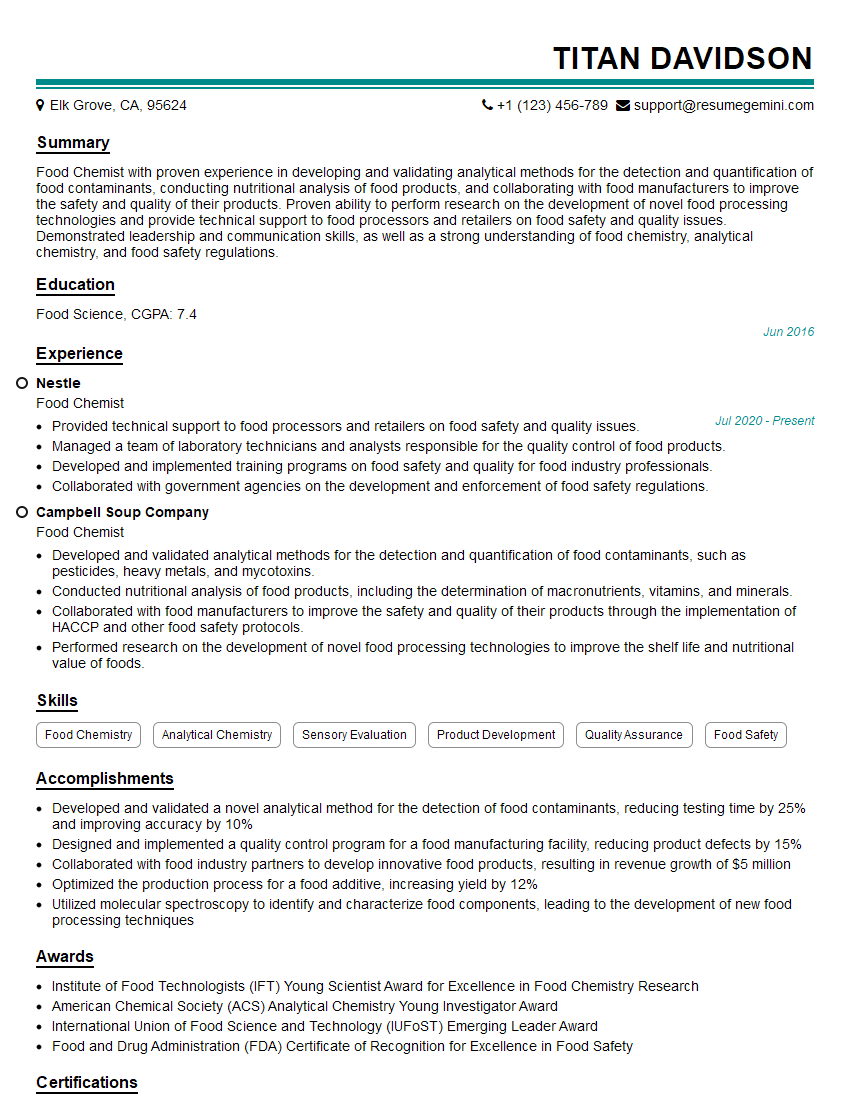
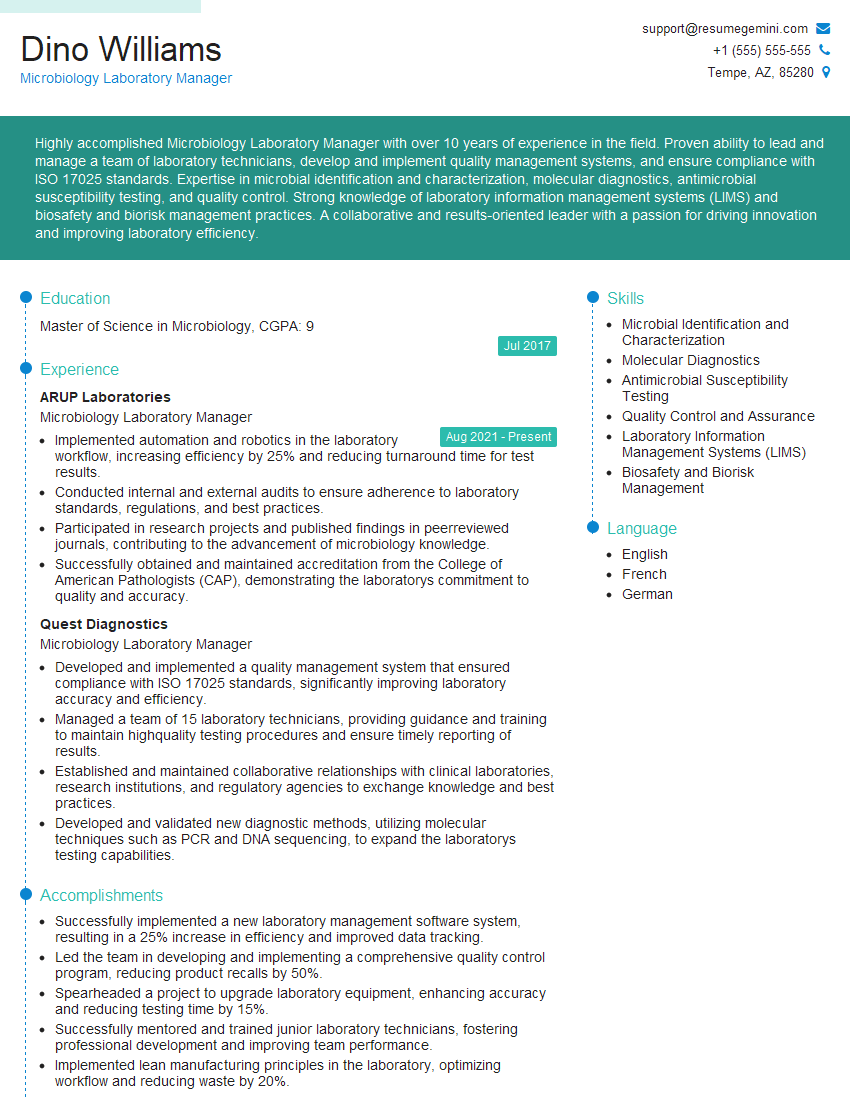
Mastering the principles of food safety research is crucial for career advancement in this vital field. A strong understanding of these topics will significantly enhance your interview performance and open doors to exciting opportunities. To maximize your job prospects, create an ATS-friendly resume that showcases your skills and experience effectively. ResumeGemini is a trusted resource that can help you build a professional resume that stands out. We provide examples of resumes tailored to food safety research experience to guide you through the process. Invest time in crafting a compelling resume – it’s your first impression with potential employers.

Explore more articles
Users Rating of Our Blogs
Share Your Experience
We value your feedback! Please rate our content and share your thoughts (optional).
What Readers Say About Our Blog
Really detailed insights and content, thank you for writing this detailed article.
IT gave me an insight and words to use and be able to think of examples