Feeling uncertain about what to expect in your upcoming interview? We’ve got you covered! This blog highlights the most important Experience in Regulatory Compliance interview questions and provides actionable advice to help you stand out as the ideal candidate. Let’s pave the way for your success.
Questions Asked in Experience in Regulatory Compliance Interview
Q 1. Explain your understanding of the Sarbanes-Oxley Act (SOX).
The Sarbanes-Oxley Act of 2002 (SOX) is a landmark piece of US legislation designed to protect investors by improving the accuracy and reliability of corporate disclosures. It was enacted in response to major corporate accounting scandals like Enron and WorldCom. Essentially, SOX aims to enhance corporate responsibility and financial transparency.
Key aspects of SOX include stricter regulations on corporate governance, financial reporting, and auditing practices. This involves establishing independent audit committees, strengthening internal controls, and increasing the accountability of executives. For instance, Section 302 mandates that senior executives personally certify the accuracy of financial statements, while Section 404 requires companies to establish and document robust internal controls over financial reporting, which are then subject to independent audits.
Think of SOX as a comprehensive framework designed to prevent financial fraud and ensure that investors have accurate information to make informed decisions. Non-compliance can lead to severe penalties, including hefty fines and criminal charges.
Q 2. Describe your experience with HIPAA compliance.
My experience with HIPAA compliance spans several years and includes developing and implementing HIPAA-compliant systems and training programs. HIPAA, the Health Insurance Portability and Accountability Act, is a US law designed to protect the privacy and security of Protected Health Information (PHI). This involves a wide range of safeguards, from administrative procedures to technical and physical security measures.
In my previous role, I was responsible for conducting risk assessments to identify vulnerabilities in our systems and processes that could expose PHI. This included reviewing access controls, encryption protocols, and data backup procedures. I then developed and implemented remediation plans to address those vulnerabilities. We also conducted regular employee training to ensure compliance with HIPAA regulations and to cultivate a culture of data security. We covered topics like appropriate PHI disclosure, the importance of strong passwords, and recognizing and reporting potential security breaches.
One example of a practical application was implementing a robust audit trail for all access to PHI. This allowed us to track who accessed what data and when, which is critical for investigations and compliance auditing.
Q 3. How familiar are you with GDPR regulations?
I’m very familiar with the General Data Protection Regulation (GDPR), the EU’s comprehensive data privacy regulation. GDPR applies to any organization processing personal data of EU residents, regardless of the organization’s location. It focuses on the rights of individuals regarding their personal data and places significant obligations on organizations handling such data.
My understanding encompasses the key principles of GDPR, including lawfulness, fairness, and transparency; purpose limitation; data minimization; accuracy; storage limitation; integrity and confidentiality; and accountability. I know the importance of obtaining explicit consent, providing individuals with access to their data, and fulfilling data subject access requests (DSARs).
GDPR’s impact extends to data breach notification requirements; organizations must report significant breaches to the relevant authorities and, in many cases, directly to affected individuals. I’ve worked with organizations to develop strategies for complying with these demanding requirements, including implementing data protection impact assessments (DPIAs) and establishing data breach response plans.
Q 4. What is your experience with conducting internal audits for compliance?
I have extensive experience conducting internal audits for compliance, using a risk-based approach. This means prioritizing areas with the highest potential for non-compliance. My process typically involves:
- Planning: Defining the scope, objectives, and timeline of the audit, identifying key risks, and selecting appropriate audit procedures.
- Testing: Conducting various tests, such as reviewing policies and procedures, examining transactions, and interviewing employees.
- Documentation: Thoroughly documenting findings, including any identified non-compliances and recommendations for remediation.
- Reporting: Preparing a comprehensive report summarizing audit findings, observations, and conclusions.
- Follow-up: Monitoring the implementation of corrective actions and conducting follow-up audits to verify effectiveness.
For example, in a recent audit focused on SOX compliance, I reviewed financial processes, tested internal controls, and interviewed key personnel. This led to the identification of a weakness in the approval process for certain types of transactions, which was promptly addressed.
Q 5. Explain your approach to identifying and mitigating compliance risks.
My approach to identifying and mitigating compliance risks is proactive and systematic. I utilize a risk-based approach, starting with a thorough risk assessment to identify potential areas of vulnerability. This involves considering factors such as regulatory changes, business processes, and technological advancements. I then prioritize risks based on their likelihood and potential impact.
For each identified risk, I develop specific mitigation strategies, which may include implementing new controls, improving existing processes, or providing additional training. I also establish key performance indicators (KPIs) to monitor the effectiveness of these strategies. Regular monitoring and reporting are essential to maintain compliance and adapt to changing circumstances. Think of it like a continuous cycle of assessment, mitigation, monitoring, and improvement. This dynamic approach ensures that we are consistently ahead of potential compliance issues.
Q 6. Describe a time you identified a compliance issue. How did you address it?
In a previous role, I discovered that our data backup procedures weren’t compliant with GDPR requirements. Specifically, we weren’t adequately encrypting backups stored offsite. This posed a significant risk if the backups were compromised.
To address this, I followed these steps:
- Documented the issue: I created a detailed report outlining the non-compliance and the potential risks.
- Proposed solutions: I researched and presented various solutions, including implementing strong encryption and reviewing our data retention policies.
- Collaborated with IT: I worked closely with the IT team to implement the chosen solution, ensuring that it met both functional and compliance requirements.
- Retested and validated: Once the solution was implemented, I conducted further testing to verify that the backups were now compliant.
- Updated documentation: I updated our internal policies and procedures to reflect the changes made.
This situation highlighted the importance of proactive risk assessment and the value of clear communication and collaboration in resolving compliance issues.
Q 7. How do you stay updated on changes in regulatory compliance requirements?
Staying updated on regulatory compliance changes requires a multi-faceted approach. I utilize several strategies, including:
- Subscription to reputable legal and compliance news sources: This provides up-to-date information on legislative changes and relevant court decisions.
- Attendance at industry conferences and webinars: These events offer opportunities to learn from experts and network with other professionals.
- Engagement with professional organizations: Membership in relevant professional organizations provides access to resources, publications, and networking opportunities.
- Monitoring regulatory agency websites: Regularly checking the websites of regulatory agencies for announcements and updates is crucial.
- Internal knowledge sharing: Keeping my team informed about relevant compliance changes and updates through regular training and communication is critical.
By employing these methods, I ensure I possess the most current knowledge of regulatory compliance requirements and can effectively advise my organization on best practices.
Q 8. What is your experience with developing and implementing compliance programs?
Developing and implementing a robust compliance program involves a multi-faceted approach, beginning with a thorough understanding of applicable regulations and internal policies. I’ve led the creation of compliance programs from the ground up, as well as the enhancement and improvement of existing ones. This process typically includes:
- Risk Assessment: Identifying potential compliance risks through interviews, document review, and analysis of internal controls.
- Policy Development: Crafting clear, concise, and comprehensive policies that align with regulatory requirements and internal best practices. This includes regular updates to reflect changes in legislation and organizational strategy.
- Implementation & Training: Establishing procedures to ensure consistent adherence to policies, and conducting training programs for employees at all levels to foster a culture of compliance.
- Monitoring & Auditing: Implementing systems to monitor compliance activities, conducting regular audits, and employing reporting mechanisms to detect potential violations early.
- Remediation & Improvement: Developing and implementing corrective actions to address any compliance gaps or violations, and continuously improving the program based on audits, internal reviews, and regulatory changes.
For example, in a previous role, I spearheaded the development of a new compliance program for a financial institution, encompassing anti-money laundering (AML) and know your customer (KYC) regulations. This involved conducting a thorough risk assessment, developing comprehensive policies, implementing robust monitoring systems, and providing regular training to employees. The result was a significant reduction in compliance risks and a stronger regulatory posture.
Q 9. Explain your understanding of the Foreign Corrupt Practices Act (FCPA).
The Foreign Corrupt Practices Act (FCPA) is a United States federal law that prohibits bribery of foreign officials to obtain or retain business. It has two main components: the anti-bribery provisions and the accounting provisions. The anti-bribery provisions make it illegal to offer, promise, or give anything of value to a foreign official to influence their actions in order to gain a business advantage. The accounting provisions require companies to maintain accurate books and records and to implement internal controls to prevent corruption.
Understanding the FCPA requires a nuanced approach. It’s crucial to distinguish between legitimate business facilitation payments (small payments to expedite routine government actions) and bribes, which are prohibited. Compliance involves creating a robust compliance program with clear guidelines, rigorous due diligence procedures for international transactions, effective training programs for employees, and a whistleblower hotline to encourage reporting of potential violations.
I have experience conducting FCPA risk assessments, designing and implementing internal controls to mitigate FCPA risks, and training employees on FCPA compliance. A recent project involved designing a robust due diligence process for a client expanding operations into a new emerging market, mitigating potential FCPA exposures before they arose.
Q 10. How do you ensure compliance with data privacy regulations?
Ensuring compliance with data privacy regulations, such as GDPR, CCPA, and others, requires a comprehensive and proactive approach. This involves implementing a range of measures to protect personal data throughout its lifecycle. Key elements include:
- Data Mapping & Inventory: Identifying all personal data collected, stored, and processed by the organization.
- Policy Development: Creating clear and accessible data privacy policies that are aligned with applicable regulations.
- Access Control: Implementing strong access control measures to restrict access to personal data to authorized personnel only.
- Data Security: Implementing technical and organizational security measures to prevent unauthorized access, use, disclosure, alteration, or destruction of personal data. This includes encryption, firewalls, and intrusion detection systems.
- Data Subject Rights: Implementing procedures to handle data subject requests, such as requests for access, rectification, erasure, and data portability.
- Data Breach Response Plan: Developing a comprehensive plan for responding to data breaches, including notification procedures and remediation steps.
- Vendor Management: Ensuring that third-party vendors processing personal data comply with data privacy regulations.
For instance, in a previous engagement, I assisted a healthcare provider in achieving compliance with HIPAA regulations. This involved conducting a thorough data mapping exercise, enhancing data security protocols, and providing training to staff on data privacy practices. The project culminated in a successful audit demonstrating full compliance.
Q 11. Describe your experience with regulatory reporting and documentation.
Regulatory reporting and documentation are critical for demonstrating compliance with legal and regulatory requirements. My experience encompasses a broad spectrum of reporting activities, including:
- Preparing and submitting regulatory reports: This involves gathering data from various sources, ensuring accuracy and completeness, and meeting strict deadlines.
- Maintaining detailed records of compliance activities: This involves documenting all relevant activities, such as risk assessments, training records, audits, and corrective actions.
- Responding to regulatory inquiries and audits: This involves gathering and providing the necessary information in a timely and effective manner.
- Using compliance management systems (CMS): Leveraging technology to streamline reporting processes, automate tasks, and ensure data integrity.
I’m proficient in various reporting frameworks and have a strong understanding of data governance principles. For example, in a prior role, I managed the annual reporting for a large multinational company, ensuring compliance with multiple international regulations and demonstrating impeccable record-keeping throughout the process.
Q 12. What is your understanding of risk assessment methodologies in compliance?
Risk assessment methodologies in compliance are crucial for identifying and prioritizing potential compliance risks. Common methodologies include:
- Qualitative Risk Assessment: This involves using expert judgment to evaluate the likelihood and impact of potential compliance risks.
- Quantitative Risk Assessment: This involves using statistical data to quantify the likelihood and impact of compliance risks.
- Scenario Planning: This involves developing scenarios that illustrate potential compliance risks and their potential impact.
- Control Self-Assessment (CSA): This involves having internal teams evaluate the effectiveness of internal controls in mitigating compliance risks.
The choice of methodology often depends on the specific context, available resources, and the complexity of the compliance landscape. Regardless of the methodology chosen, a robust risk assessment should identify areas of high risk, prioritize remediation efforts, and provide a basis for developing effective compliance programs. I have utilized these methodologies in diverse scenarios, including developing tailored risk assessments for financial institutions and healthcare providers, always selecting the method that best served the organization’s specific needs and regulatory environment.
Q 13. How do you handle conflicts between regulatory requirements and business objectives?
Conflicts between regulatory requirements and business objectives are inevitable. Handling them effectively requires a balanced approach that prioritizes compliance while seeking to minimize disruption to business operations. My approach involves:
- Identifying and documenting the conflict: Clearly outlining the specific regulatory requirement and the conflicting business objective.
- Evaluating the potential consequences: Assessing the potential risks associated with non-compliance versus the impact of altering the business objective.
- Exploring alternative solutions: Brainstorming potential solutions that address both regulatory requirements and business objectives. This might involve seeking exemptions, modifying processes, or adopting alternative technologies.
- Communicating with stakeholders: Keeping all relevant stakeholders informed of the conflict, proposed solutions, and the rationale behind the decision.
- Documenting the decision-making process: Maintaining a clear record of the conflict, the analysis conducted, and the chosen solution.
For example, I once navigated a conflict between a new data privacy regulation and a company’s established marketing strategy. By collaborating with legal, marketing, and IT teams, we developed a revised marketing plan that adhered to the new regulation while preserving the essence of the company’s marketing strategy. This demonstrated my capability to bridge the gap between compliance and business objectives.
Q 14. Describe your experience with managing compliance training programs.
Effective compliance training programs are crucial for fostering a culture of compliance within an organization. My experience in managing compliance training involves:
- Needs Assessment: Identifying training needs based on risk assessments, regulatory requirements, and employee roles.
- Curriculum Development: Designing engaging and effective training materials, including presentations, interactive modules, and case studies.
- Delivery Methodologies: Employing various delivery methods such as online training, instructor-led training, and blended learning approaches, tailoring the method to the audience and the content.
- Assessment & Evaluation: Implementing mechanisms for assessing employee understanding and evaluating the effectiveness of the training program.
- Record Keeping: Maintaining accurate records of employee participation and training completion.
I’ve successfully implemented training programs for diverse audiences, from entry-level employees to senior management. In one instance, I developed a comprehensive anti-bribery and corruption training program for a global organization, resulting in significantly improved employee understanding of relevant regulations and a stronger commitment to ethical conduct. Regular review and updates to training materials are crucial, ensuring continued relevance and effectiveness.
Q 15. How do you measure the effectiveness of a compliance program?
Measuring the effectiveness of a compliance program isn’t a one-size-fits-all approach; it requires a multi-faceted strategy. Think of it like a doctor checking a patient’s health – you need various tests to get a complete picture. We use a combination of key performance indicators (KPIs) to gauge success.
Key Risk Indicators (KRIs): These track the likelihood of non-compliance. For example, tracking the number of near misses or employee errors related to a specific regulation. A high KRI might signal a weakness in training or process.
Compliance Metrics: This measures the actual rate of compliance. For example, the percentage of employees completing mandatory training or the number of successful audits without critical findings. A low compliance metric indicates a need for corrective action.
Audit Findings: Regular internal and external audits provide valuable data. Analyzing the type, frequency, and severity of audit findings helps identify trends and problem areas. For instance, repeated findings related to data security may indicate a flaw in the data security policy or its implementation.
Employee Feedback and Reporting: A strong compliance culture relies on employee engagement. Anonymous reporting mechanisms and regular surveys help identify potential compliance gaps and measure employee understanding of policies.
Incident Reporting and Response Time: Tracking the number of reported incidents and the time taken to resolve them indicates the efficiency of the response system. A quick and effective response minimizes potential damage.
By analyzing these KPIs together, we build a holistic view of compliance effectiveness and pinpoint areas needing improvement. It’s a continuous process of monitoring, evaluating, and adjusting.
Career Expert Tips:
- Ace those interviews! Prepare effectively by reviewing the Top 50 Most Common Interview Questions on ResumeGemini.
- Navigate your job search with confidence! Explore a wide range of Career Tips on ResumeGemini. Learn about common challenges and recommendations to overcome them.
- Craft the perfect resume! Master the Art of Resume Writing with ResumeGemini’s guide. Showcase your unique qualifications and achievements effectively.
- Don’t miss out on holiday savings! Build your dream resume with ResumeGemini’s ATS optimized templates.
Q 16. What is your experience with working with external auditors?
I have extensive experience collaborating with external auditors, having worked with both Big Four firms and specialized compliance consultancies. My approach emphasizes proactive communication and transparency. I believe in viewing the audit not as an adversarial process, but as a collaborative effort to strengthen our compliance posture.
Pre-audit preparation: Before the audit begins, I ensure all necessary documentation is readily available and organized. This includes policies, procedures, training records, and audit trails.
Active participation: During the audit, I actively engage with the auditors, providing clear and concise answers to their questions and facilitating access to relevant personnel and information.
Follow-up and remediation: After the audit, I carefully review the findings and promptly develop and implement remediation plans. I also follow up with the auditors to confirm the effectiveness of these plans.
Relationship building: I prioritize building strong, professional relationships with auditors. This open communication enables a more productive and constructive audit process, leading to better outcomes.
For example, in a recent SOC 2 audit, my proactive approach in providing documentation and promptly addressing auditor queries resulted in a smooth and efficient audit process with minimal findings. This demonstrates the value of clear communication and preparation.
Q 17. Describe your experience with investigating and resolving compliance violations.
Investigating and resolving compliance violations requires a methodical and thorough approach. I utilize a structured process that ensures fairness, accuracy, and timely resolution.
Incident Reporting: First, I ensure a clear and accessible reporting mechanism is in place. This allows employees to report potential violations without fear of reprisal. Anonymous reporting is crucial.
Preliminary Assessment: Upon receiving a report, I conduct a preliminary assessment to determine the seriousness and scope of the potential violation.
Formal Investigation: A formal investigation is launched if the preliminary assessment warrants it. This includes collecting evidence, interviewing witnesses, and reviewing relevant documentation.
Disciplinary Actions: Based on the investigation’s findings, appropriate disciplinary actions are taken, which may range from training to termination, depending on the severity of the violation and company policy.
Corrective Actions: To prevent recurrence, corrective actions are implemented. This could include policy revisions, improved training, or changes to internal processes.
Documentation: Thorough documentation of the entire process is essential for accountability and legal purposes. This includes the initial report, investigation findings, actions taken, and corrective measures implemented.
For instance, in one case, an employee inadvertently violated data privacy regulations. My team followed this process, leading to a thorough investigation, retraining, policy updates and the successful prevention of a data breach.
Q 18. What software or tools do you use to manage compliance?
I’ve used a variety of software and tools throughout my career to manage compliance, depending on the organization’s needs and regulatory environment. The best tools are integrated and provide a holistic view of compliance.
Compliance Management Systems (CMS): These centralized platforms like Archer, ServiceNow GRC, or MetricStream, streamline various compliance tasks, such as policy management, risk assessments, audit management, and training tracking.
Governance, Risk, and Compliance (GRC) software: These platforms offer a comprehensive view of the organization’s risk and compliance landscape.
Learning Management Systems (LMS): Tools like Cornerstone OnDemand or Moodle are used for delivering and tracking compliance training.
Document Management Systems (DMS): These systems ensure secure storage and version control of compliance-related documents.
Data Loss Prevention (DLP) tools: These tools help monitor and prevent sensitive data breaches.
The selection of specific software depends on the organization’s size, industry, and regulatory requirements. The key is to select tools that integrate well and provide a unified view of the compliance landscape. For example, in a previous role, we implemented Archer to manage all aspects of our compliance program, which significantly improved efficiency and visibility.
Q 19. How do you prioritize compliance tasks in a fast-paced environment?
Prioritizing compliance tasks in a fast-paced environment requires a structured approach. I utilize a risk-based prioritization framework, focusing on the potential impact and likelihood of a non-compliance event.
Risk Assessment: Regularly conduct risk assessments to identify and analyze potential compliance risks. This involves considering the likelihood and potential impact of each risk.
Prioritization Matrix: Develop a prioritization matrix using a scoring system that considers both likelihood and impact. High-likelihood, high-impact risks are prioritized first.
Resource Allocation: Allocate resources based on the prioritization matrix, focusing efforts on the most critical risks.
Regular Review: Continuously monitor and review the prioritization of tasks as the business environment changes and new risks emerge.
Communication: Communicate the prioritization strategy to stakeholders to ensure transparency and buy-in.
For instance, if a new regulation with a high potential impact and likelihood of non-compliance emerges, it would immediately take precedence over other tasks, even if those tasks were already scheduled.
Q 20. How do you communicate compliance requirements effectively to different stakeholders?
Effective communication of compliance requirements is crucial for a successful program. My approach focuses on tailoring the message to the audience and using multiple communication channels.
Understand your audience: Different stakeholders have different levels of understanding and need information presented in a way that is relevant to their roles and responsibilities.
Multiple channels: Utilize various communication channels, including emails, intranet postings, training sessions, town hall meetings, and one-on-one conversations.
Plain language: Avoid jargon and technical terms whenever possible. Use clear and concise language that everyone can easily understand.
Interactive training: Incorporate interactive elements into training programs to make learning more engaging and effective.
Regular communication: Provide regular updates and reminders about compliance requirements. This helps reinforce learning and prevent complacency.
Feedback mechanisms: Establish mechanisms for employees to ask questions and provide feedback on compliance requirements.
For example, when communicating new data privacy regulations, I would provide executive summaries for senior management, detailed training materials for employees, and FAQs for frequently asked questions. This multi-faceted approach ensures that everyone receives the necessary information in a clear and understandable format.
Q 21. Explain your experience with implementing a compliance management system (CMS).
Implementing a Compliance Management System (CMS) is a significant undertaking. It requires careful planning, strong leadership, and effective stakeholder engagement. My approach is phased and iterative, focusing on continuous improvement.
Needs Assessment: Begin with a thorough needs assessment to understand the organization’s specific compliance requirements and challenges.
Selection of a CMS: Carefully select a CMS that meets the organization’s needs and integrates with existing systems.
System Configuration: Configure the CMS to reflect the organization’s policies, procedures, and workflows.
User Training: Provide comprehensive training to all users on how to use the system effectively.
Data Migration: If applicable, carefully migrate data from existing systems into the new CMS.
Ongoing Monitoring: Continuously monitor the system’s effectiveness and make adjustments as needed. This is a continuous improvement process.
Integration with other systems: Ensure the CMS integrates seamlessly with other relevant systems, such as HR, IT, and finance.
In a previous role, I led the implementation of a new CMS, which resulted in a more efficient and effective compliance program. This included a phased rollout, robust training, and ongoing monitoring, ensuring a smooth transition and widespread adoption.
Q 22. What are the key elements of an effective compliance culture?
An effective compliance culture isn’t just about ticking boxes; it’s about embedding ethical behavior and regulatory adherence into the very fabric of an organization. It’s a top-down approach, requiring strong leadership commitment and a clear communication strategy. Key elements include:
- Leadership Commitment: Senior management must visibly champion compliance, demonstrating that it’s a priority, not an afterthought. This includes allocating sufficient resources and setting clear expectations.
- Clear Policies and Procedures: Comprehensive, easily accessible, and regularly updated policies and procedures are essential. They should be written in plain language, avoiding legal jargon.
- Robust Training Programs: Regular, engaging training programs tailored to different roles and responsibilities are crucial. These programs should go beyond simple awareness and focus on practical application.
- Effective Communication Channels: Open and transparent communication channels must be established, allowing employees to report concerns without fear of retaliation. This often involves whistleblower protection programs.
- Accountability and Consequences: A clear framework for accountability and appropriate consequences for non-compliance must be in place. This fosters a culture of responsibility and discourages misconduct.
- Continuous Monitoring and Improvement: Regular audits, risk assessments, and ongoing monitoring are essential to identify weaknesses and improve the compliance program over time. This is a continuous cycle of improvement.
For example, in a previous role, we implemented a gamified compliance training program that significantly increased employee engagement and knowledge retention compared to traditional methods. This resulted in a noticeable improvement in our compliance scores during subsequent audits.
Q 23. How do you handle situations where you disagree with a business decision due to compliance concerns?
Disagreements with business decisions based on compliance concerns are inevitable. My approach is always one of collaboration and escalation, focusing on finding solutions that protect both the business and its regulatory standing. I wouldn’t simply object; I’d present a reasoned argument.
- Document the concern: I’d meticulously document the specific compliance risk, referencing relevant regulations and internal policies.
- Propose alternative solutions: Instead of just pointing out the problem, I’d work to suggest alternative approaches that meet both the business objectives and compliance requirements.
- Escalate appropriately: If my concerns aren’t addressed, I’d escalate them through the appropriate channels, which may include my supervisor, compliance officer, or even legal counsel. This escalation would be documented.
- Maintain a professional demeanor: Throughout the process, I maintain a professional demeanor, focusing on collaboration and constructive dialogue. My goal is to find a mutually acceptable solution.
In one instance, I identified a potential violation of data privacy regulations in a marketing campaign. Instead of simply stopping the campaign, I worked with the marketing team to revise the strategy, ensuring compliance while minimizing disruption to the business plan. The result was a compliant campaign that still achieved its objectives.
Q 24. Describe your experience with conducting due diligence on third-party vendors.
Conducting due diligence on third-party vendors is critical to mitigating compliance risks. My process typically involves several steps:
- Risk Assessment: I first assess the potential compliance risks associated with the vendor and the services they provide. This might include data privacy, security, anti-bribery, and anti-money laundering concerns.
- Due Diligence Questionnaire: A comprehensive questionnaire is sent to the vendor, covering aspects like their compliance programs, security measures, and certifications.
- Reference Checks: I’d contact references to assess the vendor’s reputation and track record regarding compliance.
- Contractual Agreements: The contract with the vendor should clearly outline compliance obligations and responsibilities, including data protection, security protocols, and audit rights.
- Ongoing Monitoring: Compliance isn’t a one-time event. Ongoing monitoring of the vendor’s performance and adherence to the contract is vital. This may involve periodic audits or reviews.
For example, when selecting a cloud service provider, I ensured they held relevant security certifications (like ISO 27001) and had robust data security measures in place. We also included specific clauses in the contract to ensure their compliance with our data privacy policies.
Q 25. What are some common challenges in regulatory compliance and how have you overcome them?
Regulatory compliance presents numerous challenges, especially in rapidly evolving landscapes. Some common difficulties include:
- Keeping up with changing regulations: Regulations change frequently, requiring constant monitoring and adaptation. I combat this through subscription services to regulatory updates and professional development courses.
- Maintaining accurate records: The volume of information required for compliance can be overwhelming. I use specialized software and document management systems to maintain organized and auditable records.
- Balancing compliance with business needs: Sometimes, compliance requirements may seem to conflict with business goals. Effective communication and a collaborative approach are key to finding solutions that balance both.
- Managing third-party risks: Ensuring compliance from third-party vendors requires continuous monitoring and oversight. We implement robust vendor management programs and contracts to mitigate these risks.
One specific challenge was adapting to the GDPR. We addressed this by implementing new data privacy policies, training our employees, and conducting data mapping exercises to identify and manage personal data effectively. We also appointed a Data Protection Officer to oversee our compliance efforts.
Q 26. How do you adapt your compliance approach to different industries or regulations?
Adapting to different industries and regulations requires a flexible and adaptable approach. I don’t use a one-size-fits-all solution. My strategy involves:
- Understanding the specific regulatory landscape: Thorough research is the first step. I familiarize myself with all relevant laws, regulations, and industry best practices.
- Tailoring policies and procedures: Policies and procedures should be customized to reflect the specific risks and requirements of each industry or jurisdiction.
- Utilizing industry-specific resources: I leverage industry associations, professional networks, and regulatory guidance to stay informed and up-to-date on best practices.
- Leveraging technology: Technology plays a crucial role in streamlining compliance, especially across multiple jurisdictions or industries.
For example, working in the financial services industry required a deeper understanding of anti-money laundering regulations compared to my previous experience in healthcare, where HIPAA compliance was paramount. I adapted by specializing my training and familiarizing myself with the specific requirements of each sector.
Q 27. Explain your understanding of the importance of ethical conduct in regulatory compliance.
Ethical conduct is the bedrock of any effective compliance program. It’s not enough to simply comply with the letter of the law; the spirit of the law must also be upheld. Ethical behavior fosters trust, both internally within the organization and externally with stakeholders, clients, and regulators. A strong ethical foundation:
- Reduces risk: Ethical conduct minimizes the risk of legal violations, financial penalties, and reputational damage.
- Builds trust: Ethical behavior builds trust and confidence among employees, customers, and investors.
- Enhances reputation: Organizations known for their ethical conduct enjoy a better public image and stronger relationships with stakeholders.
- Improves decision-making: An ethical framework guides decision-making, ensuring that decisions align with values and principles.
I believe that leading by example is crucial. I always strive to demonstrate integrity and ethical behavior in my actions, ensuring that my decisions are guided by ethical principles. This helps create a culture of ethical conduct throughout the organization.
Q 28. How do you ensure the confidentiality and integrity of sensitive data within a compliance framework?
Ensuring the confidentiality and integrity of sensitive data within a compliance framework is crucial. My approach involves multiple layers of security and control:
- Data Access Control: Implementing strict access controls, ensuring that only authorized personnel have access to sensitive data based on the principle of least privilege.
- Encryption: Encrypting data both at rest and in transit to protect it from unauthorized access.
- Regular Security Audits: Conducting regular security audits and penetration testing to identify and address vulnerabilities.
- Data Loss Prevention (DLP): Utilizing DLP tools to monitor and prevent sensitive data from leaving the organization’s control.
- Incident Response Plan: Having a well-defined incident response plan to manage and mitigate data breaches effectively.
- Employee Training: Providing regular training to employees on data security best practices, including phishing awareness and password management.
In a past role, we implemented a multi-factor authentication system and enhanced encryption protocols after a near miss security incident. This significantly strengthened our data protection capabilities and prevented a potential data breach.
Key Topics to Learn for Your Regulatory Compliance Interview
- Regulatory Frameworks: Understanding the intricacies of relevant regulations (e.g., HIPAA, GDPR, SOX) and their practical implications within different industries. Consider exploring the historical context and evolution of these frameworks.
- Risk Assessment & Management: Developing and implementing robust risk assessment methodologies, identifying potential compliance vulnerabilities, and designing mitigation strategies. Practice applying these concepts to hypothetical scenarios.
- Compliance Program Development & Implementation: Designing, implementing, and maintaining effective compliance programs, including policies, procedures, and training materials. Think about how to measure the effectiveness of these programs.
- Internal Audits & Monitoring: Conducting regular internal audits to ensure ongoing compliance, identifying areas for improvement, and reporting findings to management. Focus on the practical steps involved in conducting a thorough audit.
- Investigations & Remediation: Investigating potential compliance violations, conducting root cause analysis, and implementing corrective actions. Consider the ethical considerations and documentation involved.
- Data Privacy & Security: Understanding data privacy regulations and implementing security measures to protect sensitive information. Explore different data protection strategies and their effectiveness.
- Communication & Reporting: Effectively communicating compliance-related information to various stakeholders, including senior management, employees, and regulatory bodies. Practice clear and concise reporting.
- Emerging Trends & Technologies: Staying current with evolving regulatory landscapes and the impact of new technologies on compliance. Discuss how you stay updated on industry changes.
Next Steps: Unlock Your Career Potential
Mastering regulatory compliance is crucial for career advancement in today’s complex business environment. Demonstrating a strong understanding of these principles significantly enhances your job prospects and opens doors to leadership roles. To maximize your chances, a well-crafted, ATS-friendly resume is essential. ResumeGemini is a trusted resource that can help you build a professional resume showcasing your skills and experience effectively. We provide examples of resumes tailored specifically to regulatory compliance professionals to guide you in creating a compelling application.
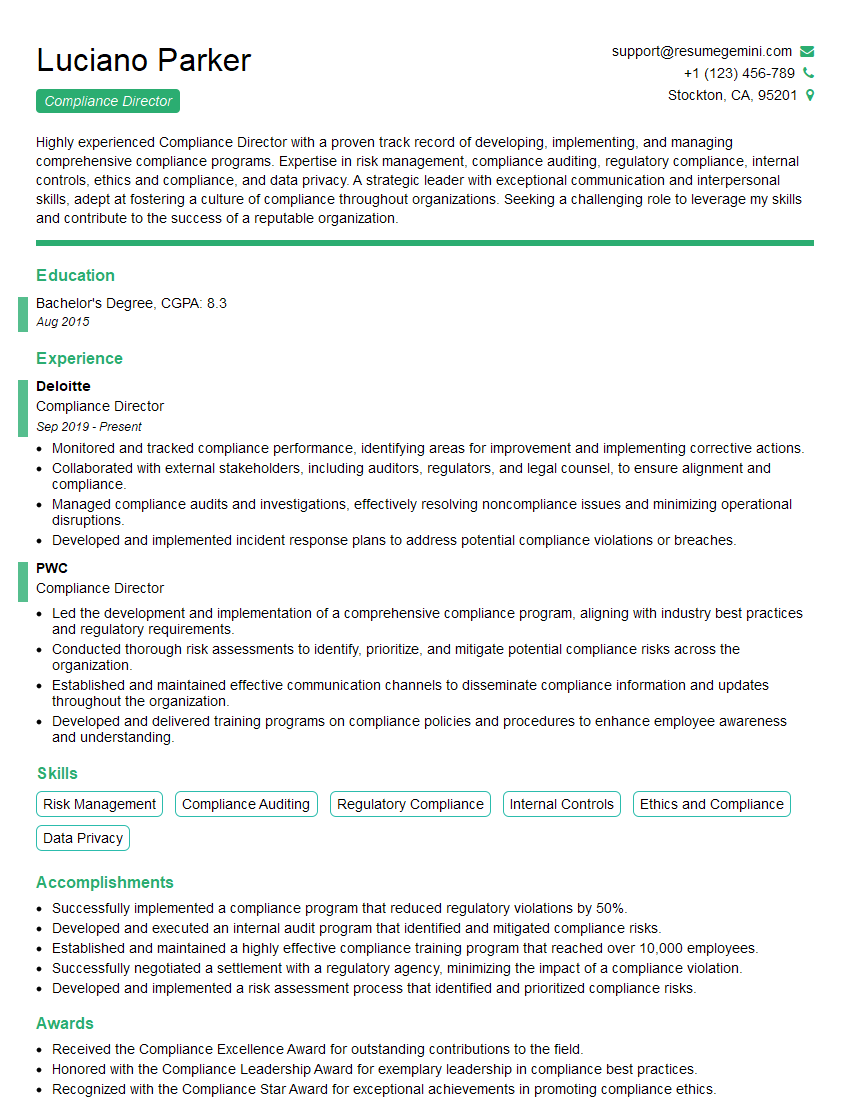
Compliance Director Resume Sample
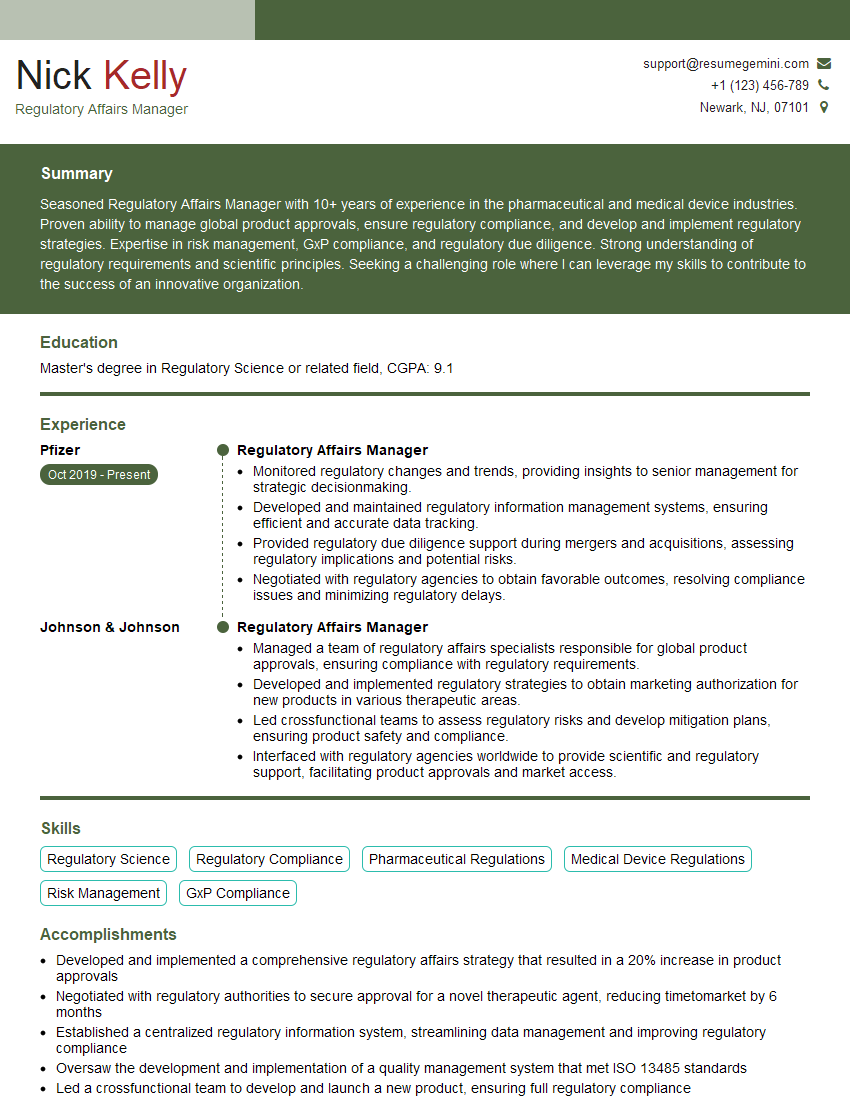
Regulatory Affairs Manager Resume Sample
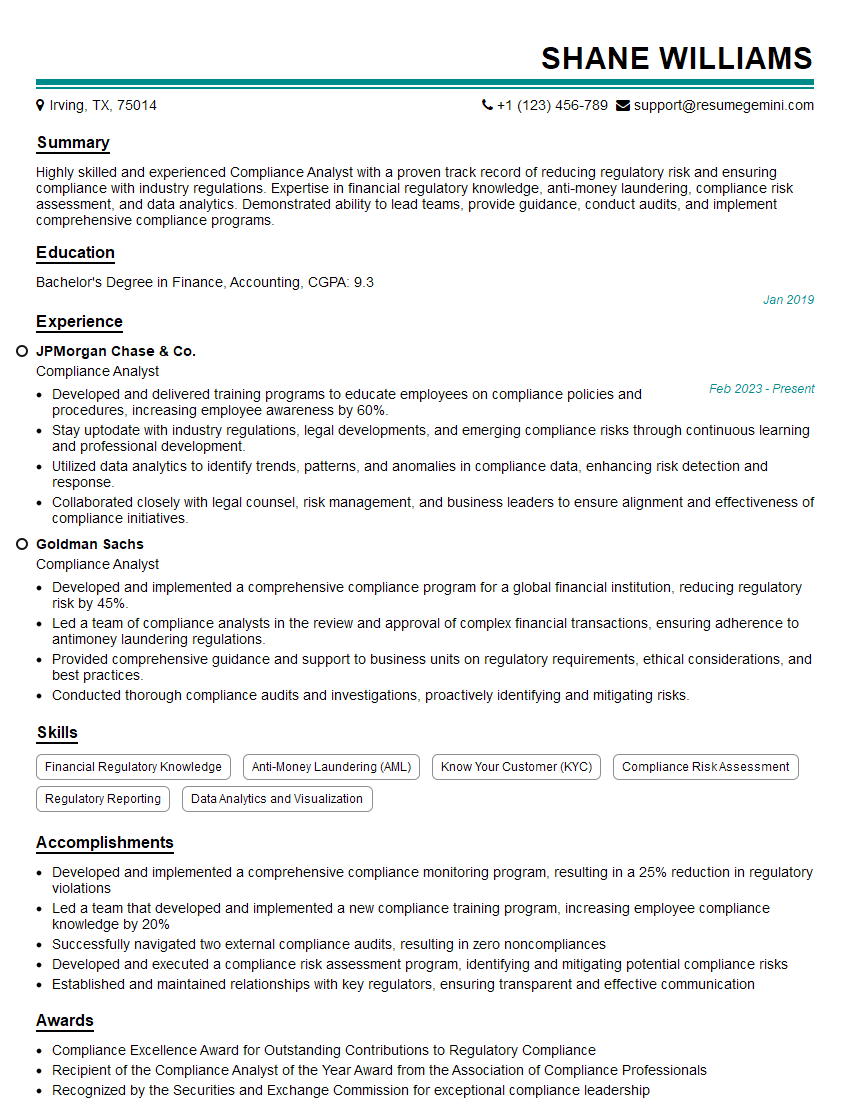
Compliance Analyst Resume Sample

Compliance Officer Resume Sample
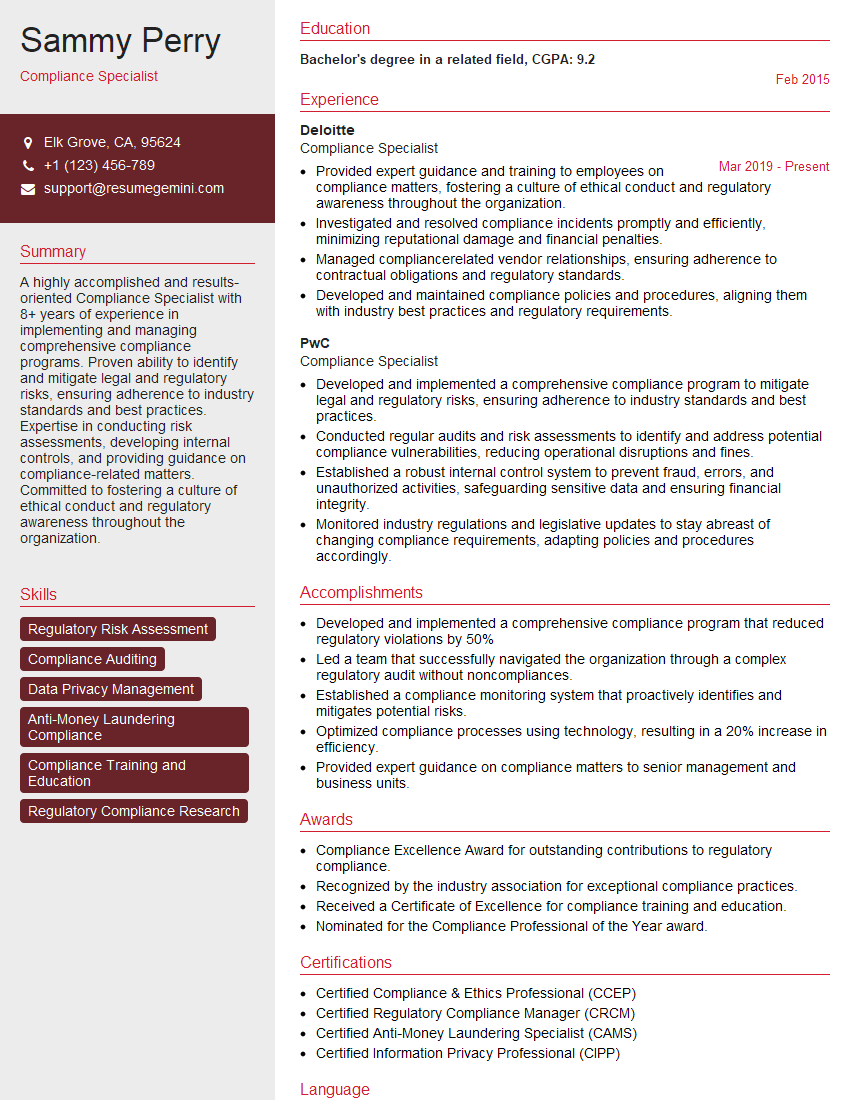
Compliance Specialist Resume Sample
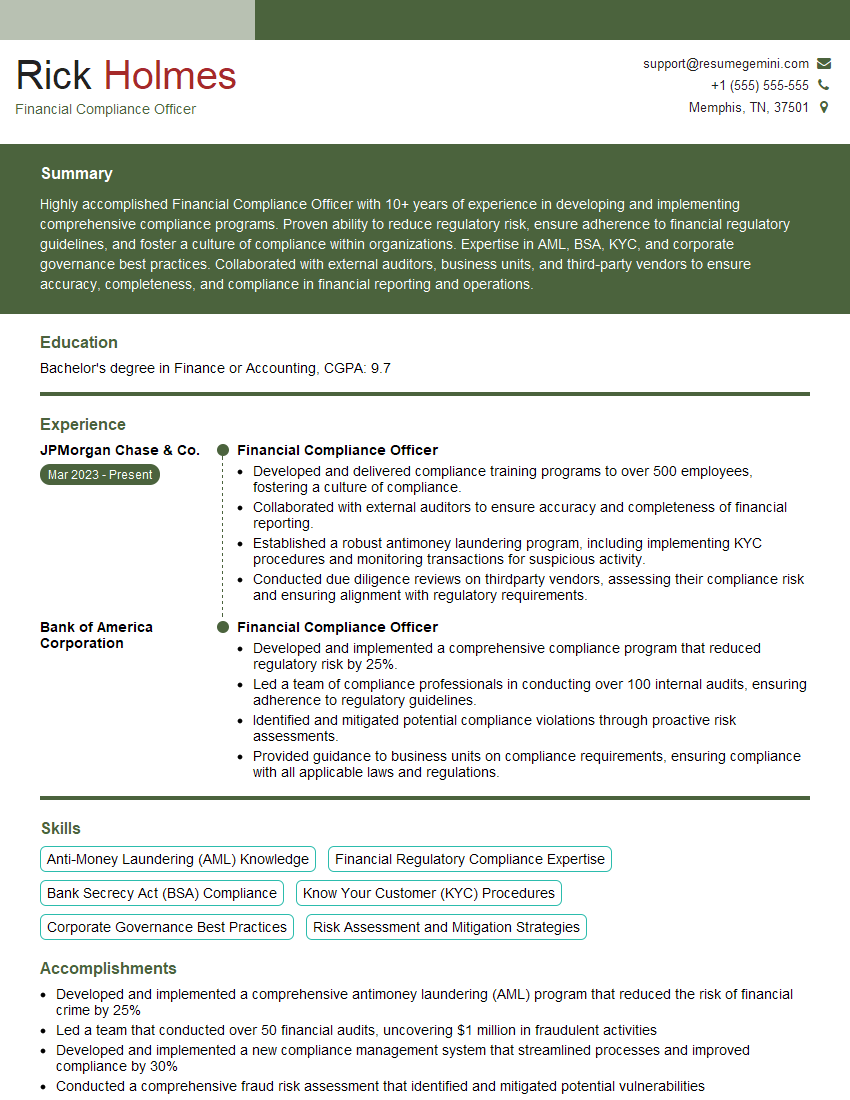
Financial Compliance Officer Resume Sample
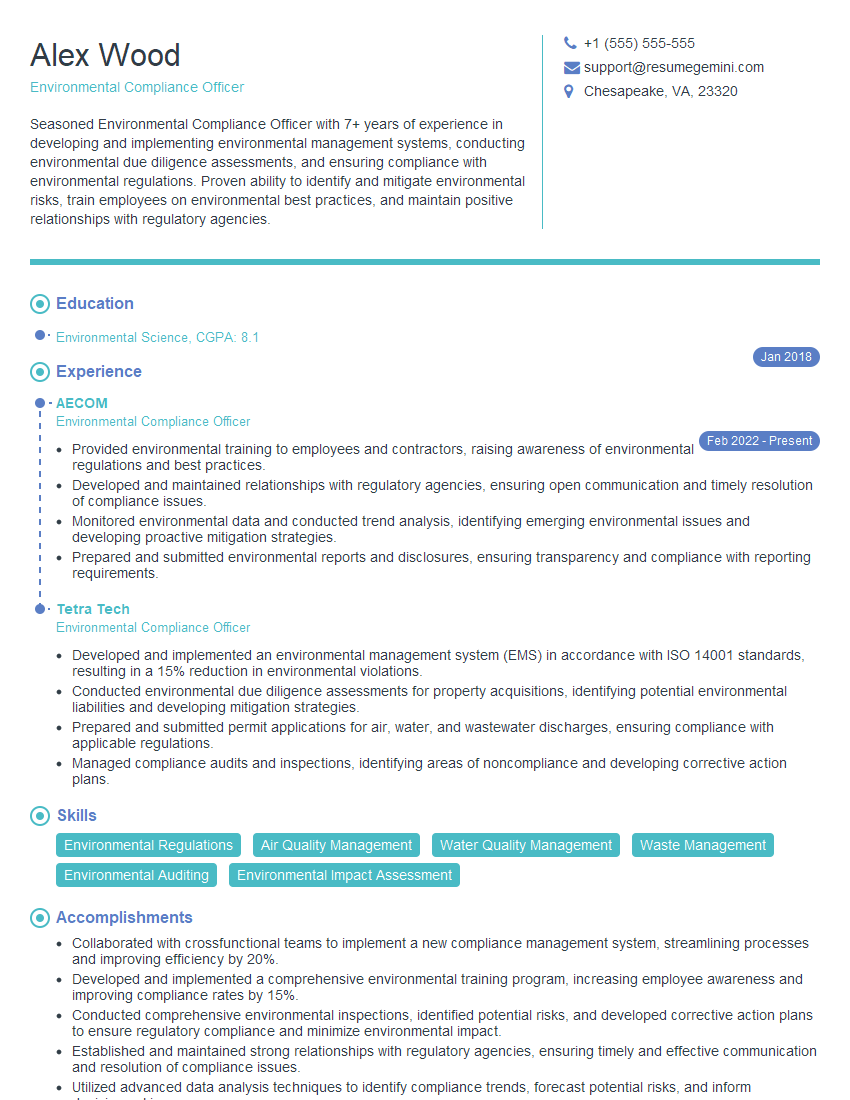
Environmental Compliance Officer Resume Sample
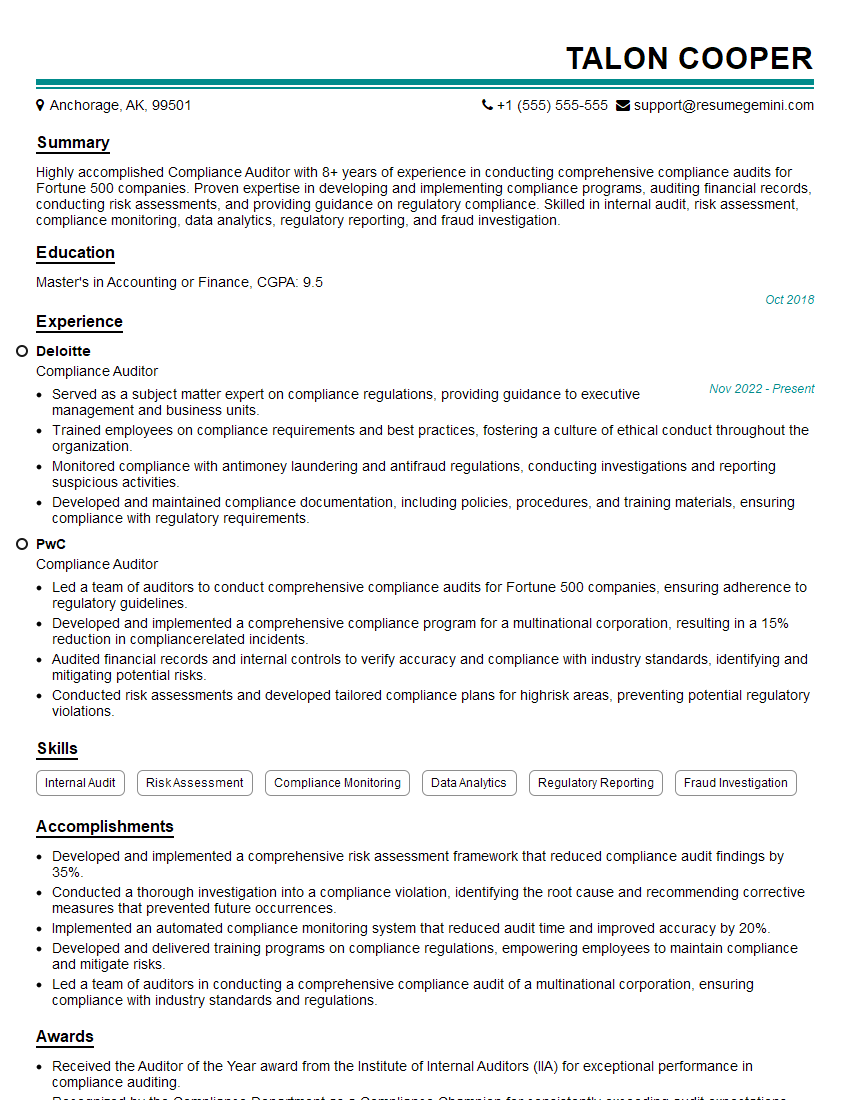
Compliance Auditor Resume Sample
Explore more articles
Users Rating of Our Blogs
Share Your Experience
We value your feedback! Please rate our content and share your thoughts (optional).
What Readers Say About Our Blog
Really detailed insights and content, thank you for writing this detailed article.
IT gave me an insight and words to use and be able to think of examples