The right preparation can turn an interview into an opportunity to showcase your expertise. This guide to Experience in Risk Assessment interview questions is your ultimate resource, providing key insights and tips to help you ace your responses and stand out as a top candidate.
Questions Asked in Experience in Risk Assessment Interview
Q 1. Describe your experience conducting risk assessments using different methodologies (e.g., FMEA, HAZOP).
My experience encompasses a wide range of risk assessment methodologies. I’ve extensively used Failure Mode and Effects Analysis (FMEA) for proactive identification of potential failures in systems or processes, prioritizing them based on severity, occurrence, and detection. For instance, in a recent project involving the design of a new medical device, we used FMEA to systematically examine each component and identify potential failures, assigning risk priority numbers (RPNs) to guide mitigation efforts. I’ve also employed HAZOP (Hazard and Operability Study) for process safety assessments, particularly in chemical and manufacturing settings. This involved a structured, multi-disciplinary team review of process flow diagrams, identifying potential deviations from intended operating conditions and their consequences. A specific example includes a HAZOP analysis for a refinery process where we identified potential hazards related to temperature excursions and developed effective mitigation strategies.
Beyond FMEA and HAZOP, I’m proficient in other methods like fault tree analysis (FTA), which uses a top-down approach to visualize potential causes leading to a specific undesired event. This is particularly useful in investigating accidents or incidents after they occur. I also have experience using bow-tie analysis, which integrates FTA and event tree analysis to provide a comprehensive visualization of the risk.
Q 2. Explain the difference between qualitative and quantitative risk assessment.
Qualitative and quantitative risk assessments differ primarily in their approach to measuring risk. Qualitative risk assessment uses subjective judgment and descriptive scales to assess the likelihood and impact of risks. It’s often used in the initial stages of risk assessment, or when data is scarce. For example, we might assess the likelihood of a cyberattack as ‘low,’ ‘medium,’ or ‘high’ based on expert opinion and historical data. The impact might be similarly categorized as ‘minor,’ ‘moderate,’ or ‘major’ considering the potential financial loss or reputational damage.
Quantitative risk assessment, in contrast, utilizes numerical data to express risk. This involves assigning probabilities and quantifying the potential consequences of risks. This approach often requires statistical analysis, historical data, or modeling techniques. An example would be calculating the annualized rate of occurrence (ARO) of a specific equipment failure and the associated financial losses. The result would be a numerical risk figure that can be used for more precise decision-making.
Q 3. How do you prioritize risks identified in an assessment?
Prioritizing risks is crucial for effective risk management. I typically use a risk matrix combining likelihood and impact to prioritize risks. This involves plotting risks on a matrix with likelihood on one axis and impact on the other. Risks in the high likelihood/high impact quadrant receive top priority. Several methods can be employed here: A simple scoring system can assign numerical values to likelihood and impact (e.g., 1-5 for each), calculating a risk score by multiplying these values. Another approach is to use a color-coded matrix classifying risks into categories like ‘high,’ ‘medium,’ and ‘low’ based on thresholds for likelihood and impact. In some cases, we also factor in urgency or regulatory compliance requirements when prioritizing.
Beyond the matrix, I’ll also consider the potential for cascading effects. A seemingly minor risk might have significant secondary consequences if not addressed, therefore warranting higher priority. Finally, stakeholder input and organizational risk appetite play a significant role in the final prioritization.
Q 4. What are the key components of a comprehensive risk assessment report?
A comprehensive risk assessment report should include several key components to ensure clarity and usefulness. Firstly, it needs a clear statement of scope, defining the system, process, or project being assessed. Secondly, it should detail the methodology used, explaining the rationale for the chosen approach. The report should then present the identified risks, clearly describing each risk, its likelihood, and potential impact. A risk matrix or similar visualization tool helps to present this information concisely.
Next, the report should outline the risk prioritization, justifying the prioritization criteria used and the rationale behind the ranking of risks. The recommended risk mitigation strategies for each significant risk should be presented with clear responsibilities and timelines. Finally, the report must conclude with recommendations for further actions, including monitoring and review processes to ensure the effectiveness of the implemented strategies. The report should be well-organized, clear, and easily understandable to a diverse audience.
Q 5. Describe your experience developing and implementing risk mitigation strategies.
Developing and implementing risk mitigation strategies is a crucial part of my work. It starts with understanding the root cause of each identified risk. Once the root cause is identified, I collaborate with stakeholders to brainstorm and evaluate various mitigation options. This involves considering factors such as cost, feasibility, and effectiveness. I then select the most appropriate strategy, which might involve eliminating the risk entirely, reducing its likelihood, reducing its impact, or transferring the risk to a third party (e.g., through insurance).
For instance, in a previous project focusing on supply chain vulnerability, we identified a risk associated with a single supplier for a critical component. Our mitigation strategy involved diversifying the supply chain by identifying and qualifying alternative suppliers. We also implemented a robust inventory management system to mitigate the impact of potential supply disruptions. The implementation phase involves documenting the chosen strategies, assigning responsibilities, establishing timelines, and regularly monitoring their effectiveness.
Q 6. How do you handle conflicting priorities or limited resources during a risk assessment?
Conflicting priorities and limited resources are common challenges in risk assessment. To address this, I utilize a structured approach. Firstly, I prioritize risks based on their potential impact and likelihood, considering the organization’s risk appetite. This involves transparent communication with stakeholders to explain the rationale for prioritization choices. Where resources are limited, I focus on mitigating the highest-priority risks first, those with the greatest potential for significant negative impact. For risks that cannot be fully mitigated due to resource constraints, we might implement temporary control measures to reduce the risk to an acceptable level while planning for long-term solutions.
Negotiation and compromise are also essential. I facilitate discussions amongst stakeholders to identify common ground and find creative solutions that leverage existing resources effectively. Prioritization may involve making difficult decisions, sometimes accepting a residual level of risk after implementing cost-effective mitigation measures. Documentation of these decisions and rationale is crucial for transparency and accountability.
Q 7. Explain your understanding of risk appetite and its role in decision-making.
Risk appetite represents the level of risk an organization is willing to accept in pursuit of its objectives. It’s a crucial factor in decision-making because it defines the boundaries within which risk-taking is acceptable. A high-risk appetite suggests a willingness to take on significant risks for potentially high returns, while a low-risk appetite prioritizes risk aversion and minimizing potential losses. Understanding an organization’s risk appetite allows for effective prioritization of risks and informed decision-making regarding resource allocation for risk mitigation.
For example, a start-up company with a high-risk appetite might invest heavily in a novel technology despite significant uncertainties, while a well-established corporation with a low-risk appetite might prefer incremental improvements and less risky ventures. I use the risk appetite framework to align risk management strategies with the organization’s overall goals and risk tolerance. This ensures that resources are allocated effectively to mitigate risks that pose a significant threat to achieving objectives, while accepting those within the defined risk appetite.
Q 8. How do you communicate risk information to different stakeholders (e.g., technical and non-technical audiences)?
Communicating risk effectively hinges on tailoring the message to the audience. For technical audiences, I utilize precise language, including specific vulnerabilities, exploit details, and technical mitigation strategies. I might present data in the form of tables, graphs, or even code snippets to illustrate impact. For example, when discussing a web application vulnerability, I’d detail the specific SQL injection flaw, the potential impact (data breach, unauthorized access), and the technical steps to remediate, like input sanitization.
With non-technical audiences, I favor a simpler, more narrative approach. Instead of technical jargon, I focus on the potential consequences in business terms – financial losses, reputational damage, or operational disruption. Visual aids like risk maps or impact matrices help convey the overall picture clearly. For instance, explaining a phishing risk to the board, I’d emphasize the potential for financial fraud, data loss, and damage to customer trust, using clear visualizations showing the financial impact.
Crucially, I always ensure the message is concise, relevant, and action-oriented, proposing specific steps to address the risks. This ensures everyone understands their role and responsibilities in risk mitigation.
Q 9. What are some common pitfalls to avoid during a risk assessment?
Several pitfalls can compromise the accuracy and effectiveness of a risk assessment. One major pitfall is scope creep – failing to clearly define the boundaries of the assessment. This leads to an incomplete assessment, missing critical risks. For instance, focusing only on IT risks while neglecting operational or regulatory risks. Another common mistake is bias, particularly confirmation bias, where pre-existing beliefs influence the assessment. We might subconsciously downplay risks that contradict our assumptions. To avoid this, I employ diverse teams with varied perspectives.
Oversimplification is also a significant issue. Reducing complex risks to simplistic probabilities and impacts can lead to inaccurate risk scoring. I counter this by using a robust methodology, considering all relevant factors, and incorporating qualitative judgments where appropriate.
Finally, failure to involve stakeholders is detrimental. A risk assessment isn’t a solo effort; effective engagement ensures buy-in and accurate information gathering. I consistently incorporate feedback from various departments and levels of management throughout the process.
Q 10. Describe your experience with risk management software or tools.
I have extensive experience with several risk management software tools, including Jira, ServiceNow, and Archer. These tools streamline various aspects of the process, from identifying and documenting risks to tracking mitigation efforts and reporting. For example, in a recent project, we utilized ServiceNow to centralize our risk register, enabling automated risk scoring, reporting, and escalation management. This significantly improved our team’s efficiency and facilitated better communication and tracking across departments. The ability to assign owners, set deadlines, and track remediation progress within these platforms enhances accountability and enables proactive risk management. I’m proficient in customizing these tools to fit specific needs and integrating them with other enterprise systems.
Q 11. How do you validate the accuracy and completeness of your risk assessments?
Validating the accuracy and completeness of a risk assessment requires a multi-faceted approach. Firstly, I conduct peer reviews to ensure objectivity. This involves having another experienced risk professional independently assess the methodology, findings, and recommendations. Secondly, I perform data validation, ensuring that the information used in the assessment is accurate, reliable, and up-to-date. This often involves referencing multiple sources and verifying data through direct observation or interviews.
Testing and validation of the identified controls are also vital. For example, if a control mitigates a specific vulnerability, we’d conduct penetration testing to verify its effectiveness. Finally, after implementing mitigation strategies, we monitor the effectiveness of these measures, conducting regular audits or reviews to ensure that the risks are adequately addressed. By implementing these strategies, we can significantly increase confidence in the assessment’s accuracy and completeness.
Q 12. How do you stay current with evolving risk landscape and relevant regulations?
Staying abreast of the ever-evolving risk landscape requires a proactive approach. I actively follow industry publications like SANS Institute, ISACA, and NIST publications. I participate in industry conferences and webinars to learn about emerging threats and best practices. Additionally, I regularly review relevant regulations and standards, such as ISO 27001, NIST Cybersecurity Framework, and GDPR, ensuring that our risk assessments are aligned with current legal and industry requirements.
I also utilize online threat intelligence platforms and security advisories from vendors to stay informed about newly discovered vulnerabilities and zero-day exploits. Finally, maintaining a strong professional network allows for the exchange of knowledge and insights, enabling me to anticipate and address emerging risks effectively.
Q 13. Explain your understanding of key risk indicators (KRIs).
Key Risk Indicators (KRIs) are metrics that provide early warning signals of potential problems. They are chosen specifically to monitor the likelihood or impact of significant risks. A well-defined KRI is measurable, specific, and directly linked to a particular risk. For example, if a key risk is a decline in customer satisfaction, a relevant KRI could be the Net Promoter Score (NPS). A drop in the NPS below a critical threshold could indicate that the risk is materializing, allowing for timely intervention.
KRIs are crucial for proactive risk management, allowing us to identify emerging issues before they escalate into major incidents. They enable the monitoring and tracking of risk levels over time, fostering a data-driven approach to risk mitigation. In choosing KRIs, we need to consider factors like data availability, cost of measurement, and the timeliness of information. The regular monitoring of KRIs forms an integral part of our risk management program and guides our decision-making process.
Q 14. Describe your experience with different risk registers and their management.
I’ve worked with various risk registers, from simple spreadsheets to sophisticated database-driven systems. A risk register is essentially a centralized repository for all identified risks, their associated likelihoods, impacts, mitigation strategies, and owners. The choice of risk register depends on the organization’s size, complexity, and risk maturity.
Simple spreadsheets suffice for smaller organizations with fewer risks, while larger organizations require more robust systems with features such as automated risk scoring, workflow management, and reporting capabilities. Regardless of the format, effective risk register management includes regularly updating information, tracking progress on mitigation actions, and ensuring timely escalation of critical risks. I emphasize clear ownership, accountability, and regular reviews to ensure the register remains accurate and relevant. Consistent and thorough management of the risk register enables better decision-making, enhanced communication, and improved overall risk management.
Q 15. How do you incorporate data analysis into your risk assessment process?
Data analysis is crucial for a robust risk assessment. It moves us beyond gut feelings to evidence-based decisions. I typically incorporate data analysis in several ways. First, I use historical data – incident reports, near misses, financial losses – to identify trends and frequency of past events. This helps estimate the likelihood of similar events happening again. Secondly, I leverage quantitative data from various sources like operational metrics, market research, and environmental monitoring. For example, analyzing equipment failure rates helps determine the likelihood of equipment malfunction and potential safety risks. Finally, I employ statistical methods like regression analysis or Monte Carlo simulations to model potential scenarios and predict their impact. This allows for a more nuanced understanding of the potential consequences of a risk. For instance, a Monte Carlo simulation can model the probability of exceeding a budget based on varying cost estimates and project timelines. This quantitative approach ensures that the risk assessment isn’t just based on intuition but on concrete evidence and probability.
Career Expert Tips:
- Ace those interviews! Prepare effectively by reviewing the Top 50 Most Common Interview Questions on ResumeGemini.
- Navigate your job search with confidence! Explore a wide range of Career Tips on ResumeGemini. Learn about common challenges and recommendations to overcome them.
- Craft the perfect resume! Master the Art of Resume Writing with ResumeGemini’s guide. Showcase your unique qualifications and achievements effectively.
- Don’t miss out on holiday savings! Build your dream resume with ResumeGemini’s ATS optimized templates.
Q 16. What are your preferred methods for documenting and tracking risk assessments?
Thorough documentation and tracking are essential for effective risk management. My preferred method combines a structured risk register with a digital tracking system. The risk register is a centralized repository containing all identified risks, their likelihood and impact, assigned owners, mitigation strategies, and status updates. I use a spreadsheet or a dedicated risk management software for this. This allows for easy tracking of risk changes and facilitates communication among stakeholders. Alongside the register, I utilize a project management tool (like Jira or Asana) to track the implementation of mitigation strategies and monitor their effectiveness. Each mitigation activity is assigned a task, deadline, and responsible party, allowing for a clear overview of the progress. This integrated approach ensures transparency, accountability, and allows for efficient follow-up.
Q 17. Explain your experience with risk transfer mechanisms (e.g., insurance).
Risk transfer, primarily through insurance, is a key component of a holistic risk management strategy. I have extensive experience working with various insurance providers to secure coverage for different types of risks. This involves carefully assessing the risks, determining appropriate coverage limits, and negotiating favorable terms with insurers. For example, in a project involving hazardous materials, I’d work with an insurance broker to secure appropriate liability insurance to cover potential environmental damage or injuries. Understanding the policy exclusions and limitations is critical. Beyond traditional insurance, other risk transfer mechanisms include contracts that shift liability to a third party (e.g., using a contractor to handle a high-risk task). The decision to transfer risk is made based on a cost-benefit analysis, considering the cost of insurance premiums versus the potential cost of an incident. It’s vital to remember that risk transfer doesn’t eliminate the risk entirely; it merely shifts the financial burden.
Q 18. Describe a situation where a risk assessment prevented a significant incident or loss.
During a large-scale software deployment, our risk assessment identified a potential vulnerability in the database security. This vulnerability, if exploited, could have resulted in a significant data breach, leading to reputational damage and substantial financial losses (regulatory fines, legal fees, and loss of customer trust). Our risk assessment, which involved penetration testing and vulnerability scanning, clearly highlighted this weakness. As a result, we implemented additional security measures before the deployment, including enhanced encryption and multi-factor authentication. This proactive approach prevented a potential catastrophic incident. We subsequently updated our security protocols to prevent similar vulnerabilities in the future. This demonstrates the value of a thorough and proactive risk assessment process.
Q 19. How do you measure the effectiveness of implemented risk mitigation strategies?
Measuring the effectiveness of risk mitigation strategies requires a multi-faceted approach. Firstly, we track key performance indicators (KPIs) relevant to each specific risk. For instance, if the risk was equipment failure, the KPI might be the number of equipment failures per year. Secondly, we compare the actual performance against the baseline or projected performance before implementing the mitigation strategy. A significant reduction in the number of failures would indicate the success of the mitigation. Thirdly, we conduct regular reviews of the risk register, updating the likelihood and impact scores of risks based on the performance data. A decrease in the risk score indicates a successful mitigation. Furthermore, conducting regular audits and inspections are critical in ensuring ongoing effectiveness. We also incorporate qualitative feedback from stakeholders to gain a holistic view. This ensures we capture both quantitative and qualitative data reflecting the effectiveness of the implemented strategies.
Q 20. Explain your understanding of regulatory compliance frameworks relevant to risk assessment (e.g., ISO 31000).
I possess a strong understanding of various regulatory compliance frameworks related to risk assessment. ISO 31000 provides a comprehensive framework for risk management, emphasizing a risk-based approach to decision-making. It guides the process from risk identification and analysis to treatment and monitoring. Other relevant frameworks include NIST Cybersecurity Framework (for IT security risks), COSO (for enterprise risk management), and industry-specific regulations (e.g., HIPAA for healthcare). My experience includes aligning risk assessments with these frameworks to ensure compliance. This involves understanding the specific requirements of each framework, tailoring the risk assessment process accordingly, and documenting compliance effectively. Failure to comply can lead to severe penalties including fines, legal action, and reputational damage. Therefore, ensuring compliance is not just a legal requirement but also a crucial aspect of responsible risk management.
Q 21. How do you handle situations where stakeholders disagree on the severity of identified risks?
Disagreements on risk severity among stakeholders are common. I address these through a structured, collaborative approach. Firstly, I facilitate open discussion to understand the basis for differing viewpoints. Each stakeholder’s perspective is valued and explored. Secondly, I present the supporting data and evidence behind each assessment, ensuring transparency and objectivity. This might include quantitative data from past incidents, industry benchmarks, or expert opinions. Thirdly, I employ structured techniques like a Delphi method or facilitated workshops to reach a consensus. These methods help elicit collective wisdom, reducing bias and fostering a shared understanding. Finally, if a consensus cannot be achieved, a clear escalation procedure is followed, involving senior management or a designated decision-maker. This ensures that decisions are made in a transparent and accountable manner, even if there’s no unanimous agreement on risk severity.
Q 22. Describe your experience with performing risk assessments in different industries or contexts.
My experience in risk assessment spans diverse sectors, including healthcare, finance, and manufacturing. In healthcare, I’ve conducted risk assessments focusing on patient safety, identifying potential hazards like medication errors or infection control breaches. This involved analyzing processes, interviewing staff, and reviewing incident reports to pinpoint vulnerabilities and prioritize mitigation strategies. In the finance industry, my work focused on operational and financial risks, including fraud detection, regulatory compliance, and cybersecurity threats. Here, I employed quantitative and qualitative methods, leveraging data analytics to assess the likelihood and impact of various risks. Finally, in manufacturing, I’ve assessed risks related to workplace safety, environmental compliance, and supply chain disruptions. Each context demanded a tailored approach, integrating industry-specific standards and regulations into the risk assessment framework.
For example, in a healthcare setting, a risk assessment might involve using a Failure Mode and Effects Analysis (FMEA) to systematically evaluate the potential failure modes of a new medical device, and subsequently developing control measures to minimize the likelihood and severity of those failures. In finance, a scenario planning approach might be utilized to assess the impact of various economic shocks on investment portfolios.
Q 23. How do you ensure the objectivity and independence of your risk assessment process?
Objectivity and independence are paramount in risk assessment. I ensure this through several key measures. Firstly, I establish a clear scope and methodology at the outset, transparently outlining the criteria for risk identification and evaluation. This helps prevent bias from influencing the assessment. Secondly, I utilize diverse data sources, including interviews with stakeholders from various levels of the organization, data analytics, and external benchmarking information. This multifaceted approach minimizes reliance on any single perspective. Thirdly, I maintain a clear separation from the operations being assessed. This might involve using external consultants or creating an independent risk assessment team. This distance ensures that the assessment is free from undue influence or pressure from those responsible for managing the identified risks. Finally, all findings are documented thoroughly, allowing for independent review and validation.
Q 24. What is your approach to managing residual risk after mitigation strategies have been implemented?
After implementing mitigation strategies, residual risk – the risk that remains after controls are in place – needs careful management. My approach involves a multi-step process. First, I re-assess the risk level post-mitigation, using the same methodology applied initially. This ensures a consistent and comparable measure of effectiveness. Second, I document the residual risks, clearly defining their likelihood, impact, and the ongoing monitoring measures. Third, I establish a risk register, which is a central repository tracking all identified risks, their mitigation strategies, and residual risk levels. This register facilitates ongoing monitoring and review. Fourth, I define clear roles and responsibilities for managing residual risk, outlining who is accountable for monitoring, reporting, and escalating concerns. Fifth, I incorporate a regular review cycle into the process, allowing for updates to mitigation strategies and risk assessments as circumstances change. This ensures that residual risks remain within acceptable tolerance levels.
For instance, if a residual risk remains high despite mitigation efforts, we might need to implement further controls, transfer the risk (e.g., through insurance), or accept the risk if it’s deemed strategically acceptable given the costs and benefits.
Q 25. Explain your understanding of the relationship between risk assessment and internal audit.
Risk assessment and internal audit are closely intertwined. Internal audit provides independent assurance over the effectiveness of risk management processes. Risk assessment helps identify the areas where internal audit should focus its attention. For instance, a comprehensive risk assessment can reveal high-risk areas that require more rigorous internal audit scrutiny. Conversely, the findings of an internal audit can inform the risk assessment process, revealing vulnerabilities and inefficiencies not previously identified. Essentially, risk assessment provides the ‘what’ – the risks facing the organization – while internal audit provides the ‘how’ – how effectively management is addressing those risks.
Think of it as a feedback loop. Risk assessment informs the audit plan; the audit findings refine the risk assessment. This collaborative relationship enhances the effectiveness of both functions.
Q 26. How do you address the limitations of risk assessment methodologies?
All risk assessment methodologies have inherent limitations. Data limitations are common—lack of historical data, inaccuracies in existing data, or an inability to accurately predict future events. Human biases can also skew assessments, whether consciously or unconsciously. Finally, the complexity of many systems makes accurate modelling challenging. To address these limitations, I use a multi-faceted approach. I triangulate data from different sources to mitigate the impact of single data point inaccuracies, use techniques like sensitivity analysis to test the robustness of my assessment to uncertainties in input data, and conduct regular reviews of the risk assessment process to adjust the methodology if necessary. Moreover, I encourage the participation of a diverse group of stakeholders in the assessment process to minimize biases.
Q 27. Describe your experience with root cause analysis and its application in risk assessment.
Root cause analysis (RCA) is crucial in risk assessment. It goes beyond identifying symptoms to uncover the underlying causes of events that lead to risks. This is vital for effective mitigation. I commonly use methods like the ‘5 Whys’ technique to drill down into the root causes of an incident or near miss. For example, if a data breach occurs, simply addressing the immediate consequences isn’t enough. We need to ask ‘why’ repeatedly to find the underlying flaws in security protocols or employee training that permitted the breach. Similarly, fishbone diagrams (Ishikawa diagrams) help visualize the multiple contributing factors to a risk event, revealing interdependencies that might otherwise be missed. The results of the RCA inform the development of targeted mitigation strategies, making risk management more proactive and effective than simply reacting to symptoms.
Q 28. How do you balance the cost of risk mitigation with the potential impact of identified risks?
Balancing the cost of risk mitigation with potential impact is a critical aspect of risk management. It requires a cost-benefit analysis. I typically use a risk matrix to visually represent the likelihood and impact of various risks. This allows for prioritization. High-impact, high-likelihood risks require significant investment in mitigation, even if it’s costly. Conversely, low-impact, low-likelihood risks might require minimal or no action. However, for risks falling in between, a cost-benefit analysis is crucial. This considers the cost of implementing various mitigation strategies against the potential financial, operational, or reputational losses associated with the risk materializing. The goal isn’t to eliminate all risks—an impossible and often financially unviable task—but to reduce them to an acceptable level, given the resources available. Sometimes, accepting a level of residual risk is a rational decision, provided the potential losses are well understood and carefully monitored.
Key Topics to Learn for Your Risk Assessment Interview
- Risk Identification & Analysis: Understanding various risk identification techniques (e.g., brainstorming, checklists, HAZOP), qualitative and quantitative risk analysis methods (e.g., FMEA, FTA), and the application of these methods in different contexts (e.g., project management, operational risk).
- Risk Assessment Frameworks & Standards: Familiarity with common risk assessment frameworks (e.g., ISO 31000, NIST Cybersecurity Framework) and industry-specific standards relevant to your target role. Be prepared to discuss their practical application and limitations.
- Risk Evaluation & Prioritization: Mastering the art of evaluating identified risks based on likelihood and impact, employing techniques to prioritize risks, and justifying your prioritization approach.
- Risk Treatment & Mitigation Strategies: Discuss various risk treatment options (e.g., avoidance, mitigation, transfer, acceptance) and the development of effective mitigation plans. Be ready to provide examples of successful risk treatment initiatives.
- Communication & Reporting: Clearly articulating risk assessments to diverse audiences (technical and non-technical) and creating effective risk reports that highlight key findings and recommendations.
- Monitoring & Review: Understanding the importance of ongoing risk monitoring and review processes, including the identification of emerging risks and the adaptation of risk management plans.
- Case Studies & Practical Application: Prepare examples from your experience where you successfully identified, analyzed, and mitigated risks. Be ready to discuss the challenges you faced and the lessons you learned.
Next Steps: Unlock Your Career Potential
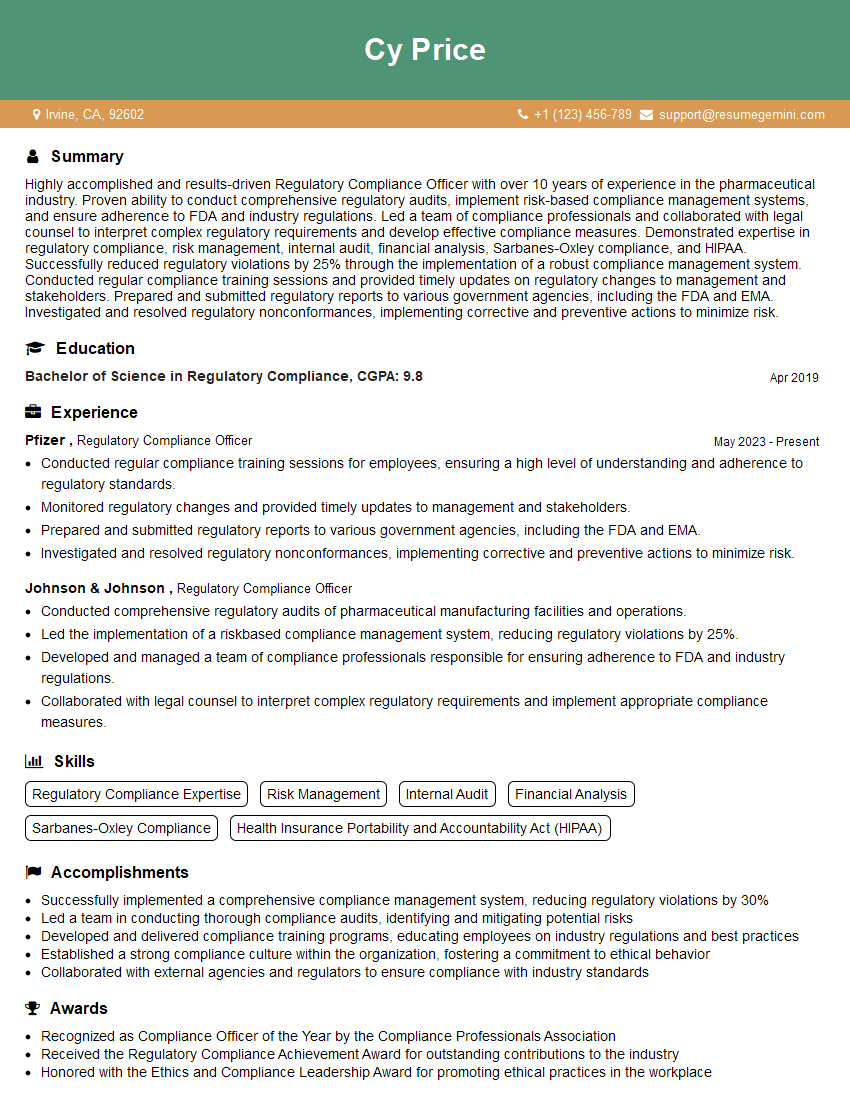
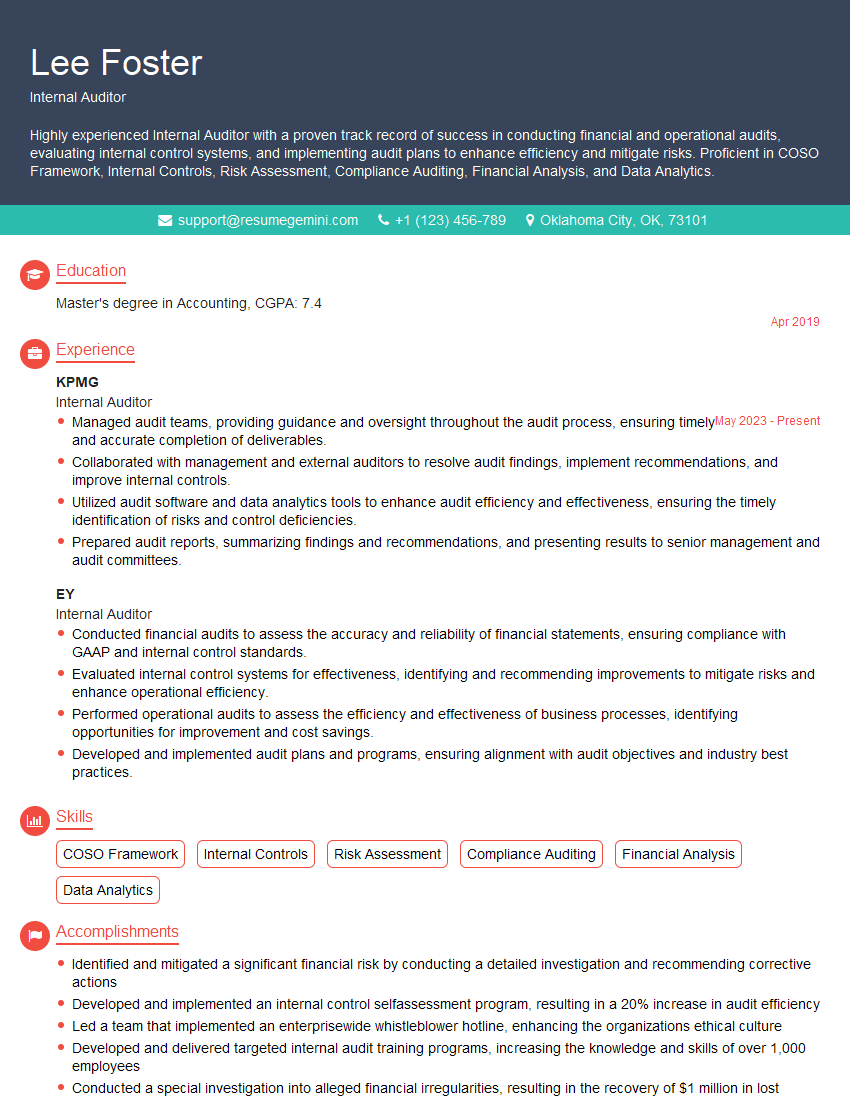
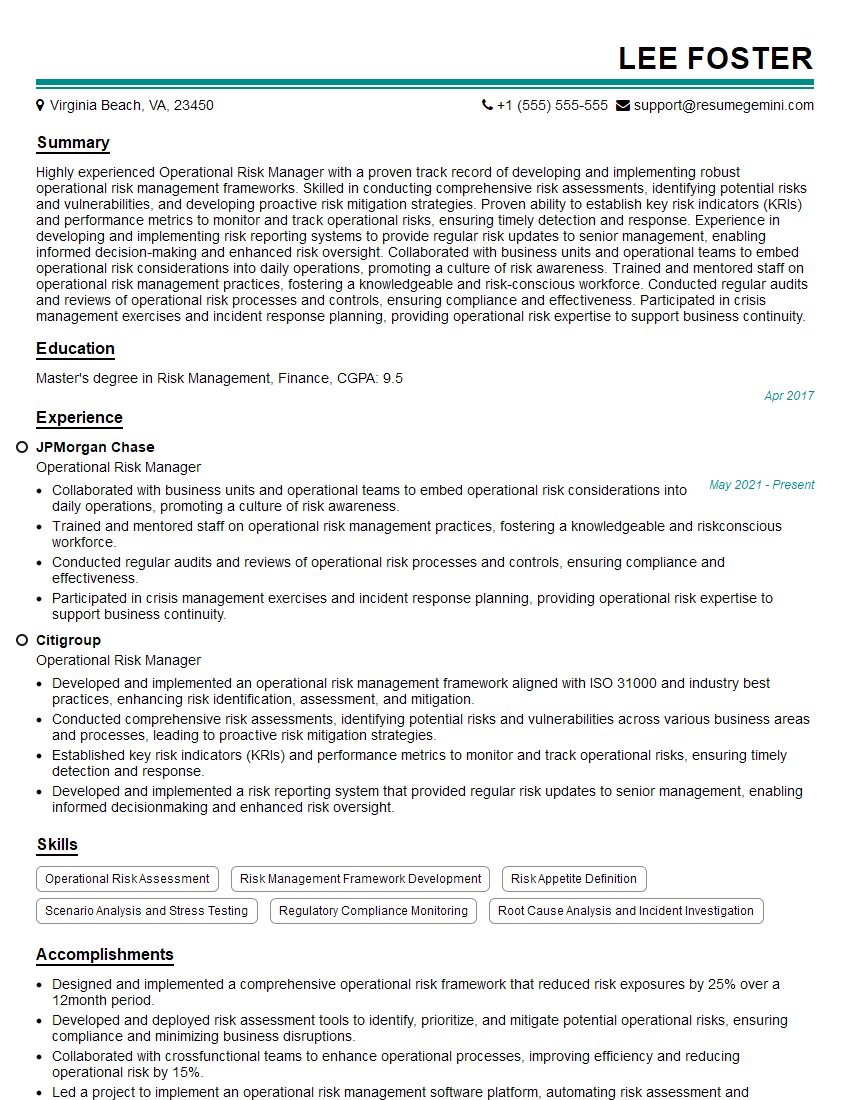
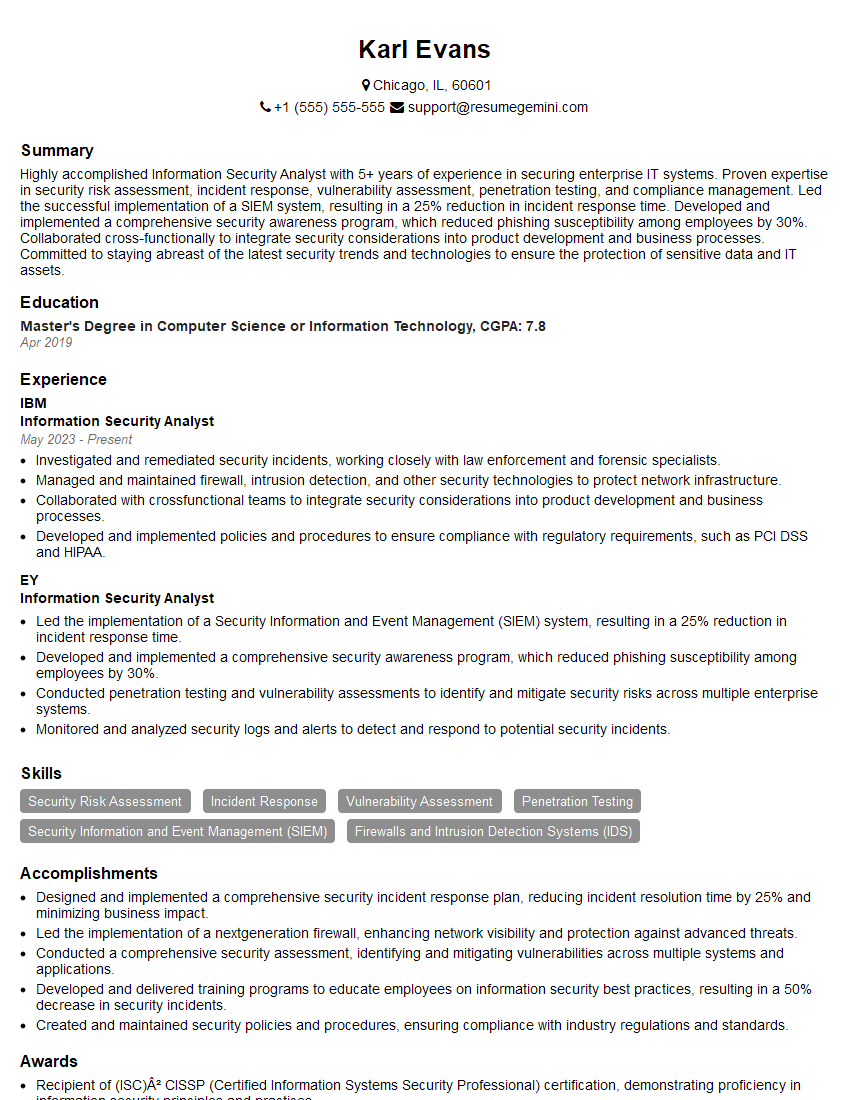
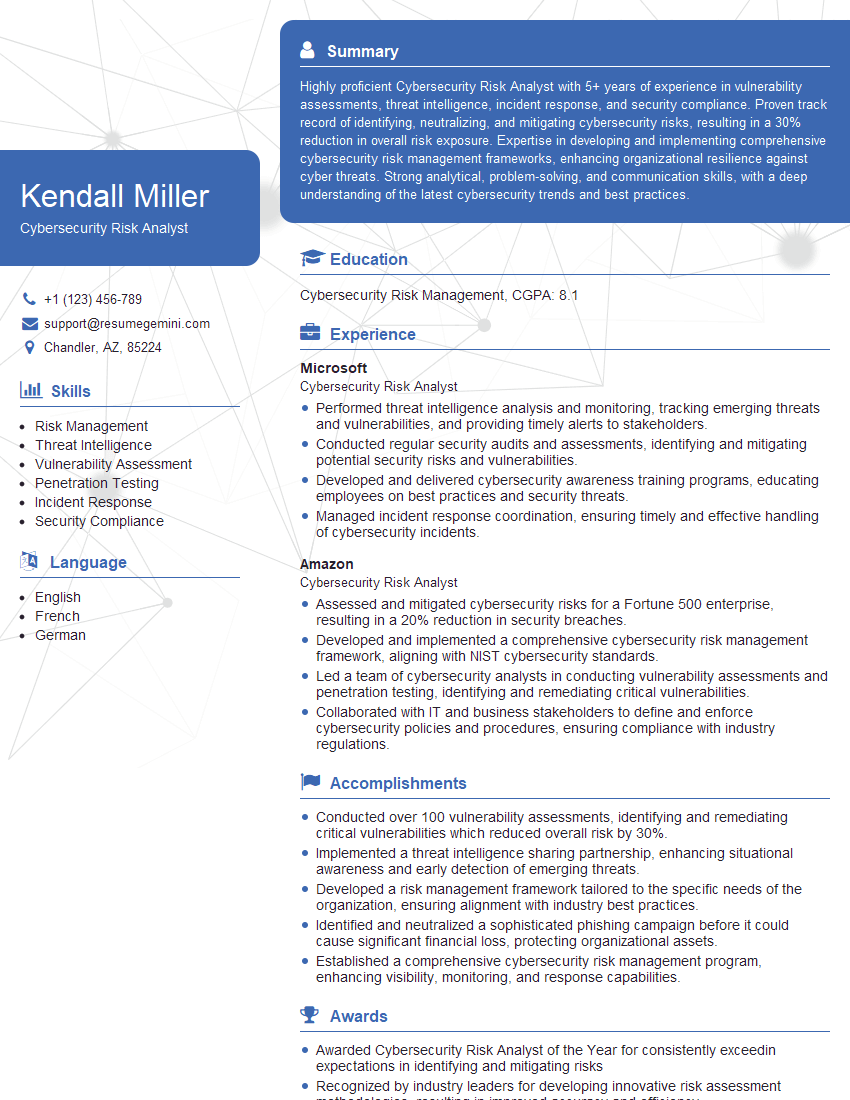
Mastering risk assessment is crucial for career advancement in today’s complex and dynamic business environment. Demonstrating a strong understanding of risk management principles and practical application is highly sought after across various industries. To significantly enhance your job prospects, create an ATS-friendly resume that effectively highlights your skills and experience. We recommend using ResumeGemini, a trusted resource for building professional resumes that stand out. Examples of resumes tailored to Risk Assessment experience are available to help guide your creation process.


Explore more articles
Users Rating of Our Blogs
Share Your Experience
We value your feedback! Please rate our content and share your thoughts (optional).
What Readers Say About Our Blog
Really detailed insights and content, thank you for writing this detailed article.
IT gave me an insight and words to use and be able to think of examples