Preparation is the key to success in any interview. In this post, we’ll explore crucial Experience with 5S and Kaizen interview questions and equip you with strategies to craft impactful answers. Whether you’re a beginner or a pro, these tips will elevate your preparation.
Questions Asked in Experience with 5S and Kaizen Interview
Q 1. Describe the five principles of 5S.
5S is a workplace organization method that uses a list of five Japanese words: Seiri (Sort), Seiton (Set in Order), Seiso (Shine), Seiketsu (Standardize), and Shitsuke (Sustain). It’s a systematic approach to creating a more efficient and productive work environment.
- Seiri (Sort): This involves eliminating unnecessary items from the workplace. Think of it as decluttering – removing anything that isn’t needed for the current work process. This might include outdated tools, broken equipment, or excessive inventory. The key is to identify and remove anything that doesn’t add value.
Example: Removing obsolete manuals or parts from a workshop. - Seiton (Set in Order): This focuses on organizing the remaining items logically and efficiently. Everything should have a designated place, and that place should be easily accessible. This improves workflow and reduces wasted time searching for items.
Example: Using shadow boards to visually organize tools, or color-coding files for easy retrieval. - Seiso (Shine): This emphasizes the importance of cleanliness and maintaining a tidy workspace. Regular cleaning prevents the accumulation of dirt, debris, and potential hazards. It also allows for early detection of equipment issues.
Example: Regularly wiping down machinery, sweeping the floor, and cleaning up spills immediately. - Seiketsu (Standardize): This step involves documenting the best practices established during the previous three Ss. Standardized procedures ensure consistency and prevent the workplace from reverting to a disorganized state.
Example: Creating checklists for daily cleaning routines or visual aids for tool placement. - Shitsuke (Sustain): This is the most crucial step, emphasizing the ongoing maintenance of the 5S system. It requires continuous effort, training, and accountability to keep the workplace organized and efficient over time.
Example: Regular audits, team meetings to review processes and address challenges, and incentives for maintaining 5S standards.
Q 2. Explain the Kaizen philosophy and its core principles.
Kaizen, meaning ‘change for the better’ in Japanese, is a philosophy that promotes continuous improvement in all aspects of life and work. It emphasizes small, incremental changes made consistently over time rather than large-scale, disruptive changes.
- Continuous Improvement: The core principle is the ongoing pursuit of improvement, with the understanding that perfection is a journey, not a destination.
- Employee Involvement: Kaizen values the input and participation of every employee, recognizing that everyone has valuable insights into their work processes.
- Data-Driven Decisions: Kaizen uses data and metrics to identify areas for improvement and track progress, avoiding subjective judgments.
- Process Focus: It prioritizes improving processes rather than solely focusing on individual performance. It recognizes that process improvements benefit everyone involved.
- Waste Elimination: Kaizen aims to eliminate all forms of waste (muda) in processes, such as excess inventory, defects, waiting, transportation, overproduction, over-processing, and unnecessary motion.
Kaizen is often implemented through events like Kaizen workshops, which bring teams together to focus on specific problems, brainstorm solutions, implement them, and measure the results.
Q 3. How do 5S and Kaizen methodologies relate to each other?
5S and Kaizen are deeply interconnected methodologies. 5S provides the foundational structure for a clean, organized, and efficient workplace, which is essential for successful Kaizen implementation.
Think of it this way: 5S creates the environment conducive to continuous improvement, while Kaizen provides the methodology for achieving that improvement. A well-implemented 5S system makes it easier to identify waste, analyze processes, and implement changes – all key aspects of Kaizen. Without a well-organized workplace (achieved through 5S), implementing and sustaining Kaizen improvements becomes significantly more challenging.
For example, if a workplace is cluttered and disorganized (lacking 5S), it’s much harder to identify bottlenecks or inefficiencies in the workflow (a key focus of Kaizen). A clean and organized workspace allows for better process visualization, making it easier to implement Kaizen improvements.
Q 4. What are the benefits of implementing 5S in a workplace?
Implementing 5S in a workplace offers numerous benefits, including:
- Improved Efficiency: A well-organized workplace reduces wasted time searching for tools, materials, or information, leading to increased productivity.
- Reduced Errors and Defects: A cleaner and more organized environment reduces the risk of accidents and errors caused by clutter or poorly maintained equipment.
- Enhanced Safety: By eliminating hazards and ensuring proper storage of materials, 5S contributes to a safer work environment.
- Increased Morale: Working in a clean, organized, and efficient environment improves employee morale and job satisfaction.
- Cost Savings: Reduced waste, improved efficiency, and fewer accidents translate to significant cost savings.
- Better Customer Satisfaction: A well-organized and efficient workplace often leads to improved product quality and faster delivery times, resulting in greater customer satisfaction.
- Improved Inventory Management: Proper organization through 5S helps to identify and remove excess inventory, reducing storage costs and preventing obsolescence.
Q 5. How can you measure the effectiveness of a 5S implementation?
Measuring the effectiveness of a 5S implementation requires a multi-faceted approach, combining qualitative and quantitative data. Here are some key metrics:
- Before & After Comparisons: Track key performance indicators (KPIs) before and after 5S implementation, such as production time, defect rates, safety incidents, and inventory levels. This allows for direct comparison and quantifies the improvement.
- Audits and Inspections: Regular audits, using checklists and scoring systems, assess adherence to 5S standards. This provides a snapshot of the ongoing effectiveness of the system.
- Employee Feedback: Gather feedback from employees through surveys or interviews to gauge their perception of the changes and identify areas for improvement.
- Waste Reduction Metrics: Track the reduction in various forms of waste (muda) as defined by Lean principles, such as reduced lead times, decreased inventory, and fewer defects.
- Time Studies: Conduct time studies to compare the time taken to complete tasks before and after 5S implementation, quantifying the impact on efficiency.
- Safety Incident Reduction: Monitor the number of safety incidents to determine the impact of 5S on workplace safety.
Combining these methods provides a comprehensive understanding of the effectiveness of your 5S implementation. It’s important to set clear goals and benchmarks upfront to measure progress against defined targets.
Q 6. Describe a time you implemented a Kaizen event. What were the results?
In a previous role at a manufacturing plant, we conducted a Kaizen event focused on optimizing the packaging process. We identified a bottleneck where the assembly line often had to stop waiting for packaging materials.
Through brainstorming and data analysis (measuring cycle times, material handling, etc.), we identified the root cause: an inefficient material delivery system. We implemented changes including a Kanban system for material replenishment, rearranging the workspace for better material flow, and standardizing packaging procedures.
The results were impressive. We saw a 15% reduction in cycle time, a 10% decrease in material waste, and a significant improvement in employee morale, as they were no longer burdened by the constant interruptions caused by the previous material delivery system. The success of this Kaizen event highlighted the power of employee involvement, data-driven decisions, and incremental improvements in achieving significant gains in efficiency and productivity.
Q 7. What are some common challenges encountered during 5S implementation?
Implementing 5S can encounter several challenges, including:
- Resistance to Change: Employees may resist changes to established routines and workflows. Effective communication, training, and employee involvement are crucial to address this.
- Lack of Management Support: 5S implementation requires strong commitment and support from management, including providing resources and time for training and implementation.
- Insufficient Training: Proper training is essential to ensure employees understand the principles and methods of 5S. Without proper training, the system may not be implemented correctly or effectively sustained.
- Maintaining Momentum: Sustaining the 5S system over time requires continuous effort and monitoring. Regular audits, team meetings, and incentives are critical to prevent backsliding.
- Space Constraints: Limited workspace can make it challenging to implement 5S effectively. Creative solutions might be needed to optimize space and improve organization.
- Lack of Clear Standards: Without clear, documented standards, maintaining consistency and preventing inconsistencies becomes difficult.
Addressing these challenges proactively through careful planning, communication, and ongoing support is crucial for the successful and long-term implementation of 5S.
Q 8. How would you overcome resistance to change during a Kaizen event?
Overcoming resistance to change during a Kaizen event requires a multifaceted approach focusing on communication, engagement, and demonstrating value. It’s not just about implementing changes; it’s about building buy-in.
- Open Communication: Begin by clearly explaining the why behind the Kaizen event. Highlight how the improvements will benefit the team, the company, and even individual employees. Address concerns directly and honestly. For example, if a change affects workflow, explain the transition plan and offer support.
- Employee Involvement: Don’t just *tell* employees about changes; involve them in the process. Form cross-functional teams to brainstorm solutions and implement improvements. This fosters ownership and reduces resistance. A successful example is involving the production line workers in identifying bottlenecks during a Kaizen event focusing on cycle time reduction. Their direct experience is invaluable.
- Pilot Programs & Small Wins: Start with smaller, less disruptive Kaizen projects to build momentum and demonstrate success. These early wins create confidence and encourage participation in larger, more significant events. Imagine starting with a simple 5S improvement in one workstation before tackling a larger process change.
- Training and Support: Provide thorough training on new processes and tools. Offer ongoing support and coaching to ensure employees feel comfortable with the changes. This might involve on-the-job training, mentoring, or access to online resources.
- Recognition and Rewards: Acknowledge and reward contributions. Celebrating successes, both big and small, reinforces positive behavior and encourages ongoing participation.
Remember, resistance is often rooted in fear of the unknown or perceived loss. By addressing these concerns proactively and building trust, you can effectively overcome resistance and create a culture of continuous improvement.
Q 9. How do you sustain 5S improvements over time?
Sustaining 5S improvements demands a commitment to consistent monitoring, accountability, and ongoing reinforcement. It’s not a one-time project but a continuous process.
- Standardized Work Instructions: Develop clear, concise, and visual instructions for maintaining each 5S element (Sort, Set in Order, Shine, Standardize, Sustain). These should be readily accessible to all employees.
- Regular Audits and Inspections: Implement a regular audit system to track 5S compliance. This could be daily visual checks, weekly team inspections, or monthly management reviews. Make the audits part of regular performance evaluations.
- Visual Management: Use visual cues like color-coded labels, shadow boards, and standardized storage locations to make it easy to maintain order. This makes it immediately obvious when something is out of place.
- Gamification and Incentives: Introduce friendly competition or reward systems to motivate employees to maintain 5S standards. This could include team recognition, small prizes, or public acknowledgement of top performers.
- Leadership Commitment: Sustaining 5S requires consistent support from leadership. Leaders must visibly champion the initiative, participate in audits, and address any issues promptly.
- Continuous Improvement: Regularly review and update 5S standards based on feedback and changing needs. Treat 5S as a dynamic system that adapts to the organization’s evolution.
An example of sustained 5S would be a consistently clean and organized manufacturing floor where tools are easily accessible, inventory is well-managed, and safety standards are visibly maintained, reflecting a culture of order and efficiency.
Q 10. Explain how you would train employees on 5S principles.
Effective 5S training should be practical, engaging, and tailored to the specific needs of the employees. It’s not simply lecturing; it’s about active participation and practical application.
- Interactive Workshops: Conduct interactive workshops that involve hands-on activities, group discussions, and role-playing. This approach makes learning more engaging and memorable.
- Visual Aids: Use visual aids like photos, videos, and presentations to illustrate 5S concepts. Visual learners will find this method particularly effective.
- Real-World Examples: Show employees real-world examples of successful 5S implementations, both within and outside the company. This demonstrates the practical benefits of 5S.
- On-the-Job Training: Provide on-the-job training and coaching to reinforce learning. Having experienced colleagues mentor newer employees can be highly effective.
- Ongoing Reinforcement: Regularly reinforce 5S principles through newsletters, meetings, and team discussions. This keeps 5S top-of-mind and sustains the improvements over time.
- Customized Training: Tailor training materials to different departments and roles. The needs of an office worker will be different from those of a factory worker.
For instance, a training session might involve employees physically sorting and organizing a designated area, followed by a discussion on the benefits of proper storage and labeling, further reinforced by ongoing visual cues and team audits.
Q 11. What are some key performance indicators (KPIs) for 5S and Kaizen?
Key Performance Indicators (KPIs) for 5S and Kaizen should be measurable and track progress toward specific goals. They should be aligned with the overall business objectives.
- 5S KPIs:
- Safety Incidents: Reduction in workplace accidents and near misses.
- Downtime Reduction: Decrease in equipment downtime due to improved organization and maintenance.
- Inventory Turnover Rate: Improved inventory management leading to faster turnover.
- Waste Reduction: Quantifiable reduction in waste (materials, time, energy).
- Search Time: Reduced time spent searching for tools, materials, or information.
- 5S Audit Scores: Regular audits to assess compliance with 5S standards.
- Kaizen KPIs:
- Cycle Time Reduction: Improved process efficiency leading to shorter cycle times.
- Defect Rate Reduction: Decrease in the number of defects and errors.
- Cost Savings: Reduction in production costs, operating expenses, or material waste.
- Productivity Improvement: Increase in output per unit of input (labor, materials, etc.).
- Employee Satisfaction: Improved employee morale and engagement.
- Number of Kaizen Events: Tracking the number of improvement events implemented.
These KPIs can be tracked using spreadsheets, databases, or dedicated performance management software. Regular monitoring of these KPIs helps to identify areas for improvement and measure the success of 5S and Kaizen initiatives.
Q 12. How do you prioritize Kaizen projects?
Prioritizing Kaizen projects requires a systematic approach that balances impact, feasibility, and urgency. A popular method is the prioritization matrix.
- Impact/Feasibility Matrix: Plot potential Kaizen projects on a matrix with ‘Impact’ on one axis and ‘Feasibility’ on the other. Projects with high impact and high feasibility should be prioritized first. This ensures that you tackle the projects that will yield the biggest results with the least amount of effort initially.
- Urgency/Impact Matrix: This approach also considers the urgency of the problem. High-impact, high-urgency projects should be addressed immediately. This matrix allows for a clear view of time-sensitive issues versus longer-term improvement opportunities.
- Cost-Benefit Analysis: Conduct a thorough cost-benefit analysis for each potential project. This involves estimating the costs of implementing the improvement and comparing them to the potential benefits. This ensures that the chosen projects offer a strong return on investment.
- Team Input: Involve the team in the prioritization process. Their insights and experience can help identify hidden issues and potential obstacles.
- Alignment with Strategic Goals: Ensure that Kaizen projects align with the company’s overall strategic goals. This prevents implementing improvements that don’t contribute to the bigger picture.
For example, a project to reduce machine downtime (high impact, high feasibility) might take precedence over a project to redesign a complex process (high impact, low feasibility).
Q 13. How would you identify areas for improvement using 5S and Kaizen?
Identifying areas for improvement using 5S and Kaizen involves a combination of observation, data analysis, and employee input. The process is iterative and continuous.
- 5S Audits: Conduct thorough 5S audits to identify areas where the 5S principles are not being followed. This might involve visual inspections, checklists, or even employee surveys.
- Gemba Walks: Regularly conduct Gemba walks (going to the place where the work is done) to observe processes firsthand. This allows you to see bottlenecks, inefficiencies, and potential hazards that might not be evident from data alone.
- Value Stream Mapping: Use value stream mapping to visualize the flow of materials and information in a process. This helps to identify areas of waste and opportunities for improvement.
- Data Analysis: Analyze data on production times, defect rates, and other key metrics to identify areas where improvements are needed.
- Employee Feedback: Solicit feedback from employees at all levels. Their insights can often reveal hidden problems or suggest innovative solutions.
- Root Cause Analysis: For recurring problems, use root cause analysis techniques (like the 5 Whys) to identify the underlying causes and implement effective solutions.
For example, a 5S audit might reveal disorganized storage areas leading to long search times for materials, while a Gemba walk might reveal a bottleneck in the production process caused by inefficient equipment placement.
Q 14. Describe your experience with visual management techniques within a 5S system.
Visual management is crucial for effective 5S implementation. It makes it easy to see the current state, identify problems, and track progress. It helps to reinforce standards and makes the system self-regulating.
- Shadow Boards: Using shadow boards to clearly display the location for tools and equipment, immediately revealing when something is missing or out of place.
- Color-Coding: Employing color-coding systems to identify different types of materials, equipment, or safety zones. This enhances visibility and reduces errors.
- Kanban Boards: Utilizing Kanban boards to visualize workflow, track progress, and identify bottlenecks in real-time. This allows for immediate response to emerging issues.
- Labeling and Signage: Implementing clear and consistent labeling and signage to identify storage locations, safety procedures, and other important information.
- Performance Charts: Displaying key performance indicators (KPIs) on charts or dashboards that are visible to all employees. This promotes transparency and accountability.
- 5S Scorecards: Creating visual scorecards that track the progress of 5S implementation. This provides an easily-understood summary of how well 5S principles are being followed.
In a previous role, we implemented a color-coded system for labeling hazardous materials, which significantly reduced safety incidents. This visual management made it immediately clear which materials required special handling, promoting better safety practices throughout the facility.
Q 15. How do you involve employees in 5S and Kaizen initiatives?
Engaging employees is paramount to the success of any 5S and Kaizen initiative. It’s not about imposing changes from above, but fostering a culture of continuous improvement where everyone feels ownership. I begin by clearly communicating the goals and benefits of the program – how it will improve their daily work, reduce wasted effort, and create a safer, more efficient environment. This might involve presentations, workshops, or even informal discussions depending on the team’s size and nature.
Next, I actively involve employees in all stages – from planning and implementation to monitoring and improvement. This often includes forming cross-functional teams, empowering them to identify problems and propose solutions. Techniques like brainstorming sessions, Kaizen events, and suggestion boxes encourage participation and ownership. Regular feedback sessions ensure that employees feel heard and their concerns addressed.
Finally, recognizing and rewarding contributions is critical. This isn’t just about monetary incentives; acknowledging effort and celebrating successes – both big and small – boosts morale and reinforces positive behaviors. A visible display of improvements, perhaps using a ‘before and after’ approach, also helps to showcase progress and motivate continued engagement.
Career Expert Tips:
- Ace those interviews! Prepare effectively by reviewing the Top 50 Most Common Interview Questions on ResumeGemini.
- Navigate your job search with confidence! Explore a wide range of Career Tips on ResumeGemini. Learn about common challenges and recommendations to overcome them.
- Craft the perfect resume! Master the Art of Resume Writing with ResumeGemini’s guide. Showcase your unique qualifications and achievements effectively.
- Don’t miss out on holiday savings! Build your dream resume with ResumeGemini’s ATS optimized templates.
Q 16. What is the role of leadership in successful 5S and Kaizen implementations?
Leadership plays a crucial, multifaceted role in successful 5S and Kaizen implementations. It starts with a clear vision and unwavering commitment from top management. Leaders must champion the initiatives, demonstrating their own active participation and actively promoting the importance of continuous improvement throughout the organization.
Effective leadership also involves providing the necessary resources – time, training, tools, and budget – to support the initiatives. This ensures that teams aren’t hindered by resource constraints. Furthermore, leaders need to create a supportive environment, encouraging risk-taking, experimentation, and learning from mistakes. A blame-free culture is essential for fostering open communication and transparency.
Finally, leaders must consistently reinforce the importance of 5S and Kaizen principles, providing regular updates on progress, celebrating successes, and addressing challenges proactively. Regular Gemba walks (explained in a later answer) are an excellent way for leaders to show their commitment and stay connected with the implementation process.
Q 17. How do you handle setbacks or unexpected issues during a Kaizen event?
Setbacks and unexpected issues are inevitable during Kaizen events. My approach focuses on viewing these challenges as learning opportunities. The first step is to acknowledge the problem openly and honestly, avoiding placing blame. We then collaboratively investigate the root cause using tools like the 5 Whys or fishbone diagrams.
Once the root cause is understood, the team develops a countermeasure. This is a crucial step where creativity and problem-solving skills are highly valued. A temporary fix may be implemented immediately to mitigate the immediate impact, while a more sustainable long-term solution is worked on concurrently. Crucially, the experience is documented thoroughly, so the team can learn from the situation and avoid repeating the same mistake in the future. This documentation becomes part of the continuous improvement process.
Regular monitoring and adjustments are necessary. We track key metrics to ensure the implemented countermeasures are effective. Further adjustments might be needed to fine-tune the solution and achieve optimal results. This iterative approach is central to the Kaizen philosophy.
Q 18. Explain your understanding of Gemba walks and their significance.
Gemba walks are structured observations of the actual workplace, where value is created or added. ‘Gemba’ translates from Japanese as ‘the real place’. They’re not just casual strolls; they’re purposeful, data-driven visits to understand the current state, identify problems, and find opportunities for improvement.
Their significance lies in the direct observation of processes, allowing for identification of waste, bottlenecks, and safety hazards that might be missed in office settings. During a Gemba walk, I look for evidence of inefficiencies, such as unnecessary movement, excessive inventory, waiting time, and defects. I also interact with employees to gather their insights and perspectives, ensuring that their voices are heard. The observations from the Gemba walks are documented, and the findings are used to inform subsequent Kaizen events.
For example, a Gemba walk in a manufacturing plant might reveal bottlenecks at a specific machine, prompting a Kaizen event focused on improving its efficiency or workflow. In an office setting, a Gemba walk could reveal inefficient filing systems, leading to a Kaizen project to improve document management.
Q 19. Describe your experience with using data analysis to support 5S and Kaizen projects.
Data analysis is crucial for objectively measuring the effectiveness of 5S and Kaizen projects. It provides concrete evidence of improvements and helps to identify areas requiring further attention. The type of data collected depends on the specific project, but it might include metrics like cycle time, defect rates, inventory levels, safety incidents, and employee satisfaction scores.
I use various tools and techniques for data analysis, including spreadsheets, statistical software, and data visualization tools. For instance, before and after comparisons of key metrics illustrate the impact of implemented improvements. Control charts help monitor process stability and identify trends. Root cause analysis techniques, like Pareto charts, help prioritize improvement efforts.
In one project involving a packaging line, we tracked the number of defects per hour before and after implementing a Kaizen event focused on improving the packaging process. The data showed a significant reduction in defects, providing clear evidence of the project’s success. This data was then used to justify further investment in process improvements.
Q 20. How do you document and track progress during a Kaizen project?
Thorough documentation and progress tracking are vital for ensuring the sustainability of Kaizen projects. This begins with defining clear objectives and metrics at the outset of the project. Then, a structured system for tracking progress against these metrics needs to be established. This could be a simple spreadsheet, a dedicated project management software, or a visual management board.
Regular progress meetings are essential, allowing the team to review achievements, address challenges, and make necessary adjustments. Photographs, videos, and other visual aids can effectively document the ‘before and after’ state of the process. This visual record also helps communicate progress to stakeholders and maintain momentum.
Finally, a comprehensive final report summarizing the project’s goals, methodologies, results, and lessons learned is crucial. This report not only serves as a record of the project but also as a valuable resource for future initiatives. It should include the data gathered during the project, any challenges encountered and how they were addressed, and recommendations for sustaining improvements.
Q 21. What are some examples of waste that can be eliminated using Lean principles?
Lean principles focus on eliminating waste (Muda) in all its forms. There are many types of waste, and identifying and eliminating them leads to significant efficiency improvements.
- Transportation: Unnecessary movement of materials or information. Example: Moving parts across the factory floor multiple times before assembly.
- Inventory: Excess materials or work-in-progress. Example: Overstocking raw materials leading to storage costs and obsolescence.
- Motion: Unnecessary movements by workers. Example: Reaching excessively for tools or materials.
- Waiting: Idle time due to delays in materials, information, or processes. Example: Workers waiting for parts to arrive before starting their tasks.
- Overproduction: Producing more than needed. Example: Manufacturing goods ahead of demand, leading to excess inventory.
- Over-processing: Performing more work than necessary. Example: Using a complex process when a simpler one would suffice.
- Defects: Errors or imperfections leading to rework or scrap. Example: Producing faulty products requiring rework or disposal.
- Underutilized Talent: Failing to leverage employee skills and knowledge. Example: Not utilizing employee suggestions for improvement.
By systematically identifying and eliminating these wastes, organizations can significantly improve efficiency, reduce costs, and enhance quality.
Q 22. How does 5S contribute to overall workplace safety?
5S, a workplace organization methodology, significantly improves workplace safety by minimizing hazards. It does this through a systematic approach focusing on five key areas: Seiri (Sort), Seiton (Set in Order), Seiso (Shine), Seiketsu (Standardize), and Shitsuke (Sustain).
- Seiri (Sort): Removing unnecessary items reduces clutter, eliminating tripping hazards and freeing up space for safe movement. Imagine a cluttered workshop – the risk of accidents is significantly higher compared to a tidy one.
- Seiton (Set in Order): Organizing tools and materials efficiently allows for easy access and prevents searching, reducing the risk of reaching for tools in awkward positions. A well-organized workspace reduces strain and accidental injuries.
- Seiso (Shine): Regular cleaning identifies potential safety issues like leaks or damaged equipment early on. A clean workspace also improves visibility, further minimizing accidents.
- Seiketsu (Standardize): Standardizing processes ensures consistent safety practices are followed, reducing variations that could lead to errors or accidents. This sets clear expectations and makes safety a habit.
- Shitsuke (Sustain): Maintaining the first four S’s ensures long-term safety improvements. Regular audits and continuous improvement efforts keep safety at the forefront.
In essence, 5S creates a safer, more efficient, and more productive environment by reducing the potential for accidents stemming from disorganization and clutter.
Q 23. How does Kaizen relate to continuous improvement methodologies like Six Sigma?
Kaizen, meaning ‘change for the better’ in Japanese, and Six Sigma, a data-driven methodology focused on reducing variation, are both continuous improvement approaches but operate at different levels. Kaizen is a grassroots approach, encouraging small, incremental improvements driven by employees at all levels. Six Sigma, conversely, employs statistical methods and a more structured DMAIC (Define, Measure, Analyze, Improve, Control) process, typically led by trained professionals.
While seemingly different, they are complementary. Kaizen can feed into Six Sigma projects by identifying small, localized improvements that can be validated and scaled up using Six Sigma’s rigorous data analysis. For instance, a Kaizen event might identify a bottleneck in a process; Six Sigma tools would then be used to analyze the root cause and implement a data-driven solution to eliminate the bottleneck completely.
Think of it as Kaizen providing the initial sparks of innovation, while Six Sigma provides the framework for systematic validation and widespread implementation. Both share the common goal of continuous improvement and eliminating waste.
Q 24. Describe a time you used root cause analysis to solve a problem related to 5S or Kaizen.
During a Kaizen event focused on improving our packaging process, we noticed a significant increase in damaged goods. Initially, we blamed poor handling during shipping. However, using the ‘5 Whys’ root cause analysis technique, we dug deeper.
- Why are goods damaged? Because the packaging isn’t strong enough.
- Why is the packaging not strong enough? Because we’re using cheaper, thinner cardboard.
- Why are we using cheaper cardboard? Because the purchasing department chose the cheapest option to reduce costs.
- Why did the purchasing department choose the cheapest option? Because the focus was solely on cost reduction, not on product protection.
- Why wasn’t product protection considered? Because there was no clear communication regarding packaging specifications and their impact on product integrity.
This revealed a communication breakdown between departments as the root cause. We implemented a solution involving improved cross-departmental communication, clearly defined packaging specifications, and a cost-benefit analysis that considered damage costs alongside material costs. This resulted in a significant reduction in damaged goods and increased overall efficiency.
Q 25. How would you adapt 5S principles to a virtual or remote work environment?
Adapting 5S to a virtual environment requires a shift in focus from physical workspace to digital workspace. The principles remain the same, but the application changes.
- Seiri (Sort): Regularly review and delete unnecessary files, emails, and digital documents. This improves search times and reduces digital clutter.
- Seiton (Set in Order): Organize digital files into logical folders, using consistent naming conventions and cloud storage. This ensures easy access to information and reduces wasted time searching.
- Seiso (Shine): Regularly update software, clear browser cache, and scan for malware to maintain system performance and security. A clean digital system is efficient and prevents potential data loss.
- Seiketsu (Standardize): Create and maintain standard operating procedures for digital processes, ensuring everyone follows the same workflow. This encourages consistency and minimizes errors.
- Shitsuke (Sustain): Establish regular digital clean-up sessions, set up automated tasks (e.g., deleting old emails), and conduct regular system checks to maintain standards. This encourages consistent digital organization.
Successful adaptation requires leadership commitment and clear communication regarding digital organization best practices.
Q 26. What are some tools or techniques you have used to facilitate Kaizen events?
Facilitating Kaizen events often involves using various tools and techniques to ensure effective problem-solving and team engagement. Some examples include:
- Value Stream Mapping (VSM): A visual tool to map the current state of a process and identify areas for improvement. It helps teams visualize waste and potential improvements.
- 5 Whys: As previously demonstrated, this is a simple yet effective technique to drill down to the root cause of a problem. It fosters critical thinking and problem-solving skills.
- Fishbone Diagram (Ishikawa Diagram): Used to brainstorm potential causes of a problem by categorizing them (e.g., People, Methods, Materials, Machines, Environment). It encourages diverse perspectives.
- Check Sheets: Simple data collection tools to track occurrences of a problem over time. This offers objective data for analysis and improvement measurement.
- A3 Reporting: A structured method for documenting a problem, its root cause, and proposed solutions on a single page. It ensures clarity and focused problem-solving.
Beyond these, effective facilitation involves strong communication, active listening, and creating a safe environment for team members to openly share ideas and challenge the status quo.
Q 27. How do you measure the return on investment (ROI) of a Kaizen project?
Measuring the ROI of a Kaizen project can be challenging because it often involves intangible benefits. However, a structured approach is crucial. We focus on both quantifiable and qualitative metrics:
- Quantifiable Metrics: These include reductions in cycle time, waste (materials, time, defects), costs (labor, materials, rework), and lead times. These are often expressed as monetary values, easily incorporated into the ROI calculation.
- Qualitative Metrics: These include improvements in employee morale, safety, and product quality. While harder to quantify directly, these can be estimated by considering things like reduced accident rates translating to lower insurance premiums, or improved employee satisfaction leading to decreased turnover.
The ROI calculation itself might involve comparing the total cost of the Kaizen project (labor, materials, training) against the total savings or increased revenue generated from the implemented improvements. A simple ROI formula could be: (Total Savings - Project Cost) / Project Cost. However, incorporating qualitative improvements often requires a more holistic assessment, considering both financial and non-financial gains.
Q 28. Describe your experience with implementing 5S in different types of workplaces.
I have implemented 5S across diverse work environments, including manufacturing, warehousing, and office settings. Each environment presented unique challenges and adaptations:
- Manufacturing: The focus here was on minimizing safety hazards (sharp tools, heavy machinery), optimizing workflow to reduce bottlenecks, and ensuring efficient inventory management. Implementing visual controls (colored tape for walkways, labels for parts) was crucial for safety and organization.
- Warehousing: The emphasis here was on optimizing space utilization, improving inventory tracking and accessibility, and streamlining receiving and shipping processes. Clear labeling systems, standardized storage locations, and regular cleaning routines were paramount.
- Office Settings: While the hazards are different, the principles remain the same. The focus shifted towards managing digital clutter, optimizing document storage, improving meeting room organization, and streamlining administrative processes. This involved promoting good digital hygiene and establishing clear filing systems.
Regardless of the environment, success hinges on clear communication, employee involvement, and a continuous improvement mindset. The key is tailoring the 5S methodology to the specific needs and challenges of each environment.
Key Topics to Learn for Experience with 5S and Kaizen Interview
- Understanding 5S Methodology: Define and explain the five principles (Sort, Set in Order, Shine, Standardize, Sustain) and their practical application in various workplace settings. Be prepared to discuss examples from your own experience.
- Kaizen Principles and Philosophy: Explain the core concepts of continuous improvement, employee empowerment, and waste reduction. Discuss how Kaizen complements and enhances the 5S methodology.
- Practical Application of 5S & Kaizen: Prepare examples showcasing how you’ve implemented 5S or Kaizen principles to improve efficiency, reduce waste, enhance safety, or improve overall workplace organization. Quantify your results whenever possible (e.g., “reduced errors by 15%”).
- Problem-Solving using 5S & Kaizen: Describe your approach to identifying and solving workplace problems using these methodologies. Discuss your experience with tools like root cause analysis and process mapping.
- Measuring Success with 5S & Kaizen: Explain how you would measure the effectiveness of your 5S and Kaizen implementations. What Key Performance Indicators (KPIs) would you track? How would you demonstrate Return on Investment (ROI)?
- Leadership and Teamwork in 5S & Kaizen: Discuss your experience leading or participating in 5S or Kaizen initiatives. Highlight your ability to motivate and collaborate with teams to achieve common goals.
- Adapting 5S & Kaizen to Different Environments: Be prepared to discuss how you would adapt these methodologies to different work environments or industries. Demonstrate your flexibility and adaptability.
Next Steps
Mastering 5S and Kaizen demonstrates a commitment to efficiency, continuous improvement, and problem-solving – highly valued skills in today’s competitive job market. This expertise will significantly boost your career prospects and open doors to exciting opportunities. To maximize your chances of landing your dream role, creating a strong, ATS-friendly resume is crucial. ResumeGemini is a trusted resource to help you build a professional and impactful resume that highlights your 5S and Kaizen experience effectively. We provide examples of resumes tailored to this specific skillset to help you get started.
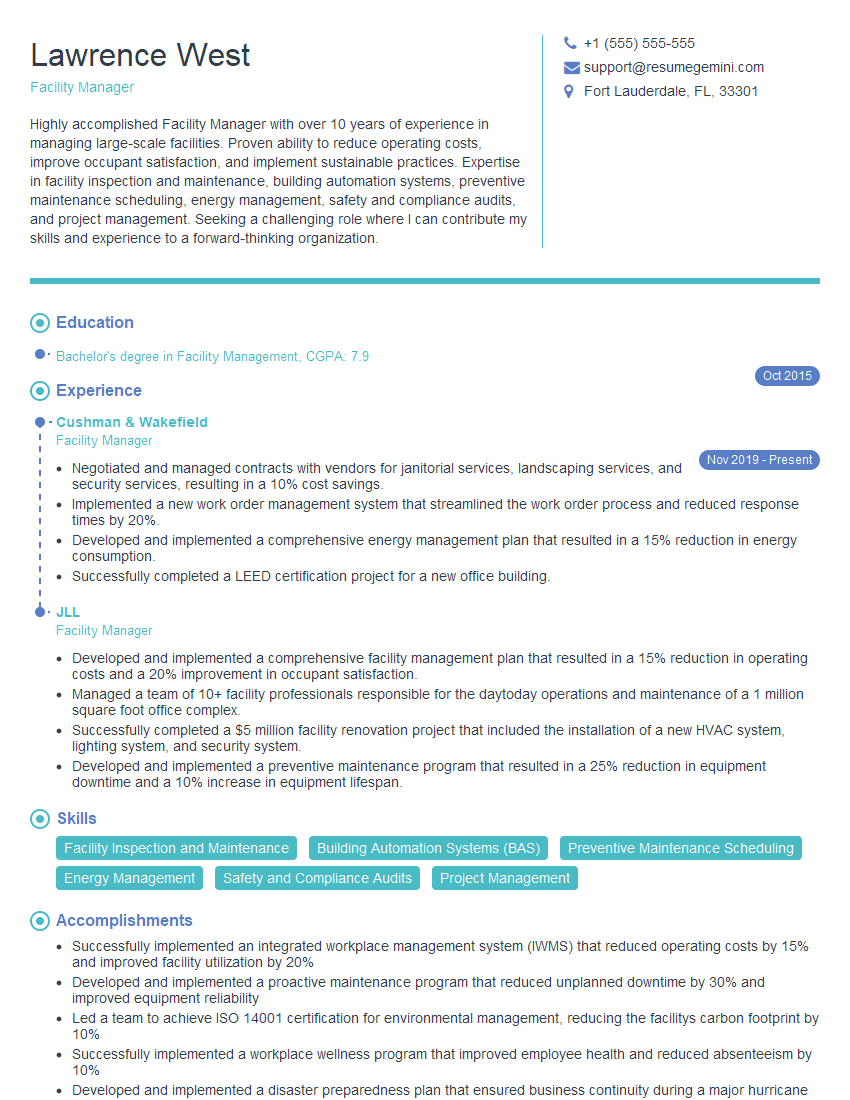
Facility Manager Resume Sample

Operations Manager Resume Sample
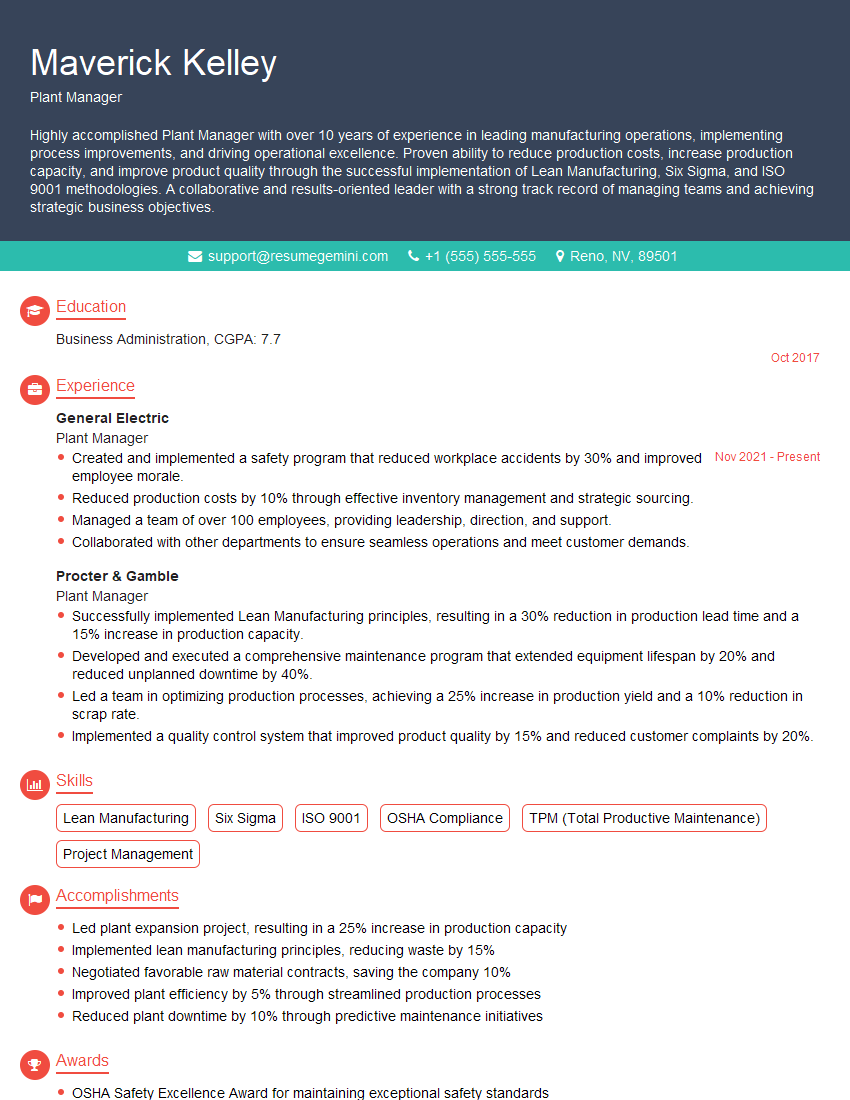
Plant Manager Resume Sample
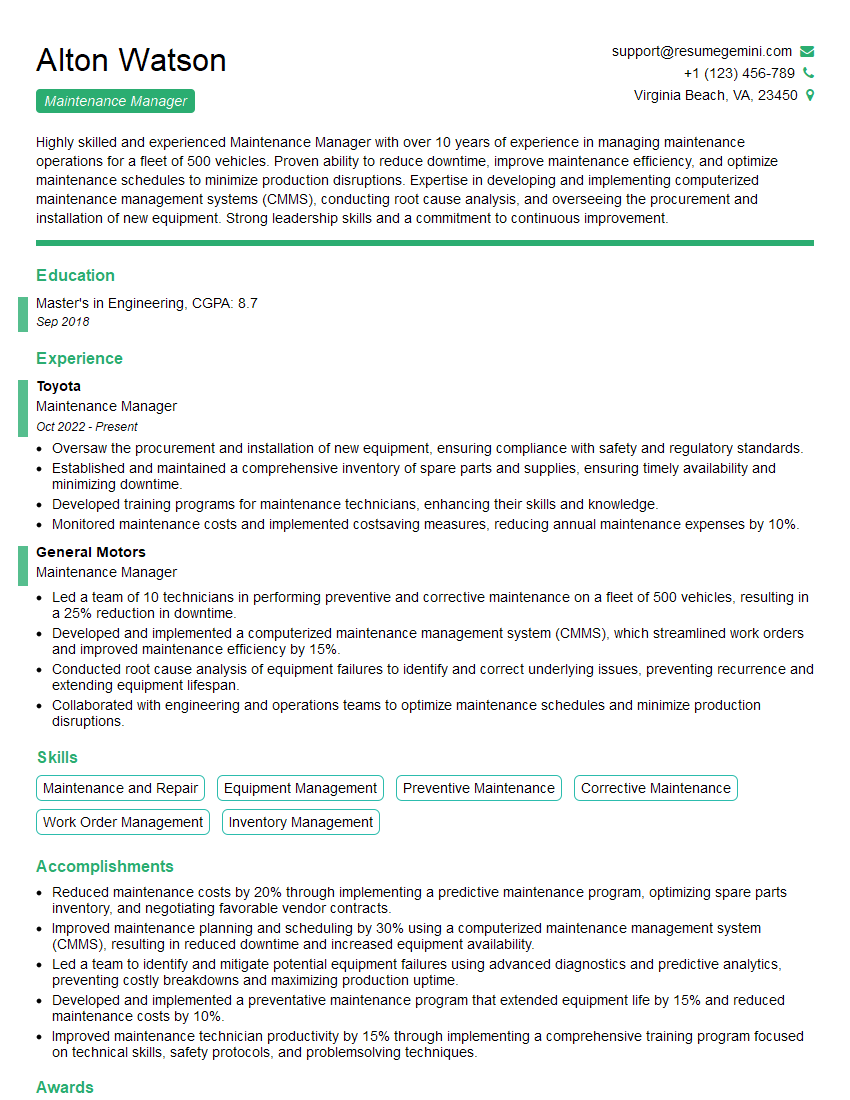
Maintenance Manager Resume Sample
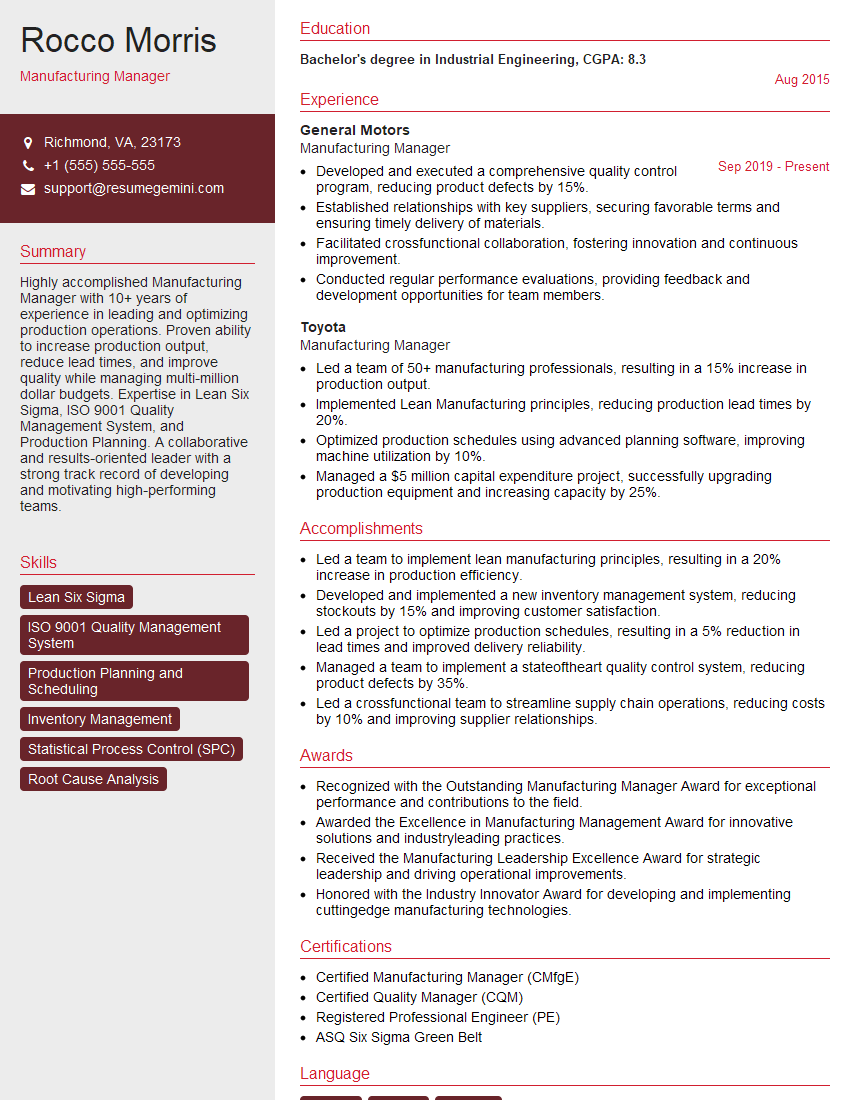
Manufacturing Manager Resume Sample
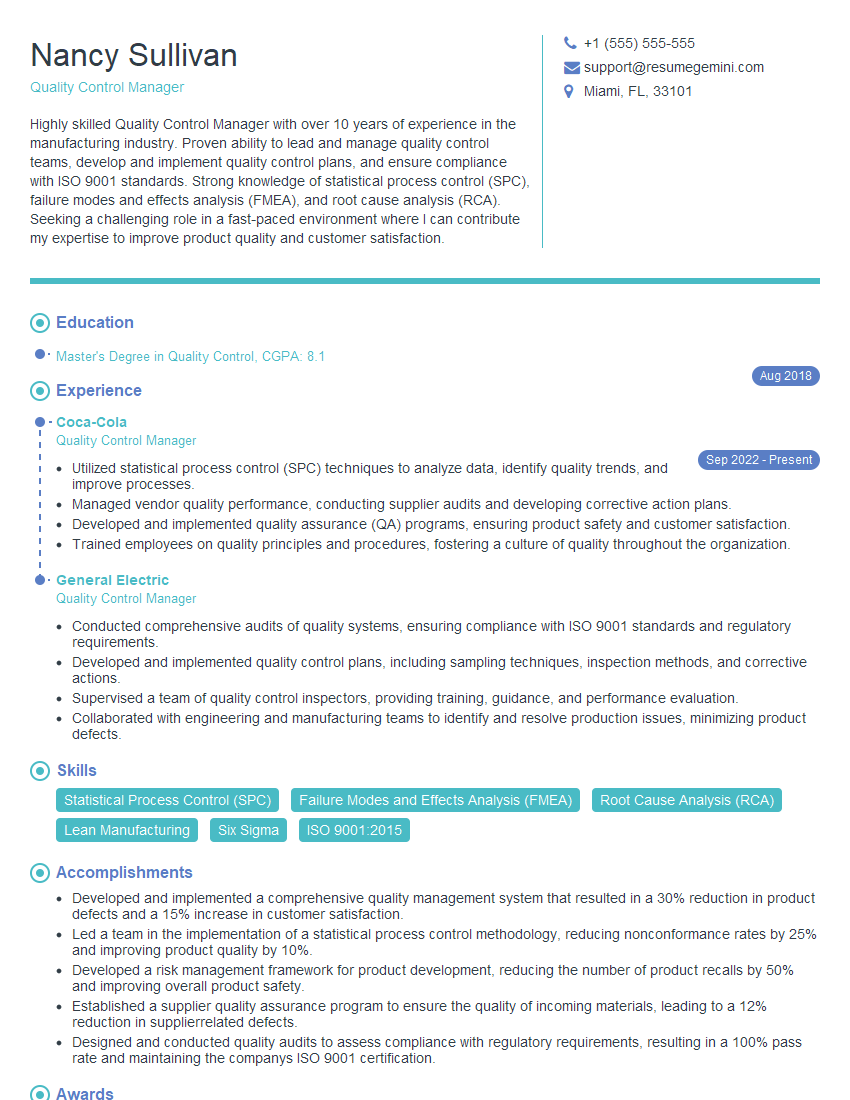
Quality Control Manager Resume Sample
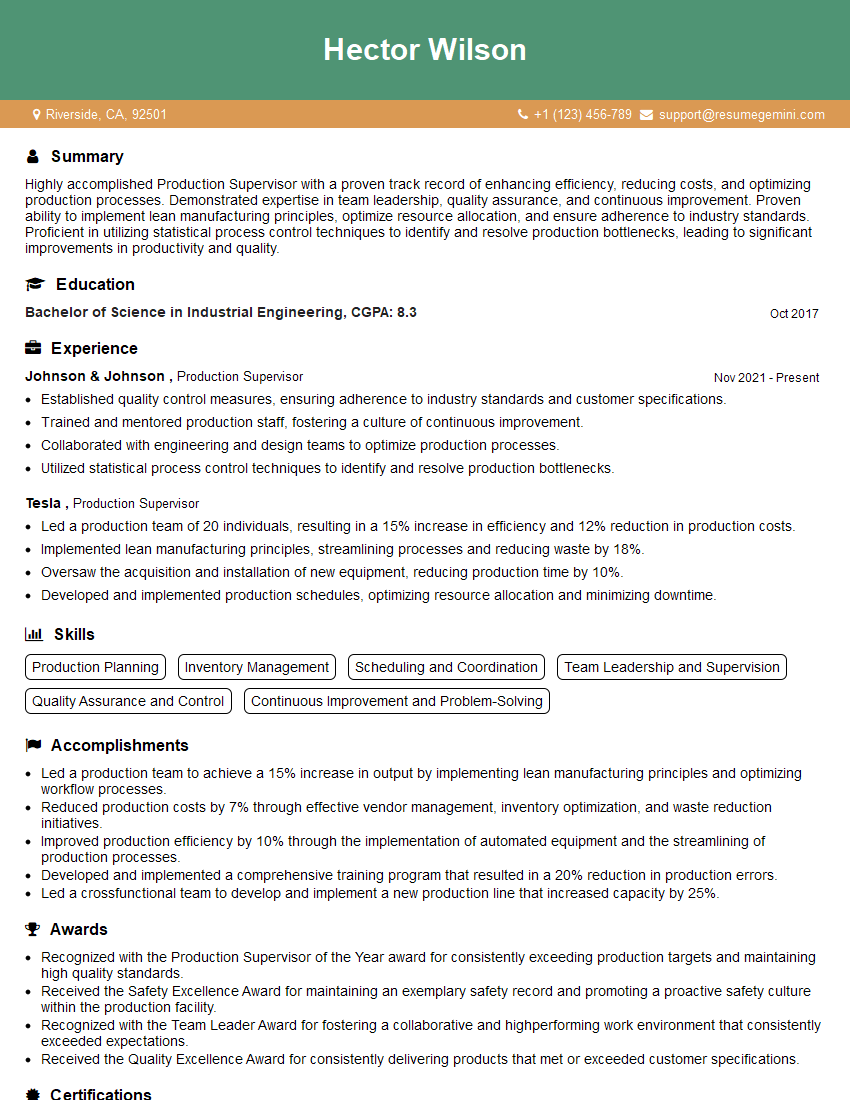
Production Supervisor Resume Sample
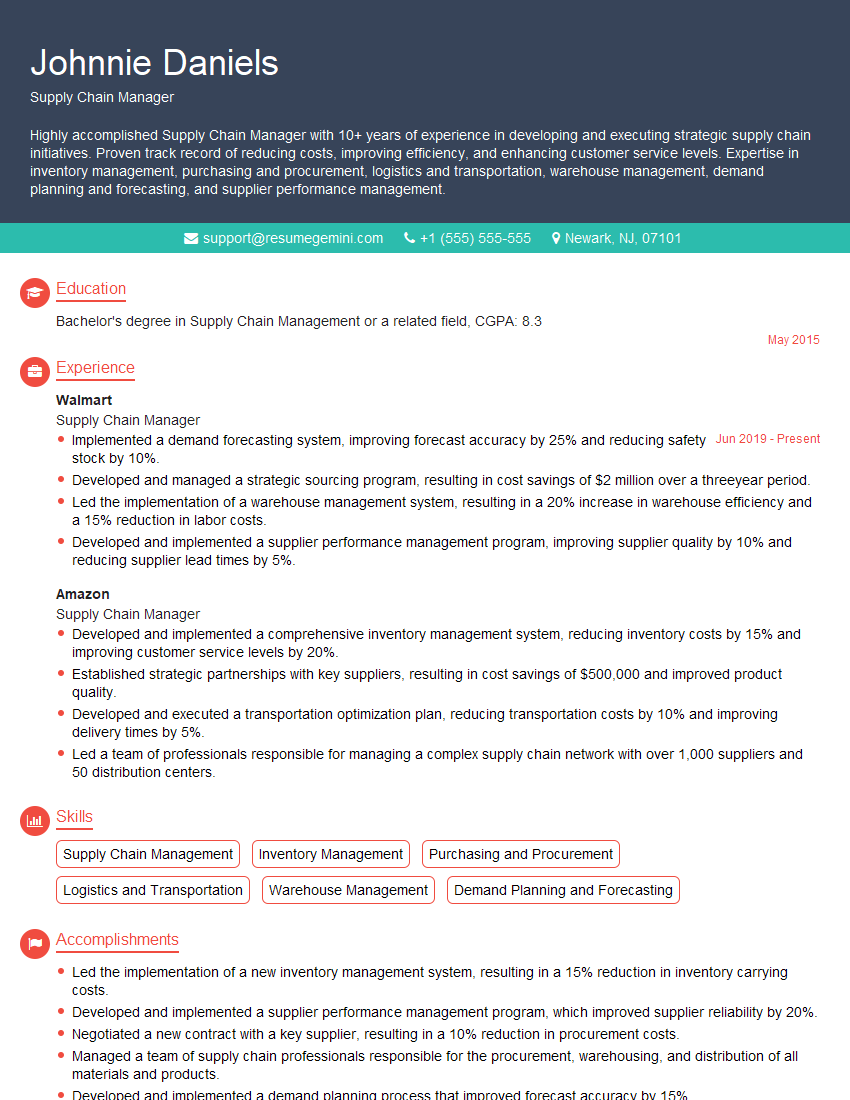
Supply Chain Manager Resume Sample
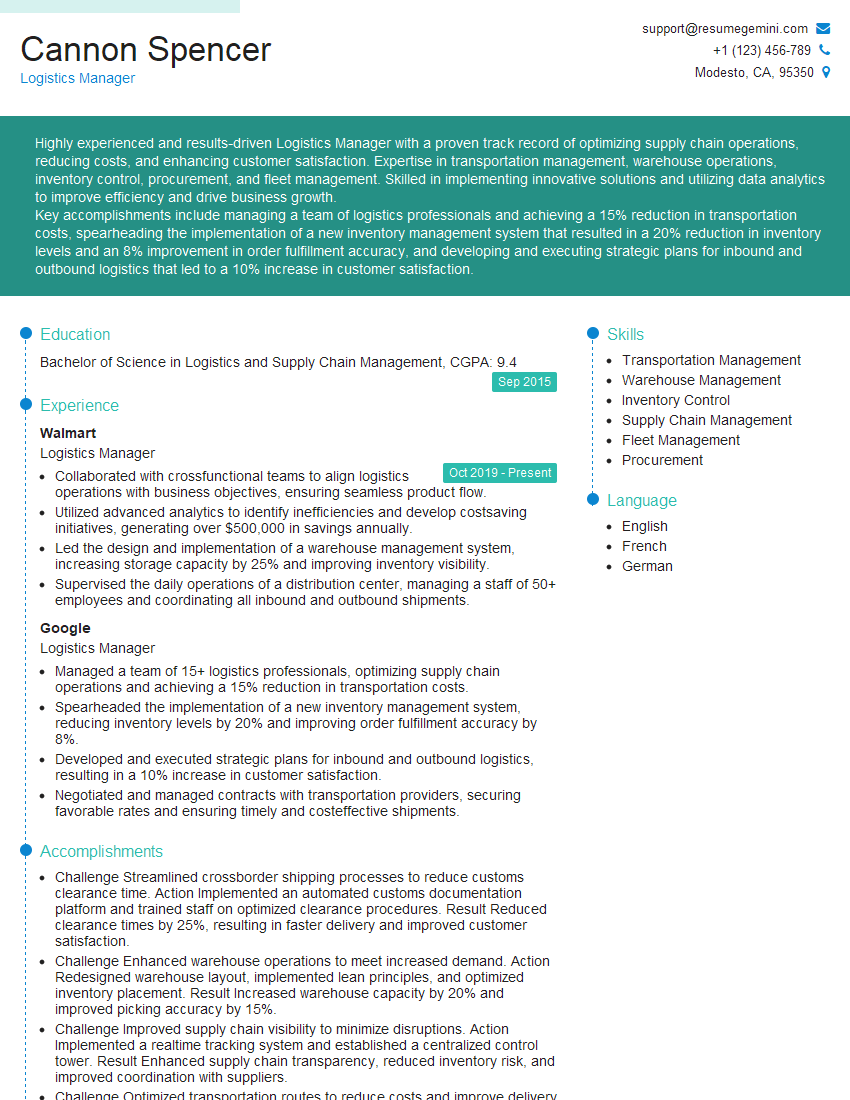
Logistics Manager Resume Sample
Warehouse Manager Resume Sample
Continuous Improvement Specialist Resume Sample
Supply Chain Analyst Resume Sample
Process Engineer Resume Sample
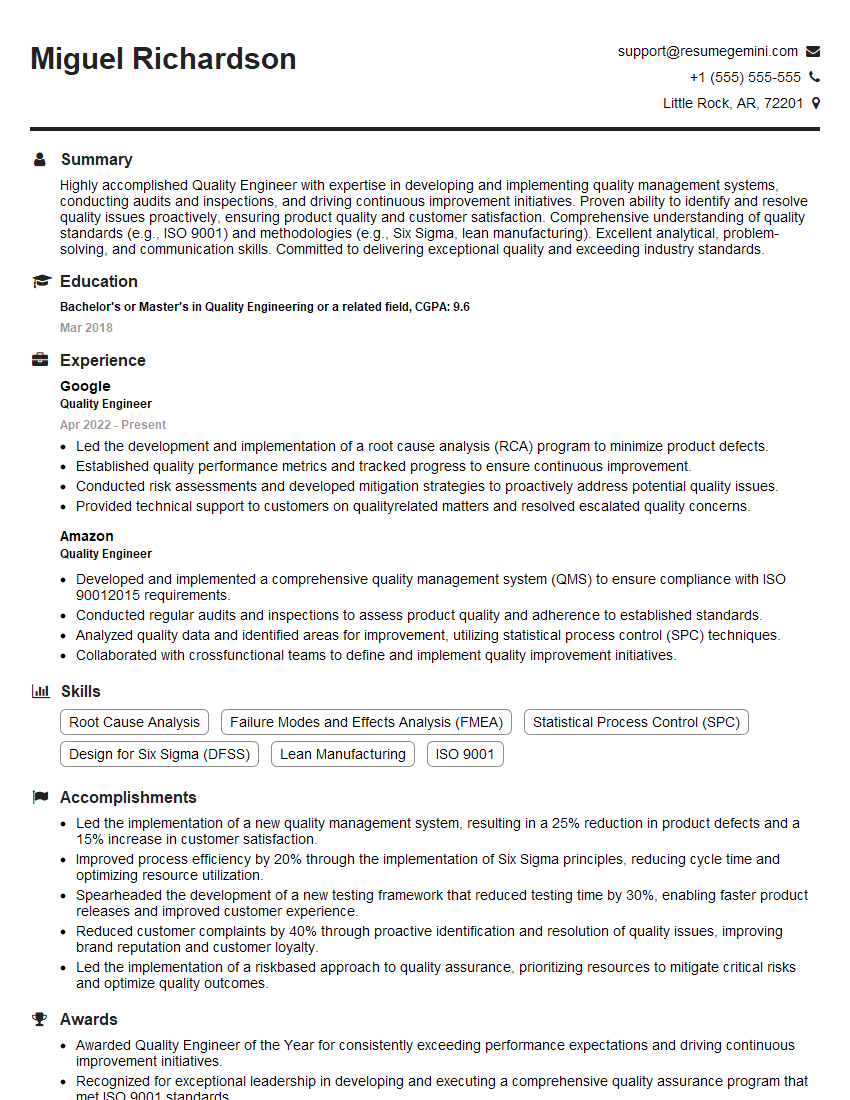
Quality Engineer Resume Sample
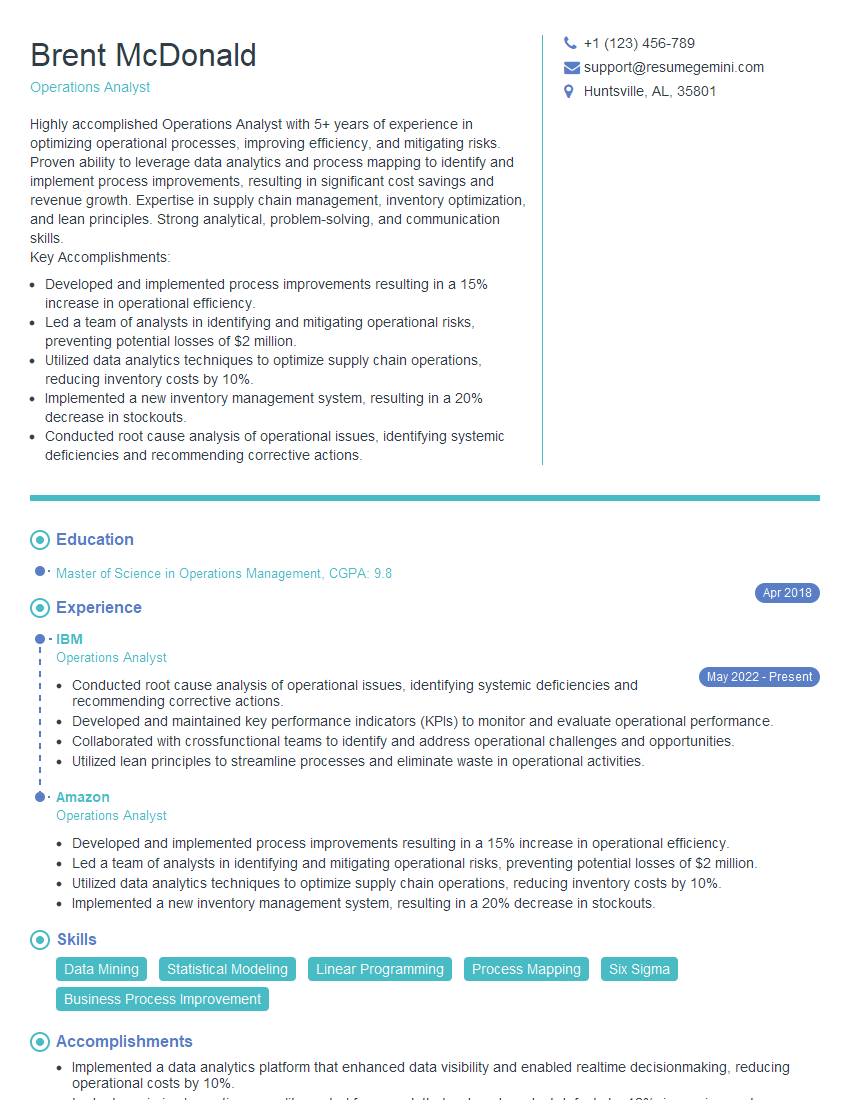
Operations Analyst Resume Sample
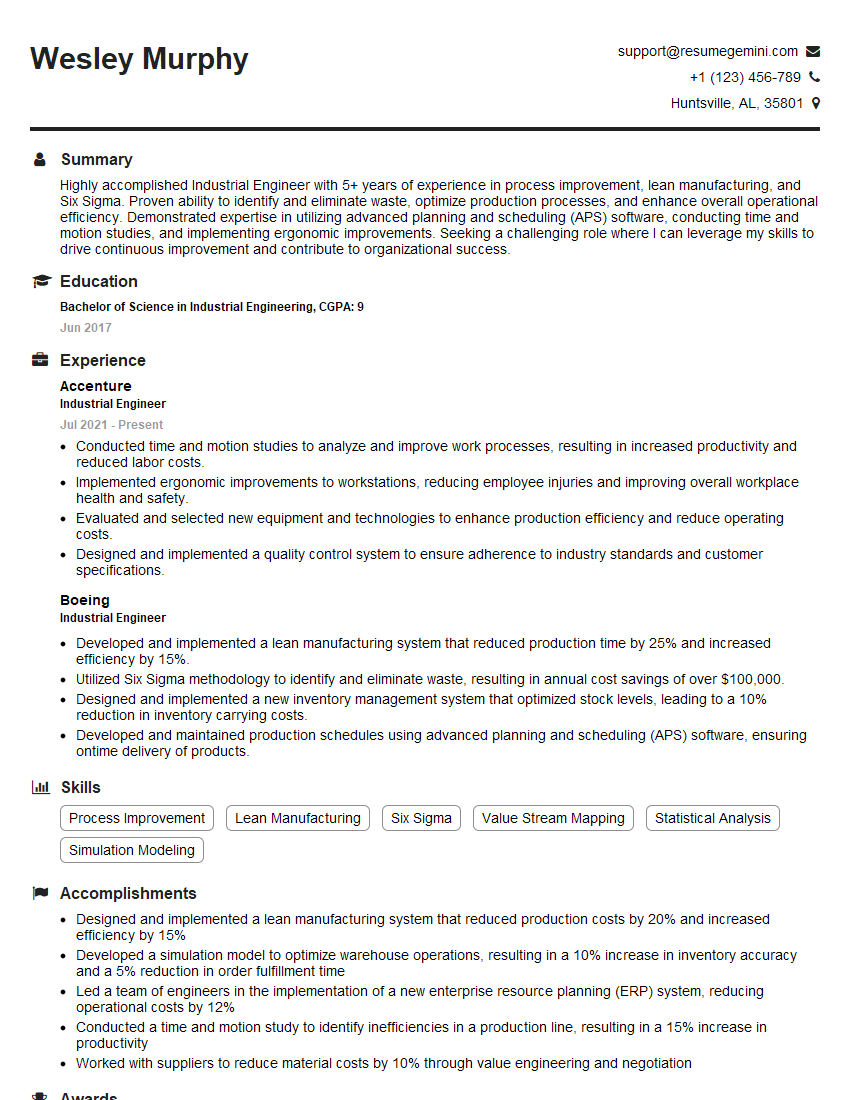
Industrial Engineer Resume Sample
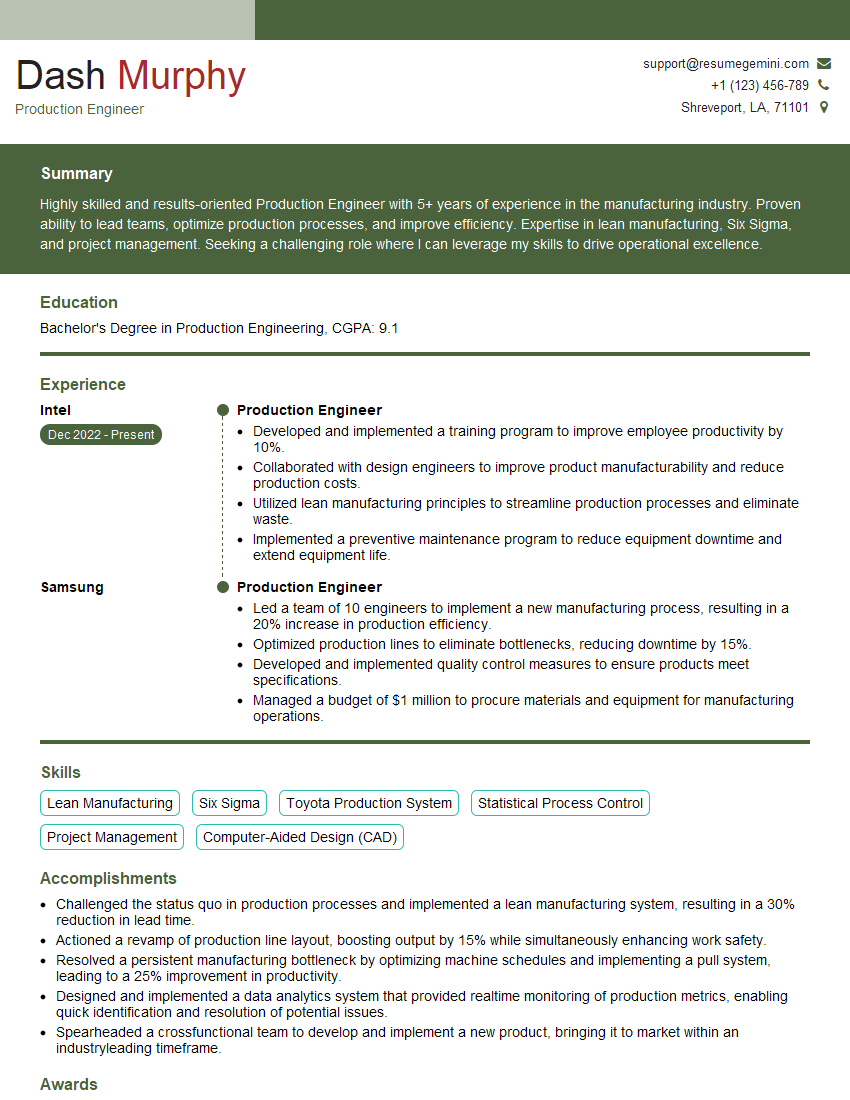
Production Engineer Resume Sample
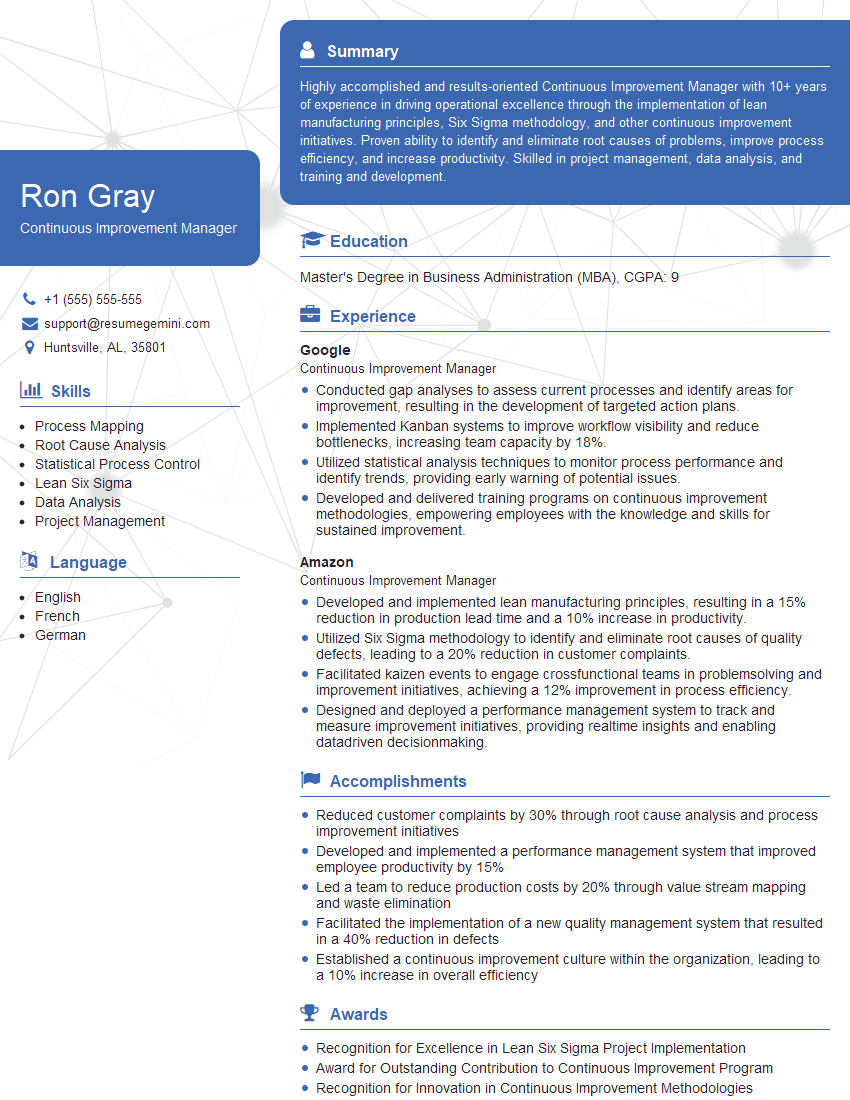
Continuous Improvement Manager Resume Sample
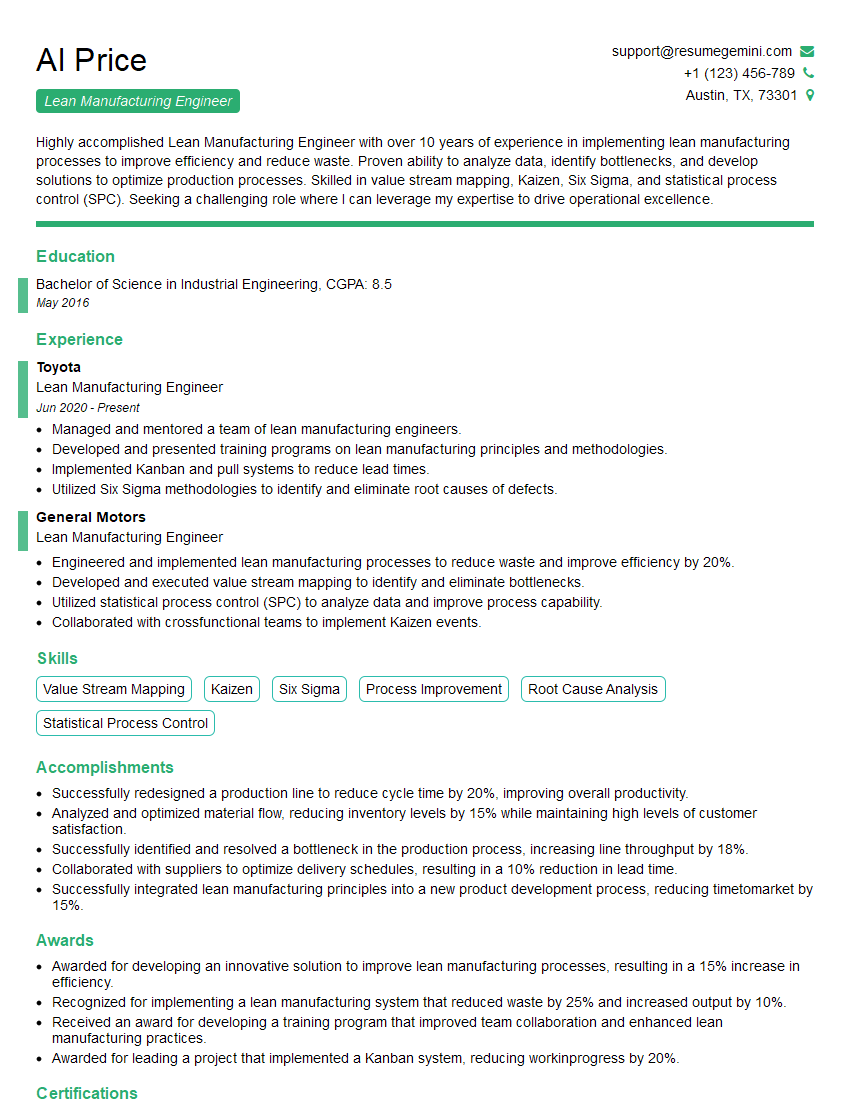
Lean Manufacturing Engineer Resume Sample
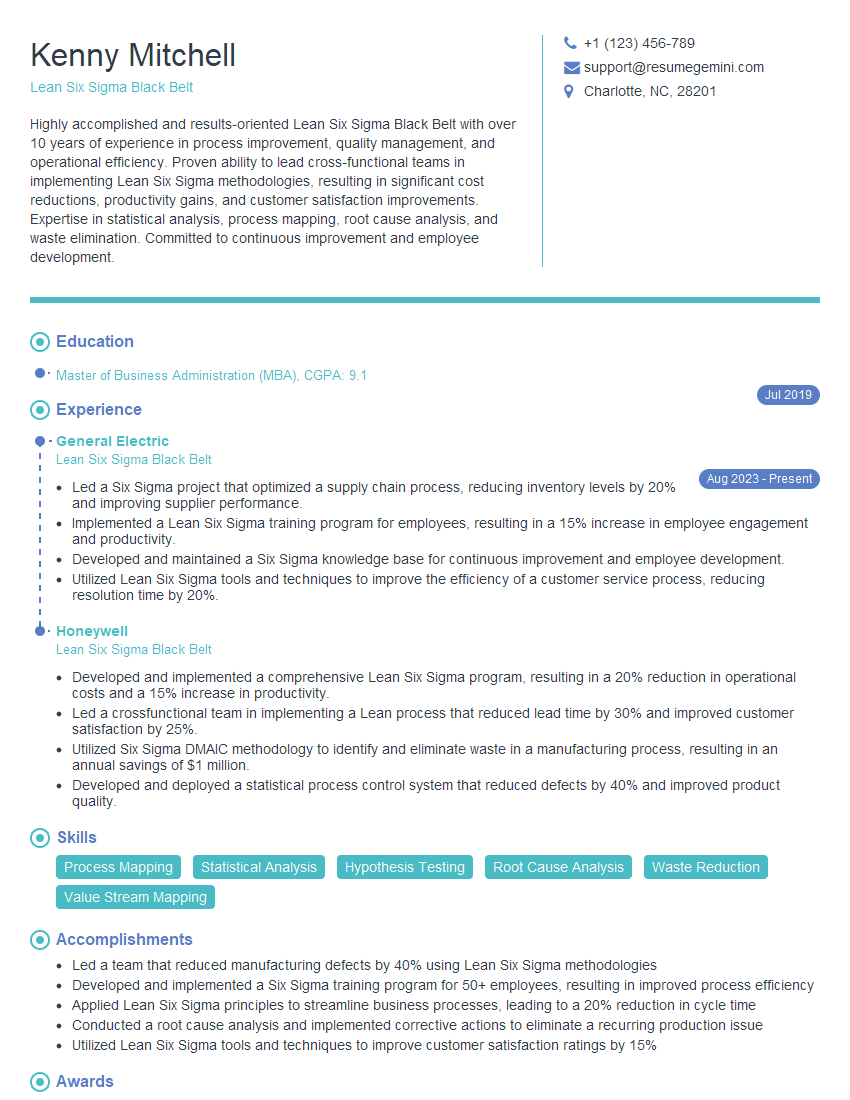
Lean Six Sigma Black Belt Resume Sample
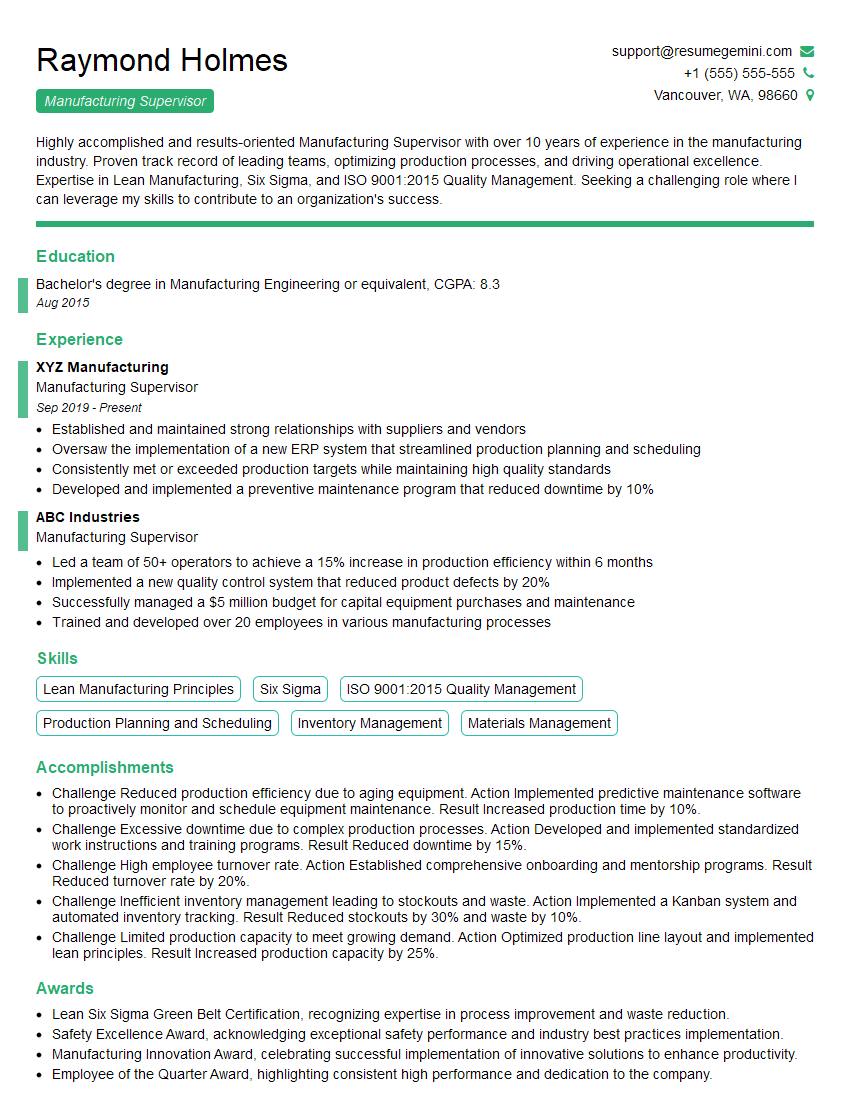
Manufacturing Supervisor Resume Sample
- Facility Manager
- Operations Manager
- Plant Manager
- Maintenance Manager
- Manufacturing Manager
- Quality Control Manager
- Production Supervisor
- Supply Chain Manager
- Logistics Manager
- Warehouse Manager
- Continuous Improvement Specialist
- Supply Chain Analyst
- Process Engineer
- Quality Engineer
- Operations Analyst
- Industrial Engineer
- Production Engineer
- Continuous Improvement Manager
- Lean Manufacturing Engineer
- Lean Six Sigma Black Belt
- Manufacturing Supervisor
Explore more articles
Users Rating of Our Blogs
Share Your Experience
We value your feedback! Please rate our content and share your thoughts (optional).
What Readers Say About Our Blog
Really detailed insights and content, thank you for writing this detailed article.
IT gave me an insight and words to use and be able to think of examples