Every successful interview starts with knowing what to expect. In this blog, we’ll take you through the top Experience with International Shipping interview questions, breaking them down with expert tips to help you deliver impactful answers. Step into your next interview fully prepared and ready to succeed.
Questions Asked in Experience with International Shipping Interview
Q 1. Explain the difference between Incoterms CFR and CIF.
Both CFR (Cost and Freight) and CIF (Cost, Insurance, and Freight) are Incoterms rules that define the responsibilities of buyers and sellers in international trade. The key difference lies in who is responsible for insuring the goods during shipment.
CFR: Under CFR, the seller is responsible for delivering the goods to the named port of destination and paying for the freight. However, the buyer is responsible for obtaining marine cargo insurance. Think of it like this: the seller gets the goods onto the ship, but the buyer needs to protect their investment once it’s at sea.
CIF: With CIF, the seller’s responsibilities are the same as in CFR (delivery to the named port and freight costs), but the seller also has to obtain and pay for marine cargo insurance. This means the seller bears the risk of loss or damage during the sea voyage. The buyer only needs to worry about the goods once they arrive at the port.
Example: Imagine exporting furniture. Using CFR, the seller ships the furniture to the port of Rotterdam. The buyer must then arrange and pay for the insurance to cover potential damage or loss during transit. Using CIF, the seller handles the insurance, providing the buyer with the insurance policy.
Q 2. Describe your experience with ocean freight consolidation.
Ocean freight consolidation has been a cornerstone of my work, significantly reducing shipping costs for clients. I’ve managed numerous consolidation projects, involving the aggregation of less-than-container-load (LCL) shipments from multiple shippers into a single container. This collaborative approach optimizes space and reduces individual shipping fees.
My process typically involves:
- Assessing client needs: Understanding cargo volume, dimensions, and destination to determine the most efficient consolidation strategy.
- Finding compatible shipments: Identifying other shippers with cargo heading to a similar destination to maximize container utilization.
- Negotiating freight rates: Securing favorable rates with ocean carriers based on the consolidated volume.
- Managing documentation: Ensuring all required documentation, including packing lists and commercial invoices, are accurate and complete for each shipment.
- Tracking and communication: Maintaining close communication with all parties, providing regular updates on shipment status.
For instance, I recently consolidated shipments of clothing, electronics, and furniture from various suppliers in China for a large retailer in the US. By coordinating this effort, we reduced their shipping costs by nearly 30% compared to individual shipments.
Q 3. What are the key documents required for international shipping?
International shipping requires meticulous documentation to ensure smooth customs clearance and compliance with regulations. Key documents include:
- Commercial Invoice: A formal invoice outlining the transaction details between buyer and seller.
- Packing List: Detailed description of the goods, including quantity, weight, and dimensions of each package.
- Bill of Lading (B/L): A contract between the shipper and the carrier, serving as proof of ownership and a receipt for the goods. There are different types, including straight, order, and negotiable B/Ls.
- Certificate of Origin (COO): Specifies the country where the goods originated, important for customs duties and trade agreements.
- Import/Export Licenses (if required): Depending on the goods and countries involved, specific licenses may be needed.
- Insurance Policy (for CIF shipments): Proof of insurance coverage protecting the goods during transit.
The specific documents required may vary depending on the cargo, destination country, and trade agreements involved. Proper documentation is crucial to avoid delays and penalties.
Q 4. How do you handle customs clearance procedures?
Customs clearance is a critical stage in international shipping, requiring a thorough understanding of the regulations in both the exporting and importing countries. My approach to handling customs clearance involves:
- Pre-clearance planning: Reviewing all required documents well in advance to identify any potential issues. This includes understanding HS codes (harmonized system codes) for accurate tariff classification.
- Accurate documentation preparation: Ensuring all required documents are complete, accurate, and compliant with regulations.
- Selecting a customs broker (if necessary): For complex shipments or unfamiliar regulations, engaging a reputable customs broker can streamline the process.
- Communication with customs authorities: Responding promptly to any inquiries from customs officials and providing any necessary supporting documentation.
- Monitoring the clearance process: Tracking the shipment’s progress through customs and addressing any delays promptly.
I’ve successfully navigated complex customs procedures, including dealing with issues such as incorrect documentation or unexpected delays. Proactive communication and a meticulous approach are key to a smooth clearance process.
Q 5. Explain your experience with different types of shipping containers.
My experience encompasses various container types, each suited to specific cargo needs:
- Dry containers: The most common type, used for general cargo that doesn’t require temperature control.
- Refrigerated containers (reefers): Equipped with refrigeration units to maintain specific temperatures, essential for perishable goods like fruits, vegetables, and pharmaceuticals.
- Open-top containers: Have a removable roof, suitable for oversized or heavy cargo that needs to be loaded from the top.
- Flatrack containers: Have a low-profile frame, ideal for exceptionally large or heavy items.
- Tank containers: Designed to carry liquids or gases in bulk.
Choosing the right container type is crucial to protect the goods and ensure efficient transportation. For example, I’ve used reefers to ship temperature-sensitive vaccines and flatrack containers for oversized machinery.
Q 6. What are the main challenges in international shipping, and how do you overcome them?
International shipping presents various challenges, including:
- Port congestion and delays: Unexpected delays at ports due to congestion, weather, or labor issues are common.
- Documentation complexities: Navigating diverse regulations and ensuring compliance with all required documents can be complex and time-consuming.
- Customs regulations and tariffs: Understanding and complying with customs regulations in various countries can be challenging.
- Geopolitical instability and political risks: Political unrest or natural disasters can disrupt supply chains.
- Fluctuations in fuel prices and exchange rates: These factors impact shipping costs and profitability.
To overcome these challenges, I employ a proactive approach that involves thorough planning, risk assessment, strong communication, and contingency planning. For example, to mitigate port congestion, I often explore alternative routes or ports. I also build buffer time into shipping schedules to account for potential delays.
Q 7. Describe your experience with air freight transportation.
Air freight transportation offers speed and efficiency, particularly for time-sensitive shipments. I’ve managed numerous air freight projects, handling diverse cargo ranging from high-value electronics to urgent medical supplies.
My experience includes:
- Selecting appropriate aircraft and routes: Choosing the most efficient and cost-effective options based on cargo volume, weight, and destination.
- Managing air waybills and documentation: Ensuring all necessary documents are accurate and compliant with regulations.
- Coordinating with ground handlers and airports: Ensuring smooth ground handling and timely transfer of goods.
- Tracking and tracing shipments: Monitoring the shipment’s progress in real-time and providing regular updates to clients.
- Handling special cargo requirements: Managing shipments requiring special handling, such as dangerous goods.
For instance, I once managed the air freight of vital medical equipment to a disaster-stricken area. The speed and efficiency of air freight were crucial in getting the supplies where they were needed quickly.
Q 8. How do you track shipments throughout the international shipping process?
Tracking international shipments involves leveraging the tracking numbers provided by the carrier. Think of it like following a package’s digital footprint across the globe. Each carrier, whether it’s FedEx, DHL, or a regional shipping line, has its own tracking system accessible through their website or dedicated apps. These systems usually provide real-time updates on the shipment’s location, status (e.g., ‘In Transit,’ ‘Customs Cleared,’ ‘Delivered’), and estimated delivery time. For added visibility, I often use third-party tracking tools that aggregate data from various carriers into a single dashboard, providing a comprehensive overview of all my shipments. This helps significantly in managing multiple shipments concurrently and proactively identifying potential delays.
For example, if a shipment is labeled as ‘In Transit’ but hasn’t updated its location in several days, I would proactively contact the carrier to investigate the cause of the delay. Many times, this proactive approach prevents issues from escalating.
Q 9. What are your strategies for managing international shipping costs?
Managing international shipping costs requires a multi-faceted strategy. It’s not just about finding the cheapest option; it’s about optimizing the entire process for cost-effectiveness. My strategies include:
- Negotiating Rates: I build strong relationships with carriers to secure favorable rates based on shipment volume and frequency. This often involves negotiating contracts that provide discounts on regular shipments.
- Optimizing Packaging: Properly sized and secured packaging minimizes the risk of damage, reducing potential costs associated with insurance claims or replacements. This also reduces the overall weight, leading to lower shipping costs.
- Choosing the Right Mode of Transport: Air freight is fast but expensive; sea freight is slower but cheaper. The choice depends on the urgency and value of the goods. Land transport often plays a role in bridging the gap between ports and final destinations.
- Consolidation of Shipments: Combining multiple smaller shipments into a single, larger shipment can significantly reduce per-unit shipping costs.
- Incoterms Understanding: A thorough understanding of Incoterms (International Commercial Terms) is crucial. Knowing which party is responsible for which costs (e.g., who pays for insurance, customs duties) is vital for accurate cost estimation and budgeting.
For example, I once helped a client reduce their shipping costs by 15% by negotiating a volume discount with a carrier and optimizing their packaging to reduce weight and size.
Q 10. Explain your experience with different modes of transportation (sea, air, land).
I have extensive experience with all three major modes of international transportation: sea, air, and land. Each mode has its strengths and weaknesses:
- Sea Freight: Best for high-volume, low-value goods where speed isn’t paramount. It’s the most cost-effective option but significantly slower than air freight. I’ve managed numerous container shipments across oceans, working with various shipping lines and handling all documentation related to Bill of Lading (B/L).
- Air Freight: Ideal for time-sensitive shipments of high-value or perishable goods. While more expensive than sea freight, the speed significantly outweighs the cost in certain circumstances. I’ve coordinated countless air shipments, ensuring timely customs clearance and delivery.
- Land Freight: Often used in conjunction with sea or air freight to transport goods from ports or airports to inland destinations. This mode can include trucking, rail, and even specialized transport for oversized cargo. I’ve managed numerous land freight operations, carefully choosing carriers based on route optimization and reliability.
A recent project involved shipping a mix of products – some requiring immediate delivery (air freight) and others that could tolerate a longer transit time (sea freight). This required careful planning and coordination across different modes of transport to optimize cost and delivery timelines.
Q 11. How do you handle delays or disruptions in the international shipping process?
Handling delays or disruptions in international shipping requires proactive monitoring and a well-defined contingency plan. My approach includes:
- Proactive Monitoring: Regularly tracking shipments and actively looking for potential issues (e.g., port congestion, weather delays).
- Communication: Maintaining constant communication with carriers, customs brokers, and clients to keep everyone informed of the situation. This includes transparently communicating any potential delays or disruptions and exploring alternative solutions.
- Contingency Planning: Having backup plans in place, such as alternative routes or carriers, to mitigate the impact of unforeseen circumstances.
- Documentation: Meticulously documenting all communication and actions taken to address the delay, providing evidence for any insurance claims that may be necessary.
- Problem Solving: Collaborating with stakeholders to find solutions, which might involve expedited shipping, rerouting the shipment, or negotiating with the carrier for compensation for delays.
For instance, when a port strike caused a significant delay in a client’s shipment, I immediately contacted the carrier, explored alternative routes, and communicated the situation transparently to the client. We successfully rerouted the shipment, minimizing the overall impact on the client’s business.
Q 12. What is your experience with cargo insurance?
Cargo insurance is a crucial aspect of international shipping, offering protection against various risks, including loss, damage, or delay. My experience encompasses various types of cargo insurance, from basic coverage to comprehensive policies. Choosing the right level of coverage depends on the value and nature of the goods being shipped and the inherent risks associated with the route and mode of transport. I work closely with insurance brokers to secure optimal coverage at competitive prices. The process involves accurately assessing the risk, selecting the appropriate policy, and ensuring that all necessary documentation is in place to facilitate claims processing in case of an insured event. I have successfully filed and managed numerous insurance claims for clients, ensuring they receive fair compensation for losses incurred.
I always advise clients to adequately insure their shipments, especially for high-value goods, to protect their investments against potential losses. It’s a cost-effective measure to mitigate financial risks associated with international trade.
Q 13. How familiar are you with different international trade regulations and compliance requirements?
Familiarity with international trade regulations and compliance requirements is paramount. This involves a deep understanding of rules governing customs duties, tariffs, import/export licenses, and other regulatory frameworks specific to various countries and commodities. I stay up-to-date on these regulations through continuous professional development and subscription to relevant industry news and resources. This knowledge ensures compliance, preventing delays and penalties. I utilize various resources, including government websites, industry associations, and specialized software, to navigate the complex landscape of international trade regulations. My experience includes managing customs documentation, ensuring accurate classification of goods, and preparing for customs inspections. I understand the importance of proper documentation and its role in securing smooth and efficient customs clearance.
For example, I successfully navigated the complexities of importing specialized medical equipment into a country with stringent regulatory requirements, by preparing all necessary documentation well in advance and communicating effectively with customs authorities.
Q 14. Describe your experience with export controls and sanctions.
Experience with export controls and sanctions is crucial for responsible international shipping. This involves understanding the restrictions imposed by various governments on the export of certain goods to specific countries or entities. These restrictions often relate to national security, human rights, and other considerations. I regularly consult official government sources (e.g., the U.S. Department of Commerce, the European Union’s trade regulations) to ensure compliance. This involves careful screening of shipments to identify any prohibited goods or destinations. I understand the ramifications of non-compliance, which can include significant fines, legal repercussions, and reputational damage. My expertise ensures that all shipments comply with relevant export controls and sanctions regulations, protecting the client and my company from legal issues and operational disruptions.
For example, I recently prevented a client from inadvertently shipping a product with dual-use potential to a country under sanctions, avoiding potential legal complications and financial losses.
Q 15. How do you manage relationships with international shipping partners and agents?
Managing relationships with international shipping partners and agents is crucial for smooth operations. It’s not just about finding the cheapest option; it’s about building trust and ensuring consistent, reliable service. I approach this by:
- Regular Communication: I maintain consistent contact, not just when there’s a problem. Regular check-ins build rapport and allow for proactive problem-solving.
- Performance Monitoring: I track key performance indicators (KPIs) like on-time delivery rates, damage claims, and customs clearance times. This data-driven approach helps identify areas for improvement and hold partners accountable.
- Relationship Building: I believe in fostering personal connections. Attending industry events, participating in webinars, and having regular calls build strong, collaborative partnerships. This goes beyond simply transactional relationships.
- Service Level Agreements (SLAs): Clear SLAs define expectations for service quality, response times, and contingency plans. This provides a framework for accountability and dispute resolution.
- Negotiation and Contract Management: I’m skilled in negotiating favorable rates and service agreements that protect our interests while maintaining positive working relationships.
For example, I once had a critical shipment delayed due to unforeseen customs issues. Through proactive communication and leveraging my established relationship with the agent, we were able to expedite the clearance process and minimize disruption to our client’s operations. This highlights the value of strong relationships in navigating unforeseen challenges.
Career Expert Tips:
- Ace those interviews! Prepare effectively by reviewing the Top 50 Most Common Interview Questions on ResumeGemini.
- Navigate your job search with confidence! Explore a wide range of Career Tips on ResumeGemini. Learn about common challenges and recommendations to overcome them.
- Craft the perfect resume! Master the Art of Resume Writing with ResumeGemini’s guide. Showcase your unique qualifications and achievements effectively.
- Don’t miss out on holiday savings! Build your dream resume with ResumeGemini’s ATS optimized templates.
Q 16. What are your experience and knowledge of using shipping management software?
My experience with shipping management software spans several years and different platforms. I’m proficient in using systems to streamline the entire shipping process, from quote generation to tracking and reporting. This includes software capable of handling:
- Rate Calculation and Booking: Software that integrates with multiple carriers to compare rates and book shipments efficiently.
- Document Management: Systems that allow for digital storage and management of all shipping documents, including invoices, packing lists, and customs declarations.
- Shipment Tracking: Real-time tracking of shipments across multiple modes of transport (sea, air, land).
- Customs Compliance: Software that assists with the generation of accurate customs documentation and ensures compliance with regulations.
- Reporting and Analytics: Features that provide detailed reports on shipping costs, performance metrics, and other key data.
For instance, I’ve utilized software like [Software Name 1] and [Software Name 2], and I’m comfortable learning and adapting to new platforms. I find that software significantly improves efficiency and reduces the risk of errors compared to manual processes.
Q 17. Explain your experience with dangerous goods shipping regulations.
Dangerous goods shipping requires meticulous attention to detail and thorough understanding of international regulations. My experience involves handling various classes of dangerous goods, including chemicals, batteries, and flammable materials. I’m familiar with the International Air Transport Association (IATA) regulations for air freight and the International Maritime Organization (IMO) regulations for sea freight. This includes:
- Proper Classification: Accurately identifying the hazard class and UN number of each dangerous good.
- Packaging and Labeling: Ensuring compliance with packaging requirements and applying the correct labels and markings.
- Documentation: Preparing the necessary shipping documents, including the Shipper’s Declaration for Dangerous Goods (DG).
- Emergency Response: Knowing the procedures to follow in case of an incident involving dangerous goods.
For example, I once managed the shipment of a large quantity of lithium-ion batteries, which require special handling and documentation. By carefully adhering to IATA regulations, we successfully navigated the complex requirements and ensured the safe and compliant transportation of the goods.
Q 18. How do you ensure the security and safety of international shipments?
Security and safety are paramount in international shipping. My approach involves a multi-layered strategy to minimize risks:
- Secure Packaging: Using appropriate packaging materials to protect goods from damage and theft.
- Cargo Insurance: Obtaining comprehensive cargo insurance to cover losses or damage during transit.
- Tracking and Monitoring: Utilizing real-time tracking systems to monitor shipments and identify potential issues.
- Security Seals and Labels: Employing tamper-evident seals and labels to deter theft and unauthorized access.
- Compliance with Security Regulations: Adhering to all relevant security regulations, such as the Customs-Trade Partnership Against Terrorism (C-TPAT).
I once worked on a project involving high-value electronics. By implementing robust security measures, including specialized packaging, insurance, and real-time tracking, we ensured the safe arrival of the shipment without incident. Proactive security measures are crucial, especially for high-value or sensitive goods.
Q 19. Describe your experience with import duties and taxes.
Import duties and taxes are a significant aspect of international shipping. My experience includes:
- Harmonized System (HS) Codes: Accurately classifying goods using HS codes to determine the applicable duties and taxes.
- Regulatory Research: Researching and understanding the specific import regulations of the destination country.
- Duty Calculation: Accurately calculating import duties and taxes based on the HS code, value of goods, and applicable rates.
- Documentation: Preparing the necessary customs documentation to ensure smooth clearance.
- Duty Drawback Programs: Exploring potential duty drawback programs to minimize costs.
For example, I’ve had to navigate complex duty regulations for different countries, each with unique requirements. I use specialized resources and collaborate closely with customs brokers to minimize delays and costs associated with duties and taxes. Understanding these regulations is essential for efficient and cost-effective international shipping.
Q 20. How do you manage documentation for international shipments?
Documentation is the backbone of international shipping. My experience encompasses all aspects of document management:
- Commercial Invoice: Creating accurate commercial invoices that include all necessary information.
- Packing List: Preparing detailed packing lists that accurately reflect the contents of each package.
- Bill of Lading (B/L): Understanding the different types of B/Ls and their implications.
- Certificate of Origin: Obtaining certificates of origin when required.
- Customs Declaration: Completing accurate and compliant customs declarations.
- Electronic Data Interchange (EDI): Using EDI for seamless data exchange with carriers and customs authorities.
Effective documentation management is essential for avoiding delays and penalties. I employ a meticulous approach, utilizing both digital and physical filing systems to ensure all documentation is readily available and accurately reflects the shipment details.
Q 21. What is your understanding of supply chain management principles in international shipping?
My understanding of supply chain management principles in international shipping is comprehensive. I recognize the importance of:
- Planning and Forecasting: Accurately forecasting demand and planning shipments accordingly.
- Sourcing and Procurement: Identifying and selecting reliable suppliers and negotiating favorable terms.
- Inventory Management: Optimizing inventory levels to minimize storage costs and stockouts.
- Transportation Management: Selecting the most cost-effective and efficient transportation modes.
- Risk Management: Identifying and mitigating potential risks throughout the supply chain.
- Visibility and Tracking: Maintaining visibility and tracking of shipments throughout the entire process.
In essence, I view international shipping as an integral part of a broader supply chain. By applying supply chain management principles, I strive to optimize efficiency, reduce costs, and improve the overall effectiveness of international shipping operations. I believe in a holistic approach, considering the entire journey of the goods from origin to destination.
Q 22. How do you use data analysis to improve international shipping efficiency?
Data analysis is crucial for optimizing international shipping. I leverage data to identify bottlenecks, predict potential delays, and improve overall efficiency. This involves collecting and analyzing data from various sources, including shipment tracking systems, customs declarations, and carrier performance metrics.
For instance, I might analyze historical shipment data to identify patterns in transit times for specific routes and carriers. This helps in selecting the most reliable and cost-effective options for future shipments. Another example is analyzing customs clearance times. By identifying factors that contribute to delays (e.g., incomplete documentation, specific customs offices), we can proactively address these issues and minimize delays.
Furthermore, I utilize predictive analytics to forecast potential disruptions, such as port congestion or geopolitical instability. This allows for proactive risk mitigation strategies like rerouting shipments or securing alternative transportation methods.
- Data Sources: Shipment tracking systems, customs data, carrier performance data, market analysis reports.
- Analytical Techniques: Regression analysis, forecasting models, statistical process control.
- Output: Optimized shipping routes, carrier selection, improved documentation processes, proactive risk management strategies.
Q 23. Describe your experience with negotiating freight rates.
Negotiating freight rates is a key aspect of my role. It requires a deep understanding of the market, strong negotiation skills, and a thorough knowledge of the factors influencing freight costs. I build strong relationships with carriers to secure favorable rates. My approach involves a detailed analysis of the market, considering factors like fuel surcharges, currency fluctuations, and seasonal demand.
For example, I might negotiate a lower rate by consolidating multiple shipments into a single container, thereby reducing the per-unit cost. I also leverage my knowledge of different carriers’ strengths and weaknesses to negotiate better terms. Sometimes this involves playing carriers against each other to secure the most competitive rate. Successful negotiation requires thorough preparation, clear communication, and a willingness to explore creative solutions.
Beyond price, negotiations often include securing advantageous service levels, such as faster transit times or guaranteed delivery dates. The key is to find a balance between cost and service quality that best serves the needs of the business.
Q 24. What is your experience with different payment methods in international trade?
I have extensive experience with various payment methods in international trade, each with its own advantages and risks. Common methods include Letters of Credit (LCs), Documentary Collections, and Open Account.
- Letters of Credit (LCs): Offer the highest level of security for both buyers and sellers. An LC is a commitment from a buyer’s bank to pay the seller upon presentation of specified documents. I’m proficient in navigating the intricacies of LCs, including ensuring accurate documentation and prompt communication with all parties.
- Documentary Collections: Provide a balance between security and cost-effectiveness. The seller’s bank handles the collection of payment from the buyer’s bank, minimizing risk but offering less security than an LC.
- Open Account: Offers the simplest process, but carries the highest risk for the seller. Payment is made directly by the buyer after receiving the goods. This method requires a strong, trusting relationship with the buyer.
The choice of payment method depends heavily on the specific transaction, the buyer-seller relationship, and the level of risk tolerance. I assess these factors carefully before recommending a payment method for each shipment.
Q 25. How familiar are you with letter of credit processes?
I am very familiar with Letter of Credit (LC) processes. An LC is a financial instrument issued by a bank on behalf of a buyer, guaranteeing payment to the seller provided that certain conditions are met. My experience encompasses all aspects of LCs, from understanding different types of LCs (e.g., irrevocable, confirmed, transferable) to ensuring accurate and timely document preparation.
I understand the importance of meticulous attention to detail in LC transactions. Any discrepancy in the documents can lead to delays or even rejection of the payment. My experience involves working closely with banks, importers, and exporters to ensure smooth and efficient LC processing. This includes reviewing and preparing all necessary shipping documents to comply with the LC stipulations. I’m also adept at handling amendments and addressing discrepancies that may arise during the LC process.
Q 26. How do you handle discrepancies in shipping documents?
Discrepancies in shipping documents are a common challenge in international trade. These discrepancies can range from minor typographical errors to significant inconsistencies that can delay or prevent payment. My approach to handling discrepancies involves a systematic review of all documents, identifying the nature and severity of each discrepancy.
I carefully analyze the discrepancy against the terms of sale and the letter of credit (if applicable). Minor discrepancies might be easily resolved through communication and amendments. For more significant discrepancies, a thorough investigation is necessary, often involving communication with all parties involved (shipper, carrier, buyer, and banks). This might involve providing supporting documentation or initiating claims with the carrier to rectify the errors. My experience enables me to efficiently navigate these situations, minimizing disruption and cost to the business.
Q 27. Explain your experience with resolving international shipping disputes.
Resolving international shipping disputes requires a combination of negotiation skills, legal knowledge, and a deep understanding of international trade regulations. I’ve successfully resolved disputes involving damaged goods, delayed shipments, and payment discrepancies. My approach is to first attempt to resolve the issue amicably through negotiation. This involves clear communication, a willingness to compromise, and a focus on finding a mutually acceptable solution.
If negotiation fails, I’m prepared to escalate the matter to more formal dispute resolution mechanisms, such as arbitration or litigation. In such cases, meticulous documentation is crucial. I ensure that all communications, agreements, and relevant evidence are thoroughly documented. My experience includes preparing and presenting cases to arbitration panels and collaborating with legal counsel to protect the interests of the business.
Q 28. How do you stay updated with the latest changes in international shipping regulations?
Staying updated with international shipping regulations is paramount. I utilize various methods to ensure my knowledge remains current. This includes subscribing to industry publications, attending conferences and workshops, and actively monitoring changes through governmental websites and regulatory bodies (e.g., IMO, WCO).
I also maintain relationships with industry professionals and legal experts who provide updates and insights into regulatory changes. I frequently review and update our internal compliance procedures to ensure that our shipping practices adhere to the latest regulations. Proactive monitoring and a commitment to continuous learning are essential for success in this dynamic field.
Key Topics to Learn for Your International Shipping Interview
- Incoterms: Understand the various Incoterms (e.g., DDP, CIF, FOB) and their implications for responsibility, cost, and risk transfer throughout the shipping process. Consider practical scenarios where choosing the right Incoterm is crucial.
- Documentation & Compliance: Master the essential documentation involved in international shipping (Bill of Lading, Commercial Invoice, Packing List, Certificate of Origin). Explore the complexities of navigating customs regulations and import/export compliance in different countries.
- Logistics & Supply Chain Management: Familiarize yourself with different modes of transport (sea, air, rail), their associated costs and timelines. Practice analyzing supply chain scenarios and optimizing for efficiency and cost-effectiveness. Consider challenges like port congestion and unforeseen delays.
- Freight Forwarding & Customs Brokerage: Gain a solid understanding of the roles and responsibilities of freight forwarders and customs brokers. Understand how they contribute to a smooth shipping process and how to effectively communicate and collaborate with them.
- Risk Management & Insurance: Learn about common risks in international shipping (damage, loss, delays) and the various insurance options available to mitigate these risks. Be prepared to discuss risk assessment and mitigation strategies.
- Technology & Tracking: Explore the role of technology in international shipping, including tracking systems, electronic data interchange (EDI), and other digital tools used for efficient management and communication. Discuss your experience with relevant software or platforms.
- International Trade Regulations & Tariffs: Develop a foundational understanding of international trade agreements, tariffs, and sanctions. Prepare to discuss the impact of these regulations on shipping costs and timelines.
Next Steps: Unlock Your Career Potential
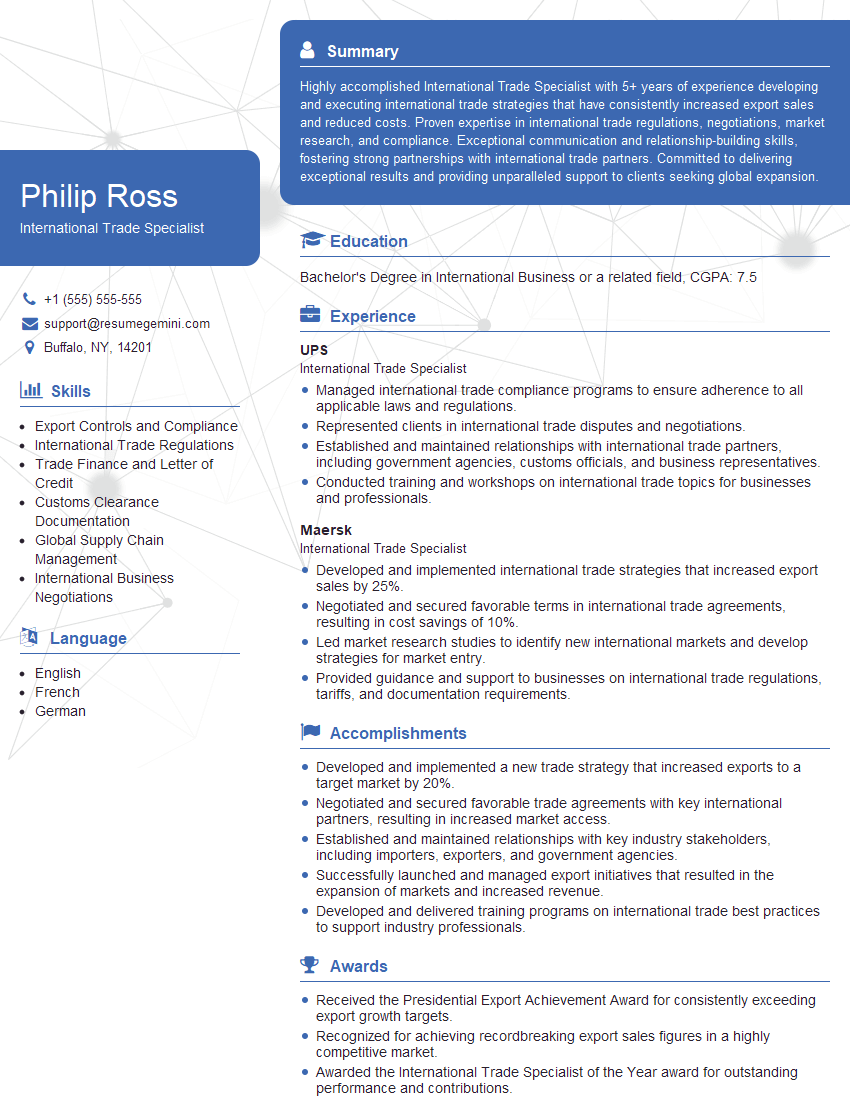
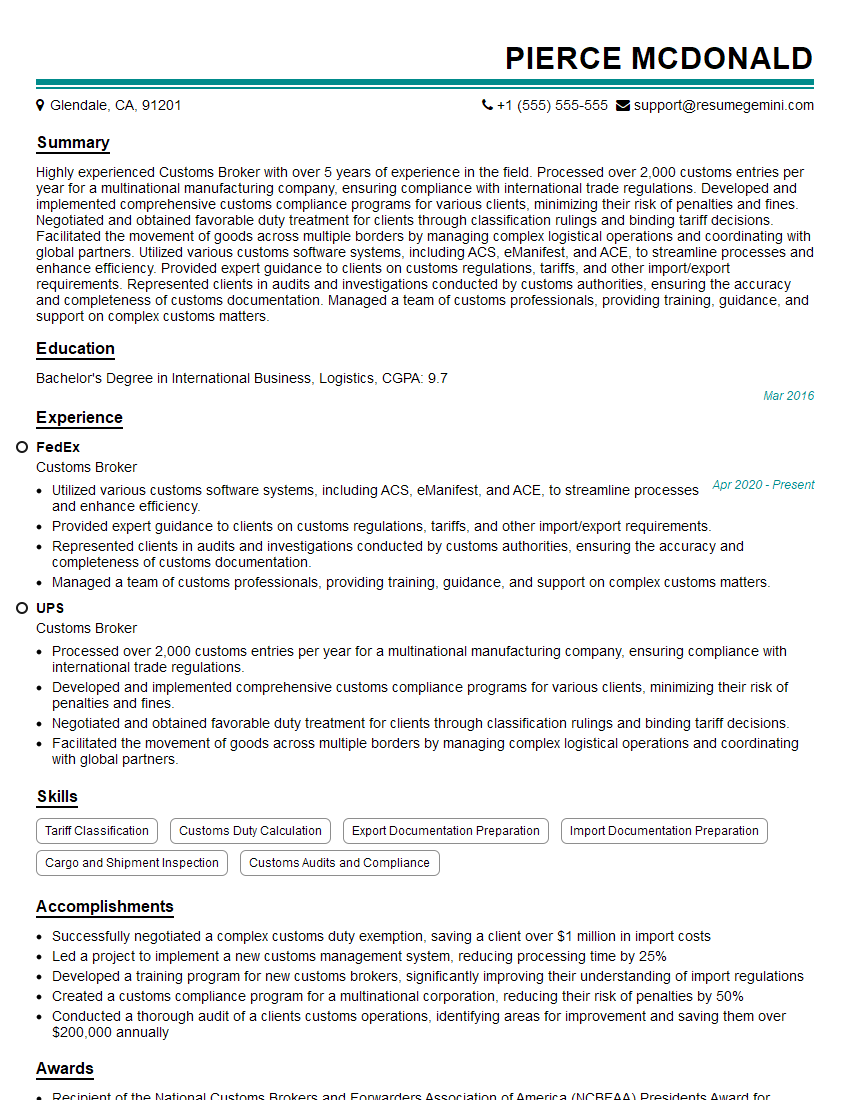
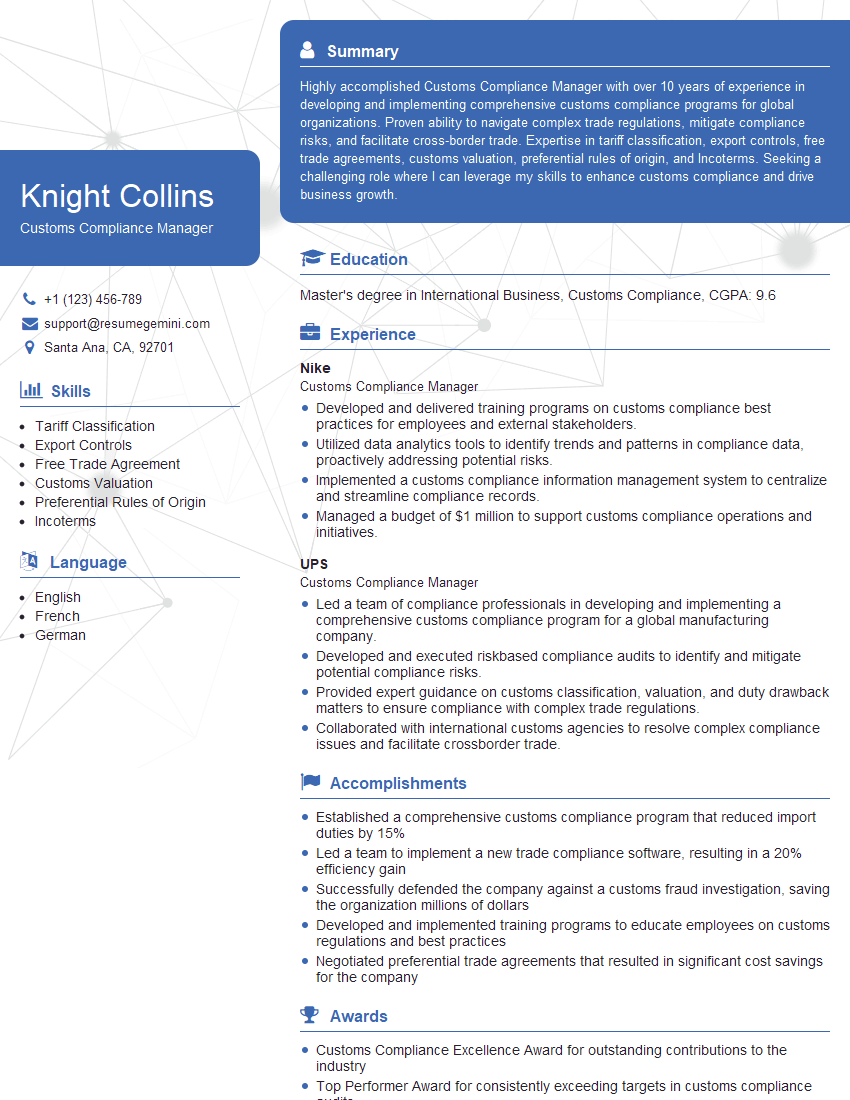
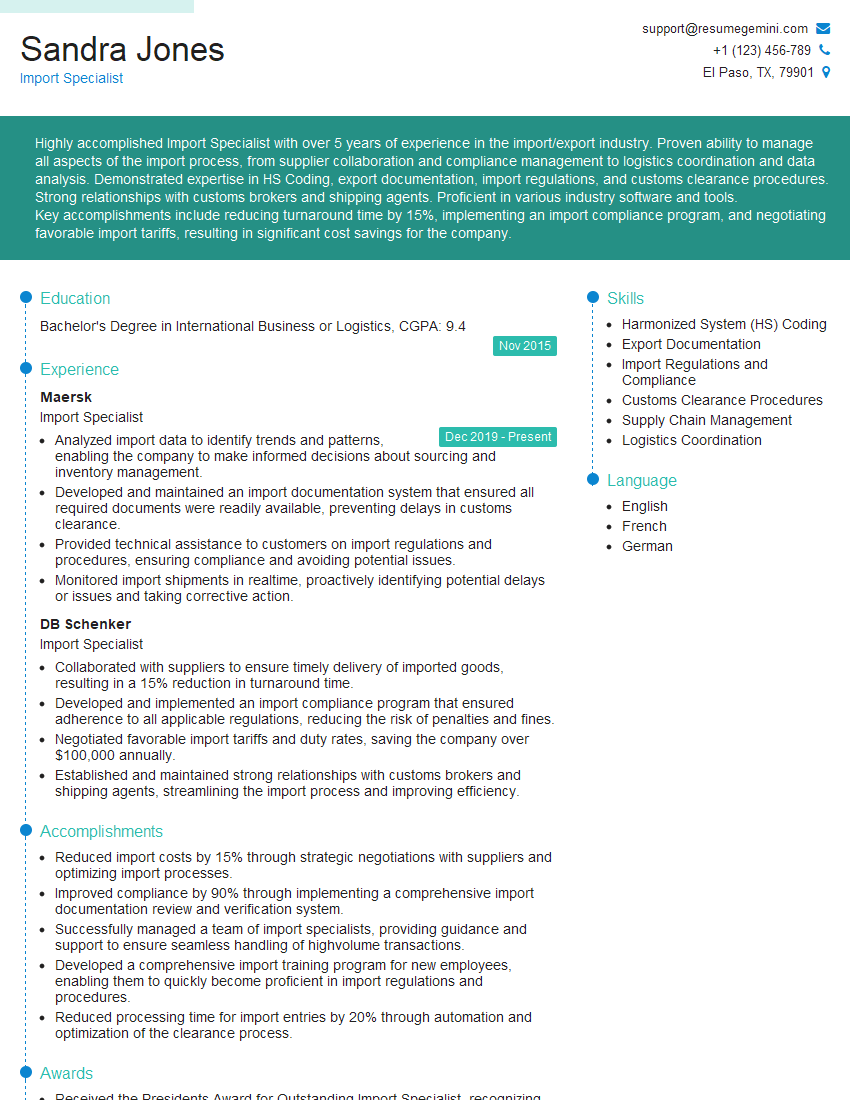
Mastering international shipping concepts significantly enhances your career prospects in logistics, supply chain management, and international trade. A strong understanding of these topics will make you a highly sought-after candidate. To stand out, create an ATS-friendly resume that highlights your skills and experience effectively. ResumeGemini is a trusted resource that can help you build a professional and impactful resume, ensuring your qualifications shine. We provide examples of resumes tailored specifically to international shipping experience to help you get started.
Explore more articles
Users Rating of Our Blogs
Share Your Experience
We value your feedback! Please rate our content and share your thoughts (optional).
What Readers Say About Our Blog
Really detailed insights and content, thank you for writing this detailed article.
IT gave me an insight and words to use and be able to think of examples