Every successful interview starts with knowing what to expect. In this blog, we’ll take you through the top Experience with Recordkeeping interview questions, breaking them down with expert tips to help you deliver impactful answers. Step into your next interview fully prepared and ready to succeed.
Questions Asked in Experience with Recordkeeping Interview
Q 1. Explain the importance of a comprehensive records management policy.
A comprehensive records management policy is the bedrock of any organization’s information governance. It’s essentially a roadmap outlining how records are created, managed, used, stored, and ultimately disposed of. Without a robust policy, organizations risk legal issues, operational inefficiencies, and significant financial losses.
Think of it like this: a well-organized house is easier to live in and maintain than a cluttered one. Similarly, a well-defined records management policy ensures easy access to vital information when needed, minimizes the risk of losing important documents, and streamlines business processes. A comprehensive policy will detail responsibilities, retention schedules, security protocols, and disaster recovery plans, ensuring compliance with relevant laws and regulations.
- Legal Compliance: Many industries have specific regulations regarding record retention, such as HIPAA for healthcare or SOX for finance. A solid policy ensures adherence.
- Operational Efficiency: A clear policy streamlines workflows, reducing time spent searching for information and preventing duplicated efforts.
- Risk Mitigation: A policy helps mitigate risks associated with data breaches, litigation, and audits by establishing clear procedures for handling sensitive information.
- Cost Savings: Efficient records management reduces storage costs, both physical and digital, and minimizes the time spent on managing records.
Q 2. Describe your experience with different recordkeeping systems (e.g., electronic, physical).
Throughout my career, I’ve worked extensively with both physical and electronic recordkeeping systems. In my previous role at [Previous Company Name], we utilized a hybrid system. Physical records, like contracts and original signed documents, were stored in a secure, climate-controlled archive with a robust indexing system. For easier retrieval, we used a detailed inventory database that tracked the location of each physical file.
Our electronic records were managed using a sophisticated Document Management System (DMS), which included version control, metadata tagging, access permissions, and robust search capabilities. The DMS allowed for efficient collaboration and workflow automation. For example, we used the system to manage contract approvals, where documents were routed electronically for review and signature, logging each step of the process and maintaining an audit trail. I have also experience with cloud-based solutions like SharePoint and Box, ensuring that data was both secure and accessible across different locations and devices. The choice of system always depends on the specific needs of the organization, balancing cost, security, and user experience.
Q 3. How do you ensure the confidentiality and security of sensitive records?
Confidentiality and security of sensitive records are paramount. My approach is multi-layered, incorporating both technical and procedural safeguards. Technically, we utilize encryption (both at rest and in transit), access control lists (ACLs) that restrict access to authorized personnel, and regular security audits to identify and mitigate vulnerabilities. For physical records, secure storage facilities with restricted access and CCTV surveillance are essential.
Procedurally, we implement strict policies on handling sensitive information, including employee training on data protection best practices. This involves educating staff on password security, phishing awareness, and the importance of adhering to access control procedures. We also conduct regular data loss prevention (DLP) scans to identify and prevent sensitive information from leaving the organization’s network without proper authorization. Furthermore, a robust incident response plan is in place to address any security breaches effectively and efficiently. Think of it as a fortress with multiple layers of defense, making it incredibly difficult for unauthorized access or data breaches to occur.
Q 4. What are the key components of a successful records retention schedule?
A successful records retention schedule is crucial for legal compliance and efficient record management. It’s a detailed document that outlines how long different types of records need to be kept before they can be safely destroyed or archived. It’s not a ‘one-size-fits-all’ document; it must be tailored to the specific legal and operational requirements of the organization.
- Record Type: Each record type (e.g., contracts, financial records, employee files) needs to be clearly identified.
- Retention Period: The specific duration each record type must be retained (e.g., 7 years, permanently) must be defined, based on legal requirements and business needs.
- Disposition Method: The schedule should state how the records will be disposed of once their retention period is over (e.g., secure shredding, secure electronic deletion).
- Legal Basis: The schedule should cite the legal or regulatory basis for each retention period.
- Regular Review: The schedule must be reviewed and updated periodically to reflect changes in legislation or business practices.
For example, a company might need to keep financial records for seven years due to tax regulations, while employee personnel files might require longer retention for legal reasons. Failing to comply with a retention schedule can lead to significant legal and financial penalties.
Q 5. Describe your experience with metadata creation and management.
Metadata is the ‘data about data,’ and it’s crucial for efficient record retrieval and management. My experience includes creating and managing metadata using various methods, from manual tagging in DMS systems to leveraging automated metadata extraction tools. In my experience, the key is consistency and adherence to a pre-defined metadata schema.
For example, in managing electronic documents, we used a structured approach. We established a controlled vocabulary for keywords and assigned specific metadata fields such as ‘document type,’ ‘author,’ ‘date created,’ ‘keywords,’ and ‘department.’ This consistency enabled efficient searching and retrieval. Furthermore, we integrated metadata with the organization’s classification system to facilitate easier organization and access. Without a robust metadata strategy, searching for specific documents becomes like looking for a needle in a haystack; proper metadata turns that haystack into an organized filing cabinet.
Q 6. How do you handle records requests and retrieval efficiently?
Efficient records requests and retrieval are vital for operational efficiency. My approach combines technology and well-defined procedures. We utilize a centralized system (either a DMS or a robust database) for tracking and managing requests. This allows for easy tracking of the status of each request and minimizes response time.
Requests are typically submitted through a formalized process, often online, with a clear description of the required records. Once received, a dedicated team reviews the request, verifies the requester’s authorization, and retrieves the requested records. For electronic records, this might involve using search functions within the DMS. For physical records, it involves consulting the archive inventory and retrieving the relevant files. After retrieval, we maintain a log of all accesses, ensuring accountability and facilitating audits. The entire process is streamlined to ensure quick turnaround times while adhering to security protocols.
Q 7. Explain your understanding of different record formats (e.g., paper, digital, audio/visual).
My experience encompasses a wide range of record formats, including paper-based, digital, and audio/visual. Each format requires a unique approach to management and preservation. Paper-based records require secure storage, proper indexing, and adherence to environmental conditions to prevent deterioration. Digital records necessitate robust backup and disaster recovery strategies, as well as appropriate security measures to protect against unauthorized access or loss. Audio/visual records require specialized equipment for playback and preservation, often necessitating the use of specific file formats to ensure long-term accessibility.
For example, managing legacy audio tapes requires specialized equipment for digitization and preservation. The choice of file format for digital preservation is crucial to ensure long-term access, considering technological advancements and obsolescence. Similarly, the preservation of fragile paper documents often requires specialized handling and storage techniques. Regardless of the format, preservation is crucial to ensure the long-term value of these records and maintaining their integrity.
Q 8. Describe your experience with records disposition and destruction.
Records disposition and destruction is the final stage in the records lifecycle, involving the systematic process of identifying records that are no longer needed, and then safely and legally disposing of them. This ensures compliance with regulations and frees up valuable storage space. It’s like spring cleaning for your organization’s information.
My experience involves developing and implementing disposition schedules based on legal and business requirements. This includes identifying records eligible for destruction based on retention policies, creating detailed audit trails of the destruction process, and overseeing the secure destruction methods, which can range from secure shredding to digital deletion using certified software.
For instance, in my previous role, I managed the disposition of over 10,000 physical files and 5TB of electronic data. I developed a disposition schedule that categorized records based on sensitivity and regulatory requirements, ensuring that sensitive information was destroyed using certified methods compliant with HIPAA and GDPR.
Q 9. How do you ensure compliance with relevant laws and regulations regarding recordkeeping?
Ensuring compliance with relevant laws and regulations is paramount in recordkeeping. This involves a deep understanding of applicable laws like HIPAA (Health Insurance Portability and Accountability Act), GDPR (General Data Protection Regulation), and other industry-specific regulations. It’s not enough to just store records; you must manage them responsibly and ethically.
My approach involves staying updated on legal changes, conducting regular risk assessments to identify potential compliance gaps, and developing and implementing policies and procedures aligned with these regulations. This includes establishing data retention schedules that clearly define how long specific types of records need to be kept, implementing robust access controls to protect sensitive information, and providing regular training to employees on their recordkeeping responsibilities. Think of it as building a strong, legal foundation for your information management strategy.
For example, I once helped a healthcare organization update their records management system to ensure compliance with HIPAA regulations after a recent audit revealed some vulnerabilities. This involved not only updating the technical security measures but also educating employees on the importance of HIPAA compliance.
Q 10. What is your experience with auditing records management systems?
Auditing records management systems is crucial for ensuring data integrity, accuracy, and compliance. It’s like a health check for your organizational memory. It involves systematically reviewing all aspects of the system to identify areas for improvement and ensure it’s meeting organizational needs and regulatory requirements.
My experience includes conducting both internal and external audits, using various methods such as sampling techniques, data analysis, and interviews with staff. I’m adept at identifying weaknesses in processes, such as incomplete metadata, inaccurate retention schedules, and insufficient security controls. I then help develop action plans to address these weaknesses and improve overall system efficiency and compliance.
For instance, in a recent audit of a client’s records management system, I identified a gap in their metadata tagging process. This led to the development of a new standardized metadata scheme and comprehensive training for staff, which drastically improved the search and retrieval capabilities of the system.
Q 11. Describe your proficiency in using records management software.
Proficiency in records management software is essential for effective recordkeeping in today’s digital environment. It’s about more than just knowing how to use the software; it’s about leveraging its features to optimize workflows and enhance compliance.
I have extensive experience using various records management software, including [mention specific software names if you have experience with them – e.g., M-Files, OpenText, SharePoint]. My skills encompass data entry, metadata tagging, workflow automation, reporting and analytics, and user training. I’m comfortable configuring and customizing software to meet specific organizational needs.
For example, I once implemented a workflow automation feature in a records management system that automated the routing of legal documents for review and approval, significantly reducing processing time and improving efficiency.
Q 12. How do you manage records across different locations or departments?
Managing records across different locations or departments requires a centralized and standardized approach. This ensures consistency, prevents data silos, and facilitates efficient retrieval of information, regardless of its origin.
My strategy for managing geographically dispersed records involves establishing a central repository (either physical or electronic) and implementing standardized recordkeeping policies and procedures across all locations. This ensures that all records are created, stored, and managed consistently, regardless of location or department. Regular communication and collaboration with different departments are critical, as is utilizing robust technology solutions that facilitate remote access and centralized management.
In one project, I helped a multinational company implement a cloud-based records management system, allowing for centralized management of records from multiple offices globally. This not only improved efficiency but also enhanced compliance with international data protection regulations.
Q 13. How do you handle records that are damaged or deteriorated?
Handling damaged or deteriorated records requires a careful and systematic approach to preserve what information remains and prevent further damage. It’s about safeguarding history.
My approach involves assessing the extent of the damage and determining the best course of action. This may involve physical repair techniques, such as mending torn documents or stabilizing fragile materials, or digital preservation methods, such as scanning and digitally preserving the information. Secure destruction may be necessary if the information is irretrievably damaged and poses no further value.
For example, I once worked on a project to preserve a collection of historical documents that had suffered water damage. This involved a multi-step process including cleaning, drying, and repairing the documents, followed by digital scanning and preservation. The digital copies ensured the long-term preservation of the valuable information contained in the damaged documents.
Q 14. Explain your experience with e-discovery processes.
E-discovery processes involve identifying, preserving, collecting, and producing electronically stored information (ESI) in response to litigation or other legal proceedings. It’s a critical aspect of modern legal practice. This process demands both technological expertise and a meticulous approach to ensure defensibility.
My experience includes working closely with legal teams throughout the e-discovery lifecycle. This includes understanding the scope of the legal matter, identifying relevant ESI, implementing preservation strategies to prevent data loss or alteration, and utilizing e-discovery software to process and analyze data for responsive information.
In a recent case, I worked with the legal team to develop a data preservation plan and to collect and process over 100 GB of ESI. This involved using e-discovery software to search, filter, and review the data, producing only the relevant information to the legal team in a timely and cost-effective manner.
Q 15. Describe your knowledge of data privacy regulations (e.g., GDPR, CCPA).
Data privacy regulations like GDPR (General Data Protection Regulation) and CCPA (California Consumer Privacy Act) are crucial for protecting personal information. GDPR, applicable in the European Union, focuses on individuals’ rights concerning their data, including the right to access, rectification, erasure, and data portability. CCPA, on the other hand, applies to California residents and grants similar rights, focusing on businesses’ data handling practices.
My knowledge encompasses understanding the core principles of these regulations, including data minimization, purpose limitation, and accountability. I understand the obligations regarding consent, data breaches, and cross-border data transfers. For example, I know that under GDPR, organizations must implement appropriate technical and organizational measures to ensure data security, and in case of a breach, promptly notify the supervisory authority and affected individuals. Similarly, under CCPA, businesses must provide consumers with clear notices about the types of personal information they collect, how it’s used, and who it’s shared with. I’ve worked with organizations to implement compliance programs, including data mapping exercises, to pinpoint where personal data is processed and identify potential risks.
Career Expert Tips:
- Ace those interviews! Prepare effectively by reviewing the Top 50 Most Common Interview Questions on ResumeGemini.
- Navigate your job search with confidence! Explore a wide range of Career Tips on ResumeGemini. Learn about common challenges and recommendations to overcome them.
- Craft the perfect resume! Master the Art of Resume Writing with ResumeGemini’s guide. Showcase your unique qualifications and achievements effectively.
- Don’t miss out on holiday savings! Build your dream resume with ResumeGemini’s ATS optimized templates.
Q 16. How do you prioritize tasks in a high-volume records environment?
Prioritizing tasks in a high-volume records environment requires a strategic approach. I use a combination of methods, starting with a clear understanding of the organization’s priorities and legal obligations. Think of it like a triage system in a hospital: some cases are emergencies, others require attention, and some can wait.
- Urgency and Importance Matrix: I categorize tasks based on their urgency (immediate, short-term, long-term) and importance (critical, important, less important). This helps me focus on high-impact, time-sensitive tasks first.
- Legal and Regulatory Compliance: Tasks related to legal holds, audits, or meeting regulatory deadlines take precedence. These are often the ’emergency’ cases.
- Risk Management: I identify potential risks associated with each task, such as data loss or non-compliance. Higher-risk tasks get prioritized.
- Workflow Automation: I leverage technology to automate routine tasks, freeing up time for more complex and critical activities. This includes things like automated retention scheduling and indexing.
- Regular Review and Adjustment: I regularly review my task list and adjust priorities as needed. This dynamic approach is essential in a constantly evolving environment.
Q 17. What strategies do you use to improve records management efficiency?
Improving records management efficiency involves a multi-pronged approach. I focus on streamlining processes, leveraging technology, and empowering employees.
- Process Optimization: I analyze existing workflows to identify bottlenecks and inefficiencies. For example, I might implement a centralized document repository instead of scattered files on individual computers.
- Technology Adoption: Implementing a robust Records Management System (RMS) is crucial. A good RMS automates tasks like metadata tagging, retention scheduling, and version control, significantly reducing manual effort and improving accuracy.
- Employee Training and Empowerment: Well-trained employees are essential for efficient recordkeeping. I provide regular training on proper procedures and encourage the use of the RMS.
- Data Governance Framework: Establishing clear policies and procedures around record creation, classification, storage, and disposal is paramount. This ensures consistency and minimizes confusion.
- Regular Audits and Reviews: Conducting regular audits helps to identify areas for improvement and maintain compliance with regulations.
For instance, in one organization, I implemented a new RMS that integrated with their existing enterprise content management system. This automated the indexing and classification of documents, reducing processing time by over 60%.
Q 18. How do you identify and resolve records management issues?
Identifying and resolving records management issues requires a proactive and systematic approach. I typically use a combination of methods:
- Regular Audits: I conduct regular audits of records, both physical and electronic, to identify any inconsistencies or gaps in compliance.
- Data Analysis: I analyze records data to identify patterns and trends that may indicate potential problems, such as high volumes of inactive records or missing metadata.
- User Feedback: I actively solicit feedback from employees to understand their challenges and identify areas for improvement.
- Compliance Monitoring: I monitor for compliance with relevant regulations and internal policies, taking corrective action as needed.
- Root Cause Analysis: When an issue is identified, I perform a root cause analysis to determine the underlying cause and implement appropriate corrective actions. This often involves interviews with staff and reviewing processes.
For instance, during an audit, I once discovered a significant number of records were missing required metadata. After investigating, I found that the training on the new RMS was inadequate. We addressed this by revising the training program and providing additional support to employees.
Q 19. Describe your experience with implementing a new records management system.
Implementing a new records management system (RMS) is a complex undertaking requiring careful planning and execution. My experience involves a phased approach.
- Needs Assessment: First, a thorough assessment of the organization’s current needs and future requirements is crucial. This involves understanding the types of records, volume, storage needs, and compliance requirements.
- System Selection: Based on the needs assessment, we choose a system that meets the organization’s requirements. This involves evaluating different vendors and solutions.
- Project Planning: A detailed project plan is developed, including timelines, budgets, and responsibilities. This plan outlines the phases of implementation and includes risk mitigation strategies.
- Data Migration: The existing records are migrated to the new system. This process requires careful planning and testing to ensure data integrity.
- User Training: Comprehensive training for all users is essential for the successful adoption of the new system. This includes both technical and procedural training.
- Go-Live and Support: After the system is launched, ongoing support and maintenance are critical. This includes providing user support and monitoring system performance.
In a previous role, I successfully implemented a cloud-based RMS, resulting in improved accessibility, enhanced security, and reduced storage costs.
Q 20. How do you train employees on proper recordkeeping procedures?
Training employees on proper recordkeeping procedures is paramount for a successful records management program. My approach involves a multifaceted strategy:
- Needs Analysis: I first assess the employees’ existing knowledge and identify their specific training needs. This could involve surveys or interviews.
- Modular Training: I develop modular training materials that are easy to understand and follow. This ensures that employees can learn at their own pace and focus on the areas most relevant to their roles.
- Interactive Training Methods: I use a variety of training methods, including online modules, hands-on workshops, and interactive exercises. This keeps employees engaged and promotes knowledge retention.
- Job Aids and Quick Guides: I provide easily accessible job aids and quick guides that employees can refer to for quick reference when needed.
- Ongoing Reinforcement: Regular refresher training and updates are crucial to ensure employees continue to follow best practices.
- Performance Monitoring: I monitor employee performance to identify any areas where additional training or support may be needed.
For instance, I developed a series of short videos demonstrating how to properly classify and store records in our new RMS, which significantly improved employee compliance.
Q 21. What metrics do you use to measure the effectiveness of your records management program?
Measuring the effectiveness of a records management program requires a clear set of metrics. I track key performance indicators (KPIs) to assess the program’s success and identify areas for improvement.
- Compliance Rate: This measures the percentage of records that meet regulatory and internal compliance requirements.
- Time to Access Records: This measures the average time it takes to retrieve a record when requested.
- Storage Costs: This tracks the cost of storing records, both physical and electronic.
- Accuracy of Records: This assesses the accuracy and completeness of records.
- Number of Records Breaches: This monitors the number of incidents involving unauthorized access or disclosure of records.
- Employee Satisfaction: This gauges the level of employee satisfaction with the records management system and processes.
- Cost Savings: This measures the reduction in costs associated with records management, such as storage, retrieval, and disposal.
By regularly monitoring these metrics, I can identify areas for improvement, demonstrate the value of the records management program, and make data-driven decisions.
Q 22. How do you manage version control of electronic records?
Managing version control for electronic records is crucial for maintaining accuracy and accountability. Think of it like tracking changes in a document – you need to know who made what changes, when, and why. We achieve this through a combination of strategies.
- Versioning Software: We utilize dedicated software such as Microsoft SharePoint, which automatically tracks versions. Each save creates a new version, allowing us to revert to previous iterations if needed. This also provides a clear audit trail.
- Naming Conventions: Implementing a robust naming convention is essential. For example, using a system like ‘DocumentName_v1.0_Date_Author’ ensures clarity and easy identification of different versions.
- Metadata: Rich metadata is critical. We embed information such as version number, author, date modified, and a description of changes made into the file properties. This provides context and traceability.
- Check-in/Check-out Systems: In collaborative environments, we employ check-in/check-out systems to prevent simultaneous edits and ensure data integrity. Only one user can modify a document at a time.
For example, in a project involving the development of a company policy, each draft would be saved with a new version number, along with a description of the changes implemented in that version. This ensures that we can always access and review previous versions, should the need arise.
Q 23. Explain your experience with integrating records management with other business systems.
Integrating records management with other business systems is vital for efficiency and data integrity. It’s like connecting different parts of a machine to work seamlessly. My experience involves integrating records management systems with:
- Enterprise Resource Planning (ERP) Systems: We’ve linked our records management system with our ERP to automatically capture and file relevant documents, like purchase orders or invoices, reducing manual effort and ensuring all records are stored in a central, accessible location.
- Customer Relationship Management (CRM) Systems: Integration with CRM allows us to seamlessly attach relevant documents, such as contracts or correspondence, directly to customer records, improving accessibility and workflow.
- Document Management Systems (DMS): Seamless integration ensures that all documents are managed centrally, versioned correctly and readily available to authorized personnel.
In one project, we integrated our records management system with the company’s CRM system, enabling sales representatives to easily access and manage relevant client documents, streamlining the sales process and improving customer service.
Q 24. How do you handle conflicting recordkeeping requirements?
Conflicting recordkeeping requirements often arise from different regulations, legal obligations, or internal policies. Imagine trying to fit a square peg into a round hole. Resolving this requires a systematic approach:
- Identify and Analyze Conflicts: The first step is to clearly identify all relevant requirements and pinpoint the areas of conflict.
- Prioritize Requirements: Based on legal implications, risk assessment, and business criticality, we prioritize the requirements. Legal and regulatory mandates typically take precedence.
- Develop a Reconciliation Strategy: We create a strategy that satisfies the most critical requirements while minimizing conflict. This might involve creating custom workflows, developing internal policies to bridge the gap, or seeking legal counsel.
- Implement and Monitor: The agreed-upon strategy is implemented, and ongoing monitoring ensures compliance and identifies any emerging conflicts.
For example, if a company operates in two jurisdictions with different data privacy regulations, we might need to implement separate recordkeeping procedures for each location, ensuring compliance with both sets of requirements.
Q 25. Describe your experience with developing and maintaining a records inventory.
Developing and maintaining a records inventory is akin to creating a detailed catalog for a library. It provides a comprehensive overview of all records held by an organization. My experience includes:
- Defining Scope: The initial step involves clearly defining the scope of the inventory – which records to include and exclude.
- Data Collection: We employ various methods for data collection, including manual review, automated metadata extraction, and database queries.
- Data Organization: The collected data is organized and structured using appropriate metadata fields such as record type, date created, author, and keywords.
- Inventory System: We utilize a dedicated records inventory system, often integrated with the records management system, to store and manage the inventory data.
- Regular Updates: The inventory requires regular updates to reflect changes in the record holdings, ensuring its accuracy and usefulness.
In a previous role, we created a comprehensive records inventory using a spreadsheet initially, which was later transitioned into a dedicated records management software solution. This improved the accuracy and efficiency of managing our vast collection of records.
Q 26. What is your experience with using various indexing and classification methods?
Effective indexing and classification are crucial for efficient retrieval of records. Think of it like organizing a library – you need a system to locate specific books quickly. I have experience with various methods:
- Subject-based Classification: Organizing records based on their subject matter, using a controlled vocabulary or thesaurus.
- Geographic Classification: Categorizing records based on location or region.
- Chronological Classification: Arranging records by date or time period.
- Alphanumeric Classification: Using a system of letters and numbers for organization.
- Hierarchical Classification: A multi-level system for more complex organizational structures.
For example, legal documents may be indexed by case name, client name, date, and subject matter, allowing for quick retrieval based on any of these criteria. We often tailor our approach to the specific needs of the organization and type of records.
Q 27. How do you ensure the long-term preservation of digital records?
Ensuring the long-term preservation of digital records requires a proactive and multi-faceted approach. It’s like preserving historical artifacts for future generations. Key strategies include:
- Data Migration: Regularly migrating data to newer storage technologies to prevent obsolescence. Think of it like moving your photos from old floppy disks to cloud storage.
- Format Migration: Converting records to more stable and widely supported formats to avoid data loss due to format obsolescence.
- Redundancy and Backup: Implementing redundant storage and robust backup systems to protect against data loss from hardware failures or disasters.
- Metadata Management: Maintaining comprehensive and accurate metadata to ensure the long-term discoverability and understanding of records.
- Storage Media Selection: Choosing durable and reliable storage media designed for long-term archiving.
- Regular Audits: Conducting periodic audits to verify the integrity and accessibility of archived records.
We might use a combination of cloud storage, offline backups, and optical media to ensure long-term access and preservation. Regular checks on data integrity and accessibility are crucial components of this process.
Key Topics to Learn for Experience with Recordkeeping Interview
- Recordkeeping Systems & Software: Understanding various recordkeeping systems (electronic and physical), their functionalities, and the ability to select and implement the most appropriate system for specific needs. Practical application includes explaining experience with different software like DMS (Document Management Systems) or specialized recordkeeping platforms.
- Data Integrity & Accuracy: Mastering techniques for ensuring data accuracy, consistency, and completeness throughout the recordkeeping lifecycle. This includes understanding data validation, error detection, and correction procedures. Practical application involves describing methods used to minimize data errors and maintain data quality.
- Record Retention Policies & Compliance: Thorough knowledge of legal and regulatory requirements for record retention, including understanding different retention schedules and compliance standards (e.g., HIPAA, GDPR). Practical application involves explaining how you ensured compliance with relevant regulations in past roles.
- Record Organization & Retrieval: Developing efficient methods for organizing and retrieving records. This includes understanding different filing systems, metadata management, and search strategies. Practical application includes demonstrating experience with optimizing record organization for efficient access and retrieval.
- Information Governance & Risk Management: Understanding the principles of information governance, including risk assessment, mitigation strategies, and disaster recovery planning related to recordkeeping. Practical application involves explaining your role in managing risks associated with recordkeeping.
- Data Security & Confidentiality: Implementing security measures to protect sensitive information within recordkeeping systems. This includes understanding access controls, encryption, and data breach response procedures. Practical application includes detailing experience with implementing and maintaining data security protocols.
Next Steps
Mastering Experience with Recordkeeping is crucial for career advancement in many sectors. Proficiency in this area demonstrates valuable organizational, compliance, and technological skills highly sought after by employers. To significantly boost your job prospects, create an ATS-friendly resume that highlights your relevant skills and accomplishments. We strongly recommend using ResumeGemini to craft a compelling and effective resume. ResumeGemini provides a user-friendly platform and offers examples of resumes tailored to Experience with Recordkeeping to help you showcase your expertise. Invest time in creating a strong resume—it’s your first impression on potential employers.

Knowledge Manager Resume Sample

Compliance Officer Resume Sample
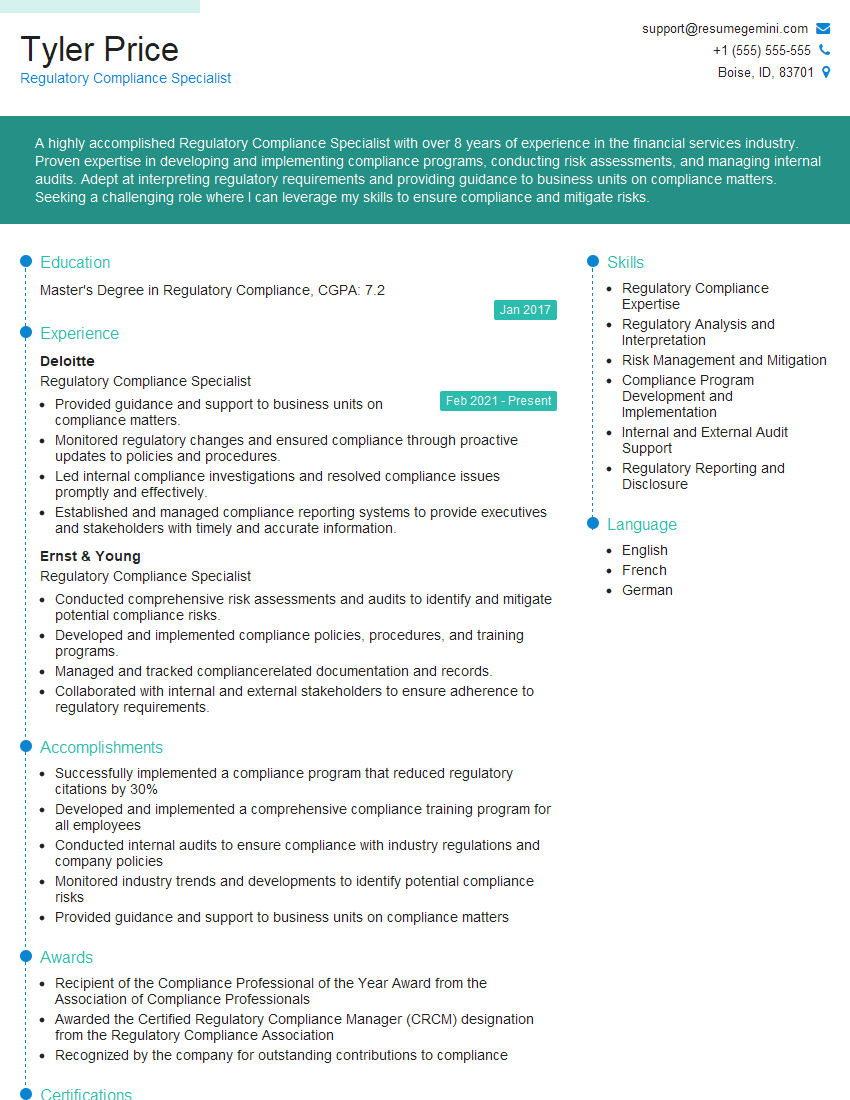
Regulatory Compliance Specialist Resume Sample
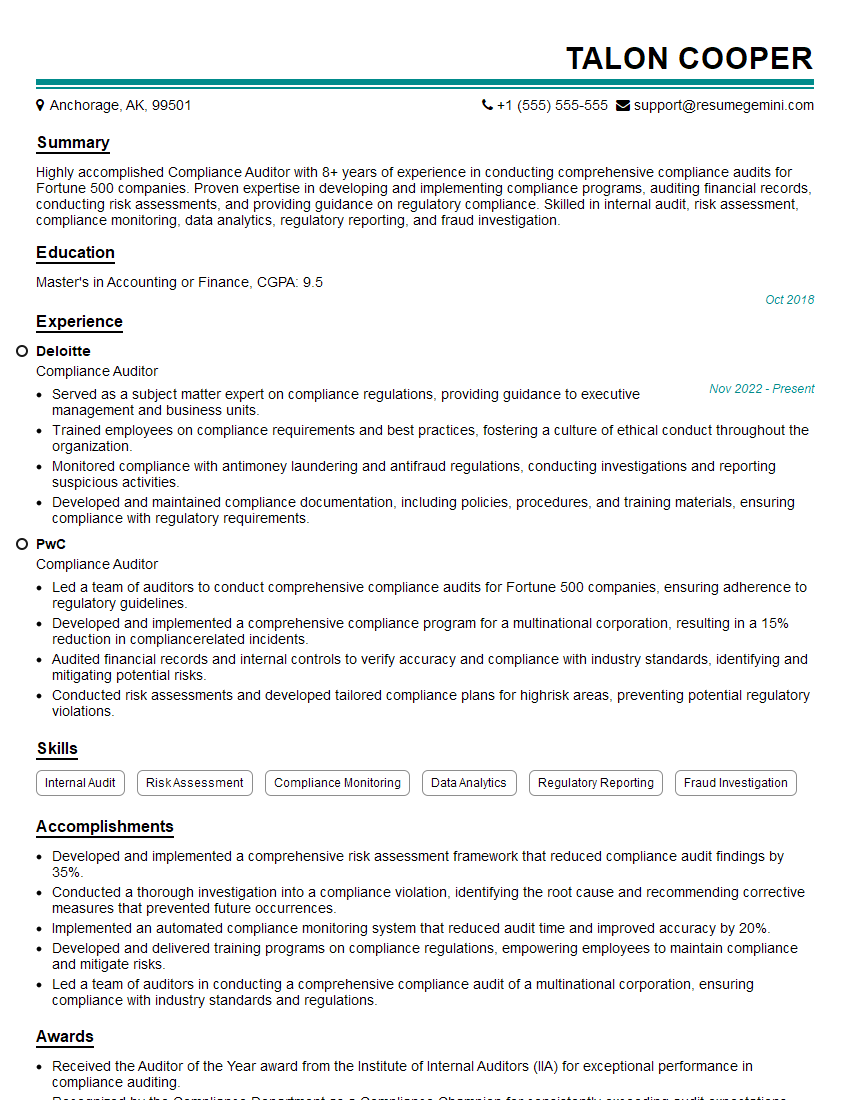
Compliance Auditor Resume Sample
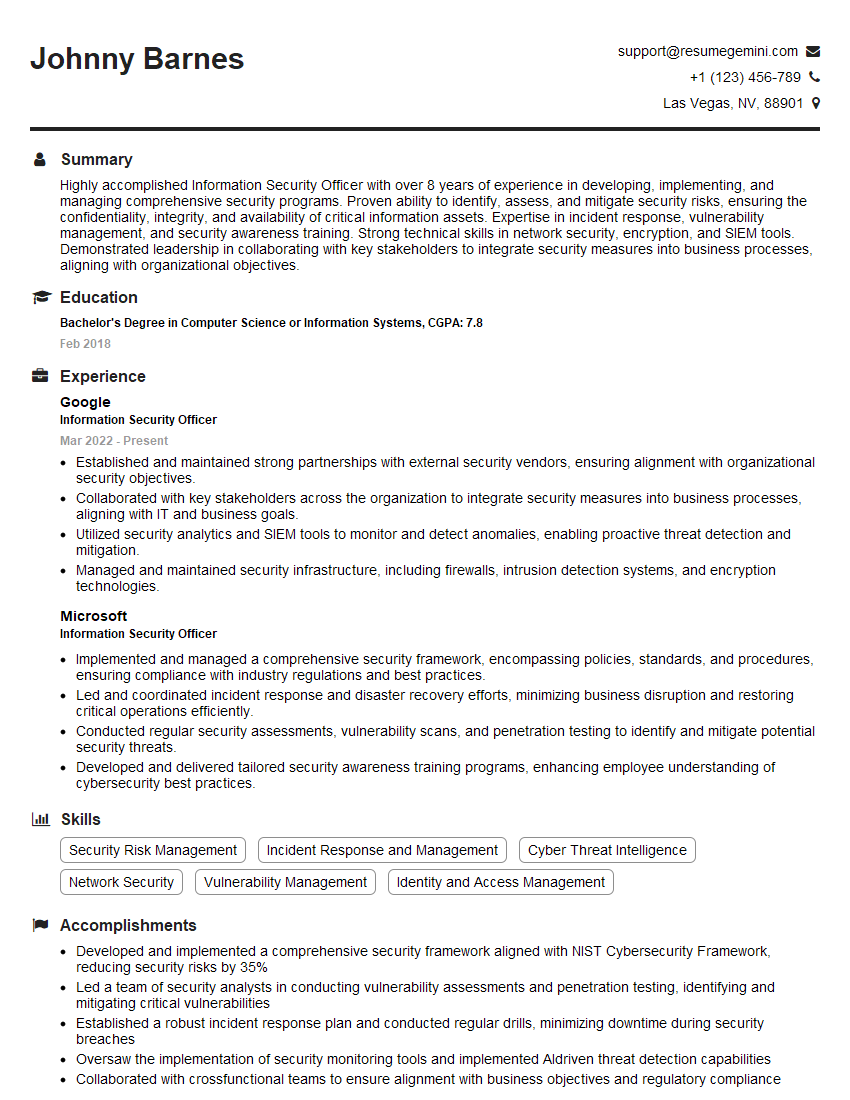
Information Security Officer Resume Sample
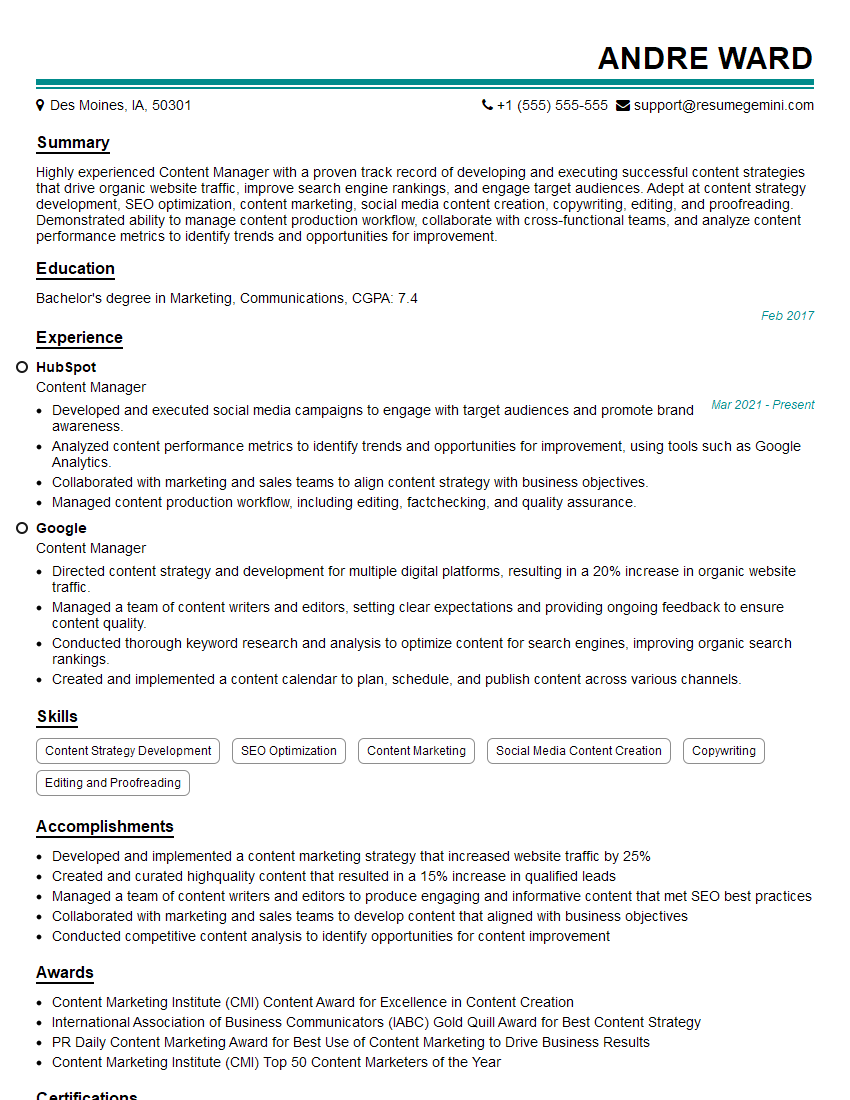
Content Manager Resume Sample

Information Architect Resume Sample
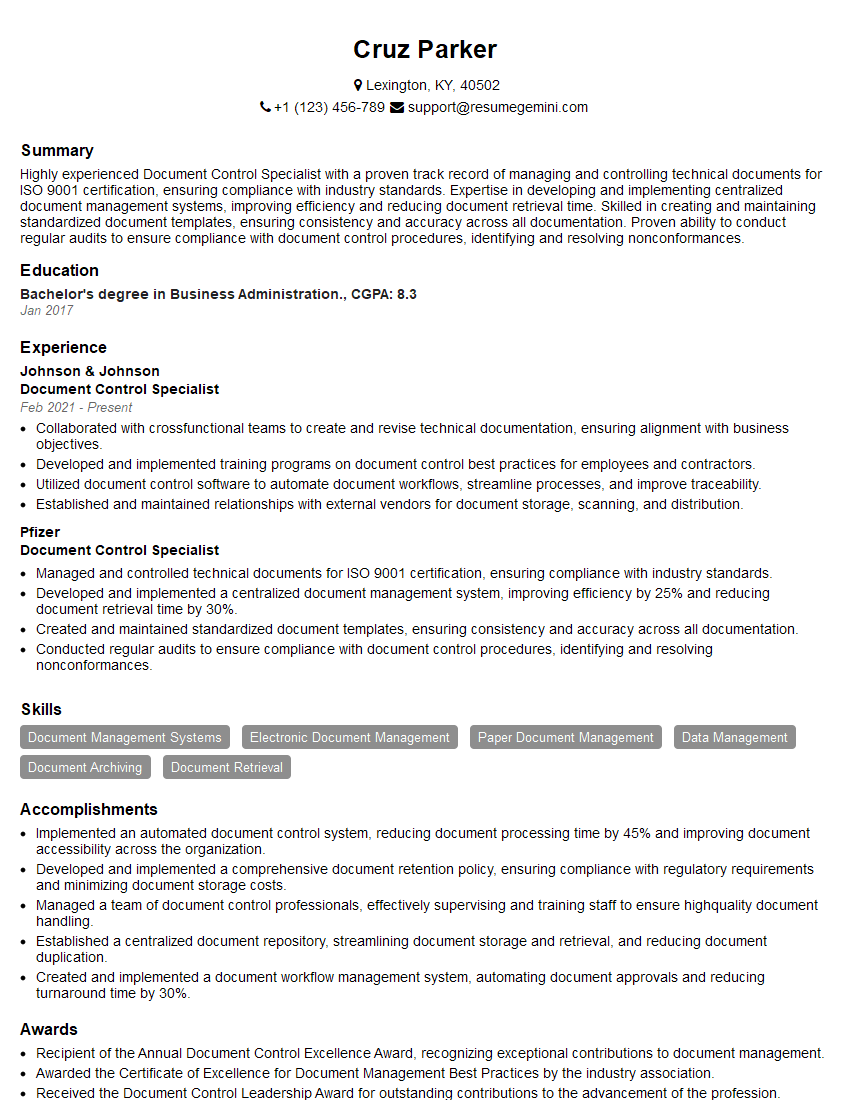
Document Control Specialist Resume Sample
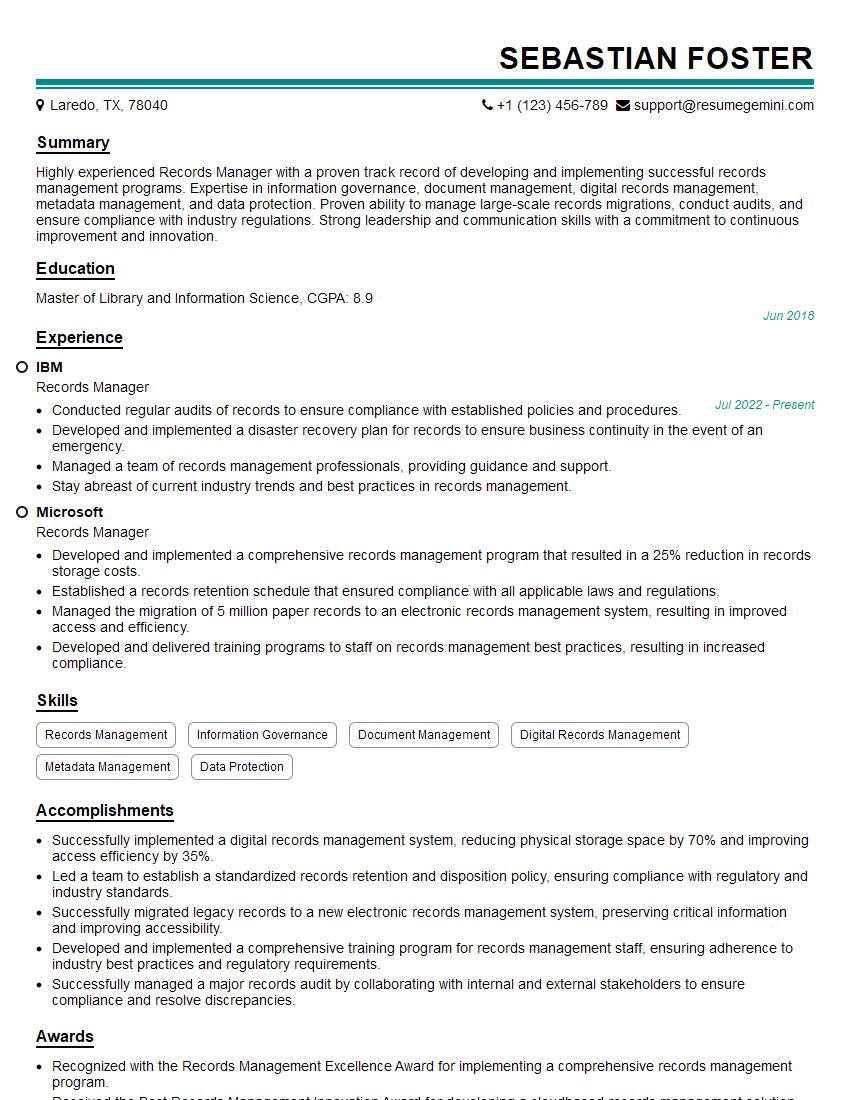
Records Manager Resume Sample
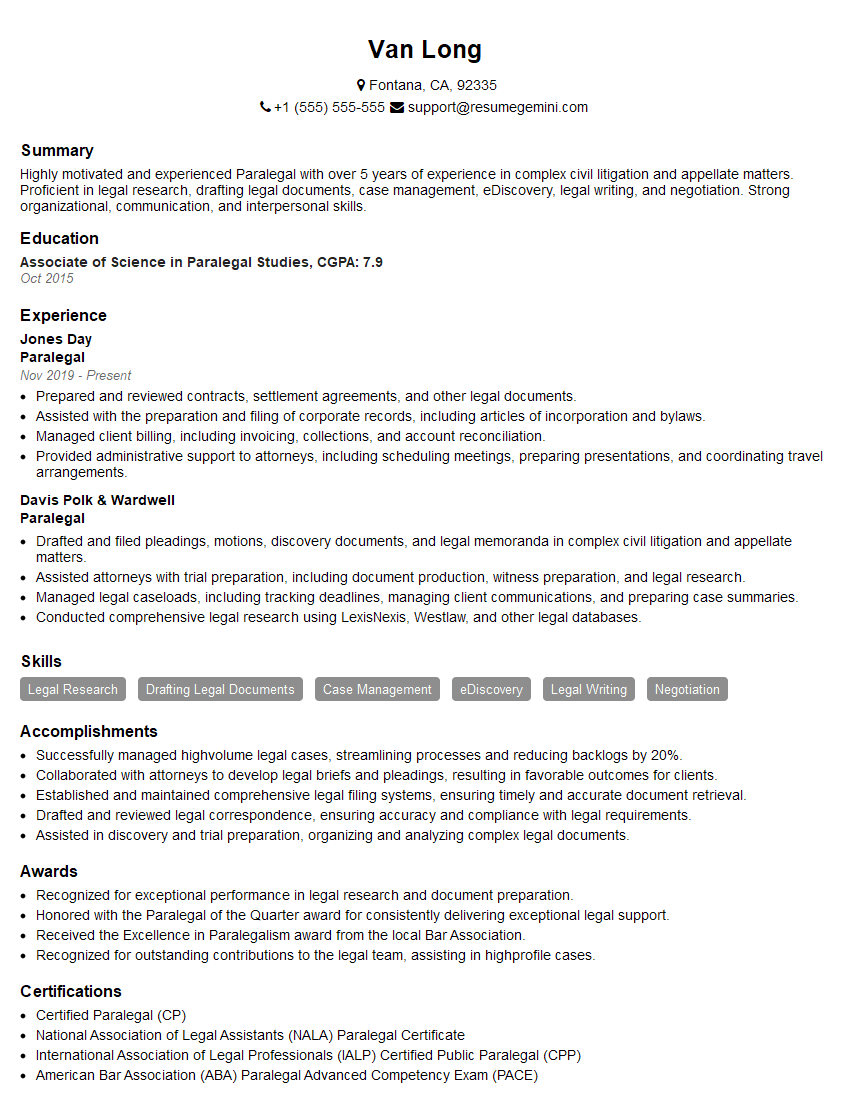
Paralegal Resume Sample
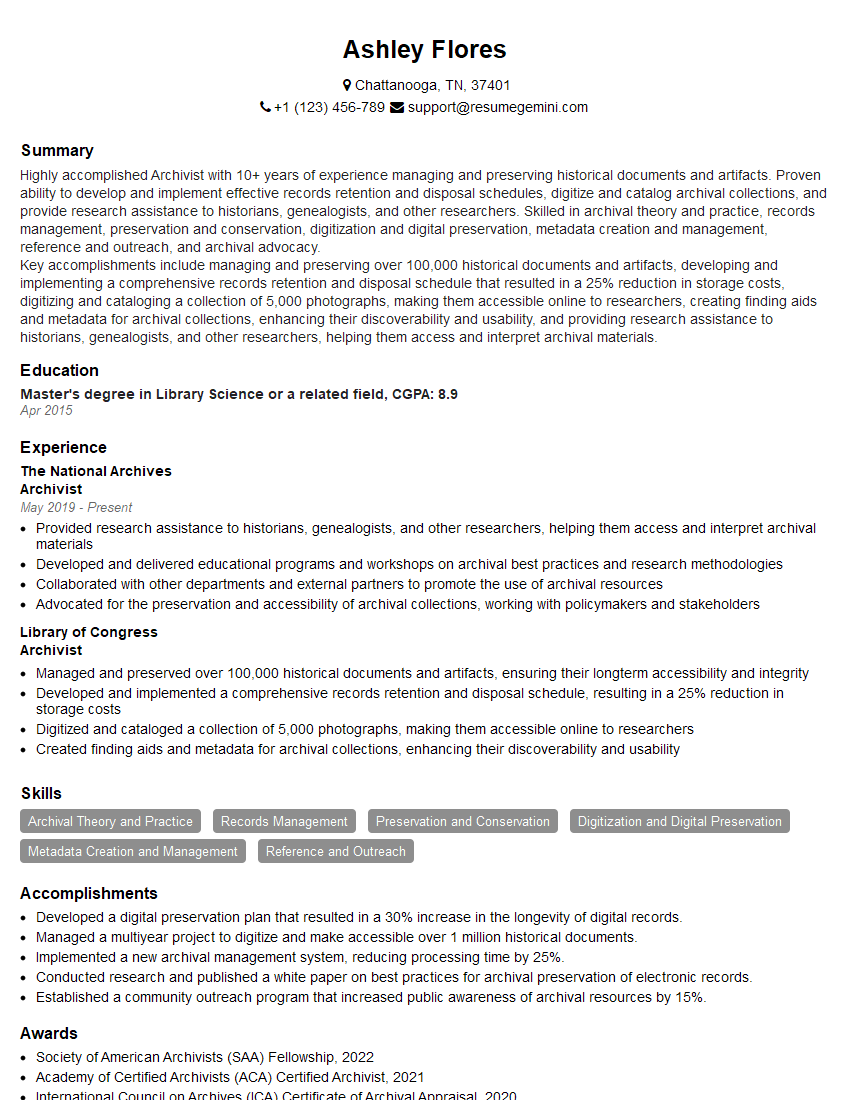
Archivist Resume Sample
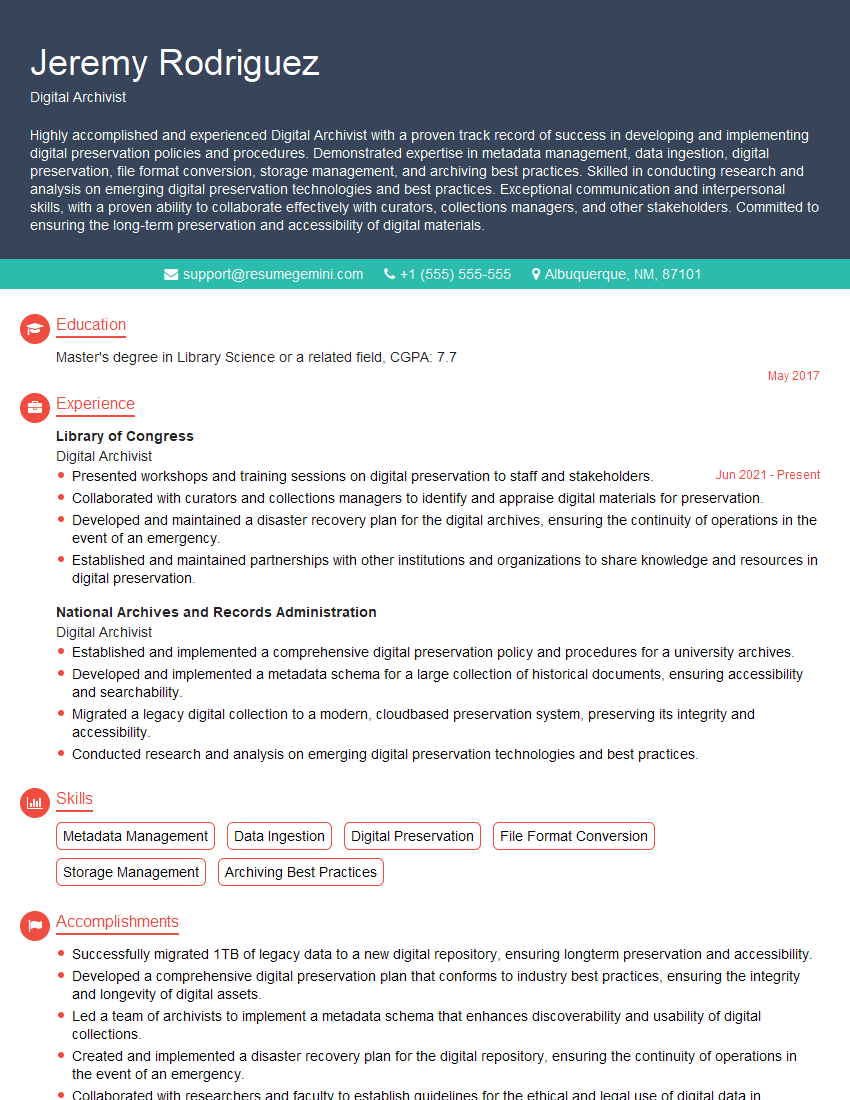
Digital Archivist Resume Sample

Records Analyst Resume Sample

Records Technician Resume Sample
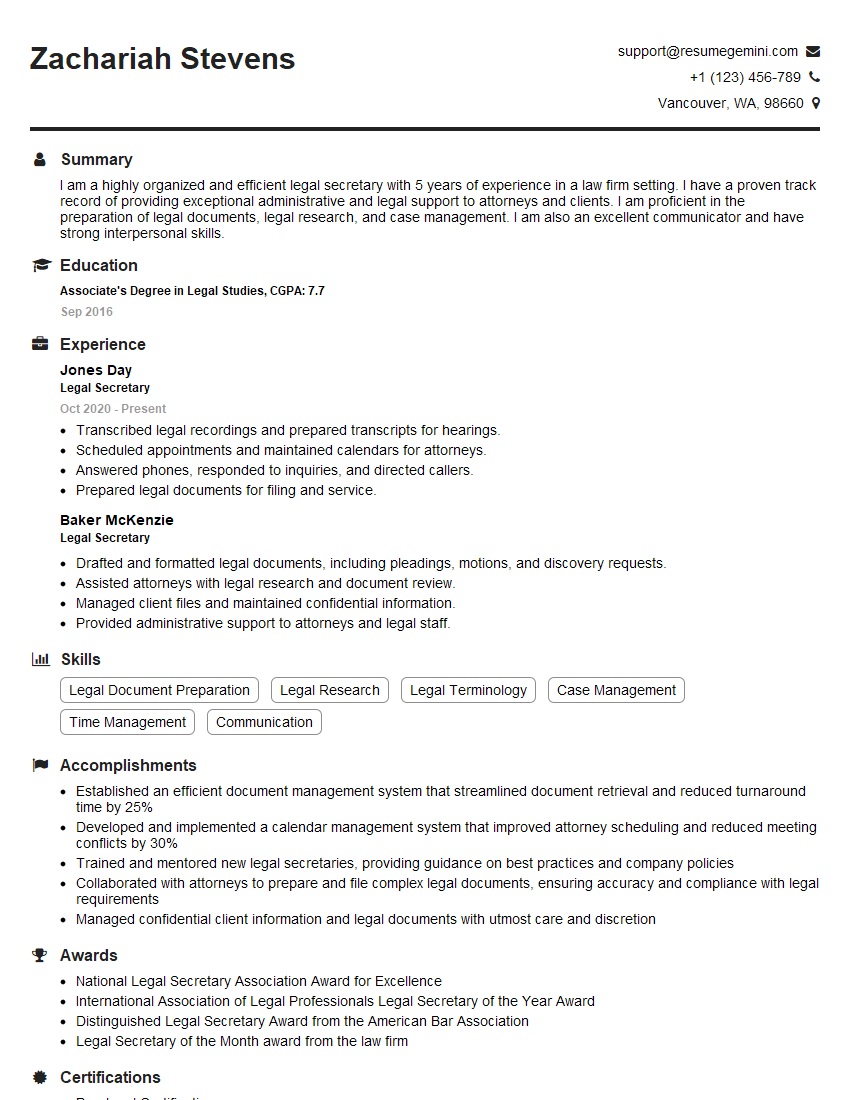
Legal Secretary Resume Sample
Explore more articles
Users Rating of Our Blogs
Share Your Experience
We value your feedback! Please rate our content and share your thoughts (optional).
What Readers Say About Our Blog
Really detailed insights and content, thank you for writing this detailed article.
IT gave me an insight and words to use and be able to think of examples