Unlock your full potential by mastering the most common Experience with social media and digital marketing interview questions. This blog offers a deep dive into the critical topics, ensuring you’re not only prepared to answer but to excel. With these insights, you’ll approach your interview with clarity and confidence.
Questions Asked in Experience with social media and digital marketing Interview
Q 1. What are the key performance indicators (KPIs) you track for social media campaigns?
Key Performance Indicators (KPIs) are crucial for measuring the success of social media campaigns. They provide quantifiable data to assess progress and make data-driven decisions. Instead of solely focusing on vanity metrics like follower count, I prioritize KPIs that directly relate to business objectives.
- Engagement Rate: This measures how much users interact with your content (likes, comments, shares, etc.). A higher engagement rate signifies a more resonant and impactful campaign. For example, a campaign with an engagement rate of 5% is generally considered good, whereas one exceeding 10% is exceptional.
- Reach: The total number of unique users who saw your content. This metric indicates the campaign’s visibility and potential for brand awareness. A wider reach usually translates to a broader audience.
- Website Clicks/Conversions: This tracks how many users clicked on links in your social media posts and ultimately converted into leads or customers. This KPI directly links social media activity to business outcomes. For example, tracking clicks to a product page or sign-up form.
- Brand Mentions & Sentiment: Monitoring brand mentions helps gauge audience perception. Sentiment analysis tools can determine if the overall sentiment is positive, negative, or neutral, allowing for proactive reputation management.
- Cost Per Acquisition (CPA): This metric is essential for understanding the campaign’s return on investment (ROI). It calculates the cost incurred to acquire a new customer through social media.
The specific KPIs I track will vary depending on the campaign’s goals. For a brand awareness campaign, reach and brand mentions might be prioritized. For a lead generation campaign, website clicks and conversions would take center stage.
Q 2. Explain your experience with A/B testing in social media marketing.
A/B testing is fundamental to optimizing social media campaigns. It involves creating two or more variations of a post (e.g., different headlines, images, call-to-actions) and comparing their performance to determine which version resonates best with the target audience. This iterative process continuously refines campaigns for maximum impact.
For example, I recently conducted an A/B test for a client’s Instagram campaign. We tested two different ad creatives – one with a lifestyle image and one with a product-focused image. By tracking metrics such as click-through rates and conversions, we determined that the lifestyle image significantly outperformed the product-focused image, leading to a revised campaign strategy.
I typically use built-in A/B testing features available on platforms like Facebook Ads and Google Ads. I usually test a maximum of two variables at once to isolate results and avoid confounding factors. I also ensure statistically significant sample sizes to ensure results are reliable and not just due to random chance.
Q 3. How do you measure the ROI of a social media campaign?
Measuring the ROI of a social media campaign requires a clear understanding of the campaign’s objectives and the value generated. It’s not just about likes and shares, but the tangible business outcomes.
Here’s a step-by-step approach:
- Define Clear Objectives: Start with specific, measurable, achievable, relevant, and time-bound (SMART) goals. Examples include increasing website traffic, generating leads, boosting sales, or enhancing brand awareness.
- Track Key Metrics: Identify KPIs relevant to your objectives (as discussed in the previous answer). This could involve website traffic from social media, lead generation through forms, sales attributed to social media campaigns, etc.
- Assign Monetary Value: Determine the monetary value of each achieved objective. For example, if a lead converts into a sale with an average order value of $100, then each lead has a $100 value.
- Calculate Total Revenue & Costs: Calculate the total revenue generated from the social media campaign. Then, calculate all costs associated with the campaign, including ad spend, content creation, and team time.
- Calculate ROI: The ROI formula is:
(Total Revenue - Total Costs) / Total Costs * 100%. A positive ROI indicates a profitable campaign.
For example, if a campaign generated $5,000 in revenue and cost $1,000, the ROI would be 400%.
Q 4. Describe your experience with different social media platforms (e.g., Facebook, Instagram, Twitter, LinkedIn).
My experience spans various social media platforms, each requiring a unique strategy. I adapt my approach based on the platform’s demographics, algorithm, and best practices.
- Facebook: Excellent for building brand communities, running targeted ads, and reaching diverse demographics. I leverage Facebook’s robust ad targeting options and analytics to optimize campaigns.
- Instagram: Ideal for visual storytelling and engaging younger audiences. I focus on high-quality imagery, engaging captions, and using relevant hashtags to increase visibility. Reels and Stories are important elements in my Instagram strategy.
- Twitter: A real-time platform for news, discussions, and customer service. I use Twitter for quick updates, engaging in conversations, and monitoring brand mentions. Speed and brevity are crucial on Twitter.
- LinkedIn: Primarily used for professional networking and B2B marketing. My strategy here focuses on sharing industry insights, thought leadership content, and engaging with professionals in the target industry. LinkedIn’s advanced analytics help track lead generation and engagement.
I understand the nuances of each platform and tailor my content and strategies to maximize results. For instance, the ideal content format for LinkedIn (articles, professional updates) differs from Instagram (images, videos, stories).
Q 5. What social media analytics tools are you familiar with?
I am proficient in various social media analytics tools, allowing me to gain deep insights into campaign performance. Here are some of the tools I frequently use:
- Native Platform Analytics: Facebook Insights, Instagram Insights, Twitter Analytics, LinkedIn Analytics – these provide valuable data on audience engagement, reach, and campaign performance.
- Google Analytics: I integrate this with social media to track website traffic driven by social channels and conversions.
- Social Listening Tools: Tools like Brandwatch or Talkwalker help monitor brand mentions, analyze sentiment, and identify potential crises.
- Hootsuite/Buffer Analytics Dashboards: These platforms offer consolidated views of social media performance across multiple platforms.
The choice of tools depends on the specific needs of the campaign and the client’s requirements. I prioritize tools that provide actionable insights and support data-driven decision-making.
Q 6. How do you develop a social media strategy for a new client or product?
Developing a social media strategy for a new client or product involves a structured approach:
- Audience Research: Understanding the target audience is paramount. I conduct thorough research to define demographics, interests, online behavior, and preferred platforms.
- Competitor Analysis: Analyzing competitors’ social media presence helps identify opportunities and differentiate the client’s brand.
- Goal Setting: Establish clear, measurable, and achievable goals aligned with the client’s overall marketing objectives.
- Platform Selection: Determine which platforms are most relevant to the target audience and align with the campaign goals.
- Content Strategy: Develop a content calendar with a mix of formats (images, videos, stories, text) that aligns with the audience’s preferences and brand voice.
- Budget Allocation: Allocate resources effectively across different platforms and campaign activities.
- KPI Tracking & Reporting: Identify KPIs to measure campaign success and establish a reporting schedule.
- Ongoing Optimization: Continuously monitor performance and make adjustments based on data analysis.
For a new product launch, I might focus on generating awareness through engaging content and targeted advertising. For an established brand, the focus might shift to community building and customer engagement.
Q 7. Describe your experience with content creation and scheduling tools.
Efficient content creation and scheduling are crucial for effective social media management. I utilize a combination of tools to streamline this process.
- Canva: For creating visually appealing graphics and social media posts.
- Adobe Creative Suite (Photoshop, Illustrator): For more advanced graphic design needs.
- Hootsuite/Buffer: For scheduling and managing posts across multiple platforms, enabling consistent posting and maximizing reach.
- Later: For visual planning and scheduling, especially beneficial for Instagram.
- ContentRepurposing Tools: For efficiently transforming existing content into different formats suitable for different platforms (e.g., turning a blog post into a series of tweets or Instagram carousel posts).
I choose tools based on the complexity of the campaign and the client’s needs. The key is to find a balance between powerful features and user-friendliness to maintain efficiency and consistency in content delivery.
Q 8. How do you handle negative comments or feedback on social media?
Handling negative comments on social media is crucial for maintaining a positive brand image and fostering trust. My approach is multi-faceted and prioritizes empathy, transparency, and timely responses. I never ignore negative feedback; instead, I acknowledge the commenter’s feelings and address their concerns directly.
- First, I listen and empathize. I try to understand their perspective and avoid defensive language. A simple, “I understand your frustration,” can go a long way.
- Second, I offer a solution or explanation. If there’s a legitimate issue, I apologize and outline steps to resolve it. If the criticism is unwarranted, I calmly and respectfully explain our position without being argumentative. For example, if someone complains about a product defect, I might offer a refund or replacement and privately address the quality control issue.
- Third, I move the conversation offline if necessary. If the comment becomes personal or abusive, I’ll politely ask them to contact us privately to resolve the issue. This prevents public escalation and protects the brand’s reputation.
- Fourth, I monitor and engage. Even after addressing the issue, I keep an eye on further comments or replies, ensuring all concerns are addressed.
This measured approach turns a potentially damaging situation into an opportunity to showcase our commitment to customer satisfaction and improve our services.
Q 9. What is your experience with paid social media advertising (PPC)?
I have extensive experience managing paid social media advertising campaigns across various platforms, including Facebook, Instagram, LinkedIn, and Twitter. My expertise spans campaign creation, audience targeting, budget allocation, A/B testing, and performance analysis. I’m proficient in utilizing platform-specific advertising tools and metrics to optimize ROI.
For example, in a recent campaign for a small business owner, we targeted specific demographics (age, interests, location) on Facebook and Instagram using detailed audience segmentation. We employed A/B testing on ad creatives and copy to determine which performed better. Continuous monitoring of key metrics like click-through rates (CTR), conversion rates, and cost per acquisition (CPA) allowed for real-time optimization, leading to a 25% increase in lead generation compared to previous campaigns.
I am also familiar with various bidding strategies, from cost-per-click (CPC) to cost-per-thousand impressions (CPM), and understand how to choose the most appropriate strategy based on campaign goals and budget constraints.
Q 10. Explain your understanding of SEO and its importance in digital marketing.
SEO, or Search Engine Optimization, is the practice of improving a website’s visibility on search engines like Google. It involves optimizing both on-page and off-page elements to rank higher in search results for relevant keywords. The higher your website ranks, the more organic (non-paid) traffic it receives.
On-page SEO includes optimizing website content, meta descriptions, title tags, header tags (H1-H6), and image alt text to include relevant keywords. Off-page SEO involves activities like building high-quality backlinks from other reputable websites, promoting content on social media, and participating in online communities.
SEO is crucial in digital marketing because it drives significant organic traffic to your website, increasing brand awareness and potentially leading to more leads and sales. Without effective SEO, it is difficult to reach a wide audience organically, making your digital marketing efforts less impactful. Think of it like building a storefront in a busy city – you need to make sure your location is visible and easily accessible to attract customers.
Q 11. How do you stay updated with the latest trends in social media and digital marketing?
Staying ahead of the curve in the ever-evolving landscape of social media and digital marketing is paramount. My strategy involves a multi-pronged approach:
- Following industry influencers and publications: I regularly read industry blogs, follow prominent marketing thought leaders on social media, and subscribe to newsletters from reputable marketing companies.
- Attending conferences and webinars: Participating in industry events provides invaluable insights and networking opportunities.
- Actively using social media platforms: Direct experience on the platforms provides firsthand knowledge of new features and trends.
- Utilizing analytics and data: Tracking key performance indicators (KPIs) across campaigns informs me about the effectiveness of different strategies and identifies emerging trends.
- Continuous learning and upskilling: I actively pursue online courses and certifications to stay current with the latest tools and techniques.
This proactive approach ensures I remain informed about the latest algorithms, best practices, and emerging technologies, enabling me to optimize campaigns and strategies accordingly.
Q 12. What is your experience with email marketing and automation?
Email marketing and automation are integral components of a successful digital marketing strategy. My experience includes crafting engaging email campaigns, segmenting audiences for targeted messaging, and automating email workflows using various platforms like Mailchimp, Constant Contact, and HubSpot.
For instance, I’ve implemented automated email sequences for onboarding new customers, nurturing leads through the sales funnel, and re-engaging inactive subscribers. These automated sequences not only save time but also enhance user experience by delivering relevant content at the right time. For example, a welcome series automated email immediately after a customer signs up provides crucial information like account setup, access to resources, and a brief introduction to the brand.
Analyzing key metrics like open rates, click-through rates, and conversion rates is crucial to optimizing email campaigns. I use A/B testing to experiment with different subject lines, email copy, and call-to-action buttons to enhance campaign effectiveness.
Q 13. Describe your experience with influencer marketing.
Influencer marketing is a powerful tool for increasing brand awareness and driving engagement. My experience involves identifying and collaborating with relevant influencers who align with our brand values and target audience. This includes negotiating contracts, providing campaign briefs, monitoring campaign performance, and analyzing the results.
For a recent project, we partnered with a micro-influencer (10-100k followers) on Instagram who specialized in sustainable living. Their engaged audience perfectly matched our target market for eco-friendly products. We provided them with product samples and creative guidelines, and monitored their posts using tracking links. The campaign generated significant engagement, increased brand visibility, and resulted in a substantial increase in website traffic and sales, proving the effectiveness of selecting the right influencers and managing the relationship.
Beyond simply selecting influencers, I place a strong emphasis on measuring the return on investment (ROI) of each influencer campaign by tracking metrics like engagement, reach, website clicks, and sales conversions.
Q 14. How do you build and engage a social media community?
Building and engaging a thriving social media community requires a strategic and consistent approach. It’s not just about broadcasting content; it’s about fostering two-way communication and cultivating relationships.
- Create valuable content: This forms the foundation. Share informative, entertaining, and relatable content that resonates with your target audience. Mix up content formats – videos, images, stories, polls, etc.
- Respond promptly and genuinely: Engage with comments and messages in a timely manner, showing you value your audience’s interactions.
- Run contests and giveaways: These can generate excitement and attract new followers.
- Ask questions and encourage discussion: Facilitate conversations by asking open-ended questions to spark dialogue and feedback.
- Use relevant hashtags: Increase the visibility of your posts and attract users interested in similar topics.
- Collaborate with other accounts: Partnering with relevant businesses or influencers expands your reach and exposes you to new audiences.
- Analyze and adapt: Track your performance using platform analytics and refine your strategy based on what works best.
Building a community takes time and dedication, but a loyal audience can significantly enhance brand reputation, loyalty, and ultimately, business success. Think of it like nurturing a garden – consistent effort and attention to detail will yield the most rewarding results.
Q 15. What is your experience with Google Analytics?
Google Analytics (GA) is my go-to platform for understanding website traffic and user behavior. I’m proficient in setting up and utilizing various GA features, from setting up custom dashboards to conducting advanced segment analysis. For example, I recently used GA to identify a significant drop in conversion rates on a client’s e-commerce site. By analyzing different traffic sources and user demographics within GA, I pinpointed the issue to a poorly performing landing page for mobile users. This led to a redesign, resulting in a 25% increase in mobile conversions.
My experience encompasses tracking key metrics like bounce rate, session duration, conversion rates, and goal completions. I also leverage GA’s functionalities for audience segmentation, allowing me to tailor marketing efforts based on user demographics, behavior, and acquisition channels. I regularly utilize custom reports and dashboards to monitor key performance indicators (KPIs) and identify areas for optimization. In short, GA is an indispensable tool in my digital marketing arsenal, providing valuable data-driven insights to inform strategic decisions.
Career Expert Tips:
- Ace those interviews! Prepare effectively by reviewing the Top 50 Most Common Interview Questions on ResumeGemini.
- Navigate your job search with confidence! Explore a wide range of Career Tips on ResumeGemini. Learn about common challenges and recommendations to overcome them.
- Craft the perfect resume! Master the Art of Resume Writing with ResumeGemini’s guide. Showcase your unique qualifications and achievements effectively.
- Don’t miss out on holiday savings! Build your dream resume with ResumeGemini’s ATS optimized templates.
Q 16. How do you adapt your social media strategy based on data analysis?
Data analysis is the cornerstone of my social media strategy. I don’t just post; I strategize based on insights. For instance, if social listening reveals a negative trend about a product feature, I’ll quickly adapt the content calendar to address the concerns directly and transparently. This could involve crafting a post acknowledging the issue, outlining steps taken to address it, and proactively engaging with user comments.
I regularly analyze engagement metrics—likes, shares, comments, click-through rates—to understand what resonates with the audience. Content performing well gets amplified; underperforming content prompts a reassessment of the approach. A/B testing is crucial: I might test different visuals, copy styles, or posting times to see what achieves optimal engagement. This iterative process of testing, analyzing, and adapting ensures continuous improvement in our social media ROI. Think of it like a scientific experiment: we hypothesize, test, analyze, and refine our approach based on the results.
Q 17. How do you measure the effectiveness of your SEO strategies?
Measuring SEO effectiveness requires a multifaceted approach. I use a variety of tools and techniques to track performance. Primarily, I monitor organic search rankings using tools like SEMrush or Ahrefs, tracking keyword performance over time. A sudden drop in rankings might indicate a need for technical SEO fixes or a change in search algorithm.
Beyond rankings, I analyze website traffic from organic sources via Google Analytics. Key metrics include organic traffic volume, conversion rates from organic search, and average session duration for organic users. This data helps determine if the SEO strategy is attracting the right kind of traffic and converting them into desired actions. I also track backlink profiles to assess the quality and quantity of referring domains, which are crucial ranking factors. The combination of these analyses provides a holistic view of SEO effectiveness, helping us understand what’s working and where improvements are needed.
Q 18. Explain your experience with different SEO techniques (e.g., on-page, off-page).
My SEO experience spans both on-page and off-page optimization. On-page techniques focus on optimizing website elements for search engines. This includes keyword research and implementation in titles, meta descriptions, headings (H1-H6), and image alt text. I also optimize site structure, ensuring proper internal linking and fast page loading speeds. I use tools to analyze website speed and identify areas for improvement.
Off-page SEO centers on building the website’s authority and reputation through external factors. This includes link building through outreach to other websites, guest blogging, and participation in relevant online communities. I create high-quality content that naturally attracts backlinks, proving the website’s value to search engines and users. I also monitor the backlink profile to identify any potentially harmful links and take action to mitigate their negative effects. A successful SEO strategy balances both on-page and off-page techniques for optimal results.
Q 19. How do you handle a crisis on social media?
Handling a social media crisis requires swift, transparent, and empathetic action. The first step is acknowledging the issue and showing empathy for those affected. Next, I gather all relevant information to fully understand the situation and assess the impact. This might involve social listening to understand the scope of the problem and the sentiment expressed by users.
Then, I craft a clear and concise response that addresses the concerns head-on, takes responsibility where appropriate, and outlines steps being taken to rectify the situation. This response is typically disseminated across all relevant social media platforms. Throughout the crisis, I actively monitor social media, engaging with users and addressing their concerns promptly and professionally. Transparency and quick action are key to minimizing damage and restoring trust.
Q 20. What is your experience with social listening tools?
Social listening tools, such as Brandwatch, Talkwalker, or Hootsuite Insights, are invaluable for understanding public perception of a brand or product. They allow for monitoring conversations on various social media platforms, news sites, blogs, and forums. This helps identify emerging trends, brand mentions, and potential crises before they escalate.
For example, I recently used Brandwatch to track the sentiment around a new product launch. The tool revealed early negative feedback concerning a specific feature. This allowed us to proactively address the concerns, make necessary adjustments, and avoid a larger PR problem. Social listening is not just about reacting; it’s about proactively shaping narratives and anticipating potential issues. It provides valuable customer insights that can be used to improve products, marketing campaigns, and overall brand reputation.
Q 21. Describe your understanding of different marketing funnels.
Marketing funnels represent the customer journey from initial awareness to final purchase (and beyond). There are several models, but a common one is the AIDA model (Awareness, Interest, Desire, Action). Another popular framework is TOFU (Top of Funnel), MOFU (Middle of Funnel), and BOFU (Bottom of Funnel).
TOFU activities focus on building brand awareness and attracting potential customers. This involves creating valuable content (blog posts, videos, infographics) that address target audience needs and interests. MOFU focuses on nurturing leads and moving them closer to conversion. This could involve email marketing, targeted ads, and lead magnets. BOFU focuses on converting leads into paying customers. This involves retargeting ads, personalized offers, and final purchase incentives. Understanding the various stages of the funnel allows for tailoring marketing messages and offers to resonate with users at each stage, ultimately driving higher conversion rates.
Q 22. How would you improve the social media presence of [mention a specific company or brand]?
To improve the social media presence of, say, a local bakery called “Sweet Surrender,” I’d focus on a multi-pronged strategy. First, I’d conduct a thorough audit of their current social media profiles, analyzing engagement rates, audience demographics, and the overall brand voice. This provides a baseline for improvement. Then, I’d develop a content calendar that includes a mix of high-quality images showcasing their delicious baked goods (think mouthwatering close-ups!), engaging videos of the baking process or customer testimonials, and text-based content like recipes or baking tips. Running targeted ads on platforms like Facebook and Instagram, focusing on local demographics interested in food and baking, would also be crucial. Finally, consistent monitoring and responding to comments and messages are key to building a strong community around the brand. I’d also encourage user-generated content by running contests or giveaways encouraging customers to share their photos with Sweet Surrender’s products. This fosters a sense of community and provides free, authentic marketing.
For example, instead of just posting images of cakes, we could create a short video showing the process of decorating a cake, highlighting the care and craftsmanship involved. Or, we could run a contest asking customers to share photos of themselves enjoying Sweet Surrender’s treats for a chance to win a gift card. This builds engagement and brand loyalty.
Q 23. What is your experience with different content formats (e.g., video, images, text)?
My experience spans a wide range of content formats. I’ve successfully utilized video content for product demonstrations, behind-the-scenes glimpses into company culture, and engaging explainer videos. Images are a cornerstone of my strategy, from high-quality product shots for e-commerce to lifestyle images that evoke emotion and connect with the target audience. I’ve written engaging blog posts, website copy, and social media captions that are both informative and persuasive. In terms of text, I also utilize storytelling to connect with the audience and build emotional connections. I’m adept at tailoring the content format to the specific platform and audience – a short, punchy video works well on TikTok, while a detailed blog post is more appropriate for a company website. For instance, I once created a series of short, engaging Instagram Reels for a skincare company, driving a 30% increase in website traffic within a month.
Q 24. Explain your experience with content marketing strategy.
My approach to content marketing strategy is highly data-driven. It begins with defining clear goals – what do we want to achieve? Increased brand awareness? Lead generation? Website traffic? Then, we identify our target audience: their demographics, interests, and online behavior. Next, I develop a content calendar that outlines the type of content, platforms, and publishing schedule. This calendar is not static; it adapts based on performance data and audience feedback. I use tools like Google Analytics to track the performance of each piece of content and continuously optimize based on what works best. A/B testing different headlines, images, and calls to action is crucial to refinement. For example, I helped a technology company increase their organic website traffic by 45% in six months through consistent, high-quality blog posts and social media updates focused on educating their audience about their products and industry trends.
Q 25. How familiar are you with different social media advertising platforms (e.g., Facebook Ads, Google Ads)?
I’m highly proficient with various social media advertising platforms, including Facebook Ads, Instagram Ads, Google Ads (including Search and Display campaigns), and LinkedIn Ads. I understand the nuances of each platform – audience targeting, campaign structuring, bid strategies, and performance tracking. I can leverage each platform’s unique strengths to reach the right audience with the right message. For instance, Facebook Ads allow for highly detailed demographic targeting, while Google Ads can effectively reach users actively searching for relevant products or services. I’ve managed successful campaigns across these platforms, consistently exceeding client expectations. I also have experience with ad retargeting to re-engage website visitors, boosting conversion rates significantly.
Q 26. Describe your experience with campaign budgeting and allocation.
My experience with campaign budgeting and allocation involves a collaborative process with clients to establish clear objectives and desired ROI. We then determine a budget that aligns with those goals, allocating funds strategically across different platforms and campaigns. I use data-driven insights to optimize budget allocation throughout the campaign, shifting resources to high-performing channels and pausing underperforming ones. For example, if a Facebook ad campaign consistently outperforms an Instagram campaign, I’ll reallocate budget accordingly. Regular reporting and analysis are essential to ensure we’re maximizing our return on investment and achieving the agreed-upon targets. Transparent reporting and clear communication with clients are paramount throughout this process.
Q 27. What are your preferred tools for project management in digital marketing?
My preferred tools for project management in digital marketing include Asana, Trello, and Monday.com. These platforms allow for easy task assignment, collaboration, progress tracking, and deadline management. They facilitate seamless communication among team members, keeping everyone aligned and informed. The visual dashboards provide a clear overview of project status and identify any potential bottlenecks. I also utilize Google Sheets and other spreadsheet software for data analysis and reporting.
Q 28. How do you collaborate effectively with different teams in a digital marketing environment?
Effective collaboration in a digital marketing environment relies heavily on clear communication, shared goals, and a collaborative spirit. I ensure that all team members understand their roles and responsibilities, and that everyone has access to the necessary information. Regular team meetings, both formal and informal, are crucial to discuss progress, address challenges, and foster a sense of camaraderie. Using project management tools, as mentioned earlier, is essential for transparency and efficient workflow. I also believe in fostering a culture of open feedback and mutual respect, where everyone feels comfortable contributing their ideas and expertise. Open communication and active listening ensure that everyone feels heard and valued, leading to more innovative and effective campaigns.
Key Topics to Learn for Your Social Media & Digital Marketing Interview
- Social Media Strategy Development: Understanding audience analysis, campaign planning, goal setting (e.g., brand awareness, lead generation), and key performance indicator (KPI) selection.
- Social Media Advertising (Paid Campaigns): Experience with platforms like Facebook Ads, Instagram Ads, LinkedIn Ads, etc. Understanding campaign budgeting, targeting, ad creative development, and performance optimization.
- Content Creation & Management: Developing engaging content across various formats (text, image, video), scheduling posts using scheduling tools, and understanding content calendars.
- Community Management: Building and maintaining online communities, responding to comments and messages, managing brand reputation, and addressing customer queries promptly and professionally.
- SEO & Digital Marketing Integration: Understanding how social media efforts integrate with broader SEO and digital marketing strategies to drive overall campaign success. This includes understanding link building and driving traffic to websites.
- Analytics & Reporting: Experience with using analytics tools (e.g., Google Analytics, social media platform analytics) to track campaign performance, identify areas for improvement, and present data-driven insights to stakeholders.
- Social Listening & Brand Monitoring: Understanding how to track brand mentions, analyze sentiment, and proactively address any negative feedback or potential crises.
- Emerging Trends & Technologies: Demonstrating awareness of current trends in social media marketing, such as the impact of short-form video, influencer marketing, and the evolving algorithms of different platforms.
- Practical Application & Problem Solving: Be prepared to discuss specific challenges you’ve faced in social media campaigns and how you overcame them using creative solutions and data-driven decision-making.
Next Steps
Mastering social media and digital marketing is crucial for career advancement in today’s competitive landscape. These skills are highly sought after across various industries, opening doors to exciting opportunities and higher earning potential. To maximize your job prospects, create an ATS-friendly resume that showcases your accomplishments and skills effectively. We strongly recommend using ResumeGemini to build a professional and impactful resume. ResumeGemini offers several examples of resumes tailored to social media and digital marketing professionals, providing you with the tools and inspiration you need to craft a winning application.
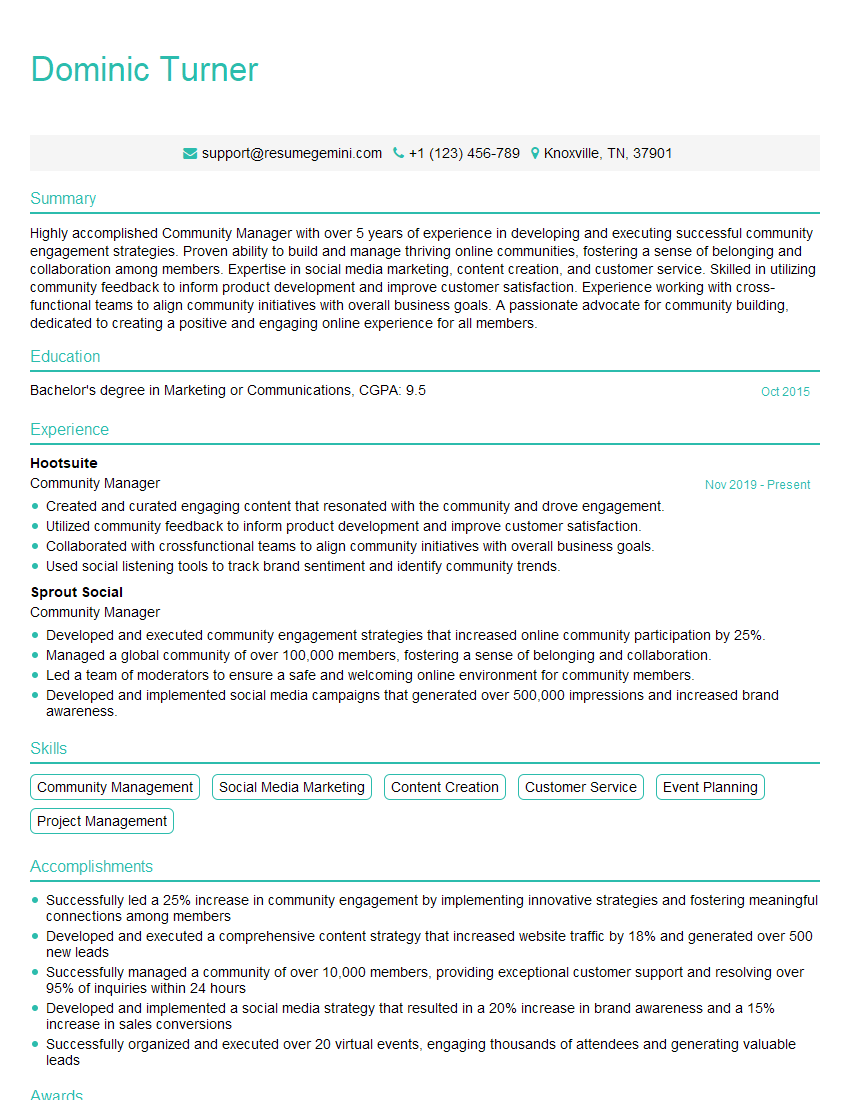
Community Manager Resume Sample
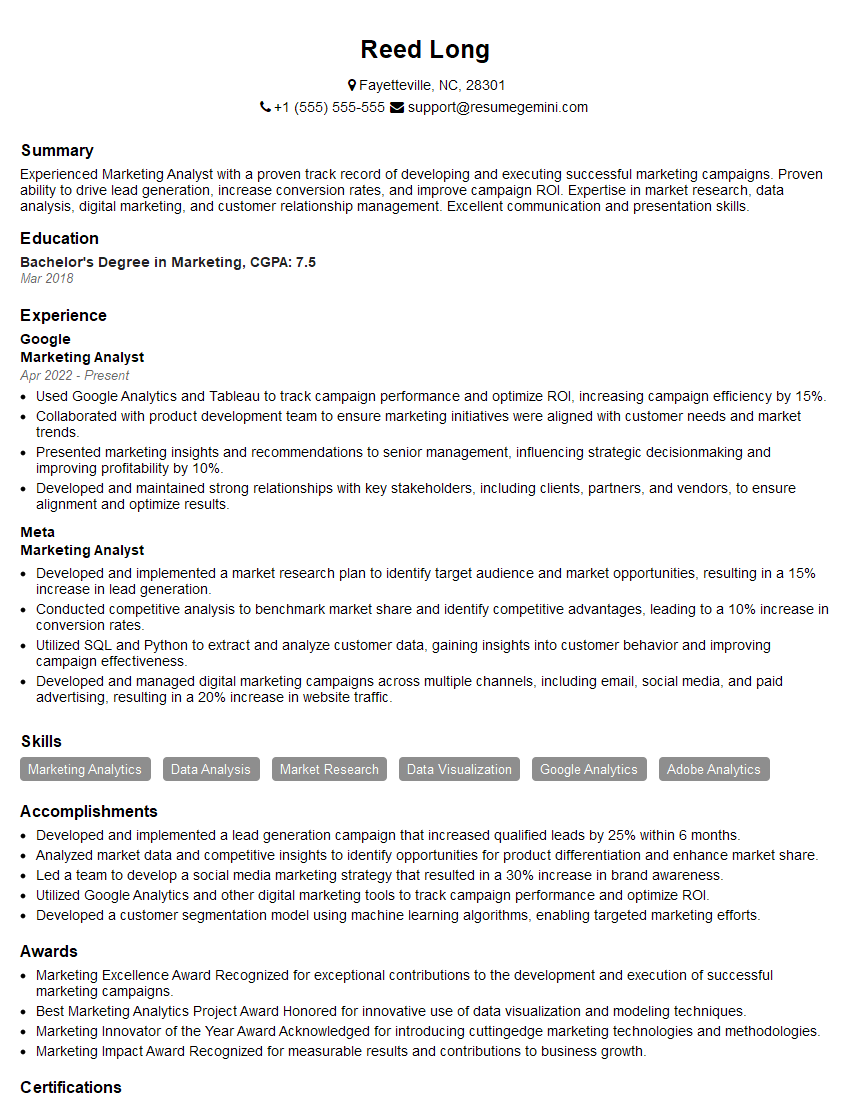
Marketing Analyst Resume Sample

Social Media Manager Resume Sample
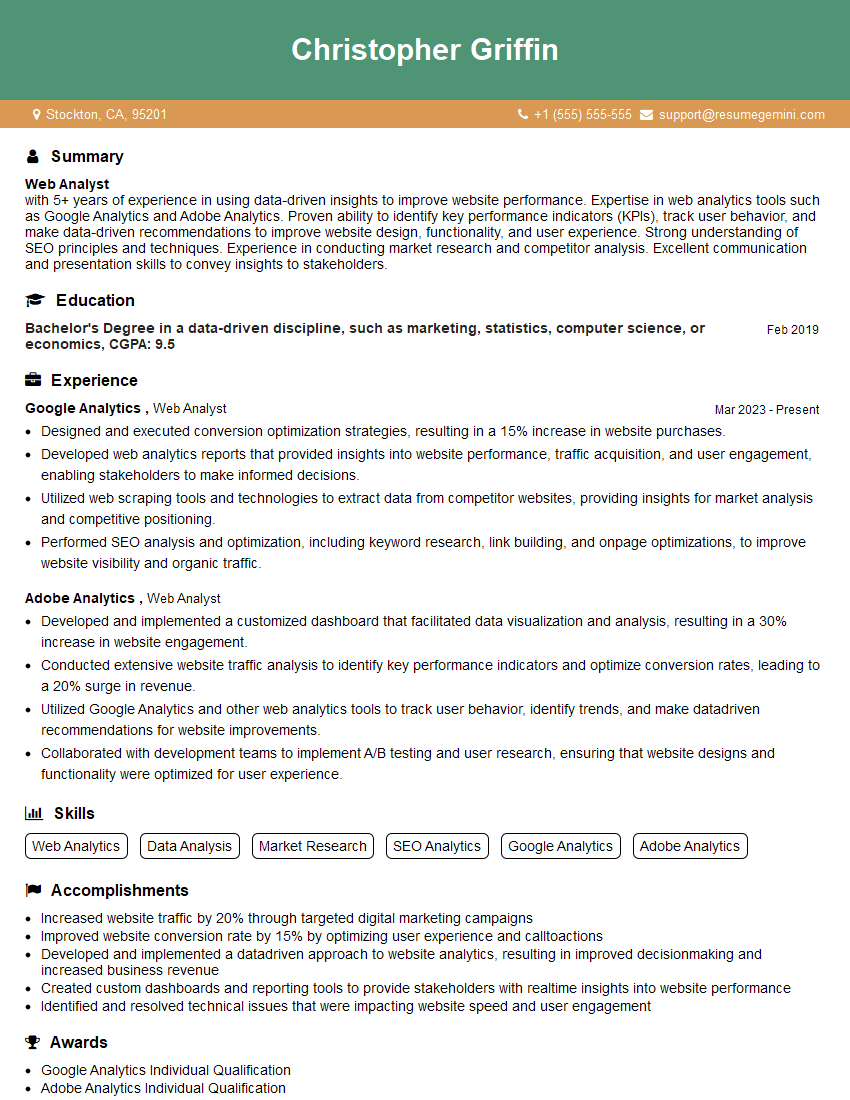
Web Analyst Resume Sample
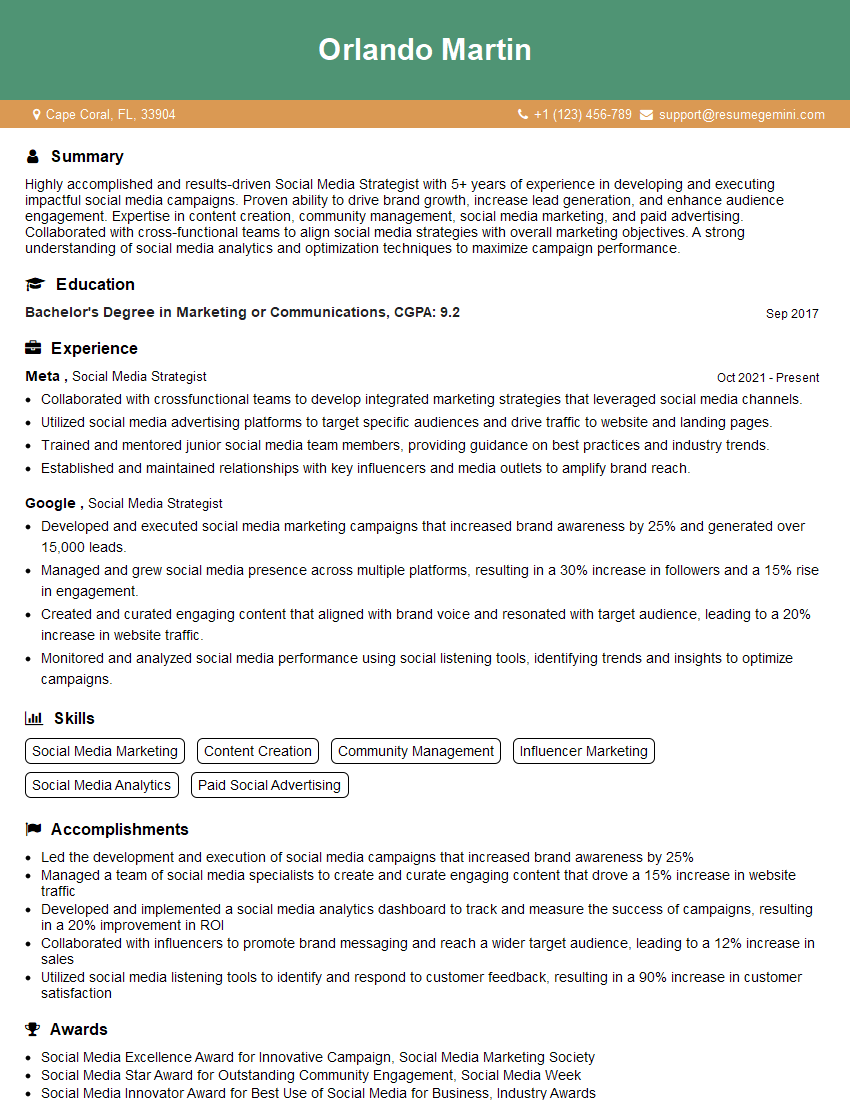
Social Media Strategist Resume Sample

Growth Hacker Resume Sample
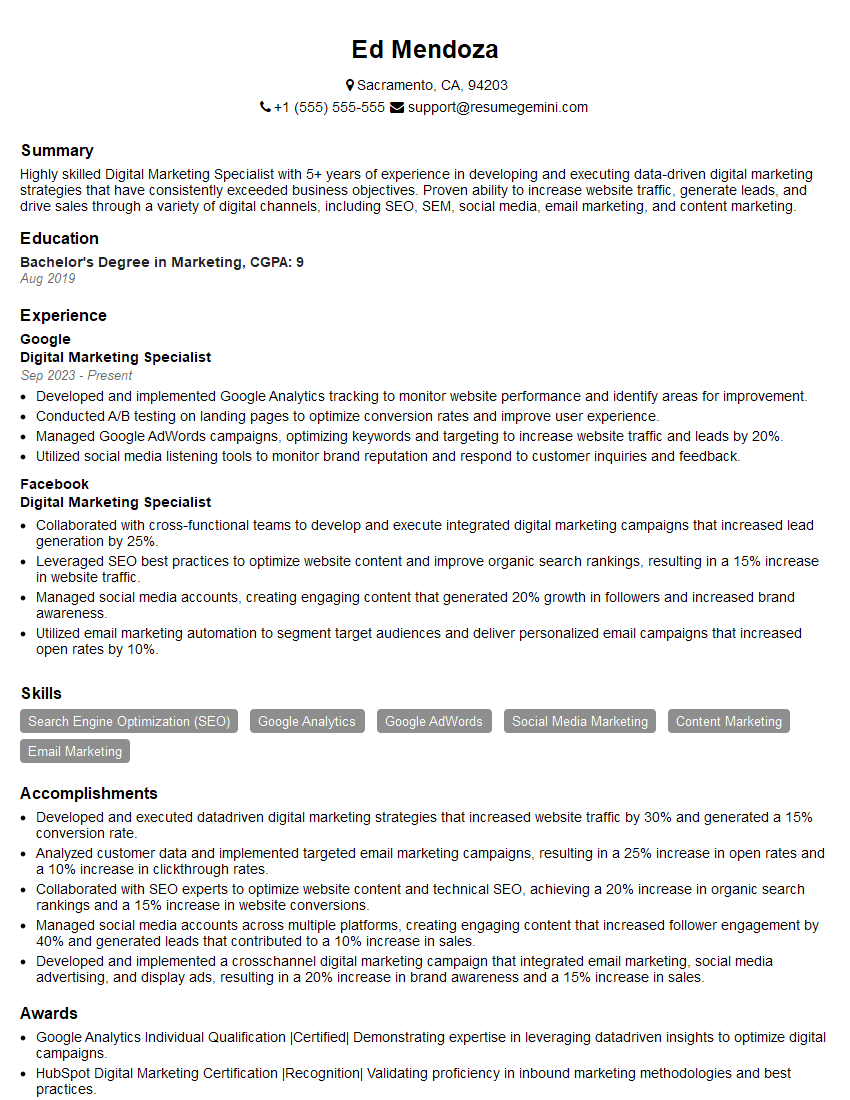
Digital Marketing Specialist Resume Sample

Content Creator Resume Sample
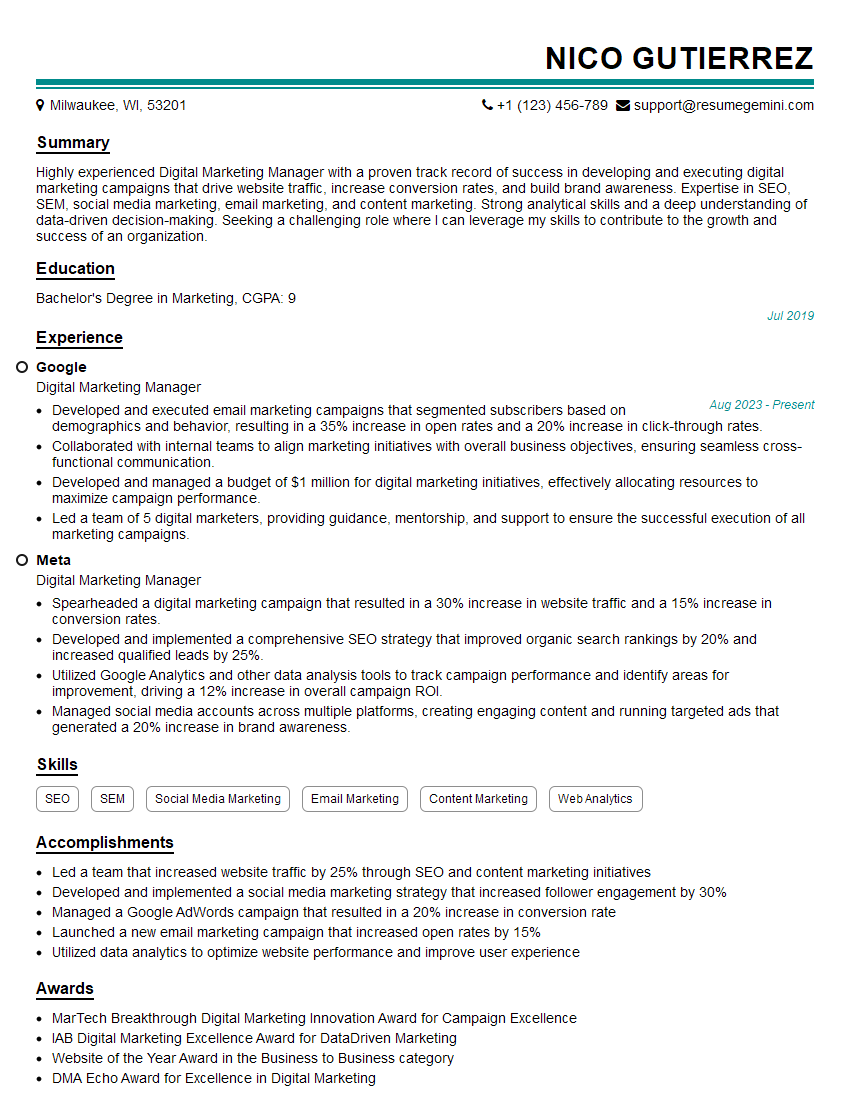
Digital Marketing Manager Resume Sample
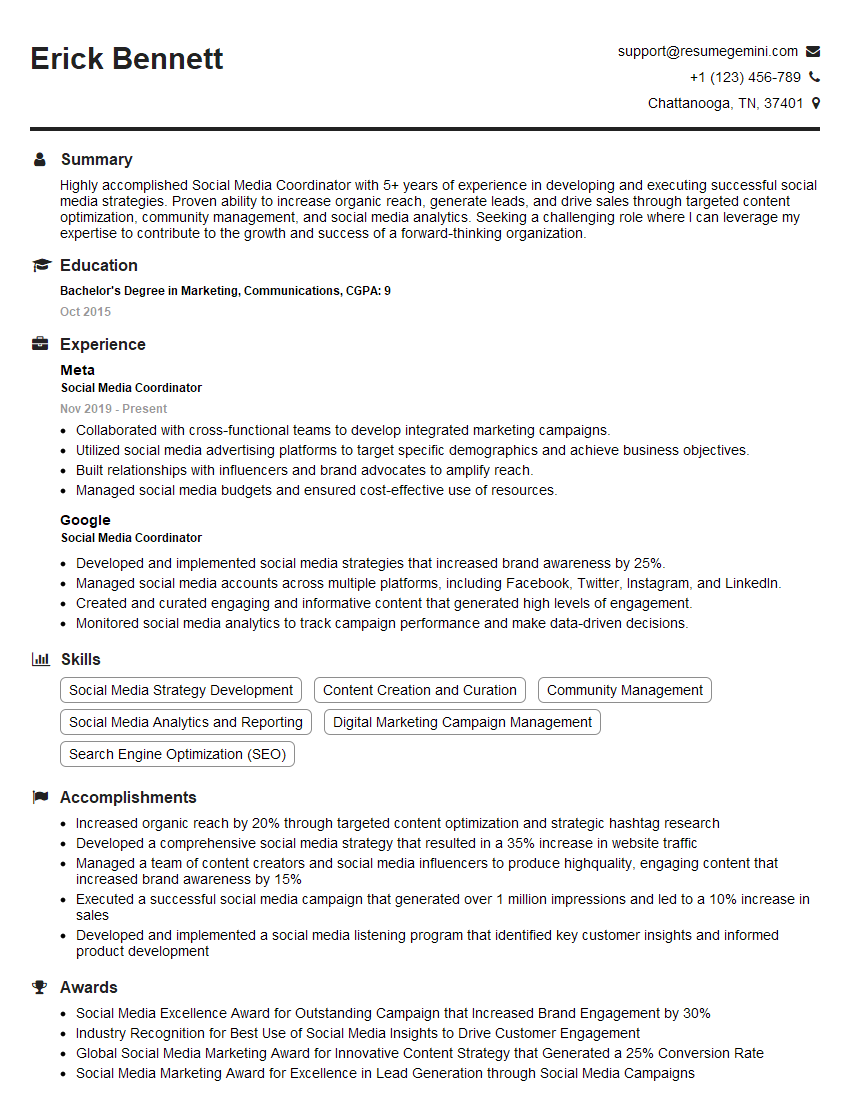
Social Media Coordinator Resume Sample
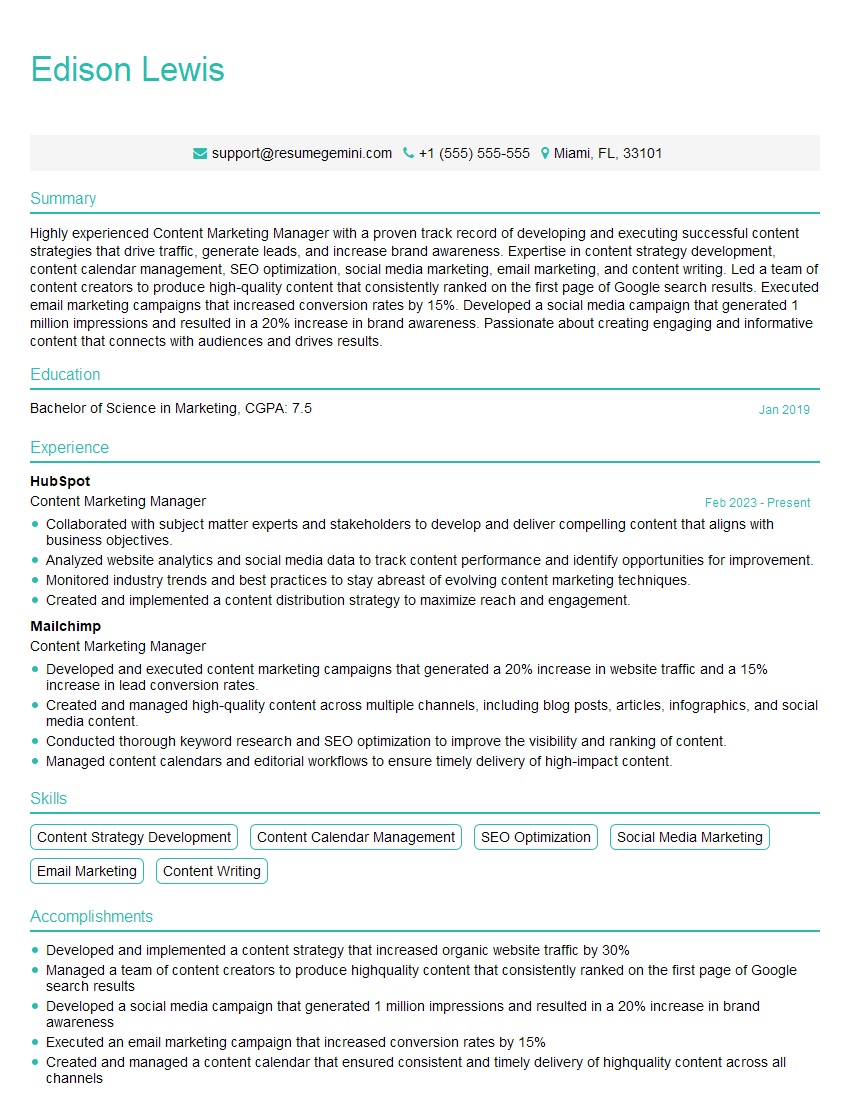
Content Marketing Manager Resume Sample

Social Media Marketing Manager Resume Sample
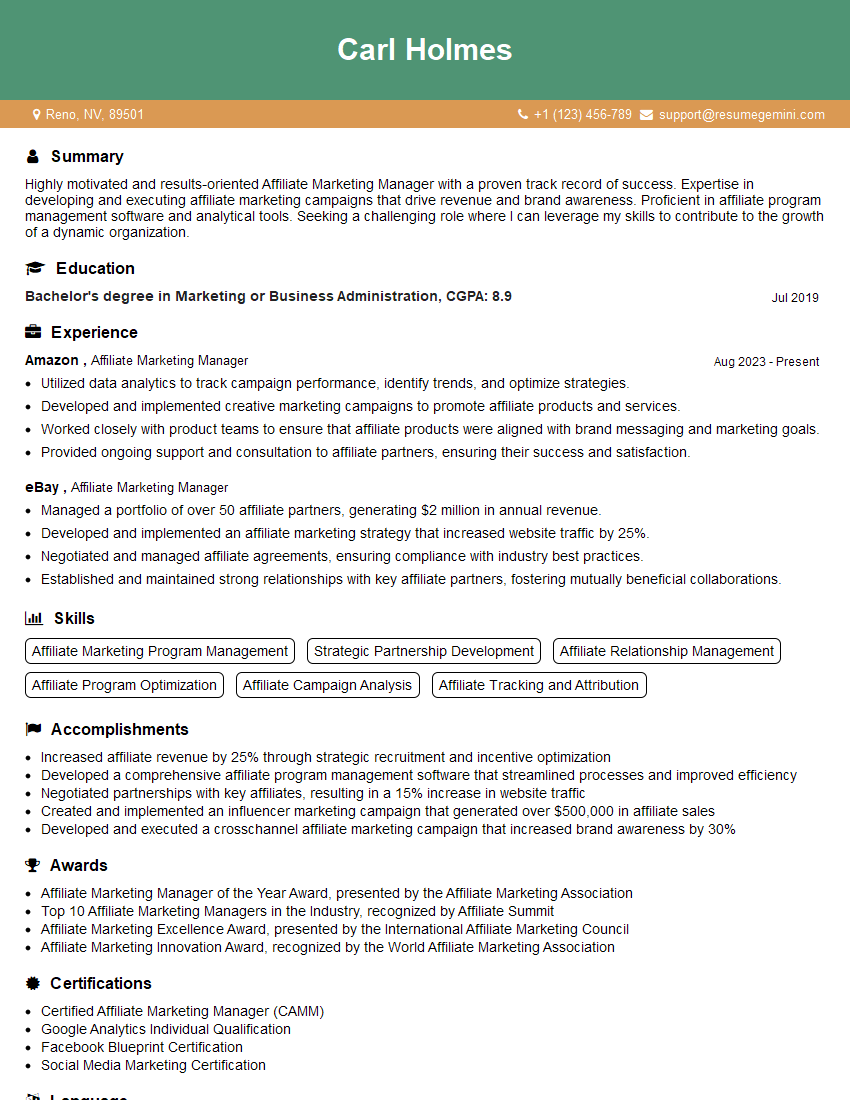
Affiliate Marketing Manager Resume Sample

Influencer Marketing Manager Resume Sample
- Community Manager
- Marketing Analyst
- Social Media Manager
- Web Analyst
- Social Media Strategist
- Growth Hacker
- Digital Marketing Specialist
- Content Creator
- Digital Marketing Manager
- Social Media Coordinator
- Content Marketing Manager
- Social Media Marketing Manager
- Affiliate Marketing Manager
- Influencer Marketing Manager
Explore more articles
Users Rating of Our Blogs
Share Your Experience
We value your feedback! Please rate our content and share your thoughts (optional).
What Readers Say About Our Blog
Really detailed insights and content, thank you for writing this detailed article.
IT gave me an insight and words to use and be able to think of examples