Preparation is the key to success in any interview. In this post, we’ll explore crucial Experience with Waste Management interview questions and equip you with strategies to craft impactful answers. Whether you’re a beginner or a pro, these tips will elevate your preparation.
Questions Asked in Experience with Waste Management Interview
Q 1. Explain the different types of waste streams and their management strategies.
Waste streams are categorized based on their source and composition. Effective management requires tailored strategies for each type. Common streams include:
- Municipal Solid Waste (MSW): This encompasses everyday trash from households and businesses – paper, plastics, food scraps, yard waste, etc. Management involves collection, transfer, processing (recycling, composting), and disposal in landfills or waste-to-energy facilities.
- Industrial Waste: Generated by manufacturing and industrial processes. This can range from relatively benign materials to highly hazardous substances. Management requires specialized handling, treatment, and disposal methods, often dictated by stringent regulations.
- Hazardous Waste: Waste that poses a substantial or potential threat to public health or the environment due to its ignitability, corrosivity, reactivity, or toxicity (e.g., batteries, pesticides, medical waste). Strict regulations govern its handling, transportation, treatment, storage, and disposal, often requiring specialized facilities.
- Construction and Demolition (C&D) Waste: Debris from building and demolition projects, including concrete, wood, metals, and gypsum. Management focuses on maximizing recycling and reuse to minimize landfill burden. Source separation at the construction site is crucial.
- Medical Waste: Waste generated from healthcare facilities, containing potentially infectious materials. Requires careful handling, sterilization, and disposal to prevent the spread of disease. Incineration and autoclaving are common treatment methods.
Effective waste stream management relies on a combination of source reduction, reuse, recycling, recovery, and responsible disposal, minimizing environmental impact and promoting resource conservation. A well-designed program considers the unique characteristics of each waste stream, local regulations, and economic factors.
Q 2. Describe your experience with waste reduction and recycling programs.
In my previous role at Green Solutions Inc., I spearheaded several successful waste reduction and recycling programs. One notable project involved implementing a comprehensive recycling system for a large manufacturing plant. This included:
- Waste Audits: Conducting thorough waste audits to identify the composition and volume of waste generated, pinpointing opportunities for reduction and diversion from landfills.
- Employee Education: Developing and implementing comprehensive training programs to educate employees about proper waste segregation and recycling practices. This involved clear signage, regular communication campaigns, and interactive workshops.
- Recycling Infrastructure: Installing clearly marked recycling bins throughout the facility, strategically placed to maximize convenience and participation.
- Material Recovery: Negotiating contracts with recyclers for various materials, ensuring efficient and cost-effective processing.
- Monitoring and Evaluation: Regularly tracking key performance indicators (KPIs) such as recycling rates, waste diversion rates, and landfill disposal costs to measure the program’s effectiveness and make necessary adjustments.
As a result of these initiatives, the plant achieved a 35% increase in recycling rates within the first year, significantly reducing its environmental footprint and saving on disposal costs. This project demonstrates my ability to develop and implement effective waste reduction strategies, tailored to the specific needs of the client.
Q 3. How do you ensure compliance with environmental regulations in waste management?
Ensuring compliance with environmental regulations is paramount in waste management. My approach is multi-faceted:
- Staying Updated: I maintain a thorough understanding of all applicable federal, state, and local regulations. This includes regularly reviewing updates and changes to environmental laws and permits.
- Record Keeping: Meticulous record-keeping is crucial. We maintain detailed records of waste generation, transportation, processing, and disposal, ensuring traceability throughout the entire waste lifecycle. This includes manifests for hazardous waste shipments, detailed disposal records, and regular compliance audits.
- Permitting and Licensing: We secure all necessary permits and licenses for waste handling and disposal operations. This ensures we operate within the legal framework and minimize the risk of non-compliance.
- Internal Audits: Regular internal audits are conducted to assess our adherence to regulations and identify any areas needing improvement. Corrective actions are implemented promptly to address any identified deficiencies.
- External Audits: We welcome and proactively engage with external audits by regulatory agencies to ensure transparency and maintain compliance.
Proactive compliance not only mitigates legal risks but also enhances our credibility and protects our reputation. By adhering to the highest standards, we contribute to environmental protection and build trust with stakeholders.
Q 4. What are the key performance indicators (KPIs) you use to measure the success of a waste management program?
Key Performance Indicators (KPIs) are essential for tracking the effectiveness of a waste management program. The specific KPIs used will vary depending on the program’s goals but typically include:
- Waste Diversion Rate: The percentage of waste diverted from landfills through recycling, composting, and other recovery methods. A higher rate indicates a more successful program.
- Recycling Rate: The percentage of recyclable materials that are actually recycled. Helps assess the efficiency of recycling efforts.
- Landfill Disposal Rate: The percentage of waste that ends up in landfills. A lower rate is the primary goal of waste reduction programs.
- Cost per Ton of Waste Managed: Tracks the efficiency and cost-effectiveness of the waste management program.
- Greenhouse Gas Emissions: Measures the program’s impact on climate change by quantifying the amount of greenhouse gases emitted throughout the waste management process.
- Compliance Rate: Tracks the percentage of adherence to environmental regulations and permits.
- Customer Satisfaction: Measures the level of satisfaction with waste collection services.
Regular monitoring and analysis of these KPIs provide valuable insights into program performance, enabling timely adjustments and continuous improvement. This data-driven approach is crucial for optimizing resource allocation and achieving sustainability goals.
Q 5. Explain the process of hazardous waste handling and disposal.
Hazardous waste handling and disposal require strict adherence to regulations and safety protocols. The process generally involves:
- Characterisation: Identifying and classifying the hazardous waste based on its physical, chemical, and biological properties. This involves laboratory testing to determine its toxicity, flammability, and reactivity.
- Segregation and Containment: Separating hazardous waste from other waste streams and storing it in designated containers to prevent leaks or spills. Proper labeling is crucial to indicate the waste’s characteristics and hazards.
- Transportation: Transporting hazardous waste to a permitted treatment, storage, and disposal facility (TSDF). This requires specialized vehicles and manifests that track the waste’s movement.
- Treatment: The TSDF treats the hazardous waste to reduce its toxicity or volume. Treatment methods may include incineration, chemical neutralization, solidification, or biological treatment.
- Disposal: Once treated, the waste is disposed of in accordance with regulations. This may involve landfilling in secure landfills designed for hazardous waste or other specialized disposal methods.
- Record Keeping: Maintaining detailed records throughout the entire process, including waste generation, transportation, treatment, and disposal. This documentation is crucial for demonstrating compliance with environmental regulations.
Failure to follow these procedures can result in serious environmental damage and legal penalties. Proper hazardous waste management is crucial for protecting public health and the environment.
Q 6. Describe your experience with landfill management and its environmental impact.
Landfill management involves the controlled disposal of solid waste in designated areas. Effective management minimizes environmental impacts through:
- Site Selection and Design: Careful selection of landfill locations to minimize environmental risks, considering factors like geology, hydrology, and proximity to sensitive ecosystems. Proper design includes liners and leachate collection systems to prevent groundwater contamination.
- Waste Compaction and Cover: Regular compaction of waste to maximize space and minimize volume. Daily cover of waste with soil or other inert material reduces odors, vectors, and environmental pollution.
- Leachate Management: Collecting and treating leachate (liquid that percolates through waste) to remove contaminants before it can reach groundwater. Treatment methods may include biological treatment, chemical precipitation, or reverse osmosis.
- Gas Management: Landfills generate methane, a potent greenhouse gas. Effective gas management systems collect and either flare or utilize this gas, reducing greenhouse gas emissions.
- Monitoring: Regular monitoring of groundwater, soil, and air quality around the landfill to detect potential contamination and ensure compliance with environmental regulations.
- Closure and Post-Closure Care: Once a landfill reaches capacity, it undergoes a closure process, including final cover installation and long-term monitoring to ensure continued environmental protection.
The environmental impact of landfills can be significant if not properly managed. Improperly managed landfills can cause groundwater contamination, air pollution, and greenhouse gas emissions. Effective landfill management is crucial for protecting both human health and the environment.
Q 7. How do you manage waste collection routes and optimize efficiency?
Optimizing waste collection routes is crucial for efficiency and cost-effectiveness. My experience involves utilizing route optimization software and employing several key strategies:
- Geographic Information Systems (GIS): Using GIS software to map waste generation locations, optimize collection routes, and minimize travel distances.
- Route Optimization Software: Employing specialized software that considers factors such as distance, traffic patterns, and service demands to create efficient routes, reducing fuel consumption and labor costs.
- Data Analysis: Analyzing historical data on waste generation and collection times to identify patterns and optimize scheduling.
- Real-time Tracking: Using GPS tracking devices on collection vehicles to monitor progress, identify delays, and make real-time adjustments to routes as needed.
- Dynamic Routing: Adjusting routes in response to unexpected events, such as traffic congestion or service disruptions, to minimize delays and ensure timely collection.
- Communication and Coordination: Ensuring effective communication between drivers and dispatchers to address issues promptly and facilitate route optimization.
By implementing these strategies, we can significantly reduce travel time, fuel consumption, and labor costs, while also improving service quality and customer satisfaction. Continuous monitoring and analysis of route performance enables us to make further improvements and maximize efficiency.
Q 8. What are your strategies for minimizing waste generation and promoting sustainability?
Minimizing waste generation and promoting sustainability requires a multi-pronged approach focusing on prevention, reduction, reuse, and recycling. My strategies revolve around implementing a robust waste hierarchy, starting with prevention. This means designing products and processes to minimize waste from the outset, using durable and repairable items, and promoting sustainable consumption patterns through public awareness campaigns.
Reduction involves optimizing processes to generate less waste. For example, in a manufacturing setting, this might involve improving efficiency to reduce material waste or implementing lean manufacturing principles. Reuse strategies involve finding alternative uses for materials before disposal, such as repurposing packaging or donating usable items. Finally, recycling involves processing materials to create new products, diverting waste from landfills and conserving resources. This often includes a robust materials recovery facility (MRF) with advanced sorting technologies.
Beyond these core strategies, I advocate for extended producer responsibility (EPR) programs, holding manufacturers accountable for the end-of-life management of their products. This incentivizes the design of more sustainable and recyclable products. Collaborating with local businesses and communities through educational initiatives and partnerships is also crucial for driving widespread behavioral change.
- Example: Implementing a city-wide compost program, coupled with educational workshops on home composting, significantly reduced organic waste sent to landfills in a previous project.
Q 9. Explain your understanding of waste-to-energy technologies.
Waste-to-energy (WtE) technologies are processes that convert non-recyclable waste into usable energy. These technologies offer a valuable alternative to landfilling, reducing greenhouse gas emissions and recovering energy from waste streams. Common WtE technologies include incineration and anaerobic digestion.
Incineration involves burning waste at high temperatures to generate steam, which can then be used to produce electricity. Modern incineration plants incorporate sophisticated air pollution control systems to minimize emissions. However, it’s important to note that incineration still produces ash, which requires careful management.
Anaerobic digestion is a biological process that breaks down organic waste in the absence of oxygen, producing biogas (primarily methane) which can be used as a fuel source. The digestate, a byproduct of the process, can be used as a fertilizer. Anaerobic digestion is particularly effective for treating organic-rich waste like food scraps and yard waste.
The choice between incineration and anaerobic digestion depends on various factors, including the waste composition, energy demand, and environmental regulations. A thorough lifecycle assessment is crucial to determine the most environmentally sound option in each case.
Q 10. Describe your experience with composting and anaerobic digestion.
Composting and anaerobic digestion are both biological processes that break down organic matter, but they differ significantly in their approach and outputs. Composting is an aerobic process (requiring oxygen), resulting in a humus-like material rich in nutrients suitable for soil amendment. Anaerobic digestion is an anaerobic process (without oxygen), yielding biogas and digestate.
My experience with composting includes designing and implementing large-scale composting facilities for municipal waste streams, as well as smaller-scale community composting programs. This involves managing the composting process to optimize decomposition rates, ensuring proper aeration, moisture control, and temperature management. Successful composting requires careful monitoring of the process parameters to prevent odor issues and ensure pathogen reduction.
Anaerobic digestion experience includes working on projects involving the design and operation of anaerobic digesters for treating food waste and agricultural residues. This involves evaluating the substrate characteristics, optimizing the digester parameters (temperature, pH, retention time), and managing the digestate handling and utilization. The biogas produced can be used to generate electricity or heat, offering an environmentally and economically beneficial solution.
Q 11. How do you address public concerns and engage the community in waste management initiatives?
Addressing public concerns and fostering community engagement is essential for successful waste management initiatives. My approach involves a combination of proactive communication, transparent information sharing, and collaborative partnerships.
I prioritize clear and accessible communication to educate the public about the importance of waste reduction, recycling, and proper waste disposal. This includes using various communication channels like websites, social media, public forums, and educational materials tailored to different age groups and communities. Transparent reporting on waste management data and performance metrics builds trust and ensures accountability.
I actively seek community input through surveys, focus groups, and public consultations to understand their concerns, needs, and preferences. This input is crucial in designing effective and acceptable waste management programs. Collaborating with community organizations, schools, and local businesses creates a sense of shared responsibility and helps build a supportive community network. For instance, organizing community clean-up events fosters a sense of ownership and pride in the environment.
Q 12. What are the challenges of managing medical waste and how do you address them?
Managing medical waste presents unique challenges due to its potential to transmit infectious diseases and contain hazardous materials. Strict protocols and specialized handling are required to mitigate these risks. The challenges include the proper segregation of different waste streams (e.g., sharps, infectious waste, pharmaceutical waste), the use of appropriate containment and transportation methods, and the selection of safe and effective treatment and disposal methods.
My approach to addressing these challenges involves implementing a robust medical waste management program that adheres to all relevant regulations and guidelines. This includes establishing clear procedures for waste segregation, using appropriate color-coded containers and sharps disposal systems, ensuring proper training of healthcare personnel, and employing licensed medical waste treatment facilities for disposal or treatment processes such as autoclaving, incineration, or chemical disinfection.
Regular audits and inspections help ensure compliance and identify areas for improvement. Investing in advanced technologies like automated waste segregation systems can also improve efficiency and safety. Collaboration with healthcare facilities and regulatory agencies is critical to ensure the effectiveness of medical waste management programs.
Q 13. Explain your experience with using waste management software or technologies.
I have extensive experience using various waste management software and technologies to optimize collection routes, track waste generation, and analyze performance data. These technologies are instrumental in improving efficiency, reducing costs, and enhancing sustainability efforts.
For example, I’ve worked with Geographic Information Systems (GIS) software to optimize waste collection routes, minimizing travel time and fuel consumption. Route optimization algorithms significantly reduced our collection costs and improved service efficiency in one particular project. Waste management software platforms have also been used to track waste generation data, allowing for informed decision-making regarding resource allocation and waste reduction strategies.
Data analytics tools have enabled the identification of trends and patterns in waste generation, leading to the development of targeted interventions for waste reduction. These technologies enhance transparency and accountability, providing valuable insights for continuous improvement.
Q 14. Describe a time you had to solve a complex problem related to waste management.
One challenging situation involved a sudden surge in waste generation during a major city event. Our existing waste management infrastructure was overwhelmed, leading to overflowing bins and potential environmental and public health risks. The problem was compounded by limited time and resources to address the issue.
My approach involved a multi-stage solution. First, we conducted a rapid assessment to quantify the excess waste and identify the bottlenecks in our system. Then, we mobilized additional collection crews and deployed temporary waste bins in high-traffic areas. We also implemented a public awareness campaign through social media and local news outlets to encourage responsible waste disposal and to manage public expectations.
To address the root cause, we analyzed the waste composition and identified areas for improvement in waste diversion strategies. This resulted in implementing short-term measures like enhanced recycling and composting opportunities at the event, and also long-term solutions for infrastructure improvements to handle future large-scale events. The outcome was successful, avoiding a major environmental and public health crisis while providing valuable lessons learned for future event planning.
Q 15. How do you ensure the safety of workers involved in waste management operations?
Worker safety in waste management is paramount. We achieve this through a multi-layered approach focusing on hazard identification, risk assessment, and control. This starts with comprehensive training programs covering safe handling procedures for various waste types, including hazardous materials. Workers are equipped with appropriate Personal Protective Equipment (PPE), such as gloves, respirators, and safety boots, tailored to the specific task. Regular safety inspections of equipment and work areas are conducted, addressing any potential hazards proactively. We also implement strict adherence to safety protocols, including confined space entry procedures, lockout/tagout for machinery, and emergency response plans. Finally, a robust reporting system encourages employees to report near misses and incidents, allowing for continuous improvement and prevention of future accidents. For example, in one project, implementing a new waste segregation system at a construction site significantly reduced the risk of injuries from improper handling of sharp materials.
Career Expert Tips:
- Ace those interviews! Prepare effectively by reviewing the Top 50 Most Common Interview Questions on ResumeGemini.
- Navigate your job search with confidence! Explore a wide range of Career Tips on ResumeGemini. Learn about common challenges and recommendations to overcome them.
- Craft the perfect resume! Master the Art of Resume Writing with ResumeGemini’s guide. Showcase your unique qualifications and achievements effectively.
- Don’t miss out on holiday savings! Build your dream resume with ResumeGemini’s ATS optimized templates.
Q 16. What are the different methods for treating wastewater and their effectiveness?
Wastewater treatment employs various methods, each with its strengths and limitations. Primary treatment involves physical processes like screening and sedimentation to remove large solids and settleable particles. This is relatively simple but leaves many pollutants in the water. Secondary treatment uses biological processes, like activated sludge or trickling filters, where microorganisms break down organic matter. This significantly reduces biological oxygen demand (BOD) and suspended solids. Tertiary treatment involves advanced methods such as filtration, disinfection (using chlorine or UV light), and nutrient removal (phosphorus and nitrogen) to further purify the water to meet stringent discharge standards. The effectiveness depends on the initial wastewater characteristics and the chosen treatment sequence. For instance, a food processing plant might require more advanced tertiary treatment to remove high levels of organic matter and nutrients compared to a residential wastewater treatment plant. Membrane bioreactors (MBRs), combining membrane filtration with biological treatment, offer a highly effective solution for producing high-quality treated water, but at a higher cost.
Q 17. Explain your understanding of lifecycle assessments and their role in waste management.
Lifecycle assessment (LCA) is a comprehensive tool for evaluating the environmental impacts of a product or process throughout its entire lifespan, from raw material extraction to disposal. In waste management, LCA helps assess the environmental burdens of different waste management strategies, such as landfilling, incineration, recycling, and composting. It considers factors like energy consumption, greenhouse gas emissions, water usage, and resource depletion. For example, an LCA might compare the environmental impacts of recycling plastic bottles versus manufacturing new bottles from virgin materials. This helps identify the most environmentally sound option. By conducting LCAs, we can optimize waste management systems, promote sustainable practices, and make informed decisions about waste reduction, reuse, and recycling initiatives. The results of an LCA can be used to improve existing processes or guide the development of new, more environmentally friendly technologies.
Q 18. How do you stay updated on current trends and best practices in waste management?
Staying current in waste management necessitates continuous learning. I actively participate in professional organizations like the Institute of Waste Management and participate in conferences and workshops to learn about the latest advancements. I regularly read peer-reviewed journals, industry publications, and government reports. Networking with colleagues and attending webinars provides opportunities for exchanging knowledge and best practices. Online resources, such as databases of scientific literature and regulatory updates, are invaluable. This proactive approach ensures I remain informed about emerging technologies, evolving regulations, and innovative solutions in the field. For instance, I recently learned about the growing use of artificial intelligence in waste sorting and optimization of collection routes, and this knowledge has already informed several of our ongoing projects.
Q 19. Describe your experience with developing and implementing waste management plans.
I have extensive experience in developing and implementing comprehensive waste management plans for diverse clients. My approach involves a thorough assessment of waste generation patterns, identifying the types and quantities of waste produced. This is followed by developing tailored strategies focusing on waste reduction at the source, reuse of materials, and maximizing recycling and recovery options. The plans include detailed implementation timelines, responsibilities, and performance indicators to track progress and ensure accountability. For instance, in one project for a large manufacturing facility, we implemented a comprehensive waste reduction program that resulted in a 25% decrease in overall waste generation and a 15% increase in recycling rates. This involved redesigning packaging, implementing a robust employee training program, and investing in advanced material recovery technologies.
Q 20. What are your strategies for dealing with unexpected waste management challenges?
Unexpected challenges are inherent in waste management. My strategy involves a proactive and adaptable approach. First, we establish robust contingency plans to address potential disruptions, such as equipment malfunctions or unexpected surges in waste generation. This includes identifying backup resources and alternative disposal options. Second, we foster a culture of problem-solving within the team. This ensures that everyone is empowered to identify and address issues effectively. We use incident reporting and root cause analysis to understand the causes of unexpected events and implement preventive measures. For example, during a major storm, we swiftly redirected waste collection routes and secured temporary storage locations to ensure uninterrupted service. Open communication with stakeholders is critical during such events to ensure transparency and collaboration.
Q 21. How do you manage waste from different industrial sectors?
Waste management varies significantly across industrial sectors. The approach must be tailored to the specific types and hazards of waste generated. For example, healthcare waste requires specialized handling and disposal due to potential biohazards. Manufacturing industries might generate hazardous chemicals, requiring stringent controls and treatment before disposal. Construction and demolition waste needs effective sorting and recycling to maximize resource recovery. My approach involves understanding the unique challenges of each sector, collaborating with industry experts, and complying with all relevant regulations. We employ a range of technologies and techniques, from specialized collection containers to advanced treatment processes, to ensure safe and environmentally responsible waste management. Developing strong relationships with waste generators is critical to understanding their needs and creating effective, customized solutions.
Q 22. Explain your understanding of different waste treatment technologies like incineration, pyrolysis etc.
Waste treatment technologies aim to reduce waste volume and environmental impact. Let’s explore a few key methods:
- Incineration: This involves burning waste at high temperatures, reducing its volume significantly. The heat generated can often be used to produce energy (Waste-to-Energy, or WtE). However, incineration produces air emissions that need careful management through sophisticated air pollution control systems, including scrubbers and filters. A crucial aspect is the proper handling of ash residue, which may contain hazardous substances and needs specialized disposal or further treatment.
- Pyrolysis: This is a thermochemical process that breaks down organic materials in the absence of oxygen. This produces biochar (a charcoal-like substance), bio-oil, and syngas (a fuel gas). Pyrolysis offers the potential to recover valuable resources from waste and reduces landfill burden. However, the technology is still relatively expensive and requires optimization for various waste streams.
- Other Technologies: Other methods include anaerobic digestion (breaking down organic matter in the absence of oxygen to produce biogas), composting (decomposing organic materials under controlled conditions), and mechanical biological treatment (a combination of mechanical separation and biological treatment processes).
The choice of technology depends on factors such as the type of waste, available resources, environmental regulations, and economic feasibility. For instance, a facility handling predominantly food waste might prioritize anaerobic digestion for biogas production, while a facility with a high proportion of non-recyclable plastics might opt for pyrolysis or incineration with energy recovery.
Q 23. How do you ensure the accurate tracking and reporting of waste data?
Accurate waste data tracking and reporting are essential for effective waste management. This involves a multi-faceted approach:
- Waste Characterization: Regular sampling and analysis of waste streams to determine their composition (e.g., percentage of plastics, organics, recyclables).
- Weighing and Measurement: Utilizing scales and other measurement tools to accurately quantify the amount of waste generated, collected, and processed.
- Data Management System: Employing a robust database system (often integrated with GIS technology) to store, manage, and analyze waste data. This system should include features for data entry, verification, and reporting.
- Reporting and Analysis: Generating regular reports (monthly, quarterly, annually) that summarize key performance indicators (KPIs), such as waste generation rates, diversion rates, and treatment costs. Data analysis is vital to identify trends and inform strategic decision-making.
- Third-Party Audits: Periodic independent audits to ensure data accuracy and compliance with regulations.
Imagine a scenario where a city wants to improve its recycling rate. Accurate tracking of waste generation and recycling will reveal bottlenecks in the process and allow for targeted interventions such as public education campaigns or improvements to recycling infrastructure.
Q 24. Describe your experience with budgeting and cost management in waste management operations.
Budgeting and cost management are critical for sustainable waste management operations. My experience includes:
- Developing detailed budgets: This involves forecasting costs associated with waste collection, transportation, processing, disposal, personnel, equipment maintenance, and administration. I use various budgeting techniques including zero-based budgeting and activity-based costing to ensure accuracy.
- Cost Control and Monitoring: Regularly monitoring actual costs against the budget, identifying variances, and implementing corrective actions. This includes negotiating favorable contracts with service providers and optimizing operational processes.
- Performance Measurement: Tracking key cost indicators (e.g., cost per ton of waste processed) to identify areas for efficiency improvements. This data informs decisions about process optimization and investment in new technologies.
- Financial Reporting: Preparing regular financial reports to stakeholders, including summaries of budget performance, cost analysis, and projections.
For example, in a previous role, we implemented a new routing optimization system for waste collection, which reduced fuel consumption and labor costs by 15%, significantly improving our budget performance. This involved detailed analysis of existing routes, driver behavior, and traffic patterns before implementation.
Q 25. Explain your experience in conducting waste audits and identifying areas for improvement.
Waste audits are systematic assessments of waste generation, handling, and disposal practices. My experience includes:
- Planning and Preparation: Defining the scope of the audit, identifying key stakeholders, and developing a detailed audit plan including methodology and timeline.
- Data Collection: Collecting data through various methods, including waste characterization, site inspections, interviews with staff and stakeholders, and review of waste management records.
- Data Analysis: Analyzing collected data to identify areas of non-compliance, inefficiencies, and opportunities for improvement. This often includes developing material flow diagrams to visualize waste streams.
- Reporting and Recommendations: Preparing a detailed report that summarizes the audit findings, provides prioritized recommendations for improvement, and includes a cost-benefit analysis of implementation options.
- Implementation and Monitoring: Supporting the implementation of recommended improvements and monitoring progress to ensure effectiveness.
In one project, a waste audit revealed that a significant portion of recyclable materials were ending up in landfills due to inconsistent labeling and a lack of employee training. Our recommendations included implementing a new labeling system, conducting employee training sessions, and updating the waste management plan. This resulted in a 20% increase in recycling rates.
Q 26. How do you handle waste management during emergencies or natural disasters?
Effective waste management during emergencies or natural disasters is crucial to prevent the spread of disease and maintain public health and safety. My approach involves:
- Emergency Preparedness Planning: Developing detailed contingency plans that outline procedures for waste management during various emergencies (e.g., hurricanes, earthquakes, pandemics). This includes identifying potential hazards, establishing communication protocols, and securing resources (equipment, personnel, temporary disposal sites).
- Temporary Waste Management Solutions: Implementing temporary waste collection and disposal strategies to address increased waste generation and disruptions to regular services. This might involve establishing temporary collection points, using alternative transportation methods, or utilizing emergency disposal facilities.
- Hazardous Waste Management: Special attention to the handling of hazardous waste generated during and after emergencies (e.g., medical waste, debris containing hazardous materials). Strict protocols are necessary to prevent environmental contamination and exposure to hazardous substances.
- Post-Disaster Waste Management: Developing strategies for the cleanup and disposal of large volumes of debris and waste following a disaster. This often includes sorting, processing, and recycling of materials whenever possible.
For instance, following a major hurricane, we developed a plan to segregate hazardous waste (such as damaged medical equipment) from regular waste streams. This ensured safe handling and proper disposal, preventing environmental contamination and protecting public health.
Q 27. Describe your experience with negotiating contracts with waste management service providers.
Negotiating contracts with waste management service providers requires a strategic approach:
- Needs Assessment: Clearly defining the organization’s waste management needs, including waste volumes, types of waste, required services, and desired outcomes (e.g., recycling rates, landfill diversion).
- Market Research: Identifying and evaluating potential service providers, considering their experience, reputation, capacity, and pricing structures.
- RFP/RFQ Process: Developing and issuing a Request for Proposal or Request for Quotation to solicit bids from qualified providers. This includes outlining specific requirements, evaluation criteria, and contract terms.
- Negotiation and Contract Award: Negotiating with shortlisted providers to secure the best possible terms and conditions, balancing cost, service quality, and environmental performance. This involves careful consideration of contract clauses related to service levels, performance guarantees, and dispute resolution.
- Contract Management: Monitoring the performance of the chosen provider to ensure compliance with the contract terms and addressing any issues promptly.
In one instance, we successfully negotiated a contract that included performance-based incentives tied to increased recycling rates and reduced landfill disposal. This incentivized the provider to collaborate with us on improving our waste management practices, resulting in mutually beneficial outcomes.
Q 28. What are your strategies for reducing the environmental impact of waste transportation?
Reducing the environmental impact of waste transportation is crucial for sustainable waste management. Strategies include:
- Route Optimization: Employing advanced route planning software to optimize waste collection routes, minimizing travel distances and fuel consumption. This also reduces vehicle emissions and traffic congestion.
- Vehicle Technology: Utilizing fuel-efficient vehicles (e.g., hybrid or electric trucks), minimizing vehicle idling time, and implementing driver training programs to promote fuel-efficient driving practices.
- Waste Consolidation: Consolidating waste streams to reduce the number of transportation trips needed. This involves establishing transfer stations where waste from smaller collection vehicles is transferred to larger, more efficient vehicles for longer hauls.
- Modal Shift: Exploring alternative transportation modes, such as rail or water transport, for long-distance waste haulage. This can significantly reduce emissions compared to road transport.
- Alternative Fuels: Exploring the use of alternative fuels (e.g., biodiesel, compressed natural gas) for waste collection vehicles.
For example, by implementing a route optimization system and switching to hybrid collection trucks, we were able to reduce our fuel consumption by 12% and our carbon emissions by a similar percentage, demonstrating a significant improvement in environmental sustainability.
Key Topics to Learn for Experience with Waste Management Interview
- Waste Stream Characterization: Understanding the composition and properties of different waste streams (municipal solid waste, industrial waste, hazardous waste) and their implications for processing and disposal.
- Waste Collection and Transportation: Knowledge of various collection methods (e.g., curbside, roll-off containers), vehicle types, routing optimization, and logistical challenges in waste management operations.
- Waste Processing Technologies: Familiarity with different waste processing techniques such as incineration, composting, anaerobic digestion, recycling, and material recovery facilities (MRFs). Understanding the pros and cons of each method and their environmental impact.
- Landfill Management: Knowledge of landfill design, construction, operation, leachate management, gas collection, and environmental monitoring to minimize environmental risks.
- Recycling and Resource Recovery: Understanding the principles of material recovery, recycling processes, market demands for recycled materials, and challenges in achieving higher recycling rates.
- Waste Reduction and Prevention: Familiarity with strategies for reducing waste generation at the source (e.g., source separation, composting, product design for recyclability) and their cost-effectiveness.
- Regulatory Compliance and Environmental Regulations: Knowledge of relevant environmental laws, permits, and regulations related to waste management and disposal (e.g., RCRA, other relevant local regulations).
- Sustainability and Circular Economy Principles: Understanding the principles of sustainable waste management, the circular economy, and how waste management contributes to environmental protection and resource conservation.
- Problem-solving and Decision-Making in Waste Management: Ability to analyze complex situations, identify problems, and propose effective solutions related to optimizing waste management processes, improving efficiency, and reducing environmental impact. This includes cost analysis and risk assessment.
Next Steps
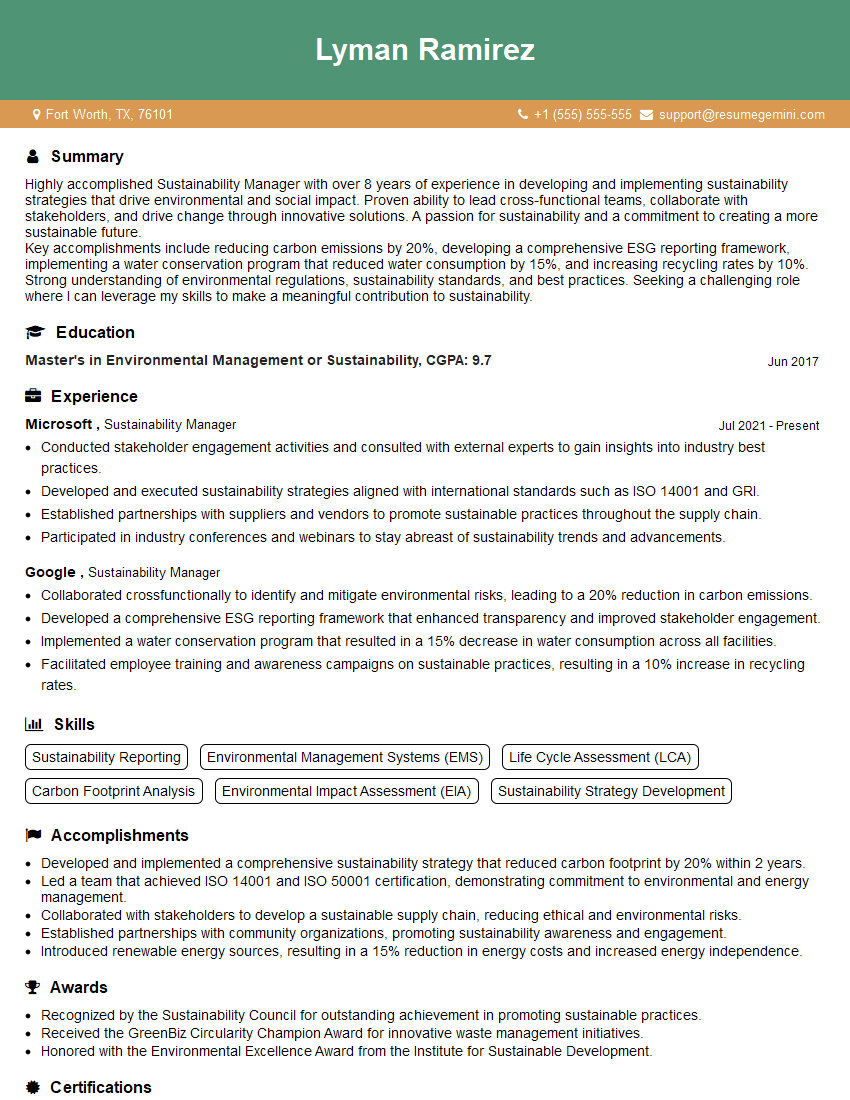
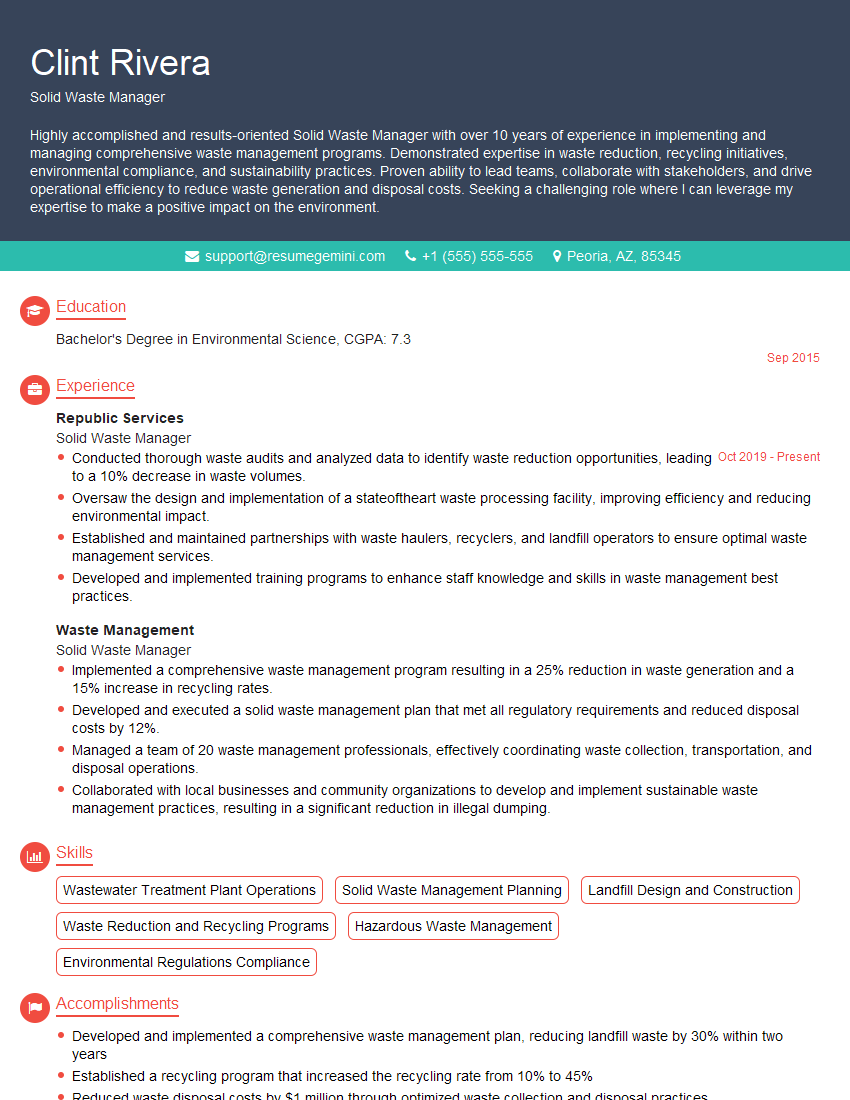
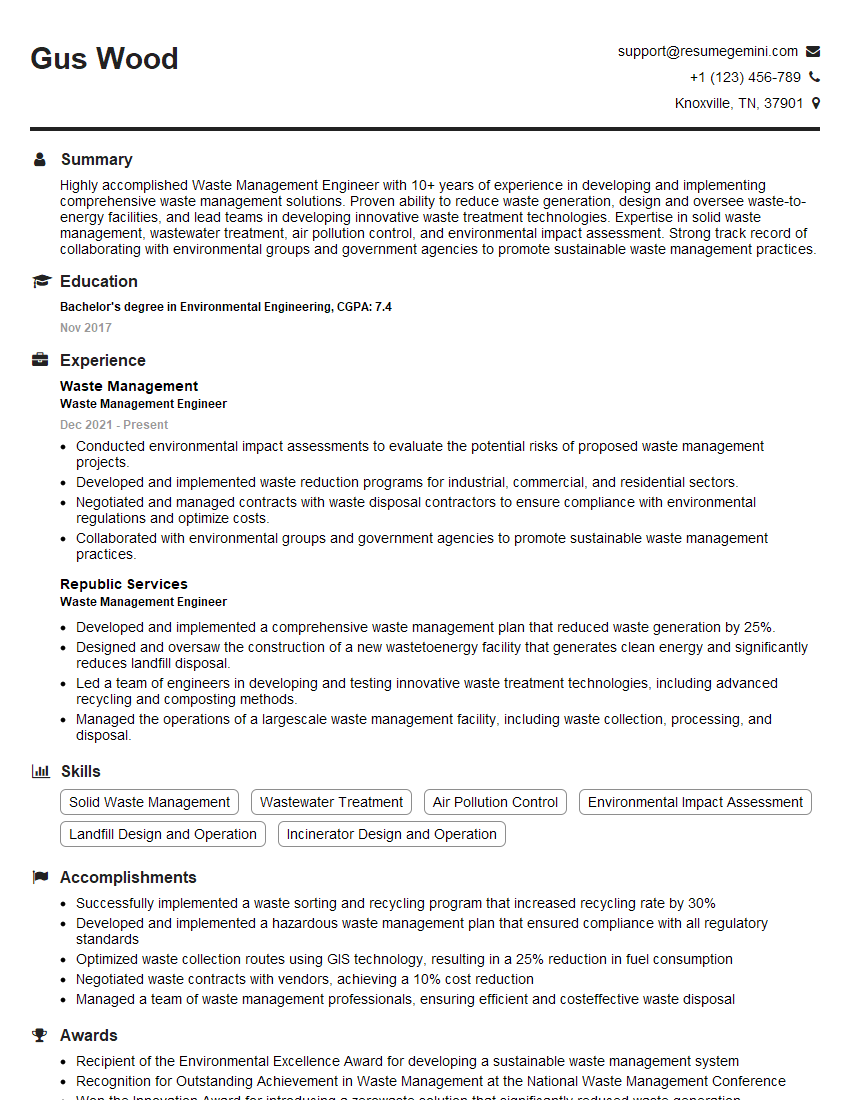
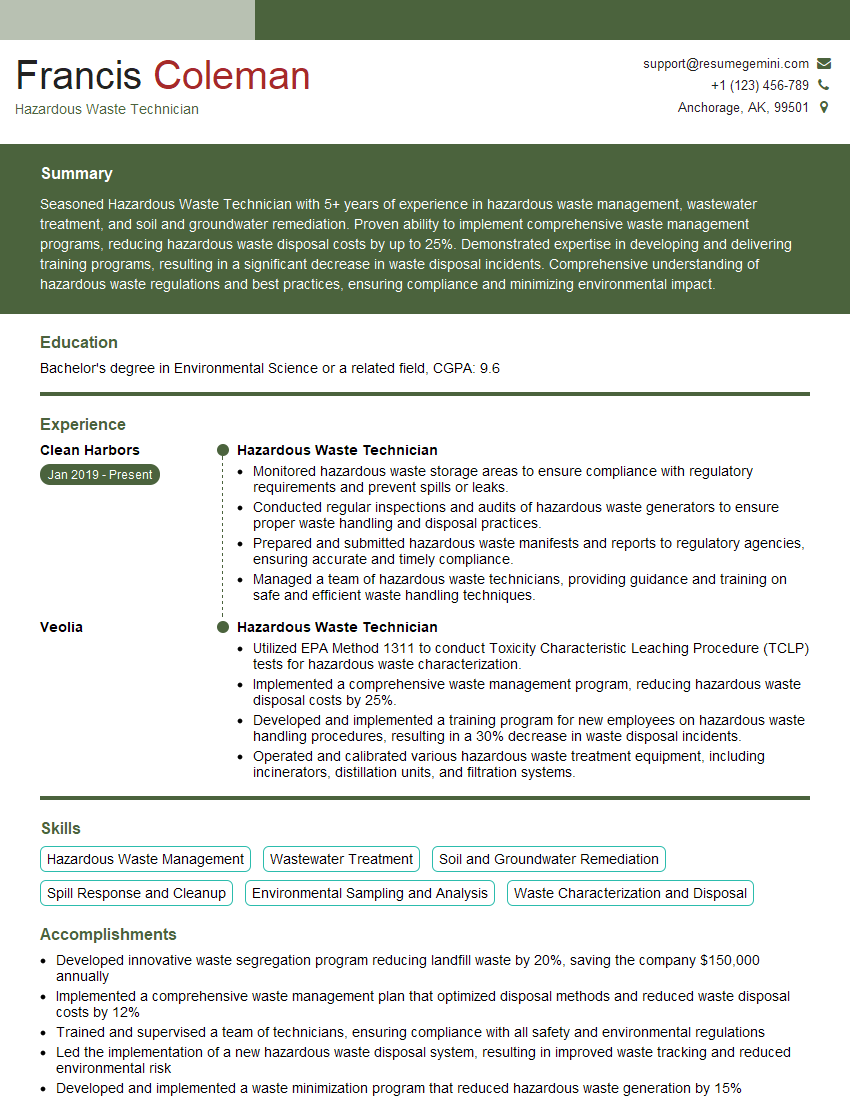
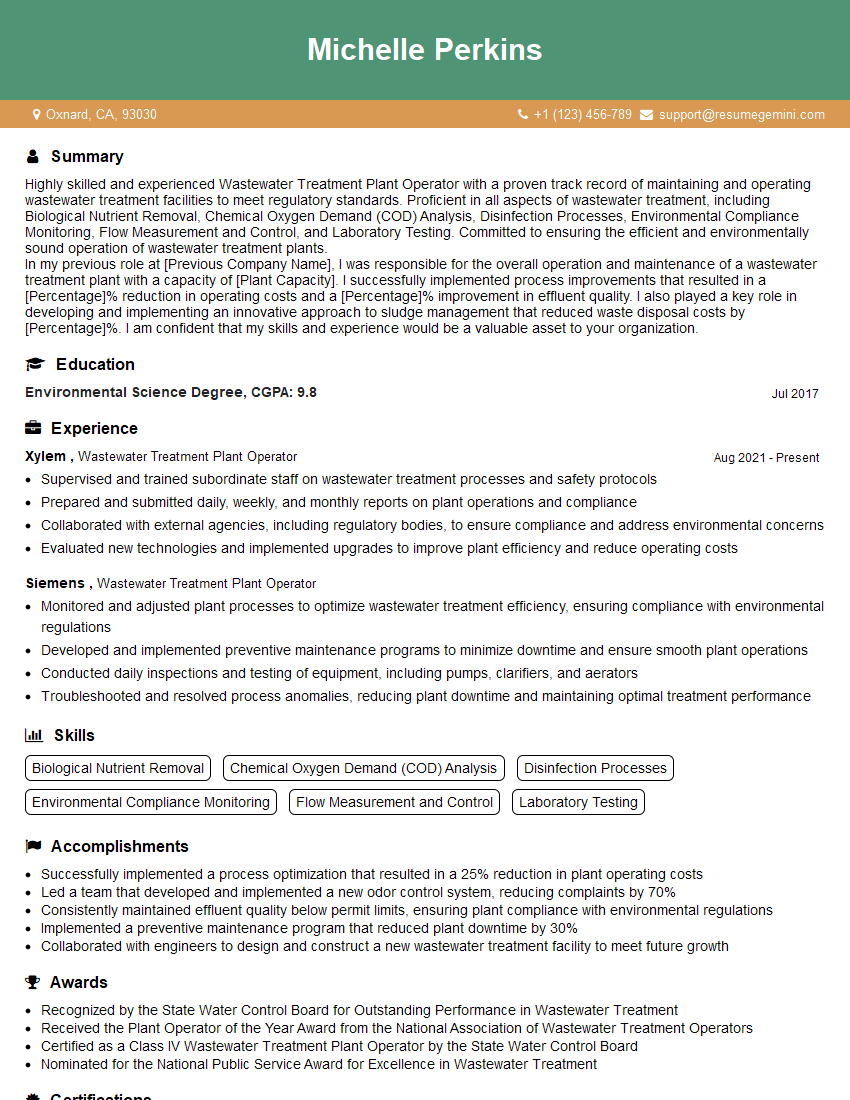
Mastering the principles of waste management is crucial for a successful and rewarding career in this essential field. It demonstrates a commitment to environmental sustainability and opens doors to diverse and impactful roles. To significantly boost your job prospects, focus on creating an ATS-friendly resume that highlights your skills and experience effectively. ResumeGemini is a trusted resource to help you build a professional and impactful resume that gets noticed. We offer examples of resumes tailored to Experience with Waste Management to guide you through the process.
Explore more articles
Users Rating of Our Blogs
Share Your Experience
We value your feedback! Please rate our content and share your thoughts (optional).
What Readers Say About Our Blog
Really detailed insights and content, thank you for writing this detailed article.
IT gave me an insight and words to use and be able to think of examples