Interviews are more than just a Q&A session—they’re a chance to prove your worth. This blog dives into essential Expertise in Pre-Harvest and Post-Harvest Inspection interview questions and expert tips to help you align your answers with what hiring managers are looking for. Start preparing to shine!
Questions Asked in Expertise in Pre-Harvest and Post-Harvest Inspection Interview
Q 1. Describe your experience with pre-harvest inspection procedures for [specific crop].
My experience with pre-harvest inspection procedures for apples, for instance, involves a multi-faceted approach. It begins with regular field walks, assessing the overall health and growth of the trees. This includes looking for signs of stress, such as wilting leaves or unusual discoloration. I then move to a more detailed examination of individual fruits, checking for size, color, and any visible damage caused by pests, diseases, or environmental factors. We often use standardized grading scales to maintain consistency and objectivity. For example, a typical grading scale might consider factors such as fruit size, skin blemishes, and color uniformity to categorize apples as premium, standard, or culls. Sampling techniques are crucial; we don’t inspect every apple but take representative samples from different sections of the orchard to get a comprehensive picture. Finally, the data collected during these inspections feeds into decisions about harvest timing and the overall quality we can expect. We also take soil samples and analyze the nutrient content to ensure optimal tree health, impacting fruit quality.
Q 2. Explain the importance of visual inspection in pre-harvest assessment.
Visual inspection is the cornerstone of pre-harvest assessment because it provides a quick and relatively inexpensive way to identify many crucial issues. Think of it like a doctor’s initial examination—you see a lot just by looking. Visual cues can reveal signs of disease (like fungal spots or discoloration), pest damage (holes, webbing, or insect presence), physiological disorders (sunburn, cracking), and overall crop maturity (color change, size, firmness). A seasoned inspector can often diagnose problems simply from visual signs, allowing for prompt intervention. For instance, the presence of small, white spots on apple leaves might indicate early stages of powdery mildew, allowing for timely preventative measures. This immediate identification saves time and resources, preventing potential losses further down the line.
Q 3. How do you identify and manage pest and disease issues during pre-harvest inspections?
Identifying and managing pest and disease issues during pre-harvest relies on a combination of strategies. Visual inspection, as mentioned, is the first step. Once a problem is identified, we move to proper diagnosis, sometimes involving laboratory testing to confirm our suspicions. Integrated pest management (IPM) is key. This involves a holistic approach that minimizes reliance on chemical pesticides. We use a variety of techniques including monitoring pest populations (using traps or scouting), employing biological control agents (introducing natural predators or parasites), using resistant crop varieties, and only applying chemical pesticides as a last resort and only when absolutely necessary. Maintaining good orchard hygiene—removing diseased plant material and controlling weeds—is vital in preventing outbreaks. Detailed record-keeping is also crucial. This ensures tracking of pest and disease prevalence over time and informing future management strategies.
Q 4. What are the key indicators of crop maturity during pre-harvest?
Determining crop maturity during pre-harvest is critical for optimal quality and yield. Key indicators vary depending on the crop, but common factors include color change (e.g., the shift from green to red in apples), size and weight, firmness (measured with a penetrometer), soluble solids content (measured with a refractometer—indicating sugar content), and acidity. For example, in apples, we might use a combination of color charts and firmness measurements to gauge maturity. Harvest timing is a balancing act; it’s important to harvest at the optimal point, when the fruit has reached its peak quality but is not yet overripe, making it susceptible to damage during harvesting and storage.
Q 5. Describe your experience with post-harvest handling and storage techniques.
My experience with post-harvest handling and storage involves understanding the delicate nature of harvested produce. Proper techniques are essential to maintain quality and extend shelf life. This starts with careful harvesting, minimizing physical damage to the fruits or vegetables. Then there is rapid cooling—removing field heat to slow down respiration and enzymatic activity. This often involves hydrocooling or forced-air cooling. Appropriate storage conditions are crucial; temperature, humidity, and atmosphere (modified atmosphere packaging (MAP) can extend shelf life significantly) need to be carefully controlled to prevent spoilage and maintain quality. Proper handling during sorting, packing, and transportation is also essential to avoid bruising or damage. For example, apples are usually stored in controlled-atmosphere storage facilities with low oxygen and high carbon dioxide to delay ripening and extend their shelf life for many months.
Q 6. How do you assess the quality of harvested produce?
Assessing the quality of harvested produce is a multi-step process. It begins with visual inspection, checking for physical damage, discoloration, and other visible defects. Then, more objective measurements are made, such as firmness, soluble solids content, and acidity. Sensory evaluation (taste, aroma) is also critical for certain products. We might use standardized grading systems to categorize produce based on quality, similar to the apple grading system discussed earlier. Grading helps in pricing and market segmentation. Statistical sampling is used to ensure the assessment represents the entire batch, rather than just a small portion. Finally, documentation of the quality assessment is crucial for traceability and quality control purposes.
Q 7. What are the common post-harvest diseases and how do you prevent them?
Common post-harvest diseases are caused by fungi, bacteria, and other microorganisms. Examples include gray mold (Botrytis cinerea) in many fruits and vegetables, blue mold (Penicillium species) in citrus fruits, and various bacterial rots. Preventing these diseases involves implementing stringent sanitation protocols at every stage of the process—from harvest to storage. Rapid cooling is critical to slow microbial growth. Controlling humidity prevents fungal growth. Proper storage conditions, as discussed, are crucial. Pre-harvest application of fungicides (when necessary and according to regulations) can also be used to reduce disease incidence. The use of modified atmosphere packaging (MAP) helps to suppress microbial growth and extend shelf life. Lastly, regular monitoring of stored produce for signs of disease is essential for early detection and intervention.
Q 8. Explain your understanding of cold chain management in post-harvest operations.
Cold chain management in post-harvest operations refers to the unbroken chain of refrigeration and temperature control applied to perishable agricultural products from the time of harvest until they reach the consumer. Think of it like a relay race where the baton (your produce) needs to stay cool throughout the entire process.
It involves carefully monitoring and controlling temperature at every stage, from field to processing facility, transportation, storage, and finally, retail. Maintaining the correct temperature prevents spoilage, microbial growth, and enzymatic activity that degrade quality and safety. This typically involves using refrigerated trucks, cold storage facilities, and appropriate packaging materials. For example, maintaining a temperature of 2-4°C for leafy greens is crucial to preserve their freshness and prevent wilting.
- Harvesting: Rapid cooling after harvest is crucial. This often involves hydro-cooling or air cooling.
- Transportation: Refrigerated trucks with temperature monitoring systems.
- Storage: Controlled-atmosphere storage (CAS) or modified-atmosphere packaging (MAP) can extend shelf life.
- Retail: Maintaining cold temperatures in refrigerated displays.
Q 9. How do you ensure food safety compliance during post-harvest procedures?
Ensuring food safety compliance during post-harvest procedures is paramount. It’s about preventing contamination and ensuring the produce is safe for consumption. This involves a multi-faceted approach encompassing Good Agricultural Practices (GAPs) and Good Manufacturing Practices (GMPs).
- Hygiene: Maintaining strict hygiene standards throughout the entire process, including handwashing, sanitation of equipment, and cleaning of facilities. We use approved sanitizers and follow strict protocols to prevent cross-contamination.
- Pest Control: Implementing effective pest control measures to prevent infestation. This may involve using traps, fumigants (used carefully and according to regulations), and integrated pest management techniques.
- Temperature Control: Maintaining the optimal temperature range for the specific produce to inhibit microbial growth. This is a core element of cold chain management.
- Traceability: Implementing a comprehensive traceability system to identify the origin and handling history of the produce, allowing for rapid response in case of contamination. This allows pinpointing the source of any problem and helps prevent large-scale recalls.
- Hazard Analysis and Critical Control Points (HACCP): Implementing a HACCP plan identifies potential hazards and establishes critical control points to minimize risks.
Regular audits and employee training are essential to maintain food safety compliance. For instance, we conduct regular internal audits and external audits to ensure our processes meet all regulatory standards.
Q 10. Describe your experience with different sorting and grading methods.
My experience encompasses a range of sorting and grading methods, tailored to the specific characteristics of the produce. These methods aim to classify produce based on size, shape, color, ripeness, and defects.
- Manual Sorting: This involves visual inspection by trained personnel. It’s effective for identifying subtle defects, but labor-intensive and prone to human error. We often use this for premium quality products where precision is critical.
- Optical Sorting: Machines using cameras and sensors identify defects and sort produce based on pre-defined parameters. This is efficient and objective, significantly improving throughput. We use this extensively for high-volume processing.
- Size Grading: Using rollers, sieves, or other mechanical devices to sort produce based on size. Simple and effective for products like potatoes or apples.
- Electronic Sorting: Advanced systems using multiple sensors (color, shape, size, internal quality) offer high accuracy and efficiency. These can even detect internal bruising not visible to the naked eye.
The choice of method often depends on the type of produce, required quality standards, and budget. For example, delicate berries often require manual sorting, while potatoes are usually graded using size-based mechanical sorters.
Q 11. What are the common quality defects found in [specific crop] and how are they managed?
Let’s assume the specific crop is apples. Common quality defects in apples include bruising, blemishes (like insect damage or scarring), and decay (caused by fungi or bacteria).
- Bruising: Caused by mechanical injury during harvesting, handling, or transport. Managed through careful harvesting techniques, proper cushioning during transport, and quick cooling.
- Blemishes: Superficial imperfections that don’t affect the edibility but can reduce market value. Managed through careful inspection during sorting and grading; products with minor blemishes may be sorted into lower grades.
- Decay: Caused by fungal or bacterial pathogens. Managed through proper sanitation, rapid cooling post-harvest, and controlled atmosphere storage to slow down decay.
We employ a combination of preventative measures and corrective actions. For example, regularly inspecting storage facilities for signs of decay and immediately removing affected produce. We also collaborate with growers to implement best practices in the field to minimize these defects before harvesting.
Q 12. How do you use technology (e.g., sensors, software) to improve inspection efficiency?
Technology plays a crucial role in improving inspection efficiency. Sensors and software automate and enhance various aspects of the process.
- Near-Infrared (NIR) Spectroscopy: NIR sensors can assess internal quality parameters like sugar content, firmness, and dry matter without damaging the produce. This allows for objective quality assessment and efficient sorting.
- Computer Vision Systems: Sophisticated image analysis software identifies defects, categorizes size and shape, and automates the sorting process, increasing throughput and reducing labor costs. Imagine a system automatically identifying and rejecting apples with bruises or blemishes.
- Data Acquisition and Management Software: This collects and analyzes data from sensors, creating detailed reports on quality parameters and providing insights for process optimization. This can help us identify trends and implement preventative measures for future harvests.
- RFID and Barcode Systems: These tracking technologies enable efficient traceability across the entire supply chain, aiding in product recall management if needed.
The integration of these technologies not only improves efficiency but also ensures consistent quality and enhances overall traceability and data-driven decision-making.
Q 13. Describe your experience with traceability systems in the agriculture industry.
Traceability systems are vital for ensuring food safety, meeting regulatory requirements, and building consumer trust. My experience includes implementing and managing various traceability systems.
- Lot Tracking: Assigning unique identifiers (lot numbers) to batches of produce from harvest to the point of sale. This allows for tracking the entire journey of the product and rapid identification of its origin in case of any issues.
- Barcode and RFID Systems: Using barcodes or RFID tags to track individual units or pallets of produce across the supply chain, providing detailed information on location, temperature, and handling history.
- Blockchain Technology: Implementing blockchain technology offers enhanced security and transparency by recording all transactions and data immutably on a distributed ledger. This improves trust and accountability across the supply chain.
- Database Management Systems: Employing database systems to store and manage traceability data, enabling quick access and analysis of information. This allows for detailed reporting and efficient management of the entire process.
These systems are crucial for responding quickly to recalls, minimizing potential financial losses, and maintaining consumer confidence. For instance, a recall involving a specific lot number can be handled efficiently, only affecting the implicated products.
Q 14. How do you handle non-compliant produce?
Handling non-compliant produce requires a systematic approach to ensure food safety and minimize losses. This depends on the nature of the non-compliance.
- Minor Defects: Produce with minor defects may be downgraded to a lower grade and sold at a reduced price. For example, apples with minor blemishes might be processed into juice or applesauce.
- Significant Defects: Produce with significant defects (e.g., severe bruising, decay) that render it unfit for human consumption must be disposed of properly. This might involve composting, animal feed (if permitted), or other appropriate methods conforming to local regulations.
- Contamination: In case of contamination, immediate action is required, involving product recall, thorough investigation, and implementation of corrective actions to prevent recurrence. This often necessitates notifying relevant authorities.
Documentation is critical throughout the process. Detailed records of the non-compliant produce, reasons for rejection, and disposal methods are maintained to ensure accountability and compliance with regulations. We constantly review and refine our processes to reduce the incidence of non-compliant produce.
Q 15. What are your strategies for minimizing post-harvest losses?
Minimizing post-harvest losses requires a multi-pronged approach focusing on rapid handling, proper storage, and efficient transportation. Think of it like a relay race – each stage needs to be smooth and efficient to prevent the baton from dropping (representing losses).
Rapid Handling: Immediate cooling, cleaning, and sorting after harvest prevents spoilage and reduces enzymatic activity. For example, rapidly cooling harvested berries to near freezing temperatures significantly slows down decay processes.
Proper Storage: Maintaining optimal temperature and humidity levels during storage is crucial. Controlled Atmosphere (CA) storage, for instance, reduces respiration rates in fruits and vegetables, extending their shelf life. Think of it like putting your produce in a climate-controlled hibernation.
Efficient Transportation: Using refrigerated trucks and minimizing transit time protects the quality and extends the shelf life of the produce. Imagine a fragile cake – rough handling during transportation would ruin it.
Pre-harvest Practices: This also plays a significant role. Growing crops to maturity, proper fertilization, and avoiding damage during harvesting significantly reduces spoilage from the start.
Career Expert Tips:
- Ace those interviews! Prepare effectively by reviewing the Top 50 Most Common Interview Questions on ResumeGemini.
- Navigate your job search with confidence! Explore a wide range of Career Tips on ResumeGemini. Learn about common challenges and recommendations to overcome them.
- Craft the perfect resume! Master the Art of Resume Writing with ResumeGemini’s guide. Showcase your unique qualifications and achievements effectively.
- Don’t miss out on holiday savings! Build your dream resume with ResumeGemini’s ATS optimized templates.
Q 16. How do you maintain accurate records and documentation during inspections?
Maintaining accurate records is vital for traceability and quality control. We employ a combination of digital and physical methods.
Digital Records: We use specialized software to record all inspection data, including date, time, location, product details, inspection results, and any corrective actions. This allows for easy access, analysis, and reporting.
Physical Records: We also maintain physical logs, signed by inspectors and stakeholders, to ensure accountability and a backup system in case of technology failures. These records often include photographs or videos of the inspected produce.
Data Integration: We strive for seamless data integration between the different recording systems, minimizing duplication and maximizing efficiency. Think of it as a well-organized filing cabinet – everything is clearly labelled and easily retrievable.
Q 17. Explain the importance of hygiene and sanitation in both pre-harvest and post-harvest operations.
Hygiene and sanitation are paramount for preventing contamination and ensuring food safety throughout the entire process. Ignoring it is like leaving a door open for pathogens to invade.
Pre-harvest: This involves maintaining clean fields, using appropriate pest control measures, and ensuring the workers follow proper hand hygiene practices, including hand washing and the use of protective gear. Contamination can easily occur from soil, insects, or improper handling.
Post-harvest: Thorough cleaning and sanitization of equipment, facilities, and transportation vehicles is crucial. This includes regular disinfection and proper waste disposal. Improper cleaning can lead to cross-contamination.
Training and Education: Regular training for all personnel on proper hygiene practices is essential to ensure consistent adherence to food safety protocols. It’s about building a culture of hygiene.
Q 18. Describe your experience with different types of packaging and their impact on product quality.
Different packaging materials have varying impacts on product quality. The choice depends on the product’s characteristics, shelf-life requirements, and transportation conditions. It’s like choosing the right container for a delicate object.
Modified Atmosphere Packaging (MAP): This involves altering the gas composition inside the package to slow down respiration and extend shelf life. It’s commonly used for fresh produce.
Vacuum Packaging: Removing air from the package inhibits microbial growth and extends shelf life. It’s excellent for products susceptible to oxidation, such as coffee beans.
Retortable Pouches: These flexible pouches allow for heat sterilization, making them suitable for extended shelf-life products.
Rigid Containers: Boxes, crates, and trays provide structural support and protect produce from damage during transportation. However, they might not offer the same level of protection against microbial growth as MAP or vacuum packaging.
The wrong packaging can lead to bruising, spoilage, and reduced quality.
Q 19. How do you identify and address potential risks to food safety?
Identifying and addressing food safety risks involves a proactive approach using Hazard Analysis and Critical Control Points (HACCP) principles. This systematic approach helps to prevent problems rather than reacting to them.
Hazard Identification: We identify potential biological, chemical, and physical hazards at each stage of the process. This includes microbial contamination, pesticide residues, and foreign objects.
Critical Control Points (CCPs) Determination: We identify CCPs – points where control is essential to prevent or eliminate a food safety hazard. This could be the washing stage, temperature control during storage, or the packaging process.
Monitoring and Corrective Actions: We monitor CCPs regularly and implement corrective actions if deviations occur. This involves continuous monitoring of temperature, humidity, and other parameters.
Verification and Validation: We verify the effectiveness of our control measures through regular audits and testing.
Q 20. How do you communicate inspection results effectively to stakeholders?
Effective communication is crucial for ensuring everyone is informed and aligned. We use a multi-faceted approach to ensure clarity and transparency.
Formal Reports: Detailed reports containing findings, recommendations, and corrective actions are provided to stakeholders. These reports use clear language and avoid technical jargon whenever possible.
Visual Aids: We use photographs, charts, and graphs to present complex data in a more accessible and understandable format. A picture is worth a thousand words.
Meetings and Presentations: We conduct regular meetings with stakeholders to discuss inspection findings, address concerns, and collaborate on solutions. This allows for open dialogue and feedback.
Follow-up Communication: We provide timely follow-up communication to ensure that corrective actions are implemented effectively.
Q 21. Describe a time you had to resolve a complex quality issue during harvest.
During a large-scale tomato harvest, we encountered unusually high levels of spoilage due to a previously unnoticed fungal infection. The challenge was to quickly identify the root cause and implement corrective measures before the entire harvest was affected.
Root Cause Analysis: We immediately initiated a thorough investigation, analyzing soil samples, inspecting the plants for any signs of disease, and reviewing harvesting and handling practices. We quickly identified a specific fungal strain and traced it back to a particular field with poor drainage.
Corrective Actions: We implemented immediate actions including the segregation of the affected tomatoes, treatment of the affected field to prevent further spread, and enhanced hygiene practices during harvesting and handling.
Preventive Measures: Based on this experience, we reviewed and enhanced our pre-harvest inspection protocols, including improved soil testing and early disease detection techniques. This helped prevent similar incidents in the future.
Q 22. What is your understanding of Good Agricultural Practices (GAP)?
Good Agricultural Practices (GAP) are a comprehensive set of guidelines designed to ensure the safety and quality of agricultural products from the farm to the table. They encompass a wide range of practices, focusing on minimizing risks associated with contamination throughout the entire production process.
- Pre-harvest aspects: This includes selecting appropriate land, managing soil health, using safe irrigation water, implementing pest and disease management strategies that minimize chemical residues, and employing proper harvesting techniques.
- Post-harvest aspects: This focuses on safe handling, cleaning, processing, packaging, storage, and transportation to maintain product quality and prevent contamination. Proper temperature control, hygiene measures, and preventing cross-contamination are critical here.
Think of GAP as a recipe for producing safe and high-quality food. Following these practices ensures consumers receive products free from harmful bacteria, chemicals, and physical contaminants.
For example, implementing GAP in a tomato farm might involve using certified pesticide-free seeds, regularly testing soil and water quality, and carefully harvesting tomatoes to minimize bruising and damage, ultimately ensuring a high-quality, safe product reaches the consumer.
Q 23. What is your understanding of Good Manufacturing Practices (GMP)?
Good Manufacturing Practices (GMP) are regulations and guidelines focused on ensuring the quality and safety of manufactured products, including those derived from agricultural products. Unlike GAP, which focuses on the agricultural production stage, GMP centers on the processing, packaging, and storage stages of food production.
- Hygiene and sanitation: Maintaining a clean and sanitary processing environment is paramount. This involves regular cleaning and disinfection of equipment and surfaces.
- Personnel hygiene: Employees must follow strict hygiene protocols, including handwashing and wearing appropriate protective clothing.
- Equipment maintenance: Proper calibration and maintenance of all processing equipment are essential to prevent contamination and ensure consistent product quality.
- Traceability: A robust traceability system is necessary to track products through all stages of production, allowing for quick identification and removal of any contaminated batches.
Imagine a juice processing plant: GMP ensures the plant is meticulously clean, employees are following hygiene protocols, and the machinery is well-maintained. This ensures the juice is safe and of high quality. A failure in GMP could lead to contamination, resulting in recalls and significant financial losses.
Q 24. How familiar are you with relevant food safety regulations (e.g., HACCP)?
I am very familiar with various food safety regulations, most notably Hazard Analysis and Critical Control Points (HACCP). HACCP is a preventative system for ensuring food safety, identifying potential hazards, and establishing critical control points to minimize those risks. It’s a science-based approach that focuses on preventing problems rather than simply reacting to them.
My experience includes applying HACCP principles throughout the supply chain, from pre-harvest to post-harvest stages. I understand how to conduct hazard analysis, identify critical control points, establish monitoring procedures, and implement corrective actions when necessary. I’m also knowledgeable about other relevant regulations such as those related to pesticide residue limits and labeling requirements, ensuring compliance with all applicable laws and standards.
For example, in a fruit packing facility, a critical control point under HACCP might be the washing and sanitization of the fruit. Regular monitoring of water temperature and chlorine levels ensures this process effectively removes bacteria and other contaminants.
Q 25. Explain your experience with different types of pesticides and their impact on produce quality.
My experience encompasses a wide range of pesticides, including organophosphates, carbamates, pyrethroids, and neonicotinoids. I understand their modes of action, their respective toxicity levels, and their potential impacts on produce quality. Improper pesticide use can lead to residue exceeding safety limits, negatively affecting the quality and safety of the produce.
For instance, excessive use of certain pesticides can leave undesirable residues on the produce, impacting its flavor, aroma, and visual appeal. In addition, some pesticides can damage plant tissue, causing blemishes or reducing shelf life. Proper application techniques, correct dosage, and adherence to pre-harvest intervals are crucial to minimize these negative effects. I always prioritize Integrated Pest Management (IPM) strategies, focusing on preventative measures and minimizing pesticide use whenever possible.
Furthermore, I am familiar with the regulations surrounding pesticide use and residue monitoring, ensuring all practices align with legal requirements. This includes maintaining detailed records of pesticide applications, and employing residue testing to confirm compliance with regulatory limits before produce reaches the market.
Q 26. How do you determine the optimal harvest time for a given crop?
Determining the optimal harvest time is critical for maximizing product quality and shelf life. It involves considering several factors, including the crop’s physiological maturity, desired quality attributes (e.g., size, color, sugar content), and market demands.
- Physiological maturity: This refers to the stage where the crop has reached its full development, regardless of size or appearance. For example, a tomato might reach physiological maturity before reaching its full color.
- Sensory characteristics: Visual cues, such as color and firmness, are often used to assess ripeness, but these can be subjective and influenced by environmental conditions.
- Chemical analysis: Measuring parameters like sugar content, acidity, and soluble solids can provide a more objective measure of ripeness.
For instance, with strawberries, the optimal harvest time is determined by a combination of factors, including the color turning a deep red, firmness to the touch, and a proper sugar-to-acid ratio. Harvesting too early can result in a lack of flavor and aroma, while harvesting too late can lead to spoilage and reduced shelf life.
My approach involves a combination of visual inspection, sensory evaluation, and, when necessary, laboratory analysis to determine the ideal harvest time for each crop and maintain consistency in quality.
Q 27. Describe your experience working within a team to complete inspection tasks.
I have extensive experience working collaboratively within teams to conduct inspections. Effective teamwork is crucial in ensuring thoroughness and efficiency. My approach involves clearly defining roles and responsibilities, establishing effective communication channels, and utilizing a systematic inspection procedure.
In previous roles, I’ve led and participated in teams of inspectors responsible for evaluating agricultural products at different stages of the supply chain. We’ve used checklists, standardized protocols, and data recording systems to ensure consistency and accuracy in our assessments. This includes regular meetings to discuss findings, resolve discrepancies, and improve our overall inspection process.
For example, in a large-scale apple orchard inspection, our team would divide the orchard into sections, with each team member responsible for inspecting a specific area. We’d then consolidate our findings, identifying any issues or potential problems. This collaborative approach ensures the entire orchard is thoroughly inspected, identifying problems more efficiently than individual work would allow.
Q 28. What are your salary expectations for this role?
My salary expectations are commensurate with my experience and expertise in pre-harvest and post-harvest inspection, and the specific requirements of this role. I am open to discussing a competitive compensation package that reflects my contributions to your organization’s success. I’d be happy to provide further details after discussing the complete job description and responsibilities.
Key Topics to Learn for Expertise in Pre-Harvest and Post-Harvest Inspection Interview
- Pre-Harvest Inspection: Understanding field conditions, assessing crop health and maturity, identifying potential defects, and implementing preventative measures.
- Pre-Harvest Quality Control: Practical application of established protocols for data collection, documentation, and reporting on pre-harvest observations. This includes understanding the impact of environmental factors and pest/disease management on final product quality.
- Post-Harvest Handling Techniques: Best practices for harvesting, cleaning, sorting, and grading produce to minimize damage and maintain quality. This includes understanding different storage methods and their impact on shelf life.
- Post-Harvest Inspection Procedures: Thorough examination of harvested produce for defects, assessing quality parameters (e.g., size, color, firmness), and applying appropriate grading standards.
- Quality Assurance and Control Systems: Familiarity with various quality management systems (e.g., HACCP, GAP) and their application to pre- and post-harvest processes.
- Pest and Disease Management (Pre & Post-Harvest): Identifying and mitigating risks associated with pests and diseases, both in the field and during storage. This includes knowledge of appropriate treatment methods and regulations.
- Technological Advancements: Understanding the application of technology in pre- and post-harvest inspection, such as automated sorting systems, near-infrared spectroscopy, and other sensory technologies.
- Regulatory Compliance: Familiarity with relevant food safety regulations and industry standards related to pre- and post-harvest practices.
- Problem-Solving and Decision-Making: Developing strategies for identifying and resolving issues related to quality, safety, and efficiency in pre- and post-harvest operations. This includes the ability to analyze data, identify trends, and implement corrective actions.
Next Steps
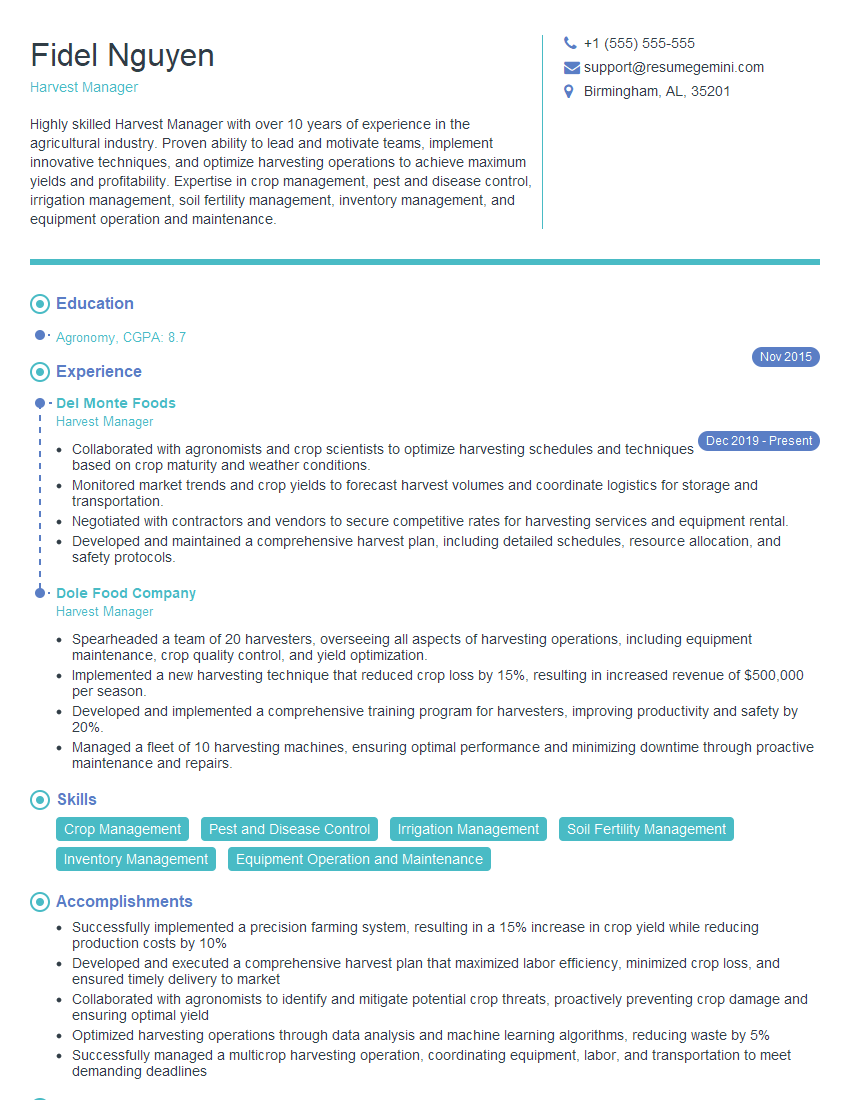
Mastering expertise in pre-harvest and post-harvest inspection is crucial for career advancement in the agricultural and food processing industries. A strong understanding of these processes demonstrates a commitment to quality, safety, and efficiency, making you a highly valuable asset to any organization. To maximize your job prospects, create an ATS-friendly resume that effectively highlights your skills and experience. ResumeGemini is a trusted resource for building professional, impactful resumes. Examples of resumes tailored to Expertise in Pre-Harvest and Post-Harvest Inspection are available to help you showcase your qualifications effectively.
Explore more articles
Users Rating of Our Blogs
Share Your Experience
We value your feedback! Please rate our content and share your thoughts (optional).
What Readers Say About Our Blog
Really detailed insights and content, thank you for writing this detailed article.
IT gave me an insight and words to use and be able to think of examples