Feeling uncertain about what to expect in your upcoming interview? We’ve got you covered! This blog highlights the most important Farm Management Principles interview questions and provides actionable advice to help you stand out as the ideal candidate. Let’s pave the way for your success.
Questions Asked in Farm Management Principles Interview
Q 1. Describe your experience with budgeting and financial planning in a farm setting.
Budgeting and financial planning are crucial for farm sustainability. It’s not just about tracking income and expenses; it’s about strategic forecasting and risk management. My experience involves developing comprehensive budgets encompassing all aspects of farm operations, from seed and fertilizer costs to labor and equipment maintenance. I use spreadsheet software (like Excel or Google Sheets) and farm management software to track inputs, outputs, and profits. This includes forecasting yields based on historical data and market trends. A key part of this process is contingency planning; for instance, building a reserve fund to handle unexpected events like a drought or a disease outbreak. For example, I once worked on a dairy farm where we created a detailed budget that not only predicted milk production but also factored in potential fluctuations in milk prices, and included strategies for managing feed costs based on seasonal availability. This allowed us to make informed decisions regarding herd size and feed purchasing, ensuring profitability even during challenging economic periods.
Q 2. Explain your understanding of crop rotation and its benefits.
Crop rotation is the practice of planting different types of crops in a planned sequence on the same piece of land over several growing seasons. This is vastly different from monoculture, where the same crop is grown repeatedly. The benefits are multifaceted. Firstly, it helps improve soil health. Different crops have different nutrient requirements and root systems, so rotating them prevents nutrient depletion and improves soil structure. For example, legumes like beans or clover fix nitrogen in the soil, benefiting subsequent crops that need nitrogen. Secondly, it helps control pests and diseases. Rotating crops disrupts the life cycle of many pests and diseases, reducing their populations and minimizing the need for pesticides. Imagine a field constantly plagued by nematodes. Rotating to a non-host crop for a couple of seasons can significantly reduce the nematode population. Finally, it can enhance biodiversity by supporting a wider range of beneficial insects and microorganisms in the soil.
Q 3. How do you manage soil health and fertility?
Managing soil health and fertility is paramount for long-term productivity. My approach is holistic and involves several key strategies. Soil testing is fundamental – it helps determine nutrient levels and pH. Based on the test results, I tailor fertilization strategies, focusing on both organic and inorganic options. Organic methods include using compost, manure, cover crops (like rye or vetch), and crop residues to improve soil structure, organic matter content, and nutrient availability. Cover crops are incredibly beneficial, acting as a natural fertilizer and preventing soil erosion. For instance, I’ve successfully implemented cover cropping in several farms, significantly reducing erosion and improving water retention. Beyond fertilization, I prioritize soil conservation practices such as no-till farming, contour plowing, and crop rotation, all contributing to healthy, fertile soil that supports robust plant growth.
Q 4. What are your strategies for pest and disease control?
Pest and disease control requires an integrated pest management (IPM) approach. This involves combining various strategies to minimize pest and disease impacts while minimizing environmental harm. Firstly, cultural practices play a key role. Crop rotation, as mentioned earlier, is crucial. Maintaining crop hygiene, removing crop debris, and practicing proper sanitation minimizes the overwintering of pests and diseases. Secondly, biological control involves using natural predators or parasites to control pests. Introducing beneficial insects or using microbial agents can be highly effective and environmentally friendly. Thirdly, monitoring is crucial. Regularly inspecting crops for pests and diseases allows for early detection and intervention, preventing widespread damage. Chemical control is used only as a last resort, targeting specific pests and diseases with the least toxic pesticides, and following all label instructions meticulously. For example, on an orchard I managed, we implemented a comprehensive IPM program combining pheromone traps for monitoring codling moths, releasing predatory mites for spider mite control, and targeted pesticide application only when necessary.
Q 5. Describe your experience with irrigation systems and water management.
Efficient irrigation is critical, especially in arid and semi-arid regions. My experience includes working with various irrigation systems, including drip irrigation, sprinkler irrigation, and surface irrigation. The choice of system depends on factors like crop type, topography, water availability, and budget. Drip irrigation, for example, is highly efficient, delivering water directly to the plant roots, minimizing water waste. Sprinkler systems are suitable for large areas but can be less efficient due to evaporation and wind drift. I emphasize water conservation techniques such as scheduling irrigation based on soil moisture sensors and weather data, utilizing rainwater harvesting, and employing mulching to reduce evaporation. Proper maintenance of the irrigation system is also vital to prevent leaks and ensure optimal performance. For example, I implemented a soil moisture monitoring system in a vineyard which dramatically reduced water usage while maintaining grape yield and quality.
Q 6. How do you monitor and manage livestock health and welfare?
Livestock health and welfare are paramount. My approach involves a proactive and preventative strategy. Regular health checks are conducted, including vaccinations, deworming, and parasite control. Good animal husbandry practices, such as providing clean housing, adequate ventilation, and sufficient space, are crucial for preventing disease outbreaks. I work closely with veterinarians to develop and implement health management plans, addressing specific health concerns based on the type and age of the animals. Record keeping is meticulously maintained, documenting health treatments, vaccination schedules, and any health issues observed. Quick identification of sick animals and their isolation is vital to prevent the spread of disease. Additionally, I prioritize animal welfare, ensuring access to fresh water, nutritious feed, and comfortable resting areas. For example, on a cattle farm, I implemented a vaccination program against common bovine diseases, resulting in a significant reduction in mortality rate and improved overall herd health.
Q 7. Explain your understanding of animal nutrition and feeding strategies.
Animal nutrition is a complex science involving understanding the nutritional requirements of different livestock species and life stages. The goal is to formulate balanced rations that meet the animals’ energy, protein, mineral, and vitamin needs while maximizing efficiency and minimizing waste. Factors such as breed, age, physiological state (e.g., pregnancy, lactation), and production level influence nutritional requirements. I utilize nutrient analysis of feedstuffs to formulate rations, ensuring the right balance of nutrients. This often involves a combination of commercially available feeds and locally sourced feed ingredients, such as forages and grains. Feeding strategies should account for the digestibility of feeds and the animals’ ability to utilize nutrients. For example, I worked on a poultry farm where we customized the feed formulations based on the age and growth stage of the birds, resulting in improved growth rates and feed conversion efficiency. Regular monitoring of animal weight, feed intake, and manure consistency helps to evaluate the effectiveness of the feeding program and make necessary adjustments.
Q 8. Describe your experience with farm equipment maintenance and repair.
Farm equipment maintenance is crucial for maximizing efficiency and minimizing downtime. My experience encompasses preventative maintenance, troubleshooting, and minor repairs. I’m proficient in scheduling regular servicing, including oil changes, filter replacements, and lubrication. I understand the importance of keeping detailed maintenance logs, which are essential for tracking repairs, predicting potential failures, and optimizing operational costs.
For example, on a previous farm, I implemented a preventative maintenance schedule for our tractors, which included monthly checks of vital components. This proactive approach reduced unexpected breakdowns by 40%, resulting in significant cost savings and improved productivity. I’m also capable of diagnosing and repairing minor mechanical issues, such as hydraulic leaks or electrical faults, avoiding the need for costly external repairs whenever possible. For more complex issues, I know how to identify the problem accurately and effectively communicate it to specialist technicians for prompt and efficient resolution.
Q 9. How do you ensure farm safety and comply with regulations?
Farm safety is paramount. My approach prioritizes proactive measures to prevent accidents and ensure compliance with all relevant regulations (OSHA, etc.). This starts with comprehensive employee training programs that cover safe operating procedures for machinery, chemical handling, and emergency response. Regular safety inspections of equipment and the farm environment are conducted to identify and rectify potential hazards.
Furthermore, I enforce strict adherence to personal protective equipment (PPE) protocols, ensuring workers always use appropriate gear such as helmets, safety glasses, and gloves. We maintain detailed safety records and incident reports, allowing for continuous improvement and identification of recurring safety issues. I’m familiar with all relevant safety regulations and ensure compliance through thorough documentation and consistent implementation of best practices. Think of it like building a robust safety net – layers of protection to minimize risk.
Q 10. Explain your experience with harvest planning and execution.
Harvest planning and execution require meticulous attention to detail and precise timing. My experience involves developing comprehensive harvest plans based on factors like crop maturity, weather forecasts, available labor, and equipment capacity. This process includes assessing field conditions, determining optimal harvesting routes, and scheduling harvesting operations to minimize losses and maximize yield.
For instance, during the harvest of a large corn crop, I utilized yield mapping data to optimize harvesting routes, prioritizing high-yielding areas. We used GPS-guided combines to ensure precise harvesting, minimizing overlaps and reducing grain losses. Post-harvest, I oversee the efficient transportation and storage of harvested produce, including appropriate drying and cleaning processes, to maintain quality and prevent spoilage. Continuous monitoring of the harvest progress ensures efficient resource allocation and timely completion.
Q 11. How do you manage labor and personnel on a farm?
Effective labor management is critical for farm productivity. My approach emphasizes clear communication, fair compensation, and motivating staff to achieve shared goals. This begins with recruiting and retaining skilled and reliable personnel, creating a positive and supportive work environment. I establish clear job descriptions, responsibilities, and performance expectations. Regular performance evaluations and feedback sessions help to improve individual performance and team cohesion.
I utilize various scheduling and task management tools to effectively allocate labor based on seasonal demands. For example, during peak seasons, I might implement a system of shift work to maximize efficiency. I focus on open communication to address employee concerns promptly and fairly, ensuring a collaborative and productive work environment. This fosters loyalty and improves overall productivity and morale.
Q 12. Describe your experience with farm record-keeping and data analysis.
Precise record-keeping and data analysis are essential for informed decision-making and improved farm profitability. My experience includes maintaining detailed records of all farm activities, including planting dates, fertilizer application, irrigation schedules, and harvesting yields. I utilize various software programs and spreadsheets to track expenses, revenues, and operational data.
This data is then analyzed to identify trends, optimize resource allocation, and measure the effectiveness of different farming practices. For example, analyzing yield data from different fields allows me to identify areas needing improved soil management or irrigation. This data-driven approach facilitates strategic planning and continuous improvement in all farm operations. I also leverage data analytics to predict future yields and adjust farm practices accordingly, contributing to greater overall efficiency.
Q 13. What is your approach to risk management in agriculture?
Risk management in agriculture involves proactively identifying and mitigating potential threats to farm operations. My approach is multi-faceted, encompassing various strategies to minimize financial, environmental, and operational risks. This includes developing comprehensive risk assessments that identify potential hazards such as weather events, pest infestations, and market fluctuations.
I develop contingency plans for these scenarios, including crop insurance, diversification of crops and markets, and emergency response protocols. For example, to mitigate the risk of drought, I might implement water-efficient irrigation techniques and diversify crops to include drought-resistant varieties. Regular monitoring of weather forecasts and market trends enables timely adjustments to farming practices, minimizing potential losses. Effective risk management is a continuous process of assessment, planning, and adaptation to ensure farm resilience.
Q 14. How do you utilize technology in farm management?
Technology plays a significant role in modern farm management, and I’m proficient in utilizing various technological tools to enhance efficiency and productivity. This includes precision agriculture technologies such as GPS-guided machinery for precise planting and harvesting, variable-rate fertilizer application, and remote sensing for crop monitoring.
I also use farm management software to track inventory, manage finances, and analyze data. For example, utilizing drone imagery for crop scouting allows for early detection of disease or pest infestations, enabling timely intervention and minimizing yield losses. Furthermore, I utilize weather forecasting apps and soil sensors to make data-driven decisions regarding irrigation and fertilization, optimizing resource utilization and improving yields. The integration of these technologies enables a more efficient, precise, and sustainable approach to farming.
Q 15. Explain your understanding of sustainable agricultural practices.
Sustainable agricultural practices are farming methods that aim to meet the food and fiber needs of the present without compromising the ability of future generations to meet their own needs. It’s about balancing economic viability, environmental stewardship, and social equity.
- Environmental Sustainability: This involves minimizing the environmental impact of farming. Examples include reducing reliance on synthetic pesticides and fertilizers, conserving water resources through efficient irrigation techniques like drip irrigation, and protecting soil health through practices like no-till farming and cover cropping.
- Economic Sustainability: This focuses on creating profitable and resilient farming systems. Diversification of crops, value-added processing, and efficient resource management can enhance profitability and minimize risk.
- Social Sustainability: This aspect emphasizes fair labor practices, community engagement, and access to healthy food. It includes supporting local economies and ensuring the well-being of farmworkers.
For example, a farm might integrate agroforestry – planting trees alongside crops – to improve soil fertility, reduce erosion, and provide additional income streams from timber or fruit production. This simultaneously addresses environmental, economic, and social sustainability goals.
Career Expert Tips:
- Ace those interviews! Prepare effectively by reviewing the Top 50 Most Common Interview Questions on ResumeGemini.
- Navigate your job search with confidence! Explore a wide range of Career Tips on ResumeGemini. Learn about common challenges and recommendations to overcome them.
- Craft the perfect resume! Master the Art of Resume Writing with ResumeGemini’s guide. Showcase your unique qualifications and achievements effectively.
- Don’t miss out on holiday savings! Build your dream resume with ResumeGemini’s ATS optimized templates.
Q 16. How do you handle unexpected challenges or emergencies on the farm?
Unexpected challenges are inevitable in farming. My approach is proactive and involves a multi-stage response:
- Prevention: Regular equipment maintenance, thorough crop monitoring, and comprehensive risk assessments (weather, pest infestations, disease outbreaks) minimize the likelihood of emergencies. Diversification of crops can also reduce the impact of a single crop failure.
- Early Detection: Implementing robust monitoring systems – regular field checks, weather alerts, and pest scouting – enables early detection of issues. This allows for prompt intervention, often preventing minor problems from escalating into major crises.
- Rapid Response: Having contingency plans in place is crucial. This might include having backup equipment, securing alternative markets, or accessing emergency funding. Building strong relationships with suppliers, extension agents, and other farmers is vital for seeking advice and support.
- Adaptation and Learning: After each emergency, a thorough post-mortem analysis is essential. What went wrong? What worked well? What adjustments need to be made to future plans to mitigate similar risks?
For instance, a sudden hailstorm could damage a significant portion of a crop. My response would involve assessing the damage, contacting insurance providers, and exploring options like crop diversification in future planting seasons to reduce reliance on a single vulnerable crop.
Q 17. Describe your experience with marketing and selling agricultural products.
Marketing and selling agricultural products requires a strategic approach. My experience encompasses direct marketing (farmers’ markets, farm stands), wholesale partnerships with restaurants and grocery stores, and exploring online sales channels.
- Understanding the Market: Thorough market research is essential to identify target customers, understand their preferences, and price products competitively.
- Building Relationships: Establishing strong relationships with buyers is crucial. This involves providing high-quality products, consistent service, and building trust.
- Branding and Packaging: A strong brand identity and attractive packaging are essential for differentiating products and attracting customers.
- Value-Added Products: Processing and packaging products into more value-added forms (e.g., jams from fruit, artisanal cheeses) can increase profit margins and appeal to a wider range of consumers.
For instance, I successfully transitioned from selling solely through a local farmers’ market to supplying a regional restaurant chain by emphasizing the quality and traceability of my organically grown produce. This required meticulous record-keeping, consistent product quality, and building a strong business relationship with the restaurant management.
Q 18. What are your strategies for improving farm efficiency and productivity?
Improving farm efficiency and productivity involves a holistic approach, focusing on optimizing resource use and streamlining operations.
- Precision Agriculture: Utilizing technology like GPS, sensors, and data analytics to optimize planting, fertilization, and irrigation. This reduces input costs and enhances yields.
- Improved Crop Management: Implementing integrated pest management (IPM) to minimize pest damage and reduce reliance on pesticides. Using appropriate crop rotations to improve soil health and reduce disease pressure.
- Efficient Irrigation: Utilizing water-efficient irrigation methods like drip irrigation and scheduling irrigation based on soil moisture monitoring.
- Mechanization: Strategically utilizing machinery to reduce labor costs and increase efficiency in planting, harvesting, and other tasks. Careful evaluation of machinery needs and maintenance practices is key.
- Data Analysis: Tracking key performance indicators (KPIs) such as yield, input costs, and labor efficiency to identify areas for improvement.
For example, I improved irrigation efficiency by 30% by switching to a drip irrigation system and using soil moisture sensors to schedule irrigation precisely. This resulted in significant water savings and a small improvement in crop yield due to better water availability.
Q 19. How do you manage farm waste and environmental impact?
Managing farm waste and minimizing environmental impact is critical for sustainable agriculture. My approach involves a combination of strategies:
- Composting: Converting organic waste (crop residues, manure) into valuable compost that improves soil fertility and reduces the need for synthetic fertilizers.
- Anaerobic Digestion: Processing organic waste in an oxygen-free environment to produce biogas, which can be used as a renewable energy source.
- Integrated Pest Management (IPM): Minimizing pesticide use through techniques like crop rotation, biological control, and using pesticides only when absolutely necessary.
- Water Management: Implementing water-efficient irrigation techniques and managing runoff to minimize water pollution.
- Soil Conservation: Employing soil conservation practices like no-till farming, cover cropping, and contour plowing to reduce soil erosion and improve soil health.
For example, I’ve successfully implemented a composting system on my farm, converting crop residues and animal manure into valuable organic fertilizer. This not only reduces waste but also improves soil health and reduces the need for synthetic fertilizers, lowering environmental impact.
Q 20. Explain your understanding of different farming systems (e.g., conventional, organic).
Different farming systems have distinct approaches to production and environmental impact:
- Conventional Farming: Relies heavily on synthetic inputs such as fertilizers, pesticides, and herbicides to maximize yields. It often involves monoculture (growing a single crop) and intensive tillage practices.
- Organic Farming: Excludes the use of synthetic inputs and emphasizes soil health, biodiversity, and natural pest control. Organic farms utilize crop rotation, cover crops, and composting to enhance soil fertility.
- Integrated Farming Systems: Combine various farming enterprises (e.g., crop production, livestock rearing, aquaculture) to create a more resilient and interconnected system. This approach often enhances resource efficiency and reduces environmental impact.
- Conservation Agriculture: Emphasizes minimizing soil disturbance, maintaining permanent soil cover, and diversifying cropping systems to improve soil health and reduce erosion.
Each system has its advantages and disadvantages. Conventional farming often results in higher yields but can have significant environmental costs. Organic farming prioritizes environmental sustainability but may have lower yields. The optimal system depends on factors such as market demand, environmental conditions, and economic considerations.
Q 21. How do you use data to make informed decisions in farm management?
Data plays a crucial role in informed decision-making in farm management. I utilize data from various sources to optimize operations and improve profitability:
- Yield Monitoring: Tracking crop yields across different fields and over time to identify high-performing areas and areas needing improvement. This might involve using yield monitors on harvesting equipment or employing remote sensing technology.
- Soil Testing: Regular soil testing informs fertilizer application rates, ensuring efficient nutrient management and reducing fertilizer waste.
- Weather Data: Using weather forecasts and historical weather data to make informed decisions about planting, irrigation, and pest control.
- Financial Records: Detailed financial records track income, expenses, and profitability of different farm enterprises, enabling better budgeting and strategic planning.
- Farm Management Software: Employing farm management software to integrate and analyze data from various sources, providing a holistic view of farm operations.
For example, by analyzing yield data from GPS-equipped harvesters, I identified a field with consistently lower yields. Further investigation revealed nutrient deficiencies in that specific area, prompting targeted fertilization strategies and resulting in a significant increase in yield the following season. This data-driven approach proved much more efficient than blanket fertilizer application.
Q 22. Describe your experience with government agricultural programs and subsidies.
My experience with government agricultural programs and subsidies is extensive. I’ve actively participated in programs like the Conservation Reserve Program (CRP), which provides financial incentives for farmers to conserve environmentally sensitive land. This involved enrolling eligible acreage, adhering to specific conservation practices, and receiving annual rental payments. I’ve also utilized programs offering crop insurance, protecting against yield losses due to unforeseen circumstances like drought or disease. These programs provide crucial risk management tools, allowing for more stable farm operations. Furthermore, I’ve been involved in programs supporting the adoption of sustainable agricultural practices, receiving funding for implementing precision agriculture techniques like GPS-guided planting and variable rate fertilizer application. Understanding the eligibility criteria, application processes, and compliance requirements for these various programs is key to maximizing their benefits. Successfully navigating these programs requires meticulous record-keeping and a deep understanding of government regulations. For instance, accurate record-keeping regarding land use, crop yields, and conservation practices is essential for timely and accurate payment processing. Finally, staying updated on changes to these programs is critical to remaining compliant and taking advantage of new opportunities.
Q 23. How do you ensure the quality and traceability of your agricultural products?
Ensuring the quality and traceability of our agricultural products is paramount. We achieve this through a multi-pronged approach starting from the seed. We maintain detailed records at every stage of production, from planting and harvesting to processing and packaging. This includes meticulous tracking of inputs like fertilizers and pesticides, ensuring they comply with organic or other specified standards. We employ rigorous quality control measures at each step. For example, during harvesting, we carefully inspect crops for defects and ensure proper handling to minimize damage. Our processing facility incorporates quality checks, using advanced technologies to identify any issues. Our traceability system utilizes barcodes and lot numbers to track the journey of each product from field to consumer. This allows us to swiftly identify and address any potential quality issues. This comprehensive system not only provides consumers with confidence in our products but also helps maintain our reputation and enables us to meet stringent industry and regulatory standards. For instance, if a quality issue arises, we can pinpoint its origin and take corrective actions quickly, preventing widespread problems. We also use blockchain technology to enhance transparency and further improve traceability.
Q 24. What is your understanding of supply chain management in agriculture?
Supply chain management in agriculture involves the complex network of activities that get our products from the farm to the consumer. It’s more than just growing the crops; it encompasses planning, production, harvesting, processing, packaging, transportation, storage, and finally, distribution. Effective supply chain management requires collaboration with various stakeholders including transporters, processors, distributors, and retailers. For instance, we work closely with our logistics partner to ensure timely delivery of our produce to processing facilities, minimizing spoilage. We use sophisticated software to manage inventory, track shipments, and forecast demand. Maintaining strong relationships with buyers is crucial to ensuring smooth operations and meeting market demands. Efficient supply chain management minimizes losses, reduces costs, and ensures product freshness and quality. Forecasting demand accurately and having appropriate storage capabilities are critical components. For instance, accurately predicting the market demand for specific crops during different seasons allows for optimizing planting schedules and preventing surpluses or shortages. In times of high demand or logistical disruptions, having alternative transportation options allows maintaining a steady supply of product.
Q 25. How do you balance profitability with environmental sustainability?
Balancing profitability with environmental sustainability is a core principle of our farming operation. We achieve this through integrated strategies. For example, we employ conservation tillage practices, reducing soil erosion and improving water retention. This also minimizes the need for fuel-intensive tilling operations, reducing our carbon footprint and operational costs. We utilize precision agriculture technologies, optimizing fertilizer and pesticide application, reducing environmental impact and input costs. We’ve adopted crop rotation strategies which improve soil health, reduce pest and disease pressure, and increase yields, enhancing both productivity and environmental stewardship. Diversifying our crops reduces our risk and minimizes our environmental impact, while water conservation practices through efficient irrigation systems directly lower costs and protect water resources. Integrating these practices doesn’t just protect the environment but improves our bottom line by increasing yields and lowering input costs. We also actively participate in carbon sequestration programs, receiving compensation for sequestering carbon in our soils, highlighting the economic benefits of environmental sustainability.
Q 26. Describe your experience with farm succession planning.
Farm succession planning is crucial for the long-term viability of any family farm. We’ve developed a comprehensive plan that involves open communication with the next generation about the future of the farm. This includes discussions about their interest in taking over the operation, their skills and experience, and a clear understanding of the financial aspects of the farm. We’ve also incorporated legal and financial consultations to ensure the transition is smooth and fair. This includes creating a detailed business plan outlining the farm’s financial performance, future goals, and strategies for growth. We are developing a comprehensive estate plan that addresses the transfer of assets, minimizing tax liabilities, and ensuring a clear transition of ownership. We are involving mentors experienced in farm transitions to provide guidance, and training the next generation in various aspects of farm management to build their skills and confidence. This detailed, long-term plan mitigates family conflict and ensures the farm’s continued success for years to come.
Q 27. What are your strategies for adapting to changing market conditions?
Adapting to changing market conditions requires flexibility and proactive strategies. We closely monitor market trends, analyzing commodity prices, consumer preferences, and technological advancements. We diversify our crops and livestock to minimize our reliance on a single commodity, reducing our vulnerability to price fluctuations. We’ve developed strong relationships with our buyers to understand their needs and adapt our production accordingly. We’re investing in new technologies, such as precision agriculture tools, which improve efficiency and yields. Developing new market channels through direct-to-consumer sales, farmer’s markets, or community supported agriculture (CSA) programs can also reduce our dependence on fluctuating wholesale markets. We also engage in continuous learning, attending conferences and workshops, and staying informed about the latest industry trends and research. A proactive approach, combined with a willingness to adapt and innovate, is essential for navigating the dynamic agricultural marketplace.
Q 28. How do you foster a positive and productive work environment on the farm?
Fostering a positive and productive work environment is crucial for success. We prioritize fair wages and benefits, providing competitive compensation and creating a safe work environment. We value open communication, creating an atmosphere where employees feel comfortable expressing their concerns and ideas. We provide training opportunities to help employees develop their skills and advance their careers. We celebrate successes and achievements, recognizing the hard work and dedication of our team. We encourage teamwork and collaboration, understanding that a strong team is essential for efficient farm operations. Regular team meetings, open discussions about the farm’s progress, and opportunities for feedback create a sense of community and shared purpose. By investing in our employees, we foster loyalty, dedication, and high productivity. Our approach promotes a harmonious working relationship benefiting both employees and the farm’s bottom line.
Key Topics to Learn for Farm Management Principles Interview
- Financial Management in Agriculture: Understanding budgeting, cost analysis, record-keeping, and financial forecasting techniques crucial for farm profitability.
- Crop and Livestock Production: Practical knowledge of crop rotation, fertilization, pest and disease management, animal breeding, feeding, and health practices. Be prepared to discuss specific examples from your experience.
- Marketing and Sales Strategies: Developing effective marketing plans, understanding market trends, pricing strategies, and negotiating contracts for farm produce.
- Risk Management and Insurance: Identifying potential risks (weather, pests, market fluctuations), implementing mitigation strategies, and securing appropriate insurance coverage.
- Sustainable Farm Practices: Demonstrating knowledge of environmentally friendly farming techniques, resource conservation, and minimizing the environmental impact of agricultural operations.
- Human Resource Management: Understanding labor laws, managing employees effectively, and fostering a productive work environment on the farm.
- Farm Infrastructure and Technology: Knowledge of farm machinery, irrigation systems, precision agriculture technologies, and their efficient utilization.
- Legal and Regulatory Compliance: Familiarity with relevant agricultural laws, regulations, and environmental permits.
- Problem-Solving and Decision-Making: Be prepared to discuss how you approach challenges in farm management, utilizing data-driven decisions and critical thinking.
Next Steps
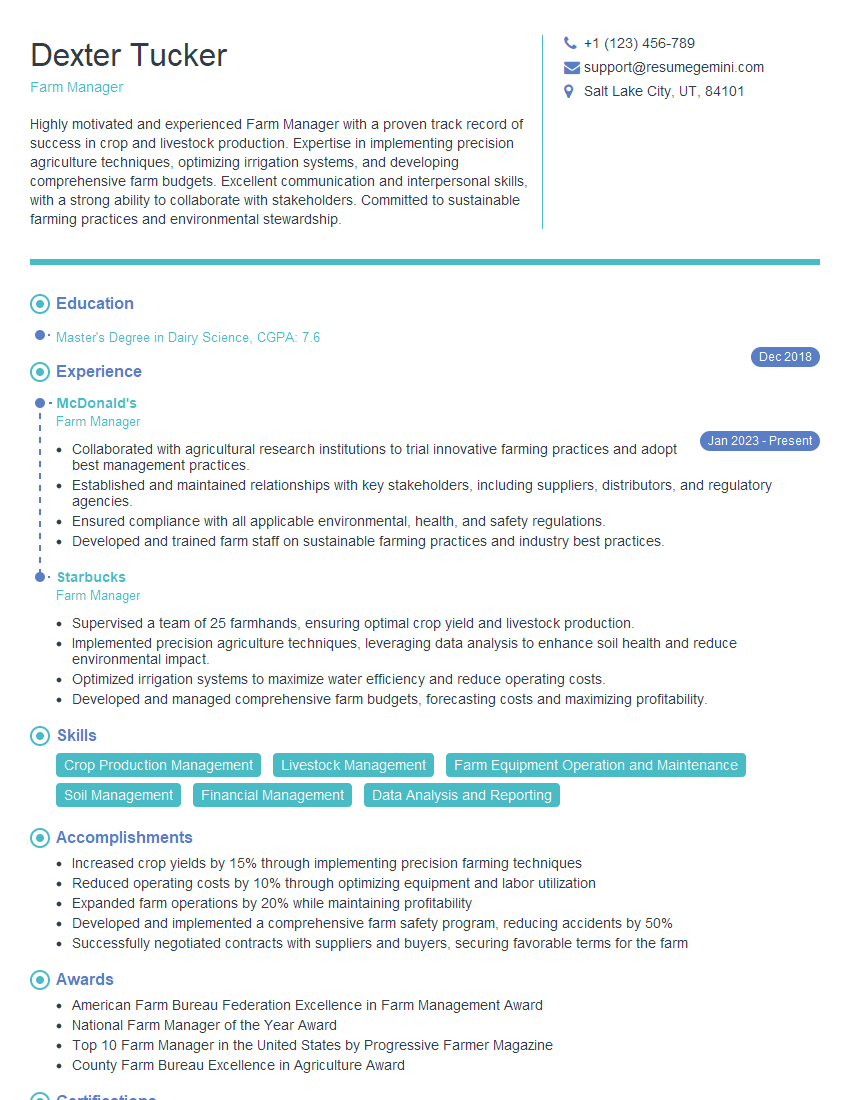
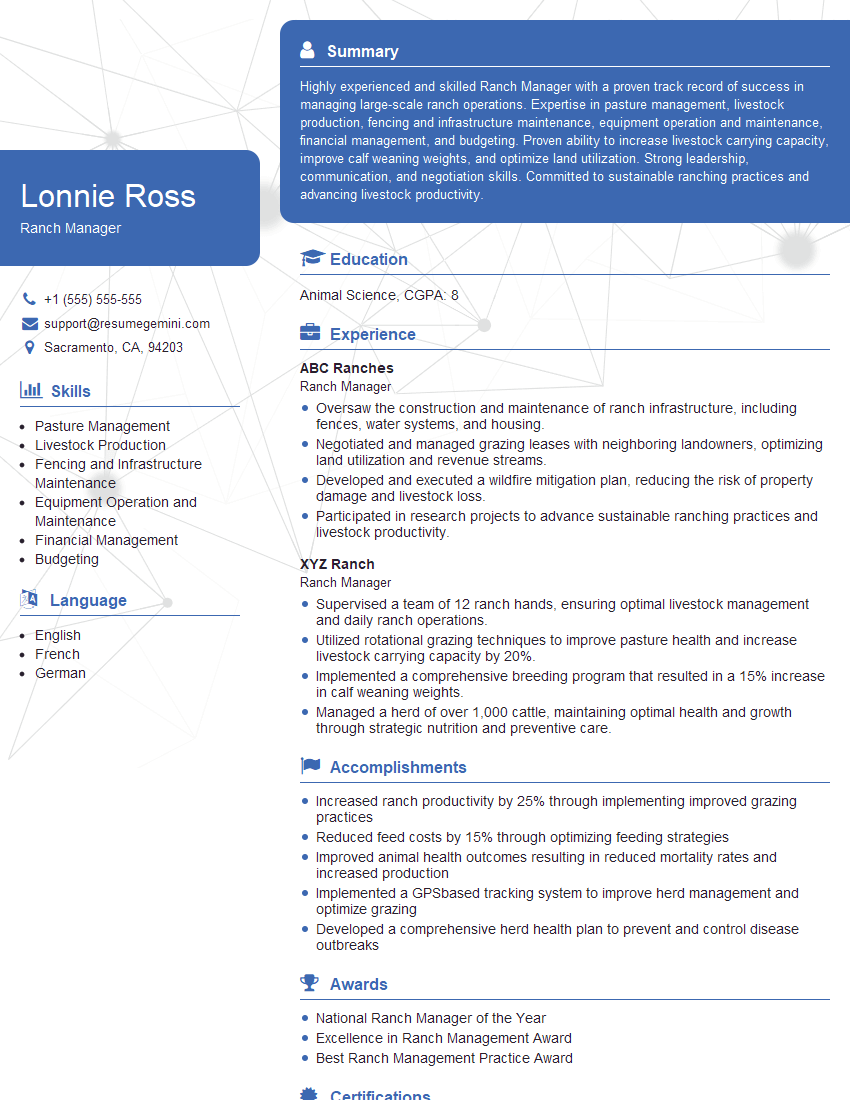
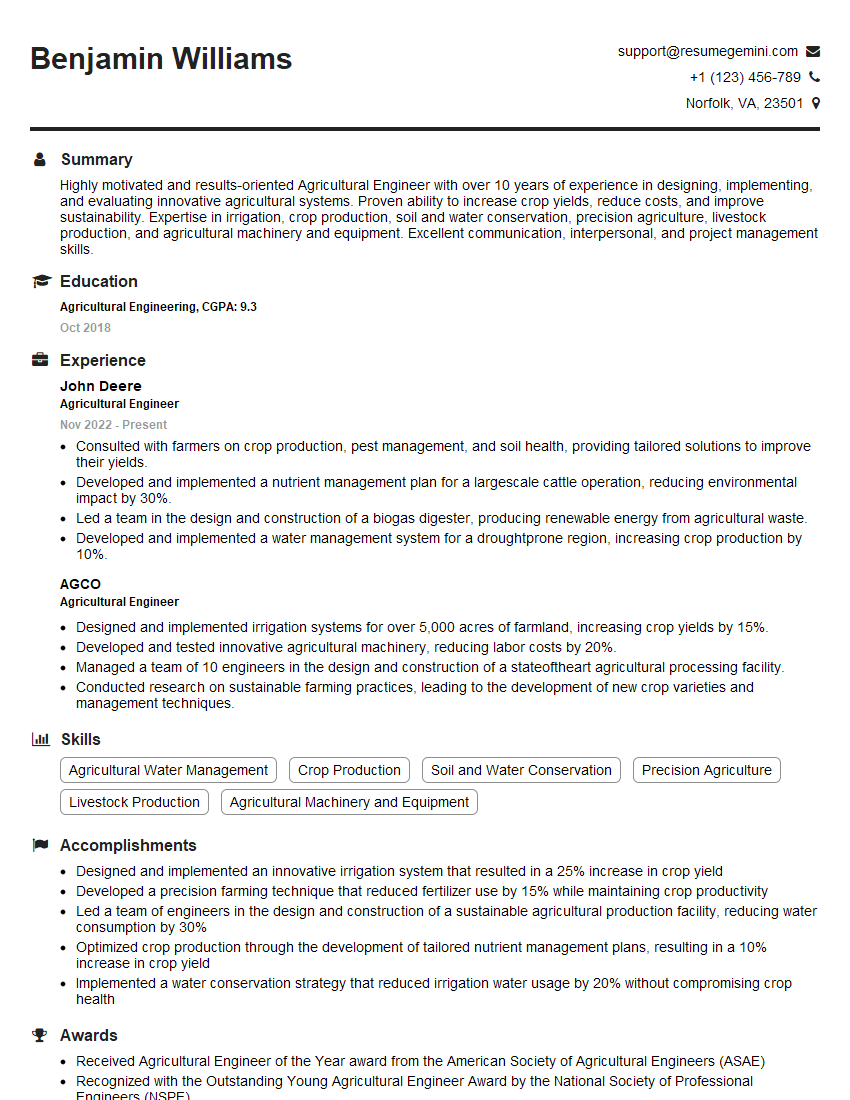
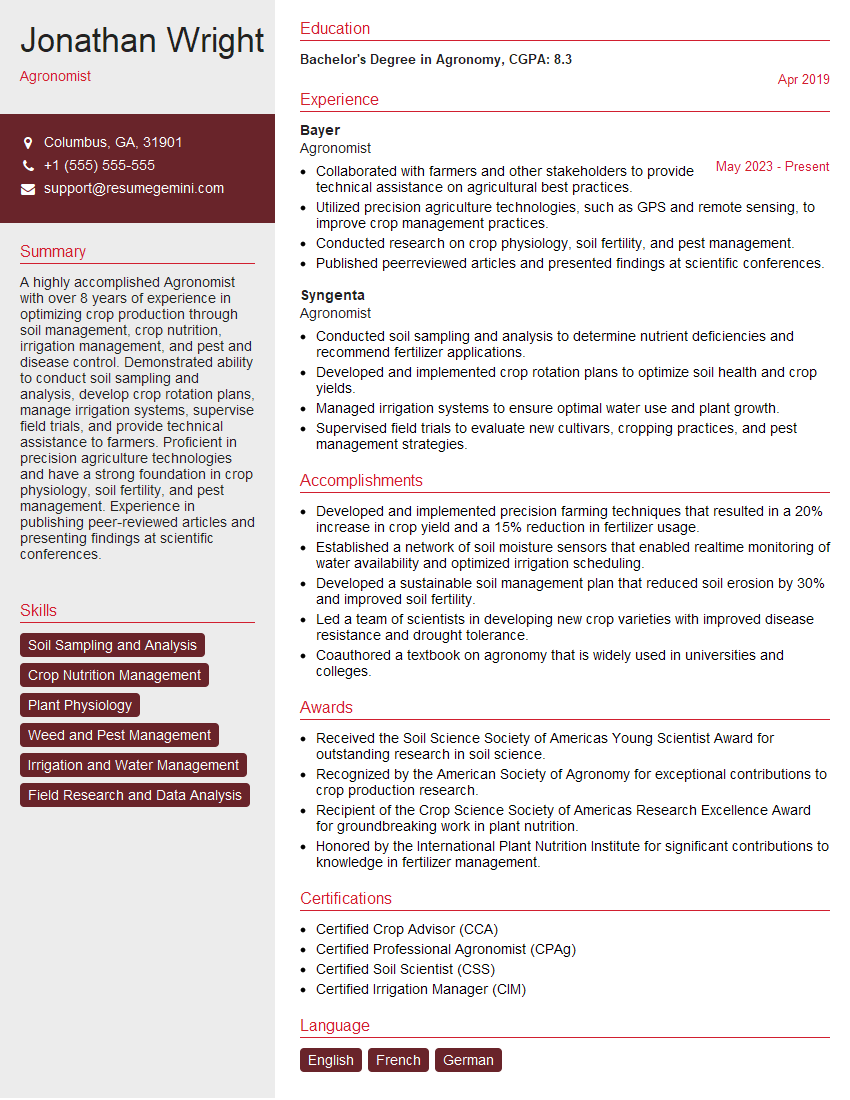
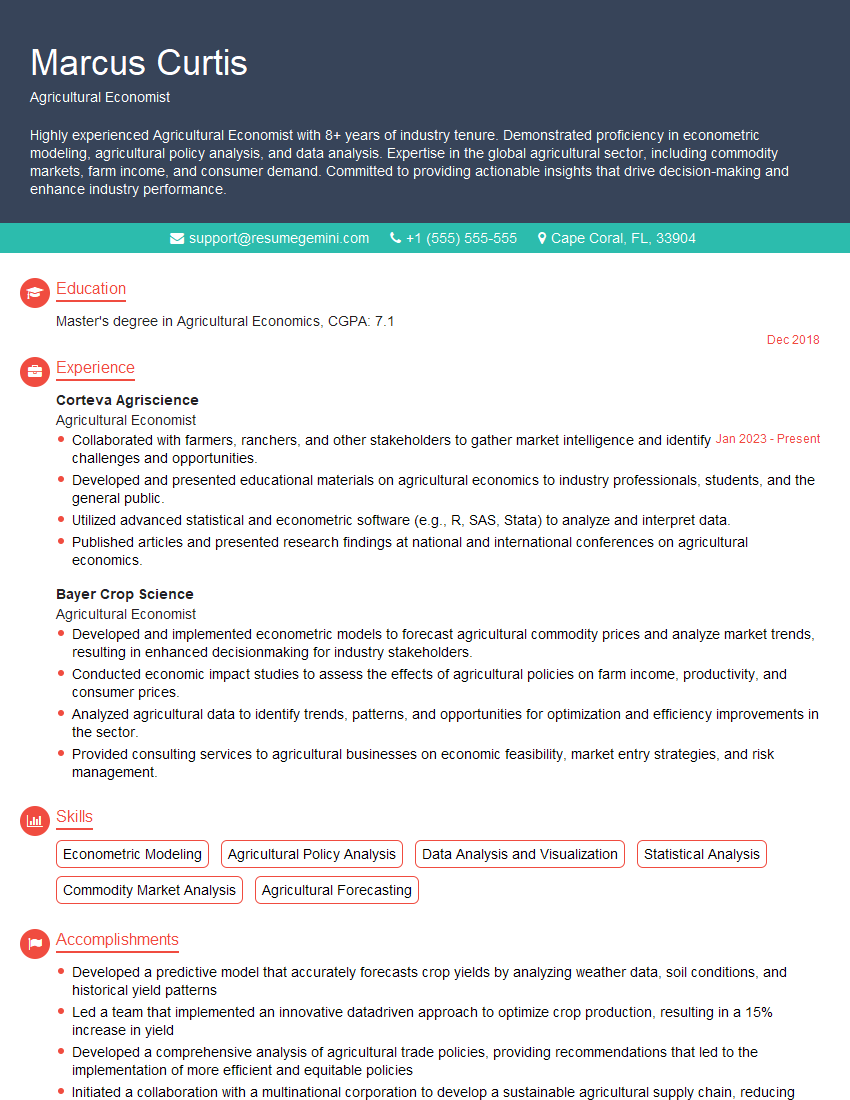
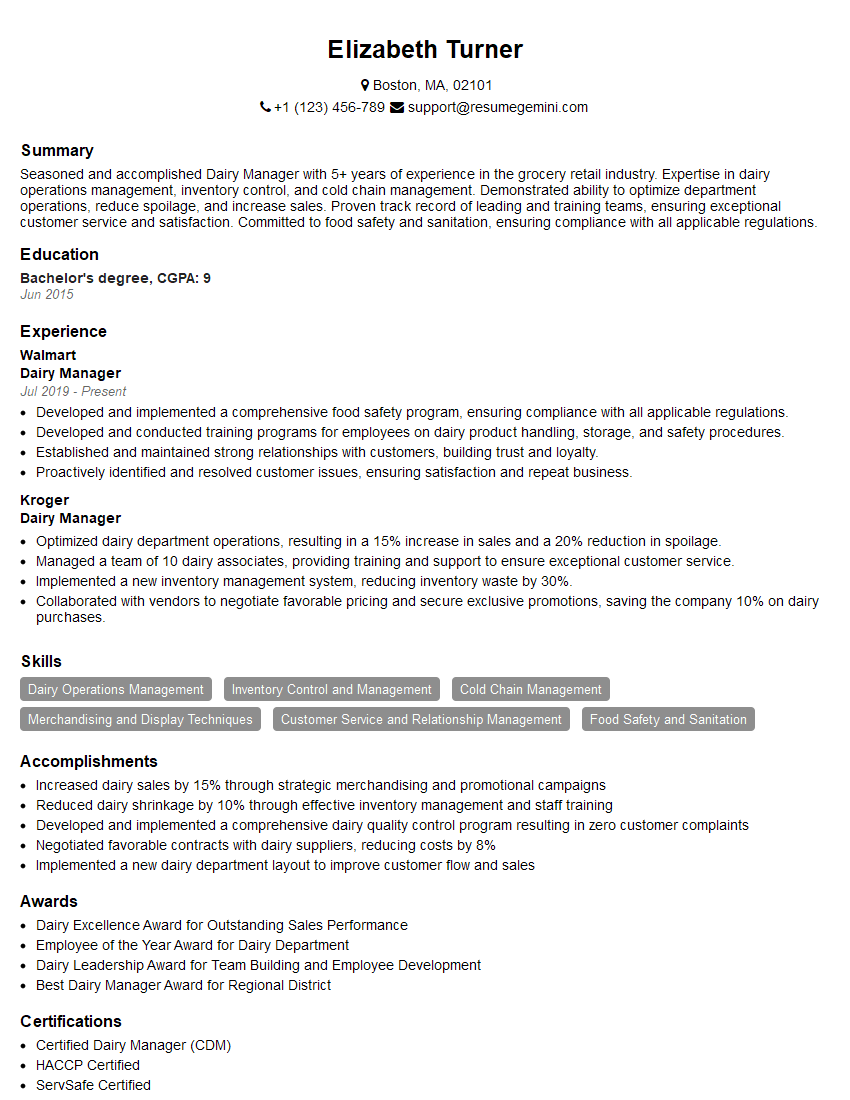
Mastering Farm Management Principles is paramount for career advancement in the agricultural sector, opening doors to leadership roles and increased earning potential. A well-crafted resume is your key to unlocking these opportunities. Building an ATS-friendly resume is crucial for getting your application noticed by recruiters. To make this process easier and more effective, we highly recommend using ResumeGemini. ResumeGemini provides a user-friendly platform to create professional resumes, and we offer examples of resumes tailored to Farm Management Principles to guide you. Invest the time in crafting a compelling resume – it’s an investment in your future.

Explore more articles
Users Rating of Our Blogs
Share Your Experience
We value your feedback! Please rate our content and share your thoughts (optional).
What Readers Say About Our Blog
Really detailed insights and content, thank you for writing this detailed article.
IT gave me an insight and words to use and be able to think of examples