Interviews are more than just a Q&A session—they’re a chance to prove your worth. This blog dives into essential Farrier interview questions and expert tips to help you align your answers with what hiring managers are looking for. Start preparing to shine!
Questions Asked in Farrier Interview
Q 1. Describe your experience in various hoof trimming techniques.
Over my 20 years as a farrier, I’ve honed my skills in a variety of hoof trimming techniques, adapting my approach to each horse’s unique needs. This includes traditional methods and more modern techniques.
- Natural Balance Trimming: This focuses on restoring the hoof’s natural shape and balance, promoting healthy growth and minimizing the need for shoes. I carefully observe the hoof’s conformation and angles to create a balanced structure, similar to how a sculptor refines a piece of art.
- Modified Trimming: This involves strategic trimming to address specific hoof issues. For instance, a horse with long toes and low heels might require a more aggressive trim to correct the imbalance, preventing potential lameness.
- Therapeutic Trimming: This is often used in cases of hoof deformities or conditions like contracted heels. It involves careful and precise trimming to improve hoof structure and function. It’s a bit like architectural restoration – carefully repairing and adjusting to restore proper function.
I always prioritize minimizing pain and stress for the horse. Each trim is tailored to the individual, considering factors like breed, discipline, and any pre-existing conditions. For example, a dressage horse will require a different trim than a trail riding horse.
Q 2. Explain the different types of horseshoes and their applications.
Horseshoes come in a wide variety, each designed for a specific purpose. The choice depends on the horse’s discipline, hoof conformation, and any existing issues.
- Standard Shoes: These are the most common type, used for general riding and preventing wear and tear on the hoof. They are relatively simple to apply and maintain.
- Heart Bar Shoes: Used to support the heels and prevent rotation in horses with navicular syndrome or other heel problems. Think of it as providing extra support to a weakened area.
- Egg Bar Shoes: Similar to heart bars, these support the heels but are also designed to improve breakover (the point where the hoof leaves the ground). They are particularly useful for horses with long toes and low heels.
- Aluminum Shoes: Lighter than steel, these shoes are often preferred for racing or endurance horses, reducing stress on the legs.
- Specialty Shoes: This includes many types of corrective shoes designed to address specific hoof problems. For example, a rocker shoe helps to improve breakover and reduce concussion. Each is carefully selected and fitted based on the specific needs of the horse.
Selecting the right horseshoe is crucial for the horse’s comfort and performance. A poorly fitted shoe can lead to lameness or other hoof problems.
Q 3. How do you assess a horse’s hoof for abnormalities and lameness?
Assessing a horse’s hoof requires a thorough and systematic approach, combining visual inspection with palpation (feeling) and gait analysis. I start by observing the overall conformation of the hoof, looking for any signs of asymmetry, cracks, or abnormalities. I then carefully palpate the hoof wall, sole, and frog, checking for heat, tenderness, or any unusual growths or lesions.
Gait analysis is crucial for detecting lameness. I watch the horse walk and trot, observing its stride length, foot placement, and head carriage. Any deviation from a normal gait could indicate underlying issues. For example, a horse with a subtle lameness might only show a slight head bob, which might be missed by someone lacking experience.
By integrating these three approaches, I can accurately pinpoint potential problems and tailor a treatment plan to address them. This might involve simple trimming adjustments or a more complex solution like the fitting of corrective shoes.
Q 4. What are the common hoof diseases and how do you address them?
Many hoof diseases can affect horses, and early detection and treatment are key to preventing long-term problems. Some common diseases include:
- Thrush: A bacterial infection of the frog, characterized by a foul-smelling discharge. Treatment usually involves cleaning the frog and applying topical medication.
- White Line Disease: A separation between the hoof wall and the sole, often caused by bacterial or fungal infection. Treatment can range from simple cleaning to surgical intervention depending on the severity.
- Laminitis: A painful inflammation of the laminae, the tissues that connect the hoof wall to the coffin bone. This is a serious condition that requires immediate veterinary attention and often involves corrective shoeing.
- Abscesses: Pockets of pus that can form within the hoof. Treatment usually involves draining the abscess and administering antibiotics.
My approach to addressing these diseases involves collaboration with the veterinarian. I work closely with them to develop an appropriate treatment plan that combines farrier care, such as therapeutic trimming and shoeing, with veterinary medical treatment.
Q 5. Describe your experience with corrective shoeing techniques.
Corrective shoeing is a specialized area of farriery that involves using custom-made or modified shoes to address various hoof deformities and lameness issues. My experience includes working with a range of techniques:
- Addressing Foot Rotations: Using heart bar or egg bar shoes to support the heels and prevent further rotation.
- Managing Hoof Cracks: Applying specialized clips or shoes to stabilize the hoof wall and prevent further cracking.
- Correcting Uneven Hoof Growth: Using wedges or other modifications to level the hoof and improve its symmetry. This is crucial for preventing strain on the horse’s legs.
- Treating Laminitis: Employing specialized shoes to redistribute weight and reduce pressure on the sensitive laminae. This often involves close collaboration with the vet.
Each corrective shoeing case requires a detailed assessment of the hoof and an understanding of the underlying cause of the problem. It’s often an iterative process, requiring adjustments and monitoring over time to achieve the best possible outcome.
Q 6. How do you handle a difficult or aggressive horse during shoeing?
Safety is paramount when dealing with a difficult or aggressive horse. My approach focuses on patience, proper handling techniques, and utilizing appropriate equipment.
I start by assessing the horse’s behavior and identifying potential triggers. I might work with the owner or handler to establish a calm and reassuring environment. This includes using a secure, well-lit area, using slow and deliberate movements, and speaking in a calm and reassuring voice. If necessary, I might use sedation recommended by the veterinarian.
I use appropriate restraints, such as hobbles or stocks, but always prioritize the horse’s safety and comfort. I’ll frequently take breaks if the horse is becoming agitated. If I’m uncomfortable with the horse’s behavior for any reason, I will defer the shoeing to another day or to a more experienced farrier who is better suited for the specific circumstances.
Q 7. Explain the importance of proper hoof balance and its impact on horse health.
Proper hoof balance is fundamental to a horse’s health, performance, and well-being. An unbalanced hoof can lead to a cascade of problems, impacting the entire musculoskeletal system.
Impact on Health: An unbalanced hoof puts uneven stress on the joints, tendons, and ligaments, potentially causing lameness and other issues. Think of it like wearing shoes that are too tight or too loose; they’ll eventually cause discomfort and problems. Poor hoof balance can also contribute to conditions like navicular disease and founder.
Impact on Performance: A well-balanced hoof allows for a smooth, efficient stride, maximizing the horse’s athletic potential. An unbalanced hoof will restrict movement and affect performance, making it harder for the horse to move correctly and potentially injuring itself.
Maintaining proper hoof balance involves regular trimming, appropriate shoeing, and addressing any underlying hoof deformities or conditions. It’s a continuous process, requiring ongoing monitoring and adjustment to ensure the horse’s feet are properly supported and functioning correctly.
Q 8. What safety precautions do you take while working with horses?
Safety is paramount when working with horses. They are large, powerful animals, and even the most docile horse can react unpredictably. My safety protocols begin before I even approach the horse. I always ensure the horse is properly restrained, ideally in a well-designed stable or with experienced handlers. I never work alone; having another person present allows for assistance if needed and provides an extra set of eyes.
During the procedure, I maintain a calm demeanor and use quiet, reassuring voice to avoid startling the horse. I position myself strategically to avoid being kicked or stepped on. I’ll use a hoof stand or other restraining devices when appropriate, but even then remain alert to the horse’s body language. After the procedure is complete, I thoroughly check the horse and myself for any injuries and clean up my workspace. Specific equipment like protective eyewear and sturdy gloves are essential. I believe in proactive safety – anticipating potential hazards and taking steps to prevent them is more effective than reacting to accidents.
Q 9. How do you maintain your tools and equipment?
Maintaining my tools and equipment is crucial for both my safety and the horse’s well-being. Dull or damaged tools can lead to injury or improper hoof trimming. After each use, I meticulously clean my tools, removing all debris and hoof material. I then inspect them for any damage, sharpening or repairing any nicks or cracks as needed. Regular lubrication is essential for preventing rust and ensuring smooth operation. I store my tools in a organized manner to prevent damage and ensure quick access. My rasps, for example, are stored in a protective case to prevent damage to the teeth. I’ll also regularly check my power tools – making sure they’re functioning correctly and following manufacturer recommendations for maintenance.
Think of it like this: a sharp knife makes for a cleaner cut, which minimizes discomfort to the horse. Similarly, well-maintained equipment means a more efficient and safer farrier practice.
Q 10. What are the different types of forging techniques you’re proficient in?
My forging skills encompass a range of techniques necessary for creating custom shoes for horses with specific needs. I’m proficient in techniques such as drawing out (lengthening and thinning the metal), upsetting (shortening and widening the metal), fullering (creating a groove), and swaging (shaping the metal). I use these techniques to shape and modify shoe blanks to achieve the perfect fit for each horse’s hoof, considering its conformation and any unique requirements. This might involve creating shoes with specific heel extensions for horses with weak heels or adjusting the branches for horses with uneven weight distribution. I am also experienced in using different types of forges and heat treatments to achieve the desired strength and durability in the finished product.
For example, I recently crafted a specialized shoe for a horse with severe navicular disease. Using fullering and drawing out, I created a wider, more supportive heel to relieve pressure on the sensitive area of the hoof.
Q 11. Explain your knowledge of equine anatomy, specifically the hoof.
A thorough understanding of equine anatomy, particularly the hoof, is foundational to my work. The hoof is a complex structure, not just a claw, but a dynamic organ integral to the horse’s locomotion, shock absorption, and overall health. I understand the components: the hoof wall, sole, frog, bars, and white line. I also know about the internal structures – the sensitive laminae, coffin bone, and digital cushion. Any imbalance or issue in these parts affects the horse’s comfort and gait.
For instance, a subtle change in the angle of the hoof wall can indicate underlying problems such as laminitis or founder. My knowledge allows me to identify these subtle cues, assess the problem, and devise a corrective trimming or shoeing plan. I often use hoof testers and other diagnostic tools to further refine my assessment.
Q 12. How do you manage your workload and scheduling with multiple horses?
Managing my workload effectively is crucial, especially with multiple horses. I use a digital calendar and scheduling system to keep track of appointments, ensuring I allocate sufficient time for each horse. Prioritization is key; I might schedule horses with urgent needs first. I also factor in travel time between clients’ locations and any unexpected delays. Clear communication with clients is essential – confirming appointments and providing estimates for how long each visit will take. Transparency about my availability helps in setting realistic expectations and preventing overbooking.
Effective scheduling ensures I provide high-quality service to each horse without compromising efficiency. It’s about balancing demand and capacity to maintain a steady workload.
Q 13. Describe your experience with different types of hoof materials.
I’ve worked with various hoof materials over my career, each with unique characteristics. The most common is natural hoof horn, which varies in hardness and quality depending on the horse’s diet, genetics, and overall health. I understand how different environmental factors like climate and terrain affect the hoof’s condition. Some horses might have brittle or soft hooves needing special consideration in trimming and shoeing. In certain situations, artificial materials like synthetic hoof fillers or composite shoes may be used to repair or augment damaged hooves. My expertise includes recognizing these materials, understanding their properties, and selecting the appropriate method for achieving optimal hoof health.
For example, I might use a hoof sealant on a horse with dry, brittle hooves to increase moisture retention. The selection depends on a comprehensive assessment of the hoof’s condition.
Q 14. How do you identify and treat common hoof injuries?
Identifying and treating hoof injuries requires a keen eye for detail and a practical approach. Common injuries include abscesses, cracks (sand cracks, quarter cracks), bruises, and white line disease. Initial assessment involves a thorough visual examination of the hoof, looking for signs of inflammation, swelling, heat, or discharge. I might use hoof testers to pinpoint painful areas.
Treatment varies depending on the injury’s severity. A simple bruise might require rest and careful trimming. An abscess requires drainage and cleaning. Severe cracks may necessitate shoeing modifications or even surgical intervention. I always ensure appropriate cleanliness to prevent infection, often using antiseptic solutions. In cases I cannot handle, I refer the horse to a veterinarian.
Q 15. What is your approach to client communication and education?
Client communication is paramount in farriery. I believe in a transparent and collaborative approach. Before any work begins, I discuss the horse’s history, its discipline, and the owner’s goals. I explain my assessment of the horse’s feet, outlining any concerns and recommending a course of action. I use clear, non-technical language, explaining the ‘why’ behind my choices – why a particular trim or shoe is necessary. I’m happy to answer any questions and encourage active participation in the decision-making process. Following the shoeing, I provide aftercare instructions, explaining how to monitor the horse’s feet and what to look out for, empowering clients to become active partners in their horse’s hoof health.
For example, I recently explained to a client the importance of regular trimming for their young horse to prevent developing club feet. I showed them pictures and videos to help illustrate the points, and it improved their understanding and led to better cooperation in the future.
Career Expert Tips:
- Ace those interviews! Prepare effectively by reviewing the Top 50 Most Common Interview Questions on ResumeGemini.
- Navigate your job search with confidence! Explore a wide range of Career Tips on ResumeGemini. Learn about common challenges and recommendations to overcome them.
- Craft the perfect resume! Master the Art of Resume Writing with ResumeGemini’s guide. Showcase your unique qualifications and achievements effectively.
- Don’t miss out on holiday savings! Build your dream resume with ResumeGemini’s ATS optimized templates.
Q 16. Explain your experience with therapeutic shoeing for specific lameness issues.
Therapeutic shoeing requires a deep understanding of equine anatomy, biomechanics, and lameness. My experience includes addressing various issues, such as navicular disease, founder, and various types of hoof cracks. For navicular disease, I might employ shoes with a rolled toe and a wedge pad to reduce stress on the navicular bone. In cases of founder, I utilize techniques to redistribute weight and reduce concussion, sometimes involving specialized shoes like heart bars or egg bar shoes. For hoof cracks, I’d use appropriate techniques to stabilize the crack, preventing further extension, possibly employing glue-on shoes or specialized plates to provide support.
Each case is unique and necessitates a customized approach. I take into account the severity of the lameness, the horse’s overall condition, and the owner’s expectations. I carefully monitor the horse’s response to the shoeing, making adjustments as necessary to achieve optimal comfort and performance.
Q 17. Describe your experience with barefoot trimming.
Barefoot trimming focuses on maintaining the natural balance and integrity of the hoof. It involves assessing the hoof’s conformation and removing excess hoof growth to promote proper weight bearing. My approach involves careful evaluation of the hoof capsule’s shape, evaluating the angles of the hoof wall and sole, and ensuring the hoof is balanced and symmetrical. I use specific techniques to achieve a healthy hoof-pastern axis, promoting natural movement and reducing stress on the joints.
However, barefoot trimming isn’t suitable for every horse. Factors such as conformation, environment, and workload influence its success. I carefully assess each horse’s individual needs to determine if barefoot trimming is appropriate and discuss alternatives if necessary. For example, I might not recommend barefoot trimming for a horse regularly competing in intense disciplines like eventing or jumping where a significant level of hoof protection is needed.
Q 18. How do you adapt your techniques for horses of different breeds and disciplines?
Horses of different breeds and disciplines have diverse hoof characteristics and biomechanical needs. Draft horses, with their larger and heavier hooves, require a different approach compared to lighter breeds such as Thoroughbreds. The discipline also plays a significant role. For instance, a dressage horse requires a trim and shoeing that prioritizes balance and hoof alignment, while a racing horse may need a shoe designed for traction and speed. I tailor my approach to the specific needs of each horse, considering breed characteristics, hoof conformation, and the demands of their chosen discipline. For example, I might use a different type of shoe for a barrel racing horse compared to a western pleasure horse. My assessment includes careful observation of the horse’s movement, gait, and overall conformation to determine the best approach.
Q 19. What is your process for evaluating and selecting the appropriate horseshoe?
Selecting the right horseshoe involves a thorough assessment of several factors. This begins with a careful examination of the horse’s hooves, focusing on their conformation, soundness, and the wear pattern. I consider the horse’s weight, discipline, and the terrain on which it’s worked. I also factor in any pre-existing hoof conditions or lameness issues that need addressing. I then determine the appropriate shoe type, size, and material based on these observations. I might choose between different types like aluminum shoes (lighter weight), steel shoes (more durable), or specialized therapeutic shoes depending on the requirements.
For example, a horse with thin soles might benefit from a shoe with a thicker pad, while a horse prone to slipping might require shoes with caulks or studs. I often discuss my reasoning with the client, ensuring they understand the rationale behind the chosen shoe to ensure client satisfaction and trust.
Q 20. How do you stay current with advancements in farrier techniques and technology?
Staying current in farriery is crucial. I regularly attend workshops and conferences, networking with other farriers and learning about new techniques and technologies. I subscribe to relevant journals and publications, keeping abreast of the latest research and advancements in hoof care. I also actively participate in online forums and discussions, engaging with the broader farrier community to share knowledge and stay updated on the latest trends. Further, I regularly review the work of other farriers, both in person and through media to find new insights. Continuous learning is essential to providing the best possible care for my equine clients.
Q 21. Describe a challenging case you encountered and how you resolved it.
One challenging case involved a Standardbred racehorse with severe hoof cracks and a history of lameness. The cracks extended deeply into the hoof wall, threatening the structural integrity of the hoof. Initial treatments had not been effective, and the horse was at risk of being retired. After a thorough examination, I developed a plan involving specialized glue-on shoes, custom-made to support the weakened hoof wall. The glue-on shoes were reinforced with additional materials to distribute weight effectively. This, combined with ongoing monitoring and careful adjustment of the shoes, successfully addressed the hoof cracks and restored soundness to the horse, allowing it to return to racing. This case highlighted the importance of meticulous planning, precision, and a flexible approach in responding to evolving conditions.
Q 22. What is your understanding of the ethical considerations in farrier practice?
Ethical considerations in farriery are paramount. It’s about prioritizing the horse’s welfare above all else. This means always acting in the best interest of the animal, even if it means foregoing immediate financial gain. For example, if a horse presents with a severe lameness that isn’t appropriate for shoeing, I would refuse to shoe the horse until it receives appropriate veterinary attention. Other crucial ethical considerations include:
- Honesty and Transparency: Openly discussing the horse’s condition, the proposed treatment, and any potential risks or complications with the owner.
- Competence: Only undertaking work that I am fully qualified and experienced to perform. If a situation arises that is beyond my expertise, referring the client to a more experienced farrier or veterinarian is essential.
- Continuing Education: Staying updated with the latest research, techniques, and best practices through regular professional development and attending workshops to ensure the best possible care.
- Animal Welfare: Ensuring a safe and comfortable environment for the horse during the shoeing process, minimizing stress and pain. This includes appropriate handling, using the correct equipment and techniques.
- Maintaining Professional Boundaries: Avoiding conflicts of interest and maintaining appropriate relationships with clients and other professionals.
Q 23. How do you manage the financial aspects of your farrier business (if applicable)?
Managing the financial aspects of my farrier business involves a multi-faceted approach. It starts with creating a detailed business plan that includes:
- Pricing Strategy: I carefully assess my costs (fuel, materials, insurance) and set competitive rates that fairly compensate my time, skills, and overhead.
- Invoicing and Payment Processing: I use efficient invoicing software to track my income and expenses, and I offer multiple payment options for clients’ convenience.
- Financial Tracking: I maintain meticulous records of income and expenses, allowing for accurate monitoring of profit margins and identification of areas for potential improvement.
- Budgeting and Forecasting: I create a yearly budget to anticipate expenses, plan for seasonal fluctuations in workload, and set financial goals.
- Insurance and Retirement Planning: Having appropriate business insurance coverage is crucial, protecting against potential liabilities. Planning for retirement is also important through self-directed options or retirement plans.
Regular review of these financial aspects ensures the long-term sustainability and health of my business.
Q 24. Describe your experience with handling different types of horse shoes (steel, aluminum, etc.)
I have extensive experience working with various types of horseshoes, each with unique properties and applications:
- Steel Shoes: These are the most common type, offering durability and good traction. Different steel alloys offer varying degrees of hardness and longevity. For example, I might use a harder steel for a horse that is prone to wearing shoes quickly.
- Aluminum Shoes: Lighter than steel, aluminum shoes reduce stress on the limbs, particularly beneficial for older horses or those recovering from injury. However, they tend to wear out faster.
- Plastic Shoes: Primarily used for therapeutic purposes in specific cases, often when a horse needs temporary shoeing with less weight and impact.
- Combination Shoes: There are various combinations of materials and designs to tailor the shoe to the individual horse’s needs, incorporating elements of traction, support and weight considerations.
Selecting the appropriate shoe involves considering the horse’s discipline, conformation, weight, hoof condition, and any underlying health issues. The choice is always made in collaboration with the owner and often a veterinarian.
Q 25. Explain your knowledge of hoof pathologies and their treatment implications.
Understanding hoof pathologies is crucial for effective farriery. My knowledge encompasses a wide range of conditions, including:
- Laminitis: A severe inflammation of the laminae, the sensitive tissue connecting the hoof wall to the coffin bone. Treatment involves careful trimming and shoeing techniques to reduce weight-bearing on the affected area, often in consultation with a veterinarian.
- Abscesses: Infections within the hoof that require drainage and appropriate aftercare. I work closely with veterinarians to ensure proper treatment and prevent recurrence.
- Thrush: A bacterial or fungal infection of the frog, characterized by a foul-smelling discharge. Careful cleaning and topical treatments are usually sufficient, but in severe cases veterinary intervention might be necessary.
- White Line Disease: A separation between the hoof wall and the sole, often caused by bacterial or fungal infections. This requires specific trimming and often the use of specialized farrier tools and techniques.
- Navicular Syndrome: A complex condition affecting the navicular bone. While I cannot cure this, correct shoeing can significantly reduce discomfort and improve the horse’s soundness.
My approach involves careful observation, palpation, and often radiographic imaging provided by the veterinarian to make an accurate diagnosis and develop a tailored treatment plan.
Q 26. How do you assess the condition of the hoof wall and sole?
Assessing hoof wall and sole condition requires a thorough and systematic approach. I start by visually inspecting the hoof for:
- Hoof Wall: Assessing its symmetry, thickness, and overall soundness. I look for cracks, chips, distortions, and changes in color which can indicate underlying issues.
- Sole: Checking for bruising, punctures, abnormal concavity, and any signs of infection or inflammation. I’ll also feel the sole with my fingers, searching for any areas of sensitivity or abnormal texture.
I use hoof testers to assess the sensitivity of the sole and white line, carefully applying pressure to pinpoint any areas of pain. This information, in conjunction with the visual assessment, helps me determine the underlying issues and guide my shoeing strategy. For example, a thin hoof wall might require special shoeing techniques to provide additional support. A sensitive sole might indicate underlying problems like bruising, and require adjustments to weight distribution or special padding.
Q 27. Describe your experience working with veterinarians in equine care.
Collaboration with veterinarians is crucial for optimal equine care. I frequently consult with vets to diagnose lameness, address underlying health issues, and develop a comprehensive treatment plan that encompasses farrier services. Veterinarians provide crucial diagnostics such as radiographs and blood work that help me understand the whole picture. For example, if I suspect navicular disease, I will strongly encourage the client to consult a vet for diagnostic imaging. Then, together, we’ll determine the appropriate shoeing plan. This might involve specialized shoes or therapeutic techniques to alleviate pressure on the affected area.
This open communication ensures that all aspects of the horse’s care are considered, leading to better outcomes and a holistic approach to wellness.
Q 28. What are your long-term career goals as a farrier?
My long-term career goals as a farrier involve a blend of personal and professional aspirations. I aim to continue enhancing my expertise through ongoing education and specialization, perhaps focusing on therapeutic shoeing or a specific breed of horse. I also aspire to mentor younger farriers and contribute to the professional development of the field. Building strong and lasting relationships with my clients, based on trust and mutual respect, is a central goal. Ultimately, I want to be recognized for my commitment to excellence in horse care and for consistently providing high-quality farrier services. I see myself continuing to learn and grow in the field for many years to come.
Key Topics to Learn for Farrier Interview
- Equine Anatomy and Physiology: Understanding hoof structure, growth, and common ailments is fundamental. Be prepared to discuss the skeletal and muscular systems related to the lower limb.
- Shoeing Techniques: Discuss various shoeing methods (e.g., hot shoeing, cold shoeing), materials used, and their application in different situations (e.g., therapeutic shoeing).
- Footcare and Trimming: Detail the process of proper foot trimming, including balancing, addressing asymmetries, and identifying potential problems.
- Farrier Tools and Equipment: Demonstrate knowledge of the tools used in farriery and their proper maintenance and use. Be ready to discuss safety procedures.
- Disease and Injury Diagnosis: Explain your approach to identifying common hoof diseases and injuries, and how you would manage or refer cases requiring veterinary intervention.
- Client Communication and Business Practices: Discuss the importance of client interaction, record-keeping, scheduling, and professional conduct.
- Biomechanics and Gait Analysis: Explain how hoof conformation affects gait and performance, and how shoeing can address these issues.
- Advanced Techniques (if applicable): Depending on the experience level required, be ready to discuss advanced techniques such as therapeutic shoeing, corrective shoeing, or specialized applications.
Next Steps
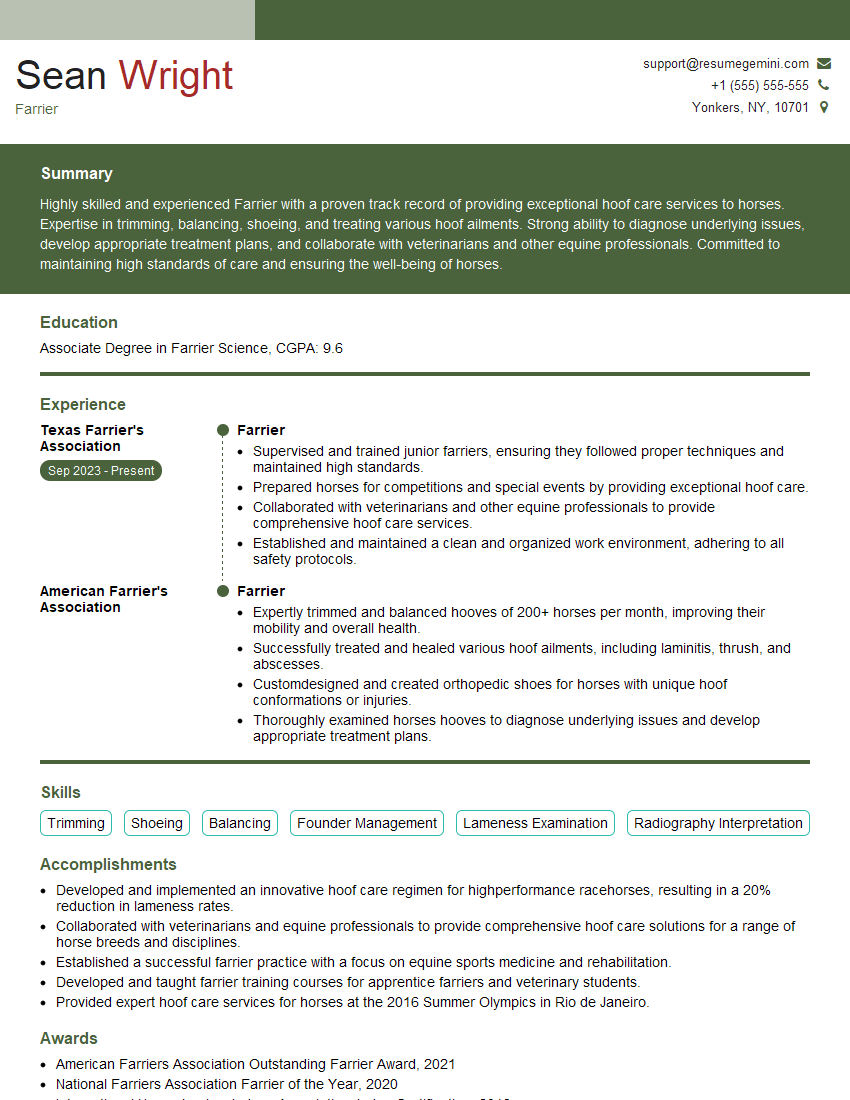
Mastering the art of farriery opens doors to a rewarding career with opportunities for specialization and continuous learning. A strong foundation in the key topics above will significantly improve your interview performance. To maximize your job prospects, creating a compelling and ATS-friendly resume is crucial. ResumeGemini is a trusted resource to help you build a professional resume that highlights your skills and experience effectively. Examples of resumes tailored to the Farrier profession are available to guide you.
Explore more articles
Users Rating of Our Blogs
Share Your Experience
We value your feedback! Please rate our content and share your thoughts (optional).
What Readers Say About Our Blog
Really detailed insights and content, thank you for writing this detailed article.
IT gave me an insight and words to use and be able to think of examples