Preparation is the key to success in any interview. In this post, we’ll explore crucial Filleting and Processing interview questions and equip you with strategies to craft impactful answers. Whether you’re a beginner or a pro, these tips will elevate your preparation.
Questions Asked in Filleting and Processing Interview
Q 1. Describe the different filleting techniques you are proficient in.
Filleting techniques vary depending on the fish species and desired fillet style. I’m proficient in several methods, including the standard ‘pin bone’ technique, used for most firm-fleshed fish like cod or salmon. This involves making precise cuts along the backbone to remove the fillets, carefully removing pin bones along the way. I also utilize a ‘butterfly’ technique, where the fillet is left attached along the belly, resulting in a larger, more aesthetically pleasing piece – perfect for presentation. For smaller, bonier fish like sardines, a more delicate approach is needed, often involving a combination of scraping and precise cuts. For larger, thicker fish such as tuna, I use a combination of the pin bone method and a breaking knife to ensure minimal waste and maximized yield.
My experience also extends to filleting flatfish like sole and flounder, which require a different approach due to their unique anatomy. These are typically filleted from both sides, carefully removing the skin and bones.
Q 2. Explain the importance of sanitation and hygiene in fish processing.
Sanitation and hygiene are paramount in fish processing to prevent bacterial contamination, ensure food safety, and maintain product quality. Think of it like this: fish, especially after being caught, are extremely susceptible to bacterial growth. Neglecting hygiene can lead to rapid spoilage and pose serious health risks to consumers.
Our processes start with cleaning and sanitizing the work surfaces, knives, and equipment before each use and between different batches of fish. Personal hygiene is strictly adhered to, including the mandatory use of protective clothing, gloves, and hairnets. We maintain rigorously controlled temperature throughout the entire process, storing the fish in refrigerated conditions to slow bacterial growth. Regular cleaning and disinfection schedules are followed to reduce cross-contamination risks.
Q 3. What are the common quality control checks performed during filleting?
Quality control checks during filleting are crucial to ensure that the final product meets our high standards. Checks start from the moment the fish arrives, assessing freshness and visual quality. During filleting, we visually inspect each fillet for defects, such as discoloration, damage, or bone fragments. We monitor the yield and weight of the fillets to assess efficiency and consistency. We regularly measure the thickness and dimensions of the fillets to maintain consistent sizing standards. Finally, we perform sensory tests –checking for proper texture, smell, and general appearance to ensure quality before packaging and shipping.
Q 4. How do you identify and handle spoiled or damaged fish?
Identifying spoiled or damaged fish requires careful observation. Visual indicators include discoloration (dark spots or dull appearance), slimy texture, strong or unpleasant odor (ammonia-like smell is a key sign), and physical damage like cuts or bruising. If any of these signs are observed, the affected fish or fillets are immediately removed from the processing line to prevent contamination. They are disposed of according to proper procedures, avoiding any chance of cross-contamination. In high-volume processing lines, I’ve often seen systems where damaged fish are automatically rejected using optical sensors and weight checks.
Q 5. Describe your experience with different types of fish and their filleting requirements.
My experience encompasses a wide variety of fish species, each requiring a tailored approach. For example, filleting salmon requires careful attention to removing pin bones, which are prominent in this species. Flounder, on the other hand, demands precision when skinning and separating the two fillets, and avoiding tearing the delicate flesh. Leaner fish, like cod, require a quicker process, maximizing yield by minimizing waste. Working with thicker, oily fish like tuna needs a sharper knife and different filleting techniques to manage the density and reduce the risk of crushing the fillet. This experience allows me to adapt to different fish types and consistently deliver high-quality fillets.
Q 6. How do you ensure efficient and safe use of filleting equipment?
Safe and efficient use of filleting equipment is crucial for both productivity and safety. This involves regular maintenance checks of all equipment (knives, skinning machines, band saws etc.), ensuring sharpness and proper functionality. Appropriate safety guards must be in place and operational. Operators are trained to use equipment correctly and follow safety protocols, including the use of proper protective gear. Sharpening and cleaning of knives is a critical aspect – dull knives are dangerous and lead to poor quality fillets. Regular equipment servicing minimizes the risk of breakdowns and ensures smooth processing flow.
Q 7. What are the common challenges faced in a fish processing environment?
Challenges in fish processing are multifaceted. Maintaining consistent product quality throughout high-volume operations can be demanding; seasonal fluctuations in fish supply often create peaks and troughs in workload; labor availability and training can be significant issues; adhering to stringent food safety and quality regulations requires constant vigilance and training updates. Lastly, efficient waste management, minimizing processing waste and promoting sustainability, is becoming an increasingly important challenge.
Q 8. How do you maintain the quality and freshness of fillets during processing?
Maintaining the quality and freshness of fish fillets during processing is paramount. It hinges on implementing a strict cold chain, minimizing handling time, and employing proper sanitation procedures.
- Immediate chilling: After filleting, fillets should be immediately chilled to below 4°C (39°F) to slow down enzymatic and microbial activity. This can be achieved through ice slurry immersion or blast chilling. Think of it like putting your groceries in the fridge immediately upon arriving home from the market – the faster you cool things down, the longer they last.
- Proper storage: Fillets should be stored in airtight containers to prevent dehydration and oxidation. Packaging under modified atmosphere (MAP) which involves replacing air with a mixture of gases (usually nitrogen and carbon dioxide), greatly extends shelf life.
- Hygiene practices: Thorough cleaning and sanitization of equipment and work surfaces are crucial to prevent cross-contamination and the growth of spoilage microorganisms. This includes regularly cleaning knives, cutting boards, and storage containers with food-grade sanitizers.
- Efficient processing flow: A well-organized processing line with minimal handling and transport times is essential for maintaining freshness. Delays in any step of the process allow bacteria to flourish, and lead to quick spoilage.
For example, in a large processing plant I previously worked at, we implemented a high-speed chilling system that reduced the time between filleting and chilling to under 3 minutes, significantly increasing our product’s quality.
Q 9. Explain your understanding of HACCP principles in seafood processing.
HACCP, or Hazard Analysis and Critical Control Points, is a preventative system for food safety. In seafood processing, it’s essential to identify and control biological, chemical, and physical hazards that could compromise product safety.
- Hazard analysis: This involves identifying potential hazards at each step of the processing, from receiving raw materials to packaging the final product. Examples include bacterial contamination, parasite presence, and chemical residues.
- Critical control points (CCPs): These are steps where control is essential to prevent or eliminate a food safety hazard. In filleting, CCPs would include chilling, hygiene, and temperature monitoring at all stages of processing.
- Critical limits: These are the maximum or minimum values for each CCP. For instance, a critical limit for chilling might be maintaining a temperature below 4°C (39°F) at all times. Exceeding these limits triggers corrective actions.
- Monitoring: Regular monitoring is necessary to ensure that CCPs are under control. This involves taking temperature readings, conducting visual inspections and performing microbial tests.
- Corrective actions: If a critical limit is exceeded, specific corrective actions need to be defined and implemented to bring the process back under control, potentially including discarding contaminated batches.
- Verification: Regular verification procedures such as audits and inspections, are done to ensure the HACCP plan is effective and consistently followed.
- Record keeping: Detailed records of all HACCP activities are kept, this creates an auditable trail for safety and regulatory compliance.
Implementing a robust HACCP plan significantly reduces the risk of foodborne illnesses, enhances the safety of our products, and boosts consumer confidence.
Q 10. How do you manage yield and minimize waste during filleting?
Maximizing yield and minimizing waste in filleting requires skill, precision, and potentially specialized equipment.
- Skilled filleting techniques: Experienced filleteurs can make precise cuts to extract the maximum amount of fillet from the fish, reducing waste. Training plays a vital role in improving efficiency and minimizing waste. Proper filleting techniques, such as using the correct angle and pressure, can drastically improve the yield.
- Efficient knife handling: Using sharp, well-maintained knives minimizes the amount of flesh lost during the cutting process. Dull knives can cause tearing and increase waste. Regular sharpening and proper knife handling are crucial.
- Utilizing by-products: Fish trimmings can be processed into other valuable products, like fish meal, fish oil, or surimi (processed fish paste). This adds value to the entire fish, and reduces waste.
- Automated filleting systems: For high-volume processing, automated filleting machines can significantly improve yield and reduce labor costs. However, setting up and maintaining these systems requires expertise.
- Waste management systems: Effective waste management systems ensure that waste is collected, stored and disposed of properly, in accordance with regulatory and environmental standards.
For example, at one facility, we implemented a new automated filleting system that resulted in a 15% increase in yield and reduced waste by 10% compared to manual filleting. This showcased a significant return on investment and highlighted the importance of optimized equipment and technique in maximizing profits.
Q 11. What are your troubleshooting skills related to filleting equipment malfunctions?
Troubleshooting filleting equipment malfunctions requires a systematic approach. My experience involves identifying the problem, isolating the cause, and implementing a solution.
- Identify the problem: Begin by accurately diagnosing the issue. Is the machine not starting? Are the blades dull or damaged? Is the conveyor belt jammed? A precise problem description is the first step toward effective troubleshooting.
- Isolate the cause: Once identified, the cause is to be isolated. Is it a mechanical problem, an electrical fault, or a software glitch? Careful observation and examination are key here.
- Consult documentation: Equipment manuals, schematics, and maintenance logs provide invaluable information for troubleshooting. They may contain troubleshooting guides or fault codes that can pinpoint the problem.
- Safety first: Always ensure that the power is switched off and the machine is locked out before undertaking any repair or maintenance work.
- Seek expert assistance: If the issue is complex or beyond my expertise, I would consult with the manufacturer or a qualified technician.
For instance, I once encountered a situation where a filleting machine’s conveyor belt kept jamming. After systematic checking, I discovered that a build-up of fish scales was causing friction and causing the jams. Implementing a more frequent cleaning schedule resolved the problem effectively.
Q 12. Describe your experience with different types of filleting knives and their uses.
Different filleting knives are designed for specific tasks and fish types. My experience spans a variety of these specialized tools.
- Flexible filleting knives: These knives feature a thin, flexible blade ideal for following the contours of the fish, minimizing waste and achieving clean cuts. These are perfect for smaller, delicate fish.
- Rigid filleting knives: These knives, with a thicker, more rigid blade, are suited for larger, firmer fish requiring more forceful cuts. The more robust blade allows for precise cuts even through thick fish.
- Electric filleting knives: These power tools greatly enhance efficiency and speed, particularly in high-volume processing. The consistent power and speed minimize fatigue and ensure uniform cuts.
- Offset filleting knives: The blade’s offset design provides better control and access to hard-to-reach areas of the fish, maximizing yield. This particular design is incredibly useful for fillet extraction in larger or irregularly shaped fish.
The choice of knife depends entirely on the type and size of fish being processed. I’ve learned to select the best knife for each specific situation to achieve optimal results and reduce waste.
Q 13. How do you ensure proper weight and grading of fish fillets?
Ensuring proper weight and grading of fish fillets requires precise measurements and standardized procedures.
- Accurate weighing: Electronic scales provide precise weight measurements, crucial for meeting customer specifications and ensuring fair pricing. Regular calibration of these scales is essential for accurate measurements.
- Size grading: Fillets are often graded according to size and weight. This involves sorting fillets into different categories based on pre-defined weight ranges to ensure consistent product quality and customer satisfaction.
- Quality grading: Fillets can also be graded based on quality factors such as appearance, texture, and color. These aspects are important for determining the market value of the product.
- Automated sorting systems: In larger processing plants, automated grading systems can efficiently sort fillets by weight and quality, increasing efficiency and accuracy.
- Packaging labels: Accurate weight and grade information should be clearly labeled on the packaging to ensure traceability and transparency for the end consumer.
For example, in my previous role, we implemented a new automated grading system that improved our efficiency by 20% and reduced errors in weighing and grading significantly, ultimately improving both the customer experience and internal processes.
Q 14. Explain your experience with different types of seafood processing equipment.
My experience encompasses a wide range of seafood processing equipment. This includes various types of filleting machines, skinning machines, and packaging equipment.
- Filleting machines: I’ve worked with both manual and automated filleting machines. Automated systems are more efficient for high-volume processing, but manual systems provide more control for specialized applications.
- Skinning machines: These machines are essential for removing fish skin quickly and efficiently. Different types of skinning machines exist, catering to various fish species and sizes.
- Deboning machines: These are used for removing bones from fillets and are crucial for certain products. The technology in this space varies greatly, with some systems being more sophisticated and precise than others.
- Freezing equipment: Different freezing systems, such as blast freezers and plate freezers, are used for preserving the quality and extending the shelf life of fish products.
- Packaging machines: These machines are vital for efficient and hygienic packaging of fillets. They can be automated or semi-automated, and can handle a variety of packaging materials.
Understanding the capabilities and limitations of each piece of equipment allows for optimal utilization of resources and enhances the overall processing efficiency. My experience allows me to efficiently troubleshoot problems and integrate new technologies in order to improve yield and safety.
Q 15. How do you manage a team of filleting workers effectively?
Managing a filleting team effectively requires a blend of strong leadership, clear communication, and a focus on safety and efficiency. I start by clearly defining roles and responsibilities, ensuring each team member understands their contribution to the overall process. This includes setting daily targets and explaining the importance of quality control at each stage. Regular training sessions on proper filleting techniques, hygiene standards, and the use of equipment are crucial. I also emphasize teamwork and collaboration, fostering an environment where workers feel comfortable sharing ideas and concerns. I use a combination of positive reinforcement and constructive feedback to motivate the team and improve performance. For example, I might publicly acknowledge a team member who consistently achieves high-quality work and offer additional training for those who need assistance in a specific area, such as mastering a new filleting technique for a particular species.
Performance monitoring is a key part of my approach. I regularly track individual and team productivity, identifying areas for improvement. This could involve analyzing filleting rates, waste levels, and the number of rejected fillets. Addressing issues promptly and fairly is essential. If a team member is struggling, I provide individualized support, which might include extra training, mentorship, or adjusting their workload.
Career Expert Tips:
- Ace those interviews! Prepare effectively by reviewing the Top 50 Most Common Interview Questions on ResumeGemini.
- Navigate your job search with confidence! Explore a wide range of Career Tips on ResumeGemini. Learn about common challenges and recommendations to overcome them.
- Craft the perfect resume! Master the Art of Resume Writing with ResumeGemini’s guide. Showcase your unique qualifications and achievements effectively.
- Don’t miss out on holiday savings! Build your dream resume with ResumeGemini’s ATS optimized templates.
Q 16. What are your experience in maintaining traceability through the process?
Maintaining traceability throughout the filleting and processing process is paramount for ensuring food safety and meeting regulatory requirements. My approach involves a robust system of record-keeping, beginning with the identification of the source of the fish. This might involve tracking the fishing vessel, the date of catch, and the fishing location. Each batch of fish is given a unique identification number that is tracked throughout the entire process. This information is meticulously recorded at each stage, including filleting, weighing, packing, and freezing. We use barcodes and digital tracking systems to improve accuracy and efficiency. All processing records are kept securely and are readily available for audits. In the event of a recall, our traceability system allows us to quickly and accurately identify the affected batch of fish, ensuring consumer safety and minimizing potential losses. This ensures transparency and accountability throughout the supply chain.
Q 17. Describe your knowledge of various seafood species and their processing requirements.
My knowledge of various seafood species and their processing requirements is extensive. I understand the unique characteristics of different species, including their anatomy, texture, and susceptibility to spoilage. For instance, delicate fish like sole require a gentler filleting technique to avoid tearing, while firm fish like tuna can withstand more aggressive processing. The processing methods also vary based on the intended end product. Some species are suitable for freezing whole, while others are best processed into fillets or steaks. The freezing techniques also vary depending on the species and the desired quality. For example, quick freezing methods like blast freezing are best suited for retaining the quality of high-value species. I have hands-on experience with a wide range of species, including salmon, cod, tuna, shrimp, and scallops. This expertise ensures we optimize the processing techniques to maximize yield and quality, minimizing waste and maximizing the value of the product.
Q 18. How do you comply with food safety regulations in fish processing?
Compliance with food safety regulations is not just a priority; it’s fundamental to our operation. We adhere to stringent hygiene standards throughout the entire process. This includes maintaining a clean and sanitized processing facility, regularly inspecting and cleaning equipment, and ensuring that all staff adhere to strict handwashing and hygiene protocols. We implement a robust Hazard Analysis and Critical Control Points (HACCP) system, which identifies and controls potential hazards at critical points in the process. Employee training includes comprehensive food safety modules, covering topics such as proper sanitation techniques, allergen control, and temperature management. We also conduct regular internal audits and participate in external audits by regulatory bodies to ensure our processes are continually compliant with all relevant regulations. Maintaining accurate records, including temperature logs, sanitation logs, and employee training records, is crucial for demonstrating our commitment to food safety.
Q 19. What are your methods for preventing cross-contamination during filleting?
Preventing cross-contamination is crucial in a fish processing environment. We employ a multi-layered approach to minimize this risk. We start by using separate cutting boards and knives for different species. Equipment is thoroughly cleaned and sanitized between processing different types of fish. The facility is designed with distinct areas for different processing stages, preventing the flow of contamination between areas. For instance, raw fish are processed in a separate area from cooked or ready-to-eat products. Workers are required to change gloves frequently and wear appropriate protective clothing. We also maintain rigorous temperature control throughout the process, ensuring that fish is stored at appropriate temperatures to prevent bacterial growth. Regular monitoring and testing are conducted to ensure the effectiveness of our cross-contamination prevention measures.
Q 20. How do you handle different types of fish orders and processing volumes?
Handling diverse fish orders and fluctuating processing volumes requires a flexible and adaptable approach. We utilize a sophisticated order management system to prioritize orders based on deadlines and product specifications. We have a system in place to accurately forecast demand and adjust our staffing levels accordingly. During peak seasons or periods of high volume, we can easily increase our workforce to ensure timely order fulfillment. We also have systems in place for efficient storage and handling of various fish species. This involves using appropriate storage methods for each type of fish, such as chilled storage for highly perishable species and frozen storage for longer-term preservation. This ensures that the quality and freshness of each product are maintained. Effective communication with clients is crucial. We keep them informed about order status and any potential delays or changes.
Q 21. Explain your experience with automated filleting systems.
My experience with automated filleting systems includes the implementation and operation of several different types of automated equipment. I understand the advantages and limitations of various systems and know how to select the most appropriate system for the type of fish and processing volume. Automated systems can significantly improve efficiency and reduce labor costs, while also increasing consistency and reducing waste. However, it’s important to note that automated systems may not always be suitable for all species, particularly those with delicate flesh. Proper maintenance and calibration of automated equipment are critical for optimal performance and to ensure product quality. Troubleshooting and repair of these systems are also essential skills. My experience encompasses both the practical aspects of operating these systems and the technical aspects of their maintenance and repair.
Q 22. How do you ensure consistency in fillet size and quality?
Consistency in fillet size and quality is paramount in fish processing, impacting both product value and customer satisfaction. Achieving this relies on a combination of skilled technique, standardized procedures, and appropriate equipment.
- Skilled Technique: Years of practice have honed my ability to consistently identify the bone structure and precisely maneuver the knife to yield fillets of uniform thickness and shape, minimizing waste. Think of it like a sculptor working with delicate material – each cut must be precise and controlled.
- Standardized Procedures: Implementing a detailed filleting procedure, including standardized measurements for fillet thickness and width, ensures everyone on the line adheres to the same high standards. We use visual aids and regularly check fillets against these standards to maintain consistency.
- Appropriate Equipment: Using sharp, well-maintained knives is essential. Dull knives tear the flesh, resulting in ragged edges and reduced quality. We also utilize specialized filleting tables with guides to maintain consistent fillet width.
- Regular Quality Checks: Throughout the process, regular quality checks are performed by experienced personnel. This involves visual inspection and sometimes weight checks to detect any deviations from the standard.
For instance, I once implemented a new filleting technique that reduced waste by 15% while simultaneously improving the uniformity of fillet size. This demonstrates the tangible impact of focusing on consistency in the filleting process.
Q 23. What are your experience with cold chain management in fish processing?
Cold chain management is absolutely critical in fish processing to maintain product freshness and safety, preventing bacterial growth and extending shelf life. My experience encompasses all aspects, from pre-harvest handling to final delivery.
- Pre-Harvest: This includes ensuring proper chilling methods are used on the fishing vessel, often involving ice or refrigerated sea water, to rapidly cool the fish after capture.
- Processing: Maintaining consistently low temperatures (typically around 0-4°C) throughout processing is crucial. We use chilled processing tables, refrigerated storage rooms, and monitor temperatures meticulously.
- Packaging: Rapid packaging after filleting is essential. This minimizes the time the product spends at room temperature, a critical factor in preventing bacterial growth.
- Transportation and Distribution: Using refrigerated trucks and containers during transportation and employing robust traceability systems to monitor temperatures throughout the supply chain ensures that quality is maintained.
- Temperature Monitoring and Recording: Accurate temperature logging and recording are essential for traceability and for demonstrating compliance with food safety regulations. We utilize data loggers and regularly review temperature records.
In a past role, I was instrumental in implementing a new cold chain management system that reduced spoilage rates by 20%, leading to significant cost savings and improved customer satisfaction.
Q 24. What are your skills in using different types of packaging for fish fillets?
Packaging is a crucial aspect of maintaining fish fillet quality and extending its shelf life. I’m proficient in using various types, each suited to different preservation methods and market demands.
- Modified Atmosphere Packaging (MAP): This involves packaging the fillets in a modified atmosphere (reduced oxygen, increased carbon dioxide, and sometimes nitrogen) to slow down oxidation and microbial growth, extending shelf life considerably. I’m experienced in selecting the optimal gas mixture for different fish species and storage durations.
- Vacuum Packaging: This removes air from the packaging, preventing oxidation and slowing bacterial growth. It’s particularly effective for longer storage periods.
- Ice Glazing: This involves coating the fillets with a layer of ice, which acts as a barrier against oxidation and dehydration. It is a common practice in maintaining freshness during transportation.
- Sealed and Frozen Packaging: For frozen fillets, using high-quality, airtight packaging is critical to maintain product quality and prevent freezer burn.
Choosing the appropriate packaging depends on factors such as the type of fish, target market, intended shelf life, and transportation method. For example, I’d choose MAP for a high-value product intended for retail sale with a moderate shelf life, whereas vacuum packaging might be preferable for longer storage in institutional settings.
Q 25. Describe your skills in knife sharpening and maintenance.
Knife skills are fundamental in filleting. Sharpening and maintenance are not just about a sharp blade; they are about safety, efficiency, and product quality.
- Sharpening Techniques: I’m proficient in using both electric and manual sharpening methods, using honing steels regularly to maintain the edge between sharpenings. I understand the importance of maintaining the correct bevel angle to ensure a sharp, durable edge. Imagine trying to carve wood with a dull chisel – the results are rough and inefficient.
- Knife Selection: I’m knowledgeable about different types of filleting knives and choose the appropriate knife for the specific task. This includes considering blade length, flexibility, and material.
- Cleaning and Storage: After each use, knives are thoroughly cleaned and stored properly to prevent corrosion and damage. Proper storage is crucial to prolonging the life of the blades.
- Safety Procedures: Handling sharp knives requires adherence to strict safety procedures, including proper cutting techniques and awareness of surroundings to avoid accidents.
I’ve trained others in proper knife sharpening techniques and have developed and implemented a knife maintenance program that has significantly reduced the frequency of knife replacements and improved workplace safety in the past.
Q 26. How do you address workplace safety concerns during filleting?
Workplace safety is a top priority in filleting. The nature of the work, with sharp knives and slippery surfaces, necessitates a proactive approach.
- Personal Protective Equipment (PPE): Ensuring everyone uses appropriate PPE, including cut-resistant gloves, safety glasses, and non-slip footwear, is critical.
- Safe Work Practices: Implementing and enforcing safe work practices, including proper knife handling techniques, maintaining a clean and organized workspace, and taking regular breaks to prevent fatigue, is essential.
- Emergency Procedures: Having well-defined emergency procedures, including first aid training and access to appropriate medical supplies, is vital. We regularly conduct drills to ensure everyone is prepared.
- Regular Safety Audits: Conducting regular safety audits to identify and address potential hazards is a proactive step to maintain a safe work environment.
For example, in my previous role, I implemented a new safety training program that reduced workplace injuries by 30% within a year. I strongly believe that a safe working environment improves productivity and morale.
Q 27. What are your experience in training and mentoring other filleting workers?
Training and mentoring are crucial for maintaining consistent quality and productivity. I’ve extensive experience in developing and delivering training programs for filleting workers of varying skill levels.
- On-the-Job Training: I provide hands-on training, guiding trainees through the filleting process step-by-step, focusing on proper techniques and safety procedures.
- Demonstrations and Feedback: I demonstrate correct techniques and provide regular feedback to trainees, highlighting areas for improvement.
- Customized Training: I tailor my training to the individual needs of each trainee, acknowledging that learning styles and prior experience vary significantly.
- Performance Evaluation and Mentorship: I monitor trainee progress, providing ongoing support and mentoring to help them develop their skills and confidence.
In one instance, I mentored a team of new filleting workers, leading to a significant improvement in their speed and accuracy within just three months. My training methods emphasize both skill development and the fostering of a positive learning environment.
Q 28. How do you improve efficiency and productivity in a fish processing line?
Improving efficiency and productivity in a fish processing line requires a holistic approach, focusing on both process optimization and worker skill enhancement.
- Process Optimization: This involves analyzing the entire process, identifying bottlenecks, and streamlining operations. This might include optimizing the layout of the processing line, improving workflow, and implementing lean manufacturing principles.
- Equipment Upgrades: Investing in modern, efficient equipment, such as automated filleting machines where appropriate, can significantly increase output.
- Improved Training and Skill Development: As mentioned earlier, proper training and mentoring enhance worker skill and efficiency.
- Waste Reduction: Minimizing waste through improved filleting techniques and effective use of byproducts improves efficiency and reduces costs.
- Data-Driven Optimization: Using data to track key performance indicators (KPIs), such as yield, processing time, and waste, allows for continuous improvement and identification of areas needing attention.
I successfully implemented a process improvement initiative in a previous role that resulted in a 10% increase in productivity and a 5% reduction in waste. The key was a collaborative approach, involving both management and line workers in identifying and solving problems.
Key Topics to Learn for Filleting and Processing Interview
- Fish Handling and Hygiene: Understanding proper sanitation procedures, temperature control, and safe handling techniques to prevent spoilage and contamination.
- Filleting Techniques: Mastering various filleting methods for different fish species, emphasizing speed, precision, and yield maximization. Practical application: Demonstrate your ability to fillet various fish types efficiently and accurately.
- Processing Methods: Knowledge of different processing techniques like freezing, smoking, canning, and value-added product creation. Practical application: Describe your experience with different preservation methods and their impact on product quality.
- Quality Control: Understanding quality standards, grading systems, and defect identification to ensure consistent product quality. Practical application: Explain your approach to identifying and addressing quality issues during processing.
- Equipment Operation and Maintenance: Familiarity with various processing equipment, including filleting machines, freezers, and packaging machinery, along with basic maintenance procedures. Practical application: Describe your experience with specific equipment and any troubleshooting you’ve performed.
- Yield and Waste Management: Optimizing yield, minimizing waste, and understanding cost-effective practices within the filleting and processing workflow. Practical application: Explain strategies for reducing waste and maximizing product yield.
- Safety Regulations and Compliance: Knowledge of relevant food safety regulations, industry best practices, and adherence to safety protocols. Practical application: Discuss your understanding of food safety regulations and how you ensure compliance in a workplace setting.
- Teamwork and Communication: Effective communication and collaboration within a team environment, crucial for efficient processing operations.
Next Steps
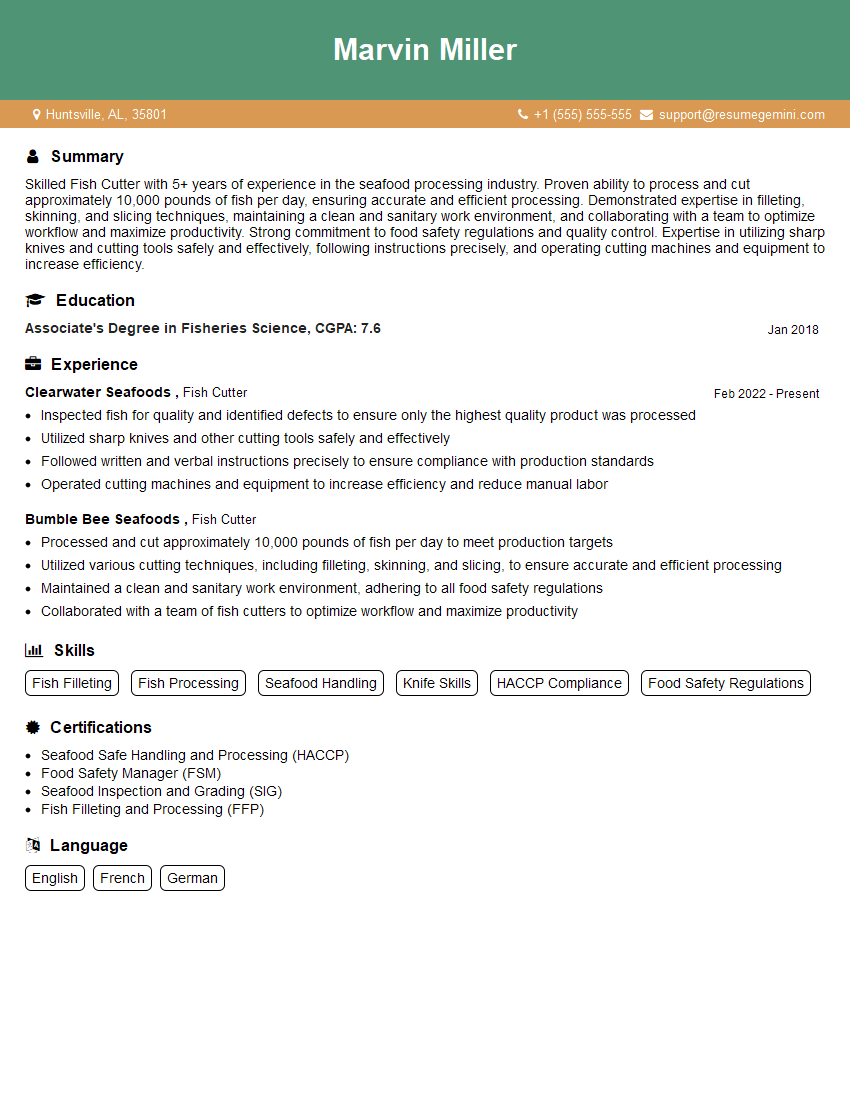
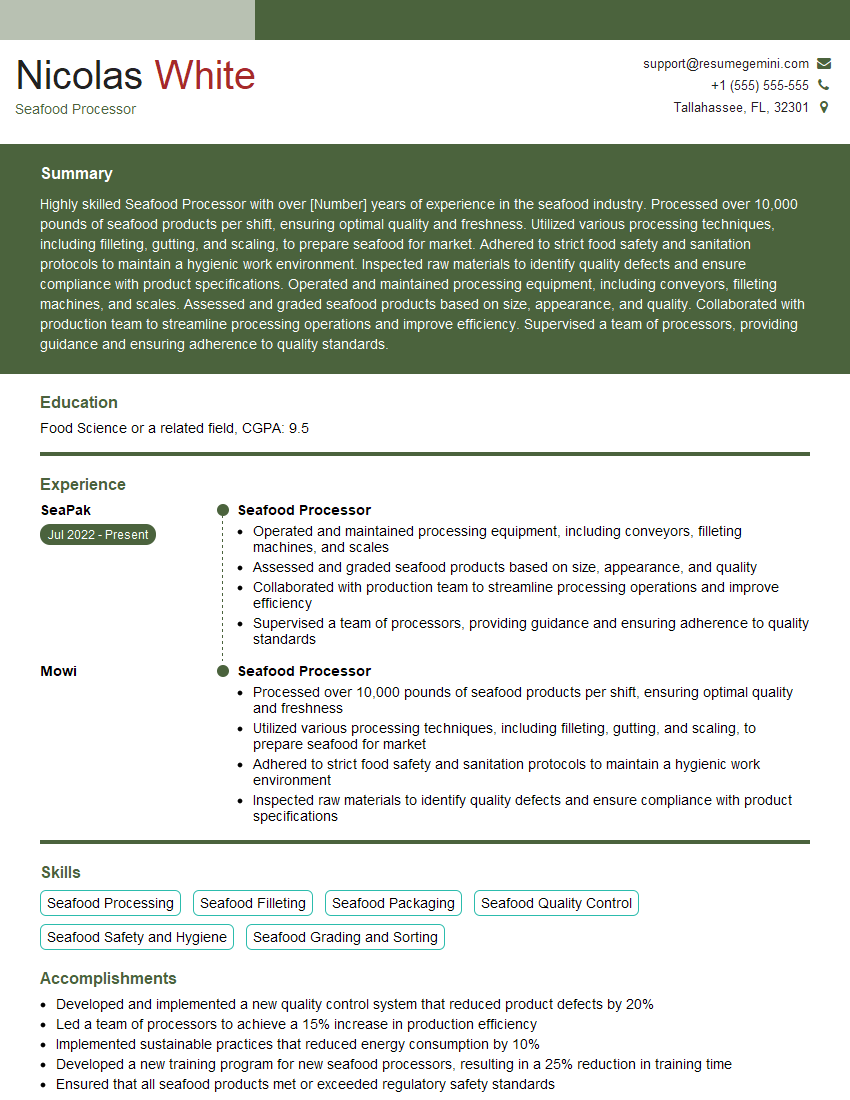
Mastering filleting and processing techniques is vital for career advancement in the seafood industry, opening doors to specialized roles and increased earning potential. A strong resume is your key to unlocking these opportunities. Crafting an ATS-friendly resume is crucial for getting your application noticed. We highly recommend using ResumeGemini to build a professional and effective resume that highlights your skills and experience. ResumeGemini provides examples of resumes tailored to the Filleting and Processing industry to help you create a compelling application that stands out from the competition.
Explore more articles
Users Rating of Our Blogs
Share Your Experience
We value your feedback! Please rate our content and share your thoughts (optional).
What Readers Say About Our Blog
Really detailed insights and content, thank you for writing this detailed article.
IT gave me an insight and words to use and be able to think of examples