The right preparation can turn an interview into an opportunity to showcase your expertise. This guide to Finish and Stain Application interview questions is your ultimate resource, providing key insights and tips to help you ace your responses and stand out as a top candidate.
Questions Asked in Finish and Stain Application Interview
Q 1. What types of stains are commonly used and what are their properties?
Wood stains are broadly categorized based on their pigment and binder. Common types include:
- Oil-based stains: These penetrate deeply into the wood, offering rich color and excellent durability. They tend to have a longer drying time and require mineral spirits for cleanup. Examples include penetrating oil stains and gel stains (thicker oil-based stains).
- Water-based stains: These are easier to clean up (using soap and water), dry faster, and produce less odor compared to oil-based stains. They offer good color penetration but might not be as durable or as deeply penetrating as oil-based options. They are often preferred for interior projects because of their environmental friendliness.
- Gel stains: These are thicker than both oil and water-based stains, and are excellent for filling grain and providing a more even color, especially on porous woods. They are typically oil-based but water-based options exist.
- Dye stains: These are highly transparent stains that penetrate wood very deeply, resulting in a natural look. They are less durable than pigment stains but can provide vibrant colors.
- Pigment stains: These are opaque stains that sit on the surface of the wood and provide more coverage than dyes. They are suitable for hiding imperfections but are less likely to show the wood grain naturally.
The properties of each stain will influence the final appearance and the longevity of the finish. For instance, an oil-based stain on a rustic pine will look different than a water-based stain on the same wood, and neither will look like a stain applied to a hardwood like mahogany.
Q 2. Explain the difference between oil-based and water-based stains.
The key differences between oil-based and water-based stains lie in their composition, application, drying time, durability, and cleanup:
- Solvent: Oil-based stains use mineral spirits as a solvent, while water-based stains use water. This significantly impacts cleanup. Oil-based stains require mineral spirits, while water-based stains simply need soap and water.
- Drying Time: Oil-based stains take much longer to dry (often several hours), whereas water-based stains dry considerably faster (often within an hour or two).
- Penetration: Oil-based stains typically penetrate wood more deeply, resulting in richer color and better durability. However, water-based stains still achieve good penetration.
- Durability: Oil-based stains often offer superior durability and resistance to scratches and wear, while water-based stains can be more susceptible to damage. However, with proper topcoating, water-based stains can be very durable.
- Odor: Oil-based stains have a strong, characteristic odor, while water-based stains have a much milder or almost imperceptible odor. This is often a significant factor for indoor projects.
Choosing between the two depends on the project’s needs and your preferences. For exterior projects or where maximum durability is required, oil-based might be preferable. For interior projects where speed and minimal odor are prioritized, water-based stains are excellent.
Q 3. Describe the process of preparing wood for staining.
Preparing wood for staining is crucial for achieving a uniform, professional finish. The process involves several key steps:
- Sanding: This step smooths the wood surface, removing any imperfections, splinters, or mill marks. Start with coarser grit sandpaper (e.g., 80-100 grit) to remove major imperfections and gradually progress to finer grits (e.g., 150-220 grit) for a smoother finish. The direction of sanding should follow the wood grain to avoid scratches.
- Cleaning: After sanding, thoroughly clean the wood surface to remove all dust particles. A tack cloth is ideal for this, ensuring no dust remains to interfere with stain penetration. A vacuum cleaner can be used beforehand to remove larger particles.
- Wood Filler (Optional): If there are any gaps, knots, or imperfections in the wood, use a wood filler to repair them. Allow the filler to dry completely and sand it smooth before staining.
- Pre-conditioning (For Certain Woods): Some woods, like redwood or cedar, are highly porous and absorb stain unevenly. A wood conditioner is applied to even out the absorption rate before staining, leading to a more uniform color.
Proper preparation is the foundation for a beautiful stain job. Skipping these steps can result in uneven color, blotchiness, and a less professional overall appearance.
Q 4. How do you achieve a uniform stain application?
Achieving a uniform stain application requires careful attention to detail. Here are some key strategies:
- Consistent Application: Apply the stain in the direction of the wood grain using even pressure. Avoid overlapping strokes excessively, as this can lead to uneven color.
- Proper Technique: The chosen method of application (brush, rag, spray) will influence uniformity. For example, wiping off excess stain immediately after application with a clean rag is crucial for preventing pooling and darker spots.
- Test Area: Always test the stain on a hidden area of the wood first to check for color and ensure it’s what you desire. This prevents unexpected results on the main surface.
- Multiple Thin Coats: Applying multiple thin coats is better than one thick coat. Allow each coat to dry fully before applying the next.
- Wood Type: Understanding your wood type and its porosity is important. Some woods absorb stain more readily than others.
Imagine trying to paint a wall with thick globs of paint – the result would be patchy. The same principle applies to stain. Thin, even coats are key.
Q 5. What are the different methods of stain application?
Several methods exist for applying stain, each with its own advantages and disadvantages:
- Brush Application: This offers good control and is suitable for detailed work, allowing you to work around curves and edges effectively. A natural-bristle brush is often preferred for oil-based stains, while synthetic brushes are better for water-based stains.
- Rag Application: This is a popular method, especially for wiping stains. It’s quick, easy, and often provides a more natural look, particularly for wiping stains. Fold and change rags frequently.
- Spray Application: This offers quick and even coverage, particularly suitable for large surfaces. However, it requires more specialized equipment and proper ventilation to prevent overspray and inhalation of fumes.
- Sponge Application: Sponges are a good option for applying stains to surfaces with complex details and recesses, ensuring a relatively even coating.
The best method depends on the project’s scope, the type of stain used, and your personal preference. Practice with a test piece before committing to a large project.
Q 6. How do you handle uneven stain absorption?
Uneven stain absorption is a common issue, often caused by variations in wood porosity, prior surface preparation, or improper stain application. Here’s how to handle it:
- Pre-conditioning: If the problem is due to porous wood, apply a wood conditioner to even out the absorption rate. This allows a more consistent color penetration.
- Sanding: If there are areas of uneven absorption, carefully sand the affected areas with fine-grit sandpaper to smooth the surface and remove excess stain. Clean thoroughly with a tack cloth before reapplying stain.
- Multiple Thin Coats: Apply thin coats, allowing each to dry completely before the next application. This allows the wood to absorb the stain evenly.
- Wiping Technique: Ensure proper wiping is done after application. Wipe uniformly and promptly to remove any excess. Some stains require a longer wiping time than others.
- Stain Color Adjustment: Sometimes, uneven absorption can create a desirable color variation. If this is the case, it may be best to accept the result and proceed to topcoating.
Remember that some level of natural variation is common in wood. Perfect uniformity is not always achievable, but by following these steps, you can minimize unevenness.
Q 7. Explain the process of applying a clear coat finish.
Applying a clear coat finish protects the stained wood, enhancing its durability and beauty. The process generally involves these steps:
- Sanding (Optional): Lightly sand the stained wood with fine-grit sandpaper (e.g., 220-320 grit) to smooth any raised grain or imperfections. This ensures a smoother finish for the clear coat.
- Cleaning: After sanding (if done), carefully clean the surface with a tack cloth to remove any dust or debris. Dust is the enemy of a clear coat finish.
- Application: Apply the clear coat according to the manufacturer’s instructions. Several methods are available, including brushing, spraying, or using a cloth. Thin coats are typically recommended. Multiple coats might be needed depending on the desired level of protection and the type of clear coat used. Allow sufficient drying time between coats.
- Drying and Curing: Allow the clear coat to dry and cure completely before handling or using the finished piece. This curing period allows the finish to fully harden and reach maximum durability.
Clear coats can be polyurethane (water-based or oil-based), varnish, shellac, or lacquer, each offering different properties. The choice depends on the level of protection, desired sheen (gloss, satin, matte), and the environment where the piece will be used.
Q 8. What are the different types of clear coats and their advantages?
Clear coats are the final protective layer applied after staining, sealing the wood and enhancing its beauty. They come in several types, each with its own advantages:
- Polyurethane: This is a very popular choice due to its durability, hardness, and water resistance. It comes in various forms: water-based (easier cleanup, less odor) and oil-based (more durable, sometimes a richer look). For example, I often use oil-based polyurethane on high-traffic furniture like dining tables.
- Lacquer: Lacquer dries incredibly fast, often within minutes, making it ideal for large projects where time is a factor. However, it’s less forgiving of mistakes because of its quick drying time, and it’s also less durable than polyurethane in some situations. I’ll use lacquer for projects where fast drying is key and a slightly less durable finish is acceptable.
- Shellac: A natural resin-based finish, shellac is known for its beautiful amber tone and its ability to build a deep, lustrous finish. It’s easier to repair and touch up than polyurethane or lacquer but is less water-resistant and more sensitive to alcohol and heat. Shellac is perfect for projects where a classic, warm look is desired, such as antique furniture restoration.
- Varnish: Varnish offers good protection and a relatively durable finish, often with a slightly softer feel than polyurethane. It can be used on a wide variety of woods. For instance, I’ve used varnish successfully on outdoor furniture projects requiring moderate protection from the elements.
Choosing the right clear coat depends heavily on the project’s requirements – the type of wood, the intended use of the finished piece, and the desired aesthetic.
Q 9. How do you ensure proper drying time for stains and finishes?
Proper drying time is crucial for a flawless finish. It depends on several factors including the type of stain or finish, the temperature, the humidity, and the thickness of the application. I always refer to the manufacturer’s instructions, as they provide the most accurate drying times under ideal conditions. However, I also use some general guidelines:
- Temperature and Humidity: Warmer temperatures and lower humidity generally speed up drying times. Conversely, cool, damp conditions prolong the drying process. I try to work in a temperature-controlled environment whenever possible.
- Thin Coats: Applying several thin coats is much better than applying one thick coat. Thinner coats dry faster and reduce the risk of runs and drips. I always follow the ‘thin coats’ approach.
- Proper Ventilation: Ensuring good ventilation helps speed up drying and prevents the buildup of harmful vapors. My workshop is well-ventilated to ensure quicker drying and worker safety.
- Patience is Key: Even if a finish appears dry to the touch, it may not be fully cured. I always allow ample time for complete curing before handling or using the finished piece, often allowing more than the manufacturer-recommended minimum drying time.
I often use a hygrometer to monitor the humidity in my workshop and adjust my finishing schedule accordingly. Ignoring drying times can lead to issues like trapping moisture, causing bubbling or cracking in the future.
Q 10. What safety precautions do you take when working with stains and finishes?
Safety is paramount when working with stains and finishes. They often contain solvents and chemicals that can be harmful if mishandled. My safety protocols include:
- Respiratory Protection: I always use a respirator designed for the specific chemicals I am working with. This protects my lungs from inhaling harmful fumes.
- Eye Protection: Safety glasses or a face shield are essential to prevent eye irritation or injury from splashes or overspray.
- Gloves: I wear appropriate gloves to protect my skin from contact with chemicals. Nitrile gloves are my go-to choice for most applications.
- Ventilation: Working in a well-ventilated area is essential to prevent the buildup of harmful vapors. My workshop has both natural and forced ventilation.
- Proper Disposal: I follow all local regulations for the proper disposal of leftover stains and finishes. I never pour them down the drain.
- Fire Safety: Many finishes are flammable. I keep flammable materials away from open flames and sparks, and I ensure I have a fire extinguisher readily available.
I always read the Safety Data Sheet (SDS) for each product before starting a project to understand its hazards and precautions.
Q 11. How do you troubleshoot common finishing problems such as bubbling, runs, or drips?
Troubleshooting finishing problems requires careful observation and a systematic approach.
- Bubbling: Bubbling usually indicates trapped moisture or air, which can stem from applying the finish over a damp surface or using too thick a coat. The solution is to lightly sand the affected area, clean it thoroughly, and reapply thin coats.
- Runs and Drips: Runs and drips are often caused by applying too much finish at once or by working too slowly. Thinning the finish slightly (as per manufacturer’s instructions) and using a more controlled application technique helps prevent this. Sometimes a quick wipe with a clean, soft cloth can minimize drips while the finish is still wet.
- Dust Nibs: Small specks of dust can stick to the wet finish. Prevention is key here – using a clean, dust-free environment, wiping down surfaces carefully before application, and perhaps working with a tack cloth will minimize this issue. Carefully removing the dust nibs after drying might be possible using fine sandpaper, but this requires great care.
In many cases, sanding and reapplying thin coats is the best solution, but sometimes a complete refinishing is necessary, especially with severe issues. It’s always better to prevent these problems through careful application than to try to correct them later.
Q 12. Describe your experience with different types of sanding techniques.
My experience with sanding techniques is extensive, encompassing various methods to achieve different results. I use:
- Hand Sanding: For smaller projects and detailed areas, hand sanding with various grits provides exceptional control and feel. It’s essential for achieving a smooth, even surface, especially in hard-to-reach areas.
- Random Orbital Sander: For larger surfaces, this offers efficiency and consistency. The random orbital motion minimizes swirl marks, creating a smoother finish. I use this for flat panels and large areas in furniture projects.
- Belt Sander: While powerful for removing large amounts of material quickly, belt sanders require skill to avoid creating gouges or uneven surfaces. I utilize belt sanders cautiously, mostly for heavy-duty tasks like leveling significant imperfections.
- Spindle Sander: Great for shaping curved edges and creating intricate details, I frequently use a spindle sander for fine detail work and shaping.
Each technique has its place, and I select the appropriate one based on the project’s size, material, and desired finish.
Q 13. How do you determine the appropriate grit of sandpaper for each stage of finishing?
Grit selection is paramount to achieve a smooth, flawless finish. The progression is crucial. I typically use a sequence like this:
- Coarse grits (e.g., 80-100 grit): Used initially to remove large imperfections, scratches, and previous coats.
- Medium grits (e.g., 120-180 grit): To level the surface further and remove scratches left by the coarser grit.
- Fine grits (e.g., 220-320 grit): To refine the surface and prepare it for staining or finishing.
- Ultra-fine grits (e.g., 400 grit and higher): For achieving a glass-smooth finish, often used between coats of clear finish.
The specific grits I use might vary depending on the wood type and the initial condition of the surface. For instance, harder woods might require less sanding, while softwoods might necessitate more steps to avoid gouges. Always sand with the grain, never against it, to avoid scratches.
Q 14. What is your experience with spray finishing equipment?
I have extensive experience with various spray finishing equipment, including:
- HVLP (High-Volume, Low-Pressure) spray guns: These offer excellent atomization and transfer efficiency, minimizing overspray and waste. They’re my preferred method for applying most finishes.
- Airless sprayers: Suitable for large projects requiring a quick application, they can handle thicker materials but require more cleanup. I typically use these for priming or applying base coats in larger projects.
- Aerosol cans: Convenient for small touch-up jobs, but less efficient for large-scale projects and can lead to uneven application if not used carefully.
Proper cleaning and maintenance of spray equipment is essential to ensure consistent performance and prevent clogging. I always thoroughly clean my spray gun immediately after each use, following the manufacturer’s instructions precisely. Different finishes require different cleaning solvents, so it’s essential to use the correct one.
Q 15. Describe your experience with different types of finishing tools (brushes, rollers, etc.)
Choosing the right finishing tool is crucial for a professional finish. My experience spans a wide range of tools, each suited to different applications. For example, high-quality natural bristle brushes are my go-to for applying oil-based stains and finishes. Their ability to hold and release the product evenly ensures a smooth, even coat, minimizing brush strokes. For larger surfaces, I rely on high-nap rollers designed for stain applications. These distribute the finish efficiently, but careful technique is needed to prevent streaking. For intricate details and hard-to-reach areas, I use smaller detail brushes, often synthetic, ensuring precise application. Finally, for spraying finishes, I use HVLP (High Volume Low Pressure) sprayers, which offer excellent control and minimize overspray for a very professional finish. The choice of tool depends heavily on the type of finish, the surface area, and the desired level of detail.
For example, a detailed hand-carved piece would absolutely necessitate the use of high-quality natural bristle brushes for meticulous application. Conversely, finishing a large deck or fence would benefit significantly from the efficiency of a high-nap roller and possibly even an HVLP sprayer.
Career Expert Tips:
- Ace those interviews! Prepare effectively by reviewing the Top 50 Most Common Interview Questions on ResumeGemini.
- Navigate your job search with confidence! Explore a wide range of Career Tips on ResumeGemini. Learn about common challenges and recommendations to overcome them.
- Craft the perfect resume! Master the Art of Resume Writing with ResumeGemini’s guide. Showcase your unique qualifications and achievements effectively.
- Don’t miss out on holiday savings! Build your dream resume with ResumeGemini’s ATS optimized templates.
Q 16. How do you maintain your finishing tools?
Maintaining finishing tools is paramount to their longevity and performance. Immediately after use, I thoroughly clean my brushes and rollers. For oil-based products, I use mineral spirits or a dedicated brush cleaner. Water-based finishes are cleaned with soap and water. Thorough rinsing is key; any residual product can harden and ruin the brush. After cleaning, I reshape natural bristle brushes and allow them to dry completely, often storing them in a dedicated brush sleeve to maintain their shape. Rollers are often disposable, but if reusable, they are meticulously cleaned and stored similarly. Sprayers require a thorough cleaning process, usually involving dismantling, cleaning each part individually, and then reassembling for storage. This prevents the clogging of nozzles and ensures consistent performance for the next project. Proper storage in a cool, dry place is crucial to prevent damage.
Q 17. Explain the importance of proper ventilation when working with stains and finishes.
Proper ventilation is absolutely non-negotiable when working with stains and finishes. These products often release volatile organic compounds (VOCs), which can be harmful if inhaled. These VOCs can cause eye, nose, and throat irritation, headaches, and in severe cases, more serious health problems. I always work in a well-ventilated area, ideally outdoors or in a space with a strong exhaust fan. If working indoors, I open all windows and doors to maximize airflow. Wearing a respirator specifically designed for paint and varnish fumes is also a critical safety measure. This protects my respiratory system and ensures a safe working environment. Neglecting proper ventilation can lead to serious health issues and compromise the quality of the finish due to uneven drying.
Q 18. How do you clean up after a finishing project?
Cleaning up after a finishing project is just as important as the application itself. I begin by disposing of used rags and paper towels properly, as they can spontaneously combust if not handled correctly – always soak them in water before discarding them in a sealed metal container. I then carefully clean my tools as mentioned before. Any spills are cleaned immediately to avoid staining the surface. For surfaces that may have overspray, I use a tack cloth to remove any dust or debris before the final coat has dried. Finally, I thoroughly clean my work area, ensuring all tools are stored and all materials are disposed of correctly. Protective clothing, such as gloves and safety glasses, are removed and cleaned. Following these steps ensures a safe and efficient completion of the project, leaving the surrounding environment uncompromised.
Q 19. What is your experience with color matching and mixing stains?
Color matching and mixing stains is a skill developed over time and requires a keen eye for detail and a good understanding of color theory. I have extensive experience in this area, often using color charts and sample boards to achieve precise matches. My process usually involves selecting the base stain color and then experimenting with tints and tones to achieve the desired hue. This may involve mixing different stains together or adding colorants to adjust the shade. I use small test patches to ensure the color is consistent before applying it to the main piece. For challenging color matches, I may use a spectrophotometer – a tool that measures the color accurately – to ensure precision. The final result is a carefully tailored finish, perfectly matched to the client’s preferences or the original design.
Q 20. How do you ensure the quality of your finished product?
Ensuring the quality of my finished product is a top priority. It starts with careful preparation of the wood surface – proper sanding, cleaning and priming when necessary. I meticulously follow the manufacturer’s instructions for each stain and finish, paying close attention to drying times and application techniques. I frequently inspect my work for imperfections, such as drips, runs, or uneven coverage. Multiple thin coats are always preferred over one thick coat for a professional, even finish. I use a variety of tools for inspection, such as good lighting and magnification to identify imperfections that might be easily overlooked. Finally, I strive for a finish that is both aesthetically pleasing and durable, protecting the wood from environmental factors and ensuring its longevity.
Q 21. What are the different types of wood and how do they affect stain absorption?
Different types of wood have varying densities and porosity, which significantly affects their stain absorption. Hardwoods, like oak and maple, are generally denser and less porous than softwoods, such as pine and fir. This means hardwoods often absorb less stain, requiring potentially more coats to achieve desired color saturation. Softwoods, due to their more open grain structure, absorb stain more readily, and sometimes unevenly, potentially requiring stain conditioners or wood fillers to ensure an even finish. Understanding the characteristics of each wood species is crucial for choosing the right stain and applying it effectively. For example, applying a stain to oak will require a different technique compared to applying it to pine, to account for the varying absorption rates. This also impacts the final appearance of the stain and its longevity.
Q 22. How do you prepare different types of surfaces (wood, metal, etc.) for finishing?
Surface preparation is crucial for a successful finish. It ensures proper adhesion and a long-lasting, beautiful result. The process varies significantly depending on the material.
- Wood: Wood preparation involves sanding to achieve the desired smoothness. The grit of sandpaper should progressively increase (e.g., 80, 120, 180, 220) to remove imperfections and create a consistent surface. Dust removal between each grit is critical, usually with a tack cloth or compressed air. For hardwoods, extra care is needed to avoid creating deep scratches. Knots in the wood often require additional attention to prevent bleed-through of resin.
- Metal: Metal surfaces usually require cleaning to remove rust, grease, or other contaminants. This could involve chemical cleaning agents, wire brushing, or sandblasting, depending on the extent of the contamination and the metal’s type. After cleaning, the surface might need to be primed to prevent rust and promote better adhesion of the finish.
- Plastics: Plastics require specific cleaning agents to remove any mold release agents or other surface contaminants which can interfere with the adhesion of a finish. Often a light scuffing with fine sandpaper or a scotchbrite pad will improve the surface for improved adhesion. Many plastics will benefit from a plastic specific adhesion promoter.
Proper surface preparation is not just about aesthetics; it’s about preventing future problems like peeling or chipping. Think of it like preparing a wall for painting – you wouldn’t paint over a dirty, uneven surface, would you?
Q 23. What is your experience with finishing different types of furniture?
My experience spans a wide range of furniture styles and materials. I’ve worked with everything from antique restoration projects requiring meticulous attention to detail – like refinishing a delicate Victorian writing desk – to modern pieces requiring a sleek, contemporary finish. I am equally comfortable with applying traditional techniques, such as hand-rubbed oil finishes, and modern techniques, like high-performance catalyzed lacquers. For example, I recently completed a project refinishing a set of mid-century modern dining chairs. This involved carefully stripping the old finish, repairing minor damage, and applying a new stain and clear coat to restore their original beauty and enhance their durability. Another project involved finishing a custom-built entertainment center using a durable polyurethane finish for protection against daily wear and tear. I also have extensive experience in applying finishes to various materials such as wood, metal, and even some plastics
Q 24. Describe a time you had to troubleshoot a complex finishing problem.
One challenging project involved a custom-made mahogany table with an unusual reaction to the stain. The stain was blotchy and uneven, despite following all standard procedures. After investigating, I discovered that there were variations in the wood’s density. Some areas absorbed the stain more quickly than others. My solution involved pre-conditioning the wood with a wood conditioner to even out the absorption rate. This ensured that the stain was absorbed evenly, producing a consistent and professional finish. This problem highlighted the importance of carefully assessing the wood and adjusting techniques as needed for optimal results. It emphasizes the need for adaptability and problem-solving skills in this field.
Q 25. What is your understanding of VOC regulations and their impact on finishing practices?
VOC (Volatile Organic Compound) regulations are increasingly stringent, and rightfully so, focusing on reducing air pollution and protecting the environment and workers’ health. These regulations limit the amount of VOCs allowed in finishing products. This has led to the development of low-VOC and zero-VOC alternatives. My understanding includes the various compliance requirements in different jurisdictions and the impact on product selection. For example, I’m familiar with using water-based stains and sealers which have significantly lower VOCs compared to traditional solvent-based products without compromising the quality of the finish. It also influences the working environment – needing proper ventilation systems and protective equipment.
Q 26. How do you stay up-to-date with the latest finishing techniques and technologies?
Staying current in this field requires continuous learning. I regularly attend workshops and seminars, read industry publications such as Fine Woodworking and Wood Finishing & Refinishing, and actively participate in online forums and communities where professionals share knowledge and best practices. I also experiment with new products and techniques in my personal projects to ensure I remain proficient with the latest innovations.
Q 27. What are your salary expectations?
My salary expectations are in line with the industry standard for someone with my experience and skillset, considering the specific requirements and responsibilities of this position. I’m open to discussing this further in more detail.
Q 28. Why are you interested in this position?
I’m interested in this position because it offers an opportunity to contribute my expertise to a company that values quality and craftsmanship. The chance to work on challenging projects, collaborate with skilled professionals, and continue to grow my skills within a dynamic environment is very appealing. Your company’s reputation for excellence is highly respected in the industry, and I’m confident that my skills and experience would be a valuable asset to your team.
Key Topics to Learn for Finish and Stain Application Interview
- Wood Preparation: Understanding the importance of surface preparation, including sanding techniques, wood filler application, and cleaning methods for optimal finish adhesion.
- Stain Selection and Application: Knowledge of different stain types (water-based, oil-based, gel), their properties, application methods (brush, rag, spray), and achieving desired color and finish.
- Finish Selection and Application: Understanding various finish types (polyurethane, lacquer, varnish, shellac), their characteristics, application techniques, and the impact on durability and appearance.
- Troubleshooting Common Issues: Identifying and resolving problems such as uneven application, drips, runs, bubbles, dust nibs, and achieving a smooth, consistent finish.
- Safety Procedures: Understanding and adhering to safety protocols related to handling finishes and stains, including proper ventilation, personal protective equipment (PPE), and waste disposal.
- Tools and Equipment: Familiarity with various tools and equipment used in finish and stain application, including brushes, sprayers, sanders, and safety equipment.
- Different Wood Types and Their Properties: Understanding how different wood species react to stains and finishes, and adapting techniques accordingly.
- Finishing Techniques: Mastering techniques like wiping, spraying, and brushing to achieve specific effects (e.g., distressed look, high-gloss finish).
- Environmental Considerations: Awareness of environmentally friendly finishing options and sustainable practices.
- Project Management: Planning and executing finishing projects efficiently, including time management and material estimation.
Next Steps
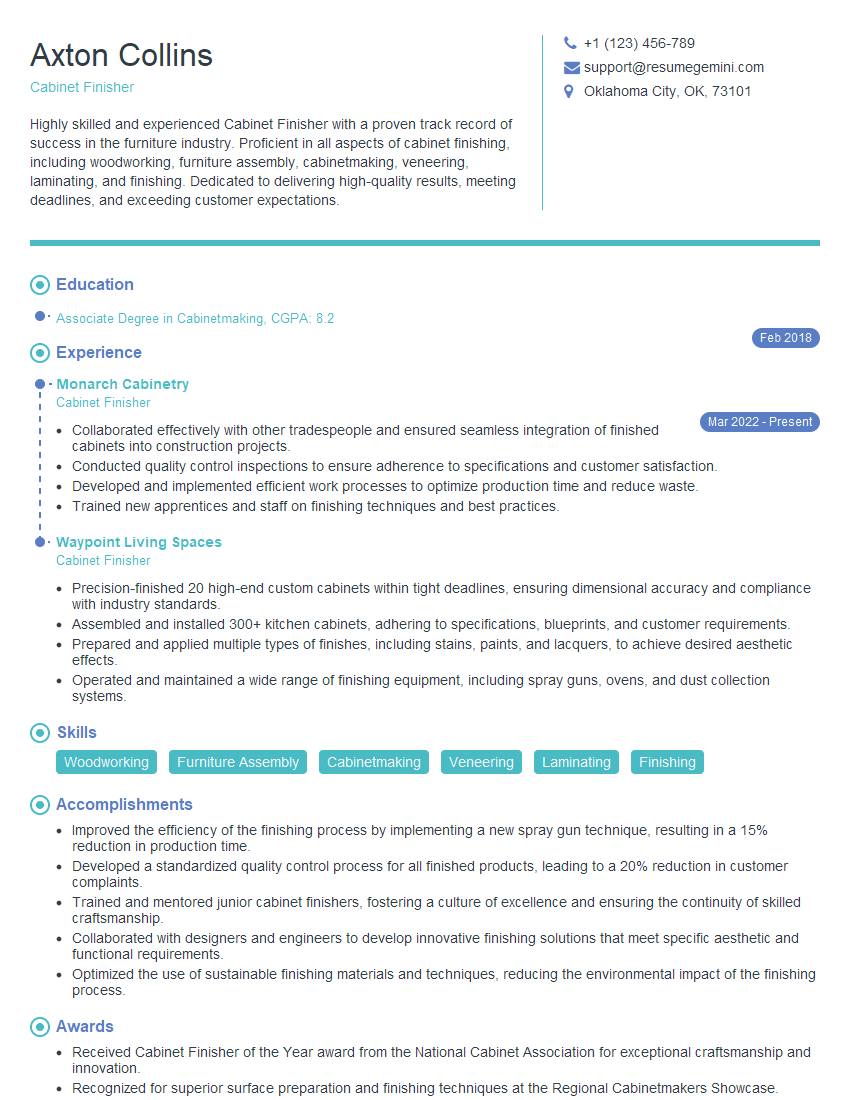
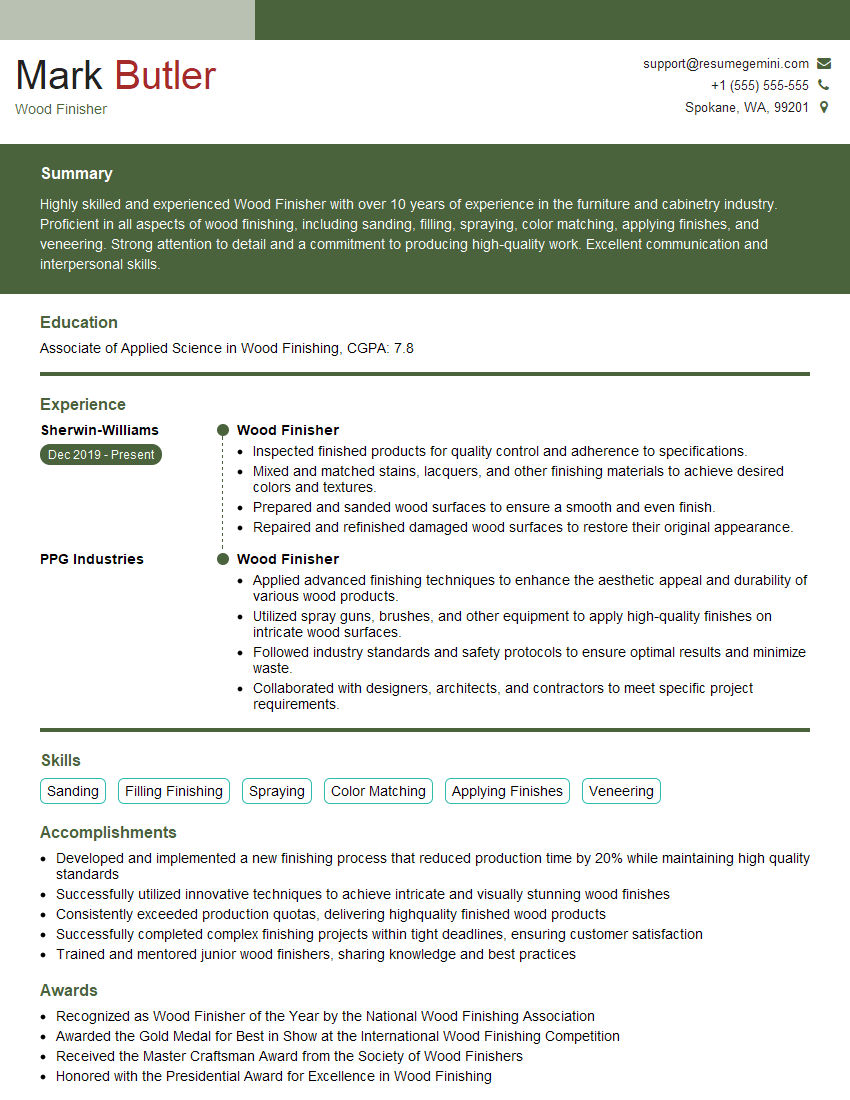
Mastering finish and stain application is crucial for career advancement in woodworking, furniture making, and related fields. A strong understanding of these techniques demonstrates professionalism, attention to detail, and a commitment to quality craftsmanship – highly sought-after attributes by employers. To boost your job prospects, create an ATS-friendly resume that highlights your skills and experience effectively. ResumeGemini is a trusted resource to help you build a professional and impactful resume. Examples of resumes tailored to Finish and Stain Application are available to help guide you.



Explore more articles
Users Rating of Our Blogs
Share Your Experience
We value your feedback! Please rate our content and share your thoughts (optional).
What Readers Say About Our Blog
I Redesigned Spongebob Squarepants and his main characters of my artwork.
https://www.deviantart.com/reimaginesponge/art/Redesigned-Spongebob-characters-1223583608
IT gave me an insight and words to use and be able to think of examples
Hi, I’m Jay, we have a few potential clients that are interested in your services, thought you might be a good fit. I’d love to talk about the details, when do you have time to talk?
Best,
Jay
Founder | CEO