Cracking a skill-specific interview, like one for Fire Protection Awareness, requires understanding the nuances of the role. In this blog, we present the questions you’re most likely to encounter, along with insights into how to answer them effectively. Let’s ensure you’re ready to make a strong impression.
Questions Asked in Fire Protection Awareness Interview
Q 1. Explain the different classes of fire and the appropriate extinguishing agents for each.
Fires are classified into different classes based on the type of fuel involved, which dictates the most effective extinguishing agent. Understanding these classes is crucial for selecting the appropriate fire extinguisher and implementing effective fire safety measures.
- Class A: These fires involve ordinary combustible materials like wood, paper, cloth, and plastics. They are extinguished by cooling the fuel below its ignition temperature. Water is the primary extinguishing agent.
- Class B: These fires involve flammable liquids like gasoline, oil, grease, and solvents. Extinguishing Class B fires focuses on removing the oxygen or interrupting the chain reaction. Carbon dioxide (CO2), dry chemical powder, and foam are effective agents.
- Class C: These fires involve energized electrical equipment. Never use water on a Class C fire! The primary concern is preventing electrical shock. CO2 and dry chemical powder are preferred extinguishing agents as they are non-conductive.
- Class D: These fires involve combustible metals like magnesium, titanium, and sodium. These fires require specialized extinguishing agents like dry powder designed for metal fires, as water can often exacerbate the reaction.
- Class K: These fires involve cooking oils and fats. Class K fires require specialized extinguishing agents designed to prevent reignition. Wet chemical agents are often used for this class of fire.
For example, a grease fire in a kitchen (Class K) would require a wet chemical extinguisher, while a paper fire in an office (Class A) would be best tackled with a water extinguisher. Using the wrong extinguisher can be ineffective and even dangerous.
Q 2. Describe the components of a typical fire alarm system.
A typical fire alarm system comprises several interconnected components working together to detect and alert occupants of a fire. Think of it as a comprehensive early warning system.
- Smoke Detectors: These detect smoke particles in the air, either through ionization or photoelectric technology. Ionization detectors are quicker to detect flaming fires, while photoelectric detectors are better at detecting smoldering fires.
- Heat Detectors: These detect a significant rise in temperature, triggering the alarm. They are useful in areas where smoke detectors might be prone to false alarms, such as kitchens.
- Manual Call Points: These are manually activated break-glass buttons that can be used to trigger the alarm in case of a fire.
- Control Panel: The central control panel receives signals from all detectors and call points, indicating the location and type of alarm.
- Sounders/Visual Alarm Devices: These provide audible and/or visual warnings to alert occupants of a fire. Visual alarms are particularly important for people with hearing impairments.
- Notification Appliances: These provide more sophisticated notification methods, including voice announcements guiding occupants to safety.
Imagine a scenario where a smoke detector in a server room detects smoke. The signal is transmitted to the control panel, activating the sounders and potentially a voice announcement instructing everyone to evacuate via the nearest exit.
Q 3. What are the key elements of a fire evacuation plan?
A comprehensive fire evacuation plan is critical for ensuring the safe and efficient evacuation of a building in case of a fire. It should be well-rehearsed and easily accessible to all occupants.
- Designated Assembly Points: Clearly marked and safe locations away from the building where everyone can gather after evacuation.
- Evacuation Routes: Clearly marked escape routes, free from obstructions, leading to the designated assembly points.
- Floor Plans with Escape Routes: Easily accessible floor plans showing evacuation routes and assembly points.
- Emergency Procedures: Step-by-step instructions for actions to take in case of a fire, including how to activate the alarm and evacuation procedures.
- Emergency Contacts: A list of emergency contact numbers for fire services, building management, and other relevant parties.
- Training and Drills: Regular training and evacuation drills to familiarize occupants with procedures and ensure preparedness.
- Responsibilities: Clearly assigned responsibilities for fire wardens or designated personnel to assist in evacuation and account for everyone.
A well-structured plan ensures a smooth and orderly evacuation, minimizing panic and confusion. Regular drills help to reinforce the plan and identify any potential weaknesses.
Q 4. How do you conduct a fire risk assessment?
A fire risk assessment involves identifying potential fire hazards, evaluating the risks associated with those hazards, and implementing control measures to minimize those risks. It’s a systematic process.
- Identify Hazards: This involves systematically walking through the premises, identifying potential fire sources (e.g., flammable materials, electrical equipment, heating systems) and assessing building features that might hinder evacuation (e.g., narrow corridors, blocked exits).
- Assess Risks: For each identified hazard, assess the likelihood of a fire occurring and the potential severity of its consequences (e.g., injuries, property damage). Consider factors such as the amount of flammable materials present, the proximity of fire hazards to escape routes, and the effectiveness of existing fire safety measures.
- Evaluate Existing Controls: Determine if current safety measures (e.g., fire extinguishers, sprinklers, alarms) are adequate to control the identified risks.
- Develop and Implement Control Measures: If the risks are unacceptable, develop and implement appropriate control measures. This could include installing fire suppression systems, improving fire detection systems, providing fire safety training, or implementing better housekeeping practices.
- Review and Update: Fire risk assessments should be reviewed and updated regularly to reflect changes in the workplace, new equipment, or any changes in the level of risk.
Consider a factory with lots of flammable materials. The assessment would highlight this hazard, assess the risk of a large fire, and recommend measures such as improved storage practices, more fire extinguishers, and regular fire drills.
Q 5. What are the common causes of workplace fires?
Workplace fires have various causes, often stemming from negligence or a lack of proper safety precautions. Understanding common causes is crucial for prevention.
- Electrical Faults: Overloaded circuits, faulty wiring, damaged equipment, and poor electrical maintenance are frequent culprits.
- Smoking: Discarded cigarettes or smoking in unauthorized areas can easily ignite flammable materials.
- Heating Equipment: Malfunctioning heaters, improperly stored flammable materials near heaters, and blocked ventilation around heaters.
- Hot Work: Activities like welding, cutting, and soldering can generate sparks or embers that ignite flammable materials unless proper precautions are taken.
- Flammable Materials: Improper storage, handling, and disposal of flammable liquids, gases, and solids.
- Arson: Deliberate acts of fire setting are unfortunately a reality and should be considered as a possible cause.
For example, a fire in an office building might be caused by an overloaded power strip, while a fire in a workshop could stem from sparks during welding if proper precautions weren’t taken.
Q 6. Explain the principles of fire suppression systems (e.g., sprinklers, foam systems).
Fire suppression systems are designed to automatically or manually control and extinguish fires. They are a crucial element of fire safety.
- Sprinkler Systems: These systems consist of a network of pipes containing water, activated by heat sensors or a fire alarm system. When activated, water is released to suppress the fire by cooling the burning material below its ignition temperature. They are highly effective and save many lives annually. Different types of sprinkler heads exist to match various applications (e.g., quick response, pendent, upright).
- Foam Systems: Foam systems are used to extinguish Class B fires involving flammable liquids. Foam creates a layer on the surface of the liquid, preventing oxygen from reaching the fuel and smothering the flames. These systems are frequently found in areas where large quantities of flammable liquids are stored.
- CO2 Systems: Carbon dioxide (CO2) systems use CO2 gas to displace oxygen and interrupt the combustion process. They are suitable for extinguishing Class B and C fires and are often used in areas with sensitive equipment or where water could cause damage. They require appropriate ventilation following deployment.
- Dry Chemical Systems: Dry chemical systems utilize a powder that interrupts the chemical chain reaction of combustion. They are effective on Class A, B, and C fires.
A warehouse storing flammable liquids would benefit from a foam system, while a server room would likely have a CO2 system to protect sensitive electronics. Understanding the strengths and limitations of each system is crucial for selecting the appropriate one for a particular application.
Q 7. What are the legal and regulatory requirements for fire safety in your region?
Legal and regulatory requirements for fire safety vary by region and jurisdiction. It’s crucial to consult local codes and regulations for specific details, but some common themes include:
- Fire Risk Assessments: Regular fire risk assessments are mandatory for most workplaces to identify and mitigate fire risks.
- Fire Alarm Systems: Installation and maintenance of compliant fire alarm systems are usually legally required.
- Emergency Lighting: Provision of adequate emergency lighting for safe evacuation during power failures.
- Fire Extinguishers: Proper provision, placement, and regular inspection and maintenance of appropriate fire extinguishers.
- Fire Evacuation Plans: Development and regular practice of comprehensive fire evacuation plans.
- Fire Safety Training: Provision of appropriate fire safety training for all employees or building occupants.
- Records and Documentation: Maintenance of records for all fire safety measures, inspections, and training.
- Building Codes and Regulations: Adherence to local building codes and fire safety regulations during construction and operation.
Failure to comply with these regulations can result in significant fines, legal action, and potential endangerment of life and property. Consulting with a fire safety professional is strongly advised to ensure full compliance.
Q 8. How do you identify and mitigate fire hazards in a building?
Identifying and mitigating fire hazards requires a systematic approach. Think of it like a detective investigating a crime scene, but instead of a crime, it’s a potential fire. We start by conducting a thorough building survey, looking for anything that could potentially ignite or fuel a fire.
- Identifying Hazards: This involves checking for things like improper storage of flammable materials (think stacked cardboard boxes near a heater), damaged electrical wiring (frayed cords or overloaded outlets), blocked fire exits (furniture obstructing pathways), and lack of or improperly maintained fire suppression systems (sprinklers, extinguishers).
- Mitigating Hazards: Once identified, hazards must be addressed. This could involve relocating flammable materials, repairing or replacing faulty wiring, removing obstructions from exits, ensuring fire suppression systems are regularly inspected and serviced, and implementing a comprehensive fire safety plan. For example, if we find a large pile of combustible waste near an open flame, we immediately remove the waste to a designated, secure area away from potential ignition sources.
Regular inspections, employee training, and emergency drills are also crucial for mitigating risks. Think of it like preventative medicine – it’s far better to prevent a fire than to fight one.
Q 9. Describe your experience with fire code compliance.
My experience with fire code compliance spans over 10 years, encompassing various roles from conducting inspections to developing and implementing safety programs for diverse building types, including high-rise residential, commercial office spaces, and industrial facilities. I’m proficient in interpreting and applying relevant codes like the NFPA (National Fire Protection Association) standards, ensuring facilities meet all regulatory requirements.
For example, I was instrumental in helping a large manufacturing plant achieve full fire code compliance by implementing a comprehensive program that included upgrades to their sprinkler system, improved fire alarm system maintenance protocols, and the development of a detailed evacuation plan with regular drills. This not only reduced their insurance premiums significantly but also created a safer working environment for their employees.
Q 10. What are the different types of fire detectors and their applications?
Fire detectors are the early warning system in a building’s fire protection strategy. Different types are suited for different applications.
- Ionization Smoke Detectors: These are highly sensitive to fast-flaming fires that produce small smoke particles. They’re often used in bedrooms and hallways, where a quick response is critical. Think of them as being very responsive to the initial stages of a fire.
- Photoelectric Smoke Detectors: These are more sensitive to slow-smoldering fires that produce larger smoke particles. They’re good for areas with potential for smoldering fires, such as kitchens or garages.
- Heat Detectors: These trigger an alarm when they sense a significant rise in temperature. They are often used in areas where smoke detectors might be prone to false alarms, such as kitchens or areas with high humidity.
- Flame Detectors: These detect the infrared or ultraviolet radiation emitted by flames. They’re typically used in high-risk industrial settings or areas with potential for fast-spreading fires.
- Combination Smoke/Heat Detectors: These offer dual protection, combining the functionalities of smoke and heat detection.
The selection of fire detectors depends on the specific hazards present in a building and the nature of the occupancy.
Q 11. Explain the PASS method for using a fire extinguisher.
The PASS method is a simple yet effective acronym for using a fire extinguisher. It stands for:
- P – Pull: Pull the pin on the fire extinguisher. This releases the locking mechanism.
- A – Aim: Aim the nozzle at the base of the fire. This is crucial; you want to extinguish the fuel source, not just the flames.
- S – Squeeze: Squeeze the lever slowly and steadily. This releases the extinguishing agent.
- S – Sweep: Sweep the nozzle from side to side, covering the base of the fire. This ensures that all burning materials are extinguished.
It’s vital to remember that fire extinguishers are for small, contained fires only. If the fire is too large or spreading rapidly, evacuate immediately and call emergency services.
Q 12. How do you ensure the proper maintenance of fire protection equipment?
Proper maintenance of fire protection equipment is crucial for ensuring its effectiveness in an emergency. It’s like regularly servicing your car to keep it running smoothly. A neglected fire suppression system is a potential disaster waiting to happen.
This involves regular inspections and testing, often following manufacturer’s recommendations and local regulations. For example, we would ensure that:
- Fire extinguishers are inspected monthly, visually checked for damage and pressure, and fully serviced annually.
- Sprinkler systems are tested regularly, including flow tests and inspections to ensure the pipes are clear, heads are unobstructed, and the system is fully operational.
- Fire alarms have their batteries tested, sensors cleaned, and the system tested regularly to ensure reliable performance.
- Emergency lighting is inspected to confirm that batteries are functional and the lights will work during a power outage.
Detailed records of all inspections and maintenance activities should be meticulously kept for auditing and compliance purposes.
Q 13. What is your understanding of NFPA standards?
The National Fire Protection Association (NFPA) develops and publishes widely adopted fire safety standards. These standards are considered the gold standard within the fire protection industry, providing guidelines and requirements for everything from fire prevention and suppression to emergency response procedures. My understanding of NFPA standards is comprehensive, encompassing various codes like NFPA 10 (Standard for Portable Fire Extinguishers), NFPA 13 (Standard for the Installation of Sprinkler Systems), and NFPA 72 (National Fire Alarm and Signaling Code).
For instance, when designing a fire protection system for a new building, I utilize NFPA standards to determine the appropriate type and placement of fire extinguishers, sprinklers, and smoke detectors based on occupancy type and potential hazards. These standards are not mere suggestions; they are essential for meeting regulatory compliance and creating a safe environment.
Q 14. Describe your experience with fire investigation techniques.
My experience with fire investigation involves systematically identifying the origin and cause of fires. It’s like solving a complex puzzle, carefully piecing together evidence to determine what happened. This often involves working collaboratively with law enforcement and insurance adjusters. The process typically includes:
- Scene Examination: A careful and methodical examination of the fire scene, looking for signs of the fire’s origin and direction of travel. This requires understanding fire dynamics and patterns.
- Evidence Collection: Collecting samples such as debris, electrical components, and accelerants for laboratory analysis. The integrity of the evidence chain of custody is vital.
- Witness Interviews: Gathering information from witnesses who may have observed the fire or events leading up to it.
- Report Writing: Preparing a detailed report that summarizes the findings of the investigation and outlines the probable cause of the fire.
For example, in a recent case, I determined the cause of a fire in a restaurant kitchen by carefully examining the layout and appliance positioning, coupled with analyzing electrical and gas system functionality and witness statements. I was able to conclude that a malfunctioning deep fryer was the cause.
Q 15. How do you communicate fire safety procedures to employees or residents?
Communicating fire safety procedures effectively requires a multi-faceted approach, ensuring information reaches everyone and is easily understood. I begin by tailoring my communication strategy to the audience – employees require a different approach than residents in a residential building.
For employees: I utilize a combination of methods: mandatory training sessions with interactive elements like quizzes and demonstrations, easily accessible online resources (including videos and FAQs), and regular email reminders about key procedures. Posters and signage in high-traffic areas serve as visual reminders. For example, I might conduct a hands-on session showing how to use fire extinguishers, followed by a written test to ensure comprehension.
For residents: Clear, concise information is key. I focus on simple, visually appealing materials like pamphlets, infographics, and easily understood instructions in multiple languages if necessary. Regular community meetings offer opportunities for Q&A and address specific concerns. For instance, I might organize a fire safety demonstration in the building’s common area, followed by a question-and-answer session.
Crucially, I emphasize active participation and encourage questions to ensure everyone feels comfortable and understands their role in fire safety.
Career Expert Tips:
- Ace those interviews! Prepare effectively by reviewing the Top 50 Most Common Interview Questions on ResumeGemini.
- Navigate your job search with confidence! Explore a wide range of Career Tips on ResumeGemini. Learn about common challenges and recommendations to overcome them.
- Craft the perfect resume! Master the Art of Resume Writing with ResumeGemini’s guide. Showcase your unique qualifications and achievements effectively.
- Don’t miss out on holiday savings! Build your dream resume with ResumeGemini’s ATS optimized templates.
Q 16. What is your experience with emergency response planning?
My experience in emergency response planning encompasses developing and implementing comprehensive plans for various building types and occupancy scenarios. This involves a detailed risk assessment to identify potential hazards, defining evacuation routes and assembly points, designating roles and responsibilities for staff, and coordinating with local emergency services. I’ve been involved in creating plans for high-rise buildings, industrial facilities, and residential complexes.
For example, in a recent project for a large office building, I collaborated with the building management and fire department to develop a detailed plan including floor-specific evacuation diagrams, emergency contact lists, and a robust communication system to ensure swift and efficient evacuation during an emergency. The plan included regular drills and training exercises to keep staff prepared. We also incorporated elements for managing individuals with disabilities, ensuring their safe evacuation. This process involved close coordination with accessibility specialists to ensure the plan adequately addressed their needs.
Q 17. How do you handle a fire emergency situation?
Handling a fire emergency requires a calm and systematic approach. My actions would follow the RACE protocol: Rescue, Alarm, Confine, Extinguish/Evacuate.
Rescue: Prioritize the evacuation of people in immediate danger. Assisting those with mobility issues or needing extra help is critical.
Alarm: Activate the building’s fire alarm system immediately and notify emergency services (calling the relevant number for your region).
Confine: If possible and safe, attempt to contain the fire by closing doors and windows to limit its spread. This helps to slow down the fire’s progression and buy crucial time.
Extinguish/Evacuate: If the fire is small and contained and you are trained and equipped to do so, attempt to extinguish it using a fire extinguisher. Otherwise, immediately evacuate the building, following established evacuation routes and assembling at the designated assembly point.
Following evacuation, I would ensure an accurate headcount and assist emergency responders with information about the situation, including the fire’s location and any potential hazards.
Q 18. What are the different types of fire extinguishers and their uses?
Different fire extinguishers are classified based on the type of fire they’re designed to combat. Understanding these classes is crucial for effective fire suppression.
Class A: Used for ordinary combustibles like wood, paper, cloth. They typically use water or a water-based agent.
Class B: Used for flammable liquids like gasoline, oil, grease. They usually employ carbon dioxide (CO2), dry chemical, or foam.
Class C: Used for electrical fires involving energized electrical equipment. CO2 or dry chemical extinguishers are preferred because they are non-conductive.
Class D: Used for combustible metals like magnesium, titanium. These fires require specialized extinguishers with agents designed for these materials.
Class K: Used for cooking oils and fats in commercial kitchens. They are designed to cool and suppress the fire without spreading the burning oil.
It’s important to remember the PASS method for using a fire extinguisher: Pull the pin, Aim at the base of the fire, Squeeze the lever, Sweep from side to side.
Q 19. Explain the importance of fire drills and their frequency.
Fire drills are essential for preparing occupants for a real fire emergency. They help familiarize individuals with evacuation routes, procedures, and assembly points, reducing panic and improving response time during an actual fire. Regular drills ensure that these procedures become second nature.
The frequency of fire drills depends on the occupancy type and local regulations. Generally, high-risk facilities like hospitals, schools, and industrial plants require more frequent drills (e.g., monthly or quarterly). Other buildings, like offices or apartment complexes, might have drills semi-annually or annually. Post-drill reviews are important to identify areas for improvement in the evacuation plan. For instance, if bottlenecks are identified during a drill, adjustments might be made to improve the flow of people during evacuation.
Q 20. What are some common fire safety violations you’ve encountered?
Throughout my career, I’ve encountered various common fire safety violations. These include:
Blocked fire exits: Obstructions like storage boxes, furniture, or equipment blocking escape routes.
Improper storage of flammable materials: Incorrectly stored chemicals, fuels, or other flammable substances.
Malfunctioning fire alarms and suppression systems: Systems not properly maintained or tested.
Lack of fire extinguishers or improperly placed extinguishers: Insufficient number of extinguishers or extinguishers located in inaccessible areas.
Inadequate fire safety training: Employees or residents not receiving sufficient training on fire safety procedures.
Smoking violations: Smoking in unauthorized areas or improper disposal of smoking materials.
Addressing these violations promptly is crucial to prevent potential fire hazards and ensure the safety of occupants. This includes immediate corrective actions, ensuring proper training is provided, and implementing ongoing preventative measures to avoid future violations.
Q 21. How do you determine the appropriate type of fire suppression system for a given building?
Determining the appropriate fire suppression system for a building is a complex process requiring a thorough risk assessment. Factors to consider include:
Occupancy type: Residential, commercial, industrial, healthcare facilities have different risk profiles.
Building construction: Materials used in construction influence fire spread and require different suppression strategies.
Height and size of the building: High-rise buildings require more sophisticated systems.
Type of hazards present: Flammable liquids, electrical equipment, or specific chemicals will dictate the choice of system.
Local codes and regulations: Building codes dictate minimum requirements for fire protection.
For example, a high-rise office building would likely require a combination of sprinkler systems, fire alarms, and standpipe systems. A chemical plant, on the other hand, would necessitate a more specialized system to deal with the specific hazards present. The assessment involves analyzing potential fire scenarios, calculating water supply needs, and ensuring the chosen system is integrated effectively with other fire safety elements.
Q 22. What is your understanding of fire spread and containment strategies?
Understanding fire spread involves recognizing the fire triangle (fuel, heat, oxygen) and how they interact. Containment strategies focus on interrupting at least one element of this triangle to stop the fire’s progression.
Fire spreads through several mechanisms: Direct flame contact, where flames directly ignite nearby combustible materials; Radiant heat, where heat energy emitted from the fire causes ignition; Convection, where hot gases and smoke rise and spread the fire; and Conduction, where heat transfers through direct contact between materials.
Containment strategies include:
- Active fire suppression systems: Sprinklers, fire extinguishers, and fire hoses directly combat the fire by removing heat or fuel.
- Passive fire protection: Compartmentalization, fire-resistant materials, and fire barriers prevent the spread by limiting oxygen supply, heat transfer, and the path of flames.
- Evacuation procedures: Removing people from the area prevents injuries and facilitates fire suppression efforts.
For example, in a warehouse fire, strategically placed sprinklers (active) combined with fire-rated walls separating different storage zones (passive) significantly limit the fire’s spread, allowing firefighters to focus on extinguishment.
Q 23. Explain the role of compartmentalization in fire safety.
Compartmentalization is a crucial passive fire protection strategy that divides a building into smaller, self-contained areas. These compartments are designed to resist the spread of fire and smoke for a specific period, allowing for safe evacuation and enabling firefighters to control the blaze more effectively.
Imagine a building like a set of interconnected boxes. Each ‘box’ (compartment) is created using fire-resistant walls, floors, doors, and other barriers. If a fire starts in one box, the barriers restrict the spread to adjacent areas, buying valuable time for evacuation and fire suppression.
Key aspects of effective compartmentalization include:
- Fire-rated construction: Walls, floors, and ceilings must meet specific fire resistance ratings, delaying the penetration of fire and heat.
- Fire-rated doors and windows: These prevent the spread of fire and smoke between compartments.
- Smoke control systems: These systems manage smoke movement and prevent its spread to other areas, improving visibility and survivability.
For instance, a hospital’s design incorporates compartmentalization to protect patients and staff by containing a fire within a specific wing or floor, limiting its impact on the entire facility.
Q 24. Describe your experience with fire safety inspections.
My experience with fire safety inspections spans over [Number] years, encompassing a wide variety of building types, from residential structures to high-rise commercial buildings and industrial facilities.
Inspections typically involve a thorough visual examination of fire protection systems and equipment, including:
- Sprinkler systems: Checking for proper water pressure, unobstructed sprinkler heads, and the overall integrity of the piping.
- Fire alarms and detection systems: Testing the functionality of smoke detectors, heat detectors, and manual pull stations.
- Fire extinguishers: Verifying that extinguishers are properly charged, located accessibly, and that their inspection tags are current.
- Emergency lighting and exit signs: Ensuring that emergency lighting is functional and exit signs are clearly visible and illuminated.
- Means of egress: Evaluating the accessibility and clarity of escape routes, including stairs, doors, and hallways.
Beyond equipment checks, I also assess building construction materials for their fire resistance properties and ensure compliance with relevant codes and regulations. I document all findings, including deficiencies, and provide recommendations for corrective action.
I’ve overseen inspections that uncovered critical safety issues, ranging from malfunctioning fire alarms to blocked fire exits. Addressing such issues proactively prevents potential hazards and saves lives. A particular memorable inspection involved identifying a hidden fire hazard in a commercial kitchen’s ventilation system. Early detection and prompt remediation prevented a potentially disastrous event.
Q 25. What is your familiarity with different types of building construction materials and their fire resistance?
My understanding of building construction materials and their fire resistance is extensive. Different materials exhibit varying degrees of fire resistance, determined by factors such as their chemical composition, density, and thermal properties.
Here are some common materials and their fire resistance characteristics:
- Steel: While strong, steel loses its structural integrity at high temperatures. Fireproofing coatings are often used to protect steel structures.
- Concrete: Offers good fire resistance, its mass absorbing heat and slowing down the spread of fire.
- Wood: Highly combustible unless treated with fire retardants. Engineered wood products like glulam beams can have enhanced fire resistance.
- Gypsum (drywall): Provides significant fire protection, releasing water vapor when heated, absorbing heat, and delaying fire penetration.
- Plastics: Generally highly flammable, their use is often restricted in fire-rated assemblies.
Fire resistance is typically measured in terms of a fire-resistance rating (FRR), indicating how long a material can withstand fire exposure before losing its structural integrity or allowing fire penetration. This rating is crucial in designing fire-resistant compartments and ensuring building safety. For example, a 2-hour FRR wall means that it will resist fire penetration for at least two hours.
Q 26. What are some common fire safety myths?
Many common fire safety myths can lead to dangerous behavior and increase the risk of fire-related incidents. Some prominent examples include:
- Myth: ‘A fire extinguisher can put out any fire.’ Reality: Fire extinguishers are designed for specific fire classes (A, B, C, D, K). Using the wrong extinguisher can be dangerous and ineffective.
- Myth: ‘Smoke detectors are only needed in bedrooms.’ Reality: Smoke detectors should be installed on every level of the home, inside and outside sleeping areas.
- Myth: ‘Fire doors are just for show.’ Reality: Fire doors are critical for containing fires and protecting escape routes. They should always be kept closed.
- Myth: ‘If a fire starts, my only option is to call 911.’ Reality: Knowing basic fire safety procedures, such as how to use a fire extinguisher or safely evacuate, can save lives and property.
- Myth: ‘A fire will never happen to me.’ Reality: Fires can occur unexpectedly due to various reasons. Proactive fire safety measures are essential for any building.
Debunking these myths through education and training is paramount to promoting responsible fire safety practices.
Q 27. How do you stay updated on the latest fire safety regulations and best practices?
Staying updated on the latest fire safety regulations and best practices is a continuous process requiring dedication. I utilize several methods to maintain my expertise:
- Professional organizations: Membership in organizations such as the National Fire Protection Association (NFPA) provides access to updated codes, standards, and publications.
- Industry publications and journals: Regularly reading relevant publications helps me stay informed on current research, technological advancements, and emerging fire safety challenges.
- Conferences and workshops: Attending industry events offers opportunities to network with experts and learn about best practices through presentations and hands-on training.
- Online resources: Utilizing reputable online resources, such as government websites and industry databases, provides access to up-to-date information and regulations.
- Continuing education courses: Participating in continuing education courses ensures I remain current with the latest codes and technologies in fire safety.
Continual learning is essential in the dynamic field of fire protection, ensuring that my knowledge base and practices align with the latest standards for optimal safety.
Q 28. Describe a time you had to troubleshoot a fire protection system malfunction.
During an inspection of a large office building, I discovered a malfunctioning fire alarm system. The system was failing to register alarms from certain smoke detectors on several floors.
My troubleshooting process followed these steps:
- Initial assessment: I systematically tested each smoke detector, noting which ones were unresponsive. I checked the system’s power supply and confirmed the main alarm panel was receiving power.
- Diagnostics: Using the system’s diagnostic tools, I checked for error codes and logged any irregularities. This indicated a problem with the wiring on a specific floor.
- Inspection of wiring: A thorough inspection of the wiring harness revealed a loose connection in a junction box.
- Repairs and testing: Once the connection was secured, I thoroughly retested the entire system to ensure all detectors were functioning correctly and reported the incident.
This experience highlighted the importance of regular system maintenance and the need for competent personnel to troubleshoot and resolve system malfunctions swiftly and accurately, ensuring optimal fire safety.
Key Topics to Learn for Fire Protection Awareness Interview
- Fire Triangle and Tetrahedron: Understand the fundamental elements required for combustion and how fire suppression techniques target these elements. Consider practical applications like choosing appropriate extinguishing agents.
- Types of Fires and Extinguishing Agents: Learn to classify fires according to the materials involved (Class A, B, C, D, K) and match them with the correct extinguishing agents. Be prepared to discuss the limitations of different agents.
- Fire Prevention and Protection Strategies: Explore preventative measures like fire safety inspections, building codes, and risk assessments. Consider the practical application of these strategies in various settings (residential, commercial, industrial).
- Fire Detection and Alarm Systems: Familiarize yourself with various detection technologies (smoke, heat, flame) and their applications. Discuss the importance of regular maintenance and testing of these systems.
- Emergency Response Procedures: Understand evacuation plans, emergency response team roles, and the use of fire extinguishers. Be ready to discuss practical scenarios and decision-making in emergency situations.
- Fire Safety Regulations and Codes: Gain a solid understanding of relevant local, regional, and national fire safety regulations and building codes. Be prepared to discuss their practical implications.
- Fire Investigation Techniques (Basic): While in-depth knowledge may not be necessary for all roles, a basic understanding of fire investigation principles and common causes of fires can be beneficial.
Next Steps
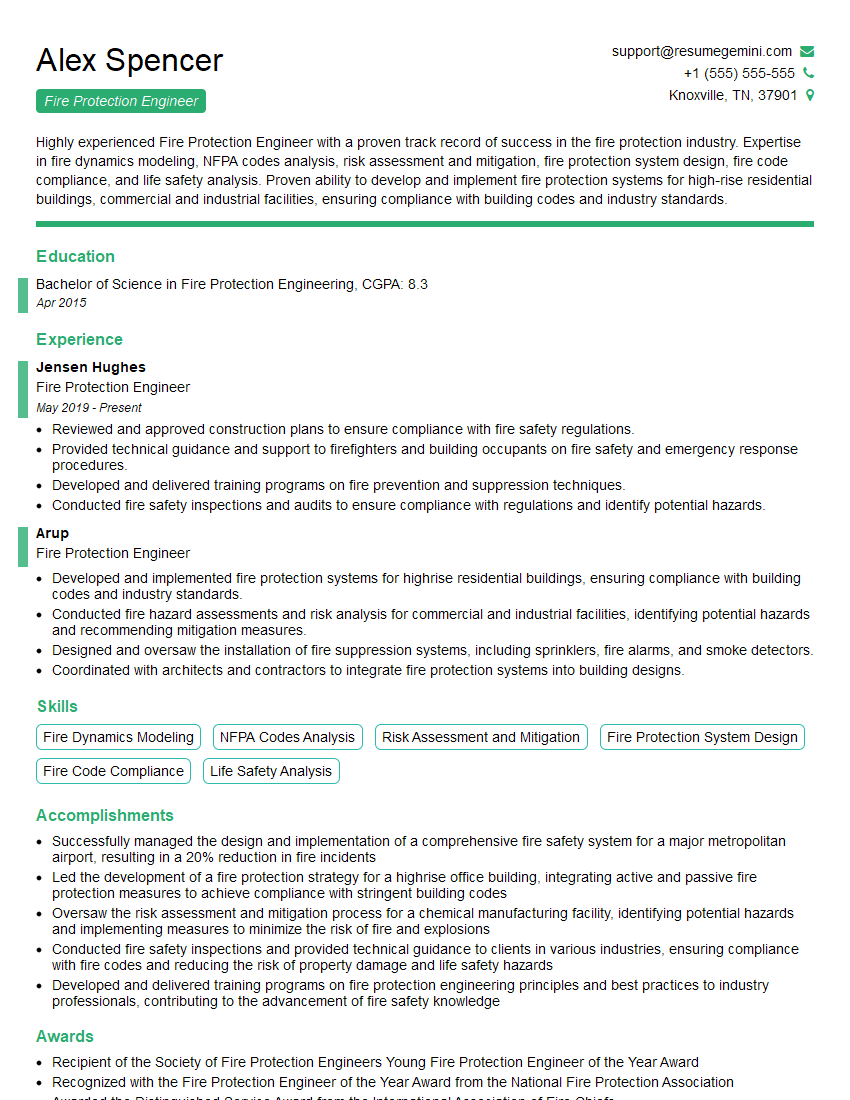
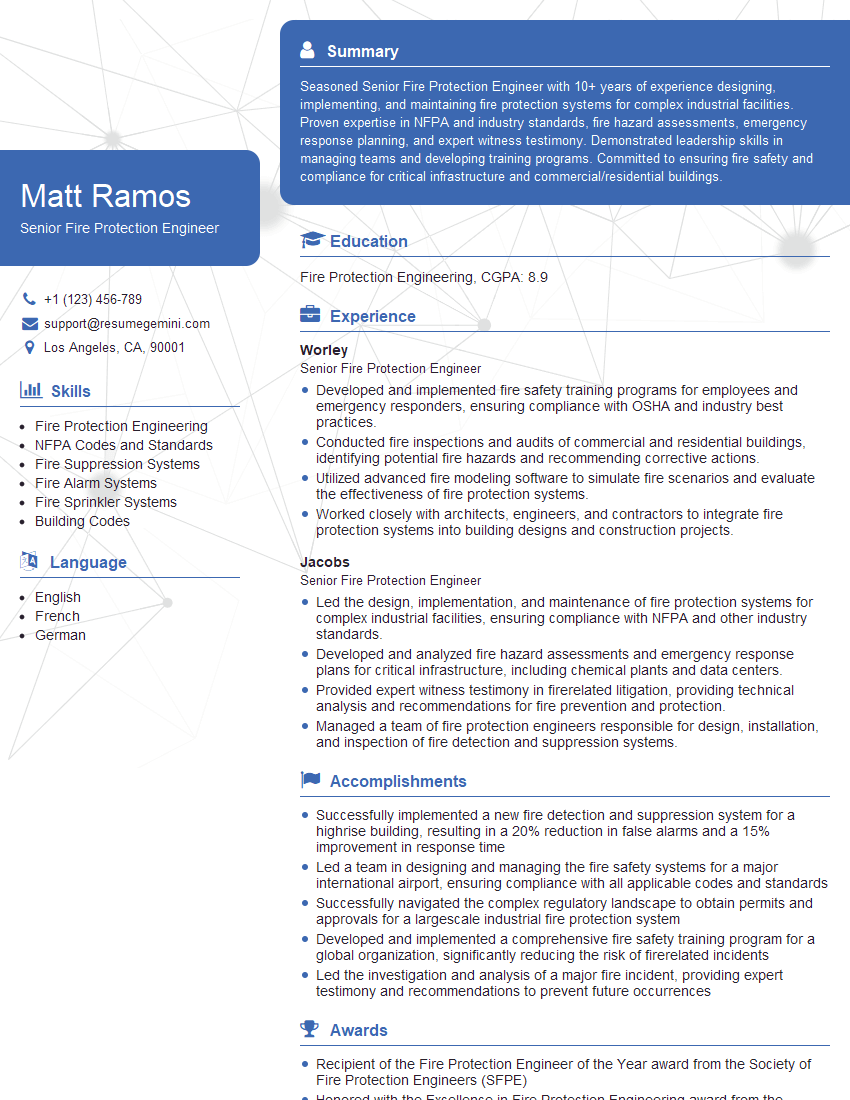
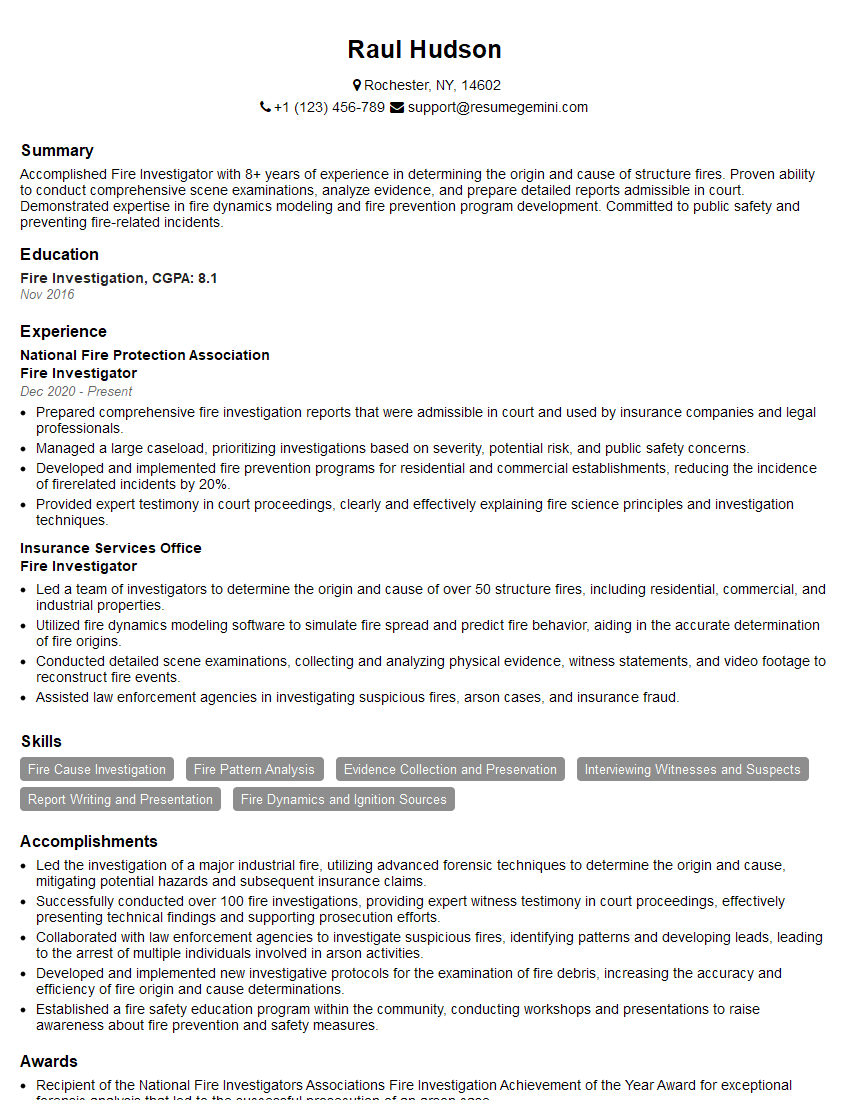
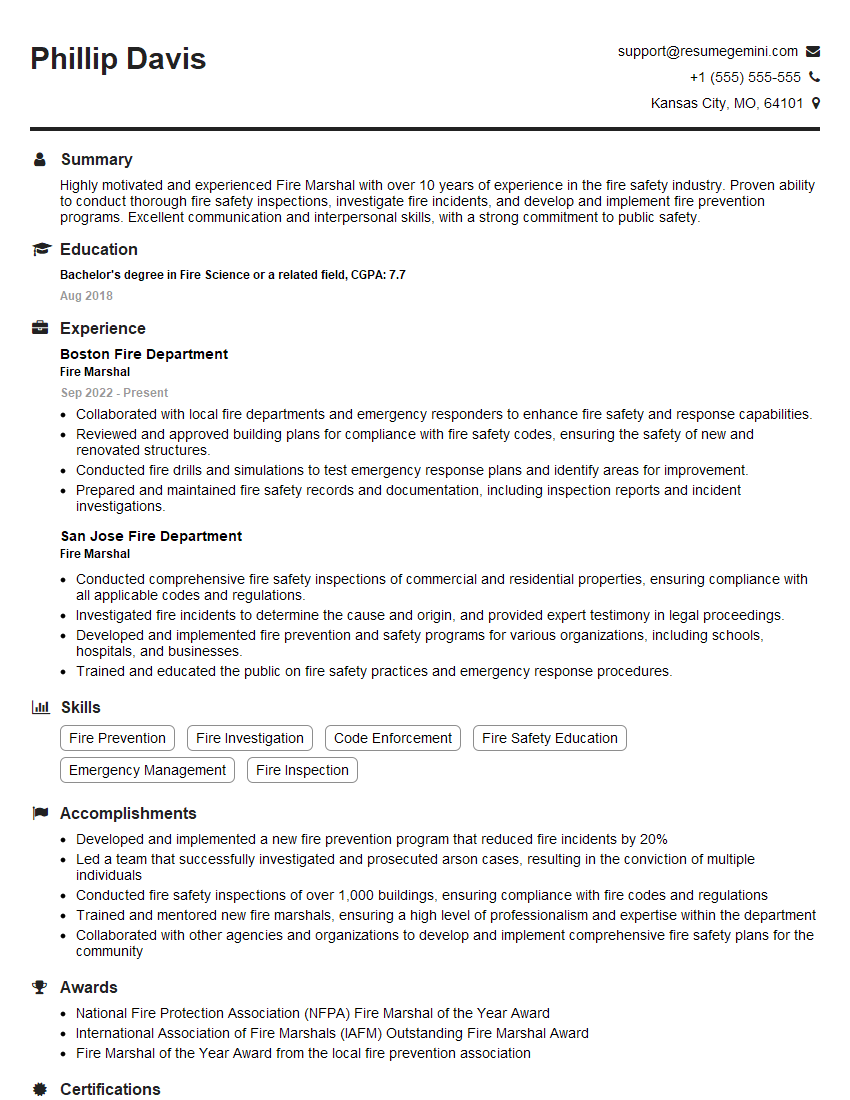
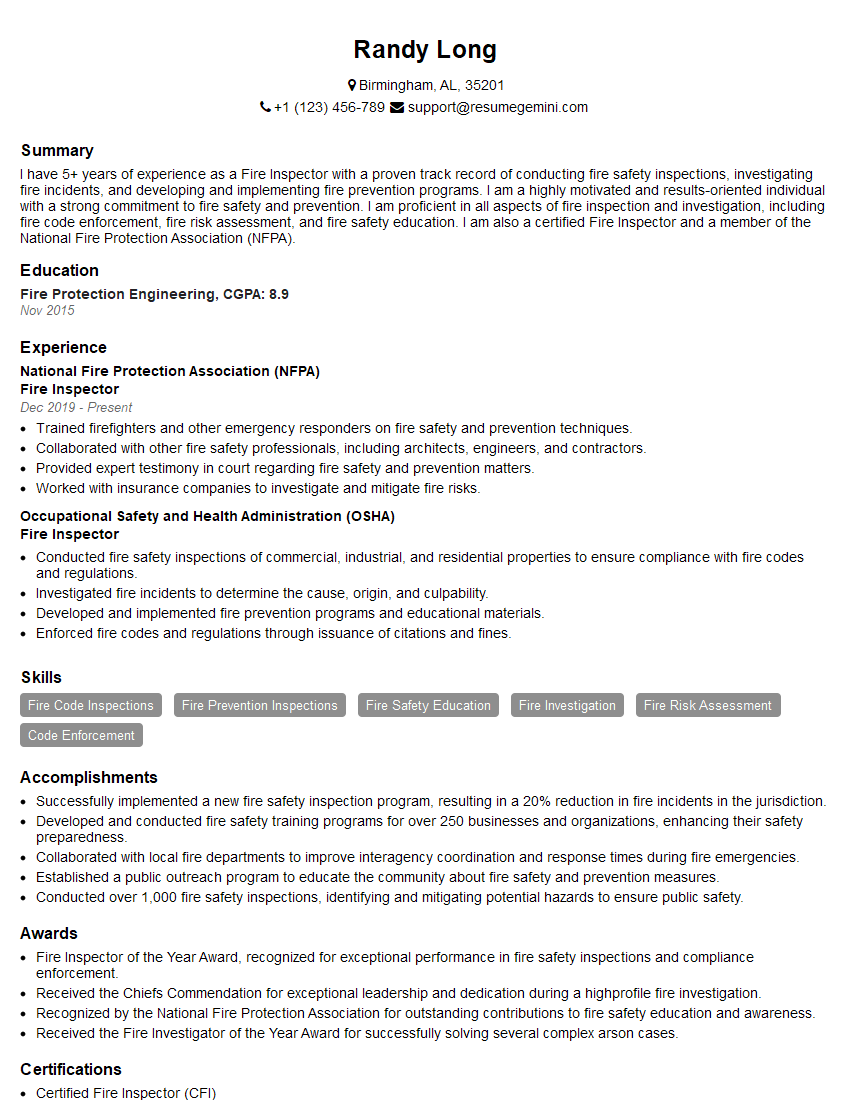
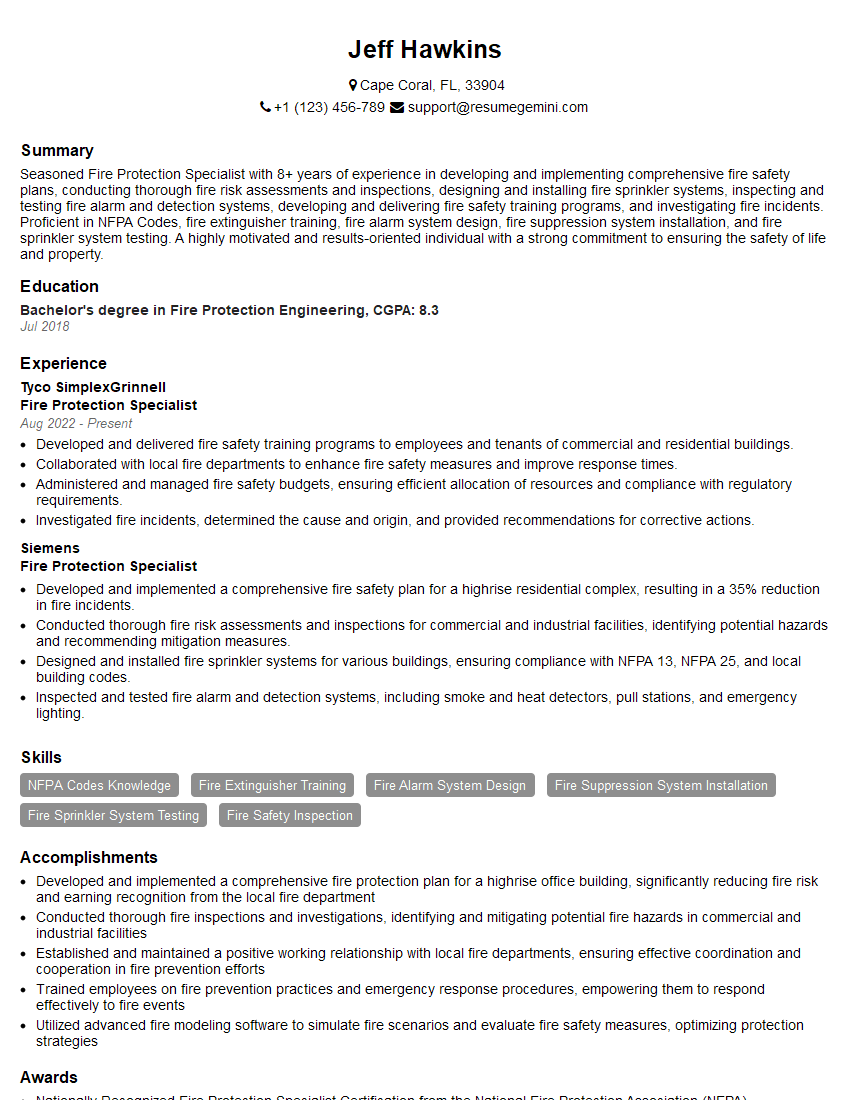
Mastering Fire Protection Awareness is crucial for career advancement in this vital field. A strong understanding of these concepts demonstrates commitment to safety and opens doors to diverse opportunities. To maximize your job prospects, create an ATS-friendly resume that highlights your skills and experience effectively. ResumeGemini is a trusted resource that can help you build a professional and impactful resume. We provide examples of resumes tailored to Fire Protection Awareness to guide you through the process, helping you present your qualifications in the best possible light.
Explore more articles
Users Rating of Our Blogs
Share Your Experience
We value your feedback! Please rate our content and share your thoughts (optional).
What Readers Say About Our Blog
Really detailed insights and content, thank you for writing this detailed article.
IT gave me an insight and words to use and be able to think of examples