The thought of an interview can be nerve-wracking, but the right preparation can make all the difference. Explore this comprehensive guide to First Article Inspection interview questions and gain the confidence you need to showcase your abilities and secure the role.
Questions Asked in First Article Inspection Interview
Q 1. Explain the purpose of First Article Inspection (FAI).
First Article Inspection (FAI) is a critical process verifying that the first production run of a new part or product conforms to the engineering drawings and specifications. Think of it as a crucial quality control checkpoint before mass production begins. It ensures that the manufacturing process is correctly interpreting the design intent and producing parts that meet the required standards. Failure to conduct a thorough FAI can lead to costly rework, delays, and potentially, flawed products in the final product.
Q 2. Describe the process of a typical FAI.
A typical FAI process involves several key steps:
- Review of Documentation: This begins with a thorough examination of all relevant documents, including engineering drawings, specifications, material certifications, and the FAI report itself.
- Visual Inspection: A detailed visual check of the first article, comparing it to the engineering drawings for overall dimensions, features, and surface finish.
- Dimensional Measurement: Precise measurements using appropriate instruments (calipers, micrometers, CMMs etc.) are taken to verify compliance with tolerances specified on the drawings. GD&T symbols are interpreted and verified at this stage.
- Functional Testing (if applicable): If the part has specific functional requirements, testing will be performed to confirm that the part operates as designed. This could involve anything from simple functionality tests to rigorous performance evaluations.
- Material Verification: The material used must be checked against the specifications to ensure it meets the required grade, properties, and certifications.
- Documentation and Reporting: All inspection results, measurements, and any non-conformances are meticulously documented in the FAI report. This report serves as the official record of the inspection.
- Approval/Rejection: Based on the FAI report, the part is either approved for mass production or rejected, necessitating corrective actions.
For example, in a recent FAI on a complex machined part, we discovered a minor deviation in a critical dimension during dimensional measurement. Through careful analysis using a CMM (Coordinate Measuring Machine), we identified the root cause to be a slight misalignment in the machining process. This was addressed before full production, preventing thousands of non-compliant parts from being produced.
Q 3. What are the key documents required for a successful FAI?
Key documents for a successful FAI include:
- Engineering Drawings: The primary source defining the part’s geometry, dimensions, and tolerances.
- Specifications: Documents detailing material requirements, surface finish, and other critical characteristics.
- Material Test Reports/Certifications: Proof that the materials used meet the specified standards.
- Process Flowcharts/Work Instructions: These illustrate how the part was manufactured, providing insights into potential sources of discrepancies.
- FAI Report: The official document summarizing the inspection results, including measurements, findings, and approval/rejection status.
Missing or incomplete documentation can significantly hamper the FAI process and lead to delays or incorrect conclusions.
Q 4. How do you interpret engineering drawings and specifications?
Interpreting engineering drawings and specifications requires a systematic approach. I start by understanding the overall design intent – what function does the part serve? Then, I systematically examine each view of the drawing, noting all dimensions, tolerances, surface finishes, and GD&T symbols. Specifications provide additional context, detailing material requirements, performance standards, and other critical details. I use a combination of reading, visualization, and practical experience to ensure a thorough understanding.
For instance, when reviewing drawings, I pay close attention to section views to understand internal features. I frequently use my knowledge of GD&T to determine acceptable variations in dimensions, ensuring that the part is within the design’s tolerance range.
Q 5. What measurement tools and equipment are you familiar with?
I am proficient in using a wide range of measurement tools and equipment, including:
- Calipers (Vernier and Digital): For accurate linear measurements.
- Micrometers: For high-precision measurements of smaller dimensions.
- Height Gauges: For precise height measurements.
- Coordinate Measuring Machines (CMMs): For three-dimensional measurement and inspection of complex parts.
- Optical Comparators: For comparing parts against master templates or drawings.
- Surface Roughness Testers: To assess surface texture.
The selection of the appropriate tool depends heavily on the complexity of the part and the required accuracy. CMMs are invaluable for complex parts, offering highly accurate and comprehensive measurements.
Q 6. Explain your experience with GD&T (Geometric Dimensioning and Tolerancing).
My experience with GD&T (Geometric Dimensioning and Tolerancing) is extensive. I understand how to interpret and apply GD&T symbols to ensure that parts meet the specified geometric requirements. This includes understanding concepts like:
- Size Dimensions: Basic length, width, and diameter measurements.
- Form Tolerances: Straightness, flatness, circularity, cylindricity.
- Orientation Tolerances: Perpendicularity, angularity, parallelism.
- Location Tolerances: Position, concentricity, symmetry.
- Runout Tolerances: Circular runout and total runout.
My ability to interpret GD&T significantly improves my ability to detect potential issues during FAI, enabling me to identify discrepancies that would be missed with simple dimensional checks alone. For example, understanding Position tolerances helps determine if a hole is located correctly, even if its size is within tolerance. This prevents functional problems caused by incorrect location, even when individual dimensions are compliant.
Q 7. How do you handle discrepancies or non-conformances found during FAI?
Handling discrepancies or non-conformances during FAI requires a methodical approach. Upon identifying a discrepancy, I document it thoroughly in the FAI report, including detailed descriptions, measurements, and photographic evidence (if applicable). Then, I work collaboratively with the engineering and manufacturing teams to determine the root cause of the non-conformance. This may involve analyzing the manufacturing process, checking for tool wear, or reviewing the original design. Based on the root cause analysis, appropriate corrective actions are determined and implemented before mass production. This may involve process adjustments, rework of the first article, or even design modifications.
For example, I recently encountered a non-conformance related to surface finish on a part. Through a collaborative investigation, we determined that a new type of cutting fluid was contributing to an undesirable surface roughness. By switching back to the original fluid, the issue was resolved.
Q 8. What is the significance of the FAI report?
The First Article Inspection (FAI) report is a crucial document that verifies the initial production run of a new part or product meets the specified requirements. It serves as a critical bridge between design and manufacturing, ensuring that the final product aligns perfectly with the engineering drawings and specifications. Think of it as the official stamp of approval before mass production begins. The report meticulously documents all inspection results, including dimensional measurements, material analysis, and functional tests. Its significance lies in mitigating risks associated with defective products, saving costs from large-scale production of faulty items, and ensuring customer satisfaction. A thorough FAI report acts as a preventative measure, reducing the chances of costly rework or recalls down the line.
Q 9. Describe your experience with statistical process control (SPC).
Statistical Process Control (SPC) is an integral part of my FAI methodology. I’m proficient in using various SPC tools like control charts (X-bar and R charts, p-charts, c-charts) to monitor process variability and identify potential sources of defects. For example, during a recent FAI on a precision-machined component, I used an X-bar and R chart to track the diameter of a critical feature across multiple samples. By analyzing the data, I identified a slight upward trend indicating potential tool wear. This early detection allowed for preventative maintenance, preventing the production of non-conforming parts. My experience also extends to interpreting control chart patterns to determine process capability indices (Cpk and Pp), helping to assess whether the manufacturing process consistently meets the required specifications. I can also implement and interpret Gage R&R studies to evaluate the accuracy and precision of our measurement systems.
Q 10. How do you ensure the accuracy and traceability of your measurements?
Accuracy and traceability in measurements are paramount in FAI. We achieve this through a multi-pronged approach. Firstly, all measuring equipment is regularly calibrated to traceable national or international standards, documented with certificates. Secondly, we use a robust measurement system analysis (MSA) to determine the accuracy and precision of our equipment and the measurement process itself. This ensures our measurements are reliable and repeatable. Thirdly, we meticulously document each measurement, including the equipment used, the operator’s ID, and the date and time of measurement. This detailed record-keeping ensures complete traceability, allowing us to easily investigate any discrepancies or anomalies. Finally, we use a digital system to manage all measurement data, making it easier to analyze and report on the results, providing full audit trails.
Q 11. Explain your understanding of calibration procedures and standards.
Calibration procedures and standards are foundational to accurate and reliable measurements. Calibration ensures that our measuring equipment consistently provides accurate readings. We follow a strict calibration schedule, with equipment calibrated at predetermined intervals or after any potential damage or significant use. Calibration certificates provide the traceability chain, linking our measurements to national or international standards, such as NIST (National Institute of Standards and Technology) or ISO standards. For example, our CMM (Coordinate Measuring Machine) is calibrated annually by a certified calibration lab, with the results documented and archived. This rigorous process ensures that any measurement we take during FAI is trustworthy and conforms to the required accuracy levels.
Q 12. How do you manage FAI documentation and record-keeping?
FAI documentation and record-keeping are managed through a comprehensive digital system, ensuring efficient organization and easy retrieval. The system captures all aspects of the inspection, including the FAI report itself, inspection plans, measurement data, calibration certificates, photos, and any deviation reports. This centralized system improves efficiency, facilitating internal audits and external customer reviews. The system’s access control mechanisms ensure data integrity and security. All records are version-controlled, preventing accidental overwriting and allowing for easy tracking of changes. This meticulous approach ensures the long-term preservation and accessibility of all FAI-related documentation, fulfilling regulatory compliance and internal quality requirements.
Q 13. What is your experience with different types of inspection methods (e.g., visual, dimensional, functional)?
My experience encompasses a wide range of inspection methods. Visual inspection is fundamental, enabling quick identification of surface defects, scratches, or other visible imperfections. Dimensional inspection using tools such as calipers, micrometers, and CMMs ensures accurate measurements of critical features. Functional testing verifies the operational performance of components or assemblies. For example, I’ve performed visual inspections on painted parts to check for surface finish uniformity, dimensional inspections using a CMM to verify tolerances on complex machined parts, and functional tests on electronic components to confirm their performance within specified parameters. In addition, I am experienced in other techniques, including optical comparators, hardness testing, and material analysis, tailoring my approach to the specific requirements of each product.
Q 14. Describe a situation where you had to troubleshoot a measurement issue during FAI.
During a recent FAI on a complex assembly, we encountered inconsistent measurements on a key dimension using our CMM. Initially, we suspected an issue with the CMM itself. Following a structured troubleshooting approach, we systematically checked:
- Calibration status: The CMM’s calibration certificate was current and valid.
- Fixturing: We verified the part’s secure placement in the fixture, eliminating any potential variations due to improper alignment.
- Probe condition: The probe was inspected and found to be in good working order.
- Software settings: We reviewed the CMM software settings and confirmed no anomalies.
- Part variations: We then suspected variations in the parts themselves. By examining a larger sample size and using control charts, we identified a subtle inconsistency in the manufacturing process.
By systematically investigating, we pinpointed the root cause as a slight variation in the machining process leading to inconsistent dimensions on the parts. This discovery highlighted the importance of thorough process monitoring, emphasizing the integration of FAI within a robust quality management system.
Q 15. How do you prioritize tasks and manage your time during a busy FAI schedule?
Prioritizing tasks during a busy FAI schedule requires a structured approach. I utilize a combination of techniques, starting with a thorough review of the FAI plan itself. This involves identifying critical-to-function (CTF) characteristics and prioritizing inspection tasks accordingly. High-risk features or those with tight tolerances always take precedence. I then leverage project management tools, often employing a Kanban board or similar system to visualize tasks, deadlines, and dependencies. This helps me to efficiently manage my workflow and identify potential bottlenecks early. For example, if a CMM inspection is required and the machine is booked, I’ll reschedule less critical tasks to accommodate. Timeboxing is also crucial; I allocate specific time blocks for certain activities, ensuring that I don’t get bogged down in less important details. Finally, regular communication with the team and stakeholders is key – proactive updates prevent delays and allow for prompt adjustments to the schedule.
Career Expert Tips:
- Ace those interviews! Prepare effectively by reviewing the Top 50 Most Common Interview Questions on ResumeGemini.
- Navigate your job search with confidence! Explore a wide range of Career Tips on ResumeGemini. Learn about common challenges and recommendations to overcome them.
- Craft the perfect resume! Master the Art of Resume Writing with ResumeGemini’s guide. Showcase your unique qualifications and achievements effectively.
- Don’t miss out on holiday savings! Build your dream resume with ResumeGemini’s ATS optimized templates.
Q 16. Explain your experience with different types of manufacturing processes.
My experience spans a range of manufacturing processes, including machining (both CNC and manual), casting (investment casting and die casting), sheet metal fabrication, additive manufacturing (3D printing), and plastic injection molding. I’m familiar with the unique challenges and potential defects associated with each. For example, in CNC machining, I’m particularly attentive to dimensional accuracy and surface finish, often employing CMMs to verify these aspects. With casting processes, I focus on identifying porosity, shrinkage, and other inherent flaws. My understanding extends to the interpretation of manufacturing drawings and specifications, enabling me to anticipate potential issues and effectively guide the inspection process.
Q 17. How familiar are you with AS9100 or ISO 9001 standards?
I possess a strong working knowledge of both AS9100 (for aerospace) and ISO 9001 (general quality management) standards. I understand their requirements concerning quality management systems, including documentation control, internal audits, corrective and preventive actions (CAPA), and traceability. My experience includes participating in internal audits and contributing to the development and maintenance of quality procedures within a regulated environment. I’m particularly adept at interpreting the relevant clauses related to First Article Inspection, ensuring that all FAI activities are compliant. For example, I understand the importance of maintaining accurate records, including traceability of inspected parts back to the original production lot. My understanding of these standards allows me to ensure that our FAI process not only meets customer requirements but also adheres to industry best practices.
Q 18. What is your experience with using Coordinate Measuring Machines (CMMs)?
I have extensive experience operating various Coordinate Measuring Machines (CMMs), including both touch-probe and laser scanning types. I’m proficient in programming CMM software (e.g., PC-DMIS, Calypso) to create inspection routines, analyze measurement data, and generate reports. This includes the development of complex measurement plans based on engineering drawings and specifications. My expertise extends to understanding the principles of CMM operation, including probe calibration, error compensation, and the interpretation of measurement uncertainty. For instance, I can effectively troubleshoot issues related to machine accuracy or software functionality. I’ve regularly used CMMs to inspect critical dimensions, surface geometry, and form tolerances on various parts, ensuring compliance with drawing requirements and specifications.
Q 19. Describe your experience with using software for data analysis and reporting.
I’m proficient in several data analysis and reporting software packages, including spreadsheet software (Excel), statistical process control (SPC) software (e.g., Minitab), and dedicated metrology software integrated with CMMs. I can use these tools to perform statistical analysis of measurement data, generate charts and graphs illustrating results (e.g., histograms, control charts), create comprehensive FAI reports, and identify trends and patterns. I can also customize reports to meet specific customer requirements. For example, I’ve used Excel to consolidate data from multiple sources, performed trend analysis to identify potential process issues, and created customized dashboards for real-time monitoring of FAI activities. My proficiency ensures that FAI data is not only accurately captured but also effectively presented to all stakeholders.
Q 20. How do you ensure the integrity and confidentiality of FAI data?
Ensuring the integrity and confidentiality of FAI data is paramount. We employ several measures to achieve this, starting with secure data storage and access control. This includes utilizing password-protected databases and restricting access to authorized personnel only. All FAI documentation is version-controlled to prevent unauthorized modifications. Data is regularly backed up to ensure its availability in case of system failure. Furthermore, we implement a robust audit trail, meticulously tracking all changes and access to FAI data. All personnel involved in FAI are trained on data security procedures and confidentiality protocols. For sensitive projects, we may use encryption to further protect the data during transmission or storage.
Q 21. How do you communicate FAI results to different stakeholders?
Communicating FAI results effectively to various stakeholders requires a tailored approach. For engineering teams, I provide detailed reports including measurement data, statistical analysis, and any identified discrepancies. This information aids in process improvement and design verification. For management, I provide concise summaries of FAI results, highlighting key findings and potential risks. For customers, I tailor the communication based on their requirements, ensuring clarity and transparency. This may involve visual aids like charts and graphs, as well as clear explanations of any deviations from specifications. Throughout this process, clear and concise language is crucial, minimizing technical jargon where possible. I use a variety of communication channels, including formal reports, email updates, and presentations, choosing the most effective method for each stakeholder.
Q 22. What are the potential consequences of failing a FAI?
Failing a First Article Inspection (FAI) can have significant consequences, impacting project timelines, budgets, and even product safety. The severity depends on the nature of the nonconformances found.
- Project Delays: Corrective actions, rework, and repeat inspections all add time to the project schedule, potentially delaying product launch or delivery to customers.
- Increased Costs: Rework, material scrap, additional inspection resources, and potential design changes can significantly inflate project costs.
- Reputational Damage: Failure to meet quality standards can damage a company’s reputation and erode customer trust. This is particularly critical in industries with strict regulatory requirements.
- Legal and Regulatory Issues: In sectors like aerospace, medical devices, and automotive, non-compliance with FAI standards can lead to legal penalties, product recalls, and regulatory sanctions.
- Safety Concerns: If the nonconformances relate to safety-critical aspects of the product, the consequences can be far-reaching and potentially catastrophic.
Imagine a scenario where an FAI reveals a critical flaw in a medical device. The consequences could range from patient injury to significant legal liability for the manufacturer.
Q 23. How do you stay updated with the latest advancements in inspection technologies?
Staying current with advancements in inspection technologies is crucial for maintaining competence in FAI. I employ a multi-pronged approach:
- Professional Organizations: Active membership in organizations like ASQ (American Society for Quality) provides access to webinars, publications, and conferences focused on quality control and inspection techniques.
- Industry Publications and Journals: I regularly read trade publications and journals dedicated to quality control, metrology, and relevant manufacturing processes. This keeps me informed about new technologies and best practices.
- Vendor Training and Workshops: Many equipment manufacturers offer training programs on their latest inspection systems. Attending these workshops provides hands-on experience with cutting-edge technology.
- Online Resources and Webinars: Numerous online platforms offer webinars and tutorials on advanced inspection methods. This allows for continuous learning at my own pace.
- Networking: Attending industry events and conferences allows for interaction with peers and experts, sharing experiences and learning about new developments.
For instance, recently I attended a workshop on automated optical inspection (AOI) systems, which significantly improved my understanding of their capabilities and limitations in FAI.
Q 24. Describe a time you had to work under pressure to complete an FAI.
During a critical FAI for a new aerospace component, we faced a tight deadline due to an impending launch date. The supplier was experiencing delays, adding immense pressure.
My approach was to prioritize tasks systematically. I first coordinated with the supplier to expedite delivery of the parts. Then, I assembled a team of experienced inspectors, working extended hours in shifts to ensure uninterrupted inspection. We streamlined the inspection process by optimizing our checklists and leveraging advanced measurement equipment. Effective communication with all stakeholders was paramount, providing regular updates on progress and identifying potential roadblocks proactively. We managed to complete the FAI within the stringent deadline without compromising the quality and accuracy of the inspection. This success underscored the importance of teamwork, efficient planning, and clear communication under pressure.
Q 25. How do you handle conflicting requirements from different departments during FAI?
Conflicting requirements from different departments during FAI are common. My approach centers on facilitating collaboration and finding mutually acceptable solutions.
- Clearly Document all Requirements: I begin by meticulously documenting all requirements from each department, ensuring clarity and avoiding ambiguity.
- Facilitate a Collaborative Meeting: I organize a meeting with representatives from all involved departments. This creates a platform for open discussion and clarification of conflicting requirements.
- Identify the Root Cause of Conflicts: We work together to understand the reasons behind the conflicting demands, often finding that they stem from different priorities or interpretations of the specifications.
- Prioritize Requirements Based on Risk: We collaboratively prioritize requirements based on their impact on safety, performance, and compliance. This helps focus efforts on the most critical aspects.
- Document Agreed-Upon Solutions: Once a consensus is reached, the agreed-upon requirements and solutions are documented and distributed to all stakeholders.
For example, I once faced conflicting requirements from engineering (tight tolerances) and manufacturing (achievable tolerances). By collaborating, we identified a compromise that balanced the need for high precision with the manufacturing capabilities. This involved modifying the design slightly while maintaining the product’s functionality.
Q 26. What are some common errors you have encountered in FAI and how did you correct them?
Common errors encountered during FAI include:
- Incomplete Documentation: Missing or inaccurate documentation is a frequent issue. This can lead to delays and misunderstandings. The solution is to enforce strict adherence to documented procedures and use digital systems for comprehensive record-keeping.
- Incorrect Measurement Techniques: Using the wrong measurement tools or incorrect techniques can lead to inaccurate results. The solution is proper training of inspectors on the correct use of metrology equipment and adherence to established measurement procedures.
- Misinterpretation of Specifications: This can result in acceptance of non-conforming parts. Clear and unambiguous specifications are essential, along with regular training and clarification sessions to ensure everyone understands the requirements.
- Inadequate Traceability: Lack of traceability throughout the manufacturing process can hinder investigation of defects. Implementing robust traceability systems, including barcoding and digital record-keeping, is vital.
In one instance, an incorrect measurement technique led to the rejection of parts that were actually within specification. Upon review and retraining, the error was corrected, and the parts were rightfully accepted.
Q 27. Explain your understanding of the relationship between FAI and the overall quality system.
FAI is an integral part of a robust quality system. It serves as a critical gatekeeper, verifying that the first production run of a new part or product meets all specified requirements before full-scale production begins. The relationship is symbiotic:
- FAI validates the design and manufacturing processes: Successful completion of FAI demonstrates that the design is manufacturable and that the manufacturing processes are capable of consistently producing parts that meet specifications.
- FAI contributes to defect prevention: By identifying potential problems early, FAI helps prevent defects from entering the supply chain and reaching the end customer.
- FAI ensures compliance with quality standards: FAI is a key element of compliance with industry standards (e.g., ISO 9001) and regulatory requirements.
- FAI provides data for continuous improvement: The data generated during FAI provides valuable insights into process capabilities and potential areas for improvement.
Think of the quality system as a house, with FAI acting as a strong foundation. A weak FAI compromises the entire quality system, leading to potential problems down the line.
Q 28. Describe your approach to continuous improvement in FAI processes.
Continuous improvement in FAI processes is a critical aspect of ensuring high-quality products. My approach involves a data-driven, iterative process:
- Regular Data Analysis: I regularly analyze data from completed FAIs, identifying trends and patterns in nonconformances. This reveals areas where improvements are needed.
- Process Mapping and Optimization: We use process mapping techniques to identify inefficiencies and bottlenecks in the FAI process. This allows us to streamline processes and reduce lead times.
- Implementation of Statistical Process Control (SPC): Using SPC methods helps monitor process stability and detect potential problems before they lead to nonconformances.
- Regular Training and Skill Development: Continuous training of inspectors on new technologies, measurement techniques, and quality standards is essential for maintaining competence.
- Feedback Mechanisms: Establishing clear feedback mechanisms allows inspectors to report issues and contribute to process improvement.
For example, by analyzing FAI data, we discovered a recurring issue with a specific measurement tool. This led to replacing the tool and retraining inspectors, significantly reducing measurement errors.
Key Topics to Learn for First Article Inspection Interview
- Understanding the FAI Process: Master the complete FAI workflow, from initial planning and documentation review to final report generation and approval.
- Dimensional Inspection Techniques: Become proficient in using various measuring instruments (calipers, micrometers, CMMs) and interpreting measurement data accurately. Understand GD&T (Geometric Dimensioning and Tolerancing) principles and their application in FAI.
- Material and Visual Inspection: Learn how to effectively assess material properties, identify defects (surface imperfections, flaws), and document findings according to established standards.
- Functional Testing and Verification: Understand how to conduct functional tests to ensure the first article meets performance specifications. This may include electrical testing, mechanical testing, or other relevant methods depending on the product.
- Documentation and Reporting: Master the creation of comprehensive FAI reports, including detailed measurements, photographs, and analysis of findings. Learn how to clearly communicate your findings to engineers and management.
- Root Cause Analysis and Problem Solving: Develop your skills in identifying the root cause of discrepancies and proposing effective corrective actions. Prepare to discuss problem-solving methodologies you’ve employed in previous experiences.
- Relevant Standards and Specifications: Familiarize yourself with industry-standard practices and regulations applicable to FAI, such as AS9102 or other relevant specifications for your field.
- Software and Tools: Gain familiarity with any software commonly used for FAI reporting and data management within your target industry.
Next Steps
Mastering First Article Inspection opens doors to exciting career advancements within manufacturing, quality control, and engineering. A strong understanding of FAI demonstrates meticulous attention to detail, problem-solving capabilities, and a commitment to quality – all highly valued attributes in today’s competitive job market. To maximize your job prospects, create an ATS-friendly resume that highlights your skills and experience effectively. ResumeGemini is a trusted resource to help you build a professional and impactful resume that stands out. Examples of resumes tailored to First Article Inspection are available to guide you, showcasing how to present your qualifications compellingly. Take the next step in your career journey – build a winning resume today!
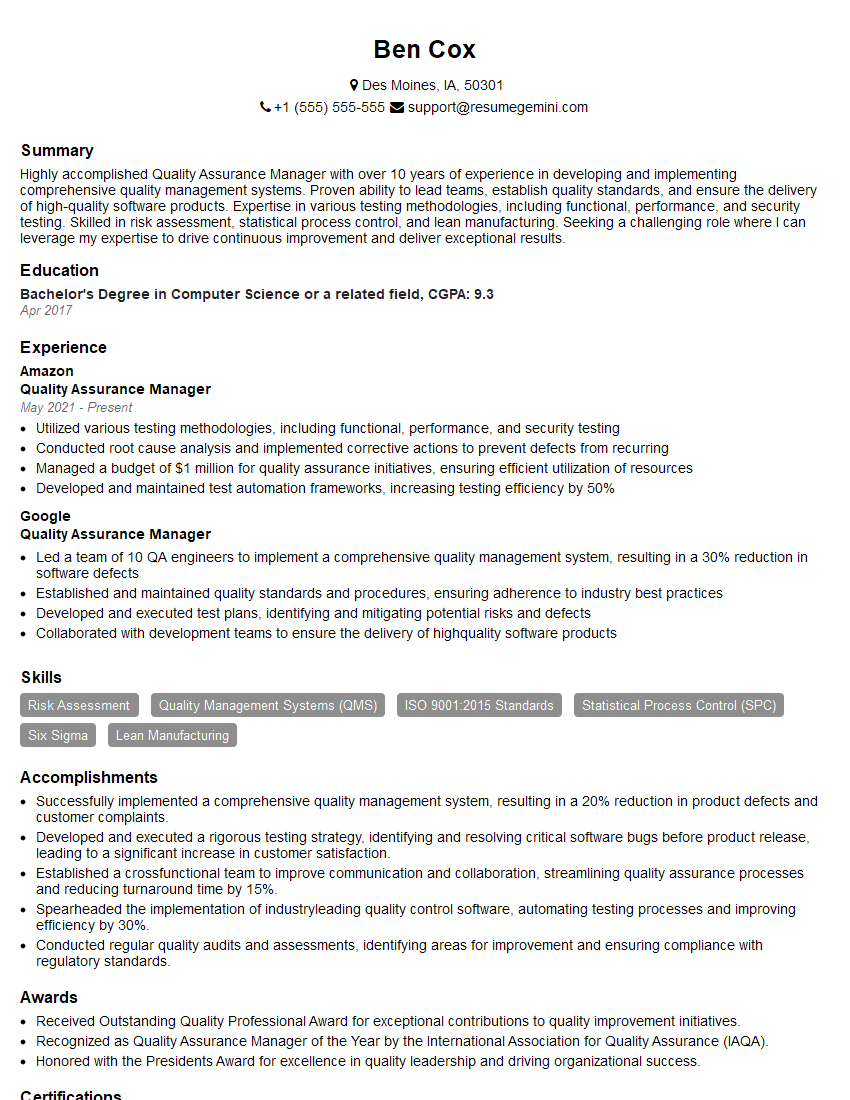
Quality Assurance Manager Resume Sample
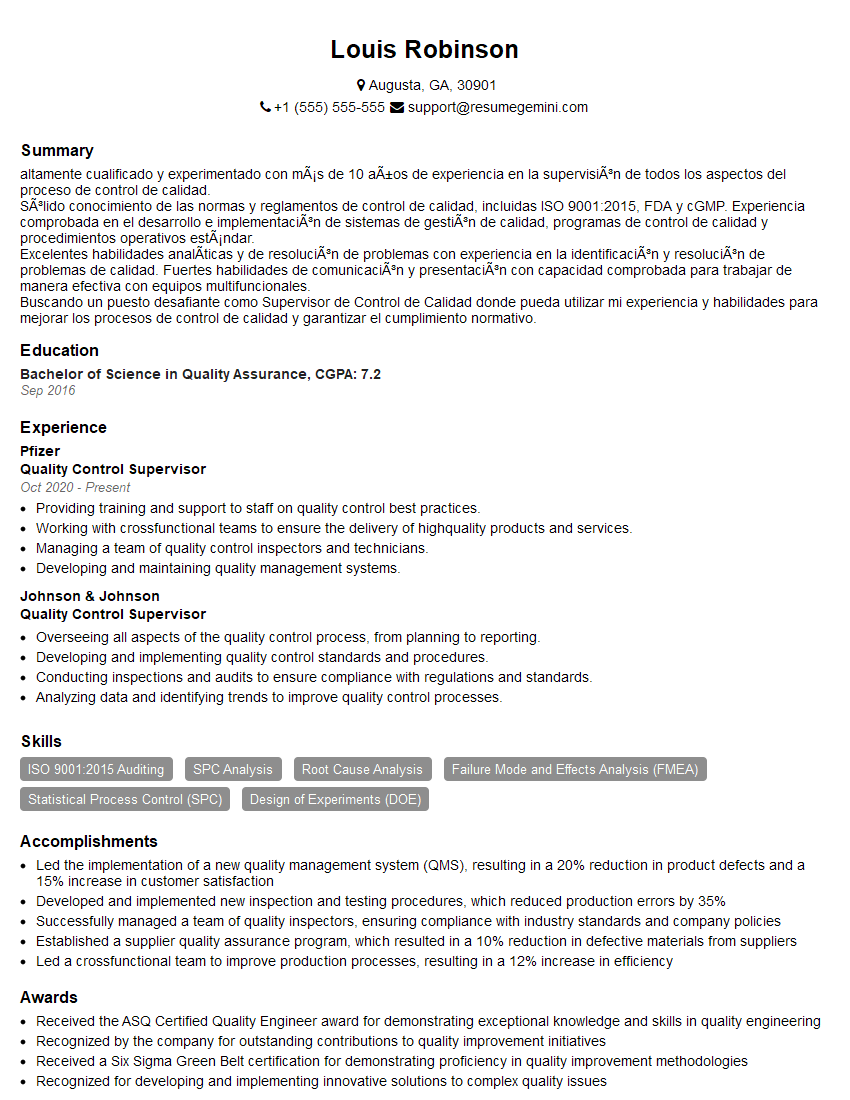
Quality Control Supervisor Resume Sample
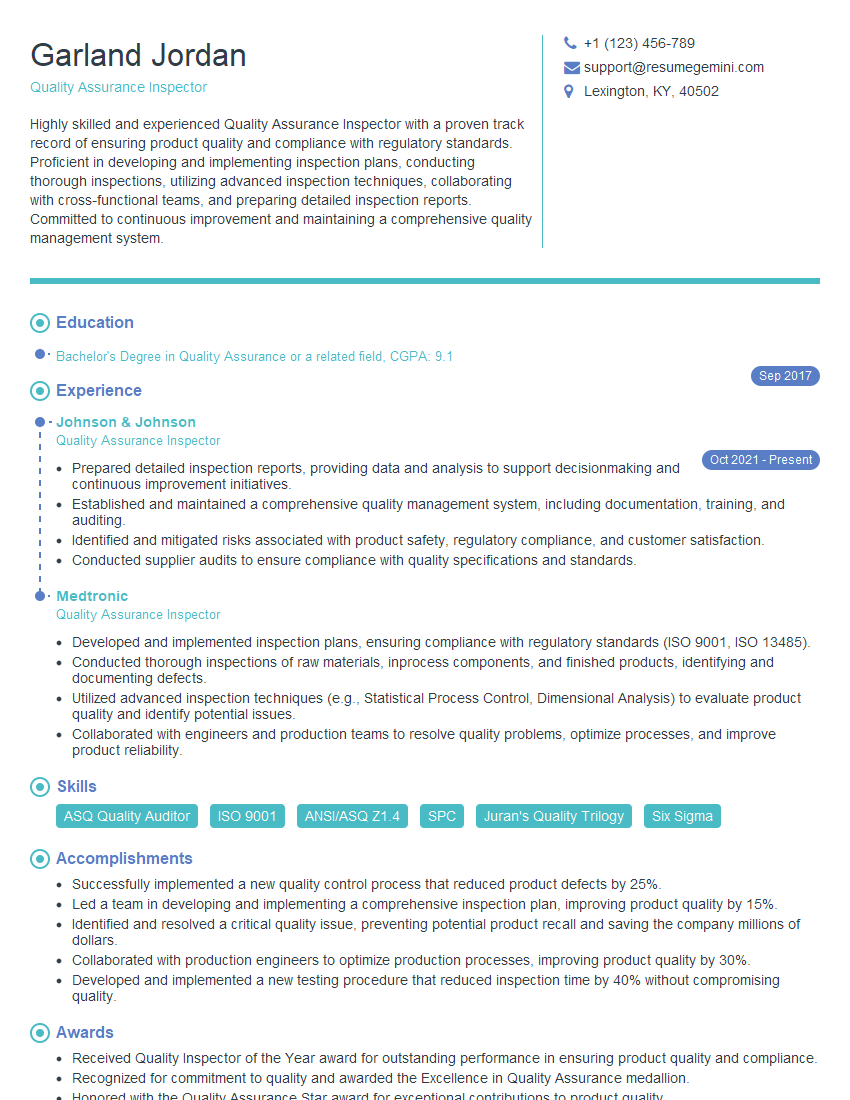
Quality Assurance Inspector Resume Sample
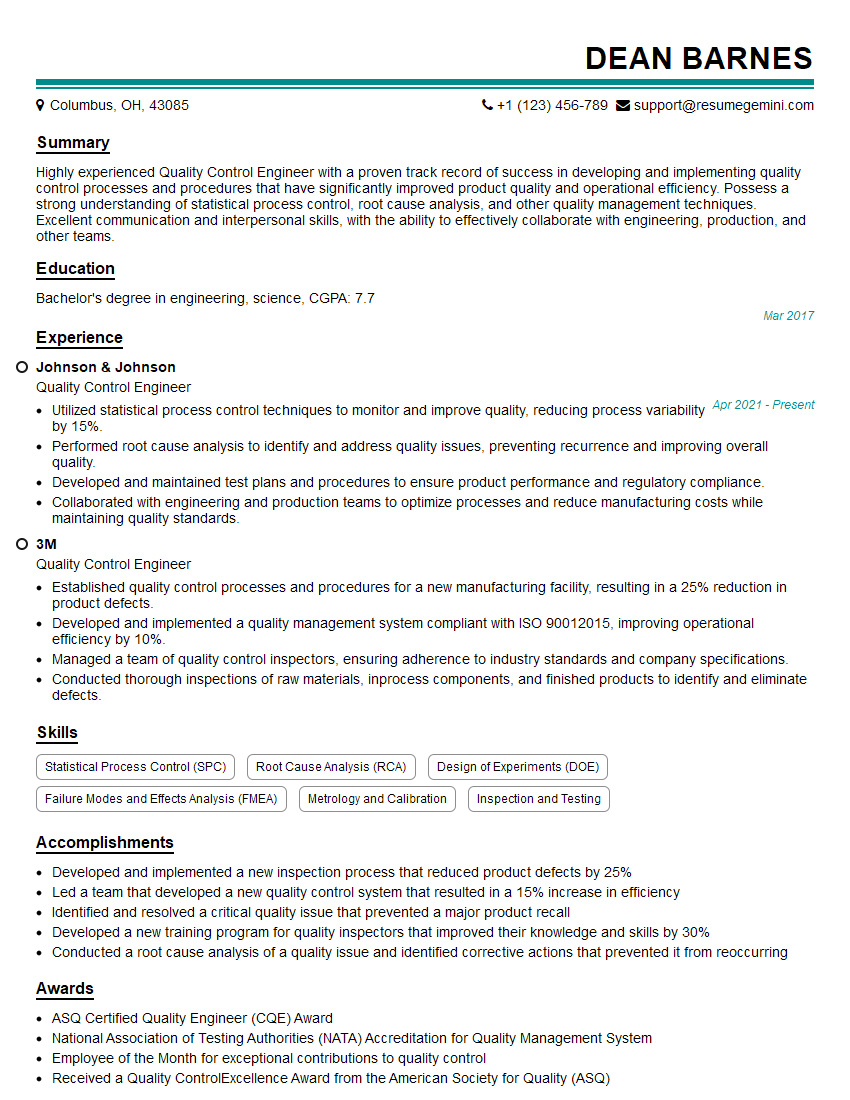
Quality Control Engineer Resume Sample
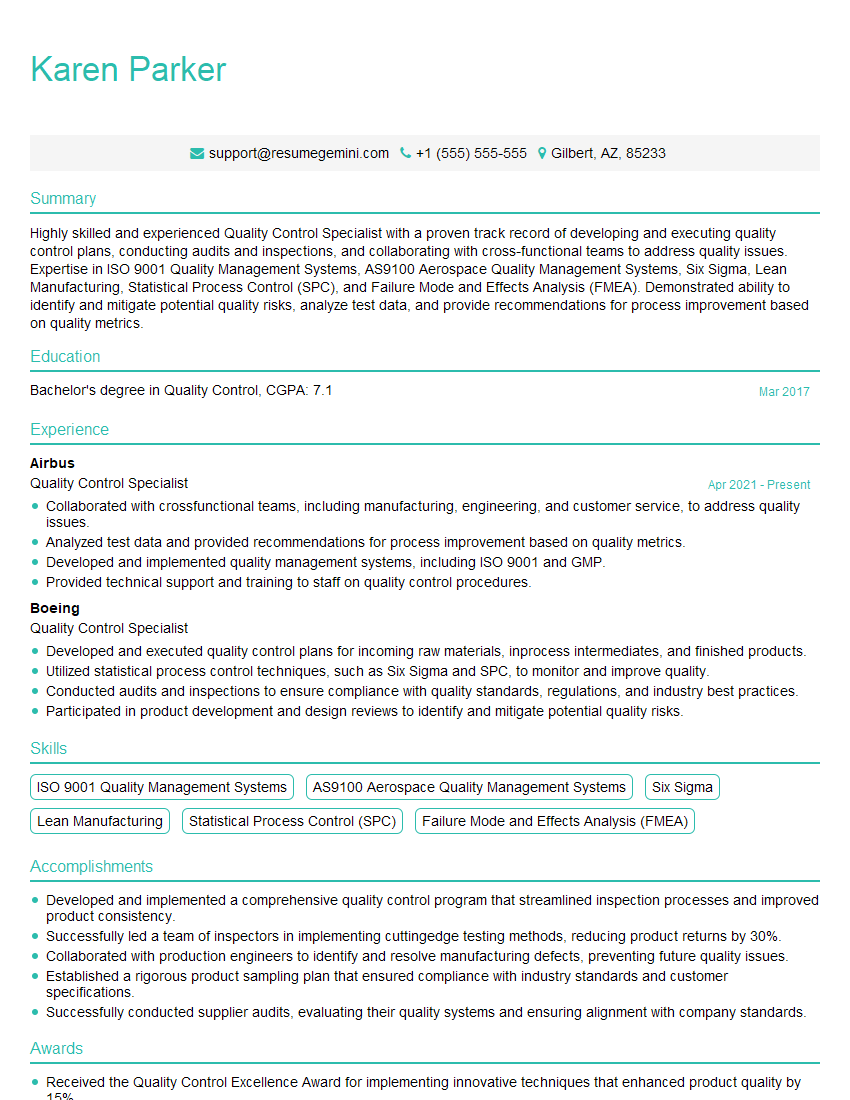
Quality Control Specialist Resume Sample
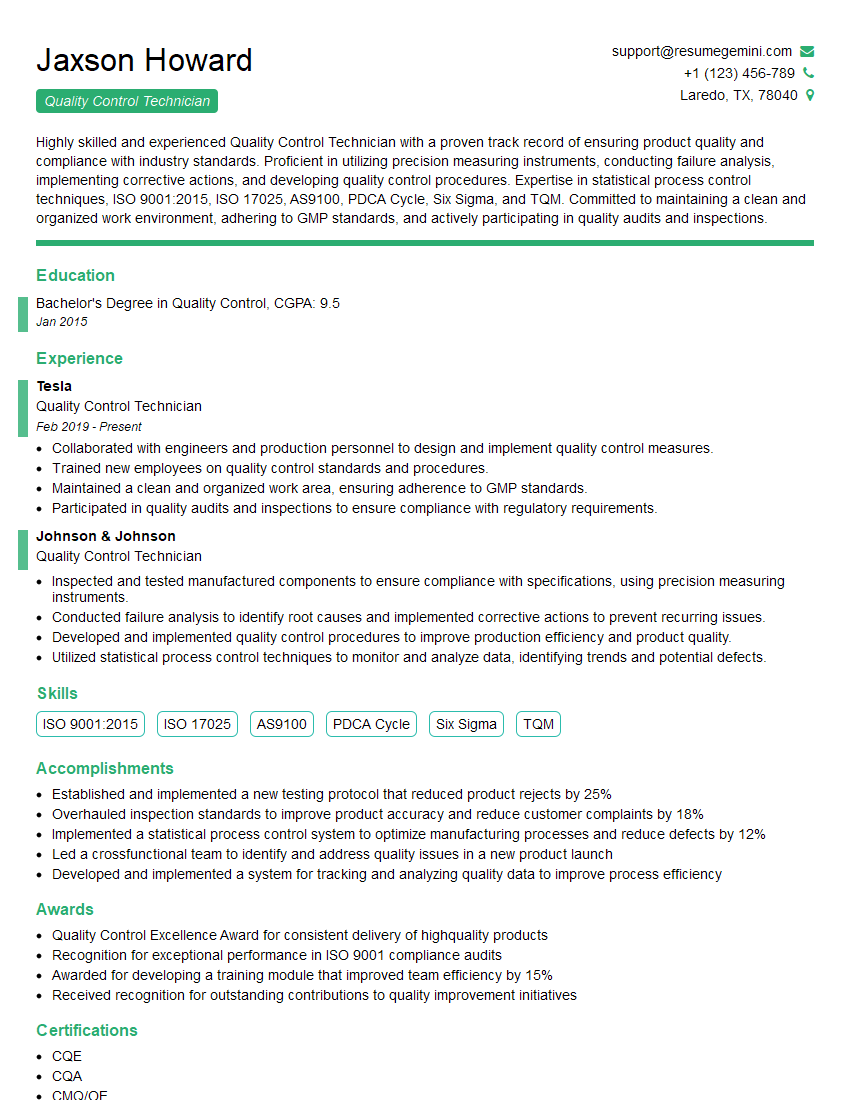
Quality Control Technician Resume Sample
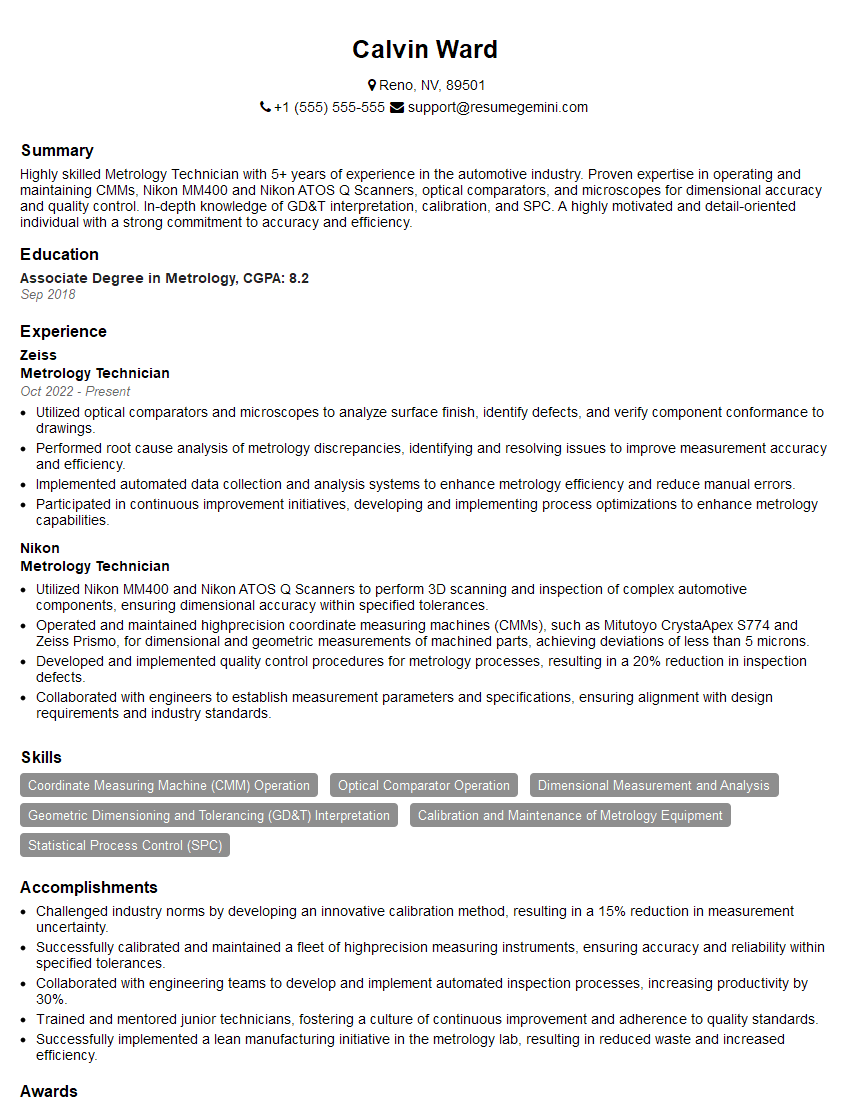
Metrology Technician Resume Sample
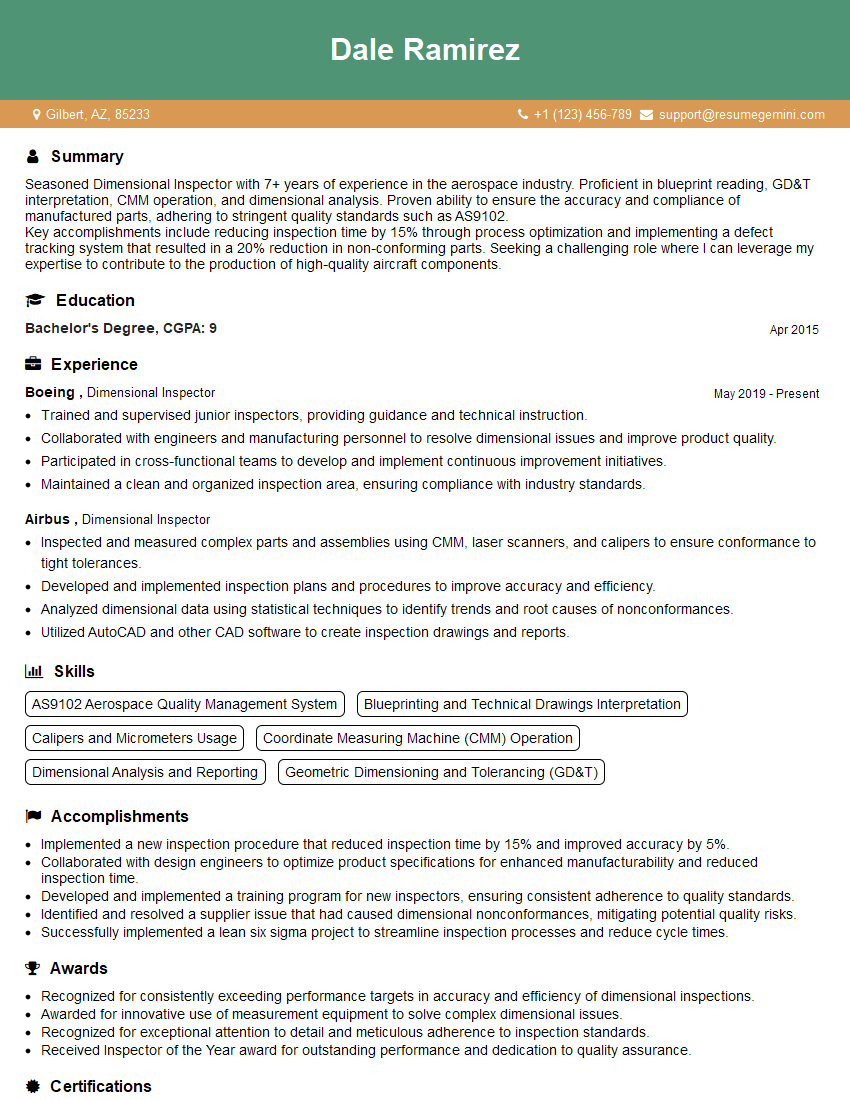
Dimensional Inspector Resume Sample
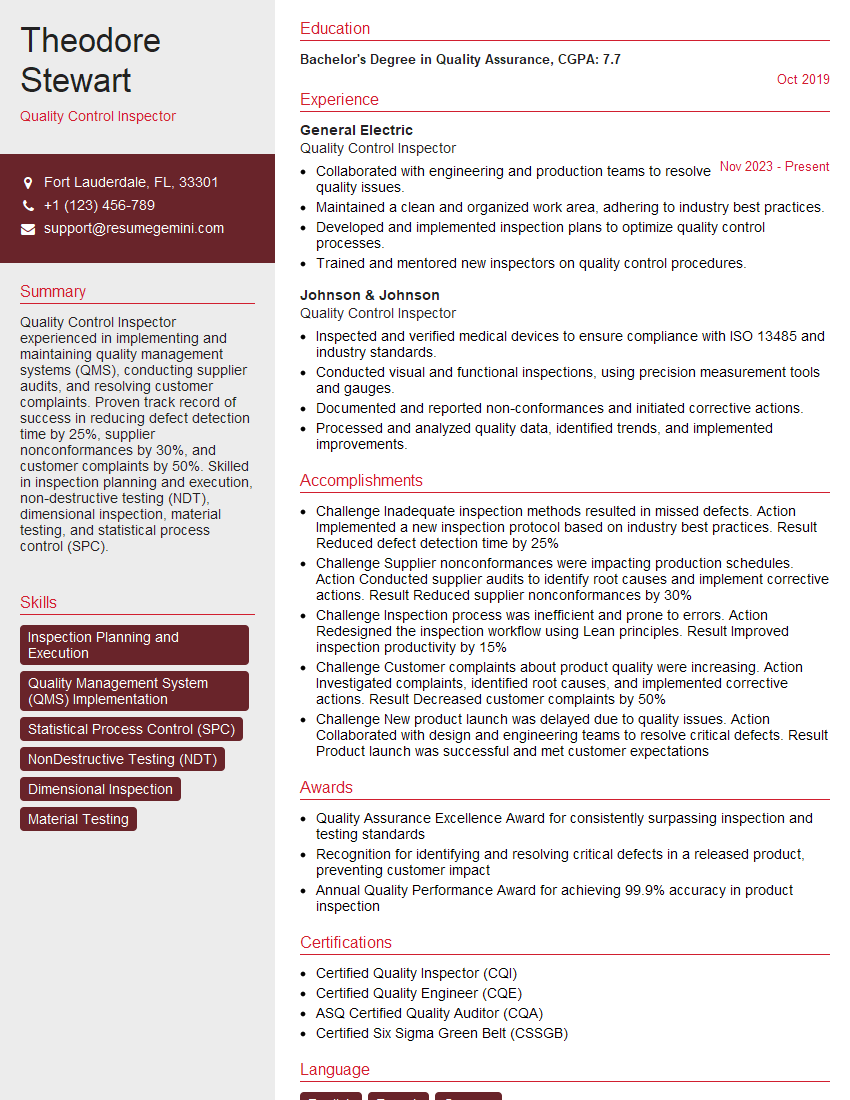
Quality Control Inspector Resume Sample
Explore more articles
Users Rating of Our Blogs
Share Your Experience
We value your feedback! Please rate our content and share your thoughts (optional).
What Readers Say About Our Blog
Really detailed insights and content, thank you for writing this detailed article.
IT gave me an insight and words to use and be able to think of examples