Every successful interview starts with knowing what to expect. In this blog, we’ll take you through the top Fish Reproduction and Breeding interview questions, breaking them down with expert tips to help you deliver impactful answers. Step into your next interview fully prepared and ready to succeed.
Questions Asked in Fish Reproduction and Breeding Interview
Q 1. Describe the process of induced spawning in fish.
Induced spawning, also known as artificial reproduction, is a technique used to stimulate fish to release eggs and sperm outside their natural breeding environment. It’s crucial for aquaculture, conservation efforts, and research. Think of it like giving a gentle nudge to a couple who are hesitant to start a family – we provide the right conditions to encourage them to reproduce.
The process typically involves manipulating hormonal levels in the broodstock (mature fish ready to breed). This is often achieved through injections of hormones like human chorionic gonadotropin (hCG) or luteinizing hormone-releasing hormone (LHRH) analogues. The timing and dosage of the hormone injections are species-specific and depend on factors like the fish’s size, maturity, and water temperature. After injection, the fish are closely monitored for signs of readiness, such as swelling of the abdomen (in females) and increased activity. Once ripe, eggs and sperm are collected, usually through gentle stripping (manual removal) or by using a specialized catheter, and then combined for fertilization.
For example, in sturgeon farming, induced spawning is essential because sturgeon are long-lived and challenging to induce natural spawning. Hormonal manipulation ensures a consistent supply of eggs for caviar production.
Q 2. Explain different methods of artificial insemination in fish.
Artificial insemination (AI) in fish offers greater control over reproduction, allowing for selective breeding and improved genetic management. Several methods exist:
Dry method: Eggs and sperm are collected separately and mixed in a dry container, usually a petri dish. This is a simple technique, but fertilization rates can be lower due to possible sperm damage.
Wet method: Sperm is diluted in a suitable extender solution (e.g., saline solution) before being added to the eggs. This method improves sperm motility and survival, leading to higher fertilization rates. The eggs and sperm are gently mixed in a container with a well-oxygenated solution.
Intraovarian injection: Sperm is directly injected into the ovary of the female fish. This technique is less commonly used and is challenging, requiring specialized equipment and expertise. It is mainly employed in situations where stripping or collecting sperm is difficult.
The choice of method depends on the species, the availability of resources, and the desired outcome. For instance, the wet method is often preferred for species with large numbers of eggs because it provides more efficient fertilization.
Q 3. What are the key factors affecting fish egg fertilization rates?
Fertilization success in fish is a delicate dance between the egg and the sperm. Several factors influence the rate:
Sperm quality and quantity: The number of viable, motile sperm is crucial. Stress, poor nutrition, or disease in the male can negatively impact sperm quality.
Egg quality: Mature eggs that are properly hydrated and free from defects have higher fertilization rates. Factors influencing egg quality include the female’s nutritional status, age, and overall health.
Water quality: The water’s pH, temperature, and dissolved oxygen levels significantly affect sperm motility and egg viability. Ideally, parameters should be within the optimal range for the specific species.
Timing of fertilization: Sperm should be introduced to eggs within a short window after spawning to maximize chances of fertilization. Delaying fertilization can lead to significant loss of fertilization potential.
Technique of fertilization: The method of mixing sperm and eggs (dry or wet) and the degree of agitation affect fertilization success. Gentle handling is always important.
For example, if the water temperature is too low, sperm motility will be reduced, resulting in lower fertilization rates. Similarly, if eggs are not properly hydrated, they may not be receptive to sperm.
Q 4. Discuss common challenges in fish hatchery management.
Running a fish hatchery is a complex undertaking; several challenges commonly arise:
Maintaining water quality: Consistently providing water with the right temperature, pH, dissolved oxygen, and minimal contaminants is crucial. Fluctuations can lead to disease outbreaks and mortality.
Disease outbreaks: Hatcheries are susceptible to disease due to high stocking densities. Effective biosecurity measures and proactive disease management strategies are essential.
Egg and larval mortality: High mortality rates can be caused by various factors, including poor water quality, handling stress, insufficient nutrition, and disease. Careful monitoring and management are critical.
Staff expertise and training: Successful hatchery operation requires well-trained personnel with a good understanding of fish biology, water quality management, and disease prevention.
Cost management: Operating a hatchery can be expensive, requiring investments in infrastructure, equipment, feed, and personnel. Efficient resource management is key to financial sustainability.
For instance, a sudden drop in water temperature can shock the fish, leading to increased mortality. Similarly, a disease outbreak can devastate an entire batch of fish.
Q 5. How do you monitor and maintain water quality in a fish hatchery?
Water quality is paramount in fish hatchery management. A multi-pronged approach is necessary:
Regular monitoring: Parameters like temperature, pH, dissolved oxygen, ammonia, nitrite, and nitrate are routinely monitored using calibrated instruments. Regular testing allows for prompt detection and correction of any deviations from optimal ranges.
Water filtration and treatment: Effective filtration systems remove particulate matter and other contaminants from the water. Depending on the needs, water may be treated using UV sterilization, ozonation, or other methods to eliminate pathogens.
Water exchange: Partial or complete water changes are regularly performed to replenish oxygen and remove accumulated waste products. The frequency of water exchange depends on the stocking density and the species.
Algal control: Algae growth can affect water quality and oxygen levels. Effective strategies for controlling algal blooms, like using UV sterilization or introducing herbivorous fish, may be employed.
Emergency protocols: Plans are in place to handle unexpected events, like equipment failure or power outages, to minimize impact on water quality and fish welfare.
Imagine your hatchery as a delicate ecosystem; maintaining the right balance is critical for the health and survival of your fish.
Q 6. Explain the importance of quarantine protocols in fish breeding.
Quarantine is a vital biosecurity measure in fish breeding. It involves isolating newly acquired or returning fish for a specific period to prevent the introduction or spread of diseases. Think of it as a mandatory health check before integrating new members into your fish community.
The quarantine period typically ranges from several weeks to months, depending on the species and the perceived risk of disease introduction. During quarantine, fish are carefully monitored for signs of disease. Water quality is meticulously maintained, and appropriate treatments are administered if necessary. This prevents the potential spread of pathogens to the main broodstock, protecting valuable genetic lines and preventing economic losses.
For instance, a new batch of broodstock arriving from a different farm could introduce undetected pathogens. Quarantine helps isolate any potential pathogens, preventing a devastating outbreak among the existing, healthy fish.
Q 7. What are the signs of disease in fish larvae?
Detecting disease in fish larvae is crucial for timely intervention and minimizing mortality. Signs can be subtle and require careful observation:
Abnormal swimming behavior: Larvae may exhibit erratic movements, difficulty maintaining position in the water column, or reduced activity.
Changes in body appearance: Look for discoloration, deformities, lesions, or unusual coloration.
Reduced feeding response: Larvae may show decreased appetite or fail to feed altogether.
Increased mortality: A significant increase in mortality rate, especially in a localized area, indicates a potential disease problem.
Abnormal yolk sac absorption: Slow or uneven yolk sac absorption can indicate nutritional problems or infection.
Early detection is key. Microscopic examination of affected larvae can help in identifying the causative agent, facilitating prompt and effective treatment.
Q 8. Describe different larval rearing techniques.
Larval rearing techniques are crucial for successful fish breeding, impacting survival and growth. Different methods cater to various species and resources. Key factors include water quality, feeding regimes, and disease prevention.
- Live feed-based systems: These involve culturing live organisms like rotifers, Artemia (brine shrimp), and microalgae as initial food sources. This approach mimics natural diets, boosting larval development and survival. For example, rotifers provide essential fatty acids crucial in early larval stages of many marine species. Careful management of live food cultures is vital to maintain consistent quality and prevent contamination.
- Artificial diet-based systems: These utilize formulated diets, offering greater control over nutrient composition and reducing reliance on live feed cultures. These diets are often micro-encapsulated for efficient feeding and controlled release of nutrients. However, formulation needs careful consideration to match the larval nutritional needs at each developmental stage. For instance, a diet lacking essential amino acids could lead to poor growth and increased mortality.
- Batch vs. Flow-through systems: Batch systems use a static water volume, requiring frequent water changes to maintain quality. Flow-through systems continuously replace water, enhancing water quality but potentially increasing operational costs. The choice depends on resources, species requirements, and scale of operation. A smaller-scale operation might opt for batch systems while large commercial hatcheries typically use flow-through systems.
- Tank design and density: Appropriate tank size and stocking density are critical to avoid overcrowding and competition for resources. Rectangular tanks are commonly used, but specialized designs exist to enhance water circulation and larval distribution, such as conical tanks for better water flow and waste removal.
The choice of larval rearing technique depends on several factors including the species, available resources, and the desired scale of production. A well-designed and managed larval rearing system is the cornerstone of successful fish breeding programs.
Q 9. What are the nutritional requirements of fish larvae?
Fish larvae have remarkably high nutritional demands, particularly during their initial stages of development. Meeting these needs is vital for survival, growth, and the development of a robust immune system. Nutritional deficiencies can lead to deformities, slow growth, increased susceptibility to diseases, and ultimately, mortality.
- Protein: High-quality protein sources are essential for tissue growth and development. The amino acid profile of the diet must be carefully balanced to meet the larvae’s specific requirements.
- Lipids: Essential fatty acids (EFAs), such as EPA and DHA, are crucial for brain development, vision, and immune function. Deficiencies can lead to severe developmental abnormalities.
- Carbohydrates: While less critical than protein and lipids in early stages, carbohydrates serve as an energy source, especially in later larval development.
- Vitamins and Minerals: These are necessary for various metabolic processes and immune function. Specific vitamins like vitamin C and vitamin E are crucial antioxidants.
- Micronutrients: These include trace elements, playing a vital role in enzyme activity and overall metabolism.
The specific nutritional requirements vary widely between species and developmental stages. For example, early larval stages often require live food sources rich in EFAs, while later stages can tolerate formulated diets. Nutritional deficiencies can manifest in various ways, such as stunted growth, fin deformities, and poor survival rates. Careful monitoring and precise formulation of diets are paramount to achieving optimal larval development.
Q 10. How do you assess the genetic health of a fish broodstock?
Assessing the genetic health of fish broodstock is crucial for maintaining genetic diversity and preventing the accumulation of deleterious genes. This involves various approaches, including pedigree analysis, genetic markers, and genomic selection.
- Pedigree Analysis: Tracking the lineage of broodstock individuals helps identify inbreeding and relatedness, allowing for informed mating decisions to minimize inbreeding depression. This is particularly valuable in closed breeding programs.
- Genetic Markers: Using molecular markers like microsatellites or SNPs (Single Nucleotide Polymorphisms) allows for quantifying genetic diversity within a population. This helps in selecting broodstock with higher heterozygosity and avoiding bottlenecks.
- Genomic Selection: This advanced technique uses genomic information to predict the breeding value of individuals for various traits. It is particularly useful for traits difficult to measure directly, like disease resistance.
- Disease Testing: Screening broodstock for prevalent diseases within the population helps ensure that healthy individuals are selected for breeding.
The integration of these approaches allows for a comprehensive assessment of broodstock genetic health. For example, identifying individuals with high heterozygosity through SNP analysis can enhance the genetic diversity in the next generation and reduce the risk of inbreeding depression, ultimately leading to healthier and more productive offspring. Careful monitoring and genetic management are essential to ensure long-term sustainability of aquaculture breeding programs.
Q 11. Explain the concept of selective breeding in aquaculture.
Selective breeding in aquaculture aims to improve desirable traits in fish populations, leading to increased productivity, enhanced disease resistance, and improved product quality. It involves selecting individuals with superior genetics and breeding them to produce offspring with improved characteristics.
The process typically involves:
- Identifying desirable traits: This could include faster growth rates, higher disease resistance, improved feed conversion ratios, better meat quality, or tolerance to specific environmental conditions.
- Measuring traits: Accurate and reliable methods are crucial for quantifying the desired traits. This often involves careful data collection and statistical analysis.
- Selecting superior individuals: Individuals exhibiting the best combination of desirable traits are selected as parents for the next generation.
- Breeding and evaluating offspring: The performance of offspring is evaluated to assess the effectiveness of the selection process.
- Iterative selection: The cycle of selection, breeding, and evaluation is repeated across multiple generations to achieve continuous improvement.
For instance, selective breeding has been successfully used to develop strains of salmon with faster growth rates and improved disease resistance. This has significantly enhanced the productivity and economic viability of salmon aquaculture. However, careful attention must be paid to maintaining genetic diversity to avoid negative consequences of inbreeding.
Q 12. What are the benefits and drawbacks of using cryopreserved sperm in fish breeding?
Cryopreservation, or freezing, of fish sperm offers significant advantages in fish breeding, but also presents some challenges.
Benefits:
- Long-term genetic resource storage: Cryopreserved sperm can be stored for extended periods, preserving valuable genetic material and preventing genetic bottlenecks.
- Transportation and exchange of genetic material: Frozen sperm can be easily transported across geographical locations, facilitating genetic improvement programs and the introduction of superior genetics into different breeding populations.
- Biosecurity: Cryopreservation can help prevent the spread of diseases through the exchange of genetic material, ensuring the health of breeding populations.
- Cost-effectiveness in some cases: In certain situations, using cryopreserved sperm can be more economical than maintaining live broodstock.
Drawbacks:
- Cryopreservation damage: The freezing and thawing processes can cause damage to sperm, reducing fertility rates.
- Species-specific protocols: Cryopreservation protocols are often species-specific, requiring specialized expertise and techniques.
- High initial costs: Establishing cryopreservation facilities and developing effective protocols can be expensive.
- Potential for genetic bottlenecks if not carefully managed: Over-reliance on a small number of cryopreserved samples could lead to reduced genetic diversity.
For example, cryopreservation has been successfully used to maintain genetic diversity in endangered fish species and to transport valuable genetic material for selective breeding programs. However, it’s essential to carefully develop and validate species-specific protocols and implement strategies to maintain genetic diversity.
Q 13. Discuss the ethical considerations in fish breeding.
Ethical considerations in fish breeding are increasingly important, particularly in light of the growing impact of aquaculture on the environment and animal welfare.
- Animal Welfare: Ensuring good welfare practices throughout the breeding process is critical. This includes providing appropriate living conditions, minimizing stress during handling and breeding, and using humane methods for euthanasia when necessary.
- Genetic Diversity: Maintaining genetic diversity is essential to prevent inbreeding depression and enhance the resilience of farmed fish populations. Over-reliance on a small number of superior individuals could reduce the ability of the population to adapt to environmental changes or diseases.
- Environmental Impact: The potential impacts of escaped farmed fish on wild populations must be considered. This includes the risk of genetic introgression, competition for resources, and the spread of diseases.
- Social Equity: The benefits and costs of aquaculture should be distributed fairly among stakeholders, including local communities and workers. This is especially relevant in developing countries, where aquaculture can play a crucial role in food security and livelihoods.
- Disease Management: The responsible use of antibiotics and other medications is crucial to prevent the development of antibiotic resistance and minimize environmental contamination.
A comprehensive ethical framework for fish breeding should consider all these factors and strive for a balance between maximizing production and minimizing negative impacts. Transparency and responsible practices are key to ensuring the sustainability and ethical integrity of aquaculture.
Q 14. How do you manage stress in fish during reproduction?
Stress management during fish reproduction is crucial for maximizing reproductive success. Stress can negatively impact gamete quality, fertilization rates, and larval survival.
- Minimizing handling stress: Gentle handling techniques and appropriate anesthetic use can significantly reduce stress during broodstock collection, transportation, and spawning induction.
- Maintaining optimal water quality: Consistent water quality parameters, including temperature, dissolved oxygen, and ammonia levels, are crucial for reducing stress. Regular water quality monitoring and appropriate filtration systems are essential.
- Providing appropriate living conditions: Sufficient space, appropriate stocking densities, and suitable tank design can minimize competition and territorial disputes.
- Nutritional management: A well-balanced diet and appropriate feeding regimes are essential for maintaining optimal physiological condition and reducing stress.
- Reducing environmental stressors: Minimizing noise, light fluctuations, and sudden changes in water parameters can help reduce stress.
- Disease prevention: A proactive approach to disease management can prevent stress associated with infection and mortality.
For example, ensuring consistent water temperatures and oxygen levels during spawning can significantly improve fertilization success. Similarly, minimizing handling stress during egg collection can reduce egg damage and increase survival rates. A holistic approach to stress management is vital for optimizing reproductive performance and maintaining the welfare of broodstock.
Q 15. Describe different methods for sex determination in fish.
Sex determination in fish is a fascinating field, encompassing several methods, some simple and others quite sophisticated. The most straightforward is visual inspection, relying on secondary sexual characteristics. Males and females often exhibit distinct differences in size, coloration, fin shape, or the presence of breeding tubercles. For example, male guppies are typically more brightly colored than females. However, this method isn’t always reliable, as some species show minimal sexual dimorphism.
Genetic methods provide a more precise approach. Techniques like karyotyping (analyzing chromosomes) can reveal sex chromosomes, although this is labor-intensive and not suitable for all species. Molecular methods, such as PCR (Polymerase Chain Reaction) using sex-linked markers, offer a more efficient and accurate way to identify genetic sex, even in early developmental stages. We can amplify specific DNA sequences that are present only on male or female chromosomes.
Another technique is gonadal examination, which involves dissecting the fish and directly observing the gonads (ovaries and testes). This is definitive but destructive and often only performed on a sample of fish as part of a larger study. Finally, histological analysis provides microscopic examination of gonad tissue to determine the presence of oocytes (developing eggs) or sperm. This is a crucial method for species where external differences are subtle or non-existent.
Career Expert Tips:
- Ace those interviews! Prepare effectively by reviewing the Top 50 Most Common Interview Questions on ResumeGemini.
- Navigate your job search with confidence! Explore a wide range of Career Tips on ResumeGemini. Learn about common challenges and recommendations to overcome them.
- Craft the perfect resume! Master the Art of Resume Writing with ResumeGemini’s guide. Showcase your unique qualifications and achievements effectively.
- Don’t miss out on holiday savings! Build your dream resume with ResumeGemini’s ATS optimized templates.
Q 16. What are the common causes of egg mortality in fish?
High egg mortality in fish can stem from a multitude of factors, broadly categorized as pre- and post-fertilization causes.
- Pre-fertilization mortality often involves issues with egg quality. Poor nutrition in the broodstock (parent fish) can lead to small, poorly developed eggs. Environmental stressors, such as temperature fluctuations, pollution, or disease, can also severely impact egg development before fertilization even occurs.
- Post-fertilization mortality covers a wider range of problems. Inadequate oxygen levels in the water, fungal infections, bacterial contamination, and improper incubation conditions (temperature, salinity) all contribute significantly to the death of developing embryos. Furthermore, the genetic quality of the eggs and sperm plays a role. Inbreeding, for instance, can increase the likelihood of genetic defects leading to embryonic death.
Think of it like this: a good seed (egg) needs optimal soil (environment) and careful nurturing (proper incubation) to grow into a healthy plant (fry). Any disruption at any stage can result in loss.
Q 17. How do you improve fry survival rates?
Improving fry survival rates is a cornerstone of successful fish breeding. It requires a multi-pronged approach, addressing the various vulnerabilities faced by newly hatched fish.
- Optimal water quality: Maintaining clean, well-oxygenated water is paramount. Regular water changes, appropriate filtration, and monitoring of key parameters like temperature, pH, and ammonia levels are crucial.
- Disease prevention: Prophylactic treatments with appropriate medication or using probiotics can help prevent infections. Good hygiene practices, such as sterilizing equipment, further minimize contamination risks.
- Appropriate diet: Providing a suitable diet, from the moment they start feeding, ensures the fry have the nutrition they need to develop and thrive. Live feed, such as rotifers or micro-worms, is generally ideal in the early stages.
- Predator control: Protecting the fry from cannibalism or predation by larger fish requires careful tank management, potentially using dividers or separate rearing tanks.
- Appropriate stocking density: Overcrowding leads to stress, competition for resources, and increased disease transmission.
Essentially, providing a stable and supportive environment that minimizes stress and maximizes the availability of food and oxygen significantly increases the survival chances of the fry.
Q 18. Explain the role of hormones in fish reproduction.
Hormones are the orchestrators of fish reproduction, controlling every stage from gamete (sperm and egg) development to spawning behavior. The main players are gonadotropin-releasing hormone (GnRH), follicle-stimulating hormone (FSH), and luteinizing hormone (LH).
GnRH, released from the brain, triggers the release of FSH and LH from the pituitary gland. FSH stimulates the development of ovarian follicles in females, containing the developing eggs, and spermatogenesis (sperm production) in males. LH triggers final egg maturation and ovulation in females and promotes the release of sperm in males.
Other hormones play supporting roles. For instance, prolactin is involved in parental care behaviors, and thyroid hormones influence growth and development of the reproductive system. Understanding the hormonal pathways is crucial for manipulating reproduction in aquaculture, for example, by using synthetic hormones to induce spawning in captive fish or to control sex ratios.
Q 19. Discuss the impact of environmental factors on fish reproduction.
Environmental factors exert a powerful influence on fish reproduction, impacting every aspect from breeding behavior to reproductive success.
- Temperature is a key driver, affecting gonadal development, spawning time, and egg and larval survival. Most fish have an optimal temperature range for reproduction; deviations can reduce fecundity (egg production) or even prevent spawning altogether.
- Photoperiod (day length) acts as a strong cue for the timing of reproduction in many species. Changes in day length signal the onset of the breeding season, triggering hormonal changes that prepare fish for spawning.
- Water quality, including oxygen levels, salinity, and the presence of pollutants, significantly impacts both egg and larval development. High levels of ammonia or heavy metals can be toxic, leading to mortality.
- Water flow also plays a role; some species require specific flow rates for successful spawning and larval dispersal.
Think of it as creating the right habitat: temperature, light, and water conditions all need to be just right for a thriving fish population. Environmental changes, such as climate change, can severely disrupt these delicate balances, threatening the reproductive success of many fish species.
Q 20. What are the different types of fish breeding systems?
Fish breeding systems are diverse, reflecting the wide range of reproductive strategies observed in the fish world.
- Broadcast spawning involves releasing large quantities of eggs and sperm directly into the water column, leaving fertilization to chance. This strategy is common in many marine species.
- Nest spawning is when fish build nests to protect their eggs. This can range from simple pits in the substrate to elaborate structures built from vegetation or other materials. Cichlids are a classic example of nest-spawning fish.
- Mouthbrooding, where one or both parents hold eggs or young in their mouths for protection, is a specialized strategy that offers high parental care. Many species of cichlids and some species of catfish use this method.
- Internal fertilization, where the male deposits sperm directly into the female’s reproductive tract, is less common in fish than external fertilization, but it occurs in some species, such as sharks and some live-bearing fish (e.g., guppies).
Each system reflects evolutionary adaptations to specific environments and challenges. Understanding the breeding system of a particular species is critical for successful captive breeding programs.
Q 21. How do you evaluate the success of a fish breeding program?
Evaluating the success of a fish breeding program is multi-faceted and requires a combination of metrics.
- Reproductive output: This is a primary measure, tracking the number of eggs produced, the fertilization rate, and the number of viable embryos. High egg production alone doesn’t guarantee success; high fertilization and hatching rates are equally important.
- Fry survival rates: Monitoring the survival rate of the fry from hatching to a certain size provides another crucial assessment. A high survival rate indicates a successful rearing program.
- Growth rate: Monitoring the growth of the fry helps evaluate the success of the feeding and rearing strategies. Rapid and consistent growth is a sign of good health and successful cultivation.
- Genetic diversity: Maintaining genetic diversity within the captive population prevents inbreeding depression and enhances the long-term viability of the program. This might involve analyzing genetic markers to track diversity over time.
- Disease resistance: A successful program produces healthy fish capable of resisting common diseases. Monitoring the incidence of disease outbreaks provides an indicator of the health of the population.
Ultimately, a successful breeding program is one that produces a healthy, genetically diverse, and viable population of fish that can sustain itself over time. Tracking these indicators provides a holistic assessment of the program’s performance.
Q 22. What are the key performance indicators (KPIs) for a fish hatchery?
Key Performance Indicators (KPIs) in a fish hatchery are crucial for evaluating efficiency and success. They track various aspects of the production process, from broodstock management to final harvest. Think of them as the vital signs of your hatchery, alerting you to potential problems and guiding improvements.
- Egg Production Rate: Number of eggs produced per female per spawning event, crucial for overall yield. A low rate might indicate issues with nutrition, water quality, or spawning conditions.
- Fertilization Rate: Percentage of eggs successfully fertilized. This is a direct measure of successful spawning and early development, impacting the overall number of viable offspring. A drop in this KPI might signal problems with sperm quality or timing.
- Hatching Rate: Percentage of fertilized eggs that successfully hatch into larvae. This assesses the health of eggs and incubation conditions. Low hatching rates suggest issues with incubation temperature, oxygen levels, or egg disease.
- Survival Rate: Percentage of larvae that survive to a specific stage (e.g., fingerlings). This KPI encompasses factors from hatching to juvenile growth, including water quality, feeding, and disease management. A decline might pinpoint issues with feeding, water parameters, or disease outbreaks.
- Growth Rate: Rate of weight gain in the juvenile fish. This assesses the efficiency of feeding and overall health, crucial for meeting market size targets. Slow growth can point to nutritional deficiencies or poor water quality.
- Production Cost Per Unit: This KPI tracks the overall cost-effectiveness of the hatchery, considering expenses for feed, labor, utilities, and other operational aspects.
- Disease Prevalence: The frequency and severity of disease outbreaks in different life stages. High disease rates indicate flaws in biosecurity or disease management protocols.
Regular monitoring and analysis of these KPIs allow for proactive adjustments to hatchery operations, optimizing resource allocation and maximizing production efficiency. For example, a consistent drop in fertilization rate across multiple spawning events might prompt a thorough investigation into broodstock health, water quality, or the timing of hormonal induction.
Q 23. Describe your experience with different fish species and their reproductive strategies.
My experience spans a wide range of fish species, each with unique reproductive strategies. I’ve worked extensively with both freshwater and marine species, from salmonids (like rainbow trout and Atlantic salmon) which exhibit external fertilization and exhibit semelparity (spawning once and dying), to marine finfish such as sea bass and groupers, which demonstrate more complex courtship behaviors and often exhibit iteroparity (repeated spawning).
Salmonids, for instance, require specific water temperature and flow conditions for successful spawning. Their eggs are laid in redds (nests) and development is highly sensitive to environmental parameters. In contrast, many marine species require more sophisticated management techniques, including induced spawning using hormonal injections to control the timing and synchronicity of spawning.
I’ve also worked with species that show a range of parental care strategies, from no parental care (as in many broadcast spawners) to complex brooding behaviors where the parents actively protect their eggs or young (like some cichlids). This diversity necessitates tailored approaches to broodstock management and larval rearing. For example, when working with a species that exhibits parental care, we need to consider the specific requirements of the parents alongside the needs of the eggs and larvae.
This experience has given me a deep appreciation for the nuanced requirements of different species and the importance of adapting management practices accordingly. It highlights the critical need for species-specific protocols to ensure optimal reproductive success.
Q 24. How do you handle and prevent diseases in broodstock?
Disease prevention and management in broodstock are paramount for a successful hatchery. Proactive measures are far more effective and cost-efficient than reactive treatments. Think of it like preventative medicine for humans – far better than treating an illness once it’s fully developed.
- Quarantine: Newly acquired broodstock are always quarantined for a period before integration into the main population. This allows for observation and testing to detect any latent diseases.
- Biosecurity Protocols: Strict adherence to biosecurity procedures is essential. This includes controlled access to hatchery facilities, disinfection of equipment and clothing, and proper waste disposal to prevent disease introduction.
- Water Quality Management: Maintaining optimal water quality parameters (temperature, dissolved oxygen, pH, ammonia, nitrite levels) is crucial. Poor water quality weakens the immune system of fish, increasing susceptibility to disease.
- Vaccination: Where appropriate and available, vaccinations can protect against specific bacterial or viral pathogens.
- Regular Health Monitoring: Routine checks, including visual inspection and parasitological examinations, are necessary to detect any early signs of disease. Regular blood testing may be necessary to check for viral infections.
- Appropriate Treatment: If a disease outbreak occurs, prompt and effective treatment is necessary. This might involve medication or other therapeutic interventions. It’s important to carefully assess each case and select treatments appropriate for the specific pathogen, considering potential impacts on water quality and other fish populations.
For example, a recent outbreak of bacterial gill disease in our rainbow trout broodstock prompted a complete overhaul of our water treatment system and the implementation of stricter cleaning protocols. By quickly addressing the issue and modifying our existing protocols we were able to successfully curtail the disease outbreak and return to healthy broodstock conditions.
Q 25. Explain your experience with different types of fish feeds and feeding regimes.
Selecting the right fish feed and implementing an effective feeding regime is essential for optimizing growth, reproductive performance, and overall fish health. Just as a balanced diet is vital for humans, the right nutrition is crucial for fish.
I have experience with various feed types, including:
- Live feeds: (e.g., rotifers, brine shrimp, daphnia) are especially crucial for larval stages, providing essential nutrients and enhancing survival. The quality and quantity of live feeds are closely monitored to guarantee nutritional adequacy.
- Dry feeds: (e.g., pellets, crumbles) are commonly used for juveniles and adults. The choice of dry feed depends on the species, life stage, and desired growth rate. Formulations are carefully selected to ensure the appropriate balance of proteins, carbohydrates, lipids, vitamins, and minerals.
- Wet feeds: These are typically formulated for specific needs and are often used for broodstock to optimize egg production and quality. The composition of these diets is frequently adjusted based on reproductive stage and specific nutrient requirements.
Feeding regimes are tailored to the specific requirements of each life stage. Larvae may require frequent feeding with small quantities of live feed, while adults typically receive larger amounts of dry feed on a less frequent schedule. Feeding frequency and rations are adjusted based on factors such as water temperature, fish size, and growth rate. We closely monitor feed conversion ratios (FCR) – the amount of feed required to produce a unit of weight gain – to assess the efficiency of our feeding strategies. High FCR values may indicate issues with feed quality, water parameters, or fish health.
Q 26. How would you troubleshoot a sudden drop in fertilization rates?
A sudden drop in fertilization rates is a serious concern requiring immediate investigation. It’s like a detective case—we need to systematically look for clues.
- Assess Water Quality: Check all water quality parameters (temperature, pH, dissolved oxygen, ammonia, nitrite) to rule out any adverse effects on gamete viability and fertilization success. Extreme deviations from optimal ranges could negatively impact both sperm motility and egg activation.
- Evaluate Broodstock Health: Conduct a thorough health assessment of the broodstock. Examine for signs of disease, stress, or nutritional deficiencies. A physical examination, coupled with blood work where needed, can help diagnose underlying health issues that might be compromising reproductive capabilities.
- Examine Gamete Quality: Assess the quality of both eggs and sperm. This includes microscopic evaluation of egg morphology, sperm motility, and concentration. Poor egg or sperm quality will dramatically reduce fertilization rates. A lack of viable eggs, or low motility in sperm samples, might be the root cause.
- Review Spawning Protocols: Scrutinize the entire spawning process, including timing of hormone injections (if used), stripping techniques, and sperm/egg handling. Inaccurate or inconsistent methods can significantly influence fertilization rates.
- Check Equipment Functionality: Inspect all equipment used in the spawning process to ensure proper functioning. Faulty equipment could be compromising fertilization success.
- Consider Environmental Factors: Examine any recent changes in the environment that could be impacting the reproductive success of the fish. Unusual noise, vibrations, or light changes can stress fish and potentially lower fertilization rates.
By systematically eliminating these possibilities, we can identify the specific cause and implement corrective actions. For example, in one instance, a sudden drop in fertilization was traced to a malfunctioning water filtration system that resulted in elevated ammonia levels. Once this was resolved, fertilization rates quickly rebounded.
Q 27. Describe your experience with data analysis and reporting in a fish hatchery setting.
Data analysis and reporting are essential for effective hatchery management. We use a combination of software and manual record keeping to track various KPIs (as previously discussed).
We utilize spreadsheets and dedicated aquaculture management software to record daily data such as water quality parameters, feeding rates, egg production, hatching rates, and mortality. This data is then analyzed to identify trends, pinpoint areas for improvement, and track progress towards production goals. This is very similar to how a business uses key financial metrics to monitor performance and adjust strategy.
Example: We might use a spreadsheet to track daily water temperature, dissolved oxygen levels and correlate them with fish growth rates. This analysis helps us identify optimal ranges and potential negative impact from fluctuations.
Regular reports are generated to summarize key findings and highlight successes or areas requiring attention. These reports may include graphical representations of key data points, making it easy to visualize trends and patterns. These reports are shared with management and stakeholders to provide transparency and enable informed decision-making.
Data analysis isn’t just about recording numbers, it’s about understanding the story they tell. By carefully examining the data, we can identify subtle changes or unexpected patterns that might indicate emerging problems. This proactive approach enables us to make timely adjustments to hatchery operations, preventing larger issues down the line.
Q 28. What are your strategies for maintaining biosecurity in a fish hatchery?
Biosecurity is crucial for preventing disease outbreaks in a fish hatchery. It’s about creating a protective barrier around your fish to keep out unwanted guests, both living and non-living.
- Strict Access Control: Limiting access to the hatchery to authorized personnel only, ensuring that all visitors and staff follow strict hygiene protocols, including wearing protective clothing, footwear, and disinfecting their hands and equipment.
- Disinfection Protocols: Implementing strict disinfection procedures for all equipment and vehicles entering or leaving the hatchery. This might involve foot baths, vehicle washes, and the use of disinfectants appropriate for aquatic environments.
- Water Treatment: Utilizing effective water treatment methods to remove pathogens and maintain optimal water quality. This typically involves filtration, UV sterilization, and possibly ozonation.
- Pest Control: Implementing an effective pest control program to prevent the entry and spread of insects and other vectors that might carry disease organisms.
- Waste Management: Proper disposal of waste materials, including dead fish and uneaten feed, to prevent the buildup of pathogens and attract disease vectors.
- Fencing and Isolation: Implementing secure fencing and physical barriers to prevent unauthorized access and minimize contact with wildlife that could be carrying diseases.
- Emergency Response Plan: Developing a comprehensive emergency response plan to quickly and effectively manage potential disease outbreaks. The plan should include clear protocols for isolation, disinfection, treatment, and notification.
For example, we routinely disinfect footwear using a footbath solution containing virucidal and bactericidal agents before entering the hatchery. This simple measure, along with regular cleaning and disinfection, plays a critical role in preventing the introduction and spread of pathogens.
Key Topics to Learn for Fish Reproduction and Breeding Interview
- Gametogenesis and Gonadal Development: Understanding the processes of egg and sperm production, including hormonal regulation and environmental influences. Practical application: Optimizing broodstock management for maximized reproductive output.
- Reproductive Endocrinology: Knowledge of hormones involved in fish reproduction and their manipulation for induced spawning. Practical application: Implementing hormonal treatments for aquaculture or conservation breeding programs.
- Spawning Induction Techniques: Familiarity with various methods of inducing spawning, including hormonal injections, environmental manipulation, and stripping. Practical application: Troubleshooting issues with induced spawning in a hatchery setting.
- Embryonic Development and Hatching: Understanding the stages of embryonic development, including fertilization, cleavage, gastrulation, and organogenesis. Practical application: Optimizing incubation conditions for high survival rates.
- Larval Rearing and Nutrition: Knowledge of larval development, feeding strategies, and nutritional requirements. Practical application: Developing efficient larval rearing protocols for maximizing growth and survival.
- Genetic Management and Breeding Programs: Understanding the principles of selective breeding, genetic diversity, and inbreeding avoidance. Practical application: Designing and implementing breeding programs to improve desirable traits in fish populations.
- Reproductive Physiology and Health: Knowledge of factors affecting reproductive success, including diseases, parasites, and environmental stressors. Practical application: Diagnosing and addressing reproductive problems in fish populations.
- Reproductive Technologies: Familiarity with advanced reproductive technologies such as cryopreservation of gametes and artificial insemination. Practical application: Implementing these technologies to enhance conservation efforts or improve aquaculture efficiency.
Next Steps
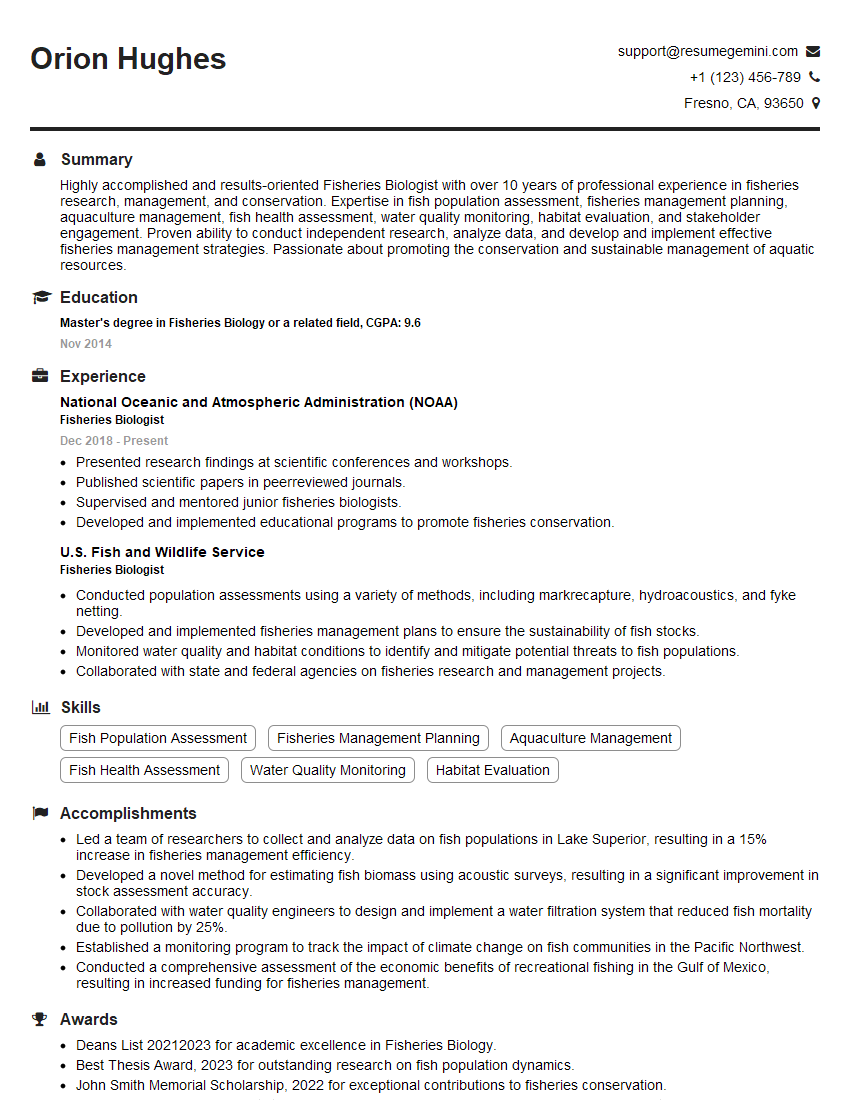
Mastering Fish Reproduction and Breeding opens doors to exciting career opportunities in aquaculture, fisheries management, conservation biology, and research. A strong understanding of these principles is highly sought after by employers. To maximize your job prospects, create an ATS-friendly resume that effectively showcases your skills and experience. ResumeGemini is a trusted resource that can help you build a professional and impactful resume. They even provide examples of resumes tailored to the Fish Reproduction and Breeding field, ensuring your application stands out. Invest the time in crafting a compelling resume – it’s your first impression and a crucial step toward securing your dream job.


Explore more articles
Users Rating of Our Blogs
Share Your Experience
We value your feedback! Please rate our content and share your thoughts (optional).
What Readers Say About Our Blog
Really detailed insights and content, thank you for writing this detailed article.
IT gave me an insight and words to use and be able to think of examples