Every successful interview starts with knowing what to expect. In this blog, we’ll take you through the top Food Safety and Sanitation Regulations interview questions, breaking them down with expert tips to help you deliver impactful answers. Step into your next interview fully prepared and ready to succeed.
Questions Asked in Food Safety and Sanitation Regulations Interview
Q 1. Explain the principles of HACCP.
HACCP, or Hazard Analysis and Critical Control Points, is a preventative food safety management system. Instead of reacting to contamination, HACCP focuses on identifying and controlling potential hazards throughout the entire food production process, from farm to table. It’s a science-based approach, using data and analysis to minimize risks.
Q 2. Describe the seven HACCP principles and provide a real-world example of each.
The seven HACCP principles are:
- Principle 1: Conduct a hazard analysis. Identify biological, chemical, and physical hazards that could occur at each step of the food production process. Example: A hazard analysis for a bakery might identify flour contamination with E. coli as a potential hazard.
- Principle 2: Determine the critical control points (CCPs). These are steps where control can prevent or eliminate a food safety hazard or reduce it to an acceptable level. Example: In the bakery, the baking process itself is a CCP as high temperatures kill most bacteria.
- Principle 3: Establish critical limits. Define measurable limits for each CCP. Example: The internal temperature of the baked goods must reach at least 165°F (74°C) to kill pathogens.
- Principle 4: Establish monitoring procedures. Regularly check and record measurements at CCPs to ensure they’re within the critical limits. Example: A food thermometer is used to monitor the internal temperature of the bread during baking, with readings recorded every 15 minutes.
- Principle 5: Establish corrective actions. Define actions to take if a CCP is not within the critical limits. Example: If the bread temperature falls below 165°F (74°C), the batch must be discarded.
- Principle 6: Establish verification procedures. Regularly verify that the HACCP system is working effectively. Example: Regular audits of the bakery’s procedures, equipment calibration, and employee training are essential.
- Principle 7: Establish record-keeping and documentation procedures. Maintain records of all steps in the HACCP plan. Example: The bakery keeps records of temperature logs, employee training certifications, and supplier certifications.
Q 3. What are Good Manufacturing Practices (GMPs)?
Good Manufacturing Practices (GMPs) are a set of guidelines that cover all aspects of food production, focusing on sanitation, hygiene, and facility conditions. They aim to prevent contamination and ensure food safety throughout the manufacturing process. Think of GMPs as the foundation upon which HACCP is built. GMPs focus on general cleanliness and operational hygiene, while HACCP is more specific about hazard control.
Q 4. How do GMPs relate to HACCP?
GMPs are essential prerequisites for a successful HACCP system. HACCP relies on the assumption that the plant is operating under good hygiene and sanitation practices. Without GMPs in place, it would be difficult, if not impossible, to effectively implement and maintain a reliable HACCP plan. For example, if the facility isn’t properly cleaned (a GMP requirement), then the risk of bacterial contamination becomes significantly higher, undermining any CCPs set in the HACCP plan.
Q 5. What are the key elements of a food safety management system?
A comprehensive food safety management system (FSMS) involves several key elements: HACCP, GMPs, supplier approval programs (verifying the safety of ingredients), traceability systems (knowing where ingredients originated and where products went), employee training, sanitation procedures, pest control, and a robust recall plan. It’s a holistic approach, integrating all aspects to guarantee food safety.
Q 6. Explain the importance of proper sanitation procedures in food processing.
Proper sanitation is paramount in food processing to prevent cross-contamination and the growth of harmful microorganisms. Failure to maintain sanitary conditions can lead to foodborne illnesses, product recalls, and significant financial losses. Sanitation eliminates or reduces the number of microorganisms on surfaces and equipment, preventing them from contaminating food products.
Imagine a scenario where equipment used for processing chicken is not properly cleaned before processing vegetables. This would result in cross-contamination, leading to potential Salmonella or Campylobacter contamination of the vegetables, causing serious health issues for consumers.
Q 7. Describe various sanitation methods and their applications.
Several sanitation methods are employed, depending on the surface and type of contamination:
- Cleaning: This is the initial step, removing visible dirt and debris using water, detergents, and appropriate tools like brushes and scrapers.
- Sanitizing: After cleaning, sanitizing reduces the number of microorganisms to safe levels. Common methods include heat sanitizing (hot water), chemical sanitizing (chlorine solutions, iodophors), and ozone sanitizing.
- Steam Cleaning: Uses high-pressure steam to clean and sanitize surfaces effectively, particularly in areas where harsh chemicals should be avoided.
- Ultrasonic Cleaning: Uses high-frequency sound waves to dislodge contaminants from hard-to-reach areas. This is particularly useful for cleaning delicate equipment.
The choice of method depends on factors like the material of the surface, the type of soil, and the desired level of sanitization. For instance, heat sanitizing is effective for heat-resistant materials, while chemical sanitizing is more versatile but requires careful handling and monitoring of chemical concentrations to avoid residue issues.
Q 8. How do you identify and control potential food hazards?
Identifying and controlling potential food hazards involves a systematic approach known as Hazard Analysis and Critical Control Points (HACCP). This involves seven principles:
- Conduct a hazard analysis: Identify biological, chemical, and physical hazards that could occur at each step of the food production process. For example, Salmonella in poultry, pesticide residues on produce, or glass shards in a jar of jam.
- Determine critical control points (CCPs): These are points in the process where control can prevent or eliminate a hazard or reduce it to an acceptable level. For example, cooking temperature for poultry to eliminate Salmonella.
- Establish critical limits: Set specific measurable limits for each CCP. For example, the internal temperature of cooked chicken must reach 165°F (74°C).
- Establish monitoring procedures: Regularly monitor the CCPs to ensure they are within the critical limits. This might involve using thermometers, visual inspections, or testing.
- Establish corrective actions: Define steps to take if a CCP is not within the critical limits. This might include discarding contaminated food, reprocessing the food, or adjusting the production process.
- Establish verification procedures: Regularly verify that the HACCP system is working effectively. This might include internal audits, microbiological testing, or reviewing records.
- Establish record-keeping and documentation procedures: Maintain detailed records of all HACCP activities.
By following these principles, businesses can proactively identify and mitigate potential food safety risks.
Q 9. What are common foodborne illnesses and their sources?
Common foodborne illnesses are caused by bacteria, viruses, parasites, or toxins. Some examples include:
- Salmonella: Often found in poultry, eggs, and meat; causes diarrhea, fever, and abdominal cramps.
- E. coli: Found in undercooked ground beef, contaminated produce, and unpasteurized milk; can cause severe diarrhea, vomiting, and kidney failure.
- Listeria monocytogenes: Found in ready-to-eat foods like deli meats and soft cheeses; particularly dangerous for pregnant women, the elderly, and those with weakened immune systems.
- Norovirus: A highly contagious virus that spreads easily through contaminated food or surfaces; causes vomiting and diarrhea.
- Staphylococcus aureus: A bacterium that produces toxins in food left at room temperature; causes nausea, vomiting, and diarrhea.
The sources of these illnesses vary widely, depending on the pathogen, but often include improper cooking temperatures, inadequate hygiene practices, cross-contamination, and unsafe food handling.
Q 10. How do you prevent cross-contamination in a food processing environment?
Preventing cross-contamination is crucial in food processing. It involves separating raw and cooked foods to prevent the transfer of pathogens. Here are some key strategies:
- Spatial separation: Designate separate areas for raw and cooked food preparation. This includes using different cutting boards, utensils, and equipment.
- Time separation: Process raw foods first, followed by cooked foods. Thoroughly clean and sanitize surfaces between processing different types of food.
- Equipment sanitation: Regularly clean and sanitize all equipment, including knives, cutting boards, and countertops. Use appropriate sanitizers and follow manufacturer’s instructions.
- Handwashing: Employees should wash their hands thoroughly and frequently, especially after handling raw foods.
- Proper storage: Store raw and cooked foods separately, ideally at different temperatures. Raw meats should be stored on lower shelves to prevent dripping onto ready-to-eat foods.
- Protective clothing: Employees should wear clean uniforms, gloves, and hairnets to minimize contamination.
Imagine a kitchen where raw chicken juices drip onto a salad – that’s cross-contamination in action! Following these practices minimizes this risk.
Q 11. What are the legal requirements for food labeling in your region?
Food labeling requirements vary by region. However, most jurisdictions require certain information, including:
- Product name: A clear and accurate description of the food.
- Net weight or volume: The amount of food in the package.
- Ingredient list: A list of all ingredients in descending order by weight.
- Allergen statement: A clear indication of any major allergens present (e.g., milk, eggs, peanuts).
- Manufacturer’s name and address: Contact information for the company that produced the food.
- Nutrition facts panel: Information on calories, fat, carbohydrates, and other nutrients.
- Best before or expiry date: An indication of the food’s shelf life.
Specific regulations around labeling claims (e.g., “organic,” “gluten-free”) also exist and must be adhered to. Non-compliance can result in penalties and product recalls.
Q 12. Explain the role of temperature control in food safety.
Temperature control is crucial for food safety. It prevents the growth of harmful bacteria and slows down the spoilage process. The “danger zone,” typically 40°F (4°C) to 140°F (60°C), is where bacteria multiply rapidly. Keeping food out of this zone is critical.
- Refrigeration: Refrigerate perishable foods at or below 40°F (4°C) to slow bacterial growth.
- Freezing: Freezing food at 0°F (-18°C) or lower stops bacterial growth.
- Hot holding: Keep hot foods at or above 140°F (60°C) to prevent bacterial growth.
- Rapid cooling: Cool cooked food rapidly to prevent bacterial growth in the danger zone.
Think of it like this: leaving food at room temperature is like leaving a garden unattended – weeds (bacteria) will grow uncontrollably. Proper temperature control is like weeding regularly, keeping your food safe and delicious.
Q 13. What are the critical control points (CCPs) in a specific food production process (e.g., canning)?
In canning, critical control points (CCPs) are crucial for preventing botulism, a severe form of food poisoning. Key CCPs include:
- Raw material handling: Ensuring the raw materials are free from defects and contamination.
- Cleaning and pre-treatment: Thoroughly cleaning the produce or meat before processing.
- Filling and sealing: Correct filling levels and ensuring airtight seals to prevent contamination.
- Heat processing: Achieving the required temperature and time for adequate sterilization to destroy harmful microorganisms. This is arguably the most critical CCP.
- Cooling: Rapidly cooling the canned goods to prevent spoilage.
- Storage: Storing canned goods in a cool, dry place to maintain quality and safety.
Monitoring these CCPs, using accurate thermometers and pressure gauges, ensures the safety of canned products, preventing harmful bacterial growth that could lead to serious illness.
Q 14. How do you verify the effectiveness of sanitation procedures?
Verifying sanitation effectiveness involves several methods:
- Visual inspection: Check for visible signs of cleanliness, such as the absence of dirt, grease, and food residue.
- ATP bioluminescence testing: This test measures adenosine triphosphate (ATP), which is present in all living organisms. High ATP levels indicate inadequate cleaning.
- Microbial testing: Taking samples from surfaces to test for the presence of bacteria. This involves swabbing a surface and culturing the sample in a lab to determine the level of microbial contamination.
- Sanitizer concentration testing: Measuring the concentration of the sanitizer solution to ensure it is within the effective range. Using test strips or electronic meters is common practice.
- Employee training and observation: Ensuring that employees are properly trained in sanitation procedures and regularly observing their practices to make sure they are performing tasks correctly.
By combining these methods, facilities can ensure their sanitation procedures are effective in eliminating harmful microorganisms and maintaining a safe food processing environment. Documentation of each test and inspection is critical for demonstrating compliance and for ongoing improvement of procedures.
Q 15. What is a food safety audit and what does it involve?
A food safety audit is a systematic and independent examination of a food business’s practices to ensure they comply with food safety regulations and maintain high standards of hygiene. It’s essentially a health check for your food operations. The audit involves a thorough review of all aspects of the food handling process, from receiving raw materials to delivering the final product.
- Documentation Review: Auditors check for evidence of HACCP plans, SSOPs (Standard Sanitation Operating Procedures), pest control logs, employee training records, and other critical documents.
- On-site Inspection: A physical inspection of the facility assesses the cleanliness of equipment, storage areas, and workspaces. They’ll look for proper temperature control, handwashing facilities, and waste disposal procedures.
- Interviewing Personnel: Auditors will interview employees at various levels to assess their understanding of food safety procedures and their adherence to them. This helps identify any gaps in training or knowledge.
- Testing (if applicable): In some cases, environmental swabs or food sample testing might be conducted to check for microbial contamination.
Think of it like a car inspection – you want to make sure everything is running smoothly and safely to avoid breakdowns (food safety incidents).
Career Expert Tips:
- Ace those interviews! Prepare effectively by reviewing the Top 50 Most Common Interview Questions on ResumeGemini.
- Navigate your job search with confidence! Explore a wide range of Career Tips on ResumeGemini. Learn about common challenges and recommendations to overcome them.
- Craft the perfect resume! Master the Art of Resume Writing with ResumeGemini’s guide. Showcase your unique qualifications and achievements effectively.
- Don’t miss out on holiday savings! Build your dream resume with ResumeGemini’s ATS optimized templates.
Q 16. Describe your experience with conducting or participating in food safety audits.
Throughout my career, I’ve been actively involved in numerous food safety audits, both conducting them and participating as a facility representative. For example, I led a team of auditors assessing a large-scale meat processing plant. We used a checklist based on the GFSI (Global Food Safety Initiative) standards, meticulously examining their HACCP plan, sanitation procedures, and employee training programs. We identified minor deficiencies in their allergen control procedures which were promptly addressed. In another instance, I represented a bakery during a third-party audit. This provided valuable insight into the auditor’s perspective, strengthening my understanding of the audit process and how to proactively address potential concerns. These experiences have honed my skills in identifying critical control points, assessing risks, and recommending corrective actions.
Q 17. How do you manage food safety incidents or recalls?
Managing food safety incidents or recalls requires a swift, coordinated response. My approach is based on a structured protocol:
- Immediate Containment: The first step is to immediately isolate the affected product to prevent further distribution. This includes identifying the affected batches and notifying relevant parties, such as distributors and retailers.
- Root Cause Analysis: A thorough investigation is crucial to identify the source of the contamination or problem. This might involve reviewing production records, testing samples, and interviewing staff.
- Corrective Actions: Based on the root cause analysis, appropriate corrective actions are implemented to prevent recurrence. This could include improving sanitation procedures, retraining staff, or upgrading equipment.
- Communication: Open communication with regulatory agencies (like the FDA or USDA), customers, and stakeholders is paramount. Transparency is key to maintaining trust and minimizing the impact of the incident.
- Recall Management (if necessary): If a recall is unavoidable, a detailed recall plan should be executed promptly, ensuring effective retrieval of the affected products.
For instance, I once handled a recall involving a batch of cookies with undeclared allergens. We immediately implemented the steps above, effectively managing the situation, minimizing impact, and learning valuable lessons for future prevention.
Q 18. What are your methods for maintaining accurate food safety records?
Maintaining accurate food safety records is crucial for traceability and demonstrating compliance. My methods emphasize a combination of digital and physical record-keeping:
- Digital Systems: Utilizing software specifically designed for food safety management allows for efficient data entry, analysis, and reporting. This enables easy access to crucial information and simplifies audits.
- Physical Records: Critical documents like HACCP plans, SOPs, and training records are kept in secure, organized physical files. This provides backup in case of digital system failure.
- Data Integrity: Procedures are in place to ensure data accuracy, including regular checks, validation, and version control. This ensures that records are reliable and trustworthy.
- Data Retention Policy: A clear policy outlines how long records need to be retained, complying with relevant regulations.
Think of it like a well-organized library – everything has its place, is readily accessible, and meticulously documented to avoid chaos and confusion.
Q 19. How do you ensure effective employee training on food safety and sanitation?
Effective employee training is the cornerstone of a robust food safety program. My approach combines various methods:
- Initial Training: Comprehensive onboarding programs cover fundamental food safety principles, hygiene practices, and the facility’s specific SOPs.
- Regular Refresher Training: Ongoing training keeps employees updated on regulations, best practices, and any changes in procedures. This ensures they remain competent and proactive.
- Interactive Training Methods: Utilizing interactive methods, such as hands-on workshops, videos, and quizzes, enhances knowledge retention and engagement.
- Documentation and Assessment: Training records are meticulously maintained, and employees are regularly assessed to evaluate their understanding and skill levels.
- Incentivization: Recognizing and rewarding employees for their commitment to food safety motivates them to maintain high standards.
Imagine teaching a recipe – you start with the basics, regularly review it, and ensure everyone knows how to follow it correctly to prevent mistakes.
Q 20. Explain the importance of pest control in a food processing facility.
Pest control in a food processing facility is absolutely critical because pests can contaminate food products, leading to serious health risks, product recalls, and financial losses. Pests can introduce pathogens, allergens, or physical contaminants into food, causing illness or allergic reactions. Their presence also indicates a potential lack of sanitation and hygiene, undermining consumer confidence.
Effective pest control maintains a clean and safe food processing environment, protecting both the products and the reputation of the facility.
Q 21. Describe different methods for pest control.
Pest control methods are multifaceted and should be integrated for optimal effectiveness:
- Sanitation and Hygiene: Regular cleaning and sanitation are fundamental. This eliminates food sources and breeding grounds for pests.
- Physical Barriers: Using screens, traps, and sealing gaps in walls and floors prevents pests from entering the facility.
- Integrated Pest Management (IPM): This holistic approach combines preventative measures with targeted interventions. It prioritizes non-chemical methods before resorting to pesticides, minimizing environmental impact.
- Rodent Control: Rodent bait stations, traps, and exclusion methods are essential for managing rodent infestations.
- Insect Control: Sticky traps, pheromone traps, and insecticide applications (only when necessary and strictly following regulations) help control insect populations.
- Monitoring and Documentation: Regular inspections and detailed records document pest activity and the effectiveness of control measures.
Effective pest control is a continuous process, not a one-time event. It requires vigilance, proper procedures, and ongoing monitoring to prevent infestations and maintain a pest-free environment.
Q 22. What is your experience with allergen management?
Allergen management is crucial for preventing allergic reactions in consumers. It involves identifying, controlling, and labeling allergenic ingredients throughout the entire food production process. My experience encompasses all aspects, from initial ingredient sourcing and verification to finished product labeling and recall procedures.
This includes implementing strict segregation protocols to prevent cross-contamination. For instance, in a previous role, we established separate dedicated lines for processing products containing peanuts and other common allergens. We also employed rigorous cleaning and sanitizing procedures between production runs to eliminate any trace allergen residues. Our allergen management plan included regular employee training on proper handling procedures, detailed documentation of all ingredients, and thorough record-keeping to ensure full traceability. We even used color-coded utensils and equipment to visually differentiate between allergen-containing and allergen-free products. Finally, we worked closely with our labeling team to ensure accurate allergen declaration on all products, complying with all relevant regulations.
Q 23. How do you handle and dispose of food waste safely?
Safe food waste handling and disposal is paramount to prevent pest infestations, contamination, and environmental pollution. It’s about more than just throwing things away; it’s a systematic process.
We begin with proper segregation – separating organic waste (food scraps) from inorganic waste (packaging). Organic waste is ideally composted, reducing landfill waste and creating valuable fertilizer. For facilities lacking composting, we contract with licensed waste disposal companies who handle food waste according to environmental regulations. Inorganic waste is recycled where possible. All waste containers are clearly labeled, regularly cleaned and sanitized, and emptied frequently to prevent odors and attract pests. We also monitor waste disposal practices to identify any inefficiencies or potential risks and implement corrective actions immediately. Think of it like this: meticulous waste management is a reflection of your commitment to overall hygiene and safety.
Q 24. What is your understanding of food traceability systems?
Food traceability systems are essential for tracking food products throughout the supply chain, from farm to table. This allows for swift identification and removal of contaminated products in case of a recall, protecting consumers and safeguarding brand reputation.
My understanding extends to various traceability technologies, including barcode scanning, RFID tagging, and blockchain. Effective traceability systems involve detailed record-keeping at each stage of production, processing, and distribution. Lot numbers, dates, and supplier information are meticulously documented, enabling rapid tracking of any specific product batch. This capability is invaluable during investigations, allowing pinpointing the source of contamination and containing its spread. A robust system also ensures compliance with regulatory requirements, such as those stipulated by the FDA in the U.S. or the EFSA in Europe.
Q 25. How do you stay updated on changes in food safety regulations?
Staying current with evolving food safety regulations requires a proactive and multi-faceted approach.
I regularly subscribe to newsletters and publications from organizations like the FDA, USDA, and relevant international bodies. I actively participate in industry conferences and webinars, engaging with other food safety professionals and learning about emerging trends. Membership in professional organizations provides access to updates, best practices, and networking opportunities. Furthermore, I maintain close communication with regulatory agencies and actively monitor changes to laws and standards. This includes regularly reviewing updated guidance documents and participating in any required training to maintain certifications. Keeping up-to-date isn’t a one-time task; it’s a continuous process to ensure we remain compliant.
Q 26. Describe a situation where you had to address a food safety issue. What was your approach?
During a routine audit, we discovered a temperature fluctuation in our walk-in cooler, potentially compromising the safety of stored perishable goods.
My immediate response was to initiate a full investigation. First, we immediately isolated the affected products to prevent further contamination. Then, we identified the cause of the temperature problem, which turned out to be a faulty compressor. We contacted maintenance for immediate repair. Next, we conducted a thorough assessment of the affected products, checking their internal temperatures and discarding anything beyond safe limits. Finally, we initiated a thorough internal review of our temperature monitoring protocols, strengthening checks and balances to prevent similar occurrences in the future. The situation highlighted the importance of our proactive monitoring systems, and this incident led us to implement a secondary temperature monitoring system as an added precaution.
Q 27. How do you maintain a clean and sanitary work environment?
Maintaining a clean and sanitary work environment is fundamental to preventing foodborne illnesses. It requires a comprehensive approach, combining proactive measures with consistent monitoring.
Our cleaning and sanitation program follows a strict schedule, employing appropriate cleaning agents and equipment for different surfaces. We regularly inspect equipment, ensuring proper functionality and hygiene. Employees receive regular training on proper sanitation techniques, including handwashing, cleaning and disinfection protocols, and pest control. We implement a robust pest control program, utilizing preventative measures and regular inspections to eliminate potential harborage areas. Visual inspections and audits are conducted regularly to identify and address any sanitation issues promptly. We maintain detailed records of all cleaning activities, allowing for traceability of cleaning schedules and personnel involved. Essentially, we aim to create a culture of cleanliness where hygiene is considered a shared responsibility.
Q 28. What are your experience with different food safety certifications (e.g., SQF, BRC)?
I have extensive experience with various food safety certifications, notably SQF (Safe Quality Food) and BRC (British Retail Consortium) Global Standard for Food Safety.
I’ve been directly involved in the implementation and maintenance of these standards in several food production facilities. My understanding extends to the detailed requirements of each certification, encompassing aspects like hazard analysis and critical control points (HACCP), prerequisite programs (PRPs), and internal audit processes. I know how to interpret standards and translate them into practical operational procedures. For example, I’ve successfully led teams through the certification audits for both SQF and BRC, ensuring successful compliance and demonstrating a commitment to maintaining the highest standards of food safety. The knowledge gained through these certifications has been invaluable in developing and implementing effective food safety management systems in diverse food production settings. I also understand the differences in scope and requirements between these various standards and can adapt my approach accordingly.
Key Topics to Learn for Food Safety and Sanitation Regulations Interview
- Hazard Analysis and Critical Control Points (HACCP): Understand the principles of HACCP, including hazard identification, critical control point determination, and monitoring procedures. Consider practical application in various food production settings.
- Good Manufacturing Practices (GMP): Familiarize yourself with GMP principles relating to personnel hygiene, facility sanitation, equipment maintenance, and pest control. Think about how these practices prevent contamination and ensure product safety.
- Foodborne Illness Prevention: Study common foodborne pathogens (e.g., Salmonella, E. coli, Listeria), their sources, and prevention strategies. Be prepared to discuss outbreak investigations and response protocols.
- Sanitation Procedures and Techniques: Master the proper methods for cleaning and sanitizing food contact surfaces, equipment, and facilities. Consider practical application of different sanitizing agents and their effectiveness.
- Food Allergen Control: Learn about common food allergens and the regulations surrounding their labeling and management in food processing and service environments. Practice applying allergen control measures to prevent cross-contamination.
- Regulatory Compliance: Understand relevant federal, state, and local food safety regulations and how they apply to different food businesses (e.g., restaurants, processing plants). Prepare to discuss compliance procedures and record-keeping.
- Personal Protective Equipment (PPE): Understand the importance and correct use of PPE in food handling environments to ensure both worker and product safety. Be ready to discuss specific examples of appropriate PPE.
- Waste Management and Disposal: Be familiar with proper procedures for handling and disposing of food waste to minimize environmental impact and prevent pest infestations. Consider practical applications in various food service operations.
Next Steps
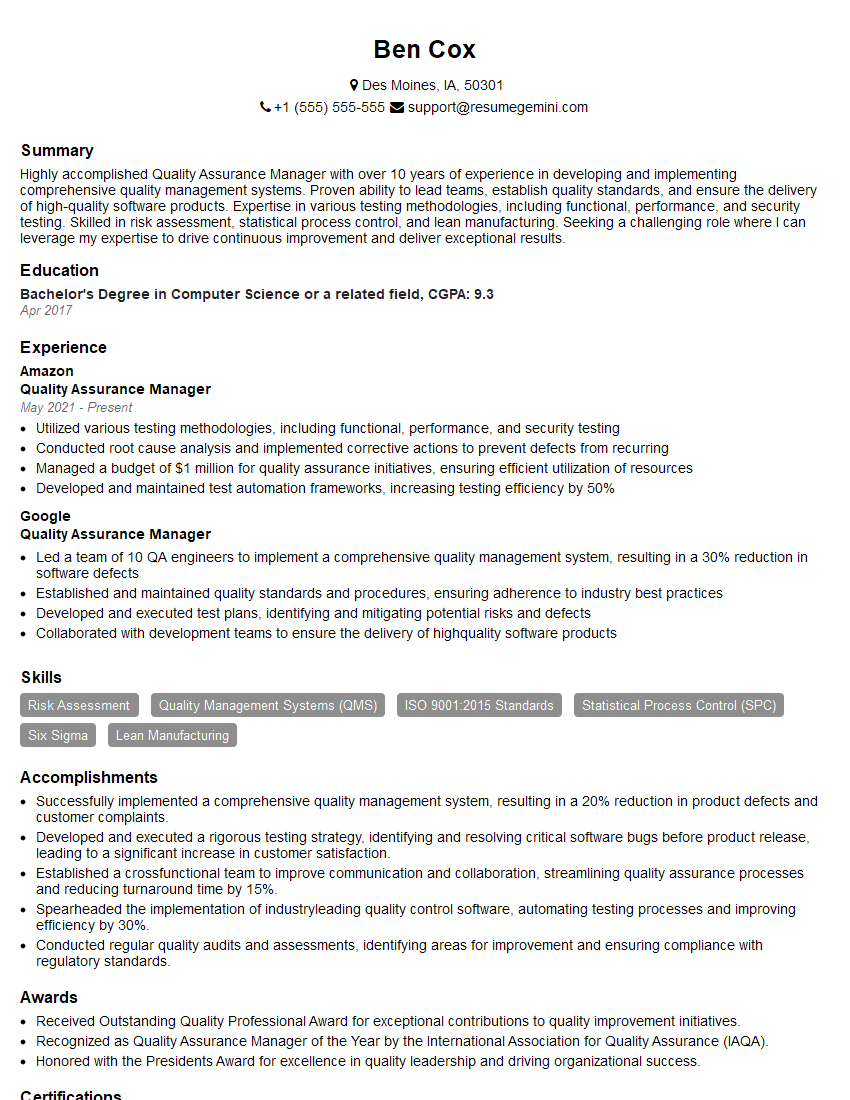
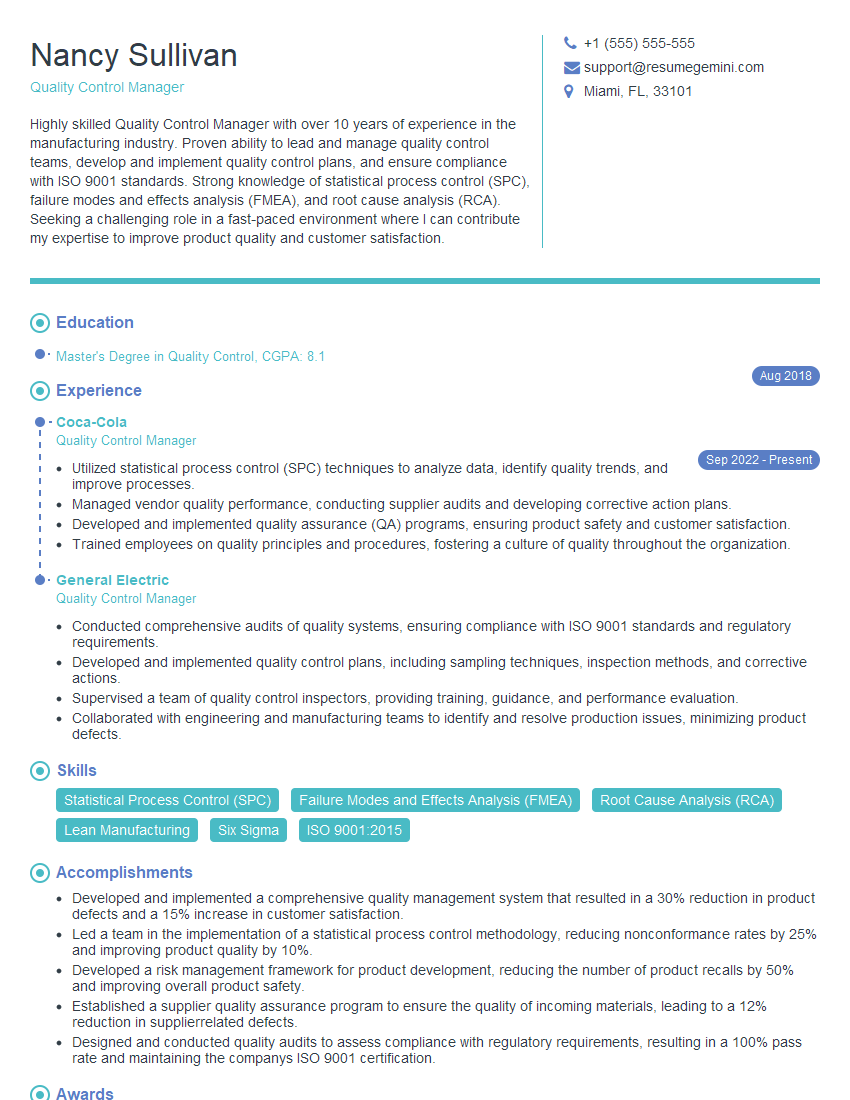
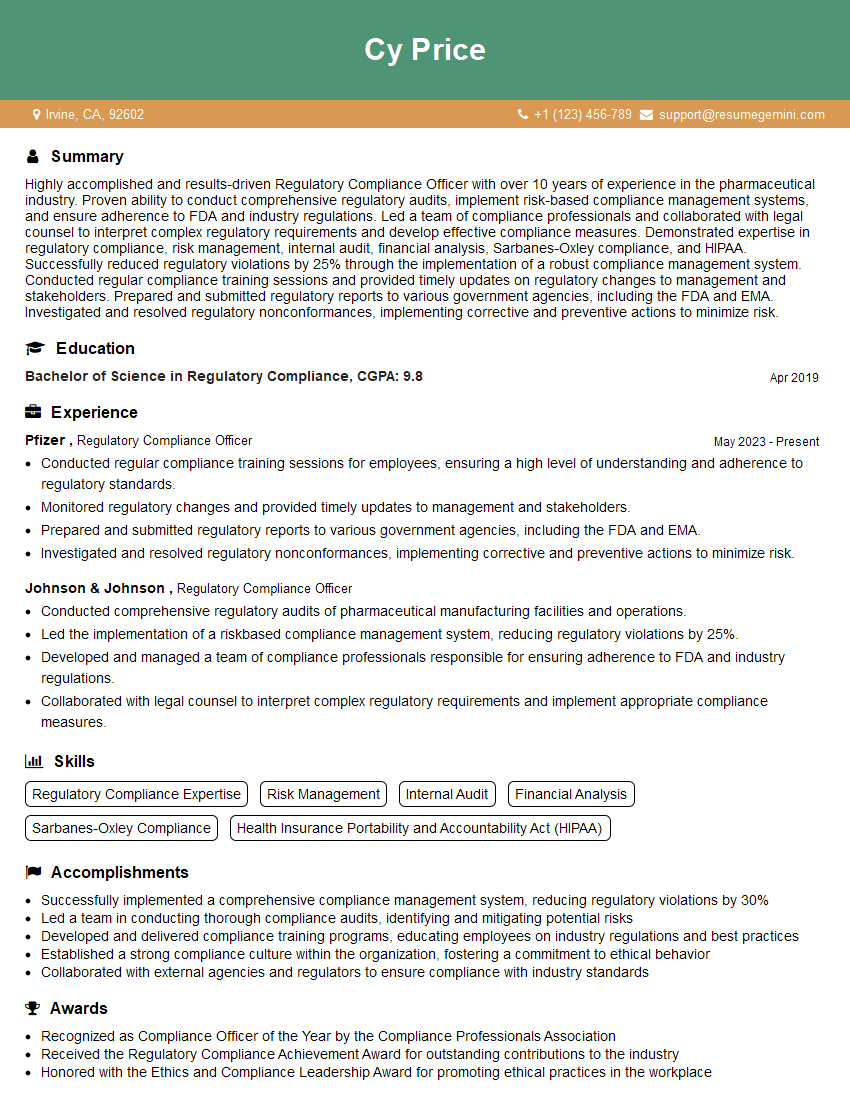
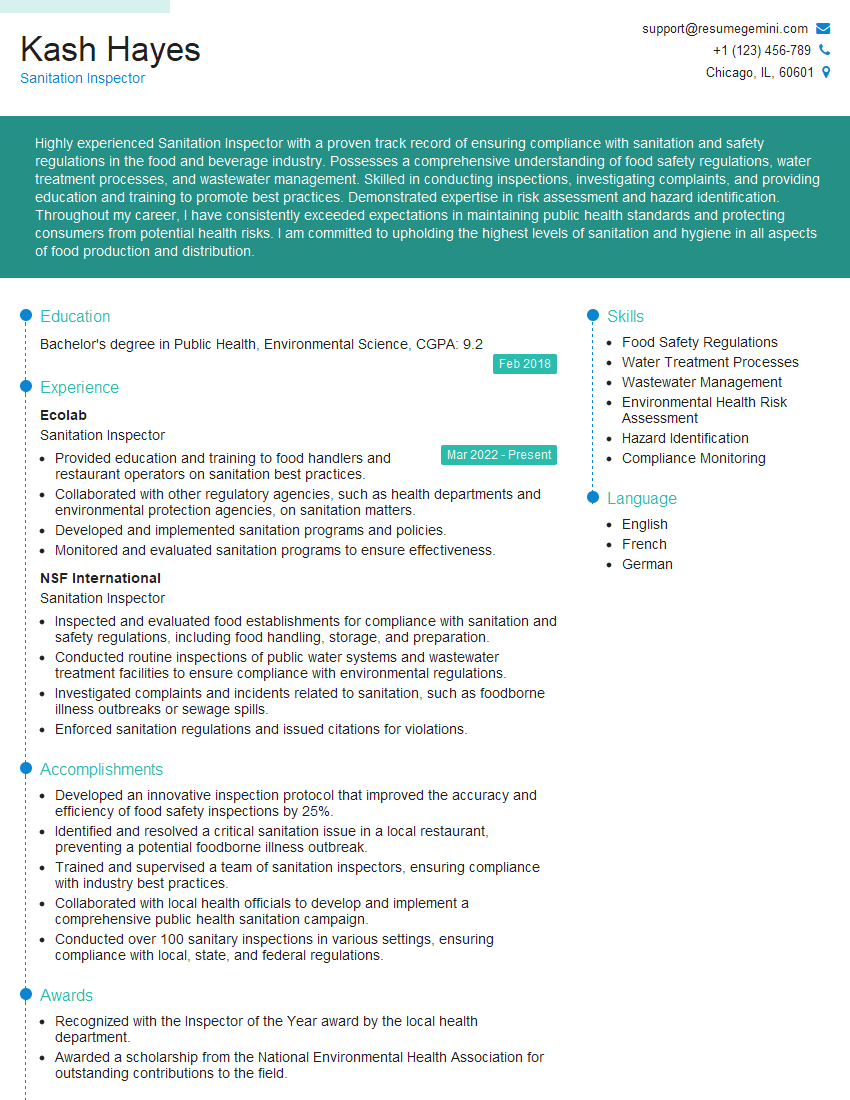
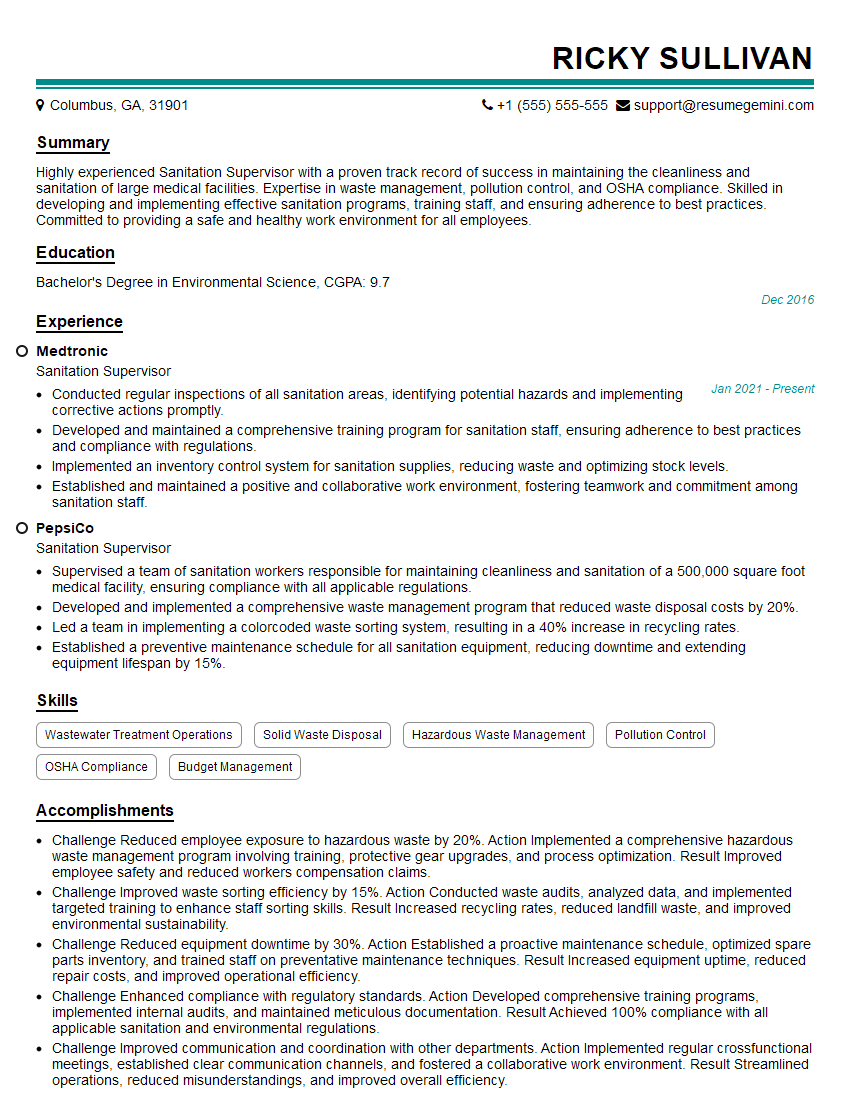
Mastering Food Safety and Sanitation Regulations is crucial for career advancement in the food industry, opening doors to leadership roles and higher earning potential. A strong understanding of these regulations demonstrates your commitment to safety and quality, making you a highly valuable asset to any employer. To maximize your job prospects, create an ATS-friendly resume that highlights your skills and experience effectively. ResumeGemini is a trusted resource to help you build a professional resume that stands out. ResumeGemini provides examples of resumes tailored to Food Safety and Sanitation Regulations to guide you in creating your own compelling application.

Explore more articles
Users Rating of Our Blogs
Share Your Experience
We value your feedback! Please rate our content and share your thoughts (optional).
What Readers Say About Our Blog
Really detailed insights and content, thank you for writing this detailed article.
IT gave me an insight and words to use and be able to think of examples