Preparation is the key to success in any interview. In this post, we’ll explore crucial Fruit Identification and Grading interview questions and equip you with strategies to craft impactful answers. Whether you’re a beginner or a pro, these tips will elevate your preparation.
Questions Asked in Fruit Identification and Grading Interview
Q 1. Describe the different grading standards for apples.
Apple grading standards vary slightly depending on the country and specific market, but generally involve a combination of size, color, shape, and defects. Think of it like a scoring system for each apple. Larger, uniformly colored apples with minimal blemishes receive higher grades.
- Size: Apples are often categorized into sizes like extra large, large, medium, and small, based on diameter or weight.
- Color: The desired color depends on the apple variety. For example, a Red Delicious apple should be predominantly red and bright, while a Granny Smith should be a consistent green. Uniformity of color is key.
- Shape: Apples should be generally round or oblong, with minimal deformities. Significant misshapen apples are downgraded.
- Defects: Bruises, cuts, insect damage, and other blemishes lower the grade. The number and severity of defects determine the grade reduction. A minor bruise might only drop the grade slightly, while extensive damage results in a much lower grade or rejection.
Imagine a visual grading scale, with perfect apples at the top, and those with increasing defects moving down the scale. The highest grades are usually reserved for apples intended for fresh consumption, while lower grades might be used for processing (like juice or applesauce).
Q 2. Explain the process of visually inspecting citrus fruits for defects.
Visual inspection of citrus fruits is crucial for quality control. It’s a systematic process that identifies defects impacting appearance, taste, and marketability. We look for things affecting the outer rind and any indications of problems within the fruit.
- External Defects: We check for blemishes like bruises, cuts, punctures, and scarring. The color and uniformity of the rind are also assessed. Any discoloration, spots, or signs of disease (like mold) are carefully noted.
- Shape and Size: Citrus fruits should generally be round or oblong, depending on the variety. Deformities, like bumps or irregular shapes, can reduce the grade. Size uniformity is also important, especially for packing purposes.
- Internal Defects (Indirect Assessment): While internal defects aren’t directly visible, experienced graders can often infer their presence based on external signs. For example, a soft spot on the rind may indicate internal decay.
Think of it like a detective examining clues. A small bruise might be inconsequential, while a large, discolored area suggests internal problems. The inspection is often done with the help of specialized lighting to enhance visibility.
Q 3. How do you identify signs of disease or pest infestation in fruits?
Identifying disease or pest infestation involves a keen eye and understanding of common fruit ailments. We check for subtle signs that often indicate deeper issues.
- Visual Signs: Look for discoloration, spots, lesions, holes, or tunnels in the fruit’s skin or flesh. Unusual growths, wilting, or misshapen fruit can also be indicative of problems.
- Insect Evidence: Presence of insects (or their remains), insect frass (droppings), or webbing is a clear sign of infestation.
- Disease Symptoms: Specific diseases cause unique symptoms. For instance, brown rot in apples appears as a brown, mushy area, while powdery mildew might present as a white coating. Knowledge of common diseases for the specific fruit type is vital.
- Smell: An unusual or off-putting odor can also be an indicator of internal decay or pest infestation.
Imagine a doctor examining a patient. A careful inspection, along with knowledge of common symptoms, helps in diagnosing the problem and implementing the appropriate action (rejecting the fruit, treating it if possible, or isolating it to prevent spread).
Q 4. What are the key characteristics used to grade berries based on size and color?
Berry grading focuses heavily on size and color uniformity. Size is usually determined by diameter or weight, and color varies by variety but should be consistent within that variety.
- Size: Berries are often sorted into different size categories (e.g., large, medium, small), based on their diameter. Uniformity of size within each category is important for packaging and appearance.
- Color: The color should be characteristic of the fully ripe berry for its variety. For instance, strawberries should be a deep red, blueberries a dark blue, and raspberries a vibrant red or dark purple. Unripe or overly ripe berries with inconsistent coloring are downgraded.
Consider a jewelry maker grading gemstones: consistency of size and color are highly valued, affecting the final product’s quality and price.
Q 5. Explain the role of ripeness in fruit grading.
Ripeness is a crucial factor in fruit grading because it directly impacts the fruit’s quality, flavor, and shelf life. It’s a balancing act; we want the fruit to be ripe enough for optimal taste, but not overripe to the point of spoilage.
- Sensory Evaluation: Ripeness is assessed through visual cues (color, firmness), tactile assessment (feel), and sometimes smell. For example, a ripe banana will have yellow skin and yield slightly to gentle pressure.
- Internal Quality: Ripeness relates to internal quality—the balance of sugars and acids. Overripe fruit may have lost its firmness and developed unpleasant flavors.
- Grade Determination: Fruits that are underripe or overripe are usually downgraded or rejected. The ideal ripeness level varies based on the fruit type and intended use.
Think of baking a cake: you need the right amount of ripe fruit to have a tasty result. Similarly, properly ripe fruits appeal to consumers and have a longer shelf life.
Q 6. How do you determine the optimal storage conditions for different types of fruit?
Optimal storage conditions for fruit depend heavily on the specific fruit type and its maturity at harvest. Maintaining appropriate temperature, humidity, and atmosphere slows down respiration and prevents spoilage.
- Temperature: Most fruits benefit from cool storage temperatures, near freezing (but above freezing to avoid damage). However, some tropical fruits are sensitive to cold.
- Humidity: High humidity is essential to prevent water loss (shriveling) and maintain firmness. Lower humidity can be useful for certain fruits, like some berries.
- Atmosphere: Controlled atmosphere storage (CAS) modifies the gas composition (reducing oxygen and increasing carbon dioxide) to further slow respiration and extend shelf life. This is common for apples and pears, for instance.
Think of it like preserving valuable artifacts: maintaining specific environmental conditions ensures their longevity and prevents damage. The same applies to fruit – we want to preserve its freshness and quality for as long as possible.
Q 7. What are the common defects found in bananas and how are they classified?
Banana defects are commonly categorized based on their appearance and cause. These defects can significantly impact their marketability and shelf life.
- Bruises and Cuts: Physical damage causes discoloration and often leads to spoilage. The severity is graded based on the size and depth of the damage.
- Chilling Injury: Exposure to low temperatures causes surface discoloration (often blackening) and internal damage affecting quality and taste.
- Disease: Fungal or bacterial infections cause spots, decay, and discoloration. Different diseases exhibit different patterns of decay.
- Insect Damage: Insect infestation can create holes, tunnels, and decay.
- Blemishes: Superficial imperfections that do not affect the eating quality significantly but may detract from the visual appeal.
We can think of this classification like a doctor’s diagnosis: each defect has its specific cause and appearance, and understanding these helps determine the appropriate management strategy (discarding affected bananas, sorting them into different quality grades, etc.).
Q 8. Describe the different methods used for sorting and grading fruits.
Fruit sorting and grading employs various methods to categorize fruits based on size, quality, and appearance, ensuring consistent product quality for consumers. These methods can be broadly categorized into manual and automated processes.
Manual Sorting: This traditional method involves human inspectors visually assessing each fruit for defects, size, color, and shape. It’s effective for smaller operations or for high-value fruits requiring meticulous inspection. Think of a farmer carefully selecting his prize-winning apples for a local market.
Automated Sorting: Modern systems utilize sophisticated technologies like optical sorters, which use cameras and sensors to analyze various fruit characteristics rapidly. These machines can sort by size, color, shape, and even detect internal defects. For example, a large-scale citrus packing house might employ such a system to process thousands of oranges per hour.
Size Grading: This involves separating fruits into different size categories using rollers, vibratory conveyors, and sizing screens. Apples, for instance, are often graded into extra-large, large, medium, and small sizes.
Density Grading: This method separates fruits based on their density, which can indicate ripeness and quality. A less dense fruit might indicate lower water content and thus lower quality.
Q 9. How do you handle damaged or bruised fruit during the grading process?
Damaged or bruised fruit requires careful handling during grading to prevent further deterioration and contamination. The severity of the damage dictates the course of action.
Minor Damage: Fruits with superficial blemishes might be downgraded to a lower grade but still remain marketable. This might involve trimming away damaged areas before packing. A slight bruise on a banana could still be sold as part of a ‘seconds’ batch.
Significant Damage: Heavily bruised or rotten fruits are typically rejected. They might be diverted for processing into juice, preserves, or animal feed, preventing waste and ensuring consumer safety.
Segregation: Damaged fruit is always kept separate from undamaged fruit to prevent cross-contamination. Proper storage conditions are also essential to avoid further spoilage.
Maintaining records of rejected fruit is crucial for traceability and quality control analysis.
Q 10. What are the implications of inaccurate fruit grading on the market?
Inaccurate fruit grading has significant repercussions throughout the market.
Consumer Dissatisfaction: Consumers who purchase low-quality fruit labeled as high-quality will experience disappointment and may lose trust in the brand or retailer.
Reputational Damage: Businesses with inconsistent grading practices can suffer long-term damage to their reputation and brand image.
Price Volatility: Inaccurate grading can lead to mispricing, resulting in economic losses for producers and retailers. Overgrading can mean lower profit margins, while undergrading can mean lost potential revenue.
Market Inefficiency: Incorrect grading disrupts the efficient flow of goods, potentially leading to spoilage or waste due to inaccurate market demand predictions.
Strict quality control measures and regular audits are essential to minimize the risks associated with inaccurate grading.
Q 11. Explain the importance of maintaining hygiene and sanitation during fruit inspection.
Maintaining hygiene and sanitation during fruit inspection is paramount for ensuring food safety and preventing the spread of harmful microorganisms. This encompasses several key aspects:
Personal Hygiene: Inspectors must practice good hand hygiene, wearing appropriate protective clothing such as gloves and hairnets. Regular hand washing and sanitizing are essential.
Equipment Sanitation: All equipment used in the grading process, including conveyor belts, sorting machines, and packaging materials, must be regularly cleaned and sanitized to eliminate bacteria and prevent cross-contamination. Regular maintenance schedules and cleaning logs are crucial.
Facility Cleanliness: The inspection facility itself should maintain high standards of cleanliness. Regular cleaning and pest control measures are critical. Good ventilation can minimize humidity and potential mold growth.
Waste Management: Proper disposal of rejected fruit and waste materials is crucial to prevent attracting pests and maintaining a sanitary environment.
Regular inspections and audits help ensure that hygiene protocols are consistently followed.
Q 12. How do you identify and classify different types of fruit based on their external characteristics?
Identifying and classifying fruits based on external characteristics relies on a combination of visual observation and knowledge of different fruit varieties. Key characteristics include:
Shape and Size: Fruits have distinctive shapes (round, oblong, elongated) and sizes. For example, a perfectly round tomato is different from a pear-shaped one.
Color: Color is a crucial indicator of ripeness and variety. A ripe banana transitions from green to yellow, while a red apple might have different shades depending on the cultivar.
Skin Texture: The texture of the skin can range from smooth (e.g., grapes) to rough (e.g., pineapples). The presence of blemishes or imperfections also impacts classification.
Aroma: While not strictly visual, aroma plays a vital role in identifying some fruits, especially when assessing ripeness.
Experience and knowledge of different fruit types are essential for accurate identification.
Q 13. Describe the use of technology in modern fruit grading systems.
Technology has revolutionized modern fruit grading systems, significantly improving efficiency, accuracy, and consistency.
Computer Vision Systems: These systems utilize advanced image processing and machine learning algorithms to analyze fruit characteristics such as color, size, shape, and defects with high precision and speed. Think of a system capable of identifying a tiny bruise on an apple that a human eye might miss.
Spectroscopy: Techniques such as near-infrared (NIR) spectroscopy allow for the non-destructive assessment of internal fruit quality parameters like sugar content, firmness, and ripeness. This provides a deeper understanding of fruit quality than visual inspection alone.
Robotics and Automation: Robots are increasingly used in automated sorting lines, handling and transporting fruit gently and efficiently. This reduces labor costs and improves throughput.
Data Analytics: Data collected from automated grading systems can be analyzed to track trends, improve grading parameters, and optimize production processes.
These technologies enable large-scale processing while maintaining a high standard of quality control.
Q 14. Explain the significance of traceability in fruit supply chains.
Traceability in fruit supply chains is crucial for maintaining food safety, managing quality, and building consumer trust. It involves tracking fruit from its origin (farm) through all stages of processing, handling, and distribution to the final consumer.
Food Safety: Traceability helps identify the source of contamination in case of a food safety incident, enabling swift recall and mitigation measures. This protects consumers and minimizes the risk of widespread outbreaks.
Quality Control: Traceability allows for better monitoring of fruit quality throughout the supply chain. Identifying problematic stages enables targeted interventions to improve overall quality.
Brand Protection: Reliable traceability helps enhance brand reputation and builds customer confidence by demonstrating transparency and accountability throughout the supply chain.
Regulatory Compliance: Many countries have regulations mandating traceability in food production, requiring detailed records to be kept throughout the supply chain.
Technologies like barcodes, RFID tags, and blockchain can facilitate traceability, providing a digital record of fruit movement.
Q 15. How do you handle situations where there are disagreements regarding the grading of a fruit?
Disagreements in fruit grading are inevitable, given the subjective nature of some quality assessments. We handle these situations with a structured approach. First, we revisit the grading standards, ensuring everyone involved understands the specific criteria for each grade. This often involves reviewing photos and examples of fruits within each grade category. Secondly, we conduct a re-examination of the fruit in question, involving multiple graders, ideally with different levels of experience. We use calibrated equipment where appropriate, like firmness testers, to ensure objectivity. If inconsistencies persist, we might use a consensus-based approach, where graders discuss their evaluations and reach a mutually agreed-upon grade. In some cases, an arbitration process, involving a senior grader or an industry expert, may be necessary to resolve the disagreement fairly and efficiently. A detailed record of the grading process, including any discrepancies and their resolution, is crucial for transparency and continuous improvement of our grading methods.
Career Expert Tips:
- Ace those interviews! Prepare effectively by reviewing the Top 50 Most Common Interview Questions on ResumeGemini.
- Navigate your job search with confidence! Explore a wide range of Career Tips on ResumeGemini. Learn about common challenges and recommendations to overcome them.
- Craft the perfect resume! Master the Art of Resume Writing with ResumeGemini’s guide. Showcase your unique qualifications and achievements effectively.
- Don’t miss out on holiday savings! Build your dream resume with ResumeGemini’s ATS optimized templates.
Q 16. What are the key differences between internal and external quality assessment of fruits?
Internal and external quality assessments of fruits are complementary, targeting different aspects of fruit quality. External quality focuses on the fruit’s appearance – things we can see and measure without damaging the fruit. This includes factors like size, shape, color, skin blemishes, and overall appearance. For example, a perfectly shaped, uniformly colored apple would score higher on external quality than one with bruises or uneven coloring. Internal quality, on the other hand, assesses attributes that require the fruit to be cut open or otherwise damaged. This includes factors such as firmness, texture, juice content, soluble solids content (measured using a refractometer), acidity, and the presence of internal defects like browning or decay. A firm apple with a high sugar content would score higher in terms of internal quality. These two assessments work together to provide a complete picture of fruit quality, critical for pricing, marketing, and determining shelf life.
Q 17. How do you ensure the accuracy and consistency of fruit grading procedures?
Ensuring accuracy and consistency in fruit grading requires a multi-pronged approach. We start with comprehensive training for all graders, covering the standard grading protocols, using calibrated instruments, and interpreting the results consistently. Regular calibration of our equipment, such as colorimeters and firmness testers, is vital for maintaining accuracy. We also implement a rigorous quality control system which involves regular audits of the grading process and random checks of graded fruit to identify any discrepancies or inconsistencies. These checks can involve internal peer reviews as well as comparisons with external laboratory analyses. Blind testing, where graders are unaware of the preceding grade given to the fruit, is used to detect biases. We meticulously maintain detailed records of each grading session, including grader information, fruit batch details, and grade assignments, which helps to identify any trends or systematic errors. Finally, we continuously refine our grading protocols based on the findings from our quality control measures and industry best practices.
Q 18. What are the most common pests and diseases affecting stone fruits?
Stone fruits, such as peaches, plums, nectarines, and cherries, are susceptible to a range of pests and diseases. Some of the most common include:
- Brown Rot (Monilinia spp.): A fungal disease causing blossom blight, twig blight, and fruit rot, often appearing as brown lesions that quickly spread.
- Bacterial Spot (Xanthomonas campestris pv. pruni): A bacterial disease leading to small, dark spots on leaves, twigs, and fruit.
- Plum Pox Virus (Sharka): A viral disease characterized by ring patterns or discoloration on fruit, often leading to stunted growth.
- Codling Moth (Cydia pomonella): A common pest that bores into the fruit, causing damage and premature dropping.
- Peach Twig Borer (Anarsia lineatella): This pest tunnels into twigs and branches, weakening the tree and affecting fruit development.
- San Jose Scale (Quadraspidiotus perniciosus): A tiny insect that sucks sap from the tree, causing growth stunting and fruit damage.
Q 19. Describe the various methods for measuring fruit firmness and texture.
Measuring fruit firmness and texture involves several methods, both destructive and non-destructive. Destructive methods often involve cutting the fruit and using instruments to measure the force required to puncture or compress a sample. The most common instrument is a penetrometer, which measures firmness by pushing a probe into the fruit and recording the resistance. Different types of penetrometers exist, using various probe shapes and sizes, suited to different fruit types. Texture analysis involves subjective assessments as well as objective measurements such as those obtained using a texture analyzer. This equipment measures forces and displacements during compression, shear, and tensile testing of the fruit samples. Non-destructive methods are preferred in many contexts to avoid damaging the fruit. These techniques often rely on acoustic or electromagnetic measurements, providing an estimate of firmness without damaging the sample. For example, ultrasonic techniques can assess firmness based on the speed of sound waves through the fruit. Advanced techniques like near-infrared (NIR) spectroscopy can also provide information on firmness and other internal properties without damaging the fruit.
Q 20. How do you assess the maturity of fruits using non-destructive methods?
Assessing fruit maturity non-destructively is crucial to ensure optimal quality and shelf life. Several methods are used:
- Color Measurement: Using colorimeters to objectively quantify the color changes associated with ripening. This is particularly useful for fruits where color is a key indicator of maturity.
- Firmness Measurement (Non-destructive): As mentioned earlier, ultrasonic and NIR spectroscopy can estimate firmness without damaging the fruit, giving an indirect indication of maturity.
- Size and Weight: Measuring the size and weight of fruits can provide information on their developmental stage. Larger and heavier fruits are often more mature.
- Light Transmittance: Measuring the amount of light that passes through the fruit can reveal changes in internal structure related to maturity.
- Sugar Content Estimation: Using near-infrared spectroscopy (NIR), we can estimate sugar content non-destructively, which is correlated with maturity.
Q 21. Explain the impact of environmental factors on fruit quality.
Environmental factors significantly impact fruit quality. Temperature plays a crucial role in fruit development, affecting ripening rate, sugar accumulation, and overall flavor. High temperatures can accelerate ripening, potentially leading to reduced shelf life and quality, while low temperatures can inhibit ripening. Sunlight exposure influences color development, sugar concentration, and nutrient content. Insufficient sunlight can lead to paler color and lower sugar content. Water availability is critical, impacting fruit size and yield. Drought stress can result in smaller fruits with compromised quality. Humidity affects fungal disease development. High humidity can promote the growth of molds and fungi, compromising the fruit’s quality and shelf life. Wind can cause mechanical damage to fruit and affect pollination. Lastly, soil conditions, including nutrient levels and drainage, significantly influence the overall health of the plant and the quality of the resulting fruit. Understanding and managing these environmental factors is crucial for consistently producing high-quality fruit.
Q 22. What are the key regulations and standards related to fruit grading in your region?
Fruit grading regulations in my region are quite stringent, focusing on ensuring consumer safety and maintaining market standards. These regulations are often based on internationally recognized guidelines, such as those from the Codex Alimentarius Commission, but are adapted to our local context and specific fruit varieties. Key aspects include size specifications, color requirements, maturity indices (like firmness or soluble solids content), and the absence of defects like bruises, pests, or diseases. For example, apples are typically graded based on size (e.g., extra large, large, medium), color uniformity, and the presence of blemishes. Regulations often define acceptable defect levels for each grade, influencing pricing and market access. Non-compliance can result in significant penalties, including product rejection and potential legal action.
- Size Specifications: Minimum and maximum diameter or weight requirements are frequently specified.
- Color Requirements: Regulations may define acceptable color ranges for different fruit varieties at different maturity stages.
- Defect Tolerance: Specific limits on the number and type of defects (e.g., bruises, insect damage, blemishes) are usually set.
- Maturity Indices: Tests for soluble solids content (SSC) or firmness are often mandatory to ensure optimal ripeness.
Q 23. Describe your experience with using different sorting equipment.
My experience spans various sorting equipment, from simple manual inspection tables to highly automated systems incorporating optical sorters and robotic pickers. I’ve worked extensively with color sorters that use cameras and advanced algorithms to identify fruits based on color, size, and shape. These systems can quickly process large volumes and reject fruits that don’t meet specified parameters. I’ve also used near-infrared (NIR) spectroscopy sorters for measuring internal qualities like sugar content and detecting hidden defects, which are especially critical for organic fruit grading. Moreover, I’ve hands-on experience with weight sorters, which separate fruits based on their mass. Finally, I have experience with automated systems that combine several sorting techniques to achieve high precision and efficiency. The choice of equipment always depends on the specific fruit, the required accuracy, and the available budget.
For example, while a simple weight sorter is sufficient for potatoes, high-tech optical sorters are generally needed for delicate fruits like berries, where minimal damage is crucial.
Q 24. How do you maintain accurate records and documentation related to fruit grading?
Maintaining accurate records is paramount in fruit grading. We employ a comprehensive system combining digital and physical records. Each batch of fruit receives a unique identification number, linked to a detailed record of its origin, grading date, equipment used, and grading results. This information is entered into a specialized software that generates reports summarizing the quantity of each grade, and any rejected fruits, along with reasons for rejection (e.g., size, color defects). This data is stored securely and backed up regularly. Physical records, such as quality control checklists and signed inspection forms, provide a secondary layer of verification and audit trail. This meticulous documentation is crucial for traceability, quality control, and meeting regulatory compliance requirements. For instance, if a problem arises with a specific batch, this detailed data allows us to swiftly identify the source and implement corrective actions.
Q 25. What are the challenges associated with grading organic fruits?
Grading organic fruits presents unique challenges due to the absence of synthetic pesticides and the emphasis on natural growing practices. This often leads to greater variations in size, shape, and color compared to conventionally grown fruits. Moreover, organic fruits may have more surface imperfections, like minor blemishes or insect damage, that would be unacceptable in conventional grading. We need to adapt our standards to accommodate this natural variability while still ensuring that the fruit meets required quality levels. Establishing clear and consistent grading standards for organic produce that balance consumer expectations with the inherent characteristics of organically grown fruit remains an ongoing challenge. This requires careful calibration of sorting equipment to avoid rejecting fruits with minor, natural imperfections.
Q 26. How do you adapt your grading procedures based on the specific fruit type?
Grading procedures are highly fruit-specific. Each fruit has unique characteristics influencing the grading process. For example, apples are often graded based on size, color, and the presence of blemishes, while bananas are assessed primarily on their color, firmness, and length. Berries require gentle handling and are often graded based on size and absence of damage. Citrus fruits are often graded based on size, shape, and peel quality. The equipment used also varies depending on the fruit. Delicate fruits might need specialized handling equipment to prevent bruising. We tailor our procedures by consulting industry best practices, reviewing relevant standards, and adapting them to the specific needs of each fruit type. We even use different algorithms in our optical sorters depending on the fruit being processed.
Q 27. Describe a time you had to troubleshoot a problem with a fruit grading machine.
One time, our color sorter started misclassifying ripe peaches as underripe. The rejected peaches were showing increased levels of bruising, which we initially missed. Our initial troubleshooting steps focused on recalibrating the color sensors and checking for software glitches. However, the problem persisted. Finally, we discovered that a small malfunction in the conveyor belt was causing subtle impacts on the peaches during transit, leading to minor bruising that the color sensor was misinterpreting as underripeness. Solving this required not only software adjustments to account for the subtle bruising patterns, but also a repair of the conveyor to ensure smooth fruit movement. This experience highlighted the importance of considering the entire grading process – from fruit handling to sensor calibration – when troubleshooting.
Q 28. How do you stay up-to-date on the latest advancements in fruit grading technology?
Staying updated in this field requires a multifaceted approach. I actively participate in industry conferences and workshops, both national and international, where I learn about the newest technologies and regulatory updates. I also regularly read industry publications and journals, both print and online. Membership in relevant professional organizations provides access to valuable information and networking opportunities. Moreover, I actively maintain contact with equipment suppliers to keep abreast of technological advancements and attend webinars and training sessions offered by them. This combination of active participation, information gathering, and networking ensures I remain at the forefront of the latest innovations in fruit grading technology.
Key Topics to Learn for Fruit Identification and Grading Interview
- Fruit Morphology and Anatomy: Understanding the physical characteristics of various fruits (shape, size, color, texture) and their internal structures is fundamental. This forms the basis for accurate identification.
- Variety Identification: Learn to distinguish between different cultivars and varieties of common fruits. This includes understanding subtle variations in appearance and knowing the key characteristics that define each variety.
- Grading Standards and Regulations: Familiarize yourself with industry standards and regulations for fruit grading, including size, color, ripeness, and defect tolerance. Understanding these guidelines is crucial for consistent quality assessment.
- Quality Assessment Techniques: Master practical skills in assessing fruit quality, such as visual inspection, tactile examination, and potentially using specialized tools or technologies for objective measurement.
- Defect Identification and Classification: Learn to identify common fruit defects (e.g., bruises, blemishes, pest damage) and categorize them according to severity. This understanding is critical for determining the grade and market value of the fruit.
- Post-Harvest Handling and Storage: Understanding the impact of handling and storage on fruit quality and shelf life is essential. This includes knowledge of temperature control, packaging, and transportation.
- Problem-Solving in Grading: Practice identifying and addressing challenges encountered during the grading process. For example, how to handle inconsistencies in fruit quality or resolve disputes about grade assignments.
Next Steps
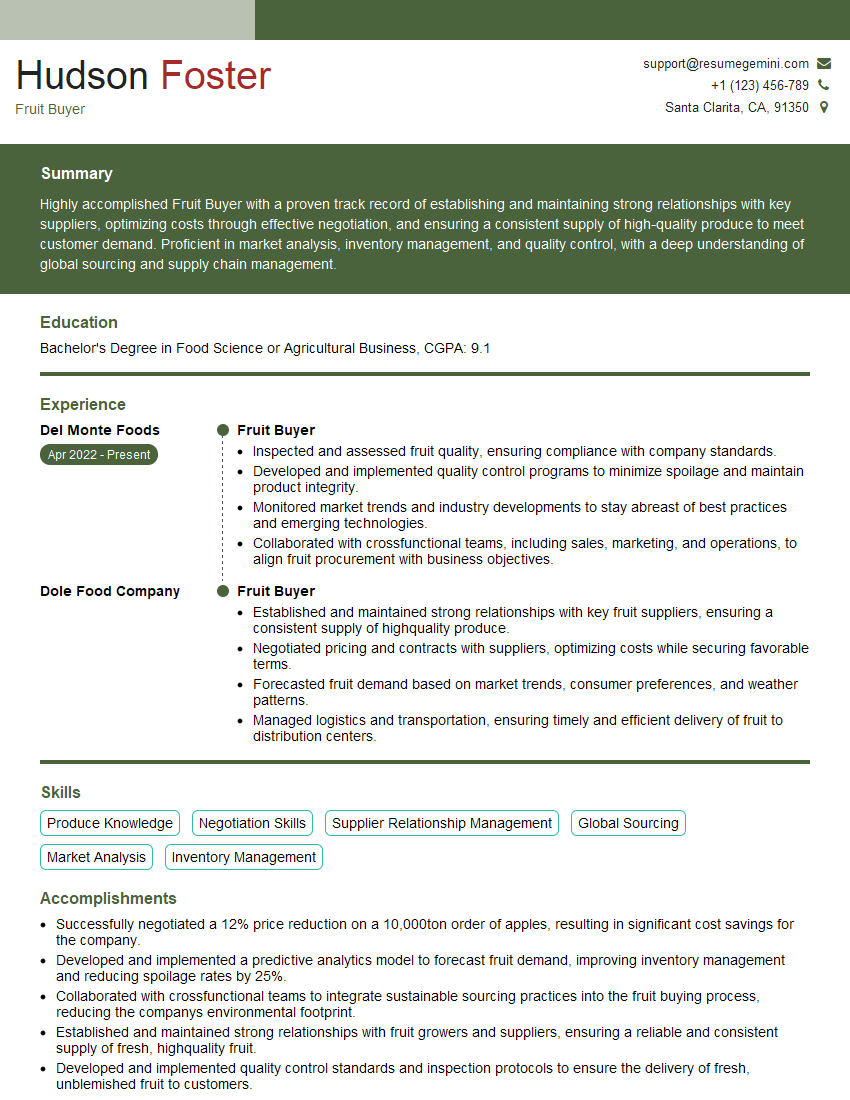
Mastering Fruit Identification and Grading opens doors to exciting career opportunities in agriculture, food processing, quality control, and export markets. A strong foundation in these skills will significantly enhance your employability and career progression. To stand out, create an ATS-friendly resume that effectively showcases your abilities. ResumeGemini is a trusted resource to help you build a professional and impactful resume. Examples of resumes tailored to Fruit Identification and Grading are provided to guide you. Use ResumeGemini to craft a resume that highlights your unique skills and experience, making you a compelling candidate.






Explore more articles
Users Rating of Our Blogs
Share Your Experience
We value your feedback! Please rate our content and share your thoughts (optional).
What Readers Say About Our Blog
Really detailed insights and content, thank you for writing this detailed article.
IT gave me an insight and words to use and be able to think of examples