Cracking a skill-specific interview, like one for FTTH (Fiber to the Home) Installation, requires understanding the nuances of the role. In this blog, we present the questions you’re most likely to encounter, along with insights into how to answer them effectively. Let’s ensure you’re ready to make a strong impression.
Questions Asked in FTTH (Fiber to the Home) Installation Interview
Q 1. Explain the difference between single-mode and multi-mode fiber optic cables.
The core difference between single-mode and multi-mode fiber optic cables lies in their core diameter and the way light propagates through them. Think of it like this: a single-lane highway versus a multi-lane highway.
Single-mode fiber has a much smaller core diameter (around 8-10 microns), allowing only one mode (path) of light to travel. This results in less signal degradation over long distances, making it ideal for long-haul telecommunications and high-bandwidth applications like internet backbone infrastructure. The light travels in a very straight path.
Multi-mode fiber, on the other hand, has a larger core diameter (50 or 62.5 microns), allowing multiple modes (paths) of light to travel simultaneously. This leads to more signal dispersion (light spreading out) over longer distances, limiting its effective range. It’s often used for shorter-distance applications like building networks or connecting devices within a data center.
- Single-mode: Long distances, high bandwidth, expensive.
- Multi-mode: Short to medium distances, lower bandwidth, less expensive.
Q 2. Describe the process of fusion splicing fiber optic cables.
Fusion splicing is a permanent joining method for fiber optic cables, creating a seamless connection with minimal signal loss. It involves precisely aligning the cores of two fiber optic cables and then melting them together using an electric arc. Imagine welding two tiny glass threads together.
The process typically involves these steps:
- Fiber Preparation: Carefully cleaving (cutting) the fiber ends to ensure a perfectly perpendicular and smooth surface using a fiber cleaver. Any imperfection can significantly impact the splice quality.
- Clamping: Securing the prepared fiber ends in the fusion splicer’s alignment mechanism. This mechanism uses precise technology to align the fibers with microscopic accuracy.
- Fusion: Applying a controlled electric arc to melt and fuse the fiber ends together. The splicer precisely controls the arc’s intensity and duration to ensure a strong, uniform fusion.
- Inspection: The fusion splicer analyzes the splice quality using optical methods and displays the result on its screen. This process ensures proper alignment and a low loss connection.
A successful fusion splice results in a connection that is mechanically strong and provides extremely low optical loss, ensuring high-quality signal transmission.
Q 3. What safety precautions are necessary when working with fiber optic cables?
Safety when handling fiber optic cables is paramount, as the intense light emitted can damage your eyes. Even seemingly harmless situations can be dangerous.
- Eye Protection: Always wear appropriate eye protection rated for the specific wavelength of the fiber. Never look directly into the end of a fiber optic cable that’s transmitting light. This is exceptionally important for single-mode fibers, which transmit a coherent beam of light.
- Skin Protection: While not as immediately dangerous as eye exposure, sharp fiber ends can cause skin abrasions. Gloves are often a good idea during the handling and splicing process.
- Proper Training: Receiving formal training on fiber optic cable handling and splicing techniques is vital for safe and efficient work. This includes proper handling procedures and safety protocols.
- Grounding: When using specialized equipment like fusion splicers, ensure proper grounding to prevent static electricity discharge.
- Handling Precautions: Avoid excessive bending or twisting of the cables to prevent micro-fractures.
- Cable Management: Organize cables carefully to prevent tangles and accidental damage.
Q 4. How do you test for fiber optic cable continuity?
Testing for fiber optic cable continuity involves verifying that there is a continuous path for light transmission through the fiber. The most common method uses an Optical Time-Domain Reflectometer (OTDR), discussed in more detail in the next question. However, a simpler method exists for quick checks using a light source and a power meter.
A visual inspection is also crucial. Look for any obvious breaks, cuts, or damage to the cable or connectors. If everything looks okay, use a light source to send a signal through one end of the fiber. Then, place the power meter at the other end to confirm signal reception. A proper continuity test should show a good signal level.
Remember that this only verifies a physical continuity; an OTDR is necessary to identify subtle signal loss and measure cable length.
Q 5. What are the common causes of fiber optic cable damage?
Fiber optic cables, while robust, are susceptible to damage from several causes:
- Sharp Objects: Cuts or punctures from knives, scissors, or other sharp instruments are common causes of fiber breakage.
- Excessive Bending Radius: Bending the cable too sharply can cause micro-fractures in the fiber core, resulting in signal loss or complete breakage. This is especially true of the smaller single-mode fibers.
- Crushing: Heavy objects placed on or compressed against the cable can damage the fiber.
- Rodents: Rodents, like mice or rats, can chew through the cable’s outer jacket and damage the fibers inside.
- Construction Activity: Digging, drilling, or other construction work can accidentally sever or damage underground cables.
- Environmental Factors: Extreme temperature fluctuations or exposure to harsh chemicals can degrade the fiber over time.
- Improper Installation: Poor installation practices can lead to stress on the fiber, resulting in damage and decreased performance.
Q 6. Explain the OTDR testing procedure and its purpose.
An Optical Time-Domain Reflectometer (OTDR) is a sophisticated instrument used to test fiber optic cables. It sends pulses of light into the fiber and analyzes the reflected light to determine the fiber’s characteristics and identify any faults.
The OTDR testing procedure generally involves:
- Connect the OTDR: Connect the OTDR to one end of the fiber optic cable.
- Initiate the Test: Start the OTDR test. The instrument sends light pulses down the fiber.
- Analyze the Trace: The OTDR displays a trace (a graph) showing the light’s reflections. The trace reveals the fiber’s length, signal loss, and the location of any events, such as splices, connectors, or breaks. Each event will appear as a noticeable change in the OTDR trace.
- Identify Faults: Analyze the trace to identify any signal loss or events that might indicate faults, such as excessive attenuation, connector loss, or fiber breaks.
The purpose of OTDR testing is to characterize the fiber’s physical characteristics and detect any faults that may affect its performance. It’s used for troubleshooting, ensuring quality installations, and preventative maintenance.
Q 7. How do you identify different types of fiber optic connectors?
Several types of fiber optic connectors are used, each with its own physical characteristics and applications. The most common types are:
- SC (Subscriber Connector): A push-pull connector that is widely used in FTTH networks and has a square body.
- LC (Lucent Connector): A smaller, more compact connector, often favored in high-density applications due to its space-saving design.
- FC (Ferrule Connector): A threaded connector often found in older installations or specialized equipment, known for its strong mechanical strength.
- ST (Straight Tip): Another older connector style with a bayonet-style latching mechanism.
These connectors can easily be identified visually by their shape and size. Each connector type is designed to ensure a secure and reliable connection.
Identifying the connector type is crucial during installation and maintenance. Mismatched connectors are incompatible and can prevent a successful connection.
Q 8. Describe your experience with different types of fiber optic cable terminations.
Fiber optic cable terminations are crucial for connecting fiber optic cables to equipment. I’ve extensive experience with several types, including mechanical splices, fusion splices, and various connector types.
Mechanical Splices: These use precision alignment mechanisms to join fiber ends. They’re faster than fusion splicing but generally offer slightly lower performance in terms of loss and return loss. I’ve used these extensively in mass deployments where speed is prioritized, such as in large-scale FTTH rollouts.
Fusion Splices: These permanently join fibers by melting their ends together using an electric arc. This method delivers superior performance with lower insertion loss and higher return loss. I prefer fusion splicing for high-bandwidth applications or where long-term reliability is paramount, even though the process is more time-consuming.
Connectors: These offer removable connections, facilitating easy testing and reconfigurations. Common types include SC, LC, FC, and ST connectors. The choice depends on the application and environmental conditions. For example, SC connectors are ubiquitous for their ease of use, while LC connectors are favored in high-density environments due to their smaller size.
My experience spans different connector types and their appropriate applications, ensuring optimal performance and longevity in the network.
Q 9. What are the key performance indicators (KPIs) for FTTH installations?
Key Performance Indicators (KPIs) for FTTH installations focus on speed, quality, and cost-effectiveness. They help measure project success and identify areas for improvement. Crucial KPIs include:
Installation Rate: Number of homes connected per day/week. This measures the efficiency of the installation process.
First-Time Right (FTR) Rate: Percentage of installations completed without requiring rework. High FTR indicates efficient workmanship and reduces costs.
Mean Time To Repair (MTTR): Average time taken to resolve network outages. A low MTTR indicates a robust and well-maintained network.
Customer Satisfaction (CSAT): Measured through surveys and feedback. High CSAT demonstrates successful project delivery meeting customer expectations.
Signal Quality: Measured in terms of optical signal-to-noise ratio (OSNR) and optical return loss (ORL). This ensures reliable high-speed data transmission.
Cost per Connection: The total cost divided by the number of homes connected. This KPI is vital for optimizing project budgets.
Tracking these KPIs allows for real-time project monitoring, proactive issue resolution, and continuous process optimization.
Q 10. How do you troubleshoot a fiber optic network outage?
Troubleshooting a fiber optic network outage requires a systematic approach. I begin by:
Identifying the scope of the outage: Is it affecting a single home, a neighborhood, or a larger area? This helps pinpoint the likely source of the problem.
Checking the Optical Power Levels: Using an optical power meter, I measure the power levels at various points in the network, from the optical line terminal (OLT) to the optical network terminal (ONT) at the customer’s premises. Significant attenuation indicates potential fiber cuts, connector issues, or faulty equipment.
Visual Inspection: I inspect the fiber cable for physical damage, loose connectors, or signs of rodent activity. This is often the most effective way to quickly locate problems.
Testing with an Optical Time-Domain Reflectometer (OTDR): An OTDR is invaluable in locating faults within the fiber cable, indicating the distance to the fault and its nature (e.g., macro-bend, connector issue). This is critical for pinpointing hard-to-find issues.
Checking the OLT and ONT: If the problem isn’t in the fiber cable itself, I would test the OLT and ONT for faults. This might involve checking power supplies, alarms, and network configurations.
Documentation: Meticulous record-keeping is vital, documenting all test results, fault locations, and repair actions.
A methodical approach, combined with the right tools, ensures efficient fault isolation and rapid restoration of service. I’ve successfully resolved numerous outages using this methodology, emphasizing the importance of a well-structured troubleshooting process.
Q 11. What are the common tools and equipment used in FTTH installations?
FTTH installations require specialized tools and equipment, including:
Fiber Optic Splicing Equipment: This includes fusion splicers, cleavers, and mechanical splicers.
Optical Power Meter: Measures the optical power level in the fiber cable.
Optical Time-Domain Reflectometer (OTDR): Locates faults and measures fiber attenuation.
Fiber Optic Cable Identifier: Helps identify the correct fiber cable in a bundle.
Connectorization tools: Crimpers, polishing kits, and cleaning supplies for various fiber connectors.
Digging Equipment (for underground installations): This includes excavators, backhoes, and trenchers, along with safety equipment like protective clothing, gloves, and safety glasses.
Aerial Cable Installation Equipment: This may include aerial lifts, bucket trucks, and specialized climbing equipment.
Test Equipment: This includes multimeters, wire strippers, and various other hand tools needed to ensure the connections are sound.
The specific tools and equipment used will vary depending on the type of installation (aerial vs. underground), but a comprehensive toolkit is essential for efficient and safe work.
Q 12. Explain the importance of proper grounding in FTTH installations.
Proper grounding in FTTH installations is critical for safety and network reliability. Lightning strikes or power surges can induce high voltages into the fiber optic cable, potentially damaging equipment and posing a risk to personnel.
Grounding provides a low-impedance path to earth for these surges, protecting both the equipment and technicians. A properly grounded system minimizes the risk of electrical shocks and prevents damage to the sensitive electronic components within the OLTs and ONTs. This includes bonding the grounding system to the building’s main ground, ensuring a continuous path to earth.
I always adhere to strict grounding protocols, ensuring that all equipment, cable closures, and splice points are correctly grounded according to the relevant safety standards. Neglecting proper grounding can lead to costly repairs, service interruptions, and safety hazards.
Q 13. Describe your experience working with aerial and underground fiber optic cabling.
I possess extensive experience with both aerial and underground fiber optic cabling installations.
Aerial Installations: This involves deploying fiber optic cables on poles and overhead structures. I’m proficient in techniques for attaching cables to poles, managing cable slack, and ensuring proper cable support to withstand environmental stresses. Safety is paramount in this type of work, requiring adherence to strict safety protocols and the use of appropriate safety equipment such as harnesses and fall protection gear. I’ve overseen many aerial projects, paying close attention to cable tensioning to prevent damage and ensuring the cable routing is efficient and minimizes potential interference.
Underground Installations: This involves burying fiber optic cables in trenches. This work requires knowledge of trenching techniques, cable protection methods (using conduits and micro-ducts), and proper backfilling procedures to avoid cable damage and ensure long-term integrity. We use specialized equipment like trenchers and directional drills for accurate placement of the cables. I am familiar with various cable protection schemes, including the use of geotextiles and concrete encasement, and I ensure appropriate depth to safeguard against accidental damage and environmental factors.
My expertise spans both methods, enabling me to adapt to diverse installation environments and deliver reliable FTTH networks regardless of the deployment strategy.
Q 14. What are the different types of fiber optic cable closures?
Fiber optic cable closures protect splices and connections from the environment. Several types exist, each suited to different applications:
Splice Closures: These protect fiber optic splices and are designed for various cable counts and environmental conditions. They’re available in different sizes and materials (e.g., plastic, metal) to suit various applications and environmental conditions.
Wall-Mount Closures: Designed for indoor or outdoor wall mounting, providing convenient access to connections.
Pedestal Closures: Larger closures often used in underground installations, providing protection and access to multiple splices.
Handhole Closures: Used in underground applications within handholes, providing easy access to splicing and termination points.
Direct Buried Closures: Designed for direct burial in the ground without the need for a handhole or pedestal.
The choice of closure depends on factors such as the environment, cable count, and accessibility requirements. My experience encompasses a wide range of closures, enabling me to select the most appropriate option for any given project.
Q 15. How do you manage fiber optic cable slack?
Managing fiber optic cable slack is crucial for ensuring the longevity and performance of an FTTH network. Excess slack can lead to stress on the fiber, causing microbends that degrade signal quality, while insufficient slack can cause damage during temperature fluctuations or ground movement. We employ several strategies:
- Careful Planning: Before installation, we meticulously plan the cable route, calculating the required length to account for slack, bends, and future expansion. We use specialized software to model the network and optimize cable lengths.
- Slack Loops: We create slack loops at strategic points along the route, typically in splice enclosures or at building entrances. These loops provide buffer space to accommodate movement and temperature changes. The size of the loop depends on factors like the cable type and environmental conditions.
- Proper Anchoring: We securely anchor the cable at intervals using appropriate clips and fasteners to prevent excessive sagging. This ensures the slack is managed without compromising the integrity of the connection.
- Cable Management Techniques: We utilize cable trays, conduits, and other organizational methods to keep the cables neatly arranged and prevent tangling, which could lead to unwanted stress on the fibers.
- Regular Inspection: Post-installation, regular inspection and maintenance are vital to identify and address any potential slack issues promptly.
For example, in a recent project with challenging terrain, we used a combination of aerial and underground cabling. We created larger slack loops in the underground sections to account for potential ground settling, ensuring signal integrity remained unaffected.
Career Expert Tips:
- Ace those interviews! Prepare effectively by reviewing the Top 50 Most Common Interview Questions on ResumeGemini.
- Navigate your job search with confidence! Explore a wide range of Career Tips on ResumeGemini. Learn about common challenges and recommendations to overcome them.
- Craft the perfect resume! Master the Art of Resume Writing with ResumeGemini’s guide. Showcase your unique qualifications and achievements effectively.
- Don’t miss out on holiday savings! Build your dream resume with ResumeGemini’s ATS optimized templates.
Q 16. What are the challenges of installing FTTH in densely populated areas?
Installing FTTH in densely populated areas presents unique challenges compared to less populated regions. The primary difficulties involve:
- Space Constraints: Limited space for cable routing within existing infrastructure (e.g., underground conduits already full) necessitates careful planning and potentially more complex routing strategies. This may involve negotiating with building owners or utilizing micro-ducts.
- Access Restrictions: Gaining access to buildings and underground infrastructure can be challenging, requiring coordination with multiple stakeholders and potentially delaying the project.
- Higher Costs: The complexities associated with navigating congested areas often translate into higher installation costs compared to less dense areas. This includes potential need for specialized equipment and techniques.
- Increased Safety Concerns: Working in crowded environments requires heightened safety protocols and careful consideration to minimize disruption to the public.
- Coordination with other Utilities: Densely populated areas often have numerous underground utilities. Locating and avoiding these utilities during excavation is crucial to prevent damage and ensure safety.
We mitigate these challenges through detailed pre-installation surveys, advanced route planning software, and close collaboration with local authorities and other utilities.
Q 17. Describe your experience with different types of fiber optic connectors (e.g., SC, LC, ST).
I have extensive experience with various fiber optic connectors, including SC, LC, and ST types. Each has its own advantages and disadvantages:
- SC (Subscriber Connector): A relatively older design, SC connectors are larger and easier to handle but can be less robust than newer connectors. Their larger size means more space is needed in enclosures.
- LC (Lucent Connector): LC connectors are smaller and more commonly used in modern FTTH installations due to their compact size and improved performance. They are more resistant to dust and damage.
- ST (Straight Tip): ST connectors utilize a bayonet mount and are less common in FTTH, though they still exist in older networks. They are generally less preferred due to their larger size and less reliable connection compared to LC.
My experience involves proper connector cleaning, insertion, and testing procedures to ensure reliable connections. For example, I can distinguish between different connector polishing types (e.g., UPC, APC) and their impact on return loss. This careful attention to detail ensures minimal signal loss and optimal network performance.
Q 18. How do you ensure the quality of your FTTH installations?
Ensuring the quality of FTTH installations involves a multi-faceted approach:
- Pre-Installation Planning: Thorough planning, including route surveys and design, minimizes errors and potential problems during installation.
- Proper Equipment: Using high-quality tools, connectors, and fusion splicers ensures reliable connections and minimizes signal loss.
- Strict Adherence to Standards: We follow industry best practices and standards (e.g., TIA, IEC) throughout the installation process.
- Rigorous Testing: Every step of the process involves rigorous testing using OTDR (Optical Time Domain Reflectometer) and power meters to identify any faults or imperfections.
- Documentation: We maintain detailed records of the installation, including cable routes, splice locations, and test results, for future maintenance and troubleshooting.
- Training and Expertise: Our team undergoes regular training to stay up-to-date with the latest technologies and best practices.
For instance, if OTDR testing reveals a significant loss of signal at a specific point, we immediately investigate and rectify the problem, ensuring optimal network performance before the customer’s service is activated.
Q 19. What are the different types of fiber optic cable designs and their applications?
Several fiber optic cable designs cater to different needs and applications in FTTH deployments:
- Single-Mode Fiber (SMF): Used for long-distance transmission with high bandwidth and low signal attenuation. Common in trunk lines and long spans.
- Multi-Mode Fiber (MMF): Suitable for shorter distances, MMF is often used in building connections or short feeder spans. It’s generally less expensive than SMF.
- Loose Tube Cable: Fibers are encased in loose tubes within a larger protective sheath, allowing for flexibility and ease of handling. This design is widely used in FTTH networks.
- Ribbon Cable: Multiple fibers are bundled together in a flat ribbon format. This design is efficient for high-fiber-count applications but can be more difficult to work with in tight spaces.
- Armored Cable: Provides enhanced protection against rodents and physical damage, suitable for direct burial or areas with environmental challenges.
Choosing the right cable type is crucial for optimizing network performance and cost-effectiveness. For example, SMF is preferred for the main feeder cables that run long distances from the central office, while MMF might be suitable for shorter drops to individual homes.
Q 20. What is the role of a fiber optic splice enclosure?
A fiber optic splice enclosure serves as a protected housing for fiber optic splices, protecting them from environmental hazards and mechanical damage. It’s a critical component in FTTH networks, safeguarding the delicate splices and ensuring network reliability.
- Environmental Protection: Splice enclosures shield splices from water, dust, and other environmental contaminants that can degrade the fiber or cause signal loss.
- Mechanical Protection: The enclosure protects splices from physical damage caused by rodents, vibrations, or accidental impacts.
- Organization and Accessibility: It provides an organized and easily accessible location for splicing and managing fiber optic cables.
- Future Expansion: Many enclosures are designed with extra space to accommodate future fiber additions.
In a real-world scenario, splice enclosures are typically placed underground or in pedestals at convenient access points along the fiber route, ensuring easy maintenance and access.
Q 21. What are the advantages and disadvantages of different splicing methods?
Two primary methods for splicing optical fibers are fusion splicing and mechanical splicing. Each has its advantages and disadvantages:
- Fusion Splicing: This method uses heat to melt the ends of two fibers together, creating a permanent, high-quality splice with minimal signal loss.
- Advantages: Low loss, high reliability, long lifespan.
- Disadvantages: Requires specialized equipment, higher initial cost, more training required.
- Mechanical Splicing: This method uses a precision-aligned sleeve or connector to join the fiber ends.
- Advantages: Less expensive equipment, faster installation, suitable for temporary or field repairs.
- Disadvantages: Higher signal loss compared to fusion splicing, less reliable, shorter lifespan.
The choice between fusion and mechanical splicing depends on the specific application and project requirements. For FTTH installations, fusion splicing is typically preferred due to its superior performance and longevity, especially for the main feeder lines. However, mechanical splicing might be used for temporary repairs or in situations where quick repairs are necessary.
Q 22. How do you interpret OTDR results to identify faults in a fiber optic cable?
Interpreting OTDR (Optical Time Domain Reflectometer) results is crucial for identifying faults in fiber optic cables. An OTDR sends light pulses down the fiber and measures the amount of light reflected back at different points. The resulting trace displays the signal loss (attenuation) and reflections along the fiber’s length. We look for anomalies that indicate problems.
For example, a sharp drop in the trace indicates a break or a significant splice loss. A strong reflection suggests a connector issue, a bad splice, or even a bend in the fiber. Splices ideally show a minimal reflection and small attenuation increase. We analyze the distance of the anomaly from the OTDR and can pinpoint the location of the problem along the cable.
- Attenuation: Gradual signal loss, usually indicated by a sloping line, can be normal or point to issues like fiber degradation, cabling bend radius issues, or poor connector quality. Excessive attenuation necessitates further investigation.
- Reflections: Sharp spikes in the trace representing light reflected back towards the OTDR due to discontinuity, such as connector or splice losses, or fiber breaks. The height of the reflection is proportional to the severity of the problem.
- Events: Points of significance like connectors or splices are indicated as distinct features in the trace. Comparing actual event locations to the OTDR trace validates our interpretation. Significant deviations may signal issues with the connector installation.
In practice, I use OTDR results along with visual inspection. For instance, I had a case where an OTDR showed high attenuation at a specific point. Visual inspection revealed a severe bend in the cable that was causing the high signal loss, easily solved by re-routing the cable.
Q 23. Describe your experience with fiber optic cable management systems.
I’m experienced in various fiber optic cable management systems, including cable trays, ladder racks, and microduct systems. My expertise extends to both aerial and underground deployments.
I understand the importance of proper cable labeling and documentation to ensure easy identification and future maintenance. I meticulously document cable routes and identify key components of the FTTH network to ensure traceability. In the past, I employed a color-coded labeling system with an accompanying digital database which made troubleshooting and future maintenance significantly easier.
Moreover, I am familiar with the practices involved in managing slack loops in aerial cable drops, using appropriate strain relief devices and securing the cable in a manner that will prevent future stress or damage, ensuring a long lifespan for the network.
I have worked with various cable types, including single-mode and multimode fibers, and am aware of the best practices for managing each type. For instance, proper bending radius must always be observed, and micro-bending must be avoided to prevent signal degradation.
Q 24. How do you handle difficult customers or unexpected problems during installation?
Handling difficult customers or unexpected problems requires patience, clear communication, and problem-solving skills. My approach involves:
- Active Listening: First, I listen carefully to understand the customer’s concerns. Empathetic communication is crucial in these scenarios.
- Clear Explanation: I explain the situation in simple, understandable terms, avoiding technical jargon when possible. I often use analogies to explain complex concepts.
- Problem-Solving: I systematically approach the issue, working through potential solutions. If I don’t know the answer, I find out, often using the support of my team or online resources.
- Keeping the Customer Informed: I update the customer on my progress, managing expectations effectively.
- Professional Demeanor: I remain calm and professional, even in stressful situations. A positive attitude can diffuse tense situations.
For example, I once encountered a customer whose internet service was down, and the problem wasn’t immediately obvious. Through careful troubleshooting, I eventually discovered a faulty connection at the demarcation point and resolved the issue promptly. I kept the customer informed each step of the way, resulting in a positive outcome, despite the initial frustration.
Q 25. Explain your understanding of fiber optic network architectures.
Fiber optic network architectures are the blueprints defining how fiber optic cables, equipment, and protocols work together. I understand various architectures including:
- Point-to-Point: A simple architecture where a single fiber connects two devices directly (e.g., a home to a nearby cabinet). It is ideal for short distances and offers high bandwidth.
- Passive Optical Network (PON): A point-to-multipoint architecture where one optical line terminal (OLT) in a central office shares fiber connections with many optical network units (ONUs) at homes. This is highly efficient for cost and space-saving in FTTH deployments. There are different PON standards such as GPON, EPON, and XGS-PON, each having its own advantages and disadvantages in terms of capacity and reach.
- Active Optical Network (AON): Uses optical amplifiers or repeaters to extend the reach and capacity. However, they are generally more complex and expensive to maintain.
- Ring Network: Redundancy is provided by connecting several nodes in a closed loop, enabling service continuity even if one section fails.
Understanding the strengths and weaknesses of different architectures is crucial for designing and implementing efficient and scalable FTTH networks that meet specific customer needs and budget constraints.
Q 26. What experience do you have with different types of FTTH network architectures (e.g., PON, point-to-point)?
My experience encompasses both point-to-point and PON architectures. I’ve worked extensively with GPON (Gigabit Passive Optical Network), which is the most prevalent technology in FTTH deployments today. I am familiar with splicing, connecting, and testing GPON fibers, including the OLT and ONU devices. I am comfortable working with different wavelengths and splitting ratios commonly used in PON systems.
Point-to-point deployments, while less common in large-scale FTTH projects, are valuable for short-distance high-bandwidth applications. I have experience installing and maintaining these systems, emphasizing the importance of careful connectorization to prevent signal loss.
My experience covers all stages, from initial network design and planning to installation, testing, and troubleshooting. Understanding the nuances of each architecture helps me make informed decisions about suitable equipment, cable type, and overall network performance.
Q 27. Describe your experience with documentation and reporting in FTTH installations.
Documentation and reporting are critical to ensure accurate records and efficient troubleshooting. My approach includes:
- Detailed As-Built Drawings: I always create meticulous as-built drawings, noting exact cable routes, splice locations, connector types, and equipment specifications. These drawings act as valuable references for future maintenance and repairs.
- Testing Records: I maintain comprehensive testing records, including OTDR results, power measurements, and other relevant data for each fiber connection. This documentation helps identify potential problems and assess the quality of the installation.
- Database Management: Using both manual and digital record-keeping to document installed components and their specifications is crucial for easy maintenance. I’m comfortable using various software tools to manage this data and produce reports.
- Client Reporting: I provide clear and concise reports to clients, summarizing the installation process, highlighting key findings, and addressing any issues encountered.
Proper documentation not only ensures efficient maintenance but also facilitates compliance with industry standards and regulatory requirements. I have previously employed a dedicated software for fiber network management which enabled the generation of detailed, automated reports, further streamlining the documentation process.
Q 28. What are your salary expectations for this position?
My salary expectations are in line with the industry standard for a senior FTTH installation specialist with my experience and skillset. I’m open to discussing a competitive compensation package that reflects my contributions and aligns with the value I bring to your organization. I would be happy to provide you with a specific range after discussing further details about this role and your company’s compensation structure.
Key Topics to Learn for FTTH (Fiber to the Home) Installation Interview
- Fiber Optic Cable Handling and Splicing: Understanding different types of fiber optic cables, proper handling techniques to avoid damage, and mastering splicing methods for reliable connections. Practical application includes demonstrating knowledge of fusion splicing vs. mechanical splicing and their respective advantages/disadvantages.
- Optical Power Meters and OTDR Testing: Learn to operate and interpret readings from optical power meters and OTDR (Optical Time Domain Reflectometer) equipment for troubleshooting and ensuring signal quality. Practical application includes explaining how to identify signal loss, locate faults, and perform preventative maintenance.
- FTTH Network Architecture: Grasp the overall architecture of an FTTH network, including the components like Optical Line Terminals (OLTs), Optical Network Units (ONUs), and passive optical components (splitters, etc.). Practical application includes describing the signal path from the central office to the customer premises.
- Installation Procedures and Safety Protocols: Familiarize yourself with standard installation procedures, including working at heights, adhering to safety regulations, and following best practices for cable management. Practical application includes describing safe practices for aerial and underground installations.
- Troubleshooting Common FTTH Issues: Prepare to discuss common problems encountered during installation and maintenance, such as fiber breaks, connector issues, and power problems. Practical application includes outlining your systematic approach to troubleshooting and problem-solving in the field.
- Understanding different FTTH Architectures (e.g., PON, P2P): Gain a conceptual understanding of the various architectural models used in FTTH deployments and their implications for installation and maintenance. Practical application includes comparing and contrasting the advantages and disadvantages of each architecture.
Next Steps
Mastering FTTH installation opens doors to a rewarding career with excellent growth potential in a rapidly expanding industry. To maximize your job prospects, creating a strong, ATS-friendly resume is crucial. ResumeGemini is a trusted resource that can help you build a professional and effective resume. They provide examples of resumes tailored to FTTH (Fiber to the Home) Installation, ensuring your application stands out. Take advantage of these resources to showcase your skills and land your dream job!
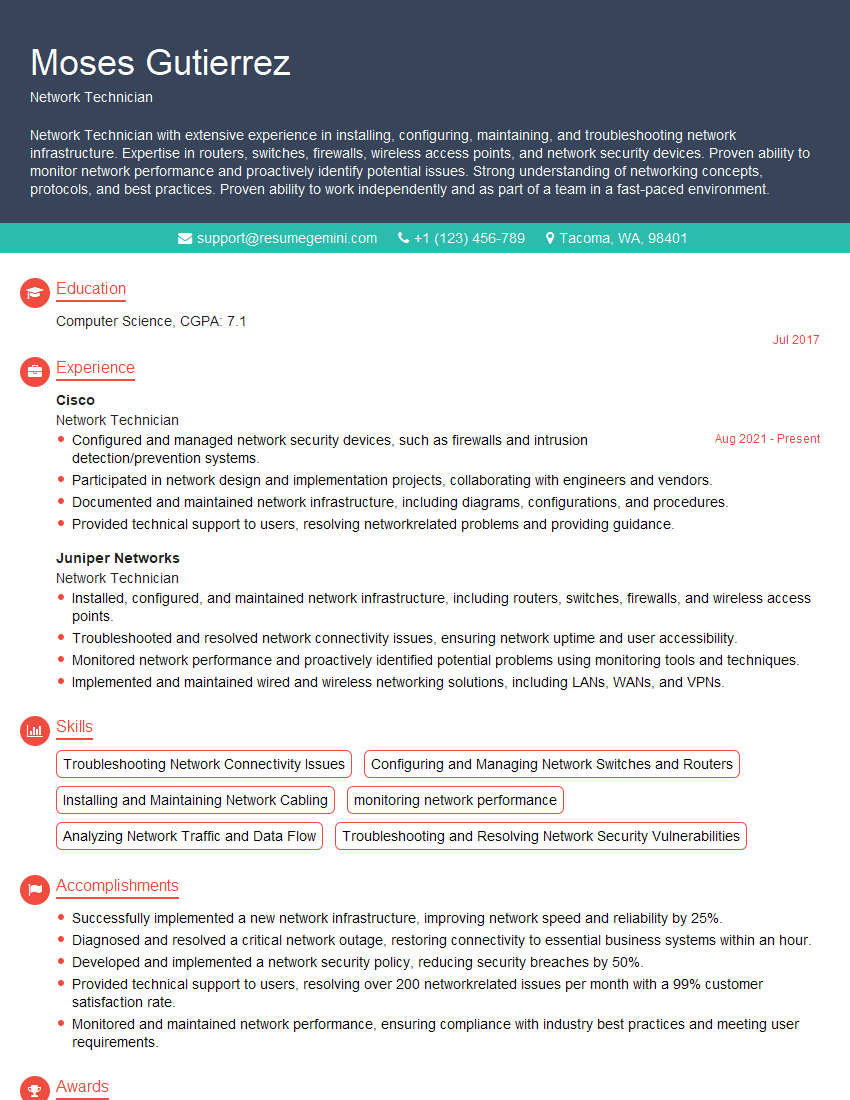
Network Technician Resume Sample

Fiber Optics Engineer Resume Sample
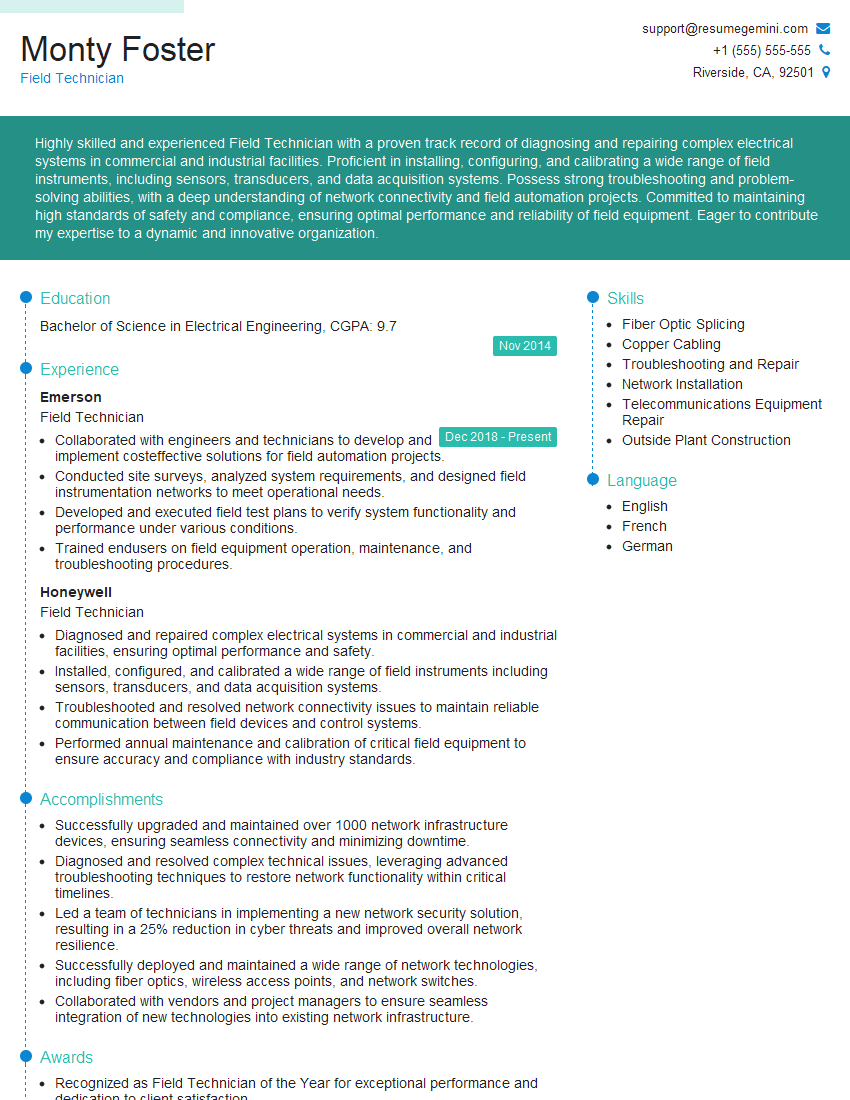
Field Technician Resume Sample
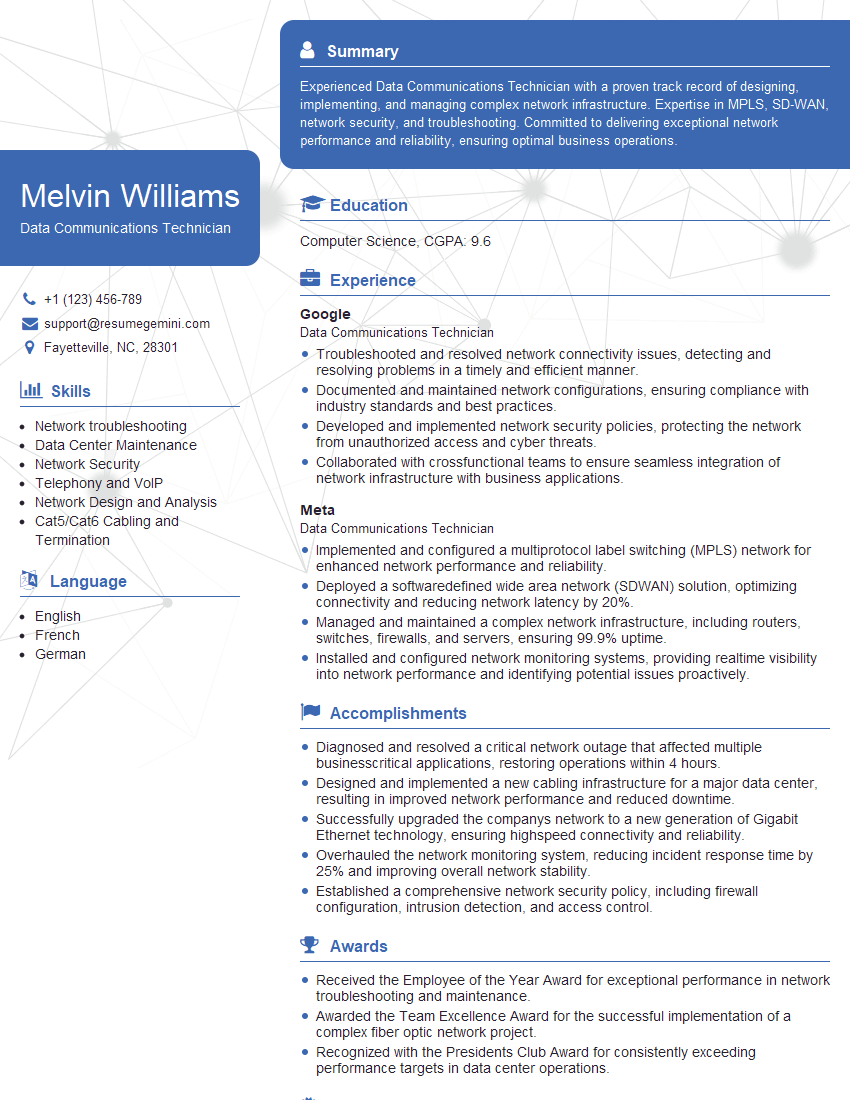
Data Communications Technician Resume Sample
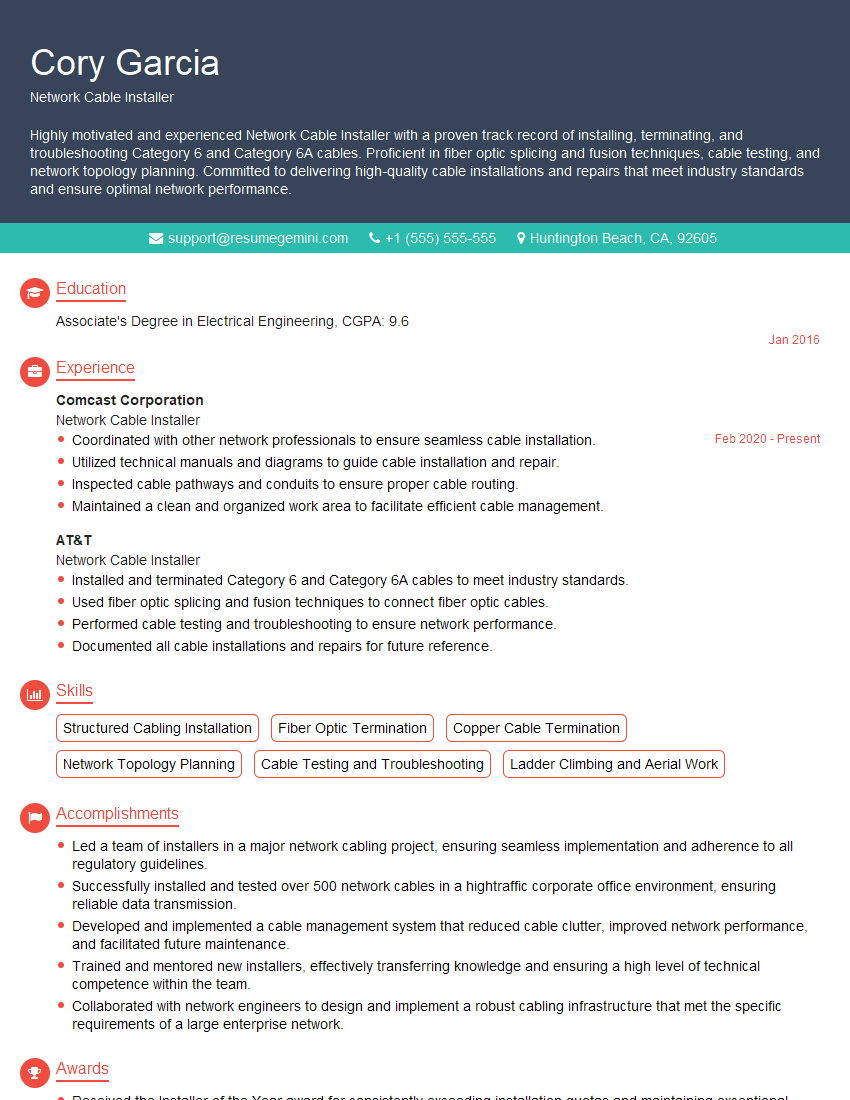
Network Cable Installer Resume Sample
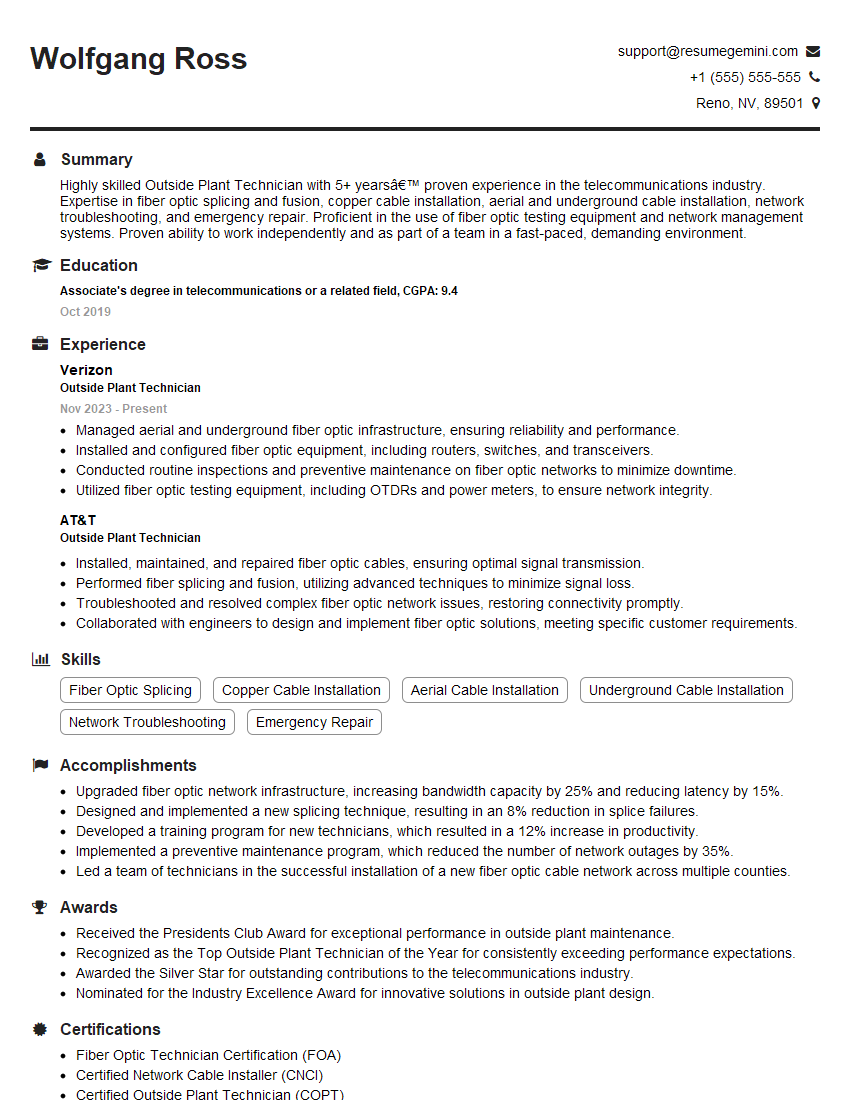
Outside Plant Technician Resume Sample
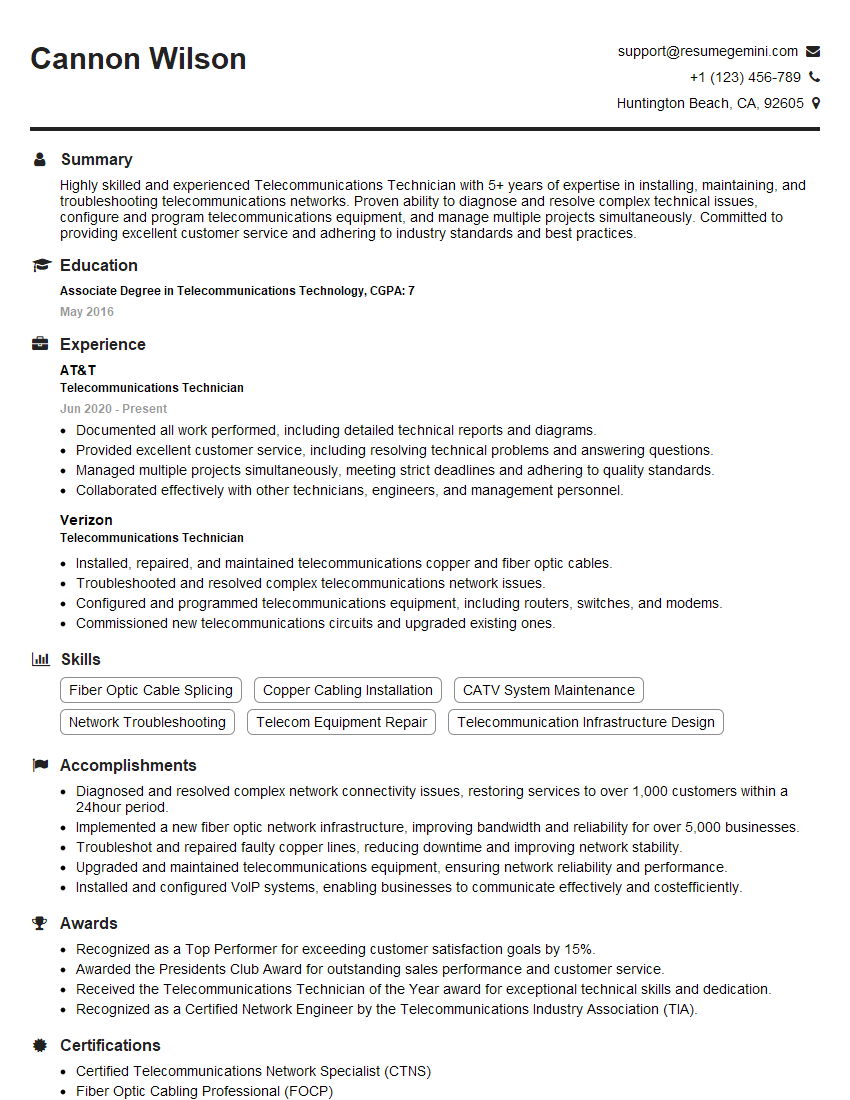
Telecommunications Technician Resume Sample
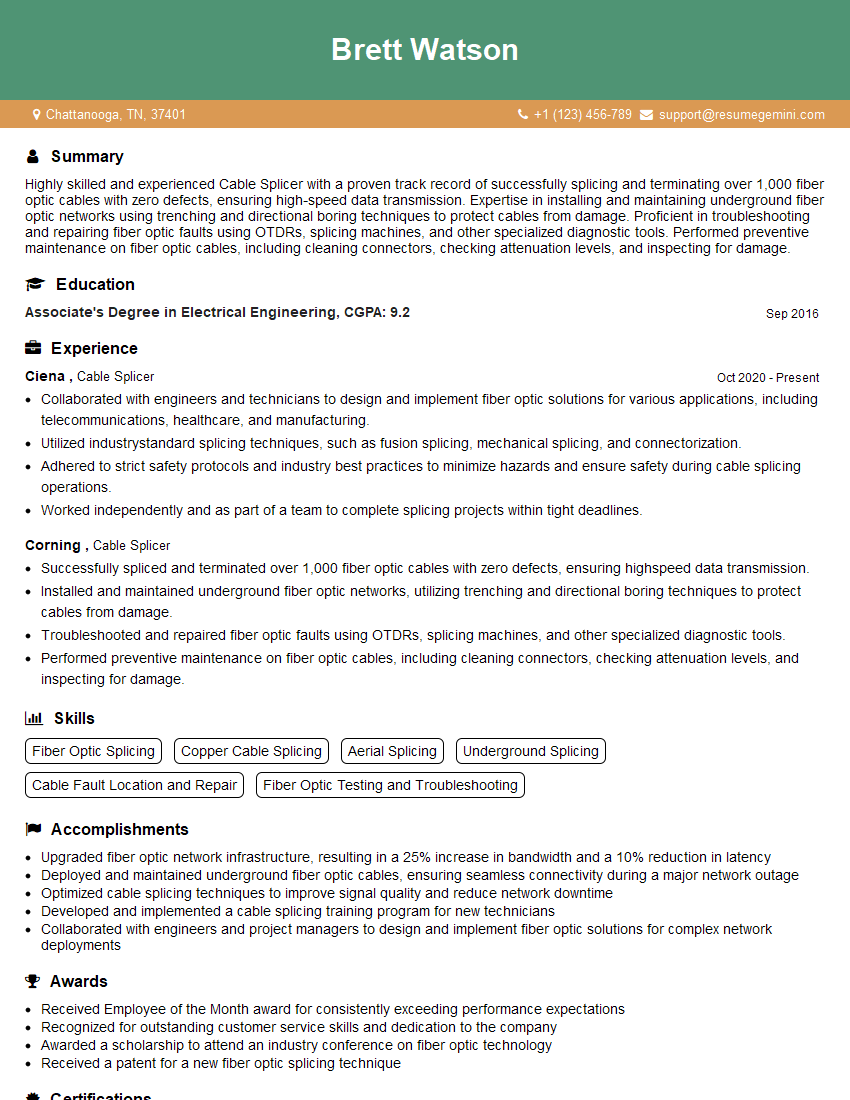
Cable Splicer Resume Sample

Fiber Optic Splicer Resume Sample
Explore more articles
Users Rating of Our Blogs
Share Your Experience
We value your feedback! Please rate our content and share your thoughts (optional).
What Readers Say About Our Blog
Really detailed insights and content, thank you for writing this detailed article.
IT gave me an insight and words to use and be able to think of examples