Cracking a skill-specific interview, like one for Geodesy in Law and Engineering, requires understanding the nuances of the role. In this blog, we present the questions you’re most likely to encounter, along with insights into how to answer them effectively. Let’s ensure you’re ready to make a strong impression.
Questions Asked in Geodesy in Law and Engineering Interview
Q 1. Explain the difference between a geoid and an ellipsoid.
The geoid and the ellipsoid are both mathematical models of the Earth’s surface, but they represent it differently. Think of the Earth as a lumpy potato. The ellipsoid is a simplified, smooth, mathematical surface that approximates the Earth’s overall shape. It’s an oblate spheroid – a slightly flattened sphere. We use ellipsoids because they’re mathematically easy to work with. Various ellipsoids exist, each best fitting specific regions of the Earth.
The geoid, on the other hand, represents the Earth’s equipotential surface – meaning it’s a surface where the gravitational potential is constant. Imagine a global ocean at rest, undisturbed by tides or currents; the geoid would essentially follow the mean sea level. Because the Earth’s mass distribution isn’t uniform, the geoid is bumpy and irregular, reflecting variations in gravity. This means it’s a much more accurate representation of the Earth’s actual shape, but far more complex to model and use in calculations.
In essence, the ellipsoid is a convenient approximation, while the geoid is a more accurate, but less practical, representation of the Earth’s shape.
Q 2. Describe the various coordinate systems used in geodesy.
Geodesy employs several coordinate systems, each suited for different purposes. The most common are:
- Geographic Coordinate System (GCS): Uses latitude and longitude to define a point on the Earth’s surface. Latitude measures north-south position relative to the equator, and longitude measures east-west position relative to the Prime Meridian. This system is tied to a specific datum (e.g., WGS84).
- Projected Coordinate System (PCS): Transforms the spherical Earth’s surface onto a flat plane, enabling easier distance and area calculations. Numerous projections exist (e.g., UTM, State Plane), each with its own distortions and limitations. The choice of projection depends on the area’s extent and the intended application. For instance, the Universal Transverse Mercator (UTM) system divides the Earth into zones, minimizing distortion within each zone.
- Cartesian Coordinate System (3D): Defines a point using three coordinates (X, Y, Z) relative to a defined origin and axes. Often used in 3D modeling and GIS applications. These coordinates can be geocentric (origin at the Earth’s center) or geodetic (origin at a point on the reference ellipsoid).
Choosing the right coordinate system is critical for accuracy and consistency in geodetic projects. Transformations between these systems are often necessary.
Q 3. What are the different types of surveying methods and their applications?
Surveying methods are categorized into various types, each with its strengths and weaknesses:
- Geodetic Surveying: Deals with large-scale measurements covering extensive areas, often considering the Earth’s curvature. Involves precise measurements of latitude, longitude, and elevation, typically employing GPS and other satellite-based techniques.
- Plane Surveying: Assumes the Earth is flat and is suitable for smaller areas where the Earth’s curvature is negligible. Traditional methods like traversing and triangulation are used, employing instruments like theodolites and total stations.
- Photogrammetry: Uses overlapping aerial or terrestrial photographs to create 3D models of the Earth’s surface. This method is efficient for mapping large areas and creating digital elevation models (DEMs).
- LiDAR (Light Detection and Ranging): Employs laser pulses to measure distances and create highly accurate 3D point clouds of the Earth’s surface. It’s used for various applications, including terrain mapping, infrastructure assessment, and environmental monitoring.
The choice of surveying method depends on the project’s scale, accuracy requirements, and budget. For instance, a large-scale land-use planning project might employ GPS and photogrammetry, while a smaller construction project might use plane surveying techniques.
Q 4. Explain the concept of datum transformation.
Datum transformation is the process of converting coordinates from one geodetic datum to another. Different datums use different reference ellipsoids and origins, leading to discrepancies in coordinate values. For example, a point with coordinates in NAD83 (North American Datum of 1983) will have slightly different coordinates in WGS84 (World Geodetic System 1984). These differences might seem small, but they can accumulate and become significant over large distances.
Datum transformations involve applying mathematical models (e.g., Helmert transformations, Molodensky-Badekas transformations) to adjust the coordinates. These models utilize parameters derived from comparisons between the two datums. The accuracy of the transformation depends on the quality of these parameters and the chosen model. Software packages like ArcGIS and QGIS provide tools for performing these transformations.
Imagine trying to fit two slightly different sized maps together; datum transformation is like adjusting the edges to make them align accurately.
Q 5. How do you handle errors and uncertainties in geodetic measurements?
Handling errors and uncertainties is crucial in geodetic measurements. Sources of error include instrumental errors (e.g., miscalibration), observational errors (e.g., human error), and environmental factors (e.g., atmospheric refraction). We address these errors through:
- Careful planning and execution: Following strict procedures, using calibrated instruments, and employing appropriate field techniques minimizes errors.
- Redundant measurements: Taking multiple measurements of the same quantity allows for error detection and statistical analysis.
- Statistical analysis: Methods like least squares adjustment are employed to determine the best fit of the data and estimate uncertainties.
- Error propagation analysis: Quantifies how errors in individual measurements propagate to final results. This helps in identifying which measurements are most critical.
- Quality control: Regular checks and validation procedures ensure the data’s accuracy and reliability.
By understanding the sources of errors and employing appropriate techniques, we can minimize their impact and quantify the uncertainties associated with the geodetic measurements.
Q 6. Describe your experience with GPS surveying techniques.
I have extensive experience in GPS surveying techniques, encompassing both static and kinematic methods. Static GPS involves setting up receivers at fixed points for extended periods to achieve high accuracy. Kinematic GPS, on the other hand, involves moving receivers continuously, providing real-time positioning. I’m proficient in:
- Precise Point Positioning (PPP): A high-accuracy technique that uses precise satellite orbit and clock information to obtain centimeter-level accuracy.
- Real-Time Kinematic (RTK): A common method for real-time positioning, achieving centimeter-level accuracy through the use of a base station and rover.
- Post-processed Kinematic (PPK): Similar to RTK but processes data after the survey, allowing for improved accuracy by correcting for atmospheric delays and other errors.
My experience includes utilizing GPS for boundary surveys, topographic mapping, and construction layout. For example, I used RTK GPS to accurately stake out the foundation for a large building project, ensuring precise alignment and minimizing errors. A project involving a large scale land survey required PPP to achieve the required centimeter level accuracy over a large area.
Q 7. What software packages are you proficient in for geospatial data processing?
I’m proficient in several software packages for geospatial data processing, including:
- ArcGIS: For geodatabase management, spatial analysis, and cartography.
- QGIS: An open-source GIS software offering similar functionalities to ArcGIS.
- AutoCAD Civil 3D: For CAD-based surveying and design work.
- Trimble Business Center (TBC): For GPS data processing and analysis.
- MATLAB: For geodetic computations and advanced statistical analysis.
I regularly use these packages for data processing, analysis, visualization, and report generation in various geodetic projects. My expertise includes working with different data formats, such as shapefiles, raster data, and point clouds, and performing various spatial analysis techniques, such as interpolation and network analysis.
Q 8. How do you ensure the accuracy and precision of your geodetic work?
Ensuring accuracy and precision in geodetic work is paramount. It’s like building a house – a slight error in the foundation can lead to significant problems later. We employ a multi-pronged approach:
High-Precision Instruments: We utilize state-of-the-art GPS receivers, total stations, and leveling equipment, regularly calibrated and maintained to ensure they meet the highest accuracy standards. For instance, we might use Real-Time Kinematic (RTK) GPS for centimeter-level accuracy in boundary surveying.
Robust Data Processing Techniques: Raw data isn’t enough. We use sophisticated software packages to process the data, applying rigorous error correction models. This includes accounting for atmospheric effects (like ionospheric and tropospheric delays), antenna phase center variations, and multipath errors. Think of it as carefully cleaning and preparing ingredients before cooking a gourmet meal.
Redundancy and Cross-Checking: We employ multiple measurement techniques whenever possible. This allows us to compare results and identify potential outliers or anomalies. For example, we might use both GPS and traditional traversing methods to verify the coordinates of a control point. This is akin to double-checking your calculations before submitting a crucial report.
Quality Control and Assurance (QA/QC): Every step of the process, from data collection to final report, is subjected to rigorous quality checks. We follow established protocols and standards (like those outlined by the National Geodetic Survey) to ensure the quality of our work meets or exceeds the required level of accuracy.
Understanding Error Propagation: We understand how errors accumulate throughout the measurement process. This allows us to design our surveys strategically to minimize the impact of errors on the final results. A careful understanding of error propagation helps us plan our work effectively and efficiently.
Q 9. Explain the legal implications of boundary disputes related to land surveying.
Legal implications in boundary disputes related to land surveying can be significant, often leading to costly and time-consuming litigation. Accurate surveying is crucial to prevent these disputes. The legal ramifications depend on the jurisdiction, but generally include:
Property Ownership and Rights: Incorrect boundary determination can result in encroachment, trespass, and disputes over property ownership. This can involve issues of easements, rights-of-way, and title deeds. An inaccurate survey can shift property lines, impacting the value and usability of the land involved.
Financial Losses: Disputes can lead to significant financial losses for the parties involved, including legal fees, surveyor’s fees, and potential compensation for damages. A poorly executed survey could result in the loss of valuable property or costly legal battles.
Civil and Criminal Liabilities: In some cases, negligence or misconduct in land surveying can lead to civil or even criminal liabilities. For instance, a surveyor might face legal action for providing inaccurate boundary information that leads to a property dispute.
Court Proceedings: Boundary disputes frequently end up in court, where a judge will rely on expert testimony from surveyors to determine the correct boundary. The legal process involves presenting evidence, including survey plans, title deeds, and witness statements, which underscores the critical role accurate surveying plays.
It’s essential for surveyors to adhere to professional standards and best practices to mitigate these risks. A robust and well-documented survey, conducted by a qualified professional, can be crucial in avoiding costly legal battles.
Q 10. Describe your experience with cadastral surveying.
Cadastral surveying is the cornerstone of land administration. My experience in cadastral surveying includes:
Creating and Maintaining Cadastral Maps: I have been involved in the creation and updating of large-scale cadastral maps, employing both traditional and modern surveying techniques. This involves establishing and maintaining a network of control points to ensure high accuracy and consistency.
Boundary Demarcation: I have extensive experience in demarcating property boundaries, often working with clients to resolve boundary disputes. This includes careful on-site investigation, analysis of historical records, and the use of modern surveying techniques to determine accurate boundary lines.
Data Management and Analysis: Cadastral surveying requires meticulous data management. I have experience using GIS software to manage, analyze, and visualize cadastral data, ensuring data integrity and accessibility.
Compliance with Legal Frameworks: I am familiar with relevant legislation and regulations pertaining to cadastral surveying, ensuring that all my work is compliant with legal requirements. This includes understanding the legal definitions of boundaries, easements, and other property rights.
One project involved updating the cadastral map of a rapidly developing area. This required careful coordination with local authorities and developers, ensuring that new subdivisions were accurately mapped and integrated into the existing cadastral system. It was a challenging but ultimately rewarding project that required precise and timely delivery.
Q 11. How do you interpret and analyze geospatial data?
Interpreting and analyzing geospatial data involves more than just looking at a map. It’s about understanding the information contained within the data and extracting meaningful insights. My approach involves:
Data Acquisition and Preprocessing: The process begins with assessing the quality and suitability of the data. This includes understanding the data’s source, accuracy, and limitations. Preprocessing may involve cleaning, transforming, and projecting the data into a consistent coordinate system.
Spatial Analysis Techniques: I utilize various spatial analysis techniques, including overlay analysis, buffering, proximity analysis, and network analysis. For example, overlay analysis allows me to identify areas where multiple datasets overlap, such as determining areas susceptible to both flooding and landslides.
Statistical Analysis: Where appropriate, I use statistical methods to analyze geospatial data. This might involve analyzing the spatial distribution of a phenomenon or testing hypotheses related to spatial patterns. A common example is using kriging to interpolate values across an area.
Visualization and Communication: Effectively communicating results is crucial. I use GIS software to create maps, charts, and other visualizations to present findings clearly and concisely. Clear and effective communication is key to making the results of this analysis readily accessible to a range of stakeholders.
For instance, I recently used geospatial data to analyze the impact of a proposed highway on local wildlife habitats. This involved overlaying the highway route with habitat maps and using spatial analysis to identify potential areas of conflict.
Q 12. What are the common challenges faced in legal geodesy?
Legal geodesy presents unique challenges:
Ambiguous Descriptions in Legal Documents: Property descriptions in old deeds can be vague or inconsistent, making it challenging to accurately determine boundaries. This often involves interpreting historical documents and reconciling conflicting information.
Defining Boundaries in Complex Topographies: Establishing boundaries in areas with complex topography, such as mountainous regions or areas with extensive water bodies, can be exceptionally challenging. This requires careful consideration of natural boundaries and their legal implications.
Dealing with Conflicting Claims: Boundary disputes frequently involve conflicting claims from multiple parties. Resolving these disputes requires careful investigation, analysis of evidence, and potentially expert testimony in court.
Keeping Up with Technological Advancements: The field of surveying is constantly evolving, requiring professionals to adapt to new technologies and techniques. This is particularly important when considering the increasing use of GPS and other advanced technologies in boundary determination.
Liability Issues: Legal geodesy involves significant liability. An inaccurate boundary determination can have serious legal and financial consequences for all parties involved. Therefore, careful attention to detail and meticulous documentation is paramount.
Q 13. Explain your understanding of spatial data infrastructure.
Spatial Data Infrastructure (SDI) is a fundamental framework for managing and sharing geospatial data. It’s essentially a system that allows various organizations and individuals to access, use, and contribute to a common pool of geospatial information. My understanding encompasses:
Data Standards and Metadata: SDIs rely on well-defined data standards and metadata to ensure data interoperability and consistency. This allows different organizations to share and integrate data seamlessly. Think of it as a common language for geospatial data.
Data Catalogs and Discovery Tools: SDIs provide mechanisms for discovering and accessing geospatial data. This could involve a central data catalog, search tools, and metadata standards that allow users to easily find relevant data.
Data Management and Storage: SDIs involve the efficient management and storage of geospatial data. This includes considerations of data security, backup, and disaster recovery. Think of it as the library system that keeps the data organized and readily available.
Data Sharing and Collaboration: SDIs facilitate the sharing and collaboration of geospatial data between various organizations and individuals. This promotes better decision-making and coordinated resource management. This shared access allows multiple users to utilize and contribute to the data.
A well-functioning SDI can significantly improve efficiency and reduce redundancy in the management and use of geospatial data, leading to better informed decisions in various sectors, such as urban planning, environmental management, and disaster response.
Q 14. Describe your experience with remote sensing and its applications in geodesy.
Remote sensing plays a crucial role in modern geodesy, offering a cost-effective and efficient means of acquiring geospatial data over large areas. My experience includes:
Satellite Imagery Analysis: I utilize satellite imagery from various sources (e.g., Landsat, Sentinel) to extract geospatial information. This includes identifying land cover changes, monitoring environmental conditions, and generating digital elevation models (DEMs).
LiDAR Data Processing: I have worked extensively with LiDAR (Light Detection and Ranging) data to create highly accurate DEMs and other terrain-related products. LiDAR data provides detailed information about the three-dimensional structure of the earth’s surface.
Image Classification and Object Detection: I employ image classification and object detection techniques to identify and categorize features within satellite imagery. This is crucial for tasks such as monitoring deforestation, mapping infrastructure, and assessing the impact of natural disasters.
Integration with GIS: I seamlessly integrate remote sensing data into GIS workflows to create detailed geospatial analyses. This allows me to combine remote sensing data with other geospatial datasets for comprehensive analyses.
For example, in one project, I used satellite imagery and LiDAR data to monitor glacier retreat in a remote mountain region. This involved processing and analyzing large datasets to track changes in glacier extent and volume over time. The resulting data provided crucial insights into the impacts of climate change.
Q 15. How do you manage large geospatial datasets?
Managing large geospatial datasets requires a multifaceted approach leveraging both technical expertise and efficient organizational strategies. The sheer volume and complexity of such data necessitate careful planning and the use of specialized tools.
Firstly, data organization is paramount. I utilize geospatial databases like PostGIS (integrated with PostgreSQL) or cloud-based solutions such as Amazon S3 or Google Cloud Storage. These platforms offer scalability and efficient data management. I employ file formats optimized for geospatial data, such as GeoTIFF, Shapefile, and GeoPackage, ensuring compatibility and efficient processing.
Secondly, data processing often involves employing techniques like tiling, spatial indexing, and data compression to improve query speeds and reduce storage space. For instance, large raster datasets can be tiled into smaller, manageable units for easier processing and analysis. Spatial indexing (like R-trees or quadtrees) accelerates spatial queries significantly.
Thirdly, data visualization and analysis relies heavily on Geographic Information Systems (GIS) software such as ArcGIS Pro, QGIS, or other open-source alternatives. These tools allow me to efficiently interrogate, analyze, and visualize the data, enabling informed decision-making.
Finally, data quality control is an ongoing process, involving regular checks for consistency, accuracy, and completeness. This often includes data validation and error correction using various geoprocessing techniques.
For example, in a recent project involving land registry data for a large city, I utilized a combination of PostGIS for storage and ArcGIS Pro for analysis. By implementing a spatial index, query times were reduced from several hours to minutes, significantly speeding up the analysis and reporting phases.
Career Expert Tips:
- Ace those interviews! Prepare effectively by reviewing the Top 50 Most Common Interview Questions on ResumeGemini.
- Navigate your job search with confidence! Explore a wide range of Career Tips on ResumeGemini. Learn about common challenges and recommendations to overcome them.
- Craft the perfect resume! Master the Art of Resume Writing with ResumeGemini’s guide. Showcase your unique qualifications and achievements effectively.
- Don’t miss out on holiday savings! Build your dream resume with ResumeGemini’s ATS optimized templates.
Q 16. Explain the difference between precision and accuracy in surveying.
In surveying, accuracy refers to how close a measurement is to the true value, while precision refers to how close repeated measurements are to each other. Think of it like shooting an arrow at a target.
High accuracy, high precision: All shots cluster tightly near the bullseye. This indicates both accurate and precise measurements.
High precision, low accuracy: All shots are clustered together, but far from the bullseye. The measurements are consistently wrong but repeatable. This may indicate systematic errors in the equipment or methodology.
Low precision, high accuracy: Shots are scattered, but the average position is close to the bullseye. This suggests that random errors are affecting the measurements, but the overall result is still close to the true value.
Low precision, low accuracy: Shots are scattered far from the bullseye. This represents poor measurements with both random and systematic errors.
In practice, achieving high accuracy and precision necessitates careful planning, use of calibrated equipment, appropriate measurement techniques (like double zenith angle measurements for leveling), and rigorous quality control procedures. Ignoring systematic errors (e.g., instrument misalignment) will lead to high precision but low accuracy.
Q 17. What is your experience with photogrammetry and its applications?
Photogrammetry is the science of making measurements from photographs. My experience encompasses both terrestrial and aerial photogrammetry using various software packages such as Agisoft Metashape, Pix4D, and even open-source solutions like OpenDroneMap.
In terrestrial photogrammetry, I’ve utilized overlapping photographs taken from a fixed position to create highly detailed 3D models of smaller areas. This is invaluable for applications such as accident reconstruction, archaeological site documentation, and precise building measurements.
In aerial photogrammetry, I have worked extensively with drone-acquired imagery to generate orthomosaics (georeferenced mosaics) and Digital Elevation Models (DEMs) covering large areas. These products find application in land surveying, construction monitoring, and environmental assessment. For example, a recent project involved using drone photogrammetry to create a high-resolution DEM of a proposed dam site, which was crucial for assessing the feasibility and potential environmental impacts.
My workflow typically includes image processing, point cloud generation, mesh creation, texture mapping, and georeferencing. I am proficient in quality control, evaluating the accuracy of the generated models using ground control points (GCPs) and validating the results against existing data.
Q 18. Describe your experience in using GIS for land use planning and management.
GIS is an indispensable tool for land use planning and management. My experience involves using GIS software to analyze spatial data, create maps, and model land use scenarios. I have been involved in various projects ranging from urban planning to environmental impact assessments.
For urban planning, I have used GIS to analyze demographic data, assess land suitability, and model future development patterns. This often includes integrating diverse data sources such as census data, land parcel information, zoning regulations, and infrastructure maps. Spatial overlay analysis is a common technique I employ to identify areas suitable for specific land uses while considering environmental constraints.
In environmental impact assessments, I have used GIS to model the spread of pollutants, analyze habitat suitability, and assess the potential impacts of development projects. This involves working with raster data (e.g., satellite imagery, elevation models) and vector data (e.g., roads, rivers, protected areas) to create detailed maps and reports. For example, a recent project involved using GIS to map potential flooding zones to inform land use decisions in a coastal region.
Furthermore, I am experienced in using GIS for public participation initiatives, creating interactive maps and web applications to engage the community in the planning process. This often involves integrating GIS data with web mapping frameworks like Leaflet or OpenLayers.
Q 19. How do you ensure the quality control of geospatial data?
Ensuring the quality control of geospatial data is critical for the reliability and accuracy of any analysis or decision made based on that data. My approach involves a multi-step process.
Data Acquisition Quality Control: This starts at the source. Proper calibration and maintenance of surveying equipment, rigorous field procedures (including redundant measurements and appropriate data logging), and the use of sufficient ground control points (GCPs) are vital. For example, in GPS surveying, I always ensure that sufficient satellites are tracked and that the DOP (Dilution of Precision) is acceptable.
Data Processing Quality Control: During data processing, I employ various checks and validation techniques. For example, I use software to detect outliers in point clouds, perform consistency checks, and identify any discrepancies between different datasets. This often involves visual inspection of data in GIS software.
Metadata Management: Complete and accurate metadata is crucial. I carefully document the source of data, acquisition methods, processing steps, and any limitations or known errors. This metadata ensures data transparency and traceability.
Independent Verification: Whenever feasible, I incorporate independent verification steps. This might involve comparing results from different data sources or using different methods to analyze the same data. Discrepancies trigger a re-evaluation of the data processing workflow.
Error Propagation Analysis: Understanding how errors propagate through different stages of the process is essential. I leverage appropriate statistical methods to quantify and assess uncertainties in final results. This is particularly important for critical applications, like legal boundary determination.
Q 20. Explain the concept of least squares adjustment in surveying.
Least squares adjustment is a mathematical technique used to find the best-fitting solution to a system of overdetermined equations in surveying. In simpler terms, it helps us reconcile discrepancies between multiple measurements to obtain the most probable values. It’s like finding the best compromise when multiple measurements slightly conflict.
Consider a simple triangulation where we measure several angles and distances to determine the position of a point. Due to measurement errors, these measurements might not perfectly fit together. The least squares method minimizes the sum of the squares of the residuals (the differences between the observed values and the adjusted values). This yields the most likely position of the point, considering the inherent errors in the measurements.
The process involves setting up a system of equations representing the geometric relationships between the measurements. This system is then solved using matrix algebra or specialized software. The solution provides adjusted values for the measurements and an estimate of the precision of the results. The solution also provides valuable information about the strength of the survey network, which can be used to identify weaknesses or areas that need improvement.
For example, in a large-scale cadastral survey, least squares adjustment ensures that all the boundary points fit together consistently, providing a reliable and accurate representation of land parcels. Software packages like LGO or specialized modules within GIS software commonly handle these calculations.
Q 21. Describe your experience with hydrographic surveying.
Hydrographic surveying involves the measurement and mapping of the physical features of bodies of water, including depth, currents, tides, and seabed topography. My experience covers a range of techniques and technologies used in this field.
I have worked with various sonar systems, including single-beam echo sounders for simpler depth measurements and multibeam echo sounders for generating high-resolution bathymetric data (underwater topography). Multibeam systems provide a vast amount of data, demanding careful processing and cleaning steps to eliminate noise and artifacts.
Positional accuracy is paramount in hydrographic surveying. I have extensive experience using GPS, precisely positioning survey vessels using differential GPS (DGPS) or real-time kinematic (RTK) GPS. The use of acoustic positioning systems like Ultra-Short Baseline (USBL) or Long Baseline (LBL) is also part of my skillset, especially in shallow waters or confined environments where GPS signals might be weak.
Data processing involves various steps such as sound velocity correction, tide reduction, and data gridding to generate detailed bathymetric maps. I utilize specialized hydrographic software packages to process the collected data and create accurate representations of the underwater terrain. I’m also familiar with the International Hydrographic Organization (IHO) standards and guidelines for hydrographic surveys.
Applications of my experience include port and harbor surveys, pipeline route surveys, environmental impact assessments related to water bodies, and the creation of nautical charts. For instance, I was part of a team that conducted a hydrographic survey for a new offshore wind farm, generating data crucial for cable route planning and foundation design.
Q 22. How do you handle conflicting survey data?
Conflicting survey data is a common challenge in geodesy. Resolving it requires a systematic approach combining careful analysis, professional judgment, and potentially further field investigation. The first step is to understand the source of the discrepancy. Are the discrepancies minor and within acceptable tolerances, or are they significant and potentially indicative of errors? We must carefully review the methodology of each survey, the equipment used, and the expertise of the surveyors. For example, if one survey uses older equipment and techniques, and another uses modern GPS and precise levelling, the more modern approach would be given more weight. However, even with modern techniques, errors can occur. Atmospheric conditions, multipath interference, and even human error can influence survey outcomes.
Next, we examine the data itself. Are there any outliers or obviously erroneous points? Statistical analysis, such as calculating mean errors and standard deviations, helps assess data quality. If the conflicts persist, I’d usually consult original field notes and consider the potential influence of local factors, such as subsidence or ground movement. Sometimes, a site visit and further survey work might be required to clarify inconsistencies. Ultimately, documentation of the conflict resolution process is crucial, including a justification for the chosen solution. The goal is to create a geodetic solution that is robust, accurate, and defensible.
Q 23. What are the ethical considerations in land surveying?
Ethical considerations in land surveying are paramount. Our work directly impacts property rights and financial interests, demanding the highest standards of integrity. Accuracy and precision are fundamental. We are obligated to employ appropriate techniques and equipment, and to document our work thoroughly and transparently. Any potential biases must be declared and addressed appropriately. This includes avoiding conflicts of interest—for example, refraining from surveying land in which we, or our close associates, have a personal stake. Confidentiality of client information is also critical; we’re entrusted with sensitive data and must protect it diligently. Professionalism involves adhering to codes of conduct, continuing professional development, and maintaining competence in the latest technologies and surveying techniques. Ultimately, ethical behavior builds trust and safeguards the integrity of the profession.
Q 24. Explain your experience with the application of geodesy in construction projects.
In construction projects, geodesy is crucial for establishing accurate control networks and setting out building locations. I’ve been involved in numerous projects where precise geodetic positioning guided the placement of foundations, ensuring structural integrity and compliance with design specifications. For instance, on a large-scale hospital construction, we used high-precision GPS to establish a geodetic control network across the entire site. This network then served as the reference for setting out the locations of each building section, ensuring they were positioned accurately relative to each other and any existing infrastructure. In another project, a high-rise building construction, the geodetic control network was essential for monitoring building settlement and deformation throughout the construction process, allowing for timely corrective measures if necessary. This application involves regular monitoring and adjustment of the control points using GPS and total stations, combined with precise levelling. The ability to accurately position critical structures is what makes geodetic surveying an indispensable component of successful construction projects.
Q 25. How do you use geodetic data for engineering design?
Geodetic data is fundamental to engineering design, providing the spatial framework for projects. We use this data to accurately define the location, orientation, and dimensions of engineering structures. For example, in highway design, precise geodetic data is needed to establish the correct alignment and elevation of the roadway, while in bridge design, it’s essential for determining the precise location of piers and abutments. In pipeline engineering, precise coordinates are crucial for ensuring that the pipeline follows the intended route and avoids conflicts with existing infrastructure. We frequently use coordinate transformations to convert data between different coordinate systems, ensuring consistency throughout the design and construction phases. The accuracy of the geodetic data directly influences the accuracy and safety of the engineering design, and ultimately the final product.
Q 26. Describe your experience with mining surveying.
Mining surveying presents unique challenges due to the dynamic nature of mining environments and the need for precise measurements in often hazardous conditions. My experience includes establishing and maintaining mine control networks, monitoring ground movements and subsidence, and calculating volumes of extracted ore. I’ve worked on both open-pit and underground mining projects, utilizing techniques such as total station surveying, GPS, and laser scanning. In open-pit mines, we used GPS to track the progress of excavation and monitor the stability of slopes, while in underground mines, we relied on total station surveying and laser scanning to create accurate maps and monitor the development of underground workings. Safety is paramount in mining surveying. We adhere to strict safety protocols, using appropriate safety equipment, and carefully assessing any potential hazards before commencing work.
Q 27. Explain your understanding of the different types of map projections.
Map projections are mathematical transformations that represent the three-dimensional Earth’s surface onto a two-dimensional map. No projection can perfectly represent the Earth’s curved surface without distortion. Different projections emphasize different properties. For example, Mercator projections preserve direction, making them suitable for navigation but distorting areas at higher latitudes. Equal-area projections, such as the Albers Equal-Area Conic, accurately depict the relative sizes of areas but distort shapes. Conformal projections, like the Transverse Mercator, maintain angles, preserving shapes at a local level. The choice of projection depends on the specific application. For instance, a Universal Transverse Mercator (UTM) projection is commonly used in surveying and mapping because it divides the earth into zones, minimizing distortion within each zone. Understanding the strengths and limitations of different projections is crucial for selecting the most appropriate one for a given task and interpreting map data correctly.
Q 28. What are the potential sources of error in GPS measurements?
GPS measurements, while highly accurate, are susceptible to several sources of error. Atmospheric effects, such as ionospheric and tropospheric delays, can significantly affect signal propagation and lead to positioning errors. Multipath errors occur when GPS signals reflect off surfaces before reaching the receiver, resulting in inaccurate measurements. Satellite geometry (the arrangement of satellites in the sky) also impacts accuracy; a poor geometry leads to weaker solutions. Receiver noise and limitations in receiver hardware can contribute to errors. In addition, errors related to the satellite clock and ephemeris data (satellite position information) need to be accounted for. Finally, intentional or unintentional interference from other signals can affect GPS accuracy. Mitigation strategies involve using appropriate data processing techniques, such as differential GPS (DGPS) or Real Time Kinematic (RTK) GPS, which utilize multiple receivers or reference stations to correct for systematic errors. Understanding these error sources and employing appropriate mitigation strategies is vital for ensuring high-accuracy GPS measurements.
Key Topics to Learn for Geodesy in Law and Engineering Interview
- Fundamental Geodetic Concepts: Understanding datums, coordinate systems (e.g., UTM, geographic), ellipsoids, and their practical implications in legal and engineering contexts.
- GPS/GNSS Technology and Applications: Familiarize yourself with the principles of GPS/GNSS positioning, error sources, and differential techniques. Be prepared to discuss their use in surveying, mapping, and boundary definition.
- Geospatial Data Handling and Analysis: Gain proficiency in handling geospatial data formats (e.g., shapefiles, GeoTIFFs), using GIS software, and performing basic spatial analyses relevant to legal and engineering disputes.
- Legal Aspects of Boundary Determination: Understand the legal frameworks and principles governing land surveying, boundary disputes, and property rights. Consider researching relevant case studies.
- Engineering Applications of Geodesy: Explore the role of geodesy in large-scale infrastructure projects (e.g., road construction, pipeline laying), deformation monitoring, and construction surveying.
- Error Propagation and Uncertainty Analysis: Master the methods for assessing and managing uncertainties in geodetic measurements and their impact on legal and engineering decisions.
- Geodetic Surveying Techniques: Familiarize yourself with different surveying methods, including traditional and modern techniques, and their suitability for various applications.
- Data Visualization and Presentation: Practice clearly communicating complex geodetic information through maps, diagrams, and reports suitable for legal and engineering audiences.
Next Steps
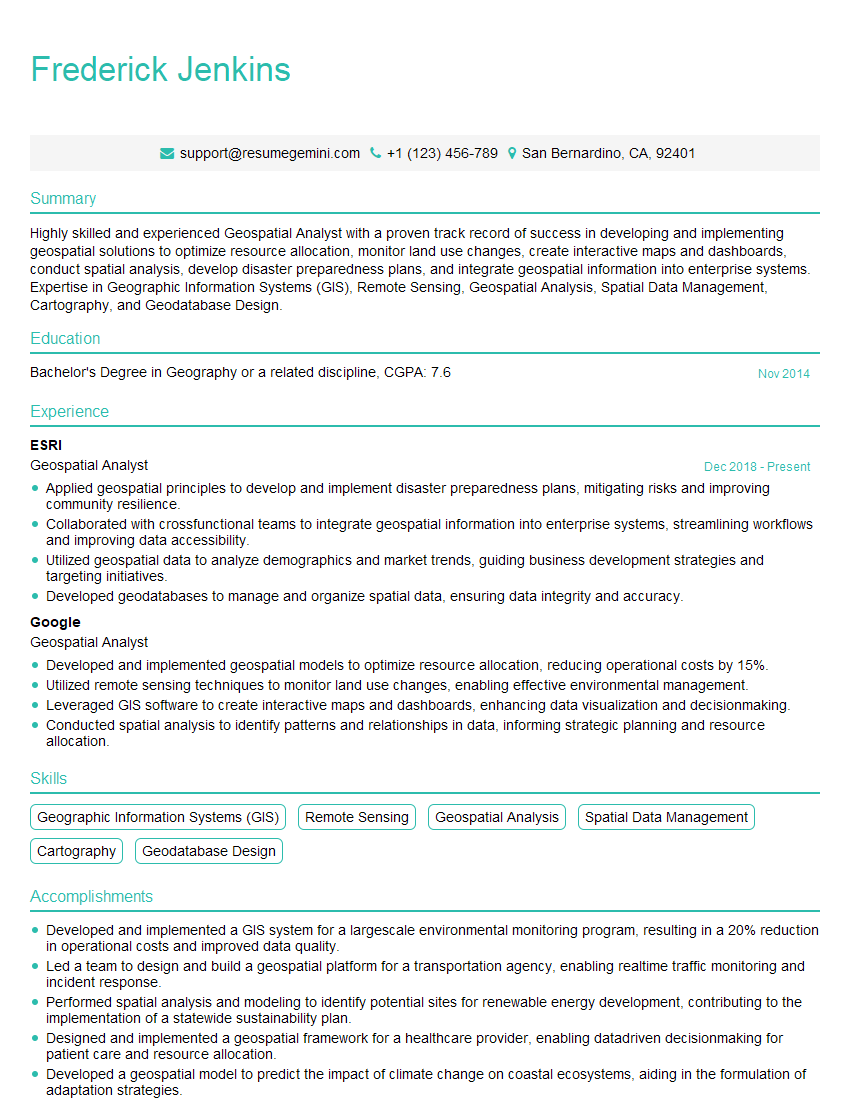
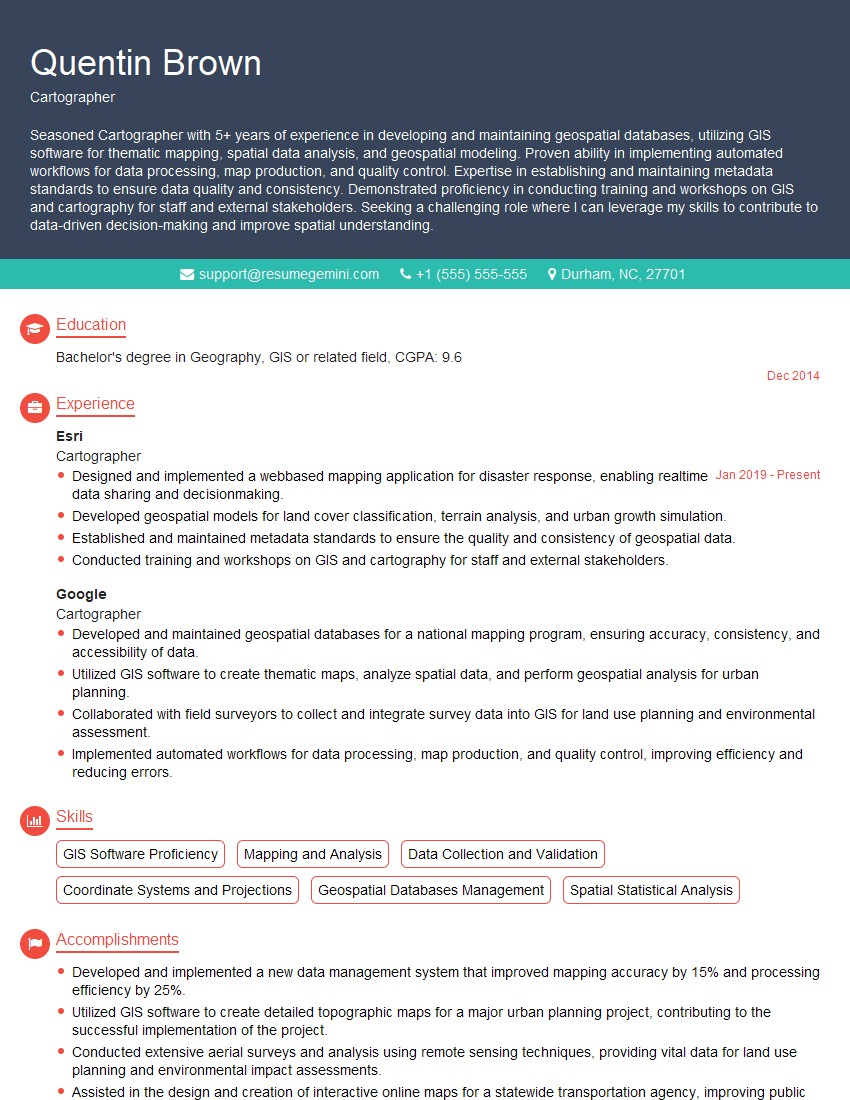
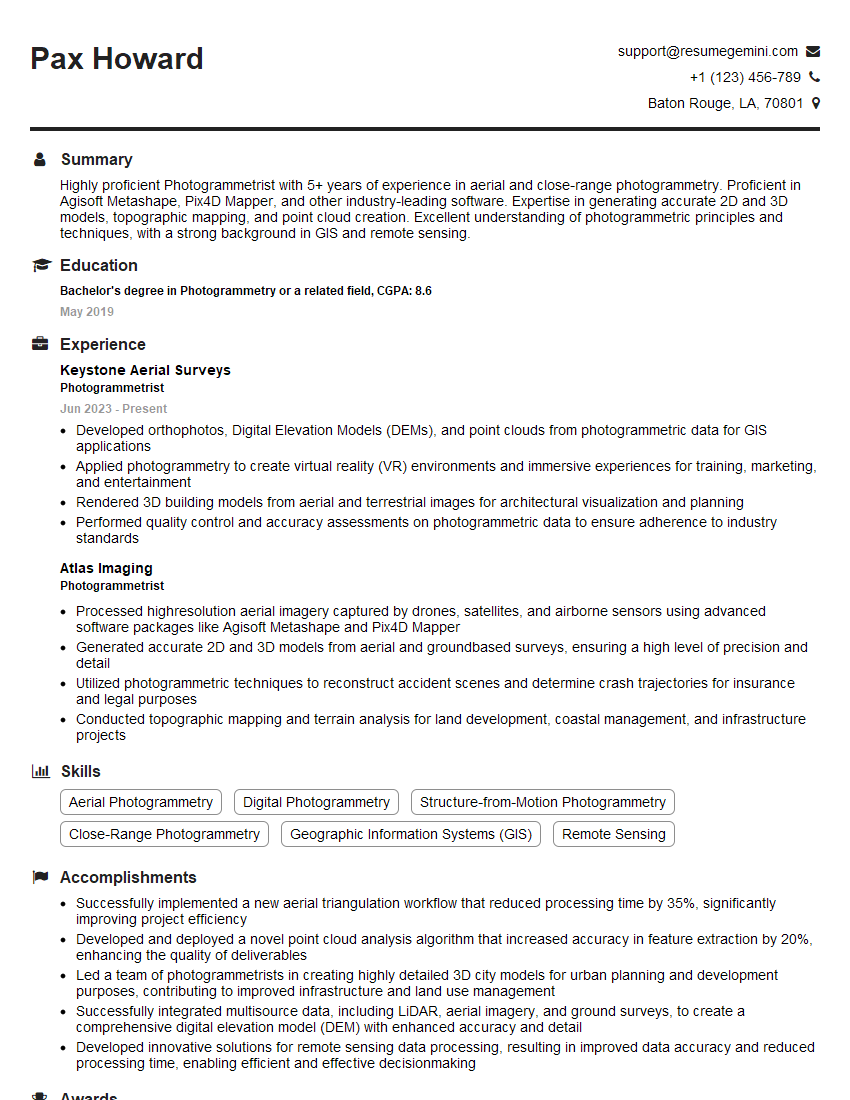
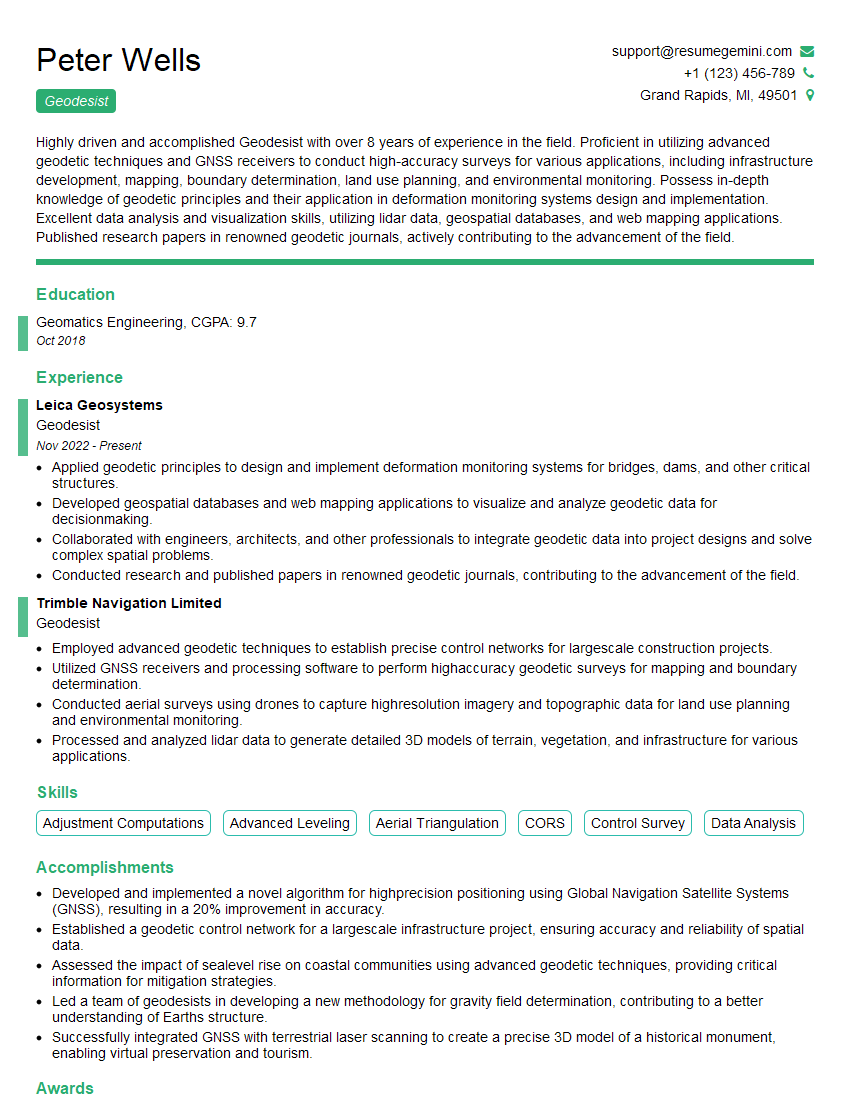
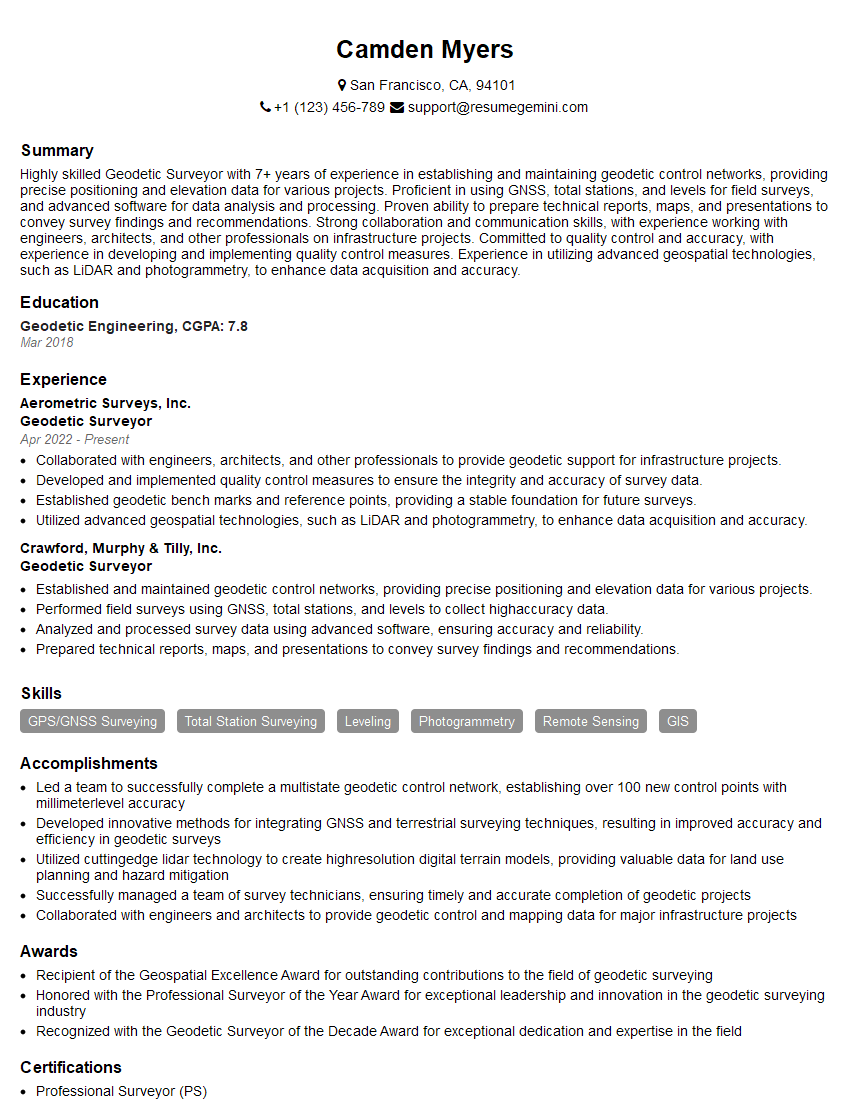
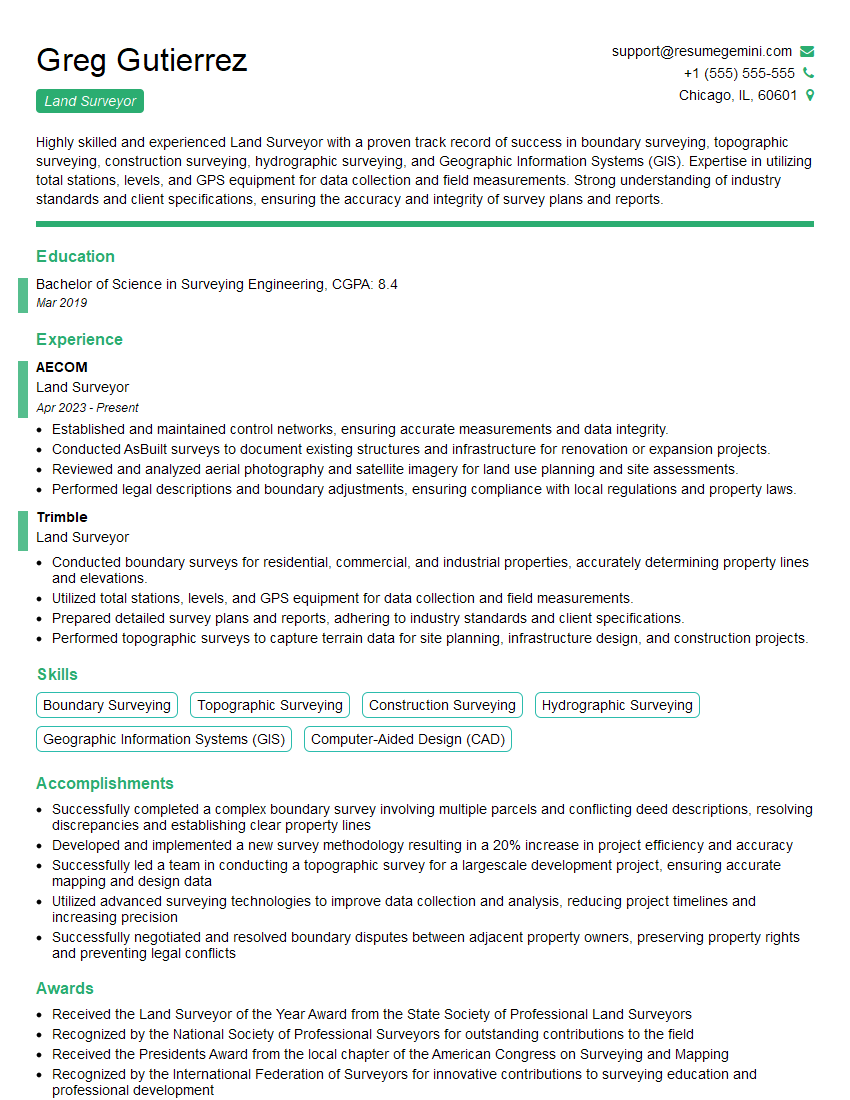
Mastering Geodesy in Law and Engineering opens doors to exciting career opportunities in land surveying, engineering firms, legal practices specializing in property rights, and government agencies. A strong understanding of these principles is crucial for career advancement and success in this specialized field. To maximize your job prospects, creating an ATS-friendly resume is essential. ResumeGemini is a trusted resource to help you build a professional resume that highlights your skills and experience effectively. They provide examples of resumes tailored specifically to Geodesy in Law and Engineering, ensuring your application stands out. Invest time in crafting a compelling resume – it’s your first impression on potential employers.
Explore more articles
Users Rating of Our Blogs
Share Your Experience
We value your feedback! Please rate our content and share your thoughts (optional).
What Readers Say About Our Blog
Really detailed insights and content, thank you for writing this detailed article.
IT gave me an insight and words to use and be able to think of examples