The thought of an interview can be nerve-wracking, but the right preparation can make all the difference. Explore this comprehensive guide to Global Consumer Safety Standards interview questions and gain the confidence you need to showcase your abilities and secure the role.
Questions Asked in Global Consumer Safety Standards Interview
Q 1. Explain the difference between ISO 9001 and ISO 14001 standards and their relevance to consumer safety.
ISO 9001 and ISO 14001 are internationally recognized standards that, while distinct, both contribute to consumer safety. ISO 9001 focuses on Quality Management Systems (QMS), ensuring consistent product quality and customer satisfaction. This indirectly enhances safety by minimizing defects and errors that could lead to hazards. Think of it as setting up a robust process to ensure your product consistently meets its design specifications. ISO 14001, on the other hand, is focused on Environmental Management Systems (EMS), emphasizing environmentally responsible practices. This is crucial for consumer safety because it addresses potential environmental impacts of product manufacturing and disposal, such as reducing harmful chemical releases or ensuring proper waste management, ultimately protecting consumers and the environment.
For example, a company producing toys might use ISO 9001 to ensure all toys meet size and material specifications to prevent choking hazards, and ISO 14001 to ensure the paints used are free from heavy metals and that waste is disposed of properly reducing potential environmental contamination that might affect consumers.
Q 2. Describe your experience with conducting risk assessments for consumer products.
My experience with conducting risk assessments for consumer products involves a systematic approach encompassing several key steps. Firstly, I identify potential hazards, considering factors such as the product’s intended use, materials used, and possible misuse. Next, I assess the likelihood and severity of each hazard. This involves analyzing factors such as the frequency of exposure, the potential for injury or damage, and the vulnerability of the user population. I then evaluate existing control measures (like warnings, protective features) and determine their effectiveness in mitigating the risks. Finally, I document the findings, recommend corrective actions, and monitor the effectiveness of these actions. I’ve used various tools including FMEA (Failure Mode and Effects Analysis) and HAZOP (Hazard and Operability Study) in my assessments. One specific example is my involvement in a project assessing the risks associated with a new line of children’s furniture; this included rigorous testing to ensure stability and absence of small parts that could be choking hazards.
Q 3. What is your understanding of the Consumer Product Safety Improvement Act (CPSIA)?
The Consumer Product Safety Improvement Act (CPSIA) is a US federal law significantly impacting the safety of consumer products, especially those for children. It mandates stringent testing and certification requirements to ensure products are free from harmful substances like lead and phthalates. It also dictates labeling requirements and establishes a tracking system for recalled products. The CPSIA aims to reduce the risk of injuries and exposure to hazardous materials, thereby protecting children and other consumers. For instance, it mandates third-party testing to ensure that children’s toys are free from excessive lead levels and small parts that pose choking hazards.
Compliance with CPSIA involves understanding its various provisions and maintaining thorough documentation of testing results and certifications. Non-compliance can result in severe penalties, including product recalls and legal action.
Q 4. How do you ensure compliance with global safety regulations across different markets?
Ensuring compliance with global safety regulations across different markets requires a multifaceted strategy. Firstly, a thorough understanding of the specific regulations in each target market is crucial. This necessitates staying updated on changes in laws and standards. Secondly, a robust product design process, incorporating safety considerations from the outset, helps minimize potential non-compliance. Thirdly, a diligent testing program adhering to relevant standards must be in place. Finally, effective communication and collaboration with international partners and regulatory bodies are critical. For example, a company exporting products to the EU needs to understand and comply with the REACH regulation regarding the use of chemicals, while also meeting safety standards specific to the US or other markets.
Q 5. Explain your process for reviewing and approving Safety Data Sheets (SDS).
My process for reviewing and approving Safety Data Sheets (SDS) involves a detailed examination of several key aspects. First, I verify the accuracy and completeness of the information provided, including hazard identification, composition, first-aid measures, handling and storage, and disposal instructions. I cross-reference this information with the product specifications and ensure it aligns with the relevant safety regulations. Next, I assess the clarity and understandability of the SDS, ensuring it is easily accessible and comprehensible to users with varying levels of expertise. Finally, I ensure that all required information is present and properly formatted according to globally harmonized standards (like GHS). An inadequate SDS might lead to misuse or accidents, so this is a crucial step in maintaining consumer safety. If any inconsistencies or gaps are identified, I collaborate with the product development team to correct them before approving the SDS.
Q 6. Describe a time you identified a potential safety hazard in a product. What steps did you take?
During the development of a new line of electric kettles, I identified a potential safety hazard related to the heating element’s insulation. During routine testing, we discovered a slight possibility of overheating under specific conditions of continuous use. I immediately initiated a thorough investigation, including simulations and further testing. The team and I decided to modify the kettle’s design to incorporate a more robust thermal protection system. We then conducted further rigorous testing to verify the effectiveness of the changes. We also updated the user manual with clear instructions on safe usage to prevent overheating and communicated this potential issue and the corrective action to relevant regulatory bodies. This proactive approach prevented any potential injuries or property damage from faulty kettles reaching the market.
Q 7. How familiar are you with the Globally Harmonized System of Classification and Labelling of Chemicals (GHS)?
I am very familiar with the Globally Harmonized System of Classification and Labelling of Chemicals (GHS). It’s a globally standardized system for classifying chemicals according to their health, environmental, and physical hazards. The GHS provides a framework for creating Safety Data Sheets (SDS) and labels that are consistent worldwide. Understanding GHS is essential for ensuring the safe handling, transportation, and use of chemicals, protecting both workers and consumers. It promotes consistency in hazard communication across international borders, preventing confusion and misunderstandings. This includes using standardized pictograms, signal words (like ‘Danger’ or ‘Warning’), and hazard statements to clearly communicate the risks associated with specific chemicals. My work routinely requires interpreting and applying GHS principles in SDS review and product safety assessments.
Q 8. What are some key considerations when designing a product for global consumer safety?
Designing a product for global consumer safety requires a multifaceted approach, prioritizing hazard identification and risk mitigation across diverse cultural and regulatory landscapes. It’s not just about meeting minimum standards; it’s about proactively anticipating potential harm.
- Material Selection: Choosing materials compliant with regulations like REACH (Registration, Evaluation, Authorisation and Restriction of Chemicals) in Europe and RoHS (Restriction of Hazardous Substances) globally is crucial. This means avoiding lead, mercury, and other hazardous substances in children’s toys or electronic devices.
- Design for Durability and Safety: Products must withstand foreseeable misuse. For instance, a children’s toy should be robust enough to prevent small parts detaching that could be choking hazards. Sharp edges and points should be avoided.
- Cultural Considerations: What’s acceptable in one country might be considered unsafe in another. For example, certain colors or symbols might have negative connotations in specific cultures. Thorough market research is essential.
- Regulatory Compliance: Each target market has its own specific regulations and standards, such as the CPSC (Consumer Product Safety Commission) standards in the US, or those enforced by the European Union. Meeting these standards is paramount and requires diligent research.
- Testing and Certification: Rigorous testing is crucial, ensuring the product meets all relevant safety standards before release. Third-party certification often adds credibility and consumer confidence.
For example, a company designing a children’s high chair would need to consider materials that are non-toxic and easy to clean, a sturdy design that can withstand falls, and compliance with safety standards related to stability and preventing falls.
Q 9. How do you stay updated on evolving consumer safety regulations and standards?
Staying current with evolving consumer safety regulations requires a proactive, multi-pronged approach. It’s a dynamic field, and complacency is dangerous.
- Subscription to Regulatory Updates: I subscribe to newsletters and alerts from organizations such as the CPSC (US), the EU’s RAPEX (Rapid Alert System for dangerous non-food products), and equivalent bodies in other key markets. This provides timely information on new regulations and product recalls.
- Industry Associations and Conferences: Membership in relevant industry associations provides access to resources, webinars, and networking opportunities. Attending industry conferences is a great way to learn about the latest safety developments and best practices.
- Monitoring Legal and Technical Databases: Regularly checking legal databases and technical journals allows me to track changes in regulations and emerging safety concerns.
- Collaboration with Experts: Networking with other professionals in the field – lawyers specializing in product liability, toxicologists, and engineers – enables the exchange of knowledge and insights.
Think of it like a doctor staying up-to-date on medical advancements – constant learning is essential for safe and effective practice. I even track emerging trends and technologies that might impact future safety concerns.
Q 10. Explain your experience in conducting product recall procedures.
Product recall procedures are complex and require meticulous planning and execution. My experience involves several key steps:
- Identifying the Defect: The process starts with discovering a safety defect, either through internal testing, customer reports, or regulatory notifications.
- Risk Assessment: A thorough risk assessment is performed to determine the severity of the hazard and the potential impact on consumers. This informs the urgency and scope of the recall.
- Recall Strategy: A comprehensive recall strategy is developed, including identifying affected products, notifying consumers, arranging for product return or repair, and managing communications.
- Communication Plan: Effective communication is vital to ensure consumer safety and prevent further harm. This involves working with regulatory agencies and media outlets to communicate the recall information clearly and accurately.
- Execution and Monitoring: The recall plan is implemented, and its effectiveness is closely monitored. Data is tracked to gauge the success of the recall and to identify any further necessary actions.
In a previous role, I managed a recall of a children’s toy with a small, detachable part that posed a choking hazard. We implemented a multi-channel communication strategy, contacting retailers, consumers directly, and using social media to ensure maximum reach and minimize risk.
Q 11. Describe your familiarity with different testing standards for consumer products.
My familiarity with testing standards spans various product categories and international standards. This includes understanding the methodologies, equipment, and reporting requirements.
- IEC Standards: The International Electrotechnical Commission (IEC) provides standards for electrical safety, including testing for electrical appliances and electronic devices.
- ISO Standards: The International Organization for Standardization (ISO) offers a wide range of standards related to various aspects of product safety, including materials, mechanical properties, and environmental impact.
- ASTM Standards: ASTM International develops standards for materials, products, systems, and services. Many of their standards are relevant to consumer product safety.
- Specific Regional Standards: I’m familiar with regional standards, such as those enforced by the CPSC in the U.S., and those found within the European Union’s directives.
For example, testing for flammability of textiles might involve using methods specified in ASTM D6413, while electrical safety testing for a power tool could follow IEC 60335 standards. Each standard specifies detailed procedures, ensuring consistency and comparability of test results.
Q 12. How do you prioritize safety risks when multiple hazards are present?
Prioritizing safety risks when multiple hazards are present involves a structured risk assessment process often employing a risk matrix. This method involves assigning severity, likelihood, and risk ratings to each identified hazard.
- Hazard Identification: All potential hazards are identified through a thorough analysis of the product’s design, materials, and intended use.
- Risk Assessment: For each hazard, the severity (how serious is the potential harm) and likelihood (how likely is the hazard to occur) are assessed. This often uses a standardized scoring system.
- Risk Calculation: Severity and likelihood are combined to calculate the overall risk level for each hazard.
- Prioritization: Hazards are prioritized based on their calculated risk level. The highest-risk hazards are addressed first.
- Risk Mitigation: Mitigation strategies are developed and implemented to reduce the risk level of each hazard to an acceptable level.
Imagine a child’s toy with both sharp edges and small, detachable parts. Using a risk matrix, we might determine that the choking hazard from the small parts poses a higher risk than the minor cuts from the sharp edges. Therefore, addressing the small parts issue would be the immediate priority.
Q 13. What methods do you use to communicate safety concerns and findings?
Communicating safety concerns and findings requires clear, concise, and accessible methods tailored to the audience.
- Formal Reports: For internal stakeholders and regulatory agencies, formal reports provide detailed analysis, risk assessments, and recommendations.
- Data Visualization: Charts and graphs effectively communicate complex data, making it easily understandable.
- Presentations: Presentations are used for communicating findings to various stakeholders, such as management, engineers, and regulatory bodies.
- Consumer Alerts and Notices: If a product poses a significant safety risk, consumer alerts need to be prepared promptly and distributed effectively.
- Collaboration and Transparency: Open communication with all stakeholders, including regulatory agencies, ensures transparency and aids in quick resolution of issues.
For instance, when reporting a safety issue to a regulatory agency, a formal report with detailed testing data, risk assessment, and proposed corrective actions is required. However, communicating with consumers would necessitate simpler, accessible language, focusing on the key safety issue and recommended actions.
Q 14. Describe your experience with working with regulatory agencies.
Working with regulatory agencies is a crucial part of ensuring global consumer safety. It requires understanding their processes, procedures, and expectations.
- Understanding Regulations: Deep knowledge of the relevant regulations and standards in each target market is paramount.
- Collaboration and Communication: Effective communication and collaboration are key to a positive working relationship with regulatory agencies. This includes clear and timely responses to inquiries and requests for information.
- Documentation and Reporting: Maintaining accurate and thorough documentation is essential, particularly when it comes to testing data and compliance reports.
- Proactive Approach: A proactive approach, including seeking guidance from agencies early in the product development process, can often prevent costly delays and issues later on.
I’ve had extensive experience working with agencies such as the CPSC and European Commission. For example, during a product evaluation, I collaborated effectively with the CPSC to address their questions about testing methodology, ensuring compliance with their standards.
Q 15. Explain your understanding of various product certification schemes.
Product certification schemes are essentially third-party verifications that a product meets specific safety and quality standards. These schemes provide assurance to consumers and regulatory bodies that the product has been rigorously tested and complies with relevant regulations. Different schemes exist, catering to various industries and geographical regions.
- CE Marking (European Union): Indicates conformity with EU health, safety, and environmental protection legislation. This is crucial for products sold within the EU.
- UL (Underwriters Laboratories): A well-known North American safety certification organization offering various certifications based on specific standards, such as electrical safety, fire safety, and more.
- CSA (Canadian Standards Association): Similar to UL, but focused on Canadian standards. Often, products certified by UL also meet CSA requirements.
- ISO 9001 (International Organization for Standardization): This standard focuses on quality management systems, ensuring consistent product quality, though not explicitly focusing solely on safety.
- Industry-Specific Certifications: Many industries have their own specific certification schemes, such as those in the automotive, medical device, or food industries. These usually adhere to industry-specific best practices and standards.
Choosing the right certification scheme depends on the target market, product type, and relevant regulations. A thorough understanding of these requirements is vital for manufacturers to ensure compliance and access to global markets.
Career Expert Tips:
- Ace those interviews! Prepare effectively by reviewing the Top 50 Most Common Interview Questions on ResumeGemini.
- Navigate your job search with confidence! Explore a wide range of Career Tips on ResumeGemini. Learn about common challenges and recommendations to overcome them.
- Craft the perfect resume! Master the Art of Resume Writing with ResumeGemini’s guide. Showcase your unique qualifications and achievements effectively.
- Don’t miss out on holiday savings! Build your dream resume with ResumeGemini’s ATS optimized templates.
Q 16. How do you handle conflicts between cost considerations and safety standards?
Balancing cost and safety is a constant challenge. Cutting corners on safety to reduce costs is never acceptable and can have disastrous consequences. Instead, a proactive approach is required.
Firstly, a comprehensive risk assessment is crucial. This identifies potential hazards associated with the product and evaluates the likelihood and severity of potential incidents. This allows us to prioritize safety measures based on their effectiveness and cost-benefit ratio.
Secondly, exploring alternative materials, designs, or manufacturing processes can help reduce costs without compromising safety. For example, substituting a costly, high-strength material with a cheaper alternative, if rigorous testing proves the substitute meets the necessary safety requirements, is a valid strategy.
Thirdly, investing in robust quality control and assurance throughout the manufacturing process is essential. Early detection of defects and proactive measures prevent costly recalls and maintain product safety.
Finally, open communication between engineering, manufacturing, and management teams is paramount to finding cost-effective solutions without sacrificing safety. This collaborative approach often yields innovative and cost-effective solutions.
Q 17. How do you ensure the safety of consumer products throughout the supply chain?
Ensuring consumer product safety throughout the supply chain requires a multi-faceted approach. It’s not just about the final product, but also the raw materials, manufacturing processes, and distribution networks.
- Supplier Audits: Regular audits of suppliers ensure they adhere to safety standards and quality control measures. This includes evaluating their manufacturing processes, testing procedures, and adherence to relevant regulations.
- Traceability: Implementing a robust tracking system allows for rapid identification of the source of any safety issue. This means clearly labeling materials and products and maintaining detailed records throughout the production chain.
- Quality Control at Each Stage: Implementing quality checks at every stage of production – from raw materials to finished goods – helps to identify and rectify defects early, preventing potential safety hazards.
- Transportation and Storage: Proper packaging, handling, and storage throughout the supply chain are crucial to prevent damage that could compromise product safety. Temperature control, for example, is crucial for many types of goods.
- Regular Training: Ensuring that all personnel involved in the supply chain are properly trained on safety procedures and regulations is paramount.
A comprehensive supply chain safety management system needs to be flexible and adaptable to evolving regulations and potential risks. Regular reviews and updates are essential.
Q 18. What are the key elements of a comprehensive consumer safety management system?
A comprehensive consumer safety management system (CSMS) involves a holistic approach, incorporating various elements to proactively identify, assess, and mitigate risks. Key elements include:
- Risk Assessment: A systematic process of identifying potential hazards associated with the product throughout its lifecycle, evaluating their likelihood and severity, and determining appropriate control measures.
- Design for Safety: Incorporating safety features and safeguards into the product design from the outset. This is far more cost-effective than addressing safety issues after production.
- Testing and Validation: Rigorous testing to ensure the product meets relevant safety standards and performs as intended under various conditions. This includes both laboratory and field testing.
- Manufacturing Control: Maintaining strict quality control procedures throughout the manufacturing process to ensure consistency and prevent defects.
- Incident Reporting and Investigation: Establishing a clear process for reporting and investigating consumer product safety incidents, including root cause analysis and corrective actions.
- Communication and Training: Providing clear and concise information about product safety to consumers and employees, including training on safe handling and use.
- Record Keeping: Maintaining thorough documentation of all aspects of the CSMS, including test results, audit findings, incident reports, and corrective actions.
A well-implemented CSMS is not a static document but an evolving process that adapts to emerging risks and regulatory changes. Regular reviews and updates are essential for its effectiveness.
Q 19. Explain your experience in conducting root cause analysis of consumer product safety incidents.
Conducting a root cause analysis (RCA) of a consumer product safety incident is crucial for preventing future occurrences. My approach involves a systematic investigation using techniques like the ‘5 Whys’ and fault tree analysis.
For example, consider a case where a children’s toy unexpectedly broke, causing injury. The ‘5 Whys’ method would involve asking ‘why’ repeatedly to uncover the underlying causes:
- Why did the toy break? Because the plastic was brittle.
- Why was the plastic brittle? Because the wrong type of plastic was used.
- Why was the wrong type of plastic used? Because of a supplier error in the delivery.
- Why was there a supplier error? Because the supplier’s quality control system failed.
- Why did the supplier’s quality control system fail? Because there was insufficient training and oversight.
Fault tree analysis would provide a visual representation of the various factors contributing to the failure. Once the root causes are identified, corrective actions can be implemented, such as changing the plastic type, improving supplier relationships, and enhancing quality control processes. Crucially, this investigation helps to not only fix the immediate problem but prevent similar incidents in the future. Documentation is vital in this process to support future improvements.
Q 20. Describe your familiarity with different types of consumer product liability.
Consumer product liability refers to the legal responsibility manufacturers, distributors, and retailers have for injuries or damages caused by defective products. Several types exist:
- Negligence: Failure to exercise reasonable care in the design, manufacturing, or marketing of a product.
- Strict Liability: Liability is imposed regardless of fault if a product is defective and causes harm. This means the manufacturer can be held responsible even if they took all reasonable precautions.
- Breach of Warranty: A manufacturer fails to meet expressed or implied promises regarding the product’s quality or performance.
- Misrepresentation: False statements or misleading information about a product’s safety or capabilities that lead to injury or harm.
Understanding these different types of liability is crucial for manufacturers to implement appropriate safety measures and legal safeguards. Having a robust CSMS reduces the likelihood of legal action and demonstrates a commitment to product safety.
Q 21. How do you interpret and apply international safety standards to a specific product?
Interpreting and applying international safety standards to a specific product requires careful consideration of several factors. Let’s take the example of a children’s toy.
First, identify all relevant standards. For instance, the toy might need to comply with standards related to flammability (e.g., ASTM F963 in the US), small parts (preventing choking hazards), and mechanical strength. These standards may vary across jurisdictions.
Next, a thorough analysis of the product’s design and materials is necessary to determine compliance with each standard. This often involves testing conducted by accredited labs. For example, flammability testing might involve exposing the toy to a flame to measure its ignition time and rate of spread.
Finally, documentation is paramount. All test results, certificates of compliance, and related data must be carefully retained. This documentation is crucial for demonstrating compliance and for potential legal defense if needed.
Proper interpretation of international standards requires specialized knowledge and careful attention to detail. Using a certified testing laboratory and maintaining thorough records are crucial for demonstrating compliance and minimizing risk.
Q 22. What is your experience with developing and implementing consumer safety training programs?
Developing and implementing consumer safety training programs requires a multifaceted approach. It begins with a thorough needs assessment to identify knowledge gaps and tailor the training to specific roles and responsibilities. For example, a program for manufacturing employees might focus on machinery safety and hazard identification, while a program for marketing and sales teams might emphasize regulatory compliance and consumer communication regarding safety features.
My experience involves designing both classroom-based and online modules, incorporating interactive elements such as simulations and case studies to enhance engagement and knowledge retention. I’ve developed training programs covering a wide range of topics, including hazard analysis (like Failure Mode and Effects Analysis or FMEA), risk assessment, compliance with global standards (like those from the IEC, ISO, and ASTM), incident reporting procedures, and best practices for product recall management. After implementation, continuous evaluation through post-training assessments, feedback surveys, and observation of on-the-job application is crucial to ensure effectiveness and make necessary adjustments.
- Needs Assessment: Identifying specific training needs through interviews, surveys, and job task analysis.
- Curriculum Development: Creating engaging training materials, including presentations, videos, and interactive exercises.
- Delivery: Implementing the training using various methods, including classroom instruction, online modules, and on-the-job coaching.
- Evaluation: Measuring the effectiveness of the training program through pre and post-tests, observation, and feedback mechanisms.
Q 23. Explain your approach to managing safety data and ensuring data integrity.
Managing safety data and ensuring data integrity is paramount in maintaining a safe and compliant product lifecycle. My approach centers around a robust system that incorporates data capture, storage, analysis, and reporting. This starts with clearly defined data collection procedures, which might involve using standardized forms, electronic data capture systems, or specialized software for tracking incidents and test results.
Data integrity is upheld through meticulous documentation, version control, and regular audits. For example, I utilize a secure database system with access controls to prevent unauthorized modification. Data validation procedures (e.g., cross-checking information across multiple sources) and data cleaning processes are implemented to address inconsistencies or errors. All data modifications are tracked, with clear records of who made the changes and when. This creates an auditable trail, essential for regulatory compliance and internal investigations. Regular audits and reviews ensure the data remains accurate and reliable. Statistical methods are also crucial for data analysis – identifying trends, outliers, and insights to inform proactive safety measures.
Think of it like a meticulous financial ledger. Every entry must be documented, validated, and verifiable, leaving no room for discrepancies.
Q 24. How familiar are you with the use of statistical methods in evaluating product safety?
I am very familiar with the use of statistical methods in evaluating product safety. Statistical analysis is essential for interpreting test data, identifying trends, and quantifying risks. Techniques such as hypothesis testing, regression analysis, and survival analysis are routinely employed to evaluate product performance and identify potential failure modes.
For example, in analyzing failure data from field returns, we might use Weibull analysis to model the failure rate and estimate the product’s reliability over time. Similarly, statistical process control (SPC) charts are used to monitor manufacturing processes and detect deviations that could compromise product safety. Understanding confidence intervals and statistical significance is critical in drawing accurate conclusions from experimental results and ensuring that decisions made are both data-driven and scientifically sound. The ability to interpret and explain statistical findings clearly to both technical and non-technical audiences is equally important.
Q 25. Describe your experience working with external testing labs and consultants.
Collaborating effectively with external testing labs and consultants is a cornerstone of robust product safety management. My experience includes selecting qualified labs based on accreditation, expertise, and capacity. The selection process involves carefully reviewing their capabilities and ensuring they can perform the specific tests needed. This might range from routine material testing to complex simulations of product failure scenarios.
I’ve established strong working relationships with various labs and consultants, based on clear communication, well-defined scopes of work, and regular progress reviews. Effective communication is key to ensure the testing procedures align with the product design and intended use. Regular review of test results, including identification of any discrepancies or unusual findings, is critical to ensure the integrity and reliability of the data. Furthermore, managing project timelines, budgets, and deliverables with external partners is a crucial aspect of this collaboration.
Q 26. What are some ethical considerations in product safety and compliance?
Ethical considerations in product safety and compliance are paramount. They extend beyond mere legal requirements and encompass a broader commitment to consumer well-being. Transparency in communicating safety information to consumers is crucial. This includes clear and understandable labeling, readily accessible safety instructions, and prompt notification of any potential hazards or product recalls.
Confidentiality regarding test data and safety investigations must be strictly maintained. Protecting intellectual property while ensuring transparency in safety-critical information necessitates a delicate balance. Furthermore, ethical considerations include avoiding conflicts of interest and maintaining objectivity when evaluating product safety. This requires transparency regarding any financial ties to vendors or other potentially influencing factors. Ultimately, prioritizing consumer well-being above profit maximization is the cornerstone of ethical product safety management.
Q 27. How do you balance the need for innovation with the need for safety in product design?
Balancing innovation with safety in product design requires a systematic and iterative approach. It begins with incorporating safety considerations into the earliest stages of product development, rather than treating them as an afterthought. Techniques like hazard analysis and risk assessment help identify potential hazards early on. For example, Design for Safety (DfS) principles are implemented to minimize risks from the outset.
This includes using robust materials, incorporating safety features (like emergency shutoff mechanisms), and designing products that are easy to use and understand. Regular design reviews are essential to ensure that safety considerations are integrated seamlessly with innovative features. The use of simulations, prototyping, and rigorous testing help verify that the design performs safely under various conditions. This iterative process ensures that any design changes are evaluated for potential safety implications, striking a harmonious balance between innovation and safety.
Q 28. Describe your experience with reporting and documenting safety incidents and findings.
Reporting and documenting safety incidents and findings are critical for identifying trends, implementing corrective actions, and improving product safety. My experience involves establishing a clear and efficient incident reporting system. This includes standardized reporting forms, clear procedures for documenting relevant information (date, time, location, description of the event, witness statements, etc.), and a defined escalation process for critical incidents.
Thorough root cause analyses are conducted to identify the underlying causes of safety incidents, which might involve analyzing data, conducting interviews, and reviewing design documentation. Findings are documented meticulously, and corrective and preventative actions (CAPA) are developed to mitigate risks and prevent similar incidents from occurring in the future. All safety incidents and findings are tracked and analyzed to identify trends and patterns, providing valuable data for ongoing product improvements and risk management. This thorough documentation also helps to support regulatory compliance and legal defensibility in case of litigation.
Key Topics to Learn for Global Consumer Safety Standards Interview
- International Standards Organizations (ISO): Understanding the role of ISO and other relevant organizations in setting global safety standards, including familiarity with specific ISO standards relevant to your field (e.g., ISO 9001, ISO 14001, specific product safety standards).
- Product Safety Regulations: Knowledge of key regulations and directives governing consumer product safety in different regions (e.g., EU, US, China). This includes understanding variations in requirements and compliance processes across jurisdictions.
- Risk Assessment and Management: Demonstrate understanding of methodologies for conducting thorough risk assessments of consumer products, including hazard identification, risk analysis, and risk control measures. Be prepared to discuss practical applications of risk management principles.
- Testing and Certification: Familiarity with various testing procedures and certification processes used to verify compliance with safety standards. This includes understanding the role of accredited testing laboratories and certification bodies.
- Supply Chain Management and Due Diligence: Explain how to ensure compliance with global safety standards throughout the entire product lifecycle, from design and manufacturing to distribution and disposal. This includes implementing effective due diligence processes to manage risks associated with suppliers.
- Legal and Ethical Considerations: Discuss the legal implications of non-compliance with safety standards, including potential penalties and liabilities. Demonstrate an understanding of ethical responsibilities related to consumer product safety.
- Data Analysis and Reporting: Show proficiency in analyzing safety data to identify trends, patterns, and potential hazards. Be able to present findings clearly and concisely in reports.
- Incident Reporting and Investigation: Understanding procedures for investigating product-related incidents, documenting findings, and implementing corrective actions to prevent recurrence.
Next Steps
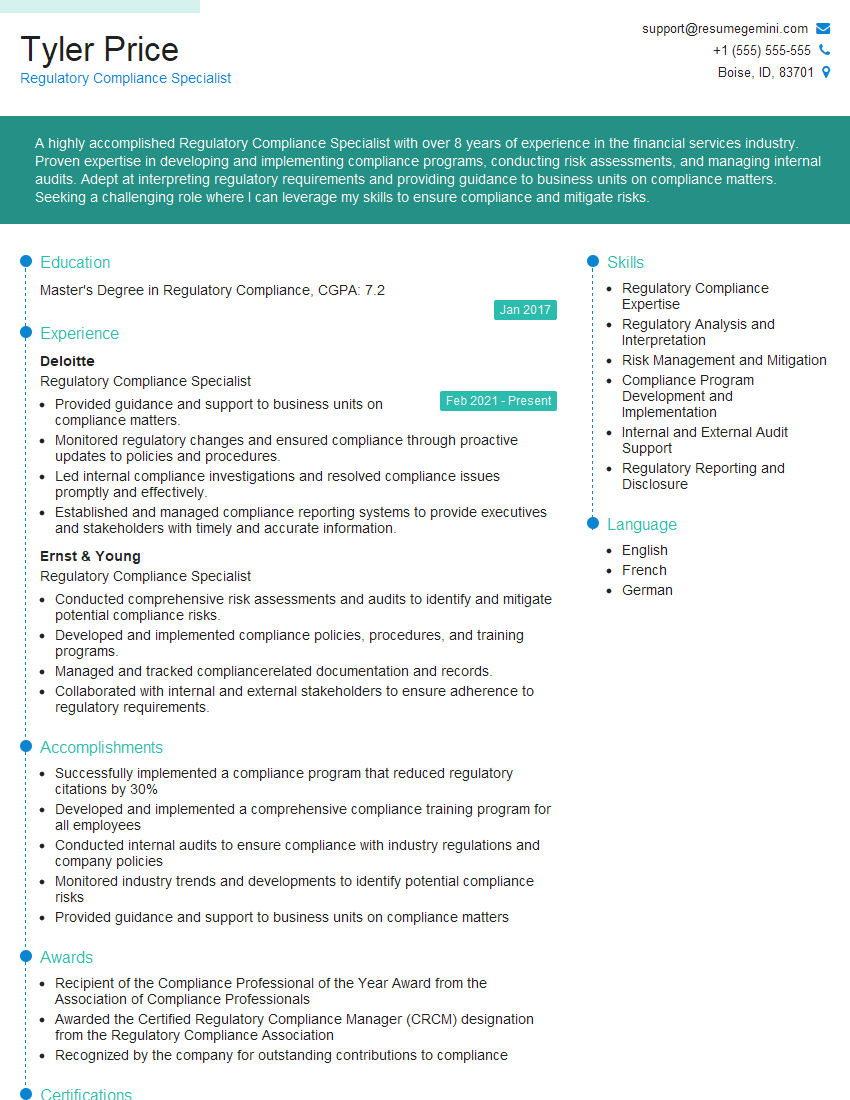
Mastering Global Consumer Safety Standards is crucial for advancing your career in a field increasingly focused on consumer protection and ethical manufacturing. A strong understanding of these standards opens doors to higher-level roles with greater responsibility and impact. To enhance your job prospects, creating a compelling and ATS-friendly resume is essential. ResumeGemini is a trusted resource to help you build a professional resume that highlights your skills and experience effectively. Examples of resumes tailored to Global Consumer Safety Standards are available, showcasing best practices for showcasing your expertise in this field.
Explore more articles
Users Rating of Our Blogs
Share Your Experience
We value your feedback! Please rate our content and share your thoughts (optional).
What Readers Say About Our Blog
Really detailed insights and content, thank you for writing this detailed article.
IT gave me an insight and words to use and be able to think of examples