Preparation is the key to success in any interview. In this post, we’ll explore crucial Heating interview questions and equip you with strategies to craft impactful answers. Whether you’re a beginner or a pro, these tips will elevate your preparation.
Questions Asked in Heating Interview
Q 1. Explain the difference between forced-air and radiant heating systems.
Forced-air and radiant heating systems represent two fundamentally different approaches to distributing heat throughout a building. Forced-air systems use a furnace or heat pump to heat air, which is then circulated through a network of ducts to various rooms. Think of it like blowing warm air from a hairdryer to distribute heat. Radiant heating, on the other hand, directly heats objects and surfaces within a space. This can be achieved through various methods such as in-floor tubing, electric radiant panels, or baseboard heaters. The heat is then transferred to the air through these surfaces, similar to how the sun warms the earth.
- Forced-Air: Efficient for larger spaces, relatively inexpensive to install, but can be noisy, and air quality can be affected by dust in the ductwork. Temperature can also vary significantly between rooms.
- Radiant: Provides even, comfortable heat, quieter operation, and improved air quality as no air is circulated, but it’s more expensive to install, and can be less efficient in very large or poorly insulated spaces. It’s often used in conjunction with other heating systems.
For example, a large family home might benefit from a forced-air system due to its cost-effectiveness and ability to heat multiple zones. A smaller, well-insulated apartment might be better suited for a radiant heating system for its comfort and efficiency.
Q 2. Describe the operation of a gas furnace.
A gas furnace operates by burning natural gas to produce heat. This heat is then used to warm air, which is then circulated through the house via ductwork. Let’s break down the process step-by-step:
- Ignition: The process begins with the ignition of the pilot light (or igniter in newer models). This provides a constant flame to ignite the main burner.
- Gas Flow: Once the thermostat calls for heat, a gas valve opens, allowing natural gas to flow into the burner assembly.
- Combustion: The gas mixes with air and ignites, producing heat. This combustion process occurs within a heat exchanger, a crucial component designed to transfer the heat safely and efficiently.
- Heat Transfer: The heat exchanger, usually made of metal, heats the air that is being blown across it by a blower motor.
- Air Circulation: The heated air is then pushed through the duct system and into the living spaces by the blower motor.
- Exhaust: The combustion byproducts (carbon monoxide, water vapor) are safely exhausted outside the home through a vent pipe.
It’s important to remember that proper ventilation and regular maintenance are essential for safe and efficient operation. Carbon monoxide detectors are a critical safety feature in any home with a gas furnace.
Q 3. How do you troubleshoot a malfunctioning thermostat?
Troubleshooting a malfunctioning thermostat involves a systematic approach. Here’s a step-by-step guide:
- Check Power: Ensure the thermostat is receiving power. Look for a tripped breaker or blown fuse. Some thermostats have a separate power switch.
- Battery Check (if applicable): If it’s a battery-powered thermostat, replace the batteries.
- Wiring: Carefully inspect the wiring connections at the thermostat. Loose or corroded wires are a common culprit. Ensure each wire is securely connected to its corresponding terminal.
- Calibration: Verify the thermostat is correctly calibrated. Try setting it to a different temperature to see if the heating system responds.
- Test Mode: Some thermostats offer a test mode that allows you to verify the system is receiving signals and responding appropriately.
- Circuit Breaker/Fuse Box: The circuit breaker or fuse for the heating system may have tripped. Reset the breaker or replace the fuse.
- Professional Help: If you are unable to diagnose the problem after following these steps, call a qualified HVAC technician.
For example, I once encountered a thermostat that wasn’t working due to a loose connection at the ‘R’ (power) terminal. Simply tightening the wire solved the issue.
Q 4. What are the common causes of a furnace pilot light going out?
A pilot light going out on a gas furnace is a common problem, often stemming from:
- Insufficient Gas Supply: A weak or blocked gas supply can prevent the pilot light from igniting or staying lit.
- Dirty or Clogged Pilot Assembly: Dust, debris, or spiders can obstruct the pilot light assembly, preventing proper ignition.
- Airflow Problems: Inadequate airflow around the pilot assembly can cause the flame to extinguish.
- Draft Issues: Strong drafts near the pilot light can blow out the flame.
- Faulty Gas Valve: A malfunctioning gas valve may not supply sufficient gas to maintain the pilot light.
- Improper Pilot Adjustment: The pilot light may need adjusting to ensure the flame is of the correct height and is properly positioned within the pilot assembly.
Always consult your furnace’s manual before attempting any repairs, and if you are uncomfortable working with gas appliances, call a qualified professional. Improper repairs can be dangerous.
Q 5. Explain the process of checking and balancing a heating system.
Checking and balancing a heating system ensures that each zone or room receives the correct amount of heat. This process involves adjusting the airflow through the ductwork to optimize heat distribution and efficiency.
The process typically involves:
- Measuring Airflow: Using an anemometer, measure the airflow at each register (supply and return) in each zone. These measurements provide the baseline.
- Identifying Imbalances: Compare the measured airflow with the design specifications. Discrepancies indicate imbalances. A room receiving too little air will be cold, and a room receiving too much air will be wasteful.
- Adjusting Dampers: Adjust the dampers (valves that control airflow) located in the ductwork to correct the imbalances. Gradually adjust the dampers, remeasuring the airflow after each adjustment.
- System Testing: Monitor the system’s performance after adjustments. Verify even heat distribution across all zones. Re-adjust as needed.
Think of it as fine-tuning a musical instrument: you need to adjust various elements to create harmonious sound. Similarly, balancing a heating system ensures that heat is distributed harmoniously throughout the building.
Q 6. How do you diagnose and repair a leaking boiler?
Diagnosing and repairing a leaking boiler requires careful attention to safety and precision. Here’s the procedure:
- Identify the Leak: Locate the source of the leak. This often involves visual inspection and may require checking pressure gauges and listening for hissing sounds. A soapy water solution can help pinpoint leaks in pipes.
- Isolate the Problem: Before attempting any repair, turn off the boiler and isolate the affected section by turning off any relevant valves.
- Determine the Cause: Common causes of boiler leaks include corrosion, cracks, damaged seals, or worn-out components.
- Repair or Replacement: Minor leaks might be repaired by tightening fittings or replacing gaskets. More significant leaks may require welding, patching, or replacing sections of pipe or components.
- Pressure Testing: After the repair, perform a pressure test to ensure the boiler is leak-free. This involves pressurizing the system and observing for any pressure drops.
- Refill and Restart: Once the leak is fixed and the pressure test is successful, carefully refill the boiler with water according to the manufacturer’s instructions. Restart the boiler and monitor it carefully for any further leaks.
It is imperative to note that working with boilers involves pressurized water and potentially hazardous materials. If you are not experienced in boiler repair, it is crucial to contact a qualified professional. Attempting repairs yourself could be dangerous.
Q 7. Describe the safety precautions you take when working with natural gas heating systems.
Safety is paramount when working with natural gas heating systems. Here are essential precautions:
- Ventilation: Always work in a well-ventilated area. Carbon monoxide is a deadly, odorless gas.
- Gas Shut-Off: Before starting any work, turn off the gas supply to the appliance at the main shut-off valve. This prevents accidental gas leaks.
- Personal Protective Equipment (PPE): Wear appropriate safety gear, including safety glasses, gloves, and closed-toe shoes.
- Carbon Monoxide Detector: Ensure carbon monoxide detectors are functional and located in strategic areas of the home. Regularly test the detectors.
- Lockout/Tagout Procedures: Use lockout/tagout procedures to prevent accidental activation of the appliance while working on it.
- Flame Monitoring: During operation, be vigilant about observing flame characteristics and identifying any unusual behavior.
- Professional Assistance: If you are unsure about any aspect of the work, always consult a qualified HVAC technician.
A personal anecdote: I once responded to a service call where a homeowner had attempted a DIY repair on their gas furnace, leading to a gas leak. Fortunately, they had a functioning carbon monoxide detector that alerted them to the danger. This highlights the importance of prioritizing safety and seeking professional help when necessary.
Q 8. What are the different types of heat exchangers used in heating systems?
Heat exchangers are crucial components in heating systems, transferring heat from a heat source (like a furnace or boiler) to the air or water that will ultimately heat your home. Several types exist, each with its own strengths and weaknesses:
- Plate Heat Exchangers: These consist of thin, corrugated metal plates stacked together, creating channels for the fluids to flow. They’re efficient and compact, often used in hydronic systems (hot water heating).
- Shell and Tube Heat Exchangers: One fluid flows through a bundle of tubes inside a larger shell containing the second fluid. This design is robust and can handle high pressures, commonly found in boilers and larger heating systems.
- Finned-Tube Heat Exchangers: These feature tubes with fins attached to increase the surface area for heat transfer. This maximizes efficiency, frequently seen in air conditioning and furnace coils. The fins can be made of aluminum or copper.
- Coil Heat Exchangers: Simpler than others, these involve a coil of tubing through which the heating fluid flows. They are common in smaller applications like baseboard heaters.
The choice of heat exchanger depends on factors like the heating medium (air or water), required heat transfer rate, pressure, and available space. For instance, a large commercial building might use a shell and tube exchanger for its boiler, while a residential furnace would employ a finned-tube exchanger.
Q 9. How do you identify and address a problem with airflow in a forced-air system?
Airflow problems in forced-air systems are common and often lead to uneven heating or inefficient operation. Identifying the issue requires a systematic approach:
- Check the Filter: A clogged air filter is the most frequent culprit. A restricted filter dramatically reduces airflow. Replace it with a new one of the correct size and type.
- Inspect the Blower Motor: A malfunctioning blower motor might not be providing sufficient airflow. Listen for unusual noises (whining, grinding) or check if the motor is spinning freely. Possible fixes include lubrication or motor replacement.
- Examine the Ductwork: Leaks or blockages in the ductwork significantly impact airflow. Look for loose connections, holes, or areas where the ducts are crushed or kinked. Repair or seal any leaks using metal tape or mastic sealant.
- Verify Vents and Registers: Blocked or closed vents restrict airflow to specific rooms. Ensure all vents are open and unobstructed by furniture or other items. Consider balancing the air distribution by adjusting vent dampers if necessary.
- Check the Return Air Grilles: These are crucial for drawing air back into the system. Obstructed return grilles can severely restrict airflow, leading to improper heating. Ensure they are clean and unobstructed.
Addressing airflow issues usually involves cleaning, repairing, or replacing components. For complex problems, professional HVAC technicians are needed to ensure proper diagnosis and remediation.
Q 10. Explain the concept of BTU (British Thermal Units) and its relevance in heating.
A BTU (British Thermal Unit) is a unit of energy. In heating, it represents the amount of heat required to raise the temperature of one pound of water by one degree Fahrenheit. It’s essential for sizing heating systems and evaluating their efficiency.
Think of it like this: if a space needs 12,000 BTUs to be heated adequately, a furnace with a capacity less than that would struggle to heat the space effectively. A furnace with a higher capacity (say 15,000 BTUs) would work, but it might be slightly oversized and inefficient in milder climates. HVAC professionals use BTU calculations to determine the appropriate size heating system for a given space, taking into account factors like insulation, climate, and the desired temperature.
Q 11. What are the common causes of uneven heating in a house?
Uneven heating in a house is a common problem with several potential causes:
- Inadequate Insulation: Poorly insulated walls, ceilings, or windows can lead to heat loss in certain areas, making some rooms colder than others.
- Air Leaks: Drafts around windows, doors, or other openings allow heated air to escape, resulting in uneven temperatures.
- Blocked or Restricted Airflow: Furniture, carpets, or other obstacles blocking vents or return air grilles restrict airflow to certain areas.
- System Size Mismatch: A heating system that’s too small for the house might struggle to heat all areas equally.
- Malfunctioning Valves or Dampers: Faulty valves in hydronic systems or dampers in forced-air systems can prevent hot air or water from reaching certain parts of the home.
- Problems with the Heating Unit: A malfunctioning heating unit, such as a failing heat exchanger or blower motor, could lead to reduced heat output in certain zones.
Diagnosing the cause of uneven heating often requires careful investigation, possibly involving infrared thermography to identify heat loss areas. Solving the problem might involve improving insulation, sealing air leaks, adjusting airflow, or even replacing components of the heating system.
Q 12. How do you test and replace a heating element in an electric furnace?
Replacing a heating element in an electric furnace is a task that requires caution due to the presence of high voltage. It’s advisable to have expertise and turn off the power before attempting any repairs.
- Safety First: Turn off the power to the furnace at the breaker box. Double-check the power is off using a non-contact voltage tester.
- Access the Heating Element: Access the heating element, which is usually located within the furnace. Consult the furnace’s manual for specific instructions.
- Disconnect the Wiring: Carefully disconnect the wires from the old heating element. Note the wiring configuration to ensure proper reconnection.
- Remove the Old Element: Remove the old heating element, being mindful of any sharp edges or screws.
- Install the New Element: Install the new heating element, ensuring it’s securely fastened.
- Reconnect the Wiring: Reconnect the wiring, referring to your notes or the furnace’s manual to ensure the correct configuration.
- Restore Power: Turn the power back on at the breaker box. Test the furnace to ensure the new heating element is functioning correctly.
Always consult the manufacturer’s instructions. If uncomfortable performing this task, contact a qualified HVAC professional. Improper handling of electrical components can lead to serious injury or damage.
Q 13. Describe the different types of heating controls (thermostats, etc.).
Heating controls regulate the operation of the heating system to maintain a desired temperature. Several types exist:
- Mechanical Thermostats: These simple, older-style thermostats use a bimetallic strip to respond to temperature changes. They’re generally less precise than digital ones.
- Digital Thermostats: These offer more precise temperature control and advanced features such as programmable scheduling, allowing you to set different temperatures for different times of the day or week. Some even offer remote access via smartphone apps.
- Smart Thermostats (Learning Thermostats): These learn your heating preferences and automatically adjust the temperature accordingly, optimizing energy efficiency. They often integrate with smart home systems.
- Zone Controls: These allow for independent temperature control in different zones or areas of a house, improving comfort and efficiency.
- Boiler Controls: These are specialized controls that manage the operation of boilers, including safety features like high-temperature limits and pressure relief.
The choice of thermostat depends on budget, desired level of control, and smart home integration requirements. For example, a homeowner who wants simple temperature control might opt for a basic digital thermostat, while a homeowner seeking energy savings and smart home integration might prefer a smart thermostat.
Q 14. What are the signs of a failing heat pump?
Heat pumps offer efficient heating and cooling but can fail. Recognizing the signs of trouble is important for timely repair or replacement.
- Reduced Heating Capacity: If your home is not heating sufficiently, especially during colder temperatures, the heat pump may be failing to extract enough heat from the outside air.
- Frequent Cycling: A heat pump that cycles on and off very frequently might indicate a problem with its refrigerant or components.
- Unusual Noises: Strange sounds like rattling, banging, or squealing are usually signs of component wear and tear.
- Frozen Coils: Ice buildup on the outdoor coil can restrict airflow and reduce efficiency. This often points to low refrigerant or airflow issues.
- Increased Energy Bills: A significant increase in your energy bills despite using the system normally may signal decreased efficiency due to a failing component.
- Warm Air Blowing from Vents: If the heat pump is designed to supply warm air, blowing of cold air is a sure sign of a problem.
These signs suggest a need for professional inspection and repair. Ignoring these issues can lead to more extensive and costly repairs down the line. Ignoring a failing heat pump can lead to discomfort and higher energy bills.
Q 15. Explain how a zone control system works for heating.
A zone control system allows you to independently control the temperature in different areas, or zones, of your building. Imagine your home as a large pie; instead of heating the whole pie at once, a zone control system lets you heat individual slices. This is achieved by dividing the heating system into separate zones, each with its own thermostat and actuators (valves or dampers). When a thermostat in a particular zone calls for heat, the corresponding actuators open, allowing hot water or air to flow to that zone. Other zones remain unaffected, saving energy and improving comfort.
- How it works: A central heating unit (boiler or furnace) provides heat. This heat is then distributed through a network of pipes or ducts. Zone valves or dampers, controlled by individual thermostats in each zone, regulate the flow of heat to each area.
- Benefits: Increased energy efficiency, improved comfort by allowing personalized temperatures in different rooms (e.g., warmer in the living room, cooler in the bedrooms), better control over heating costs by only heating occupied spaces.
- Example: A large house might have a zone for the living areas, a zone for bedrooms, and a zone for the basement. Each zone’s thermostat can be set independently. If no one is using the basement, the basement zone valve will stay closed, preventing unnecessary heating.
Career Expert Tips:
- Ace those interviews! Prepare effectively by reviewing the Top 50 Most Common Interview Questions on ResumeGemini.
- Navigate your job search with confidence! Explore a wide range of Career Tips on ResumeGemini. Learn about common challenges and recommendations to overcome them.
- Craft the perfect resume! Master the Art of Resume Writing with ResumeGemini’s guide. Showcase your unique qualifications and achievements effectively.
- Don’t miss out on holiday savings! Build your dream resume with ResumeGemini’s ATS optimized templates.
Q 16. How do you maintain and clean a heating system?
Maintaining a heating system is crucial for its longevity, efficiency, and safety. Regular maintenance can prevent costly repairs and ensure your home stays warm and comfortable.
- Annual Inspection: Schedule an annual inspection by a qualified technician. This typically includes checking the heat exchanger for cracks, cleaning or replacing filters, inspecting and cleaning the burner, and checking the venting system for blockages. For boilers, this might also involve checking water pressure and testing the safety controls.
- Filter Changes: Change air filters regularly, usually every 1-3 months, depending on the type of filter and the amount of dust and debris in your home. A clogged filter restricts airflow, reducing efficiency and potentially damaging the system.
- Cleanliness: Keep the area around your heating system clean and free of debris. Dust and dirt can accumulate and obstruct airflow or damage components.
- Bleeding Radiators (for hydronic systems): In systems with radiators, air pockets can form, reducing heating efficiency. Regularly bleed radiators to release trapped air.
Remember, always turn off the system before performing any maintenance tasks, and if you’re not comfortable working with the system yourself, call a qualified technician.
Q 17. Describe your experience working with different types of boilers (gas, oil, electric).
I have extensive experience working with various boiler types. Each type has its own advantages and disadvantages, impacting efficiency, maintenance requirements, and cost.
- Gas Boilers: These are popular for their high efficiency and relatively low operating costs. I’ve worked on various models, from condensing boilers that recover waste heat for increased efficiency to traditional atmospheric boilers. Regular maintenance, including cleaning the burner and heat exchanger, is crucial for safe and efficient operation. I’m proficient in diagnosing issues like pilot light problems, faulty ignition systems, and gas leaks.
- Oil Boilers: Oil boilers offer a reliable heat source, particularly in areas with limited access to natural gas. However, they tend to have higher operating costs and require more regular maintenance compared to gas boilers. My experience includes servicing and repairing oil burners, fuel pumps, and nozzles. I’m familiar with identifying and addressing issues related to oil delivery, fuel quality, and burner efficiency.
- Electric Boilers: These are an excellent option for environmentally conscious homeowners and areas where gas and oil are less readily available. While they are typically very clean and quiet, they can be less efficient and more expensive to run, especially in areas with high electricity costs. I’m experienced in troubleshooting electrical circuits, thermostats, and other components related to their operation.
Understanding the specific characteristics and maintenance requirements of each boiler type allows me to provide effective and efficient service.
Q 18. How do you interpret a heating system blueprint?
Reading heating system blueprints requires a solid understanding of HVAC symbols and conventions. These blueprints provide a detailed schematic of the system, including the location of components, piping (or ductwork), and the flow of heat. I approach blueprint interpretation systematically.
- Identify Key Components: First, I locate the main components such as the boiler, furnace, thermostat, pumps, valves, radiators, and ductwork.
- Trace the Flow: I trace the path of the heated water or air, noting the direction of flow and any control valves or dampers that regulate it.
- Understand the Piping/Ductwork: I examine the piping or ductwork layout, noting the size and type of pipes/ducts, and any insulation specified.
- Analyze Control Systems: I analyze the control system, identifying thermostats, sensors, and any automatic controls.
For example, the blueprint might show the location of zone valves, helping me understand how different areas of the building are heated independently. Understanding the blueprint allows me to plan repairs, installations, or modifications efficiently and accurately.
Q 19. What are the common causes of carbon monoxide poisoning in heating systems?
Carbon monoxide (CO) poisoning from heating systems is a serious issue that requires immediate attention. CO is a colorless, odorless, and toxic gas. The most common causes in heating systems are:
- Improper Venting: Blocked or damaged vents prevent the safe expulsion of combustion byproducts, including CO, leading to its buildup in the living space. This is particularly dangerous with gas appliances.
- Malfunctioning Burners or Heat Exchangers: Cracks or damage to the heat exchanger can allow combustion gases, including CO, to leak into the home. Similarly, a malfunctioning burner may not combust fuel completely, resulting in increased CO production.
- Insufficient Air Supply: Gas appliances require a sufficient supply of air for complete combustion. A lack of airflow can lead to incomplete combustion and higher CO levels.
- Blocked Chimney or Flue: Blocked chimneys or flues prevent the proper expulsion of combustion gases, leading to CO buildup.
Regular inspections and maintenance, including proper venting checks and burner adjustments, are essential for preventing CO poisoning. Installing CO detectors is crucial for early detection and preventing potentially fatal situations.
Q 20. How do you diagnose and fix a problem with a heating system’s blower motor?
Diagnosing and fixing a problem with a heating system’s blower motor involves a systematic approach. Blower motors are essential for circulating heated air.
- Identify the Problem: First, determine the nature of the problem: Is the blower not running at all? Is it running intermittently? Is it making unusual noises? The symptoms will guide the diagnostic process.
- Check Power Supply: Verify that power is reaching the motor by checking the circuit breaker and any associated fuses. Use a multimeter to measure voltage at the motor terminals.
- Inspect Wiring: Carefully inspect the wiring for any loose connections, damage, or corrosion. Repair or replace any damaged wiring.
- Check the Capacitor (if applicable): Many blower motors use capacitors. A faulty capacitor can prevent the motor from starting or cause it to run erratically. Test the capacitor with a capacitor tester. Replacement may be needed.
- Examine the Motor Itself: If the above checks are normal, the motor itself might be faulty. Checking for burnt windings or bearing issues might require specialized tools and expertise.
Troubleshooting a blower motor often involves using multimeters to check voltage and continuity. For example, checking the continuity of windings with a multimeter helps determine if a coil is shorted or broken. If the motor is indeed faulty, it needs to be replaced.
Q 21. Describe your experience with different types of heating fuels.
My experience encompasses various heating fuels, each with its unique characteristics and implications for system design and operation.
- Natural Gas: Widely used, relatively inexpensive, and efficient. I’ve worked extensively with gas furnaces and boilers, understanding the importance of proper venting and safety precautions.
- Propane: A common alternative in areas without natural gas access. Propane systems require specific safety considerations due to its storage and handling requirements. I have experience with propane tank installations and gas appliance hookups.
- Oil: Provides reliable heating, though less efficient and more expensive than natural gas. I understand oil burner technology and the importance of regular maintenance to prevent issues such as nozzle clogging and soot buildup.
- Electricity: Electric heating systems are clean and convenient but often the most expensive to operate. I’ve worked with electric baseboard heaters, heat pumps, and electric boilers, understanding the nuances of electrical circuits and safety protocols.
Choosing the right fuel is a critical aspect of system design, considering factors such as availability, cost, efficiency, and environmental impact. My understanding of each fuel type allows me to make informed recommendations to clients.
Q 22. How do you ensure the safety and efficiency of a heating system?
Ensuring the safety and efficiency of a heating system is paramount. It involves a multi-pronged approach encompassing regular maintenance, adherence to safety codes, and the selection of appropriate equipment for the specific application. Safety is prioritized through regular inspections for gas leaks (if applicable), proper ventilation to prevent carbon monoxide buildup, and ensuring all electrical connections are correctly grounded and protected. Efficiency is achieved through optimized system design, regular cleaning of filters and components, and the use of energy-efficient technologies such as modulating burners and smart thermostats.
- Regular Inspections: Annual inspections by qualified technicians can identify potential problems early, preventing costly repairs and ensuring safe operation.
- Proper Ventilation: Adequate ventilation is crucial to remove combustion byproducts and prevent carbon monoxide poisoning. This includes properly sized vents and chimneys, regularly checked for obstructions.
- Energy Efficiency Measures: Implementing measures such as upgrading to high-efficiency furnaces, installing programmable thermostats, and properly insulating the building envelope significantly reduce energy consumption and operating costs.
Q 23. What are the latest trends and technologies in heating systems?
The heating industry is constantly evolving. Current trends focus on energy efficiency, smart home integration, and renewable energy sources. Here are some key technologies:
- Heat Pumps: These highly efficient systems are gaining popularity due to their ability to both heat and cool a space, utilizing electricity to move heat rather than generating it directly. They are especially efficient in milder climates.
- Smart Thermostats: These thermostats learn your heating preferences and optimize energy use accordingly, often integrating with other smart home devices for centralized control.
- Geothermal Heating: Utilizing the stable temperature of the earth, geothermal systems offer exceptional efficiency and reduce reliance on fossil fuels.
- Radiant Heating: This system involves heating the floor or walls directly, providing a comfortable and even heat distribution. It can be combined with other systems for increased efficiency.
- Condensing Boilers: These boilers extract more heat from the combustion process, resulting in significantly higher efficiency compared to traditional boilers.
Q 24. Describe your experience with energy-efficient heating systems.
My experience with energy-efficient heating systems is extensive. I’ve worked on numerous projects involving the installation and optimization of high-efficiency furnaces, heat pumps, and geothermal systems. For example, I recently helped a client upgrade their outdated furnace to a high-efficiency model, resulting in a 30% reduction in their energy bill. This involved careful assessment of their home’s heating needs, proper sizing of the new furnace, and ensuring optimal ductwork for efficient heat distribution. I also have extensive experience in retrofitting older buildings with energy-efficient insulation and sealing to minimize heat loss.
I also have hands-on experience with various energy modeling software to predict the performance of different energy-efficient heating systems, providing clients with data-driven recommendations that meet their budgetary and efficiency goals.
Q 25. What is your experience with preventative maintenance on heating equipment?
Preventative maintenance is crucial for extending the lifespan and maximizing the efficiency of any heating equipment. My approach involves a comprehensive checklist that includes:
- Annual Inspection: A thorough visual inspection of all components, including the heat exchanger, burner, blower motor, and electrical connections.
- Cleaning: Cleaning or replacing air filters, removing debris from the burner, and cleaning the heat exchanger to maintain optimal performance.
- Functional Testing: Testing the ignition system, safety controls, and operating parameters to ensure proper functioning.
- Component Adjustments: Adjusting gas pressure (if applicable), blower speed, and other parameters to optimize efficiency.
- Lubrication: Lubricating moving parts as needed to minimize wear and tear.
I always document all maintenance activities, providing clients with a detailed report outlining any issues found and recommended actions.
Q 26. How do you handle emergency heating repairs?
Emergency heating repairs require a swift and effective response. My approach prioritizes safety and rapid resolution. Upon receiving an emergency call, I first assess the situation to understand the nature of the problem and determine the level of urgency. This often involves a phone conversation to gather initial information, which allows me to prioritize resources and bring the appropriate tools and equipment.
My process then typically involves:
- Safety First: Prioritizing safety by ensuring the system is turned off if there are any signs of gas leaks or electrical hazards.
- Diagnosis: Conducting a thorough diagnostic test to pinpoint the cause of the malfunction.
- Repair or Replacement: Depending on the nature of the problem, implementing either a repair or a component replacement, utilizing high-quality parts.
- Testing and Verification: Thoroughly testing the system to ensure it’s functioning correctly and safely before leaving the premises.
I maintain a 24/7 availability for emergency calls to ensure prompt service.
Q 27. Explain your understanding of building codes related to heating systems.
My understanding of building codes related to heating systems is thorough. I am familiar with local, state, and national codes, ensuring all installations and repairs comply with relevant regulations. These codes cover various aspects, including:
- Installation Standards: Proper sizing, venting, and electrical connections of heating equipment.
- Safety Requirements: Installation of carbon monoxide detectors, gas leak detection, and proper ventilation.
- Energy Efficiency Standards: Meeting minimum energy efficiency requirements for new installations and retrofits.
- Accessibility: Ensuring heating controls are accessible to all users.
Staying updated with the latest code revisions is crucial to ensure compliance and provide safe, efficient, and legally compliant services. I regularly attend industry seminars and workshops to maintain my knowledge of current codes and best practices.
Q 28. Describe a time you had to troubleshoot a complex heating problem.
I once encountered a complex heating problem in an old Victorian building. The system, a combination of steam radiators and a very old boiler, was experiencing inconsistent heating throughout the house. Some rooms were excessively hot, others freezing cold. Initial assessments suggested various issues – airlocks in the radiators, insufficient boiler capacity, and potential leaks in the piping.
My troubleshooting process involved:
- Systematic Approach: I started by systematically checking each radiator, bleeding air where necessary and carefully inspecting for leaks. I used a pressure gauge to assess the steam pressure throughout the system.
- Boiler Analysis: I thoroughly inspected the boiler, checking its functionality, burner efficiency, and water levels. I found that the burner was not igniting consistently, requiring replacement.
- Piping Inspection: I used thermal imaging to identify any areas of significant heat loss or possible leaks in the piping, which revealed a section of corroded pipe requiring replacement.
- Balancing the System: After repairs, I carefully balanced the system to ensure even heat distribution throughout the building, using valves to adjust the flow of steam to each radiator.
This case highlighted the importance of a systematic approach and the necessity of utilizing advanced diagnostic tools to effectively troubleshoot complex heating problems in older buildings.
Key Topics to Learn for Your Heating Interview
- Heating System Fundamentals: Understanding the various types of heating systems (e.g., forced air, radiant, hydronic) including their components, operation principles, and energy efficiency considerations.
- HVAC System Integration: Knowledge of how heating systems interact with other building systems (ventilation, air conditioning) and the importance of proper system balance and control.
- Troubleshooting and Diagnostics: Practical experience in identifying and resolving common heating system malfunctions, utilizing diagnostic tools and techniques.
- Safety Regulations and Codes: Familiarity with relevant safety regulations, building codes, and best practices related to the installation, maintenance, and repair of heating equipment.
- Energy Efficiency and Sustainability: Understanding concepts like heat loss calculations, energy audits, and the selection of energy-efficient heating equipment and technologies.
- Fuel Sources and Combustion: Knowledge of different fuel types (natural gas, propane, oil, electricity) and their combustion processes, including safety considerations and emissions control.
- Controls and Automation: Understanding programmable thermostats, smart home integration, and other automated control systems for optimizing heating system performance and energy efficiency.
- Heat Transfer Principles: A solid grasp of the theoretical principles governing heat transfer (conduction, convection, radiation) and their application in heating system design and operation.
- Practical Experience & Case Studies: Be prepared to discuss past projects, highlighting problem-solving skills and your ability to apply theoretical knowledge to real-world situations.
Next Steps
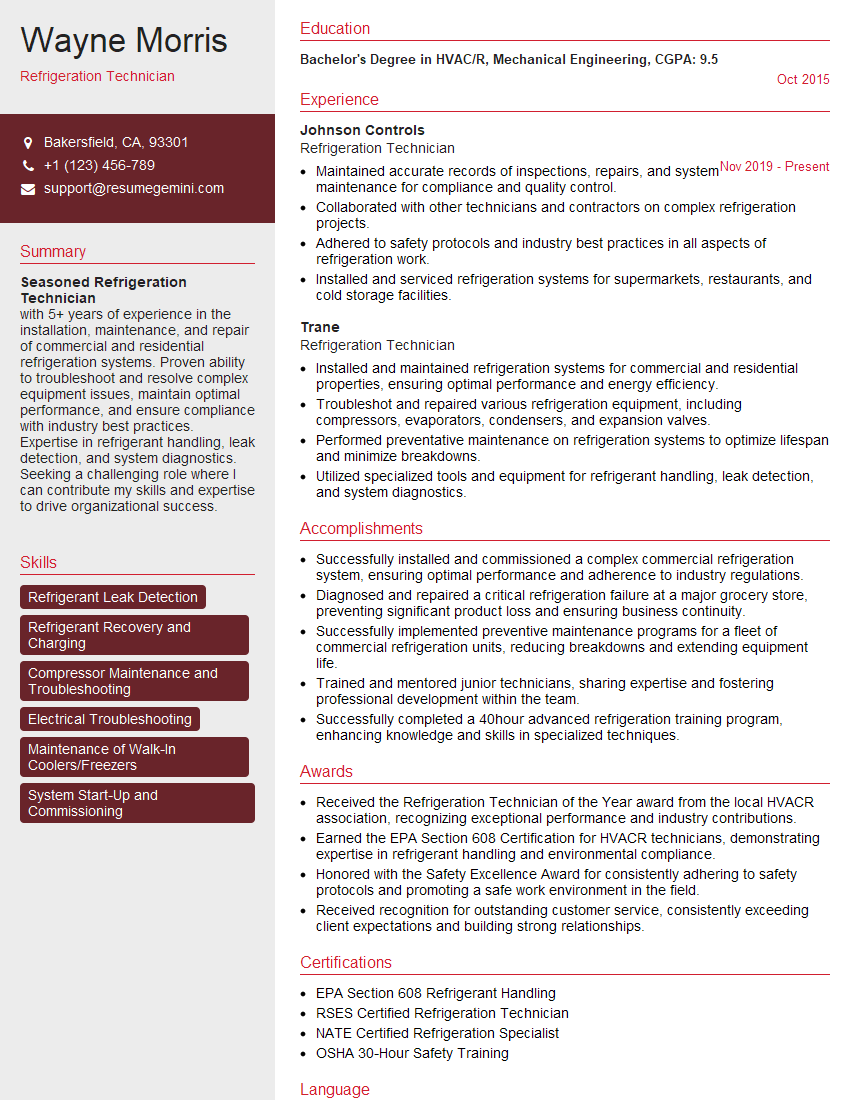
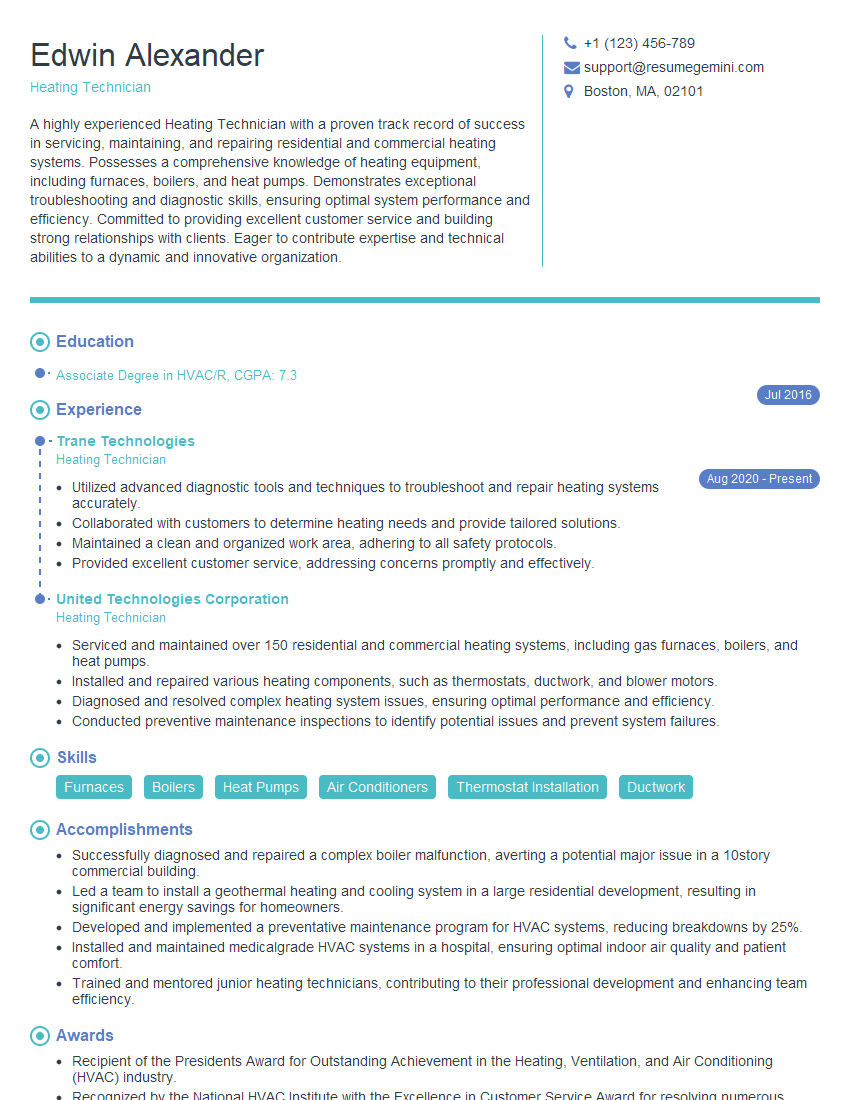
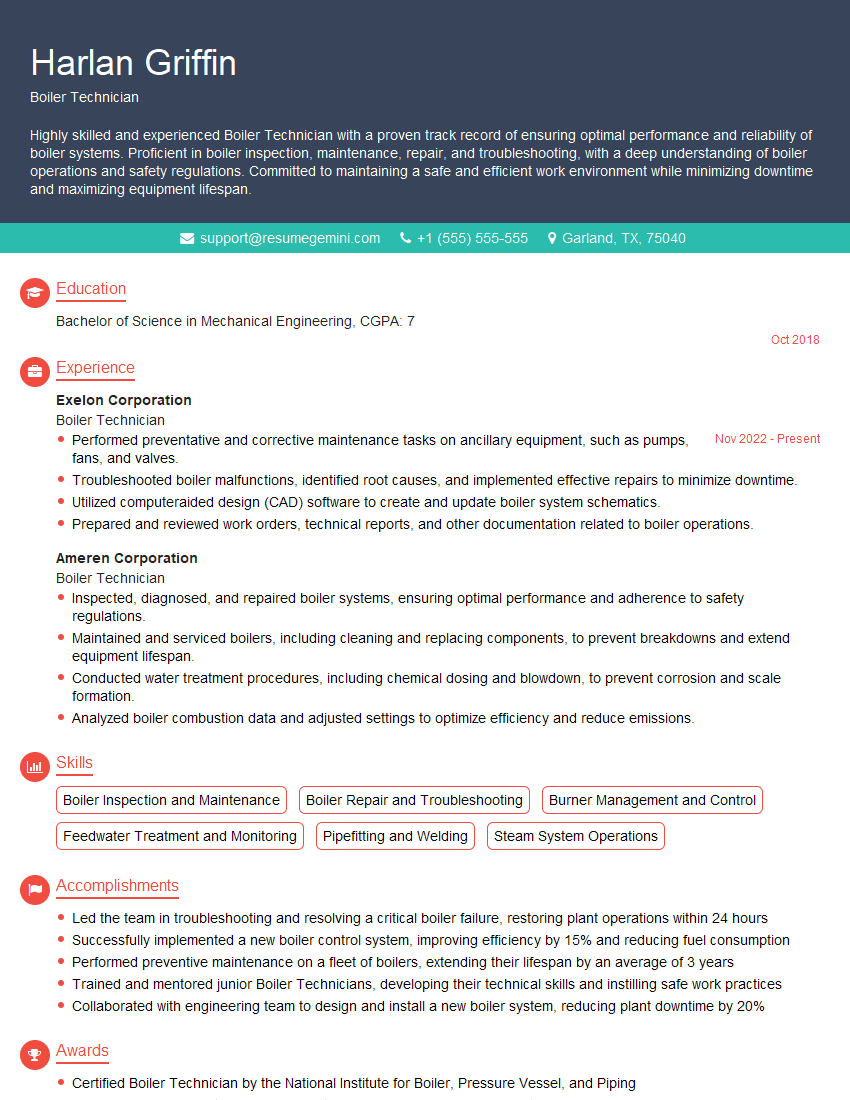
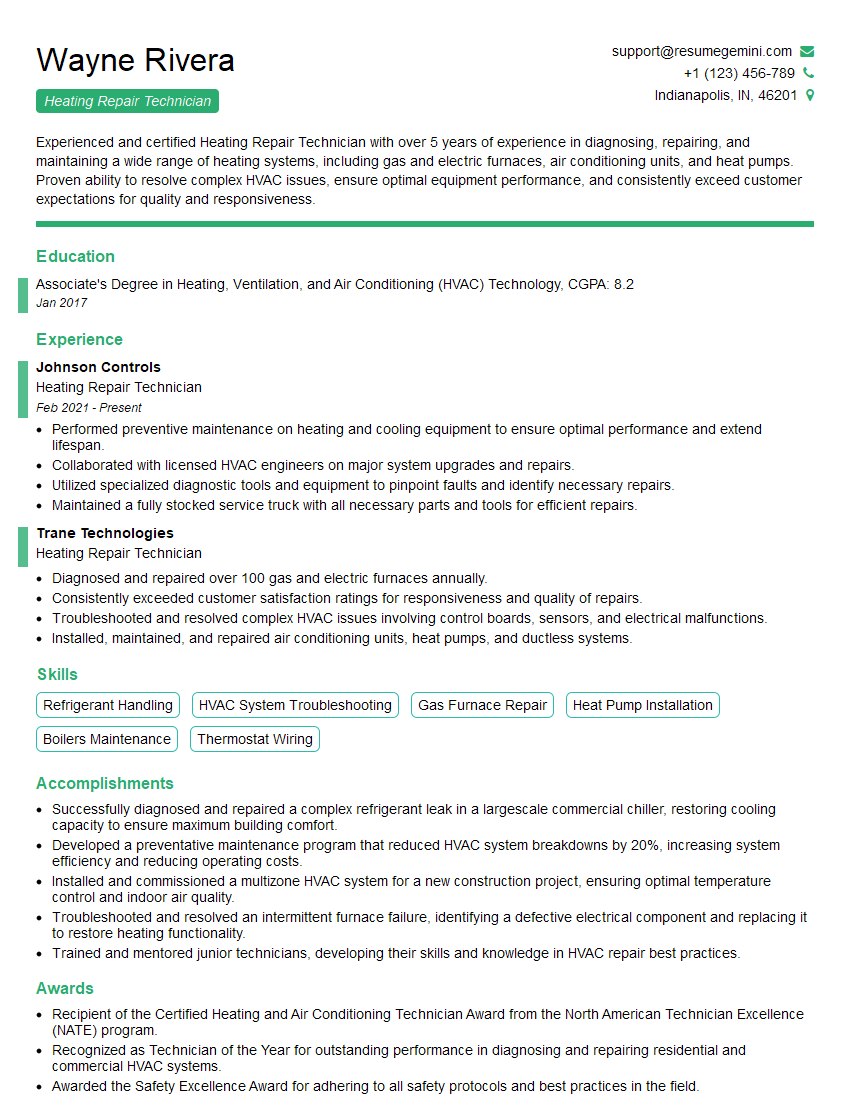
Mastering the fundamentals of heating systems is crucial for career advancement in this dynamic field. A strong understanding of these concepts will significantly improve your interview performance and open doors to exciting opportunities. To further enhance your job prospects, creating a compelling and ATS-friendly resume is essential. ResumeGemini is a trusted resource that can help you build a professional resume tailored to the Heating industry. We provide examples of resumes specifically designed for Heating professionals to help guide you.
Explore more articles
Users Rating of Our Blogs
Share Your Experience
We value your feedback! Please rate our content and share your thoughts (optional).
What Readers Say About Our Blog
Really detailed insights and content, thank you for writing this detailed article.
IT gave me an insight and words to use and be able to think of examples