Are you ready to stand out in your next interview? Understanding and preparing for Hull and Deck Inspection interview questions is a game-changer. In this blog, we’ve compiled key questions and expert advice to help you showcase your skills with confidence and precision. Let’s get started on your journey to acing the interview.
Questions Asked in Hull and Deck Inspection Interview
Q 1. Describe the different types of hull plating and their applications.
Hull plating is the steel sheet that forms the ship’s outer shell. Different types are chosen based on location, stress levels, and required properties.
- Mild Steel: This is the most common type, offering a good balance of strength, weldability, and cost-effectiveness. It’s used extensively throughout the hull.
- High-Tensile Steel: Provides greater strength-to-weight ratio compared to mild steel, allowing for thinner plating while maintaining structural integrity. Ideal for areas subject to high stress, like the bottom shell.
- Corrosion-Resistant Steels: These steels, often containing alloys like nickel or chromium, offer superior resistance to corrosion in seawater. They’re frequently used in areas prone to severe corrosion, such as the ballast tanks or sea chests.
- Stainless Steel: Possesses exceptional corrosion resistance and is often used in areas requiring high hygiene, such as food processing vessels or areas with frequent contact with chemicals.
Choosing the right type of plating is crucial for safety and longevity. For example, using high-tensile steel in the hull bottom reduces weight, improving fuel efficiency. Conversely, using corrosion-resistant steel in ballast tanks minimizes maintenance and extends the vessel’s lifespan.
Q 2. Explain the process of conducting a visual inspection of a ship’s hull.
A visual hull inspection is a systematic examination of the ship’s hull for any signs of damage or deterioration. It’s the first and often most crucial step in assessing the hull’s condition.
- Preparation: This involves reviewing past inspection reports, identifying areas of concern, and ensuring safe access to all parts of the hull.
- Inspection: The inspection starts from the keel working upwards, systematically examining every section. This includes looking for corrosion, dents, scratches, pitting, buckling, cracking, and signs of previous repairs. Special attention is paid to areas prone to damage, like the propeller shaft area, bilge keels, and areas close to the waterline.
- Documentation: All observations, no matter how minor, are meticulously recorded. Photographs are taken of any defects, and their location, size, and severity are noted. Sketches are often used to highlight the location of specific issues.
Imagine it like a thorough health check-up. You wouldn’t miss a spot during a medical exam; similarly, a comprehensive visual inspection leaves no area unchecked.
Q 3. How do you identify and assess corrosion on a ship’s hull?
Corrosion identification involves recognizing its various forms and severity. Assessing corrosion requires understanding its impact on the structural integrity of the hull.
- Types of Corrosion: Common types include pitting (localized corrosion), rusting (oxidation), crevice corrosion (in gaps and joints), and galvanic corrosion (between dissimilar metals). Each presents visually distinct characteristics.
- Visual Assessment: The visual inspection will identify the type, extent, and depth of corrosion. Pitting might show as small holes, rust as orange discoloration, and galvanic corrosion as a localized attack on one of the metals.
- Measurement: Depth of pitting or corrosion can be measured using various tools, including ultrasonic thickness gauges or depth probes. This helps determine the remaining thickness of the plating and its structural soundness.
- Severity Assessment: The extent and depth of corrosion help determine its severity. A small amount of surface rust might require minor cleaning, while extensive pitting demands more extensive repair or even plate replacement.
For example, significant pitting might indicate the need for underwater inspections or even dry-docking for repairs. We must carefully consider the implications of corrosion on a vessel’s seaworthiness.
Q 4. What are the common causes of hull damage, and how can they be prevented?
Hull damage can arise from various sources, and preventative measures are crucial for safety and cost-effectiveness.
- Grounding: Running aground is a major cause of hull damage, leading to punctures, dents, and structural weakening. Avoiding shallow waters and using proper navigation systems are essential preventive measures.
- Collision: Collisions with other vessels, icebergs, or floating debris can inflict significant damage. Maintaining a proper lookout and adhering to collision regulations is vital.
- Corrosion: As discussed earlier, corrosion weakens the hull over time. Regular inspections, proper coatings, and cathodic protection minimize corrosion.
- Fatigue: Repeated stress from waves and vibrations can cause metal fatigue, leading to cracking. Proper design, material selection, and stress monitoring help mitigate this.
Consider a scenario where a vessel strikes an underwater obstruction. This might lead to a significant breach in the hull, causing flooding and potential loss of the vessel. Regular inspections and adherence to safety protocols can prevent such catastrophic events.
Q 5. Explain the importance of regular hull cleaning and maintenance.
Regular hull cleaning and maintenance are vital for preserving the integrity of the hull and ensuring the vessel’s operational efficiency.
- Biofouling Prevention: Marine organisms (biofouling) accumulate on the hull, increasing drag, reducing fuel efficiency, and creating conditions that promote corrosion. Regular cleaning removes this buildup.
- Corrosion Control: Cleaning removes loose rust and other corrosion products, preventing further deterioration. Coatings applied after cleaning provide added protection.
- Early Detection: Cleaning allows for early detection of any developing corrosion or hull damage that might not be visible otherwise.
- Extended Lifespan: Consistent maintenance significantly extends the lifespan of the hull, reducing the frequency of costly repairs and replacements.
Imagine a hull covered in barnacles. This significantly increases drag, forcing the vessel to burn more fuel for the same speed. Regular cleaning directly translates to fuel savings and reduced environmental impact.
Q 6. Describe your experience with non-destructive testing (NDT) methods used in hull inspections.
Non-destructive testing (NDT) plays a significant role in comprehensive hull inspections. These methods allow us to assess the hull’s condition without causing damage.
- Ultrasonic Testing (UT): Uses sound waves to measure the thickness of the plating and detect internal flaws, such as cracks or corrosion. It’s particularly useful for assessing areas inaccessible to visual inspection.
- Magnetic Particle Testing (MT): Detects surface and near-surface cracks in ferromagnetic materials. A magnetic field is applied, and iron particles are used to highlight any cracks.
- Radiographic Testing (RT): Uses X-rays or gamma rays to reveal internal flaws like cracks, porosity, and inclusions. It’s excellent for identifying significant defects but requires specialized equipment and safety precautions.
For instance, during a UT inspection, if a significantly thinner area is detected, it suggests advanced corrosion. This information helps in prioritization for repair or replacement, ensuring ongoing structural integrity.
Q 7. How do you interpret and document inspection findings?
Inspection findings must be accurately documented for future reference and to guide any necessary repairs or maintenance.
- Detailed Report: A comprehensive report details all observations, including the type and location of any defects, their severity (e.g., using a scale from 1 to 5), and supporting photographs or sketches.
- Clear and Concise Language: The report uses clear and unambiguous language to ensure everyone understands the findings. Technical jargon should be defined or avoided where possible.
- Recommendations: The report includes recommendations for repairs or further inspections, including prioritized actions based on the severity of the issues identified.
- Digital Documentation: Using digital platforms allows for easier sharing and record-keeping, enhancing collaboration among stakeholders.
A well-structured report ensures the safety of the vessel, serves as a historical record of its condition, and provides a basis for informed decisions about maintenance and repairs.
Q 8. What are the key regulations and standards relevant to hull and deck inspections?
Hull and deck inspections are governed by a complex interplay of international conventions, national regulations, and classification society rules. Key regulations include the International Maritime Organization (IMO) conventions, such as the International Convention for the Safety of Life at Sea (SOLAS), and the International Convention on Load Lines (LL). These conventions set minimum safety standards for ship construction, maintenance, and operation. National maritime administrations then implement these conventions into their own national laws. Additionally, classification societies, like DNV, ABS, Lloyd’s Register, etc., publish detailed rules and guidelines that ship owners must adhere to for their vessels to maintain their classification status. These rules cover aspects such as structural strength, material specifications, corrosion protection, and maintenance procedures for both the hull and deck.
For example, SOLAS Chapter II-1 sets out structural fire protection requirements, influencing both hull and deck design and materials. Similarly, SOLAS Chapter III focuses on life-saving appliances, impacting the inspections of lifeboats and davits. The specific regulations and standards relevant to a particular inspection will depend on the ship’s type, age, flag state, and classification society.
Q 9. How do you assess the structural integrity of a ship’s deck?
Assessing a ship’s deck structural integrity involves a multi-faceted approach combining visual inspection, non-destructive testing (NDT), and potentially destructive testing. We start with a thorough visual survey, checking for signs of corrosion, cracking, deformation, or damage from impacts. This visual inspection includes checking welds, plating, stiffeners, and deck beams. We pay close attention to areas subject to high stress, such as hatch openings, access points, and areas where heavy equipment is frequently operated.
Next, NDT methods like ultrasonic testing (UT) or magnetic particle inspection (MPI) are used to detect subsurface defects that might not be visible to the naked eye. UT uses sound waves to detect internal flaws, while MPI detects surface and near-surface cracks in ferromagnetic materials. The results of these tests are documented and compared against the ship’s design specifications and allowable limits. In some cases, where significant damage or degradation is suspected, destructive testing – involving cutting out a small section for detailed analysis – might be necessary. Overall, the goal is to establish the remaining strength and lifespan of the deck structure and ensure it continues to meet the required safety standards.
Q 10. What are the common types of deck damage, and how are they repaired?
Common types of deck damage include corrosion, cracking, pitting, dents, punctures, and wear from heavy equipment. Corrosion is a major concern, especially in areas exposed to seawater or harsh chemicals. Cracking can result from fatigue, overloading, or impact damage. Pitting is localized corrosion, while dents and punctures are usually caused by impacts. Wear from heavy equipment is often seen on areas like the deck around cranes or other heavy machinery.
Repairs depend on the severity and type of damage. Minor corrosion or pitting can often be addressed through cleaning, surface treatment, and painting. More extensive corrosion may require the replacement of damaged plates or sections. Cracks might be repaired through welding, depending on their location and extent; significant cracks might require plate replacement. Dents can sometimes be repaired by hammering and fairing, but major dents usually necessitate plate replacement. Punctures are often repaired by welding a patch over the hole. The repair methods are always documented, and any repairs affecting the ship’s structural integrity require approval from the classification society.
Q 11. Explain the procedures for inspecting lifeboats and davits.
Inspecting lifeboats and davits is a crucial part of a hull and deck inspection, focusing on ensuring they’re fully functional and seaworthy. The inspection starts with a visual check of the lifeboat’s hull and its components – checking for damage, corrosion, or signs of wear and tear. We check the buoyancy tanks and ensure they are properly sealed and contain the correct amount of buoyant material. We then inspect the lifeboat’s equipment, including its motor, oars, radio, and other survival supplies. We ensure that all safety features are in place and functioning correctly.
Davits, which are the mechanisms for launching the lifeboats, are inspected meticulously. We check for damage to the davit arms, gears, winches, and other components. We test the operation of the davits, including hoisting and lowering the lifeboat, ensuring smooth and safe operation. We also assess the condition of the lifeboat release mechanisms and their associated safety features. Documentation of all findings, including any defects or necessary repairs, is vital. All discrepancies are reported to the ship’s management, with recommended corrective actions based on the standards set by SOLAS and the relevant classification society rules.
Q 12. How do you identify and assess damage to deck machinery?
Deck machinery inspection includes winches, cranes, windlasses, and other equipment used for cargo handling, mooring, and other deck operations. The process begins with a visual assessment, checking for signs of corrosion, wear, damage, and misalignment. We carefully examine critical components such as gears, bearings, shafts, drums, and brakes. We check for lubrication levels and the condition of hydraulic systems. We assess the condition of the electrical systems, controls, and safety devices.
Operational testing is an integral part of the inspection. For winches, this involves testing the hoisting and lowering capabilities, paying close attention to the speed, braking, and load capacity. Cranes undergo more extensive testing with load cells to verify their lifting capacity and structural integrity. Any deficiencies identified during the visual examination or operational testing are documented with the necessary repair recommendations. The extent of testing will depend on the type of machinery, its operational history, and the relevant safety standards.
Q 13. Describe your experience with the inspection of cargo securing arrangements.
My experience in inspecting cargo securing arrangements is extensive. This involves verifying that the methods and materials used to secure cargo meet relevant international standards and guidelines (like the IMO’s Code of Safe Practice for Cargo Securing). Inspections involve checking the condition of securing equipment, including lashings, containers, and related fittings, ensuring they are correctly sized, undamaged, and properly installed. We look for signs of stress or overloading. I consider the type of cargo, its weight distribution, and the voyage conditions when assessing the adequacy of the securing arrangements. The stowage plan should be reviewed and verified against the actual stowage to ensure compliance.
I’ve encountered various scenarios, from simple container shipments to complex projects with heavy lifts and specialized cargoes. For example, during an inspection, I discovered improperly tightened lashings on a container vessel. This could have led to cargo shifting during a storm. We immediately stopped the operation and the issue was corrected before the vessel sailed. This emphasizes the crucial role that these inspections play in preventing accidents and ensuring the safety of the crew and cargo.
Q 14. What are the safety precautions you take during hull and deck inspections?
Safety is paramount during hull and deck inspections. Before commencing any inspection, we conduct a thorough risk assessment considering the specific hazards involved, such as working at heights, exposure to hazardous materials, confined space entry, and moving machinery. Appropriate personal protective equipment (PPE) is used, including safety harnesses, helmets, safety shoes, and respiratory protection as needed. We adhere to all company and site-specific safety procedures.
Communication is key. We maintain clear communication with the ship’s crew and other personnel on board to ensure our safety and avoid any unforeseen incidents. Hot work permits are obtained and carefully followed for any activities involving welding or cutting. We are trained to identify and mitigate potential hazards, ensuring a safe and efficient inspection process. Following the inspection, we file a comprehensive report detailing all findings, including any safety concerns, to ensure appropriate corrective actions are taken promptly.
Q 15. How do you manage and report inspection findings to relevant stakeholders?
Managing and reporting inspection findings involves a systematic approach ensuring clarity and traceability. First, I meticulously document all findings using detailed checklists, photographs, and sketches, clearly noting the location, severity, and type of defect. This comprehensive record is crucial for understanding the overall condition of the vessel.
Next, I categorize findings based on their severity – critical, major, minor – aligning with industry standards like the International Maritime Organization (IMO) guidelines. This categorization allows for prioritization of repairs and informs the urgency of the report.
My reports are structured and clear, including a summary of the overall condition, detailed descriptions of identified defects, and recommendations for corrective actions. I use clear, concise language avoiding technical jargon where possible, ensuring stakeholders – from ship owners to class societies – can easily understand the report. I also include photographic and graphical evidence where beneficial. Finally, I distribute the report via secure channels, ensuring appropriate confidentiality.
For example, during an inspection I discovered significant corrosion on a ballast tank bulkhead. I documented this with high-resolution photographs, noting the precise location and extent of the corrosion using a detailed sketch. My report clearly highlighted this as a major defect, recommending immediate repair and outlining the potential safety implications if left unaddressed. This structured approach ensures all stakeholders are fully informed and can take appropriate action.
Career Expert Tips:
- Ace those interviews! Prepare effectively by reviewing the Top 50 Most Common Interview Questions on ResumeGemini.
- Navigate your job search with confidence! Explore a wide range of Career Tips on ResumeGemini. Learn about common challenges and recommendations to overcome them.
- Craft the perfect resume! Master the Art of Resume Writing with ResumeGemini’s guide. Showcase your unique qualifications and achievements effectively.
- Don’t miss out on holiday savings! Build your dream resume with ResumeGemini’s ATS optimized templates.
Q 16. Explain your experience with different types of hull coatings and their performance.
My experience encompasses a wide range of hull coatings, each with its own advantages and disadvantages. For instance, epoxy coatings are popular for their excellent adhesion, corrosion resistance, and durability. However, their application requires careful surface preparation, and they can be more expensive than other options.
Vinyl coatings offer a good balance of cost-effectiveness and performance. They’re relatively easy to apply, and provide decent protection against corrosion and fouling. However, they are generally less durable than epoxy coatings and may require more frequent maintenance.
In recent years, there’s been increasing use of silicone-based coatings, especially in areas prone to heavy fouling. These coatings have excellent antifouling properties, reducing drag and improving fuel efficiency. They tend to be more expensive but can provide long-term benefits in the long run.
I’ve also worked with specialized coatings such as polyurethane and zinc-rich primers, selecting the appropriate coating based on the specific environmental conditions, vessel type, and operational profile. For example, a vessel operating in tropical waters with high fouling rates would likely benefit from a silicone-based or high-performance antifouling coating, while a vessel in temperate waters might be adequately protected with a vinyl or epoxy system. Careful assessment of the operating conditions is critical in determining the most appropriate coating choice.
Q 17. What are the signs of potential hull leaks and how do you investigate them?
Detecting hull leaks requires a keen eye and systematic approach. Common signs include water stains or discoloration on bulkheads or deck plating, dampness in bilges, unusual noises or vibrations, and a noticeable list or trim in the vessel.
Investigating potential leaks starts with a visual inspection. I look for any evidence of water ingress, carefully examining seams, welds, and penetrations. If a leak is suspected, I use non-destructive testing methods such as ultrasonic testing to assess the extent of any damage or corrosion. Pressure testing of specific compartments or systems can be necessary to pinpoint the precise location of a leak.
For example, I once found water staining near a pipe penetration on a deck. Careful investigation using a borescope revealed a small crack in the weld surrounding the pipe, causing the leak. This allowed for timely repair, preventing further damage. Each situation requires a different approach, using a combination of visual inspection, and non-destructive testing to accurately locate and determine the cause of the leak.
Q 18. How do you assess the condition of ballast tanks?
Assessing the condition of ballast tanks is crucial for safety and environmental compliance. My inspections focus on several key aspects:
- Structural Integrity: I examine the tank structure for corrosion, pitting, buckling, or other damage, using both visual inspection and non-destructive testing techniques if necessary.
- Coating Condition: The condition of any protective coatings is assessed, looking for deterioration, cracking, or peeling. The extent of corrosion underneath the coating is also crucial to evaluate.
- Cleanliness: Ballast tanks must be clean and free of any sludge or sediment build-up, which can contribute to corrosion. I check for the presence of any contaminants.
- Leakage: I carefully inspect for any signs of leakage, including water stains, dampness, or evidence of water ingress.
- Ventilation and Drainage: The functionality of ventilation and drainage systems is examined to ensure adequate air circulation and water removal.
I document all findings, including photographs and measurements, and make recommendations for necessary cleaning, repairs, or coating renewal. Failure to properly maintain ballast tanks can lead to structural failure, pollution, and significant safety hazards.
Q 19. Describe your experience with the inspection of mooring equipment.
Inspecting mooring equipment is critical for safe berthing and operation. My inspections cover all aspects of the mooring system, including:
- Anchors: Examination of the anchor for damage, corrosion, and proper functioning of the flukes and shank.
- Chains: Inspection for wear, corrosion, elongation, and broken links. Testing chain strength might be required.
- Mooring Ropes/Wire: Assessment of condition, wear, and strength of mooring lines, including visual inspection for fraying, kinking, or other damage.
- Winches: Checking the winches for proper operation, including the braking system and the overall condition of the gears.
- Fairleads and Bollards: Inspecting for any damage, wear, or corrosion to these critical components of the mooring system.
I meticulously document the findings, providing recommendations for repairs or replacement of damaged or worn-out components to ensure the mooring system remains safe and reliable. Any deficiency in the mooring system can result in costly damage or severe safety incidents.
Q 20. How do you determine the remaining life of a ship’s hull structure?
Determining the remaining life of a ship’s hull structure is a complex task requiring a combination of methods. It’s not simply a matter of calculating years; it’s about evaluating the structural integrity considering various factors.
I use a multi-pronged approach. This includes thorough visual inspections, non-destructive testing methods (NDT) such as ultrasonic testing (UT) to measure thickness and detect flaws, and detailed analysis of historical maintenance records and operational data. UT allows for precise measurements of hull plate thickness, identifying areas of significant thinning due to corrosion.
Sophisticated software programs can model the hull’s structural behavior under various loading conditions, considering factors such as corrosion, fatigue, and environmental stressors. These models provide a quantitative assessment of remaining structural life. Expert judgment plays a crucial role in interpreting the data from these inspections and analysis, considering factors like the vessel’s operating environment and maintenance history. This holistic approach ensures a realistic and reliable assessment of the hull’s remaining service life.
Q 21. What are the common types of welding defects found in hull structures?
Welding defects can significantly compromise the structural integrity of a hull. Common defects include:
- Porosity: Small gas holes within the weld metal, reducing strength and potentially leading to corrosion.
- Lack of Fusion: Incomplete bonding between the weld metal and the base material, creating a weak point prone to cracking.
- Undercutting: A groove melted into the base material at the edge of the weld, reducing the effective cross-sectional area.
- Cracks: Breaks in the weld metal or heat-affected zone, significantly weakening the structure and potentially leading to catastrophic failure.
- Incomplete Penetration: Weld does not fully penetrate the joint, creating a discontinuity.
- Slag Inclusions: Trapped non-metallic impurities within the weld, compromising its strength and ductility.
Detecting these defects involves a combination of visual inspection, radiographic testing, ultrasonic testing, and magnetic particle inspection. The severity of the defects is assessed according to relevant standards, and appropriate repair actions are recommended. Ignoring welding defects can have disastrous consequences for the vessel’s structural integrity and safety.
Q 22. How do you assess the condition of propeller shafts and bearings?
Assessing the condition of propeller shafts and bearings involves a multi-faceted approach combining visual inspection with advanced techniques. First, a thorough visual inspection checks for obvious signs of damage like corrosion, pitting, scoring, or misalignment. We look for evidence of wear and tear on the shaft’s surface and any signs of leakage around the bearings.
Next, we utilize specialized tools. For instance, a dial indicator can measure shaft runout, revealing any bending or imbalance. We also employ vibration analysis using handheld devices. Excessive vibration can indicate bearing wear or imbalance problems. Ultrasonic testing can detect internal flaws or cracks not visible to the naked eye. Finally, we check bearing temperature using infrared thermometers; elevated temperatures signify friction and potential failure. For example, during a recent inspection, I detected a slight vibration on a shaft, which upon further investigation using vibration analysis, revealed an early stage of bearing failure, preventing a potential catastrophic breakdown.
The entire process is meticulously documented with photographs and detailed notes, ensuring that all findings are accurately recorded and communicated to the vessel’s crew and management. This proactive approach helps prevent costly repairs and downtime.
Q 23. Explain your understanding of marine growth and its impact on hull performance.
Marine growth, encompassing barnacles, mussels, algae, and other organisms that attach to the hull, significantly impacts a vessel’s performance. This build-up increases the hull’s surface roughness, leading to increased frictional resistance as the vessel moves through the water. Think of it like cycling with a flat tire – more effort is needed to maintain speed. This increased drag directly translates to higher fuel consumption, reduced speed, and increased operating costs.
Furthermore, marine growth can mask existing hull damage, hindering timely detection and repair. The added weight also impacts stability and maneuverability, especially in smaller vessels. Regular hull cleaning, employing techniques like underwater hull cleaning or dry-docking, is essential to mitigate these negative effects. For example, a vessel I inspected had significant marine growth, leading to a 15% increase in fuel consumption; regular cleaning would have easily prevented this substantial expense. We also need to consider the environmental impact of cleaning methods used to remove the biofouling.
Q 24. What are the effects of different weather conditions on hull and deck structures?
Weather conditions exert considerable stress on hull and deck structures. Prolonged exposure to harsh sun and ultraviolet radiation can lead to degradation of paintwork, coatings, and even structural materials. Think of how the sun fades a car’s paint; the same process occurs on a vessel’s hull. Heavy rain and prolonged exposure to moisture promote corrosion, particularly in areas where water can pool or accumulate. This is especially concerning in metallic structures.
Strong winds and waves can induce significant dynamic loads on the vessel, potentially leading to structural fatigue and damage over time. Severe weather events, such as storms or hurricanes, can cause catastrophic damage, including hull breaches, deck failures, and other significant structural issues. Regular inspections and preventative maintenance are critical to identifying and addressing potential problems before they escalate into costly repairs or safety hazards. A good example is the increased risk of deck corrosion in areas with heavy snowfall, requiring additional maintenance.
Q 25. Describe your experience with using specialized inspection tools and equipment.
My experience with specialized inspection tools and equipment is extensive. I’m proficient in using ultrasonic thickness gauges to measure the remaining thickness of hull plating, detecting areas of thinning due to corrosion or wear. I regularly employ magnetic particle inspection and dye penetrant testing to detect surface and subsurface flaws in welds and metallic components. I also use infrared cameras to identify thermal anomalies that could indicate problems like overheating bearings or electrical faults.
Furthermore, I’m experienced with underwater remotely operated vehicles (ROVs) for inspecting areas of the hull below the waterline that are inaccessible by other methods. Using these tools isn’t just about technical skill; it’s about safety and interpretation. For instance, I once used an ROV to discover a significant crack in a propeller shaft that wasn’t apparent during a standard dry-dock inspection; early detection like that prevents a costly and potentially dangerous breakdown.
Q 26. How do you handle discrepancies or disagreements regarding inspection findings?
Discrepancies or disagreements regarding inspection findings are handled professionally and systematically. The first step involves a thorough review of the inspection data, including visual observations, measurements, and test results. We re-examine the area of disagreement, potentially employing additional testing methods to confirm or refute the initial findings. Open communication is crucial. I discuss my observations and interpretations with colleagues or other stakeholders, fostering collaboration and knowledge sharing.
In cases where a resolution cannot be reached through discussion, a senior inspector or expert may be consulted to provide an independent assessment. Ultimately, the goal is to ensure the accuracy and reliability of the inspection report, prioritizing safety and minimizing risks. Maintaining detailed documentation of all findings and discussions is paramount in resolving such issues, including timestamps and signatures on any forms.
Q 27. How do you prioritize inspection tasks based on risk assessment?
Prioritizing inspection tasks is based on a comprehensive risk assessment. This involves identifying potential hazards, assessing their likelihood and severity, and determining the potential consequences of failure. We consider factors like the age and condition of the vessel, its operating environment, and the criticality of different systems and components. High-risk areas, such as critical structural elements, life-saving equipment, and propulsion systems, naturally receive higher priority during inspections.
A risk matrix, often using a color-coded system, helps visually represent the risk levels of various components or systems. For example, a corroded hull section near the waterline poses a much higher risk than minor cosmetic damage to the deck. This systematic approach ensures that resources are effectively allocated to address the most critical safety concerns first. Regular review and updates to this risk matrix are essential.
Q 28. What is your experience with creating and maintaining inspection reports and documentation?
Creating and maintaining inspection reports and documentation is a crucial aspect of my work. Reports are meticulously detailed, including photographic evidence, detailed descriptions of findings, measurements, and test results. I use standardized reporting templates to ensure consistency and completeness. The reports clearly identify any deficiencies or non-conformances, along with recommendations for corrective actions.
All documentation is securely stored and managed using a dedicated digital system, ensuring easy access and traceability. Version control is implemented to maintain accurate records of changes and updates. This comprehensive documentation provides a valuable historical record for future maintenance planning and ensures compliance with regulatory requirements. For example, our system allows for easy retrieval of reports from past inspections, facilitating trend analysis to identify potential issues before they become critical.
Key Topics to Learn for Hull and Deck Inspection Interview
- Hull Structure and Materials: Understanding different hull types (e.g., single, double), materials (steel, aluminum, fiberglass), and their properties. Consider the implications of material fatigue and corrosion.
- Deck Structures and Systems: Knowledge of deck plating, structural members, and associated systems like drainage, ventilation, and cargo handling equipment. Be prepared to discuss maintenance and repair strategies.
- Inspection Techniques and Procedures: Familiarize yourself with various inspection methods (visual, non-destructive testing), documentation practices, and reporting requirements. Practice explaining your approach to a systematic inspection.
- Corrosion and Degradation: Deep understanding of corrosion mechanisms, types of corrosion (e.g., pitting, galvanic), and their impact on hull and deck integrity. Discuss preventative measures and remediation strategies.
- Damage Assessment and Repair: Be prepared to discuss methods for assessing damage, determining repair feasibility, and outlining appropriate repair procedures. This includes understanding relevant regulations and standards.
- Regulatory Compliance: Familiarity with relevant international maritime regulations (e.g., SOLAS, MARPOL) and classification society rules concerning hull and deck inspections is crucial. Understand how these regulations impact inspection practices.
- Safety Procedures and Risk Assessment: Demonstrate an understanding of safe working practices during inspections, including risk assessment and the use of personal protective equipment (PPE).
- Problem-Solving and Decision-Making: Prepare to discuss scenarios requiring quick, informed decisions during inspections. Highlight your ability to analyze problems, propose solutions, and justify your actions.
Next Steps
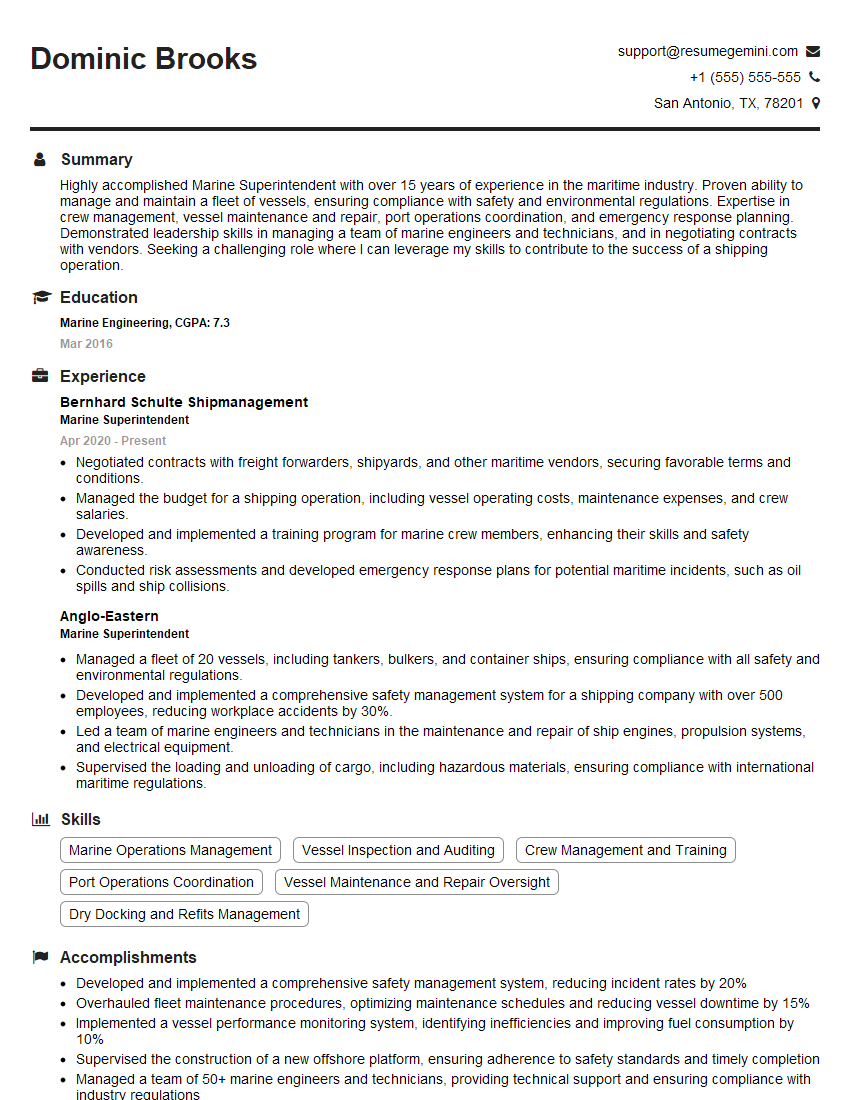
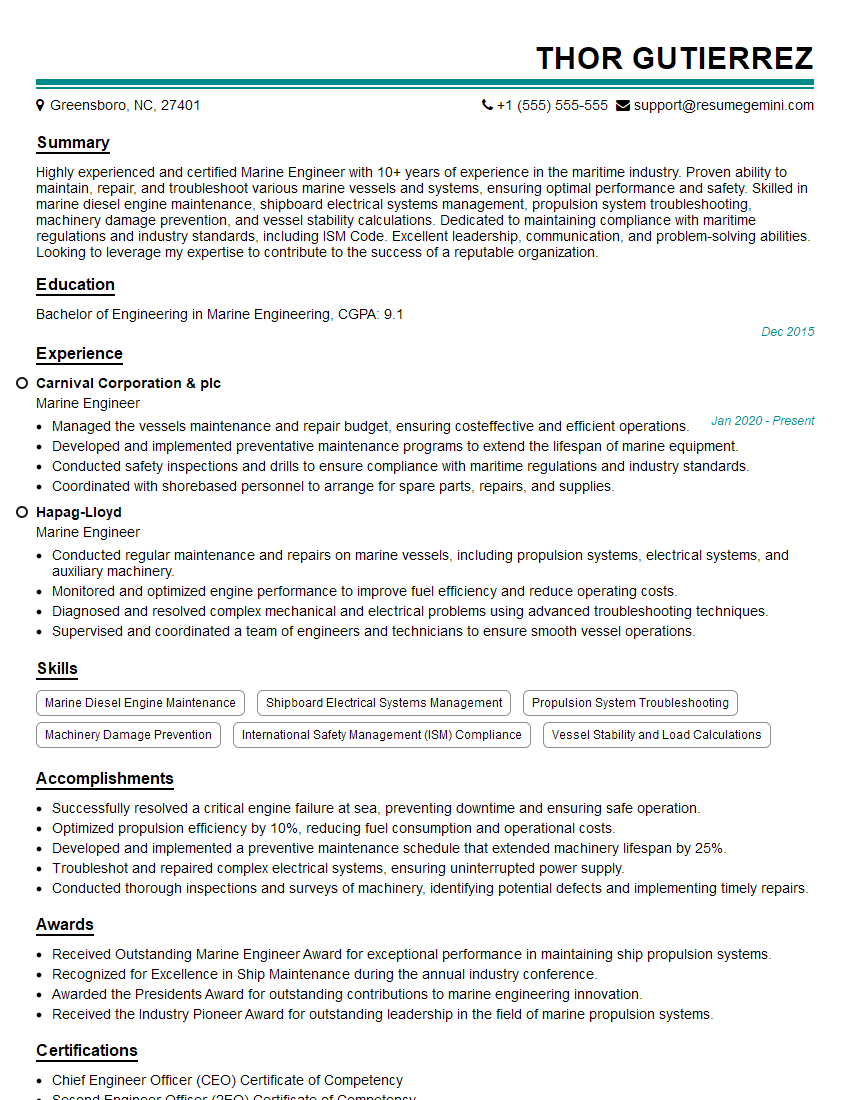
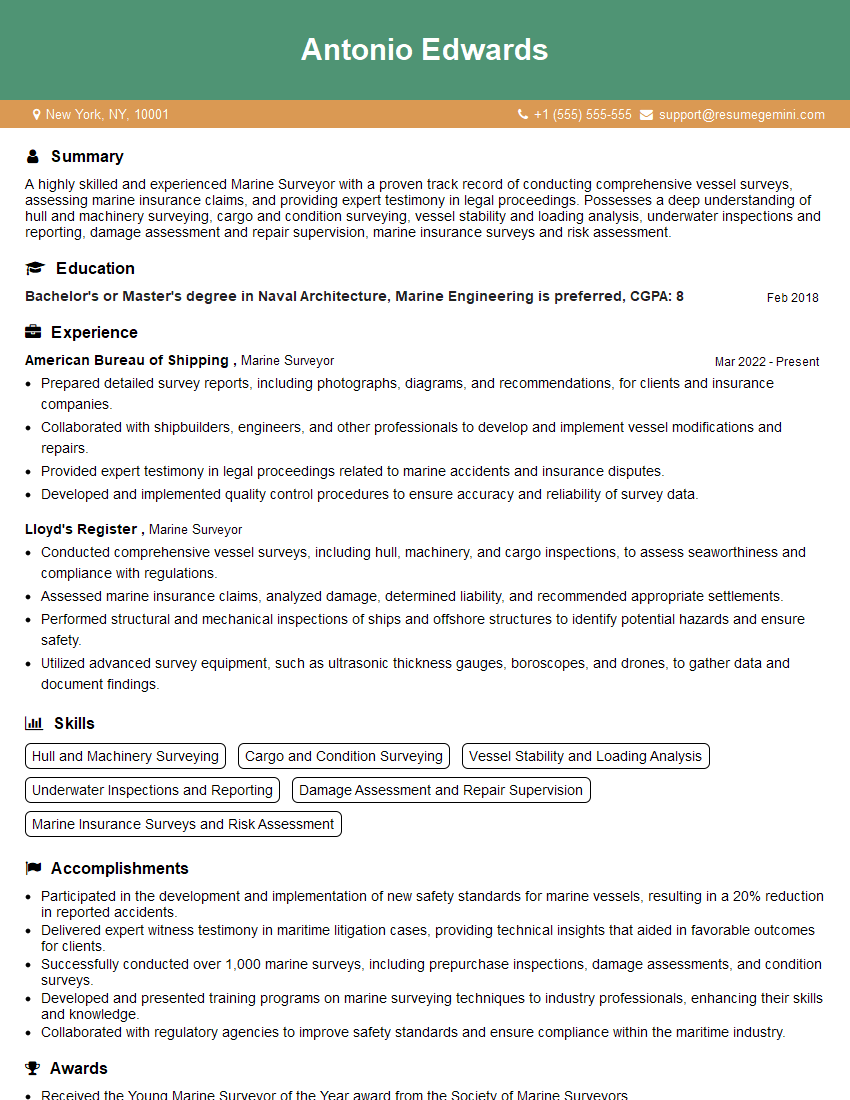
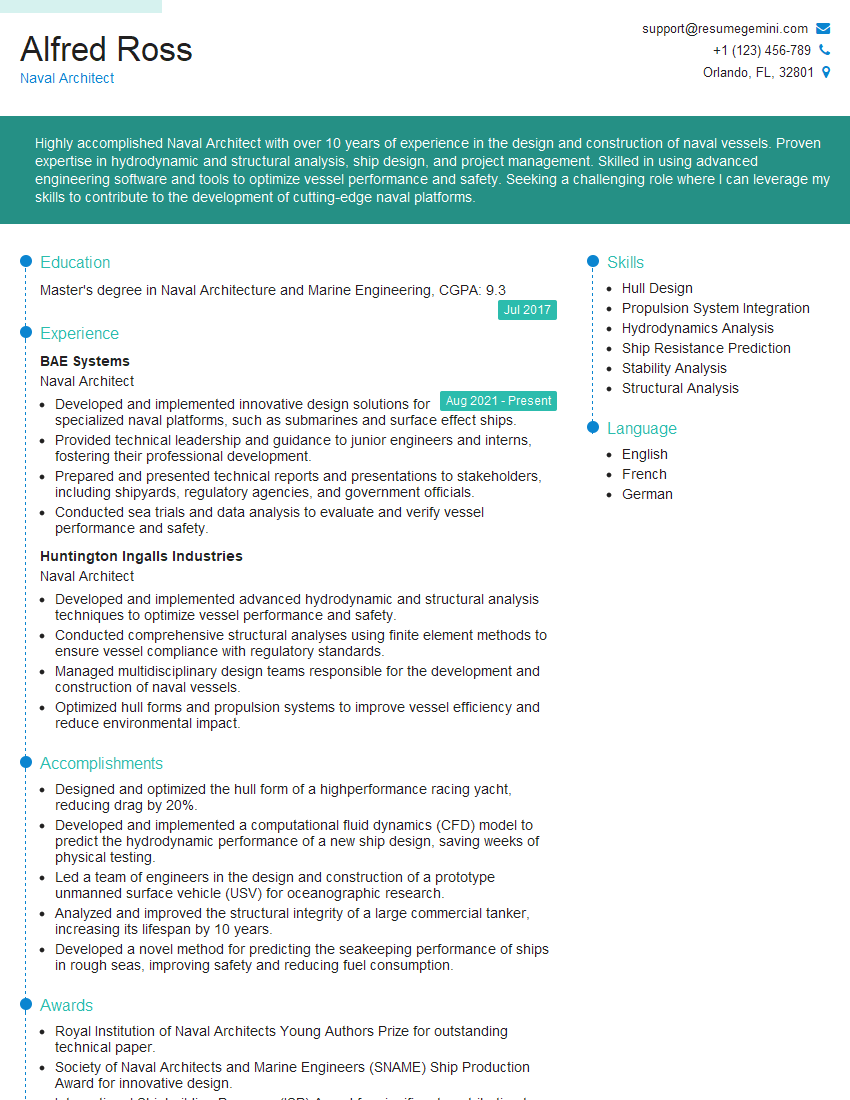
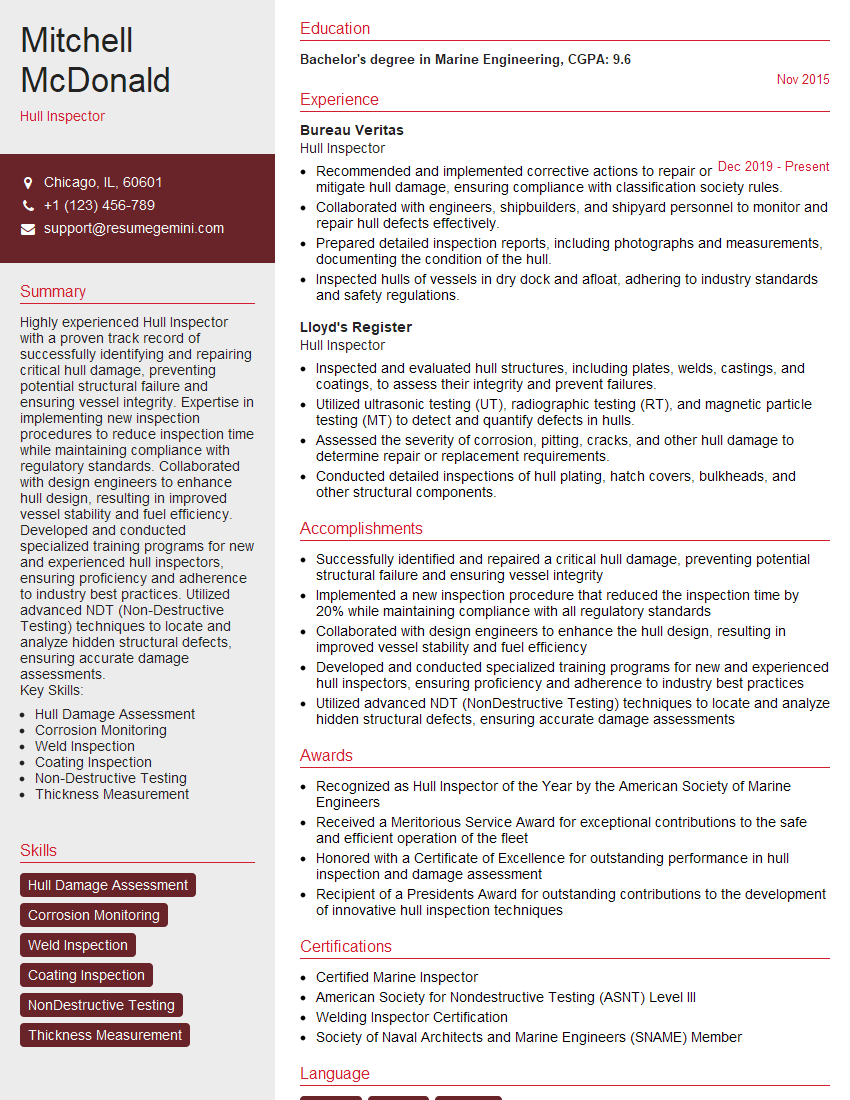
Mastering Hull and Deck Inspection opens doors to rewarding and challenging careers within the maritime industry, offering opportunities for professional growth and advancement. To significantly improve your job prospects, creating a strong, ATS-friendly resume is essential. ResumeGemini is a trusted resource that can help you build a professional and impactful resume tailored to the specific requirements of Hull and Deck Inspection roles. Examples of resumes specifically designed for this field are available through ResumeGemini to guide your preparation. Take the next step towards your dream career – build a winning resume with ResumeGemini.
Explore more articles
Users Rating of Our Blogs
Share Your Experience
We value your feedback! Please rate our content and share your thoughts (optional).
What Readers Say About Our Blog
Really detailed insights and content, thank you for writing this detailed article.
IT gave me an insight and words to use and be able to think of examples