Cracking a skill-specific interview, like one for Human Factors in Healthcare, requires understanding the nuances of the role. In this blog, we present the questions you’re most likely to encounter, along with insights into how to answer them effectively. Let’s ensure you’re ready to make a strong impression.
Questions Asked in Human Factors in Healthcare Interview
Q 1. Explain the difference between usability and user experience in a healthcare setting.
Usability and user experience (UX) are related but distinct concepts in healthcare. Think of usability as a subset of UX. Usability focuses on the efficiency and effectiveness of a system. It answers the question: How easily can a healthcare professional complete a task using this technology? It’s measured through metrics like task completion time, error rate, and user satisfaction with specific features. User experience encompasses a broader scope, including usability but also considering the overall emotional response and satisfaction with the entire interaction. It addresses aspects like aesthetics, emotional connection, and the overall perceived value of the system. For example, a medication administration system might be highly usable (fast, accurate) but have poor UX if the interface is visually unpleasant and frustrating to use, leading to user burnout.
In a hospital, a usable electronic medication administration record (eMAR) allows nurses to quickly and accurately document medication administration. A positive UX goes further, ensuring the eMAR is intuitive, visually appealing, and doesn’t interrupt workflow unnecessarily. This could include features like clear visual cues, customizable dashboards, and integrated alerts that don’t overwhelm the user.
Q 2. Describe your experience with heuristic evaluation in the context of medical devices.
Heuristic evaluation is a usability inspection method where experts evaluate a system against established usability principles (heuristics). In medical device evaluation, I’ve utilized Nielsen’s heuristics and extended them with principles specific to healthcare, such as safety, alarm management, and clear indication of device status. For instance, I recently evaluated a new infusion pump. Using Nielsen’s heuristic of ‘error prevention,’ I identified a design flaw where a crucial setting could be accidentally changed with a single button press. This could lead to medication errors. My evaluation also incorporated healthcare-specific heuristics, assessing the clarity of alarm signals and the ease of understanding the device’s operational status during power failure. The results of my heuristic evaluation informed design modifications, prioritizing safety and usability.
Q 3. How would you conduct a usability test for a new electronic health record (EHR) system?
Usability testing for a new EHR system requires a structured approach. First, I’d define specific tasks reflecting real-world workflows (e.g., admitting a patient, ordering lab tests, charting notes). Then, I’d recruit a representative sample of healthcare professionals (doctors, nurses, administrators) with varying levels of experience. The testing would involve observing participants as they perform the defined tasks while using a think-aloud protocol (verbalizing their thoughts and actions). This allows us to understand their cognitive processes and identify pain points. I’d use a combination of methods, including:
- Moderated usability testing: A researcher guides the participant, observes their actions, and asks clarifying questions.
- Unmoderated remote testing: Participants complete tasks independently using screen recording and feedback tools. This allows for wider participant recruitment.
After the tests, data would be analyzed to identify usability issues. Metrics such as task completion time, error rate, and participant satisfaction would be quantified. This data, alongside qualitative observations from the think-aloud protocols, would inform design iterations and improvements.
Q 4. What are some common human factors issues encountered in operating room design?
Operating room (OR) design significantly impacts surgical team performance and patient safety. Common human factors issues include:
- Poor spatial arrangement: Inadequate space between equipment, cluttered work surfaces, and inconvenient locations for supplies can lead to collisions, delays, and increased stress.
- Inadequate lighting: Insufficient or poorly directed lighting can hinder visualization during procedures, contributing to errors.
- Noise levels: High levels of noise from equipment and conversations can impair communication and concentration.
- Difficult-to-reach supplies and equipment: This can increase the risk of delays and errors, particularly in time-sensitive procedures.
- Poor ergonomics: Surgical teams often experience musculoskeletal disorders due to prolonged periods of standing, awkward postures, and repetitive movements.
Addressing these issues involves careful planning of the OR layout, selection of ergonomic equipment, and implementation of noise reduction strategies. For example, strategically placed storage units, adjustable operating tables, and clear visual cues for instrument placement can significantly improve efficiency and reduce errors.
Q 5. Explain the importance of human factors in reducing medical errors.
Human factors are crucial in reducing medical errors because they address the interplay between humans and the systems within which they work. Many medical errors stem not from individual incompetence but from poorly designed systems, inadequate training, or ineffective communication. Human factors engineering strives to create systems and processes that anticipate human limitations, accommodate human variability, and support safe and efficient performance. For instance, designing medication systems with clear labels, safety checks, and automated alerts reduces the likelihood of medication errors due to human fallibility.
By applying human factors principles – such as designing clear, intuitive interfaces; improving communication protocols; and incorporating redundancy into critical processes – healthcare organizations can mitigate human error and foster a safer environment for patients and staff.
Q 6. Describe your experience with cognitive task analysis.
Cognitive task analysis (CTA) is a systematic method for understanding the mental processes involved in performing a task. I’ve used CTA extensively in analyzing the cognitive demands of medical professionals during various procedures. One example involved analyzing the cognitive workload of nurses during medication reconciliation. We used a combination of techniques, including:
- Interviews: Understanding nurses’ experiences and perspectives.
- Think-aloud protocols: Observing nurses perform medication reconciliation while verbalizing their thought processes.
- Cognitive walkthroughs: Simulating the task and identifying potential points of confusion or difficulty.
The CTA revealed information processing bottlenecks, memory limitations, and decision-making challenges. This analysis led to recommendations for redesigning the medication reconciliation process, including improvements in information presentation, workflow optimization, and decision support tools, resulting in improved accuracy and reduced cognitive workload for the nurses.
Q 7. How do you incorporate human factors principles into the design of a medical device?
Incorporating human factors principles into medical device design is critical for safety and usability. This involves a user-centered design approach, focusing on the needs and capabilities of the intended users. Key aspects include:
- Understanding the user context: Analyzing the environment, tasks, and users’ knowledge and skills.
- Iterative design and testing: Continuously evaluating design prototypes through usability testing and feedback.
- Intuitive interface design: Creating clear, concise displays and controls.
- Error prevention: Designing systems that prevent errors through constraints, warnings, and confirmations.
- Alarm management: Developing alarms that are effective, yet do not lead to alarm fatigue.
- Accessibility: Considering the needs of users with diverse abilities.
For instance, designing a new insulin pump, I’d involve end-users (diabetics and healthcare providers) from the initial design phases to ensure the device’s interface is intuitive, the controls are easy to use, and alarms are clear and effective. This iterative process, guided by human factors principles, would ensure that the final product is safe, user-friendly, and improves the quality of care.
Q 8. What are some key guidelines for designing user interfaces for healthcare professionals?
Designing user interfaces (UIs) for healthcare professionals requires prioritizing efficiency, safety, and ease of use within a high-stakes environment. Key guidelines center around minimizing cognitive load, reducing errors, and ensuring seamless workflow integration.
- Clarity and Conciseness: Information should be presented clearly and concisely, avoiding clutter and unnecessary detail. Think of a medication administration system: crucial information, like dosage and route, needs to be prominently displayed, while less critical data can be accessed via a click or hover.
- Intuitive Navigation: The UI should be intuitive and easy to navigate, using familiar design patterns and minimizing the number of steps required to complete a task. For example, a radiology system should allow for quick access to relevant patient images and reports, logically organized by date or study type.
- Error Prevention: The design should incorporate features to prevent errors, such as clear warnings, confirmation prompts, and visual cues to highlight potential issues. A clinical decision support system (CDSS) might flag potential drug interactions or allergies, providing a visual alert to the physician.
- Accessibility: The UI should be accessible to all healthcare professionals, regardless of their level of technological proficiency. This includes using clear fonts, sufficient contrast, and providing alternative input methods where needed. Consider different screen sizes and assistive technologies.
- Workflow Integration: The UI should integrate seamlessly with existing workflows and systems, minimizing disruption and maximizing efficiency. An electronic health record (EHR) needs to be easily accessible from other systems like lab result viewers.
- Feedback and Confirmation: The system should provide clear feedback to the user, confirming actions and providing updates on progress. This could be through visual cues or auditory alerts.
Q 9. How would you assess the usability of a medication dispensing system?
Assessing the usability of a medication dispensing system involves a multi-faceted approach combining expert review and user testing. We’d employ a combination of methods:
- Heuristic Evaluation: Experts in human factors and medication dispensing would review the system against established usability heuristics, identifying potential usability issues.
- Cognitive Walkthrough: We’d simulate typical medication dispensing tasks, stepping through the process and identifying potential points of confusion or error.
- Usability Testing: We’d observe pharmacists and nurses using the system, noting their actions, difficulties, and suggestions for improvement. This could involve think-aloud protocols, where users verbalize their thoughts while using the system.
- Eye-tracking: This technique would reveal where users focus their attention on the screen, helping to identify areas of confusion or information overload. It could reveal if critical information is not salient enough or if the visual hierarchy needs improvement.
- Metrics Collection: We’d measure task completion times, error rates, and user satisfaction to quantify usability. We would also measure the frequency of specific error types (e.g., wrong medication selection, incorrect dosage).
The results would be analyzed to identify areas for improvement and guide the redesign process. The data would include both qualitative observations (e.g., users’ comments) and quantitative data (e.g., error rates). This process ensures a holistic understanding of the system’s usability.
Q 10. Explain your understanding of human-computer interaction (HCI) principles in healthcare.
Human-computer interaction (HCI) principles are crucial in healthcare to ensure that technology effectively supports the needs of both healthcare professionals and patients. In essence, it’s about designing systems that are intuitive, efficient, and safe.
- User-centered design: The entire design process revolves around the needs and capabilities of the users. This includes involving clinicians and patients in all stages of development.
- Cognitive ergonomics: This focuses on understanding how people process information and make decisions, ensuring that interfaces are designed to minimize cognitive load and prevent errors.
- Task analysis: Carefully analyzing the tasks users perform helps design interfaces that support efficient workflow and prevent errors. For example, analyzing the steps in administering medication informs the design of a medication administration record.
- Accessibility: Ensuring that systems can be used by people with disabilities, including visual, auditory, and motor impairments, is a crucial HCI aspect.
- Usability evaluation: Regularly testing the system with actual users reveals usability issues that can be addressed before widespread deployment.
Consider a patient portal: HCI principles guide how easily patients can access their records, request appointments, and communicate with their clinicians. A poorly designed portal can lead to frustration and decreased engagement.
Q 11. Describe your experience with different usability testing methods (e.g., think-aloud protocol, eye-tracking).
I have extensive experience with various usability testing methods. My work has involved:
- Think-aloud protocol: This involves asking users to verbalize their thoughts and actions while they use the system. It provides valuable insights into their cognitive processes and helps identify areas of confusion or frustration. I’ve used this to test everything from EHR interfaces to patient education materials.
- Eye-tracking: This is a powerful technique for understanding where users focus their attention on a screen. I’ve used eye-tracking to analyze the visual salience of warning messages in medication administration systems, ensuring that critical alerts are effectively noticed.
- A/B testing: Comparing different designs to see which one performs better in terms of task completion time, error rate, and user satisfaction. I’ve used A/B testing to compare the effectiveness of different information architectures on a clinical decision support system.
- Heuristic evaluation: Expert review based on established usability heuristics or guidelines; I’ve used this method in conjunction with user testing to assess the overall usability of various medical devices and software.
- Usability questionnaires: Collecting quantitative feedback from users on their experiences with the system; these provide a quantitative measure to complement the qualitative data gathered through other methods.
Each method offers unique insights, and using a combination provides a more comprehensive understanding of the system’s usability.
Q 12. How do you apply human factors principles to improve patient safety?
Human factors principles are essential for improving patient safety. By applying these principles, we can design systems and processes that are less prone to errors and more supportive of safe practice. This involves:
- Reducing Cognitive Load: Simplifying interfaces and workflows to minimize the mental effort required by healthcare professionals reduces the likelihood of errors due to fatigue or distraction.
- Error Prevention: Designing systems with features like constraints, warnings, and confirmation prompts minimizes the potential for errors such as medication errors or incorrect diagnoses.
- Standardization: Using consistent design patterns and procedures across different systems and locations reduces the risk of errors caused by inconsistency.
- Redundancy: Building in multiple layers of checks and balances to prevent single-point failures and catch errors before they reach the patient.
- Feedback Mechanisms: Providing clear feedback to users on their actions and the system’s status helps them avoid errors and understand the consequences of their actions.
- Teamwork and Communication: Designing systems that facilitate effective communication and teamwork amongst healthcare professionals can help prevent errors resulting from miscommunication or lack of coordination.
For example, a medication dispensing system with clear visual alerts for potential drug interactions directly contributes to patient safety. Similarly, an EHR with a robust alert system for allergies helps minimize medication errors.
Q 13. How do you handle conflicting design requirements from clinicians and patients?
Handling conflicting design requirements from clinicians and patients requires careful negotiation and a user-centered approach. It’s not about choosing one side over the other, but finding a balance that meets the needs of both groups. I’d employ the following strategies:
- Facilitation of Collaborative Design Sessions: Bringing clinicians and patients together to discuss their needs and priorities helps build consensus and identify common ground.
- Prioritization of Needs: Working with stakeholders to prioritize needs based on safety, feasibility, and impact. This often involves trade-offs, but a clear rationale should underpin all decisions.
- Data-Driven Decision Making: Using user research data to inform design decisions, rather than relying solely on opinions. This might involve analyzing user feedback from usability testing or surveys.
- Iterative Design Process: Employing an iterative design process, allowing for adjustments based on feedback and testing throughout the development cycle. This allows for adjustments and compromises to be made over time.
- Communication and Transparency: Maintaining open communication with all stakeholders throughout the design process, clearly articulating the rationale behind design decisions.
For example, clinicians may want a highly detailed EHR, while patients might prefer a simpler, more accessible patient portal. A balanced solution would involve a detailed EHR for clinicians and a simplified portal for patients, with clear pathways for communication and data exchange between the two systems.
Q 14. Describe your experience with designing for users with varying levels of technological proficiency.
Designing for users with varying levels of technological proficiency involves creating systems that are both flexible and adaptable to different skill levels. This involves:
- Multi-Modal Design: Providing multiple ways to interact with the system, such as keyboard, mouse, touch screen, or voice commands, catering to diverse preferences and abilities.
- Progressive Disclosure: Presenting only essential information initially, providing access to more advanced features as needed. This helps less tech-savvy users navigate the system without feeling overwhelmed.
- Clear and Concise Instructions: Providing clear, concise, and easy-to-understand instructions and tutorials, using simple language and visual aids where appropriate.
- Contextual Help: Incorporating contextual help and guidance within the system to assist users when they need it, reducing reliance on external documentation.
- Personalized Settings: Allowing users to customize the interface to their own preferences and skill levels. This could involve adjusting font sizes, color schemes, or level of detail displayed.
- Usability Testing Across User Groups: Testing the system with users representing a wide range of technological proficiency levels to identify areas for improvement and ensure accessibility.
For instance, a patient portal could offer a simplified interface for less tech-savvy users, while still allowing more tech-proficient users to access advanced features. This ensures inclusivity and promotes effective use of the system across different user populations.
Q 15. What are some common challenges in implementing human factors recommendations in a healthcare setting?
Implementing human factors recommendations in healthcare faces numerous hurdles. Often, the biggest challenge is resistance to change. Healthcare professionals are busy, and adopting new workflows or technologies can disrupt established routines. This resistance can stem from concerns about increased workload, lack of training, or perceived loss of control.
Another significant challenge is the lack of resources. Implementing human factors improvements often requires dedicated time, funding, and personnel for design, testing, and training. Budget constraints and competing priorities can make it difficult to secure the necessary resources.
Furthermore, integrating human factors considerations into complex, interconnected healthcare systems can be incredibly challenging. For example, redesigning a medication administration process might require changes across multiple departments, necessitating collaboration and coordination that can be difficult to achieve.
Finally, measuring the impact of human factors interventions can be difficult, leading to skepticism about their value. This difficulty in demonstrating ROI further hampers adoption.
- Example: A hospital might struggle to implement a new electronic health record system due to staff resistance to learning a new interface, resulting in workflow inefficiencies and potential errors.
Career Expert Tips:
- Ace those interviews! Prepare effectively by reviewing the Top 50 Most Common Interview Questions on ResumeGemini.
- Navigate your job search with confidence! Explore a wide range of Career Tips on ResumeGemini. Learn about common challenges and recommendations to overcome them.
- Craft the perfect resume! Master the Art of Resume Writing with ResumeGemini’s guide. Showcase your unique qualifications and achievements effectively.
- Don’t miss out on holiday savings! Build your dream resume with ResumeGemini’s ATS optimized templates.
Q 16. How do you measure the effectiveness of human factors interventions?
Measuring the effectiveness of human factors interventions requires a multi-faceted approach. We use both quantitative and qualitative methods to assess the impact. Quantitative methods focus on measurable outcomes, such as reduced error rates, improved task completion times, or increased patient satisfaction scores. This might involve tracking medication errors before and after implementing a new medication cart design or analyzing patient wait times in a redesigned clinic.
Qualitative methods explore the user experience, identifying areas of frustration or ease of use. This could involve conducting usability testing sessions with healthcare providers and gathering feedback through interviews and surveys. Analyzing the qualitative data helps us understand *why* we observe the quantitative changes—was it due to reduced cognitive load, improved system usability, or a combination of factors?
A robust evaluation includes both approaches, allowing a comprehensive understanding of the intervention’s success. We might also consider the use of simulation to test the effectiveness of interventions in a controlled environment before implementation, reducing the risk and cost of errors during real-world use.
Q 17. Explain your understanding of the regulatory requirements for human factors in medical devices.
Regulatory requirements for human factors in medical devices vary depending on the device’s classification and intended use, but the overarching goal is to ensure patient safety and device effectiveness. Agencies like the FDA (in the US) and the EMA (in Europe) have specific guidance documents and regulations that dictate the human factors considerations required during the design, development, and testing phases of medical device development. These often involve usability engineering, risk management, and comprehensive testing.
Key aspects include:
- Usability Engineering: Demonstrating that the device is usable by its intended users under the expected conditions of use.
- Risk Management: Identifying and mitigating potential hazards associated with human-machine interaction, using methods such as Failure Mode and Effects Analysis (FMEA).
- Human Factors Validation and Verification: Providing evidence that the design meets the required usability and safety standards through testing and analysis.
Failure to meet these requirements can lead to regulatory delays, product recalls, and legal consequences. Compliance involves meticulous documentation and a strong human factors engineering process integrated throughout the product lifecycle.
Q 18. Describe your familiarity with ISO standards related to human factors and ergonomics.
I am highly familiar with ISO standards related to human factors and ergonomics, particularly ISO 9241 and ISO 13485. ISO 9241 provides a comprehensive framework for human-computer interaction (HCI), addressing aspects like usability, user experience, and accessibility. It guides the design and evaluation of interactive systems to ensure they are effective, efficient, and satisfying to use.
ISO 13485, specific to medical devices, focuses on quality management systems. This standard emphasizes a robust process for designing, manufacturing, and managing medical devices, incorporating risk management and human factors considerations throughout the entire lifecycle. Compliance demonstrates a commitment to patient safety and product quality. My experience includes applying principles from both standards to optimize medical device design, workflows, and training materials.
Q 19. How do you incorporate accessibility considerations into the design process for healthcare technologies?
Incorporating accessibility into healthcare technologies is paramount to ensure equitable access for all patients and healthcare professionals. This goes beyond simply meeting minimum legal requirements and considers a broad range of disabilities. We employ a user-centered design approach that emphasizes inclusivity from the outset.
Our strategies include:
- User Research: Engaging individuals with diverse abilities throughout the design process, including cognitive, visual, auditory, motor, and learning disabilities.
- Accessible Design Principles: Adhering to WCAG (Web Content Accessibility Guidelines) or similar standards for digital technologies and ensuring compliance with physical accessibility guidelines for hardware.
- Usability Testing: Conducting rigorous usability testing with diverse participant groups to evaluate accessibility and identify potential barriers.
- Adaptive Technologies: Considering the use of assistive technologies and ensuring compatibility with such technologies.
Example: Designing a medication dispensing system with clear audio cues for visually impaired users and large, tactile buttons for users with limited dexterity is crucial.
Q 20. What are your strategies for mitigating risk associated with human factors issues in healthcare?
Mitigating risks associated with human factors issues involves a proactive and systematic approach. We employ a combination of strategies:
- Proactive Risk Assessment: Identifying potential hazards early in the design process using techniques like FMEA (Failure Mode and Effects Analysis), HAZOP (Hazard and Operability Study), and FTA (Fault Tree Analysis).
- Usability Testing: Conducting thorough usability testing throughout the design process to uncover potential usability issues and identify areas for improvement.
- Error Prevention Strategies: Designing systems with features that reduce the likelihood of errors, such as forcing functions, constraints, and clear visual cues.
- Training and Education: Developing comprehensive training programs for healthcare professionals to ensure they are proficient in using the technology or following new procedures.
- Post-Implementation Monitoring: Continuously monitoring the system’s performance after implementation to identify any emerging issues and make necessary adjustments.
These strategies, when implemented effectively, contribute to a safer and more efficient healthcare environment.
Q 21. How do you stay up-to-date with the latest advancements in human factors and ergonomics in healthcare?
Staying current in the rapidly evolving field of human factors and ergonomics in healthcare requires a multi-pronged approach. I actively participate in professional organizations such as the HFES (Human Factors and Ergonomics Society) and attend conferences and workshops to learn about the latest research and best practices.
I regularly review peer-reviewed journals and publications in human factors, ergonomics, and healthcare informatics. This ensures I’m familiar with emerging trends and new methodologies. I also maintain a network of colleagues and collaborators in the field, facilitating the exchange of knowledge and ideas. Furthermore, I actively seek opportunities for continuing education and professional development to enhance my expertise.
Q 22. Describe a time you identified a human factors issue and developed a solution.
During my time at a large hospital system, we observed a significant increase in medication errors related to a new electronic medication administration record (eMAR) system. The nurses reported difficulties navigating the system’s complex interface, leading to delays and potential errors. This was a clear human factors issue – the system’s design wasn’t aligned with the workflow and cognitive abilities of the users.
To address this, I led a team in conducting a thorough usability evaluation. We used a combination of methods: heuristic evaluation to identify design flaws, cognitive walkthroughs to simulate user tasks, and observational studies to capture real-world usage patterns. This revealed several key issues: overly complicated menu structures, unclear labeling, and inconsistent visual design.
Our solution was a three-pronged approach: 1) We redesigned the eMAR interface, simplifying the menu structure, improving label clarity, and creating a more intuitive workflow. We applied principles of visual hierarchy and Gestalt psychology to enhance visual scanning and task completion. 2) We provided comprehensive training to the nurses, focusing on the revised workflow and new interface features. This involved interactive simulations and hands-on practice. 3) We implemented a system of feedback loops, allowing nurses to report issues and contribute to further improvements. The result was a significant reduction in medication errors and an increase in user satisfaction. The project demonstrated the value of iterative design and collaboration with end-users in improving system usability and safety.
Q 23. How do you ensure the usability of a medical device across different cultural contexts?
Ensuring usability across different cultural contexts requires a deep understanding of cultural nuances and avoiding assumptions based on a single cultural background. This involves more than just translation; it requires considering how culture influences user behavior, cognitive processes, and technological literacy.
For instance, literacy levels vary significantly across cultures. An interface relying heavily on textual instructions might be unusable in a context with low literacy rates. Similarly, cultural norms regarding visual communication, color symbolism, and even the preferred reading direction (left-to-right versus right-to-left) must be considered.
To mitigate these issues, I utilize participatory design methods, involving users from diverse cultural backgrounds in all stages of the design process. This includes conducting user research with representatives from target populations, employing culturally sensitive design approaches, and engaging in iterative testing and refinement with these user groups. Translation alone isn’t sufficient; we need to ensure that the entire user experience resonates with the target audience’s cultural understanding. For example, icons and metaphors must be universally understandable. We might need to test different versions with different user groups to identify preferred design elements.
Q 24. Explain your understanding of human error and how to design to mitigate its impact.
Human error is inevitable. It’s not a matter of individual blame, but a systemic issue often arising from poorly designed systems and processes. Designing to mitigate human error involves understanding the underlying causes: slips (unintentional actions) and mistakes (errors in planning or decision-making).
My approach is based on the Swiss Cheese Model of accident causation. This model illustrates that accidents are not single-event failures, but rather the alignment of multiple latent failures in a system. We must identify and mitigate these “holes” in the cheese. This can be done through multiple strategies:
- Error-proofing (pokayoke): Designing systems that prevent errors from occurring in the first place – for example, using constraints (e.g., only allowing valid dosages in a medication system) or forcing functions (e.g., requiring confirmation before critical actions).
- Redundancy and checks: Implementing multiple checks and verification steps to catch errors that might slip through initial controls.
- Feedback mechanisms: Providing clear and immediate feedback to users about their actions, alerting them to potential problems.
- Training and education: Equipping users with the knowledge and skills to perform their tasks safely and efficiently.
- Simplification: Streamlining processes and interfaces to reduce the cognitive load on users.
For example, a medication dispensing system could incorporate a barcode scanning system and double-check protocols to prevent errors related to incorrect medication selection and dosage. This incorporates error-proofing, redundancy, and feedback mechanisms to reduce the likelihood of human error leading to patient harm.
Q 25. Describe your experience with participatory design methods in healthcare.
Participatory design (PD) is central to my approach. I’ve extensively used PD methods in healthcare settings, particularly during the development of new medical devices and software. PD prioritizes the active involvement of end-users – clinicians, patients, and other stakeholders – throughout the design process. This ensures the final product is user-centered, practical, and meets the actual needs of those who will use it.
My experience includes using various PD techniques: focus groups to gather diverse perspectives, contextual inquiry to observe users in their natural environment, and co-design workshops where users participate directly in the creation of design solutions. For example, during the design of a patient portal, I organized workshops with patients and healthcare providers to co-create the information architecture and user interface. This collaboration allowed us to incorporate valuable feedback at an early stage, avoiding costly design flaws and resulting in a highly usable and user-friendly system. It’s crucial to maintain active communication and iterate based on user feedback throughout the process.
Q 26. How would you conduct a risk assessment related to the usability of a medical device?
A usability risk assessment for a medical device involves identifying potential hazards related to the device’s use and evaluating the likelihood and severity of those hazards. This is often done using a systematic approach, like a Failure Modes and Effects Analysis (FMEA) adapted for usability.
The process typically involves:
- Identifying potential usability hazards: This might include issues with the user interface, labeling, instructions, or the physical design of the device. We brainstorm potential issues, reviewing user manuals, observing users, and using checklists based on established usability heuristics.
- Assessing the likelihood of occurrence: For each potential hazard, we estimate the likelihood of it happening during normal use. This is often done using a rating scale (e.g., low, medium, high).
- Assessing the severity of the consequences: We determine the potential impact of each hazard on patient safety, user efficiency, or other relevant outcomes. Again, a rating scale is often used.
- Calculating a risk priority number (RPN): The RPN is a simple multiplication of the likelihood and severity scores. This provides a numerical ranking to prioritize the hazards. Hazards with higher RPNs should be addressed first.
- Developing mitigation strategies: For each hazard, we brainstorm and implement solutions to reduce its likelihood or severity. This might involve redesigning the device, improving instructions, providing additional training, or implementing safety checks.
This systematic approach helps create a prioritized list of usability improvements, allowing us to focus resources on the most critical issues, minimizing risks and maximizing patient safety.
Q 27. How do you prioritize human factors considerations when dealing with time and budget constraints?
Prioritizing human factors under time and budget constraints requires a strategic approach. It’s not about eliminating human factors entirely, but prioritizing the most critical aspects based on risk assessment.
I employ these strategies:
- Risk-based prioritization: Focus on the usability aspects that pose the highest risks to patient safety or efficiency. Use the RPN method described above to identify and prioritize these critical aspects.
- Iterative design: Implement a phased approach, focusing on high-impact areas first. This allows for iterative testing and improvement, maximizing the impact of limited resources.
- Lean usability methods: Use efficient usability testing methods like heuristic evaluations or quick-and-dirty usability tests to gain early feedback with limited time and resources.
- Collaboration and communication: Clearly communicate the importance of human factors to stakeholders, explaining the potential costs of neglecting usability (e.g., increased errors, training costs, legal liabilities).
- Data-driven decisions: Use data to justify human factors investments, demonstrating a return on investment through improved efficiency, reduced errors, and enhanced patient outcomes.
By prioritizing strategically and employing efficient methodologies, we can achieve meaningful improvements in usability even with limited time and budget.
Q 28. Describe your experience with data analysis and reporting related to human factors evaluations.
My experience with data analysis and reporting in human factors evaluations involves a range of techniques, from qualitative data analysis to quantitative statistical methods. I am proficient in using statistical software packages like R and SPSS to analyze data from usability testing.
For qualitative data (e.g., interview transcripts, observation notes), I use thematic analysis to identify recurring patterns and insights. This might involve coding data, creating frequency tables, and summarizing key findings. Quantitative data from usability tests (e.g., task completion times, error rates, user satisfaction scores) are analyzed using descriptive statistics and inferential statistical tests (e.g., t-tests, ANOVA) to draw conclusions.
The final report includes a summary of the methods used, a detailed presentation of the results (with tables, graphs, and charts), a discussion of the findings in relation to the research questions, and recommendations for design improvements. This should clearly demonstrate the usability issues found, their severity, and the recommended solutions. The reporting must be clear, concise and accessible to both technical and non-technical audiences. It’s crucial to translate data into actionable insights that will inform design decisions and improve patient safety.
Key Topics to Learn for Your Human Factors in Healthcare Interview
- Human Error & Reliability: Understand models of human error (e.g., Reason’s Swiss Cheese Model), error prevention strategies, and the role of human factors in incident investigation and analysis. Practical application: Designing safer medication administration systems.
- Human-Computer Interaction (HCI) in Healthcare: Explore the design principles of user-centered design, usability testing, and the impact of technology on healthcare workflows. Practical application: Evaluating the usability of electronic health record (EHR) systems.
- Work Design & Organizational Factors: Learn about optimizing workflows, reducing workload, improving communication, and mitigating stress in healthcare settings. Practical application: Designing a more efficient operating room layout to minimize delays.
- Safety Culture & Teamwork: Understand the importance of a proactive safety culture, effective teamwork, and communication strategies for preventing errors. Practical application: Implementing a just culture approach to improve reporting of near misses.
- Cognitive Ergonomics: Explore cognitive workload, decision-making, situation awareness, and human information processing in healthcare. Practical application: Designing better alarm systems to reduce alarm fatigue.
- Physical Ergonomics: Analyze workplace design for physical comfort and safety, minimizing risks of musculoskeletal disorders. Practical application: Designing patient handling equipment to reduce injuries to healthcare workers.
- Healthcare Standards & Regulations: Familiarize yourself with relevant standards and regulations related to human factors in healthcare (e.g., ISO standards, FDA guidelines). Practical application: Applying human factors principles to ensure compliance with relevant regulations.
Next Steps
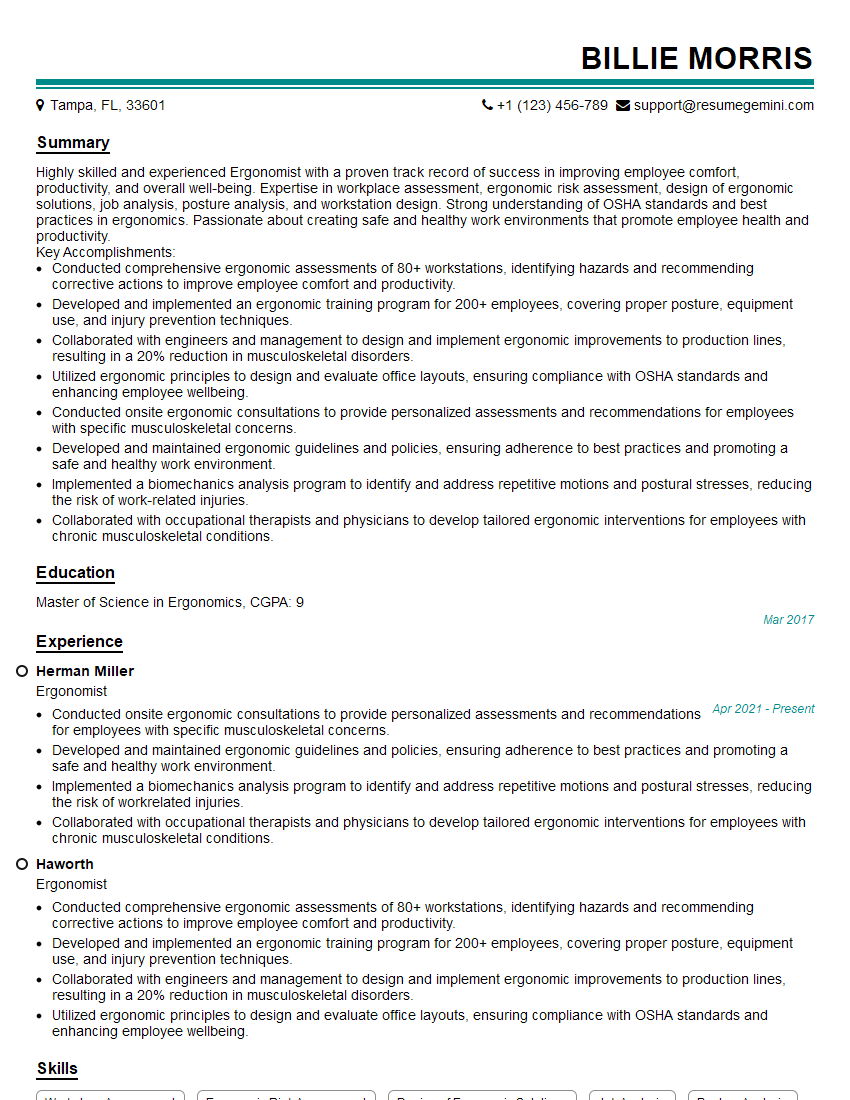
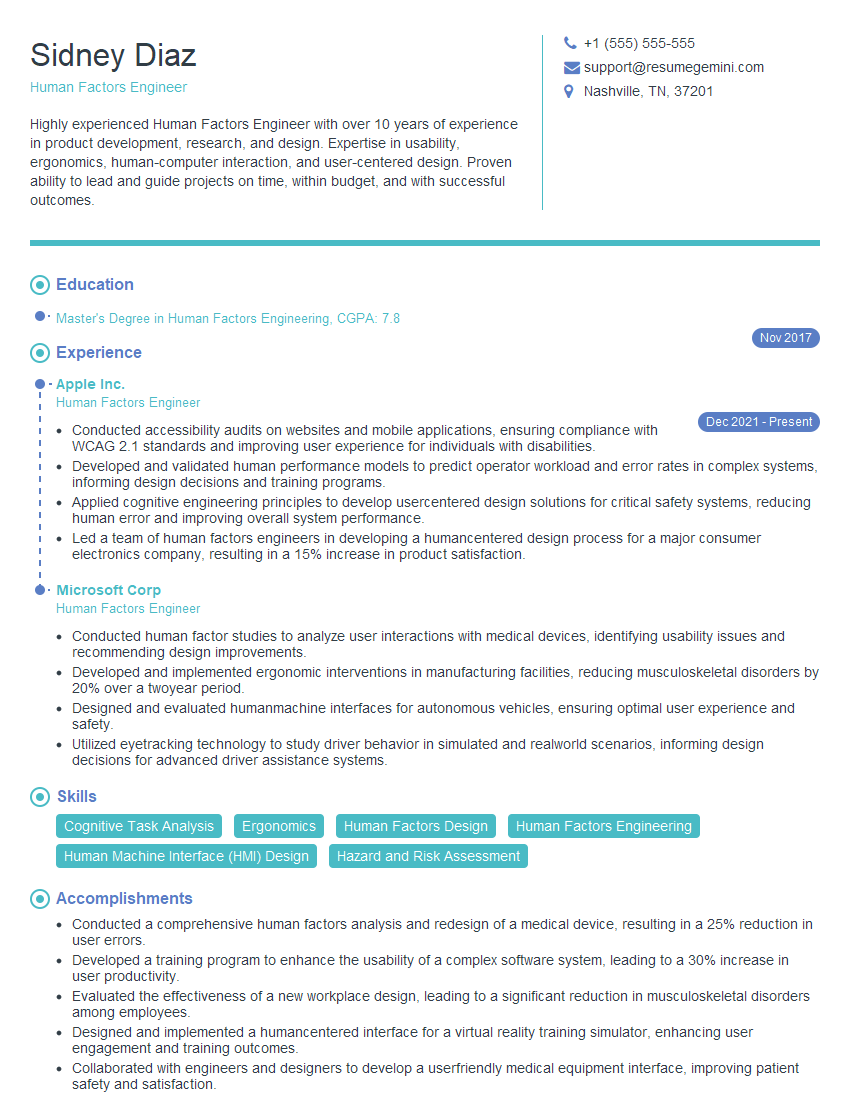
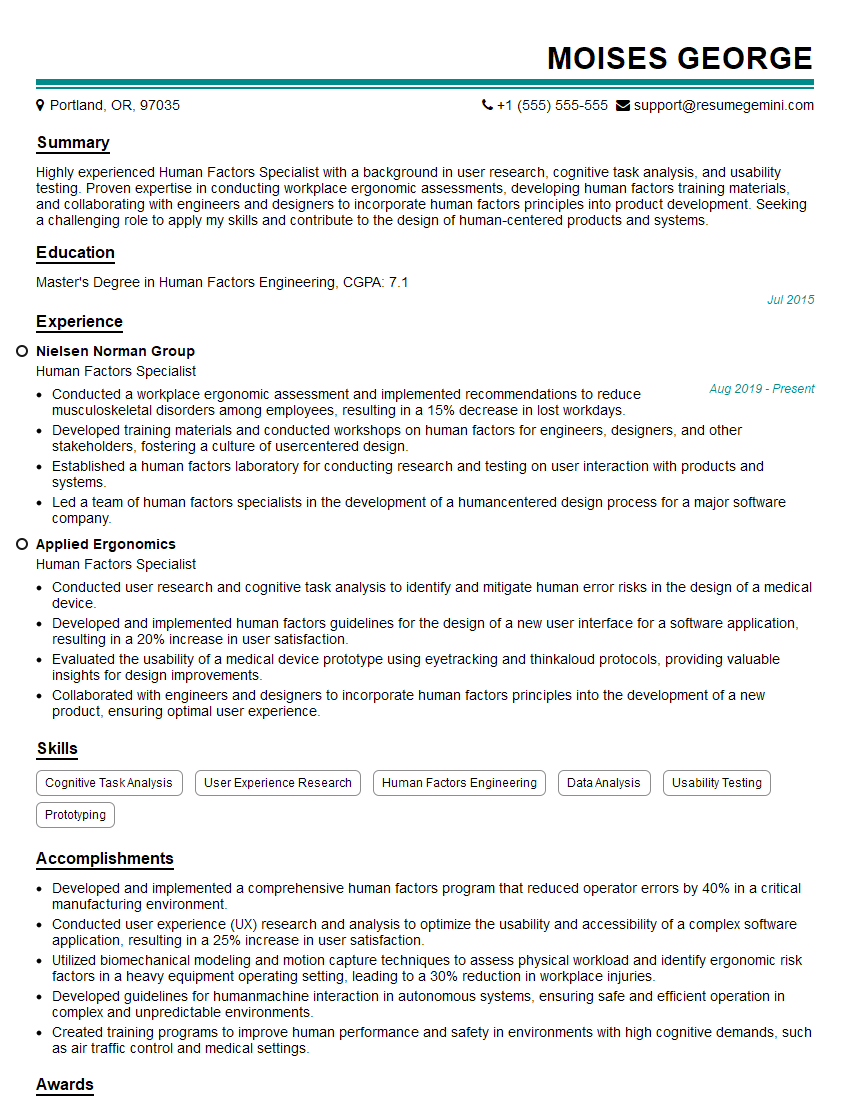
Mastering Human Factors in Healthcare opens doors to exciting and impactful careers, allowing you to make a real difference in patient safety and healthcare efficiency. A strong resume is crucial to showcasing your skills and experience effectively. Building an ATS-friendly resume is essential for maximizing your job prospects. We recommend using ResumeGemini, a trusted resource, to craft a professional and impactful resume that highlights your qualifications. ResumeGemini provides examples of resumes tailored to Human Factors in Healthcare to help guide you. Take the next step towards your dream career – create a compelling resume that truly reflects your expertise.

Explore more articles
Users Rating of Our Blogs
Share Your Experience
We value your feedback! Please rate our content and share your thoughts (optional).
What Readers Say About Our Blog
Really detailed insights and content, thank you for writing this detailed article.
IT gave me an insight and words to use and be able to think of examples