The right preparation can turn an interview into an opportunity to showcase your expertise. This guide to IEEE 141 interview questions is your ultimate resource, providing key insights and tips to help you ace your responses and stand out as a top candidate.
Questions Asked in IEEE 141 Interview
Q 1. Explain the purpose and application of IEEE Std 141-2018.
IEEE Std 141-2018, “IEEE Recommended Practice for Protection and Coordination of Industrial and Commercial Power Systems,” is a comprehensive guide for designing, implementing, and maintaining protective relaying systems in industrial and commercial power systems. Its purpose is to ensure the reliable and safe operation of electrical equipment and prevent cascading failures by quickly isolating faults. It provides detailed recommendations on selecting, setting, and coordinating protective relays, covering various aspects like relay types, settings calculations, and testing procedures. This standard is crucial for engineers and technicians involved in power system protection, helping them avoid costly downtime and potential hazards.
Applications range from small industrial plants to large-scale commercial facilities. For example, a manufacturing facility would use IEEE 141 to design a protection system for its critical motors and transformers to prevent damage from overcurrents or ground faults, ensuring continued production. Similarly, a hospital would leverage the standard to design a robust system for its critical power supply to maintain essential services during power disturbances.
Q 2. Describe the different types of protective relays covered by IEEE 141.
IEEE 141 covers a wide array of protective relays, broadly categorized by their operating principles and the types of faults they detect. Some key types include:
- Overcurrent Relays: These are the most common, tripping when the current exceeds a preset value for a specified time. They’re used for basic protection of lines, transformers, and other equipment.
- Differential Relays: These compare currents entering and leaving a protected zone (e.g., a transformer). A significant difference indicates an internal fault.
- Distance Relays: These measure the impedance to a fault along a transmission line, tripping if the impedance falls within a predetermined zone.
- Ground Fault Relays: These detect ground faults, either by sensing ground current directly or by comparing currents in different phases.
- Directional Relays: These only operate if the fault current flows in a specific direction, preventing nuisance tripping from back-feeding currents.
- Pilot Relays: These use communication channels between substations to enhance protection of long transmission lines. They enable detection of faults even far away from the relay location.
The standard details the characteristics and application considerations for each type, guiding the selection process based on system requirements and fault conditions.
Q 3. What are the key differences between impedance and distance relays?
Both impedance and distance relays are used for line protection, but they differ significantly in their measurement principles and application:
- Impedance Relays: Measure the impedance between the relay location and the fault point. They are simpler to implement but less accurate in determining the fault location, especially on long lines with varying impedance.
- Distance Relays: Measure the distance to the fault along the transmission line. They are more sophisticated, using advanced algorithms to compensate for variations in line impedance and provide more accurate fault location information. This allows for more selective tripping and faster fault clearing.
Think of it like this: an impedance relay is like estimating distance based on the time it takes to walk, which can be affected by terrain. A distance relay is like using GPS, providing a more precise measurement, regardless of the terrain variations.
Q 4. Explain the concept of differential protection and its applications.
Differential protection is a highly sensitive method for detecting internal faults within equipment like transformers, generators, and busbars. It works by comparing the currents entering and leaving the protected zone. In a healthy condition, these currents should be nearly equal. A significant difference indicates an internal fault, triggering the relay to trip the circuit breaker.
How it works: Current transformers (CTs) measure the currents at the equipment’s terminals. These currents are then compared in the differential relay. If the difference exceeds a predetermined threshold (considering CT inaccuracies and permissible current imbalances), the relay activates, isolating the faulty equipment.
Applications: Differential protection is vital for critical equipment where internal faults can cause significant damage or safety hazards. This method is highly selective and fast-acting, minimizing the impact of faults.
Example: In a power transformer, a winding fault can lead to extensive damage. Differential protection ensures rapid isolation of the transformer in such events, preventing further damage and potential fires.
Q 5. How does a directional overcurrent relay function?
A directional overcurrent relay operates only when the fault current flows in a predetermined direction. This directional element prevents nuisance tripping due to fault currents flowing from another part of the system or backfeeding from other sources.
How it works: It combines an overcurrent element with a directional element. The directional element uses voltage and current measurements to determine the current’s direction. Only if both the overcurrent and the directional elements are satisfied (i.e., current exceeds the setting and flows in the designated direction), will the relay trip.
Example: On a transmission line, a directional overcurrent relay at one end is set to operate only when the fault current flows away from the relay location. This prevents tripping if a fault occurs on a different section of the line and current flows towards the relay.
Q 6. What are the settings for a typical overcurrent relay?
The settings for a typical overcurrent relay include:
- Pick-up Current (Ipickup): The minimum current required to activate the relay. This setting is expressed as a multiple of the relay’s current transformer (CT) secondary current rating.
- Time Dial Setting (TMS): Determines the time delay before the relay trips once the pick-up current is exceeded. This is usually expressed in a multiplier against a standard inverse time curve (e.g., an inverse time characteristic).
- Operating Time: The actual time it takes for the relay to operate after exceeding the pick-up current. This depends on the TMS and the magnitude of the fault current.
- Instantaneous setting: An additional setting that makes the relay trip instantly when the current reaches a very high threshold. This fast response protects the equipment from extremely high currents.
These settings must be carefully coordinated with other relays in the system to ensure selective tripping and prevent cascading failures. The coordination involves carefully choosing the pick-up currents and time delays so that only the closest relay trips to the fault location.
Q 7. Explain the principles of transformer protection.
Transformer protection is crucial because internal faults can lead to significant damage and fire hazards. Several methods are used, often in combination, to provide comprehensive protection:
- Differential Protection: This is the primary method, comparing currents entering and leaving the transformer. As discussed earlier, any significant difference triggers the relay.
- Overcurrent Protection: Provides backup protection for external faults and in cases where differential protection fails.
- Buchholz Relay: Detects faults inside the transformer tank, such as gas accumulation due to arcing or overheating. It typically triggers an alarm or trips the transformer.
- Temperature Protection: Monitors the winding temperatures using temperature sensors. It warns or trips the transformer if excessive temperatures are detected, preventing thermal damage.
- Reflector Protection: This scheme enhances the differential protection by compensating for the effect of the winding connections. In simpler terms, it improves the accuracy of the differential relay.
The specific protection schemes used depend on the transformer’s size, rating, and application. The IEEE 141 provides detailed guidance on selecting appropriate protection for different transformer configurations and operating conditions.
Q 8. Describe the various types of busbar protection schemes.
Busbar protection is crucial for safeguarding the heart of a substation – the busbar. Several schemes exist, each with its own strengths and weaknesses, depending on the substation’s configuration and fault current levels. These schemes typically involve multiple protective relays coordinated to ensure reliable and selective fault clearing.
Differential Protection: This is the most common and reliable scheme. Current transformers (CTs) on each feeder connected to the busbar measure the incoming and outgoing currents. Under normal operation, the sum of these currents should be near zero (Kirchhoff’s Current Law). A significant difference indicates an internal fault within the busbar zone.
Busbar Zone Protection: This involves multiple relays covering different sections of the busbar. Each relay protects a specific zone, ensuring that only the affected section is isolated during a fault. This often uses overcurrent relays.
High-Impedance Differential Protection: This scheme is used for high-capacity busbars where the burden of the CTs can be significant. It utilizes high-impedance differential relays, improving accuracy and reducing CT burden.
Combined Schemes: Many substations employ a combination of these schemes for enhanced reliability. For instance, differential protection might be used as the primary protection, with busbar zone protection providing backup protection.
The choice of scheme depends heavily on factors like busbar configuration (single, double, breaker-and-a-half), fault current levels, and system requirements. For example, a large substation might employ a combination of differential and zone protection for redundancy and enhanced selectivity.
Q 9. How does a pilot relay system work?
A pilot relay system provides protection for long transmission lines where the time required for a conventional overcurrent relay to operate might be too long, potentially leading to extensive damage. It works by communicating fault information between relays at both ends of the line.
Imagine two protective relays, one at each end of a long transmission line. When a fault occurs, each relay measures the current flowing through its section of the line. The pilot relay system uses communication channels (e.g., power line carrier communication, fiber optics) to exchange this information. If both relays detect a fault and confirm it via communication, they trip their respective circuit breakers, isolating the faulted section quickly and selectively. This rapid response minimizes damage and disruption.
Different types of pilot relays exist, such as:
Phase comparison: Compares the phase angles of the fault currents at both ends.
Percentage differential: Compares the magnitudes of fault currents after compensating for the line impedance.
Distance protection with pilot wire: Uses distance relays which determine the fault location with communication between both ends for confirmation.
The choice depends on factors like communication channel availability, line length, and fault current characteristics. Pilot relay systems are essential for reliable and selective protection of long transmission lines, ensuring minimal disruption during faults.
Q 10. What are the advantages and disadvantages of numerical relays?
Numerical relays have revolutionized protection schemes due to their advanced capabilities compared to traditional electromechanical relays. However, they also present some drawbacks.
Advantages:
Increased functionality: They offer a wide range of protection functions (overcurrent, distance, differential, etc.) and measurement capabilities (voltage, current, power, frequency, etc.) in a single device.
Improved accuracy and sensitivity: Numerical algorithms provide higher accuracy in fault detection and classification.
Communication capabilities: They can communicate with other devices and systems, enabling remote monitoring, control, and data logging.
Self-testing and diagnostics: Built-in self-tests and diagnostic features enhance reliability and reduce maintenance needs.
Flexibility and adaptability: Settings can be easily modified and upgraded in the field through software updates.
Disadvantages:
Higher initial cost: Numerical relays are generally more expensive than electromechanical relays.
Complexity: Understanding and configuring the settings requires specialized training and expertise.
Software dependency: Their performance relies on the software, which needs to be reliable and secure to avoid malfunction.
Cybersecurity concerns: Communication capabilities introduce potential cybersecurity risks that need to be addressed.
Despite the higher initial cost and complexity, numerical relays’ advantages in functionality, accuracy, and communication capabilities usually outweigh the disadvantages, making them the preferred choice for modern power systems.
Q 11. Explain the importance of coordination between protective relays.
Coordination between protective relays is crucial to ensure that only the faulted section of the power system is isolated during a fault while leaving the rest of the system unaffected. This is achieved through careful setting of relay operating times and zones of protection.
Imagine a power system with multiple relays protecting different parts of the network. If a fault occurs near a busbar, the closest relay should be the first to operate, isolating the faulted section. However, other relays further away might also detect the fault. Proper coordination ensures that these downstream relays only operate if the upstream relays fail to clear the fault. This prevents cascading outages and keeps the system stable.
Coordination involves setting the operating times (time delay) and zones of protection for each relay such that:
Selectivity: Only the relay protecting the faulted section operates.
Speed: The fault is cleared as quickly as possible to minimize damage.
Security: The relays do not operate unnecessarily under normal conditions or during faults outside their protected zones.
Techniques like time-current curves are used to visualize and coordinate the relay operating times. This is a critical aspect of power system protection design and operation, ensuring the integrity and stability of the entire system.
Q 12. How is protective relay settings calculated and why is it important?
Protective relay settings determine how and when a relay will operate. Accurate settings are paramount for ensuring selective and reliable fault clearing. Incorrect settings can lead to unnecessary outages or failure to clear faults. Calculations depend heavily on the specific relay type and the characteristics of the protected equipment and power system.
The process generally involves:
Fault current calculations: Determining the fault currents at different locations in the system using software tools or analytical methods.
Relay characteristics: Understanding the operating characteristics of the relays, including their time-current curves and zone of protection.
Coordination studies: Using software to simulate fault conditions and determine the optimal relay settings to ensure selectivity and speed.
Considering system impedance: The impedance of the power system elements affects relay settings. A higher impedance requires different settings compared to a low impedance system.
Software tools and industry standards play a critical role in accurate relay setting calculation. For example, software packages can model the power system, calculate fault currents, and simulate relay operation based on various fault scenarios. IEEE standards provide guidelines and best practices for setting calculations and coordination. Incorrect settings could lead to unnecessary tripping, jeopardizing system stability and potentially causing significant economic losses. A thorough and systematic approach is essential for ensuring the optimal protection of the power system.
Q 13. What are the common types of faults in power systems?
Power systems are susceptible to various types of faults, each requiring different protection strategies. Understanding these fault types is essential for designing effective protection schemes.
Phase-to-ground faults (single-line-to-ground): One phase of the system comes into contact with the ground. This is the most common fault type.
Phase-to-phase faults (line-to-line): Two phases of the system come into contact with each other.
Double-line-to-ground faults: Two phases and the ground come into contact.
Three-phase faults (three-phase short circuits): All three phases come into contact with each other, resulting in a high fault current.
The severity and impact of each fault type differ. Three-phase faults usually result in the highest fault currents, while single-line-to-ground faults might have lower currents but pose challenges for protection due to the unbalance they introduce. Understanding these differences is crucial for proper relay selection and setting.
Q 14. Describe the process of testing and commissioning protective relays.
Testing and commissioning protective relays are critical steps in ensuring the reliability and effectiveness of the power system’s protection. This process involves a series of tests performed both in the factory and in the field to verify that the relays function as designed.
Factory Acceptance Testing (FAT): This testing is done by the manufacturer before the relays are shipped to the site. It verifies the basic functionality of the relay and its adherence to specifications. This often includes simple tests checking the relay’s responses to various inputs.
Site Acceptance Testing (SAT): Once the relays are installed in the substation, SAT is performed to verify their correct operation in the actual system environment. This includes:
Calibration: Verifying the accuracy of the relay’s measurements and settings.
Relay setting verification: Confirming that the relay settings are correctly configured and coordinated with other relays in the system. This often involves using relay test sets to simulate fault conditions and observe relay operation.
Protection coordination studies: Verifying that the relays operate selectively and in the correct sequence during faults.
Communication testing (if applicable): Testing the communication links between the relays and other protection systems.
Functional testing: Simulating various fault types and verifying that the relays respond as expected.
Thorough testing and commissioning are essential to guarantee that the protective relays function as intended, protecting the power system from damaging faults and ensuring safe and reliable operation. Documentation of the entire process is critical for maintenance and future upgrades.
Q 15. What is the role of communication in modern protection systems?
Communication is absolutely critical in modern protection systems. Think of a power grid as a vast, interconnected network. When a fault occurs, say a short circuit, it’s crucial for the system to identify the problem quickly and isolate the affected area to prevent cascading outages and further damage. This is where communication comes in. IEEE 141 heavily emphasizes the need for fast and reliable communication between protective relays at various substations. This communication allows for:
- Faster fault detection: Relays can share information, increasing the speed at which a fault is detected and isolated.
- Improved coordination: Relays can coordinate their actions to ensure that only the necessary parts of the grid are switched off, minimizing the impact of an outage. For example, a distance relay on one end of a transmission line can communicate with a distance relay on the other end to ensure that both trip in a coordinated fashion.
- Enhanced system monitoring: Real-time data from various relays can be collected and analyzed to monitor the overall health of the power system. This allows operators to proactively address potential issues before they escalate into major outages.
- Remote control and automation: Communication facilitates remote operation and automation of protection schemes, enhancing efficiency and reducing the need for on-site personnel.
Modern communication protocols such as IEC 61850 are extensively used to meet these requirements, ensuring interoperability and high-speed data exchange. Without efficient communication, the entire system would be significantly less responsive and less reliable, resulting in more frequent and prolonged power outages.
Career Expert Tips:
- Ace those interviews! Prepare effectively by reviewing the Top 50 Most Common Interview Questions on ResumeGemini.
- Navigate your job search with confidence! Explore a wide range of Career Tips on ResumeGemini. Learn about common challenges and recommendations to overcome them.
- Craft the perfect resume! Master the Art of Resume Writing with ResumeGemini’s guide. Showcase your unique qualifications and achievements effectively.
- Don’t miss out on holiday savings! Build your dream resume with ResumeGemini’s ATS optimized templates.
Q 16. Explain the concept of a protective relay’s operating characteristics curve.
A protective relay’s operating characteristic curve depicts its sensitivity and response to various fault conditions. Imagine it like a graph showing the relay’s reaction to different levels of fault current and impedance. The x-axis typically represents the fault current (or impedance), and the y-axis represents the relay’s operating time. Different relay types have different curves, reflecting their specific design and application. For example:
- Overcurrent relays have curves that show how quickly they operate as fault current increases. A steeper curve means faster operation for higher fault currents.
- Distance relays use impedance as the main parameter. Their curves show how the operating time changes with the impedance seen by the relay. The shape of the curve is important for directional selectivity and avoiding nuisance tripping.
The curve is crucial because it determines the relay’s speed and selectivity. A well-designed curve ensures that the relay trips quickly during actual faults while avoiding unnecessary tripping during normal operating conditions or minor disturbances. These curves are carefully chosen and coordinated with other relays in the protection system to ensure proper protection coordination. Incorrectly chosen curves might lead to unnecessary outages or failures to clear faults quickly enough.
Q 17. Describe the various types of fault current limiters.
Fault current limiters (FCLs) are devices designed to reduce the magnitude of fault currents in power systems. This is vital because excessive fault currents can damage equipment and pose safety risks. There are several types, each with its own mechanism:
- Series-type FCLs: These limit the current by inserting high impedance into the fault path during a fault, effectively acting as a variable resistor. They are commonly based on superconducting technology (which provides very low resistance under normal conditions but high resistance during a fault) or saturable reactors (which utilize the saturation of magnetic cores to limit the current).
- Shunt-type FCLs: These limit the current by diverting it away from the fault point. Examples include thyristor-based devices which rapidly switch on to provide a low-impedance path for the fault current, limiting the current flow through the main circuit.
- Hybrid FCLs: Combining series and shunt elements to leverage the advantages of both techniques.
The choice of FCL depends on factors like the fault current level, the required limiting speed, and the cost. They contribute significantly to improving system resilience and reducing the risks associated with high fault currents, as described in IEEE standards addressing protective relaying practices.
Q 18. How are protective relays affected by harmonics?
Harmonics, which are multiples of the fundamental power frequency (50 Hz or 60 Hz), can significantly affect protective relay operation. Many relays are designed to operate based on the fundamental frequency, and the presence of harmonics can introduce errors in their measurements. For instance:
- Incorrect current measurements: Harmonics can cause the relay to overestimate or underestimate the actual fault current, leading to either unnecessary tripping or failure to operate during an actual fault. This is particularly important for overcurrent relays.
- Maloperation of distance relays: Harmonics can distort the impedance measurements of distance relays, leading to incorrect tripping decisions. Distance relays rely on accurate impedance measurements to determine the location of the fault.
- Increased relay burden: High harmonic levels can create additional heat and stress on relays, potentially reducing their lifespan or leading to premature failure.
Therefore, many modern relays incorporate harmonic filtering or rejection techniques to mitigate these issues. Careful consideration of harmonic levels is crucial during relay design and application to ensure reliable performance.
Q 19. What is the impact of grounding on relay operation?
Grounding plays a crucial role in relay operation, primarily by influencing the fault current paths. The type of grounding system (solid, resistance, or impedance grounded) significantly affects the magnitude and characteristics of the fault currents. For example:
- Solid grounding: Leads to high fault currents, making it easier for overcurrent relays to detect faults quickly. However, it may cause excessive stress on the system.
- Resistance grounding: Limits fault current magnitudes but may require more sensitive relays to detect faults.
- Impedance grounding: Offers more control over fault current levels, allowing for a balance between fault detection and system stress.
Furthermore, grounding influences the operation of differential relays, which compare currents entering and leaving a protected zone. Ground faults can easily be missed or misinterpreted if grounding systems are not accounted for in the relay settings. The type of grounding influences the relay settings and the overall performance of the protection system; this needs to be carefully considered to achieve effective protection.
Q 20. Explain the significance of arc flash mitigation in relay design.
Arc flash is a serious safety hazard in electrical systems, caused by a sudden, high-energy electric arc. Arc flash mitigation is essential in relay design because relays themselves can be a potential ignition source for arc flash hazards, especially during fault conditions. Relay design must incorporate features that minimize the risk of arc flash, such as:
- Improved insulation: Using high-quality insulation materials to prevent flashover.
- Arc flash reduction techniques: Incorporating internal arc flash mitigation devices that limit the energy released during an internal arc.
- Safety barriers: Designing the relay with physical barriers to limit the arc’s spread.
- Protective housings: Using strong, arc-resistant housings to contain the arc and reduce the risk of external flashover.
Meeting stringent safety standards, such as those in IEEE 1584, is crucial to ensure that protective relays themselves do not contribute to arc flash hazards. Proper selection, installation, and maintenance of relays are vital for minimizing risks and protecting personnel.
Q 21. What are the safety considerations when working with protective relays?
Safety is paramount when working with protective relays. High voltages and currents are involved, posing significant risks to personnel. Key safety considerations include:
- Lockout/Tagout procedures: Always follow strict lockout/tagout procedures to de-energize equipment before working on it.
- Personal Protective Equipment (PPE): Use appropriate PPE, such as insulated tools, gloves, and eye protection.
- Arc flash hazard analysis: Conduct a thorough arc flash hazard analysis to determine the appropriate PPE and safety precautions needed.
- Proper training: Only qualified and trained personnel should work on protective relays.
- Testing procedures: Follow safe testing procedures to avoid accidental energization or triggering of relays.
- Grounding and bonding: Ensure proper grounding and bonding to prevent electrical shocks.
Ignoring these safety precautions can result in serious injuries or fatalities. Adherence to established safety procedures and standards is essential for ensuring a safe working environment when dealing with protective relay systems.
Q 22. How do you troubleshoot a malfunctioning protective relay?
Troubleshooting a malfunctioning protective relay requires a systematic approach, combining knowledge of the relay’s operation, the power system’s characteristics, and diagnostic tools. It’s like detective work, where you need to gather clues to pinpoint the problem’s root cause.
Check for obvious issues: Start with the simple stuff – visually inspect the relay for any physical damage, loose connections, or blown fuses. Verify the power supply to the relay is functioning correctly.
Examine relay settings: Review the relay’s configuration to ensure its settings match the system’s protection requirements. An incorrect setting, like a pickup current too low or a time delay too short, can lead to unwanted tripping or failure to operate.
Analyze relay event logs: Modern relays record detailed logs of events, including fault indications, trip signals, and internal diagnostics. These logs provide valuable clues to identify the fault. For example, seeing a consistent overcurrent fault during a specific load condition points to a possible setting error or a system issue.
Utilize testing equipment: Employ tools like relay testers to verify the relay’s internal functions. This involves injecting test signals to simulate various fault conditions and observing the relay’s response. Discrepancies between expected and observed behavior pinpoint the problem area.
Consult the relay’s manuals and documentation: This step is crucial; manufacturers provide detailed troubleshooting guides, fault codes, and diagnostic procedures specific to each relay model. For example, a specific error code may indicate a failed internal component.
Consider system-wide issues: The problem might not lie solely with the relay itself. A fault in the current transformer (CT), potential transformer (PT), or wiring could lead to erroneous relay operation. Testing the CT and PT ratios and accuracy is often necessary.
Remember, safety is paramount. Always follow established safety procedures and lockout/tagout procedures before working on live equipment.
Q 23. Describe your experience with protective relay settings software.
I have extensive experience using various protective relay settings software packages, including SEL, ABB, and GE. These software packages are critical for configuring and commissioning protective relays. My experience encompasses setting up various protection schemes (overcurrent, differential, distance protection), coordinating protection settings to avoid cascading trips, and creating customized reports for analysis. I’m proficient in using these tools to simulate fault conditions and verify that the relay functions correctly in response. For instance, I recently used SEL’s relay setting software to configure overcurrent relays for a new substation, ensuring proper coordination between the different levels of protection. This involved careful analysis of impedance and fault current characteristics to determine the optimal settings for each relay. Furthermore, I’m adept at using these software packages for communication testing and data acquisition from relays for analysis and reporting.
Q 24. How does a power system’s impedance affect relay performance?
The power system’s impedance significantly impacts relay performance. The impedance of the system, including the source impedance, transmission lines, and transformers, directly influences the current and voltage seen by the protective relays during faults. Think of impedance as resistance to the flow of electricity.
High Impedance: A high-impedance system may result in lower fault currents, potentially causing under-reach in distance relays or leading to non-operation of overcurrent relays if the fault current is below their pickup settings.
Low Impedance: Conversely, a low-impedance system can lead to high fault currents, possibly causing over-reach in distance relays or saturating current transformers (CTs), leading to inaccurate relay operation.
Impedance variations: Changes in system impedance, like the addition of new lines or equipment, can necessitate readjustment of relay settings to maintain optimal performance. For example, adding a new transmission line to a system can reduce the impedance and increase fault currents, requiring adjustments to the overcurrent relay settings to prevent unnecessary tripping. This is crucial for maintaining system stability and reliability.
Accurate impedance measurement and modeling are crucial for proper relay setting calculations and testing. Improper consideration of system impedance can lead to misoperation of the protection scheme, causing unnecessary outages or failing to isolate faults promptly.
Q 25. Explain the relationship between protective relays and SCADA systems.
Protective relays and SCADA (Supervisory Control and Data Acquisition) systems work together seamlessly to provide comprehensive power system monitoring and protection. Think of them as two halves of a whole – protection and supervision.
Relay Data Acquisition: SCADA systems collect data from protective relays, such as fault information, relay status, and operational parameters. This data provides valuable insight into the health and operational status of the power system, allowing operators to assess the impact of faults and take appropriate corrective actions.
System Monitoring: SCADA systems utilize the data from relays to create comprehensive system visualizations and reports. This helps operators understand system conditions, identify potential problems, and react promptly in case of emergencies.
Remote Control and Operation: In some instances, SCADA systems can remotely control certain aspects of protective relay operation. This includes adjusting settings or remotely resetting relays after a fault. However, such remote control functionalities need to be carefully considered, given the potential safety implications.
Alarm and Notification: When a protective relay detects a fault, it triggers an alarm through the SCADA system. This alarm alerts operators to the fault and provides valuable information to help them promptly resolve the issue.
Integration of relays and SCADA systems is essential for ensuring the reliable and secure operation of a power system. Modern communication protocols like IEC 61850 have played a crucial role in improving this integration and data exchange.
Q 26. What is the importance of regular maintenance for protective relays?
Regular maintenance for protective relays is crucial to ensure their proper operation and prevent catastrophic system failures. Neglecting maintenance is like ignoring a car’s service schedule – it eventually leads to breakdowns. Regular maintenance includes testing, inspection, calibration, and software updates.
Testing: Periodic testing ensures the relays function as designed and will operate correctly during faults. This can involve simulating faults using relay testing equipment or using online diagnostic capabilities.
Inspection: Regular visual inspection checks for physical damage, loose connections, or signs of overheating or wear.
Calibration: Over time, relays can drift from their calibrated settings. Calibration ensures accurate operation and prevents misoperation due to aging components or environmental factors.
Software Updates: Software updates address bugs, improve functionality, and incorporate new features, improving the overall performance and reliability of the relays.
A well-maintained relay system improves system reliability, reduces the risk of outages, and enhances overall safety.
Q 27. Describe your experience with different types of protective relay communication protocols.
My experience encompasses various protective relay communication protocols, ranging from older, more established methods to the latest standards. I’ve worked with:
Serial communication (RS-232, RS-485): These protocols are common in older relay systems but are gradually being replaced by more modern alternatives due to limitations in data transfer rates and capabilities.
Ethernet communication: Ethernet-based communication offers high bandwidth and is increasingly used in modern relay systems. It allows for efficient data transfer and remote access to relay settings and data.
IEC 61850: This is a powerful and widely adopted standard for communication in substation automation. It’s based on Ethernet and features a robust, object-oriented architecture that significantly enhances interoperability and data exchange between devices.
Modbus: A widely used protocol for industrial automation, often used in simple relay applications.
Understanding these different protocols is essential for integrating relays into broader power system monitoring and control infrastructure. In a recent project, for example, I migrated an older system utilizing RS-485 communication to IEC 61850, improving system reliability and simplifying data access for remote monitoring and control. The upgrade enhanced efficiency and reduced downtime.
Q 28. Discuss the future trends in protective relay technology.
The future of protective relay technology is shaped by several key trends:
Increased intelligence and automation: Relays are becoming more intelligent, incorporating advanced algorithms for fault detection and classification. This enables faster and more accurate fault isolation, minimizing disruption to power supply.
Improved communication and integration: The use of advanced communication protocols like IEC 61850 will continue to improve the integration of relays into larger SCADA systems, enhancing situational awareness and allowing for more comprehensive system monitoring.
Advanced signal processing techniques: Improved signal processing techniques, including advanced filtering and wavelet analysis, will allow for better discrimination of faults from other disturbances, leading to more reliable protection schemes.
Enhanced cybersecurity: As power systems become more reliant on digital communication, cybersecurity becomes a critical issue. Future relays will incorporate robust security features to protect them from cyber threats.
Integration of renewable energy sources: Protective relays will need to be adapted to accommodate the unique characteristics of renewable energy sources, such as solar and wind power, ensuring stable and reliable operation of these increasingly important elements of the grid.
Artificial Intelligence (AI) and Machine Learning (ML): AI and ML techniques offer the potential to enhance fault prediction, improve relay settings optimization, and create more self-learning and adaptive protection schemes.
These trends aim to make power systems more resilient, reliable, and efficient. The application of these advances can significantly impact the reliability and stability of the power grid.
Key Topics to Learn for IEEE 141 Interview
Mastering IEEE 141 demonstrates a strong understanding of power system analysis and is highly sought after in the industry. To ace your interview, focus on these key areas:
- Symmetrical Components: Understand the theory behind symmetrical components (positive, negative, and zero sequence) and their application in analyzing unbalanced three-phase systems. Practice solving problems involving fault calculations using symmetrical components.
- Fault Analysis: Become proficient in calculating fault currents (three-phase, line-to-ground, line-to-line) using both per-unit and actual impedance values. Understand the impact of different fault types on power system stability.
- Power System Protection: Familiarize yourself with the principles of protective relaying and the operation of various protective devices (relays, circuit breakers). Be prepared to discuss different protection schemes and their applications.
- Transient Stability Analysis: Grasp the concepts of transient stability and the factors affecting it. Understand the role of different system components (generators, transformers, transmission lines) in maintaining stability during disturbances.
- Power Flow Studies: Understand the purpose and methodology of power flow studies. Be prepared to discuss different power flow solution techniques and their applications in power system planning and operation.
- Practical Application: Think about how these theoretical concepts apply to real-world scenarios. Consider examples from your coursework or projects where you’ve used these techniques to solve problems.
Next Steps
A strong understanding of IEEE 141 significantly boosts your career prospects in power systems engineering, opening doors to exciting roles in power system analysis, protection, and control. To maximize your chances, a well-crafted resume is crucial. An ATS-friendly resume ensures your qualifications are effectively highlighted to potential employers. We highly recommend leveraging ResumeGemini to build a professional and impactful resume tailored to the power systems engineering field. ResumeGemini provides tools and examples to help you create a resume that showcases your IEEE 141 expertise effectively. Examples of resumes tailored to IEEE 141 are available to guide you.
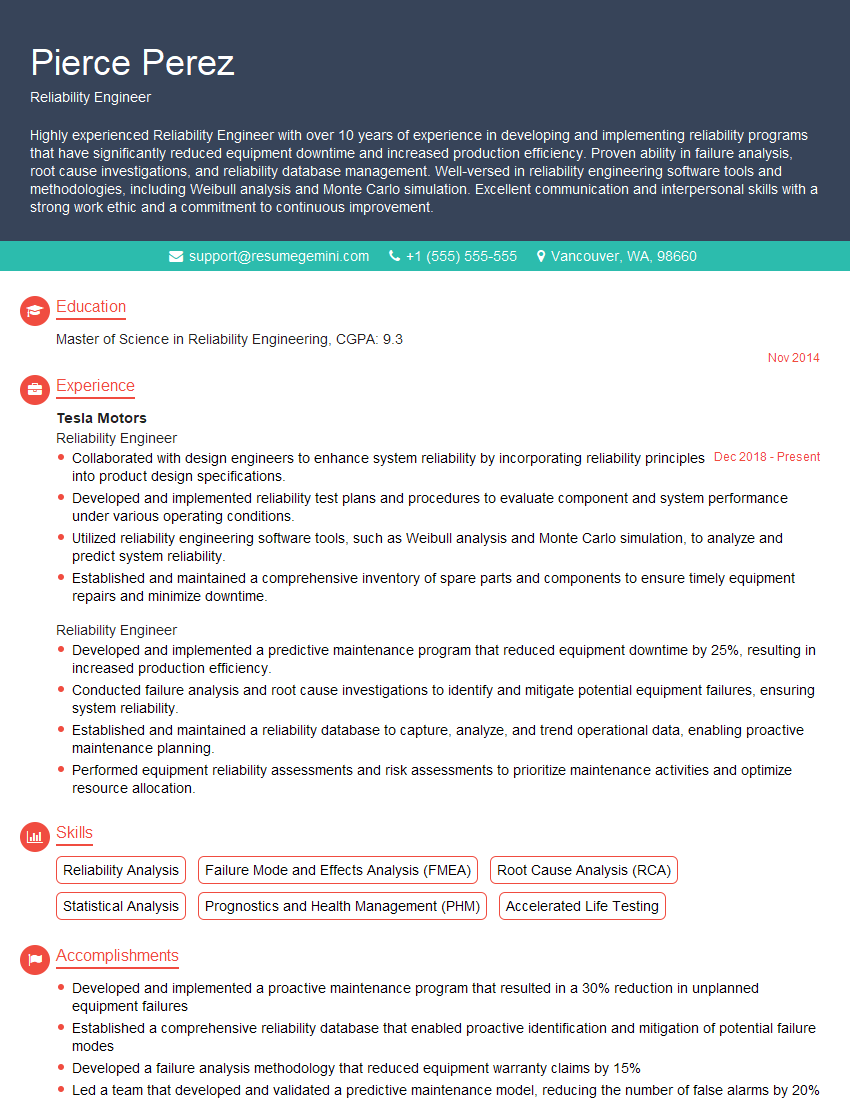
Reliability Engineer Resume Sample
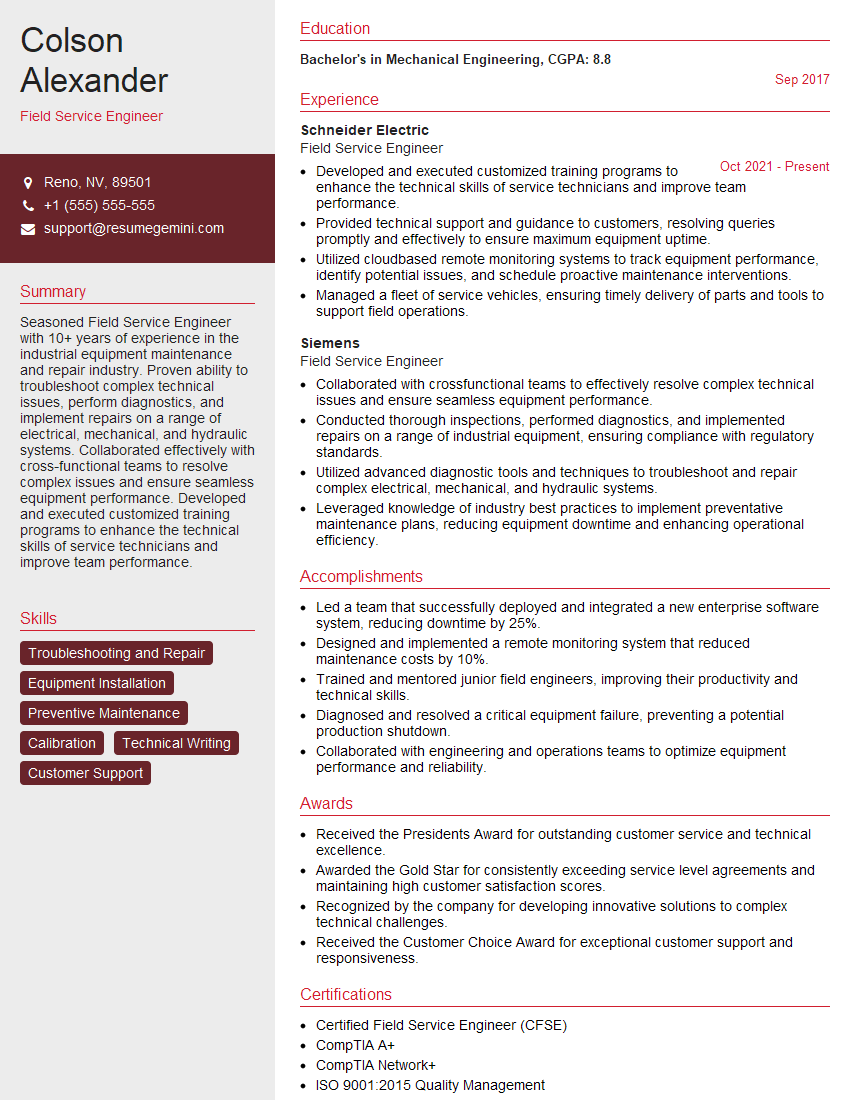
Field Service Engineer Resume Sample

Commissioning Engineer Resume Sample

Distribution Engineer Resume Sample

Electrical Design Engineer Resume Sample

Electrical Test Engineer Resume Sample
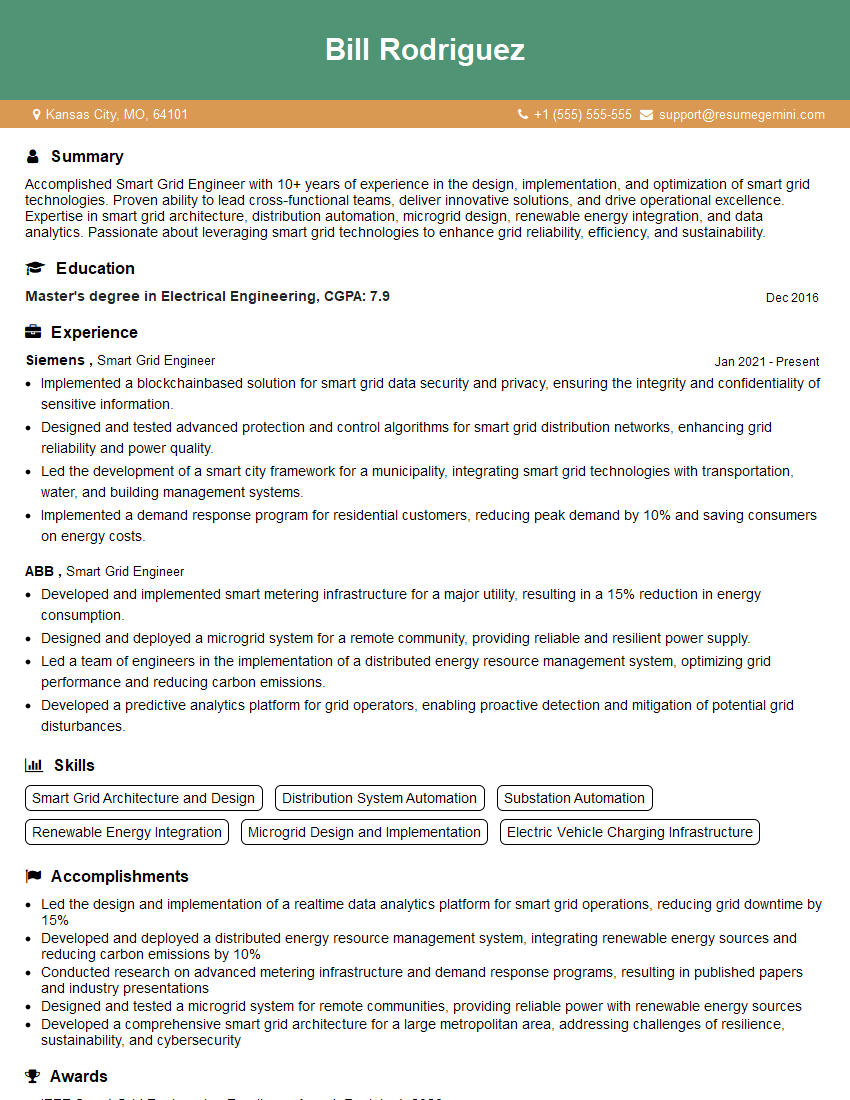
Smart Grid Engineer Resume Sample
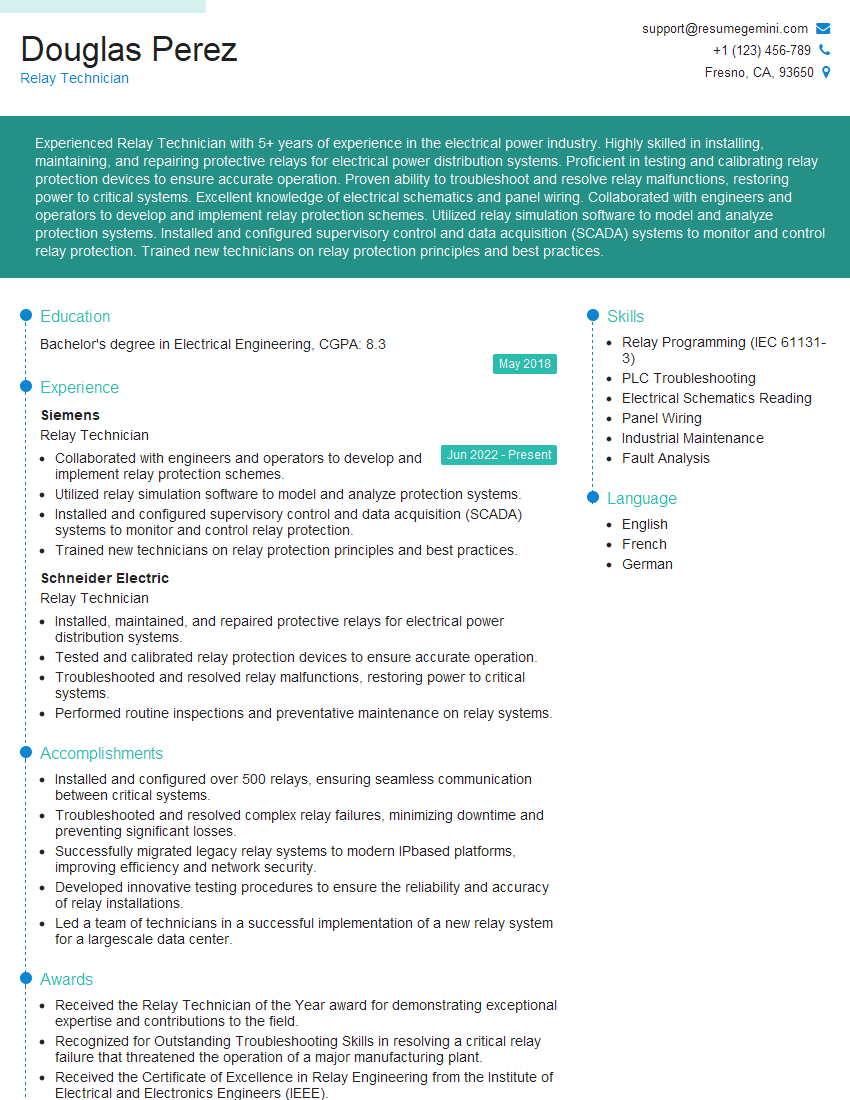
Relay Technician Resume Sample
Explore more articles
Users Rating of Our Blogs
Share Your Experience
We value your feedback! Please rate our content and share your thoughts (optional).
What Readers Say About Our Blog
Really detailed insights and content, thank you for writing this detailed article.
IT gave me an insight and words to use and be able to think of examples