Interviews are opportunities to demonstrate your expertise, and this guide is here to help you shine. Explore the essential Ink Drawing interview questions that employers frequently ask, paired with strategies for crafting responses that set you apart from the competition.
Questions Asked in Ink Drawing Interview
Q 1. Explain the difference between various ink types (e.g., India ink, waterproof ink, pigment ink).
Ink types vary significantly in their properties, impacting the final look and longevity of your drawing. Let’s compare three common types:
- India Ink: Traditionally made from lampblack (soot) and a binding agent, India ink is known for its deep black color and archival quality. It’s typically waterproof and permanent once dry, making it excellent for finished pieces. However, it can be unforgiving, as mistakes are difficult to correct.
- Waterproof Ink: This category encompasses various inks designed to resist water damage. While India ink is a type of waterproof ink, other waterproof inks can be found in different colors and formulations, some even pigmented. Waterproof inks are essential when working with water-based mediums or if your artwork is likely to encounter moisture.
- Pigment Ink: Pigment inks contain finely ground pigments suspended in a binding agent. These inks are typically more opaque and richer in color than dye-based inks. They also tend to be more resistant to fading and UV damage, extending the lifespan of your work. They often are waterproof as well, offering a superior archival quality compared to dye-based inks, especially in fine art contexts.
The choice of ink depends entirely on the project’s requirements. For detailed line work where permanence is crucial, India ink or a high-quality waterproof pigment ink is ideal. For looser, expressive work where color variety is important, a pigmented waterproof ink in various colors would be a better choice.
Q 2. Describe your preferred ink drawing techniques and why.
My preferred technique involves a combination of meticulous line work with expressive washes. I often begin with a detailed pencil sketch to plan the composition and values, then I use a range of nibs and brushes to add line work with different weights and textures. I enjoy working in layers; building up depth through cross-hatching or stippling in certain areas, and then incorporating washes of ink to create tonal variation.
I favor this approach because it allows me to marry precision with spontaneity. The initial structured phase ensures a solid foundation, while the washes enable a more organic and emotionally evocative effect. It’s a flexible process which caters to my need for both control and free expression in the creative process. Think of it as a dance between structure and improvisation.
Q 3. How do you achieve different line weights and textures using ink?
Achieving varied line weights and textures in ink drawing is crucial for adding visual interest and depth. Here’s how I do it:
- Line Weight: Varying pressure on the pen or brush is the most basic method. Gentle pressure creates thin lines, while firm pressure produces thicker lines. Different nibs and brushes will also yield different line weights inherently.
- Line Texture: Using different tools drastically impacts texture. Fine-tipped pens produce crisp, clean lines, while broader brushes allow for more textured strokes. Experiment with stippling (placing many small dots), cross-hatching (overlapping parallel lines), or scribbling to create a multitude of effects. You can also vary the direction and spacing of your lines for different textural impressions. A dry brush technique can produce scratchy, expressive lines, while a wet brush can leave broader, softer strokes.
For example, a fine-tipped pen is perfect for intricate details, while a brush can be used for expressive washes or broader strokes, creating a contrast between detail and sweeping movement.
Q 4. Discuss your approach to composition and layout in ink drawings.
Composition is paramount in any drawing, and ink drawings are no exception. My approach begins with understanding the visual weight and balance of elements within the frame. I frequently use sketches to explore different arrangements before committing to ink. I aim for a dynamic and visually engaging composition, often employing the rule of thirds or leading lines to guide the viewer’s eye. Negative space is just as important as positive space; it’s a crucial element in achieving balance and visual harmony.
For example, I might place the main subject slightly off-center to create visual interest, or use negative space strategically to draw attention to particular details. The overall layout is carefully considered to ensure a cohesive and impactful final piece.
Q 5. Explain your process for creating value and shading with ink.
Creating value and shading with ink requires a thoughtful approach. I avoid relying on simple gradation because ink doesn’t lend itself to smooth transitions like watercolor or pencils. Instead, I employ techniques like hatching, cross-hatching, stippling, and washes to build up value gradually.
Hatching involves drawing parallel lines; cross-hatching adds another layer of lines at an angle to create darker areas. Stippling uses dots to create texture and value. Washes, achieved by diluting ink with water, allow for broader tonal variation. I use a combination of these techniques, building up layers to create depth and dimension within my drawings, carefully blending areas where necessary. The interplay of these techniques gives my ink work its distinctive texture and character.
Q 6. How do you handle mistakes or imperfections in your ink drawings?
Mistakes are inevitable in any creative process. In ink drawing, where the medium is quite unforgiving, my approach is to embrace experimentation while planning ahead. Detailed preliminary sketches greatly minimize issues. However, if an error occurs, rather than erasing (which can damage the paper), I try to integrate it into the composition. I might use a darker wash to obscure a mistake or use line work to mask it creatively.
Sometimes, a mistake can even lead to an interesting and unexpected result. Learning to adapt, to see the mistake as an opportunity for creative problem solving, is part of the learning curve in mastering ink drawing. It’s a testament to the dynamism of the creative process that things don’t always go as planned; sometimes happy accidents become the most compelling features of a work.
Q 7. Describe your experience with different ink drawing tools (pens, brushes, nibs).
I’ve worked with a wide variety of ink drawing tools, each offering unique qualities:
- Pens: I use both dip pens with various nibs (for fine lines and detail) and technical pens (for consistent line weight and precision). The range of nibs available allows for significant control over line quality.
- Brushes: Round brushes are versatile, allowing for both fine lines and broad strokes; flat brushes deliver more controlled, uniform washes. The choice of brush depends on the desired texture and effect. Sable hair brushes offer excellent control, while synthetic brushes can be more affordable and suitable for certain styles.
- Nibs: Experimenting with different nibs is crucial. For example, crow quill nibs produce extremely fine lines suitable for intricate details, while broader nibs are ideal for larger strokes and bolder effects. The flex of the nib also impacts the line’s character, with flexible nibs allowing for greater line weight variation.
The key is understanding the unique characteristics of each tool and using that knowledge to express your vision effectively. This involves much experimentation to determine personal preferences and what yields the desired effects.
Q 8. How do you maintain precision and control while using ink?
Maintaining precision and control in ink drawing is paramount. It’s a delicate balance between spontaneity and deliberate action. Think of it like a tightrope walk – you need the right tools and technique to avoid a disastrous fall (a blotch of ink!).
Steady Hand: A firm but relaxed grip on the pen is crucial. Avoid tense fingers which can lead to shaky lines. Practice slow, controlled movements.
Proper Tools: Using the right nib size for the task is essential. Fine-liners offer incredible detail, while broader nibs are better for bold strokes. Experiment to find your preferred tools and maintain them regularly to ensure smooth ink flow.
Layering and Building: Instead of trying to achieve perfect lines in one go, work in layers. Begin with light outlines, then gradually add detail and shading. This method minimizes the risk of mistakes and allows for greater control.
Practice and Patience: Mastering ink drawing takes time and consistent practice. Don’t get discouraged by initial imperfections. Every stroke is a learning opportunity. The more you draw, the more refined your control will become.
Q 9. Explain your understanding of line quality and its importance in ink drawing.
Line quality is the essence of ink drawing; it’s what gives the artwork its character and emotional impact. It encompasses the thickness, thinness, texture, and direction of each line. A confident, bold line can convey strength and power, while a delicate, wavering line might suggest vulnerability or fragility.
Variety is Key: Avoid monotonous lines. Experiment with variations in weight, creating thick and thin strokes to add dynamism and visual interest. This can be achieved by adjusting pressure on the pen or by using different nibs.
Line Direction and Flow: The direction of your lines should guide the viewer’s eye across the page. Consider the natural flow of forms; follow the curves and contours of your subject.
Texture and Mark-Making: Explore different mark-making techniques. Hatching, cross-hatching, and stippling can create texture and depth, adding visual richness to your artwork.
For example, imagine drawing a tree. Thick, vertical lines might depict the sturdy trunk, while thinner, branching lines create the delicate twigs and leaves. The line quality alone conveys the feeling of the tree’s strength and its delicate nature.
Q 10. How do you incorporate negative space effectively in your ink illustrations?
Negative space, or the area surrounding the subject of your drawing, is just as important as the subject itself. It’s often overlooked, but mastering its use can elevate your artwork dramatically. Think of it as the sculptor removing material to reveal the form.
Shape and Form: Negative space helps define the shape and form of your subject. By carefully considering the space around the object, you can highlight its contours and create a sense of three-dimensionality.
Balance and Composition: Effective use of negative space creates balance and visual harmony in the composition. It prevents the drawing from feeling cluttered or overwhelming.
Emphasis and Focus: Strategic use of negative space can draw the viewer’s eye to specific areas of the drawing, creating visual emphasis and directing attention to important details.
For instance, when drawing a bird in flight, the negative space around the bird helps define its shape and movement, contributing to a feeling of dynamism.
Q 11. Discuss your knowledge of color theory and its application to ink drawings (if applicable).
While ink drawing is inherently monochromatic, understanding color theory is still crucial. It helps you create value (light and shadow) and understand how different tones interact to create depth and form.
Value: By varying the density and spacing of your lines (creating shading through hatching and cross-hatching), you can simulate different values, from dark shadows to bright highlights. This creates a three-dimensional effect, adding depth and realism to your subject.
Contrast: Employing contrast between light and dark areas helps to create visual interest and guide the viewer’s eye through the composition. A striking contrast can create a focal point, while subtle gradations can create a more subdued effect.
Temperature: Although working only in black and white, the concept of warm (browns and yellows) and cool (blues and greys) colors applies. These qualities can be implied through value and linework, adding warmth or coolness to the atmosphere of your piece.
For example, you can imply a warm light source by using lighter values in certain areas and darker values in others. This knowledge enhances the emotional impact and depth of your ink illustration.
Q 12. Describe your workflow for completing an ink drawing, from concept to final product.
My workflow typically involves several key stages:
Concept and Sketching: I begin with a rough sketch, exploring different compositions and ideas. This is a loose process, focusing on the overall layout and key elements.
Refined Sketch: Once I have a satisfactory composition, I create a more refined sketch on my chosen paper. This clarifies the details and ensures the final ink drawing will be well-planned.
Inking: I begin with lighter lines, gradually adding details and building up value through hatching, cross-hatching, or stippling. I work slowly and methodically, ensuring clean lines and careful placement of ink.
Review and Adjustment: I regularly step back from my work to assess the composition and look for any necessary adjustments. This stage involves critical self-assessment of linework, balance, and overall impact.
Final Touches and Clean Up (Optional): Once I’m happy with the drawing, I may make minor adjustments, ensuring the final product is polished and well-presented.
Q 13. Explain how you adapt your techniques for different types of paper and surfaces.
Different papers and surfaces respond differently to ink. Adapting your technique is crucial for achieving desired results.
Paper Weight and Texture: Heavier papers are less likely to feather or bleed, offering better control for fine details. Smooth papers yield clean lines, while textured papers can add visual interest but may require adapting your pressure and stroke to achieve the desired result.
Paper Absorption: Highly absorbent papers might cause the ink to dry quickly, possibly leading to uneven lines. For these, faster strokes might be necessary. Conversely, less absorbent papers allow for greater blending and layering opportunities.
Surface Type: Drawing on other surfaces, like wood panels or canvas, may require adjusting your pressure and technique, depending on the material’s texture and absorbency. Some surfaces might benefit from a preparatory layer (e.g., gesso on canvas).
For example, I’d use a heavier weight, smooth paper for a highly detailed botanical illustration, but a textured paper for a looser, expressive landscape sketch.
Q 14. How do you prepare your workspace for ink drawing?
Preparing my workspace is vital for a productive and enjoyable drawing session. A well-organized space minimizes distractions and encourages focus.
Clean and Organized Surface: I ensure my workspace is clean and clutter-free. A large, flat surface, like a table, is essential for comfort and maneuverability.
Proper Lighting: Good lighting is critical to see the details of my work and avoid straining my eyes. Natural light is best, supplemented by a desk lamp if needed.
Materials Organized: I gather all my materials beforehand – pens, paper, eraser, water container (if using washes), etc. – to avoid interruptions during the drawing process.
Protective Measures: If working on a delicate surface, I’ll use a protective sheet to prevent accidental damage.
Comfort: I ensure I have a comfortable seating arrangement and a good posture to avoid fatigue.
A well-prepared workspace is an investment in the quality and enjoyment of the creative process.
Q 15. Discuss your experience with various ink drawing styles (e.g., stippling, hatching, cross-hatching).
Ink drawing offers a diverse range of techniques, and I’ve extensively explored several. Stippling involves creating tonal values by using closely spaced dots; think of it like pointillism but with ink. Hatching uses parallel lines to create shading, varying line weight and spacing to control value. Cross-hatching builds upon hatching by layering sets of lines at angles to each other, allowing for richer, deeper shadows and textures. I often combine these techniques, using stippling for finer details and hatching or cross-hatching for broader areas of shading. For example, I might use stippling for the subtle texture of fabric and cross-hatching to create the shadow cast by a figure. My experience with these techniques allows me to adapt my approach depending on the desired level of detail and the overall mood of the piece.
Beyond these, I’m also proficient in other techniques like scribbling for dynamic textures, and using varying line weights to create a sense of depth and form. Experimentation is key; each technique offers unique visual qualities.
Career Expert Tips:
- Ace those interviews! Prepare effectively by reviewing the Top 50 Most Common Interview Questions on ResumeGemini.
- Navigate your job search with confidence! Explore a wide range of Career Tips on ResumeGemini. Learn about common challenges and recommendations to overcome them.
- Craft the perfect resume! Master the Art of Resume Writing with ResumeGemini’s guide. Showcase your unique qualifications and achievements effectively.
- Don’t miss out on holiday savings! Build your dream resume with ResumeGemini’s ATS optimized templates.
Q 16. Explain your process for creating detailed backgrounds or environments using ink.
Creating detailed backgrounds in ink requires a strategic approach. I begin by establishing the overall composition – the main elements and their spatial relationships. Then I work from the furthest background to the foreground, building layers of detail incrementally. I might use lighter lines for distant elements and gradually increase the weight and density of the ink as I move closer to the foreground, creating a sense of depth. For example, in a cityscape, I’d begin with faint lines defining the distant buildings, and then gradually add details, textures and shadows as I move closer to buildings in the foreground.
Another important element is using contrast. Leaving areas of white paper strategically can create visual interest and light sources. I often employ a variety of line weights and densities within the backgrounds, varying the hatching and cross-hatching patterns to enhance the visual interest and create texture within the environment. Think of the subtle variations in the bark of a tree, the roughness of a stone wall, or the delicate patterns in a carpet – these small details breathe life into the piece. Careful planning and a layer-by-layer approach are crucial to avoid overworking any single area.
Q 17. Describe your approach to developing character designs using ink.
Developing character designs using ink begins with sketching – rough outlines and poses to capture the essence of the character. I then refine these sketches, focusing on the anatomy, clothing, and unique features. I’ll often explore different expressions and postures before settling on a final design. The ink itself allows for expressive lines and textures that convey character personality. For example, a strong, decisive character might be rendered with bold, heavy lines, while a more delicate character might have finer, lighter lines. I pay close attention to the character’s silhouette – how their shape reads from a distance. This is critical for creating memorable and easily identifiable characters.
For detailed character designs, I often use a combination of hatching, cross-hatching, and stippling to add texture and depth to clothing and skin. Think of the wrinkles in a character’s face, or the folds in their clothing – these details are crucial for creating a sense of realism. I may also use washes of ink to add subtle shading or color if the project allows it.
Q 18. How do you maintain a consistent style and quality in your ink artwork?
Maintaining consistent style and quality requires dedication and discipline. I start by establishing a core set of visual elements; my signature line quality, typical shading techniques, and preferred level of detail. This acts as a framework for all my work. Regular practice is also critical – regularly sketching and creating small studies keeps my skills honed and my style consistent. I also maintain a sketchbook where I experiment with new techniques while staying mindful of the visual language established in previous works. This process of continuous refinement is essential for achieving both consistency and ongoing improvement. Over time, one develops an intuitive understanding of their style, which translates into a fluid process. It’s a bit like a musician practicing scales – the foundation for consistent, compelling work.
Q 19. Discuss your knowledge of historical ink drawing techniques and artists.
My understanding of historical ink drawing techniques and artists is extensive. I’ve studied the masterful use of line and shading by artists like Albrecht Dürer, whose intricate detail and precise lines are a constant inspiration. His woodcuts, though not directly ink drawings, showcase an incredible command of linework that profoundly influences my approach. Similarly, the expressive linework of artists like Aubrey Beardsley, with its striking use of contrast and symbolic imagery, has shaped my understanding of how ink can convey mood and emotion. The Japanese ink painting tradition, with its emphasis on brushstrokes and the interplay of positive and negative space, has also had a significant impact on my work.
Studying historical techniques allows me to appreciate the evolution of ink drawing and to borrow and adapt successful strategies for contemporary art. For example, the use of washes and controlled line variations have been employed across centuries, demonstrating their timeless effectiveness. Understanding historical context enriches my understanding of the expressive potential of ink.
Q 20. Explain your approach to creating dynamic movement and energy in your ink drawings.
Creating dynamic movement and energy in ink drawings involves thoughtful linework and composition. Using flowing, curved lines to depict movement is fundamental. I’ll often exaggerate poses and gestures to amplify the sense of motion. For instance, a running figure’s hair and clothing will be drawn to flow with the movement, emphasizing the speed and momentum. Strategic use of negative space also helps to increase energy. Leaving areas of blank paper can suggest motion, allowing the viewer’s eye to move freely across the drawing and perceive movement rather than just viewing static lines.
Furthermore, the direction and weight of the lines can greatly influence the feeling of movement. Strong, bold lines can depict sudden bursts of energy, while lighter, more fluid lines suggest a slower, more graceful movement. Consider the difference between a bird taking flight and a slow-moving stream – both can be depicted using ink but with radically different line treatments.
Q 21. Describe your problem-solving strategies for challenges in ink drawing (e.g., smudging, bleeding).
Ink drawing presents unique challenges; smudging and bleeding are common issues. Preventing smudging starts with using high-quality ink and paper. I typically use archival-quality inks that are resistant to smudging and feathering, and paper that is appropriately absorbent for the chosen ink. If smudging does occur, there are several remedies. A light misting of fixative can help set the ink. Gently removing excess ink using a clean, dry brush or cotton swab can sometimes fix small errors. In extreme cases, I might digitally restore the drawing if the smudging is overly extensive.
Bleeding is usually caused by over-saturation of the paper. I work in layers; allowing each layer to dry before adding more ink, preventing ink from spreading uncontrollably. For heavier ink applications or washes, I would use a blotter or tissue to remove excess moisture. Careful preparation, high-quality materials, and a layered approach minimise these problems. Learning to work within the medium’s limitations is crucial – sometimes, embracing a small amount of bleed can add to the overall effect of a piece.
Q 22. How do you incorporate textures and patterns effectively in your ink illustrations?
Incorporating textures and patterns effectively in ink illustrations is crucial for adding depth, visual interest, and narrative richness. I achieve this through a variety of techniques, focusing on manipulating the ink itself and utilizing varied tools.
Varying Ink Application: I might use a dry brush for a scratchy texture, a heavily saturated brush for a smooth, almost velvety effect, or even stippling (creating texture through dots) for a granular feel. For example, depicting rough bark on a tree might involve using a dry brush with rapid strokes, while smooth, polished stone could be rendered with carefully layered, dense ink.
Tool Selection: Different tools lend themselves to different textures. Fine-tipped nibs create delicate patterns, while broader nibs allow for bold, sweeping strokes. Using a variety of nibs, like mapping pens or technical pens, adds further versatility. For example, hatching (closely spaced parallel lines) and cross-hatching can create shadows and volume, while a repetitive stippling pattern can mimic the texture of fabric or foliage.
Layering and Blending: Layering ink washes (thinned-down ink) over each other creates subtle variations in tone and texture. Blending techniques, like using a wet brush to soften the edges of ink lines, can further refine the texture. This is particularly effective when depicting flowing water or soft fur.
Pattern Creation: I often build patterns using repetitive motifs or abstract designs. These patterns can be integrated into the illustration as a background element, a texture on an object, or a way to unify the composition. This could be something as simple as repeated lines creating a striped pattern on a shirt to complex tessellated geometric patterns within an architectural scene.
Q 23. Discuss your understanding of perspective and its application to ink drawings.
Perspective is fundamental to creating believable and engaging ink drawings. It’s about representing three-dimensional space on a two-dimensional surface. My understanding encompasses both linear perspective (using converging lines to create depth) and atmospheric perspective (using color and tone to suggest distance).
Linear Perspective: I use vanishing points and orthogonal lines to create the illusion of depth. The further an object is from the viewer, the smaller it appears, and the closer its parallel lines are to converging at the vanishing point. For example, I would use this when drawing a cityscape to create a sense of distance and scale between the buildings.
Atmospheric Perspective: This involves adjusting the values and colors of objects in a scene to simulate the effects of atmosphere. Objects in the distance tend to appear less saturated in color and lighter in value (less dark) due to atmospheric haze. I frequently employ this technique in landscape drawings to increase realism and depth.
One-Point, Two-Point, and Three-Point Perspective: I apply these techniques depending on the subject and viewpoint. One-point perspective is useful for scenes where the viewpoint is directly facing a wall or a straight road. Two-point is more complex, suited for depicting buildings or objects seen from a corner. Three-point perspective adds a vertical vanishing point to simulate the perception of a building viewed from a very high or low angle.
Mastering perspective ensures that my drawings are not only visually accurate but also create a sense of depth and realism that enhances the overall impact of the artwork.
Q 24. Explain how you use ink to convey mood and atmosphere in your artwork.
Ink’s unique qualities – its fluidity, its stark contrasts, its ability to be both delicate and bold – make it ideal for conveying mood and atmosphere. I manipulate these qualities to create the desired emotional response.
Value and Contrast: High contrast between light and dark areas can create a dramatic and intense mood, often associated with suspense or conflict. Soft contrasts and subtle shading can evoke a sense of peacefulness or tranquility. For example, a dark, shadowy scene with high contrast might depict a nighttime forest, whereas a softly shaded landscape with muted values might suggest a calm morning.
Line Weight and Style: Heavy, bold lines can create a sense of power or aggression, while thin, delicate lines can suggest fragility or mystery. The style of lines themselves can suggest feelings. Sharp, angular lines might convey tension, whereas flowing, curved lines can indicate grace or serenity.
Ink Density and Wash Techniques: Dense, saturated ink feels heavy and weighty, while light washes can appear airy and ethereal. I might use dark, heavy ink to depict a stormy sky and light washes to suggest a dreamy, whimsical scene.
Subject Matter: The choice of subject matter itself plays a significant role in establishing the mood. A lone figure in a vast landscape might convey loneliness, while a bustling marketplace scene could depict vibrancy and energy.
Q 25. Describe your experience with digital ink techniques and software (if applicable).
While I primarily work with traditional ink and paper, I’ve also explored digital ink techniques. I’ve experimented with software like Procreate and Clip Studio Paint, utilizing their digital brushes to mimic the textures and effects I achieve with traditional materials. This has broadened my artistic capabilities.
Advantages of Digital Ink: The digital realm offers advantages like non-destructive editing (undoing mistakes is far easier), easy experimentation with different brush styles, and color manipulation options that would be far more challenging with traditional methods. This is extremely useful when working on projects that may involve extensive edits, such as client work.
Challenges of Digital Ink: The feel of the pen on paper is irreplaceable. Digital ink lacks the tactile qualities of traditional ink, and mastering digital brush control takes dedicated time and effort.
Bridging Traditional and Digital: I frequently scan my traditional ink drawings to digitally enhance or refine them – possibly adding color, textures, or slight corrections, then outputting the final piece digitally.
Q 26. Explain your approach to collaborating with other artists or designers.
Collaboration is a vital part of my creative process. I approach collaborations with a focus on open communication, mutual respect, and a shared vision. My approach involves:
Clear Communication: Before starting a project, I thoroughly discuss the goals, expectations, and individual roles with my collaborators. This includes defining timelines, deliverables, and creative direction.
Respectful Feedback: I actively solicit and provide constructive feedback throughout the collaborative process. I believe in a back-and-forth exchange of ideas to reach the best possible outcome. The goal isn’t to impose my style, but to find a synthesis of our styles.
Defined Roles and Responsibilities: A clear understanding of each person’s strengths and responsibilities ensures smooth workflow. I identify each collaborator’s skillset and delegate tasks accordingly. For example, in a project involving illustration and animation, the illustrator would handle the visual elements while an animator would handle movement and timing.
Shared Platform: For digital collaborations, we often use cloud-based platforms to share files and facilitate real-time communication. This creates transparency and streamlined communication.
Q 27. How do you manage your time and prioritize tasks while working on ink drawing projects?
Time management is crucial in any creative field, and I employ various strategies to prioritize tasks and maintain productivity while working on ink drawing projects:
Project Breakdown: I break down large projects into smaller, manageable tasks. This makes the project less daunting and allows me to track progress effectively.
Time Blocking: I allocate specific time blocks for different aspects of the project (sketching, inking, refining, etc.). This focused approach prevents multitasking and helps maintain concentration.
Prioritization Matrix: I use a prioritization matrix (like the Eisenhower Matrix – urgent/important) to identify and focus on the most critical tasks first. This is especially important when working on multiple projects simultaneously.
Regular Breaks: Taking regular breaks throughout the day helps prevent burnout and maintain creativity. Even short breaks can significantly improve focus and productivity.
Realistic Deadlines: I set realistic deadlines, avoiding overcommitment. This helps to ensure that I produce high-quality work without feeling rushed.
Q 28. Describe a time you overcame a significant challenge in an ink drawing project.
One challenging project involved creating a large-scale ink illustration for a museum exhibit. The deadline was tight, and the client requested a highly detailed scene depicting a historical event with numerous figures and intricate architectural details. The initial sketches felt overwhelming, and I struggled with the sheer scale of the work.
To overcome this challenge, I employed a phased approach:
Simplified Sketches: Instead of immediately diving into intricate details, I started with simplified sketches to define the composition and major elements of the scene.
Grid System: To maintain consistency across the large canvas, I used a grid system to accurately transfer the sketches onto the final illustration paper.
Piecemeal Approach: I focused on completing sections of the illustration separately, working on one area at a time before moving to the next. This helped to manage the complexity and avoid feeling overwhelmed.
Regular Breaks and Self-Care: Knowing it was a marathon, not a sprint, I ensured I took breaks and looked after my well-being to maintain focus and prevent burnout.
By breaking down the project into manageable steps and adopting a systematic approach, I successfully completed the illustration to the client’s satisfaction, delivering a high-quality piece within the strict deadline.
Key Topics to Learn for Your Ink Drawing Interview
- Line Quality and Control: Mastering various line weights, textures, and styles (e.g., hatching, cross-hatching, stippling) to create depth, form, and expression. Practical application: Demonstrate your understanding through sketches showcasing different line techniques applied to various subjects.
- Value and Tone: Understanding how to create contrast and depth using ink washes, layering, and varying line density. Practical application: Prepare examples illustrating your ability to render light and shadow effectively using ink.
- Composition and Design Principles: Applying principles of balance, emphasis, rhythm, and unity to create visually compelling ink drawings. Practical application: Show how you incorporate design principles into your artwork – discuss your artistic choices in a portfolio.
- Ink Mediums and Techniques: Familiarity with different types of ink (e.g., India ink, brush pens, technical pens), and various techniques (e.g., pen and ink, brush and ink, dip pen). Practical application: Be prepared to discuss the strengths and weaknesses of different mediums and techniques.
- Subject Matter and Observation Skills: Demonstrating the ability to accurately observe and translate the essence of a subject into an ink drawing. Practical application: Showcase drawings from life or observation studies emphasizing accurate rendering.
- Problem-Solving and Adaptability: Discuss your approach to tackling challenges during the drawing process, such as unexpected mistakes or technical difficulties. Practical application: Prepare to describe your workflow and problem-solving strategies.
Next Steps
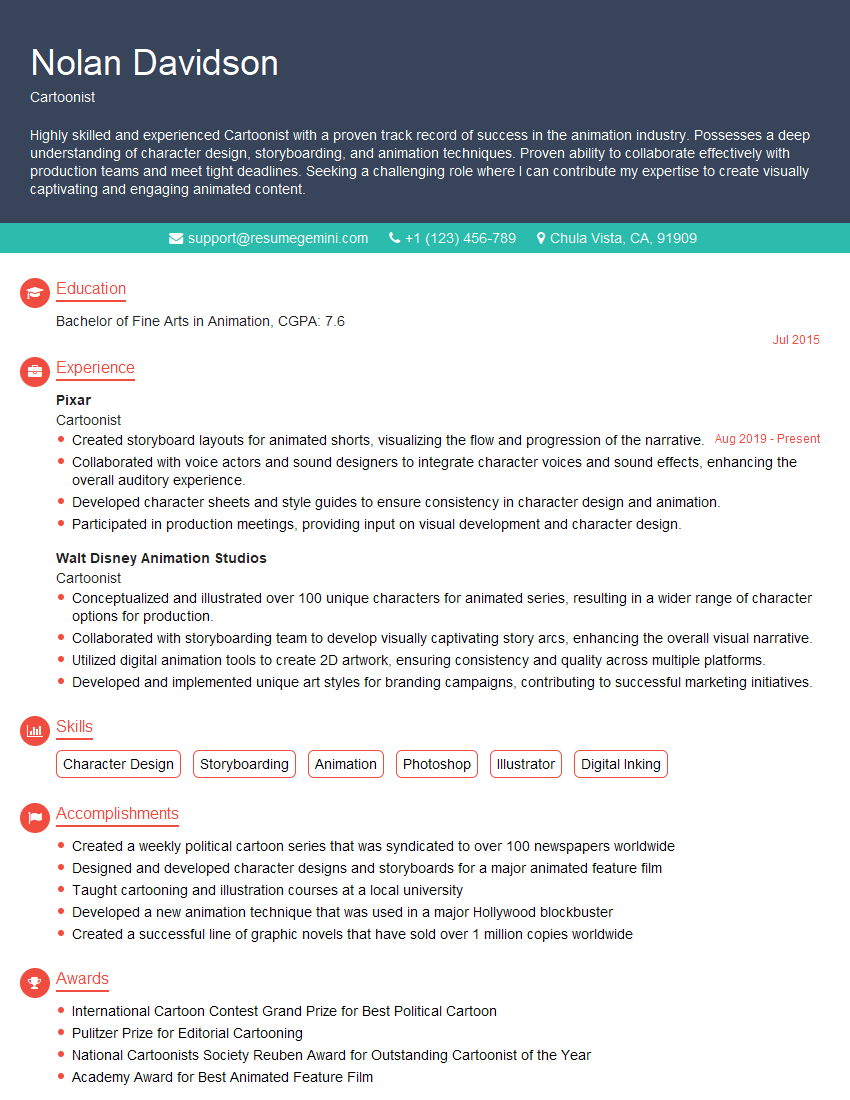
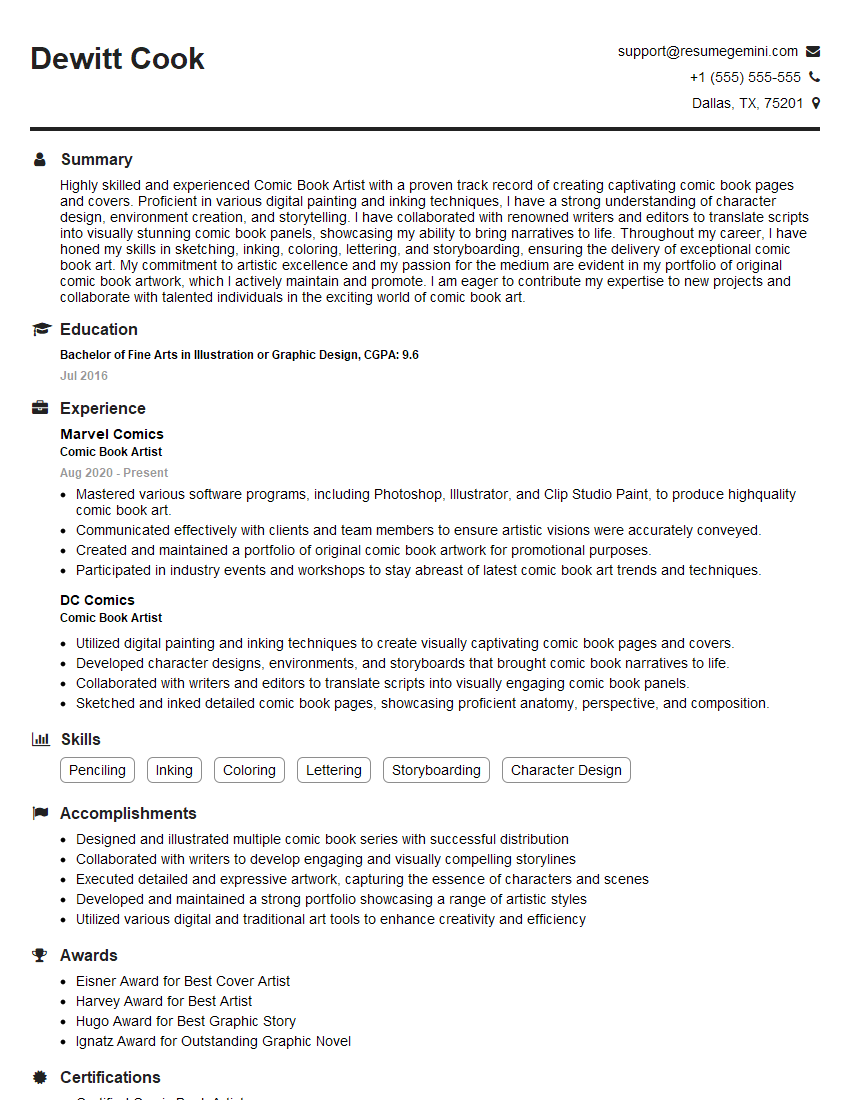
Mastering ink drawing opens doors to exciting career opportunities in illustration, graphic design, and fine arts. To maximize your chances, crafting a strong, ATS-friendly resume is crucial. ResumeGemini is a trusted resource to help you build a professional resume that highlights your skills and experience effectively. We offer examples of resumes tailored specifically to the ink drawing field to help you get started. Invest the time in building a compelling resume – it’s your first impression!


Explore more articles
Users Rating of Our Blogs
Share Your Experience
We value your feedback! Please rate our content and share your thoughts (optional).
What Readers Say About Our Blog
Really detailed insights and content, thank you for writing this detailed article.
IT gave me an insight and words to use and be able to think of examples