Every successful interview starts with knowing what to expect. In this blog, we’ll take you through the top Insect and Rodent Inspection interview questions, breaking them down with expert tips to help you deliver impactful answers. Step into your next interview fully prepared and ready to succeed.
Questions Asked in Insect and Rodent Inspection Interview
Q 1. Describe your experience identifying common household pests.
Identifying household pests involves a keen eye for detail and a thorough understanding of their behaviors and physical characteristics. My experience encompasses years of identifying a wide range of common pests, including rodents (mice, rats), insects (cockroaches, ants, termites, bed bugs), and other arthropods. For example, I can distinguish between different ant species based on their size, color, and the shape of their bodies. Similarly, identifying rodent droppings requires understanding the size and shape differences between mouse and rat droppings, which is crucial in determining the severity and extent of an infestation. I also recognize the subtle signs of pest activity, such as gnaw marks, insect frass (droppings), and unusual noises. This detailed observation allows me to quickly pinpoint the specific pest and recommend the most effective control strategy.
For instance, I once encountered a situation where a homeowner complained of ‘bugs’ in their kitchen. After a thorough inspection, I identified the pests as German cockroaches based on their size, characteristic parallel stripes on their pronotum, and preferred locations, like near water sources. This precise identification enabled me to develop a targeted treatment plan, ensuring the most effective and efficient pest control measures.
Q 2. Explain the difference between preventative and reactive pest control.
Preventative and reactive pest control represent two fundamentally different approaches. Preventative pest control focuses on creating an environment that is inhospitable to pests, thereby minimizing the chances of infestation. This involves measures such as sealing entry points, eliminating food and water sources, and maintaining a clean and clutter-free environment. Think of it as building a strong fortress to deter intruders.
Reactive pest control, on the other hand, is implemented after a pest infestation has occurred. This usually involves using pesticides or other control methods to eliminate the existing pest population and mitigate damage. This is akin to fighting a battle already in progress.
For example, installing weather stripping around doors and windows is a preventative measure, while applying insecticide after a cockroach infestation is a reactive measure. An ideal pest management program incorporates both strategies for optimal results. Prevention reduces the need for reactive measures and helps reduce long-term costs.
Q 3. What are the different types of rodent baits and when would you use each?
Several types of rodent baits are available, each with its own advantages and disadvantages. The choice depends on the specific rodent species, the location of the infestation, and safety concerns. Common types include:
- Anticoagulant rodenticides: These work by interfering with blood clotting, leading to internal bleeding. They are effective against both mice and rats but require multiple feedings to be lethal. They are generally considered safer than other types of rodenticides because they are more difficult for non-target species to consume in a lethal dose.
- Single-dose rodenticides: These are highly toxic and cause rapid death. They are generally used in situations where a quick and decisive elimination is required but demand more careful application and monitoring to prevent accidental poisoning of pets or children.
- Multi-feed rodenticides: These require the rodent to consume multiple doses over time, making them more effective over a longer duration. They are considered less dangerous to non-target species.
- Rodent bait stations: These are enclosed containers designed to hold bait, which protect the bait from non-target animals and children.
The choice of bait depends on the specific situation. For instance, in a home with children or pets, anticoagulant rodenticides within bait stations are preferred due to their lower toxicity. In a commercial setting with a significant rat infestation, single-dose rodenticides might be necessary. Always follow the manufacturer’s instructions and local regulations when using rodenticides.
Q 4. How do you identify the source of a rodent infestation?
Identifying the source of a rodent infestation involves a systematic approach combining observation and investigation. It’s crucial to follow a step-by-step process:
- Locate rodent activity: Look for droppings, gnaw marks, tracks, rub marks, and nests. These provide valuable clues about the rodent’s pathways and habitat.
- Inspect potential entry points: Check for gaps around pipes, cracks in walls and foundations, openings around doors and windows, and damaged screens. Rodents can squeeze through surprisingly small spaces.
- Identify food and water sources: Rodents are attracted to food and water. Inspect areas where food is stored or prepared, and identify any leaks or sources of standing water. Remove any potential attractants.
- Assess structural issues: Check for areas where rodents could easily build nests, such as insulation, wall voids, and attics.
- Follow the trails: Observe rodent droppings, tracks, and gnaw marks to trace the rodents’ path back to their source.
For instance, if I find rodent droppings concentrated near a wall, I’ll carefully inspect the wall for cracks or holes. I might use an endoscope to check inside walls for nests. Once I identify the entry point and nesting location, I can implement targeted control measures to eliminate the infestation effectively.
Q 5. What are the common signs of a termite infestation?
Termites cause significant structural damage, and early detection is crucial. Common signs of a termite infestation include:
- Mud tubes: These are shelter tubes constructed by termites, often found on the exterior walls, foundations, or in crawl spaces. They look like small, mud-like tunnels.
- Damaged wood: Wood damaged by termites will often sound hollow when tapped. You may also notice wood that is crumbling or peeling.
- Swarmers: These are winged reproductive termites that emerge during swarming season. Finding these indicates a mature colony.
- Droppings (frass): Termite droppings resemble small pellets or sawdust.
- Sagging floors or ceilings: This indicates extensive damage to the underlying wood structure.
It’s important to note that some signs, like damaged wood, can be subtle. A professional inspection is often necessary to accurately assess the extent of the infestation.
Q 6. Explain your experience with Integrated Pest Management (IPM).
Integrated Pest Management (IPM) is a holistic approach to pest control that emphasizes prevention and minimizes the use of pesticides. It involves a systematic process that prioritizes the least-toxic and most environmentally sound methods. My experience with IPM includes developing and implementing management plans that involve multiple strategies. This includes regular inspections, identification of pest pressure, monitoring pest populations, setting action thresholds, and utilizing a range of control methods.
For example, instead of immediately spraying insecticides for an ant infestation, an IPM approach might first focus on eliminating food and water sources, sealing entry points, and then using targeted bait stations only if necessary. This approach ensures long-term pest control while minimizing environmental impact and potential health hazards associated with pesticides.
IPM is not simply about avoiding pesticides; it’s about strategically using all available tools to achieve effective and sustainable pest control. This philosophy consistently guides my approach, ensuring both efficacy and safety.
Q 7. Describe your knowledge of various insecticides and rodenticides.
My knowledge of insecticides and rodenticides encompasses a broad range of products, their mechanisms of action, and their appropriate applications. I am familiar with both traditional and newer, more environmentally friendly options. Insecticides can be classified into several categories, such as:
- Pyrethroids: These are synthetic insecticides that affect the nervous system of insects. They are commonly used in household sprays and pest control products.
- Neonicotinoids: These are systemic insecticides that are absorbed by plants and provide longer-lasting protection. They are known to have broader environmental impacts and their use is often regulated.
- Organophosphates: These are highly toxic insecticides and are usually employed in professional settings for controlling specific pests like termites.
Rodenticides, as previously discussed, include anticoagulants and single-dose poisons. The selection of a specific product depends on many factors, including the target pest, the environment, and potential risks to non-target organisms. It’s critical to understand the safety precautions and application guidelines for each product and to ensure proper disposal.
My expertise includes not only the knowledge of various products but also the understanding of their limitations and potential risks, ensuring responsible and effective use.
Q 8. How do you safely handle and dispose of pesticides?
Safe pesticide handling and disposal are paramount for both environmental protection and personal safety. It begins with selecting the right pesticide for the job, always reading and following the label instructions meticulously. This includes understanding the specific safety precautions, application methods, and Personal Protective Equipment (PPE) required. PPE might include gloves, eye protection, respirators, and protective clothing, depending on the pesticide’s toxicity.
Storage is crucial. Pesticides should be stored in their original containers, in a locked, cool, dry place, away from food, water sources, and children. Never mix pesticides in food or drink containers. Disposal follows specific guidelines, often dictated by local regulations. Never pour pesticides down the drain or onto the ground. Instead, contact your local waste management authority or a licensed pesticide disposal facility for proper handling of unused or expired pesticides. They will provide guidance on how to package and dispose of the product safely. Remember, improper disposal can contaminate soil and water, harming both the environment and human health.
For example, I once had to dispose of a small amount of leftover insecticide. Instead of taking any chances, I contacted our local hazardous waste disposal center. They provided detailed instructions, including the type of container to use, and scheduled a pick-up at no cost.
Q 9. What safety precautions do you take when inspecting for pests?
Safety is my top priority during pest inspections. Before entering a site, I always assess potential hazards – from structural instability to the presence of aggressive animals. I always wear appropriate PPE, including closed-toe shoes, long pants, and gloves. If dealing with potential allergens or irritants (like rodent droppings or certain insect nests), I will use a respirator. I work methodically, carefully examining areas where pests are likely to be found, such as cracks, crevices, and areas of food accumulation. I take extra care when inspecting areas that may contain hazardous materials or pose a physical risk.
For example, in a recent inspection of an old building, I encountered loose floorboards and crumbling plaster. I took the time to ensure my footing was stable, carefully probing areas before stepping. I also made sure I was up to date on any tetanus vaccinations.
Proper documentation of the inspection is important too. I record all safety concerns and observations in detail so appropriate measures can be implemented for remediation. This ensures both my safety and the safety of others involved in the subsequent pest control procedures.
Q 10. How do you determine the best course of action for a specific pest problem?
Determining the best course of action involves a thorough investigation. This starts with a careful inspection to identify the pest species, the extent of the infestation, and the areas affected. I then assess the client’s priorities and concerns. Some clients prioritize quick eradication, while others focus on environmentally friendly solutions. Understanding these preferences is essential for creating a tailored plan.
Once the assessment is complete, I develop a treatment plan. This might involve integrated pest management (IPM) strategies, which prioritize non-chemical methods such as sanitation, exclusion, and mechanical traps whenever possible. Chemical control is only employed when necessary and then only with approved pesticides, applied following label directions. The plan always includes monitoring and follow-up inspections to ensure effectiveness and adjust the strategy if needed. For example, for a cockroach infestation, I would start by addressing sanitation issues, sealing entry points, and using bait traps. Only if these measures prove insufficient would I consider using insecticides.
Q 11. Describe your experience with different types of traps.
My experience encompasses a wide range of traps, each suited for specific pests. For rodents, I’ve used snap traps, multi-catch traps, and glue traps. Snap traps are effective but require careful placement to avoid accidental injury to non-target animals. Multi-catch traps allow for larger-scale captures. Glue traps are effective but raise ethical concerns regarding animal welfare, and I often prefer alternative methods. For insects, I’ve used sticky traps for monitoring and catching flying insects, pitfall traps for ground-dwelling insects, and pheromone traps that lure specific species. The selection of the appropriate trap depends heavily on the target pest, the environment, and the overall IPM strategy.
I prefer traps that minimize harm to non-target organisms. For example, I use tamper-resistant bait stations for rodents to avoid accidental poisoning of children or pets. Selecting the right trap is always a balance between effectiveness and ethical considerations.
Q 12. Explain your knowledge of pest control regulations and licensing.
Knowledge of pest control regulations and licensing is non-negotiable. I am fully licensed and insured, adhering to all local, state, and federal regulations concerning pesticide application and handling. This includes understanding the proper use of restricted-use pesticides, reporting requirements, and worker safety protocols. Staying updated on changes in regulations through continuing education is crucial. The specific regulations vary from location to location, but the core principles of safety and responsible pest control remain constant.
For example, I’m familiar with the requirements for maintaining my license and ensuring my equipment is properly calibrated and maintained. These licenses are only granted after thorough background checks and competency testing, showcasing my commitment to responsible pest management practices.
Q 13. How do you communicate pest control findings to clients?
Clear and concise communication is essential. After an inspection, I prepare a detailed report for my clients. This report outlines my findings, including the type and extent of the infestation, the methods used for assessment, and the recommended course of action. I use plain language, avoiding technical jargon whenever possible. I also explain the reasoning behind my recommendations, emphasizing the rationale for selecting particular methods. For example, I might explain why a certain pesticide is preferred over another, or why sanitation is crucial in rodent control.
I always encourage clients to ask questions. Following up after treatment to address any concerns or provide additional support builds trust and ensures a positive client experience. I’m available for phone calls and email, maintaining transparent communication throughout the process.
Q 14. How do you handle customer complaints related to pest control services?
Handling customer complaints is a crucial aspect of providing professional pest control services. I approach each complaint with empathy and professionalism, listening carefully to the client’s concerns without interruption. I ask clarifying questions to fully understand the issue. Once I have a clear picture of the complaint, I investigate the situation thoroughly, verifying the client’s claims against my records and site observations.
Depending on the nature of the complaint, my response might involve re-treating the area, adjusting the treatment plan, or offering a partial refund. I maintain open communication with the client throughout the process, keeping them informed of my actions and timelines. My goal is always to resolve the issue to the client’s satisfaction, while also maintaining professional integrity. Documentation of the complaint and its resolution is crucial for both legal and professional reasons.
Q 15. What are some effective methods for preventing rodent entry into buildings?
Preventing rodent entry into buildings requires a multi-pronged approach focusing on eliminating entry points and making the environment less attractive. Think of it like fortress security – you need to secure all potential weaknesses.
Seal all openings: Rodents can squeeze through incredibly small spaces. Inspect the exterior carefully for gaps around pipes, vents, cracks in the foundation, and openings around utility lines. Seal these with steel wool (rodents can’t chew through it), caulk, or expanding foam.
Maintain landscaping: Keep vegetation trimmed back from the building’s exterior. Overgrown shrubs and tall grass provide cover and pathways for rodents to approach the structure unseen. Store firewood away from the building.
Secure trash and food storage: Rodents are attracted to food sources. Use tightly sealed trash cans, store food in airtight containers, and clean up spills immediately. This minimizes their incentive to enter.
Regular inspections: Routine inspections, both inside and outside, are crucial. Early detection prevents infestations from becoming major problems. Look for droppings, gnaw marks, tracks, and burrows.
For example, during an inspection of a restaurant, I discovered a significant gap under the loading dock door. Sealing this gap with steel wool and expanding foam prevented further rodent entry. Similarly, working with a supermarket, we emphasized proper trash disposal techniques and regular cleaning to minimize food attractants.
Career Expert Tips:
- Ace those interviews! Prepare effectively by reviewing the Top 50 Most Common Interview Questions on ResumeGemini.
- Navigate your job search with confidence! Explore a wide range of Career Tips on ResumeGemini. Learn about common challenges and recommendations to overcome them.
- Craft the perfect resume! Master the Art of Resume Writing with ResumeGemini’s guide. Showcase your unique qualifications and achievements effectively.
- Don’t miss out on holiday savings! Build your dream resume with ResumeGemini’s ATS optimized templates.
Q 16. Describe your experience with inspecting commercial properties for pests.
My experience inspecting commercial properties for pests spans over a decade, encompassing various types of businesses, from restaurants and warehouses to office buildings and retail stores. Each environment presents unique challenges. For example, restaurants require a meticulous focus on food handling areas, while warehouses demand a thorough assessment of stored goods and potential harborage areas.
My inspections follow a standardized protocol: I begin with a thorough visual inspection, identifying potential pest entry points, signs of infestation (droppings, gnaw marks, damaged goods), and assessing the overall cleanliness. I use various tools like UV lights to detect rodent urine and insect activity in hard-to-see areas. This initial assessment guides my recommendations for preventative and corrective measures. I meticulously document my findings with photographs and detailed reports, which are essential for client communication and future reference. I also address the specific pest pressures faced by each business, like flour beetles in a bakery versus rodents in a warehouse.
Q 17. How do you assess the severity of a pest infestation?
Assessing the severity of a pest infestation involves multiple factors, going beyond simply observing the presence of pests. Think of it as a detective investigation.
Pest population size: A few insects or rodent droppings indicate a minor infestation, whereas widespread presence suggests a severe problem.
Extent of damage: Minor gnaw marks might be indicative of a recent infestation, while extensive damage to structures or stored goods suggests a long-standing and severe problem.
Pest species: Some pests pose a greater health risk than others (e.g., rodents carrying diseases). The species identification directly influences the severity assessment.
Client concerns: The client’s level of distress and the impact of the infestation on their business operations are vital considerations.
For instance, finding a few cockroach droppings in a restaurant’s kitchen is less severe than discovering a large number of roaches and evidence of extensive damage. Similarly, a few rodents in a warehouse are less worrisome than a large rodent population contaminating stored food.
Q 18. What are the legal requirements for handling hazardous materials in pest control?
Handling hazardous materials in pest control is strictly regulated to ensure worker safety and environmental protection. This involves adhering to both federal and local regulations, which often include:
Proper licensing and certification: Pest control technicians must possess the appropriate licenses and certifications to handle pesticides.
Safe storage and handling: Pesticides must be stored securely in labeled containers, away from food and water sources. Proper personal protective equipment (PPE) such as gloves, masks, and eye protection must be worn when handling these materials.
Disposal of hazardous waste: Used pesticides and contaminated materials must be disposed of according to local regulations, often requiring special disposal facilities.
Safety Data Sheets (SDS): Technicians must be thoroughly familiar with the SDS for each pesticide used, understanding its potential hazards and safe handling procedures. This includes understanding the specific personal protective equipment required for each pesticide.
Failure to comply with these regulations can result in significant fines and legal repercussions. As a seasoned professional, safety is my top priority.
Q 19. Explain your experience using different pest control equipment.
My experience encompasses a wide array of pest control equipment, from simple tools to sophisticated technology. I am proficient in using:
Traps: Snap traps, glue traps, and electronic traps for rodents and insects, each suited to different situations and target pests.
Spray equipment: Various types of sprayers for applying insecticides and rodenticides, including backpack sprayers, hand-held sprayers, and aerosol cans. Proper calibration is vital for effective and efficient application.
Monitoring devices: Sticky traps and monitoring stations to track pest activity and assess the effectiveness of control measures. This allows for data-driven adjustments to the treatment strategy.
Other equipment: I’m familiar with foggers, dusters, and bait stations, each chosen based on the specific situation and target pest.
Understanding the strengths and weaknesses of each piece of equipment is key to successful pest management. For example, I might use glue traps for monitoring cockroach activity and then switch to a bait station for a more targeted approach if a significant infestation is detected. My experience includes using equipment that conforms to the latest industry standards and best practices.
Q 20. Describe your proficiency in identifying various insect species.
Identifying insect species is a fundamental aspect of my work. Accurate identification is crucial for selecting the appropriate control methods and understanding the potential risks associated with the infestation. My proficiency is based on years of experience, combined with extensive study of entomological guides and ongoing professional development. I can reliably identify common household pests such as cockroaches (German, American, Oriental), ants (carpenter ants, odorous house ants), termites, bed bugs, and many others. I also have familiarity with less common insect species encountered in particular environmental contexts.
I use a combination of visual inspection, considering characteristics like size, shape, color, and behavior, and sometimes using magnifying glasses or microscopes for closer examination of distinguishing features. I am also capable of identifying insect stages (egg, larva, pupa, adult), which is critical for effective treatment.
Q 21. What are the signs of a bed bug infestation?
Bed bug infestations are notoriously difficult to detect in their early stages, but several signs can indicate their presence:
Bites: These typically appear as small, red, itchy welts in clusters or lines. However, not everyone reacts to bed bug bites, so the absence of bites doesn’t rule out an infestation.
Bed bugs themselves: Adults are about the size of an apple seed and reddish-brown. Nymphs (immature bed bugs) are smaller and lighter in color. They can be found in bed linens, mattresses, box springs, and surrounding furniture.
Fecal spots: These appear as tiny, dark spots on mattresses, bed frames, and walls.
Shedding skins: As bed bugs grow, they shed their skins. These translucent casings are another indication of their presence.
A musty odor: In large infestations, a distinctive, musty odor may be noticeable.
If you suspect a bed bug infestation, it’s essential to seek professional help immediately. Early detection significantly increases the chance of successful eradication.
Q 22. How do you treat a bed bug infestation effectively?
Effective bed bug treatment requires a multi-pronged approach, combining thorough inspection with targeted interventions. It’s not a one-size-fits-all solution; each infestation is unique.
- Inspection: A meticulous search is crucial to identify all harborages (places where bed bugs hide). This includes mattresses, box springs, bed frames, baseboards, electrical outlets, and even cracks in walls. We use specialized tools like mattress encasements and flashlights to ensure no hiding places are missed.
- Treatment: The most effective treatments involve a combination of methods. This can include heat treatment (raising the temperature to lethal levels for bed bugs), chemical treatments (using EPA-registered insecticides targeted for bed bugs), and steam cleaning. We carefully select the best approach based on the severity and location of the infestation, considering the environmental impact and client needs.
- Prevention: Post-treatment, preventative measures are vital to avoid re-infestation. This might involve installing mattress encasements, regularly vacuuming, and reducing clutter to minimize potential hiding places. We’ll provide the client with detailed instructions to maintain a bed bug-free environment.
For example, I once treated a severe infestation in a multi-unit apartment building. We started with heat treatment in the infested units, followed by targeted insecticide application in key areas. We then worked with the building management to implement preventative measures for all units to prevent spread.
Q 23. What is your experience with exclusion techniques for pest control?
Exclusion techniques are fundamental in pest control. They focus on preventing pests from entering a structure in the first place, rather than just eliminating those already inside. Think of it as building a strong fortress to keep the enemy out.
- Sealing entry points: This is a crucial step, involving sealing cracks and gaps in walls, foundations, windows, and doors. We use caulk, expanding foam, and weather stripping to create a solid barrier against pests.
- Installing screens: Screens on windows and vents prevent insects from entering. We ensure these screens are properly fitted and maintained.
- Addressing moisture problems: Pests are often attracted to moisture. We assess and address leaks or standing water, eliminating a key attractant.
- Proper sanitation: Maintaining a clean environment greatly reduces the attractiveness of a space to many pests.
For instance, during a rodent infestation in a commercial warehouse, we implemented exclusion techniques by sealing all holes in the exterior walls and foundation, installing reinforced screens on vents, and removing any debris that provided harborage for rodents. This, combined with trapping, effectively controlled the population.
Q 24. Describe your knowledge of different pest life cycles.
Understanding pest life cycles is essential for effective control. Knowing the stages of development—egg, larva, pupa (in some insects), and adult—helps us target vulnerable life stages and design control strategies.
- Rodents: Rodents reproduce rapidly. Understanding their breeding habits, gestation periods, and litter sizes allows us to predict population growth and adapt our control strategies accordingly. For example, we may adjust trapping frequency based on the observed rodent activity and breeding season.
- Insects: Insect life cycles vary greatly. Cockroaches, for example, have an incomplete metamorphosis (egg, nymph, adult), while butterflies undergo complete metamorphosis (egg, larva, pupa, adult). This knowledge helps determine the most effective control methods at each stage. Targeting egg masses, for instance, can significantly reduce future generations.
- Bed bugs: Bed bugs have a relatively long life cycle, which can take several months. Knowing their feeding habits and hiding places is essential for effective treatment. We can target their breeding sites and use monitoring tools to track their activity.
Understanding these cycles allows for a proactive approach. We can anticipate potential problems and implement preventative measures at the appropriate times.
Q 25. How do you maintain accurate records of your pest control work?
Maintaining accurate records is critical for accountability, tracking effectiveness, and ensuring regulatory compliance. We use a combination of digital and physical record-keeping.
- Digital records: We utilize software to record details of each inspection, including date, location, client information, pest identified, treatment applied, and preventative measures recommended. This data is easily searchable and allows for trend analysis.
- Physical records: We also maintain physical copies of inspection reports, treatment records, and client communication for backup and easy access in case of technology failure.
- Photos and videos: Documentation includes photographic and video evidence of pest activity, damage, and treatment application. This provides visual confirmation of the work performed.
This comprehensive record-keeping ensures clear communication with clients and facilitates tracking the effectiveness of our treatments. If a problem reoccurs, we can review our past interventions to refine our strategy.
Q 26. Explain your understanding of the environmental impact of pesticides.
The environmental impact of pesticides is a significant concern. While pesticides are sometimes necessary for effective pest control, it’s crucial to minimize their impact. Our approach prioritizes Integrated Pest Management (IPM).
- IPM principles: IPM emphasizes using pesticides only as a last resort. We start with non-chemical methods like exclusion, sanitation, and monitoring. Only if these fail, do we consider pesticides.
- Targeted pesticides: We select pesticides that are specific to the target pest, minimizing harm to non-target organisms (beneficial insects, wildlife, and humans).
- Reduced pesticide use: We use the minimum amount of pesticide necessary to achieve control. This minimizes environmental exposure and reduces potential health risks.
- Proper disposal: We strictly adhere to safe pesticide disposal protocols to prevent contamination of soil and water resources.
For example, in treating a termite infestation, we may first use a baiting system, a more targeted and environmentally friendly approach than a full-scale soil treatment. Only if the baiting proves insufficient will we consider other options. We always prioritize minimizing the ecological footprint of our interventions.
Q 27. What is your experience working with different types of clients (residential, commercial)?
My experience spans both residential and commercial clients, each with its own unique needs and challenges.
- Residential: Residential clients often require more personalized service, focusing on aesthetic concerns and minimizing disruption to their daily lives. Effective communication and understanding their concerns are crucial. For example, a family with young children may require different treatment options compared to a single adult.
- Commercial: Commercial clients often prioritize efficiency and minimizing downtime. This requires strategic planning and timely execution of treatments to avoid disruption to business operations. Compliance with health and safety regulations is also paramount in commercial settings. I have experience working with restaurants, warehouses, and office buildings, adapting my approach to their unique requirements.
Adaptability is key. I tailor my approach to meet the specific demands of each client, ensuring effective pest control without compromising their needs or the environment.
Q 28. Describe a time you had to troubleshoot a complex pest problem.
I once encountered a complex ant infestation in a large office building. Initial treatments seemed ineffective, and the ants kept returning. The problem wasn’t a single species; instead, multiple ant colonies were present, utilizing different pathways.
Troubleshooting Steps:
- Thorough Re-Inspection: We conducted a meticulous re-inspection, using infrared cameras to detect hidden ant trails and identifying multiple entry points.
- Identifying Ant Species: We collected samples to identify the precise ant species, which allowed us to determine their preferred food sources and behaviors.
- Targeted Treatment: We implemented a multi-pronged approach, focusing on eliminating different colonies using targeted baiting systems and applying insecticide only in specific, identified locations. We also addressed moisture problems to reduce their attractants.
- Ongoing Monitoring: We set up regular monitoring systems to track ant activity and make any necessary adjustments to our treatment plan.
Through systematic investigation and targeted interventions, we were eventually able to control the infestation effectively. The case highlighted the importance of careful inspection, thorough species identification, and adaptable strategies in resolving complex pest control issues.
Key Topics to Learn for Insect and Rodent Inspection Interview
- Pest Identification: Learn to accurately identify common insect and rodent species, understanding their behaviors and life cycles. This includes knowing the differences between similar species and recognizing signs of infestation.
- Inspection Techniques: Master various inspection methods, including visual inspections, trapping, and the use of monitoring devices. Practice describing your approach to a systematic inspection, including documentation and reporting.
- Integrated Pest Management (IPM): Understand the principles of IPM and how to apply them in real-world scenarios. This includes preventative measures, non-chemical control methods, and the responsible use of pesticides (if applicable).
- Health and Safety Regulations: Familiarize yourself with relevant health and safety regulations concerning pest control, including the safe handling of pesticides and personal protective equipment (PPE).
- Reporting and Documentation: Practice creating clear and concise inspection reports, including photographic evidence and recommendations for remediation. Understand the importance of accurate record-keeping.
- Problem-Solving and Critical Thinking: Be prepared to discuss how you approach problem-solving in pest control situations. This includes analyzing infestations, determining root causes, and developing effective treatment plans.
- Legislation and Compliance: Understand relevant local, state, and federal regulations pertaining to pest control and handling of hazardous materials.
- Client Communication: Practice explaining complex technical information clearly and concisely to clients with varying levels of understanding. Role-playing scenarios can be particularly helpful.
Next Steps
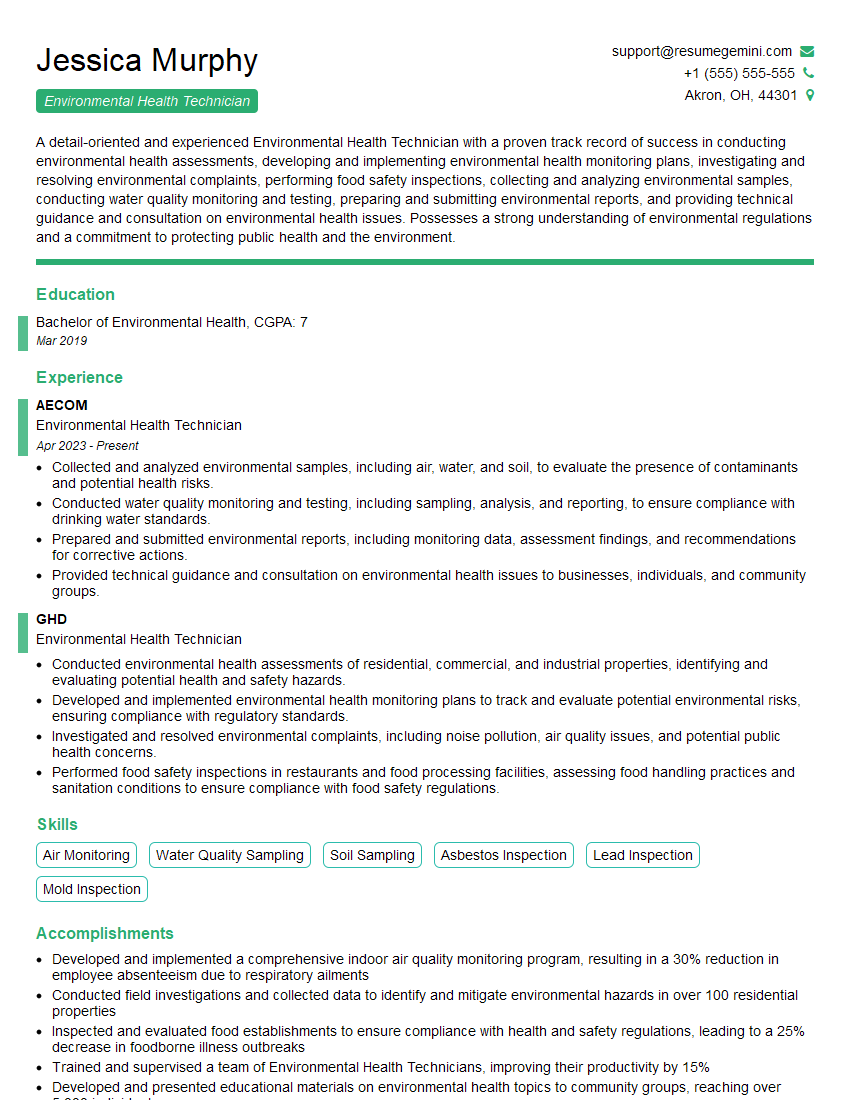
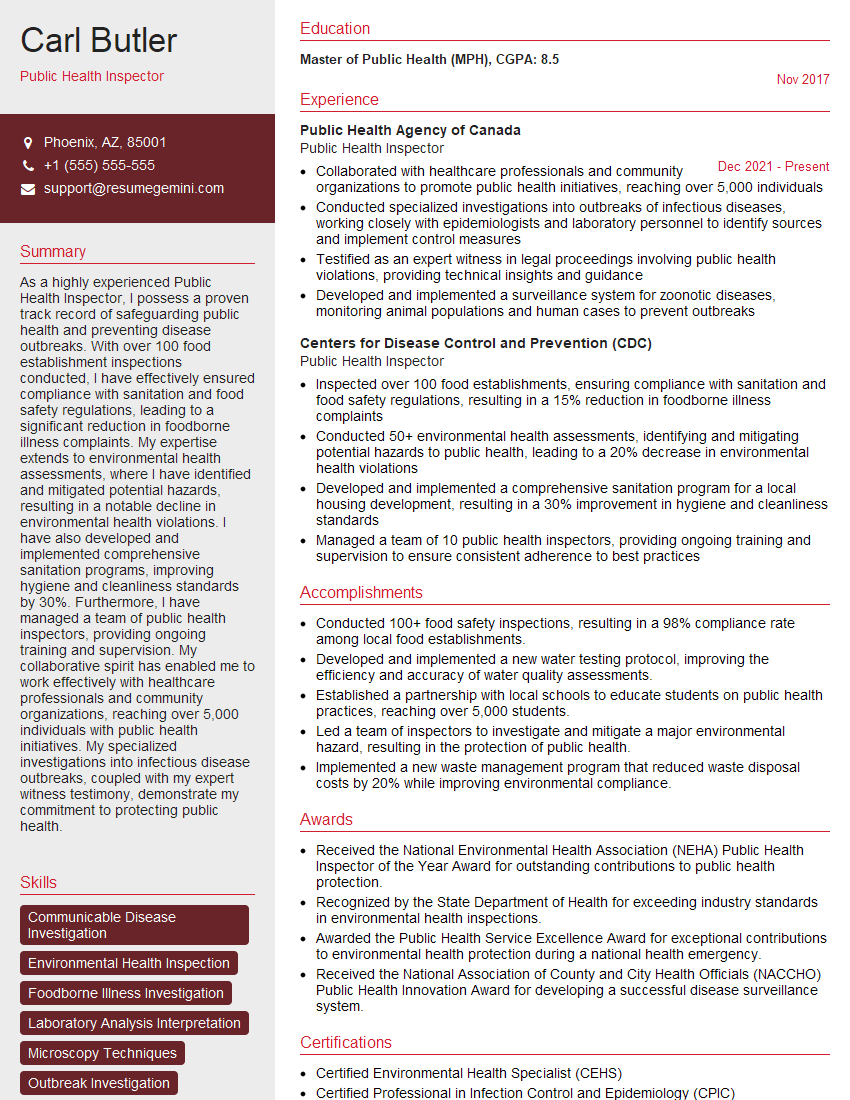
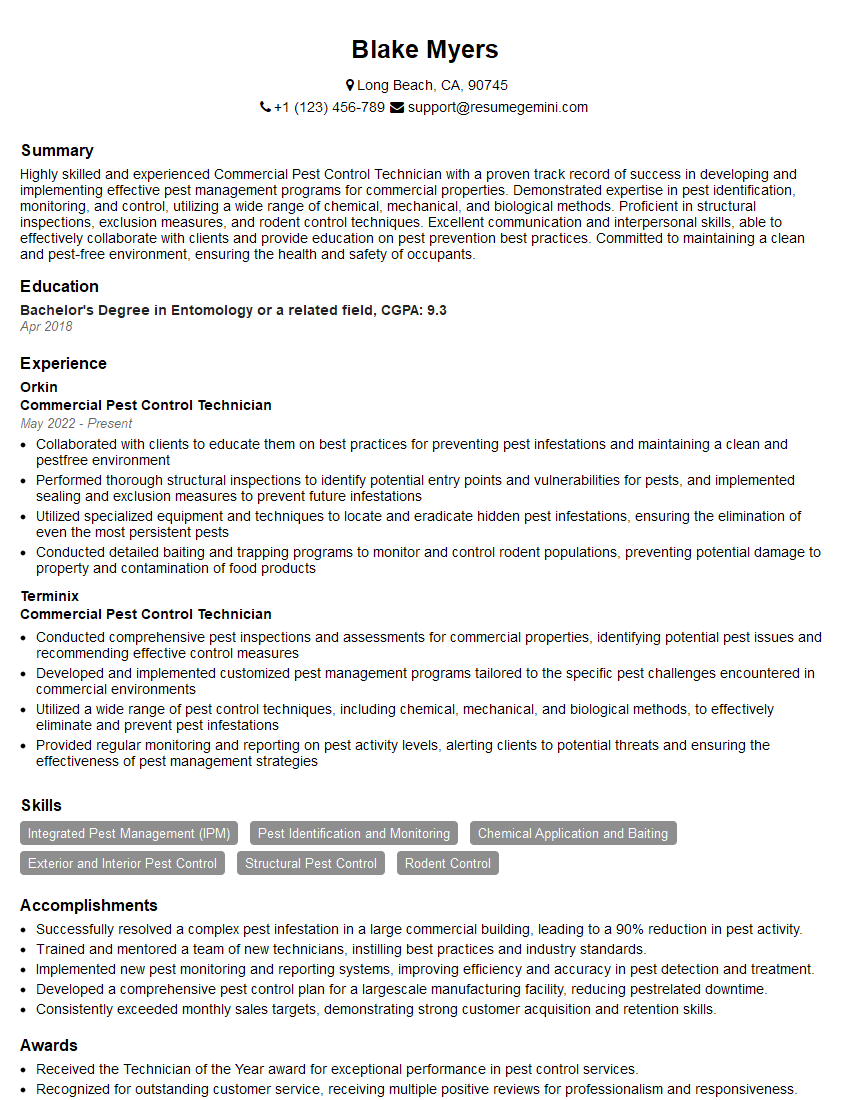
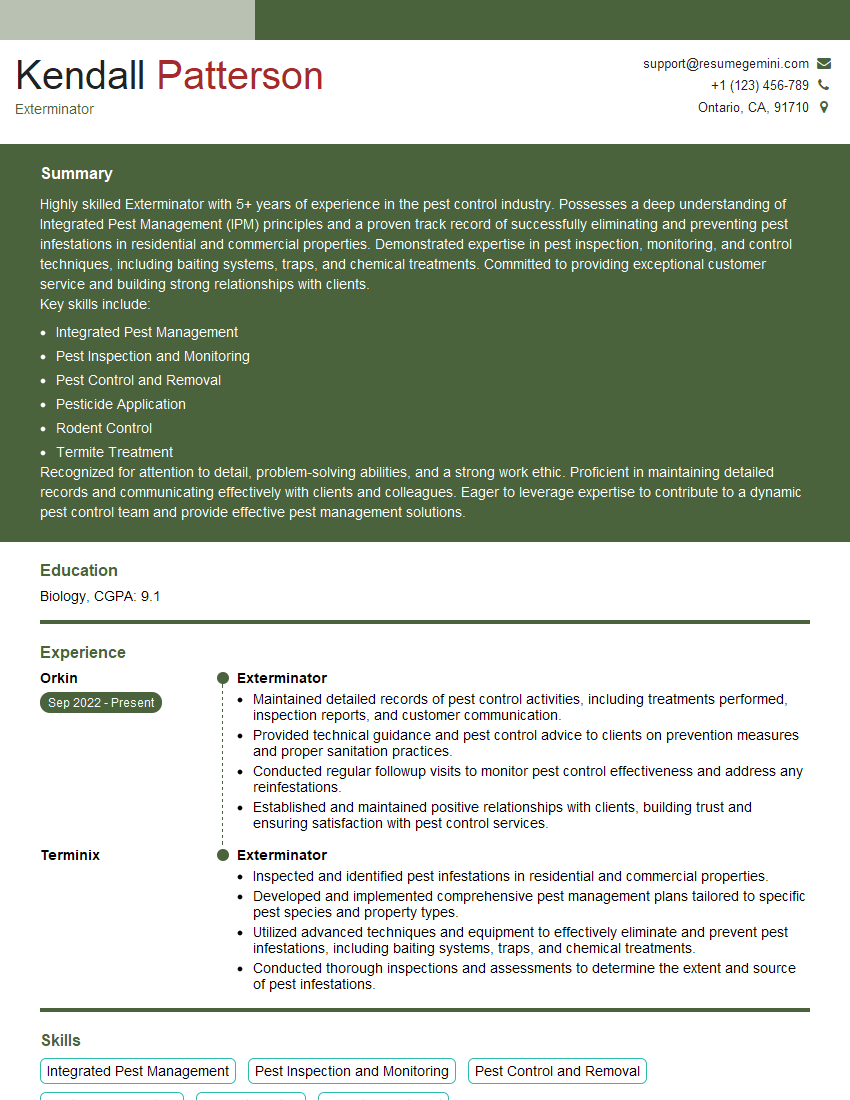
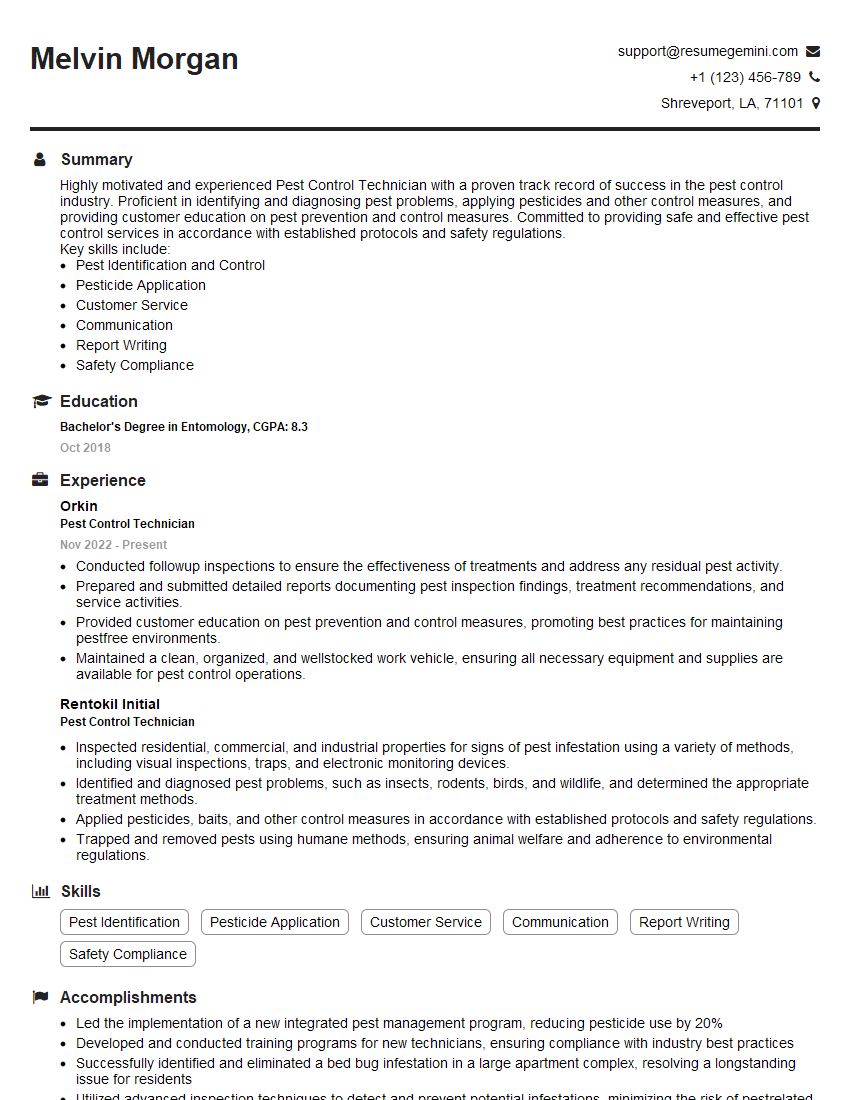
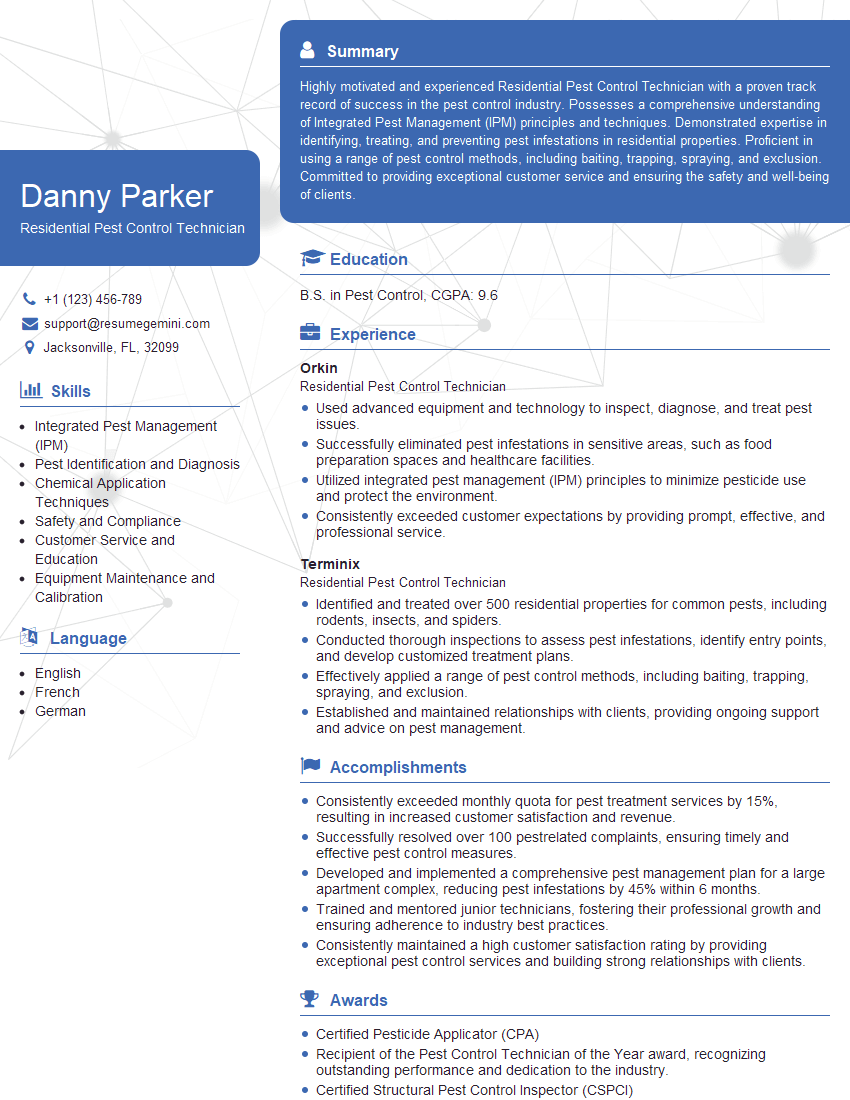
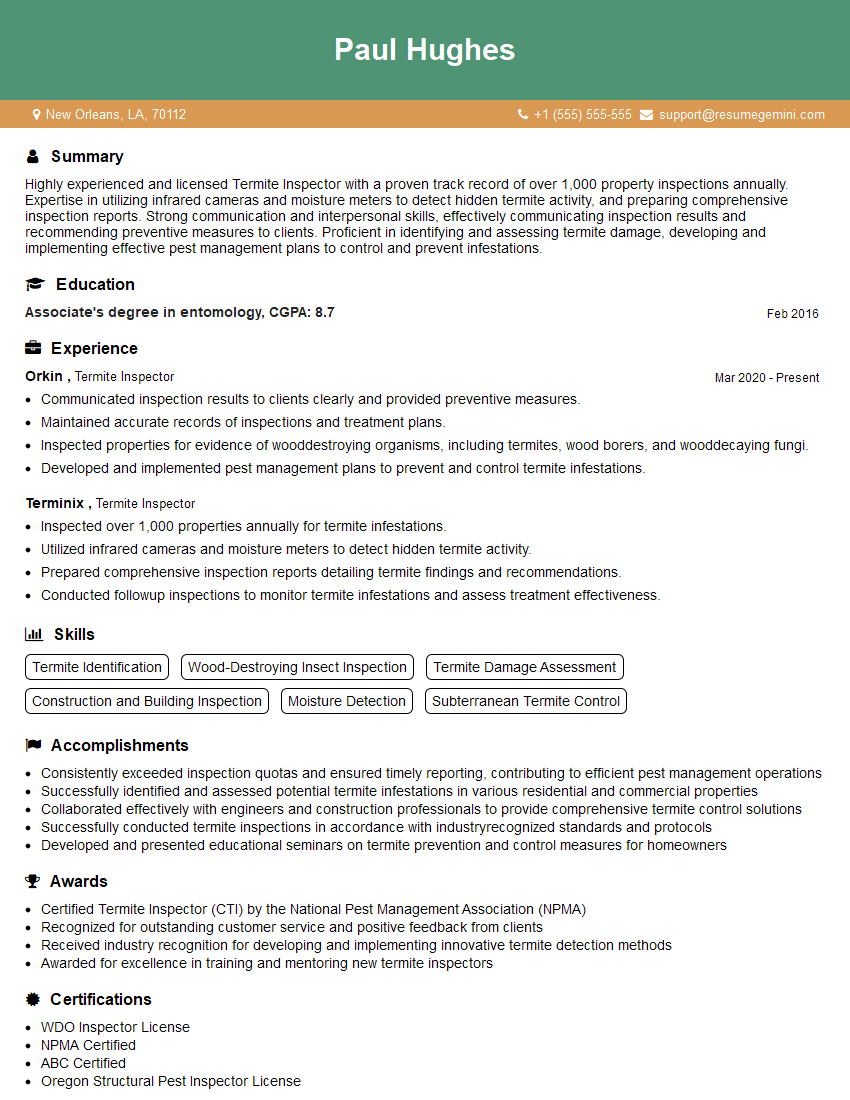
Mastering Insect and Rodent Inspection opens doors to a rewarding career with diverse opportunities for growth, from field technician to management roles. A strong resume is crucial for showcasing your skills and experience to potential employers. Creating an ATS-friendly resume significantly increases your chances of getting your application noticed. We highly recommend using ResumeGemini to build a professional and impactful resume. ResumeGemini offers a streamlined process and provides examples of resumes tailored specifically to Insect and Rodent Inspection roles, helping you present yourself effectively to recruiters.
Explore more articles
Users Rating of Our Blogs
Share Your Experience
We value your feedback! Please rate our content and share your thoughts (optional).
What Readers Say About Our Blog
Really detailed insights and content, thank you for writing this detailed article.
IT gave me an insight and words to use and be able to think of examples