Interviews are more than just a Q&A session—they’re a chance to prove your worth. This blog dives into essential Interior Painting interview questions and expert tips to help you align your answers with what hiring managers are looking for. Start preparing to shine!
Questions Asked in Interior Painting Interview
Q 1. What types of paint finishes are you familiar with (e.g., matte, satin, gloss)?
Paint finishes significantly impact the final look and feel of a painted surface. They range from low-sheen to high-gloss, each with its own advantages and disadvantages. Here are some common types:
- Matte/Flat: This finish has virtually no sheen and is excellent at hiding imperfections in the wall. It’s popular for bedrooms and living rooms because it provides a soft, elegant look. However, it’s more difficult to clean.
- Eggshell: Slightly more durable than matte, eggshell has a subtle sheen and is more scrubbable, making it a good choice for high-traffic areas like hallways or kitchens.
- Satin: With a soft sheen and good washability, satin is a popular choice for bathrooms and kitchens due to its durability and ease of cleaning. It also hides imperfections relatively well.
- Semi-Gloss: This finish possesses a noticeable sheen and is extremely durable and washable, ideal for trim, doors, and areas prone to frequent cleaning, such as window frames.
- Gloss: The highest sheen level, gloss is very durable and easy to clean. It’s frequently used for trim and cabinetry but can highlight surface imperfections.
The choice of finish depends entirely on the room’s function, the desired aesthetic, and the level of durability needed.
Q 2. Describe your experience with surface preparation techniques (e.g., sanding, priming, caulking).
Surface preparation is crucial for a professional-looking and long-lasting paint job. It’s the foundation of any successful painting project. My experience encompasses several key techniques:
- Sanding: I use various grits of sandpaper, starting with coarser grits to remove imperfections and smooth rough surfaces, followed by finer grits to achieve a flawless finish. This helps ensure proper adhesion of the primer and paint.
- Priming: Priming is essential, particularly on bare wood, drywall, or previously painted surfaces with significant imperfections or stains. Primer acts as a bonding agent, creating an even surface for the topcoat and promoting better adhesion and color consistency. I select primers based on the surface type and the paint finish.
- Caulking: Caulking fills gaps and cracks in walls, trim, and around windows and doors, creating a smooth, sealed surface. This prevents drafts, moisture penetration, and improves the overall aesthetic.
For instance, I recently worked on a project where the walls had several small holes and cracks. I carefully filled these with spackle, sanded them smooth, primed the repaired areas, and then proceeded with the topcoat. The result was a seamless and professionally finished wall.
Q 3. How do you determine the appropriate amount of paint needed for a project?
Accurately estimating paint needs avoids costly over-purchasing or frustrating shortages. I use a combination of methods:
- Measuring the surface area: I carefully measure the length and height of all walls and ceilings to be painted. I subtract the area of windows and doors. For complex shapes, I break down the surface into smaller, manageable sections.
- Considering the number of coats: Most projects require two coats for optimal coverage and color depth. This is factored into the calculation.
- Consulting paint can labels: Each paint can indicates its approximate coverage area per gallon or liter. I use this information as a guideline and add an extra 10-15% to account for variations and waste.
For example, if a wall is 10 feet high and 20 feet long, that’s 200 square feet. If I need two coats and a gallon covers 350 square feet, I’d likely need a little over half a gallon. Always round up to ensure you have enough.
Q 4. Explain your process for color matching.
Color matching is a critical aspect of interior painting, aiming to achieve the client’s desired shade accurately. My approach involves:
- Using a color matching system: I typically use a professional spectrophotometer to accurately scan the color sample provided by the client. This ensures precise color reproduction.
- Matching from paint chips or swatches: If a client provides a paint chip or swatch, I carefully compare it with available paint options in the store. I may need to make minor adjustments to achieve a perfect match.
- Testing a small area: Before committing to the entire project, I always recommend testing the chosen color on an inconspicuous area to evaluate its appearance in the room’s lighting and against existing colors.
On a recent job, a client wanted a very specific shade of green. Using the spectrophotometer, I was able to achieve a perfect match. Testing it on a small portion of the wall first validated our choice before committing to the whole room.
Q 5. What safety precautions do you take when working with paint and other materials?
Safety is paramount. When working with paint and other materials, I always adhere to the following precautions:
- Ventilation: I ensure adequate ventilation by opening windows and using fans, especially when working with oil-based paints or strong solvents. I may use respirators in poorly ventilated areas.
- Personal Protective Equipment (PPE): I consistently wear safety glasses, gloves, and a respirator to protect myself from paint splashes, fumes, and dust.
- Proper storage: Paint and solvents are stored securely in a well-ventilated area away from ignition sources. Containers are properly labeled.
- Disposal: I follow local regulations for proper disposal of paint and related waste.
- Fire safety: I take precautions to avoid fire hazards, particularly when working with flammable materials.
Safety isn’t just a guideline; it’s a fundamental aspect of my professional practice. Protecting myself and the client’s property is always my top priority.
Q 6. What are your experiences with different types of painting tools (brushes, rollers, sprayers)?
My experience with various painting tools is extensive. The right tool for the job is crucial for efficiency and a quality finish:
- Brushes: I use a variety of brushes, including angled sash brushes for trim work, and various sizes of flat brushes for walls and ceilings. The quality of the brush significantly impacts the paint application and final finish.
- Rollers: Different nap lengths are used depending on the surface texture. A shorter nap roller is ideal for smooth surfaces, while a longer nap is suitable for textured walls. I use high-quality rollers to ensure even paint distribution.
- Sprayers: Airless sprayers are efficient for large areas, but require careful preparation and cleanup. They provide a smooth, even finish, particularly beneficial for large surfaces.
For instance, I use angled brushes for trim to achieve crisp lines and avoid getting paint on adjacent surfaces. The choice of roller and its nap length drastically changes the final finish on different types of wall textures. Sprayers can vastly increase efficiency on large jobs but must be used with precision.
Q 7. Describe your experience with various painting techniques (e.g., rolling, brushing, spraying).
Different painting techniques are employed to achieve various effects and finishes. My expertise includes:
- Rolling: This is a fast and efficient method for painting large areas, especially with walls and ceilings. I use overlapping strokes to ensure even coverage and prevent lap marks.
- Brushing: Precise brushstrokes are essential for trim, detailed work, and achieving specific textural effects. I maintain a wet edge to prevent lap marks.
- Spraying: Airless spraying is effective for large projects and provides a consistent finish. However, thorough preparation and masking are crucial to prevent overspray.
For a recent project with intricate crown molding, I employed meticulous brushing to achieve a smooth, even coat. On the walls, rolling was the most efficient method. Understanding which technique suits the project and the surface ensures a superior finish.
Q 8. How do you handle difficult surfaces such as textured walls or plaster?
Painting textured walls or plaster requires a different approach than smooth surfaces. The key is to use the right tools and techniques to ensure even coverage and prevent brush strokes from being overly prominent.
For heavily textured walls, I typically use a high-quality roller with a thicker nap (the pile of fibers). A thicker nap allows the roller to reach into the crevices of the texture, providing better coverage. I might even use a combination of rolling and brushing, especially in corners and hard-to-reach areas. For plaster, I often begin by applying a primer to seal the surface and improve paint adhesion, preventing peeling or cracking. This is especially crucial with older plaster, which can be quite absorbent. I then carefully apply thin coats of paint, allowing each coat to dry completely before applying the next. Overloading the brush or roller can lead to drips and runs, so patience is crucial. Sometimes, for severely uneven plaster, I may suggest skim-coating with joint compound to achieve a smoother base before painting.
Q 9. How do you manage a painting project timeline and budget?
Managing a painting project’s timeline and budget effectively involves careful planning and communication. Before starting any project, I conduct a thorough site assessment, which includes measuring the area to be painted, identifying the type of surfaces, and determining the number of coats required. This information is then used to create a detailed estimate, factoring in materials, labor, and any potential unforeseen complications.
I provide clients with a clear timeline, outlining each phase of the project from surface preparation to final cleanup. This timeline includes buffer time to account for unexpected delays, ensuring that the project is completed within a reasonable timeframe. Regular communication with the client is essential to keep them informed about the project’s progress and address any concerns. I maintain detailed records of materials used and labor hours to ensure transparency and accuracy in billing. A well-defined budget and timeline allow for smoother project execution and client satisfaction.
Q 10. What is your experience with different types of paint (e.g., latex, oil-based, water-based)?
My experience encompasses various types of paints, each with its own properties and applications. Latex paints are water-based, easy to clean up, and offer good durability for interior walls and ceilings. They’re versatile, come in various sheens, and are my go-to for most projects due to their low odor and quick drying time. Oil-based paints offer superior durability and mildew resistance, making them suitable for high-traffic areas or surfaces exposed to moisture. However, they require mineral spirits for cleanup and have a longer drying time and a stronger odor. Water-based paints, including latex and acrylics, are environmentally friendly and offer a healthier alternative compared to oil-based options. The choice of paint depends heavily on the client’s preferences, budget, and the specific requirements of the room and the surfaces being painted. For instance, I would recommend eggshell or satin sheen latex for walls needing easy cleaning, and semi-gloss latex for trim.
Q 11. How do you ensure a smooth, even finish on walls and ceilings?
Achieving a smooth, even finish is crucial for a professional-looking paint job. It’s a multi-step process that begins with proper surface preparation. This includes repairing any cracks or holes with spackle, sanding smooth, and cleaning the surfaces thoroughly to remove dust and debris. Next, applying a primer is vital, especially on porous surfaces or areas with color differences. The primer provides a uniform base for the paint, improving adhesion and reducing the number of coats needed. I use high-quality brushes and rollers, selecting appropriate nap thicknesses for the surface texture. I apply thin, even coats, using a ‘W’ pattern with the roller to minimize lap marks. For a truly flawless finish, I pay close attention to edges and corners, using an angled brush to get precise lines. Finally, allowing adequate drying time between coats is essential to avoid problems like cracking or peeling. In situations with significant imperfections, I may suggest a light sanding between coats to ensure an even finish before the final coat.
Q 12. What are some common problems encountered during interior painting and how do you solve them?
Common problems during interior painting include lap marks (uneven paint distribution), roller splatter, brush strokes, and peeling paint. Lap marks result from applying too much paint at once or not blending wet edges properly. I prevent this by using a ‘wet-on-wet’ technique, ensuring that each stroke overlaps the previous one slightly. Roller splatter is usually due to using too much paint or having a roller that’s too saturated. A proper technique and paint loading will solve this. Brush strokes can be minimized by using a high-quality brush and applying thin, even coats. Peeling paint is often a sign of poor surface preparation or using the wrong type of paint. Addressing the underlying cause, like moisture issues or improper priming, is critical before repainting. For instance, if peeling is caused by moisture, I’d investigate and address the source of the moisture before repainting or risk future problems.
Q 13. How do you deal with touch-ups and repairs after the initial painting is complete?
Touch-ups are inevitable in most painting projects, whether it’s minor blemishes or damage that occurs after the initial painting. I always use the same paint that was originally applied to ensure color consistency. For small touch-ups, I use a small brush or a touch-up pen. The key is to feather the edges of the touch-up to blend seamlessly with the surrounding paint. For larger areas, I may need to re-paint a section to match the original finish. Before doing any touch-ups, I ensure that the surface is clean and dry. For repairs that are larger and might involve filling holes or cracks, I prepare the surface like I would for the original painting process – using spackle, sanding, and priming before applying the paint.
Q 14. Describe your experience with different types of painting equipment (e.g., ladders, scaffolding).
My experience with painting equipment is extensive, ranging from basic tools to more specialized equipment. I’m proficient in using various types of ladders, including step ladders, extension ladders, and scaffold towers, depending on the height and access requirements of the project. I always prioritize safety when working at heights, ensuring that the ladder is properly positioned and secured before I begin work. I know when to employ scaffolding for larger jobs, ensuring all safety regulations and standards are met. In addition to ladders and scaffolding, I’m adept at using various rollers and brushes, selecting the appropriate sizes and nap lengths for different surfaces. I also utilize tools like paint sprayers for large surfaces, but only after careful masking and preparation to avoid overspray. I’m familiar with safety equipment like harnesses and fall protection systems when using scaffolding and taller ladders, prioritising safety on every project.
Q 15. How do you protect furniture and floors during the painting process?
Protecting furniture and floors is paramount to a successful interior painting project. It’s not just about avoiding damage; it’s about maintaining professionalism and client satisfaction. My approach is multi-layered and begins with a thorough assessment of the space.
Drop cloths: I use heavy-duty canvas drop cloths, not plastic sheeting, which can be slippery. These are laid strategically to cover all furniture and flooring, extending well beyond the painting area to prevent accidental spills.
Furniture covering: Furniture is carefully covered with either moving blankets or plastic sheeting, secured with painter’s tape. Delicate items are wrapped individually in protective material and covered with additional layers.
Baseboard and trim protection: I use painter’s tape (high-quality, low-residue tape is crucial!) to mask baseboards, trim, and any other areas that shouldn’t be painted. This prevents paint splatters and ensures clean lines.
Floor protection: In addition to drop cloths, I may use cardboard or rosin paper in high-traffic areas or where the floor is particularly delicate. This adds an extra layer of protection against heavy objects or accidental spills.
Room preparation: Removing any unnecessary items from the room reduces the work involved in covering and protects these items from damage.
For instance, on a recent job in a Victorian home, we had to protect antique furniture. We used multiple layers of protection – starting with a soft moving blanket, followed by plastic sheeting, and finally securing everything with painter’s tape. The client was thrilled that their valuables were completely protected during the entire process.
Career Expert Tips:
- Ace those interviews! Prepare effectively by reviewing the Top 50 Most Common Interview Questions on ResumeGemini.
- Navigate your job search with confidence! Explore a wide range of Career Tips on ResumeGemini. Learn about common challenges and recommendations to overcome them.
- Craft the perfect resume! Master the Art of Resume Writing with ResumeGemini’s guide. Showcase your unique qualifications and achievements effectively.
- Don’t miss out on holiday savings! Build your dream resume with ResumeGemini’s ATS optimized templates.
Q 16. What is your experience with preparing estimates and proposals for painting jobs?
Estimating and proposing painting jobs requires a careful blend of experience and precision. I begin by performing a thorough site visit to assess the scope of the work, noting the square footage of walls and ceilings, the number of coats needed (depending on the existing wall condition and the desired finish), the type of paint, and any additional labor (like patching, priming, or wallpaper removal).
My estimates detail all materials and labor costs separately, clearly stating any extra charges for specialized work. I provide both a detailed written proposal and a summarized cost breakdown for easy client understanding. I also offer different paint options and their associated costs, allowing clients to choose the best fit for their budget and needs. Finally, I factor in potential contingencies, like unexpected repairs, to prevent unforeseen delays and cost overruns. I’ve found that transparency and clear communication are key to winning client trust and securing contracts.
For example, I recently estimated a job that required repairing damaged drywall before painting. This detail was explicitly included in the proposal, along with an explanation of the repair process and its cost. The client appreciated this level of detail and felt confident in my ability to handle the project effectively.
Q 17. What software or tools do you use for managing painting projects?
I utilize several software and tools to streamline my painting projects. For project management, I rely on CoConstruct which allows me to manage schedules, track progress, communicate with clients, and even generate invoices. For measuring and estimating, I use a combination of laser measuring tools for accurate measurements and spreadsheets for calculating paint quantities and labor costs. I also use digital photography to document the project’s before-and-after stages, which serves as both a progress report for the client and a useful record for future reference. Mobile apps also come in handy for quick communication and scheduling updates.
Q 18. Describe your experience with working in a team.
Teamwork is essential in the painting industry. Large projects often require coordinated effort to finish on time and within budget. My experience has taught me the importance of clear communication, delegation of tasks based on individual skills, and a collaborative approach to problem-solving. I always ensure that each team member understands their responsibilities and that we have a shared understanding of the project goals. I foster a positive and respectful work environment where everyone feels valued and empowered to contribute their best work. We regularly hold briefings to discuss progress, address challenges, and coordinate our efforts. This collaborative approach ensures a high-quality finish and a positive client experience.
For instance, on a recent large-scale commercial project, we had a dedicated team for prep work, another for painting, and a third for cleanup. This division of labor ensured efficiency and a smooth workflow.
Q 19. How do you handle unexpected issues or delays during a project?
Unexpected issues are inevitable in any painting project. My approach centers on proactive planning and responsive problem-solving. When encountering unexpected issues (like discovering water damage behind a wall or finding a mismatch in paint colors), I immediately assess the situation, document it, and then communicate transparently with the client. We discuss the necessary adjustments to the project plan, including potential cost and schedule implications. I’ll then develop a solution collaboratively with the client, ensuring their approval before proceeding. We always prioritize fixing the underlying problem first. For example, if I find mold, I’ll stop work and coordinate with a remediation specialist, rather than risking further damage by continuing painting.
Q 20. How do you maintain a clean and organized work area?
Maintaining a clean and organized work area is not just about aesthetics; it’s about safety and efficiency. Before starting any painting job, I strategically organize the work area, ensuring there are designated spaces for tools, materials, and waste disposal. Drop cloths are used liberally to prevent spills and splatters. At the end of each workday, we clean up thoroughly, removing all debris and disposing of waste materials responsibly. Tools are cleaned and stored properly, and all protective coverings are carefully removed and disposed of in a designated area. Regular cleanup throughout the project minimizes the risk of accidents and ensures a smooth, efficient workflow. We are mindful of dust control to prevent issues for the client’s home or business, and we always leave the workspace clean before the end of each day.
Q 21. What is your experience with different types of wall coverings (e.g., wallpaper, drywall)?
I have extensive experience working with various wall coverings, from drywall to wallpaper. Drywall preparation is critical, involving patching any holes or imperfections, sanding smooth, and priming the surface for optimal paint adhesion. With wallpaper, the process is more involved. It includes removing old wallpaper completely (using appropriate tools and techniques to avoid damaging the wall), preparing the wall surface, and then applying the new wallpaper carefully, ensuring proper alignment and smoothing out any air bubbles. I am proficient in handling different types of wallpaper – vinyl, fabric, textured – and understand the specific preparation and application techniques required for each.
I always assess the condition of the existing wall covering before recommending a course of action. For instance, if existing wallpaper is damaged but still adheres firmly to the wall, I’ll discuss options with the client, such as repainting over it (if feasible) or removing it. Transparency and clear communication regarding different choices, along with their costs and implications are key.
Q 22. How do you manage client communication and expectations?
Managing client communication and expectations is paramount to a successful painting project. I believe in proactive, transparent communication throughout the entire process. This starts with an initial consultation where we thoroughly discuss the project scope, desired aesthetic, timeline, and budget. I take detailed notes, including specific color choices, preferred finishes, and any special requests.
During the project, I provide regular updates, addressing any questions or concerns promptly. For larger projects, I might schedule brief check-in meetings or send progress photos. If unforeseen issues arise – like discovering water damage behind a wall – I immediately communicate the problem, explain the implications, and offer solutions before proceeding. This prevents misunderstandings and keeps the client informed every step of the way. Finally, a post-project walkthrough ensures client satisfaction and allows for any minor adjustments or follow-up.
For example, I recently worked on a project where the client initially wanted a bold, dark color. After seeing a color sample in the actual lighting of their living room, they felt it was too intense. Through open communication, we collaboratively selected a lighter, warmer shade that perfectly complemented the space and matched their revised preferences.
Q 23. What are some common painting mistakes to avoid?
Several common painting mistakes can significantly impact the final result. One is insufficient surface preparation. Failing to properly clean, repair cracks, and prime the surface leads to uneven paint application, poor adhesion, and a shorter lifespan for the paint job. Another frequent mistake is using the wrong type of paint for the surface. Applying oil-based paint to a surface intended for latex, for instance, can lead to peeling or cracking.
Cutting corners on the amount of paint used can also result in uneven coverage and a patchy finish. Finally, neglecting proper ventilation during painting can lead to lingering fumes and slower drying times. For example, if you rush the process and skip sanding between coats of paint, the result will be a noticeably uneven and unprofessional finish. Prioritizing quality surface preparation and choosing the appropriate paint for the substrate is crucial for long-lasting results.
Q 24. How do you dispose of paint and other materials responsibly?
Responsible disposal of paint and materials is crucial for environmental protection. I adhere strictly to local regulations and utilize several strategies. Leftover liquid paint is taken to designated hazardous waste facilities, ensuring proper recycling or disposal methods. Solid waste like packaging, brushes, and drop cloths are sorted and disposed of according to local recycling guidelines. For small amounts of leftover paint, I encourage clients to explore options like donating to community organizations or using the paint for small touch-up projects.
Furthermore, I minimize waste by carefully calculating paint needs based on surface area and minimizing over-purchasing. I also employ environmentally friendly practices such as using low-VOC (volatile organic compound) paints whenever feasible, reducing the impact on indoor air quality and the environment. This commitment to responsible disposal extends to all aspects of the job, reflecting a commitment to sustainability and community well-being.
Q 25. What is your experience with working on historical or heritage buildings?
I have extensive experience working on historical and heritage buildings, requiring a specialized approach. This often involves working with sensitive materials like lead-based paint, requiring adherence to strict safety protocols and careful removal techniques. I understand the need to preserve the original character of the building, which may involve matching existing paint colors using historical color analysis techniques. This often requires meticulous research into the building’s history and the appropriate paint formulations used during its construction.
For example, on a recent project restoring a Victorian-era home, I carefully matched the existing paint colors using historical color charts and consulted with preservation specialists to ensure the project maintained the building’s historical integrity. This attention to detail ensures the preservation of cultural heritage and the building’s aesthetic value.
Q 26. How do you determine the best type of paint for a particular surface and environment?
Choosing the right paint is crucial for a durable and aesthetically pleasing finish. Factors such as the surface type (wood, drywall, metal), the environment (high moisture, direct sunlight), and the desired finish (matte, gloss, satin) all influence the selection. For instance, high-moisture areas like bathrooms require paints with mildew-resistant properties. Exterior surfaces need paints formulated to withstand weathering and UV exposure.
I always consult the paint manufacturer’s specifications and recommend paints specifically designed for each application. For example, I would use a high-quality primer on porous surfaces like drywall to ensure better paint adhesion and a smooth, even finish. Understanding the paint’s characteristics and matching it to the specific surface and environmental conditions ensures a longer-lasting and more visually appealing result.
Q 27. Describe your experience with using specialized paint effects (e.g., glazing, sponging, ragging).
I have considerable experience with specialized paint effects such as glazing, sponging, and ragging, adding depth and texture to a space. Glazing involves applying translucent layers of color over a base coat, creating depth and subtle color variations. Sponging involves applying paint with a sponge to create a mottled, textured effect. Ragging utilizes a rag to create a distressed, antiqued look.
These techniques require skill and precision, and the final effect depends on factors such as the type of paint, the application technique, and the number of coats applied. I regularly use these techniques to meet clients’ specific design requirements, creating unique finishes that enhance the overall visual appeal of the project. Each technique necessitates practice and understanding of material interaction; it’s not simply a case of applying paint haphazardly, but a skilled application to achieve a particular aesthetic result.
Q 28. How do you stay updated on the latest painting techniques and products?
Staying updated in this field is crucial, and I achieve this through several avenues. I regularly attend industry conferences and workshops to learn about new techniques and products. I subscribe to professional painting magazines and online publications, keeping abreast of the latest innovations in paints, tools, and application methods. I also network with other experienced painters and participate in online forums to exchange ideas and stay informed about industry best practices.
Furthermore, I actively seek out training opportunities provided by paint manufacturers, deepening my knowledge of their specific products and application techniques. This commitment to continuous learning ensures I am always at the forefront of the industry, employing the most efficient and effective methods for every project.
Key Topics to Learn for Your Interior Painting Interview
- Surface Preparation: Understanding different wall types (plaster, drywall, etc.), identifying and addressing surface imperfections (cracks, holes, stains), and choosing appropriate primers for optimal paint adhesion.
- Paint Selection & Application: Knowing the differences between various paint types (latex, oil-based, etc.), understanding sheen levels and their applications, and mastering techniques like brushing, rolling, and spraying for different surfaces and desired finishes.
- Color Theory & Consultation: Familiarity with color palettes, understanding how colors impact mood and space, and the ability to advise clients on color choices based on their preferences and the room’s purpose.
- Estimating & Budgeting: Accurately calculating material quantities, labor costs, and providing clients with clear and comprehensive cost estimates. This includes understanding factors influencing pricing like surface area, paint type, and project complexity.
- Health & Safety: Demonstrating knowledge of proper safety procedures, including ventilation, handling hazardous materials (paints, solvents), and using appropriate personal protective equipment (PPE).
- Project Management: Explaining your approach to organizing and managing painting projects, including scheduling, material ordering, and client communication throughout the process.
- Troubleshooting & Problem-Solving: Discussing your experience with common painting challenges (e.g., uneven application, paint drips, color inconsistencies) and how you effectively addressed them. This demonstrates practical experience and a solution-oriented mindset.
Next Steps
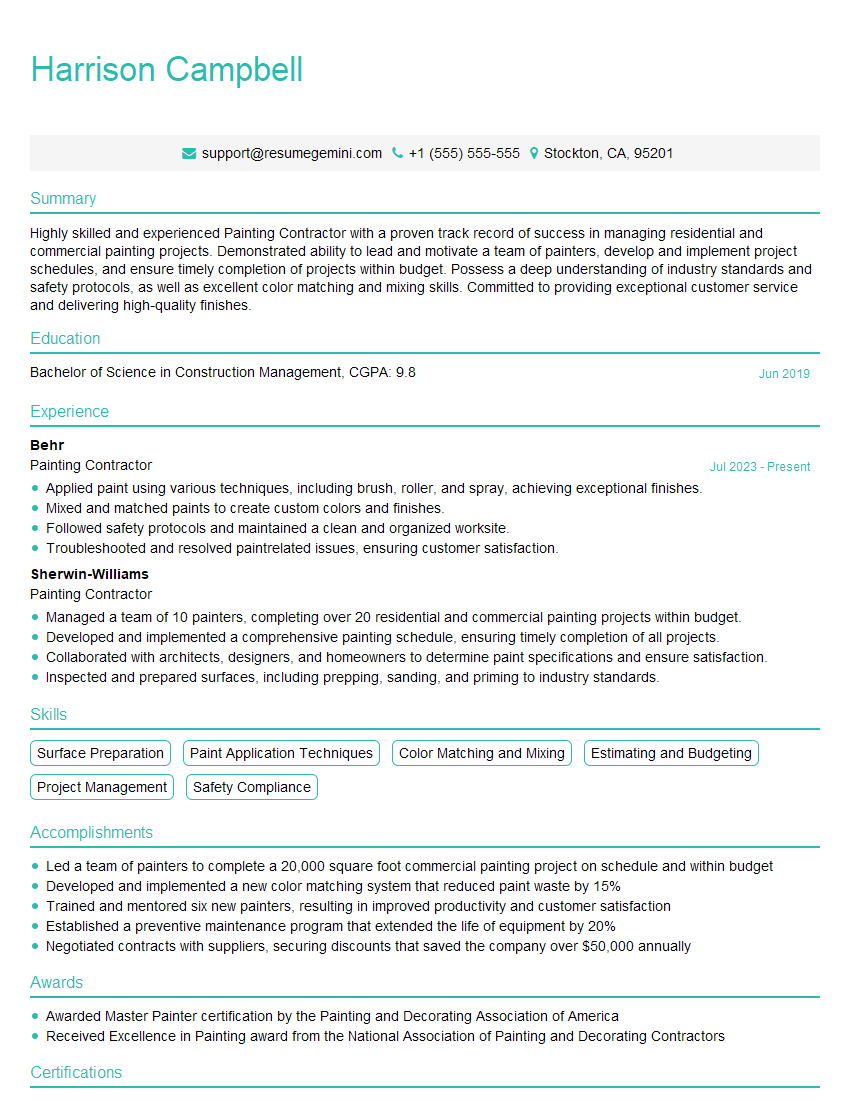
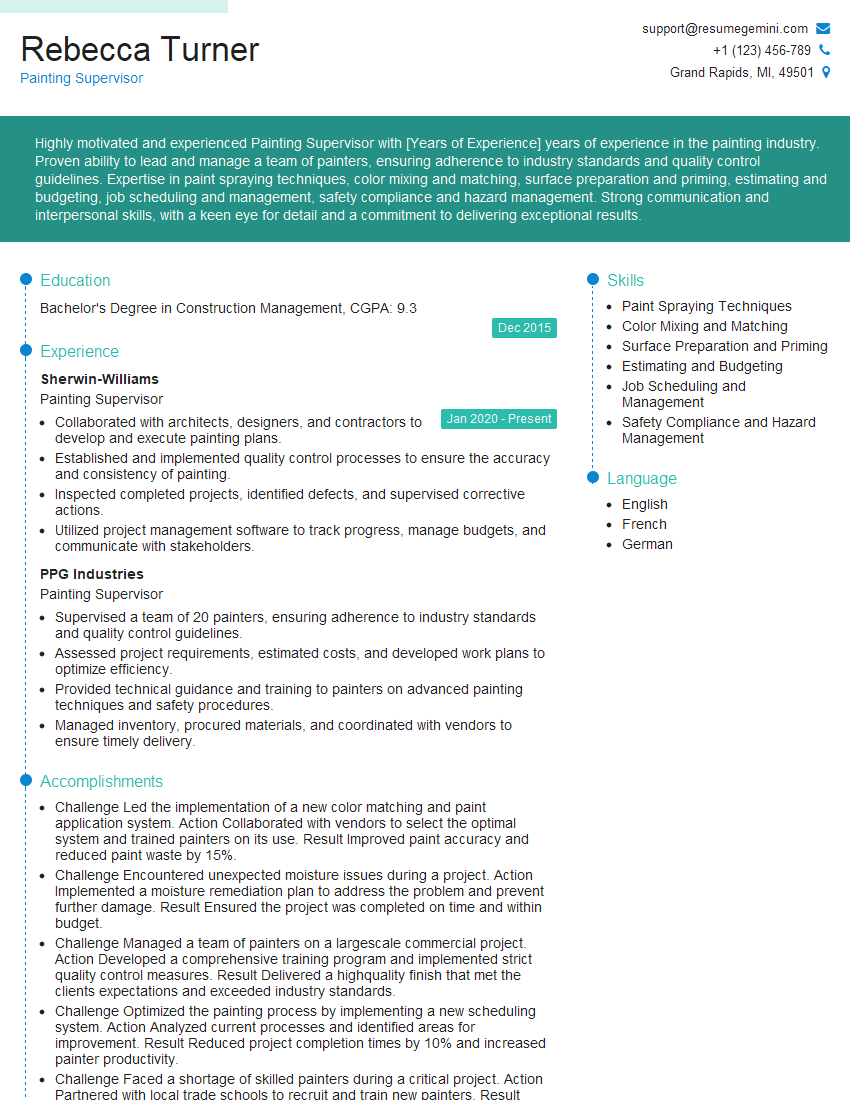
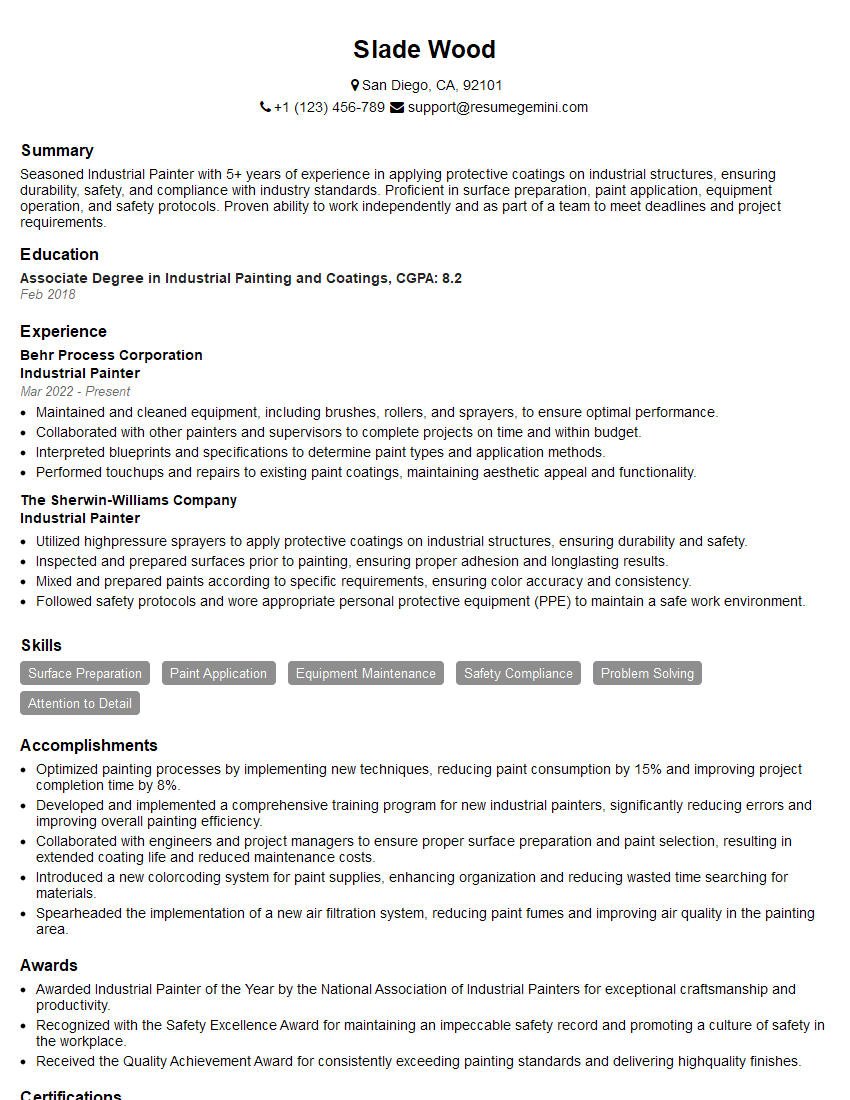
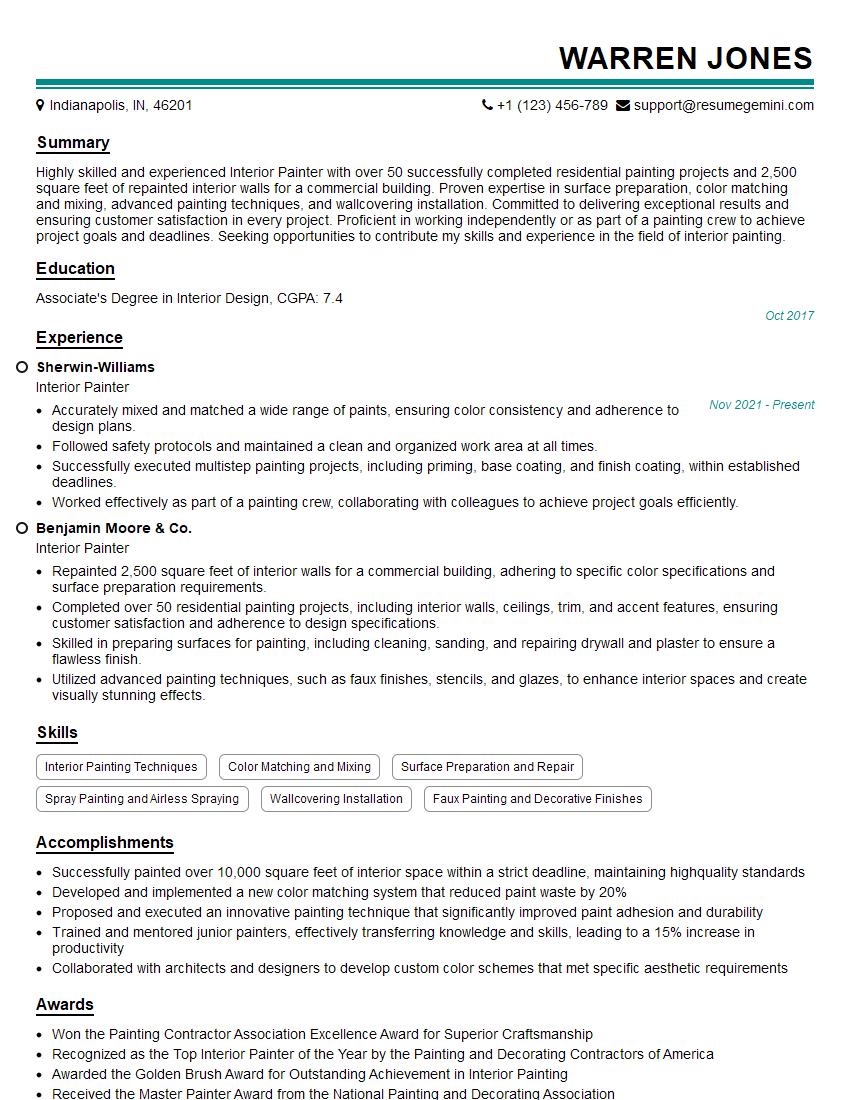
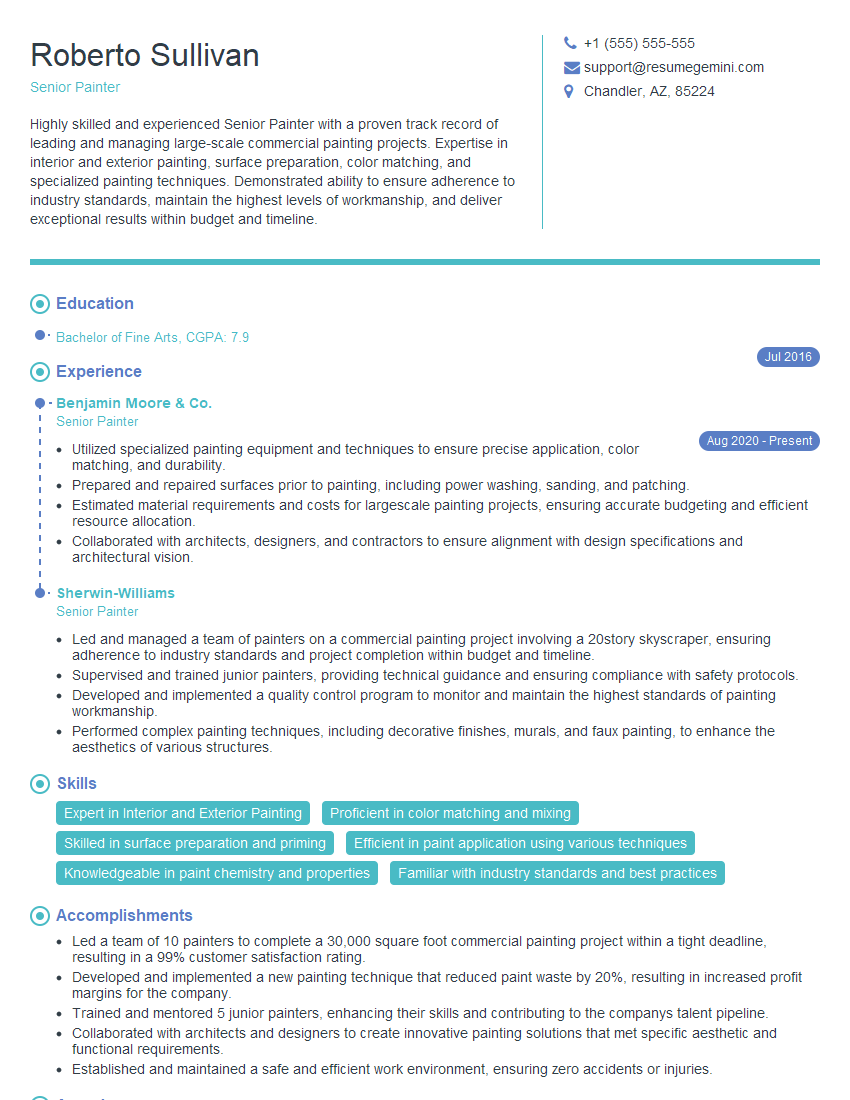
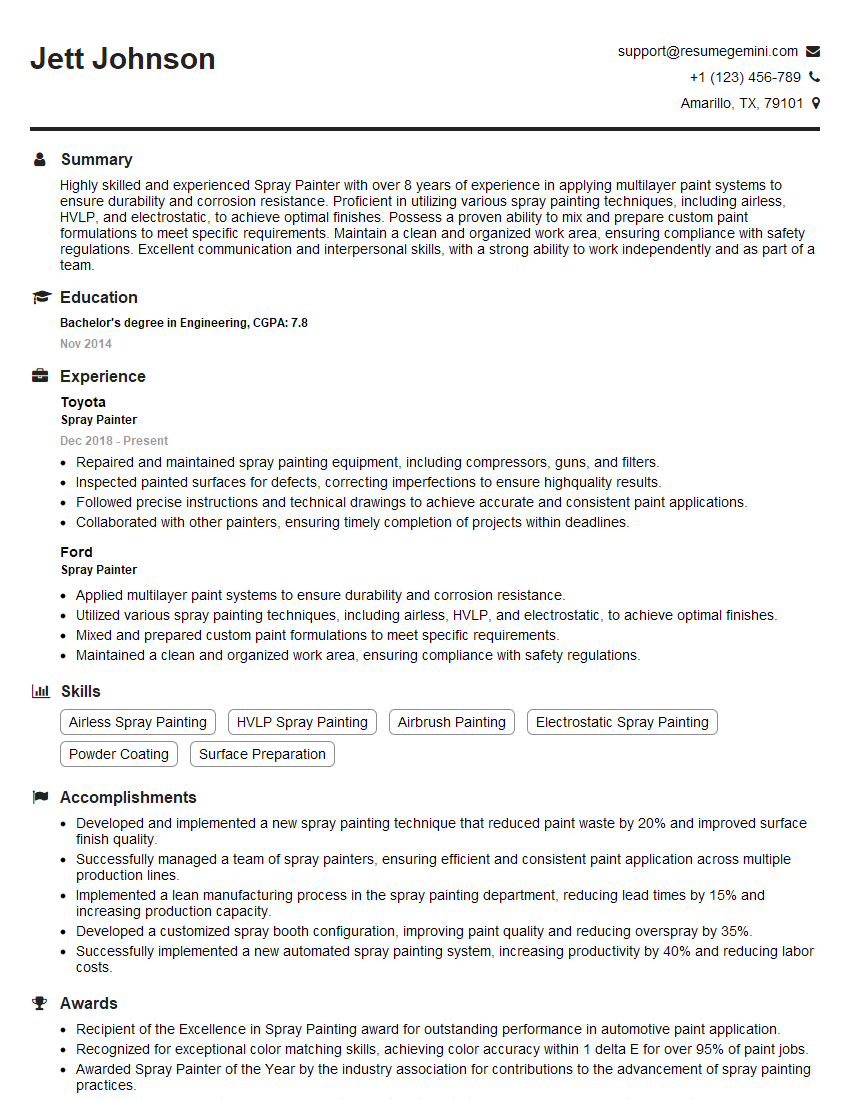
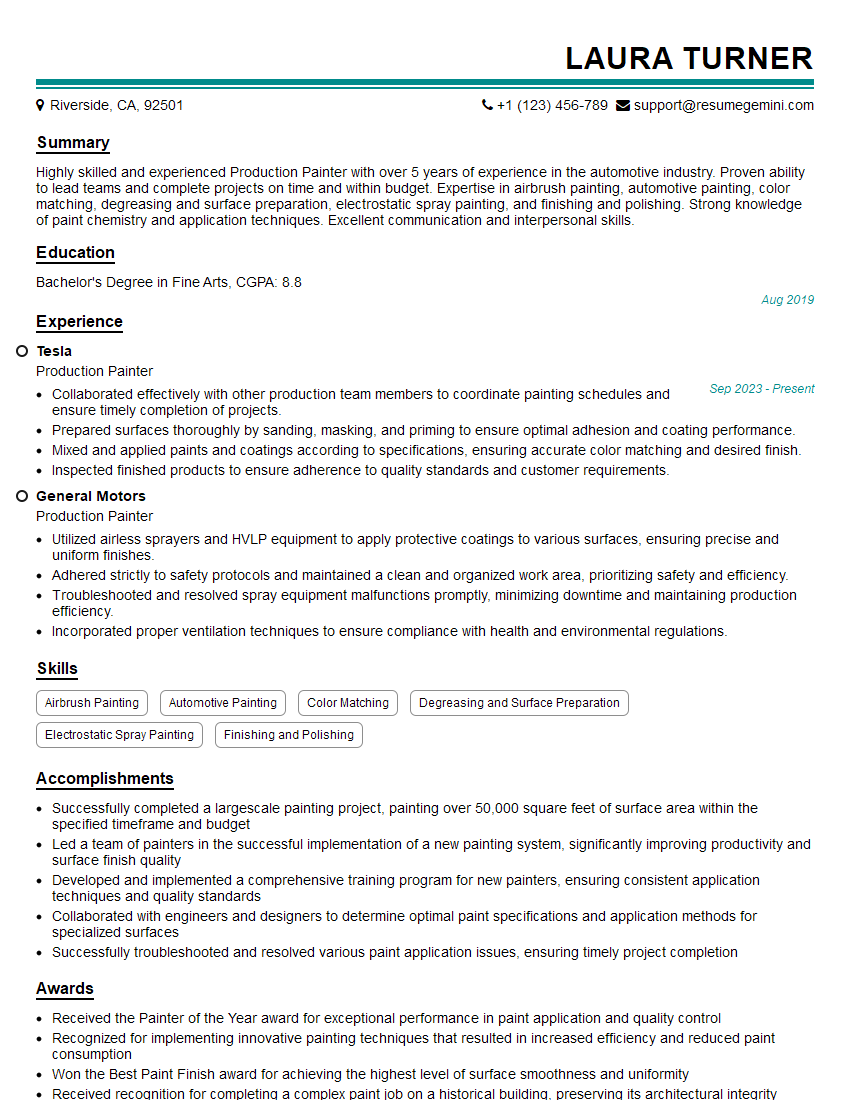
Mastering interior painting opens doors to a rewarding career with diverse opportunities for growth, from independent contractor to team leader in larger firms. A strong resume is crucial for showcasing your skills and experience to potential employers. To maximize your job prospects, create an ATS-friendly resume that highlights your achievements and effectively communicates your value. ResumeGemini is a trusted resource that can help you build a professional and impactful resume. We provide examples of resumes tailored to the Interior Painting field to guide you through the process. Invest time in crafting a compelling resume – it’s your first impression!
Explore more articles
Users Rating of Our Blogs
Share Your Experience
We value your feedback! Please rate our content and share your thoughts (optional).
What Readers Say About Our Blog
Really detailed insights and content, thank you for writing this detailed article.
IT gave me an insight and words to use and be able to think of examples