Cracking a skill-specific interview, like one for Ivory Carving, requires understanding the nuances of the role. In this blog, we present the questions you’re most likely to encounter, along with insights into how to answer them effectively. Let’s ensure you’re ready to make a strong impression.
Questions Asked in Ivory Carving Interview
Q 1. Describe your experience with different ivory carving techniques.
Ivory carving techniques are diverse, spanning centuries and cultures. My experience encompasses several key approaches. Relief carving involves shaping the ivory from the surface, leaving the background intact, much like a bas-relief sculpture. This is excellent for intricate detail and scenes. In-the-round carving, on the other hand, works three-dimensionally, shaping the ivory from all sides, resulting in free-standing figures or objects. This requires a deeper understanding of form and volume. Piercing, a more advanced technique, involves cutting through the ivory to create openwork designs, requiring precision and control. Lastly, chip carving employs small, controlled cuts to create patterns or textures, often used for decorative elements. I’ve worked extensively with all these techniques, adapting them depending on the design and the specific piece of ivory.
For instance, I once carved a miniature elephant using in-the-round carving, requiring many hours of meticulous work to achieve the detailed texture of its skin and the lifelike pose. Conversely, a recent commission involved a large relief carving depicting a hunting scene, demanding careful planning and execution to maintain the overall composition and depth of the scene.
Q 2. Explain your process for selecting and preparing ivory for carving.
Selecting and preparing ivory for carving is crucial. I prioritize ethically sourced ivory, meticulously checking for cracks, imperfections, and the overall grain structure. The grain’s direction significantly influences the carving process; carving against the grain can lead to breakage. I inspect the ivory under bright light to identify any subtle flaws that might compromise the piece’s integrity.
Once selected, the ivory undergoes careful preparation. This often involves stabilizing the piece. This could involve things like slow drying in a controlled environment, to prevent cracking. Then, I carefully cut the ivory to the required size and shape using specialized saws and files. The surface is then meticulously smoothed using various grades of sandpaper, ensuring a clean and even foundation for the carving process. Sometimes, a stabilizing resin is applied to small cracks for reinforcement, ensuring the longevity of the piece.
A recent project required a large tusk section. Due to its size, I had to carefully consider the weight distribution and potential stress points during the carving process. Thorough planning and slow, meticulous preparation ensured the integrity of the large tusk and the successful completion of the sculpture.
Q 3. How do you ensure the structural integrity of your carvings?
Structural integrity is paramount in ivory carving. Understanding the ivory’s natural properties – its density, grain, and potential weaknesses – is vital. I achieve this through several strategies. Firstly, careful planning and design are essential; complex designs may necessitate internal supports during the carving process to prevent breakage. These can sometimes be carved directly into the piece and later incorporated into the design. Secondly, I avoid thin or overly delicate sections unless absolutely necessary. Finally, I might use specialized glues or resins to reinforce any weak points.
In a recent intricate piece, I reinforced several thin sections by carefully carving small supports within the structure, ensuring the carving remained stable and avoided any risk of fracturing. The supports were then integrated subtly into the design, invisible to the casual observer. This meticulous attention to detail is what ensures the longevity and structural integrity of my work.
Q 4. What tools and equipment are essential for your work?
The tools I use are precise and varied, reflecting the intricate nature of ivory carving. Essential tools include various types of saws (fine-toothed jeweler’s saws are vital), chisels of different sizes and shapes, rasps for shaping, files for smoothing, and an array of abrasives, from coarse to fine sandpaper, to achieve a polished finish. In addition, I use magnifying glasses for detail work and specialized tools for engraving, including burrs and gravers. Safety equipment, including protective eyewear and a dust mask, is absolutely essential.
Beyond the hand tools, I also utilize rotary tools with various bits for precise shaping and smoothing, especially in areas that are difficult to reach by hand. The proper care and maintenance of these tools are crucial for achieving the desired results and preserving their effectiveness.
Q 5. Discuss your approach to designing and executing complex ivory carvings.
Designing and executing complex ivory carvings involves a multi-stage process. It begins with conceptualization – sketching initial ideas, refining them, and creating detailed drawings and potentially 3D models. This phase allows me to fully visualize the final piece and plan the carving strategy. I then carefully transfer the design onto the ivory using a variety of techniques including tracing and projecting. The carving itself is a gradual process, starting with rough shaping, followed by progressively finer details and finishing. It’s like peeling back layers of an onion, revealing the intricacies of the piece gradually.
I recently completed a large panel depicting a mythical scene. The design process involved several iterations and numerous sketches before I achieved a satisfying composition. The carving process itself took months and involved continuous refinement, ensuring the piece harmoniously integrated the different elements of the design.
Q 6. How do you handle challenges such as cracks or imperfections in the ivory?
Cracks or imperfections in ivory present challenges but can also be creative opportunities. Minor cracks can sometimes be stabilized with a carefully chosen resin, which is then sanded and polished seamlessly into the surrounding ivory. More significant cracks may require a complete redesign to incorporate them into the final piece, perhaps using them as part of the design to avoid further stress to the ivory. In some extreme cases, the piece may have to be rejected. The goal is to always ensure the structural integrity of the finished carving.
In one project, a large crack running through a tusk initially seemed to doom the project. However, I incorporated the crack into the final design as a stylized river flowing through the landscape. This turned a potential flaw into a unique design element, highlighting the adaptive nature of the craft.
Q 7. Describe your understanding of ivory conservation and preservation techniques.
Ivory conservation and preservation are critical aspects of my work, particularly given the ethical and environmental concerns surrounding ivory. I understand the importance of proper storage, maintaining a stable temperature and humidity to prevent cracking and deterioration. I also avoid exposing the finished carvings to direct sunlight or extreme temperature fluctuations. I advocate for ethical sourcing of ivory and encourage the use of sustainable materials as alternatives whenever possible.
Furthermore, I follow best practices to prevent any damage during the cleaning and handling of the finished pieces. This includes using specialized cleaning solutions when needed and avoiding harsh chemicals. The goal is to preserve these delicate pieces for generations to come.
Q 8. What are the ethical considerations involved in working with ivory?
The ethical considerations surrounding ivory carving are paramount. The most significant is the devastating impact of the ivory trade on elephant populations. All my work uses only legally sourced, antique ivory, meaning it was harvested before the current CITES (Convention on International Trade in Endangered Species) restrictions were in place. I meticulously document the provenance of each piece, tracing its history as far back as possible. This commitment ensures I am not contributing to the poaching crisis. Furthermore, I believe in responsible craftsmanship, minimizing waste and utilizing every part of the material respectfully. This respect extends to acknowledging the cultural significance of ivory in some traditions, while simultaneously advocating for its protection and sustainable alternatives.
Q 9. How do you maintain the sharpness and condition of your carving tools?
Maintaining sharp carving tools is crucial for precise and efficient work. I use high-quality, hand-forged tools made specifically for ivory carving, which are usually made from high-carbon steel. After each use, I meticulously clean them with a soft brush to remove ivory dust and then apply a light coat of mineral oil to prevent rust and corrosion. Honing is essential. I regularly hone the tools using a variety of sharpening stones, progressing from coarser to finer grits to achieve a razor-sharp edge. For more significant damage, I might need to use a sharpening steel or even take them to a professional for resharpening. Proper storage in a dry, controlled environment also prevents damage and preserves the tool’s longevity. Think of it like a chef maintaining his knives; the better the tools, the better the outcome, and meticulous maintenance extends their life significantly.
Q 10. Explain your knowledge of different types of ivory and their properties.
Ivory, while often referred to simply as ‘ivory,’ possesses variations stemming from different species. The most common, and historically significant, is elephant ivory, valued for its creamy texture, fine grain, and relatively easy workability. However, mammoth ivory, sourced from extinct mammoths, is also used and is legally distinct from elephant ivory. It often possesses a more yellowish tint and a sometimes more porous structure. Hippopotamus ivory is another type, denser and more brittle than elephant ivory, making it more challenging to carve fine details. Each ivory type presents unique challenges and opportunities; elephant ivory’s smoothness lends itself well to intricate detail, whereas mammoth ivory’s character can be incorporated into the piece’s aesthetic. Understanding these variations is key to choosing the correct type of ivory for a given project and utilizing its unique properties effectively.
Q 11. How do you ensure the accuracy and detail in your carvings?
Accuracy and detail in ivory carving require a combination of skill, tools, and planning. I begin with precise sketches and detailed blueprints of the planned carving. This helps to visualize the final product and guide the carving process. I use a variety of tools, from large gouges for initial shaping to fine gravers for intricate details. I work methodically, proceeding from rough shaping to finer details in stages. Magnification tools, such as jeweler’s loupes, assist in the most delicate stages. Consistent monitoring of progress against the initial plan and regular self-evaluation are crucial. Regular practice and a deep understanding of the material’s properties are invaluable. For example, I might pre-carve aspects of a design into a wax model to test the feasibility and refine my techniques before engaging with the ivory itself.
Q 12. Describe your experience with different finishing techniques for ivory.
Finishing ivory carvings involves a series of steps to enhance their beauty and durability. After the carving is complete, I meticulously smooth the surface using progressively finer grades of sandpaper, often finishing with very fine sandpaper or even polishing compounds. The next step is often a careful cleaning with mild soap and water. Then, to protect the ivory and enhance its luster, I apply a carefully selected finish. This can range from simple natural oils like linseed oil to more protective sealants that give the ivory a subtle sheen and resist grime and discoloration. Traditional methods involved using waxes and polishes, creating unique patinas; today, many carvers use more contemporary techniques, such as clear acrylic coatings, but that must be chosen with careful consideration of the ivory’s integrity. The final result is a balance between preserving the ivory’s natural beauty and providing necessary protection.
Q 13. How do you price your ivory carvings?
Pricing my ivory carvings is a complex process that considers several factors. The most important is the time and skill invested in the piece. Intricate carvings that require many hours of work will naturally command a higher price than simpler pieces. The size and weight of the carving also play a role, as larger pieces typically involve more material and labor. The rarity and historical significance of the ivory itself, as well as the artistic merit and demand for the particular design, also influence the price. Ultimately, the value is a reflection of the time, skill, artistry, and historical context of each unique piece. I often research comparable pieces sold at auction or in galleries to ensure fair pricing. This process is a blend of art and business; to price effectively requires understanding both the intrinsic value of the work and the market forces.
Q 14. Explain your understanding of the historical context of ivory carving.
Ivory carving boasts a rich and fascinating history, spanning millennia and cultures across the globe. From ancient Egyptian artifacts to intricate Chinese netsuke, ivory has been a medium for artistic expression throughout history. Many cultures used ivory for both utilitarian objects and religious or ceremonial items. Different eras and regions have seen distinct styles and techniques emerge. The development of tools and techniques evolved over time, enabling increasingly intricate and sophisticated carvings. Understanding this historical context is crucial for appreciating the artistry and cultural significance of ivory carving. For example, studying the work of ancient Chinese craftsmen offers valuable insights into techniques and aesthetics, helping modern carvers to refine and innovate their craft. The historical context adds layers of depth and meaning to every piece, connecting the past with the present.
Q 15. How do you stay updated on current trends and techniques in ivory carving?
Staying current in the dynamic world of ivory carving requires a multifaceted approach. It’s not just about the carving itself, but also the artistic trends and the ethical considerations surrounding the material. I maintain a keen awareness of evolving techniques through several avenues:
- Regular attendance at international art fairs and exhibitions: Events like the Biennale des Antiquaires in Paris or specialized art fairs focusing on Asian or African art provide invaluable exposure to the latest styles and craftsmanship.
- Networking with fellow artists and artisans: Building relationships with other ivory carvers, both established masters and emerging talent, facilitates the exchange of knowledge and techniques. Workshops and conferences are excellent opportunities for this.
- Extensive research and study: I delve into historical carving techniques through books, journals, and online resources, constantly seeking to expand my understanding of traditional methods and innovative approaches. Studying different cultural styles is crucial for broadening my artistic perspective.
- Following online platforms and publications: Many online forums and specialized magazines dedicated to art and sculpture offer insights into new trends and innovative techniques.
Combining these methods ensures that I remain at the forefront of the ivory carving field while maintaining a deep respect for its history and traditions.
Career Expert Tips:
- Ace those interviews! Prepare effectively by reviewing the Top 50 Most Common Interview Questions on ResumeGemini.
- Navigate your job search with confidence! Explore a wide range of Career Tips on ResumeGemini. Learn about common challenges and recommendations to overcome them.
- Craft the perfect resume! Master the Art of Resume Writing with ResumeGemini’s guide. Showcase your unique qualifications and achievements effectively.
- Don’t miss out on holiday savings! Build your dream resume with ResumeGemini’s ATS optimized templates.
Q 16. Describe a particularly challenging ivory carving project and how you overcame the obstacles.
One particularly demanding project involved recreating a damaged Ming Dynasty figure – a seated Buddha. The intricacy of the original’s drapery folds and the delicate facial features presented significant challenges. The damage included several deep cracks and a partial loss of a hand.
Overcoming these obstacles required a meticulous, multi-stage process:
- Careful stabilization: I first consolidated the existing cracks using a specialized conservation adhesive to prevent further damage.
- Reconstruction of the missing hand: This demanded a keen eye for detail and a precise understanding of Ming Dynasty aesthetic principles. I carved a replacement hand from a carefully matched piece of ivory, ensuring seamless integration with the existing piece.
- Precise restoration of the drapery: Recreating the intricate folds required countless hours of patient carving and meticulous attention to the original’s texture and flow.
- Surface finishing and polishing: The final stage involved painstaking polishing to restore the piece’s original lustre and to ensure the repairs were virtually invisible.
The successful completion of this project underscored the importance of technical skill, artistic sensitivity, and a deep understanding of the historical context of the artwork.
Q 17. How do you manage your time effectively when working on multiple projects?
Managing multiple projects effectively is crucial in my field. I employ a structured approach combining careful planning and efficient workflow:
- Prioritization: I carefully assess each project based on its complexity, deadline, and client requirements, prioritizing those with the most pressing deadlines or highest significance.
- Detailed scheduling: I use a project management system to break down each project into smaller, manageable tasks with allocated timeframes. This allows for better tracking of progress and identification of potential delays.
- Dedicated workspace: Maintaining an organized and dedicated workspace allows me to focus without distractions. This includes having all my tools and materials readily available.
- Time blocking: I dedicate specific blocks of time to individual projects, preventing multitasking and maximizing focus.
- Regular review and adjustment: I periodically review my schedule to identify any bottlenecks and adjust my workflow as needed. This iterative approach ensures that I stay on track and deliver projects efficiently.
This systematic approach ensures that I deliver high-quality work on time, even while juggling multiple commissions.
Q 18. What is your experience with creating miniature ivory carvings?
Miniature ivory carving is a specialty that demands an exceptional level of precision and patience. The smaller the scale, the greater the demands on one’s skill and eyesight. I’ve worked on numerous miniature pieces, ranging from intricate netsuke (small Japanese toggles) to delicate figurines of animals and people.
The challenges are significant: fine detail requires extremely sharp tools and a steady hand, and the risk of breakage is higher. The use of magnification tools is essential, and a very controlled carving technique with fine, precise cuts is crucial to avoid damaging the delicate material. The rewards, however, are immense – the ability to create incredibly detailed and lifelike works in such a small format is immensely satisfying.
Q 19. How do you approach the restoration of damaged ivory artifacts?
Restoring damaged ivory artifacts is a delicate and specialized process requiring a deep understanding of conservation principles. My approach involves a combination of technical skill and artistic judgment:
- Assessment and documentation: The first step is a thorough examination to determine the extent of the damage and to document it photographically. This allows for a structured approach to the restoration.
- Stabilization: Cracks and fractures are carefully stabilized using appropriate conservation-grade adhesives. This prevents further damage and ensures the structural integrity of the piece.
- Careful cleaning: Dirt and grime are removed using gentle methods to avoid causing further damage to the ivory. Specialized cleaning solutions are used depending on the type of soiling.
- Reconstruction: Missing pieces may be reconstructed using compatible materials and techniques, but this is always done with utmost care to maintain the integrity and authenticity of the artifact.
- Finishing: The final stage involves carefully matching the restored areas to the surrounding ivory, ensuring a seamless blend and preserving the original character of the piece.
The goal is not to create a perfect replica, but to stabilize the piece, repair the damage, and enhance its preservation for future generations. Ethical considerations are paramount; any restoration must be reversible and clearly documented.
Q 20. What safety precautions do you take when working with ivory and carving tools?
Safety is paramount when working with ivory and sharp carving tools. I adhere to a strict set of precautions:
- Protective eyewear: I always wear safety glasses or a face shield to protect my eyes from flying debris.
- Gloves: Gloves are essential to protect my hands from cuts and splinters.
- Sharp tools: I maintain my tools in excellent condition, ensuring they are sharp and properly honed. This reduces the risk of slips and accidents.
- Ergonomic posture: Maintaining good posture and proper hand positioning minimizes strain and fatigue, reducing the risk of accidents.
- Proper ventilation: I ensure adequate ventilation in my workspace to avoid inhaling dust or fumes from any finishing materials.
- First-aid kit: A well-stocked first-aid kit is always readily accessible.
By prioritizing safety in every aspect of my work, I can focus on the creative process without compromising my health and well-being. Prevention is always the best approach when handling sharp tools and a potentially fragile material.
Q 21. Describe your experience working with different types of ivory carving designs (e.g., figures, ornaments, relief carvings).
My experience encompasses a wide range of ivory carving designs, each presenting unique challenges and opportunities:
- Figures: Carving figures, whether human or animal, requires a strong understanding of anatomy and form. The focus is on capturing the essence of the subject, whether it’s the subtle expression on a human face or the powerful musculature of an animal.
- Ornaments: Ornamental carvings offer scope for intricate detailing and decorative flourishes. These pieces can be highly stylized or representational, and the precision of the carving is crucial to the overall effect.
- Relief carvings: Relief carvings demand mastery of perspective and depth. The carver must carefully manipulate the surface to create the illusion of three-dimensionality within a two-dimensional plane.
The beauty of ivory carving lies in its versatility. Each style requires a different approach and skillset, making it a continuously engaging and rewarding art form. The cultural context of a design always informs my approach, ensuring that I respect the traditions and aesthetics of the piece’s origin.
Q 22. Explain your knowledge of different types of finishes and their effects on the ivory’s appearance.
The finish applied to an ivory carving significantly impacts its aesthetic appeal and longevity. Different finishes enhance the natural beauty of the ivory in various ways, offering a spectrum of visual effects ranging from subtle to dramatic.
- High-gloss polish: This is achieved through meticulous polishing with progressively finer abrasives, followed by a buffing process often using compounds like tripoli and rouge. The result is a deep, reflective shine that accentuates the ivory’s translucence and natural colour variations. This is ideal for showcasing intricate details and adding a sense of richness and luxury.
- Satin finish: A satin finish offers a less reflective, smoother surface than a high-gloss polish. It’s created by using finer abrasives during the polishing stage and omitting the final buffing step. This finish reduces glare, making it suitable for pieces where subtle detail is important without overwhelming brightness. It’s more forgiving of minor imperfections.
- Matte finish: A matte finish offers a non-reflective, almost velvety texture. This is achieved through the use of very fine abrasives and can be further enhanced with specialized matte-finish coatings. It’s a great choice for highlighting the texture and subtle variations of the ivory’s surface without the shine. A matte finish gives a more contemporary or minimalist feel.
- Oil finish: Applying a high-quality oil, such as linseed oil, can enhance the ivory’s natural luster and protect it from drying and cracking. This is an excellent choice for pieces that will be frequently handled, as the oil keeps the ivory feeling smooth and supple. It enhances the ivory’s warm tones and brings out its inherent color depth.
The choice of finish is often dictated by the style of the carving, the artist’s vision, and the intended use of the piece. For instance, a highly detailed miniature might benefit from a high-gloss polish to reveal every intricacy, while a larger, more sculptural piece might be better suited to a matte finish to emphasize its form and texture.
Q 23. How do you assess the quality of raw ivory before starting a project?
Assessing the quality of raw ivory is crucial for creating a successful carving. I begin by meticulously inspecting the piece for cracks, fissures, stains, and any signs of damage or previous repairs. The density and evenness of the material are also critical factors.
- Color and Texture: High-quality ivory generally possesses a creamy white color with subtle variations in tone. A consistent texture, free from excessive grain or porosity, indicates a strong and stable piece.
- Density and Weight: Denser ivory is generally preferred as it is more resistant to chipping and cracking during carving. Weight is a good indicator of density – a heavier piece of similar size often indicates higher quality.
- Provenance and Legality: Before even handling the raw material, I verify its legal source and ensure all necessary documentation is in place to comply with international regulations on ivory trade. This is paramount for ethical and legal reasons.
I may use non-destructive testing methods such as observing the ivory under different lighting conditions or gently tapping it to assess its soundness. Any questionable piece is immediately rejected to avoid jeopardizing the project’s integrity or breaking any laws.
Q 24. How do you handle customer requests or feedback on custom ivory carving projects?
Customer collaboration is integral to my work. I maintain open communication channels throughout the process, starting with a thorough initial consultation to understand their vision, budget, and timeline.
- Design Development: I work with clients to refine initial concepts, providing sketches, 3D models, or even small-scale prototypes to ensure their expectations are met.
- Progress Updates: I provide regular updates, including photographs or videos, to keep customers informed about the project’s progress.
- Feedback Incorporation: I welcome and actively encourage customer feedback at various stages of the process. Constructive criticism helps me to refine the design and execution, ensuring the final piece aligns perfectly with their vision.
- Revisions and Adjustments: I am always prepared to make necessary adjustments based on client feedback, as long as they are feasible within the project scope and timeline.
For example, I once collaborated with a client who initially envisioned a highly realistic elephant carving. Through discussions, we discovered they preferred a more stylized, abstract approach, resulting in a more unique and artistically fulfilling piece. Effective communication and a collaborative approach ensure that each carving is a testament to both my expertise and the client’s personal taste.
Q 25. Describe your experience with collaborating with other artisans or professionals on ivory carving projects.
Collaboration is a vital part of bringing complex ivory carving projects to life. My experience involves working with various professionals, including:
- Fellow artisans: I have collaborated with other carvers, specializing in different techniques like inlay or gold-leafing, to integrate diverse artistic elements into a single piece. This collaborative approach results in a richer and more nuanced final product.
- Designers and architects: I have worked with designers on projects requiring integration of ivory carvings into larger pieces of furniture, architectural features, or other decorative items. This collaboration requires precise measurements, adherence to designs, and careful consideration of the overall aesthetic.
- Conservators and restorers: On occasion, I’ve been involved in the restoration of antique ivory carvings, working alongside experts in conservation to preserve and revive damaged pieces. This has broadened my knowledge of older techniques and the preservation of cultural heritage.
Each collaboration requires careful communication, mutual respect, and a clear understanding of individual roles and responsibilities. This collaborative spirit is fundamental to creating exquisite and intricate ivory pieces.
Q 26. Explain your familiarity with relevant legal and ethical regulations concerning ivory trade.
I am intimately familiar with the complex legal and ethical regulations governing the ivory trade. This is of paramount importance to me, and I strictly adhere to all applicable laws.
- CITES Regulations: I am well-versed in the Convention on International Trade in Endangered Species (CITES) regulations, understanding the permits and documentation required for legal ivory trade and the penalties for non-compliance.
- National and Regional Laws: I am aware of the specific laws and regulations pertaining to ivory within my region and the countries where I source materials (if applicable, acknowledging the current near-total ban on international commercial ivory trade).
- Sustainable Practices: I prioritize working only with legally sourced ivory, preferably from pre-convention stock, ensuring the material’s origins are traceable and documented.
- Ethical Sourcing: My commitment extends beyond legal compliance; I actively seek to support ethical and sustainable practices within the ivory carving industry.
Ignoring these regulations is not only unethical but also carries severe legal consequences. Maintaining a clear understanding of and strict adherence to these regulations are non-negotiable aspects of my work.
Q 27. What are your salary expectations for this role?
My salary expectations are commensurate with my experience, expertise, and the complexity of the projects I undertake. I am open to discussing a competitive compensation package that reflects the value I bring to your organization. This will depend on several factors, including the specifics of the role, benefits provided, and the project scope and workload. A detailed discussion would allow me to provide a more accurate figure.
Q 28. What are your career aspirations within the field of ivory carving?
My career aspirations involve continued growth and advancement within the field of ivory carving. I aim to refine my artistic skills, explore new techniques, and expand my understanding of ivory’s cultural significance.
- Master Craftsman Status: I aspire to achieve recognition as a master ivory carver, contributing to the preservation and advancement of this intricate art form.
- Mentorship and Training: I am committed to mentoring and training aspiring ivory carvers, sharing my knowledge and expertise to ensure the continuation of this tradition.
- Artistic Innovation: I want to push the boundaries of traditional ivory carving by integrating modern design elements while respecting the art form’s heritage.
- Legacy Preservation: I envision creating a legacy that honors the traditions of ivory carving while promoting ethical and sustainable practices within the industry.
Ultimately, my goal is to leave a lasting contribution to the field of ivory carving, balancing artistic excellence with ethical and sustainable practices.
Key Topics to Learn for Your Ivory Carving Interview
- Understanding Ivory Properties: Explore the physical and chemical properties of ivory, including its density, texture, and grain structure. This knowledge is crucial for selecting appropriate tools and techniques.
- Tool and Equipment Mastery: Demonstrate familiarity with various carving tools (e.g., chisels, gouges, rasps) and their appropriate uses. Discuss sharpening techniques and maintenance for optimal performance.
- Design and Sketching: Showcase your ability to translate concepts into detailed sketches and designs, considering the limitations and possibilities of the material.
- Carving Techniques: Explain different carving techniques, such as relief carving, in-the-round carving, and subtractive sculpting. Be prepared to discuss the advantages and disadvantages of each method.
- Finishing Techniques: Discuss various finishing methods, such as polishing, waxing, and preserving the ivory’s integrity and longevity. Highlight your understanding of ethical and sustainable practices.
- Artistic Expression and Style: Be ready to discuss your artistic influences and personal style within the context of ivory carving. Showcasing your creative vision is vital.
- Problem-Solving in Carving: Discuss how you approach challenges encountered during the carving process, such as correcting mistakes or adapting to unexpected material variations.
- Safety and Ethical Considerations: Demonstrate a strong understanding of safety protocols when working with sharp tools and the ethical considerations surrounding ivory sourcing and trade. Highlight your commitment to sustainable practices.
Next Steps
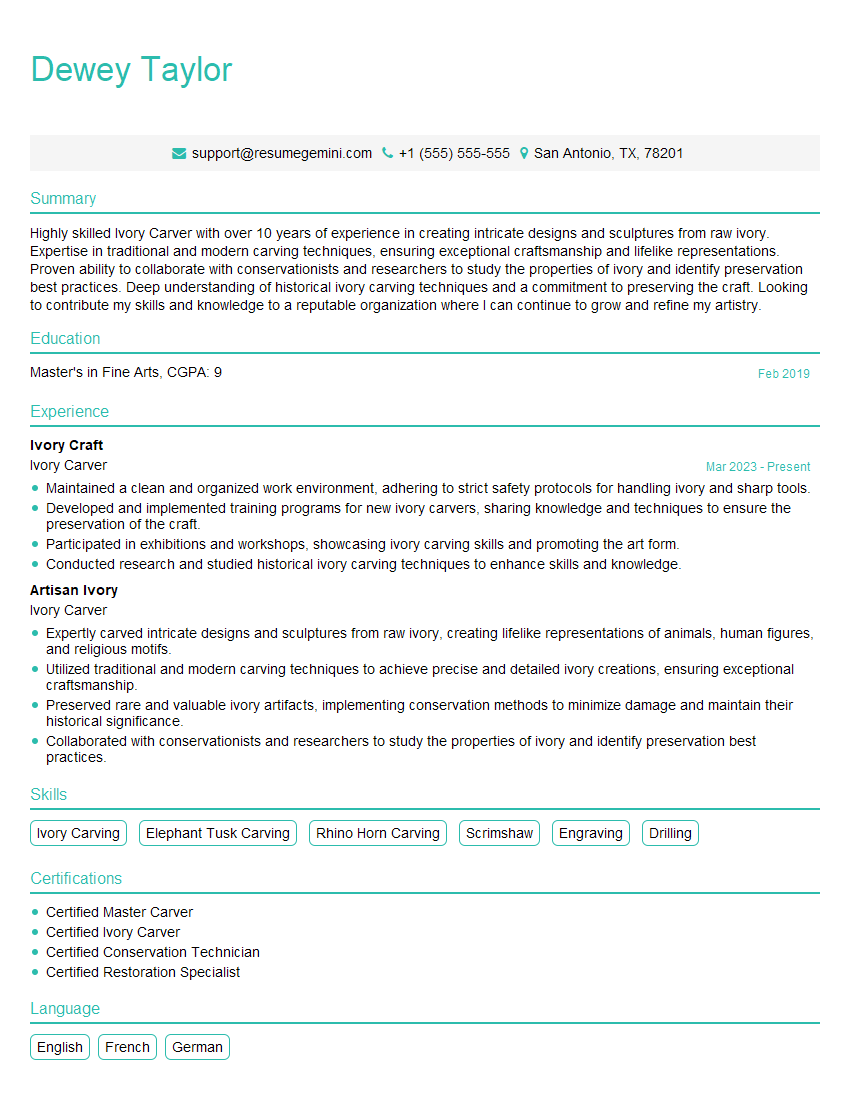
Mastering the art of ivory carving opens doors to a rewarding and fulfilling career, offering opportunities for creative expression and professional growth. To maximize your job prospects, it’s crucial to present your skills and experience effectively. Creating an ATS-friendly resume is paramount. We highly recommend using ResumeGemini to build a professional and impactful resume that highlights your unique talents. ResumeGemini provides examples of resumes tailored specifically to the ivory carving field, ensuring your application stands out.
Explore more articles
Users Rating of Our Blogs
Share Your Experience
We value your feedback! Please rate our content and share your thoughts (optional).
What Readers Say About Our Blog
Really detailed insights and content, thank you for writing this detailed article.
IT gave me an insight and words to use and be able to think of examples