The right preparation can turn an interview into an opportunity to showcase your expertise. This guide to JustinTime (JIT) Delivery interview questions is your ultimate resource, providing key insights and tips to help you ace your responses and stand out as a top candidate.
Questions Asked in JustinTime (JIT) Delivery Interview
Q 1. Explain the core principles of Just-in-Time (JIT) delivery.
Just-in-Time (JIT) delivery, also known as JIT manufacturing, is a production strategy that aims to reduce waste and optimize efficiency by receiving materials only when they are needed for production. It’s built on the principle of minimizing inventory holding costs and maximizing production flow. Instead of large batches of materials sitting in a warehouse, JIT focuses on a continuous flow of materials directly from suppliers to the production line, just in time for use. Think of it like a perfectly choreographed dance where each element arrives precisely when required.
- Minimizing Waste: Reducing excess inventory, minimizing storage space, and lowering the risk of obsolete stock.
- Optimizing Production Flow: Ensuring a smooth and continuous flow of materials through the production process.
- Continuous Improvement (Kaizen): Constantly striving for better efficiency through identifying and eliminating bottlenecks.
- Close Supplier Relationships: Fostering strong collaborative relationships with reliable suppliers who can deliver precisely when needed.
Q 2. What are the key benefits of implementing a JIT system?
Implementing a JIT system offers several significant advantages:
- Reduced Inventory Costs: Less money tied up in holding stock, leading to lower storage and insurance costs.
- Improved Cash Flow: Faster production cycles and less capital tied up in inventory improve cash flow.
- Increased Efficiency: Streamlined processes and reduced waste lead to greater overall efficiency.
- Higher Quality: Early detection of defects due to smaller batch sizes and improved focus on quality.
- Reduced Waste: Minimizes waste of materials, space, and labor.
- Faster Response to Customer Demand: Ability to adapt quickly to changes in demand.
For example, a car manufacturer using JIT might receive engine parts only when needed for assembly, rather than keeping a large stock in a warehouse. This saves valuable warehouse space and reduces the risk of obsolete parts if designs change.
Q 3. What are the potential challenges or risks associated with JIT?
While JIT offers many benefits, it also carries several potential risks:
- Supply Chain Disruptions: Any delay in delivery from a supplier can bring the entire production line to a halt.
- Increased Dependence on Suppliers: The system heavily relies on timely and reliable deliveries from suppliers. Poor supplier performance can severely impact production.
- Higher Transportation Costs: Frequent small deliveries can result in higher transportation costs compared to infrequent large shipments.
- Lack of Buffer Stock: The absence of significant buffer stock means that unexpected demand surges or supply chain disruptions can cause production delays.
- Requires Highly Efficient Processes: JIT requires precise planning, coordination, and execution; otherwise, it can lead to significant inefficiencies.
Imagine a furniture manufacturer relying on JIT for wood delivery. A single storm disrupting transportation can halt production until the wood arrives, leading to missed deadlines and potentially lost sales.
Q 4. How does JIT impact inventory management?
JIT fundamentally changes inventory management. Instead of large buffer stocks, the goal is to maintain minimal inventory levels. This requires meticulous forecasting, precise ordering, and strong supplier relationships. Inventory is seen not as an asset, but as a liability to be minimized. Think of it as a well-oiled machine where each component arrives precisely when needed, minimizing the need for a large stockpile of spare parts.
Inventory control techniques like Kanban (explained later) play a crucial role in this, signaling the need for replenishment only when inventory reaches a predetermined level.
Q 5. How does JIT affect supplier relationships?
JIT significantly impacts supplier relationships, transforming them from transactional to collaborative partnerships. Because JIT relies on timely and precise deliveries, trust and open communication become paramount. Suppliers are viewed not as separate entities, but as integral parts of the production process. This often involves close integration, shared information, and joint problem-solving. Imagine a clothing manufacturer working with a fabric supplier under a JIT system: The supplier might have direct access to the manufacturer’s production schedule and adjust deliveries accordingly.
Q 6. Describe the role of Kanban in a JIT system.
Kanban is a visual signaling system used in JIT to manage workflow. It’s a simple, yet powerful tool that helps to signal the need for replenishment of materials. Think of it as a ‘pull’ system—materials are only produced or ordered when signaled by the downstream process. This could involve cards, signals, or even digital systems indicating that a specific item is needed. For example, when the last component of a certain type is used on an assembly line, a Kanban card is triggered, signaling the need for a new batch of that component from the supplier or internal warehouse.
Kanban helps to avoid overproduction, manage inventory, and ensures a smooth flow of materials in line with demand.
Q 7. Explain the concept of ‘pull’ production in JIT.
In a JIT system, ‘pull’ production contrasts with ‘push’ production. In a ‘push’ system, production is based on forecasts and planned schedules, resulting in potential overproduction and excess inventory. In a ‘pull’ system, production is triggered only by actual customer demand or downstream needs. This demand-driven approach minimizes waste and ensures that only what is needed is produced. Imagine a restaurant using a ‘pull’ system – they only cook food once a customer orders it, rather than preparing a large batch in advance and hoping it all sells.
The ‘pull’ system in JIT is closely tied to Kanban; the Kanban signals act as the ‘pull’ mechanism, triggering the production or ordering of the needed materials.
Q 8. How does JIT impact production scheduling?
JIT (Just-in-Time) profoundly impacts production scheduling by demanding a highly synchronized and precisely timed flow of materials and components. Instead of large inventory buffers, JIT relies on producing only what’s needed, when it’s needed. This requires meticulous planning and precise execution. Production schedules become highly dependent on real-time data, including current demand forecasts, supplier delivery schedules, and production line efficiency. Any delay in one area immediately impacts the entire production chain.
For example, imagine a car manufacturer using JIT. The engine arrives at the assembly line precisely when it’s needed, not days or weeks earlier. This minimizes storage costs and reduces the risk of obsolete parts. The scheduling system needs to account for every single component’s arrival time, meticulously coordinating each stage of the production process.
Effective JIT scheduling often incorporates techniques like Kanban (visual signaling system) or lean manufacturing principles to ensure continuous flow and identify potential bottlenecks early on. The system demands a high degree of transparency and collaboration across all departments involved in the production process.
Q 9. What metrics are used to measure the effectiveness of a JIT system?
Measuring the effectiveness of a JIT system requires a multi-faceted approach, focusing on both efficiency and effectiveness. Key metrics include:
- Inventory Turnover Rate: Measures how efficiently inventory is used. A high turnover rate indicates that inventory is moving quickly, aligning with the JIT philosophy.
- Lead Time: The time from ordering materials to receiving them. JIT aims for minimized lead times.
- Production Cycle Time: The time it takes to complete the entire production process for a single unit. Shorter cycle times are a key goal of JIT.
- On-Time Delivery Rate: The percentage of orders delivered on or before the scheduled delivery date. Critical for maintaining the smooth flow of materials.
- Defect Rate: The number of defective products produced. High quality is essential for a successful JIT system, as defects can severely disrupt the flow.
- Waste Reduction (Lean Metrics): Metrics focusing on waste reduction, such as overproduction, waiting, transportation, inventory, motion, over-processing, and defects (commonly known as TIMWOOD).
These metrics, when analyzed together, provide a comprehensive understanding of the system’s performance and areas for improvement. Trends in these metrics can highlight underlying problems and areas needing attention.
Q 10. How can you mitigate the risk of disruptions in a JIT environment?
Mitigating risks in a JIT environment involves proactive risk management and building resilience into the system. Key strategies include:
- Supplier Relationship Management: Strong, collaborative relationships with reliable suppliers are crucial. This often involves close partnerships and potentially shared risk-mitigation strategies.
- Redundancy and Backup Suppliers: Having multiple suppliers for critical components ensures a supply even if one supplier encounters a problem.
- Safety Stock (Strategic Buffering): While JIT minimizes inventory, a small strategic buffer of crucial components can be maintained to account for minor delays.
- Real-time Monitoring and Control: Using technology to track shipments, production progress, and inventory levels allows for early detection of potential problems.
- Flexible Production Processes: Processes designed to handle some variation in demand or unexpected disruptions, allowing for quick adjustments.
- Predictive Analytics: Utilizing data analysis to forecast potential disruptions, enabling proactive mitigation strategies.
A well-defined risk assessment process, identifying potential points of failure and developing mitigation plans, is essential for minimizing the impact of disruptions. Regular review and updating of the risk assessment are also crucial.
Q 11. Explain how quality control plays a vital role in JIT.
Quality control is absolutely paramount in a JIT environment. Since there are minimal inventory buffers, any defective product immediately disrupts the entire production flow. This makes a proactive and robust quality control system essential. It’s not just about detecting defects at the end of the process; it’s about building quality into every stage.
This involves practices like:
- Preventive Quality Control: Focusing on preventing defects from occurring in the first place through process improvements, employee training, and robust supplier quality management.
- Statistical Process Control (SPC): Using statistical methods to monitor production processes and identify potential issues before they lead to defects.
- Total Quality Management (TQM): An organizational approach that emphasizes continuous improvement and customer satisfaction through employee empowerment.
- Kaizen (Continuous Improvement): Implementing regular, incremental improvements to processes to enhance efficiency and reduce waste, including defects.
The cost of a defect in a JIT system is exponentially higher than in a traditional system with large inventories, emphasizing the importance of a rigorous quality control system.
Q 12. How does JIT impact warehouse management?
JIT fundamentally reshapes warehouse management. Instead of large storage areas holding vast quantities of inventory, JIT warehouses become more focused on efficient flow and minimal storage. The emphasis shifts from storage to movement. Warehouses become strategically located near production lines to minimize transit time.
Key changes in warehouse management under JIT include:
- Reduced Storage Space: Significantly smaller storage areas are required.
- Optimized Layout: Warehouses are designed for efficient flow and quick access to materials.
- Improved Inventory Tracking: Real-time tracking systems are crucial for monitoring inventory levels and ensuring timely replenishment.
- Cross-Docking: Goods are often moved directly from incoming shipments to outgoing shipments, minimizing storage time.
- Enhanced Material Handling: Efficient material handling systems are needed to ensure swift movement of goods.
The warehouse becomes an integral part of the production process, rather than a separate entity.
Q 13. How do you handle unexpected demand fluctuations in a JIT system?
Unexpected demand fluctuations pose a significant challenge to JIT systems. The key to handling these is a combination of flexibility and responsiveness. Strategies include:
- Demand Forecasting: Accurate and up-to-date demand forecasts are crucial for predicting potential fluctuations. Advanced forecasting techniques and data analysis can significantly improve accuracy.
- Flexible Production Capacity: Having some buffer capacity in the production system allows for scaling up or down in response to demand changes.
- Quick Changeover Times: The ability to switch between different products quickly minimizes lost production time during demand shifts.
- Collaboration with Suppliers: Strong supplier relationships are crucial for quickly adjusting material supply in response to demand changes.
- Safety Stock for High-Demand Items: Maintaining a small safety stock for high-demand or critical components can help absorb short-term fluctuations.
- Overtime or Subcontracting: In case of significant unexpected surges, overtime or subcontracting can be used to increase production capacity temporarily.
The ability to adapt quickly and efficiently is vital to minimize the impact of demand fluctuations in a JIT system. Continuously monitoring demand and adjusting the production schedule accordingly are key.
Q 14. Describe your experience with implementing or managing a JIT system.
In my previous role at a manufacturing company, I led the implementation of a JIT system for our assembly line. The initial phase focused on thorough process mapping to identify bottlenecks and areas for improvement. We used Kaizen events to involve employees in identifying and implementing solutions. This collaborative approach was crucial for gaining buy-in and driving successful change.
We implemented a Kanban system for material flow, visualizing the inventory levels and signaling the need for replenishment. We also invested in a real-time inventory tracking system, providing visibility into inventory levels and facilitating timely adjustments to production schedules. This improved our lead times significantly. We also partnered closely with our key suppliers to improve their delivery reliability and lead times.
The implementation wasn’t without challenges. We initially experienced some minor disruptions due to unforeseen supplier delays. However, by continuously monitoring the system, refining our forecasting models, and strengthening our supplier relationships, we overcame these challenges. The result was a significant reduction in inventory costs, improved production efficiency, and increased customer satisfaction thanks to faster delivery times. The successful implementation of JIT was a significant achievement, demonstrating the power of a well-planned and meticulously executed system.
Q 15. What are some common mistakes to avoid when implementing JIT?
Implementing JIT successfully requires meticulous planning and execution. Common mistakes often stem from underestimating the need for precise coordination and robust systems. Here are some crucial pitfalls to avoid:
- Lack of strong supplier relationships: JIT relies heavily on reliable suppliers delivering exactly what’s needed, when it’s needed. Poor communication, inconsistent quality, or delivery delays can cripple the entire system. Think of it like a perfectly choreographed dance – if one dancer falters, the whole performance suffers.
- Insufficient inventory buffer: While JIT aims to minimize inventory, eliminating it entirely is risky. Unexpected disruptions (machine breakdowns, supplier issues) can halt production. A small safety stock is essential to absorb minor fluctuations.
- Poor quality control: Defective materials arriving just-in-time cause immediate production stoppages. Robust quality checks throughout the supply chain are vital. Imagine receiving a batch of faulty engine parts – your car assembly line grinds to a halt.
- Inadequate process control: JIT demands precise process control. Inconsistent production rates, inaccurate demand forecasting, or inefficient internal processes create bottlenecks and disrupt the flow.
- Lack of employee training and engagement: JIT requires a highly skilled and engaged workforce. Employees must understand the system’s intricacies and be empowered to identify and resolve issues proactively. A team that understands and embraces the JIT philosophy is far more likely to succeed.
Career Expert Tips:
- Ace those interviews! Prepare effectively by reviewing the Top 50 Most Common Interview Questions on ResumeGemini.
- Navigate your job search with confidence! Explore a wide range of Career Tips on ResumeGemini. Learn about common challenges and recommendations to overcome them.
- Craft the perfect resume! Master the Art of Resume Writing with ResumeGemini’s guide. Showcase your unique qualifications and achievements effectively.
- Don’t miss out on holiday savings! Build your dream resume with ResumeGemini’s ATS optimized templates.
Q 16. How do you ensure timely delivery of materials in a JIT system?
Ensuring timely material delivery in a JIT system demands a multi-pronged approach. It’s not just about logistics; it’s about building a robust and responsive supply chain.
- Collaborative supplier relationships: Close partnerships with suppliers are key. This involves open communication, shared information systems, and joint problem-solving. Regular meetings, shared forecasts, and even on-site supplier representatives can significantly improve responsiveness.
- Robust demand forecasting: Accurate demand forecasting is crucial. Sophisticated forecasting models, combined with real-time sales data, help predict material needs accurately. This allows for timely ordering and minimizes the risk of shortages or excess inventory.
- Efficient transportation and logistics: A well-planned logistics system, using optimized routes and reliable carriers, is essential. Consider factors such as delivery frequency, transportation mode (truck, rail), and potential disruptions (traffic, weather). Real-time tracking and monitoring systems provide visibility and allow for proactive adjustments.
- Kanban system or similar signaling method: A visual signaling system, such as Kanban, triggers material replenishment when needed. This eliminates the need for large buffer stocks while ensuring a continuous flow of materials. Think of it as a visual alert that tells suppliers precisely when to deliver more materials.
- Inventory management system: A sophisticated inventory management system provides real-time visibility into inventory levels, enabling proactive ordering and preventing stockouts. Integration with the supplier’s system can further enhance efficiency.
Q 17. Explain the relationship between JIT and lean manufacturing principles.
JIT is intrinsically linked to lean manufacturing principles. It’s not just a separate technique but a cornerstone of the lean philosophy. Lean manufacturing focuses on eliminating waste in all forms, and JIT plays a crucial role in achieving this goal.
Lean principles like waste reduction (muda), continuous improvement (kaizen), and value stream mapping directly support JIT implementation. JIT minimizes inventory waste (holding costs, obsolescence), reduces lead times, and improves overall efficiency. The continuous improvement aspect of lean is vital for constantly refining JIT processes and eliminating any remaining inefficiencies.
For example, reducing setup times (a lean principle) directly benefits JIT by enabling smaller, more frequent production runs. Value stream mapping helps identify and eliminate bottlenecks in the flow of materials, crucial for optimal JIT performance.
Q 18. How do you measure the efficiency of a JIT system?
Measuring the efficiency of a JIT system involves tracking various key performance indicators (KPIs). These KPIs provide insights into the system’s effectiveness and identify areas for improvement.
- Inventory turnover rate: This indicates how efficiently inventory is used. A higher turnover rate suggests better JIT performance.
- Lead time reduction: Tracking the time it takes to procure and process materials highlights efficiency improvements. Shorter lead times are a sign of a well-functioning JIT system.
- Production lead time: This measures the time from order placement to product completion. Reduced production lead times reflect improved process efficiency.
- Defect rate: A low defect rate showcases improved quality control, a critical component of a successful JIT system.
- On-time delivery rate: This metric shows how consistently materials arrive when needed. A high rate reflects a robust and reliable supply chain.
- Overall equipment effectiveness (OEE): This measures the percentage of time equipment is actually producing good parts. High OEE signifies effective equipment utilization.
By monitoring these KPIs and analyzing trends, companies can identify bottlenecks and implement corrective actions to optimize JIT performance.
Q 19. What is the role of technology in optimizing a JIT system?
Technology plays a transformative role in optimizing JIT systems. Modern tools enhance efficiency, improve communication, and provide real-time visibility throughout the supply chain.
- Enterprise Resource Planning (ERP) systems: ERP systems integrate various business functions, providing a single source of truth for inventory levels, production schedules, and supplier information. This real-time visibility is crucial for effective JIT management.
- Supply chain management (SCM) software: SCM software offers tools for demand forecasting, inventory optimization, and logistics management. These tools enhance planning and coordination, minimizing disruptions and delays.
- Radio Frequency Identification (RFID): RFID tags track materials throughout the supply chain, offering real-time location information. This improves tracking accuracy and enhances inventory management.
- Automated guided vehicles (AGVs) and robotics: Automation streamlines material handling within the factory, reducing lead times and improving efficiency. AGVs can transport materials between workstations precisely when needed.
- Predictive analytics: Analyzing historical data using predictive analytics can identify potential disruptions and enable proactive mitigation strategies. This helps prevent delays and ensures timely material delivery.
Q 20. How do you balance the benefits of JIT with potential risks?
Balancing the benefits of JIT with its potential risks requires a thoughtful and cautious approach. While JIT offers significant advantages, it’s not a one-size-fits-all solution. Understanding the trade-offs is crucial.
Benefits: Reduced inventory costs, improved efficiency, faster production cycles, higher quality, and increased responsiveness to customer demand.
Risks: Increased vulnerability to supply chain disruptions, higher reliance on supplier reliability, potential for production stoppages due to material shortages, and the need for highly skilled and trained personnel.
Mitigation Strategies:
- Diversify suppliers: Reduce reliance on a single supplier by establishing relationships with multiple reliable sources.
- Maintain a small safety stock: While aiming to minimize inventory, keeping a small buffer stock helps absorb minor fluctuations and prevent production stoppages.
- Robust quality control: Implement stringent quality checks throughout the supply chain to ensure that incoming materials meet the required standards.
- Invest in technology: Utilize technology to improve visibility, predictability, and responsiveness throughout the supply chain.
- Build strong supplier relationships: Collaborate closely with suppliers to foster trust and ensure reliable delivery.
By carefully assessing these risks and implementing appropriate mitigation strategies, organizations can effectively leverage the benefits of JIT while minimizing potential downsides.
Q 21. Describe your experience with different JIT methodologies.
Throughout my career, I’ve worked with various JIT methodologies, adapting them to different organizational contexts and industry requirements. My experience includes implementing and optimizing:
- Kanban: I’ve used Kanban extensively in manufacturing environments to manage the flow of materials between workstations, optimizing inventory levels and reducing lead times. This involved training teams on Kanban principles and setting up visual signaling systems.
- ConWIP (Constant Work-in-Process): In some projects, ConWIP was a better fit, especially for situations with varying product mixes. This involved carefully controlling the work-in-process inventory to manage capacity and ensure a smooth flow.
- Synchronized Production Systems: In projects requiring highly coordinated production processes, I’ve implemented synchronized systems to ensure precise timing of material delivery and prevent bottlenecks. This involved detailed scheduling and close coordination with suppliers.
Each methodology requires a different approach to implementation and optimization. The choice depends on factors such as industry, product complexity, and organizational culture. I’m proficient in adapting and customizing these methodologies to achieve optimal results in specific scenarios.
Q 22. How do you address supplier issues that impact JIT delivery?
Addressing supplier issues impacting JIT delivery requires a proactive and collaborative approach. It’s not just about reacting to problems; it’s about preventing them. A robust system involves several key strategies:
Strong Supplier Relationships: Open communication and trust are paramount. Regular meetings, shared performance data, and joint problem-solving sessions help identify potential issues early.
Supplier Performance Monitoring: Implementing Key Performance Indicators (KPIs) to track on-time delivery, quality, and other relevant metrics allows for early detection of deviations and prompt corrective actions. This might involve using a supplier rating system.
Contingency Planning: Having backup suppliers or alternative sourcing options minimizes disruption when issues arise. This might involve qualifying secondary suppliers in advance.
Root Cause Analysis: When problems occur, a thorough investigation is crucial to understand the underlying causes, whether it’s material shortages, production delays, or quality defects. Tools like the 5 Whys can be beneficial.
Collaborative Problem Solving: Working closely with the supplier to identify solutions, implement corrective actions, and prevent recurrence is critical. This requires a partnership mentality, not an adversarial one.
For example, if a key supplier consistently misses delivery deadlines, we would analyze the root cause—is it capacity constraints, internal issues, or something else? Then, we would collaborate with them to find solutions, such as adjusting production schedules, investing in their capacity, or exploring alternative supply methods.
Q 23. How does JIT impact cost control?
JIT significantly impacts cost control by minimizing waste and optimizing inventory levels. Here’s how:
Reduced Inventory Holding Costs: By receiving materials only when needed, businesses avoid the costs associated with storing large quantities of inventory, including warehousing, insurance, and obsolescence.
Lower Waste: JIT encourages continuous improvement and waste reduction throughout the entire production process. This reduces material waste, labor waste, and space waste.
Improved Efficiency: The focus on streamlined processes and just-in-time delivery leads to greater efficiency and productivity, reducing overhead costs.
Faster Production Cycles: Reduced lead times due to optimized inventory contribute to shorter production cycles, which accelerates product delivery and reduces associated costs.
Imagine a scenario where a company uses traditional inventory management. They hold large buffers of raw materials. This ties up significant capital that could be invested elsewhere. With JIT, this capital is freed up, reducing financing costs. Also, the risk of material obsolescence is lowered.
Q 24. Describe a time you had to troubleshoot a problem in a JIT system.
In a previous role, we experienced a significant delay in the delivery of a critical component from a supplier, threatening our JIT production schedule. This created a ripple effect, potentially causing production downtime and impacting customer orders.
My troubleshooting steps involved:
Immediate Communication: I contacted the supplier immediately to understand the reason for the delay and its potential impact.
Root Cause Analysis: We determined the delay was due to an unexpected equipment malfunction at the supplier’s facility.
Alternative Solutions: We explored several options, including expediting the shipment of the remaining parts, sourcing from a secondary supplier (pre-qualified), and adjusting our production schedule to prioritize other tasks.
Collaboration and Communication: I worked closely with the production team, procurement, and the supplier to implement the chosen solution and minimize disruption.
Post-Incident Review: After the immediate crisis was resolved, we conducted a thorough review to identify areas for improvement in our supply chain risk management and contingency planning. This included strengthening our supplier relationships and diversifying our sourcing.
The experience highlighted the criticality of robust contingency planning and strong supplier relationships in a JIT environment.
Q 25. How do you manage waste reduction within a JIT framework?
Waste reduction is a core principle of JIT. Managing waste involves identifying and eliminating all non-value-added activities in the production process. This is often achieved through the application of Lean principles. Key strategies include:
5S Methodology: Organizing the workplace to improve efficiency and reduce wasted time searching for materials or tools.
Kaizen Events: Regularly scheduled workshops focused on identifying and eliminating waste through continuous improvement efforts.
Kanban Systems: Using visual signals to manage inventory flow and prevent overproduction.
Poka-Yoke (Mistake-Proofing): Implementing methods and tools to prevent errors from occurring in the first place.
Total Productive Maintenance (TPM): Involving all employees in equipment maintenance to reduce downtime and improve overall equipment effectiveness.
For instance, implementing Kanban to control the flow of parts prevents overproduction. If a workstation only needs 10 parts, the Kanban system ensures that only 10 parts are delivered. This eliminates the waste of storing excess inventory.
Q 26. What software or tools are you familiar with that support JIT?
Several software and tools support JIT implementation. These range from ERP systems to specialized software for inventory management and supply chain visibility:
Enterprise Resource Planning (ERP) Systems: Systems like SAP, Oracle, and Microsoft Dynamics 365 provide integrated solutions for managing inventory, production planning, and supply chain processes, supporting JIT strategies.
Manufacturing Execution Systems (MES): These systems provide real-time visibility into the production process, allowing for immediate adjustments to maintain JIT flow.
Supply Chain Management (SCM) Software: Specialized software solutions enhance visibility and collaboration across the supply chain, supporting timely delivery and inventory management.
Warehouse Management Systems (WMS): Optimize warehouse operations, improving efficiency and reducing waste in receiving, storage, and order fulfillment.
Demand Forecasting Software: Accurate demand forecasting is essential for JIT. Software helps analyze historical data and market trends to predict demand, enabling optimal production planning.
The choice of software depends on the specific needs and scale of the operation. However, integration between different systems is crucial for a smooth JIT implementation.
Q 27. How do you collaborate with other departments to ensure JIT success?
Collaboration across departments is essential for JIT success. It requires a shared understanding of goals and a commitment to teamwork. Effective collaboration includes:
Cross-functional Teams: Forming teams with representatives from production, procurement, sales, and other relevant departments ensures a holistic view and collaborative problem-solving.
Open Communication: Establishing clear communication channels and regular meetings ensures everyone is informed of potential issues and progress.
Shared Goals and Metrics: Defining shared goals and KPIs (like on-time delivery, inventory levels, and waste reduction) aligns everyone towards common objectives.
Data Sharing: Sharing real-time data across departments provides transparency and facilitates prompt responses to any deviations from the plan.
Continuous Improvement Initiatives: Involving all departments in continuous improvement efforts promotes a culture of collaboration and shared responsibility for JIT success.
For instance, close collaboration between sales and production is crucial to accurately forecast demand and ensure that production capacity aligns with customer orders, preventing both overproduction and stockouts.
Q 28. Describe your understanding of Value Stream Mapping in a JIT context.
Value Stream Mapping (VSM) is a powerful Lean tool used to visualize and analyze the flow of materials and information in a production process. In a JIT context, VSM helps identify and eliminate waste, improving efficiency and responsiveness. It involves mapping all steps involved in delivering a product or service from start to finish, highlighting:
Material Flow: The path of materials throughout the process.
Information Flow: The flow of information needed to manage the process.
Inventory Levels: Quantifying the amount of inventory at each stage.
Process Times: Measuring the time taken for each step.
Waste: Identifying sources of waste, such as overproduction, waiting, transportation, inventory, motion, over-processing, and defects.
By visually representing the entire process, VSM makes it easier to identify bottlenecks, areas of waste, and opportunities for improvement. This allows for targeted interventions to optimize the flow of materials and information, creating a more efficient and responsive JIT system. The resulting map provides a baseline and a roadmap for process improvement, guiding decisions about where to focus improvement efforts.
Key Topics to Learn for JustinTime (JIT) Delivery Interview
- Fundamentals of JIT: Understanding the core principles of Just-in-Time delivery, including its goals of minimizing waste and maximizing efficiency.
- Inventory Management in JIT: Explore techniques for precise inventory control, demand forecasting, and minimizing stock holding costs. Consider the role of Kanban systems and other inventory management tools.
- Supply Chain Optimization for JIT: Analyze how JIT impacts supplier relationships, logistics, and transportation. Discuss the importance of strong communication and collaboration across the supply chain.
- Lean Manufacturing Principles and JIT: Examine the synergy between JIT and lean manufacturing principles, such as value stream mapping and continuous improvement (Kaizen).
- Implementation Challenges of JIT: Discuss potential hurdles in implementing JIT, such as disruptions in the supply chain, demand fluctuations, and the need for highly skilled workforce.
- Metrics and KPIs for JIT Success: Understand key performance indicators (KPIs) used to measure the effectiveness of JIT implementation, such as lead times, inventory turnover, and on-time delivery rates.
- Technological Advancements and JIT: Discuss the role of technology (e.g., ERP systems, data analytics) in optimizing JIT processes and enhancing efficiency.
- Case Studies in JIT Implementation: Analyze successful and unsuccessful case studies to understand real-world applications and potential challenges.
Next Steps
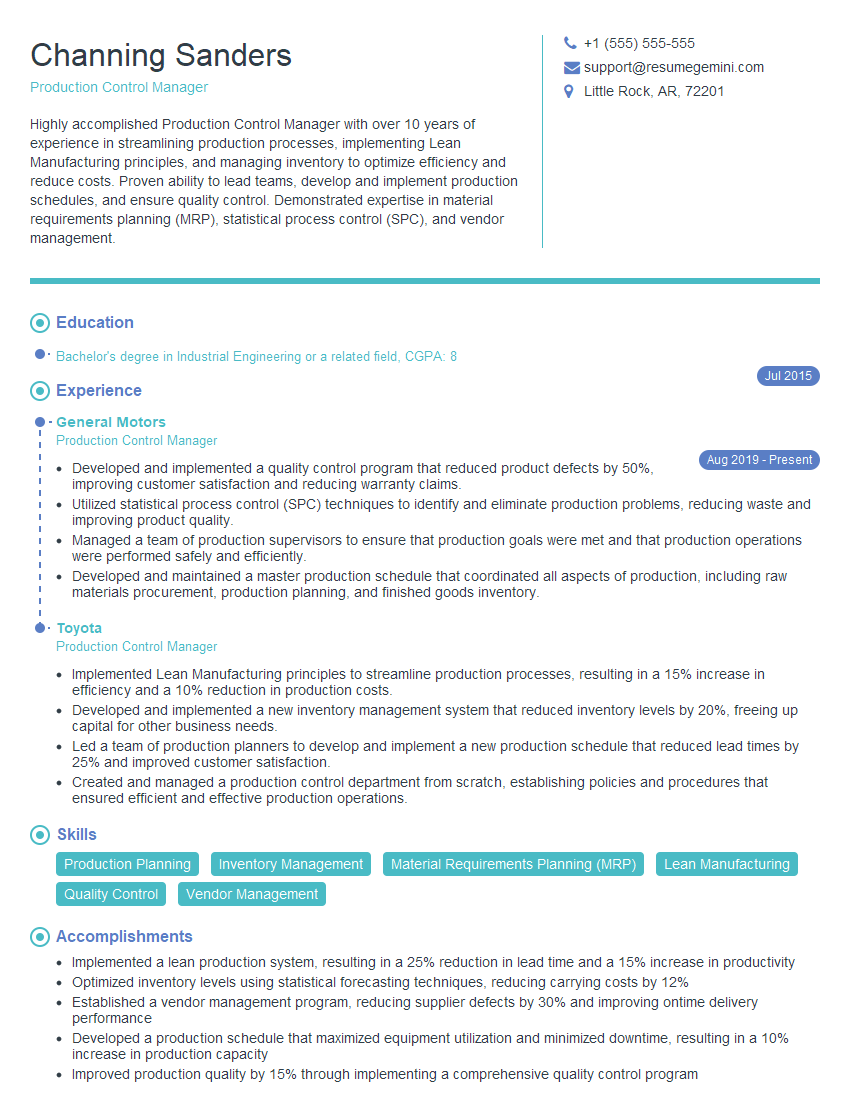
Mastering Just-in-Time delivery principles significantly enhances your career prospects in logistics, supply chain management, and manufacturing. A strong understanding of JIT demonstrates valuable skills in optimization, efficiency, and problem-solving, highly sought after by employers. To maximize your job search success, it’s crucial to present your qualifications effectively. Creating an ATS-friendly resume is key to getting your application noticed. We highly recommend using ResumeGemini, a trusted resource, to build a professional and impactful resume. Examples of resumes tailored to highlight JustinTime (JIT) Delivery expertise are available to help you get started.
Explore more articles
Users Rating of Our Blogs
Share Your Experience
We value your feedback! Please rate our content and share your thoughts (optional).
What Readers Say About Our Blog
Really detailed insights and content, thank you for writing this detailed article.
IT gave me an insight and words to use and be able to think of examples