The right preparation can turn an interview into an opportunity to showcase your expertise. This guide to Knowledge of Animal Welfare Regulations interview questions is your ultimate resource, providing key insights and tips to help you ace your responses and stand out as a top candidate.
Questions Asked in Knowledge of Animal Welfare Regulations Interview
Q 1. Explain the five freedoms of animal welfare.
The Five Freedoms are a widely recognized framework for animal welfare, focusing on the animal’s ability to live a natural and fulfilling life. They are not a legal framework in themselves, but they guide many national and international regulations and serve as a benchmark for ethical treatment.
- Freedom from Hunger and Thirst: Access to fresh water and a diet to maintain full health and vigor.
- Freedom from Discomfort: Provision of an appropriate environment including shelter and a comfortable resting area.
- Freedom from Pain, Injury, or Disease: Prevention or rapid diagnosis and treatment of injury and disease.
- Freedom to Express Normal Behavior: Provision of sufficient space, proper facilities, and company of the animal’s own kind.
- Freedom from Fear and Distress: Conditions and treatment which avoid mental suffering.
For example, a dairy cow needs adequate feed and clean water (Freedoms 1), a comfortable stall and regular hoof trimming (Freedoms 2 and 3), access to pasture for grazing and social interaction (Freedom 4), and a calm and predictable environment free from loud noises and rough handling (Freedom 5).
Q 2. Describe the key differences between animal welfare and animal rights.
Animal welfare and animal rights are distinct concepts. Animal welfare focuses on the well-being of animals, aiming to prevent suffering and ensure a good quality of life. It accepts the use of animals by humans, but only under strict conditions that prioritize the animals’ physical and psychological needs. Animal rights, conversely, advocates for the inherent rights of animals, arguing they should not be used for human purposes at all. This perspective opposes activities like farming, hunting, and animal experimentation.
Imagine a farm. An animal welfare approach would focus on ensuring the animals have appropriate housing, access to food and water, and minimal stress. An animal rights approach would argue that the animals should not be kept in captivity for human benefit.
Q 3. What are the common indicators of animal neglect or abuse?
Indicators of animal neglect or abuse can be physical or behavioral. Physical signs may include malnutrition (emaciation, poor coat condition), injuries (wounds, broken bones), parasites, and disease. Behavioral indicators can be more subtle, such as lethargy, unusual aggression or fearfulness, repetitive behaviors (stereotypies), and failure to thrive.
- Malnutrition: Extremely thin body condition, dull coat, bony prominences visible.
- Injuries: Open wounds, lacerations, broken limbs, untreated infections.
- Unsanitary Conditions: Overcrowding, lack of hygiene, accumulation of feces and waste.
- Behavioral Changes: Extreme fear, aggression, self-mutilation, unusual vocalizations.
For instance, a dog with matted fur, untreated wounds, and ribs showing through its skin would clearly indicate neglect. A cat constantly pacing or exhibiting excessive grooming could suggest underlying stress or distress.
Q 4. How do you assess the adequacy of animal housing and environmental enrichment?
Assessing housing adequacy involves considering species-specific needs. Factors include space allowance, environmental temperature control, substrate type, access to water and feed, and hygiene. Environmental enrichment aims to stimulate natural behaviors and reduce stress. It can involve providing appropriate toys, substrates for digging or foraging, hiding places, and social interaction.
For example, pigs require enough space to express natural behaviors like rooting and wallowing. Providing straw bedding encourages rooting, and a mud bath allows for wallowing. For a cat, providing climbing structures, scratching posts, and toys mimics its natural hunting and exploring behaviors.
Adequacy is assessed through observation, measurement of space and environmental parameters, and evaluation of the animals’ behavior and health. Poor housing may manifest as injuries, stereotypic behaviors, and higher disease rates.
Q 5. What are the legal requirements for transportation of animals?
Legal requirements for animal transportation vary by jurisdiction but generally focus on minimizing stress and preventing injury. Key aspects include appropriate vehicle design (ventilation, temperature control, space allowance), journey duration limits, rest stops, adequate food and water, and safe loading and unloading procedures. Specific regulations often address different animal species due to their varying needs. For example, livestock may require specific ventilation systems and space allowances to prevent overheating and suffocation, while fish require oxygenated water and temperature control.
Failure to comply with regulations can result in hefty fines and legal consequences. For instance, animals might suffer from dehydration, heat stress, or injuries during transportation. Documentation and proper handling are crucial.
Q 6. Outline the procedures for handling animal cruelty complaints.
Handling animal cruelty complaints usually involves a structured process. It begins with reporting the incident to the relevant authorities (e.g., animal control, RSPCA, police). An investigation follows, often including site visits, interviews with witnesses, and veterinary examinations of the animals. Evidence is gathered, and if cruelty is confirmed, legal action may be taken, potentially resulting in fines, imprisonment, or animal seizure.
Consider an incident involving a dog chained outside without access to food or shelter. A complaint would trigger an investigation, where authorities will assess the dog’s condition and the owner’s actions. This might involve gathering photographic evidence and testimony from neighbours. If neglect is confirmed, the dog could be seized and the owner prosecuted.
Q 7. Explain the role of record-keeping in animal welfare compliance.
Comprehensive record-keeping is essential for demonstrating compliance with animal welfare regulations. Records should document aspects like animal identification, health checks, feeding and watering schedules, environmental conditions, treatment records, transportation logs, and any incidents or non-compliances. These records are critical for auditing purposes, demonstrating due diligence, and facilitating investigations if problems arise.
For example, a farm should maintain detailed records of each animal’s health status, including vaccination dates and any treatments administered. Transportation records need to detail journey details, temperature logs and the condition of the animals on arrival. The ability to provide these well-maintained records during inspections are crucial to demonstrating a commitment to compliance.
Q 8. Describe the different types of animal welfare audits.
Animal welfare audits come in various forms, each designed to assess different aspects of animal care and treatment. They can be broadly categorized as:
- Compliance Audits: These audits focus on verifying adherence to specific regulations and standards. They’re often checklist-driven, checking for things like proper housing, feeding, and veterinary care, using a predefined set of criteria. For example, a dairy farm might be audited to check if they meet the minimum space requirements per cow mandated by the relevant legislation.
- Performance Audits: These go beyond simple compliance, evaluating the overall effectiveness of animal welfare programs. They may involve data analysis, observation of animal behavior, and interviews with staff to assess things like animal health, productivity, and overall well-being. A zoo, for instance, might undergo a performance audit to assess their enrichment programs and their impact on animal behavior.
- Third-Party Audits: Independent organizations or certification bodies conduct these audits to provide an unbiased assessment of a facility’s animal welfare practices. This offers an additional level of accountability and transparency. Many food companies rely on third-party audits to ensure their suppliers meet their animal welfare standards.
- Internal Audits: These audits are conducted by the facility itself to identify areas for improvement. They often form part of a continuous improvement process, helping organizations proactively manage potential welfare risks. A research laboratory might use internal audits to regularly review their protocols for animal handling and pain management.
The specific type of audit used depends on the context, the species involved, and the goals of the assessment.
Q 9. How do you ensure compliance with animal welfare legislation?
Ensuring compliance with animal welfare legislation requires a multi-faceted approach. It starts with a thorough understanding of the relevant laws and regulations, which vary significantly depending on location and the species involved.
- Develop and Implement Standard Operating Procedures (SOPs): Creating detailed SOPs for all aspects of animal care, from housing and feeding to handling and veterinary procedures, ensures consistent adherence to the legislation. These SOPs should be readily accessible to all staff.
- Staff Training and Education: Regular training on animal welfare regulations and best practices is crucial. Staff need to understand the legislation, recognize signs of animal distress, and know how to respond appropriately. Role-playing and practical demonstrations are particularly effective.
- Regular Monitoring and Record-Keeping: Meticulous record-keeping is essential. This includes detailed records of animal health, treatment, and any incidents. Regular monitoring of animals allows for early identification of potential welfare problems. This might involve daily health checks or behavioral observations, depending on the species and the context.
- Internal Audits and Reviews: As mentioned earlier, regular internal audits provide a mechanism for identifying gaps in compliance and implementing necessary corrective actions. These should be conducted by independent personnel where possible.
- Collaboration with Regulatory Authorities: Open communication and collaboration with regulatory authorities are vital. This might involve participating in inspections, providing reports, and seeking guidance when necessary.
Ultimately, compliance isn’t just about avoiding penalties; it’s about ensuring the well-being of the animals under your care.
Q 10. What are the ethical considerations in animal research?
Ethical considerations in animal research are paramount. The overarching principle is the ‘3Rs’: Replacement, Reduction, and Refinement.
- Replacement: Whenever possible, researchers should seek to replace the use of animals with non-animal alternatives, such as computer models, cell cultures, or in vitro studies.
- Reduction: Researchers should use the minimum number of animals necessary to obtain statistically valid results. Careful experimental design and statistical analysis are critical.
- Refinement: This involves minimizing pain, distress, and suffering through the use of appropriate anesthesia, analgesia, and humane endpoints. Researchers must also consider environmental enrichment to improve the animals’ overall well-being.
Beyond the 3Rs, ethical considerations include:
- Justification of the research: The potential benefits of the research must outweigh the potential harm to the animals.
- Competence of researchers: Researchers should possess the necessary skills and knowledge to conduct the research ethically and competently.
- Institutional oversight: Ethical review boards (ERBs) or Institutional Animal Care and Use Committees (IACUCs) provide independent oversight of animal research protocols to ensure they meet ethical standards.
- Transparency and accountability: Researchers have a responsibility to be transparent about their methods and to be accountable for the welfare of the animals under their care.
Failing to adhere to these ethical principles can lead to serious consequences, including legal repercussions and damage to the reputation of the researchers and institutions involved. Ethical animal research requires a constant commitment to minimizing harm and maximizing benefits.
Q 11. Discuss the use of pain relief and anesthesia in animal procedures.
The use of pain relief and anesthesia in animal procedures is a critical aspect of ethical animal care. The goal is always to minimize pain and distress whenever possible. The specific approach depends on the procedure, the species, and the individual animal’s condition.
Analgesia refers to pain relief, while anesthesia refers to loss of sensation, including pain. Many procedures require both.
- Pre-operative analgesia: Administering pain relief before a procedure can reduce the animal’s overall pain experience.
- Anesthesia during the procedure: Appropriate anesthesia ensures the animal does not feel pain during the procedure.
- Post-operative analgesia: Providing pain relief after a procedure is crucial for preventing prolonged suffering and promoting recovery.
- Choice of anesthetic agents: The selection of anesthetic agents should consider factors such as the animal’s species, age, and health status.
- Monitoring during and after anesthesia: Close monitoring is vital to ensure the effectiveness and safety of anesthesia.
For example, a veterinarian performing surgery on a dog would use pre-operative analgesics like NSAIDs, general anesthesia during the surgery, and post-operative analgesics like opioids to manage pain throughout the entire process. Failure to use appropriate pain relief and anesthesia constitutes unethical and often illegal practice.
Q 12. How do you handle conflicts between animal welfare regulations and economic pressures?
Conflicts between animal welfare regulations and economic pressures are unfortunately common. Businesses may feel that strict adherence to animal welfare standards increases costs and reduces profitability. However, neglecting animal welfare can have significant long-term consequences, including reputational damage, legal penalties, and consumer boycotts.
Strategies for managing these conflicts include:
- Cost-benefit analysis: A thorough assessment of the costs and benefits associated with different animal welfare practices. This might reveal opportunities for optimizing animal welfare without excessive financial burdens.
- Innovation and technology: Investing in new technologies and practices that can improve animal welfare while maintaining efficiency. For example, automated systems can reduce labor costs and improve animal handling.
- Transparency and communication: Openly communicating with stakeholders, including consumers, about animal welfare practices. Transparency can build trust and support for higher welfare standards.
- Collaboration and partnerships: Working with other businesses, NGOs, and government agencies to develop and implement innovative solutions.
- Long-term perspective: Focusing on the long-term benefits of animal welfare, such as enhanced brand reputation and improved consumer loyalty.
In the long run, prioritizing animal welfare is often beneficial for businesses, even if it involves short-term cost increases. A strong reputation for animal welfare can significantly enhance a company’s brand and profitability.
Q 13. What are your strategies for managing animal welfare in a crisis or emergency?
Managing animal welfare in a crisis or emergency requires a proactive and well-planned approach. This includes developing contingency plans that address potential hazards and outlining clear procedures to follow in case of an emergency.
- Emergency preparedness plan: A detailed plan outlining procedures for evacuating animals, providing emergency care, and dealing with potential hazards such as natural disasters or disease outbreaks.
- Designated emergency personnel: Identifying and training personnel who will be responsible for animal care during an emergency.
- Emergency supplies and resources: Maintaining adequate supplies of food, water, medications, and other essential resources.
- Communication protocols: Establishing clear communication channels to ensure effective coordination during an emergency.
- Collaboration with external agencies: Establishing relationships with external agencies such as animal rescue organizations, veterinary services, and government authorities.
For example, a zoo would have detailed plans for evacuating animals in case of a wildfire, including designated transport routes, emergency shelters, and procedures for tranquilizing and handling stressed animals. A farm might have protocols for dealing with disease outbreaks, including isolation procedures, veterinary care, and disposal of carcasses.
Q 14. Explain the importance of animal welfare education and training.
Animal welfare education and training are fundamental to ensuring high standards of animal care. A well-informed and trained workforce is crucial for identifying and addressing welfare issues effectively.
- Raising awareness: Education programs can raise public awareness of animal welfare issues and promote responsible animal ownership. This might involve public campaigns, educational materials, or workshops.
- Professional development: Providing specialized training for those working with animals, such as farmers, veterinarians, researchers, and animal care professionals. This training should cover relevant legislation, species-specific needs, and best practices in animal handling and husbandry.
- Curriculum development: Incorporating animal welfare principles into school curricula and university programs. This ensures future generations are equipped with the knowledge and skills to make informed decisions about animal care.
- Continuous learning: Promoting continuous learning and professional development through workshops, conferences, and online resources.
Effective education and training programs equip individuals with the knowledge and skills to provide appropriate care, prevent welfare problems, and respond effectively to emergencies. Ultimately, this translates to improved animal welfare outcomes across all sectors involving animals.
Q 15. How do you stay updated on changes in animal welfare regulations?
Staying current with animal welfare regulations requires a multi-pronged approach. It’s not a one-time task but an ongoing commitment.
- Official Government Websites: Regularly checking the websites of relevant government agencies (e.g., USDA, DEFRA, your country’s equivalent) for updates, new legislation, and revised guidelines is crucial. These websites often have newsletters or email alerts you can subscribe to.
- Professional Organizations: Membership in professional organizations like the American Veterinary Medical Association (AVMA), the World Organisation for Animal Health (WOAH), or similar groups provides access to webinars, conferences, journals, and publications detailing the latest changes and best practices in animal welfare.
- Industry Publications and Journals: Staying informed through peer-reviewed journals and industry-specific publications is key. These resources often publish research and articles on emerging welfare issues and legislative changes.
- Networking and Continuing Education: Attending conferences, workshops, and seminars keeps you up-to-date on current challenges and solutions. Networking with colleagues allows for the sharing of insights and experiences.
- Legal Updates Services: Specialized legal services often provide summaries and analyses of new legislation, making it easier to understand the impact of changes on your practice.
By combining these methods, you can build a comprehensive system for tracking and understanding evolving animal welfare regulations.
Career Expert Tips:
- Ace those interviews! Prepare effectively by reviewing the Top 50 Most Common Interview Questions on ResumeGemini.
- Navigate your job search with confidence! Explore a wide range of Career Tips on ResumeGemini. Learn about common challenges and recommendations to overcome them.
- Craft the perfect resume! Master the Art of Resume Writing with ResumeGemini’s guide. Showcase your unique qualifications and achievements effectively.
- Don’t miss out on holiday savings! Build your dream resume with ResumeGemini’s ATS optimized templates.
Q 16. Describe a situation where you had to enforce animal welfare regulations.
During my time at a large-scale poultry farm, I encountered a situation where the ventilation system in one of the barns malfunctioned, leading to dangerously high ammonia levels and inadequate temperature control. This directly compromised the birds’ welfare, causing respiratory distress and heat stress.
My immediate response was to initiate an emergency protocol. I first ensured the immediate safety of the birds by contacting the farm manager and maintenance crew to address the ventilation problem. Simultaneously, I documented the conditions with photos and detailed notes, including bird mortality rates and visible signs of distress. I then contacted the relevant regulatory authority (in this case, our regional Department of Agriculture) to report the incident. The department sent inspectors to assess the situation, and based on my documented evidence, fines were levied against the farm for non-compliance. The farm subsequently invested in improving their emergency protocols and preventative maintenance for their ventilation systems.
This case highlighted the importance of proactive monitoring, thorough documentation, and effective communication with both management and regulatory bodies when enforcing animal welfare regulations.
Q 17. How do you deal with resistance or non-compliance from stakeholders?
Dealing with resistance or non-compliance requires a strategic and empathetic approach, focusing on education and collaboration rather than immediate confrontation.
- Education and Communication: Clearly explain the relevant regulations and their rationale, emphasizing the importance of animal welfare and the potential consequences of non-compliance (legal penalties, reputational damage). Provide resources and support to help stakeholders understand and meet the requirements.
- Collaborative Problem-Solving: Work with stakeholders to identify the root causes of non-compliance. This might involve financial constraints, lack of training, or inadequate infrastructure. Develop practical and achievable solutions together.
- Graduated Enforcement: Begin with warnings and educational interventions before resorting to formal enforcement actions. Provide opportunities for correction and improvement. This approach builds trust and facilitates long-term compliance.
- Documentation: Meticulously document all interactions, warnings, and corrective actions taken. This protects both the animals and your organization from potential legal challenges.
- Seeking Support: If collaborative efforts fail, escalate the issue to supervisory authorities within your organization or engage relevant regulatory bodies for formal intervention.
Remember that the ultimate goal is to improve animal welfare, and a collaborative approach often leads to more sustainable improvements than punitive measures alone.
Q 18. How do you assess the welfare of animals in different species?
Assessing animal welfare across different species requires understanding the specific needs and behaviors of each. There is no single approach. The ‘Five Freedoms’ framework – freedom from hunger and thirst, freedom from discomfort, freedom from pain, injury, and disease, freedom to express normal behavior, and freedom from fear and distress – provides a useful foundation, but must be species-specific in application.
- Species-Specific Indicators: Indicators of good welfare vary greatly. For example, assessing the welfare of a dairy cow involves examining factors like milk production, body condition score, and lameness, while assessing the welfare of a chimpanzee requires observing social interaction, play behavior, and cognitive enrichment opportunities.
- Behavioral Observation: Observing normal and abnormal behaviors is essential. For example, unusual vocalizations, changes in appetite, repetitive behaviors (stereotypies), self-mutilation, or aggression can all indicate welfare issues.
- Physiological Measures: Heart rate, respiration rate, and cortisol levels (a stress hormone) can provide objective measures of stress, but these methods often require specialized equipment and expertise.
- Environmental Enrichment: Assessing the adequacy of environmental enrichment is critical, as the environment greatly influences an animal’s capacity to express natural behaviors.
- Veterinary Examinations: Regular veterinary check-ups are necessary to detect and address health problems that may negatively impact welfare.
Effective welfare assessment requires a combination of observation, physiological measurement, and consideration of the animal’s species-specific needs and environment.
Q 19. What are the signs of stress in animals and how do you address them?
Signs of stress vary greatly among species, but some common indicators include:
- Behavioral Changes: Increased restlessness, pacing, changes in eating or drinking habits, decreased social interaction, self-mutilation, or abnormal postures.
- Physiological Changes: Increased heart rate, respiration rate, and body temperature; changes in cortisol levels (stress hormone); weight loss; immunosuppression.
- Appearance Changes: Dull coat, loss of hair or feathers, increased susceptibility to illness.
Addressing stress requires identifying the underlying cause. This might involve improving housing conditions, providing more enrichment, adjusting management practices, or addressing health issues. For example, if a dog is exhibiting excessive barking and pacing, the cause may be separation anxiety, requiring behavioral modification techniques. If a pig is showing signs of stress due to overcrowding, addressing the overcrowding by increasing space per animal is necessary. In all cases, careful monitoring of the animal’s response to interventions is crucial. Sometimes veterinary intervention is required.
Q 20. Explain the role of technology in improving animal welfare.
Technology plays a significant role in improving animal welfare in several ways:
- Remote Monitoring: Sensors and cameras can provide real-time data on environmental conditions (temperature, humidity, ammonia levels) and animal behavior. This allows for early detection of potential welfare problems and proactive intervention.
- Precision Livestock Farming: Technology such as automated feeding systems, robotic milkers, and activity monitors allows for more precise management of animals, improving efficiency and reducing stress.
- Data Analysis and Predictive Modeling: Data from sensors and other monitoring systems can be analyzed to identify patterns and predict potential welfare issues, allowing for proactive management and preventative measures.
- Automated Systems for Environmental Control: Automated systems can maintain optimal environmental conditions for animals, reducing stress associated with extreme temperatures, poor ventilation, or inadequate lighting.
- Improved Disease Detection: Technology can facilitate early detection of diseases, allowing for prompt treatment and prevention of outbreaks, improving animal health and welfare.
However, it’s important to note that technology is a tool, and its effective use requires careful consideration of animal needs and responsible implementation. Simply deploying technology without considering its impact on the animal’s overall welfare is insufficient.
Q 21. Describe the impact of animal welfare on public health.
Animal welfare has a significant impact on public health in several ways:
- Zoonotic Diseases: Poor animal welfare conditions can increase the risk of zoonotic diseases – diseases that can spread from animals to humans. Overcrowding, poor hygiene, and stress can create environments conducive to the transmission of pathogens.
- Food Safety: Animals raised in poor welfare conditions may be more susceptible to disease, which can contaminate food products. This increases the risk of foodborne illnesses in humans.
- Antimicrobial Resistance: The overuse of antibiotics in animals raised in poor welfare conditions can contribute to the development of antimicrobial resistance, making it more difficult to treat infections in both animals and humans.
- Mental Health: Exposure to animal cruelty or neglect can have negative impacts on mental health, particularly in children. Conversely, interaction with well-cared-for animals can have positive effects on mental and emotional well-being.
Ensuring good animal welfare is therefore not just an ethical imperative, but also contributes to improving public health and safety.
Q 22. How do you balance animal welfare with sustainability considerations?
Balancing animal welfare and sustainability requires a holistic approach that recognizes their interconnectedness. It’s not a zero-sum game; rather, it’s about finding synergistic solutions. Sustainable practices, like efficient farming methods or responsible wildlife management, can actually improve animal welfare by reducing stress, preventing disease, and providing better resource access. Conversely, neglecting animal welfare can negatively impact sustainability. For instance, animal diseases can decimate livestock populations, impacting food security.
Here’s how we achieve this balance:
- Precision livestock farming: Utilizing technology to monitor animal health and behavior, optimizing resource use, and minimizing environmental impact.
- Sustainable sourcing: Choosing animal products from farms that prioritize both welfare and environmental responsibility – for example, certifications that ensure humane treatment and reduced carbon footprint.
- Integrated pest management: Reducing reliance on harmful pesticides that can harm non-target animals while ensuring crop protection.
- Habitat restoration: Protecting and restoring natural habitats supports biodiversity and ensures the welfare of wildlife populations.
For example, a dairy farm adopting rotational grazing improves pasture health, reducing the environmental impact while simultaneously providing animals with access to diverse forage, enriching their environment and promoting natural behaviors – enhancing welfare.
Q 23. Explain the concept of ‘species-specific needs’ in animal welfare.
Species-specific needs in animal welfare acknowledge that different animals have unique biological, behavioral, and psychological requirements. A one-size-fits-all approach is simply inadequate. Understanding these unique needs is crucial for providing appropriate care and ensuring high welfare standards.
Examples of species-specific needs:
- Dietary requirements: Herbivores need access to appropriate vegetation; carnivores need meat-based diets. Inappropriate diets lead to malnutrition and suffering.
- Social structures: Some animals thrive in groups (e.g., sheep), others prefer solitude (e.g., tigers). Inadequate social environments can cause stress and behavioral problems.
- Environmental enrichment: Providing appropriate stimulation, such as toys or opportunities for exploration, is essential for mental well-being. This differs drastically between species; a cat needs climbing opportunities, while a parrot needs complex puzzles.
- Physical environment: Housing needs vary dramatically; a snake requires a specific temperature and humidity range, while a horse needs ample space to move around.
Ignoring species-specific needs leads to welfare compromise. For instance, keeping a highly social primate in isolation can lead to severe psychological distress, impacting their health and potentially shortening their lifespan.
Q 24. How do you prioritize animal welfare concerns when resources are limited?
Prioritizing animal welfare with limited resources requires a strategic approach focusing on the most critical needs first. This necessitates a thorough risk assessment to identify the most pressing welfare issues.
Prioritization Framework:
- Identify the most vulnerable groups: Animals experiencing the greatest suffering or at highest risk (e.g., those with injuries or disease) need immediate attention.
- Focus on preventative measures: Investing in preventative care (e.g., vaccinations, proper nutrition) is often more cost-effective than treating emergencies. This includes addressing environmental factors that contribute to poor welfare.
- Targeted interventions: Concentrate efforts on areas yielding the greatest impact, rather than spreading resources thinly. This could be focused on a specific disease outbreak or a particular area of inadequate housing.
- Collaboration and partnerships: Securing additional resources and expertise through partnerships with other organizations or governmental agencies.
- Regular monitoring and evaluation: Tracking the effectiveness of interventions and adjusting the strategy based on data.
For example, in a shelter with limited veterinary resources, prioritizing animals with life-threatening injuries over those with minor ailments is a necessary but ethical prioritization strategy.
Q 25. Discuss the importance of collaboration in animal welfare initiatives.
Collaboration is paramount in animal welfare initiatives. No single entity can tackle the complex challenges alone. Effective collaborations harness diverse expertise, resources, and perspectives.
Types of collaborations:
- Government agencies and NGOs: Governments set regulations, while NGOs often implement on-the-ground projects and advocacy.
- Scientists and practitioners: Researchers generate knowledge, while practitioners apply this knowledge in real-world settings.
- Businesses and consumers: Companies can implement welfare-friendly practices, while informed consumers can drive demand for ethical products.
- International cooperation: Sharing best practices and addressing transnational welfare issues such as wildlife trafficking.
Benefits of collaboration:
- Increased efficiency: Shared resources and expertise enhance impact.
- Broader reach: Joint efforts reach more animals and stakeholders.
- Enhanced policy development: Collaboration ensures policies reflect scientific understanding and practical considerations.
- Improved public awareness: Joint campaigns increase public understanding and engagement.
For instance, a successful wildlife conservation program might involve collaboration between government agencies, local communities, research institutions, and international conservation organizations.
Q 26. How do you communicate animal welfare information effectively to diverse audiences?
Effective communication is crucial for advancing animal welfare. Tailoring messages to specific audiences is paramount to ensuring understanding and engagement.
Strategies for diverse audiences:
- Scientific community: Utilize peer-reviewed publications and presentations at conferences.
- Policymakers: Provide concise, evidence-based reports highlighting policy implications.
- Farmers and industry professionals: Offer practical training and workshops focusing on welfare-friendly practices.
- General public: Employ storytelling, visuals, and social media to create emotional connections and raise awareness.
- Children: Use age-appropriate materials, games, and activities to promote empathy and understanding.
Communication methods:
- Websites and social media: Disseminate information widely.
- Educational materials: Fact sheets, brochures, videos.
- Public events and campaigns: Raise awareness and engage the public.
- Media outreach: Utilize press releases, interviews, and documentaries.
For instance, a campaign to reduce dog abandonment might use heart-wrenching images on social media alongside practical advice about responsible pet ownership for the general public while providing detailed statistics to policymakers.
Q 27. Describe your experience with animal welfare legislation at both a national and international level.
My experience encompasses both national and international animal welfare legislation. At the national level, I’ve been involved in analyzing and interpreting legislation relating to livestock farming, laboratory animal use, and companion animal welfare. This includes understanding specific regulations regarding housing standards, transportation, veterinary care, and humane slaughter. I have also provided expert testimony on the effectiveness and potential improvements of existing regulations.
Internationally, I’ve worked with organizations involved in developing and implementing global welfare standards. This involves understanding the complexities of differing national legal frameworks and cultural perspectives on animal welfare. A key area of focus has been the harmonization of standards across countries and the promotion of best practices to address transnational welfare concerns, such as wildlife trade and the welfare of animals in transportation.
Specific examples include assisting in the drafting of updated guidelines for laboratory animal care based on the latest scientific evidence, and contributing to international collaborations aimed at improving welfare standards for animals in transit during international trade.
Q 28. What are your strategies for promoting positive welfare outcomes for animals?
Promoting positive welfare outcomes for animals requires a multi-pronged strategy combining education, advocacy, and practical interventions.
Strategies for positive welfare outcomes:
- Enhancing environmental enrichment: Providing stimulating environments that cater to species-specific needs, promoting natural behaviors, and reducing stress.
- Improving husbandry practices: Implementing best practices for animal care, including appropriate housing, nutrition, and health management.
- Reducing pain and suffering: Prioritizing preventative care, early intervention, and humane euthanasia when necessary.
- Advocating for stronger legislation and enforcement: Ensuring legal frameworks protect animal welfare and are effectively enforced.
- Raising public awareness: Educating the public about animal welfare issues and promoting responsible animal ownership.
- Promoting ethical consumption: Encouraging the public to support businesses and organizations committed to high welfare standards.
- Supporting research and innovation: Investing in scientific research to advance our understanding of animal welfare and develop new technologies to improve care.
For example, a program to improve the welfare of farmed animals might involve providing training to farmers on best husbandry practices, advocating for stricter regulations on animal transport, and educating consumers about the importance of choosing ethically sourced products.
Key Topics to Learn for Knowledge of Animal Welfare Regulations Interview
- Animal Welfare Legislation: Understanding the key acts and regulations governing animal welfare in your specific region (e.g., Animal Welfare Act, specific state/province laws). This includes knowing the definitions of key terms and the scope of legal protection.
- Species-Specific Needs: Demonstrating a deep understanding of the unique welfare requirements of different animal species. This includes housing, enrichment, diet, and handling practices.
- Ethical Considerations: Articulating your understanding of ethical dilemmas in animal care, such as balancing scientific research with animal welfare, and the role of humane euthanasia.
- Practical Application: Being able to discuss practical scenarios, such as recognizing signs of animal distress, implementing appropriate husbandry techniques, and responding to welfare concerns in different settings (e.g., farms, shelters, research facilities).
- Enforcement and Compliance: Understanding the procedures for reporting welfare violations, and the importance of maintaining accurate records and adhering to best practices.
- Risk Assessment and Mitigation: Demonstrating the ability to identify potential welfare risks in various situations and develop strategies to mitigate those risks. This includes understanding biosecurity and disease prevention.
- Animal Behavior and Welfare: Connecting animal behavior to their welfare state. Knowing how to assess animal behavior to identify welfare issues and implement solutions.
Next Steps
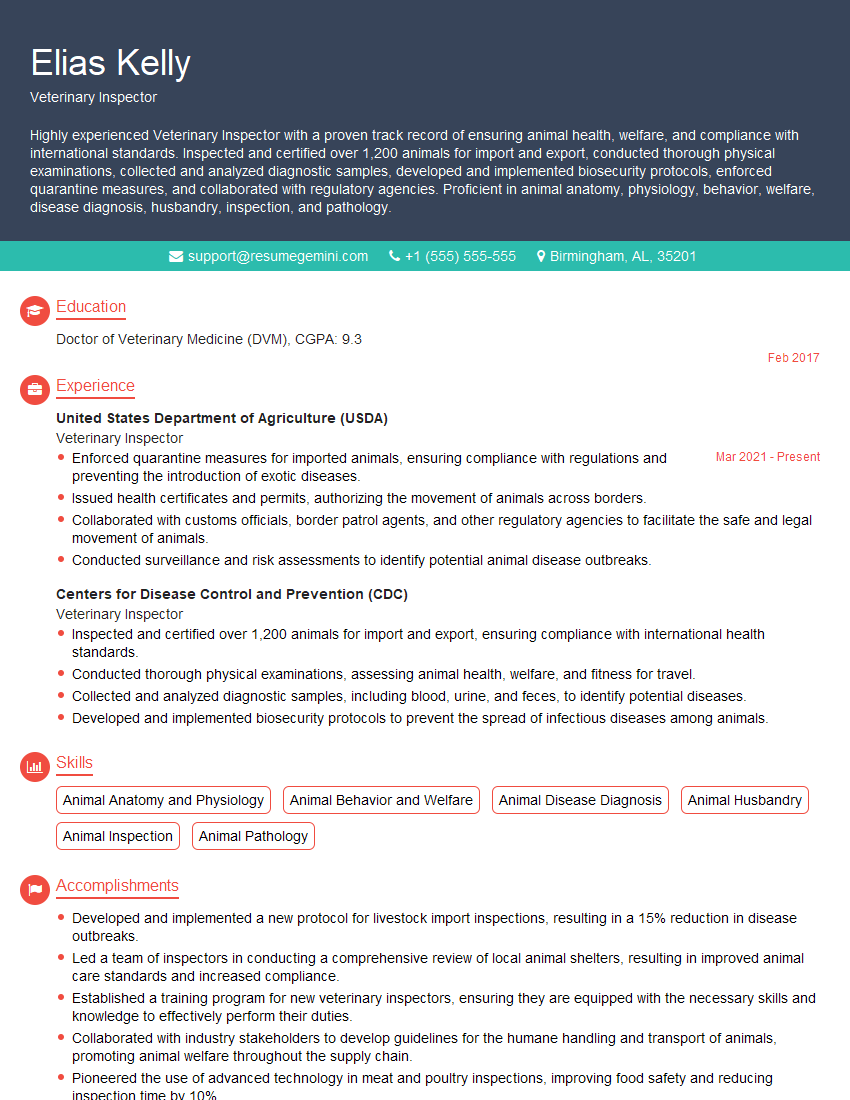
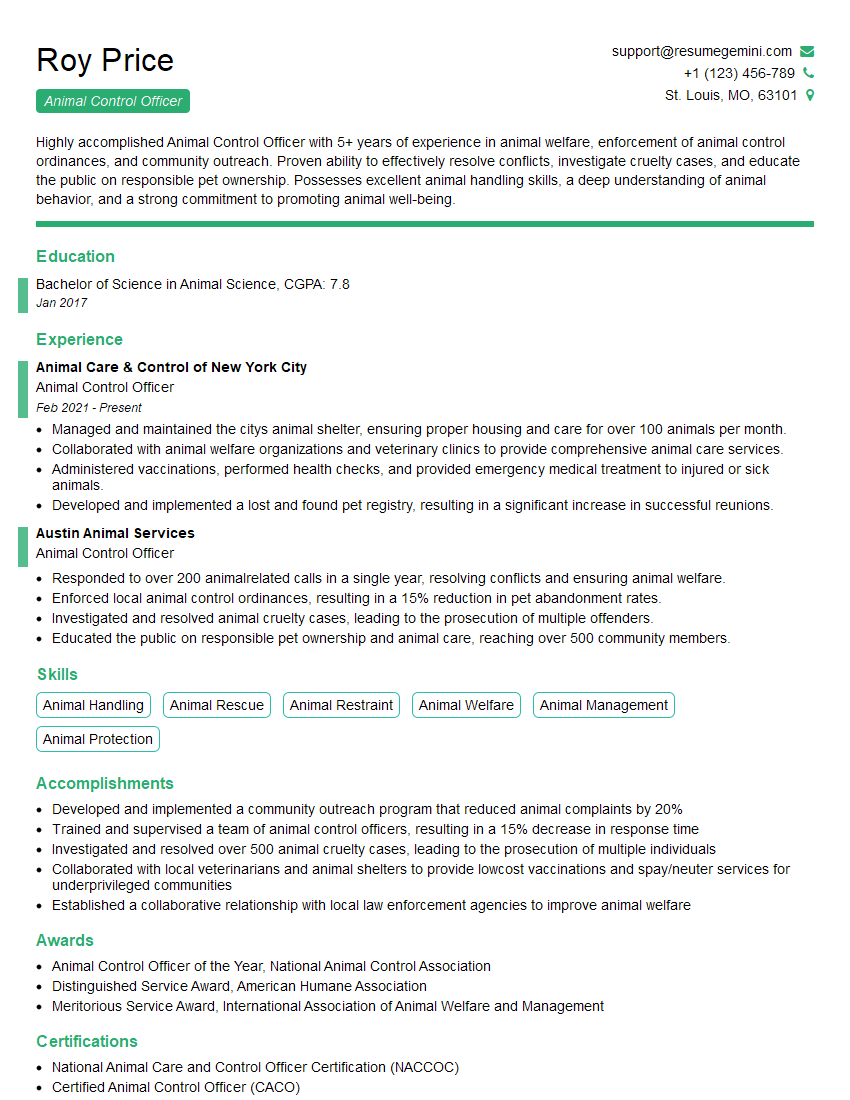
Mastering Knowledge of Animal Welfare Regulations is crucial for career advancement in fields like animal care, veterinary science, research, and regulatory agencies. A strong understanding of these regulations demonstrates your commitment to animal welfare and enhances your credibility. To significantly boost your job prospects, create an ATS-friendly resume that highlights your relevant skills and experience. ResumeGemini is a trusted resource to help you build a professional and impactful resume. Examples of resumes tailored to Knowledge of Animal Welfare Regulations are available to guide you, showcasing the skills employers seek.
Explore more articles
Users Rating of Our Blogs
Share Your Experience
We value your feedback! Please rate our content and share your thoughts (optional).
What Readers Say About Our Blog
Really detailed insights and content, thank you for writing this detailed article.
IT gave me an insight and words to use and be able to think of examples