The thought of an interview can be nerve-wracking, but the right preparation can make all the difference. Explore this comprehensive guide to Knowledge of Cleaning Chemicals and Materials interview questions and gain the confidence you need to showcase your abilities and secure the role.
Questions Asked in Knowledge of Cleaning Chemicals and Materials Interview
Q 1. What are the different types of cleaning agents and their applications?
Cleaning agents are categorized based on their chemical composition and cleaning action. Here are some key types:
- Detergents: These are surfactants that reduce the surface tension of water, allowing it to penetrate and lift away dirt and grime. They are effective on a wide range of soils and are generally less harsh than other cleaning agents. Examples include dish soap and laundry detergent.
- Solvents: These dissolve grease, oil, and other organic materials. Common solvents include alcohols (isopropyl alcohol), ketones (acetone), and hydrocarbons (mineral spirits). They are powerful but often require careful handling due to flammability or toxicity.
- Acid Cleaners: These are effective at removing mineral deposits, scale, and rust. Examples include hydrochloric acid (for heavy-duty cleaning) and citric acid (a milder, more environmentally friendly option). Always use with caution, as they can damage certain surfaces.
- Alkaline Cleaners: These are effective against grease, fats, and protein-based soils. Examples include ammonia and sodium hydroxide (lye). These are powerful cleaners but can be corrosive and should be handled with appropriate safety precautions.
- Abrasives: These cleaners contain particles that physically scrub away dirt and grime. Examples include scouring powders and pastes. While effective, they can scratch delicate surfaces.
The application of each cleaner depends on the type of soil, the surface being cleaned, and safety considerations. For instance, you wouldn’t use a strong acid cleaner on a marble countertop, nor would you use an abrasive cleaner on a polished wooden floor.
Q 2. Explain the Material Safety Data Sheet (MSDS) and its importance.
The Material Safety Data Sheet (MSDS), now often called the Safety Data Sheet (SDS), is a document that provides comprehensive information on the hazards of a chemical product and how to work safely with it. It’s essentially a chemical’s resume, detailing its properties and potential risks.
Its importance lies in worker safety and compliance. An SDS provides crucial information including:
- Identification of the substance: Name, chemical formula, and manufacturer information.
- Hazards identification: Health hazards (toxicity, carcinogenicity), physical hazards (flammability, explosiveness), and environmental hazards.
- Composition/information on ingredients: Lists the chemical components and their concentrations.
- First-aid measures: What to do in case of accidental exposure.
- Fire-fighting measures: Appropriate extinguishing agents and safety precautions during a fire.
- Accidental release measures: How to clean up spills.
- Handling and storage: Safe practices for handling and storing the chemical.
- Exposure controls/personal protection: Recommended personal protective equipment (PPE) like gloves, goggles, and respirators.
- Physical and chemical properties: Boiling point, melting point, flammability, etc.
- Stability and reactivity: Information about chemical stability and potential reactions.
- Toxicological information: Health effects associated with exposure.
- Ecological information: Environmental impact of the chemical.
- Disposal considerations: Proper methods for disposing of the chemical.
- Transport information: Regulations concerning transportation of hazardous materials.
- Regulatory information: Relevant legal and regulatory compliance information.
Failure to consult and follow the SDS can lead to serious accidents, injuries, and environmental damage. It’s a vital resource for anyone working with chemicals.
Q 3. Describe the proper handling and storage procedures for hazardous cleaning chemicals.
Proper handling and storage are paramount when dealing with hazardous cleaning chemicals. Negligence can result in accidents, injuries, and environmental pollution. Key procedures include:
- Read the SDS: Before handling any chemical, thoroughly review the SDS to understand its hazards and safety precautions.
- Personal Protective Equipment (PPE): Always wear appropriate PPE, including gloves, eye protection, and respiratory protection as specified in the SDS. This is not optional!
- Ventilation: Ensure adequate ventilation to prevent the buildup of hazardous fumes. Work in well-ventilated areas or use local exhaust ventilation.
- Spill Prevention: Use drip trays and other containment measures to prevent spills. Store chemicals in designated areas away from incompatible substances.
- Storage: Store chemicals in their original containers, properly labeled and sealed. Store in a cool, dry place, away from direct sunlight and ignition sources. Incompatible chemicals should be stored separately to avoid accidental mixing and dangerous reactions.
- Compatibility: Never mix chemicals unless explicitly stated as safe in the SDS. Mixing incompatible chemicals can create dangerous or even explosive reactions.
- Controlled Access: Restrict access to hazardous chemicals to authorized personnel only.
- Training: All personnel handling hazardous chemicals should receive proper training on safe handling, storage, and emergency procedures.
Imagine a scenario where an employee mixes bleach and ammonia. This produces toxic chloramine gas, a severe health hazard. Proper handling and storage would prevent such potentially lethal mistakes.
Q 4. How do you determine the appropriate concentration of a cleaning solution?
Determining the appropriate concentration of a cleaning solution depends on several factors: the specific cleaning agent, the type of soil, the surface being cleaned, and the manufacturer’s recommendations. Always start with the lowest concentration recommended and increase gradually if necessary.
The concentration is often expressed as a percentage or ratio (e.g., 1:10 dilution). This means 1 part cleaning agent to 10 parts water. The SDS will typically provide recommendations for various applications. If not, a test in an inconspicuous area is often recommended to assess effectiveness and prevent damage.
For example, when diluting a concentrated disinfectant, you might start with a 1:100 dilution, applying it to a small area first to check for any adverse reactions on the surface or effectiveness. If the dilution is insufficient, you can slowly increase the concentration.
Using a measuring device is essential for accurate dilution. Never guesstimate; inaccurate dilutions can lead to ineffective cleaning or damage to surfaces.
Q 5. What are the environmental considerations when selecting cleaning chemicals?
Environmental considerations are crucial when choosing cleaning chemicals. The goal is to minimize the impact on ecosystems and human health. Factors to consider:
- Biodegradability: Choose cleaning agents that readily break down into harmless substances in the environment. Look for products labeled as biodegradable.
- Toxicity: Select chemicals with low toxicity to aquatic life and other organisms. Avoid products containing hazardous substances.
- Phosphate content: Phosphates contribute to eutrophication (excessive algae growth) in water bodies. Opt for low-phosphate or phosphate-free cleaners.
- Volatile Organic Compounds (VOCs): VOCs contribute to air pollution. Choose low-VOC or VOC-free products.
- Packaging: Consider the recyclability or reusability of the packaging. Avoid excessive packaging.
- Sustainable Sourcing: Choose products made from sustainably sourced ingredients.
- Greywater Recycling: Some cleaning solutions are suitable for reuse after treatment, reducing water consumption.
Using environmentally friendly cleaning agents not only protects the environment but also promotes healthier indoor air quality and reduces the risk of exposure to harmful chemicals.
Q 6. Explain the difference between disinfectants, sanitizers, and sterilizers.
These terms describe different levels of microbial reduction:
- Disinfectants: These agents kill or inactivate a significant portion (but not necessarily all) of disease-causing microorganisms on inanimate surfaces. They reduce the number of pathogens to a safe level, but may not eliminate all microorganisms.
- Sanitizers: These reduce the number of microorganisms to a safe level as judged by public health requirements. They don’t necessarily kill all microorganisms but lower their count to a safe level.
- Sterilizers: These agents completely eliminate all forms of microbial life, including bacteria, viruses, fungi, and spores. Sterilization is typically achieved through methods like autoclaving (high-pressure steam) or chemical sterilization with specific agents.
Think of it like this: disinfection is like cleaning a countertop, reducing the number of germs. Sanitization is a more focused approach to cleaning in a restaurant or healthcare setting where lower germ levels are crucial. Sterilization is like preparing a surgical instrument, completely eliminating all microbes. The choice of agent depends entirely on the level of cleanliness required.
Q 7. How do you address spills of hazardous cleaning chemicals?
Addressing spills of hazardous cleaning chemicals requires immediate and careful action. The primary goal is to minimize exposure and prevent further contamination. Follow these steps:
- Evacuate the area: Remove all personnel from the immediate vicinity of the spill to prevent exposure.
- Assess the spill: Determine the type and quantity of the spilled chemical. Consult the SDS for specific cleanup instructions.
- Personal Protective Equipment (PPE): Put on appropriate PPE, as indicated in the SDS, before attempting cleanup. This might include respirators, gloves, eye protection, and protective clothing.
- Containment: Contain the spill to prevent its spread. Use absorbent materials like spill pads or kitty litter to soak up the liquid. Create a perimeter to prevent further spread.
- Cleanup: Carefully collect the absorbent material and the spilled chemical according to the SDS instructions. Follow any specific neutralization procedures outlined in the SDS.
- Disposal: Dispose of the contaminated materials appropriately according to local regulations. This might involve contacting a hazardous waste disposal service.
- Ventilation: Ensure adequate ventilation to remove any lingering fumes.
- Decontamination: Thoroughly clean and disinfect the affected area according to the SDS recommendations.
- Documentation: Document the spill, including the date, time, location, chemical involved, quantity spilled, and cleanup procedures.
Failing to follow proper spill response protocols can lead to serious health issues, property damage, and environmental contamination. The key is preparation and adherence to safety protocols.
Q 8. What are the safety precautions to take when using cleaning equipment?
Safety when using cleaning equipment is paramount. It’s not just about preventing accidents; it’s about ensuring consistent, high-quality cleaning without jeopardizing your health or the environment. This involves understanding the equipment’s specific instructions and adhering to safety protocols.
- Personal Protective Equipment (PPE): Always wear appropriate PPE, such as gloves, eye protection, and closed-toe shoes. The type of PPE will vary depending on the cleaning chemicals and equipment being used. For example, when handling strong acids, chemical-resistant gloves and eye protection are essential. When using a floor buffer, sturdy closed-toe shoes are crucial to prevent injuries.
- Machine Safety: Before operating any equipment, ensure you understand how to turn it on, off, and use all safety features. Regularly inspect equipment for damage or wear and tear. Never operate faulty equipment. For instance, a vacuum cleaner with a frayed cord presents a significant electrical hazard and should be immediately taken out of service.
- Ergonomics: Pay attention to your body mechanics to avoid strain and injury. Use proper lifting techniques when handling heavy cleaning supplies, and take regular breaks to prevent fatigue. Consider using ergonomic tools to reduce the risk of repetitive strain injuries.
- Environmental Awareness: Be mindful of your surroundings. Clear the area of obstructions before operating equipment, and be aware of other people working nearby. For example, ensure sufficient ventilation when using cleaning chemicals to prevent exposure to harmful fumes.
Think of it like this: preparing for cleaning is like preparing for a sporting event. You wouldn’t run a marathon without proper shoes and training. Similarly, using cleaning equipment safely requires preparation and adherence to safety protocols.
Q 9. How do you identify and address potential hazards related to cleaning chemicals?
Identifying and addressing hazards related to cleaning chemicals requires a multifaceted approach, beginning with proper labeling and Safety Data Sheets (SDS).
- SDS Review: Before using any chemical, thoroughly review its SDS. This document provides crucial information on hazards, safe handling procedures, first aid measures, and disposal methods. It’s your primary resource for understanding the risks.
- Hazard Recognition: Look for warning labels indicating flammability, toxicity, corrosiveness, or other hazards. Understand the meaning of pictograms and hazard statements. For example, a skull and crossbones symbol indicates acute toxicity.
- Ventilation: Ensure adequate ventilation when using chemicals that produce fumes. This might involve opening windows or using exhaust fans. Poor ventilation can lead to inhalation hazards.
- Compatibility: Never mix cleaning chemicals unless explicitly stated as safe in the SDS. Mixing incompatible chemicals can create dangerous reactions, such as generating toxic gases.
- Personal Protection: Select and use appropriate PPE based on the hazards identified in the SDS. This might include gloves, eye protection, respirators, and protective clothing.
- Spill Response: Have a spill response plan in place. This includes having absorbent materials readily available to clean up spills and understanding the proper disposal procedures for contaminated materials.
Imagine you’re a chef working with different ingredients. You wouldn’t just throw them together without knowing their properties and how they interact. Similarly, understanding cleaning chemicals requires careful review and adherence to safety guidelines.
Q 10. Describe your experience with different cleaning methods (e.g., wet cleaning, dry cleaning, steam cleaning).
My experience encompasses various cleaning methods, each with its own strengths and weaknesses. I’ve found that the most effective approach often involves a combination of techniques.
- Wet Cleaning: This involves using water-based solutions to clean surfaces. This is commonly used for everyday cleaning of floors, countertops, and other surfaces. The effectiveness of wet cleaning depends heavily on the cleaning solution used – choosing the right one for the specific surface and soil is key. For instance, a neutral cleaner might be sufficient for general cleaning, while a disinfectant might be necessary in healthcare settings.
- Dry Cleaning: This typically involves using dry cleaning solvents or absorbent materials to remove dirt and grime without the use of water. It is commonly used for delicate fabrics and upholstery where water damage is a concern. Dry cleaning, however, requires careful selection of solvents to avoid damaging the material being cleaned.
- Steam Cleaning: This method utilizes high-pressure steam to clean and sanitize surfaces. It’s particularly effective in removing grease, grime, and other stubborn soils and is often used for carpets, upholstery, and hard floors. The high temperature of the steam kills many bacteria and other microorganisms, leading to effective sanitation. However, it’s crucial to use steam cleaners appropriately to avoid damage to sensitive surfaces.
Selecting the right method is like choosing the right tool for a job. A hammer wouldn’t be effective for cutting wood, and similarly, each cleaning method is best suited for specific applications.
Q 11. What training have you received on handling and using cleaning chemicals?
Throughout my career, I’ve received extensive training on the safe handling and use of cleaning chemicals. This training has encompassed both theoretical knowledge and practical application.
- SDS Interpretation: I’ve received thorough training in understanding and interpreting Safety Data Sheets (SDS), allowing me to identify potential hazards and implement appropriate safety measures.
- Chemical Compatibility: I’ve learned about the dangers of mixing incompatible chemicals and the importance of using chemicals only as directed on the label and in the SDS.
- PPE Selection and Use: My training covers selecting and properly using personal protective equipment (PPE), including gloves, eye protection, respirators, and protective clothing.
- Spill Response Procedures: I am trained in proper spill response procedures, including containment, cleanup, and disposal of contaminated materials.
- Emergency Procedures: I am familiar with emergency procedures in case of accidents or exposure incidents, including first aid measures and contacting emergency services.
This ongoing training ensures I stay updated on best practices and new technologies in cleaning chemical safety. It’s a continuous learning process, not a one-time event.
Q 12. How do you ensure the effectiveness of cleaning procedures?
Ensuring the effectiveness of cleaning procedures involves a combination of careful planning, proper execution, and verification.
- Pre-Cleaning Assessment: Before beginning cleaning, assess the area to identify specific soil types and surface materials. This helps in selecting the appropriate cleaning methods and chemicals.
- Method Selection: Choose cleaning methods and chemicals suited to the specific surfaces and soils. For example, a strong alkaline cleaner might be suitable for grease removal, while a neutral cleaner is better for general cleaning.
- Proper Application: Apply cleaning solutions according to the manufacturer’s instructions. This includes the correct dilution ratio, contact time, and application techniques.
- Thorough Cleaning: Ensure the area is thoroughly cleaned and rinsed. Removing all residues is crucial for preventing re-soiling and potential health hazards.
- Verification: After cleaning, verify the effectiveness using appropriate techniques. This could include visual inspection, microbiological testing, or other methods to ensure that the desired level of cleanliness and sanitation has been achieved.
Consider it like baking a cake: You wouldn’t expect a perfect cake without following a recipe and checking if it’s cooked properly. Similarly, consistent results in cleaning require attention to detail and verification.
Q 13. Explain your understanding of OSHA regulations related to cleaning chemicals.
My understanding of OSHA regulations related to cleaning chemicals centers on the Hazard Communication Standard (HCS) and other relevant standards. The HCS requires employers to provide employees with information about the hazards of chemicals in their workplace.
- SDS Access: Employees must have access to SDSs for all hazardous chemicals they handle. This includes proper labeling of containers and training on how to interpret the information contained within the SDS.
- Training: Employers must provide training to employees on the hazards of the chemicals they handle, including safe handling procedures, PPE, and emergency response protocols.
- Labeling: Containers of hazardous chemicals must be properly labeled with hazard warnings, pictograms, and signal words.
- PPE Provision: Employers must provide appropriate PPE to protect employees from exposure to hazardous chemicals.
- Ventilation: OSHA sets requirements for adequate ventilation to prevent exposure to harmful fumes and airborne contaminants.
- Waste Disposal: OSHA also regulates the proper disposal of hazardous waste, including cleaning chemicals. Proper procedures must be followed to prevent environmental contamination and health risks.
OSHA regulations are not just suggestions; they are legally binding requirements designed to protect worker safety. Non-compliance can lead to serious penalties.
Q 14. How do you manage inventory of cleaning chemicals and supplies?
Managing inventory of cleaning chemicals and supplies is crucial for efficiency, safety, and cost control. A well-organized system ensures that you always have the necessary supplies on hand, prevents waste, and minimizes the risk of expired or outdated products.
- Inventory Tracking: I use a system of inventory tracking, either manual or software-based, to monitor stock levels and consumption. This allows for proactive ordering of supplies to avoid shortages.
- FIFO (First-In, First-Out): I employ the FIFO system to manage inventory, ensuring that older chemicals are used before newer ones to minimize the risk of expiration.
- Storage: Cleaning chemicals are stored properly according to their SDS requirements, ensuring compatibility and preventing accidents. This includes proper ventilation and segregation of incompatible chemicals.
- Regular Audits: Periodic inventory audits help identify discrepancies, assess consumption patterns, and refine ordering practices.
- Waste Management: A system for managing waste chemicals is in place, ensuring proper disposal and compliance with regulations. This involves using designated containers and coordinating with waste disposal services.
Think of it as managing a restaurant’s stock. You need the right ingredients, in the right quantities, and stored appropriately to run a successful operation. Inventory management for cleaning chemicals follows a similar principle.
Q 15. Describe your experience with different types of cleaning equipment.
My experience with cleaning equipment spans a wide range, from basic tools to specialized machinery. I’m proficient with various types of vacuum cleaners, including upright, canister, and backpack models, each suited for different cleaning tasks and surface types. For example, upright vacuums excel on large carpeted areas, while canister vacuums are more maneuverable in tight spaces. I’m also experienced with floor cleaning machines like automatic scrubbers and buffer/polishers. These machines significantly increase efficiency, particularly in large commercial settings. Beyond these, I’ve used steam cleaners for disinfecting and removing stubborn stains, and high-pressure washers for exterior cleaning. My experience also includes using specialized equipment like carpet extractors for deep cleaning carpets and upholstery and window cleaning systems for streak-free results.
- Vacuum Cleaners: Upright, canister, backpack, wet/dry
- Floor Machines: Automatic scrubbers, buffer/polishers
- Specialized Equipment: Steam cleaners, high-pressure washers, carpet extractors, window cleaning systems
Career Expert Tips:
- Ace those interviews! Prepare effectively by reviewing the Top 50 Most Common Interview Questions on ResumeGemini.
- Navigate your job search with confidence! Explore a wide range of Career Tips on ResumeGemini. Learn about common challenges and recommendations to overcome them.
- Craft the perfect resume! Master the Art of Resume Writing with ResumeGemini’s guide. Showcase your unique qualifications and achievements effectively.
- Don’t miss out on holiday savings! Build your dream resume with ResumeGemini’s ATS optimized templates.
Q 16. How do you maintain cleaning equipment to ensure optimal performance?
Maintaining cleaning equipment is crucial for optimal performance and longevity. This involves a multi-faceted approach. Regularly emptying dust bags and cleaning filters in vacuums prevents clogging and maintains suction power. Floor machines require thorough rinsing and cleaning after each use to remove debris and cleaning solution residue. Sharp blades on scrubbers should be inspected and replaced when worn. Regular lubrication of moving parts, such as bearings in buffer/polishers, ensures smooth operation and prevents premature wear. Storage is also vital; equipment should be stored in a clean, dry place to prevent rust and damage. Following the manufacturer’s instructions for maintenance is essential, and scheduling routine inspections can help identify potential issues before they become major problems. For example, neglecting filter maintenance in a vacuum can drastically reduce its efficiency, leading to poorer cleaning results and potential motor damage.
Q 17. How do you prevent cross-contamination when cleaning?
Preventing cross-contamination is paramount in cleaning, especially in healthcare or food service settings. The key is a systematic approach involving color-coded cleaning systems, appropriate cleaning agents, and proper disposal procedures. Color-coded mops, buckets, and cloths for different areas (e.g., restrooms, kitchens) minimize the risk of transferring bacteria or pathogens. Using separate cleaning solutions for different surface types ensures the efficacy of cleaning and avoids potential reactions. For example, using an acidic cleaner on a marble surface could damage it, while using an alkaline cleaner on a delicate surface might cause discoloration. Proper disposal of soiled materials in designated containers prevents the spread of contaminants. Thorough cleaning and disinfection of equipment between uses is also critical. Imagine a scenario where you clean a restroom and then, without cleaning your mop, proceed to clean a kitchen area – this is exactly the cross-contamination we’re trying to avoid.
Q 18. What is your experience with specialized cleaning tasks (e.g., carpet cleaning, floor polishing)?
I possess extensive experience in specialized cleaning tasks. Carpet cleaning involves using specialized extraction methods and cleaning solutions to remove dirt, stains, and allergens from carpets and upholstery. This includes pre-treatment of stains, thorough extraction using hot water extraction, and proper drying techniques to prevent mold growth. Floor polishing involves using appropriate polishing compounds and machines to restore the shine and luster to various floor surfaces, such as hardwood, marble, or terrazzo. Each surface requires a different approach; for instance, hardwood floors require less aggressive polishing than marble floors. Proper techniques and materials are crucial to avoid damaging the surface. My experience also includes window cleaning, which requires the use of appropriate cleaning solutions and techniques to achieve streak-free results.
Q 19. How do you assess the safety and efficacy of new cleaning products?
Assessing the safety and efficacy of new cleaning products requires a thorough evaluation. I start by reviewing the product’s Safety Data Sheet (SDS) to understand its chemical composition, potential hazards, and necessary safety precautions. I then examine the manufacturer’s claims regarding efficacy, looking for independent testing data to support these claims. Real-world testing is also crucial, including trials in a controlled environment to determine its effectiveness on different surface types and its impact on the environment. I’d consider factors like its biodegradability and potential for environmental pollution. For example, a product claiming superior stain removal would need evidence to back up that claim. Finally, I’d assess user-friendliness: is the product easy to apply, rinse, and handle safely?
Q 20. How do you communicate effectively about cleaning chemical safety to your team?
Effective communication about cleaning chemical safety is paramount. I utilize a multi-pronged approach: First, I conduct thorough training sessions, covering proper handling, storage, mixing ratios, and emergency procedures. We discuss the SDS for each chemical, emphasizing potential hazards and necessary protective equipment. Visual aids like posters and checklists reinforce key safety points. Clear labeling of all cleaning chemicals is mandatory, and I ensure everyone understands the color-coding system. Regular refresher courses keep safety protocols top-of-mind. Open communication channels encourage team members to voice concerns or report incidents without fear of reprimand. Clear procedures for handling spills or accidents are crucial and regularly reviewed. Imagine a team member accidentally mixing incompatible chemicals – clear communication and training could prevent a potentially hazardous situation.
Q 21. Describe a time you had to solve a problem related to cleaning chemicals or equipment.
During a large-scale office cleaning, we encountered a stubborn adhesive residue on several floors that resisted conventional cleaning methods. Our initial approach with standard cleaning solutions proved ineffective. I investigated the adhesive’s type and, after researching its chemical composition, discovered that a specific solvent would be effective while being safe for the floor type. We implemented a controlled test area first, confirming the solvent’s effectiveness and safety. Then, we developed a detailed step-by-step procedure including proper ventilation, personal protective equipment, and waste disposal. This careful, phased approach allowed us to successfully remove the adhesive without damaging the floors or compromising the safety of my team. The entire process taught the importance of careful research and a systematic approach to problem-solving in cleaning situations.
Q 22. What are the key factors to consider when choosing cleaning chemicals for a specific surface?
Choosing the right cleaning chemical hinges on understanding the surface material’s properties and the type of soiling present. Ignoring this can lead to damage or ineffective cleaning.
- Material Compatibility: Porous surfaces like wood or fabrics require gentler, pH-neutral cleaners to avoid damage. Non-porous surfaces like glass or stainless steel can tolerate stronger chemicals. For instance, using an abrasive cleaner on marble will scratch it, while using a harsh alkaline cleaner on wood could cause discoloration.
- Type of Soil: Different soils require different cleaning agents. Greasy grime needs a degreaser, while mildew requires a bleach-based solution. A simple all-purpose cleaner might suffice for light dusting, but won’t tackle stubborn stains. For example, a kitchen grease stain requires a different cleaner than a coffee stain on carpet.
- Chemical Composition: Understand the chemical makeup of the cleaner—is it acidic, alkaline, or neutral? Acids are effective on mineral deposits (like limescale), while alkalis excel at cutting grease. Neutral cleaners are versatile and safer for most surfaces. Always check the product label for specific instructions and safety precautions.
- Concentration: Diluting cleaning solutions is often necessary; following the manufacturer’s instructions is crucial. Over-dilution might result in ineffective cleaning, while over-concentration could harm the surface or cause damage.
For example, when cleaning a granite countertop, I’d select a pH-neutral cleaner to prevent etching or dulling. However, cleaning a heavily soiled oven would necessitate a powerful degreaser, followed by a thorough rinsing.
Q 23. What are the common health risks associated with improper handling of cleaning chemicals?
Improper handling of cleaning chemicals poses significant health risks, ranging from minor irritations to severe health problems. Always prioritize safety by following instructions diligently.
- Respiratory Issues: Inhalation of fumes from strong chemicals can cause coughing, wheezing, and even asthma attacks. Proper ventilation is paramount.
- Skin Irritation: Direct contact can lead to dermatitis, rashes, and burns. Wearing appropriate gloves and protective clothing is non-negotiable.
- Eye Damage: Splashes can cause serious eye irritation or blindness. Safety goggles are essential.
- Ingestion: Accidental ingestion can lead to severe internal damage. Keep chemicals stored securely, out of reach of children and pets.
- Allergic Reactions: Some individuals are sensitive to certain chemicals, leading to allergic reactions. Always test a small, inconspicuous area first and wear appropriate PPE.
I once witnessed a colleague suffer from severe eye irritation due to a chemical splash. This reinforced the critical importance of wearing appropriate safety gear at all times and emphasizing safety training in my team.
Q 24. How do you ensure compliance with relevant environmental regulations regarding cleaning chemical disposal?
Compliance with environmental regulations is vital. Improper disposal pollutes waterways and harms ecosystems. We must follow local, state, and federal regulations carefully.
- Hazardous Waste Identification: Identify chemicals classified as hazardous waste according to the relevant regulations (e.g., EPA guidelines). Many cleaners contain volatile organic compounds (VOCs) requiring specific disposal methods.
- Proper Storage: Store chemicals according to safety data sheets (SDS) to prevent leaks and spills. Properly labeled containers are crucial.
- Waste Segregation: Separate hazardous waste from regular trash. Often, separate containers are necessary for different types of hazardous waste.
- Recycling and Disposal: Utilize approved recycling programs for recyclable containers. Dispose of hazardous waste through licensed waste haulers or designated collection centers. Never pour chemicals down the drain unless explicitly stated on the label.
- Record Keeping: Maintain detailed records of chemical use and disposal. This is crucial for auditing and demonstrating compliance.
In my previous role, we implemented a comprehensive waste management program, including training for staff, specialized containers, and regular audits. This ensured that we were consistently compliant with all relevant environmental regulations.
Q 25. What are some sustainable cleaning practices you are familiar with?
Sustainable cleaning practices minimize environmental impact while maintaining hygiene standards. This is a growing priority in my field.
- Microfiber Cloths: These reusable cloths effectively clean with less water and cleaning solution compared to paper towels. They reduce waste and save money in the long run.
- Green Cleaning Products: Opt for eco-friendly, biodegradable cleaning agents that minimize VOCs, phosphates, and other harmful chemicals. Look for certifications like Green Seal or EPA Safer Choice.
- Water Conservation: Use water sparingly. Employ techniques like damp mopping instead of soaking surfaces to conserve water.
- Waste Reduction: Utilize refillable containers and bulk purchases to reduce packaging waste. Consider using concentrate solutions to minimize chemical usage.
- Proper Cleaning Techniques: Cleaning efficiently prevents the need for excessive chemical use and reduces water consumption. Proper training and established procedures are key.
We’ve successfully implemented a green cleaning program in our facility, reducing chemical waste by 30% and water usage by 15%. The program demonstrates that sustainability and effective cleaning are not mutually exclusive.
Q 26. How do you train new employees on the safe handling and use of cleaning chemicals?
Training new employees on safe chemical handling is paramount. A comprehensive program ensures a safe and productive work environment.
- Safety Data Sheet (SDS) Review: Thoroughly review the SDS for each chemical used. Explain hazard warnings, handling procedures, and emergency response protocols.
- Hands-on Training: Provide practical demonstrations and allow employees to practice safe chemical handling techniques under supervision. This includes proper dilution, application, and equipment usage.
- Personal Protective Equipment (PPE) Training: Demonstrate the correct use and importance of PPE, such as gloves, goggles, and respirators. Explain how to select the appropriate PPE for different chemicals and tasks.
- Emergency Procedures: Detail emergency procedures, including spill response, first aid for chemical exposure, and the location of safety equipment (eye wash stations, safety showers).
- Regular Refresher Training: Conduct regular refresher training sessions to reinforce safety practices and address any changes in regulations or procedures.
Our training program includes a written test and practical demonstration to ensure all employees understand and can apply the safe handling procedures. This approach reduces accidents and creates a culture of safety.
Q 27. Describe your experience with developing and implementing cleaning schedules and procedures.
Developing and implementing effective cleaning schedules and procedures requires a systematic approach. It starts with a thorough assessment.
- Needs Assessment: Identify the specific cleaning needs of each area based on its usage, materials, and traffic. Consider factors like frequency of use and type of soiling.
- Schedule Development: Create a detailed cleaning schedule that specifies the tasks, frequency, responsible personnel, and required chemicals for each area. Prioritize critical areas requiring more frequent cleaning.
- Procedure Development: Develop clear, step-by-step procedures for each cleaning task. This ensures consistency and avoids damaging surfaces or causing safety hazards. Include details about chemical dilution, application methods, and safety precautions.
- Documentation: Document all procedures and schedules for easy reference and staff training. Use clear language and visuals where necessary.
- Monitoring and Evaluation: Regularly monitor cleaning performance and make adjustments to schedules and procedures as needed. Gather feedback from staff to identify areas for improvement.
In one project, I designed a cleaning schedule for a large office complex. The customized schedule, coupled with detailed procedures, led to a 15% improvement in cleaning efficiency and a reduction in maintenance issues.
Q 28. What is your experience with managing budgets for cleaning supplies and chemicals?
Managing cleaning supply budgets requires careful planning and monitoring. Effective budget management ensures value for money while maintaining high cleaning standards.
- Budgeting Process: Develop a detailed budget that includes costs for all cleaning supplies, chemicals, equipment, and personnel. Consider both direct and indirect costs.
- Vendor Selection: Select reliable vendors offering competitive pricing and high-quality products. Negotiate favorable contracts to reduce costs.
- Inventory Management: Implement an inventory management system to track stock levels, prevent shortages, and minimize waste. This also helps avoid unnecessary purchases.
- Cost Analysis: Regularly analyze cleaning costs to identify areas for potential savings. Evaluate the cost-effectiveness of different cleaning products and methods.
- Sustainability Initiatives: Incorporate sustainable practices to reduce consumption and waste, ultimately leading to cost savings.
I successfully reduced cleaning supply costs by 10% in my previous role through a combination of vendor negotiation, efficient inventory management, and the implementation of a green cleaning program. This demonstrated that cost savings and environmental responsibility could work in tandem.
Key Topics to Learn for Knowledge of Cleaning Chemicals and Materials Interview
- Types of Cleaning Agents: Understanding the chemical composition and properties of various cleaning agents (e.g., detergents, disinfectants, solvents) and their appropriate applications.
- Material Compatibility: Knowing how different cleaning chemicals interact with various surfaces and materials (e.g., wood, metal, glass, fabrics) to avoid damage or discoloration. Practical application includes selecting the correct cleaning agent for specific surfaces.
- Safety Procedures and Handling: Mastering safe handling procedures, including proper personal protective equipment (PPE) usage, dilution techniques, and storage protocols for cleaning chemicals. This includes understanding SDS sheets (Safety Data Sheets).
- Cleaning Methods and Techniques: Familiarity with various cleaning methods (e.g., wet cleaning, dry cleaning, steam cleaning) and the appropriate techniques for different types of soiling and materials.
- Environmental Considerations: Understanding the environmental impact of cleaning chemicals and the importance of using eco-friendly and sustainable options. This includes knowledge of biodegradable cleaning agents and waste disposal practices.
- Equipment and Technology: Familiarity with cleaning equipment (e.g., floor machines, pressure washers) and emerging technologies in cleaning and sanitation (e.g., UV disinfection).
- Troubleshooting and Problem-Solving: Developing skills in identifying and resolving common cleaning challenges, such as stain removal, odor control, and equipment malfunctions. This involves understanding the root causes of cleaning issues and developing effective solutions.
Next Steps
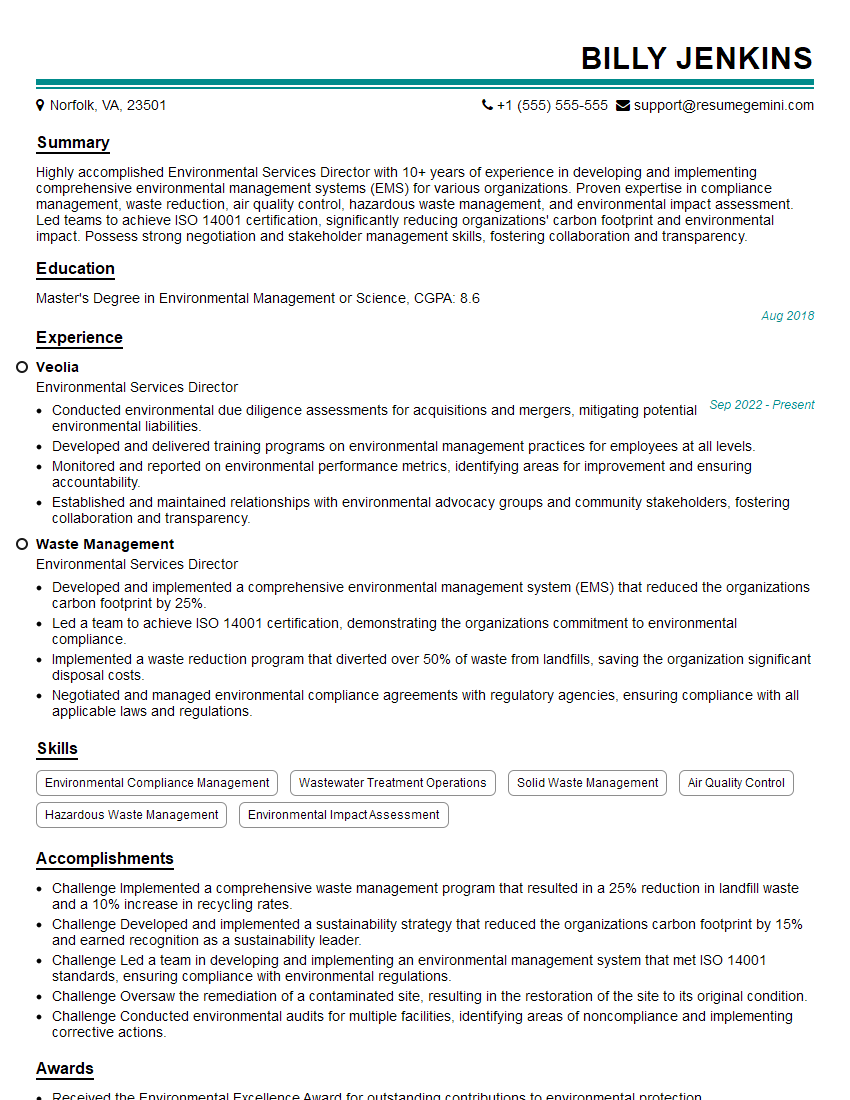
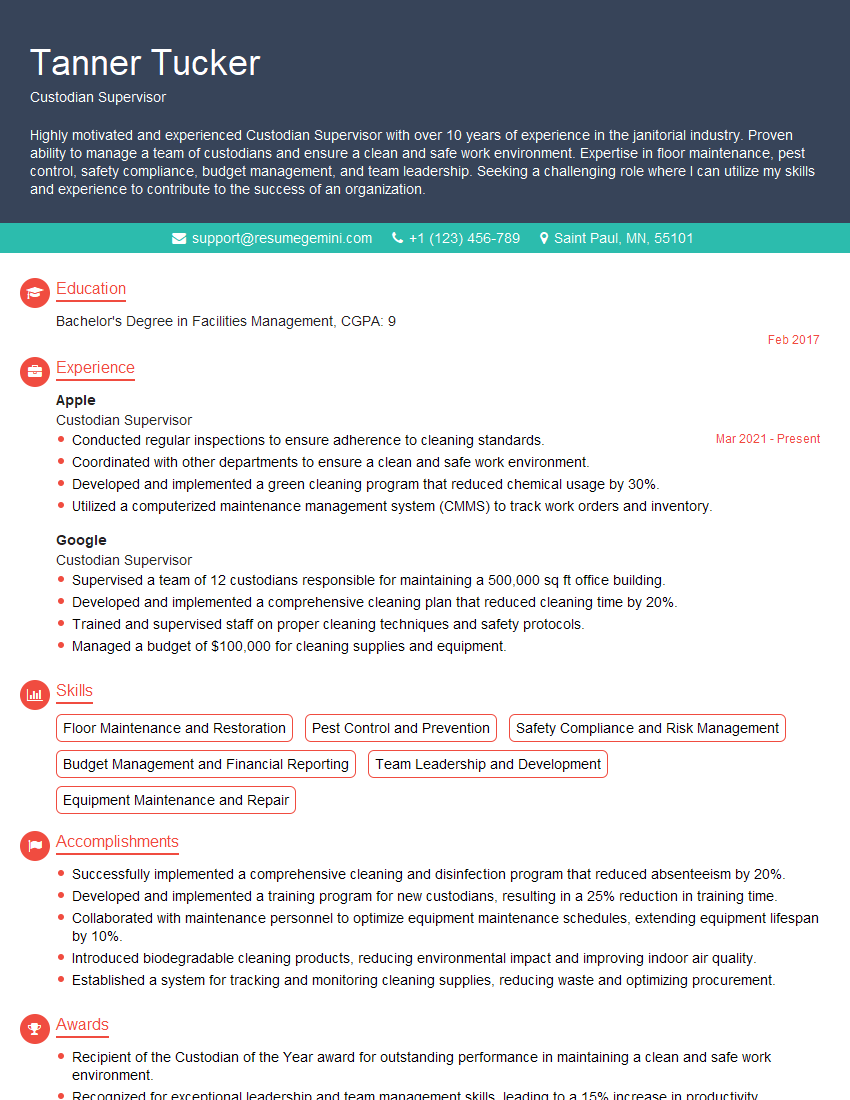
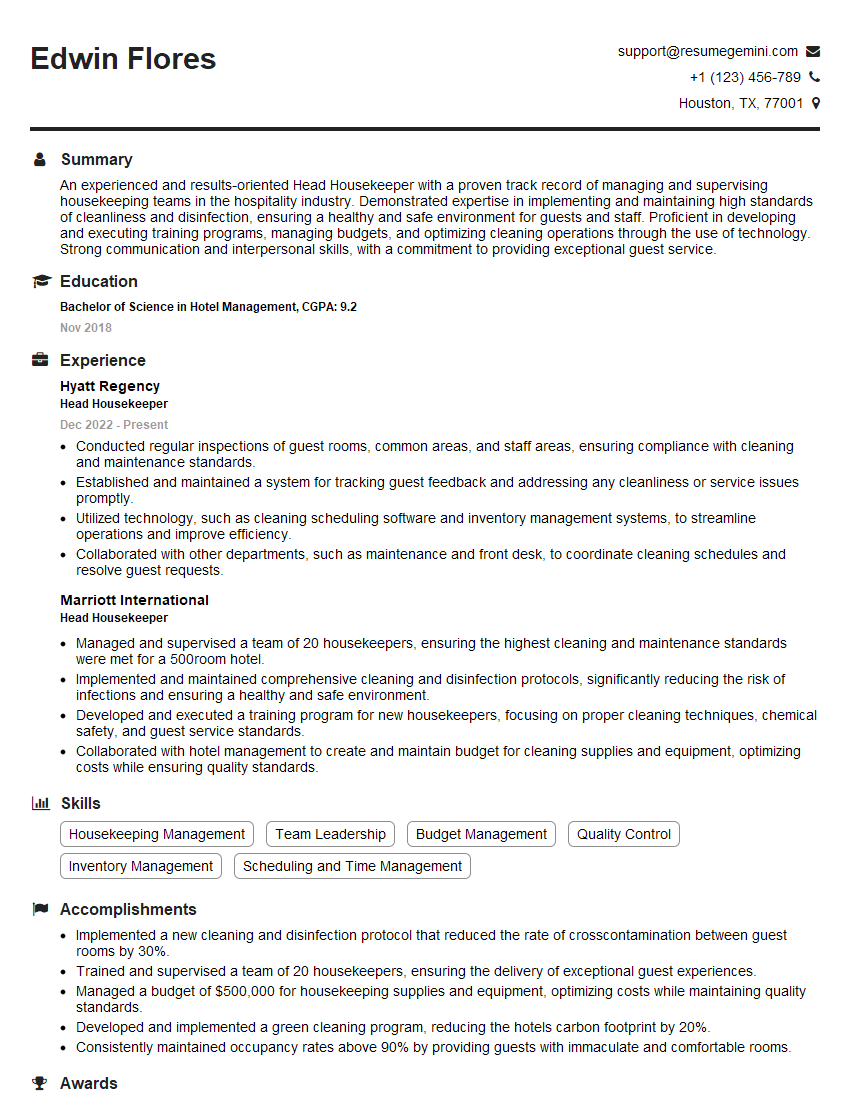
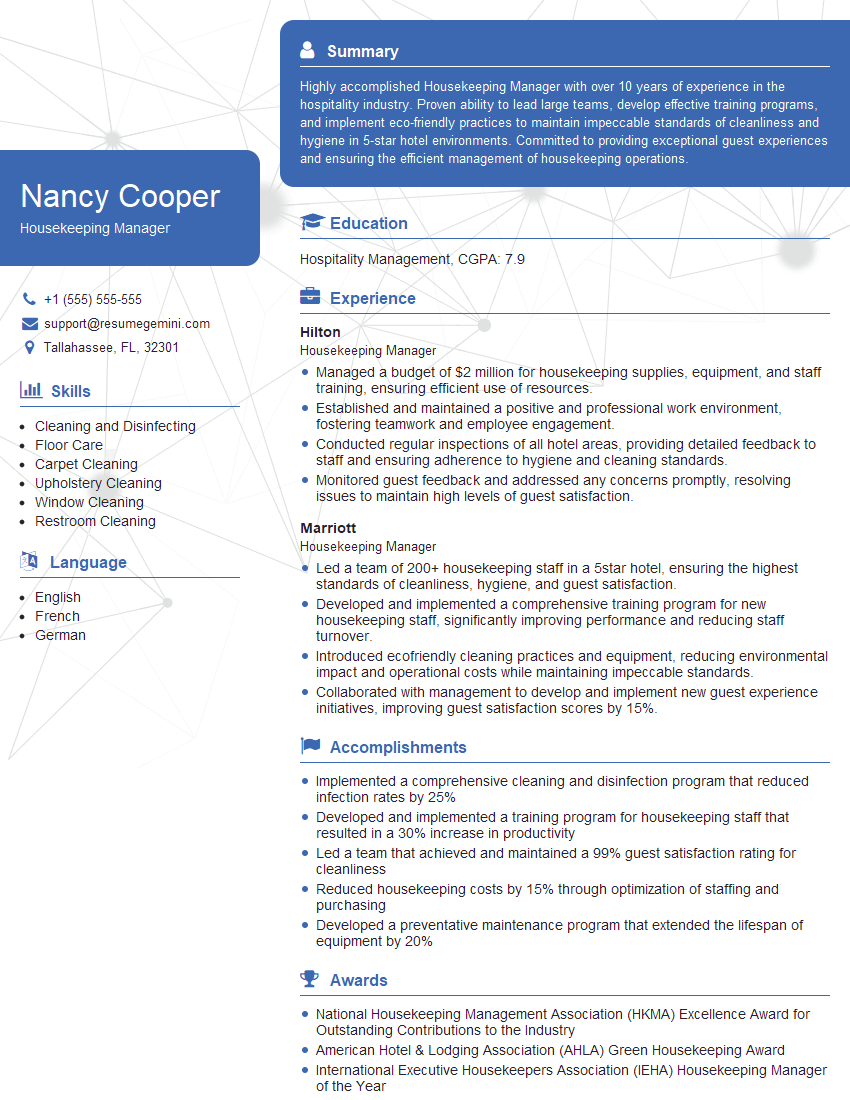
Mastering your knowledge of cleaning chemicals and materials is crucial for career advancement in this field. A strong understanding of these topics will significantly enhance your job prospects and open doors to more challenging and rewarding opportunities. To increase your chances of landing your dream job, it’s vital to create a resume that effectively showcases your skills and experience to Applicant Tracking Systems (ATS). ResumeGemini is a trusted resource to help you build a professional, ATS-friendly resume that highlights your expertise. We offer examples of resumes tailored specifically to roles requiring knowledge of cleaning chemicals and materials, helping you present yourself in the best possible light. Take the next step in your career journey – build a winning resume with ResumeGemini today!
Explore more articles
Users Rating of Our Blogs
Share Your Experience
We value your feedback! Please rate our content and share your thoughts (optional).
What Readers Say About Our Blog
Really detailed insights and content, thank you for writing this detailed article.
IT gave me an insight and words to use and be able to think of examples