Preparation is the key to success in any interview. In this post, we’ll explore crucial Knowledge of color theory and printing processes interview questions and equip you with strategies to craft impactful answers. Whether you’re a beginner or a pro, these tips will elevate your preparation.
Questions Asked in Knowledge of color theory and printing processes Interview
Q 1. Explain the difference between additive and subtractive color mixing.
Additive and subtractive color mixing are two fundamentally different approaches to creating colors. Think of it like this: additive mixing is like adding light, while subtractive mixing is like subtracting light from a white surface.
Additive Color Mixing: This model is used in devices that emit light, such as monitors, televisions, and projectors. It combines red, green, and blue (RGB) light. When you combine all three at full intensity, you get white light. When you reduce the intensity or remove one of these colors, you obtain other colors. For example, combining red and green creates yellow.
- Example: A computer screen uses RGB pixels. Each pixel is made up of sub-pixels of red, green, and blue. By varying the intensity of each sub-pixel, millions of colors can be displayed.
Subtractive Color Mixing: This model is used in print media. It starts with white light (or a white surface), and then inks or pigments absorb certain wavelengths of light, resulting in a specific color. The primary colors are cyan, magenta, yellow, and key (black – K), often referred to as CMYK. Combining all four subtracts nearly all light, resulting in a dark color.
- Example: If you mix cyan and magenta inks, they absorb the red and green wavelengths respectively, leaving only the blue light reflected back, resulting in the color blue.
In short: additive mixes light to create color; subtractive mixes pigments to absorb light, leaving the reflected color visible.
Q 2. Describe the CMYK color model and its limitations.
The CMYK color model is the standard for four-color printing. CMYK stands for cyan, magenta, yellow, and key (black). These four inks are used to create a wide range of colors by combining them in various proportions. The key (black) ink is added to improve the depth and richness of dark colors, and to make the print process more economical.
Limitations:
- Limited Color Gamut: CMYK cannot reproduce the full range of colors visible to the human eye. Many vibrant colors that appear easily on a computer screen can’t be accurately printed in CMYK. This is because the subtractive nature of the process limits the brilliance of the resulting colors.
- Ink Interaction: The way different inks interact on paper affects the final color. This can result in unexpected color shifts and variations, especially in large print runs.
- Substrate Dependence: The color produced will vary depending on the type of paper or material being printed on. A specific CMYK value will appear differently on coated paper versus uncoated paper.
- Dot Gain: During printing, the ink dots spread slightly larger than intended, leading to a darker and more saturated appearance than expected. This needs to be compensated for during color management.
Despite these limitations, CMYK remains the industry standard for cost-effective, high-volume color printing. To mitigate these limitations, careful color profiling and proofing are essential.
Q 3. What is color gamut and why is it important in printing?
Color gamut refers to the range of colors that a particular device or printing process can reproduce. Think of it as the ‘color vocabulary’ of a system. It’s represented as a three-dimensional volume encompassing all possible colors.
Importance in Printing: Understanding color gamut is crucial because it dictates the limits of what a printer can achieve. If you try to print a color that’s outside the printer’s gamut (out-of-gamut color), it will either be approximated with a similar in-gamut color, or appear duller and less vibrant than intended. A smaller gamut limits the possibilities; a larger gamut allows for more accurate color reproduction.
- Example: The CMYK gamut is significantly smaller than the RGB gamut. This means that a vibrant color easily displayed on a computer screen might not be printable with the same vibrancy.
Effective color management strategies must account for the gamut differences between source files (often RGB) and the final printed output (CMYK). This requires conversion and potentially color adjustments to ensure the print matches the design intent as closely as possible within the CMYK limitations.
Q 4. Explain the concept of color profiles (e.g., ICC profiles).
Color profiles, particularly ICC (International Color Consortium) profiles, are digital files that characterize the color capabilities of a specific device or printing process. These profiles define the relationship between the device’s color space and a standardized reference color space (like sRGB or Adobe RGB). They act as a translator to ensure colors appear consistently across different devices and processes.
How They Work: An ICC profile contains a set of mathematical transformations that map the colors from one color space to another. For example, a printer’s ICC profile explains how the printer’s CMYK values relate to a device-independent color space like sRGB. When you open an image in an application that supports ICC profiles, the software uses the embedded profile to transform the image’s colors according to the profile associated with the output device.
- Example: A photograph edited on a monitor with an sRGB profile will need its colors transformed when printed on a press with its own unique CMYK ICC profile to match the on-screen appearance as closely as possible.
Using accurate ICC profiles is critical for achieving color consistency across different steps of the workflow (editing, proofing, printing). Incorrect or missing profiles can lead to significant color discrepancies.
Q 5. How do you ensure color consistency across different printing methods?
Maintaining color consistency across different printing methods requires a meticulous approach combining color management practices, and careful selection of processes and materials.
Strategies:
- Standardize Color Spaces: Use a consistent color space throughout your workflow, typically sRGB for digital design and CMYK for print output. This ensures you’re working with the same ‘color language’ from start to finish.
- Use ICC Profiles: Accurate ICC profiles for all devices involved (monitors, scanners, printers) are vital. They bridge the gap between different color spaces and printing technologies.
- Color Management Software: Employ color management software (like Adobe Color Management Modules or similar) to handle color conversions and profile transformations accurately.
- Color Proofing: Create proofs (hard copies) to verify the color accuracy before committing to a large print run. Soft proofing using color management software is a valuable precursor but needs validation with a physical proof.
- Calibration and Verification: Regularly calibrate your monitors and printing equipment to ensure accuracy and consistency over time. Utilize color calibration tools and test charts.
- Substrate Consistency: Use the same paper stock or print substrate consistently for all print runs. Different papers absorb ink differently and will affect the final color appearance.
- Ink Matching and Control: In offset printing, ink consistency is critical; establish and adhere to strict guidelines on ink formulations, mixing ratios, and printing conditions.
By implementing these strategies, you significantly increase the likelihood of achieving a high degree of color consistency between different printing methods.
Q 6. Describe the process of color proofing.
Color proofing is the process of creating a physical sample of a printed piece to check the accuracy of the colors before the final print run. It’s an essential quality control step, particularly for projects where color fidelity is crucial (like packaging or fine art reproduction).
Types of Color Proofing:
- Soft Proofing: A digital simulation of the final printed output on the computer screen, using ICC profiles and color management software. It’s a cost-effective way to preview colors, but not a perfect substitute for a physical proof.
- Hard Proofing: Creating a physical print of the artwork, ideally using the same printer or press and inks as the final production run. This allows for a true representation of the final output and the most reliable assessment of color accuracy.
Process: A color proof typically involves creating a test print, usually with a smaller number of copies, using similar equipment and materials as the main production run. This allows visual comparison with the original artwork or design. Colorimetric devices can also be used to measure and analyze color differences to ensure accuracy.
Importance: Color proofing minimizes costly mistakes and reprint expenses by allowing for adjustments and corrections before a large-scale print job commences. It helps maintain consistency across the entire production and delivers on the design intent.
Q 7. What are the key differences between offset and digital printing?
Offset and digital printing are two distinct printing methods with significant differences in their processes, capabilities, and applications.
Offset Printing:
- Process: Uses an indirect printing method where the image is transferred from a printing plate to a rubber blanket, and then to the paper. It’s ideal for large print runs due to its efficiency.
- Capabilities: Produces high-quality prints with excellent color accuracy and sharpness, especially on coated papers. Offers vibrant colors and smooth gradations.
- Cost: High initial setup costs (plate making) but relatively low per-unit cost for large print runs.
- Applications: Magazines, books, brochures, packaging, high-volume marketing materials.
Digital Printing:
- Process: Prints directly from a digital file onto the substrate. No printing plates are required.
- Capabilities: Excellent for short-run prints, personalized items, and variable data printing. Offers flexibility but might have slightly lower print quality and less vibrant colors than offset, depending on the digital press.
- Cost: Lower setup costs but higher per-unit cost for large print runs.
- Applications: Business cards, flyers, posters, customized merchandise, on-demand publishing.
The choice between offset and digital printing depends on factors like print quantity, budget, turnaround time, required print quality, and the need for customization or variable data.
Q 8. Explain the role of prepress in the printing process.
Prepress is the crucial stage before actual printing where all the necessary preparations are made to ensure a smooth and high-quality final product. Think of it as the meticulous planning and setup before a grand performance. It involves several key steps, including:
- Design finalization: Ensuring the design is print-ready, checking resolution, color spaces, fonts, and bleeds.
- Image and color correction: Adjusting color balance, contrast, and sharpness to achieve the desired visual effect.
- File preparation: Converting the design file to a format suitable for the chosen printing method (e.g., PDF/X-1a for high-quality print). This often includes creating imposition (arranging pages for efficient printing on sheets).
- Proofing: Creating a test print to verify colors, layout, and other aspects before the main run. Soft proofs (digital simulations) and hard proofs (actual printed samples) are both utilized.
- Platemaking (for offset printing): Creating printing plates which contain the image that will be transferred to the printing substrate.
A well-executed prepress stage minimizes errors, reduces waste, and ultimately contributes to a successful print job. For example, failing to check the color profile could result in significant color shifts during the printing process, leading to costly reprints.
Q 9. What are some common printing defects and how are they corrected?
Printing defects are frustrating, but understanding their causes allows for effective correction. Some common defects include:
- Color mismatches: Inconsistent ink density or incorrect color profiles can lead to variations from the design. Correction: Accurate color calibration, careful ink management, and using color management software are key.
- Mottle: Uneven ink distribution resulting in a blotchy appearance. Correction: Checking ink viscosity, cleaning the printing press, and adjusting ink flow rates.
- Halftone moiré: Interference patterns from the halftone screens creating a wavy or undesirable texture. Correction: Using different screen angles or frequencies in the design and potentially using stochastic screening techniques.
- Back trapping: Ink bleeding under another color, creating blurry edges. Correction: Employing trapping techniques (detailed in a later answer).
- Streaking: Irregular lines or patterns caused by inconsistent ink flow or press issues. Correction: Cleaning the press, checking ink consistency, and potentially adjusting roller pressure.
Troubleshooting often involves systematic investigation – starting with a visual inspection of the print, examining the press settings, and analyzing the prepress files.
Q 10. Describe your experience with color calibration and management software.
I have extensive experience with various color calibration and management software, including industry-standard tools like Adobe Color Management Modules (CMMs), X-Rite i1Profiler, and GMG ColorProof. I’m proficient in creating custom color profiles for different devices (monitors, printers, scanners) to ensure color consistency across the workflow. This involves using spectrophotometers to measure color accurately and then using the software to generate profiles that effectively map the color space of one device to another.
For instance, I recently worked on a project where the client’s monitor displayed colors differently than our printing press. By using X-Rite i1Profiler to create a monitor profile that matched the press’s profile, we eliminated significant color discrepancies and delivered a product that accurately reflected the client’s vision.
Q 11. How do you handle color discrepancies between a digital design and a printed output?
Color discrepancies between digital and printed output are common. To address them, a multi-step process is followed:
- Understanding the color spaces: Digital designs are often created in RGB (Red, Green, Blue), while printing usually uses CMYK (Cyan, Magenta, Yellow, Key – Black). Conversion between these spaces often causes color shifts.
- Color profiling: Accurate color profiles for all devices involved (monitor, printer, scanner) are essential to ensure consistent color representation.
- Soft proofing: Simulating the printed output on screen using the correct color profiles helps predict potential color shifts.
- Hard proofing: Producing a physical proof provides a more accurate representation of the final print. This allows for making adjustments before committing to the full print run.
- Communication with the printer: Open communication with the printer about color expectations and potential variations is crucial.
Addressing color discrepancies requires a deep understanding of color management and meticulous attention to detail throughout the entire workflow.
Q 12. What are the various paper types used in printing and their properties?
Paper choice significantly impacts the final print quality and feel. Different paper types possess unique properties:
- Coated paper: A smooth surface with a coating that allows for sharp details and vibrant colors; ideal for high-resolution images and glossy finishes. Examples include gloss, matte, and silk.
- Uncoated paper: A textured surface that absorbs ink, resulting in a softer, more natural look; better for text-heavy documents and environmentally friendly printing.
- Card stock: A thicker paper with a higher weight, used for business cards, postcards, and other applications requiring durability.
- Specialty papers: A wide range of papers with unique textures, colors, and finishes, such as recycled paper, textured paper, metallic paper, etc. Each offers a distinct aesthetic and functionality.
Selecting the correct paper type depends on the project’s requirements – a high-resolution image benefits from coated paper, while a letterhead may be more appropriate on uncoated paper. The weight (grams per square meter) also impacts the paper’s feel and stiffness.
Q 13. Explain the concept of dot gain in printing.
Dot gain refers to the increase in the size of a printed dot compared to its size on the original image. Imagine printing a tiny dot; after the printing process, it appears slightly larger. This occurs due to ink spreading on the paper’s surface, particularly noticeable on coated papers.
High dot gain leads to darker and less detailed prints, while low dot gain may result in lighter and less saturated colors. Careful control of dot gain is essential for maintaining the intended color and detail in the final print. Factors influencing dot gain include the type of paper, ink, and printing press settings. Compensating for dot gain during the prepress stage, using techniques like dot gain compensation curves, is crucial for achieving accurate color reproduction.
Q 14. What is trapping and why is it important in print design?
Trapping is a technique used in print design to prevent gaps or white spaces between colors, especially where two colors meet. Imagine two colored shapes butting up against each other. Without trapping, a small gap may appear between them. Trapping overlaps one color slightly onto the adjacent color, ensuring a clean and seamless edge.
There are different types of trapping: spread trapping (overlapping the lighter color onto the darker), choke trapping (overlapping the darker color onto the lighter), and no trapping (no overlap). The choice of trapping method depends on the colors and the printing process. Trapping is crucial for preventing these small gaps and creating a professional and clean-looking print, especially for fine details and complex designs. It’s essential for multi-color projects to maintain clean registration and avoid undesired gaps between colors.
Q 15. How do you manage Pantone colors in a print project?
Managing Pantone colors in a print project requires precision and meticulous communication. Pantone Matching System (PMS) is a standardized color reproduction system, offering a library of pre-defined colors. Each color has a unique PMS number. To ensure accurate color reproduction, we begin by specifying all PMS colors in the design files. This is crucial for consistent results across different print runs and printers. We then provide the printer with a Pantone color book or digital swatches that clearly indicate the exact PMS number required for each element. It’s vital to communicate any tolerances or acceptable variations with the printer upfront to avoid misunderstandings. For example, if a client wants a specific shade of Pantone 18-1664 TPX (a vibrant red), we would clearly specify this in the design files and confirm it with the printer, making sure they understand the importance of maintaining this specific shade. In complex projects, including color proofs, which are physical samples printed using the specified PMS colors, helps catch discrepancies before mass production. Finally, post-print quality checks, comparing the final print against the approved proofs, are necessary to verify that the Pantone colors are reproduced accurately.
Career Expert Tips:
- Ace those interviews! Prepare effectively by reviewing the Top 50 Most Common Interview Questions on ResumeGemini.
- Navigate your job search with confidence! Explore a wide range of Career Tips on ResumeGemini. Learn about common challenges and recommendations to overcome them.
- Craft the perfect resume! Master the Art of Resume Writing with ResumeGemini’s guide. Showcase your unique qualifications and achievements effectively.
- Don’t miss out on holiday savings! Build your dream resume with ResumeGemini’s ATS optimized templates.
Q 16. What is the difference between RGB and CMYK?
RGB and CMYK are two different color models used in different contexts. RGB (Red, Green, Blue) is an additive color model used for screens, like computer monitors and TVs. It works by combining varying intensities of red, green, and blue light to create a wide range of colors. The more light you add, the brighter the color becomes. Imagine shining a red, a green, and a blue flashlight onto a white wall; where they overlap, you create new colors. CMYK (Cyan, Magenta, Yellow, Key – black) is a subtractive color model used for print. It works by subtracting light from a white surface. Cyan, magenta, and yellow inks are combined to create a range of colors by absorbing different portions of light. Black ink (Key) is added to improve contrast and provide deeper, richer blacks. The key difference is how they produce color. RGB adds light, CMYK subtracts light from white. This means a color that looks vibrant on your screen (RGB) may appear duller in print (CMYK) because of the subtractive nature of the printing process, and vice-versa. Converting between RGB and CMYK often requires color profiles and adjustments to ensure the best possible match.
Q 17. Describe your experience with different printing techniques, such as screen printing or flexography.
My experience encompasses several printing techniques. Screen printing, a stencil-based method, is excellent for bold graphics on textiles, posters, and promotional materials. I’ve worked on projects utilizing this method for producing high-quality, durable prints, particularly for apparel. For instance, I supervised the creation of custom t-shirts for a large music festival using multiple colors and special effects. Flexography, a relief printing process using flexible plates, is ideal for high-volume printing of packaging and labels. I have used it to create high-quality, cost-effective labels for food packaging, focusing on achieving sharp, consistent results across thousands of units. I’m also familiar with offset lithography, a widely-used technique for large-scale commercial print jobs such as brochures and magazines, where precise color registration is crucial. My work in this area has involved managing large format press runs and ensuring color consistency throughout. Understanding the capabilities and limitations of each technique allows for optimal print project selection and management.
Q 18. Explain how different paper stocks affect ink absorption and color reproduction.
Paper stock significantly influences ink absorption and color reproduction. Coated papers, with a smooth surface, have lower ink absorption. This results in vibrant colors and sharper images due to less ink spreading. However, coated stocks can sometimes lead to a higher chance of dot gain (where the printed dots spread), resulting in less detail. Uncoated papers, or those with a textured surface, absorb ink more readily. This can lead to more muted colors and potentially less sharpness, but often provides a richer, more organic feel. The paper’s porosity and weight also play a role. Heavier papers often absorb less ink and result in crisper prints, while thinner papers can show significant ink bleed, impacting the quality of the color reproduction. For example, a glossy photo paper would be ideal for photographic prints, prioritizing color vibrancy and sharpness. Conversely, an uncoated card stock would be more suitable for invitations where a more subtle, less reflective finish is desired. Selecting the appropriate paper for a project is critical for achieving the desired aesthetic and ensuring color accuracy.
Q 19. What are the environmental considerations related to the printing process?
Environmental concerns are paramount in the printing industry. We strive to minimize our environmental impact by selecting sustainable materials, such as recycled paper and inks with lower volatile organic compounds (VOCs). Water-based inks are often preferred over solvent-based alternatives due to their reduced environmental impact. We also focus on energy efficiency in the printing process, ensuring the efficient use of resources and optimizing energy consumption by printing machines and processes. Responsible waste management, including the proper disposal or recycling of inks, solvents, and printing plates, is crucial. Partnering with printers that adhere to sustainable practices and possess relevant certifications (like FSC for responsible forestry) is another way we address environmental impact. Furthermore, by encouraging clients to opt for environmentally responsible choices in paper stock and print quantities, we contribute to creating a more sustainable printing workflow.
Q 20. How familiar are you with different types of printing inks (e.g., solvent, water-based)?
I’m familiar with various printing inks, each with its own properties and applications. Solvent-based inks offer vibrant colors and excellent durability, commonly used in flexography and screen printing for outdoor applications, where resistance to fading is crucial. However, they have higher VOCs, creating environmental concerns. Water-based inks are environmentally friendly and less hazardous, frequently used in offset lithography and some screen printing applications for indoor uses. UV (ultraviolet) curable inks are rapidly drying, offering high durability and vibrant colors, and are often used for packaging and specialized printing. Vegetable-based inks provide a sustainable alternative, composed of plant-based materials. Selecting the appropriate ink type depends heavily on the substrate (paper, textile, etc.), the desired print quality, and environmental considerations. The project’s requirements, such as intended use and durability, often dictate the best choice of ink.
Q 21. How do you assess the quality of printed materials?
Assessing the quality of printed materials involves a multi-step process. We begin by comparing the final print to the approved proofs, carefully examining color accuracy, ensuring consistency across the entire print run. We then check for any defects such as misregistration (colors not aligning properly), dot gain (ink spreading), and print mottle (uneven ink distribution). Sharpness and detail are also crucial, with a close inspection to ensure crisp lines and clear imagery. Finally, we assess the overall color gamut and the reproduction of fine detail. The tactile qualities of the print, such as the smoothness or texture, and the overall feel are also considered. In instances of discrepancies, a root cause analysis is performed to pinpoint the source of the problem. This might involve evaluating pre-press stages, print settings, or even the quality of the materials used. A systematic approach to quality assessment ensures the final product meets the required specifications and client expectations.
Q 22. What software are you proficient in for color management and prepress tasks?
For color management and prepress tasks, I’m highly proficient in Adobe Creative Suite, specifically Photoshop, Illustrator, and InDesign. These are industry-standard applications, and my expertise extends beyond basic usage to advanced color manipulation techniques. I’m also well-versed in Esko Suite, including PackEdge and ArtiosCAD, for packaging design and prepress workflows. This software allows for precise color control, trapping, and the creation of high-quality print-ready files. Finally, I have experience with color management software like X-Rite i1Profiler, crucial for creating and maintaining accurate color profiles for various devices and substrates.
Q 23. Explain your understanding of color separation.
Color separation is the process of breaking down a full-color image into its individual CMYK (Cyan, Magenta, Yellow, and Key/Black) components. Think of it like separating the layers of a cake – each layer represents a single color plate. Each plate is then used to create a separate printing plate that prints only its assigned color. When all plates are combined during printing, they create the final, full-color image. This process is essential for offset printing, where different colored inks are applied sequentially. The accuracy of the color separation directly impacts the final printed output’s fidelity to the original design. For example, improper separation can lead to muddy colors or inaccurate color representation. Accurate color separation requires precise control over color profiles, halftone screens, and dot gain compensation.
Q 24. Describe a time you had to solve a color-related problem in a printing project.
On a recent project for a high-end fashion magazine, we encountered a significant color shift between the proof and the final printed product. The client’s brand colors, specifically a vibrant teal, were significantly duller in the final print. After thorough investigation, we discovered the problem stemmed from the paper stock. The paper’s brightness and absorbency were different than those of the proof paper. We solved this by using a different color profile specifically calibrated for the final paper stock and adjusting the CMYK values accordingly. We created a new proof using this adjusted profile and ensured client approval before proceeding with the full print run. This highlighted the importance of carefully considering substrate properties and their impact on final color output.
Q 25. What are the benefits and drawbacks of different finishing techniques (e.g., lamination, embossing)?
Finishing techniques significantly impact the look, feel, and durability of a printed product. Lamination, for instance, adds a protective layer, enhancing durability and scratch resistance. However, it can slightly alter the vibrancy of colors and add to the overall cost. Embossing creates a raised texture, adding a tactile element that enhances the perceived value. This process, while visually striking, is more expensive and requires specialized equipment. Other techniques like spot UV coating (adding gloss to specific areas) or die-cutting (creating custom shapes) each offer unique benefits and drawbacks. The choice depends on the project’s specific requirements, budget, and desired aesthetic.
- Lamination: Pros: Protection, durability; Cons: Cost, slight color shift.
- Embossing: Pros: Tactile appeal, high-end feel; Cons: High cost, longer turnaround time.
- Spot UV Coating: Pros: Adds visual interest and shine; Cons: Can be more expensive than overall lamination.
Q 26. How do you manage client expectations regarding color accuracy?
Managing client expectations on color accuracy is critical. I begin by clearly explaining the limitations of color reproduction across different mediums. I emphasize that achieving a perfect match between digital designs and printed outputs is almost impossible due to variations in monitors, printers, and paper. We use calibrated monitors and Pantone Matching System (PMS) color swatches for consistency. Providing clients with proofs—both soft proofs (digital) and hard proofs (printed)—allows them to see the colors before the full print run. Open communication and proactive discussion of potential variations help set realistic expectations and ensure client satisfaction.
Q 27. What are your strategies for ensuring efficient and cost-effective print production?
Efficient and cost-effective print production involves strategic planning from the outset. This starts with optimizing file preparation—ensuring files are print-ready with the correct resolution, color space, and bleed. Choosing appropriate printing methods for the job volume and complexity helps manage costs. Negotiating with printers and suppliers, opting for eco-friendly options where feasible, and using efficient workflows with software automation can significantly minimize costs. Careful consideration of paper selection, based on quality and cost-effectiveness, also impacts the final price. Regularly reviewing production processes and identifying areas for improvement is vital for maintaining efficiency and competitiveness.
Q 28. Describe your understanding of variable data printing.
Variable data printing (VDP) is a powerful technique that allows for personalized content in mass-produced print materials. Instead of printing the same information on every piece, VDP enables unique elements—like names, addresses, or personalized messages—to be incorporated into each printed piece. This is commonly used for direct mail marketing, personalized brochures, or customized packaging. For example, a company might print thousands of personalized postcards with each recipient’s name and address, greatly increasing engagement and response rates. The technology involves integrating databases with printing equipment to manage and dynamically generate personalized content.
Key Topics to Learn for a Knowledge of Color Theory and Printing Processes Interview
- Color Models: Understand the differences between RGB, CMYK, and Pantone color systems. Be prepared to discuss their applications in digital and print media.
- Color Separation: Explain the process of separating colors for printing, including the role of halftones and dot gain.
- Color Management: Discuss the importance of color profiles (ICC profiles) and how they ensure color consistency across different devices and printing processes.
- Printing Processes: Familiarize yourself with various printing methods such as offset lithography, screen printing, digital printing, and their respective strengths and weaknesses. Discuss the impact of substrate (paper type) on color reproduction.
- Color Theory Fundamentals: Demonstrate a grasp of color harmonies (complementary, analogous, etc.), color temperature, and the impact of color on perception and mood.
- Troubleshooting: Be ready to discuss common color-related problems in printing, such as color mismatches, banding, and moiré patterns, and potential solutions.
- Practical Applications: Prepare examples from your experience (personal projects or previous roles) where you’ve applied your knowledge of color theory and printing processes to solve a problem or achieve a specific outcome.
- Industry Software: Familiarity with relevant software like Adobe Photoshop, Illustrator, and InDesign is highly beneficial. Be prepared to discuss your proficiency levels.
Next Steps
Mastering color theory and printing processes opens doors to exciting career opportunities in graphic design, pre-press, print production, and related fields. A strong understanding of these concepts demonstrates a crucial skill set highly valued by employers. To maximize your job prospects, crafting an ATS-friendly resume is critical. ResumeGemini can help you build a professional and impactful resume that highlights your expertise. ResumeGemini offers examples of resumes tailored to professionals with knowledge of color theory and printing processes, providing you with valuable templates and guidance. Take advantage of these resources to present yourself effectively to potential employers.

Print Production Manager Resume Sample

Print Buyer Resume Sample
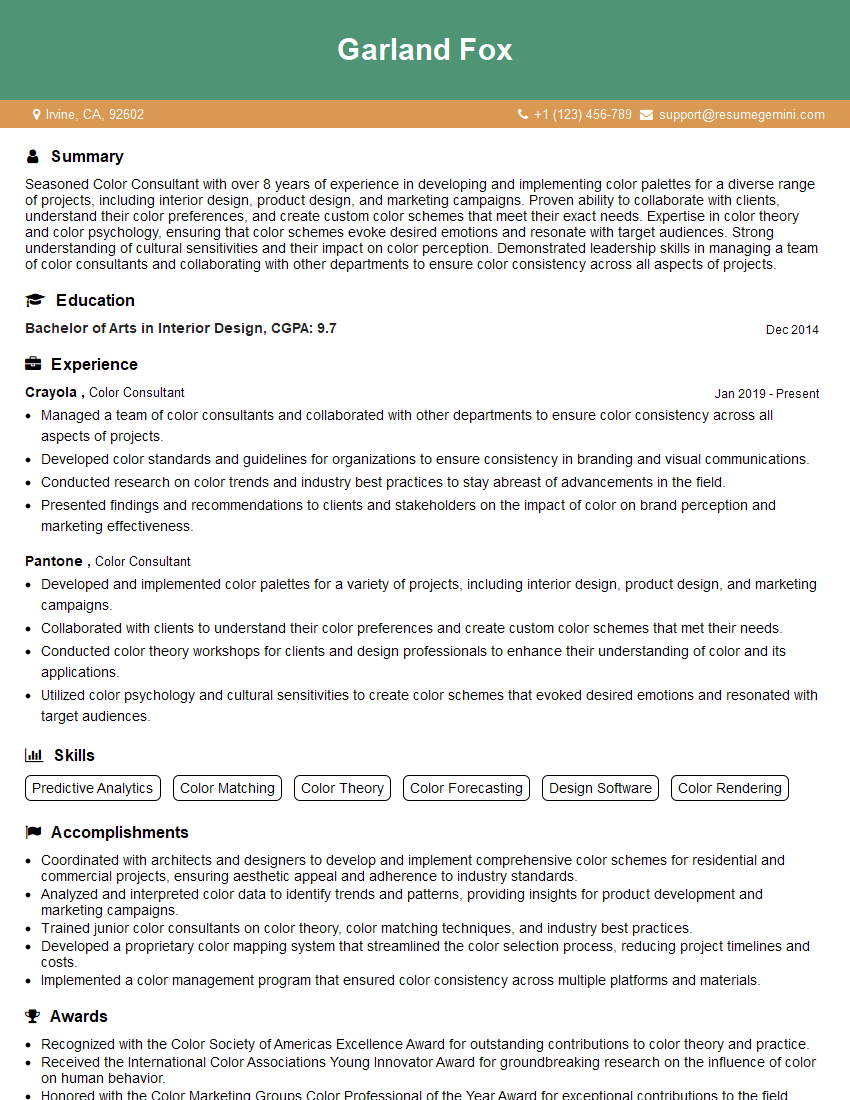
Color Consultant Resume Sample
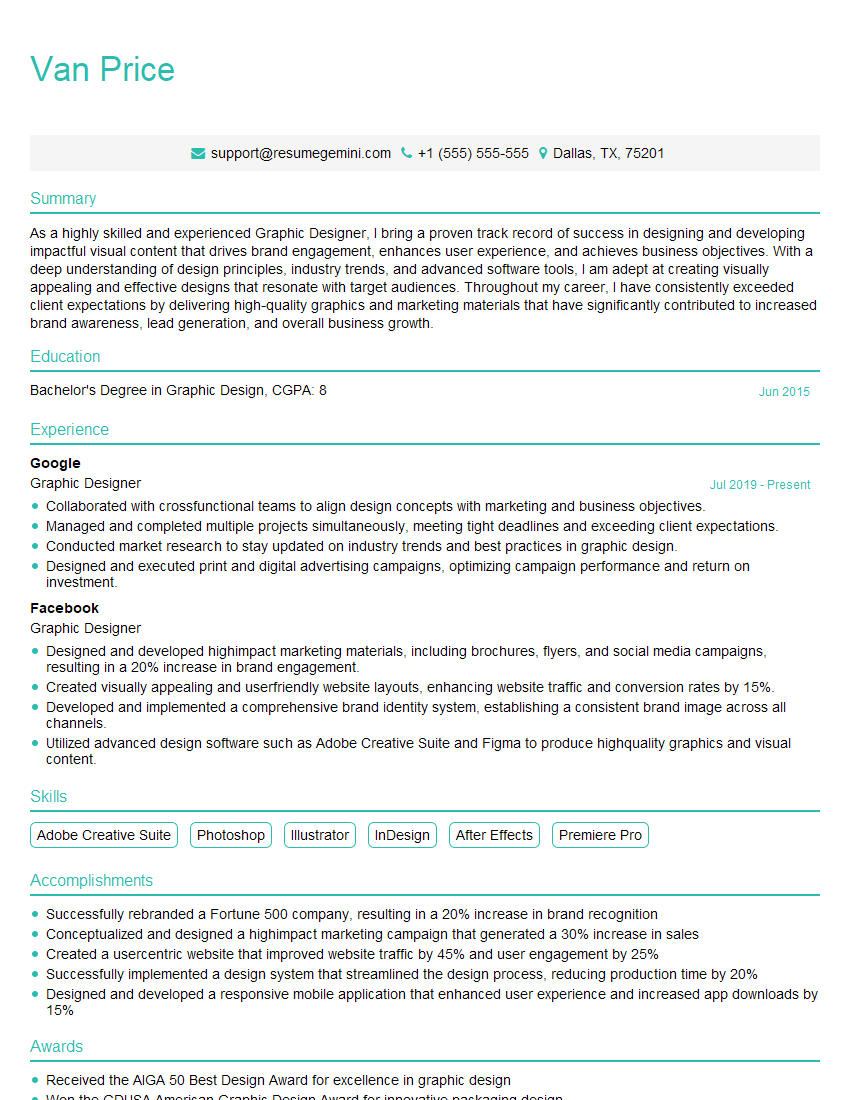
Graphic Designer Resume Sample

Packaging Designer Resume Sample

Production Artist Resume Sample

Proofreader Resume Sample
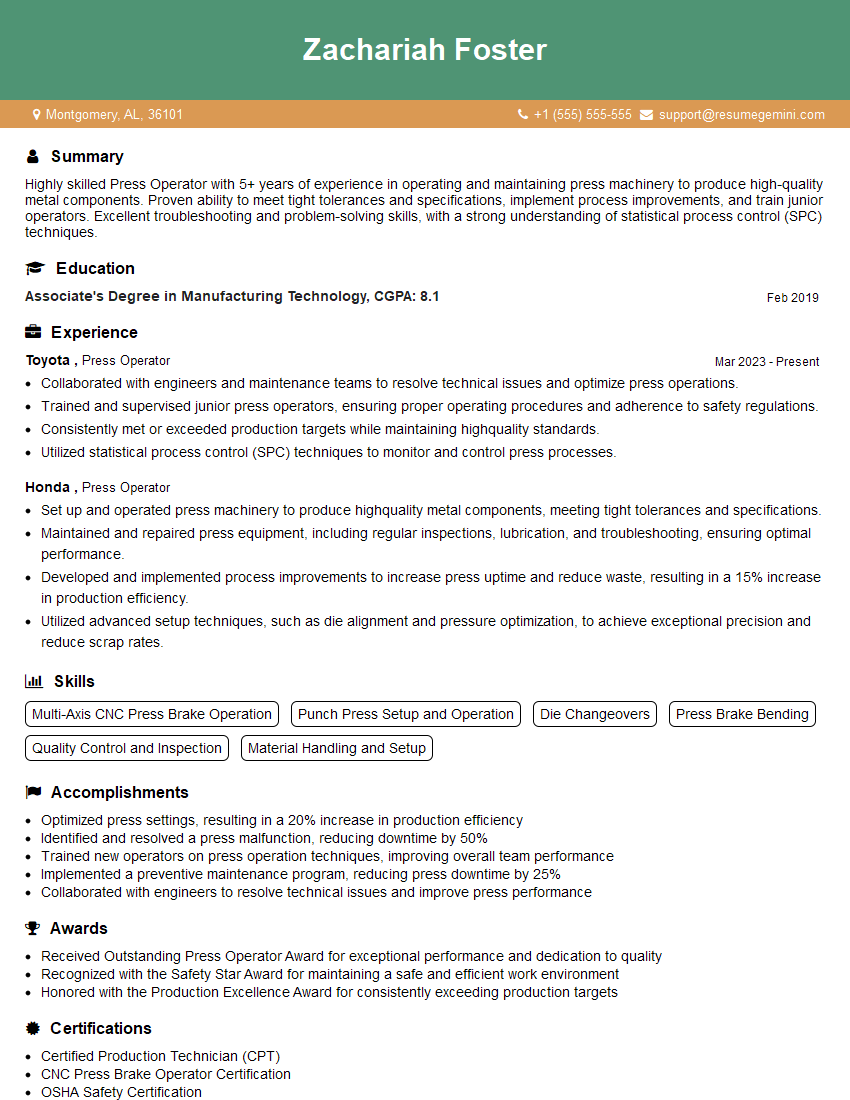
Press Operator Resume Sample

Prepress Technician Resume Sample

Screen Printer Resume Sample
Explore more articles
Users Rating of Our Blogs
Share Your Experience
We value your feedback! Please rate our content and share your thoughts (optional).
What Readers Say About Our Blog
Really detailed insights and content, thank you for writing this detailed article.
IT gave me an insight and words to use and be able to think of examples