Are you ready to stand out in your next interview? Understanding and preparing for Knowledge of cotton marketing and trade practices interview questions is a game-changer. In this blog, we’ve compiled key questions and expert advice to help you showcase your skills with confidence and precision. Let’s get started on your journey to acing the interview.
Questions Asked in Knowledge of cotton marketing and trade practices Interview
Q 1. Explain the difference between spot and futures contracts in the cotton market.
Spot and futures contracts are two distinct ways to buy and sell cotton. A spot contract is an agreement to buy or sell cotton for immediate delivery. Think of it like buying groceries – you pay and receive your goods right away. The price is based on the current market rate. In contrast, a futures contract is an agreement to buy or sell cotton at a specific price on a future date. It’s like pre-ordering a product; you agree on the price now, but the delivery happens later. Futures contracts are used for hedging against price volatility.
Example: A textile mill might use a spot contract to purchase cotton immediately for urgent production needs. A cotton farmer, however, might use a futures contract to lock in a price for their harvest several months in advance, protecting them from potential price drops before the harvest is ready.
Q 2. Describe the factors influencing global cotton prices.
Global cotton prices are influenced by a complex interplay of factors. Supply and demand are paramount – a large harvest leads to lower prices, while a poor harvest or increased demand pushes prices up. Weather conditions play a crucial role, impacting yields in major cotton-producing regions. Government policies, such as subsidies or trade restrictions, can significantly influence prices. The global economy also impacts demand – strong economic growth translates to increased demand for textiles and consequently, higher cotton prices. Finally, currency fluctuations affect the cost of cotton in international markets.
Example: A severe drought in a major cotton-producing region like Texas can drastically reduce yields, leading to a shortage and higher prices globally. Conversely, a surge in clothing sales due to a fashion trend can drive up demand and increase cotton prices.
Q 3. How do you assess the quality of cotton?
Cotton quality assessment is crucial in determining its value and suitability for various applications. It involves a multi-faceted process focusing primarily on fiber characteristics like length, strength, uniformity, fineness, and maturity. These are usually measured using sophisticated instruments like the High Volume Instrument (HVI). Color and trash content (impurities like leaves and seeds) also significantly affect quality. Visual inspection by experienced graders helps in assessing these factors alongside the HVI data. The micronaire reading indicates fiber maturity and is a key quality indicator.
Example: Longer, stronger, and more uniform fibers are preferred for high-quality yarns used in premium apparel. Cotton with high trash content is less desirable and commands a lower price, typically suitable for lower-grade applications.
Q 4. What are the key challenges in cotton logistics and transportation?
Cotton logistics and transportation present unique challenges due to the product’s bulky nature and susceptibility to damage. Storage is crucial – maintaining proper humidity and temperature is vital to prevent spoilage and degradation. Transportation costs can be substantial, especially for long distances. Port congestion and shipping container shortages often create bottlenecks. Weather-related delays, especially during harvest season, can further disrupt supply chains. Finally, ensuring the security of cotton during transit and storage is a major concern.
Example: A delay in unloading a ship carrying cotton at a congested port can lead to increased storage costs and potentially affect the timely delivery of cotton to textile mills, causing production delays and lost revenue.
Q 5. Explain the role of hedging in cotton trading.
Hedging in cotton trading involves using financial instruments like futures contracts to mitigate price risk. It’s a risk management strategy employed by both producers and buyers to protect themselves against unfavorable price fluctuations. Farmers use hedging to lock in a minimum price for their cotton, preventing losses if prices fall before harvest. Textile mills use it to protect themselves from price increases by securing cotton supplies at a predetermined price.
Example: A cotton farmer anticipating a harvest in six months might sell futures contracts at the current market price. If the price falls by then, the farmer still receives the agreed-upon price from the futures contract, mitigating potential losses. Conversely, a textile mill might buy futures contracts, securing its cotton supply at a fixed price, preventing increases that could impact profit margins.
Q 6. What are the different types of cotton contracts?
Cotton contracts can vary significantly depending on the specifics of the agreement. Spot contracts, as discussed earlier, involve immediate delivery. Futures contracts specify delivery on a future date and often involve standardized quantities and qualities. Forward contracts are similar to futures but are privately negotiated and tailored to specific needs. Option contracts provide the buyer the right, but not the obligation, to buy or sell cotton at a specific price within a defined timeframe.
Example: A small textile mill might negotiate a forward contract with a local cotton supplier to secure a specific quantity of cotton over the next few months at an agreed-upon price, ensuring a reliable supply chain.
Q 7. Describe the process of cotton grading and classification.
Cotton grading and classification is a systematic process that involves evaluating the quality of cotton based on established standards. This typically involves visual inspection by trained graders to assess color, leaf, and other foreign material content. Then, objective measurement using instruments like the HVI system is used to determine fiber properties such as length, strength, uniformity, and micronaire. Based on these assessments, the cotton is assigned a grade that indicates its quality and value. Classification involves categorizing cotton based on these grades and other relevant factors, ensuring consistency and facilitating trade.
Example: The USDA (United States Department of Agriculture) uses a standardized grading system for American cotton, assigning grades like ‘Middling,’ ‘Strict Middling,’ and ‘Strict Low Middling’ based on fiber properties and trash content. This ensures that buyers and sellers have a clear understanding of the quality of the cotton being traded.
Q 8. How do you manage risk in cotton trading?
Managing risk in cotton trading is crucial due to the commodity’s price volatility influenced by weather, global demand, and geopolitical events. A multi-pronged approach is necessary. This includes:
- Hedging: Using financial instruments like futures contracts on cotton exchanges (e.g., ICE Futures US) to lock in prices and mitigate price fluctuations. For example, a cotton producer could sell futures contracts to protect against price drops before harvest.
- Diversification: Spreading risk across different varieties of cotton, geographical locations, and even other agricultural commodities to reduce the impact of localized issues or market downturns. Instead of focusing solely on one type of cotton, a trader might diversify across upland and pima cotton.
- Insurance: Obtaining crop insurance to cover potential losses due to unforeseen events like natural disasters. This protects against yield reductions due to factors outside the producer’s control.
- Contract Negotiation: Carefully negotiating contracts with buyers and sellers, specifying clear terms, and including clauses that address potential risks. For instance, including clauses that adjust prices based on quality variations.
- Market Analysis: Continuously monitoring market trends, analyzing reports from organizations like the USDA, and using technical and fundamental analysis to make informed trading decisions. This involves understanding supply and demand dynamics and the overall economic climate.
Effective risk management involves a combination of these strategies tailored to the specific circumstances of each trade and the trader’s risk appetite.
Q 9. What are the current trends in the global cotton market?
The global cotton market is currently experiencing several significant trends:
- Increased Demand from Asia: Strong growth in textile production in countries like India, Bangladesh, and Vietnam is driving up global cotton consumption.
- Sustainability Concerns: Growing consumer demand for sustainably produced cotton is pushing the industry towards more environmentally friendly farming practices and certification schemes like Better Cotton Initiative (BCI).
- Supply Chain Disruptions: Geopolitical events and transportation bottlenecks continue to impact the flow of cotton, leading to price volatility and uncertainty.
- Technological Advancements: Precision agriculture techniques and advancements in genetic engineering are improving cotton yields and quality.
- Price Volatility: Cotton prices remain susceptible to fluctuations based on weather conditions, global economic factors, and changes in demand.
These trends underscore the need for agility and adaptability in the cotton market. Companies and traders need to remain updated on these shifts to remain competitive.
Q 10. Explain the impact of weather patterns on cotton production and prices.
Weather patterns have a profound impact on cotton production and subsequently its prices. Unfavorable conditions can significantly reduce yields and quality, leading to price increases.
- Drought: Lack of rainfall during crucial growth stages reduces cotton yields, leading to higher prices due to reduced supply. A prolonged drought in a major cotton-producing region could drastically impact global prices.
- Excessive Rainfall or Flooding: Heavy rains or floods can damage crops, leading to disease outbreaks, stunted growth, and reduced quality. This again can lead to price increases.
- Extreme Temperatures: Both excessive heat and unexpected freezes can negatively impact cotton growth and boll development, affecting both yield and quality.
- Pests and Diseases: Favorable weather conditions can accelerate the spread of pests and diseases, damaging cotton plants and reducing yields. Climate change is expected to exacerbate many of these challenges.
Weather forecasting and risk management tools play a critical role in mitigating these weather-related risks. Traders and producers carefully monitor weather reports and use this information in their pricing strategies.
Q 11. What are the major cotton-producing countries and their market share?
The major cotton-producing countries and their approximate market shares fluctuate annually, but generally, India, the United States, Brazil, Australia, and Pakistan are among the leading producers. Precise market share figures vary depending on the year and the source of data (e.g., USDA reports versus private industry estimates).
It’s important to note that China, while a massive consumer of cotton, is not always amongst the top producers, often relying heavily on imports. Market shares are dynamic and constantly shifting based on various factors such as weather, global demand, and government policies.
Q 12. Discuss the role of cotton exchanges in price discovery.
Cotton exchanges, such as ICE Futures US, play a vital role in cotton price discovery. They provide a centralized platform where buyers and sellers can trade standardized cotton futures contracts. This process establishes a transparent and publicly accessible benchmark price.
The interaction of supply and demand on the exchange floor (or electronically) determines the price. Futures contracts allow market participants to hedge against price risk, speculate on future price movements, and discover the market’s collective assessment of future cotton prices. The futures price acts as a signal for producers, buyers, and processors, influencing their decisions.
For instance, if futures prices rise, it signals to producers that they can expect higher prices in the future, encouraging increased production. Conversely, falling futures prices might signal buyers to delay purchases.
Q 13. How do you analyze cotton market reports and forecasts?
Analyzing cotton market reports and forecasts involves a multi-step process:
- Identify Reliable Sources: Start with reputable sources like the USDA (United States Department of Agriculture), the International Cotton Advisory Committee (ICAC), and other respected industry publications and agencies.
- Understand Key Indicators: Focus on key data points such as production estimates, consumption figures, stock levels, export/import data, and price trends.
- Consider Global Context: Analyze global macroeconomic conditions, such as currency exchange rates, inflation, and overall economic growth, as they can significantly influence cotton prices.
- Assess Weather Forecasts: Pay close attention to weather patterns in major cotton-producing regions, as these have a substantial impact on supply and price.
- Technical Analysis: Employ technical analysis tools to identify price trends and potential turning points, particularly when examining historical price charts of futures contracts.
- Fundamental Analysis: Examine underlying factors such as production costs, demand forecasts, and market supply/demand dynamics to predict potential price movements.
By combining these methods, a trader or analyst can form a comprehensive view of the market and make more informed decisions.
Q 14. What are the key considerations when negotiating cotton contracts?
Negotiating cotton contracts requires careful attention to several key considerations:
- Quality Specifications: Clearly define the quality parameters of the cotton, including fiber length, strength, micronaire, and color, using standardized measures.
- Quantity and Delivery: Specify the precise amount of cotton and the delivery schedule, including timelines, location, and transportation arrangements.
- Pricing Mechanism: Agree on the pricing method, whether it’s based on a fixed price, a price linked to futures contracts, or a formula based on market benchmarks.
- Payment Terms: Outline the payment schedule, including down payments, installments, and payment methods.
- Risk Allocation: Clearly define how risks related to quality issues, delivery delays, or price fluctuations will be handled and allocated between the buyer and seller.
- Dispute Resolution: Include clauses outlining the process for resolving any disagreements or disputes that may arise during the contract’s execution.
- Legal Compliance: Ensure that the contract complies with all relevant laws and regulations.
Thorough preparation and clear communication are vital for successful contract negotiation. It is often beneficial to seek legal advice to ensure all aspects are comprehensively covered.
Q 15. Explain the importance of quality control in the cotton supply chain.
Quality control is paramount in the cotton supply chain, impacting everything from the final product’s quality to the profitability of the entire operation. Think of it as the foundation upon which the entire house is built – if the foundation is weak, the whole structure is at risk.
Quality checks begin in the field, with assessments of plant health and fiber characteristics. This continues through harvesting, ginning (where seeds are separated from the fiber), and processing. At each stage, various tests are employed. These include:
- Fiber strength testing: Measures the tensile strength of the cotton fibers, critical for yarn quality.
- Fiber length measurement: Determines the length of the fibers, affecting the yarn’s fineness and strength.
- Micronaire testing: Assesses fiber maturity and fineness, influencing yarn softness and spinnability.
- Color grading: Evaluates the uniformity and desirability of the cotton’s color, affecting the final fabric’s appearance.
- Moisture content analysis: Ensures the cotton is at optimal moisture levels for processing and storage, preventing quality degradation.
Poor quality control leads to increased waste, higher production costs, and ultimately, dissatisfied customers. A robust quality control system, however, minimizes these risks, enhancing reputation and profitability.
Career Expert Tips:
- Ace those interviews! Prepare effectively by reviewing the Top 50 Most Common Interview Questions on ResumeGemini.
- Navigate your job search with confidence! Explore a wide range of Career Tips on ResumeGemini. Learn about common challenges and recommendations to overcome them.
- Craft the perfect resume! Master the Art of Resume Writing with ResumeGemini’s guide. Showcase your unique qualifications and achievements effectively.
- Don’t miss out on holiday savings! Build your dream resume with ResumeGemini’s ATS optimized templates.
Q 16. Describe your experience with different cotton varieties.
My experience encompasses a wide range of cotton varieties, both upland and extra-long staple (ELS). Upland cotton, representing the majority of global production, includes varieties like Pima, Supima (a premium Pima), and various others bred for specific climates and fiber properties. I’ve worked extensively with these, understanding their unique characteristics and suitability for different applications. For instance, Supima, known for its superior length and strength, is often preferred for high-end apparel.
ELS cotton, like Egyptian Giza and American Pima, presents a different profile. Its longer fibers yield luxurious, high-quality yarns suitable for premium textiles. I’ve been involved in sourcing and trading these varieties, navigating the complexities of their higher price points and more limited supply. Understanding the subtle differences in fiber properties between varieties is crucial for matching cotton types with end-use requirements.
This diverse experience allows me to provide tailored solutions to clients seeking specific qualities in their cotton, balancing cost and quality.
Q 17. How do you manage relationships with cotton suppliers and buyers?
Managing relationships with suppliers and buyers requires a balanced approach – building trust, maintaining open communication, and adhering to ethical business practices. I believe in fostering long-term partnerships built on mutual respect and transparency.
With suppliers, I prioritize establishing strong relationships based on consistent quality, fair pricing, and timely delivery. Regular communication, including farm visits and quality assessments, ensures a steady flow of high-quality cotton. I also actively seek out suppliers committed to sustainable and ethical practices.
On the buyer side, I focus on understanding their specific needs and providing tailored solutions. This includes offering various cotton grades and qualities, ensuring timely delivery, and providing transparent pricing and documentation. Proactive communication, addressing concerns promptly, is critical in building and maintaining strong client relationships.
Ultimately, successful relationship management is about creating win-win scenarios for all stakeholders.
Q 18. What are the ethical and sustainability considerations in cotton trading?
Ethical and sustainability considerations are no longer optional but essential in cotton trading. The industry faces increasing scrutiny regarding its environmental and social impact.
Ethical considerations include ensuring fair labor practices throughout the supply chain, avoiding child labor, and promoting safe working conditions. This requires careful due diligence and transparency in sourcing. Traceability systems, allowing us to track cotton from farm to final product, are increasingly important in this regard.
Sustainability is equally critical. Conventional cotton cultivation is resource-intensive, using large amounts of water and pesticides. I actively seek out and support suppliers committed to sustainable practices such as:
- Organic cotton farming: Eliminates the use of synthetic pesticides and fertilizers.
- Water-efficient irrigation techniques: Reduces water consumption in cotton cultivation.
- Improved soil management practices: Promotes soil health and reduces erosion.
- Reduced pesticide use: Minimizes the environmental impact of pest control.
By prioritizing ethical and sustainable cotton, we not only reduce the environmental footprint but also enhance our reputation and cater to the growing demand for responsible products.
Q 19. What are the different types of cotton fiber and their uses?
Cotton fibers are categorized primarily by their length, strength, and fineness. These characteristics dictate their suitability for various applications.
- Extra-Long Staple (ELS) cotton: Possessing fibers longer than 1 3/8 inches, ELS cotton is known for its superior strength, softness, and luster. It’s prized for high-end apparel, luxury linens, and other premium textiles.
- Long Staple cotton: Fibers ranging from 1 1/8 to 1 3/8 inches. This type offers good strength and softness and is suitable for a wide range of apparel and home textiles.
- Medium Staple cotton: With fiber lengths between 7/8 and 1 1/8 inches, medium staple cotton is commonly used in medium-grade apparel, blended fabrics, and industrial applications.
- Short Staple cotton: Fibers less than 7/8 inches. It’s often used in low-cost textiles, industrial fabrics, and blends.
Beyond staple length, other fiber properties, like strength, fineness, and color, further influence the end-use applications. For example, higher strength fibers are preferred for durable fabrics, while finer fibers are favored for softer textures.
Q 20. How do you evaluate the financial performance of cotton trading activities?
Evaluating the financial performance of cotton trading activities involves a multifaceted approach, encompassing various key performance indicators (KPIs).
Profitability analysis: This is a fundamental aspect, involving calculating gross profit margins, considering purchase prices, selling prices, and all associated costs (storage, transportation, insurance, etc.). Analyzing trends in these margins over time provides insights into the overall performance and helps identify areas for improvement.
Inventory management: Efficient inventory management is crucial. Tracking inventory levels, turnover rates, and storage costs is essential to avoid losses due to price fluctuations or spoilage.
Risk management: Cotton prices are volatile. Effective risk management strategies, including hedging using futures contracts, help mitigate price risk and protect profitability.
Market analysis: Continuous monitoring of market trends, supply and demand dynamics, and geopolitical factors allows us to make informed trading decisions and anticipate potential risks and opportunities.
Operational efficiency: Analyzing logistical efficiencies, minimizing processing times, and streamlining operations contribute significantly to profitability. Investing in automation and technology can enhance efficiency.
By employing these key performance indicators and regularly reviewing financial data, we can effectively assess the profitability and efficiency of our cotton trading activities, making data-driven decisions to optimize future performance.
Q 21. Describe your experience using cotton trading software and platforms.
My experience with cotton trading software and platforms spans various systems, from proprietary trading platforms to widely used industry software. I am proficient in utilizing software for:
- Market data analysis: Accessing real-time market information, price charts, and historical data to inform trading decisions.
- Order management: Efficiently placing, managing, and tracking orders across different exchanges and platforms.
- Risk management: Utilizing software to monitor market risks, analyze hedging strategies, and manage positions effectively.
- Inventory management: Tracking inventory levels, locations, and quality attributes to optimize stock management.
- Reporting and analytics: Generating comprehensive reports on trading activities, performance metrics, and financial results.
Specific platforms I’ve worked with include [Mention specific platforms if comfortable, otherwise omit this part]. The key is adaptability and the ability to leverage technology to improve efficiency, transparency, and informed decision-making.
Furthermore, I understand the importance of data security and compliance with industry regulations when utilizing these platforms.
Q 22. What are your strategies for identifying and capitalizing on market opportunities in cotton?
Identifying and capitalizing on market opportunities in cotton requires a multi-faceted approach combining market analysis, risk assessment, and strategic decision-making. It’s like being a detective, piecing together clues to predict future trends.
Market Analysis: I meticulously track global cotton production forecasts, considering factors like weather patterns, planting decisions in major producing countries (like the US, India, China, Brazil), and any geopolitical events affecting supply chains. Demand analysis involves studying textile manufacturing trends, consumer preferences (e.g., shift towards sustainable cotton), and economic indicators in key consuming regions.
Identifying Opportunities: Analyzing these factors helps identify potential price swings. For instance, a predicted shortfall in production due to drought in a major cotton-growing region could signal a buying opportunity. Conversely, oversupply might suggest a strategic selling point. Analyzing specific cotton grades and their associated demand is also crucial. Premium long-staple cotton, for example, may have a different pricing trajectory compared to shorter staples.
Capitalizing on Opportunities: This involves executing the right trading strategy. It could be buying contracts (either physical cotton or futures contracts) at anticipated lows and selling at anticipated highs. Or, it could involve strategic partnerships with mills or other intermediaries to secure favourable contracts, ensuring price premiums or risk mitigation.
For example, during a period of unexpectedly high rainfall in a key growing region, I might anticipate a decrease in cotton quality and potentially identify a niche market for lower-grade cotton.
Q 23. How do you mitigate risks associated with price volatility in the cotton market?
Price volatility is inherent in commodity markets like cotton. Mitigating this risk demands a sophisticated approach encompassing hedging, diversification, and robust risk management strategies. Think of it as building a sturdy ship to withstand a stormy sea.
Hedging: This is a cornerstone of risk management. I utilize futures and options contracts to lock in prices for future cotton sales or purchases. This protects against unfavorable price movements. For instance, a cotton farmer could sell cotton futures contracts at a predetermined price, securing a minimum return irrespective of the spot price on the delivery date.
Diversification: Rather than focusing solely on one type of cotton or one market, diversification across cotton grades, geographical locations, and even other commodities can reduce overall portfolio risk. This is analogous to investing in a diverse stock portfolio instead of putting all your eggs in one basket.
Contract Negotiation: Strong contract negotiation is crucial. This includes detailed specifications regarding quality, quantity, and payment terms, minimizing uncertainties and potential disputes.
Risk Assessment: Continuously monitoring market conditions and updating risk profiles ensures proactive adaptation to changing circumstances.
For example, hedging using futures contracts can protect against a sudden price drop after a harvest. I might also diversify my portfolio by investing in both upland and pima cotton, reducing my exposure to changes affecting only one variety.
Q 24. Explain your understanding of cotton regulations and compliance issues.
Cotton trading and marketing are subject to various regulations, varying by country and sometimes even region. Compliance is paramount to avoid legal issues and maintain market credibility. It’s like navigating a complex legal landscape, requiring careful attention to detail.
International Trade Regulations: I am familiar with regulations governing international trade, including tariffs, quotas, and sanitary and phytosanitary (SPS) measures. These impact import/export procedures, potentially influencing costs and market access. Understanding these regulations is critical for effective international trade.
Domestic Regulations: Domestic regulations vary from country to country. These may include labeling requirements, quality standards (e.g., fiber length, strength), and environmental regulations related to cotton production and processing. Staying compliant is essential to avoid penalties and maintain business operations.
Genetically Modified (GM) Cotton Regulations: The use of GM cotton is subject to its own set of regulations, often requiring labeling and traceability throughout the supply chain. Compliance with these rules is crucial for maintaining market access and avoiding legal repercussions.
Contract Law: A solid understanding of contract law is essential to effectively negotiate and enforce agreements with suppliers and buyers.
For instance, if I’m exporting cotton to the European Union, I must comply with their stringent regulations on pesticide residues and genetically modified organisms (GMOs) in cotton.
Q 25. Describe your experience with cotton derivatives and options trading.
My experience with cotton derivatives and options trading is extensive. These instruments are invaluable tools for managing price risk and capitalizing on market opportunities. It’s like having a sophisticated toolkit for navigating the complexities of the cotton market.
Futures Contracts: I regularly utilize futures contracts to hedge against price fluctuations, securing prices for future deliveries or purchases. For example, a miller might buy futures contracts to lock in the price of cotton for a future production run.
Options Contracts: Options provide flexibility. They allow me to buy the right (but not the obligation) to buy or sell cotton at a specific price on or before a certain date. This provides downside protection without completely eliminating upside potential.
Spread Trading: I sometimes employ spread trading strategies, which involve simultaneously buying and selling futures contracts of different maturities or qualities, to profit from price differentials.
Risk Management: I employ robust risk management practices to control exposure and avoid excessive losses. This includes setting stop-loss orders and carefully managing portfolio diversification.
For example, using options contracts, I might purchase a put option to protect against a price drop below a certain level, while maintaining the potential to benefit from a price increase.
Q 26. How do you stay up-to-date on the latest developments in the cotton industry?
Staying current in the dynamic cotton industry is a continuous process, demanding diligent information gathering. I employ several strategies to remain well-informed, much like a doctor constantly updating their medical knowledge.
Industry Publications and Reports: I regularly read industry publications like Cotton International, ICAC reports, and various market research reports to get a pulse of market sentiment and trends.
Market Data and Analytics Platforms: I utilize specialized market data platforms providing real-time price information, market analysis, and production forecasts.
Industry Conferences and Trade Shows: Attending industry conferences and trade shows allows me to network with other professionals, learn about new developments, and gain insights into future trends.
Government and Regulatory Websites: Monitoring government and regulatory websites provides access to updated regulations, policies, and trade data.
Networking with Key Players: Building and maintaining relationships with producers, buyers, and other industry professionals through conferences and trade shows is invaluable for gaining insights.
For example, following reports from the International Cotton Advisory Committee (ICAC) keeps me abreast of global supply and demand dynamics, influencing my market analysis.
Q 27. How would you handle a situation where a cotton shipment is delayed or damaged?
Delays or damage to cotton shipments are serious issues that require prompt action and effective communication. It’s akin to handling a medical emergency – swift and decisive action is key.
Immediate Assessment: Upon learning of the delay or damage, I conduct a thorough assessment, determining the extent of the problem and its potential impact.
Notification of Parties: I promptly notify all relevant parties, including the shipping company, the buyer, and the insurer.
Documentation: I ensure thorough documentation, including photos, inspection reports, and shipping documents. This evidence is crucial for insurance claims and potential disputes.
Insurance Claim: If the damage is covered by insurance, I initiate the claims process, providing all necessary documentation.
Negotiation with Parties: If the damage is not fully covered by insurance, I negotiate with relevant parties (e.g., the shipping company) to reach a mutually acceptable resolution.
Alternative Solutions: In case of delays, I explore alternative solutions, such as expedited shipping or sourcing replacement cotton to minimize disruption to the supply chain.
For example, if a shipment is delayed due to port congestion, I would immediately inform the buyer and explore options for expedited delivery, potentially incurring additional costs but avoiding potential contract breaches.
Q 28. How would you resolve a pricing dispute with a cotton supplier or buyer?
Pricing disputes can arise in cotton trading. Resolving these requires professionalism, a thorough understanding of the contract, and strong communication. It’s like mediating a disagreement between neighbours, requiring fairness and clear communication.
Review the Contract: The first step is carefully reviewing the contract to determine the agreed-upon pricing terms, including any clauses regarding price adjustments or dispute resolution.
Gather Evidence: I collect all relevant evidence, including invoices, shipping documents, quality test reports, and market price data. This evidence is crucial for substantiating claims.
Communication and Negotiation: I engage in direct communication with the supplier or buyer, attempting to reach a mutually acceptable resolution through negotiation. The goal is a fair and equitable outcome for both parties.
Mediation or Arbitration: If direct negotiation fails, I consider mediation or arbitration, which can provide a neutral platform for resolving the dispute.
Legal Action: As a last resort, I might pursue legal action if other methods fail to resolve the dispute.
For example, if a pricing dispute arises due to discrepancies in the quality of the delivered cotton, I would present evidence such as quality test reports and market prices of cotton of similar quality to support my position during negotiation.
Key Topics to Learn for a Cotton Marketing and Trade Practices Interview
- Cotton Production & Global Supply Chains: Understanding the journey of cotton from farm to fabric, including cultivation practices, harvesting methods, and global distribution networks.
- Cotton Grades & Quality Assessment: Mastering the various grading systems (e.g., USDA standards), fiber properties, and their impact on pricing and market demand. Practical application: analyzing cotton samples and interpreting quality reports.
- Pricing & Hedging Strategies: Understanding futures markets, price forecasting, risk management techniques (hedging), and the impact of global economic factors on cotton prices.
- International Trade & Regulations: Familiarity with import/export regulations, trade agreements (e.g., WTO), tariffs, quotas, and their influence on cotton trade flows. Practical application: navigating international trade documentation and compliance.
- Marketing & Sales Channels: Knowledge of different sales channels (e.g., spot markets, forward contracts, electronic platforms), marketing strategies for different cotton types (organic, conventional), and effective negotiation techniques.
- Contract Negotiation & Dispute Resolution: Understanding contract terms, delivery schedules, payment methods, and dispute resolution mechanisms within the cotton industry. Practical application: drafting and reviewing cotton sales contracts.
- Sustainability & Ethical Sourcing: Growing awareness of sustainable cotton farming practices (e.g., organic, fair trade), ethical sourcing initiatives, and their increasing influence on consumer demand and market trends.
- Data Analysis & Market Research: Utilizing market data, analyzing trends, and forecasting demand to make informed business decisions. Practical application: interpreting market reports and developing pricing strategies.
Next Steps
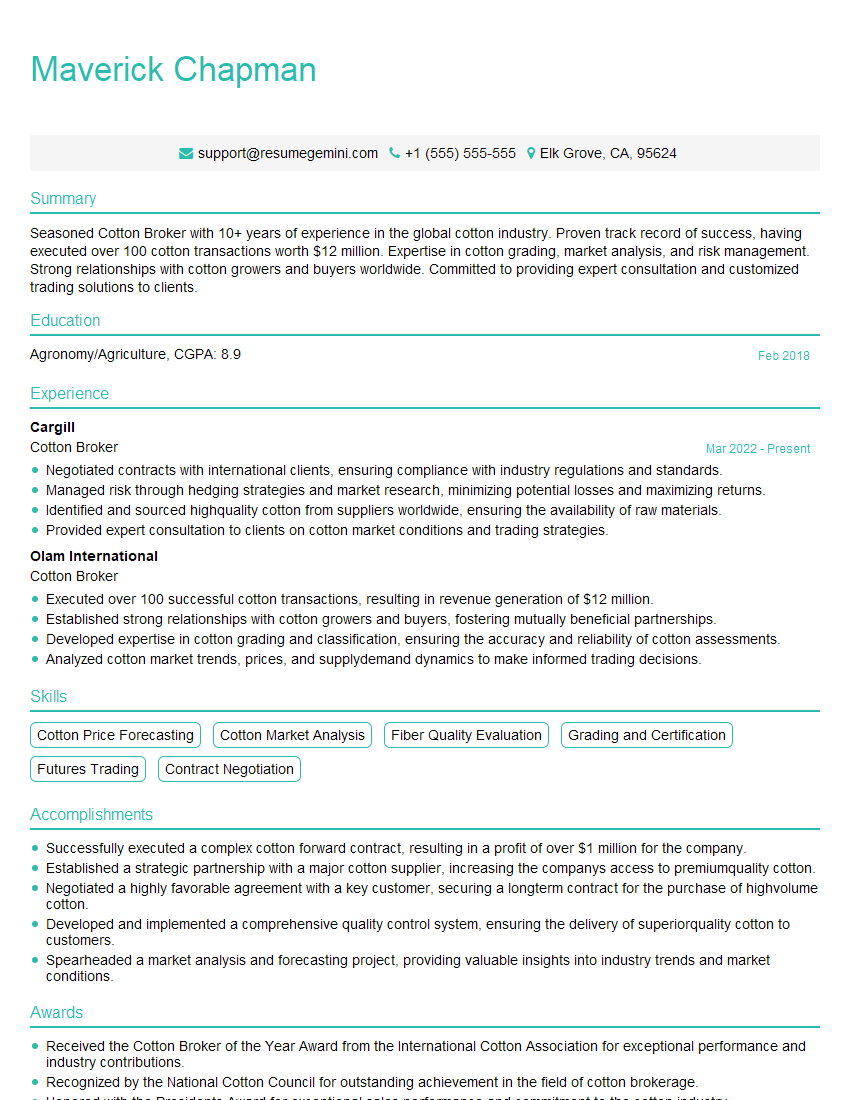
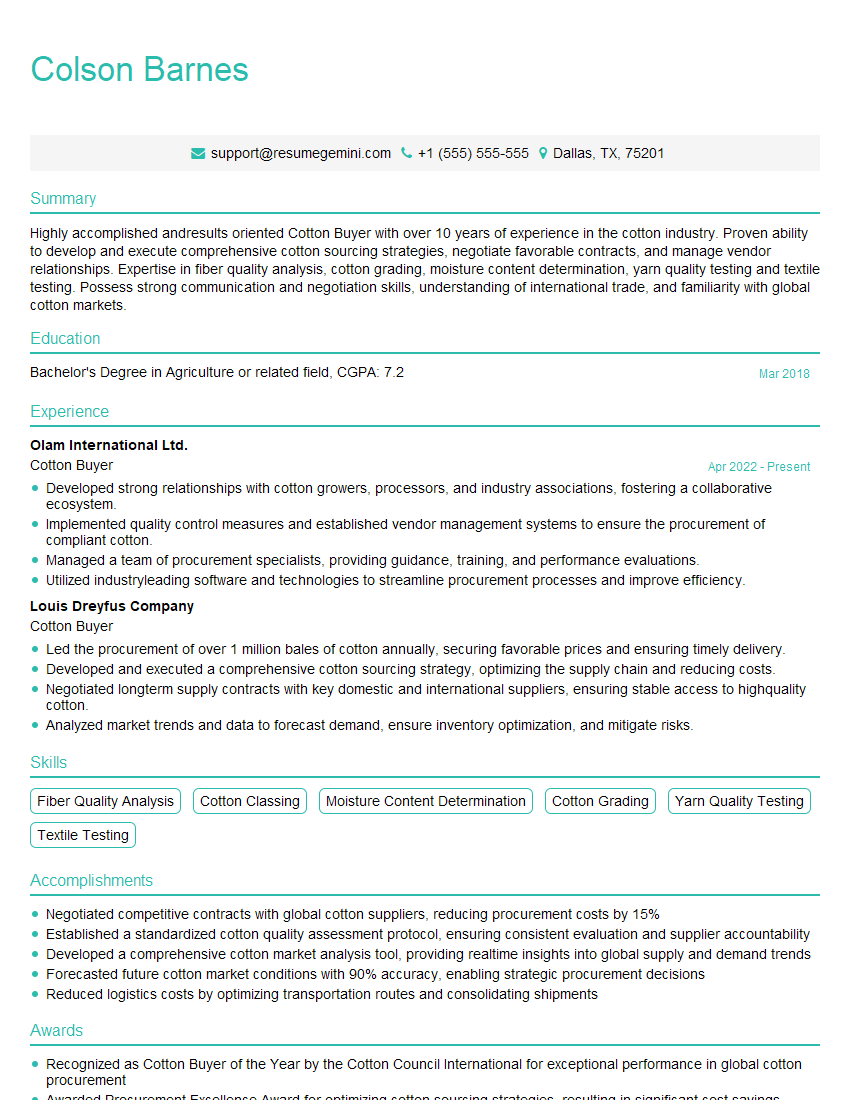
Mastering cotton marketing and trade practices is crucial for a successful career in this dynamic industry. A strong understanding of these concepts will significantly enhance your job prospects and open doors to exciting opportunities. To increase your chances of landing your dream role, creating an ATS-friendly resume is essential. ResumeGemini is a trusted resource to help you build a professional and impactful resume that highlights your skills and experience effectively. Examples of resumes tailored to cotton marketing and trade practices are available to guide you through the process.
Explore more articles
Users Rating of Our Blogs
Share Your Experience
We value your feedback! Please rate our content and share your thoughts (optional).
What Readers Say About Our Blog
Really detailed insights and content, thank you for writing this detailed article.
IT gave me an insight and words to use and be able to think of examples