Cracking a skill-specific interview, like one for Knowledge of Irrigation and Fertilization Practices, requires understanding the nuances of the role. In this blog, we present the questions you’re most likely to encounter, along with insights into how to answer them effectively. Let’s ensure you’re ready to make a strong impression.
Questions Asked in Knowledge of Irrigation and Fertilization Practices Interview
Q 1. Explain different irrigation methods (drip, sprinkler, flood, etc.) and their suitability for various crops.
Irrigation methods deliver water to crops, each with strengths and weaknesses depending on the crop’s water needs and the environment.
- Drip Irrigation: Water is delivered slowly to the root zone through a network of tubes and emitters. This is highly efficient, minimizing water waste and runoff. It’s ideal for high-value crops like fruits and vegetables where precise water control is crucial, and also well-suited for sloping terrains where surface irrigation is difficult.
- Sprinkler Irrigation: Water is sprayed over the field, mimicking rainfall. This method is suitable for various crops but less efficient than drip irrigation due to evaporation and potential over-watering. Sprinklers are useful for larger fields and crops with less sensitive roots.
- Flood Irrigation: Water is flooded across the field, often used for rice paddies or other crops tolerant of standing water. It’s the least efficient method, leading to significant water loss and potential soil erosion. It’s generally unsuitable for crops sensitive to waterlogging.
- Furrow Irrigation: Water flows through furrows or channels between crop rows. This method is relatively simple and inexpensive, suitable for crops that can tolerate some waterlogging, like certain vegetables or grains. However, it can be inefficient in terms of water usage and susceptible to weed growth in the furrows.
Choosing the right irrigation method is crucial. For instance, drip irrigation is perfect for a tomato field needing precise water delivery to prevent fruit cracking and disease, while sprinkler irrigation might be better for a vast wheat field. Understanding the crop’s specific water requirements, soil type, and topography are key to selecting the most suitable method.
Q 2. Describe the factors influencing fertilizer selection for a specific crop.
Selecting the right fertilizer hinges on several interconnected factors. It’s not a one-size-fits-all approach.
- Crop Needs: Different crops have different nutrient requirements at various growth stages. For example, corn needs significant nitrogen for stalk development, while legumes can fix atmospheric nitrogen themselves. Understanding the crop’s specific nutrient needs through research or soil testing is paramount.
- Soil Test Results: Soil testing reveals existing nutrient levels in the soil. This avoids unnecessary fertilizer application and prevents nutrient imbalances. For example, a soil test might show high levels of phosphorus, indicating reduced need for phosphorus-rich fertilizers.
- Soil Type and Properties: Different soil types have varying nutrient-holding capacities. Sandy soils, for instance, have low water retention and nutrient holding, thus requiring frequent fertilization with water-soluble fertilizers. Clay soils, conversely, may hold onto nutrients tightly, necessitating slower-releasing fertilizers.
- Climate and Environmental Conditions: Temperature, rainfall, and other climatic factors influence nutrient availability and uptake. Higher temperatures often increase nutrient uptake rates, while heavy rainfall can lead to nutrient leaching.
- Fertilizer Type and Formulation: Choosing between organic, inorganic, or slow-release fertilizers depends on several factors, including cost, environmental impact, and the crop’s needs. Slow-release fertilizers are beneficial in sandy soils to prevent nutrient loss.
For example, let’s consider growing tomatoes. Tomato plants need substantial potassium for fruit development. A soil test might reveal low potassium levels, indicating the need for a potassium-rich fertilizer, like potassium sulfate. If the soil is sandy, a slow-release formulation is preferable to prevent nutrient leaching from the sandy soil.
Q 3. How do you determine the appropriate application rate for fertilizers?
Determining the appropriate fertilizer application rate is critical for maximizing yield while minimizing environmental impact. Over-application wastes resources and can harm the environment, while under-application limits crop growth.
Several factors contribute to this determination:
- Soil Test Results: The amount of each nutrient already present in the soil directly impacts the required fertilizer input. Soil tests provide a quantitative measure of the existing nutrient levels (e.g., ppm or kg/ha).
- Crop Requirements: The nutrient requirements for a particular crop vary based on yield goals, growth stage, and plant density. These requirements are often expressed in kg/ha or lb/acre for each nutrient (N, P, K).
- Fertilizer Analysis: The fertilizer label always indicates the percentage of N, P, and K present. For instance, a 10-10-10 fertilizer contains 10% nitrogen, 10% phosphorus, and 10% potassium by weight.
- Conversion Factors: To calculate the application rate, you must convert from fertilizer analysis to nutrient content per unit area. For example, to apply 100 kg/ha of nitrogen using a 10-10-10 fertilizer, you would need to apply 1000 kg/ha of the fertilizer (100 kg N / 0.10 kg N/kg fertilizer = 1000 kg fertilizer).
For example, if soil testing indicates a need for 50 kg/ha of phosphorus, and the chosen fertilizer is a 20-10-10, the application rate would be 250 kg/ha (50 kg P / 0.10 kg P/kg fertilizer = 500 kg fertilizer).
Q 4. What are the common nutrient deficiencies observed in plants, and how do you diagnose them?
Nutrient deficiencies manifest visibly in plants. Accurate diagnosis requires careful observation and potentially laboratory analysis.
- Nitrogen (N) Deficiency: Plants exhibit stunted growth, pale green or yellowish leaves, often starting from older leaves. The leaves might turn yellow and eventually brown and die.
- Phosphorus (P) Deficiency: Plants show stunted growth and delayed maturity. Leaves might be dark green or purplish-blue, particularly in older leaves. Poor root development is common.
- Potassium (K) Deficiency: Plants show marginal leaf burn (brown edges), and wilting can occur, especially during dry spells. Leaves may develop chlorotic spots and show overall weakness.
- Magnesium (Mg) Deficiency: Chlorosis appears between leaf veins. Older leaves are typically affected first. This deficiency resembles iron deficiency, hence careful observation is crucial.
- Iron (Fe) Deficiency: This deficiency causes interveinal chlorosis (yellowing between leaf veins) in young leaves. Older leaves typically stay green. It’s common in high-pH soils.
Diagnosing these deficiencies requires a holistic approach. Visual symptoms provide initial clues. Laboratory analysis of plant tissues provides confirmation. For example, if a plant displays interveinal chlorosis in young leaves, the suspected iron deficiency can be verified through laboratory testing. This approach makes corrective fertilization effective.
Q 5. Explain the concept of soil testing and its importance in fertilization planning.
Soil testing is the cornerstone of effective fertilization planning. It involves analyzing a soil sample to determine its nutrient content, pH, and other properties.
Importance:
- Provides Baseline Data: Soil testing gives a precise measurement of existing nutrient levels, pH, and organic matter. This forms the foundation for balanced fertilization.
- Optimizes Fertilizer Use: It avoids over-application of nutrients that are already sufficient in the soil, saving money and reducing environmental pollution.
- Improves Nutrient Use Efficiency: By understanding soil characteristics, you can select fertilizers that are best suited for the soil type and provide appropriate nutrient release rates.
- Corrects Soil Problems: Soil testing identifies problems like low pH (acidity) or high salinity that may hinder nutrient availability and crop growth. These problems can be addressed with appropriate soil amendments.
- Predictive Tool: Soil testing allows for better prediction of crop yield potential and helps tailor fertilization strategies to maximize productivity.
For example, soil testing might reveal low soil pH (high acidity). Applying lime before planting adjusts the pH, enhancing nutrient availability and enabling the plants to absorb nutrients effectively. This improves overall crop health and yield.
Q 6. Describe various soil types and their implications for irrigation and fertilization.
Soil type significantly influences both irrigation and fertilization strategies. Different soil types have vastly different water-holding capacities, drainage characteristics, and nutrient retention abilities.
- Sandy Soils: Well-drained, low water-holding capacity, low nutrient retention. Requires frequent irrigation and fertilization, often with water-soluble or slow-release fertilizers to prevent nutrient leaching.
- Clay Soils: Poor drainage, high water-holding capacity, high nutrient retention. Requires careful irrigation to prevent waterlogging and potential nutrient deficiency due to slow release of nutrients. Slow-release fertilizers are usually recommended.
- Silty Soils: Moderate water-holding capacity, good drainage, moderate nutrient retention. Relatively easier to manage compared to sandy or clay soils.
- Loamy Soils: Ideal soil type – balanced mixture of sand, silt, and clay. Good water retention, drainage, and nutrient-holding capacity. Offers flexibility in irrigation and fertilization methods.
For example, growing tomatoes in sandy soil requires frequent drip irrigation and the use of slow-release fertilizers to prevent nutrient loss through leaching. In contrast, growing potatoes in clay soil demands careful irrigation to avoid waterlogging and the use of a fertilizer formulation that considers the soil’s high nutrient-holding capacity to prevent potential imbalances.
Q 7. How do you manage irrigation scheduling based on weather conditions and soil moisture?
Irrigation scheduling involves determining when and how much water to apply to crops. This process optimizes water use and ensures that crops receive sufficient moisture without over-irrigation.
Weather conditions and soil moisture play crucial roles in irrigation scheduling:
- Weather Data: Monitoring temperature, rainfall, wind speed, and solar radiation helps predict evapotranspiration (ET), the amount of water lost from the soil and plants through evaporation and transpiration. This data is crucial for determining irrigation needs.
- Soil Moisture Monitoring: Measuring soil moisture content using techniques like soil moisture sensors, tensiometers, or even simple feel tests helps assess the actual water availability in the root zone. This provides a precise indicator of when irrigation is needed.
- Crop-Specific Water Requirements: Different crops have varying water needs, depending on their growth stage and environmental conditions. These needs should be taken into account when determining irrigation scheduling.
- Irrigation Methods: The selected irrigation method significantly influences scheduling. Drip irrigation allows for more precise water delivery, while sprinkler irrigation requires broader scheduling considerations.
A common method involves using ET data and soil moisture readings to determine the irrigation interval. For example, if ET estimates indicate high water loss and soil moisture sensors show low soil moisture levels, irrigation might be required sooner rather than later. A specific irrigation schedule could be tailored to the crop, using soil moisture thresholds and actual ET.
Q 8. What are the environmental impacts of improper irrigation and fertilization practices?
Improper irrigation and fertilization practices can have significant negative environmental impacts. Think of it like this: a healthy ecosystem is a balanced system, and these practices can easily upset that balance.
- Water depletion and pollution: Over-irrigation leads to waterlogging, reducing soil aeration and potentially contaminating groundwater with excess fertilizers and pesticides. Runoff from excessive irrigation can also erode topsoil and carry pollutants into nearby water bodies, harming aquatic life. Imagine a farmer using flood irrigation; if not managed carefully, this can lead to significant water waste and pollution.
- Soil degradation: Excessive fertilization can lead to salt buildup in the soil (salinization), making it unsuitable for plant growth. It also disrupts soil microbial life and reduces its overall fertility. Think of it like overfeeding a plant – too many nutrients can actually harm it.
- Greenhouse gas emissions: Excess nitrogen fertilizers can lead to the production of nitrous oxide (N2O), a potent greenhouse gas, contributing to climate change. Over-irrigation in rice paddies can also increase methane emissions.
- Eutrophication: Fertilizer runoff into lakes and rivers causes eutrophication, an excessive growth of algae and other aquatic plants, leading to oxygen depletion and harming aquatic life. Picture a beautiful lake turning into a green, murky mess due to excess nutrients.
- Biodiversity loss: Changes in soil chemistry and water quality due to improper irrigation and fertilization can negatively impact the diversity and abundance of plant and animal species.
Q 9. Explain the principles of water conservation in irrigation.
Water conservation in irrigation focuses on using the right amount of water at the right time, minimizing waste and maximizing efficiency. It’s about getting the most from every drop.
- Efficient irrigation techniques: Drip irrigation, where water is delivered directly to the roots, uses significantly less water than flood irrigation. Sprinkler irrigation, while less efficient than drip, is still better than flooding in terms of water conservation. Choosing the appropriate method for a specific crop and soil type is crucial.
- Improved water management: Using soil moisture sensors to monitor soil moisture levels ensures that irrigation is only applied when needed. Scheduling irrigation based on evapotranspiration (ET) rates – the combined effect of evaporation and plant transpiration – also helps optimize water use.
- Water reuse and recycling: Reclaimed wastewater, after appropriate treatment, can be used for irrigation, reducing reliance on freshwater sources.
- Improved irrigation infrastructure: Regular maintenance of irrigation systems, repairing leaks, and using pressure-regulating devices reduces water loss. Think of it like fixing a leaky faucet – every drop saved counts.
- Crop selection: Choosing drought-tolerant crops reduces the overall water demand.
Q 10. How do you calculate water requirements for a specific crop?
Calculating water requirements for a specific crop involves understanding several factors. It’s not a simple calculation, but rather a process that combines data and estimation.
One common approach is using the crop evapotranspiration (ET) method. ET represents the water lost from a crop through evaporation and transpiration. It’s typically expressed in millimeters (mm) per day or per growing season.
The process involves:
- Determining the reference ET (ET0): This is the ET for a reference crop (like short grass) under standard conditions. Weather data (temperature, solar radiation, wind speed, humidity) is used to estimate ET0. Weather stations or software are used for this calculation.
- Determining the crop coefficient (Kc): This factor represents the ratio of a specific crop’s ET to the reference ET. It varies throughout the crop’s growing season. Crop coefficients are available in numerous agricultural handbooks and research literature.
- Calculating crop ET (ETc): ETc = ET0 x Kc. This provides the daily or seasonal ET for the specific crop.
- Accounting for irrigation efficiency (η): Irrigation efficiency represents how much of the applied water actually reaches the plant roots. This factor is crucial as it compensates for losses due to evaporation, runoff, and deep percolation. Typical efficiency varies based on irrigation methods.
- Calculating the gross irrigation water requirement: Gross irrigation water requirement = ETc / η. This represents the total amount of water that needs to be applied to meet the crop’s water needs.
Example: Let’s say ET0 = 5 mm/day, Kc = 1.2, and η = 0.7. Then ETc = 5 mm/day * 1.2 = 6 mm/day, and the gross irrigation water requirement is 6 mm/day / 0.7 ≈ 8.6 mm/day.
Q 11. Describe the different types of fertilizers (organic, inorganic, slow-release).
Fertilizers provide essential nutrients to plants for healthy growth. There are various types, each with its own characteristics and applications.
- Inorganic fertilizers (Mineral fertilizers): These are manufactured from mined minerals or industrial processes. They provide readily available nutrients, and their nutrient content is precisely known. Examples include urea (high in nitrogen), diammonium phosphate (DAP, high in nitrogen and phosphorus), and potassium chloride (potash).
- Organic fertilizers: These are derived from natural sources such as animal manure, compost, and plant residues. They release nutrients more slowly, improving soil structure and microbial activity. They may contain a wider range of nutrients than inorganic fertilizers, but their nutrient content can vary.
- Slow-release fertilizers: These are designed to release nutrients gradually over an extended period, reducing the risk of nutrient leaching and runoff. They can be either inorganic or organic, often coated with a polymer or other material to control nutrient release. Examples include coated urea and sulfur-coated urea.
Q 12. What are the advantages and disadvantages of using organic vs. inorganic fertilizers?
Both organic and inorganic fertilizers have advantages and disadvantages. The best choice often depends on the specific situation, crop, and environmental considerations.
| Feature | Organic Fertilizers | Inorganic Fertilizers |
|---|---|---|
| Nutrient Availability | Slow release, gradual nutrient supply | Quick release, readily available nutrients |
| Nutrient Content | Variable, may lack specific nutrients | Precise nutrient content, easily controlled |
| Environmental Impact | Generally considered more environmentally friendly, improves soil health | Potential for runoff and leaching, may harm soil structure if overused |
| Cost | Generally less expensive, can be locally sourced | Can be more expensive, often requires transportation |
| Soil Health | Improves soil structure, microbial activity, water retention | May negatively impact soil structure if overused |
Q 13. How do you prevent fertilizer runoff and leaching?
Preventing fertilizer runoff and leaching requires careful management and planning. These practices protect water quality and soil fertility.
- Timing of fertilizer application: Applying fertilizers before or during rainfall minimizes runoff and maximizes nutrient uptake by the plant.
- Appropriate fertilizer rate: Using the right amount of fertilizer, tailored to crop needs and soil conditions, prevents nutrient excess that can lead to runoff and leaching. Soil testing is essential.
- Incorporation into soil: Incorporating fertilizers into the soil reduces their exposure to surface runoff and increases their availability to plant roots. For example, tilling or injecting fertilizers.
- Using slow-release fertilizers: These release nutrients gradually, reducing the chances of leaching and improving nutrient use efficiency.
- Buffer strips and cover crops: Planting vegetation around fields acts as a filter, trapping nutrients and reducing runoff.
- Efficient irrigation practices: Reducing irrigation volume minimizes water movement through the soil profile, thus reducing nutrient leaching. Drip irrigation is particularly effective here.
- Nutrient management planning: Considering nitrogen credits from previous crops or organic matter can help to reduce fertilizer input and improve efficiency.
Q 14. Explain the importance of maintaining irrigation equipment and preventing malfunctions.
Maintaining irrigation equipment and preventing malfunctions is crucial for efficient water use and crop production. Neglect can lead to significant water waste, crop losses, and increased costs.
- Regular inspection and cleaning: Regularly check for leaks, clogs, and worn-out parts. Cleaning filters and nozzles ensures efficient water distribution. Imagine a clogged nozzle in a drip irrigation system – it might affect a whole row of plants.
- Preventative maintenance: Scheduling routine maintenance (e.g., lubrication, replacement of worn components) prevents major breakdowns and reduces downtime.
- Proper storage: Storing equipment properly, protecting it from the elements, extends its lifespan and prevents damage.
- Calibration: Regularly calibrating irrigation systems ensures accurate water application rates. This is crucial for optimizing water use and preventing over-irrigation.
- Operator training: Training operators on proper use and maintenance of the irrigation system reduces the risk of operational errors and malfunctions.
- Emergency repair planning: Having a plan in place for dealing with emergencies, including having spare parts, reduces the time spent without irrigation. This is vital, particularly during critical crop growth stages.
Q 15. Describe your experience with precision agriculture technologies in irrigation and fertilization.
My experience with precision agriculture technologies in irrigation and fertilization is extensive. I’ve worked extensively with GPS-guided machinery, variable rate technology (VRT), and sensor-based systems. For example, using VRT, we can apply fertilizer at varying rates across a field based on soil nutrient levels determined through soil sampling and analysis. This minimizes fertilizer waste and optimizes nutrient use efficiency. I’ve also implemented soil moisture sensors and weather stations to inform irrigation scheduling. This allows for targeted irrigation, saving water and avoiding overwatering that can lead to nutrient leaching.
Furthermore, I’ve utilized remote sensing techniques, like satellite imagery and drone technology, to assess crop health and identify areas needing specific attention regarding irrigation or fertilization. The data collected helps us make data-driven decisions, leading to improved yields and resource management. For instance, NDVI (Normalized Difference Vegetation Index) imagery helps us pinpoint areas with stress, which could be due to nutrient deficiencies or insufficient water. These technologies are crucial for maximizing efficiency and minimizing environmental impact.
Career Expert Tips:
- Ace those interviews! Prepare effectively by reviewing the Top 50 Most Common Interview Questions on ResumeGemini.
- Navigate your job search with confidence! Explore a wide range of Career Tips on ResumeGemini. Learn about common challenges and recommendations to overcome them.
- Craft the perfect resume! Master the Art of Resume Writing with ResumeGemini’s guide. Showcase your unique qualifications and achievements effectively.
- Don’t miss out on holiday savings! Build your dream resume with ResumeGemini’s ATS optimized templates.
Q 16. How do you monitor the effectiveness of your irrigation and fertilization programs?
Monitoring the effectiveness of irrigation and fertilization programs involves a multi-faceted approach. We regularly collect data on several key indicators. This includes:
- Yield Monitoring: Harvest data provides a direct measure of crop productivity. Yield maps help identify areas that responded well to treatments versus those that didn’t.
- Tissue Analysis: Plant tissue samples are analyzed to determine nutrient levels within the plant itself. This helps identify nutrient deficiencies or excesses.
- Soil Testing: Regular soil sampling and analysis are crucial for assessing soil nutrient status before and after fertilization. This helps in determining nutrient uptake and any residual nutrient levels.
- Water Use Efficiency: By monitoring irrigation amounts and yield, we can calculate water use efficiency (WUE). This helps assess irrigation effectiveness and areas for improvement.
- Growth Monitoring: Regular visual inspections of the crop help assess overall growth and identify any issues early on. Growth stages can be compared against norms, highlighting deviations.
By integrating this data, we can accurately assess the efficacy of our programs and make adjustments as needed. For example, if tissue analysis reveals a potassium deficiency, we can adjust future fertilizer applications to address this.
Q 17. What are the common pests and diseases affecting crops, and how are they managed?
Common pests and diseases affecting crops are highly variable and depend on the specific crop, region, and climate. However, some common examples include:
- Insects: Aphids, caterpillars, beetles, and weevils can cause significant damage by feeding on leaves, stems, or roots.
- Diseases: Fungal diseases (like blight and rust), bacterial diseases (like wilt), and viral diseases (like mosaic viruses) can severely impact crop health and yield.
- Weeds: Competitive weeds can reduce crop yields by competing for water, nutrients, and sunlight.
Integrated Pest Management (IPM) is a sustainable approach focusing on prevention and minimizing pesticide use. IPM strategies include:
- Crop Rotation: Rotating crops helps break pest and disease cycles.
- Biological Control: Introducing natural predators or pathogens to control pests.
- Resistant Varieties: Planting disease-resistant or pest-resistant crop varieties.
- Monitoring and Thresholds: Regularly monitoring pest and disease populations to determine if intervention is needed. Treatment is only applied when pest or disease levels reach a certain economic threshold.
- Targeted Pesticide Use: If necessary, using pesticides strategically and only when other methods have failed. Always choosing the least harmful option.
Q 18. How do you integrate irrigation and fertilization practices into sustainable agriculture?
Integrating irrigation and fertilization practices into sustainable agriculture is paramount for long-term productivity and environmental stewardship. This involves several key strategies:
- Precision Agriculture Techniques: As mentioned earlier, precision technologies minimize input use, reducing environmental impact.
- Water Conservation: Employing efficient irrigation methods like drip irrigation or micro-sprinklers minimizes water waste.
- Nutrient Management: Implementing nutrient management plans, based on soil tests, ensures that only the necessary amount of fertilizer is used, reducing pollution.
- Cover Cropping: Planting cover crops between main crops improves soil health, reduces erosion, and enhances nutrient cycling.
- No-Till Farming: Minimizing soil disturbance helps maintain soil structure and reduces erosion, improving water infiltration and nutrient retention.
- Organic Farming Practices: Utilizing organic fertilizers and compost improves soil fertility naturally, reducing reliance on synthetic inputs.
Sustainable practices aim to optimize resource use, minimizing environmental impacts while maintaining or improving long-term productivity. A good example is using compost tea, which is a natural fertilizer, along with an efficient irrigation system like drip irrigation that minimizes water wastage.
Q 19. Explain your understanding of nutrient cycling in the soil.
Nutrient cycling in the soil is a complex process involving the continuous movement of nutrients between organic matter, soil organisms, plants, and the atmosphere. It’s like a continuous recycling system.
The process begins with the decomposition of organic matter (plant residues, animal waste) by soil microorganisms. This releases nutrients like nitrogen, phosphorus, and potassium into the soil solution, making them available for plant uptake. Plants absorb these nutrients through their roots and utilize them for growth. When plants die and decompose, these nutrients are released back into the soil, continuing the cycle. There are several key components in this process:
- Mineralization: The conversion of organic forms of nutrients into inorganic forms that plants can easily absorb.
- Immobilization: The incorporation of inorganic nutrients into microbial biomass, making them temporarily unavailable to plants.
- Nitrification: The conversion of ammonium (NH4+) to nitrate (NO3-), a form easily absorbed by plants.
- Denitrification: The conversion of nitrate to gaseous nitrogen (N2), which is lost to the atmosphere.
Understanding nutrient cycling is vital for effective fertilization management. By optimizing this cycle through practices like cover cropping and organic matter additions, we can reduce reliance on synthetic fertilizers and improve soil health.
Q 20. Describe your experience with different types of irrigation systems (e.g., center pivot, drip tape).
I have extensive experience with various irrigation systems, each with its strengths and weaknesses. Here are some examples:
- Center Pivot Irrigation: This system uses a long, rotating pipe with sprinklers to irrigate large, relatively flat fields. It’s efficient for large-scale operations but may be less precise in terms of water application.
- Drip Tape/Drip Irrigation: This system delivers water directly to the plant roots through small emitters. It’s highly efficient in terms of water use and can be used on various terrain types. Drip tape is often a cost-effective solution for row crops.
- Micro-sprinklers: These deliver water in a small spray, offering more uniform coverage than center pivots but still require relatively level terrain. They’re often used in orchards or vineyards.
- Subsurface Drip Irrigation (SDI): This system places the drip lines underground, leading to even better water use efficiency and weed control.
The choice of system depends on factors like field size, topography, crop type, and water availability. For example, drip irrigation is ideal for high-value crops like fruits and vegetables where precise water application is critical. Center pivot systems are better suited for large-scale grain production on flat land.
Q 21. How do you address problems related to soil salinity and alkalinity?
Soil salinity and alkalinity are significant challenges in many agricultural regions. They can severely impact crop growth and yield. Here’s how we address these problems:
- Improved Drainage: Installing drainage systems helps leach excess salts from the soil profile. This reduces salinity levels over time.
- Soil Amendments: Applying gypsum (calcium sulfate) helps improve soil structure and can aid in leaching salts. Organic matter additions also improve soil structure and water infiltration.
- Salt-Tolerant Crops: Choosing crop varieties that are more tolerant to salinity is a critical strategy. These varieties have mechanisms to withstand high salt concentrations.
- Water Management: Efficient irrigation practices, including using high-quality irrigation water, are essential. Avoid over-irrigation, as this can exacerbate salinity problems.
- Crop Rotation: Rotating crops can improve soil structure and help in the long-term management of salinity.
- Acidification (for alkalinity): In alkaline soils, adding sulfur or sulfuric acid can help to lower the pH and improve nutrient availability.
Addressing salinity and alkalinity requires a long-term strategy that combines preventative measures with corrective actions. Regular soil testing and monitoring are crucial to track progress and adjust management strategies accordingly. For example, regular monitoring of electrical conductivity (EC) can indicate salinity levels in the soil.
Q 22. How do you manage irrigation in different soil textures?
Managing irrigation across different soil textures requires understanding how each type retains and drains water. Sandy soils, for instance, drain rapidly, demanding more frequent, albeit smaller, irrigation events. Clay soils, conversely, retain water for longer periods, necessitating less frequent but potentially larger water applications. Loam soils, being a balance of sand and clay, fall somewhere in between.
- Sandy Soils: Think of a sieve – water runs right through. Frequent drip irrigation or frequent, shallow flood irrigation is best to prevent runoff and ensure adequate moisture.
- Clay Soils: Imagine a sponge – it holds water tenaciously. Infrequent, deep irrigation is ideal, allowing the water to penetrate deeply and avoid surface runoff. Using soil moisture sensors is crucial to prevent overwatering and waterlogging.
- Loam Soils: This soil type is the Goldilocks of soils – it offers a good balance of drainage and water retention. Irrigation scheduling can be more flexible but still benefits from monitoring soil moisture levels.
In practice, I utilize soil moisture sensors and weather data to tailor irrigation schedules for each soil type. For example, a farm with varying soil textures might require zone-specific irrigation management, adjusting water application based on real-time soil moisture readings within each zone.
Q 23. What are the safety precautions you follow when handling fertilizers and pesticides?
Safety when handling fertilizers and pesticides is paramount. My practices strictly adhere to label instructions and relevant safety regulations. This includes wearing appropriate personal protective equipment (PPE), such as gloves, eye protection, and respirators, depending on the product and application method.
- PPE: Always wear the appropriate PPE; this isn’t optional. Different chemicals require different levels of protection.
- Storage: Fertilizers and pesticides must be stored in a cool, dry, well-ventilated area, securely locked away from children and animals. Proper labeling is critical for easy identification and hazard awareness.
- Application: Follow label instructions precisely regarding application rates, timing, and methods. Avoid spraying on windy days to minimize drift. Always wash hands thoroughly after handling these materials.
- Disposal: Proper disposal of empty containers and unused chemicals is vital. Never dispose of chemicals in drains or waterways. Follow local regulations for proper disposal and recycling.
For instance, I’ve personally witnessed the consequences of neglecting PPE – a colleague suffered skin irritation from handling a pesticide without gloves. This reinforced the importance of always prioritizing safety first.
Q 24. How do you interpret soil test results and adjust fertilizer application accordingly?
Soil testing provides crucial information about nutrient levels and soil pH. I interpret these results to formulate a site-specific fertilizer plan. For example, a soil test revealing low phosphorus levels would indicate the need for phosphorus-rich fertilizers. Similarly, a high pH might necessitate the application of soil amendments to adjust the pH before fertilizer application to enhance nutrient availability.
The process involves:
- Collecting Samples: Representing the field accurately by collecting multiple samples.
- Lab Analysis: Sending samples to a reputable soil testing lab to determine nutrient content and pH.
- Interpreting Results: Analyzing the report and comparing nutrient levels to optimal ranges for the target crop.
- Fertilizer Recommendation: Determining the type and amount of fertilizer needed to meet crop requirements and correct any deficiencies.
- Application: Implementing a plan of action, which might include split applications to avoid nutrient loss, and regular monitoring to adjust as needed.
For example, if the soil test shows high levels of potassium but low nitrogen, I’d recommend a fertilizer high in nitrogen and low in potassium to avoid over-fertilizing and potential environmental damage. This balanced approach ensures efficient nutrient use and maximizes crop yields.
Q 25. Explain your experience with water rights and permitting.
My experience with water rights and permitting includes navigating the complexities of obtaining and maintaining water usage permits in compliance with state and federal regulations. This involves understanding the legal framework governing water allocation, conducting thorough water assessments, and preparing detailed permit applications.
I’ve successfully secured permits for various irrigation projects, ensuring compliance with all environmental protection regulations. This process often involves interaction with regulatory bodies, environmental consultants, and legal professionals. I’m familiar with different water allocation methods, including prior appropriation and riparian rights, and can advise on the best approach for a specific situation.
A challenging project involved securing a permit for a large-scale irrigation system in an area with competing water users. This required careful negotiation, detailed water modeling, and a comprehensive environmental impact assessment to demonstrate the project’s sustainability and minimal impact on the surrounding ecosystem.
Q 26. How do you assess the economic feasibility of different irrigation and fertilization strategies?
Assessing the economic feasibility of irrigation and fertilization strategies necessitates a comprehensive cost-benefit analysis. This involves estimating the costs associated with each approach, including equipment, labor, water, and fertilizer expenses, and comparing these costs against the expected increase in crop yields and revenue.
My approach incorporates factors such as:
- Crop Value: The market price of the harvested crop dictates the potential revenue.
- Yield Increase: Different irrigation and fertilization methods have varying impacts on crop yield.
- Input Costs: Precisely calculating the cost of inputs, such as water, fertilizers, labor, and machinery.
- Return on Investment (ROI): A key metric used to assess profitability.
- Risk Management: Evaluating potential risks, such as drought or crop disease, and their impact on the overall return.
For example, a precision irrigation system might have a higher upfront cost but lead to significant water savings and increased yields in the long run, resulting in a higher ROI compared to traditional flood irrigation. A thorough analysis helps to determine the optimal balance between costs and returns.
Q 27. Describe your experience with using GPS and GIS technology in agriculture.
GPS and GIS technology have revolutionized my approach to agriculture. I routinely use GPS-guided machinery for precise planting, fertilization, and irrigation. This minimizes overlap, reduces input waste, and optimizes resource use. GIS helps me visualize and analyze spatial data, allowing for better field management decisions.
Specifically:
- Precision Irrigation: Using GPS-guided irrigation systems to vary water application based on real-time soil moisture data gathered through sensor networks. This allows for targeted irrigation, minimizing water waste.
- Variable Rate Application: Applying fertilizers and pesticides at varying rates based on the specific needs of each area of the field. This ensures optimal nutrient distribution and minimizes environmental impacts.
- Yield Mapping: Using GIS to create yield maps that show variations in crop production across the field, helping to identify areas requiring attention.
- Field Monitoring: Using GIS to monitor crop health, soil conditions, and weather patterns, providing valuable insights for timely interventions.
For example, yield mapping revealed a section of the field consistently underperforming. By analyzing the data in GIS, we identified poor drainage as the cause and were able to implement corrective measures, improving yields in that section the following season.
Q 28. What are your strategies for dealing with drought conditions?
Drought conditions necessitate a proactive and adaptive approach. My strategies involve a multi-pronged approach focusing on water conservation, drought-resistant crops, and supplemental irrigation where necessary.
- Water Conservation: Implementing water-efficient irrigation techniques, such as drip or micro-sprinkler irrigation, to reduce water loss. Optimizing irrigation scheduling based on real-time soil moisture and weather data minimizes water use.
- Drought-Resistant Crops: Selecting crop varieties that are better adapted to drought conditions and require less water. This might involve switching crops or using drought-tolerant cultivars.
- Supplemental Irrigation: When necessary, using supplemental irrigation strategically to supplement natural rainfall and maintain adequate soil moisture, focusing on the most vulnerable stages of plant development.
- Soil Moisture Monitoring: Regularly monitoring soil moisture levels to determine when irrigation is actually needed, rather than relying on a fixed schedule.
During a recent severe drought, we implemented a combination of these strategies. We switched to drought-resistant sorghum, implemented deficit irrigation targeting critical growth stages, and employed soil moisture sensors to guide irrigation decisions. This allowed us to minimize crop losses and maintain a reasonable yield despite the challenging conditions.
Key Topics to Learn for Knowledge of Irrigation and Fertilization Practices Interview
- Irrigation Methods: Understanding various irrigation techniques (drip, sprinkler, flood, etc.), their efficiency, water requirements, and suitability for different crops and soil types. Consider the practical implications of each method, including cost-effectiveness and environmental impact.
- Fertilizer Types and Application: Knowledge of different fertilizer types (organic, inorganic, slow-release), their nutrient composition (NPK), and appropriate application methods (soil application, foliar feeding). Be prepared to discuss the advantages and disadvantages of each type and method in relation to specific crops and soil conditions. Problem-solving scenarios involving nutrient deficiencies are key.
- Soil Testing and Nutrient Management: Understanding the importance of soil testing to determine nutrient levels and pH. This includes interpreting soil test results and formulating appropriate fertilizer recommendations based on crop needs and soil analysis. Discuss strategies for optimizing nutrient use efficiency and minimizing environmental impact (e.g., reducing runoff).
- Water Management and Conservation: Explore techniques for efficient water use in irrigation, including scheduling, monitoring soil moisture, and using water-saving technologies. Discuss strategies for conserving water resources and minimizing water stress on crops.
- Irrigation System Design and Maintenance: Familiarize yourself with the principles of designing and maintaining irrigation systems, including components like pumps, pipes, filters, and emitters. Problem-solving related to system malfunctions or inefficiencies will be beneficial.
- Crop Nutrition and Physiology: Understanding the role of essential nutrients in plant growth and development. Discuss the symptoms of nutrient deficiencies and toxicities and how to address them through fertilization practices.
- Environmental Impact of Irrigation and Fertilization: Be prepared to discuss the potential environmental consequences of irrigation and fertilization practices (e.g., water pollution, greenhouse gas emissions, soil erosion) and strategies for mitigation.
Next Steps
Mastering Knowledge of Irrigation and Fertilization Practices is crucial for career advancement in agriculture, horticulture, and related fields. A strong understanding of these practices demonstrates your expertise and commitment to sustainable and efficient agricultural production. To significantly boost your job prospects, create an ATS-friendly resume that highlights your skills and experience effectively. ResumeGemini is a trusted resource to help you build a professional and impactful resume. We provide examples of resumes tailored to Knowledge of Irrigation and Fertilization Practices to guide you in showcasing your qualifications effectively.

Farm Manager Resume Sample
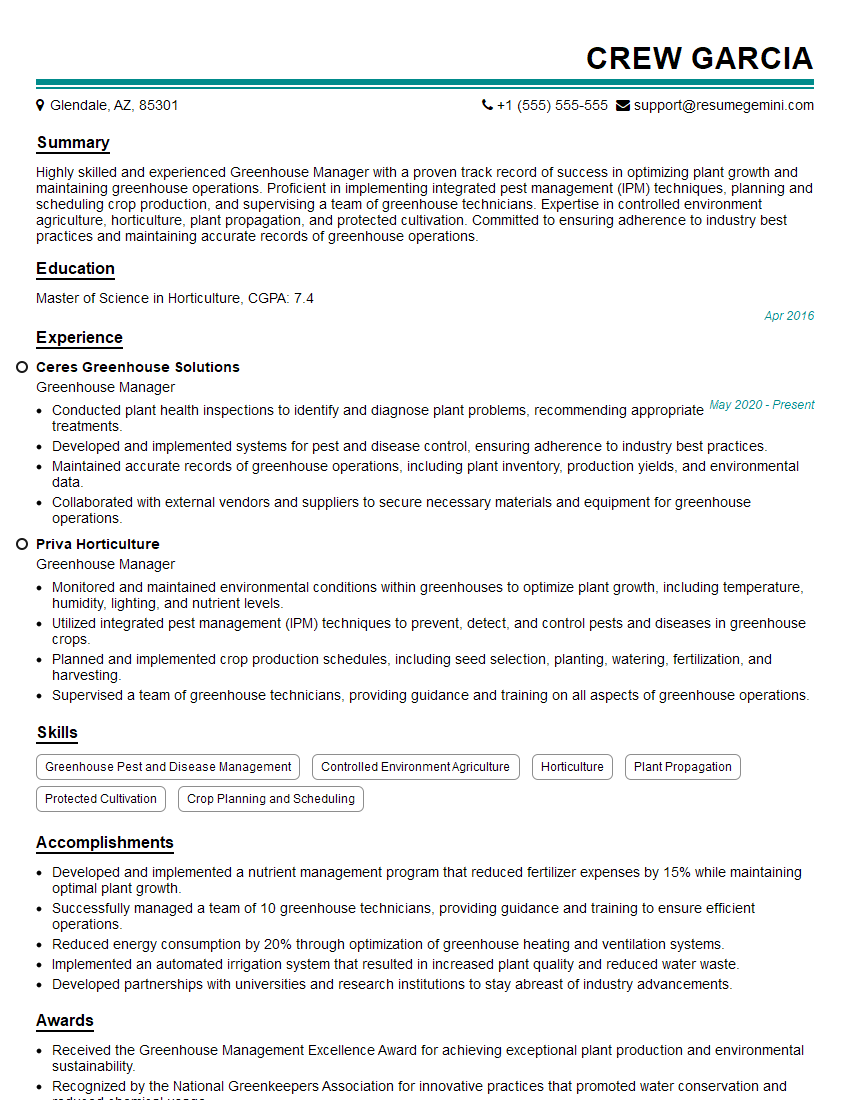
Greenhouse Manager Resume Sample

Nursery Manager Resume Sample

Water Resource Manager Resume Sample
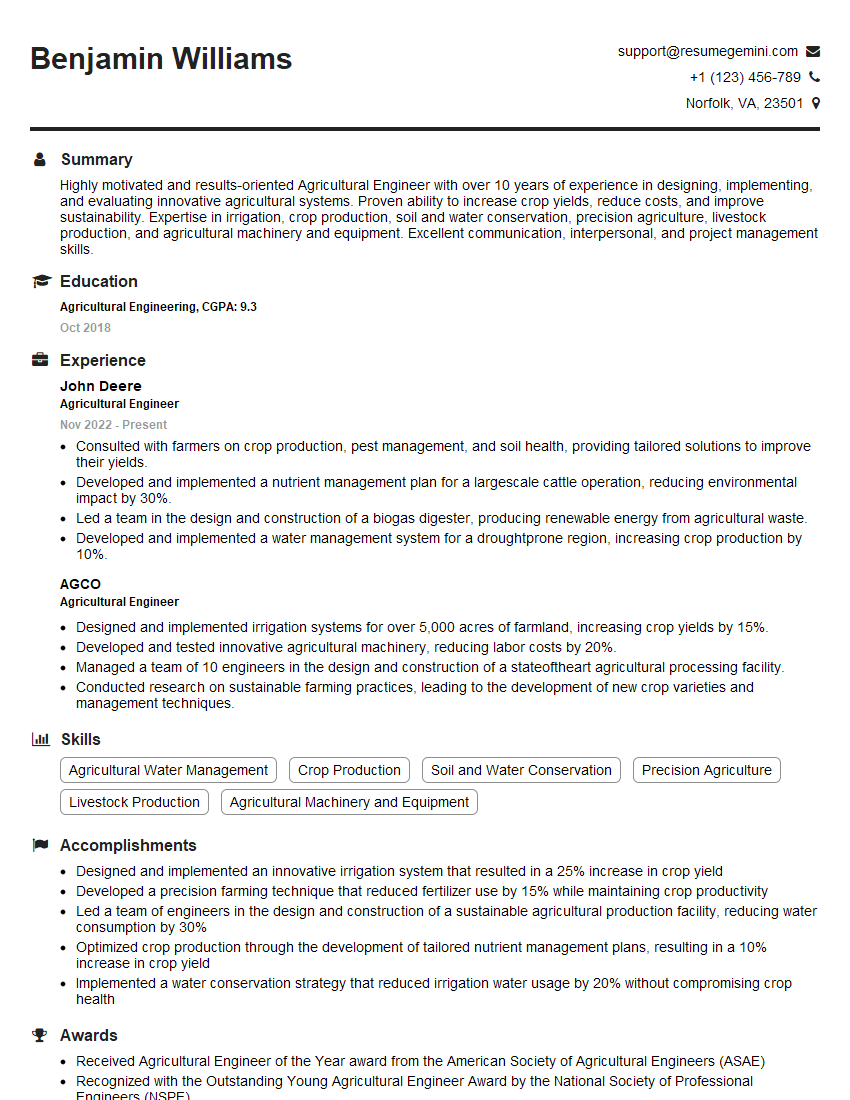
Agricultural Engineer Resume Sample

Agronomist Resume Sample

Soil Scientist Resume Sample
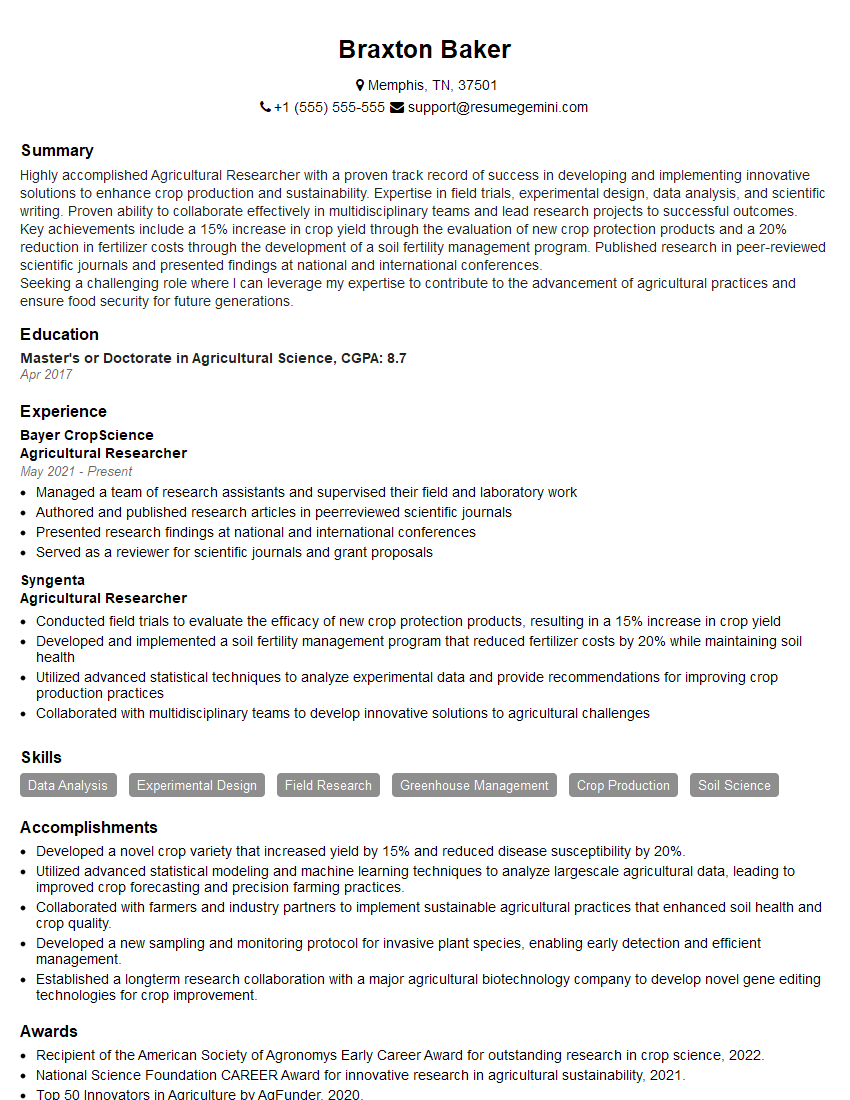
Agricultural Researcher Resume Sample
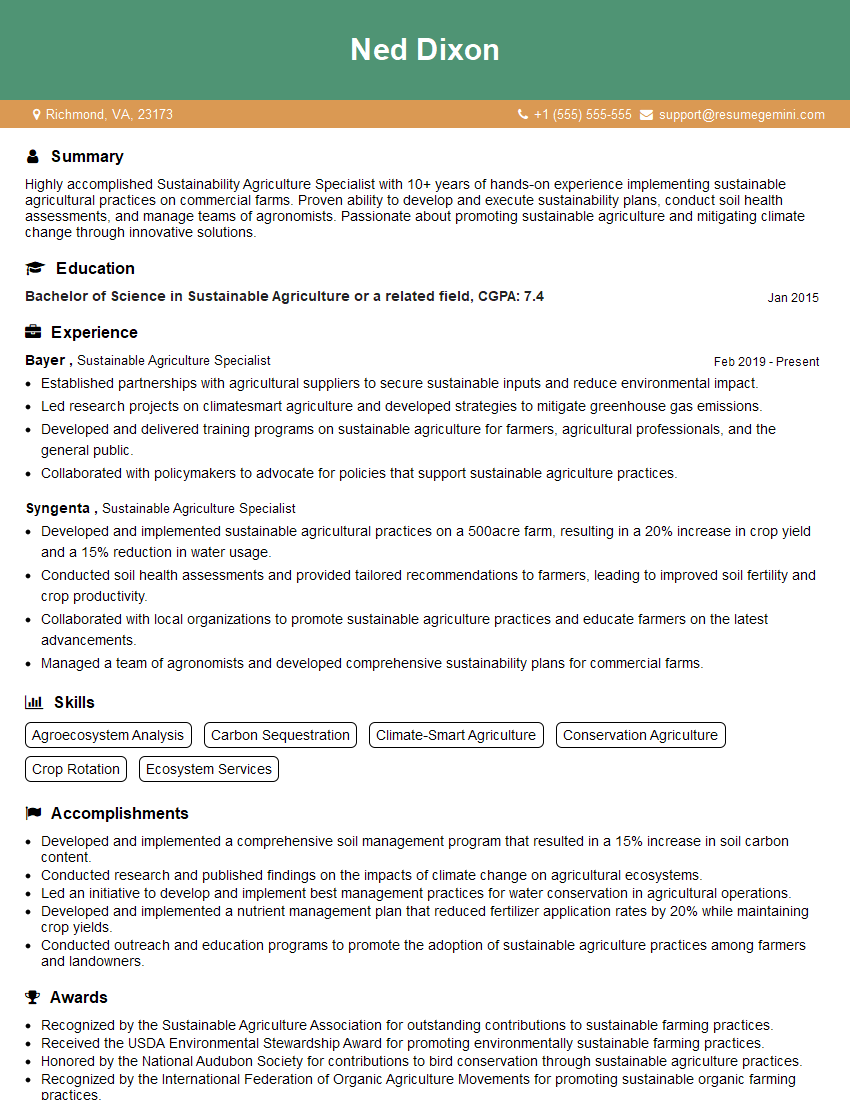
Sustainable Agriculture Specialist Resume Sample
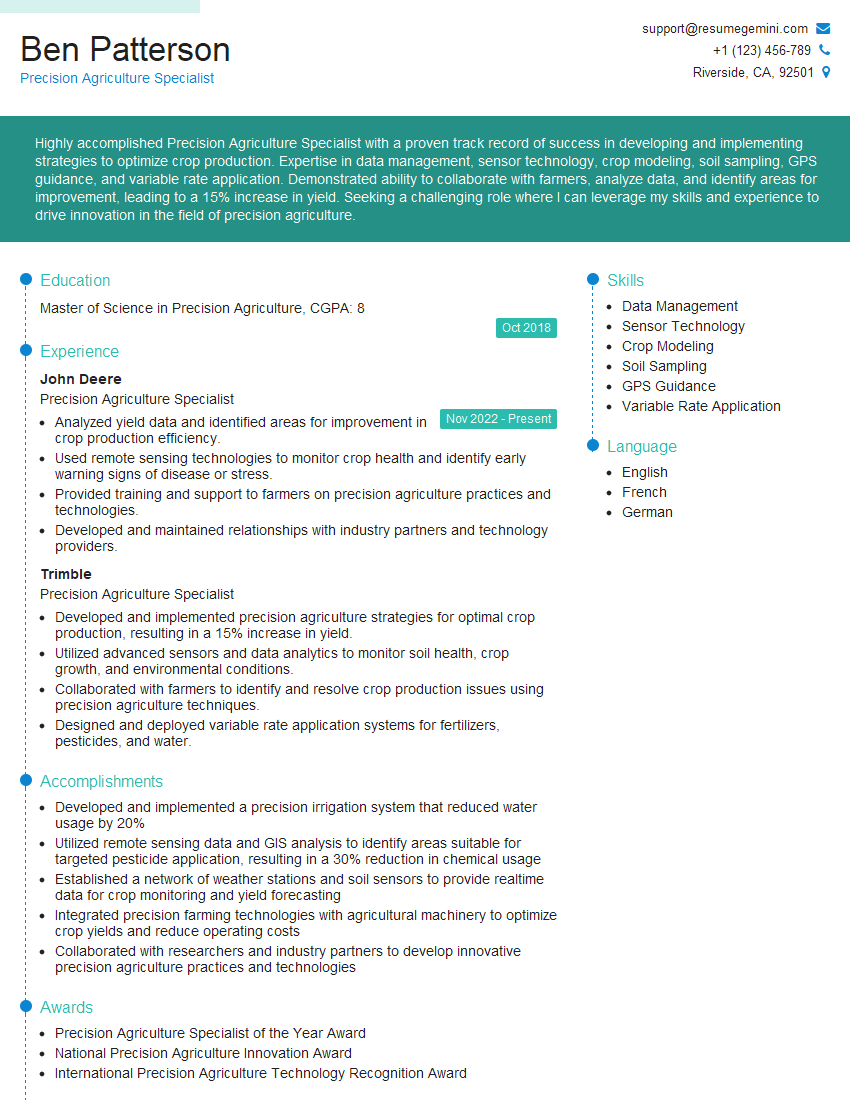
Precision Agriculture Specialist Resume Sample

Irrigation Technician Resume Sample
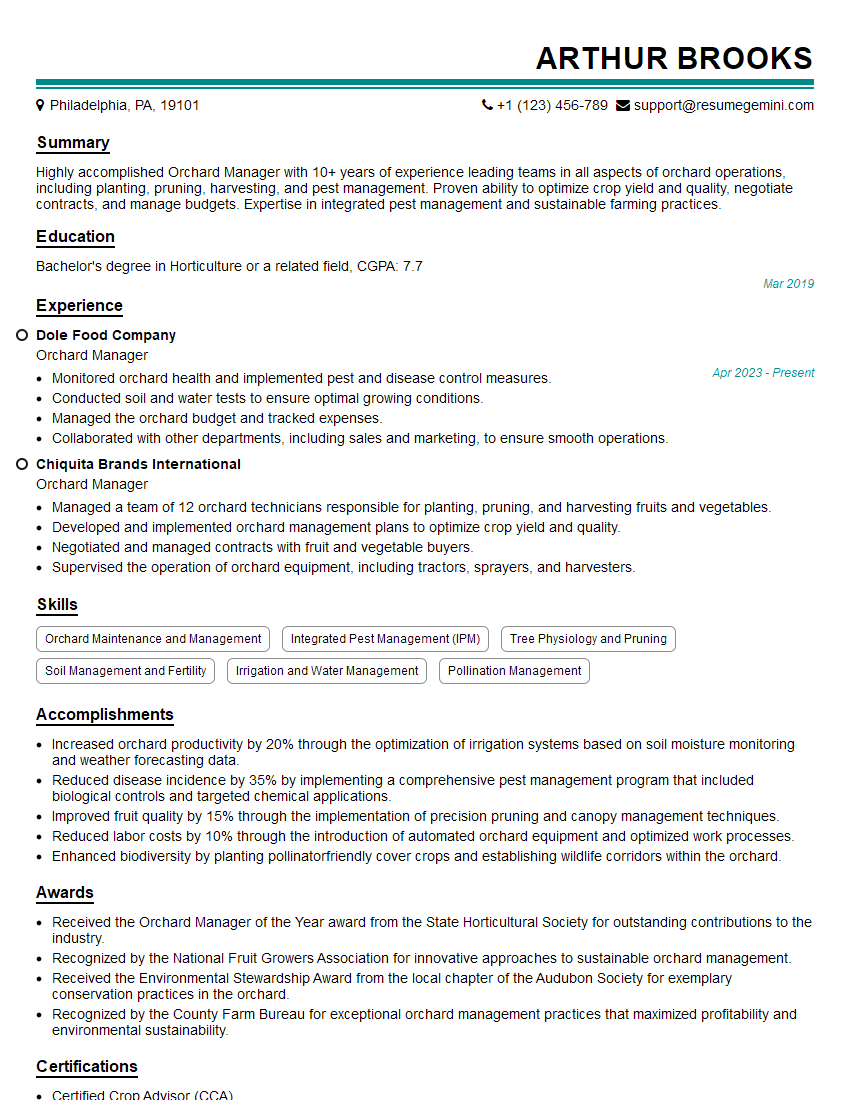
Orchard Manager Resume Sample
Explore more articles
Users Rating of Our Blogs
Share Your Experience
We value your feedback! Please rate our content and share your thoughts (optional).
What Readers Say About Our Blog
Really detailed insights and content, thank you for writing this detailed article.
IT gave me an insight and words to use and be able to think of examples