Every successful interview starts with knowing what to expect. In this blog, we’ll take you through the top Knowledge of Welding Processes interview questions, breaking them down with expert tips to help you deliver impactful answers. Step into your next interview fully prepared and ready to succeed.
Questions Asked in Knowledge of Welding Processes Interview
Q 1. Explain the difference between SMAW, GMAW, and GTAW welding processes.
SMAW (Shielded Metal Arc Welding), GMAW (Gas Metal Arc Welding), and GTAW (Gas Tungsten Arc Welding) are three common arc welding processes, each differing significantly in their techniques and applications. Think of them as three different tools in a welder’s toolbox, each best suited for a specific job.
- SMAW (Stick Welding): Uses a consumable electrode coated with flux that protects the weld from atmospheric contamination. It’s relatively inexpensive and portable, ideal for outdoor work and repairs where precise control isn’t paramount. Imagine a painter using a brush – simple, robust, and effective for many applications.
- GMAW (MIG Welding): Employs a continuously fed consumable wire electrode and a shielding gas (often CO2 or Argon-based mixtures) to protect the weld. It offers faster welding speeds and better weld quality than SMAW, making it suitable for high-volume production. Think of it as a spray gun – efficient and produces a smooth finish.
- GTAW (TIG Welding): Uses a non-consumable tungsten electrode and a separate filler metal, shielded by an inert gas (usually Argon). It’s known for its precise control, allowing for high-quality welds on thin materials and intricate joints. It’s like using an airbrush – providing the utmost control and precision for detailed work.
In essence, SMAW is best for ruggedness and portability, GMAW for speed and efficiency, and GTAW for precision and quality.
Q 2. Describe the various types of welding filler metals and their applications.
Welding filler metals, also known as welding rods or wires, are crucial for joining base metals. Their composition dictates the weld’s properties. The choice of filler metal depends heavily on the base metal being welded and the desired weld characteristics (strength, toughness, corrosion resistance, etc.).
- Mild Steel Filler Metals: These are the most common, used for joining mild steel structures. They often have a low carbon content.
- Stainless Steel Filler Metals: Used for welding stainless steel, offering corrosion resistance. Different grades cater to different needs (e.g., austenitic, ferritic).
- Aluminum Filler Metals: Used for aluminum welding, requiring specific alloys and techniques due to aluminum’s high thermal conductivity.
- Cast Iron Filler Metals: Specialized filler metals are needed for cast iron due to its complex microstructure and propensity for cracking.
- High-Strength Steel Filler Metals: These are used for applications requiring high tensile strength, often containing alloying elements like nickel, molybdenum, and chromium.
Selecting the wrong filler metal can lead to poor weld quality, cracking, or even complete failure of the weld. A thorough understanding of material compatibility is vital.
Q 3. What are the safety precautions for each welding process?
Safety is paramount in welding. The precautions vary slightly depending on the process but always include:
- Eye and Face Protection: Always wear a welding helmet with a shade appropriate for the process and amperage used. This protects against intense UV radiation and welding spatter.
- Respiratory Protection: Welding fumes can be toxic; a respirator is often necessary, especially in enclosed spaces or when welding materials with hazardous fumes.
- Clothing Protection: Wear flame-resistant clothing, including gloves, long sleeves, and high-top shoes to prevent burns and protect from sparks and spatter.
- Fire Prevention: Ensure a fire extinguisher is nearby and the work area is free of flammable materials. Welding sparks can easily ignite combustible substances.
- Proper Ventilation: Adequate ventilation is essential to remove welding fumes and prevent buildup of gases. In confined spaces, additional ventilation is critical.
- Electrical Safety (especially for GMAW and GTAW): Be mindful of electrical hazards, ensuring proper grounding and insulation.
Specific precautions might include shielding gas safety for GMAW and GTAW, and proper electrode handling for SMAW. Regular safety training is crucial for all welders.
Q 4. How do you determine the correct welding parameters (voltage, amperage, travel speed)?
Determining the correct welding parameters is crucial for achieving sound welds. These parameters (voltage, amperage, and travel speed) interact closely and must be optimized for the specific material, thickness, and welding process.
Factors to consider:
- Base Metal Type and Thickness: Thicker materials generally require higher amperage and voltage.
- Filler Metal Type: The diameter and composition of the filler metal influence the required parameters.
- Welding Process: Each process has its optimal parameter ranges.
- Joint Design: Different joint types (butt, fillet, lap) require adjustments to parameters.
The best approach is often through a combination of experience, welding procedure specifications (WPS), and trial runs. WPS documents specify the exact parameters for a particular application, reducing trial and error and ensuring consistent quality. Starting with recommended parameters and making small adjustments based on weld bead appearance and penetration is a good strategy. Too low amperage will lead to insufficient penetration, while too high will cause burn-through.
Q 5. Explain the importance of pre-weld inspection and post-weld inspection.
Pre-weld and post-weld inspections are critical steps ensuring structural integrity and safety. They identify potential issues before and after welding, preventing costly rework or failures. Think of them as quality control checkpoints.
- Pre-weld Inspection: This involves checking the base materials for surface defects (cracks, porosity, contamination), verifying dimensions and joint fit-up, and ensuring correct preparation (cleaning, beveling). Identifying problems early avoids wasting time and materials on faulty welds.
- Post-weld Inspection: This involves visual inspection for surface defects (cracks, porosity, undercutting, excessive spatter), measuring weld dimensions, and potentially conducting non-destructive testing (NDT) such as radiography, ultrasonic testing, or dye penetrant testing to detect internal flaws. NDT techniques help discover hidden defects that visual inspection might miss.
Both inspections are documented to maintain a record of the welding process and its quality. These records are vital for traceability and ensuring compliance with industry standards.
Q 6. What are common welding defects and how are they identified?
Several common welding defects can compromise the strength and integrity of a weld. Identifying them accurately is vital for corrective actions.
- Porosity: Small holes or voids within the weld, often caused by gas entrapment.
- Cracks: Fractures within the weld metal or the heat-affected zone (HAZ), often caused by rapid cooling or stress.
- Undercutting: A groove melted into the base metal at the edge of the weld, weakening the joint.
- Incomplete Penetration: The weld doesn’t fully fuse the base materials, leaving a weak point.
- Overlap: Excess weld metal extending beyond the edges of the joint.
- Lack of Fusion: The weld metal doesn’t properly fuse with the base metal, creating a weak interface.
These defects are identified using visual inspection, magnified inspection, and NDT methods. The specific method used depends on the weld’s complexity and the level of inspection required.
Q 7. How do you interpret welding symbols?
Welding symbols are a standardized system for communicating welding requirements on engineering drawings. They provide concise information about weld type, size, location, and other crucial details. Think of them as a shorthand language for welders.
A typical welding symbol includes:
- Reference Line: A horizontal line indicating the location of the weld.
- Arrowhead: Points to the component to which the symbol applies.
- Basic Weld Symbols: Represent different weld types (e.g., fillet weld, groove weld).
- Dimensional Information: Indicates weld size, leg length, etc.
- Supplementary Symbols: Convey additional details such as weld type, finishing requirements, and other specifications.
Understanding welding symbols is crucial for welders to interpret drawings accurately and ensure that welds are made to specifications. Proper interpretation is essential for preventing errors and ensuring safety.
Q 8. What are the different types of weld joints?
Weld joints are the connections formed between two or more pieces of metal using a welding process. They are classified based on the geometry of the joint and the relative orientation of the parts being joined. The choice of joint type significantly influences the strength and efficiency of the weld.
- Butt Joint: The simplest type, where two pieces are joined end-to-end. Think of welding two steel plates together flush.
- Lap Joint: Two overlapping pieces are welded together along their overlapping edges. This is commonly used when access to only one side is available.
- T-Joint: One piece is welded perpendicularly to another, resembling the letter ‘T’. Often seen in structural steel frameworks.
- Corner Joint: Two pieces are welded together at their edges, forming a corner. Think of welding the edges of an angle iron.
- Edge Joint: Two pieces are joined along their edges, often with a small gap. Used for thin sheet metal.
- Miter Joint: Two pieces are beveled at an angle and then welded together. Often requires more precision and skill.
The selection of the appropriate joint depends on factors like material thickness, joint accessibility, required strength, and the welding process employed. For instance, a butt joint might be ideal for strong, aesthetically pleasing welds in thick plates, whereas a lap joint might be preferred for ease of welding in thin sheets or when only one side is accessible.
Q 9. Explain the principle of heat transfer in welding.
Heat transfer in welding is primarily achieved through conduction, convection, and radiation. The process involves concentrating a high amount of heat energy at the joint to melt the base materials and the filler material (if used).
- Conduction: Heat directly moves from the heat source (e.g., arc, flame) through the workpiece. This is the dominant mode in most welding processes.
- Convection: Heat transfer through the movement of molten metal and gases within the weld pool. This is especially significant in processes like gas metal arc welding (GMAW).
- Radiation: Heat is emitted from the heat source in the form of electromagnetic waves and transferred to the workpiece. This plays a lesser role but contributes to preheating the base material before the arc or flame contacts.
Imagine heating a metal rod with a blowtorch. The flame directly heats the portion in contact (conduction). As the metal heats, it glows and radiates some heat. The hot gases rising from the flame also carry away some heat (convection). A proper understanding of heat transfer is crucial to control the weld pool size and ensure sufficient penetration.
Q 10. What is the significance of the HAZ (Heat Affected Zone)?
The Heat Affected Zone (HAZ) is the area of base material surrounding the weld that has been altered by the heat of the welding process. Its properties differ from the original base material due to the heat-induced changes in microstructure and mechanical properties. Understanding the HAZ is crucial for predicting the overall weld performance.
The HAZ can experience changes in grain size, hardness, toughness, and ductility. A coarser grain size typically indicates a reduction in strength and toughness. In some materials, the HAZ might become brittle or susceptible to cracking, particularly if rapid cooling occurs. This can lead to weld failure under stress.
For example, in high-strength steels, the HAZ may exhibit increased hardness and reduced toughness, potentially leading to cracking if not properly managed. Controlling the HAZ is achieved by proper preheating, interpass temperature control, and post-weld heat treatment to minimize such adverse effects and ensure the final product meets safety and quality requirements.
Q 11. Describe different methods for weld testing (e.g., visual, radiographic, ultrasonic).
Weld testing is essential to ensure the quality and integrity of the weld. Different methods are employed depending on the required level of inspection.
- Visual Inspection (VT): A simple, non-destructive method involving a thorough visual examination of the weld for defects like cracks, porosity, undercuts, and lack of fusion. It’s the first step in most weld inspections.
- Radiographic Testing (RT): Uses X-rays or gamma rays to penetrate the weld and detect internal defects like cracks, porosity, and inclusions. The resulting image (radiograph) shows variations in density.
- Ultrasonic Testing (UT): Employs high-frequency sound waves to detect both surface and internal flaws. It’s particularly effective for detecting cracks and other discontinuities in thicker sections. The reflected sound waves create an image that highlights the location and size of defects.
- Liquid Penetrant Testing (PT): A surface inspection technique where a dye is applied to highlight surface-breaking defects by capillary action.
- Magnetic Particle Testing (MT): Uses magnetic fields to detect surface and near-surface cracks in ferromagnetic materials. Magnetic particles are applied to the surface, which cluster at any cracks.
The choice of method depends on the application’s criticality, the material being welded, and the type of potential defects. For instance, visual inspection might suffice for less critical welds, while radiographic testing would be necessary for welds in pressure vessels or pipelines that need higher safety assurance.
Q 12. What is the role of shielding gas in GMAW and GTAW welding?
Shielding gas plays a crucial role in GMAW (Gas Metal Arc Welding) and GTAW (Gas Tungsten Arc Welding) by protecting the weld pool from atmospheric contamination. The atmosphere contains oxygen, nitrogen, and hydrogen, which can react with the molten metal and cause undesirable effects like porosity, embrittlement, and cracking in the weld.
In GMAW, the shielding gas surrounds the arc and the weld pool, preventing oxidation and creating a stable arc. Common shielding gases include argon, carbon dioxide (CO2), and mixtures of argon and CO2. The gas type is carefully chosen based on the metal being welded and desired weld properties.
Similarly, in GTAW, the shielding gas protects the weld pool from atmospheric contamination. Argon is the most commonly used shielding gas for GTAW because it provides excellent arc stability and prevents oxidation. Helium might be used for its higher heat transfer rate, especially with thicker sections.
For instance, welding aluminum often uses 100% argon due to aluminum’s high reactivity with oxygen. On the other hand, mild steel welding sometimes uses CO2 or an argon-CO2 mixture, leading to higher deposition rates.
Q 13. How do you select the appropriate welding electrode for a specific application?
Electrode selection depends on several factors, including the base metal, the desired weld properties, and the welding position. The electrode’s composition, coating type, and diameter significantly influence the weld’s strength, toughness, and appearance.
First, identify the base metal. Different electrodes are designed for different base metals (e.g., mild steel, stainless steel, aluminum). Next, consider the required weld properties. Some electrodes produce welds with high strength, others with good ductility or corrosion resistance. The welding position (e.g., flat, vertical, overhead) also affects electrode selection; certain electrodes are better suited for specific positions.
The electrode’s coating plays a critical role. It provides shielding gas, helps stabilize the arc, and adds alloying elements to the weld. For example, electrodes with a high cellulose coating can help create a deep penetration weld, while low-hydrogen electrodes are used to prevent hydrogen cracking in high-strength steels. Finally, the electrode diameter is chosen based on the thickness of the base metal and the required welding speed. The diameter determines the current and deposition rate.
Think of it like choosing the right tool for a job. You wouldn’t use a screwdriver to hammer a nail. Similarly, the wrong electrode choice will lead to poor weld quality.
Q 14. Explain the concept of weld penetration and fusion.
Weld penetration and fusion are crucial aspects of weld quality. They define how well the weld is joined to the base metal.
Weld penetration refers to the depth of the weld into the base material. Sufficient penetration is essential to ensure a strong and reliable joint. Inadequate penetration (undercut) results in a weaker weld susceptible to failure. Excessive penetration might lead to burn-through.
Weld fusion describes the degree to which the weld metal is metallurgically bonded to the base material. Complete fusion is crucial for a sound weld. Lack of fusion indicates areas where the weld metal did not properly bond to the base metal and creates weak points. This can be caused by insufficient heat, poor cleaning, or incorrect welding techniques.
Imagine two pieces of clay. Penetration is how deep you press one into the other. Fusion is how well they blend and bond together at the interface. Both are vital for creating a strong, solid connection. Controlling penetration and fusion requires careful consideration of welding parameters like current, voltage, travel speed, and shielding gas.
Q 15. What are the effects of improper welding techniques on weld quality?
Improper welding techniques significantly impact weld quality, leading to a range of defects that compromise the structural integrity and longevity of the weld. These defects can be categorized into several key areas:
- Incomplete Fusion: This occurs when the weld metal doesn’t properly fuse with the base material, creating a weak point prone to cracking or failure under stress. Imagine trying to glue two pieces of wood together but leaving a gap – the joint is weak. This can result from insufficient heat input, incorrect travel speed, or poor joint preparation.
- Porosity: Gas entrapment during welding forms small holes within the weld bead, reducing its strength and making it vulnerable to corrosion. This often stems from contamination of the base metal, improper shielding gas usage (in processes like Gas Metal Arc Welding or GMAW), or too high a welding current.
- Undercutting: This is the erosion of the base metal at the weld’s edge, leaving a groove. It indicates excessive heat input or too fast a travel speed, weakening the weld and creating stress concentrations.
- Lack of Penetration: The weld doesn’t penetrate deeply enough into the base metal, resulting in an insufficient joint strength. This might be due to low amperage, short arc length, or improper joint design.
- Cracking: Cracks, either during or after welding, are a serious defect that significantly reduces strength. They arise from improper heat control, rapid cooling, or hydrogen embrittlement (hydrogen trapped in the weld).
In essence, proper technique ensures complete fusion, minimizes porosity and other defects, leading to a strong, reliable weld. Failing to address these issues can have catastrophic consequences in applications ranging from pipelines to bridges.
Career Expert Tips:
- Ace those interviews! Prepare effectively by reviewing the Top 50 Most Common Interview Questions on ResumeGemini.
- Navigate your job search with confidence! Explore a wide range of Career Tips on ResumeGemini. Learn about common challenges and recommendations to overcome them.
- Craft the perfect resume! Master the Art of Resume Writing with ResumeGemini’s guide. Showcase your unique qualifications and achievements effectively.
- Don’t miss out on holiday savings! Build your dream resume with ResumeGemini’s ATS optimized templates.
Q 16. Describe different types of welding consumables.
Welding consumables are materials consumed during the welding process, critical for achieving strong and sound welds. They vary depending on the welding method employed. Here are some key examples:
- Electrodes: These are used in Shielded Metal Arc Welding (SMAW) and consist of a metal core (e.g., steel, stainless steel) coated with flux. The flux protects the weld from atmospheric contamination, stabilizes the arc, and adds alloying elements.
- Filler Wires (or Welding Wires): Used in Gas Metal Arc Welding (GMAW), Gas Tungsten Arc Welding (GTAW), and Submerged Arc Welding (SAW), these supply the weld metal. Different compositions exist, tailored to specific base materials and applications. For instance, you might use a high-strength wire for a pressure vessel or a corrosion-resistant wire for marine applications.
- Flux: As mentioned above, flux is a vital component in many processes like SMAW and SAW. It cleans the weld area, controls the weld bead shape, and protects the weld from oxidation.
- Shielding Gases: In GMAW and GTAW, shielding gases (e.g., argon, helium, carbon dioxide, or mixtures) prevent atmospheric contamination of the molten weld pool.
- Welding Rods: These are essentially filler wires used in processes like brazing and soldering, offering lower melting points compared to typical welding consumables.
Selecting the appropriate consumable is crucial. The wrong choice can lead to poor weld quality, and understanding the properties of each is essential for skilled welding.
Q 17. How do you control weld bead geometry?
Controlling weld bead geometry is vital for achieving a strong, aesthetically pleasing, and structurally sound weld. Several factors influence geometry, and careful control over these is necessary:
- Welding Current: Higher current leads to wider and deeper penetration.
- Travel Speed: Slower speeds result in wider beads with more penetration, while faster speeds create narrower beads with shallower penetration.
- Arc Length: Maintaining a consistent arc length is crucial. Too short, and the weld pool becomes unstable; too long, and penetration suffers.
- Electrode Angle (SMAW) or Wire Angle (GMAW): These angles influence the heat distribution and penetration. A push technique in GMAW can create a more uniform bead compared to a pull technique.
- Shielding Gas Flow Rate (GMAW & GTAW): Ensures proper shielding and a stable arc, directly impacting penetration and bead shape.
- Joint Design: The geometry of the joint influences the weld bead geometry. For example, a square butt joint will create a different weld bead compared to a V-groove joint.
Think of it like baking a cake: precise control of ingredients (current, speed, etc.) and baking time (weld time) determines the cake’s (weld bead’s) final shape and quality. Experienced welders develop a keen sense of control over these variables through practice and experience.
Q 18. Explain the importance of joint preparation in welding.
Joint preparation is a critical pre-welding step that significantly impacts weld quality and strength. Proper preparation ensures good fit-up, preventing defects like incomplete fusion or lack of penetration. It also improves the weld’s appearance and reduces the risk of cracking.
- Cleaning: Removing contaminants like oil, grease, paint, rust, and mill scale from the base metal is essential to ensure clean fusion. Contaminants can cause porosity and weaken the weld.
- Edge Preparation: This involves shaping the edges of the base metal to create a joint suitable for the chosen welding process. Common preparations include beveling (creating angled edges), butt joints, and various other configurations depending on the material thickness and the desired weld penetration.
- Fit-up: Accurately aligning and clamping the parts to be welded ensures proper gap control. An incorrect gap can lead to incomplete fusion or excessive weld metal.
Imagine trying to weld two pieces of metal together with a large gap between them. The heat would dissipate too quickly, and the weld wouldn’t be strong enough. Proper joint preparation creates the ideal conditions for a solid, reliable weld, enhancing both strength and aesthetics.
Q 19. What are the different types of welding power sources?
Welding power sources provide the electrical energy needed to generate the welding arc. Different power sources offer unique characteristics, influencing the welding process and weld quality. Some of the common types include:
- Constant Current (CC) Power Sources: These maintain a relatively constant current despite changes in arc length. They are commonly used in SMAW, offering better arc stability and less sensitivity to arc fluctuations. Think of it as a steady, reliable flow of electricity.
- Constant Voltage (CV) Power Sources: These maintain a relatively constant voltage, regardless of current changes. They are often preferred for GMAW and FCAW, allowing for better control of the weld bead size and shape because the arc length is more easily adjusted by the welder. The voltage is consistent, but the current changes based on the distance (arc length).
- Rectifier Power Sources: Convert alternating current (AC) from the mains supply into direct current (DC), which is usually required for most welding processes.
- Inverter Power Sources: These use electronic circuitry to convert AC to DC and then generate a high-frequency AC arc, often resulting in lighter-weight and more energy-efficient machines.
The choice of power source depends heavily on the welding process and the desired characteristics of the weld. Understanding these differences is crucial for a professional welder.
Q 20. What is the difference between destructive and non-destructive testing methods?
Destructive and non-destructive testing (NDT) methods are both crucial for ensuring weld quality, but they differ significantly in their approach:
- Destructive Testing (DT): DT involves destroying a sample of the weld to assess its properties. Common DT methods include tensile testing (measuring the weld’s strength), bend testing (evaluating ductility), and macro/micro examination (analyzing the weld’s microstructure). DT provides detailed, quantifiable data about the weld’s mechanical properties. However, it requires sacrificing a part of the weld, making it less suitable for large-scale or critical applications.
- Non-Destructive Testing (NDT): NDT assesses the weld’s integrity without causing damage. Techniques include visual inspection (checking for surface defects), radiographic testing (using X-rays or gamma rays to detect internal flaws), ultrasonic testing (using sound waves to detect internal defects), magnetic particle testing (detecting surface and near-surface cracks in ferromagnetic materials), and liquid penetrant testing (detecting surface cracks by capillary action). NDT is preferred for its ability to evaluate the weld in-situ, reducing the risk of causing further damage.
DT provides precise mechanical data, while NDT offers a comprehensive overview of the weld’s integrity without destroying the component. Often, a combination of both techniques is used to gain a complete understanding of the weld’s quality.
Q 21. Describe your experience with different types of welding equipment.
Throughout my career, I’ve gained extensive experience with a wide range of welding equipment, including:
- Shielded Metal Arc Welding (SMAW) Machines: I’m proficient in using various SMAW machines, from smaller portable units for site work to larger, more powerful machines for heavier applications. I have experience with both AC and DC machines, and understand the nuances of selecting the right electrode type for different base metals and applications.
- Gas Metal Arc Welding (GMAW) Systems: I have significant experience using different GMAW systems, including pulsed-MIG, short-circuiting transfer, and spray transfer. I understand the impact of different shielding gases and wire feeds on weld quality. I am capable of adjusting the equipment parameters (voltage, wire feed speed, etc.) to achieve the desired weld bead geometry.
- Gas Tungsten Arc Welding (GTAW) Equipment: I’m proficient in using various GTAW machines, focusing on applications that require high-quality welds with minimal distortion. This includes precision welding of thin materials, different metals, and demanding applications requiring maximum cleanliness and accuracy.
- Submerged Arc Welding (SAW) Equipment: I’ve worked with automated SAW systems, focusing on large-scale production welding. I understand the importance of proper flux management, wire feed rates, and the control of the welding parameters for high-speed, efficient production.
This experience allows me to confidently tackle a wide range of welding projects, selecting the most appropriate equipment and techniques to meet specific requirements.
Q 22. How do you troubleshoot common welding problems?
Troubleshooting welding problems involves a systematic approach. First, I carefully examine the weld defect – is it porosity (small holes), cracks, incomplete fusion (lack of bonding between weld and base metal), undercut (a groove at the edge of the weld), or something else? The visual inspection guides the next steps.
- Porosity: Often indicates contamination (moisture, oil) in the welding process. I’d check for proper cleaning of the base metal and filler material, and ensure the shielding gas is dry and flowing correctly. I might also adjust the welding parameters (current, voltage, travel speed).
- Cracks: These can suggest issues with the base material (e.g., improper heat treatment, wrong alloy), or rapid cooling. I’d verify the base metal properties and potentially preheat the material before welding. Adjusting the welding parameters to control the cooling rate could also be necessary.
- Incomplete Fusion: Points to improper fit-up of the components, insufficient welding current, or incorrect welding technique. I’d ensure proper joint preparation, increase the welding current slightly, and check for consistent travel speed and proper weld bead geometry.
- Undercut: This typically results from excessive current, too fast travel speed, or incorrect electrode angle. Reducing current, slowing travel speed, and adjusting the electrode angle would resolve the issue.
I always document my findings and the corrective actions taken, allowing for continuous improvement and avoiding repetition of errors. Using a weld log is crucial.
Q 23. Explain your understanding of the AWS D1.1 structural welding code.
AWS D1.1 is a comprehensive structural welding code that specifies requirements for the fabrication and welding of structural steel. It covers a wide range of aspects, from welder qualification to material selection, welding procedures, and inspection criteria. Understanding this code is paramount for ensuring structural integrity and safety.
Key aspects include:
- Welder Qualification: D1.1 outlines procedures for testing and qualifying welders based on specific welding processes and materials. This ensures consistent weld quality.
- Welding Procedure Specifications (WPS): These documents detail specific welding parameters (current, voltage, travel speed, etc.) for a given material, process, and joint design. The WPS must be qualified to ensure it consistently produces acceptable welds.
- Material Specifications: D1.1 specifies the required properties and characteristics of the base metal and filler materials to ensure compatibility and structural integrity.
- Joint Design and Preparation: The code details acceptable joint designs and the necessary preparation methods (beveling, edge preparation) to achieve proper weld penetration and fusion.
- Inspection and Testing: D1.1 outlines the inspection and testing methods required to verify weld quality, including visual inspection, radiographic testing (RT), and ultrasonic testing (UT).
In practice, I utilize D1.1 to select appropriate WPS, ensure proper welder qualification, and adhere to the inspection criteria throughout the fabrication process, ultimately ensuring the structural integrity of the welded component.
Q 24. What are the safety regulations related to welding in your experience?
Welding safety is paramount. My experience emphasizes several key regulations:
- Personal Protective Equipment (PPE): This includes safety glasses or a welding helmet with appropriate shade number, flame-resistant clothing, gloves, and hearing protection. Ignoring this is unacceptable.
- Ventilation: Welding fumes can be toxic; adequate ventilation is crucial to prevent inhalation hazards. Local exhaust ventilation systems near the welding area are critical, especially in confined spaces.
- Fire Prevention: Welding produces sparks and hot metal, posing fire hazards. Flammable materials must be removed from the vicinity, and fire extinguishers must be readily accessible. A fire watch is often necessary.
- Electrical Safety: Welding equipment operates at high voltages; ensuring proper grounding and isolation of power sources is crucial to prevent electric shock. Regular inspection of electrical cords and equipment is essential.
- Confined Space Entry: Welding in confined spaces poses additional risks (oxygen deficiency, buildup of hazardous gases). Permits, atmospheric testing, and appropriate respiratory protection are essential before starting work.
I always follow all relevant OSHA (or equivalent local) regulations and company safety protocols. A safety briefing before any welding work is mandatory. My experience has repeatedly highlighted that a moment’s carelessness can have serious consequences.
Q 25. How do you maintain your welding equipment?
Maintaining welding equipment is crucial for safety and consistent weld quality. My routine includes:
- Regular Cleaning: Removing spatter and debris from the welding gun, torch, and surrounding areas prevents malfunctions and improves equipment life.
- Gas Cylinder Inspection: Checking cylinder pressure and ensuring proper regulator function is crucial. Leaking cylinders are a major hazard.
- Electrode/Filler Wire Inspection: Checking for damage, corrosion, or moisture contamination ensures good weld quality and prevents defects.
- Cable Inspection: Regularly checking for insulation damage, fraying, or loose connections is essential to prevent electrical hazards.
- Preventive Maintenance: Following the manufacturer’s recommendations for scheduled maintenance, including replacing worn parts, is critical for long-term equipment reliability. This may involve professional servicing.
I keep detailed records of maintenance performed to maintain traceability and track equipment usage and servicing history. Proper maintenance saves time and money in the long run and helps ensure safety.
Q 26. Describe your experience with robotic welding.
My experience with robotic welding includes programming and operating various robotic welding systems. I am proficient in using robot programming software to create and modify weld paths, adjust welding parameters, and optimize weld quality. I have worked on various robotic applications, including:
- Arc Welding (GMAW and GTAW): Programming robots to perform accurate and repeatable welds on complex geometries.
- Spot Welding: Utilizing robotic systems for high-speed, automated spot welding applications.
- Seam Welding: Programming robots to execute consistent and reliable seam welding on various materials.
The advantages of robotic welding are significant: increased speed, precision, consistency, and reduced labor costs. I also have experience troubleshooting robotic welding systems and performing preventative maintenance to maximize uptime and productivity. Robotic welding is crucial for high-volume production applications requiring high precision and repeatability.
Q 27. Explain your understanding of different metal alloys and their weldability.
Understanding metal alloys and their weldability is essential for successful welding. Different alloys exhibit varying responses to heat and welding processes, impacting the weld quality and structural integrity.
- Carbon Steel: Relatively easy to weld, but high carbon content can lead to cracking if not properly controlled.
- Stainless Steel: Requires specific welding processes (GTAW or GMAW with proper shielding gas) due to its susceptibility to oxidation and embrittlement.
- Aluminum: Highly conductive, requiring specific parameters and techniques to avoid excessive heat input and porosity.
- Titanium: Reactive and sensitive to contamination, requiring a highly controlled welding environment (vacuum or inert gas) and specialized techniques.
- Nickel Alloys: Often have high strength and corrosion resistance, but can be challenging to weld due to their tendency to crack.
Weldability is affected by factors like alloy composition, grain size, and the presence of impurities. Selecting the appropriate welding process and parameters for a given alloy is crucial to ensure a strong, sound weld. I consult material datasheets and welding handbooks to understand the specific requirements of each alloy before I begin work.
Q 28. What is your experience with different types of welding positions?
My experience encompasses various welding positions – the orientation of the joint relative to gravity significantly affects welding technique and weld quality. These positions include:
- Flat Position (1G): The simplest position, where the weld is laid horizontally, allowing for easy control and penetration.
- Horizontal Position (2G): Welding is done horizontally with the weld bead facing upwards, requiring a steady hand and careful control to prevent sagging.
- Vertical Position (3G): Welding is performed vertically, requiring precise control of travel speed and welding parameters to avoid excessive penetration or undercut. This position is more challenging than horizontal.
- Overhead Position (4G): The most challenging position, as the molten weld metal must be controlled against gravity. Proper technique and experience are essential to avoid weld defects.
Experience in all positions is vital to handle diverse welding projects. I’ve worked on numerous projects where versatility in welding positions was crucial to meet project requirements and deliver high-quality welds, regardless of joint orientation.
Key Topics to Learn for a Knowledge of Welding Processes Interview
- Arc Welding Processes: Understanding the principles of SMAW (Shielded Metal Arc Welding), GMAW (Gas Metal Arc Welding), and FCAW (Flux-Cored Arc Welding). This includes electrode selection, shielding gas considerations, and appropriate applications for each process.
- Gas Welding Processes: Familiarize yourself with oxy-fuel welding techniques, including safety procedures and the properties of different fuel gases. Know the applications where gas welding is preferred over other methods.
- Resistance Welding: Learn the fundamentals of spot welding, seam welding, and projection welding. Understand the advantages and limitations of these processes and their suitability for various materials.
- Welding Metallurgy: Grasp the principles of how heat affects the base metal and filler material. Understand the importance of proper heat input, cooling rates, and the formation of weld zones (HAZ, fusion zone, etc.).
- Weld Joint Design: Be familiar with different weld joint configurations (butt, lap, tee, corner) and their respective strengths and weaknesses. Know how to select the appropriate joint design for a given application.
- Welding Defects and Inspection: Learn to identify common welding defects (porosity, cracks, undercut) and understand the methods used for weld inspection (visual, non-destructive testing). Be prepared to discuss troubleshooting strategies.
- Safety Procedures and Regulations: Demonstrate a strong understanding of relevant safety protocols, including PPE requirements, fire prevention, and hazard identification.
- Advanced Welding Processes (Optional): Depending on the seniority of the role, you may want to explore processes like laser beam welding, electron beam welding, or friction stir welding.
Next Steps
Mastering welding processes is crucial for career advancement in this field. A strong understanding of these techniques opens doors to specialized roles, higher earning potential, and increased job security. To stand out, ensure your resume effectively showcases your expertise. Creating an ATS-friendly resume is key to getting your application noticed by recruiters. ResumeGemini is a trusted resource that can help you build a professional, impactful resume tailored to the specific requirements of welding positions. Examples of resumes tailored to showcasing Knowledge of Welding Processes are available to help you build your own compelling application.

Welding Engineer Resume Sample
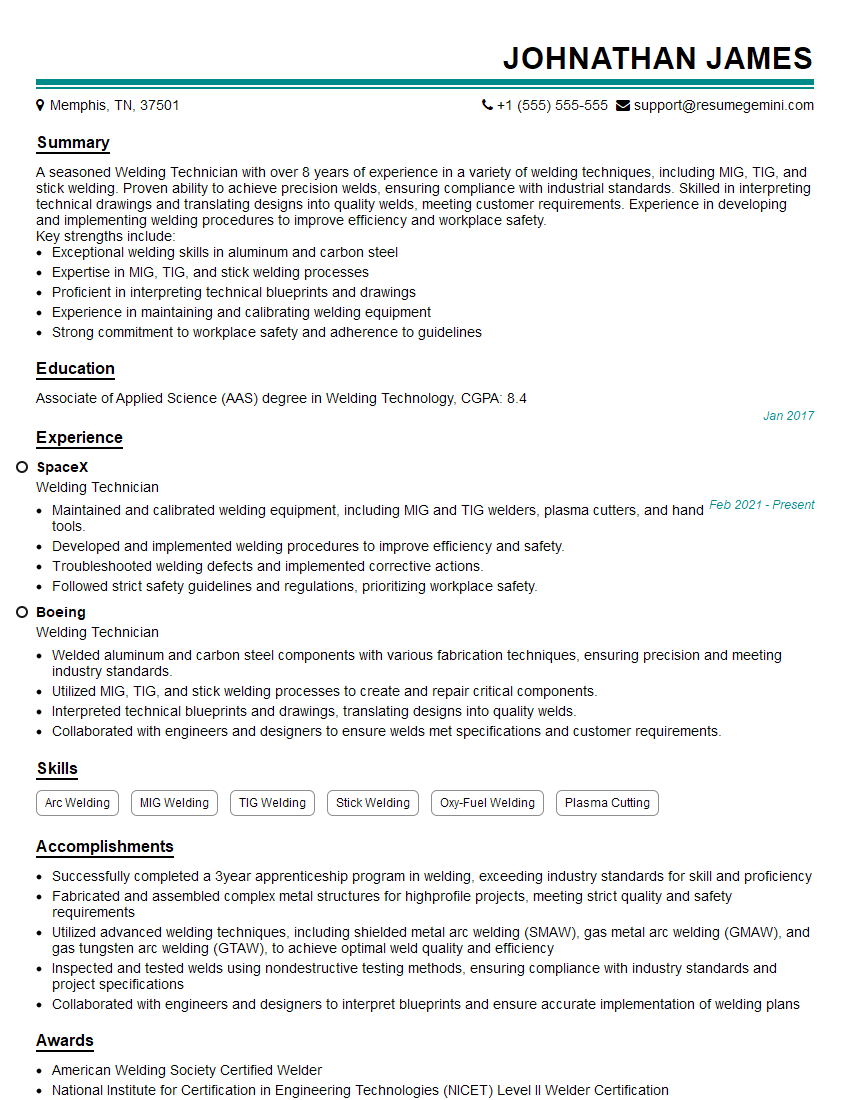
Welding Technician Resume Sample

Welding Instructor Resume Sample
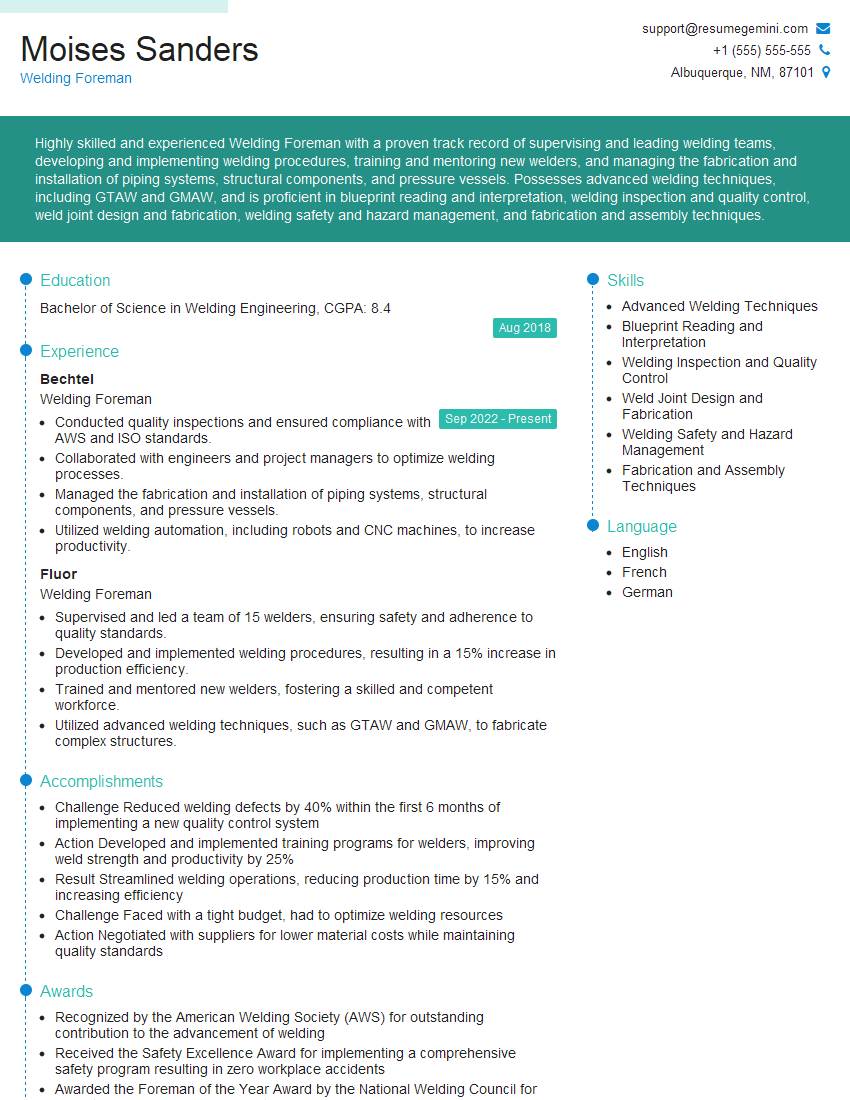
Welding Foreman Resume Sample
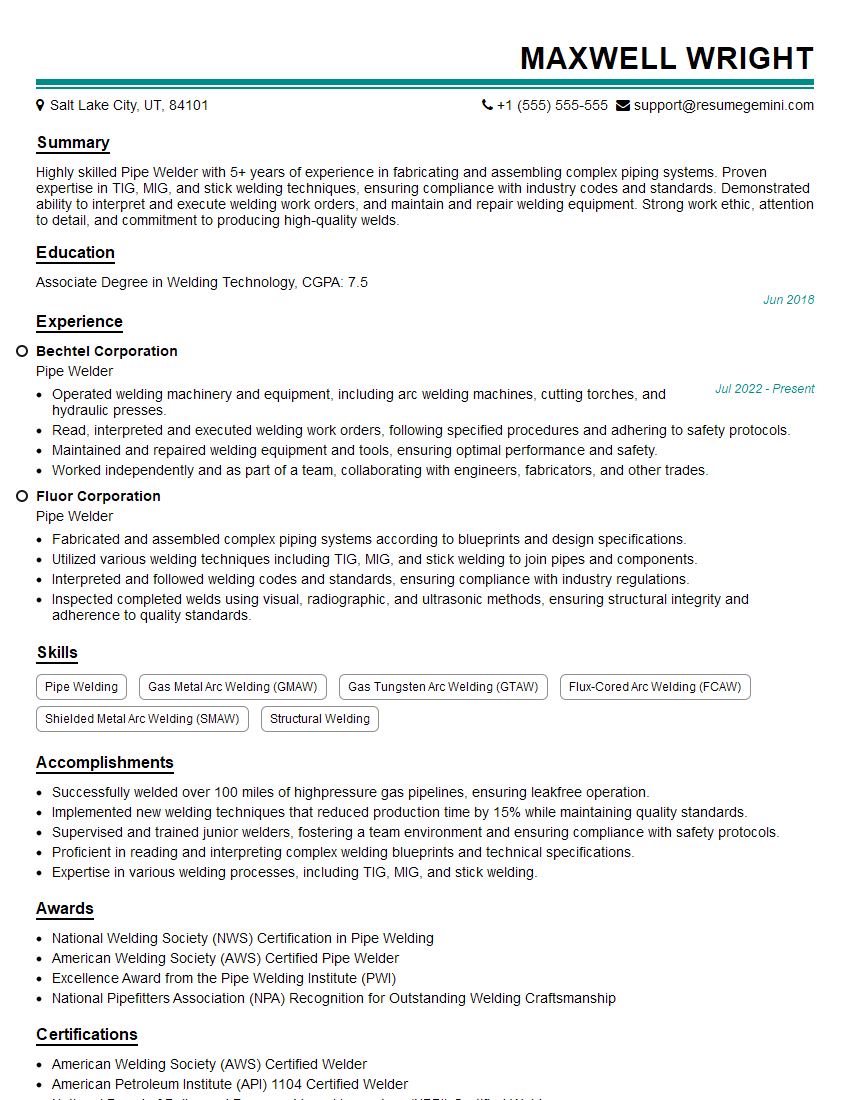
Pipe Welder Resume Sample

Fabrication Supervisor Resume Sample
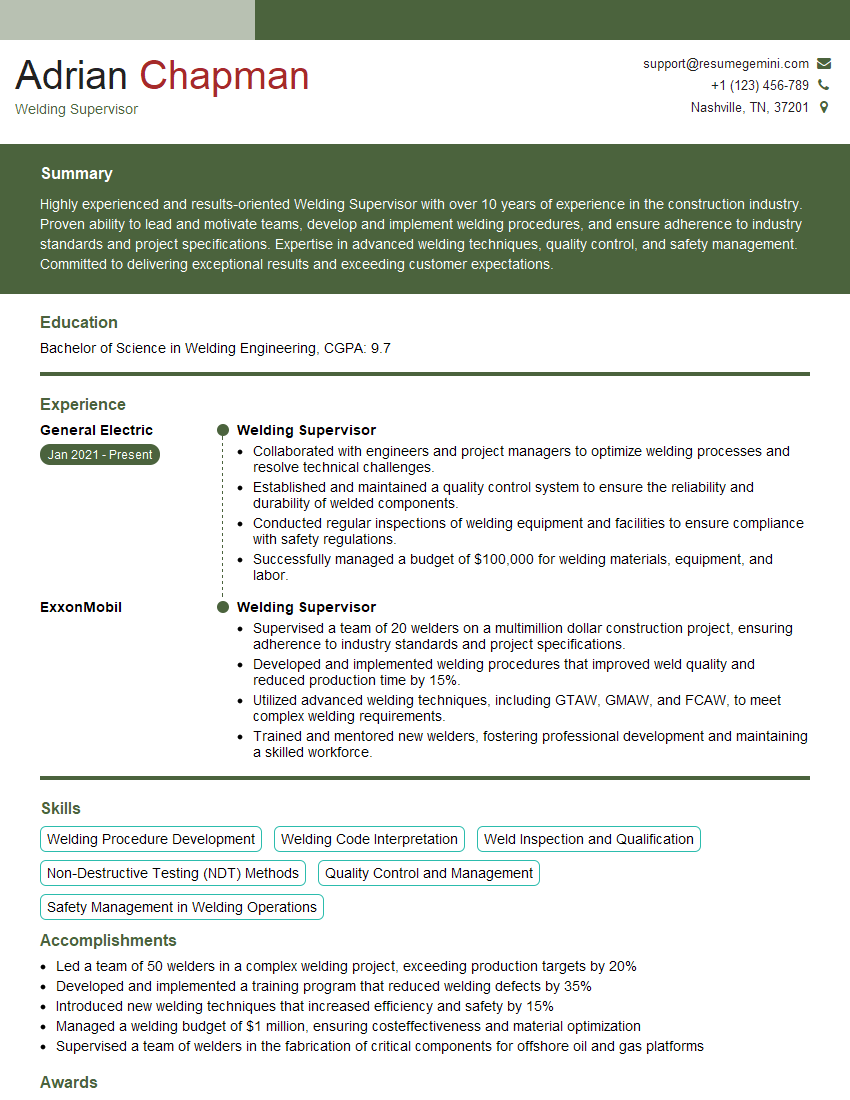
Welding Supervisor Resume Sample
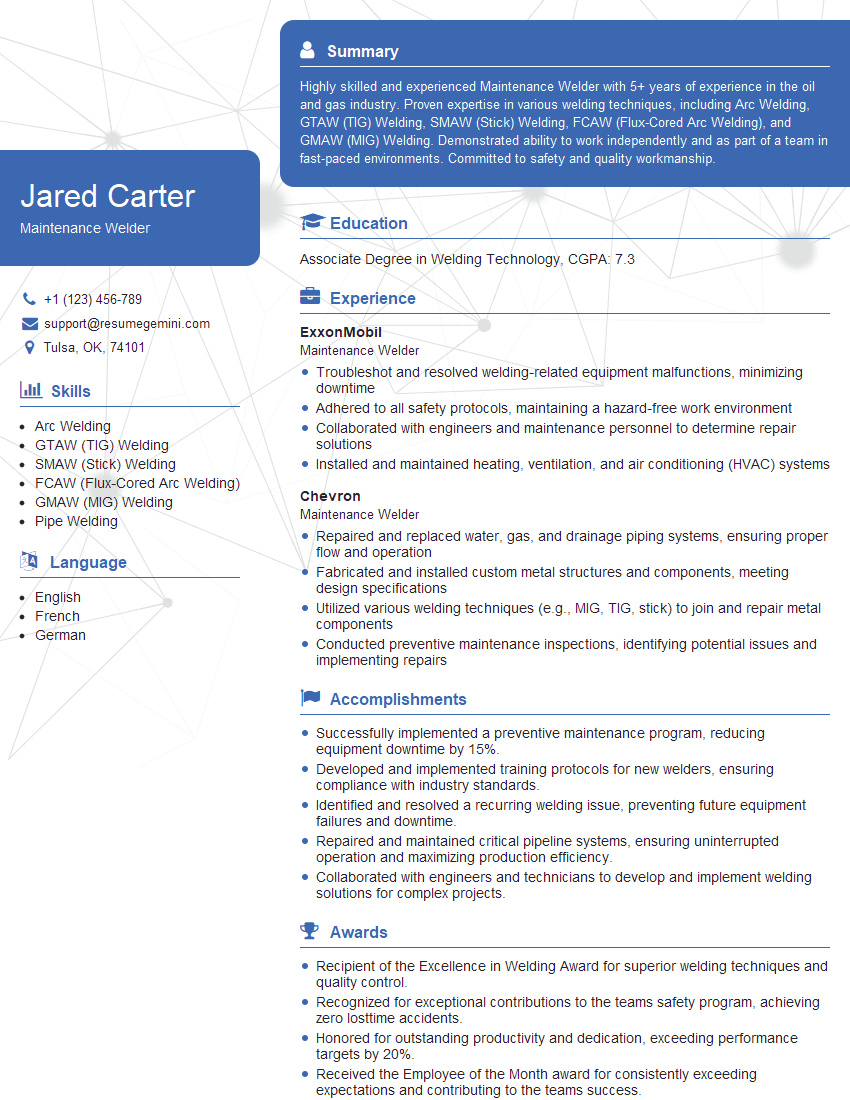
Maintenance Welder Resume Sample
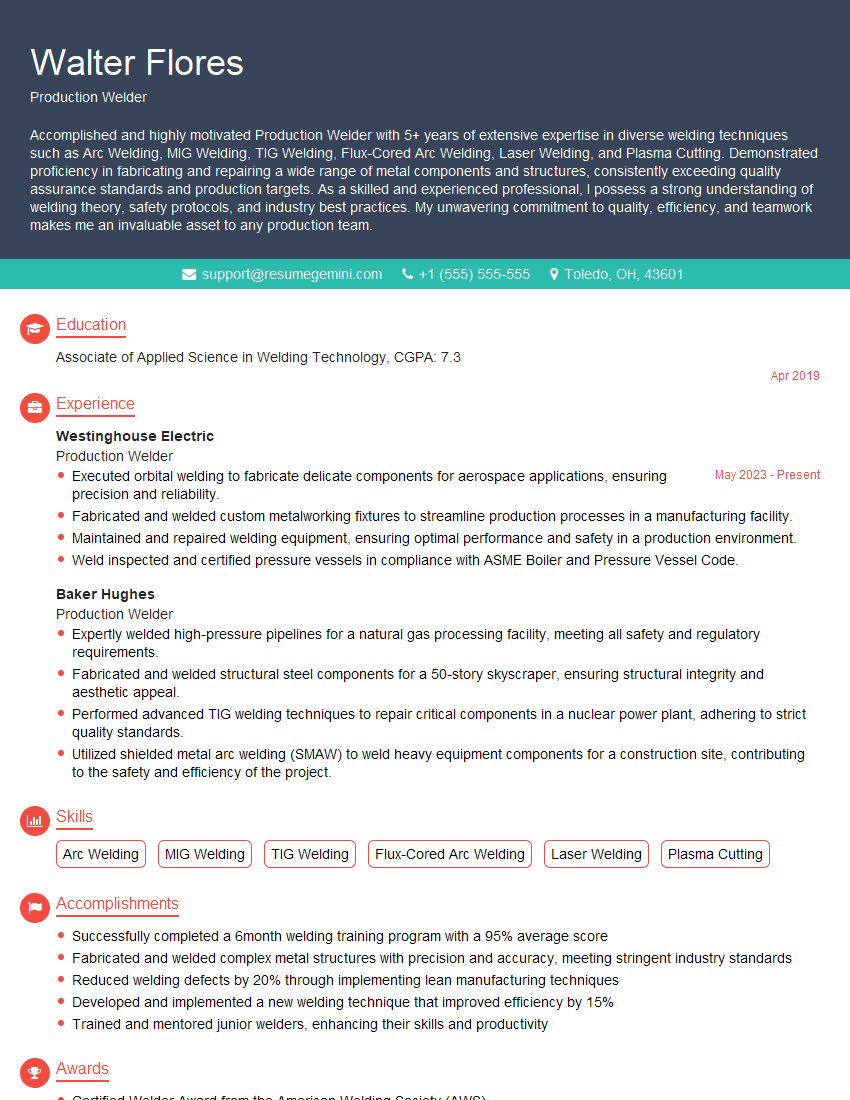
Production Welder Resume Sample
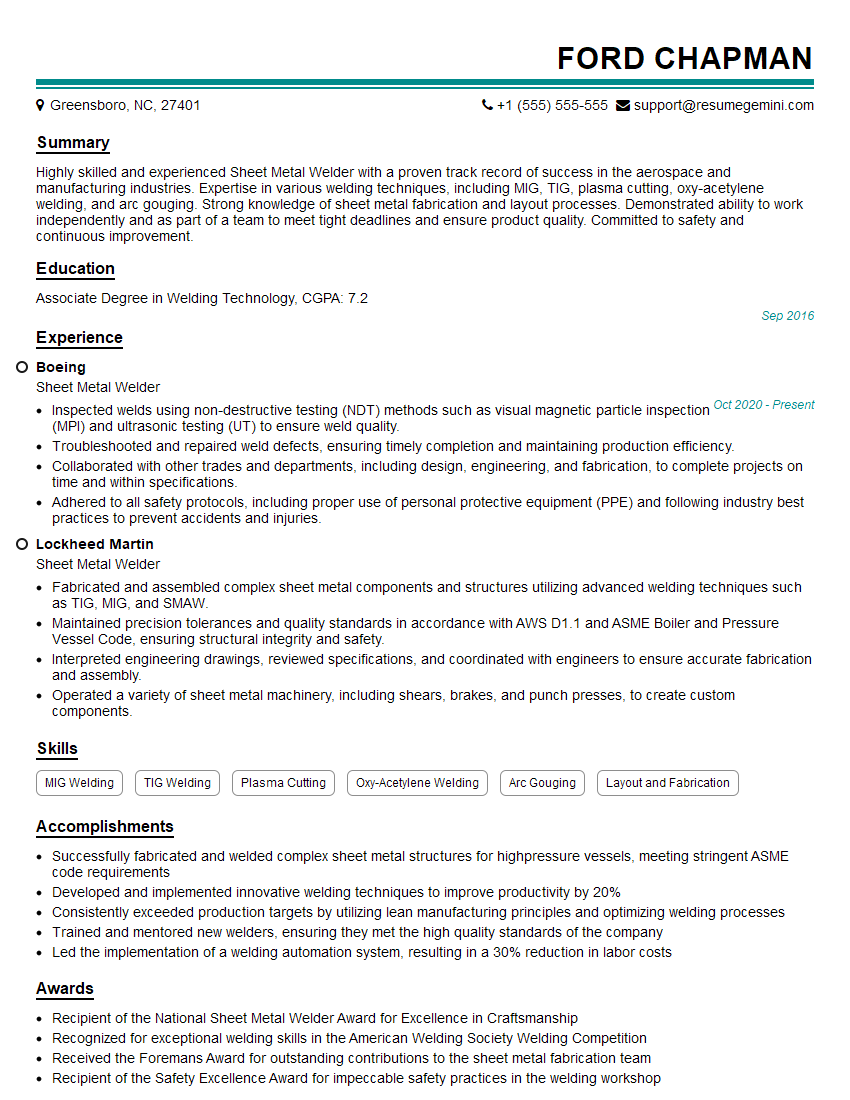
Sheet Metal Welder Resume Sample

Structural Welder Resume Sample
Explore more articles
Users Rating of Our Blogs
Share Your Experience
We value your feedback! Please rate our content and share your thoughts (optional).
What Readers Say About Our Blog
Really detailed insights and content, thank you for writing this detailed article.
IT gave me an insight and words to use and be able to think of examples