Preparation is the key to success in any interview. In this post, we’ll explore crucial Knowledge of Wheat Standards interview questions and equip you with strategies to craft impactful answers. Whether you’re a beginner or a pro, these tips will elevate your preparation.
Questions Asked in Knowledge of Wheat Standards Interview
Q 1. Describe the different classes of wheat and their typical uses.
Wheat is broadly classified into several types, primarily based on the characteristics of the endosperm, the starchy part of the kernel. These classes dictate the best uses for the wheat.
- Hard Red Spring Wheat: High in protein, ideal for bread making due to its strong gluten development. Think of the robust texture of a sourdough loaf – that’s often thanks to hard red spring wheat.
- Hard Red Winter Wheat: Also high in protein, but slightly less than spring wheat; used in bread and rolls, offering a balance of strength and flavor. It’s a workhorse in many bakery applications.
- Soft Red Winter Wheat: Lower protein content, making it suitable for cakes, crackers, and pastries where a tender crumb is desired. Imagine the delicate texture of a sponge cake—that’s often achieved using soft red winter wheat.
- Hard White Wheat: High protein, produces a white flour with excellent bread-making qualities, popular in many Asian and Mediterranean cuisines.
- Soft White Wheat: Lower protein, yields a very fine white flour perfect for pastries, cakes, and some noodles, appreciated for its mild flavor and lightness.
- Durum Wheat: Very high protein, exceptionally strong gluten, specifically used for pasta making. The characteristic firmness of pasta is a direct result of durum wheat’s high gluten content.
The choice of wheat class depends entirely on the desired end product’s texture and characteristics. Bakers carefully select wheat classes to achieve specific qualities in their products.
Q 2. Explain the significance of protein content in wheat.
Protein content is absolutely crucial in wheat. The protein, specifically glutenin and gliadin, forms gluten when mixed with water. Gluten is the elastic network responsible for trapping carbon dioxide produced during fermentation, giving bread its structure and rise.
Higher protein content generally means stronger gluten, leading to better bread-making qualities. However, excessively high protein can make the dough too strong and difficult to work with. Conversely, low protein results in weaker gluten and produces a crumbly texture, more suitable for pastries and cakes. Protein content is typically expressed as a percentage of the wheat kernel’s weight, and it’s a key factor determining wheat’s value and market price.
For example, a baker making sourdough bread would prefer hard red spring wheat with a high protein content (around 12-14%), while a baker making delicate pastries might opt for soft white wheat with a much lower protein content (around 8-10%).
Q 3. What are the key factors influencing wheat quality?
Many factors influence wheat quality, impacting its suitability for different applications. These factors can be broadly categorized as:
- Genetic Factors: The inherent characteristics of the wheat variety, including protein content, gluten strength, and grain size.
- Environmental Factors: Climate conditions during growth (temperature, rainfall, sunlight), soil type, and disease/pest pressure. A drought year might yield wheat with lower protein and reduced yield.
- Agricultural Practices: Fertilizer application, irrigation, harvesting techniques, and storage methods all impact the final wheat quality. Proper handling throughout the entire process is crucial.
- Post-Harvest Handling: Cleaning, drying, and storage conditions significantly affect quality. Improper storage can lead to insect infestation or the development of mycotoxins, which render wheat unfit for consumption.
The interplay of these factors determines the overall quality and value of the wheat harvest. For instance, wheat grown in a dry climate might have higher protein but a lower yield compared to wheat grown in ideal conditions.
Q 4. How is wheat graded according to international standards?
International wheat grading systems vary slightly, but generally, they rely on several key parameters:
- Protein Content: A major factor determining the strength of the flour.
- Falling Number: Measures the enzymatic activity of the wheat, indicating its suitability for baking (lower falling numbers suggest poorer quality).
- Test Weight: Indicates the weight of a specific volume of wheat, reflecting grain size and density.
- Moisture Content: Excess moisture can promote spoilage; ideal levels ensure long-term storage.
- Damage: The percentage of broken or damaged kernels.
- Foreign Material: The presence of weed seeds, dirt, or other undesirable materials.
Organizations like the International Association for Cereal Science and Technology (ICC) establish standardized methods for testing these parameters and often provide guidelines for grading. Grading systems assign quality classes to wheat, directly influencing its market value and application.
For example, wheat with high protein, a high test weight, and low damage would receive a premium grade, while wheat with low protein, high damage, and high moisture content would receive a lower grade.
Q 5. What are the common wheat defects and their impact on quality?
Several defects can affect wheat quality, reducing its value and suitability for processing. These include:
- Damaged Kernels: Broken or cracked kernels, often caused by improper harvesting or handling, lead to lower yields and potentially affect flour quality.
- Weeds and Other Foreign Material: Contamination with weed seeds or other foreign matter necessitates cleaning and reduces the value of the wheat.
- Insect Infestation: Infested wheat is often downgraded or rejected as it can contain insect fragments and mycotoxins.
- Fungal Diseases: Various fungal diseases can affect wheat quality, potentially leading to mycotoxin contamination which is extremely dangerous.
- Ergot: A fungal disease that produces harmful alkaloids, rendering wheat unfit for consumption.
- Heat Damage: Improper drying or storage can cause heat damage, which affects protein quality and negatively impacts baking performance.
The impact of these defects varies depending on their severity. Minor defects might only slightly reduce the value, while severe defects can render the wheat unsuitable for human consumption and even lead to significant financial losses.
Q 6. Describe the different methods used for testing wheat moisture content.
Accurate measurement of wheat moisture content is crucial for determining storage stability and overall quality. Several methods are commonly employed:
- Oven Drying Method: This is a standard method involving weighing a sample before and after drying in an oven at a specific temperature (typically 105°C) until a constant weight is reached. The difference in weight represents the moisture lost. It’s accurate but time-consuming.
- Rapid Moisture Meters: These electronic devices use various principles, such as capacitance, near-infrared spectroscopy (NIR), or resistance, to rapidly determine moisture content. They offer speed and convenience but might require calibration and are prone to errors if the wheat is very dirty or damaged.
- Distillation Method: This method involves distilling the moisture from a sample using a solvent and measuring the volume of water collected. It is a precise method but less commonly used due to being more time consuming and complex.
The choice of method depends on the resources available, the required accuracy, and the number of samples to be tested. Rapid moisture meters are favored for routine quality control, while oven drying is preferred for reference purposes and where high precision is necessary.
Q 7. Explain the importance of Hagberg Falling Number in wheat quality assessment.
The Hagberg Falling Number (HFN) is a crucial test measuring the enzymatic activity (alpha-amylase) in wheat flour. Alpha-amylase breaks down starch, impacting dough characteristics and baking performance. A high falling number indicates low alpha-amylase activity, which is desirable for good baking quality. A low falling number suggests the presence of sprouted or damaged kernels, leading to a weaker dough structure and poor bread quality.
The HFN test involves mixing a standardized flour suspension with water and measuring the time (in seconds) it takes for a plunger to fall a certain distance through the cooked suspension. A higher falling number (typically above 250 seconds) indicates sound, healthy wheat suitable for baking. A falling number below 250 seconds suggests the presence of significant alpha-amylase activity, potentially causing stickiness and poor loaf volume. This test is crucial for detecting sprouting damage before it affects the end product, saving manufacturers significant losses.
For example, a miller receiving wheat with a low falling number would likely reject or downgrade the wheat to reflect the risk of poor baking performance. This ensures that the product meets the required quality standards for its intended use.
Q 8. What are the implications of different gluten strength levels in wheat?
Gluten strength, measured by factors like protein content and its elasticity, significantly impacts wheat’s baking properties. High-gluten wheat, with strong gluten, produces bread with good volume, structure, and chewiness. Think of a perfectly risen, airy loaf – that’s the result of strong gluten. Conversely, low-gluten wheat yields softer, more tender products like cakes and pastries. Imagine a delicate, crumbly cookie; that’s the work of weaker gluten. The choice of wheat depends entirely on the desired final product. A baker making sourdough bread would require high-gluten wheat, whereas one making delicate muffins would opt for low-gluten.
Different gluten strengths lead to variations in dough handling: strong gluten requires more kneading, while weak gluten is more easily handled. Understanding these variations is crucial for bakers to achieve the desired texture and rise in their products. Incorrect gluten strength can lead to collapsed cakes, dense bread, or excessively chewy pastries.
Q 9. How does wheat storage affect its quality?
Improper wheat storage significantly impacts its quality, leading to losses in both quantity and quality. Key factors include temperature, humidity, and insect infestation. High temperatures and humidity accelerate deterioration, causing enzymatic activity and microbial growth, leading to reduced protein content, damaged starch, and off-flavors. Think of a stale cracker – that’s the result of improper storage. Insect infestations can introduce contamination, increasing the risk of mycotoxin production, rendering the wheat unusable.
Proper storage requires cool, dry conditions with good ventilation to prevent moisture buildup and temperature fluctuations. Storage in airtight containers or silos minimizes insect infestation and reduces oxidation. Regular monitoring of temperature, humidity, and insect activity is crucial for maintaining quality. Failure to maintain these conditions leads to substantial economic losses due to spoilage and decreased value.
Q 10. Explain the role of mycotoxins in wheat and their detection methods.
Mycotoxins are toxic secondary metabolites produced by fungi that can contaminate wheat during growth, harvest, or storage. Aflatoxins, ochratoxins, and deoxynivalenol (DON), also known as vomitoxin, are significant concerns. These toxins pose serious health risks, including liver damage, kidney problems, and immune suppression. Their presence is a major safety concern for both human and animal consumption.
Detection methods include visual inspection (looking for mold growth), enzyme-linked immunosorbent assays (ELISA), and high-performance liquid chromatography (HPLC). ELISA is a common screening method, offering relatively quick and cost-effective results. HPLC provides more precise quantification but is more complex and expensive. Regular testing is crucial to ensure the safety of wheat products and prevent their entry into the food chain. Strict regulatory limits are in place for mycotoxin levels to safeguard public health.
Q 11. What are the key considerations for wheat transportation and handling?
Efficient and safe wheat transportation and handling are crucial for maintaining quality. Considerations include minimizing damage during harvest, transportation, and storage. This involves using appropriate machinery and handling techniques. Think of how a dropped bag of flour creates dust and potential contamination – the same principle applies to large quantities of wheat.
Cleanliness is paramount. Contamination from other materials or insects must be prevented. Transportation vehicles should be cleaned regularly to avoid cross-contamination. Proper storage methods, as discussed earlier, are essential to maintain the wheat’s quality. The use of protective packaging and temperature-controlled transportation for long distances is also critical. These measures ensure that the wheat reaches the processing facility in optimal condition, minimizing losses and upholding quality standards.
Q 12. Describe the process of wheat milling.
Wheat milling involves a series of steps to transform raw wheat kernels into flour. The process begins with cleaning and conditioning the wheat to optimize the milling process. Then, the wheat undergoes several grinding stages using progressively finer rollers. Each grinding stage separates different components of the kernel, including bran, germ, and endosperm. The endosperm is the primary source of flour.
Sieving and air classification are used to separate the flour particles based on their size and density. Different milling streams produce various flour grades, such as straight flour, which contains all components, and patent flour, which is primarily endosperm. The bran and germ, rich in fiber and nutrients, can be used for animal feed or other products. Modern mills are highly automated, optimizing efficiency and consistency. The final product, flour, is then packaged for distribution to bakeries and other food processing industries.
Q 13. What are the different types of wheat flour and their applications?
Wheat flour is categorized based on extraction rate (the proportion of the kernel used to produce the flour) and protein content.
- All-purpose flour: A blend suitable for various baking applications. It’s a middle ground with moderate gluten strength.
- Bread flour: High protein content for bread making, resulting in strong gluten development.
- Cake flour: Low protein content producing tender cakes and pastries.
- Pastry flour: Similar to cake flour, with slightly more protein, offering a balance between tenderness and structure.
- Whole wheat flour: Contains the entire kernel – bran, germ, and endosperm – resulting in a denser, nuttier flour.
Q 14. How do you assess the quality of wheat flour?
Assessing wheat flour quality involves evaluating various parameters, including:
- Protein content: Determines gluten strength and baking properties.
- Ash content: Indicates the presence of bran and other non-endosperm components. Lower ash content generally means finer flour.
- Moisture content: Affects flour storage and baking behavior. Too much moisture can lead to spoilage.
- Gluten strength: Evaluated through tests like the extensibility and resistance test, providing insights into dough elasticity and baking properties.
- Color and particle size: These indicate processing methods and quality. Whiter color often suggests better quality.
- Sensory evaluation: Examining aroma, taste, and texture.
Q 15. Explain the relationship between wheat variety and end-product quality.
The relationship between wheat variety and end-product quality is paramount. Different wheat varieties possess unique genetic characteristics that directly influence their final properties. Think of it like choosing different types of apples – some are best for eating fresh, others for pies, and still others for cider. Similarly, wheat varieties are bred for specific purposes, leading to variations in protein content, gluten strength, and overall baking characteristics.
For instance, bread-making wheat varieties, like those in the ‘Hard Red Winter’ class, generally have high protein content and strong gluten, resulting in a strong dough structure ideal for leavening and creating a chewy texture in bread. Conversely, pastry wheat varieties often have lower protein content and weaker gluten, producing a more tender crumb structure suited for cakes and pastries. The selection of the appropriate wheat variety is crucial for achieving the desired quality in the final product, impacting everything from loaf volume to texture to taste.
- High Protein Varieties: Used for bread, producing strong gluten.
- Medium Protein Varieties: Suitable for all-purpose flour, versatile for various baking applications.
- Low Protein Varieties: Ideal for cakes and pastries, resulting in tender crumb structure.
Career Expert Tips:
- Ace those interviews! Prepare effectively by reviewing the Top 50 Most Common Interview Questions on ResumeGemini.
- Navigate your job search with confidence! Explore a wide range of Career Tips on ResumeGemini. Learn about common challenges and recommendations to overcome them.
- Craft the perfect resume! Master the Art of Resume Writing with ResumeGemini’s guide. Showcase your unique qualifications and achievements effectively.
- Don’t miss out on holiday savings! Build your dream resume with ResumeGemini’s ATS optimized templates.
Q 16. Describe the impact of climate change on wheat production.
Climate change significantly impacts wheat production globally. Rising temperatures, altered rainfall patterns, and increased frequency of extreme weather events like droughts and floods pose major challenges. These changes affect various aspects of wheat growth, from germination and tillering (branching) to grain filling and maturation.
Higher temperatures during critical growth stages can reduce yields by accelerating plant development, shortening the grain-filling period, and hindering protein synthesis. Changes in precipitation patterns can lead to water stress during crucial phases, affecting grain size and overall yield. Extreme weather events can cause complete crop failure. For example, a severe heatwave during grain-filling can drastically reduce yield and quality of the harvest. The increased frequency of extreme weather, including unseasonal frost and hail, leads to substantial harvest losses.
Furthermore, the changing climate also impacts the spread of pests and diseases, further affecting wheat production. Adapting to climate change requires the development of climate-resilient wheat varieties and implementing sustainable farming practices that help mitigate the effects of a changing climate.
Q 17. What are the sustainable practices in wheat farming?
Sustainable practices in wheat farming aim to minimize environmental impact while maintaining or increasing productivity. These include:
- No-Till Farming: Reduces soil erosion and improves soil health by leaving crop residues on the soil surface.
- Cover Cropping: Planting cover crops during fallow periods helps prevent soil erosion, improve soil fertility, and suppress weeds.
- Crop Rotation: Rotating wheat with other crops helps break pest and disease cycles and improves soil nutrient balance. For example, rotating wheat with legumes like beans can improve soil nitrogen.
- Integrated Pest Management (IPM): Using a combination of strategies to control pests and diseases, minimizing the reliance on synthetic pesticides.
- Precision Agriculture: Utilizing technology like GPS and sensors to optimize fertilizer and water usage, reducing waste and environmental impact.
- Water Management: Implementing efficient irrigation techniques like drip irrigation to conserve water and improve water use efficiency.
Adopting these practices reduces the environmental footprint of wheat production while enhancing long-term soil health and farm profitability. It’s about finding a balance between efficient production and environmental stewardship.
Q 18. What are the common wheat diseases and their management strategies?
Wheat is susceptible to various diseases, impacting yield and quality. Some common diseases include:
- Fusarium Head Blight (FHB): A fungal disease causing reduced yield, poor grain quality, and mycotoxin contamination (e.g., deoxynivalenol or DON). Management involves resistant varieties, crop rotation, and proper sanitation.
- Septoria Leaf Blotch: A fungal disease causing leaf lesions, reducing photosynthesis and yield. Strategies include resistant varieties, fungicide application (following label instructions), and good field hygiene.
- Powdery Mildew: A fungal disease coating leaves with white powdery growth, hindering photosynthesis. Resistant varieties and fungicide application are effective control measures.
- Stem Rust: A fungal disease infecting stems and leaves, causing lodging (stem bending) and yield loss. Resistant varieties are the primary management strategy.
Disease management involves a combination of strategies – using disease-resistant varieties, employing proper crop rotation, maintaining good field sanitation, and, where necessary and appropriate, applying fungicides according to label instructions and best practices. Early detection and proactive management are key to minimizing losses.
Q 19. Explain the role of pesticides and fertilizers in wheat production.
Pesticides and fertilizers play significant roles in wheat production, but their use requires careful management to maximize benefits while minimizing environmental risks.
Fertilizers provide essential nutrients (nitrogen, phosphorus, potassium) that wheat needs for healthy growth and high yield. However, overuse can lead to nutrient runoff, polluting waterways and harming the environment. Precision agriculture techniques help optimize fertilizer application, ensuring plants receive the necessary nutrients without excess.
Pesticides control weeds, insects, and diseases that can reduce yield and quality. However, indiscriminate use can harm beneficial insects, contaminate water sources, and potentially pose risks to human health. Integrated Pest Management (IPM) strategies prioritize preventive measures and use pesticides only when necessary and at the lowest effective dose, guided by monitoring and threshold levels. This approach ensures environmental protection while maximizing crop yields.
Sustainable wheat production involves optimizing fertilizer and pesticide use, prioritizing approaches like integrated pest management and precision agriculture to reduce environmental impacts and ensure both efficiency and safety.
Q 20. How does soil type affect wheat quality?
Soil type significantly influences wheat quality. Different soil properties affect nutrient availability, water retention, and root development, all impacting plant growth and grain characteristics.
Well-drained, fertile loam soils are generally ideal for wheat cultivation. These soils provide good aeration, water retention, and nutrient availability, supporting healthy root growth and promoting high yields with superior grain quality. Conversely, poorly drained clay soils can lead to waterlogging, hindering root development and reducing yield and quality. Sandy soils, while well-drained, often lack nutrients and water retention capacity, impacting plant vigor and grain production.
Soil pH also plays a crucial role. Wheat thrives in slightly acidic to neutral pH ranges (6.0-7.0). Extreme pH values (too acidic or too alkaline) affect nutrient availability, potentially leading to nutrient deficiencies and impacting wheat growth and grain quality. Soil testing is crucial to determine the appropriate amendments, such as lime to adjust the pH or fertilizers to supplement nutrient deficiencies, to optimize conditions for wheat growth.
Q 21. What are the legal regulations related to wheat quality and safety?
Legal regulations concerning wheat quality and safety vary by country and region but generally aim to ensure consumer protection and fair trade practices. These regulations typically cover aspects such as:
- Quality Standards: Regulations define minimum quality standards for wheat based on factors like protein content, moisture level, and the presence of contaminants. These standards may vary depending on the intended use of the wheat (e.g., bread-making, animal feed).
- Food Safety: Regulations address the presence of mycotoxins (fungal toxins), pesticide residues, and other contaminants that pose health risks. Maximum residue limits (MRLs) for pesticides are frequently established.
- Labelling and Traceability: Requirements may stipulate accurate labelling of wheat products, including origin, variety, and any relevant quality indicators. Traceability systems are often in place to facilitate tracking wheat from field to consumer, enabling quick identification of potential problems.
- Trade Regulations: International trade agreements often include standards that govern the import and export of wheat, ensuring quality and safety across borders.
Compliance with these regulations is crucial for wheat producers, processors, and traders to ensure product quality, safety, and market access. Non-compliance can lead to penalties and market sanctions.
Q 22. Describe the importance of traceability in wheat supply chains.
Traceability in wheat supply chains is paramount for ensuring food safety, meeting consumer demands for transparency, and maintaining market integrity. It’s essentially the ability to track a batch of wheat from the farm all the way to the final product – a loaf of bread, for example. This involves recording and documenting every step of the process, from planting and harvesting to processing, storage, transportation, and sale.
- Food Safety: Traceability allows for rapid identification and isolation of contaminated batches, preventing widespread health issues. Imagine a case of fungal contamination; traceability enables pinpointing the source and recalling only the affected wheat, minimizing losses and protecting consumers.
- Quality Control: By tracking the origin and handling of wheat, producers and processors can identify patterns and trends impacting quality. This allows for proactive improvements in farming practices, storage conditions, or transportation methods.
- Market Access: Many markets demand traceability as a prerequisite for importing wheat. Supermarkets, for instance, often require this information to meet their own quality and ethical standards and satisfy consumer expectations for transparency.
- Sustainability: Traceability systems can monitor the environmental impact at each stage of the supply chain, enabling better sustainability management and contributing to more ethical and environmentally responsible production.
Implementing traceability often involves using unique identifiers like barcodes or RFID tags at each stage and leveraging digital platforms to record and share this data throughout the chain.
Q 23. What are the challenges faced by the wheat industry?
The wheat industry faces a multitude of challenges, many interconnected and constantly evolving. These can be broadly categorized into:
- Climate Change: Extreme weather events like droughts and floods significantly impact wheat yields and quality. Changes in temperature and rainfall patterns disrupt established farming practices, demanding adaptation and resilience.
- Pest and Disease Pressure: Wheat is susceptible to various pests and diseases, some resistant to existing pesticides. Developing effective and environmentally friendly pest and disease management strategies is crucial.
- Global Market Volatility: Fluctuations in global demand, supply, and prices can severely impact farmers’ income and the overall stability of the industry. Geopolitical events also play a significant role.
- Resource Constraints: Water scarcity, particularly in arid and semi-arid regions, is a major constraint on wheat production. Sustainable water management practices are therefore vital.
- Soil Degradation: Intensive farming can lead to soil erosion and nutrient depletion, reducing long-term productivity. Soil health management practices are necessary for sustained yields.
- Consumer Demands: Growing consumer awareness of food quality, safety, and sustainability influences wheat production practices. Meeting these demands often requires significant investment and changes in farming methodologies.
Addressing these challenges requires collaborative efforts from farmers, researchers, policymakers, and consumers, fostering innovation and sustainable practices across the entire value chain.
Q 24. How does genetic modification affect wheat properties?
Genetic modification (GM) of wheat offers the potential to improve several key properties. By introducing specific genes, scientists can enhance traits like:
- Yield: GM wheat can be engineered for higher yields, contributing to increased food security.
- Disease Resistance: GM wheat can be made resistant to specific diseases, reducing crop losses and the need for pesticides.
- Herbicide Tolerance: GM wheat can be engineered to tolerate certain herbicides, allowing for more effective weed control.
- Nutritional Value: GM wheat could potentially be enhanced with higher levels of essential nutrients, improving public health.
- Stress Tolerance: GM wheat can be made more tolerant to environmental stresses like drought or salinity, expanding the areas where it can be grown.
However, GM wheat also faces regulatory hurdles and public perception challenges. Concerns regarding potential environmental impacts and the long-term effects on human health require thorough assessment and transparent communication.
It’s important to note that the impact of GM on wheat properties is highly dependent on the specific gene introduced and the method of genetic modification used. The outcome can vary significantly depending on the target trait and the genetic background of the wheat variety.
Q 25. Discuss the role of technology in improving wheat quality and yield.
Technology plays a pivotal role in enhancing wheat quality and yield. Several technological advancements are transforming the industry:
- Precision Agriculture: Techniques like GPS-guided machinery, sensor technology, and data analytics allow for site-specific management of inputs, optimizing resource use and maximizing yields. This includes variable rate application of fertilizers and pesticides.
- Remote Sensing: Satellites and drones equipped with sensors provide real-time information about crop health, stress levels, and disease outbreaks, enabling timely interventions.
- Genomics and Breeding: Advances in genomics allow for faster and more precise breeding of wheat varieties with improved traits, using marker-assisted selection and gene editing techniques.
- Data Analytics and AI: Analyzing large datasets using AI can predict yields, optimize harvesting schedules, and improve supply chain efficiency.
- Automation and Robotics: Automation in tasks such as planting, harvesting, and processing reduces labor costs and increases efficiency.
These technologies, when implemented effectively, can significantly increase productivity, improve resource utilization, enhance sustainability, and enhance the overall quality and consistency of the wheat produced.
Q 26. What are the future trends in the wheat industry?
Future trends in the wheat industry are heavily influenced by global challenges like climate change, population growth, and evolving consumer preferences. We can expect to see:
- Increased focus on climate-resilient varieties: Breeding and cultivation of wheat varieties that are tolerant to drought, heat, and salinity will be crucial for ensuring food security.
- Adoption of sustainable farming practices: Reduced reliance on synthetic fertilizers and pesticides, conservation tillage, and integrated pest management will become increasingly important.
- Greater utilization of technology: Precision agriculture, remote sensing, and data analytics will play an even more significant role in optimizing resource use and maximizing yields.
- Growing demand for high-quality and functional wheat: Consumers will increasingly seek wheat products with specific nutritional or functional properties, like enhanced protein content or improved digestibility.
- Strengthening of supply chains: Focus on traceability, transparency, and efficiency across the entire wheat value chain will enhance food safety and build trust with consumers.
- Increased investment in research and development: Innovation in wheat breeding, disease management, and sustainable farming practices will be essential for meeting future demands.
The wheat industry is evolving dynamically, driven by technological advancements and the urgent need to address global challenges. Adapting to these changes will be crucial for securing a stable and sustainable future for wheat production.
Q 27. Explain the different methods for storing and preserving wheat.
Proper storage and preservation of wheat are essential for maintaining its quality and preventing spoilage. Several methods are employed:
- On-farm storage: This often involves storing wheat in grain bins or silos on the farm, ensuring proper ventilation to control moisture and temperature.
- Commercial storage: Large-scale storage facilities utilize advanced technologies like controlled atmosphere storage (CAS) to maintain optimal conditions and minimize insect infestations.
- Controlled Atmosphere Storage (CAS): This method involves reducing oxygen levels and increasing nitrogen or carbon dioxide levels within the storage facility to inhibit insect activity and slow down respiration, thus prolonging shelf life.
- Grain drying: Reducing moisture content to below the safe storage level is crucial to prevent mold growth and insect infestations. This can be done using various drying techniques like air drying or using specialized drying equipment.
- Chemical treatments: In some cases, approved insecticides or fumigants can be used to control insect infestations in stored wheat, though this requires careful application to meet safety and environmental regulations.
The choice of storage method depends on factors like the quantity of wheat, available resources, climate, and intended storage duration. Monitoring conditions such as temperature, moisture, and insect activity throughout storage is essential to maintain quality and prevent spoilage.
Q 28. Describe the process of wheat export and import
The export and import of wheat involves a complex process, including several crucial steps:
- Pre-shipment: This stage involves securing export licenses, arranging for transportation (ships, containers), and ensuring the wheat meets the importing country’s quality standards and phytosanitary regulations (related to plant health). This often includes quality testing and certification.
- Loading and Transportation: Wheat is loaded onto ships or containers, carefully monitored to prevent damage or spoilage during transit. Insurance is typically arranged to cover potential losses during transportation.
- Customs Clearance and Documentation: Upon arrival at the destination port, the wheat shipment undergoes customs clearance, requiring various documents like bills of lading, certificates of origin, and phytosanitary certificates.
- Quality Inspection: The importing country may conduct quality inspections to verify the wheat meets the required standards. Any discrepancies could lead to rejection or penalties.
- Unloading and Distribution: Once cleared through customs, the wheat is unloaded and distributed to buyers, who could be millers, bakers, or other food processors.
- Payment and Finance: International trade involves complex financial transactions, including letters of credit, payment terms, and currency exchange.
The entire process is governed by international trade agreements, regulations, and standards. Efficient coordination between exporters, importers, shipping companies, and customs authorities is critical for smooth and successful wheat trade.
Key Topics to Learn for Knowledge of Wheat Standards Interview
- Wheat Classification: Understanding hard red winter, soft red winter, hard white, soft white, durum, etc. Know the protein content, gluten characteristics, and end-use applications of each class.
- Quality Parameters: Become proficient in analyzing factors like protein content, moisture content, falling number, Hagberg falling number, and test weight. Understand how these parameters affect baking quality and market value.
- Grading and Standardization: Familiarize yourself with national and international wheat grading standards. Be prepared to discuss the implications of grading on pricing and trade.
- Storage and Handling: Understand the best practices for storing wheat to maintain quality and minimize losses due to spoilage or infestation. This includes considerations for temperature, humidity, and aeration.
- Wheat Diseases and Pests: Gain knowledge of common wheat diseases (e.g., fusarium head blight) and pests, their impact on wheat quality, and effective management strategies.
- Industry Regulations and Compliance: Be prepared to discuss relevant food safety regulations and industry best practices related to wheat handling and processing.
- Problem-Solving Applications: Practice analyzing scenarios involving wheat quality issues, such as off-spec grain or processing challenges, and propose solutions based on your understanding of wheat standards and characteristics.
Next Steps
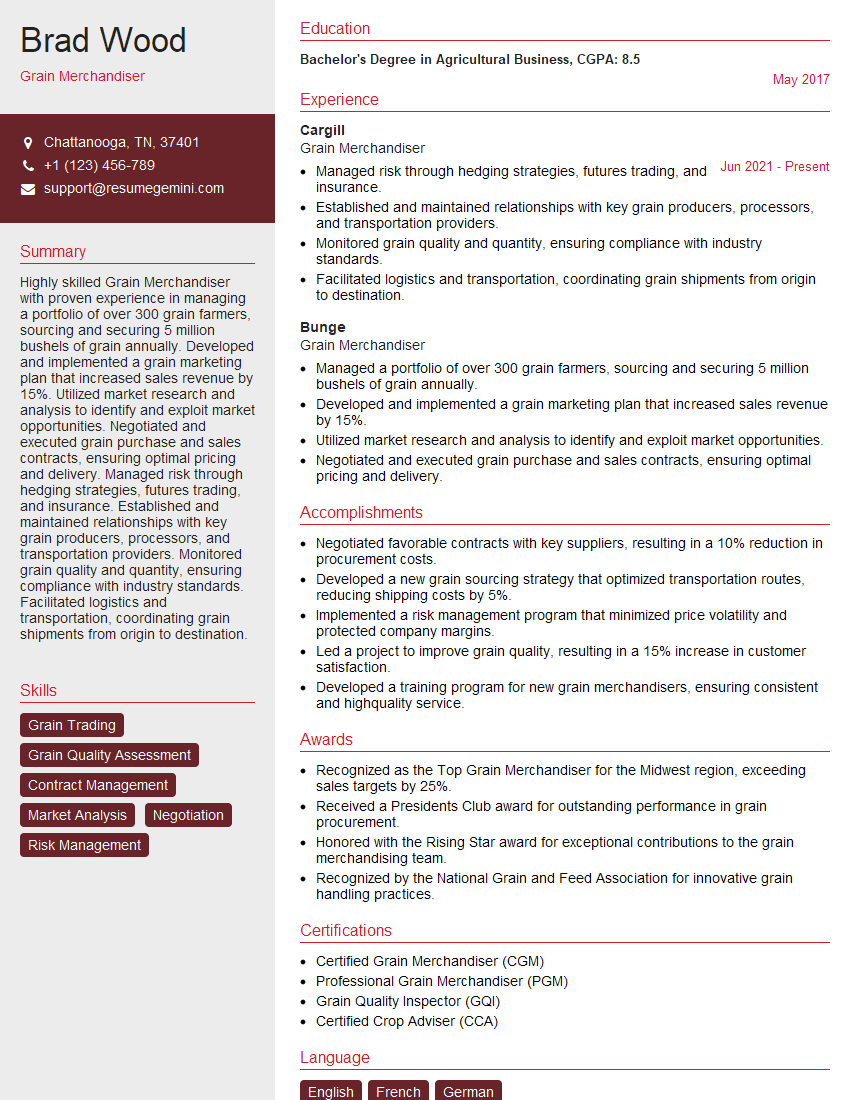
Mastering knowledge of wheat standards is crucial for career advancement in the agricultural and food processing industries. A strong understanding of these standards demonstrates your expertise and opens doors to higher-level roles and greater responsibilities. To maximize your job prospects, creating an ATS-friendly resume is essential. This ensures your qualifications are effectively highlighted to hiring managers and Applicant Tracking Systems. ResumeGemini is a trusted resource to help you build a professional and impactful resume. We provide examples of resumes tailored to Knowledge of Wheat Standards to guide you in creating your own compelling application.

Explore more articles
Users Rating of Our Blogs
Share Your Experience
We value your feedback! Please rate our content and share your thoughts (optional).
What Readers Say About Our Blog
Really detailed insights and content, thank you for writing this detailed article.
IT gave me an insight and words to use and be able to think of examples