Every successful interview starts with knowing what to expect. In this blog, we’ll take you through the top Laser Beam Diagnostics interview questions, breaking them down with expert tips to help you deliver impactful answers. Step into your next interview fully prepared and ready to succeed.
Questions Asked in Laser Beam Diagnostics Interview
Q 1. Explain the principle of Gaussian beam propagation.
Gaussian beam propagation describes how the spatial profile of a laser beam, ideally a perfect Gaussian function, changes as it travels through space. Imagine throwing a perfectly round pebble into a still pond – the ripples spreading outwards represent the beam’s propagation. The beam doesn’t simply expand uniformly; instead, its width increases while its intensity decreases.
The key parameters are the beam waist (w0), the narrowest point of the beam, and the Rayleigh range (zR), the distance from the waist where the beam diameter doubles. Beyond the Rayleigh range, the beam diverges approximately linearly. The propagation is governed by the following equation for the beam radius (w) at a distance z from the waist:
w(z) = w0√(1 + (z/zR)²)Understanding Gaussian beam propagation is crucial for designing optical systems, as it dictates how to focus a beam to a specific spot size and how to minimize beam wander over long distances. For instance, in laser cutting, accurate knowledge of the beam size at the workpiece surface is critical for precise cutting.
Q 2. Describe different methods for measuring beam diameter.
Measuring the beam diameter is fundamental in laser diagnostics. Several methods exist, each with its advantages and limitations:
- Knife-edge method: A razor blade is scanned across the beam, measuring the transmitted power. The beam diameter is derived from the transition region where the power changes significantly. This is a simple, cost-effective technique, but accuracy depends on the sharpness of the blade and the beam’s uniformity.
- CCD camera method: A CCD camera captures the beam’s intensity profile. Image processing software then analyzes the profile to determine the beam diameter. This is versatile and allows for a comprehensive beam analysis, including profile shape analysis, but can be more expensive and require sophisticated software.
- Scanning slit method: A narrow slit is scanned across the beam, measuring the transmitted power. This method is similar to the knife-edge method but provides a more precise measurement in the presence of noise.
- Beam profiler: Commercially available beam profilers provide direct measurement of beam diameter, along with other parameters like beam shape and M² factor. These are very convenient and accurate but can be expensive.
The choice of method depends on factors like accuracy requirements, budget, and the nature of the laser beam.
Q 3. How do you measure beam divergence?
Beam divergence describes how rapidly the beam expands as it propagates. It’s typically expressed in milliradians (mrad) and is inversely proportional to the beam quality. A highly collimated beam will have a low divergence, while a rapidly spreading beam will have a high divergence.
Measurement involves determining the beam diameter (D) at two different distances (z1 and z2) from the beam waist. The divergence (θ) is then calculated using the following formula:
θ = (D2 - D1) / (z2 - z1)Accurate measurement requires careful alignment and consideration of measurement uncertainties. For example, a long propagation distance is crucial for accurate measurement of low divergence beams. In applications like long-range laser communication, precise knowledge of beam divergence is critical to maintain signal strength.
Q 4. What is the significance of M² factor in laser beam characterization?
The M² factor, also known as the beam propagation ratio, is a dimensionless quantity that quantifies the quality of a laser beam. It compares the actual beam divergence to the divergence of an ideal Gaussian beam with the same waist diameter. An M² value of 1 indicates a perfect Gaussian beam, while higher values represent beams that diverge more rapidly than an ideal Gaussian beam.
The significance lies in its ability to predict the beam’s behavior in optical systems. A higher M² value suggests that the beam will be more difficult to focus to a small spot size, resulting in lower intensity at the focal point. This is crucial in applications requiring tight focusing such as laser micromachining or optical data storage. A higher M² also indicates the presence of aberrations or imperfections in the beam profile.
Q 5. Explain the concept of beam pointing stability.
Beam pointing stability refers to how much the direction of the beam’s propagation varies over time. This variation can be caused by mechanical vibrations, thermal fluctuations, or other environmental factors. It is crucial in applications requiring precise beam pointing, such as laser scanning, laser alignment, or laser surgery.
Measurement often involves using a position sensor to monitor the beam’s position at a specific plane. The stability is then quantified by calculating the standard deviation of the beam’s position over a given period. For example, a laser used for laser pointing needs very high pointing stability to keep the aiming spot stable. A larger standard deviation indicates lower pointing stability and makes the beam less accurate for these applications.
Q 6. Describe different techniques for beam shaping.
Beam shaping involves modifying the spatial profile of the laser beam to achieve a desired intensity distribution. This is necessary in many applications where a Gaussian profile is not optimal. Common techniques include:
- Diffractive optical elements (DOEs): These are patterned optical elements that diffract the incoming beam, reshaping its profile. They are versatile and can create various beam shapes, but design and fabrication can be complex.
- Refractive optical elements: Lenses and other refractive elements can be used to shape the beam, although often with more limitations than DOEs. They are simpler to design and manufacture.
- Spatial light modulators (SLMs): These devices can dynamically control the phase or amplitude of the beam, allowing for flexible and real-time beam shaping. They are highly versatile but can be expensive.
- Optical fibers: Multimode fibers can effectively mix and shape the laser beam through scattering, although the shape is not necessarily highly controllable.
The choice of technique depends on the desired beam shape, the laser’s wavelength, and the application requirements. For example, uniform illumination of a large area might require a top-hat beam profile, easily created using a DOE.
Q 7. How do you measure the beam ellipticity?
Beam ellipticity describes the deviation of a laser beam’s cross-section from a perfect circle. A perfectly circular beam has an ellipticity of 1. Ellipticity arises from imperfections in the laser resonator or optical elements in the beam path. It affects the focusing characteristics and the ability to achieve high intensity at the focal point.
Measurement typically involves capturing the beam’s intensity profile using a CCD camera and analyzing the ratio of the major and minor axes of the best-fit ellipse to the profile. Software can readily compute the ellipticity, although ensuring the camera is properly aligned and the focus is optimized is crucial for an accurate result. In high-precision applications, like laser lithography where circular symmetry is critical, minimizing beam ellipticity is important to obtain desired resolution and uniformity.
Q 8. What are the common sources of laser beam aberrations?
Laser beam aberrations are deviations from an ideal, perfectly collimated, and uniform beam profile. They degrade beam quality and can significantly impact applications requiring precise beam shaping and delivery. These aberrations arise from various sources, broadly categorized into:
- Optical Component Imperfections: Scratches, digs, and irregularities on optical surfaces (mirrors, lenses) scatter light and introduce wavefront distortions. Think of it like looking through a slightly smudged window – the image is distorted.
- Thermal Effects: Heating of optical components due to laser power absorption causes changes in refractive index, leading to aberrations. High-power lasers are particularly susceptible; imagine a lens warping slightly under heat.
- Manufacturing Tolerances: Imperfect alignment and assembly of optical components during the manufacturing process contribute to aberrations. Even minute misalignments can accumulate and cause significant deviations.
- Atmospheric Turbulence: For outdoor applications, variations in air density and temperature create refractive index fluctuations, causing beam wander and distortion. This is similar to seeing heat shimmer rising from asphalt on a hot day.
- Misalignment of Optical Elements: Incorrect spacing or angular positioning of lenses or mirrors can introduce astigmatism and other aberrations.
Understanding these sources is crucial for designing and maintaining high-quality laser systems.
Q 9. How do you compensate for laser beam aberrations?
Compensation for laser beam aberrations involves actively correcting or minimizing these deviations. Techniques include:
- Adaptive Optics: This sophisticated approach uses deformable mirrors that adjust their shape in real-time to compensate for wavefront distortions. Sensors measure the aberrations, and a control system dynamically corrects the mirror shape, effectively ‘smoothing’ the wavefront.
- Spatial Filtering: Removing high-spatial-frequency components of the beam using apertures and spatial filters can reduce the impact of small-scale irregularities. It’s like using a filter to remove noise from an image.
- Beam Shaping Optics: Using aspherical lenses or diffractive optical elements (DOEs) can manipulate the beam profile to correct for specific aberrations. This is like using a special lens to correct for nearsightedness.
- Careful Component Selection: Choosing high-quality optical components with minimal imperfections and employing precise manufacturing and assembly techniques significantly reduces the occurrence of aberrations in the first place.
- Thermal Management: Implementing effective cooling systems for high-power lasers can minimize thermal lensing and other thermal-induced aberrations.
The choice of compensation technique depends on the severity and type of aberration, the laser power, and the specific application requirements.
Q 10. Explain the importance of beam quality in laser material processing.
Beam quality is paramount in laser material processing because it directly influences the precision, efficiency, and overall quality of the process. A high-quality beam, characterized by a small beam diameter and a low divergence angle, allows for:
- Precise Feature Formation: A well-defined beam allows for highly accurate cutting, drilling, welding, or marking. Poor beam quality leads to inconsistent results and rough edges.
- Increased Processing Speed: A tightly focused beam allows for higher power density, leading to faster processing speeds. A diffuse beam would require longer processing times to achieve the same result.
- Reduced Heat Affected Zone (HAZ): A high-quality beam minimizes unwanted heat spreading in the material, resulting in cleaner cuts and welds with minimal distortion or damage to the surrounding area.
- Improved Throughput and Efficiency: Better beam quality translates directly to fewer defects and rework, improving overall process efficiency and reducing production costs.
In essence, investing in improving beam quality directly translates into cost savings and higher-quality products in laser material processing.
Q 11. Describe the different types of beam profilers.
Several types of beam profilers are available, each with its strengths and weaknesses:
- Knife-edge Scanners: These measure the beam profile by scanning a sharp edge (a “knife”) across the beam and recording the transmitted power as a function of position. Simple, but relatively slow and less accurate for complex beam profiles.
- CCD-based Beam Profilers: These use a charge-coupled device (CCD) camera to directly image the beam intensity distribution. Fast, accurate, and capable of handling complex profiles. They provide a wealth of data, including beam diameter, shape, and higher-order moments.
- CMOS-based Beam Profilers: Similar to CCD-based profilers, but use CMOS (complementary metal-oxide-semiconductor) sensors. Often faster and more compact than CCD-based systems.
- Pyroelectric Array Detectors: These are useful for high-power lasers as they directly measure the power distribution without needing lenses. They are insensitive to the wavelength of the light.
- Scanning Slit Profilers: Measure the beam intensity distribution by scanning a narrow slit across the beam. They offer a good compromise between speed and spatial resolution.
The choice depends on factors like required accuracy, speed, laser power, and wavelength.
Q 12. Compare and contrast knife-edge scanning and CCD-based beam profiling.
Both knife-edge scanning and CCD-based beam profiling are used to characterize laser beam profiles, but they differ significantly in their approach and capabilities:
| Feature | Knife-edge Scanning | CCD-based Beam Profiling |
|---|---|---|
| Measurement Principle | Measures transmitted power as a knife edge scans across the beam | Directly images the beam intensity distribution using a CCD camera |
| Speed | Relatively slow | Fast, real-time measurements |
| Accuracy | Lower accuracy, particularly for complex profiles | Higher accuracy, capable of resolving complex profiles |
| Data Output | 1D intensity profile | 2D intensity distribution, beam diameter, shape, and higher-order moments |
| Cost | Generally lower cost | Generally higher cost |
| Complexity | Simpler setup and operation | More complex setup and analysis |
In short, CCD-based profiling provides more comprehensive and accurate data but at a higher cost and complexity. Knife-edge scanning offers a simpler and cheaper alternative suitable when high accuracy is not critical.
Q 13. How do you choose the appropriate beam profiler for a specific application?
Selecting the appropriate beam profiler involves considering several factors:
- Laser Parameters: Wavelength, power, pulse duration (for pulsed lasers), and beam diameter influence the choice of sensor and optical components.
- Required Accuracy and Resolution: High-precision applications demand higher-resolution profilers. Consider the level of detail needed to characterize your beam.
- Measurement Speed: For dynamic processes, fast measurement speeds are crucial. Real-time monitoring may require CCD or CMOS-based systems.
- Beam Profile Complexity: Complex profiles necessitate profilers capable of resolving fine details and providing 2D information.
- Budget Constraints: Knife-edge scanners offer a more cost-effective solution compared to CCD/CMOS-based systems.
- Data Analysis Requirements: Consider the type of data needed (e.g., beam diameter, M2 factor) and the software capabilities for analysis.
A thorough understanding of the application requirements is crucial for selecting a profiler that accurately and efficiently characterizes the laser beam.
Q 14. Explain the concept of laser beam pointing jitter.
Laser beam pointing jitter refers to the unpredictable, short-term fluctuations in the beam’s position or direction. Imagine a laser pointer that slightly dances around its target instead of remaining perfectly steady. This jitter can be caused by various factors:
- Mechanical Vibrations: Vibrations in the optical table, laser mount, or surrounding environment can cause the beam to shift.
- Acoustic Noise: Sound waves can induce vibrations in optical components, leading to jitter.
- Air Currents: Fluctuations in air density can refract the beam, causing it to wander.
- Thermal Fluctuations: Temperature changes in optical components can cause slight expansion or contraction, affecting the beam’s pointing stability.
- Electrical Noise: In some laser systems, electrical noise can affect the laser’s control mechanisms, resulting in pointing instability.
Pointing jitter is detrimental in applications requiring high precision, such as laser micromachining, laser surgery, and optical communications. Minimizing jitter involves careful vibration isolation, thermal management, and use of robust optical mounts and control systems.
Q 15. How do you measure laser beam power and energy?
Measuring laser beam power and energy is crucial for various applications, from laser surgery to material processing. Power refers to the rate of energy delivery (Watts), while energy is the total amount of light emitted over a period (Joules). We use different instruments depending on the laser’s characteristics and the application.
Power Measurement: For continuous-wave (CW) lasers, we employ power meters, which typically consist of a sensor that absorbs the laser light and converts it into a measurable electrical signal. The signal is then processed and displayed as power in Watts. Pyroelectric detectors are often used for high-power CW lasers due to their high damage threshold.
Energy Measurement: For pulsed lasers, we measure energy using energy meters. These instruments integrate the power over the pulse duration to determine the total energy per pulse (Joules). For example, a thermal sensor, which measures the temperature increase caused by the laser pulse, can be used for accurate energy measurements. Choosing the right sensor is crucial – a fast response time is needed for short pulses.
Calibration is essential for both power and energy meters to ensure accurate readings, usually traceable to national standards. Regular calibration maintains the accuracy and reliability of your measurements.
Career Expert Tips:
- Ace those interviews! Prepare effectively by reviewing the Top 50 Most Common Interview Questions on ResumeGemini.
- Navigate your job search with confidence! Explore a wide range of Career Tips on ResumeGemini. Learn about common challenges and recommendations to overcome them.
- Craft the perfect resume! Master the Art of Resume Writing with ResumeGemini’s guide. Showcase your unique qualifications and achievements effectively.
- Don’t miss out on holiday savings! Build your dream resume with ResumeGemini’s ATS optimized templates.
Q 16. Describe different types of laser power meters.
Laser power meters come in various types, each suited for specific laser parameters and applications. The choice depends primarily on the laser’s wavelength, power level, and pulse characteristics.
- Thermal Power Meters: These are robust and relatively inexpensive. They measure the temperature rise in a blackened absorber. Ideal for CW lasers and high-power pulsed lasers, but they are slower and may not be suitable for very short pulses.
- Photodiode Power Meters: These are based on the photoelectric effect, converting light into an electrical current. They offer fast response times, making them suitable for pulsed lasers, but have lower damage thresholds than thermal meters and are sensitive to wavelength.
- Pyroelectric Power Meters: These measure the change in electrical polarization caused by heating from the laser beam. They are fast and suitable for both CW and pulsed lasers, with good power handling capabilities.
- Silicon Photodiodes: Most common, sensitive to visible and near-infrared light, and are relatively inexpensive. But damage prone at higher powers.
Beyond the sensor type, considerations include the meter’s measurement range, accuracy, and interface capabilities (analog or digital).
Q 17. What safety precautions are necessary when working with high-power lasers?
Working with high-power lasers necessitates stringent safety precautions to prevent serious eye and skin injuries. Think of it like working with a very powerful spotlight, but instead of light, it’s extremely concentrated energy that can cause permanent damage.
- Eye Protection: This is paramount. Laser safety eyewear must be selected based on the laser’s wavelength and power level, providing adequate attenuation. Never look directly into a laser beam, even with protective eyewear.
- Beam Enclosure: Enclose the beam path as much as possible using beam tubes or enclosures to prevent accidental exposure.
- Warning Signs and Labels: Clearly mark the laser area with appropriate warning signs to alert others to the potential hazard.
- Proper Training: All personnel working with high-power lasers must receive comprehensive safety training on the risks and necessary precautions.
- Emergency Procedures: Establish emergency procedures, including the location of first-aid equipment and the protocol for reporting incidents.
- Skin Protection: High-power lasers can cause burns, so appropriate clothing, including long sleeves and gloves, should be worn.
Remember, laser safety is not an optional accessory; it’s a mandatory requirement.
Q 18. Explain the concept of laser safety standards and regulations.
Laser safety standards and regulations are crucial for protecting individuals from the potential hazards of laser radiation. These standards define safe operating procedures, specify required safety equipment (like safety glasses), and set limits on permissible exposure levels. They’re created to minimize the risk of injury from unintentional laser exposure.
Key Organizations & Standards: Organizations like the ANSI (American National Standards Institute), IEC (International Electrotechnical Commission), and the FDA (Food and Drug Administration) develop and enforce these standards. Examples include ANSI Z136, IEC 60825, and FDA regulations for laser products. These standards categorize lasers based on their potential hazard (Class 1 through 4), dictating the necessary safety precautions for each class.
Compliance: Compliance with these standards is mandatory for manufacturers, users, and installers of laser systems. Non-compliance can lead to severe penalties, including fines and legal action.
Staying updated on the latest standards and regulations is essential for anyone involved in the use or handling of lasers to ensure continued compliance and safety.
Q 19. How do you perform beam alignment?
Beam alignment is the process of directing the laser beam along a precise path, critical for applications requiring accuracy, such as laser cutting, material processing, and optical communication systems. Imagine it like aiming a very precise arrow at a specific target.
Methods:
- Visual Alignment: Using a low-power HeNe laser as an alignment guide helps visualize the beam path.
- Alignment Mirrors and Lenses: Adjusting mirrors and lenses in the beam path to redirect and focus the beam accurately onto the target.
- Autocollimators: Used to measure small angular deviations from a reference axis, enabling precise beam alignment.
- Beam Profilers: These instruments provide a real-time spatial profile of the beam, enabling precise adjustments to achieve the desired beam shape and position.
- Power-Based Alignment: Monitoring the power at the target as adjustments are made, maximizing the power delivered to the target is a good indicator of good alignment.
The alignment method chosen depends on the laser’s characteristics, power, application, and desired accuracy.
Q 20. Describe different methods for laser beam steering.
Laser beam steering refers to the controlled redirection or scanning of a laser beam. This is essential in various applications like laser displays, laser surgery, and laser scanning microscopy. Think of it as a controlled movement of a light pointer on a whiteboard, but with high precision.
Methods:
- Galvanometer Scanners: These use small, rapidly rotating mirrors to deflect the laser beam, providing fast and precise scanning capabilities. They are commonly used in laser scanning systems.
- Piezoelectric Transducers: These use the piezoelectric effect to create small displacements, enabling fine control of the beam direction. They offer high accuracy and resolution but can be slower than galvanometer scanners.
- Acousto-Optic Modulators (AOMs): These use sound waves to diffract the laser beam, allowing for both deflection and intensity modulation. They are very fast and useful in applications needing high-speed beam steering.
- Electro-Optic Modulators (EOMs): Similar to AOMs but utilize electric fields to change the refractive index of a crystal, affecting the beam’s direction. They offer high speed and precision.
- Rotating Mirrors: Simpler and less precise but suitable for applications that don’t require high-speed scanning, but larger angular ranges.
The choice of method is influenced by factors like the required scan speed, accuracy, scan angle, and wavelength.
Q 21. What are the common causes of laser beam instability?
Laser beam instability manifests as fluctuations in the beam’s power, spatial profile, or pointing direction. This can significantly impact the performance of laser systems, affecting applications demanding high precision.
Common Causes:
- Thermal Effects: Heating of the laser gain medium or optical components can lead to changes in refractive index and affect beam quality. This is especially pronounced in high-power lasers.
- Mechanical Vibrations: External vibrations can cause misalignment of optical elements and affect beam pointing stability. This is a common issue in laser systems that are not properly isolated from external disturbances.
- Air Turbulence: Air density fluctuations can refract the beam, causing its path to deviate. This is often observed in open-air laser systems or long beam paths.
- Power Supply Fluctuations: Instability in the laser’s power supply can directly affect the beam’s output power and even cause mode hopping or changes in beam profile.
- Acoustic Noise: Similar to vibrations, sound waves can indirectly induce vibrations in optical mounts and affect pointing stability.
- Mode Hopping: Changes in the laser’s resonant cavity can lead to jumps in its output wavelength or mode structure, causing variations in the beam’s spatial profile and pointing.
Addressing these issues often involves using vibration isolation systems, temperature stabilization, and careful selection of optical components.
Q 22. How do you troubleshoot laser beam related issues?
Troubleshooting laser beam issues involves a systematic approach, much like diagnosing a medical condition. First, you need to identify the symptoms: Is the beam power too low? Is the beam profile distorted? Is the pointing unstable? Then, you trace the issue back to its root cause. This might involve checking the laser itself (e.g., pump power, alignment, cooling), the optical components (mirrors, lenses, windows; checking for contamination, damage, misalignment), or the environmental factors (vibrations, temperature fluctuations, air currents).
For example, if the beam is significantly diverging faster than expected, it could indicate a lens problem – perhaps it’s dirty, damaged, or improperly seated. If the beam power is fluctuating wildly, the problem may lie with the power supply or cooling system of the laser. A systematic check of each component and potential source of error is crucial. I often use a checklist to ensure I don’t miss anything, especially in high-stakes applications.
Often, a combination of diagnostic tools is needed – power meters, beam profilers, wavefront sensors – to pinpoint the exact issue. Once the cause is identified, the solution can be implemented, followed by re-testing to ensure the problem is resolved. Documentation of the troubleshooting process is vital for repeatability and future reference.
Q 23. Describe your experience with different types of laser systems.
My experience spans a wide range of laser systems, from low-power diode lasers used in barcode scanners to high-power solid-state lasers employed in material processing. I’ve worked extensively with:
- Gas lasers (HeNe, CO2): I’ve been involved in maintaining and aligning HeNe lasers for interferometry applications and optimizing CO2 lasers for cutting and welding. The stability and power output of these lasers often require specialized diagnostics.
- Solid-state lasers (Nd:YAG, fiber lasers): My experience with these encompasses characterizing their beam quality (M2 factor), pulse characteristics (pulse duration, energy), and polarization. Fiber lasers, in particular, require careful management of their high power density to avoid damage to optical fibers.
- Diode lasers: I’ve worked with arrays and single-emitter diodes, focusing on collimation and beam shaping techniques for applications like laser printing and optical communications. Understanding the thermal management aspects of diode lasers is critical for their reliability.
This diverse experience allows me to approach diagnostic problems with a broader perspective and select the most appropriate methods and tools for each system type.
Q 24. Explain your understanding of optical resonators.
Optical resonators are the heart of most lasers. They’re structures designed to provide optical feedback, ensuring that light bounces back and forth, amplifying itself and leading to lasing action. Think of them as a precise mirror system that traps light.
The key components are usually two mirrors (though more complex resonators exist), positioned precisely to create a standing wave pattern. The gain medium (where light amplification occurs) is placed within the resonator. The mirrors’ reflectivity and curvature determine the resonator’s characteristics – its stability, mode structure, and output beam properties. Common resonator types include:
- Fabry-Pérot resonator: The simplest form, using two flat or slightly curved mirrors.
- Stable resonator: Designed to keep the beam confined within the resonator, producing a stable output.
- Unstable resonator: Allows for higher power output but at the cost of beam quality.
Understanding resonator design is crucial for optimizing laser output. For instance, if you want a highly collimated beam with low divergence, you’d select a resonator design optimized for that characteristic. Misalignments or imperfections in the resonator mirrors can drastically impact the laser’s performance and need careful attention during diagnostics.
Q 25. How do you calibrate laser beam diagnostic equipment?
Calibrating laser beam diagnostic equipment is critical for accurate measurements. The process depends on the specific equipment, but generally involves using traceable standards and following established procedures.
For example, a power meter is typically calibrated using a known power source, often a calibrated laser with a specified output power. This involves comparing the meter’s reading to the known standard and making adjustments to ensure accuracy. Beam profilers are often calibrated using a reference target with a well-defined spatial profile. Wavefront sensors may be calibrated using a reference wavefront generated by a high-quality optical system.
Calibration involves a combination of using standard reference materials, following manufacturer guidelines, and potentially employing specialized calibration software. Regular calibration ensures the equipment continues to provide accurate and reliable measurements over time, which is essential for trustable diagnostic results.
Q 26. What software packages are you familiar with for laser beam analysis?
I’m proficient in several software packages commonly used for laser beam analysis, including:
- BeamPROP and other specialized beam propagation software: Used for modeling and simulating beam propagation through optical systems. This helps predict beam characteristics at various points in the optical path.
- MATLAB: A versatile tool used for data analysis, visualization, and custom algorithm development for laser beam diagnostics. I often use it to process beam profile data, fit Gaussian functions to beam shapes, and calculate parameters such as M2 and beam waist.
- Data acquisition software: Specific software packages from manufacturers of beam profilers and other diagnostic instruments, for instrument control and data acquisition.
My familiarity with these tools allows me to effectively process, analyze, and interpret the data obtained from various laser beam diagnostic instruments.
Q 27. Describe your experience with data analysis and interpretation in laser beam diagnostics.
Data analysis in laser beam diagnostics goes beyond simple measurements. It involves interpreting raw data to extract meaningful information about the laser beam’s properties and identify potential issues. This includes:
- Beam profile analysis: Determining beam shape, size, and uniformity. Often involves fitting theoretical models (e.g., Gaussian) to the measured data.
- Beam quality analysis: Calculating the M2 factor, which characterizes beam divergence and quality.
- Power and energy measurements: Determining the average power, peak power, and energy per pulse of the laser.
- Wavefront analysis: Using interferometry or other techniques to determine the shape of the wavefront and quantify aberrations.
I use statistical methods to evaluate the uncertainty in measurements and ensure the reliability of the results. A clear understanding of the underlying physics and the limitations of the measurement techniques is critical for accurate interpretation.
For example, I recently analyzed data from a laser cutting system where the beam profile showed significant asymmetry. By carefully analyzing the data and correlating it with the system’s operational parameters, I was able to identify a misalignment in one of the optical components as the root cause.
Q 28. Explain your experience with laser beam diagnostics in a specific industrial application.
In a previous role, I was involved in laser beam diagnostics for a semiconductor manufacturing facility. They used high-power excimer lasers for photolithography. Precise beam control and monitoring were critical for high-yield production.
My responsibilities included:
- Regular beam profile measurements: Ensuring the beam maintained the correct shape and size for optimal lithographic performance. Deviations from the ideal profile could lead to defects in the chips.
- Power stability monitoring: Maintaining consistent power levels to ensure uniform exposure across the wafer. Power fluctuations could result in inconsistent feature sizes.
- Troubleshooting laser issues: Identifying and resolving issues that affected beam quality, power stability, or pointing accuracy. This often involved collaborative work with engineers from different disciplines.
- Developing and implementing improvements: Working on process optimization to improve beam stability and reduce production downtime.
This experience highlighted the importance of meticulous data analysis and the direct impact of laser beam diagnostics on production efficiency and product quality in a high-precision manufacturing environment.
Key Topics to Learn for Laser Beam Diagnostics Interview
- Gaussian Beam Propagation: Understanding beam waist, divergence, Rayleigh range, and their impact on measurement accuracy.
- Beam Quality Measurement Techniques: M2 factor determination using various methods (e.g., knife-edge, CCD camera).
- Wavefront Sensing and Aberration Correction: Techniques like Shack-Hartmann wavefront sensors and their role in optimizing beam quality.
- Laser Beam Profiling: Understanding different profiling methods (e.g., scanning slit, CMOS cameras) and their applications.
- Optical Power and Energy Measurement: Calibration techniques, power meters, and energy measurement devices.
- Applications in Manufacturing and Industrial Processes: Laser cutting, welding, material processing, and quality control.
- Applications in Scientific Research: Microscopy, spectroscopy, and other scientific instrumentation.
- Common Laser Beam Diagnostics Instruments: Understanding the capabilities and limitations of different devices (e.g., beam profilers, power meters, wavefront sensors).
- Data Analysis and Interpretation: Processing and interpreting data from beam diagnostics measurements.
- Troubleshooting and Problem-Solving: Identifying and resolving issues related to laser beam quality and measurement accuracy.
Next Steps
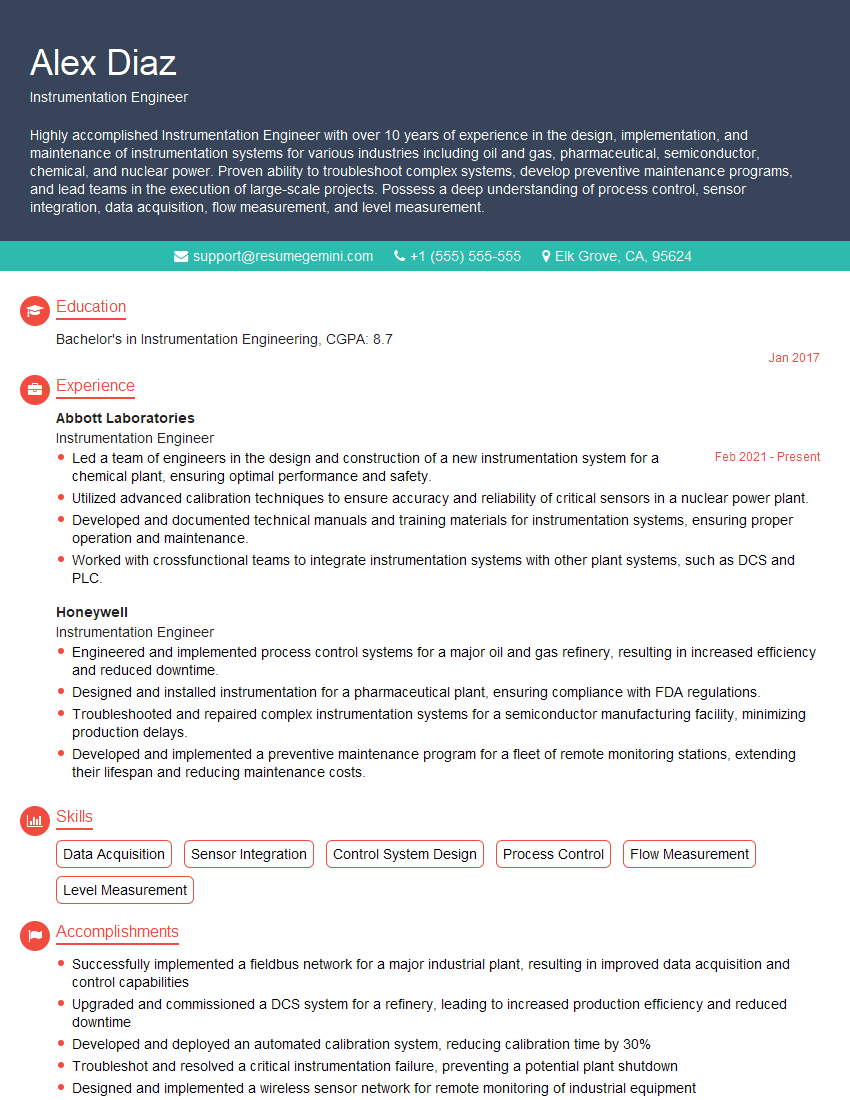
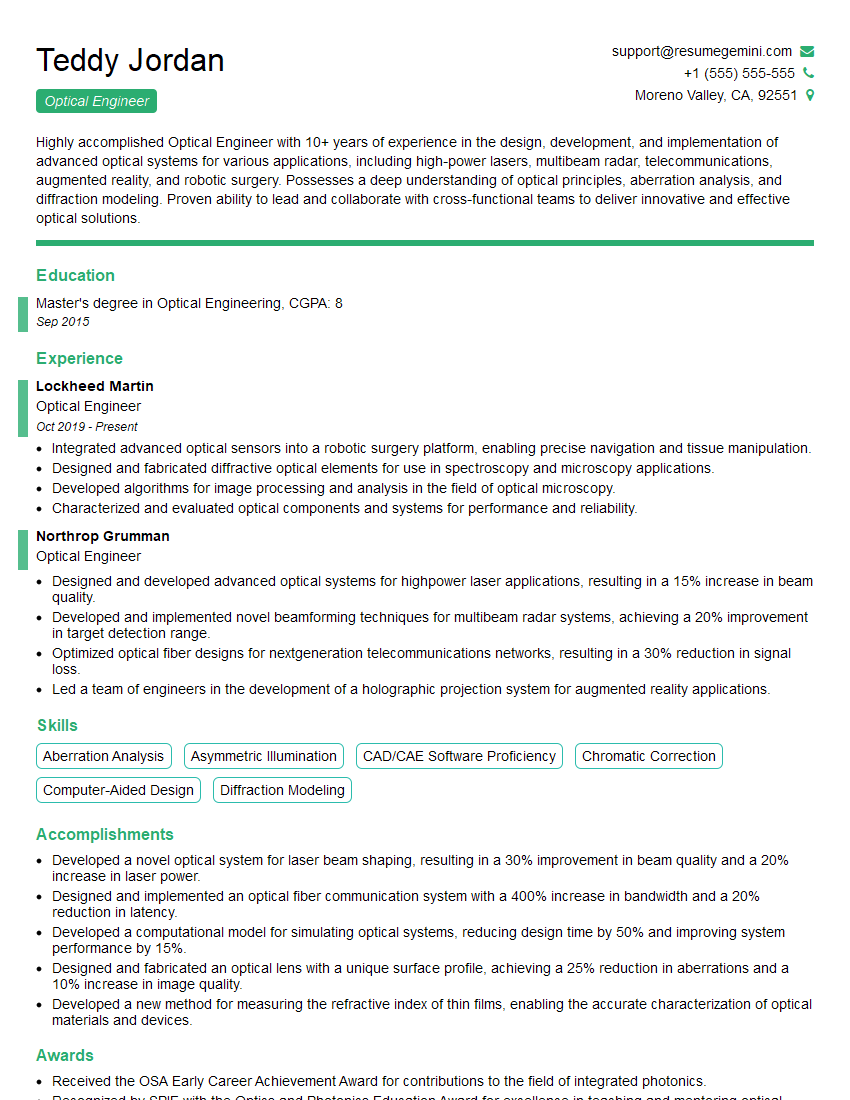
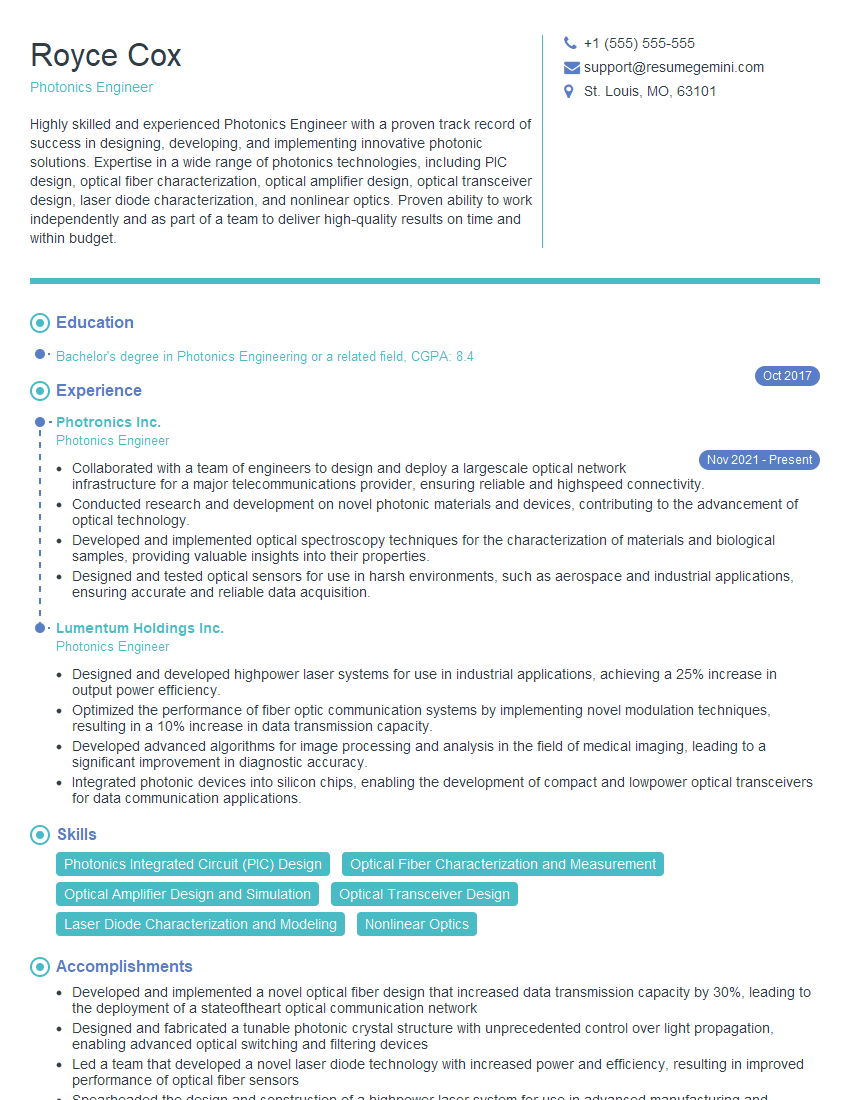
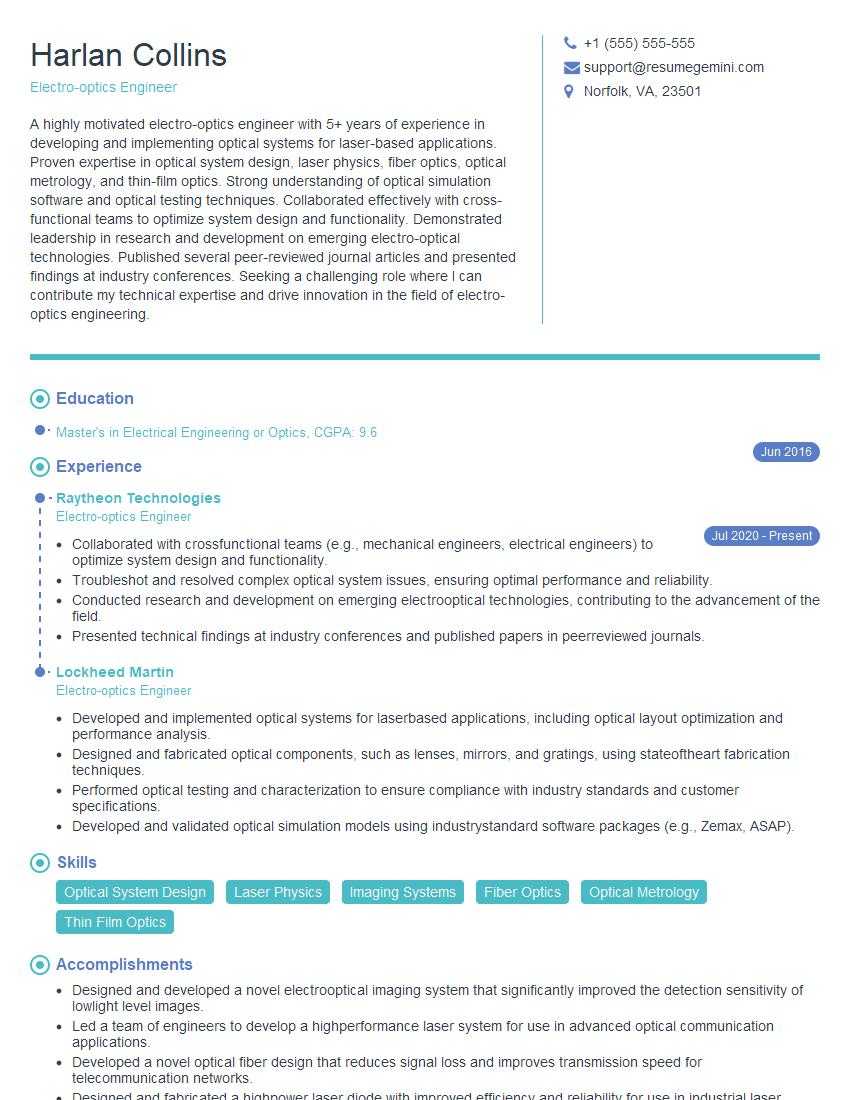
Mastering Laser Beam Diagnostics opens doors to exciting career opportunities in cutting-edge research and development, advanced manufacturing, and precision engineering. A strong understanding of these concepts is crucial for success in this competitive field. To significantly improve your chances of landing your dream role, create an ATS-friendly resume that highlights your skills and experience effectively. ResumeGemini is a trusted resource to help you build a professional and impactful resume. We provide examples of resumes tailored to Laser Beam Diagnostics to guide you, ensuring your qualifications shine brightly to prospective employers.
Explore more articles
Users Rating of Our Blogs
Share Your Experience
We value your feedback! Please rate our content and share your thoughts (optional).
What Readers Say About Our Blog
Really detailed insights and content, thank you for writing this detailed article.
IT gave me an insight and words to use and be able to think of examples