Preparation is the key to success in any interview. In this post, we’ll explore crucial Laser Surface Treatment interview questions and equip you with strategies to craft impactful answers. Whether you’re a beginner or a pro, these tips will elevate your preparation.
Questions Asked in Laser Surface Treatment Interview
Q 1. Explain the principle of laser ablation.
Laser ablation is a process where a material’s surface is removed by irradiating it with a high-powered laser beam. The intense energy from the laser causes the material to vaporize or ablate, creating a precise removal of material. Imagine it like using a very precise, incredibly hot scalpel to remove a thin layer. The principle relies on the laser’s energy exceeding the material’s ablation threshold – the energy needed to initiate the removal process. This threshold varies greatly depending on the material’s properties, wavelength of the laser, and the pulse duration.
The process is controlled by adjusting parameters like laser power, pulse duration, scan speed, and beam focus. For example, a shorter pulse duration will result in a more precise ablation, suitable for micromachining, while longer pulses might be used for removing larger amounts of material. The removed material can be collected and analyzed, offering insights into the material’s composition.
Q 2. Describe different types of lasers used in surface treatment.
Several types of lasers are employed in surface treatment, each with its own advantages and disadvantages. The choice depends heavily on the specific application and the material being treated. Common types include:
- Nd:YAG lasers (Neodymium-doped Yttrium Aluminum Garnet): These are versatile and widely used, emitting near-infrared light. They offer good absorption in many metals and are available in both continuous-wave (CW) and pulsed modes.
- CO2 lasers (Carbon Dioxide): These lasers emit in the far-infrared region and are highly effective at processing non-metals like plastics and ceramics, as well as some metals with specific coatings.
- Fiber lasers: These have gained popularity due to their high beam quality, efficiency, and ability to deliver high power. They are commonly used in laser cladding and cutting applications.
- Excimer lasers: These produce ultraviolet (UV) light, making them suitable for highly precise ablation and etching of materials like polymers and semiconductors. They are particularly useful in micromachining applications.
For instance, a CO2 laser might be ideal for engraving wood, while a fiber laser is better suited for welding high-strength steel. The selection requires careful consideration of the material’s properties and the desired outcome.
Q 3. What are the advantages and disadvantages of laser surface melting?
Laser surface melting (LSM) uses a laser beam to melt a thin layer of the material’s surface without significantly affecting the underlying bulk material. This molten layer then re-solidifies, resulting in improved surface properties. Think of it as carefully reheating and reshaping the surface of a metal part for better performance.
Advantages:
- Improved surface hardness and wear resistance.
- Enhanced fatigue strength and corrosion resistance.
- Reduced surface roughness.
- Precise control over the treated area.
- High processing speed compared to other methods.
Disadvantages:
- High initial investment in laser equipment.
- Requires skilled operators.
- Potential for heat-affected zones (HAZ) depending on the process parameters.
- Can be susceptible to process variations if not carefully controlled.
For example, LSM is often used to improve the durability of engine components or tools used in demanding applications.
Q 4. How does laser surface alloying improve material properties?
Laser surface alloying (LSA) is a process that enhances material properties by melting a thin surface layer and simultaneously introducing alloying elements. This results in a surface layer with improved chemical composition, leading to enhanced performance. This is similar to adding specific ingredients to a recipe to improve its overall quality and flavor.
The process involves directing a laser beam onto the surface of the workpiece while simultaneously feeding alloying powder into the molten pool created by the laser. The alloying elements dissolve into the molten metal, and upon solidification, a new alloy layer with tailored properties is formed. For instance, adding chromium and nickel to a steel surface improves its corrosion resistance.
LSA can enhance a variety of material properties, including:
- Increased hardness and wear resistance.
- Improved corrosion resistance.
- Enhanced high-temperature strength.
- Tailored surface properties like lubricity.
The specific alloying elements and the process parameters (laser power, scan speed, powder feed rate) are carefully chosen to achieve the desired properties.
Q 5. Explain the concept of laser cladding and its applications.
Laser cladding is an additive manufacturing process that involves melting and fusing a metal powder onto a substrate using a laser beam. It’s like 3D printing with a laser, but instead of building an entire part layer by layer, it adds a protective or functional coating to an existing component. This process builds up a thick layer, unlike laser surface melting or alloying.
The laser melts both the substrate material and the added powder, creating a metallurgical bond between the two. The process is controlled by carefully managing the laser power, scan speed, and powder feed rate. A wide range of materials can be used for both the substrate and the cladding powder, offering great versatility.
Applications:
- Repairing worn or damaged components: Restoring the original dimensions and properties of parts.
- Adding wear-resistant coatings: Improving the lifespan of tools and machinery.
- Creating complex geometries: Building features or strengthening specific areas.
- Manufacturing customized components: Producing parts with unique material combinations.
For example, laser cladding can be used to repair a cracked turbine blade or add a corrosion-resistant coating to a pump component.
Q 6. Describe the process of laser shock peening.
Laser shock peening (LSP) is a surface treatment process that involves the use of a pulsed laser to generate a high-pressure shock wave on the material’s surface. This shock wave induces compressive residual stresses in the subsurface region, significantly improving the fatigue life and resistance to crack propagation. Imagine it like strengthening a material’s surface by compacting it from the inside out.
The process typically involves ablating a thin layer of a confinement material (like a water layer or a thin metal sheet) placed on the surface of the workpiece. This ablation generates a rapid expansion of the material, creating a shock wave. This shock wave propagates into the material, inducing the compressive residual stress.
Key features of LSP:
- Enhanced fatigue life.
- Improved resistance to stress corrosion cracking.
- Increased strength and durability.
- Suitable for a wide range of materials.
LSP is used in various industries, including aerospace, automotive, and energy, to improve the performance and reliability of critical components under cyclic loading conditions.
Q 7. What are the safety precautions for working with high-powered lasers?
Working with high-powered lasers necessitates strict adherence to safety protocols to prevent serious injury. These precautions are crucial because laser beams can cause severe eye damage and skin burns.
Key safety measures include:
- Eye protection: Wearing appropriate laser safety eyewear is paramount. The eyewear must be rated for the specific laser wavelength and power level being used.
- Protective clothing: Covering exposed skin with appropriate clothing helps prevent burns from laser radiation.
- Laser enclosure and interlocks: High-powered lasers should be housed in enclosures with interlocks that prevent access while the laser is operational.
- Beam path control: The beam path should be clearly marked and controlled to avoid accidental exposure.
- Proper ventilation: Ensure adequate ventilation to remove any potentially hazardous fumes or particles produced during laser processing.
- Trained personnel: Only trained and authorized personnel should operate high-powered lasers.
- Emergency procedures: Emergency procedures, including eye wash stations and first aid, should be readily available.
Regular safety inspections and training are crucial to maintain a safe working environment. Treating laser safety with the utmost seriousness is absolutely non-negotiable.
Q 8. How do you select the optimal laser parameters for a specific application?
Selecting optimal laser parameters is crucial for successful laser surface treatment. It’s a multifaceted process that requires careful consideration of the desired outcome and the material properties. We begin by defining the specific goal – are we aiming for surface hardening, cladding, melting, or ablation? This dictates the necessary energy density, pulse duration, and wavelength.
For example, surface hardening of steel might require a high peak power, short pulse duration laser to create a rapid heating and cooling cycle, resulting in a martensitic transformation. Conversely, laser cladding, where we add material to the surface, needs a lower power density to melt and fuse the additive material without causing excessive heat damage to the base material. The process often involves iterative experimentation and simulation. We might start with parameters predicted by modelling software and then fine-tune them based on experimental results, using techniques such as Design of Experiments (DOE) to optimize efficiency.
The choice of wavelength is critical. Different wavelengths interact differently with various materials; some wavelengths are more readily absorbed by certain materials than others. For example, CO2 lasers (10.6 µm) are effective for processing many metals and ceramics, whereas Nd:YAG lasers (1.06 µm) might be preferred for applications needing higher precision or deeper penetration.
- Material Properties: Thermal conductivity, reflectivity, and absorptivity are key factors influencing parameter selection.
- Desired Outcome: The depth of the modified layer, the hardness achieved, or the surface topography all impact the choice of parameters.
- Laser Source Characteristics: Beam quality, power stability, and pulse shape are critical considerations.
Q 9. Explain the importance of beam quality in laser surface treatment.
Beam quality is paramount in laser surface treatment, directly influencing the precision, repeatability, and overall effectiveness of the process. It’s characterized by the M2 factor (beam propagation factor), which indicates how closely the beam resembles an ideal Gaussian beam. A lower M2 value signifies better beam quality – a more focused, uniform beam with less divergence.
Imagine trying to paint a precise detail with a brush that constantly splays its bristles. A low-quality beam, with high divergence and a non-uniform intensity profile, leads to uneven heating and inconsistent results. This can manifest as variations in surface hardness, depth of modification, or even damage to the treated area. A high-quality beam, on the other hand, allows for very precise control over the heat input, enabling the creation of very fine features or highly controlled surface modifications. In applications requiring high precision, such as micromachining or the creation of complex surface textures, superior beam quality is essential for achieving the desired results.
Q 10. Describe different methods for controlling the laser beam profile.
Several methods exist to control the laser beam profile, tailoring it to specific application needs. These include:
- Beam Shaping Optics: These optical components, such as diffractive optical elements (DOEs) or refractive lenses, can transform a Gaussian beam into various profiles, like top-hat, line, or other custom shapes. DOEs offer flexibility in creating complex beam profiles, while refractive lenses are often simpler and less expensive but offer less flexibility.
- Scanning Systems: Galvanometric scanners or other scanning mechanisms allow for precise control over the beam path across the workpiece surface. This enables the creation of intricate patterns and the tailoring of the energy distribution across the treatment area.
- Beam Splitting: Splitting the beam into multiple beams allows for simultaneous treatment of multiple areas or for creating specific energy distributions.
- Apertures and Masks: Using apertures to selectively block portions of the beam, or masks to create specific shapes in the beam, offer a simple and cost-effective method for shaping the beam profile.
The choice of method depends heavily on the desired beam shape, the required precision, and the budget constraints. For instance, a simple aperture may suffice for some applications, while a complex DOE may be necessary for highly demanding micromachining tasks.
Q 11. What are the common challenges in laser surface treatment?
Laser surface treatment, while powerful, presents several challenges:
- Heat Affected Zone (HAZ): Controlling the HAZ is crucial; excessive heat can lead to undesired microstructure changes, warping, or cracking in the base material.
- Surface Roughness: Achieving the desired surface finish can be challenging and depends heavily on the process parameters and material properties. Some processes, like laser ablation, can lead to rough surfaces which may necessitate post-processing.
- Process Optimization: Finding the optimal laser parameters for a specific application can be a time-consuming and iterative process.
- Cost: Laser systems and related equipment can be expensive. The process itself can be energy intensive, especially for large-scale applications.
- Safety: Lasers pose inherent safety risks, requiring appropriate safety precautions, including laser safety eyewear and protective enclosures.
- Repeatability and Consistency: Maintaining consistent results across multiple parts and over extended production runs requires meticulous control of the laser parameters and the environment.
Q 12. How do you ensure the quality and repeatability of laser surface treatment processes?
Ensuring quality and repeatability in laser surface treatment hinges on meticulous control and monitoring throughout the process. This involves:
- Precise Parameter Control: Using stable laser sources and sophisticated control systems is vital. This includes maintaining consistent laser power, pulse duration, and beam position.
- Process Monitoring and Feedback: Implementing real-time process monitoring, like using pyrometers to measure surface temperature or cameras for visual inspection, provides feedback for parameter adjustments and ensures process stability.
- Regular Calibration and Maintenance: Regular calibration of laser systems and other equipment is crucial for accuracy and consistent performance.
- Statistical Process Control (SPC): Employing SPC techniques helps identify deviations from expected values and facilitates timely corrective actions.
- Standardized Procedures: Implementing detailed and standardized operational procedures ensures consistency across different operators and production runs.
- Material Characterization: Prior to treatment, thoroughly characterizing the material’s properties ensures predictable results. Variations in material composition can significantly affect the outcome.
For example, in a production environment, we might use SPC charts to monitor key parameters like surface hardness. If the measured hardness deviates outside predetermined control limits, the process is immediately halted, allowing for investigation and correction of any issues.
Q 13. Explain the role of process monitoring in laser surface treatment.
Process monitoring plays a crucial role in ensuring the quality and efficiency of laser surface treatment. It provides real-time information on the process, enabling timely adjustments and preventing defects. Methods for process monitoring include:
- In-situ Thermometry: Pyrometers or infrared cameras measure the surface temperature during treatment, providing insights into the energy absorption and heat distribution. This is crucial for controlling the HAZ.
- Optical Emission Spectroscopy (OES): OES analyzes the light emitted from the laser-material interaction, providing information about the plasma formed during the process and indicating the presence of undesirable phases or defects.
- Acoustic Emission (AE) Monitoring: AE sensors detect acoustic waves generated during the process, allowing for the detection of cracks or other structural changes in the material.
- Visual Inspection: High-resolution cameras provide visual feedback on the surface quality and help in identifying defects or inconsistencies in the treated area.
This information allows for immediate adjustments to the laser parameters to maintain desired characteristics, leading to higher throughput, less scrap, and a more consistent end product. For instance, if the pyrometer indicates the surface is overheating, the laser power can be reduced immediately to prevent damage.
Q 14. How do you troubleshoot issues related to laser beam delivery?
Troubleshooting issues related to laser beam delivery often involves a systematic approach. The first step is to identify the symptoms – is the beam misaligned, is the power inconsistent, or is the beam profile distorted?
Possible issues and their solutions:
- Misalignment: Check for misalignments in the optical components (mirrors, lenses) using alignment tools. Adjust the positions of the optics to restore proper beam path.
- Power Instability: Inspect the laser source for any problems, such as malfunctioning components or insufficient cooling. Check the power supply and ensure it’s delivering the required voltage and current.
- Beam Distortion: Examine the optical path for any dust, debris, or damage to the optical components. Clean or replace any damaged optics. Check for thermal lensing effects, which can distort the beam profile due to excessive heating of optical components. A solution might include using different optics with better thermal properties or adding cooling systems.
- Mode Hopping: If the laser is operating in multiple modes, causing an unstable beam, consider using single-mode operation or optimizing the resonator cavity.
A systematic approach, combining visual inspection, power measurements, and beam profile analysis, is essential for effectively troubleshooting beam delivery issues. Often, a combination of these problems might be occurring, requiring a thorough investigation to resolve the issue completely.
Q 15. Describe different methods for measuring the surface roughness after laser treatment.
Measuring surface roughness after laser treatment is crucial for quality control and ensuring the desired surface finish. We typically employ several methods, each with its strengths and weaknesses. The choice depends on the required precision, the type of surface, and the available resources.
Profilometry: This is a widely used technique employing a stylus that physically traverses the surface, measuring its vertical deviations. This provides a direct, 3D profile, generating parameters like Ra (average roughness), Rz (maximum peak-to-valley height), and others. It’s accurate but can be slow and potentially damaging to delicate surfaces. Think of it like running your finger across a surface – you can feel the bumps and dips.
Optical Profilometry: This non-contact method utilizes optical techniques like confocal microscopy or interferometry to create a 3D surface map. It’s faster and non-destructive, ideal for sensitive or delicate samples. The precision is excellent, though the method can be affected by surface reflectivity.
Atomic Force Microscopy (AFM): For extremely high-resolution measurements at the nanoscale, AFM is the gold standard. It uses a sharp tip to scan the surface, generating incredibly detailed images of surface topography. This is particularly useful for examining subtle changes in roughness after laser treatment at a microscopic level.
Scanning Electron Microscopy (SEM): While primarily used for microstructural analysis, SEM images can also be analyzed to obtain quantitative surface roughness data, particularly for features at a sub-micron scale.
In practice, we often use a combination of methods. For instance, profilometry might give an overview of the surface, while AFM might be used to investigate specific features of interest.
Career Expert Tips:
- Ace those interviews! Prepare effectively by reviewing the Top 50 Most Common Interview Questions on ResumeGemini.
- Navigate your job search with confidence! Explore a wide range of Career Tips on ResumeGemini. Learn about common challenges and recommendations to overcome them.
- Craft the perfect resume! Master the Art of Resume Writing with ResumeGemini’s guide. Showcase your unique qualifications and achievements effectively.
- Don’t miss out on holiday savings! Build your dream resume with ResumeGemini’s ATS optimized templates.
Q 16. How do you assess the microstructure of a laser-treated surface?
Assessing the microstructure of a laser-treated surface is essential for understanding the material’s properties after treatment. This involves investigating the changes in the material’s grain size, phase composition, and crystallographic orientation, which directly influence its mechanical, chemical, and thermal properties.
Optical Microscopy: A straightforward method, providing a visual representation of the surface’s microstructure. Different etching techniques can be used to reveal the grain boundaries and phase constituents, revealing how the laser processing has altered the material’s structure.
Scanning Electron Microscopy (SEM): SEM offers much higher magnification and resolution than optical microscopy. It’s useful for examining fine details, such as the grain size distribution and the presence of any microcracks or pores introduced by the laser treatment. We can often couple this with Energy-Dispersive X-ray Spectroscopy (EDS) to determine the elemental composition of different regions.
Transmission Electron Microscopy (TEM): TEM provides the highest resolution, allowing for detailed analysis of crystal defects and nanoscale structures. It’s especially useful for studying the transformation of phases or formation of specific alloys after laser processing.
X-ray Diffraction (XRD): XRD determines the crystallographic structure and phase composition of the treated material. It identifies any changes in crystal orientation or formation of new phases due to the laser interaction. This is critical for assessing the effects of laser-induced phase transformations.
The choice of method depends on the scale of features of interest and the level of detail required. Often, a combination of these techniques is used to get a comprehensive understanding of the microstructure.
Q 17. What are the common material defects encountered in laser surface treatment?
Laser surface treatment, while highly effective, can introduce several material defects if the parameters are not carefully controlled. Understanding these defects is crucial for process optimization and ensuring the quality of the treated surface.
Microcracks: Rapid heating and cooling during laser processing can lead to thermal stresses that exceed the material’s yield strength, causing the formation of microcracks. These can significantly reduce the fatigue life and strength of the component.
Porosity: Insufficient energy density or improper process control can result in incomplete melting or solidification of the material, leading to the formation of pores. This can negatively impact material properties like density, hardness and corrosion resistance.
Spatter: The ejection of molten material during laser processing can create surface irregularities and spatter deposits. This needs to be accounted for in surface quality assessment.
Heat Affected Zone (HAZ) related issues: While the HAZ isn’t strictly a defect, improper control can lead to undesired changes in microstructure and properties within the HAZ, such as softening or embrittlement, if not carefully managed.
Residual stresses: Rapid heating and cooling cycles introduce residual stresses in the treated area. These can influence component performance and lifetime and need careful consideration when designing laser treatment processes.
Careful selection of laser parameters, pre- and post-treatment procedures, and appropriate material selection are crucial in minimizing these defects.
Q 18. Explain the role of pre- and post-treatment processes in optimizing surface quality.
Pre- and post-treatment processes play a vital role in optimizing the surface quality and overall performance of laser-treated components. These steps are often as important as the laser treatment itself.
Pre-treatment: This involves preparing the surface to ensure optimal laser interaction. Common pre-treatment steps include cleaning (removing oils, dirt, and oxides), surface roughening (to improve adhesion and absorption), and masking (to protect specific areas).
Post-treatment: Post-treatment processes aim to improve the surface finish, reduce residual stresses, and enhance desired properties. Common techniques include polishing, shot peening (to induce compressive residual stresses), and heat treatments (to relieve stresses or modify microstructure).
For example, pre-treating a component with a chemical etching to increase surface roughness before laser cladding ensures better adhesion of the cladding material. Similarly, post-treatment shot-peening can significantly increase the fatigue strength of a laser-hardened part by introducing compressive residual stresses that counteract the tensile stresses created during the laser treatment.
Q 19. Describe different types of laser-induced surface modifications.
Laser-induced surface modifications offer a wide range of possibilities for enhancing material properties. The type of modification depends on the laser parameters, material properties, and desired outcome.
Laser Hardening: This involves heating the surface above its austenitizing temperature and then rapidly cooling it, resulting in a hardened surface layer with increased wear resistance. Think of it like tempering steel, but on a highly localized scale.
Laser Cladding: This process involves melting and fusing a coating material onto the substrate’s surface, adding properties like corrosion resistance, wear resistance or specific chemical reactivity.
Laser Alloying: This involves melting the surface layer of the base material and mixing it with an added alloying element to modify its composition and improve properties such as strength and corrosion resistance.
Laser Shock Peening (LSP): This technique uses short, high-energy laser pulses to generate shock waves that induce compressive residual stresses, significantly improving fatigue life and strength.
Laser Ablation: This involves removing material from the surface by vaporization, creating precise features or cleaning contaminated surfaces.
Laser Surface Texturing: This can create specific surface features like micro-grooves or textures to enhance adhesion, lubricity, or optical properties.
The selection of the appropriate method depends entirely on the desired outcome. For example, laser hardening might be used to increase wear resistance of a tool, while laser cladding might be used to add corrosion resistance to a pump component.
Q 20. How do you select appropriate laser parameters for different materials?
Selecting appropriate laser parameters for different materials is critical for achieving the desired surface modification without introducing defects. The parameters need to be carefully chosen, considering the material’s physical and chemical properties.
Laser Power: This determines the energy delivered to the material. Higher power leads to deeper penetration and faster heating rates.
Laser Pulse Duration/Frequency: This determines the time scale of the heating and cooling cycles. Shorter pulses and higher frequencies lead to faster cooling rates and finer grain sizes in the hardened layer.
Scan Speed: This affects the interaction time between the laser and the material. Slower speeds lead to longer exposure times, resulting in greater melting depth.
Spot Size/Beam Diameter: This determines the area affected by the laser. Smaller spot sizes lead to higher energy densities and localized heating.
Wavelength: Different wavelengths interact differently with the material. The choice of wavelength is often crucial for optimal absorption.
Often, experimental optimization is necessary to determine the ideal parameters for a specific material and desired outcome. This typically involves a series of experiments with varying parameters, followed by detailed characterization of the treated surface.
For instance, treating a titanium alloy would require different parameters than treating a steel alloy, due to differences in melting point, thermal conductivity and absorption characteristics. A systematic approach, often involving simulation and experimentation, is crucial in this process.
Q 21. Explain the concept of heat affected zone (HAZ) in laser processing.
The Heat Affected Zone (HAZ) is the region of the material surrounding the area directly affected by the laser that experiences a temperature increase but does not reach the melting point. The extent and characteristics of the HAZ are strongly influenced by laser parameters and material properties.
Imagine a blacksmith heating a piece of metal in a forge. The area directly in the flame will be intensely hot and molten, while the surrounding area will also get hot, though not enough to melt. This area of increased temperature but not melting is similar to the HAZ in laser processing. The changes in this region can be subtle or significant, depending on the processing conditions.
Within the HAZ, the material undergoes microstructural changes, such as grain growth, phase transformations (e.g., austenite to martensite in steel), and the development of residual stresses. These changes can affect material properties like hardness, toughness, and ductility. A well-controlled process minimizes undesired changes in the HAZ. For instance, a wider HAZ might lead to softening of the material, negatively affecting the treated component’s strength. In contrast, a more tightly controlled process reduces the size and impact of the HAZ on the mechanical properties.
Understanding and controlling the HAZ is vital for optimizing the overall properties of laser-treated components. Strategies to mitigate HAZ effects include using appropriate laser parameters, pre- and post-treatment processes (such as heat treatments), and selecting materials with favourable HAZ characteristics.
Q 22. How does laser surface treatment affect the residual stresses in materials?
Laser surface treatment significantly impacts residual stresses within materials. The rapid heating and cooling cycles induced by the laser process cause thermal gradients within the treated zone. These gradients lead to the development of compressive residual stresses in the surface layer. This is because the outer layer cools and contracts faster than the underlying material, effectively ‘squeezing’ the subsurface. The magnitude and depth of these compressive stresses depend on several factors, including laser parameters (power, speed, pulse duration), material properties (thermal conductivity, coefficient of thermal expansion), and the pre-existing stress state.
For instance, in a part prone to fatigue failure, inducing compressive residual stresses on the surface can significantly improve its fatigue life. This is because the compressive stresses counteract tensile stresses generated during operation, delaying crack initiation and propagation. Conversely, improper processing can lead to excessive tensile stresses, weakening the component.
Understanding and controlling these residual stresses is crucial for optimizing the performance and longevity of laser-treated components. Techniques like finite element analysis (FEA) are often employed to model and predict the stress profiles generated during laser processing.
Q 23. What are the environmental considerations for laser surface treatment?
Environmental considerations in laser surface treatment are primarily focused on minimizing the generation and release of harmful emissions and waste. Laser processing itself can produce fumes, depending on the material being treated. For instance, treating certain metals might lead to the emission of metallic fumes or oxides. These fumes can be harmful to human health and the environment, necessitating proper exhaust systems and air filtration.
The selection of laser processing parameters and cooling methods influences the amount of waste generated, including spatter and particulate matter. Efficient parameter optimization minimizes such waste. Furthermore, the disposal of any resulting waste products must adhere to all relevant environmental regulations. The use of environmentally friendly cooling fluids and the implementation of closed-loop systems are vital for minimizing environmental impact.
Lastly, the energy consumption of the laser system itself is a significant factor. Efficient laser systems and optimized processing strategies can contribute to reduced energy consumption and a lower overall carbon footprint.
Q 24. Describe the economic aspects of laser surface treatment (cost-effectiveness).
The economic aspects of laser surface treatment hinge on its cost-effectiveness compared to other surface modification techniques. While the initial investment in laser equipment can be substantial, the process often proves cost-effective in the long run due to several factors.
Firstly, laser surface treatment offers high precision and localized processing, reducing material waste and minimizing the need for extensive post-processing. Secondly, it allows for the treatment of complex shapes and hard-to-reach areas, unlike some traditional methods. The increased service life of components achieved through improved surface properties translates to reduced replacement costs and downtime.
However, operational costs need to be considered, encompassing energy consumption, maintenance, and operator skills. A proper cost-benefit analysis, weighing the initial investment against the long-term savings, is crucial to determine the overall economic viability of laser surface treatment for a particular application.
For example, treating a high-value component like a turbine blade with laser cladding, enhancing its wear and corrosion resistance, is often economically justified even with high initial costs because it significantly extends the component’s lifespan, reducing expensive replacements.
Q 25. What are the latest advancements in laser surface treatment technology?
Recent advancements in laser surface treatment technology are focused on improving precision, efficiency, and process control. Advances in laser sources, such as ultrafast lasers (femtosecond and picosecond lasers) allow for highly precise and controlled micro- and nanostructuring of surfaces, resulting in enhanced functionalities. This includes creating superhydrophobic surfaces, improving wear resistance at a very fine scale, and enabling more complex surface designs.
Adaptive control systems employing real-time process monitoring and feedback mechanisms ensure consistent and reproducible results. These systems adjust laser parameters based on real-time measurements of the surface, compensating for variations in material properties or process conditions. Furthermore, hybrid processing techniques, combining laser treatment with other methods (e.g., additive manufacturing, plasma spraying), offer new possibilities for creating tailored surface functionalities.
The integration of artificial intelligence (AI) and machine learning (ML) is showing great promise in optimizing laser processing parameters, predicting surface properties, and improving overall process efficiency. These developments are paving the way for even more sophisticated and adaptable laser surface treatment applications in diverse industries.
Q 26. How do you ensure compliance with safety regulations in laser surface treatment?
Ensuring compliance with safety regulations in laser surface treatment is paramount. Lasers used in these processes emit high-power beams that pose risks to eyes and skin. Therefore, stringent safety measures must be implemented. These include the use of appropriate laser safety eyewear, protective clothing, and shielding to prevent direct exposure to the laser beam.
The workspace needs to be designed and operated according to laser safety standards, with appropriate warning signs and access controls in place. Regular safety training for all personnel involved is essential. The operation of the laser system should comply with all relevant national and international safety regulations, including regular maintenance and inspections of the equipment.
Proper ventilation and exhaust systems are vital to prevent the inhalation of harmful fumes or particulate matter generated during the process. Detailed risk assessments and safety procedures tailored to the specific laser system and application are fundamental. Adherence to all safety protocols is not just a matter of compliance but a critical factor in ensuring the safety and well-being of the operators and the surrounding environment.
Q 27. Compare and contrast different laser surface treatment techniques.
Various laser surface treatment techniques exist, each tailored to specific applications and material properties. Some key techniques include:
- Laser Cladding: Adds a layer of material with improved properties (e.g., wear resistance, corrosion resistance) onto a substrate.
- Laser Melting: Melts the surface layer, refining the microstructure and improving properties like hardness.
- Laser Shock Peening (LSP): Induces compressive residual stresses to enhance fatigue life and resistance to crack propagation.
- Laser Ablation: Removes material from the surface, creating specific textures or patterns.
- Laser Micromachining: Creates micro-scale features on the surface for applications such as micro-optics or micro-fluidic devices.
The choice of technique depends on the desired outcome. For example, laser cladding is ideal for improving wear resistance of a component, while laser shock peening is beneficial for increasing fatigue strength. Laser melting can enhance the surface hardness, and laser ablation is useful for creating textured surfaces or removing surface defects.
Q 28. Describe a project where you used laser surface treatment to solve an engineering problem.
In a project involving the manufacturing of high-performance engine components, we faced challenges related to the wear resistance of cylinder liners. Traditional hard chrome plating, while effective, presented environmental concerns due to the use of hexavalent chromium. We opted for laser cladding to address this problem.
We utilized a high-power diode laser to deposit a nickel-based alloy with superior wear resistance onto the cylinder liner surfaces. Through careful optimization of laser parameters and process monitoring, we achieved a uniform and defect-free clad layer with excellent adhesion to the substrate. The resulting components exhibited significantly improved wear resistance compared to conventionally treated parts while eliminating the environmental concerns associated with traditional hard chrome plating.
The success of this project demonstrated the effectiveness of laser cladding as an environmentally friendly and cost-effective alternative to traditional surface treatments in high-performance applications. This approach also extended the life cycle of these critical engine components, resulting in long-term cost savings and increased reliability.
Key Topics to Learn for Laser Surface Treatment Interview
- Laser Fundamentals: Understanding laser types (e.g., CO2, Nd:YAG, fiber), beam characteristics (wavelength, power, pulse duration), and their impact on material interaction.
- Material Science & Interaction: Knowledge of how different materials respond to laser irradiation (absorption, reflection, transmission), leading to various surface modifications.
- Surface Modification Techniques: Familiarity with techniques like laser ablation, cladding, hardening, cleaning, marking, and texturing, and their respective applications.
- Process Parameters & Optimization: Understanding the influence of laser parameters (power, speed, scan pattern) on surface quality, and the methods for optimizing these parameters for specific applications.
- Quality Control & Measurement: Knowledge of techniques for assessing the quality of laser-treated surfaces (e.g., surface roughness, hardness, microstructure analysis) and ensuring process consistency.
- Safety & Regulations: Understanding laser safety protocols, relevant industry standards, and environmental considerations associated with laser surface treatment processes.
- Applications Across Industries: Exploring diverse applications in sectors like automotive, aerospace, medical, and manufacturing, showcasing a broad understanding of practical implementations.
- Troubleshooting & Problem Solving: Demonstrating an ability to identify and resolve common issues related to laser processing, such as surface defects, inconsistent results, and equipment malfunctions.
- Advanced Techniques: Exposure to advanced concepts like laser-induced forward transfer (LIFT), laser peening, and additive manufacturing techniques related to laser surface modification will be beneficial.
Next Steps
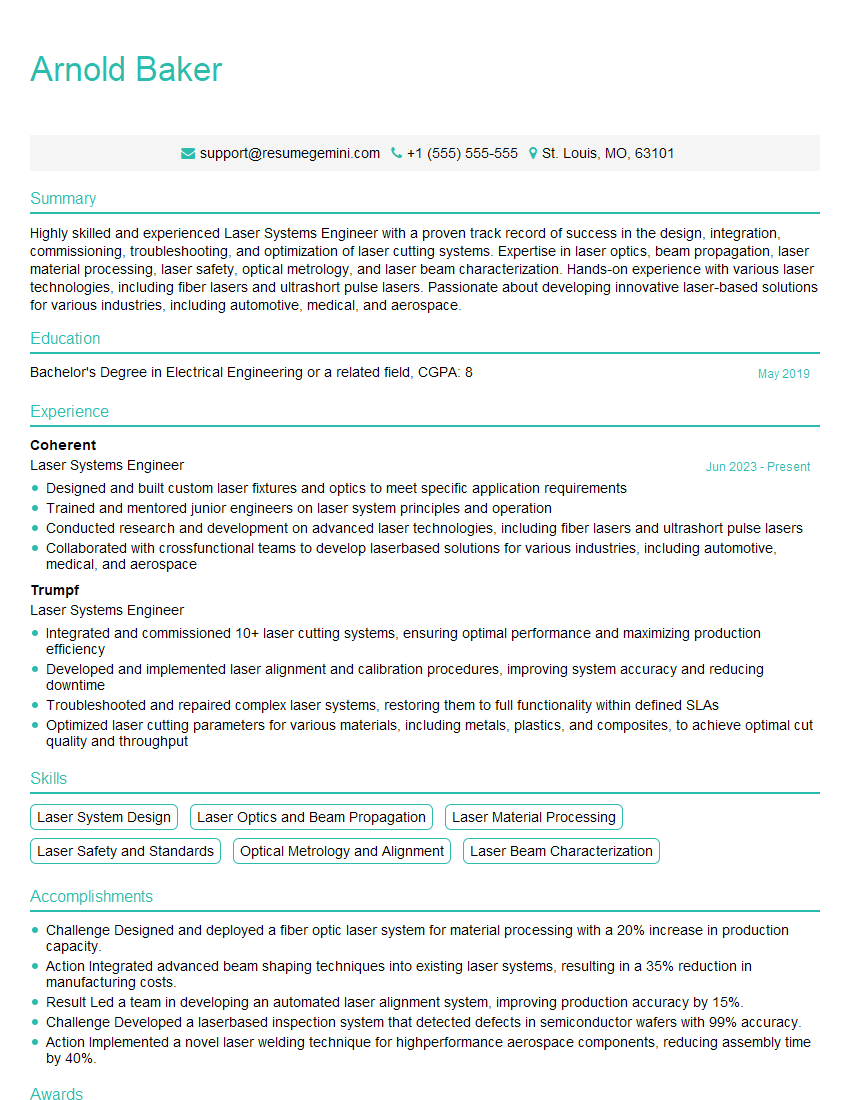
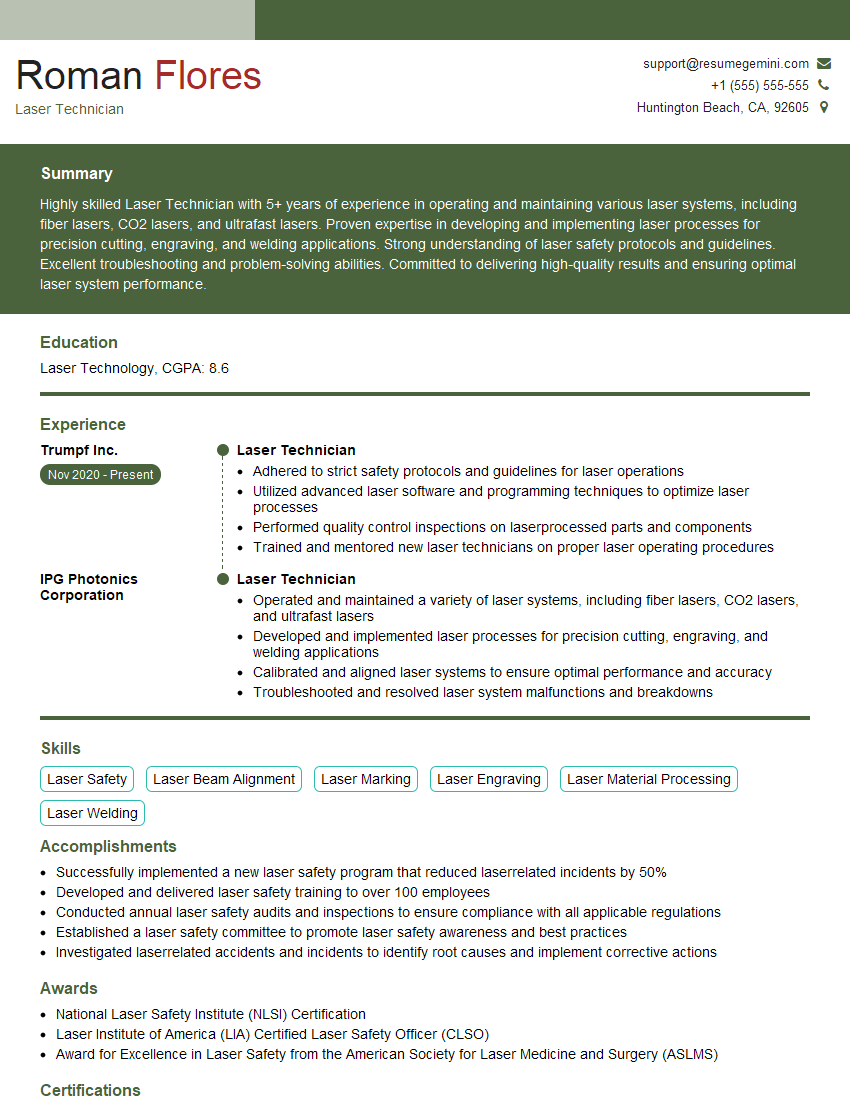
Mastering Laser Surface Treatment opens doors to exciting career opportunities in a rapidly growing field. A strong understanding of the theoretical concepts and practical applications discussed above will significantly enhance your interview performance. To further boost your job prospects, creating an ATS-friendly resume is crucial. ResumeGemini is a trusted resource to help you build a professional and impactful resume that highlights your skills and experience effectively. Examples of resumes tailored to Laser Surface Treatment are available to guide your resume creation process, making you stand out from the competition.
Explore more articles
Users Rating of Our Blogs
Share Your Experience
We value your feedback! Please rate our content and share your thoughts (optional).
What Readers Say About Our Blog
Really detailed insights and content, thank you for writing this detailed article.
IT gave me an insight and words to use and be able to think of examples