Cracking a skill-specific interview, like one for Laying of Vinyl & Linoleum, requires understanding the nuances of the role. In this blog, we present the questions you’re most likely to encounter, along with insights into how to answer them effectively. Let’s ensure you’re ready to make a strong impression.
Questions Asked in Laying of Vinyl & Linoleum Interview
Q 1. What types of adhesives are suitable for vinyl and linoleum installation?
Choosing the right adhesive is crucial for a successful vinyl or linoleum installation. The best adhesive depends heavily on the type of flooring, the subfloor condition, and the desired level of permanence. For sheet vinyl and linoleum, you’ll typically use either a pressure-sensitive adhesive (PSA) or a wet-set adhesive.
Pressure-Sensitive Adhesives (PSA): These are self-adhesive options, often found on the back of luxury vinyl planks or tiles. They’re convenient for DIY projects and smaller areas, offering a relatively easy installation process. However, they are typically less durable than wet-set adhesives and might not be suitable for high-traffic areas.
Wet-Set Adhesives: These require applying a separate adhesive to the subfloor before laying the flooring. They offer superior adhesion, durability, and moisture resistance, making them ideal for larger spaces, commercial settings, and areas with potential moisture issues. Different types of wet-set adhesives exist, including water-based, solvent-based, and modified acrylics, each with its own properties and suitability for different conditions.
For instance, in a bathroom renovation, a high-quality wet-set adhesive specifically designed for wet areas would be essential to prevent issues from moisture. In a bedroom, a PSA-backed luxury vinyl plank might suffice if the subfloor is properly prepared.
Q 2. Explain the process of preparing a subfloor for vinyl or linoleum.
Subfloor preparation is paramount; it’s the foundation for a long-lasting, beautiful floor. A poorly prepared subfloor can lead to buckling, lifting, and overall failure of the vinyl or linoleum. The process involves several key steps:
Cleanliness: Thoroughly clean the subfloor, removing any dirt, debris, dust, and old adhesive residue. A shop vacuum is highly recommended.
Leveling: The subfloor must be level and smooth. Any significant imperfections, such as high spots or dips, need to be addressed. This might involve sanding, patching with self-leveling compound, or using a floor leveling compound.
Moisture Testing: Check the moisture content of the subfloor, especially in concrete slabs. Excessive moisture can cause the adhesive to fail and the flooring to warp. A moisture meter is invaluable here.
Priming (if necessary): Depending on the subfloor material and the adhesive used, a primer might be necessary to improve adhesion and prevent moisture migration. Always follow the manufacturer’s instructions for the specific adhesive and primer.
Repairing Cracks and Holes: Fill any cracks or holes in the subfloor with appropriate patching compounds, ensuring a smooth, level surface.
Imagine trying to build a house on an uneven, unstable foundation – it’s the same principle with flooring. A smooth, clean, and dry subfloor guarantees a successful installation.
Q 3. How do you measure and cut vinyl or linoleum accurately?
Accurate measuring and cutting are vital to avoid waste and ensure a professional-looking finish. Here’s how to do it:
Measure the Room: Carefully measure the length and width of the room at multiple points to account for any irregularities. It’s best to measure several times and take the smallest measurement to avoid running short.
Calculate the Material Needed: Add extra material to account for cuts, waste, and pattern matching (especially crucial for patterned linoleum). A 5-10% overage is a good rule of thumb.
Lay Out the Material: Unroll the vinyl or linoleum in the room to visualize the layout. This helps to identify the most efficient cutting pattern and minimize waste. Make sure the material is properly acclimated before cutting.
Use a Sharp Utility Knife: Employ a sharp utility knife with a fresh blade for clean, accurate cuts. A straightedge or cutting wheel helps create perfectly straight lines.
Cutting Techniques: For straight cuts, use a straightedge and score the material deeply before cutting all the way through. For curved cuts, use a curve-cutting tool or carefully freehand cut with the utility knife.
Think of it like tailoring a suit; precise measurements and careful cutting lead to a perfect fit. It’s this precision that separates an amateur installation from a professional one.
Q 4. Describe different methods for seaming vinyl and linoleum.
Seaming is necessary when the flooring material doesn’t cover the entire area in a single piece. There are two primary methods:
Heat Welding: This method uses a specialized heat welding tool to fuse the edges of two pieces of vinyl or linoleum together, creating a virtually invisible seam. It’s a more advanced technique, often used for sheet vinyl in larger spaces, particularly in commercial installations. It results in a very strong and watertight seam, important for bathrooms and kitchens.
Seam Tape: This is a simpler method, suitable for both vinyl and linoleum, especially in DIY projects. Seam tape is a self-adhesive tape applied to the overlapping edges of the flooring pieces. While it’s less durable than heat welding, it still provides an acceptable seam, particularly in areas with less traffic.
The choice between these methods depends on the flooring type, the size of the area, the skill level of the installer, and the desired level of durability. A professional installer would choose the appropriate method based on the project requirements.
Q 5. What tools and equipment are essential for vinyl and linoleum installation?
The right tools make the job easier and ensure a high-quality result. Essential equipment includes:
Measuring Tape: For accurate measurements of the room and flooring material.
Utility Knife with Extra Blades: A sharp blade is critical for clean, precise cuts.
Straight Edge or Metal Ruler: To guide the utility knife for straight cuts.
Floor Leveling Compound and Tools: For addressing subfloor imperfections.
Notched Trowel: For applying wet-set adhesives evenly.
Roller: To ensure complete adhesion of the flooring material.
Seam Tape or Heat Welding Equipment: For joining flooring pieces.
Knee Pads: For comfort during installation.
Safety Glasses and Gloves: To protect your eyes and hands.
Investing in good-quality tools is a smart move. A dull blade, for example, can make clean cuts difficult and lead to frustrating rework.
Q 6. How do you handle transitions between different flooring types?
Transitions between different flooring types require careful planning and execution. Common methods include:
Transition Strips: These metal or plastic strips cover the seam between different flooring materials, providing a smooth, aesthetically pleasing transition. They come in various styles and finishes to match different decor.
Reducer Strips: These are used when transitioning from a thicker flooring material (like carpet) to a thinner material (like vinyl). They gradually reduce the height difference between the two materials.
T-Molding: This type of transition strip creates a neat transition between two floors of similar thickness, placed at a 90-degree angle.
The selection of the transition method should match the materials involved and the overall aesthetic of the room. A skilled installer knows how to seamlessly integrate various flooring types for a professional look.
Q 7. Explain the importance of proper acclimation of vinyl and linoleum.
Acclimation is the process of allowing vinyl and linoleum to adjust to the temperature and humidity of the room before installation. This is crucial because these materials expand and contract with changes in temperature and humidity. Failing to acclimate the material properly can lead to buckling, shrinking, or other installation problems.
The manufacturer’s instructions should provide specific acclimation recommendations. Typically, the material is unrolled in the room for 24-72 hours, depending on the type of flooring and environmental conditions. This allows it to reach equilibrium with its surroundings, ensuring a stable and even installation.
Think of it like letting a new piece of clothing sit for a bit after you wash it. It might be slightly wrinkled when it comes out of the dryer. Acclimation is like the “resting” period, allowing the material to relax into its final shape and size, ready to be installed without issues.
Q 8. How do you deal with uneven subfloors?
Uneven subfloors are a common challenge in vinyl and linoleum installation, leading to unsightly bumps, ripples, and premature wear. Addressing this requires a methodical approach. First, I thoroughly assess the subfloor’s condition, identifying the extent and type of unevenness. Minor imperfections can often be addressed with a self-leveling compound, carefully applied according to the manufacturer’s instructions. This creates a smooth, even base. For more significant irregularities, such as significant dips or high spots, I may recommend more extensive subfloor repair, perhaps involving patching or even replacing sections of the subfloor. The key is to achieve a smooth, stable surface to ensure the longevity and aesthetic appeal of the final flooring.
For example, I once worked on a project where the original hardwood floor had significant cupping. Instead of attempting to level this with compound alone (which would have been impractical and expensive), we strategically replaced the most severely damaged sections, ensuring a solid and even foundation before applying the self-leveling compound to even out the remainder.
Q 9. What are common problems encountered during vinyl and linoleum installation?
Common problems in vinyl and linoleum installation include uneven subfloors (as discussed above), improper acclimation of the flooring material, causing shrinkage or expansion issues, incorrect seam sealing leading to water damage or buckling, and inadequate preparation of the subfloor resulting in adhesion problems. Another frequent issue is improper cutting and fitting around fixtures, leading to gaps or uneven transitions. Finally, poor adhesive application can result in lifting, bubbling, or wrinkles.
- Uneven Subfloors: Leads to an uneven finished floor.
- Improper Acclimation: Causes shrinking or expanding after installation.
- Poor Seam Sealing: Results in water damage or buckling.
- Inadequate Subfloor Prep: Can cause adhesive failure and lifting.
- Improper Cutting and Fitting: Leads to gaps or unevenness around fixtures.
- Poor Adhesive Application: Causes lifting, bubbling, or wrinkling.
Q 10. How do you troubleshoot issues such as bubbling or wrinkles?
Troubleshooting bubbling or wrinkles involves carefully identifying the root cause. Bubbling often indicates poor adhesion, possibly due to insufficient adhesive, moisture under the flooring, or improper subfloor preparation. Wrinkles, on the other hand, are usually a result of improper installation techniques, stretching of the material during fitting, or inadequate acclimation.
My troubleshooting strategy begins with a visual inspection to determine the severity and location of the problem. For minor bubbles, I might carefully use a utility knife to release trapped air, then use a roller to firmly press the vinyl back down. For more significant bubbling or wrinkling, the solution might involve removing the affected section and reinstalling it with fresh adhesive, ensuring proper preparation of the subfloor underneath. In some instances, particularly with extensive problems, the most effective solution may involve replacing the whole section.
Q 11. Describe your experience with different types of vinyl and linoleum.
My experience encompasses a wide range of vinyl and linoleum types, including sheet goods, luxury vinyl planks (LVP), and luxury vinyl tiles (LVT). Sheet vinyl offers a seamless, water-resistant option, ideal for bathrooms and kitchens. However, it can be more challenging to install in larger rooms due to its size and potential for seams. LVP and LVT, with their click-lock or glue-down installation methods, are increasingly popular due to their ease of installation, durability, and wide array of design options. They offer excellent water resistance and are more forgiving than sheet vinyl in terms of subfloor imperfections. I’m also familiar with different thicknesses and wear layers, which significantly impact the flooring’s lifespan and durability. For instance, thicker vinyl with a higher wear layer is better suited for high-traffic areas.
I’ve worked with various linoleum types as well, ranging from traditional inlaid linoleum known for its durability and sustainability to more modern embossed options offering a wider design palette. Understanding the specific properties of each material is crucial for selecting the appropriate installation method and ensuring a successful project.
Q 12. What safety precautions do you take during installation?
Safety is paramount. I always utilize appropriate personal protective equipment (PPE), including safety glasses, gloves, and dust masks, especially when working with adhesives or cutting tools. Sharp knives and blades require extra care. I maintain a clean and organized workspace to prevent tripping hazards, and I am meticulous in following the manufacturer’s safety guidelines for all products and tools. Proper ventilation is also crucial (discussed in the next answer) to minimize exposure to fumes from adhesives and other materials. Furthermore, I always ensure the work area is well-lit and free from obstructions.
Q 13. How do you ensure proper ventilation during and after installation?
Proper ventilation is essential throughout the installation process, particularly when using adhesives that release volatile organic compounds (VOCs). I ensure adequate ventilation by opening windows and doors, and in larger projects, I may even utilize fans to circulate air effectively. After installation, I advise clients to keep the area well-ventilated for at least 24-48 hours to allow the adhesives to cure properly and to reduce the lingering smell of any VOCs. This prevents lingering odors and potential health concerns.
Q 14. Explain your experience with installing vinyl in different environments (e.g., bathrooms, kitchens).
My experience spans various environments, including bathrooms, kitchens, bedrooms, and other areas. Bathrooms require waterproof vinyl or linoleum with proper sealing around fixtures to prevent moisture damage. Kitchens also necessitate durable, easy-to-clean materials, often opting for thicker, more resilient options. For instance, I recently installed a sheet vinyl flooring with a high wear layer in a kitchen to stand up to heavy traffic and potential spills. Bedrooms often involve choosing quieter and softer options for comfort. I adapt my installation techniques to suit each environment, always prioritizing the material’s suitability for the specific area’s conditions and usage.
Q 15. How do you manage waste materials during installation?
Waste management is crucial for efficient and environmentally responsible vinyl and linoleum installation. My approach involves a multi-step process starting with accurate material measurement to minimize excess. I carefully cut and utilize scraps where possible for smaller areas or patching. Larger offcuts are then categorized for recycling where appropriate; many vinyl and linoleum manufacturers have recycling programs or work with reclamation companies. Non-recyclable waste, such as packaging, is disposed of according to local regulations. I always use heavy-duty drop cloths to catch any debris or spills, making cleanup easier and reducing overall waste. For example, on a recent large commercial job, meticulous planning allowed us to minimize waste by 15%, exceeding the client’s sustainability goals.
Career Expert Tips:
- Ace those interviews! Prepare effectively by reviewing the Top 50 Most Common Interview Questions on ResumeGemini.
- Navigate your job search with confidence! Explore a wide range of Career Tips on ResumeGemini. Learn about common challenges and recommendations to overcome them.
- Craft the perfect resume! Master the Art of Resume Writing with ResumeGemini’s guide. Showcase your unique qualifications and achievements effectively.
- Don’t miss out on holiday savings! Build your dream resume with ResumeGemini’s ATS optimized templates.
Q 16. Describe your experience with different installation methods (e.g., full-spread, modified-spread).
I’m proficient in various installation methods, each suited to specific situations. Full-spread adhesive involves applying adhesive to the entire subfloor before laying the flooring; this is ideal for large areas requiring maximum adhesion and stability, particularly in high-traffic zones. It’s like gluing a giant puzzle piece perfectly onto a surface. Modified-spread adhesive uses a less generous application of adhesive, often in a pattern, striking a balance between adhesion and cost-effectiveness. It’s suitable for areas with less stress and allows for slight movement, which can be helpful in spaces prone to minor settling. I’ve successfully utilized both methods on countless projects, selecting the most appropriate based on factors like subfloor condition, flooring type, and client budget. For instance, a recent kitchen renovation used modified-spread for its practicality, whereas a busy office space benefited from the superior durability of full-spread.
Q 17. How do you calculate the amount of material needed for a job?
Accurate material calculation is paramount to avoid costly overages or shortages. I begin by meticulously measuring the room’s dimensions, accounting for any irregular shapes or obstacles. Then, I add a percentage for waste (typically 5-10%, depending on the complexity of the installation and the pattern). For example, a room measuring 10ft x 12ft requires 120 square feet. Adding a 10% waste factor brings the total to approximately 132 square feet. I always round up to the nearest full roll to ensure sufficient material. Complex patterns may demand a larger waste allowance. Software programs can also assist in these calculations, but I double-check manually to avoid errors.
Q 18. What is your experience with using heat welding tools?
Heat welding tools are essential for creating seamless joins in vinyl and linoleum flooring, particularly in sheet goods. My experience encompasses various types of tools, from portable hot-air welders to larger, stationary units. I am adept at adjusting heat settings based on material type and thickness to achieve strong, consistent welds without damaging the flooring. Safety is always paramount, and I always follow manufacturer guidelines and wear appropriate PPE (Personal Protective Equipment). I’ve used this technique to create virtually invisible seams in numerous commercial and residential projects. For instance, in a hospital project, flawless heat welding was critical to ensure a hygienic, easy-to-clean floor.
Q 19. What is your understanding of different flooring underlayments?
Underlayments significantly impact flooring performance and longevity. I’m familiar with various types, including foam padding (offering cushioning and insulation), rubber underlayments (providing moisture protection and sound dampening), and felt-backed underlayments (ideal for smoothing out minor imperfections). The choice depends on the subfloor condition, desired level of comfort, and budget. For example, a concrete subfloor in a basement might necessitate a moisture-resistant underlayment, while a wooden subfloor in a living room might benefit from a thicker foam underlayment for increased comfort and sound insulation. Proper underlayment selection is crucial for a successful installation. Choosing the wrong one can lead to issues like buckling or moisture problems.
Q 20. How do you handle customer concerns or complaints?
Addressing customer concerns is a critical part of the job. I always maintain open communication, actively listening to understand their issues. I address concerns promptly and professionally, providing clear explanations and outlining potential solutions. If a problem is within my control, I promptly rectify it. If it’s beyond my immediate scope, I coordinate with the necessary parties (e.g., the supplier) to ensure a swift resolution. I strive to turn a negative experience into a positive one by showcasing my commitment to customer satisfaction. For example, a minor issue with a seam on a recent job was quickly resolved by re-welding, leaving the client completely satisfied.
Q 21. Describe your experience with working independently and as part of a team.
I’m comfortable working both independently and as part of a team. Working independently requires strong organizational skills and self-motivation, which I’ve honed over years of experience. I can manage my time effectively, ensuring projects are completed on schedule and within budget. Teamwork involves excellent communication and collaboration. I’m adept at coordinating with other tradespeople, sharing information, and contributing to a cohesive work environment. My recent experience on a large hospital renovation project exemplifies my ability to excel in both independent tasks (e.g., measuring and cutting materials) and collaborative efforts (e.g., coordinating with electricians and plumbers).
Q 22. How do you ensure the job is completed on time and within budget?
Ensuring a project is completed on time and within budget involves meticulous planning and execution. Before starting any job, I create a detailed schedule, breaking down the project into manageable tasks with assigned timeframes. This schedule considers potential delays, like material delivery times or unforeseen issues with the subfloor. I also obtain detailed quotes from suppliers to accurately estimate material costs. Regular communication with the client is crucial, keeping them updated on progress and addressing any concerns promptly. Unexpected issues are handled by prioritizing tasks based on impact and utilizing contingency time built into the initial schedule. For example, if I encounter unexpected subfloor damage, I immediately communicate this to the client, offer solutions, and revise the schedule accordingly, getting their approval before proceeding. This proactive approach ensures transparency and helps prevent cost overruns.
Q 23. What is your experience with using different types of cutting tools?
My experience with cutting tools encompasses a wide range, from basic utility knives for precise cuts in vinyl and linoleum to specialized tools like electric rotary cutters for larger jobs or intricate patterns. I’m proficient with various types of blades, understanding the importance of using the right blade for the material. For example, a sharp utility knife with a fresh blade is essential for clean cuts in sheet vinyl, avoiding tearing or ragged edges. For thicker linoleum or specialized cuts, an electric rotary cutter with the correct cutting wheel offers better control and speed. Safety is paramount; I always use appropriate safety equipment, including cut-resistant gloves, eye protection, and ensure the tools are in good working condition before use. Regular maintenance of these tools is also key to preventing accidents and maintaining clean, precise cuts.
Q 24. How do you maintain the quality of your work throughout the installation process?
Maintaining quality throughout the installation involves a multi-faceted approach. It starts with proper subfloor preparation – ensuring it’s clean, level, and dry. Any imperfections can compromise the final result. Accurately measuring and cutting the material is crucial. I use precise measuring techniques and double-check measurements before committing to a cut. Proper adhesive application is paramount; I follow manufacturer recommendations precisely to ensure a strong bond and prevent bubbling or lifting. Seams are meticulously aligned and sealed for a seamless finish. I inspect my work regularly, paying close attention to details like ensuring the flooring lies flat and is free from wrinkles. Any mistakes are addressed promptly. For instance, if I notice a slight wrinkle during installation, I carefully lift the affected area and reapply adhesive to correct the issue before proceeding. A final inspection before handing over the project to the client guarantees the highest quality workmanship.
Q 25. How do you clean up the worksite after completion?
Maintaining a clean worksite is essential for both safety and professionalism. Throughout the installation, I regularly sweep and remove debris to prevent accidents and ensure a safe working environment. Used adhesive tubes and packaging are disposed of according to manufacturer instructions and local regulations. At the end of the job, I thoroughly sweep and vacuum the entire floor, removing any excess adhesive, dust or other debris. I carefully clean any tools used. All leftover materials are properly stored or disposed of, and the work area is left in its original condition, before commencing work. I always take pride in leaving the job site cleaner than when I arrived.
Q 26. Describe your experience with installing cove base or quarter-round.
Installing cove base and quarter-round requires precision and attention to detail. Cove base is installed along walls to create a seamless transition between the flooring and the wall. This involves careful measuring, cutting, and applying adhesive to ensure a tight, watertight seal, preventing moisture from getting underneath. Quarter-round, on the other hand, is primarily used to cover gaps between the flooring and the wall. It’s a simple but effective way to create a neat and professional finish. In both cases, I use appropriate tools, like a miter saw for precise angle cuts and adhesive appropriate for the material being used. For example, I always use a strong, flexible adhesive for cove base to ensure a firm and long-lasting installation. The final result should be both visually appealing and functionally sound, providing a robust and water-resistant finish.
Q 27. What are the different types of vinyl and linoleum available in the market?
The market offers a wide variety of vinyl and linoleum flooring options. Vinyl flooring ranges from sheet vinyl, offering a continuous, seamless look, to luxury vinyl plank (LVP) and luxury vinyl tile (LVT), which mimic the appearance of hardwood or stone. Sheet vinyl is typically more affordable and easier to install for large areas, while LVP and LVT offer greater durability and design flexibility. Linoleum, a natural flooring material made from linseed oil, rosin, wood flour, and pigments, offers a sustainable alternative. It’s available in sheet form, similar to sheet vinyl, and typically features a more natural and textured appearance. The choice depends on factors like budget, desired aesthetics, durability needs, and the area’s intended use. For high-traffic areas, LVT or commercial-grade vinyl is recommended due to its superior durability. For bathrooms, moisture-resistant vinyl is crucial.
Q 28. How do you dispose of hazardous materials safely?
Safe disposal of hazardous materials is a crucial aspect of responsible flooring installation. This involves understanding the specific hazards associated with each product used. Adhesives often contain volatile organic compounds (VOCs) that need proper disposal. I always follow the manufacturer’s instructions carefully. Leftover adhesive, solvents, and other hazardous waste are never poured down drains or into the trash. Instead, they are collected in properly labeled containers and disposed of according to local regulations. Often, this involves taking them to a designated hazardous waste disposal facility. I also educate my clients on the responsible disposal of any leftover materials if appropriate, ensuring all waste is dealt with safely and legally.
Key Topics to Learn for Laying of Vinyl & Linoleum Interview
- Substrate Preparation: Understanding different subfloor types (concrete, plywood, etc.), moisture content testing, leveling techniques, and appropriate primers.
- Material Selection and Handling: Knowledge of various vinyl and linoleum types (sheet, tile, planks), their properties, and proper storage and acclimation before installation.
- Measurement and Cutting: Accurate room measurement, pattern matching techniques for sheet goods, and safe use of cutting tools (knives, shears).
- Installation Techniques: Full spread adhesive application, loose lay methods, self-adhesive installation, and understanding the differences and when to use each. Proper use of tools like rollers and seam sealers.
- Seam Welding and Finishing: Techniques for creating invisible seams in sheet vinyl, proper use of welding equipment, and finishing edges and transitions.
- Troubleshooting Common Problems: Identifying and resolving issues like bubbling, shrinkage, seams separating, and uneven surfaces. Understanding preventative measures.
- Safety Procedures and Regulations: Adherence to workplace safety guidelines, proper handling of chemicals (adhesives, cleaners), and understanding relevant industry standards.
- Tools and Equipment: Familiarity with essential tools, their proper usage and maintenance (e.g., knee kickers, seam rollers, utility knives).
Next Steps
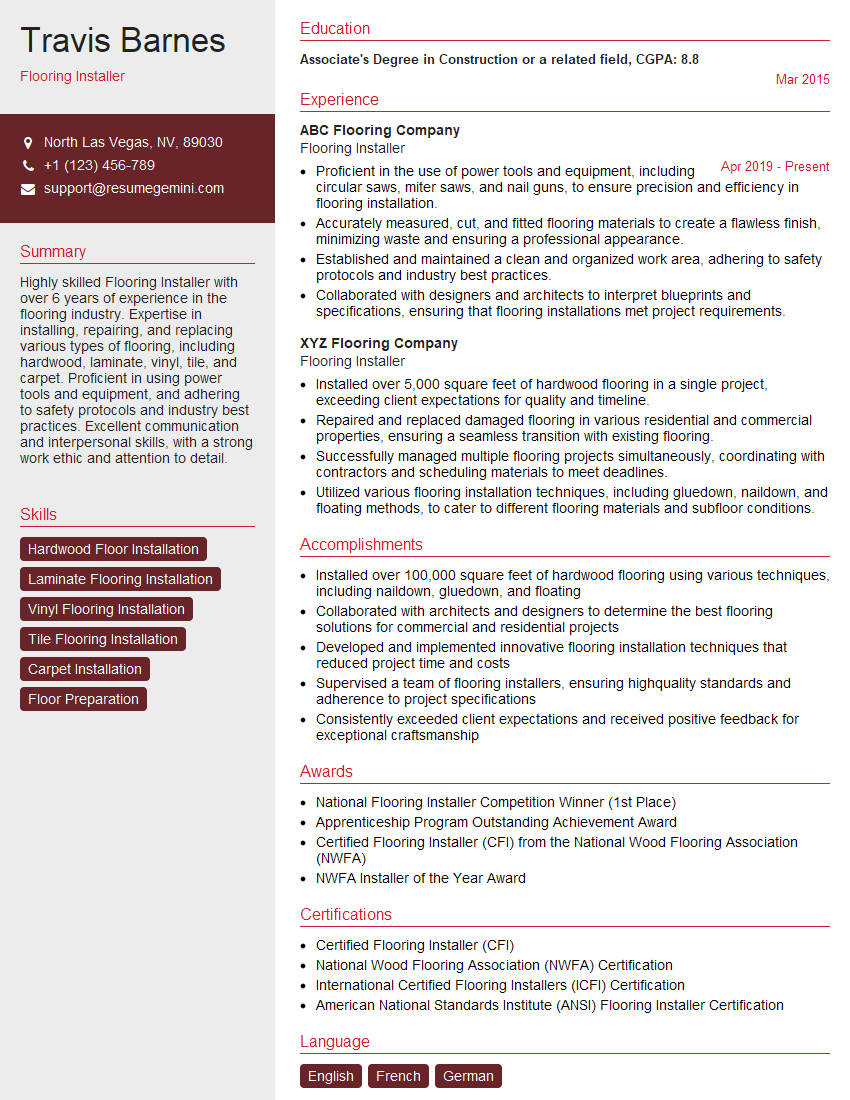
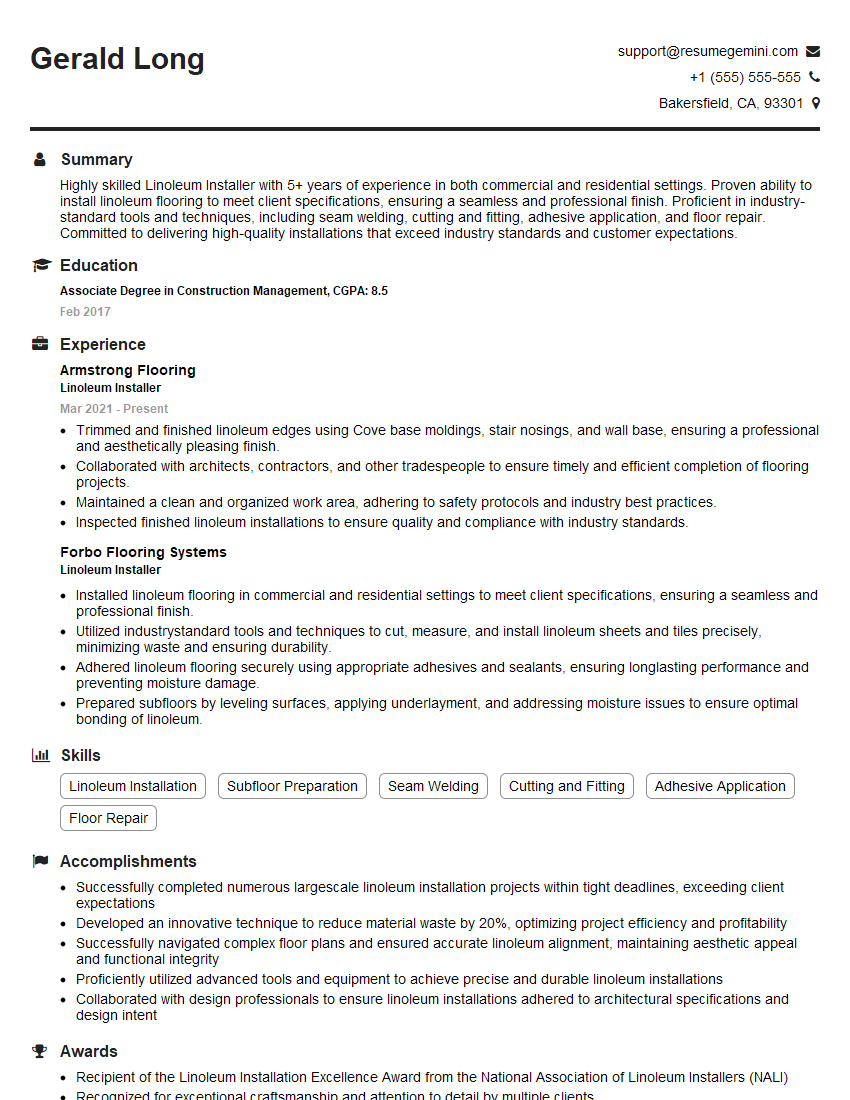
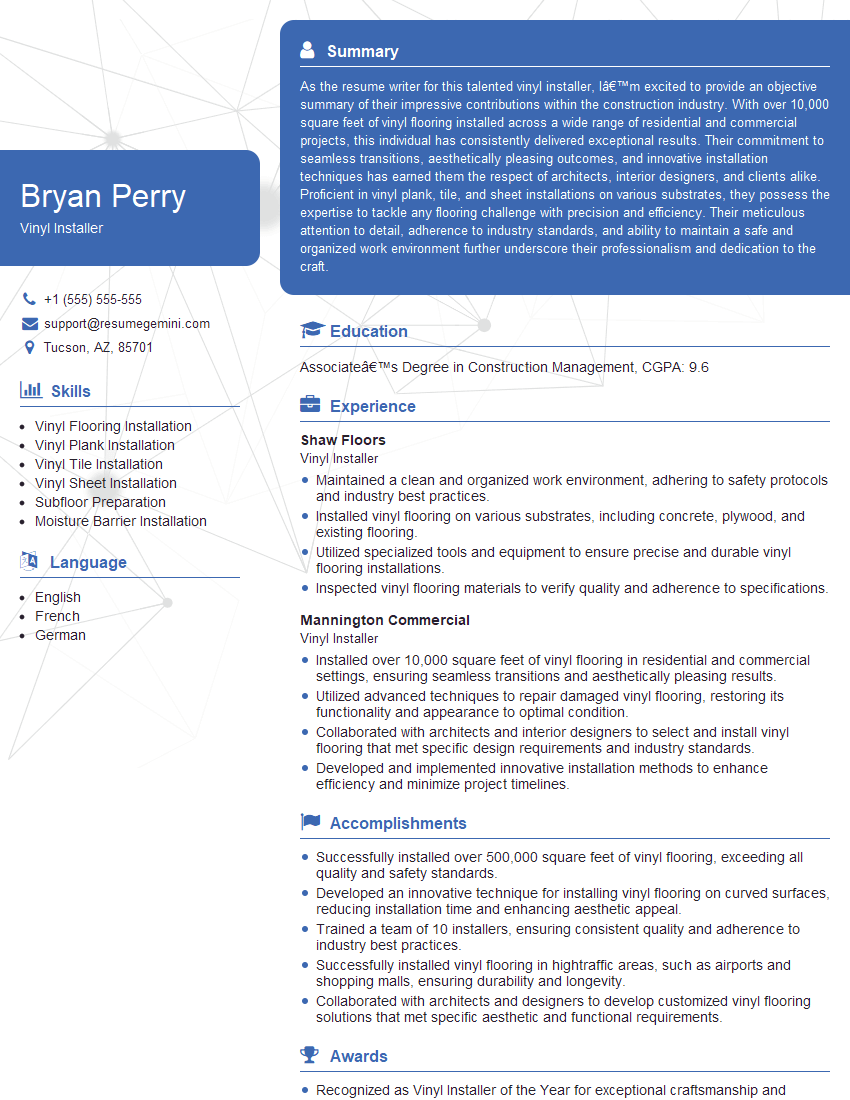
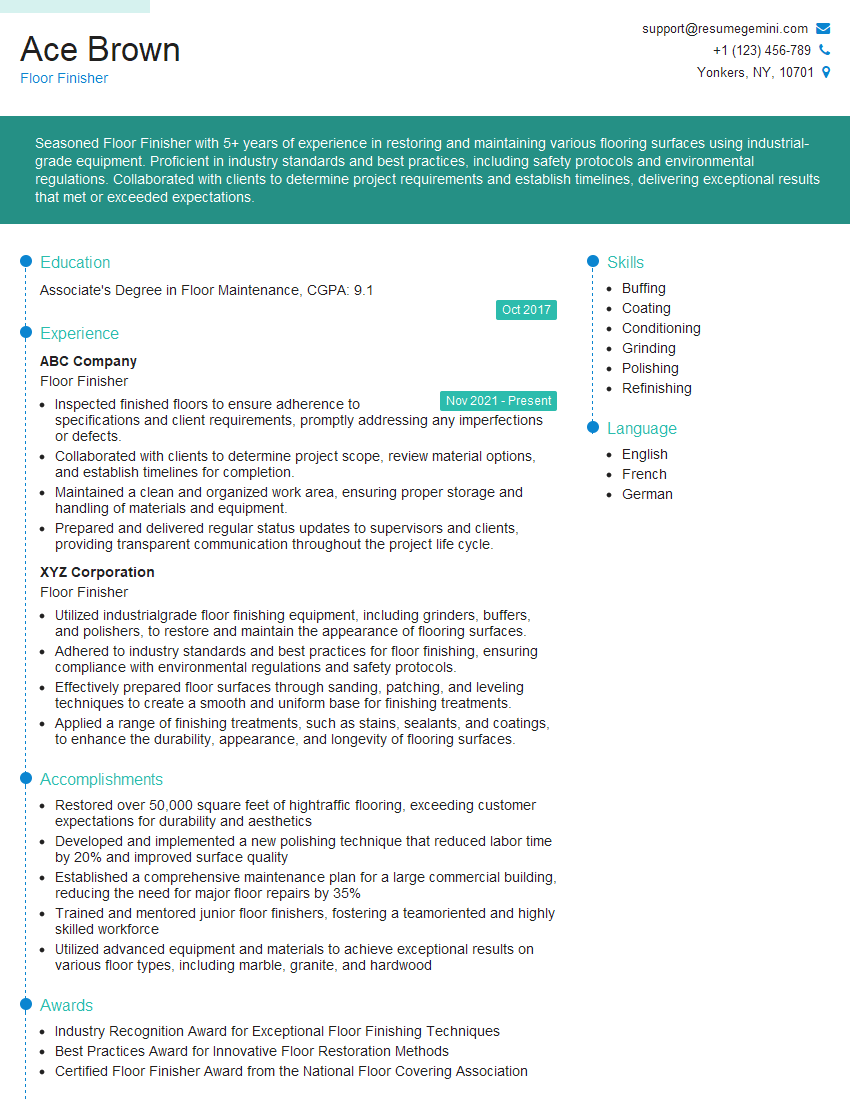
Mastering the art of laying vinyl and linoleum opens doors to a rewarding career with diverse opportunities for growth, from residential installations to commercial projects. To maximize your job prospects, a well-crafted, ATS-friendly resume is crucial. ResumeGemini can help you build a professional and impactful resume that highlights your skills and experience effectively. We provide examples of resumes tailored specifically to the Laying of Vinyl & Linoleum field to help you showcase your expertise and secure your dream job. Invest in your future – invest in your resume.

Explore more articles
Users Rating of Our Blogs
Share Your Experience
We value your feedback! Please rate our content and share your thoughts (optional).
What Readers Say About Our Blog
Really detailed insights and content, thank you for writing this detailed article.
IT gave me an insight and words to use and be able to think of examples