Are you ready to stand out in your next interview? Understanding and preparing for Legal Compliance and Liability interview questions is a game-changer. In this blog, we’ve compiled key questions and expert advice to help you showcase your skills with confidence and precision. Let’s get started on your journey to acing the interview.
Questions Asked in Legal Compliance and Liability Interview
Q 1. Explain the Sarbanes-Oxley Act (SOX) and its implications for corporate compliance.
The Sarbanes-Oxley Act of 2002 (SOX) is a landmark piece of US legislation aimed at improving corporate governance and financial disclosures. It was enacted in response to major accounting scandals, such as Enron and WorldCom, to restore investor confidence. SOX places significant responsibilities on public companies and their executives, focusing on accuracy and reliability of financial reporting.
- Increased Corporate Responsibility: SOX holds CEOs and CFOs personally accountable for the accuracy of financial statements, requiring them to certify the reports.
- Enhanced Internal Controls: Companies must establish and maintain robust internal controls over financial reporting (ICFR), ensuring that financial processes are reliable and prevent fraud.
- Independent Audits: SOX mandates independent audits of financial statements by external auditors, overseen by the Public Company Accounting Oversight Board (PCAOB).
- Whistleblower Protection: It provides legal protection for whistleblowers who report suspected accounting irregularities.
Implications for Corporate Compliance: SOX requires companies to implement comprehensive compliance programs encompassing internal controls, documentation, regular audits, and employee training. Failure to comply can result in significant financial penalties, legal actions, and reputational damage. For example, a company failing to properly document its internal control processes risks a qualified audit opinion, harming its credibility with investors. Imagine a scenario where a company’s financial reporting system isn’t properly secured, leading to fraudulent activity – SOX holds the company and its leadership directly accountable for such failures.
Q 2. Describe your experience with implementing and maintaining a compliance program.
In my previous role at a multinational financial institution, I led the implementation and maintenance of a comprehensive compliance program covering various regulations, including SOX, FCPA, and data privacy laws. This involved:
- Risk Assessment: Conducting regular risk assessments to identify potential compliance vulnerabilities.
- Policy Development and Implementation: Creating and updating policies and procedures to align with regulatory requirements.
- Employee Training: Developing and delivering training programs to educate employees on compliance obligations.
- Monitoring and Auditing: Establishing a system for ongoing monitoring and conducting regular internal audits to identify and address compliance gaps.
- Incident Management: Establishing procedures for handling compliance incidents and reporting violations.
- Documentation: Maintaining comprehensive documentation of all compliance activities.
For example, we implemented a robust system for tracking and managing employee gifts and entertainment, ensuring compliance with anti-bribery laws. We also developed a comprehensive data privacy policy and training program to ensure compliance with GDPR and CCPA. We monitored employee activity by implementing an automated system to detect red flags. This proactive approach helped us effectively mitigate risk and ensure ongoing compliance.
Q 3. How do you conduct a risk assessment for legal and compliance issues?
A legal and compliance risk assessment involves a systematic process of identifying, analyzing, and prioritizing potential legal and regulatory risks. It helps companies proactively manage compliance obligations and mitigate potential liabilities.
- Identify Potential Risks: This involves reviewing relevant regulations, industry best practices, and internal processes to identify areas of potential vulnerability. We might use questionnaires, interviews, and document reviews.
- Analyze Risks: This involves assessing the likelihood and potential impact of each identified risk. A risk matrix is a common tool used to visualize this. We consider the severity of a potential breach and its potential business impact.
- Prioritize Risks: This involves ranking risks based on their likelihood and impact, focusing on the most critical risks first.
- Develop Mitigation Strategies: This involves developing and implementing strategies to mitigate identified risks, including policy changes, training programs, and technological solutions.
- Monitor and Review: The risk assessment process should be regularly monitored and reviewed to ensure its effectiveness and to adapt to changing circumstances. This requires regular updates and review of results.
For example, a risk assessment might reveal that a company’s data security measures are inadequate, creating a significant risk of data breaches. The assessment would then prioritize this risk and recommend mitigation strategies such as implementing stronger security controls and employee training.
Q 4. What is your understanding of the Foreign Corrupt Practices Act (FCPA)?
The Foreign Corrupt Practices Act (FCPA) is a US law that prohibits bribery of foreign officials to obtain or retain business. It applies to US companies and individuals, as well as foreign companies listed on US stock exchanges. The act targets both bribery of foreign officials and maintaining accurate books and records.
- Prohibition of Bribery: The FCPA prohibits the offering, promising, or giving anything of value to a foreign official to influence an official act or to obtain or retain business.
- Accounting Provisions: It requires companies to maintain accurate books and records and to establish and maintain an effective system of internal accounting controls.
- Jurisdiction: The FCPA has extraterritorial reach, meaning it applies to actions taken outside the US.
The FCPA carries severe penalties, including hefty fines and imprisonment. A company might face penalties if it engages in bribery to secure a contract with a foreign government. The importance of thorough due diligence and robust compliance programs cannot be overstated when conducting business internationally.
Q 5. How would you handle a situation where an employee violates company compliance policy?
Handling an employee’s violation of company compliance policy requires a structured and consistent approach that prioritizes both fairness and the protection of the company. The exact response depends on the severity of the violation and the company’s internal policies.
- Investigation: A thorough investigation is crucial. This involves gathering facts and evidence, interviewing witnesses, and reviewing relevant documentation. This phase should be unbiased and aim for the truth.
- Disciplinary Action: Depending on the severity of the violation, disciplinary actions can range from written warnings to termination. Consistency is paramount.
- Reporting: Depending on the nature of the violation, reporting to relevant authorities might be required. For example, a financial crime necessitates reporting to the appropriate regulatory bodies.
- Remedial Actions: Implement measures to prevent similar violations from occurring in the future, such as retraining or updating policies.
- Documentation: Maintaining meticulous documentation throughout the process is vital.
For instance, if an employee is found to have violated the company’s anti-bribery policy, a thorough investigation might be launched and appropriate disciplinary measures, including potentially termination, might be implemented. We might also review and update our anti-bribery training program.
Q 6. Explain your experience with internal audits and compliance monitoring.
I have extensive experience with internal audits and compliance monitoring. These activities are crucial for ensuring ongoing compliance with relevant regulations and maintaining the integrity of the compliance program.
- Planning: Internal audits begin with careful planning, defining the scope, objectives, and methodology. This includes identifying key areas to review.
- Testing and Evaluation: We then test controls and evaluate the effectiveness of the compliance program by reviewing documentation, conducting interviews, and performing other tests.
- Reporting: A detailed report summarizing the findings, including any identified deficiencies and recommendations for improvement, is issued.
- Follow-up: A key aspect is following up on the findings and ensuring that corrective actions are implemented.
For example, a recent internal audit I conducted revealed a gap in the company’s data security controls. The audit report documented this deficiency, including specific recommendations for remediation, such as implementing multi-factor authentication. Following the audit, the company implemented these recommendations, improving its data security posture.
Q 7. Describe your understanding of data privacy regulations (e.g., GDPR, CCPA).
Data privacy regulations, such as the General Data Protection Regulation (GDPR) in Europe and the California Consumer Privacy Act (CCPA) in California, are designed to protect individuals’ personal data. These regulations establish strict requirements for how companies collect, use, and protect personal information.
- GDPR: Applies to organizations processing personal data of individuals within the EU. It establishes principles such as lawfulness, fairness, and transparency, along with rights for individuals to access, rectify, and erase their data.
- CCPA: Provides California consumers with rights regarding their personal information, including the right to know what data is collected, the right to delete data, and the right to opt-out of the sale of personal data.
Understanding these regulations is crucial for companies handling personal data. Failure to comply can result in significant fines and reputational damage. For instance, a company failing to obtain consent before processing personal data under GDPR could face substantial penalties. Companies need to implement comprehensive data privacy programs including data mapping, consent mechanisms, and robust security measures.
Q 8. How do you stay current with changes in legal and regulatory requirements?
Staying current in the ever-evolving landscape of legal and regulatory requirements is paramount. My approach is multi-faceted and proactive, not reactive. I utilize a combination of strategies to ensure I remain informed.
- Subscription to Legal Databases and Newsletters: I subscribe to reputable legal databases like LexisNexis and Westlaw, as well as specialized newsletters focusing on relevant industries and regulations. These provide up-to-date information on case law, statutes, and regulatory changes.
- Professional Development and Continuing Legal Education (CLE): I actively participate in CLE courses, webinars, and conferences to enhance my knowledge and receive updates from leading experts in the field. This ensures I understand nuances of the law and its practical applications.
- Networking and Industry Associations: I maintain active memberships in relevant professional organizations and attend industry events. This allows me to network with other compliance professionals and stay abreast of emerging trends and best practices.
- Monitoring Regulatory Agencies’ Websites: I regularly monitor the websites of key regulatory agencies (e.g., SEC, FTC, etc.) for updates, announcements, and proposed rule changes. This allows me to anticipate changes and prepare accordingly.
- Internal Communication and Collaboration: I foster open communication within my organization, sharing updates and insights with colleagues to ensure everyone is on the same page and aware of potential compliance risks.
For example, when the GDPR was implemented, I proactively researched its implications for our clients, developed internal training programs, and ensured our data processing practices complied fully. This proactive approach minimized risk and strengthened our client relationships.
Q 9. Explain your experience with developing compliance training programs.
I have extensive experience in designing and delivering compliance training programs. My approach focuses on creating engaging, effective, and easily digestible content that fosters understanding and promotes behavioral change. I typically follow these steps:
- Needs Assessment: I begin by identifying the specific compliance risks and training needs of the organization. This often involves interviewing key personnel, reviewing existing documentation, and conducting gap analysis.
- Curriculum Development: Based on the needs assessment, I develop a comprehensive curriculum that covers relevant regulations, best practices, and case studies. The curriculum includes interactive elements, like quizzes and scenarios, to make the learning process more engaging.
- Content Creation: I develop training materials such as presentations, videos, workbooks, and online modules. I focus on clear, concise language and practical examples to ensure the information is easily understood by participants of various levels.
- Delivery and Facilitation: I deliver the training programs using a variety of methods, including instructor-led training, online learning platforms, and blended learning approaches. I facilitate discussions and encourage participant engagement to make the training effective.
- Evaluation and Assessment: I evaluate the effectiveness of the training program by assessing participant knowledge through pre- and post-training assessments, measuring behavioral changes, and monitoring compliance rates.
In one instance, I developed a comprehensive anti-bribery and corruption training program for a multinational corporation. This program utilized interactive case studies and role-playing scenarios to effectively communicate the complexities of the Foreign Corrupt Practices Act (FCPA) to employees in various geographic locations. The program’s success was measured through improved compliance scores and reduced reported incidents.
Q 10. How do you measure the effectiveness of a compliance program?
Measuring the effectiveness of a compliance program is crucial to ensure its ongoing success. It’s not enough to simply implement a program; you need to demonstrate its impact. I use a multi-pronged approach:
- Key Risk Indicators (KRIs): Monitoring KRIs, which are specific metrics that indicate potential compliance issues, provides early warnings of problems. For example, an increase in near-misses or reported violations could indicate weaknesses in the program.
- Compliance Metrics: Tracking metrics such as the number of reported violations, the time it takes to resolve violations, and the percentage of employees completing training, allows for quantitative assessment of the program’s performance.
- Employee Surveys and Feedback: Gathering feedback from employees helps identify areas for improvement and gauge employee understanding of compliance requirements. Anonymous surveys are invaluable for honest feedback.
- Internal Audits and Assessments: Regular internal audits and assessments provide an independent evaluation of the program’s effectiveness and identify areas of weakness.
- Incident Reporting and Response Time: Tracking the number of reported incidents and the time taken to investigate and resolve them helps to assess the program’s efficiency and response capability.
For example, we tracked the number of data breaches before and after implementing a new data security program. A significant reduction in breaches demonstrably showcased the program’s success. We also analyzed the time it took to remediate those breaches which further refined our response protocols.
Q 11. Describe your experience with conducting compliance investigations.
Conducting compliance investigations requires a systematic and impartial approach. My experience involves:
- Gathering Evidence: This involves collecting all relevant documents, interviewing witnesses, and analyzing data. Maintaining a chain of custody for physical evidence is crucial.
- Preserving Confidentiality: Protecting the privacy of all individuals involved is paramount. This includes adhering to relevant data protection laws and internal policies.
- Interviewing Techniques: I use proven interview techniques to gather accurate and reliable information. This includes preparing detailed interview plans and documenting all interviews thoroughly.
- Analyzing Data: This involves reviewing financial records, emails, and other electronic communications to identify patterns and anomalies. Sophisticated data analysis tools can be employed.
- Report Writing: I prepare comprehensive investigation reports that detail the findings, conclusions, and recommendations. These reports should be objective and unbiased.
I once investigated a potential violation of our company’s anti-discrimination policy. By carefully interviewing multiple employees, reviewing emails and HR documentation, and following a structured investigation process, I was able to determine the facts of the case, exonerate one employee, and provide sufficient evidence to take disciplinary action against another, demonstrating a fair and thorough approach.
Q 12. How do you handle conflicts between legal requirements and business objectives?
Balancing legal requirements with business objectives is a constant challenge. It requires a thoughtful and proactive approach. My strategy involves:
- Identifying the Conflict: Clearly define the specific conflict between the legal requirements and business objectives. What are the potential consequences of non-compliance versus the impact of restricting the business objective?
- Assessing the Risks: Evaluate the potential legal, financial, and reputational risks associated with non-compliance. This involves considering the likelihood and severity of potential penalties.
- Exploring Alternative Solutions: Brainstorm alternative solutions that achieve the business objectives while complying with legal requirements. This could involve adjusting timelines, modifying processes, or seeking legal counsel.
- Cost-Benefit Analysis: Evaluate the costs and benefits of each potential solution, considering both short-term and long-term impacts. This may involve financial modeling and risk assessment.
- Decision-Making and Documentation: Make a well-informed decision based on the risk assessment and cost-benefit analysis, and document the decision-making process thoroughly. This demonstrates a transparent and defensible approach.
For instance, a client wanted to launch a new product quickly to gain market share, but certain regulatory approvals were still pending. We worked together to adjust the launch plan, highlighting the risks of premature launch and developing a revised timeline that prioritized compliance without unduly delaying market entry.
Q 13. Explain your experience with regulatory reporting and compliance documentation.
My experience encompasses the full spectrum of regulatory reporting and compliance documentation. This includes:
- Understanding Reporting Requirements: I possess a thorough understanding of the specific reporting requirements applicable to different regulations and industries. This includes understanding deadlines, formats, and submission methods.
- Data Collection and Analysis: I can collect, analyze, and interpret data from various sources to ensure accuracy and completeness of reports. This may involve using data analytics tools and techniques.
- Report Preparation and Submission: I prepare and submit reports in a timely and accurate manner, ensuring compliance with all relevant regulations. This includes using appropriate software and platforms for electronic filing.
- Record Keeping and Archiving: I maintain accurate and organized records of all compliance activities, ensuring easy retrieval and accessibility for audits. I am proficient in various document management systems.
- Internal Audits and Reviews: I actively participate in internal audits and reviews to ensure compliance with reporting requirements and identify any potential weaknesses in the reporting process.
For example, I was instrumental in implementing a new system for tracking and reporting environmental data for a manufacturing company, ensuring accurate and timely submission of reports to the EPA. This significantly improved the company’s compliance posture and reduced the risk of penalties.
Q 14. What is your experience with contract review and compliance?
Contract review and compliance is critical to mitigate legal risks. My experience includes:
- Identifying Key Clauses: I expertly identify key clauses within contracts, focusing on areas like liability, indemnification, intellectual property, and confidentiality.
- Compliance with Laws and Regulations: I ensure contracts comply with all applicable laws and regulations, including data protection laws, antitrust laws, and consumer protection laws.
- Risk Assessment: I assess the legal risks associated with contracts and propose appropriate mitigation strategies. This includes identifying potential areas of dispute and ambiguity.
- Negotiation Support: I provide support during contract negotiations, advising on legal implications and ensuring the protection of our client’s interests.
- Documentation and Archiving: I maintain organized records of all reviewed contracts and associated correspondence, ensuring easy access for future reference and audits.
In a recent project, I reviewed a complex international distribution agreement, identifying several clauses that exposed the company to significant liability. I successfully negotiated modifications to the agreement, significantly reducing the company’s risk exposure while still achieving their business objectives. This saved them significant potential losses.
Q 15. How do you manage and mitigate compliance risks?
Managing and mitigating compliance risks is a proactive, multi-faceted process that begins with a thorough understanding of applicable laws, regulations, and industry best practices. It’s like building a strong house – you need a solid foundation and ongoing maintenance.
- Risk Identification: This involves regularly assessing the organization’s operations to identify potential areas of non-compliance. This might include reviewing contracts, analyzing transactions, and conducting internal audits. For example, a bank might assess its processes for verifying customer identities to comply with KYC (Know Your Customer) regulations.
- Risk Assessment: Once risks are identified, they’re evaluated based on their likelihood and potential impact. A high-likelihood, high-impact risk (like a data breach violating GDPR) requires immediate attention, while a low-likelihood, low-impact risk might require less urgent action.
- Risk Response: This involves developing and implementing strategies to mitigate identified risks. Options include avoiding the risk altogether, reducing its likelihood, transferring it (e.g., through insurance), or accepting it (with appropriate controls in place).
- Monitoring and Reporting: Continuous monitoring is crucial to track the effectiveness of mitigation strategies and identify any emerging risks. Regular reporting to senior management ensures accountability and allows for timely adjustments.
- Training and Awareness: A robust compliance program includes comprehensive training for all employees, fostering a culture of compliance and ethical conduct. Employees need to understand their responsibilities and the consequences of non-compliance.
For instance, in my previous role, we implemented a comprehensive risk management framework using a software solution that allowed for automated risk assessments and reporting. This drastically reduced the time spent on manual processes and improved the accuracy of our risk analysis.
Career Expert Tips:
- Ace those interviews! Prepare effectively by reviewing the Top 50 Most Common Interview Questions on ResumeGemini.
- Navigate your job search with confidence! Explore a wide range of Career Tips on ResumeGemini. Learn about common challenges and recommendations to overcome them.
- Craft the perfect resume! Master the Art of Resume Writing with ResumeGemini’s guide. Showcase your unique qualifications and achievements effectively.
- Don’t miss out on holiday savings! Build your dream resume with ResumeGemini’s ATS optimized templates.
Q 16. Describe your experience with working with external regulatory bodies.
I have extensive experience interacting with various regulatory bodies, including the SEC (Securities and Exchange Commission), the FTC (Federal Trade Commission), and state-level agencies. These interactions have ranged from responding to information requests to participating in investigations and audits.
One notable experience involved a regulatory audit of our data security practices. We proactively collaborated with the auditors, providing transparent access to our documentation and actively participating in their interviews. This resulted in a successful audit, and we even received positive feedback on our robust security measures and compliance program.
Effective communication and collaboration are key in working with regulatory bodies. It’s important to be responsive, accurate, and transparent in all interactions. Maintaining strong relationships through proactive engagement can significantly streamline the process and avoid potential conflicts.
Q 17. What is your experience in developing and implementing compliance policies and procedures?
Developing and implementing compliance policies and procedures involves a structured approach that ensures all aspects of the business adhere to relevant regulations. It’s like creating a detailed map to guide the organization toward compliance.
- Needs Assessment: Identify all applicable laws, regulations, and industry standards.
- Policy Development: Create clear, concise, and easily understandable policies that outline expectations and responsibilities.
- Procedure Creation: Develop detailed step-by-step procedures that guide employees on how to comply with the policies.
- Training and Communication: Provide comprehensive training to all relevant personnel to ensure they understand and can apply the policies and procedures.
- Monitoring and Review: Regularly monitor compliance and review policies and procedures to ensure their continued effectiveness and relevance.
In a previous role, I led the development and implementation of a comprehensive data privacy policy compliant with GDPR. This involved collaborating with cross-functional teams, including legal, IT, and human resources, to ensure all aspects of data handling were addressed. The policy included clear guidelines on data collection, storage, processing, and deletion, resulting in improved data security and a reduction in risk.
Q 18. How do you ensure compliance with anti-money laundering (AML) regulations?
Ensuring compliance with Anti-Money Laundering (AML) regulations requires a multi-layered approach focused on identifying, monitoring, and reporting suspicious activities. It’s like having a security system with multiple layers of protection.
- Customer Due Diligence (CDD): Thoroughly verifying the identity of customers, understanding their business activities, and assessing their risk profile. This often involves collecting supporting documentation and conducting enhanced due diligence for high-risk customers.
- Transaction Monitoring: Continuously monitoring transactions for suspicious patterns or activities that might indicate money laundering. This includes using software to identify unusual transactions based on predefined rules and thresholds.
- Suspicious Activity Reporting (SAR): Promptly reporting any suspicious activities to the relevant financial intelligence unit (FIU). This is a crucial element of AML compliance.
- Employee Training: Equipping employees with the knowledge and skills to identify suspicious activities and adhere to AML procedures.
- Independent Audits: Regularly conducting independent audits to assess the effectiveness of AML programs and identify areas for improvement.
In my experience, effective AML compliance requires a strong understanding of both the regulatory requirements and the practical challenges of implementing them in a business setting. For example, we implemented a transaction monitoring system that used machine learning algorithms to flag potentially suspicious activities, significantly improving the efficiency of our AML program.
Q 19. Explain your understanding of corporate governance and its relationship to compliance.
Corporate governance and compliance are intrinsically linked. Corporate governance sets the overall ethical tone and framework for an organization, while compliance ensures adherence to the laws and regulations that govern its operations. Think of corporate governance as the roadmap, and compliance as the process of following the roadmap.
Strong corporate governance promotes a culture of ethical conduct and accountability, which is fundamental to effective compliance. A well-defined governance structure, with clear roles and responsibilities, provides a foundation for implementing and enforcing compliance programs. Conversely, a strong compliance program can enhance corporate governance by providing assurance that the organization is operating within the boundaries of the law and ethical principles.
For instance, a strong board of directors that actively oversees risk management and compliance functions contributes directly to a more robust compliance program. Similarly, a transparent and ethical organizational culture decreases the likelihood of non-compliance.
Q 20. How do you prioritize compliance tasks and projects?
Prioritizing compliance tasks and projects requires a strategic approach that considers factors such as risk, regulatory deadlines, and resource availability. It’s like managing a portfolio of investments, balancing risk and return.
- Risk-Based Prioritization: Focus on addressing high-risk compliance areas first. This means focusing on the areas where non-compliance could have the most significant consequences.
- Regulatory Deadlines: Prioritize tasks with impending deadlines to avoid potential penalties or sanctions.
- Resource Allocation: Consider the resources available (personnel, budget, technology) when scheduling tasks. This includes assessing the needed expertise and the time required for each task.
- Project Management Tools: Utilize project management methodologies and tools to track progress, manage resources, and ensure timely completion of projects.
In practice, I often employ a risk matrix to visually represent the level of risk associated with different compliance tasks. This helps to quickly identify and prioritize high-risk activities. For example, tasks related to data security or financial reporting are often given a higher priority due to their significant potential impact.
Q 21. Describe your experience in using compliance management software or tools.
I have extensive experience using various compliance management software and tools, including systems for managing policies, conducting risk assessments, tracking audits, and reporting on compliance performance. These tools are like having a sophisticated assistant who manages numerous compliance tasks efficiently and accurately.
My experience includes using both cloud-based and on-premise solutions, and I’m familiar with features such as automated workflows, centralized document repositories, and reporting dashboards. These tools allow for efficient management of compliance activities, reducing manual effort and improving accuracy. For instance, I’ve used software that automates the process of identifying and reporting on regulatory changes, ensuring we’re always up-to-date with the latest requirements.
The selection and implementation of compliance management software should align with the organization’s specific needs and resources. It’s essential to choose a solution that integrates well with existing systems and offers the necessary functionalities to support the organization’s compliance program.
Q 22. How would you address a potential breach of data privacy regulations?
Addressing a potential data privacy breach requires a swift, methodical response. Think of it like a fire – you need to contain the flames before they spread. My approach involves a multi-stage process:
- Immediate Containment: First, isolate the breach. This could involve shutting down affected systems, restricting access to sensitive data, and preventing further data exfiltration. Imagine it’s like isolating a patient with a contagious disease to prevent further infection.
- Investigation and Assessment: Next, we conduct a thorough investigation to determine the extent of the breach, its cause, and the affected individuals. This often involves forensic analysis to identify vulnerabilities and trace the source of the breach. This is akin to a crime scene investigation, meticulously piecing together the events.
- Notification and Remediation: Based on the investigation, we notify affected individuals and relevant authorities (like the FTC in the US or the ICO in the UK) as required by law. We also implement corrective measures to prevent future breaches, strengthening security protocols and employee training. This is about fixing the problem and preventing recurrence – like patching a hole in a dam.
- Documentation and Reporting: Meticulous documentation of the entire process is crucial. This includes incident reports, investigation findings, remedial actions, and communication logs. This documentation serves as a record for regulatory compliance and internal learning. It’s like keeping a detailed medical chart of the incident for future reference.
The specific steps and timelines will vary depending on the nature and scope of the breach and applicable regulations like GDPR or CCPA. For example, a breach impacting financial data would necessitate a faster and more comprehensive response than a breach involving less sensitive information.
Q 23. How do you ensure effective communication of compliance policies and procedures to employees?
Effective communication of compliance policies and procedures is paramount. It’s not enough to simply post a document; engagement is key. I employ a multi-faceted approach:
- Interactive Training: Instead of lengthy manuals, I favor interactive training modules, workshops, and simulations that actively involve employees. This makes learning more engaging and ensures better comprehension than simply reading a policy document.
- Regular Communication: We utilize various communication channels – emails, newsletters, intranet updates, and even short videos – to regularly reinforce key compliance concepts. Think of it as consistent reinforcement of good habits.
- Scenario-Based Training: Employees are presented with realistic scenarios that test their understanding of compliance procedures. This helps them apply their knowledge in practical situations. This is much more impactful than a simple quiz.
- Open Communication Channels: Establishing channels for employees to ask questions and raise concerns about compliance issues promotes a culture of transparency and encourages proactive compliance. A confidential hotline or dedicated email address can be very effective here.
- Regular Audits and Assessments: We conduct periodic compliance audits and assessments to identify gaps in knowledge and understanding. This ensures that training is effective and regularly updated.
This holistic approach fosters a culture of compliance, where employees understand the ‘why’ behind the policies, not just the ‘what’.
Q 24. What are your strategies for building a strong compliance culture within an organization?
Building a strong compliance culture isn’t a one-time project; it’s an ongoing process. It’s about creating an environment where compliance is not just a rule, but a shared value. My approach focuses on:
- Leadership Commitment: Senior management must visibly champion compliance. Their actions and decisions must reflect the organization’s commitment to ethical and legal conduct. It starts at the top and flows down.
- Clear Expectations: Establish clear expectations regarding compliance responsibilities for every role within the organization. This reduces ambiguity and enhances accountability.
- Effective Training and Communication: (as discussed in the previous answer)
- Incentives and Recognition: Recognize and reward employees who consistently demonstrate exemplary compliance behavior. This positive reinforcement strengthens the desired culture.
- Accountability and Discipline: Establish clear consequences for non-compliance, fostering a culture of responsibility and accountability. This is a crucial aspect of maintaining the culture.
- Continuous Improvement: Regular audits, feedback mechanisms, and improvement initiatives keep the compliance program dynamic and responsive to changes in regulations and organizational needs.
Think of it like building a strong team – you need clear goals, effective communication, mutual respect, and shared responsibility to achieve success.
Q 25. Describe your experience in analyzing compliance metrics and reporting on key performance indicators (KPIs).
Analyzing compliance metrics and reporting KPIs is critical for demonstrating program effectiveness and identifying areas for improvement. My experience involves:
- KPI Identification: I start by identifying relevant KPIs that align with organizational objectives and regulatory requirements. Examples include the number of compliance incidents, the time taken to resolve incidents, employee training completion rates, and the cost of compliance.
- Data Collection and Analysis: I leverage data analytics tools to collect and analyze data from various sources, including internal systems, audit reports, and employee feedback surveys. This might involve using software like Tableau or Power BI to visualize the data.
- Reporting and Visualization: I create clear, concise reports that visualize key trends and insights, highlighting areas of strength and weakness. This usually involves charts, graphs, and dashboards.
- Trend Analysis: I analyze trends over time to identify emerging risks and opportunities for improvement. This allows us to be proactive in addressing potential issues.
- Actionable Recommendations: My reports always include actionable recommendations based on the data analysis. This ensures that the findings are translated into concrete steps to improve compliance.
For example, a consistently high number of data privacy incidents might indicate a need for enhanced employee training or a review of security protocols.
Q 26. How would you respond to a subpoena or other legal request for information?
Responding to a subpoena or legal request for information requires a careful and systematic approach. The primary goal is to comply with the law while protecting the organization’s interests:
- Preserve and Secure Data: Upon receiving the legal request, immediately implement a ‘legal hold’ to preserve all relevant data. This prevents accidental deletion or modification of potentially relevant information.
- Legal Counsel Engagement: Consult with legal counsel to understand the scope of the request, the legal obligations, and the best course of action. They are invaluable in navigating these situations.
- Data Collection and Review: Collect and review all relevant documents and information. This involves careful scrutiny to ensure only responsive materials are produced.
- Privilege Review: Identify and protect any privileged information (e.g., attorney-client communications) that is not subject to disclosure. This is crucial to protect sensitive information.
- Production of Documents: Prepare and produce documents in a timely and organized manner, adhering to all procedural requirements specified in the legal request. This often involves careful redaction to protect irrelevant or privileged information.
Failure to comply with a legal request can lead to serious consequences, including fines and sanctions. Therefore, a methodical and legally sound response is paramount.
Q 27. Explain your experience with environmental compliance regulations.
My experience with environmental compliance regulations spans several areas, including waste management, air emissions, water discharge, and hazardous materials handling. I’m familiar with regulations like the Clean Air Act, Clean Water Act, Resource Conservation and Recovery Act (RCRA), and the Comprehensive Environmental Response, Compensation, and Liability Act (CERCLA) in the United States, and equivalent regulations in other jurisdictions.
My work has involved:
- Permitting and Licensing: Securing and maintaining necessary environmental permits and licenses. This involves understanding specific requirements related to the organization’s operations and ensuring compliance with them.
- Compliance Auditing and Reporting: Conducting regular environmental compliance audits to ensure adherence to all applicable regulations and preparing accurate and timely environmental reports to regulatory agencies. This frequently involves data analysis and ensuring accurate record-keeping.
- Environmental Risk Assessment: Identifying and assessing potential environmental risks associated with the organization’s operations. This includes developing and implementing mitigation strategies to minimize potential impacts.
- Spill Prevention Control and Countermeasure (SPCC) Plans: Developing and implementing SPCC plans to prevent and respond to oil spills. This demonstrates a commitment to environmental protection.
- Emergency Response Planning: Creating and executing emergency response plans to address potential environmental incidents.
Effective environmental compliance not only avoids legal penalties but also protects the environment and enhances the organization’s reputation.
Q 28. Describe your approach to managing and resolving compliance-related disputes.
Managing and resolving compliance-related disputes requires a strategic and measured approach. My strategy typically involves:
- Early Identification and Assessment: Promptly identify potential disputes and assess their potential impact. Early intervention often allows for more efficient resolution.
- Internal Investigation: Conduct a thorough internal investigation to gather all relevant facts and information. This should be documented meticulously.
- Negotiation and Mediation: Attempt to resolve the dispute through negotiation and mediation before resorting to litigation. This is often the most efficient and cost-effective method.
- Litigation Strategy (if necessary): If negotiation and mediation fail, develop a clear litigation strategy, including identifying potential legal arguments and gathering evidence. This will often involve working closely with legal counsel.
- Compliance Program Review: Following the resolution of the dispute, conduct a comprehensive review of the compliance program to identify any weaknesses or gaps that contributed to the dispute. This helps prevent future disputes.
Throughout the process, maintaining open communication with all stakeholders, including regulatory agencies, is crucial. A well-documented and transparent process demonstrates responsibility and commitment to compliance.
Key Topics to Learn for Legal Compliance and Liability Interview
- Regulatory Frameworks: Understanding relevant laws and regulations (e.g., Sarbanes-Oxley Act, HIPAA, GDPR) and their practical implications for different industries.
- Risk Assessment and Management: Developing and implementing strategies to identify, assess, and mitigate legal risks within an organization. This includes understanding the impact of risk on reputation and financial stability.
- Contract Law and Negotiation: Analyzing and drafting legally sound contracts, ensuring compliance with contractual obligations, and resolving contract disputes.
- Data Privacy and Security: Implementing measures to protect sensitive data and ensuring compliance with data privacy regulations. This involves understanding data breach response protocols.
- Corporate Governance and Ethics: Understanding the principles of corporate governance and ethical conduct, and how they relate to legal compliance. This includes knowledge of corporate compliance programs.
- Internal Investigations: Conducting thorough and impartial investigations into potential legal violations within the organization and documenting findings effectively.
- Compliance Auditing and Monitoring: Developing and implementing systems for monitoring compliance with laws and regulations, and conducting regular audits to identify areas for improvement.
- Legal Reporting and Disclosure: Understanding the legal requirements for reporting violations and other relevant information to regulatory bodies.
- Problem-solving approaches: Developing practical solutions to complex compliance challenges, considering ethical, legal and business implications.
Next Steps
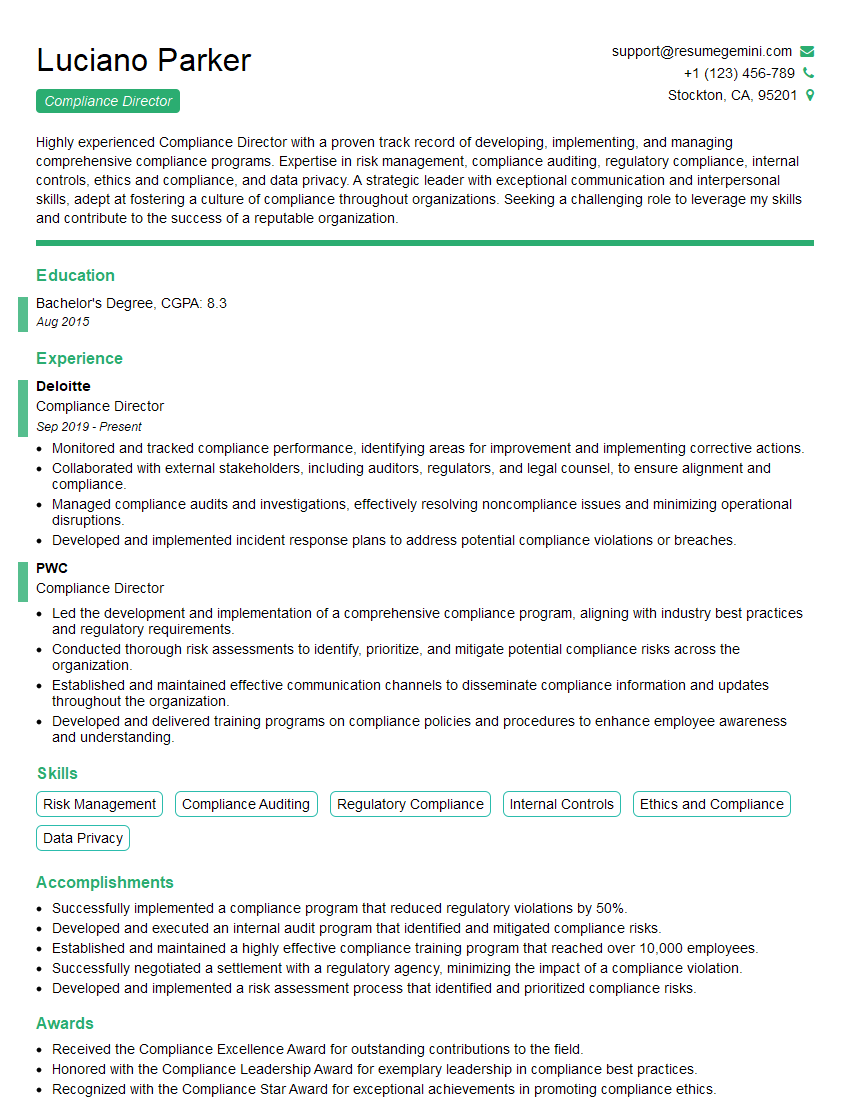
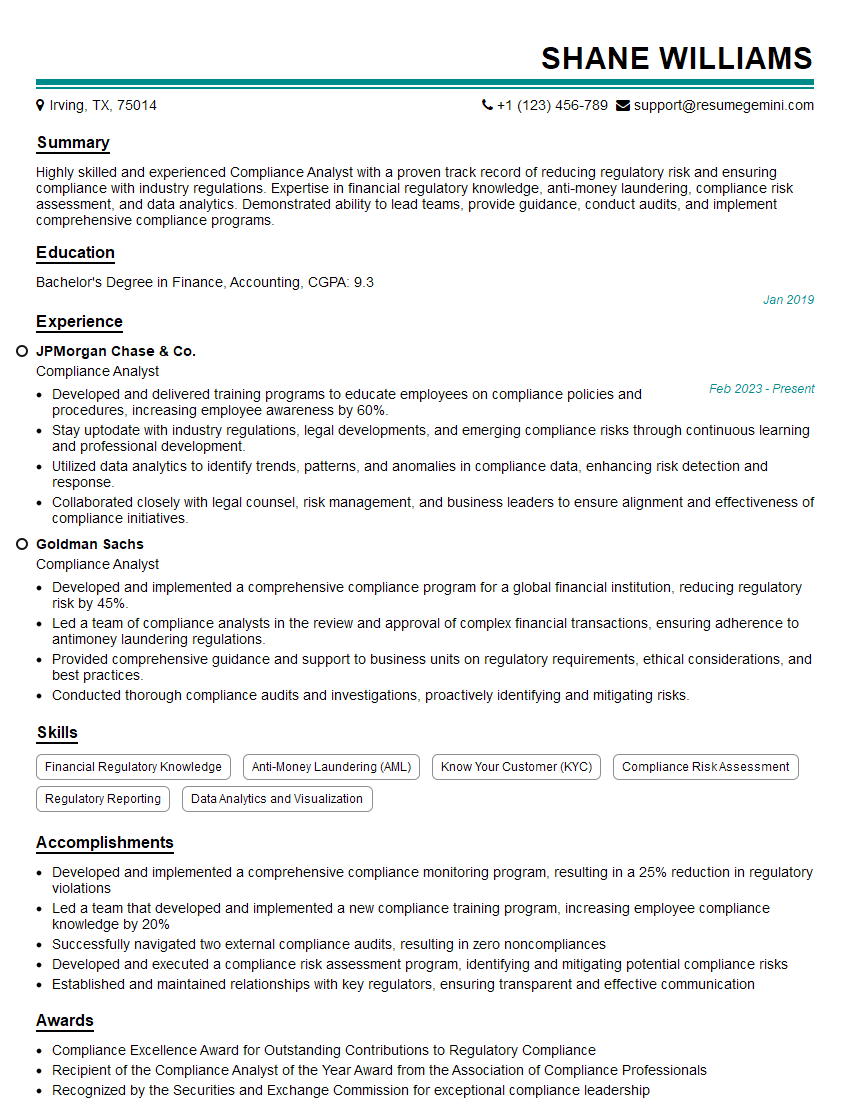
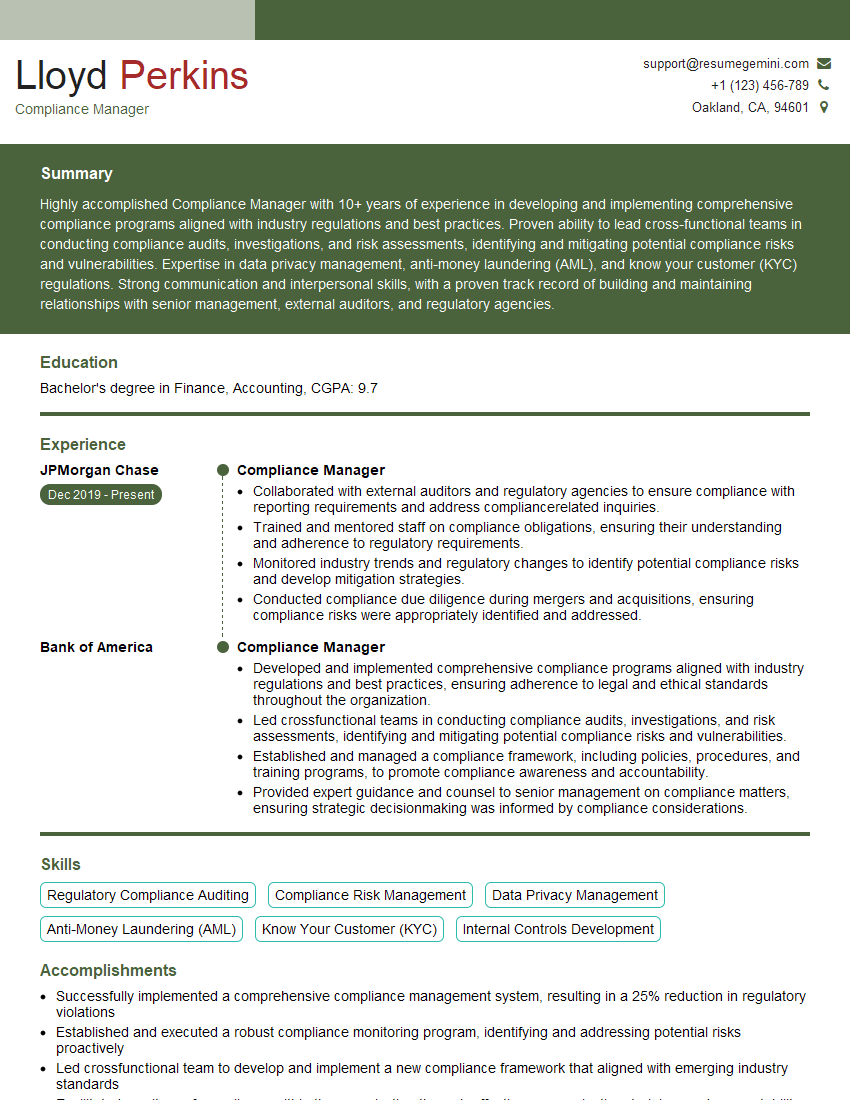
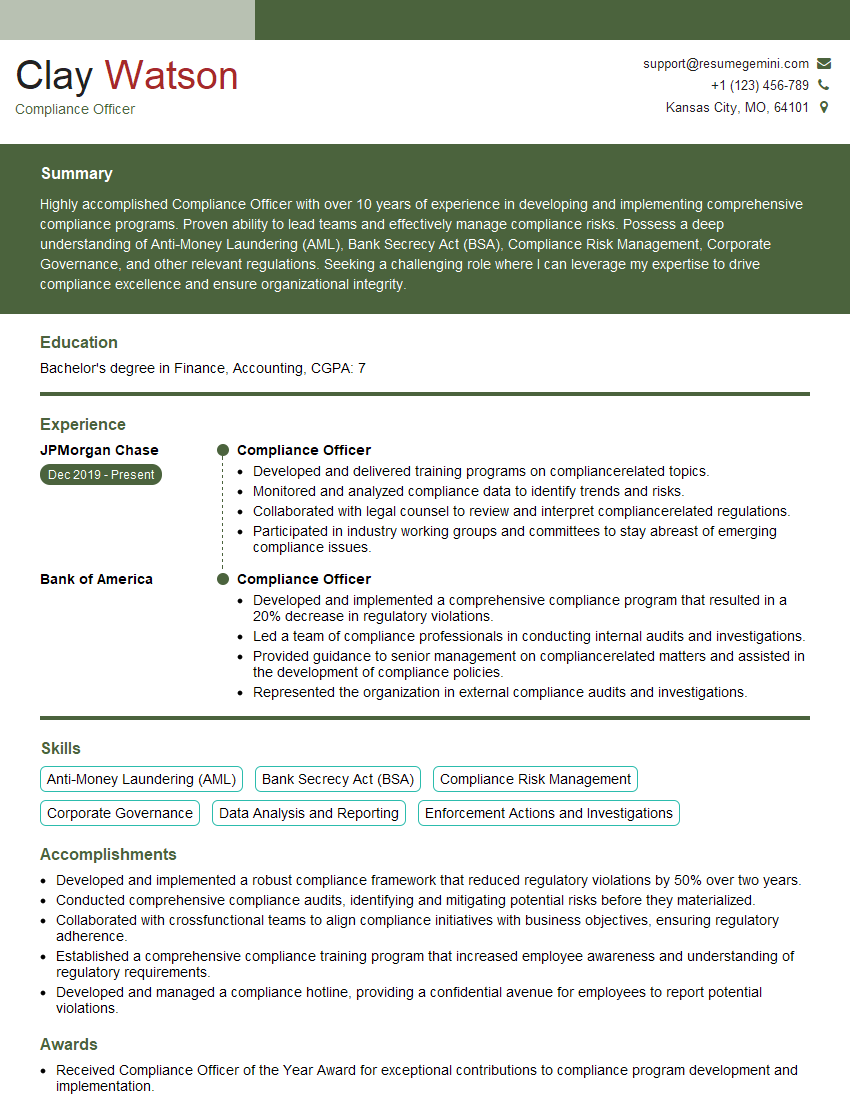
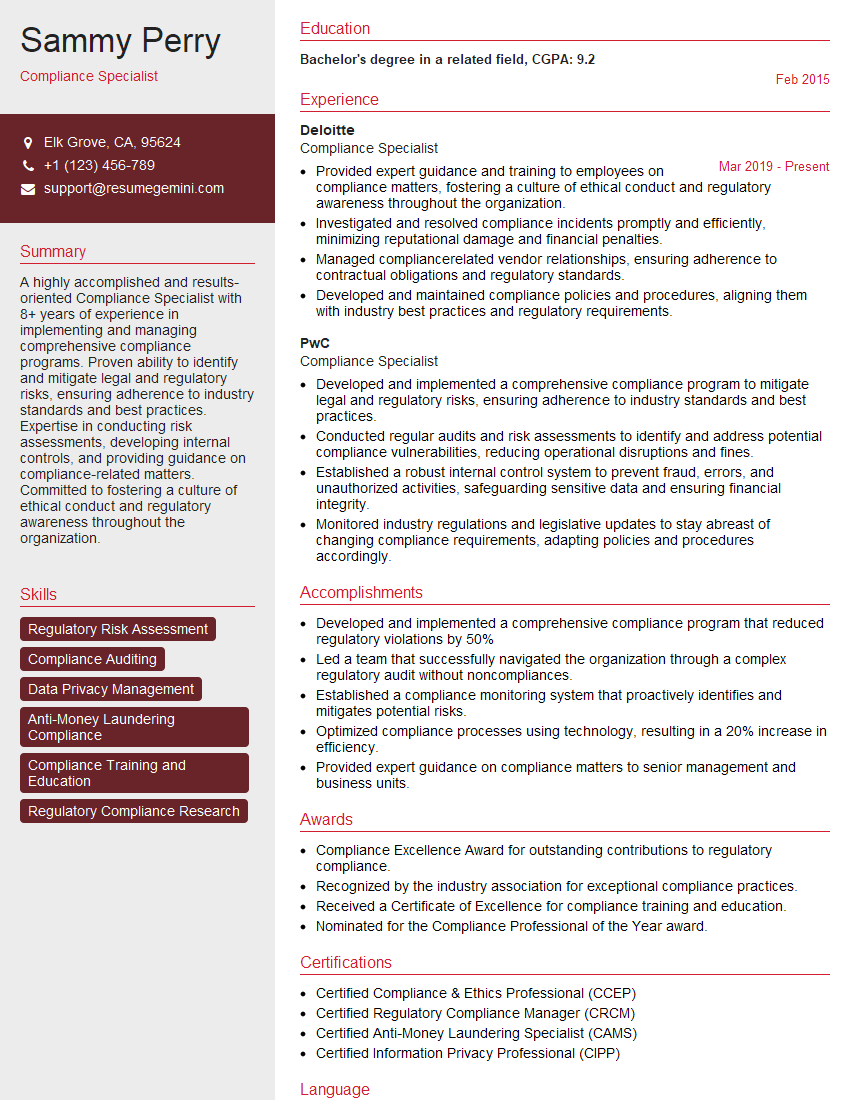
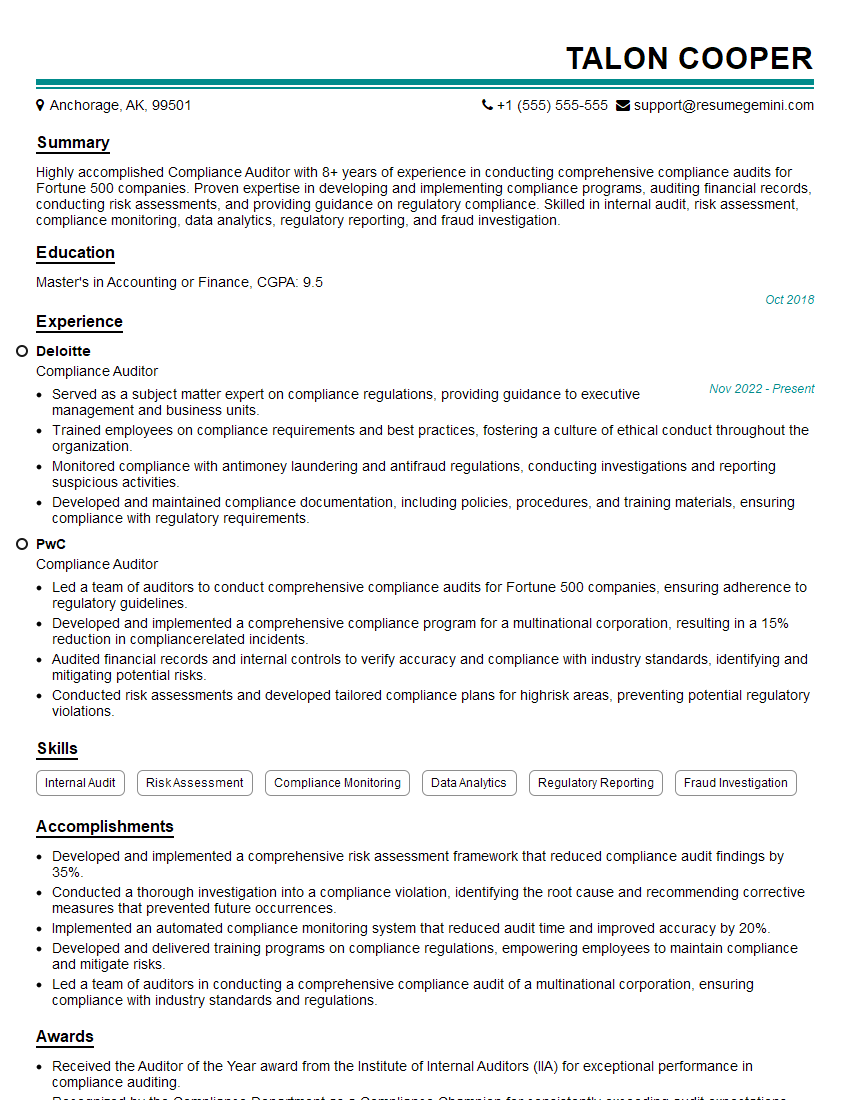
Mastering Legal Compliance and Liability is crucial for career advancement in today’s increasingly regulated business environment. A strong understanding of these concepts demonstrates professionalism, responsibility, and a commitment to ethical practices – highly valued attributes in any organization. To maximize your job prospects, creating a compelling and ATS-friendly resume is essential. ResumeGemini is a trusted resource to help you build a professional resume that showcases your skills and experience effectively. Examples of resumes tailored to Legal Compliance and Liability are available, providing you with valuable templates and guidance for crafting your own exceptional application.
Explore more articles
Users Rating of Our Blogs
Share Your Experience
We value your feedback! Please rate our content and share your thoughts (optional).
What Readers Say About Our Blog
Really detailed insights and content, thank you for writing this detailed article.
IT gave me an insight and words to use and be able to think of examples