Interviews are more than just a Q&A session—they’re a chance to prove your worth. This blog dives into essential Leica Nova MS60 MultiStation interview questions and expert tips to help you align your answers with what hiring managers are looking for. Start preparing to shine!
Questions Asked in Leica Nova MS60 MultiStation Interview
Q 1. Explain the key features and functionalities of the Leica Nova MS60 MultiStation.
The Leica Nova MS60 MultiStation is a powerful surveying instrument combining the functionalities of a total station and a GNSS receiver. Its key features revolve around high-precision measurement, ease of use, and versatile data handling. Key functionalities include:
- Precise Distance Measurement: Utilizing EDM (Electro-Optical Distance Measurement) technology, it measures distances with millimeter accuracy.
- Angle Measurement: Accurately measures horizontal and vertical angles for precise positioning.
- GNSS Integration: Combines GNSS data for enhanced positioning and coverage in challenging environments.
- Data Recording and Management: Stores vast amounts of survey data directly on its internal memory, and easily transfers data to a computer via various interfaces.
- User-Friendly Interface: A large, intuitive touchscreen simplifies operation and data entry.
- Various Measurement Modes: Supports multiple measurement modes suited to various surveying tasks, as detailed in the next answer.
- Automatic Target Recognition (ATR): Some models incorporate ATR, automatically locating and tracking prisms for increased efficiency.
In essence, the MS60 streamlines the surveying process, significantly improving accuracy and productivity compared to traditional methods. Imagine quickly and accurately mapping a large construction site – this is the power the MS60 brings to the table.
Q 2. Describe the different measurement modes available on the Leica Nova MS60.
The Leica Nova MS60 offers a range of measurement modes, each optimized for specific tasks. These include:
- Free Stationing: Ideal for measuring distances and angles from an un-oriented position. Useful for quick measurements and preliminary surveys.
- Resection: Determines the instrument’s position and orientation by measuring angles to known points. Essential for setting up the instrument accurately.
- Traversing: A method for establishing a network of points by measuring angles and distances between them. Widely used in creating control networks.
- Remote Positioning (using GNSS): Leverages GNSS satellites to determine the instrument’s position, especially beneficial in areas with limited visibility or when traditional methods are impossible.
- Stakeout: Guides the placement of points based on pre-defined coordinates. Critical in construction projects for precise point positioning.
- Prism Measurement: Measures distances to reflectors, offering high accuracy over longer ranges.
- Reflectorless Measurement: Measures distances without the need for a reflector, useful for short-range measurements or when a reflector cannot be placed.
The selection of the appropriate mode depends heavily on the specific surveying project and the surrounding environment. Experienced surveyors choose the mode that optimizes efficiency and accuracy for the task at hand.
Q 3. How do you perform a precise distance measurement using the Leica Nova MS60?
Precise distance measurement with the Leica Nova MS60 involves several key steps:
- Instrument Setup: The instrument must be properly leveled and oriented.
- Target Selection: Choose the appropriate target (prism or reflectorless mode).
- Measurement Mode Selection: Select the correct measurement mode (e.g., prism measurement).
- Measurement Execution: Point the instrument at the target and initiate the measurement. The instrument performs multiple measurements to improve accuracy and averages them.
- Atmospheric Correction: The instrument automatically applies atmospheric corrections based on temperature, pressure, and humidity data inputted by the user or automatically retrieved (if sensor is present).
- Data Review: Review the measurement result displayed on the instrument’s screen, ensuring it falls within acceptable tolerances.
For instance, if surveying a property boundary, multiple precise distance measurements are taken to ensure the boundary is defined with high accuracy. The instrument’s automatic features, combined with the surveyor’s expertise in selecting the right mode and environment settings, guarantees precision.
Q 4. Explain the process of setting up and leveling the Leica Nova MS60.
Setting up and leveling the Leica Nova MS60 is crucial for accurate measurements. Here’s the process:
- Establish a Stable Base: Place the instrument on a stable, level tripod over a well-defined point.
- Initial Leveling: Use the tripod legs to roughly level the instrument by eye.
- Fine Leveling: Use the instrument’s leveling screws to precisely level the instrument using the circular bubble level. Ensure the bubble is perfectly centered.
- Orientation (if required): Orient the instrument using a known direction or through resection if needed. This is typically done using previously known coordinates.
Imagine trying to build a house without a stable foundation – the same applies to surveying. A properly leveled instrument is the foundation for accurate and reliable measurements.
Q 5. How do you handle atmospheric corrections during measurements with the Leica Nova MS60?
Atmospheric conditions significantly impact the accuracy of EDM measurements. The Leica Nova MS60 handles atmospheric corrections through:
- Manual Input: The user can manually input temperature, pressure, and humidity values.
- Automatic Input (if sensor is present): Some models include built-in sensors that automatically measure and input atmospheric data.
The instrument uses these data points to calculate the refractive index of the air and adjusts the measured distance accordingly. Ignoring atmospheric corrections can lead to significant errors, especially over longer distances. For example, a temperature difference of 10°C can introduce a distance error of several millimeters over a 100-meter measurement. The MS60’s ability to accurately account for this factor guarantees precision.
Q 6. Describe the different types of prisms used with the Leica Nova MS60.
The Leica Nova MS60 is compatible with a variety of prisms, each with its own advantages:
- Standard Prisms: These offer a good balance of accuracy, range, and cost.
- 360° Prisms: Allow measurements from any angle around the prism, eliminating the need for prism repositioning. They are beneficial in dense environments.
- Mini Prisms: Compact and lightweight, ideal for situations with limited space or where portability is key.
- Pole-Mounted Prisms: Prisms mounted on a leveling pole for easier handling and improved stability. These are often used in detail surveying.
The choice of prism depends entirely on the specific surveying task and the environment. A surveyor selects a prism suited to the needs of the particular survey, balancing range, accuracy, and convenience.
Q 7. Explain the importance of proper reflector placement for accurate measurements.
Proper reflector placement is essential for accurate measurements. Here’s why:
- Clear Line of Sight: Ensure a clear line of sight between the instrument and the reflector, free from obstructions. Obstructions can cause signal interference, leading to inaccurate readings.
- Stable Placement: The reflector should be placed on a stable surface to minimize movement, which can cause measurement errors.
- Correct Orientation: The reflector must be properly oriented to ensure the signal is reflected accurately. A misaligned reflector can lead to significant errors. The use of a prism pole increases stability and helps with orientation.
- Distance Considerations: Consider the distance to the reflector and choose an appropriate reflector type. Longer distances may require specific types of reflectors.
Imagine trying to take a picture of a distant object through a dirty window. The result would be blurry and inaccurate, similar to obstructed reflector placement. Precise measurements require an unobstructed path for the laser signal to ensure accurate distances.
Q 8. How do you use the Leica Nova MS60 to perform robotic total station measurements?
Performing robotic total station measurements with the Leica Nova MS60 is remarkably efficient. The instrument’s robotic capabilities mean you can set up the instrument and then control it remotely from a rover, eliminating the need for constant instrument handling.
The process typically begins with setting up the MS60 at a known point in your control network. Next, using the Leica CS field software on your rover, you’ll define the measurement points you need. The rover acts as a remote control, directing the MS60 to automatically point and measure each target, significantly speeding up the process compared to traditional methods. The rover communicates with the MS60 wirelessly via radio waves. This is particularly beneficial in challenging terrains or locations where direct line-of-sight is difficult to maintain.
For instance, imagine surveying a large construction site. Instead of constantly moving back and forth between the instrument and the points needing measurement, the surveyor can remain at a single location using the rover, improving both safety and efficiency. The data acquired is instantly available and can be further processed using the same software on your device.
Q 9. Describe the process of creating a control network using the Leica Nova MS60.
Creating a control network with the Leica Nova MS60 involves establishing a series of precisely located points that serve as a reference for all subsequent measurements. This is fundamentally important for any surveying project. Accuracy depends on meticulous planning and execution.
The process begins with selecting suitable points (often using a reconnaissance survey). Consider factors like visibility, stability, and accessibility. Next, you’ll use the MS60 to measure the distances and angles between these points, creating a network of interconnected observations. It’s crucial to employ a robust geometric configuration to minimize errors and achieve high accuracy. A combination of angles and distances provides redundancy and strength to the network adjustment.
Using the Leica Infinity software, you will process the raw data collected from the MS60 using a least squares adjustment. This technique mathematically optimizes the coordinates of all points, minimizing the effect of unavoidable errors in measurement. The software provides quality indicators and diagnostics to verify the network’s strength and accuracy. The resulting coordinates then serve as the fundamental framework for any further surveying tasks on the project. It’s like building a solid foundation for a house; a strong control network ensures that all subsequent measurements are accurate and reliable.
Q 10. How do you perform a traverse survey using the Leica Nova MS60?
A traverse survey is a method of determining the relative positions of points by measuring a series of connected lines. The Leica Nova MS60 excels at this, offering both speed and accuracy.
The process starts with establishing a known starting point, often from your control network. From this point, the MS60 measures the distance and direction (bearing) to the next point in the traverse. This process is repeated for each subsequent point, creating a chain of linked measurements. It is essential to maintain a high level of accuracy in measuring both angles and distances. Proper instrument setup, careful observation, and consideration of environmental conditions are crucial.
Once all measurements are complete, the data is processed in Leica Infinity software. The software calculates the coordinates of each point in the traverse based on the measured distances and bearings. A critical part of this process is a traverse closure. We analyze the difference between the final calculated coordinates and the known coordinates of the starting point (or loop closure, if it is a closed traverse) to assess the accuracy of the survey. For example, imagine surveying a property boundary. A traverse would be ideally suited to follow the boundary lines, accurately determining their position and dimensions.
Q 11. Explain how you would use the Leica Nova MS60 for stakeout operations.
Stakeout involves transferring design coordinates from a plan into the field, physically marking these locations with stakes. The Leica Nova MS60 streamlines this with its high precision and robotic capabilities.
Before starting, you’ll need a set of design coordinates that must be converted to the coordinate system used by the MS60. This typically involves loading the design data into Leica Infinity software, which can handle various file formats. Using the MS60’s robotic functionality, we can point the instrument towards the desired stakeout location based on coordinates. The rover will guide the MS60 to the designated point automatically. The surveyor then uses the instrument to mark the location on the ground.
The MS60 provides visual guidance on the rover’s screen, showing the distance and direction to the target point. It can use different methods like ‘Point and Shoot’, or ‘Free Station’ to precisely place the stakes, indicating the amount of offset required to reach the precise location. For example, imagine laying out the foundation of a new building. The MS60’s precise stakeout capabilities ensure that the building’s foundations will be laid according to the design specifications, minimizing errors and ensuring accurate construction.
Q 12. How do you perform coordinate transformations using the Leica Nova MS60?
Coordinate transformations are essential for integrating data from various sources, particularly when data is in different coordinate systems. The Leica Nova MS60, through the Leica Infinity software, effortlessly handles these transformations.
The software allows you to define a transformation between coordinate systems using different methods, including three-point transformations, seven-parameter transformations (Helmert transformation), and more. You’ll need to know the coordinates of at least three common points in both coordinate systems, either from a previous survey or through referencing to another data set. The software will calculate the transformation parameters based on the input points, and then apply them to any data set which needs to be converted between coordinate systems.
Imagine you have a data set from an older survey in a local coordinate system that needs to be integrated with the current project, which uses a different grid system. You would define the transformation within Infinity, and then apply that transformation to the older data set. This ensures seamless integration of data collected using different methodologies or at different times.
Q 13. Describe the different file formats used by the Leica Nova MS60.
The Leica Nova MS60 supports a variety of file formats to ensure compatibility with other surveying equipment and software. Common file formats include:
.gsi(Leica Geosystems’ own data format, optimized for storing and transferring data within the Leica ecosystem.).dxf(Drawing Exchange Format, a widely used CAD format for sharing data with design software and other CAD systems)..csv(Comma Separated Values, a simple text-based format that is easily imported and exported into other programs like spreadsheets or databases)..xyz(A simple text-based format containing X, Y, and Z coordinates.)
The specific file formats supported and their handling may depend on the specific firmware version of the MS60 and the Leica Infinity software being used. The flexibility in file formats promotes interoperability and efficient data exchange.
Q 14. How do you manage data collected using the Leica Nova MS60?
Data management for the Leica Nova MS60 is crucial for maintaining accuracy and ensuring efficient workflows. Leica Infinity software plays a central role.
The software facilitates efficient data transfer from the MS60 instrument to your computer or tablet. The data is typically saved in .gsi files, and you can readily organize this data into folders for different projects. Within Leica Infinity, you have robust capabilities to manage attributes, perform quality checks on the collected data, and efficiently edit the measurement data. The software allows you to convert the data into other formats, as described earlier, facilitating communication with other software packages.
Beyond the software, maintaining a well-organized file structure and regularly backing up your data is critical for data security. Using cloud storage or networked drives for data backup ensures that your data remains safe and accessible even in the case of equipment failure. Regular backups prevent potential loss of crucial project data, which is fundamental for maintaining operational stability and minimizing risks.
Q 15. Explain your experience with Leica Captivate software.
Leica Captivate is the heart of modern surveying with the Leica Nova MS60. My experience spans several years, encompassing all aspects from basic data collection to advanced processing and reporting. I’m proficient in using its various modules, including field data acquisition, 3D modeling, and office processing. For instance, I’ve used Captivate to create precise 3D models of construction sites for volume calculations, significantly improving efficiency and accuracy compared to traditional methods. I’m also experienced in customizing workflows within Captivate to streamline specific project needs, saving valuable time and resources. I’ve used its features for stakeout, creating detailed as-built drawings, and generating reports for clients. The software’s intuitive interface and powerful tools have enabled me to tackle complex projects with ease and confidence. I frequently utilize its data management features to organize large datasets efficiently and ensure project integrity. One example is its ability to seamlessly integrate data from other sources, improving project coordination.
Career Expert Tips:
- Ace those interviews! Prepare effectively by reviewing the Top 50 Most Common Interview Questions on ResumeGemini.
- Navigate your job search with confidence! Explore a wide range of Career Tips on ResumeGemini. Learn about common challenges and recommendations to overcome them.
- Craft the perfect resume! Master the Art of Resume Writing with ResumeGemini’s guide. Showcase your unique qualifications and achievements effectively.
- Don’t miss out on holiday savings! Build your dream resume with ResumeGemini’s ATS optimized templates.
Q 16. How do you troubleshoot common problems encountered with the Leica Nova MS60?
Troubleshooting the Leica Nova MS60 involves a systematic approach. Common problems include communication issues with the data collector, inaccurate measurements, and instrument malfunctions. My first step is always to check the most basic things: ensuring proper battery power, confirming correct antenna connection, and verifying the instrument’s internal diagnostics. Communication problems often stem from interference; changing frequencies or relocating the instrument can usually resolve this. Inaccurate measurements might point to an improperly calibrated instrument or environmental factors like multipath errors. I address this with meticulous instrument calibration and by employing techniques like atmospheric correction and careful observation procedures. If a specific component malfunctions, I consult Leica’s troubleshooting guides and potentially initiate a service request. For example, if the prism is malfunctioning, I’d verify its proper connection and cleanliness before escalating. I maintain a detailed log of all troubleshooting activities, aiding future issue resolution.
Q 17. Describe your experience with different types of surveying projects.
My surveying experience encompasses a wide range of projects. I’ve worked extensively on construction projects, performing topographic surveys, setting out buildings and infrastructure, and creating as-built drawings. I have significant experience in land development, including boundary surveys and subdivision layouts, often requiring precise measurements and careful attention to detail. I’ve also participated in transportation projects, assisting in road design and alignment surveys. Furthermore, I’ve worked on utility mapping projects, locating underground infrastructure, ensuring safety during construction. Each project has presented unique challenges and required adaptation of techniques and workflows. For example, a recent land development project required dealing with challenging terrain and coordinating multiple surveyors to maintain high productivity. Successfully completing these diverse projects highlights my adaptability and broad skillset.
Q 18. How do you ensure the accuracy and precision of your measurements?
Accuracy and precision are paramount in surveying. I ensure these through a multi-pronged approach. First, I rigorously calibrate the Leica Nova MS60 before each project, adhering to manufacturer’s guidelines. This involves checking collimation, centering, and leveling. Second, I meticulously perform all measurements, employing appropriate techniques to minimize errors. This includes using multiple setups, observing multiple times on each point, and carefully recording all data. Third, I utilize appropriate atmospheric correction models in the Leica Captivate software to account for temperature, pressure, and humidity effects on the measurements. Fourth, I regularly check the instrument’s internal diagnostics for any potential errors or anomalies. Finally, I employ post-processing techniques to detect and adjust outliers, ensuring that the data conforms to the established quality control standards. For instance, I utilize statistical analysis to identify and correct any systematic or random errors within the dataset.
Q 19. Explain your understanding of error propagation in surveying.
Error propagation is the accumulation of errors in measurements throughout a survey. Imagine it like a chain; a small error in one link can magnify significantly by the end. In surveying, errors from distance, angle, and leveling measurements propagate through calculations affecting final coordinates. I understand that errors can be random (unpredictable) or systematic (consistent and repeatable, such as instrument miscalibration). I mitigate error propagation using redundancy. This means observing points from multiple setups, employing different measurement techniques, and applying robust mathematical models for data adjustment. Understanding error propagation is critical for assessing the overall accuracy of a survey and understanding the level of confidence in the results. This knowledge allows me to plan surveys more efficiently, selecting the optimal measurement techniques and ensuring the final accuracy meets the project requirements.
Q 20. How do you handle adverse weather conditions during surveying?
Adverse weather conditions can significantly affect surveying accuracy and safety. High winds, heavy rain, or extreme temperatures can all introduce errors. My approach involves careful planning and adaptation. I consult weather forecasts before commencing fieldwork and reschedule if conditions are too severe. During fieldwork, I take precautions to protect the equipment from rain and dust. For wind, I might need to wait for calmer moments, or employ techniques that minimize the impact of wind on measurements. Extreme temperatures can affect the instrument’s performance; I might need to adjust observation times and employ appropriate temperature correction models. Safety is paramount; I never compromise safety for efficiency. I will always prioritize the well-being of my team and myself, suspending work if conditions become dangerous.
Q 21. Explain your experience with quality control and quality assurance in surveying.
Quality control (QC) and quality assurance (QA) are essential for reliable survey results. QC involves checking individual measurements and data for errors during and after data collection. This includes reviewing field notes for completeness, checking for outliers in data, and ensuring that all measurements are within acceptable tolerances. QA involves establishing a framework to ensure the entire surveying process meets the required standards. This involves creating and following detailed procedures, regularly calibrating the Leica Nova MS60, and employing appropriate data processing techniques. I maintain comprehensive documentation of all QA/QC procedures for each project. This documentation, including calibration records, field notes, and data processing logs, is invaluable for audits and demonstrating compliance with project specifications. My commitment to QA/QC ensures that the deliverables are accurate, reliable, and meet the highest standards of professional practice.
Q 22. How do you use the Leica Nova MS60 for volume calculations?
The Leica Nova MS60 excels at volume calculations, primarily through its ability to create highly accurate 3D point clouds. Think of it like this: imagine you’re trying to calculate the volume of an irregularly shaped pile of sand. Manually measuring this would be extremely difficult and prone to error. The MS60, however, allows you to capture thousands of points on the surface of that sand pile, creating a precise digital representation.
The process typically involves these steps:
- Data Acquisition: Using the MS60’s total station functionality, you systematically scan the surface of the area you need to calculate the volume (e.g., a stockpile, an excavation). This creates a dense point cloud.
- Data Processing: The raw point cloud data is then processed using Leica’s software suite (like Cyclone FIELD 360 or similar), which allows you to create a surface model. This model essentially ‘connects the dots’ from your point cloud, forming a 3D representation.
- Volume Calculation: The software then uses algorithms to calculate the volume based on the created surface model. You can define reference planes (e.g., the ground level) to get the net volume above or below this reference.
For example, I recently used this method to calculate the volume of a large earthworks project, comparing the as-built volume against the designed volume to ensure accurate payment calculations. The accuracy provided by the MS60 drastically reduced discrepancies and potential disputes.
Q 23. Describe your experience with using the Leica Nova MS60 for as-built surveys.
As-built surveys using the Leica Nova MS60 are crucial for verifying construction progress against design plans. My experience involves utilizing the instrument’s high-precision measurements to capture the final state of constructed features. This ensures accuracy and allows for precise comparisons to the original design.
The process involves:
- Planning: Careful planning of survey control points and survey strategy is critical for efficient data acquisition.
- Data Acquisition: The MS60’s robotic total station capabilities allow for rapid and efficient data collection, reducing the time needed in the field. I often use prism-less measurements to speed up the process, especially for difficult-to-access areas.
- Data Processing: The collected data is then processed in software such as Leica Cyclone to create a detailed as-built model, including features like building dimensions, underground utilities, and other relevant details.
- Comparison with Design: The as-built model is then compared to the original design model (CAD drawings, BIM models) to identify any discrepancies.
During a recent highway construction project, the MS60 helped us detect a minor deviation in the road alignment during the final stages of construction. This allowed for immediate corrective measures, preventing costly rework later on.
Q 24. How do you integrate data from the Leica Nova MS60 with other GIS software?
Integrating Leica Nova MS60 data with GIS software is straightforward, primarily through the export of data in common formats. The MS60’s data is typically exported as point clouds (e.g., .las, .xyz) or coordinate files (e.g., .txt, .csv). These formats are readily compatible with most GIS packages like ArcGIS, QGIS, and AutoCAD Map 3D.
The process often involves:
- Data Export: Exporting the processed data from Leica Cyclone or similar software in a suitable format.
- Data Import: Importing the exported data into the chosen GIS software.
- Georeferencing: Ensuring the data is correctly georeferenced (aligned to a known coordinate system) within the GIS environment.
- Data Manipulation & Analysis: Using the GIS software’s capabilities to visualize, analyze, and integrate the survey data with other spatial data layers (e.g., imagery, cadastral maps).
For example, I’ve used this workflow to integrate MS60 data representing utility lines into an existing GIS database for a city-wide infrastructure management system.
Q 25. How familiar are you with different coordinate systems and datums?
My understanding of coordinate systems and datums is fundamental to my surveying practice. I’m proficient in working with various coordinate systems, including UTM (Universal Transverse Mercator), State Plane, Geographic (latitude/longitude), and local coordinate systems. I am also familiar with different datums such as NAD83, NAD27, and WGS84, understanding their implications on positional accuracy.
Understanding these systems is critical because using the wrong one can lead to significant errors in measurements and positional accuracy. I always verify and ensure that all projects are using the correct coordinate system and datum from the outset, using the instrument’s built-in capabilities to transform data between systems as needed. This is paramount for seamless integration with other data sources and for ensuring consistency across projects.
Q 26. Explain your understanding of surveying standards and regulations.
I adhere strictly to relevant surveying standards and regulations, which vary depending on location and project type. These standards ensure consistency, accuracy, and legal compliance. For example, I’m familiar with the standards set by organizations like the American Congress on Surveying and Mapping (ACSM) and the relevant state licensing boards.
My knowledge includes:
- Accuracy Standards: Understanding the required level of accuracy for different types of surveys (e.g., boundary surveys, topographic surveys).
- Data Management: Properly documenting and archiving survey data according to established guidelines.
- Legal Compliance: Adhering to legal regulations concerning boundary surveys and property rights.
- Safety Regulations: Following all relevant safety procedures when working in the field, including appropriate use of personal protective equipment (PPE).
I always ensure that our work meets or exceeds the required standards, minimizing the risk of legal issues or project delays.
Q 27. Describe your experience working independently and as part of a team.
I’m comfortable working both independently and as part of a team. Working independently requires strong self-management skills, attention to detail, and the ability to solve problems autonomously. I’m proficient in planning, executing, and completing survey projects independently. For example, I’ve successfully conducted several solo site surveys for smaller-scale projects.
However, I thrive in a team environment, appreciating the diverse skill sets and perspectives that collaborative work brings. My experience on larger projects has demonstrated my ability to effectively communicate, coordinate tasks, and contribute to a shared objective. I actively participate in team discussions, sharing my expertise and learning from others. My skills allow me to contribute to a seamless workflow, efficiently reaching shared goals.
Q 28. How do you stay up-to-date with the latest technologies and advancements in surveying?
Staying current in the rapidly evolving field of surveying is essential. I utilize several methods to remain up-to-date with the latest technologies and advancements:
- Professional Organizations: Active membership in organizations such as the ACSM allows access to educational resources, conferences, and networking opportunities.
- Industry Publications & Journals: Regularly reviewing industry publications and journals to stay informed about new technologies and techniques.
- Manufacturer Training: Participating in training courses provided by Leica Geosystems to enhance my proficiency with the MS60 and related software.
- Online Resources & Webinars: Utilizing online resources and attending webinars to learn about new developments.
- Hands-on Experience: Continuously seeking opportunities to work with new technologies and software, gaining practical experience in diverse projects.
This proactive approach ensures I’m always equipped with the latest knowledge and skills to deliver high-quality results.
Key Topics to Learn for Leica Nova MS60 MultiStation Interview
- Hardware Components & Functionality: Understand the different components of the Leica Nova MS60 MultiStation, including the total station, controller, and accessories. Be prepared to discuss their individual functions and how they integrate for accurate measurements.
- Data Acquisition Techniques: Master various measurement methods such as robotic total station operation, prism-less measurements, and different types of point cloud acquisition. Be ready to explain the advantages and disadvantages of each technique and when to apply them.
- Software Proficiency: Demonstrate familiarity with the Leica Nova MS60’s software interface, including data management, field workflows, and post-processing capabilities. Practice navigating the software and performing common tasks efficiently.
- Coordinate Systems & Transformations: Understand different coordinate systems (e.g., local, geographic, projected) and how to transform data between them. Be able to explain the importance of accurate coordinate referencing in surveying projects.
- Error Analysis & Quality Control: Discuss methods for identifying and mitigating errors in measurements, including understanding sources of error and implementing quality control procedures. Be ready to explain how to ensure data accuracy and reliability.
- Practical Applications: Be able to articulate how the Leica Nova MS60 MultiStation is used in various surveying applications such as construction layout, as-built surveys, topographic mapping, and deformation monitoring. Prepare examples showcasing your practical experience.
- Troubleshooting & Problem-Solving: Discuss common problems encountered while using the Leica Nova MS60 MultiStation and how you would approach troubleshooting and resolving them. Showcase your analytical and problem-solving skills.
Next Steps
Mastering the Leica Nova MS60 MultiStation significantly enhances your career prospects in surveying and related fields, opening doors to advanced roles and higher earning potential. To maximize your job search success, it’s crucial to have an ATS-friendly resume that effectively highlights your skills and experience. We highly recommend using ResumeGemini to build a professional and impactful resume. ResumeGemini provides a user-friendly platform and offers examples of resumes tailored to Leica Nova MS60 MultiStation expertise, helping you stand out from the competition. Invest the time to create a compelling resume – it’s your first impression on potential employers.

Project Engineer Resume Sample

Surveyor Resume Sample

Engineering Technician Resume Sample

Land Surveyor Resume Sample
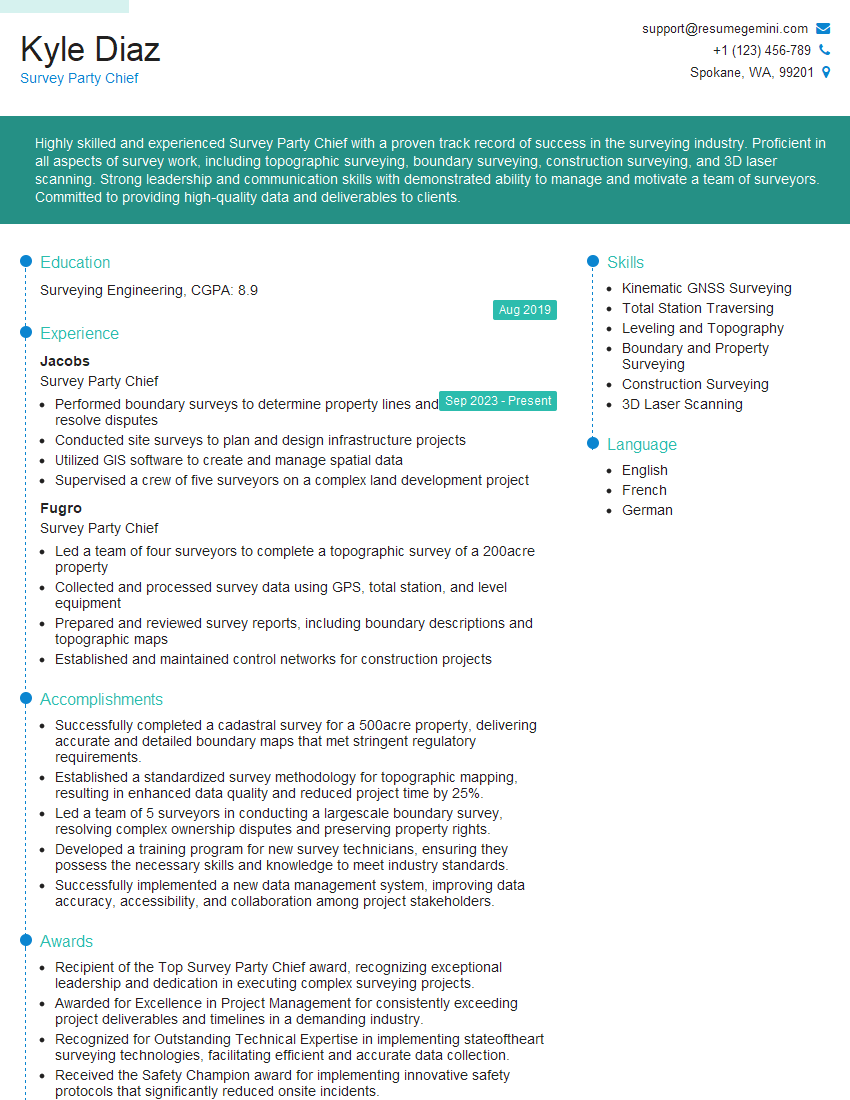
Survey Party Chief Resume Sample

Civil Engineer Resume Sample

Field Engineer Resume Sample
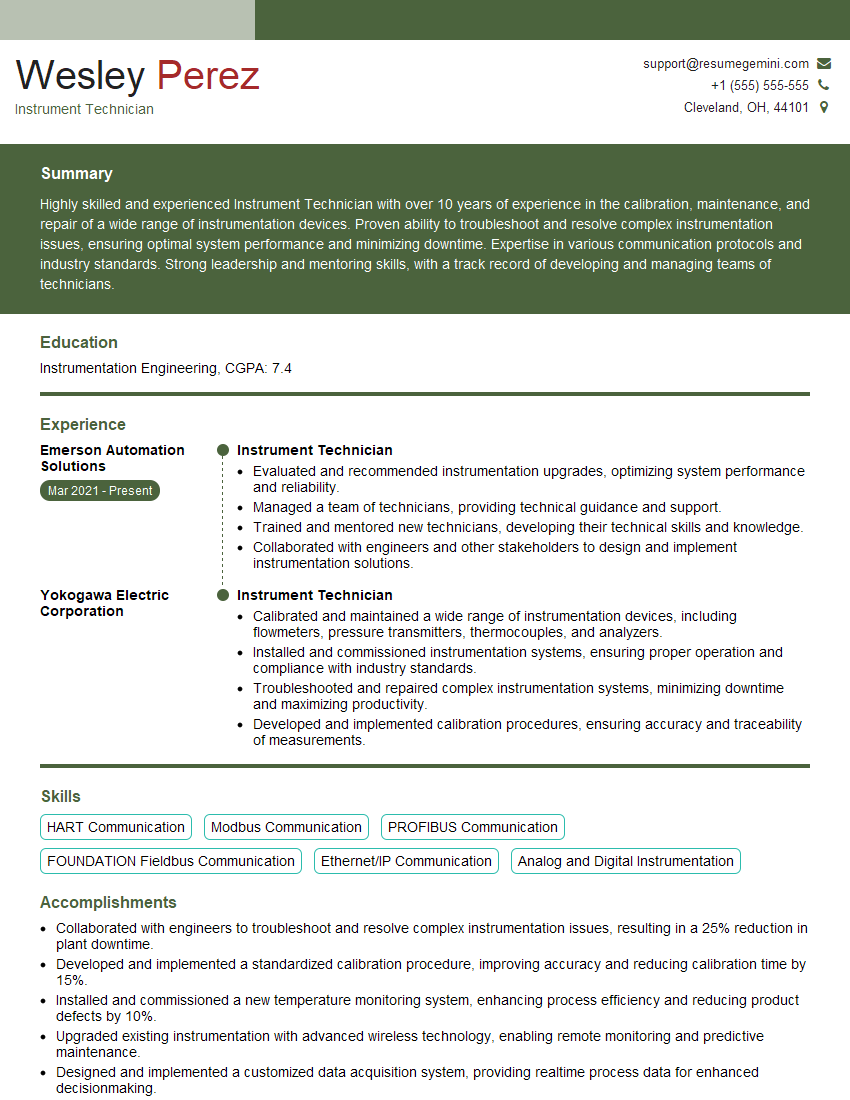
Instrument Technician Resume Sample

Assistant Surveyor Resume Sample

Survey Crew Chief Resume Sample

Survey Technician Resume Sample
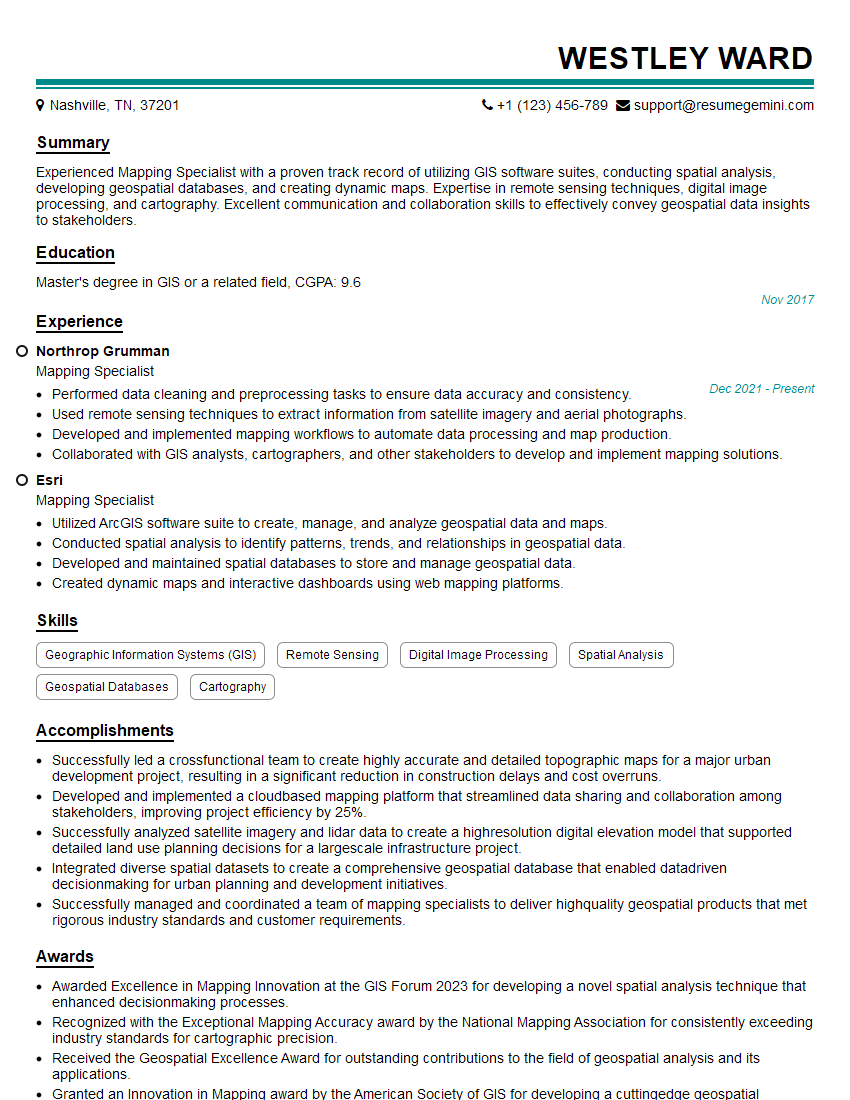
Mapping Specialist Resume Sample
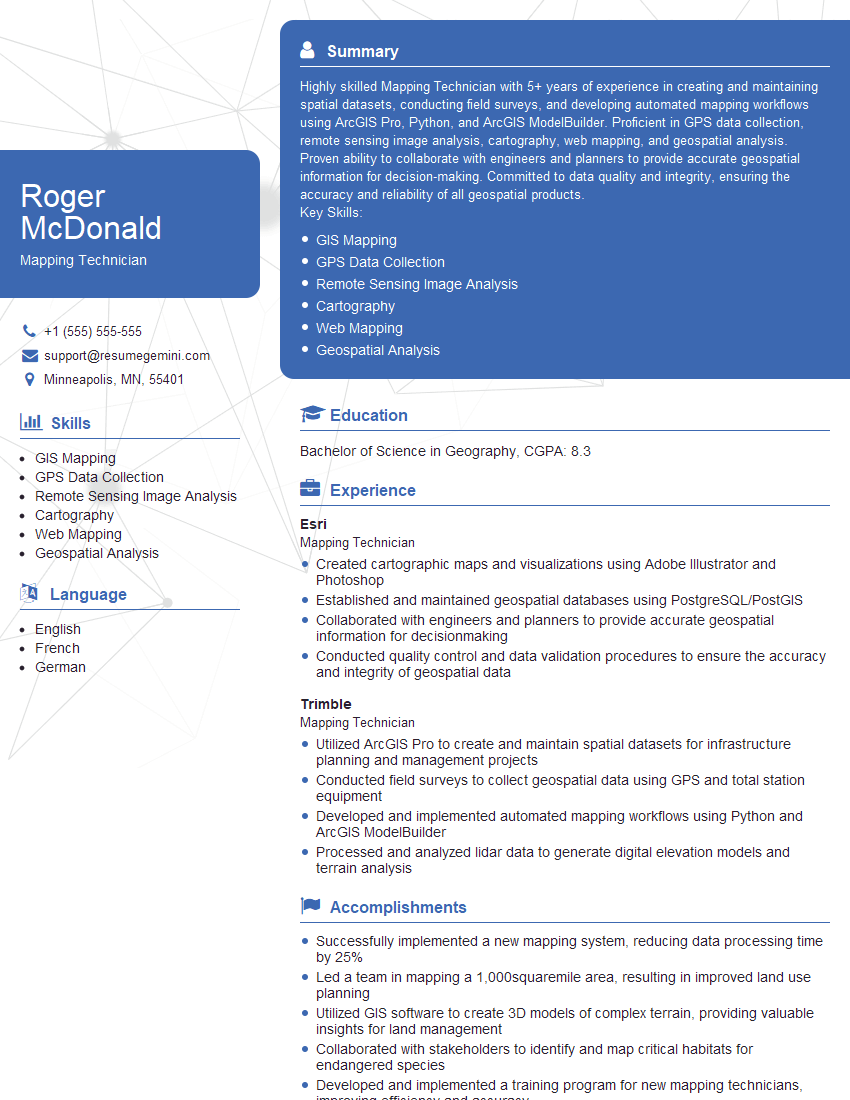
Mapping Technician Resume Sample

Remote Sensing Specialist Resume Sample

Data Processor Resume Sample
Explore more articles
Users Rating of Our Blogs
Share Your Experience
We value your feedback! Please rate our content and share your thoughts (optional).
What Readers Say About Our Blog
Really detailed insights and content, thank you for writing this detailed article.
IT gave me an insight and words to use and be able to think of examples