Preparation is the key to success in any interview. In this post, we’ll explore crucial Light Adjustment Techniques interview questions and equip you with strategies to craft impactful answers. Whether you’re a beginner or a pro, these tips will elevate your preparation.
Questions Asked in Light Adjustment Techniques Interview
Q 1. Explain the difference between hard and soft light.
The difference between hard and soft light boils down to the size of the light source relative to the subject. Hard light comes from a small, intense source positioned relatively close to the subject. This creates strong shadows with clearly defined edges. Think of the harsh midday sun. Soft light, conversely, originates from a larger light source or one diffused over a larger area. It produces subtle, less defined shadows, creating a gentler, more flattering effect. Imagine the soft light of an overcast day.
Think of it like this: A tiny flashlight creates hard light, while a large softbox creates soft light. The size of the light source dictates the shadow’s softness. A larger light source wraps around the subject more, creating gentler transitions between light and shadow. This is crucial in portrait photography and cinematography where you want to emphasize the subject’s features or create a certain mood.
Q 2. Describe three methods for controlling light intensity.
Controlling light intensity is paramount in achieving the desired look. Here are three common methods:
Adjusting the light source’s power output: Many lighting instruments, such as LEDs and HMIs, have variable power settings allowing you to precisely control their brightness. This is the most direct way to change intensity.
Using light modifiers: Tools like scrims, nets, and diffusion fabrics reduce the light’s intensity by partially blocking or scattering it. A full scrim might cut the intensity by half, offering a more flexible approach than solely adjusting the power output. This is crucial when working with powerful lights and delicate setups.
Altering the distance between the light source and the subject: The intensity of light diminishes as the square of the distance. This means doubling the distance reduces the light’s intensity to one-quarter. This method is particularly useful when you need a subtle change in intensity without touching the power settings. Imagine adjusting the distance to fine tune the illumination on a close-up shot.
Q 3. How do you achieve a specific color temperature on set?
Achieving a specific color temperature involves using filters (gels) or adjusting the color settings on your light source (if available). Color temperature is measured in Kelvin (K); lower Kelvin values represent warmer colors (e.g., tungsten light at around 3200K), while higher values represent cooler colors (e.g., daylight at around 5600K).
For instance, if you’re shooting with tungsten lights (3200K) and need daylight-balanced light (5600K), you’d use a CTO (Color Temperature Orange) gel on your tungsten lights. These gels are designed to shift the color temperature towards the target. Conversely, a CTB (Color Temperature Blue) gel is used to cool down warmer lights. Many LED and HMI lights allow for digital color temperature adjustments, simplifying the process considerably. Always use a color meter to accurately measure and ensure the desired color temperature is achieved for consistency.
Q 4. What are the advantages and disadvantages of using different light sources (e.g., tungsten, LED, HMI)?
Each light source has its own advantages and disadvantages:
Tungsten: Offers a warm, pleasing color temperature (3200K), but generates significant heat and consumes a lot of energy. They are becoming less common due to the higher efficiency of other sources.
LED: Energy-efficient, cool-running, and offer precise color temperature and intensity control. They are widely used for their versatility and cost-effectiveness. However, some LED lights may have a less pleasing quality of light compared to more traditional sources; this is improving rapidly.
HMI (Hydrargyrum Medium-arc Iodide): Produce a bright, daylight-balanced light (5600K) and are very powerful. They are known for their consistent color rendering and excellent light quality, but are expensive, require ballasts, and can be heavy. They require specialized knowledge to operate safely.
The choice depends on the project’s budget, needs, and desired aesthetic. For example, a low-budget project might favor LEDs for their energy efficiency and cost, whereas a high-budget feature film may utilize HMIs for their powerful and high-quality light output.
Q 5. Explain the concept of three-point lighting.
Three-point lighting is a fundamental lighting technique used in photography and cinematography. It employs three light sources to illuminate a subject effectively:
Key Light: The main light source, providing the primary illumination and shaping the subject. It’s typically placed at a 45-degree angle to the subject and slightly elevated.
Fill Light: A softer light source placed opposite the key light, reducing shadows and filling in the darker areas. It usually has a lower intensity than the key light to avoid washing out the subject. It creates a more balanced and natural look.
Back Light (or Rim Light): Placed behind the subject, separating it from the background and adding depth and dimension. It creates a subtle outline around the subject, making it stand out.
The interplay of these three lights creates depth, dimension, and highlights the subject’s features naturally. This technique is adaptable and can be altered for different artistic styles and moods.
Q 6. How do you use flags, nets, and diffusion materials to shape light?
Flags, nets, and diffusion materials are essential light-shaping tools. They manipulate the light’s intensity, direction, and quality, allowing for precise control over the final image:
Flags: Solid, opaque materials used to block light, creating shadows and controlling spill (unwanted light). You can use them to dramatically darken parts of the set or precisely control highlights.
Nets: Translucent materials that reduce light intensity without significantly altering its direction. They create softer shadows than flags, offering a gentler reduction in brightness.
Diffusion Materials: Translucent materials that scatter light, softening its quality and reducing harsh shadows. Popular examples include silks and diffusers. They can transform hard light into soft light, making it more flattering and even.
For example, you might use a flag to block harsh sunlight from hitting your subject’s face, a net to subtly reduce the intensity of a backlight, and a diffusion material to soften the light from a bare bulb. The strategic placement and choice of these tools are paramount in achieving the desired lighting effect.
Q 7. Describe your experience with various lighting instruments (e.g., Fresnels, Par cans, LED panels).
My experience encompasses a wide range of lighting instruments:
Fresnels: I’ve extensively used Fresnel lenses for their ability to produce a highly controllable, focused beam of light, ideal for highlighting specific areas or creating dramatic effects. Their adjustable focus allows for precise control over the beam’s spread, ranging from a tight spotlight to a wide wash.
Par Cans: Parabolic aluminized reflectors (PAR cans) are versatile workhorses, particularly useful for wash lighting large areas or creating a broad, even light. Their durability and affordability make them a common choice for various applications.
LED Panels: I’ve become increasingly reliant on LED panels due to their energy efficiency, color temperature control, and compact size. They are incredibly versatile, used for everything from key lights to fill and background lighting. Their digital controls and soft light output are beneficial in many situations.
Each instrument has its strengths, and I select them based on the specific needs of a shoot. Understanding their characteristics and limitations allows me to optimize lighting setups for maximum impact and efficiency. For example, I might use Fresnels for a dramatic close-up and LED panels for a soft, even wash on the background.
Q 8. How do you troubleshoot lighting equipment malfunctions on set?
Troubleshooting lighting equipment malfunctions starts with a systematic approach. First, I visually inspect the equipment for obvious problems like loose connections, damaged cables, or blown bulbs. I’d check power sources, ensuring the correct voltage and amperage are supplied.
Next, I utilize a multimeter to test for continuity in cables and circuits, identifying any breaks or shorts. For more complex issues with dimmers or control systems, I’d consult the equipment’s manual or contact technical support. A common issue is a tripped circuit breaker – a quick check of the breaker box often resolves the problem.
For example, on a recent shoot, a light suddenly went dark. My initial check revealed a loose power connector. After tightening it, the light functioned normally. However, if the problem persists after initial checks, I would then isolate components using process of elimination: checking dimmers, power supplies, and finally the light itself to pinpoint the source of failure.
Q 9. Explain the relationship between aperture, ISO, and shutter speed in relation to lighting.
Aperture, ISO, and shutter speed form the exposure triangle, and they’re intricately related to lighting. Imagine them as three knobs controlling the brightness of your image. Aperture controls the size of the lens opening, affecting depth of field and light entering the camera. ISO represents the sensitivity of your camera’s sensor to light; higher ISO means more sensitivity and increased grain (noise). Shutter speed determines how long the sensor is exposed to light, impacting motion blur.
In relation to lighting, if you have insufficient light, you can compensate by increasing the ISO (more sensitive to available light), widening the aperture (letting in more light), or slowing the shutter speed (longer exposure to available light). However, there are trade-offs: Increasing ISO can introduce noise, wider apertures reduce depth of field, and slower shutter speeds may result in motion blur. A skilled lighting professional would manipulate these to achieve the desired creative and technical result – finding the balance between sufficient light and maintaining image quality.
Q 10. How do you calculate light ratios for a specific scene?
Calculating light ratios involves measuring the relative intensity of light falling on different parts of a scene. It’s crucial for creating depth and dimension. I usually use a light meter to measure the light levels (in lux or foot-candles) on the key light (main light source), fill light (softening shadows), and back light (separating the subject from the background).
The ratio is expressed as a comparison—for instance, a 2:1 ratio means the key light is twice as bright as the fill light. A higher key-to-fill ratio creates more dramatic contrast and deep shadows, while a lower ratio results in a flatter, more evenly lit scene. I might use a ratio of 4:1 for a dramatic portrait, whereas a 1.5:1 ratio might be better for an interview to ensure even lighting on the subject’s face.
For complex scenes with multiple lights, I would measure each light individually and then calculate the combined effect on the subject to arrive at the overall light ratio. The desired look of the scene dictates the appropriate ratios to be used.
Q 11. What is the importance of color balancing in lighting?
Color balancing is paramount in lighting because it ensures accurate and consistent color rendering across the entire scene. Inconsistent color temperature can lead to an unprofessional and jarring look in the final image or video. Different light sources emit light at different color temperatures (measured in Kelvin). For example, daylight is around 5600K, while tungsten lights are around 3200K.
We achieve color balance by using color correction filters (gels) on lights, or by adjusting the white balance in the camera. If I’m mixing tungsten lights with daylight, I would use CTB (Color Temperature Blue) gels on the tungsten lights to shift their color temperature closer to daylight. Alternatively, I could use CTO (Color Temperature Orange) gels on daylight sources to match them to the tungsten lights. Color balancing ensures that the colors in my scene appear natural and harmonious, enhancing the overall visual appeal.
Q 12. Describe your experience with lighting control systems (e.g., DMX, Art-Net).
I have extensive experience with lighting control systems like DMX (Digital Multiplex) and Art-Net. DMX is a standard protocol for controlling stage lighting and other theatrical equipment; Art-Net is a networking protocol that transmits DMX data over Ethernet. These systems offer precise control over individual lights, allowing me to adjust intensity, color, and other parameters remotely.
Using DMX or Art-Net, I can program complex lighting sequences, ensuring smooth transitions and dynamic lighting effects. This is particularly useful for large-scale productions where manually adjusting each light would be impractical. For instance, in a recent concert setup, I utilized Art-Net to control over 50 lights, enabling me to execute precisely timed lighting cues synchronized with the music. The ability to control several lights using a console is invaluable for efficiently implementing a director’s vision for the show.
Q 13. How do you create a specific mood or atmosphere using lighting?
Creating a specific mood or atmosphere with lighting is a crucial aspect of filmmaking and photography. The choice of light color, intensity, and direction dramatically influences the viewer’s emotional response. For example, warm, low-intensity light can create a cozy and intimate atmosphere, often used in romantic scenes.
Conversely, cool, high-contrast lighting can generate a sense of tension or drama, frequently employed in thriller scenes. Silhouetting subjects with backlighting adds mystery and intrigue. I use different light sources and modifiers to achieve these effects—from softboxes for diffused light to gobos for creating patterns on walls.
On a recent project, we aimed for a mysterious mood. We used deep blues and purples in a low-key lighting setup with high contrast to create a suspenseful and enigmatic environment for the story’s climax. This strategic use of lighting complemented the script and elevated the story’s emotional impact.
Q 14. Explain your understanding of light falloff and how to manage it.
Light falloff refers to the decrease in light intensity as the distance from the light source increases. Understanding and managing light falloff is crucial for controlling the brightness and contrast in a scene. Light falloff is most noticeable with smaller light sources which produce more concentrated beams. Larger soft light sources tend to produce gentler falloff.
To manage falloff, I utilize various techniques. I can adjust the distance between the light and subject—moving the light closer reduces falloff, resulting in more even illumination. Using light modifiers like softboxes, umbrellas, or barn doors helps to spread the light and soften the falloff. Flags or cutters can block light in specific areas, preventing unwanted spill or harsh shadows.
For example, in a portrait shoot, I might use a large softbox close to the subject to minimize falloff and achieve soft, even lighting on the face. Conversely, I might use a smaller, more focused light source further away to create dramatic shadows and highlight specific features. Mastering light falloff allows for precise control over the look and feel of the final image or video.
Q 15. How do you work with different lighting gels and filters?
Lighting gels and filters are essential tools for shaping color and modifying the intensity of light. I approach them strategically, considering their impact on the overall mood and aesthetic. For example, CTO (Color Temperature Orange) gels warm up tungsten light to match daylight-balanced film or sensors, while CTB (Color Temperature Blue) gels cool down daylight to match tungsten. I meticulously select gels based on the scene’s requirements, sometimes layering them for nuanced color effects.
My process involves:
- Assessing the scene: Determining the desired color palette and the existing light’s color temperature.
- Gel selection: Choosing specific gels (e.g., Rosco, Lee) with the correct color and density. I consult color charts and swatch books to visualize the effect.
- Testing: Always testing the gels on a small section before applying them to the entire fixture to avoid unexpected results.
- Precise application: Securely attaching the gels to the lighting fixture, ensuring no wrinkles or gaps that could cause light leaks or uneven color.
- Calibration: Fine-tuning the intensity to achieve the perfect balance.
For instance, if I’m shooting a sunset scene, I might use a combination of CTO gels on my key light to add warmth, and a subtle diffusion filter to soften the light and create a more romantic atmosphere.
Career Expert Tips:
- Ace those interviews! Prepare effectively by reviewing the Top 50 Most Common Interview Questions on ResumeGemini.
- Navigate your job search with confidence! Explore a wide range of Career Tips on ResumeGemini. Learn about common challenges and recommendations to overcome them.
- Craft the perfect resume! Master the Art of Resume Writing with ResumeGemini’s guide. Showcase your unique qualifications and achievements effectively.
- Don’t miss out on holiday savings! Build your dream resume with ResumeGemini’s ATS optimized templates.
Q 16. Describe your process for lighting a complex scene with multiple actors.
Lighting a complex scene with multiple actors demands careful planning and execution. My approach is systematic and focuses on achieving a unified look that complements the narrative.
My process usually starts with a detailed pre-production meeting with the director and cinematographer to finalize the lighting scheme. This includes determining the key light, fill light, and backlight for each actor and how they interact. I then create a lighting plot, a visual representation of the planned setup. This is crucial for coordination.
On set, I prioritize:
- Key light placement: Strategically positioned to illuminate the actors’ faces and create the primary light source.
- Fill light balancing: Used to soften shadows and reduce contrast, preventing harshness on the actors’ faces. I often use bounce boards or reflectors to achieve a natural look.
- Backlight separation: Adds depth and dimension by separating the actors from the background. This creates a three-dimensional effect, making the subjects ‘pop’.
- Motivated lighting: Using light sources that are logically present in the scene, whether practical lamps or windows, ensuring the lighting enhances the realism.
- Color consistency: Maintaining a consistent color temperature and tone across all lights to ensure a unified aesthetic.
- Individual actor needs: Considering the unique needs of each actor, adjusting the light intensity and color based on their skin tone, features, and position.
It’s often an iterative process, constantly adjusting and refining until the desired look is achieved. I actively collaborate with the camera operator to ensure the lighting complements their framing and composition.
Q 17. How do you adapt your lighting techniques for various shooting environments (indoors, outdoors)?
Adapting lighting techniques for different environments is critical. Indoor and outdoor shoots present unique challenges.
Indoor shoots: I frequently work with artificial light sources, focusing on control and precision. I use a variety of fixtures, from tungsten lights to LEDs, and utilize diffusers, reflectors, and flags to manage light spill and create the desired mood. I need to be mindful of existing light sources (windows, ambient light) and how to integrate or control them.
Outdoor shoots: Natural light is the primary source. I must leverage available light effectively, paying attention to the sun’s position, time of day, and weather conditions. Sometimes, I use large diffusers to soften harsh sunlight or reflectors to bounce light into shadowed areas. Sometimes, I need to supplement natural light with artificial sources, like HMI or LED lights, to balance the exposure and create the desired contrast.
In both cases, careful metering is essential to ensure consistent exposure and color balance. The overall goal is to create a unified and visually appealing scene, regardless of the environment.
Q 18. Explain the importance of safety procedures when working with lighting equipment.
Safety is paramount when working with lighting equipment. High-intensity lights, heavy stands, and electrical hazards necessitate a strict adherence to safety protocols.
My safety procedures include:
- Proper rigging: Ensuring that all stands are securely weighted and properly rigged to prevent tipping or falling.
- Cable management: Keeping cables organized and out of walkways to prevent tripping hazards. Using appropriate cable wraps and ties.
- Electrical safety: Inspecting all equipment regularly for damage, using GFCI (Ground Fault Circuit Interrupter) protected outlets and avoiding overloaded circuits.
- Heat awareness: Being mindful of heat generated by lights, especially those using tungsten filaments. Maintaining sufficient distance and using heat-resistant gloves when necessary.
- Protective gear: Using appropriate safety glasses or eye protection to shield against potential light splashes or debris.
- Clear communication: Establishing clear communication with the crew about potential hazards and coordinating movements to ensure safety.
A safe set is a productive set. I always prioritize safety above all else.
Q 19. How do you collaborate effectively with other crew members (e.g., camera operator, gaffer)?
Effective collaboration is crucial in filmmaking. I prioritize clear communication and mutual respect with all crew members, especially the camera operator and gaffer.
With the camera operator, I closely coordinate to ensure the lighting supports their vision and framing. This includes discussing the desired depth of field, lighting ratio, and overall mood. We often review test shots together to fine-tune the lighting and camera settings.
My relationship with the gaffer is a partnership. They’re responsible for the practical aspects of electrical safety and light setup, while I focus on the artistic aspects. We continuously communicate to ensure that the lighting plan is feasible, safe, and efficiently executed. The gaffer’s expertise is invaluable in ensuring the smooth operation of the lighting department.
Open communication, proactive problem-solving, and a willingness to adapt are key ingredients to a successful collaborative effort.
Q 20. Describe your experience with practical lighting solutions.
Practical lighting solutions—using existing light sources within the set—are often preferred for their realism and cost-effectiveness. I have extensive experience integrating practical lights such as lamps, candles, or even sunlight streaming through windows into my lighting schemes.
My approach involves:
- Assessment: Evaluating the existing practical lights for their intensity, color temperature, and potential contribution to the overall scene.
- Augmentation: Often supplementing practical lights with artificial sources to enhance their impact or provide necessary fill light.
- Color matching: Ensuring consistency in color temperature between practical and artificial sources.
- Safety: Prioritizing safety when using candles or other potentially hazardous practical lights, employing fire safety measures when necessary.
For example, in a scene set in a dimly lit bar, I might utilize the existing bar lamps as key light sources, then supplement them with carefully positioned LEDs to add fill and highlight specific areas. This technique enhances the realism and atmosphere while keeping the overall lighting plan consistent and visually pleasing.
Q 21. How do you handle unexpected lighting challenges on set?
Unexpected challenges are inevitable on set. My ability to handle them effectively stems from experience, adaptability, and a methodical problem-solving approach.
My typical process involves:
- Assessment: Quickly identifying the problem—is it a blown bulb, unexpected sunlight changes, or a change in the scene’s composition?
- Collaboration: Consulting with the director, cinematographer, and gaffer to discuss possible solutions and assess their impact on the overall shot.
- Creative problem-solving: Employing creative solutions—using available resources like reflectors, diffusers, or adjusting the existing lighting setup—to mitigate the issue.
- Backup plan: Having contingency plans in place to address potential issues proactively, like having spare bulbs or alternative light sources readily available.
- Flexibility: Being adaptable and open to adjustments, acknowledging that a perfect plan is never fully achievable in a dynamic environment.
For example, if a sudden thunderstorm significantly reduces available sunlight, I would quickly shift to my backup lighting plan, using HMI lights to simulate the lost natural light and maintain consistent exposure and color temperature.
Q 22. What are some common mistakes to avoid when adjusting light?
Common mistakes in light adjustment often stem from neglecting the interplay between light source, subject, and environment. One frequent error is underexposing or overexposing the subject, leading to a loss of detail in shadows or highlights. This often happens because of an improperly set aperture, shutter speed, or ISO. For example, shooting a brightly lit outdoor scene with an indoor setting might result in a completely blown-out image. Another common mistake is ignoring color temperature. Mixing light sources with different color temperatures (e.g., tungsten and daylight) without proper color correction leads to unpleasant color casts in the final image. Finally, poor light placement can create harsh shadows or unflattering lighting patterns. For instance, placing a single light source directly in front of a subject will create harsh, unappealing shadows.
Avoiding these mistakes involves careful planning. Use a light meter to determine correct exposure, always consider the color temperature of your lights, and use multiple light sources to shape and sculpt your light effectively, paying attention to the direction, intensity, and quality of the light.
Q 23. Explain your understanding of light metering techniques.
Light metering techniques are crucial for achieving accurate exposure. They involve using a light meter—either built into a camera or a separate device—to measure the amount of light falling on a scene. Different metering modes exist, each with strengths and weaknesses.
- Reflective metering measures light reflected from the scene, using the camera’s sensor or a separate meter. This is the most common type and works well in most situations. However, it can be tricked by very bright or very dark areas.
- Incident metering measures the light falling onto the subject, using a separate meter pointed at the subject from the camera’s position. It provides a more accurate measurement, especially in high contrast scenes. It’s less convenient because it needs separate meter.
- Spot metering measures light from a very small area of the scene. This is helpful for selectively measuring the light falling on a key subject element.
Choosing the appropriate metering mode depends on the scene’s complexity and the desired outcome. For instance, incident metering is particularly useful for portraits to ensure the subject is correctly exposed regardless of background brightness.
Q 24. How do you maintain lighting equipment and ensure its longevity?
Maintaining lighting equipment is vital for its longevity and performance. Regular cleaning is crucial. Gently wipe down lenses and housings with a soft, lint-free cloth. Avoid harsh chemicals. For lights with bulbs, always replace burnt-out bulbs immediately. For LED lights, ensure proper ventilation to prevent overheating. Store equipment in a cool, dry place away from dust and moisture. Inspect cables and connectors regularly for damage; replace damaged ones to prevent electrical hazards. After each use, allow equipment to cool down before packing it up. For more delicate equipment, consult the manufacturer’s instructions for specific cleaning and maintenance procedures. Following these steps will significantly extend the life of your lighting equipment and prevent costly repairs or replacements.
Q 25. What software or tools are you proficient in for lighting design or calculations?
I’m proficient in several software and tools for lighting design and calculations. These include:
- Dialux evo: A powerful software for lighting design and calculations, enabling accurate simulations of lighting scenarios and compliance with lighting standards.
- Relux: Another comprehensive lighting design software offering similar capabilities to Dialux, focusing on energy efficiency and lighting simulations.
- Photoshop and Lightroom: While primarily image editing software, these tools are essential for post-processing, color correction, and adjusting light in images already captured.
- Lightroom Classic: This software allows precise control over image adjustments, including exposure, contrast, highlights, and shadows.
My proficiency extends to using these tools for various tasks, including creating lighting plans, estimating light levels, rendering 3D visualizations of lighting schemes, and post-production adjustments.
Q 26. Describe your experience with different lighting styles (e.g., high-key, low-key, chiaroscuro).
My experience encompasses various lighting styles, each serving a different artistic purpose.
- High-key lighting is characterized by bright, even illumination, resulting in minimal shadows and a cheerful mood. It’s often used in romantic comedies or family portraits, creating a bright and optimistic atmosphere.
- Low-key lighting utilizes deep shadows and strong contrasts, often creating a dramatic or mysterious atmosphere. Film noir often employs this style to highlight suspense or intrigue.
- Chiaroscuro is a technique that emphasizes strong contrasts between light and dark, creating a dramatic and three-dimensional effect. It’s often used in portraits to highlight texture and form, and in historical dramas to enhance mood and realism.
Understanding these styles allows me to adapt my lighting approach to the specific requirements of each project and the desired aesthetic effect.
Q 27. How do you balance the creative vision with technical constraints in lighting?
Balancing creative vision and technical constraints is a core aspect of successful lighting design. It’s like composing a symphony—you have a brilliant musical vision, but you need to work with the available instruments and orchestra size. The creative vision is your desired mood, aesthetic, and storytelling; technical constraints might include budget, available equipment, location limitations (such as natural light availability), and time restrictions.
My approach involves:
- Thorough planning: A detailed plan anticipates challenges and potential limitations, facilitating creative solutions. For instance, if natural light is limited, I’d plan for supplemental lighting solutions.
- Collaboration and communication: Open communication between the creative team is key. Understanding the director’s vision and the limitations imposed by the production helps in finding optimal solutions.
- Innovative problem-solving: When faced with limitations, I leverage creativity to find alternate lighting solutions. Perhaps using modified reflectors or diffusers to achieve the desired effect using existing resources.
- Prioritization: If some elements of the creative vision are too technically challenging or expensive, I focus on the most critical aspects, ensuring the most impactful elements of the lighting are achieved.
Ultimately, it’s about finding creative solutions that effectively communicate the artistic intent within the boundaries of practical feasibility.
Key Topics to Learn for Light Adjustment Techniques Interview
- Color Correction Fundamentals: Understanding color temperature, white balance, and color grading principles. Practical application: analyzing and correcting color casts in various scenarios.
- Exposure Adjustment: Mastering techniques for controlling brightness, contrast, and dynamic range. Practical application: optimizing image exposure for different lighting conditions and artistic styles.
- Light Metering and Exposure Compensation: Understanding different metering modes and their applications. Practical application: accurately exposing images in challenging lighting situations (e.g., backlighting, high contrast).
- Shadow and Highlight Recovery: Techniques for recovering detail in overexposed and underexposed areas. Practical application: rescuing detail in otherwise unusable images.
- Advanced Techniques: Exploring HDR imaging, tone mapping, and specialized lighting adjustment software. Practical application: achieving high-dynamic range images and enhancing creative control.
- Workflow and Best Practices: Optimizing your image editing workflow for efficiency and quality. Practical application: developing a repeatable process for consistent results.
- Troubleshooting and Problem Solving: Identifying and resolving common issues related to light adjustment. Practical application: debugging problematic images and achieving desired outcomes.
Next Steps
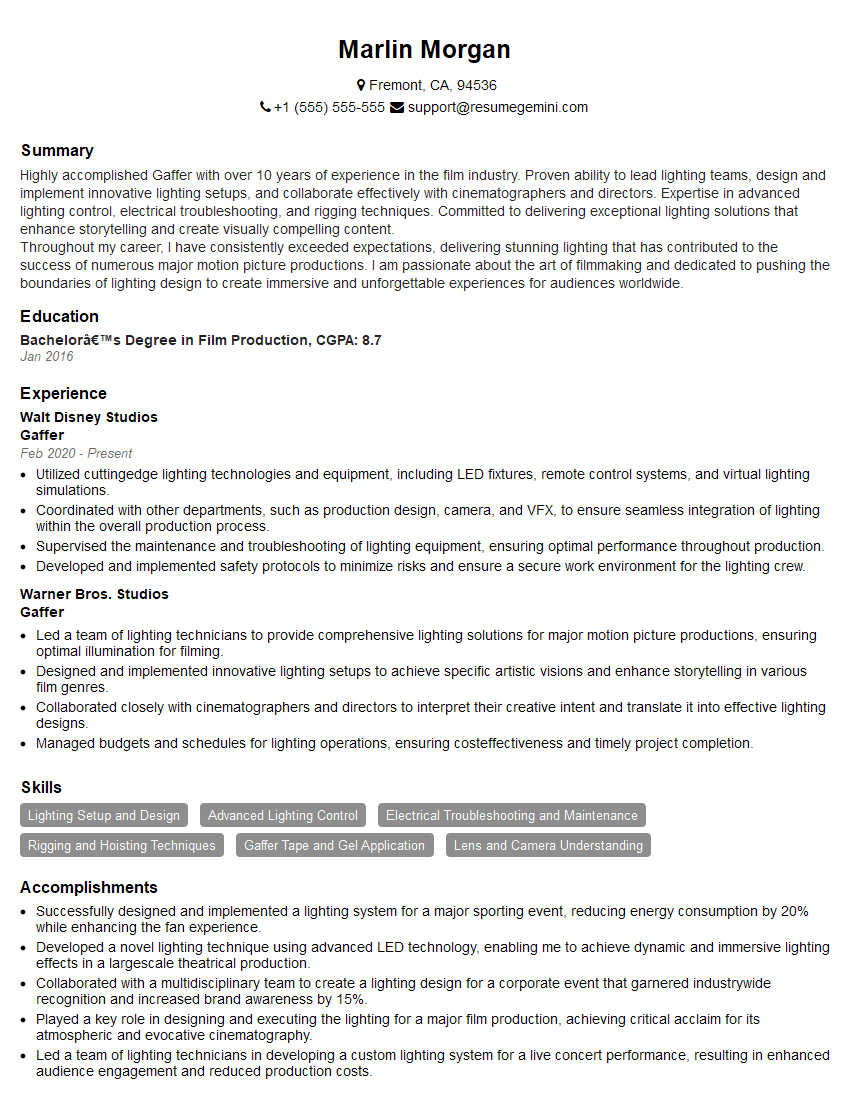
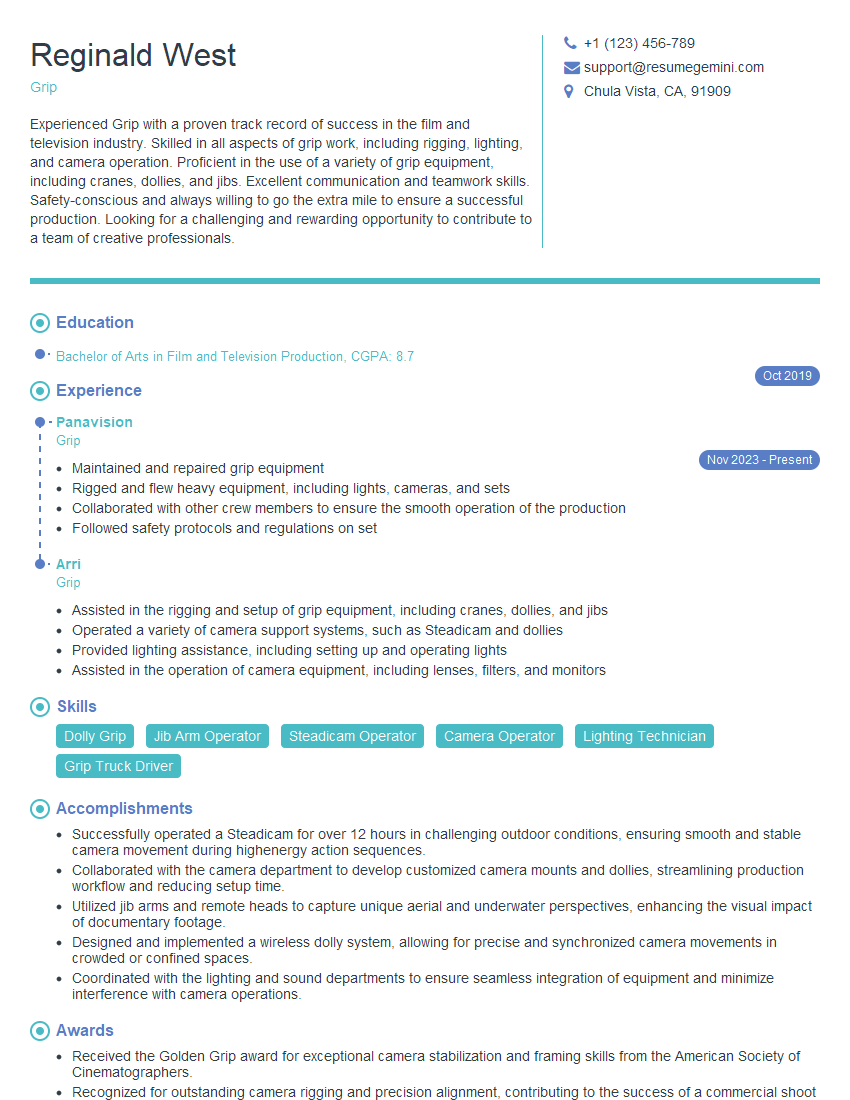
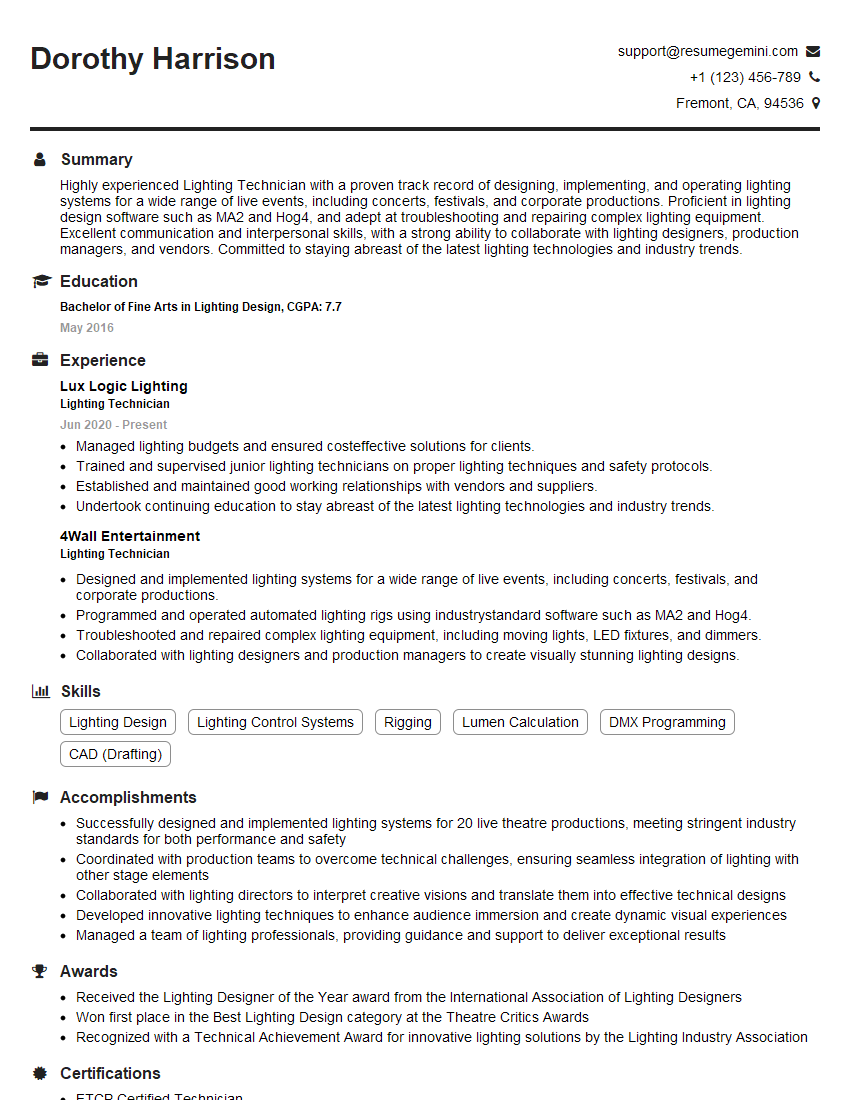
Mastering Light Adjustment Techniques is crucial for career advancement in fields such as photography, videography, post-production, and visual effects. A strong understanding of these techniques showcases your technical proficiency and creative problem-solving skills, significantly enhancing your job prospects. To maximize your chances, creating an ATS-friendly resume is vital. ResumeGemini offers a powerful and intuitive platform to build professional, impactful resumes. We provide examples of resumes tailored to Light Adjustment Techniques to help you get started. Let ResumeGemini help you craft a resume that highlights your expertise and lands you your dream job.

Explore more articles
Users Rating of Our Blogs
Share Your Experience
We value your feedback! Please rate our content and share your thoughts (optional).
What Readers Say About Our Blog
Really detailed insights and content, thank you for writing this detailed article.
IT gave me an insight and words to use and be able to think of examples