Feeling uncertain about what to expect in your upcoming interview? We’ve got you covered! This blog highlights the most important Light Mechanical Repairs interview questions and provides actionable advice to help you stand out as the ideal candidate. Let’s pave the way for your success.
Questions Asked in Light Mechanical Repairs Interview
Q 1. Describe your experience with troubleshooting common mechanical issues.
Troubleshooting mechanical issues is like detective work. You need to systematically gather clues to identify the root cause, not just treat the symptoms. My experience spans a wide range of common problems, from simple bearing replacements and belt adjustments to more complex issues involving gearboxes and hydraulic leaks. For example, I once diagnosed a recurring engine stall on a piece of construction equipment by meticulously checking fuel delivery, spark timing, and finally discovering a corroded wire in the ignition system. Another instance involved a malfunctioning conveyor belt; after systematically eliminating issues like belt tension and pulley alignment, I found a broken roller bearing causing the problem.
- Bearing Failure: Identifying excessive vibration or noise, checking for play in the bearing, and ultimately replacing the faulty component.
- Belt Issues: Assessing belt tension, checking for wear and tear, slippage, and replacing if necessary.
- Hydraulic Leaks: Locating the leak point, identifying the type of leak (e.g., seal failure, hose rupture), and repairing or replacing the affected component.
Q 2. Explain your process for diagnosing a malfunctioning mechanical system.
My process for diagnosing a malfunctioning mechanical system is methodical and relies heavily on observation and systematic elimination. It’s akin to following a recipe, but each step requires careful consideration.
- Initial Assessment: I begin by visually inspecting the system to identify any obvious issues (e.g., leaks, broken parts, unusual wear). I’ll also listen for unusual noises, such as grinding, squealing, or knocking.
- Data Collection: I gather data from relevant gauges, sensors, or monitoring systems to understand the system’s performance under different operating conditions.
- Testing and Verification: Using multimeters, pressure gauges and other tools I’ll start testing individual components to isolate the faulty parts. I’ll conduct tests to check voltage, current, pressure and other variables.
- Hypothesis Formation: Based on the gathered information, I formulate a hypothesis about the cause of the malfunction.
- Verification: I test my hypothesis by making targeted repairs or adjustments, followed by testing to see if the problem is resolved.
- Documentation: I meticulously document all findings, including the initial problem, the troubleshooting steps, and the final solution. This helps with future repairs and allows for continuous learning.
For instance, if a pump isn’t delivering the expected flow rate, I’d check for blockages, examine the pump’s impeller for damage, and verify that the motor is providing the correct power. This approach ensures a swift and effective resolution.
Q 3. What are your skills in preventative maintenance?
Preventative maintenance is crucial for preventing costly breakdowns and ensuring optimal equipment performance. It’s like regularly servicing a car – you catch small problems before they become major headaches. My skills in this area include:
- Scheduled Inspections: Conducting regular visual inspections of equipment for wear, tear, and potential problems.
- Lubrication: Applying the correct type and amount of lubricant to bearings, gears, and other moving parts.
- Cleaning: Removing dirt, debris, and other contaminants that can interfere with equipment operation.
- Adjustments: Making necessary adjustments to belts, chains, and other components to ensure proper tension and alignment.
- Component Replacement: Replacing worn or damaged components before they fail, including things like belts, filters and seals.
For example, regularly lubricating a conveyor system’s bearings extends their lifespan and reduces the risk of failure, saving time and money in the long run. I also advocate for establishing a robust preventative maintenance schedule based on equipment usage and manufacturer recommendations.
Q 4. How do you prioritize repairs in a high-pressure environment?
Prioritizing repairs in a high-pressure environment requires a clear understanding of the impact of each malfunction. Think of it as a triage system in a hospital – the most critical cases get immediate attention. My approach involves:
- Safety First: Addressing any safety hazards immediately. This could be anything from a leaking hydraulic line to a frayed electrical cable.
- Criticality Assessment: Assessing the impact of each malfunction on overall production or operations. A broken production line is much more critical than a minor cosmetic issue.
- Resource Allocation: Determining the resources (time, tools, personnel) required for each repair.
- Time Estimation: Estimating the time needed to complete each repair.
- Prioritization Matrix: Creating a prioritization matrix based on criticality, resource requirements, and time estimates.
I’ve often had to make quick decisions in stressful situations, prioritizing repairs that minimize downtime and prevent further damage. Experience has taught me to balance speed with thoroughness.
Q 5. Describe your experience with various hand tools and power tools.
I’m proficient with a wide range of hand and power tools, including:
- Hand Tools: Wrenches (various types), screwdrivers, pliers, hammers, sockets, chisels, measuring tapes, levels.
- Power Tools: Drills, impact wrenches, grinders, saws (reciprocating, circular), welders, pneumatic tools.
My experience includes using these tools for various tasks, from simple assembly and disassembly to more complex repairs requiring precision and accuracy. I understand the safety procedures associated with each tool and always prioritize safety.
For instance, I’m comfortable using a precision torque wrench to tighten bolts to the correct specification, preventing damage to components. I also know how to safely operate and maintain power tools to maximize their lifespan and minimize the risk of injury.
Q 6. How do you read and interpret technical diagrams and schematics?
Reading and interpreting technical diagrams and schematics is fundamental to my work. It’s like reading a map to navigate a complex system. I can confidently interpret:
- P&ID Diagrams (Piping and Instrumentation Diagrams): Understanding the flow of fluids and the location of components in hydraulic and pneumatic systems.
- Electrical Schematics: Tracing circuits, identifying components, and troubleshooting electrical faults.
- Mechanical Drawings: Understanding component dimensions, tolerances, and assembly procedures.
- Exploded Views: Identifying individual components and their relationship to each other within an assembly.
My ability to decipher these diagrams enables me to quickly diagnose problems and plan repairs effectively. For example, I can use a wiring diagram to trace a faulty circuit to its source, rather than randomly testing components.
Q 7. What is your experience with hydraulic systems?
I have significant experience working with hydraulic systems, from simple hydraulic jacks to complex industrial hydraulic presses. My experience encompasses:
- Troubleshooting Hydraulic Leaks: Identifying the source of leaks (seals, hoses, fittings), and making repairs or replacements.
- Hydraulic Component Repair: Repairing or replacing pumps, valves, cylinders, and other hydraulic components.
- Hydraulic System Diagnostics: Using pressure gauges, flow meters, and other diagnostic tools to identify problems within a hydraulic system.
- Hydraulic System Maintenance: Performing routine maintenance tasks such as fluid changes, filter replacements, and system flushing.
I’m familiar with safety procedures related to high-pressure hydraulic systems and understand the potential hazards associated with hydraulic fluid. For example, I’ve successfully diagnosed and repaired a hydraulic cylinder leak on a large piece of earthmoving equipment, avoiding costly downtime.
Q 8. What is your experience with pneumatic systems?
Pneumatic systems utilize compressed air to power mechanical devices. My experience encompasses troubleshooting, maintenance, and repair of various pneumatic components, including air compressors, cylinders, valves, and tubing. I’m proficient in identifying leaks using leak detectors and soapy water, replacing worn seals and O-rings, and diagnosing issues with air pressure regulators. For example, I once resolved a production line slowdown by identifying a faulty solenoid valve causing inconsistent air pressure to a robotic arm. Replacing the valve quickly restored full operational capacity.
I’m also familiar with different types of pneumatic actuators, such as single-acting and double-acting cylinders, and understand the role of pressure switches and other control components. My experience extends to working with both low and high-pressure pneumatic systems, ensuring I can handle the diverse needs of various applications.
Q 9. How familiar are you with different types of bearings and their applications?
Bearings are crucial for reducing friction in rotating machinery. My familiarity covers a wide range of bearing types, including ball bearings, roller bearings (cylindrical, tapered, spherical), and sleeve bearings. I understand their respective strengths and weaknesses, impacting selection based on application requirements like load capacity, speed, and operating environment. For instance, ball bearings are ideal for high-speed, light-load applications, while roller bearings are better suited for heavy loads at lower speeds. Sleeve bearings, due to their simplicity, are often found in less demanding applications.
Selecting the correct bearing requires careful consideration of factors such as the shaft diameter, housing dimensions, operating temperature, and the type of load (radial, axial, or combined). I have hands-on experience in bearing installation, lubrication, and replacement, ensuring proper alignment and minimizing wear. I also know how to diagnose bearing failure through sound analysis and vibration monitoring.
Q 10. How do you maintain safety standards while performing repairs?
Safety is paramount in mechanical repairs. My approach begins with a thorough risk assessment, identifying potential hazards like moving parts, sharp edges, high temperatures, and hazardous materials. I always use appropriate personal protective equipment (PPE), including safety glasses, gloves, hearing protection, and steel-toe boots, depending on the task. Lockout/Tagout procedures are strictly followed when working on energized equipment to prevent accidental starts.
Proper tool usage is crucial. I ensure all tools are in good working order and used correctly. I also maintain a clean and organized workspace to reduce the risk of trips and falls. Throughout the repair process, I continuously monitor my surroundings and adjust safety measures as needed. Following established safety protocols and company regulations is non-negotiable.
Q 11. Describe your experience with welding or soldering.
I have experience with both welding and soldering, though my expertise lies more in soldering for light mechanical repairs. I am proficient in using various soldering irons and techniques to join smaller components, often using tin-lead or lead-free solder. This is frequently needed when repairing delicate circuitry or electronic components within mechanical systems. My welding skills are primarily focused on MIG welding for light-gauge metals, and I am comfortable making minor repairs or fabricating simple brackets. Safety precautions, including proper ventilation and eye protection, are consistently followed when performing either process.
I’ve used soldering to repair broken electrical connections in control panels and welding to fabricate simple support structures or replace damaged metal parts, demonstrating the versatility of these techniques in light mechanical repair.
Q 12. Explain your process for selecting the appropriate lubricant for a specific application.
Lubricant selection depends heavily on the application’s operating conditions and the type of moving parts. I consider factors such as the temperature range, load, speed, and the material of the surfaces in contact. Different lubricants, like grease, oil (synthetic or mineral), and specialized compounds, serve specific purposes. For example, high-temperature grease is needed for bearings operating at high temperatures, whereas low-viscosity oil might be ideal for high-speed applications.
My selection process often starts with reviewing the manufacturer’s recommendations. If not available, I consult lubrication charts and technical manuals, looking for the appropriate viscosity and chemical properties. I also consider the environmental impact and disposal requirements when selecting a lubricant. Incorrect lubrication can lead to premature wear, friction, and component failure – something I always strive to avoid.
Q 13. How do you identify and address mechanical wear and tear?
Identifying mechanical wear and tear involves careful inspection and analysis. I look for signs like excessive noise (grinding, squealing, or knocking), unusual vibration, excessive heat generation, leaking fluids, and visible damage such as scratches, cracks, or corrosion. Regular maintenance checks, including visual inspections and functional tests, are essential for early detection. I often use measuring tools like calipers and micrometers to precisely assess dimensions and detect wear patterns.
Addressing the wear involves appropriate repairs, replacements, or adjustments. This might include replacing worn bearings, seals, or other components; tightening loose fasteners; re-aligning shafts; or performing surface treatments to restore functionality. Depending on the severity of the wear, I might recommend preventative maintenance or scheduled repairs to prevent further damage and ensure equipment reliability.
Q 14. What is your experience working with different types of fasteners?
My experience with fasteners encompasses a broad range, from standard screws (machine screws, wood screws, self-tapping screws) and bolts (carriage bolts, hex bolts, eye bolts) to more specialized fasteners like rivets, set screws, and expansion anchors. I’m familiar with various materials, including steel, stainless steel, aluminum, and plastics, and understand the impact of material selection on strength, corrosion resistance, and application suitability. I know how to select the appropriate fastener based on factors such as the material being joined, the required load, the vibration environment, and the accessibility of the joint.
I’m skilled in proper installation techniques, understanding the importance of torque control to avoid stripping threads or over-tightening. I also recognize the need for appropriate washers and locking mechanisms to ensure secure fastening, especially in applications subject to vibration or high loads. The right fastener is critical for a safe and functioning mechanical system.
Q 15. Describe your experience with belt and pulley systems.
Belt and pulley systems are fundamental in transmitting power and motion in many mechanical systems. They’re essentially a simple yet effective way to transfer rotational energy from one shaft to another. Think of a bicycle – the pedals turn the chain, which in turn rotates the rear wheel. That’s a belt and pulley system in action, albeit a very simple one.
My experience encompasses diagnosing and repairing various belt and pulley systems, from small fractional horsepower motors to larger industrial applications. This includes identifying issues like belt slippage, wear, misalignment, or pulley damage. I’m proficient in selecting the correct belt type (e.g., V-belt, synchronous belt, flat belt) based on the application’s power requirements and speed. I also have experience with tensioning systems, ensuring optimal performance and preventing premature wear. For example, I once worked on a conveyor system where belt slippage was causing production bottlenecks. By carefully aligning the pulleys and adjusting belt tension, I restored optimal performance and avoided costly downtime.
- Troubleshooting: I can diagnose issues like squealing belts (indicating slippage or wear), broken belts, or worn pulleys using visual inspection and simple measurements.
- Installation and Replacement: I am skilled in safely removing and installing belts and pulleys, following proper safety procedures and using specialized tools when necessary.
- Maintenance: I understand the importance of regular inspection and maintenance to prevent failures and extend the lifespan of the system.
Career Expert Tips:
- Ace those interviews! Prepare effectively by reviewing the Top 50 Most Common Interview Questions on ResumeGemini.
- Navigate your job search with confidence! Explore a wide range of Career Tips on ResumeGemini. Learn about common challenges and recommendations to overcome them.
- Craft the perfect resume! Master the Art of Resume Writing with ResumeGemini’s guide. Showcase your unique qualifications and achievements effectively.
- Don’t miss out on holiday savings! Build your dream resume with ResumeGemini’s ATS optimized templates.
Q 16. How do you perform a basic engine tune-up?
A basic engine tune-up aims to optimize the engine’s performance and efficiency. It usually involves several key steps focusing on the ignition and fuel systems. Think of it as giving your engine a thorough checkup and cleaning.
My approach involves:
- Replacing spark plugs: Worn spark plugs can lead to misfires and reduced fuel efficiency. I carefully select the correct plugs for the engine and gap them precisely.
- Replacing air filter: A clogged air filter restricts airflow, reducing engine power and potentially damaging the engine. I replace it with a new, clean filter.
- Inspecting and replacing ignition wires: Worn or damaged wires can cause misfires, leading to poor performance. I inspect them for cracks or damage and replace them as needed.
- Inspecting and cleaning throttle body: Buildup on the throttle body restricts airflow. I clean it thoroughly using appropriate cleaner and tools.
- Checking PCV valve: This valve prevents crankcase pressure buildup and oil leaks. I check its functionality and replace it if necessary.
After completing these steps, I’d perform a test drive to ensure proper engine operation and confirm the tune-up’s effectiveness. For instance, I once performed a tune-up on a vehicle that was experiencing rough idling and poor fuel economy. After replacing worn spark plugs and a clogged air filter, the engine ran smoothly and fuel economy significantly improved.
Q 17. What are your experience with electrical troubleshooting in mechanical systems?
Electrical troubleshooting in mechanical systems requires a systematic approach, combining mechanical knowledge with electrical expertise. I approach this by first understanding the mechanical system’s function to identify where the electrical component fits within the bigger picture. For example, a malfunctioning motor might appear purely mechanical but could have an electrical root cause like a faulty wiring harness or a bad motor controller.
My experience includes diagnosing issues in various systems using multimeters, oscilloscopes, and other diagnostic tools. I can trace wires, check voltages, currents, and resistances to pinpoint problems. I understand basic electrical schematics and can interpret them to troubleshoot effectively. I’ve worked on systems with simple circuits and more complex ones using PLCs (Programmable Logic Controllers). A memorable case involved a malfunctioning conveyor belt where the motor would intermittently stop. After thorough electrical tracing, I identified a loose connection in the control circuit that caused the intermittent power failure. Tightening the connection resolved the issue immediately.
Q 18. Describe your understanding of different types of gears and their functions.
Gears are essential components in mechanical systems used to transmit rotational motion and torque between shafts. Different gear types offer specific advantages depending on the application. Think of a gear system as a sophisticated way to alter speed and force, similar to how different bicycle gears allow you to climb hills or go fast on flat ground.
- Spur gears: These are the most common type, with parallel teeth and are effective for transmitting power between parallel shafts.
- Helical gears: These gears have angled teeth, providing smoother and quieter operation compared to spur gears. They are also better at handling high loads.
- Bevel gears: Used to transmit power between intersecting shafts, often found in differential systems in automobiles.
- Worm gears: These offer high gear ratios and self-locking capabilities, often used in applications requiring high torque amplification, such as in jacks or hoists.
Understanding the different gear types, their advantages, and limitations allows me to select the appropriate gears for a particular application and diagnose problems effectively. For instance, gear wear can be a common problem and requires careful examination to determine the root cause, which could range from poor lubrication to excessive load or misalignment.
Q 19. How do you maintain accurate records of repairs and maintenance?
Maintaining accurate records is critical for effective maintenance and repair. I use a combination of methods to ensure comprehensive and readily accessible information. This is crucial for tracking repairs, ordering parts, and ensuring accountability.
My methods include:
- Digital work order system: I utilize software to create detailed work orders for each repair or maintenance task. These include descriptions of the problem, parts used, labor hours, and the final outcome. This software often allows for image and video uploads to further document the process.
- Detailed written reports: I create comprehensive reports describing the repair process, including photos or diagrams. These reports provide clear documentation for future reference and for auditing purposes.
- Parts inventory management: I keep track of parts used in repairs, documenting part numbers and quantities. This ensures accurate costing and facilitates future ordering.
This system ensures efficient tracking and enables efficient planning for future maintenance. For example, by analyzing repair records, I identified a recurring issue with a specific component on a particular machine. This enabled proactive preventive maintenance and avoided costly downtime in the future.
Q 20. What is your proficiency with using a multimeter?
A multimeter is an essential tool for electrical troubleshooting. It’s a versatile instrument that measures voltage, current, and resistance. I’m highly proficient in using a multimeter to diagnose electrical problems in mechanical systems.
My proficiency includes:
- Measuring voltage: I can accurately measure DC and AC voltages to identify power supply issues or voltage drops across components.
- Measuring current: I can measure current flow to identify shorts, opens, or excessive current draw in circuits.
- Measuring resistance: I can measure resistance to check for open or short circuits in components or wiring.
- Continuity testing: I can use the multimeter’s continuity function to check for open or shorted wires and connections.
My experience using multimeters spans numerous applications, including checking motor windings, testing switches, and verifying the integrity of wiring harnesses. Accurate multimeter readings are essential for effective diagnosis; a poorly done measurement can lead to further damage or ineffective repairs.
Q 21. Describe your experience with using diagnostic equipment.
Diagnostic equipment varies greatly depending on the system being tested. My experience includes using various diagnostic tools and software tailored to specific applications. This allows for more advanced fault finding and precise problem analysis.
I’ve used:
- Engine diagnostic scanners (OBD-II): For automotive applications, these scanners read fault codes and provide data regarding engine performance parameters to diagnose problems efficiently.
- Specialized diagnostic software: For industrial equipment, this software can provide detailed data and allow in-depth analysis for a wide array of machinery, from PLCs to motor drives.
- Oscilloscopes: Used for analyzing waveforms and signals to detect intermittent problems or issues related to timing and frequency.
Interpreting data from diagnostic equipment requires both technical expertise and practical experience to differentiate between actual problems and false positives. For example, I once used an oscilloscope to diagnose an intermittent fault in a motor control system. By analyzing the signal waveforms, I identified a problem with a faulty sensor, which I then was able to replace resulting in a complete system repair.
Q 22. How do you handle unexpected challenges during repairs?
Unexpected challenges are par for the course in light mechanical repairs. My approach is systematic and prioritizes safety. First, I assess the situation calmly, identifying the immediate problem and potential safety hazards. Then, I utilize a troubleshooting methodology – a sort of ‘process of elimination’ – to pinpoint the root cause. This might involve checking wiring diagrams, inspecting component wear, or even consulting manuals or online resources. Once the issue is understood, I develop a solution, prioritizing a temporary fix to restore functionality (if safety is at risk) before implementing a permanent repair. For example, I once encountered a sudden power failure in a conveyor system. Initial inspection revealed a tripped breaker. However, after resetting it, the breaker tripped again. Through systematic checks, I discovered a faulty motor overheating due to a jammed pulley. A temporary fix involved removing the jam to cool the motor, while the permanent solution was replacing the pulley and performing preventive maintenance on the motor itself.
Q 23. What are your skills in using Computerized Maintenance Management Systems (CMMS)?
I’m proficient in several CMMS (Computerized Maintenance Management Systems), including UpKeep and Fiix. My skills encompass preventative maintenance scheduling, work order generation, inventory management, and reporting. I can efficiently input repair data, generate reports on maintenance costs and equipment downtime, and use the system’s predictive maintenance features to identify potential problems before they occur. In my previous role, we used a CMMS to track the performance of over 50 pieces of equipment. This allowed us to identify patterns in equipment failure, leading to more effective preventive maintenance schedules and a significant reduction in unplanned downtime. For instance, we noticed a pattern of frequent bearing failures on specific pumps, prompting us to order higher-quality bearings and adjust the lubrication schedule – resulting in a 30% reduction in pump-related downtime.
Q 24. Describe your experience with various types of pumps.
My experience spans various pump types, including centrifugal, positive displacement (like gear pumps and piston pumps), and diaphragm pumps. I understand the operating principles, maintenance needs, and common failure points of each. For instance, I’m familiar with the importance of proper priming in centrifugal pumps to avoid cavitation, the need for regular lubrication and seal checks in positive displacement pumps, and the potential for diaphragm rupture in diaphragm pumps due to chemical incompatibility or excessive pressure. I can diagnose problems like leaks, low flow rates, or unusual noises associated with each type, and perform repairs ranging from simple seal replacements to more complex internal component overhauls. A recent project involved repairing a malfunctioning centrifugal pump in a water treatment facility. After diagnosing a faulty impeller, I successfully replaced it and rebalanced the pump, restoring its full operational capacity.
Q 25. What is your understanding of basic mechanical principles (e.g., levers, pulleys)?
My understanding of basic mechanical principles is fundamental to my work. I apply concepts like levers, pulleys, gears, and inclined planes daily. Levers, for example, are crucial for understanding how to use tools effectively, while pulleys are important for lifting and moving heavy equipment. Understanding gear ratios helps me diagnose problems in machinery with rotating components. I use my knowledge of these principles to troubleshoot mechanical problems, design simple mechanical systems (like jigs or clamping devices for repairs), and select appropriate tools for specific tasks. For instance, understanding lever mechanics allows me to choose the right wrench size for a specific bolt to minimize the risk of stripping the threads. Similarly, understanding pulley systems is vital for safely lifting and positioning heavy components during repairs.
Q 26. How do you ensure the quality of your repairs?
Quality assurance is paramount. I follow a multi-step process. First, I meticulously inspect the repaired component for proper functionality. This includes testing all moving parts, checking for leaks, and ensuring correct alignment. Second, I perform thorough cleaning and lubrication as needed. Third, I document all repairs, including the parts used and any special procedures followed. Finally, I run functional tests to confirm the repair’s effectiveness and to ensure the repaired system works within its operational parameters and meets safety standards. A good example is the repair of a valve system. I wouldn’t just replace a faulty valve; I’d meticulously inspect the entire system for wear and tear, address any other potential issues, and run a pressure test to confirm that the repaired valve operates correctly and doesn’t leak.
Q 27. Describe your experience with preventative maintenance scheduling.
Preventative maintenance scheduling is critical for maximizing equipment lifespan and minimizing downtime. I’m experienced in creating and implementing such schedules based on manufacturer recommendations, equipment usage, and historical failure data. This involves identifying critical components, determining their expected lifespan, and scheduling regular inspections and replacements. In my previous role, I created a preventive maintenance schedule for a food processing plant’s conveyor system which significantly reduced downtime and maintenance costs by identifying and addressing potential issues before they caused major failures. The schedule included regular lubrication, belt inspections, and motor checks, allowing us to anticipate and prevent problems – thus avoiding costly emergency repairs and production shutdowns.
Key Topics to Learn for Light Mechanical Repairs Interview
- Basic Hand Tools & Their Applications: Understanding the function and proper use of common hand tools (screwdrivers, wrenches, pliers, etc.) is fundamental. Practical application includes describing scenarios where you’ve used these tools effectively for repair or maintenance.
- Mechanical Principles: Grasping core concepts like levers, pulleys, gears, and simple machines is crucial. This theoretical knowledge translates into practical problem-solving during repairs, helping you diagnose and fix mechanical issues efficiently.
- Preventive Maintenance: Demonstrate knowledge of routine inspection and maintenance procedures to prevent breakdowns. This includes lubrication, cleaning, and identifying potential wear-and-tear issues before they escalate.
- Troubleshooting and Diagnostics: Interviewers will likely assess your ability to identify the root cause of a mechanical problem. Practice describing your systematic approach to troubleshooting, including visual inspection, listening for unusual sounds, and testing components.
- Safety Procedures and Regulations: Safety is paramount. Highlight your understanding of relevant safety protocols, including proper use of personal protective equipment (PPE) and safe handling of tools and machinery.
- Basic Hydraulics and Pneumatics (if applicable): Depending on the specific role, understanding basic hydraulic and pneumatic systems might be important. Focus on understanding pressure, flow, and the function of common components.
- Reading Technical Drawings and Schematics: The ability to interpret technical documents is a valuable skill. Practice reading simple diagrams and schematics to understand the layout and function of mechanical systems.
Next Steps
Mastering Light Mechanical Repairs opens doors to a wide range of rewarding career opportunities, offering both stability and the chance for continuous skill development. To significantly enhance your job prospects, focus on creating a strong, ATS-friendly resume that showcases your skills and experience effectively. ResumeGemini is a trusted resource to help you build a professional and impactful resume. We provide examples of resumes tailored specifically to Light Mechanical Repairs to guide you through the process. Take the next step towards your dream job – craft a compelling resume that highlights your expertise in Light Mechanical Repairs with the help of ResumeGemini.

Maintenance Planner Resume Sample
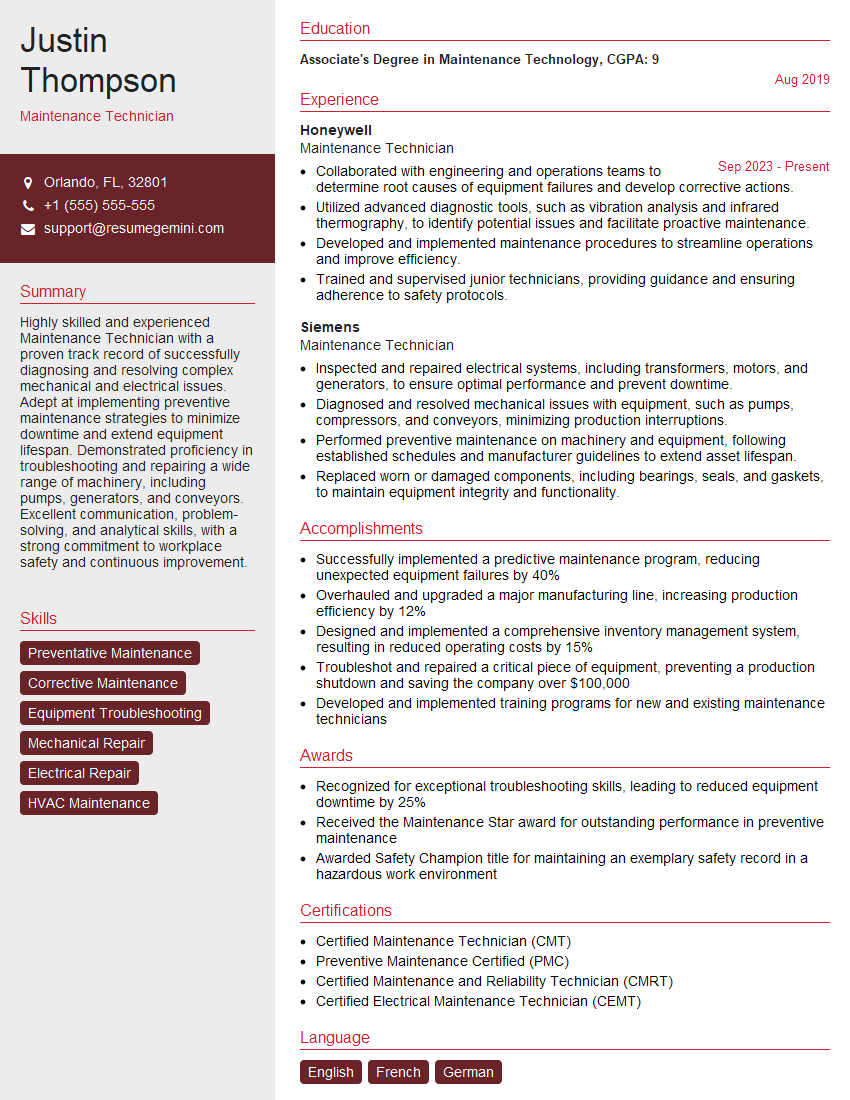
Maintenance Technician Resume Sample

Field Service Technician Resume Sample

Service Technician Resume Sample

Maintenance Mechanic Resume Sample

Repair Technician Resume Sample

Mechatronics Technician Resume Sample
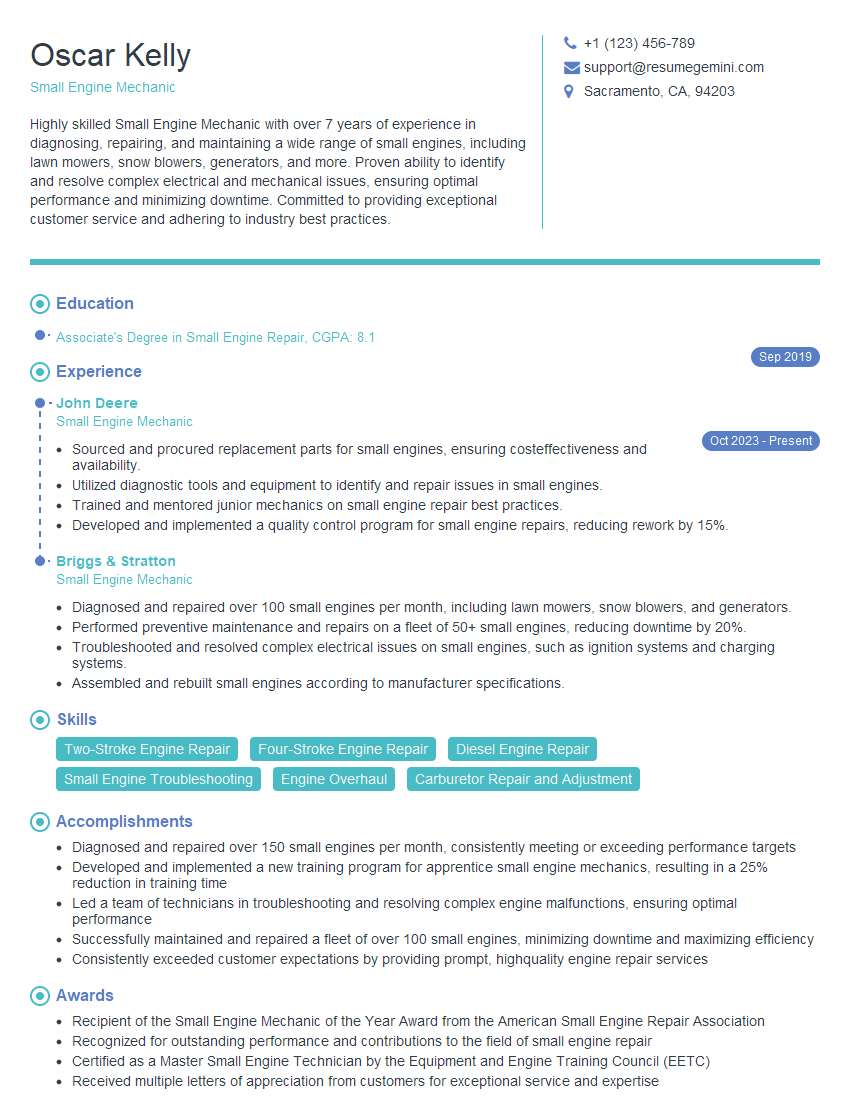
Small Engine Mechanic Resume Sample
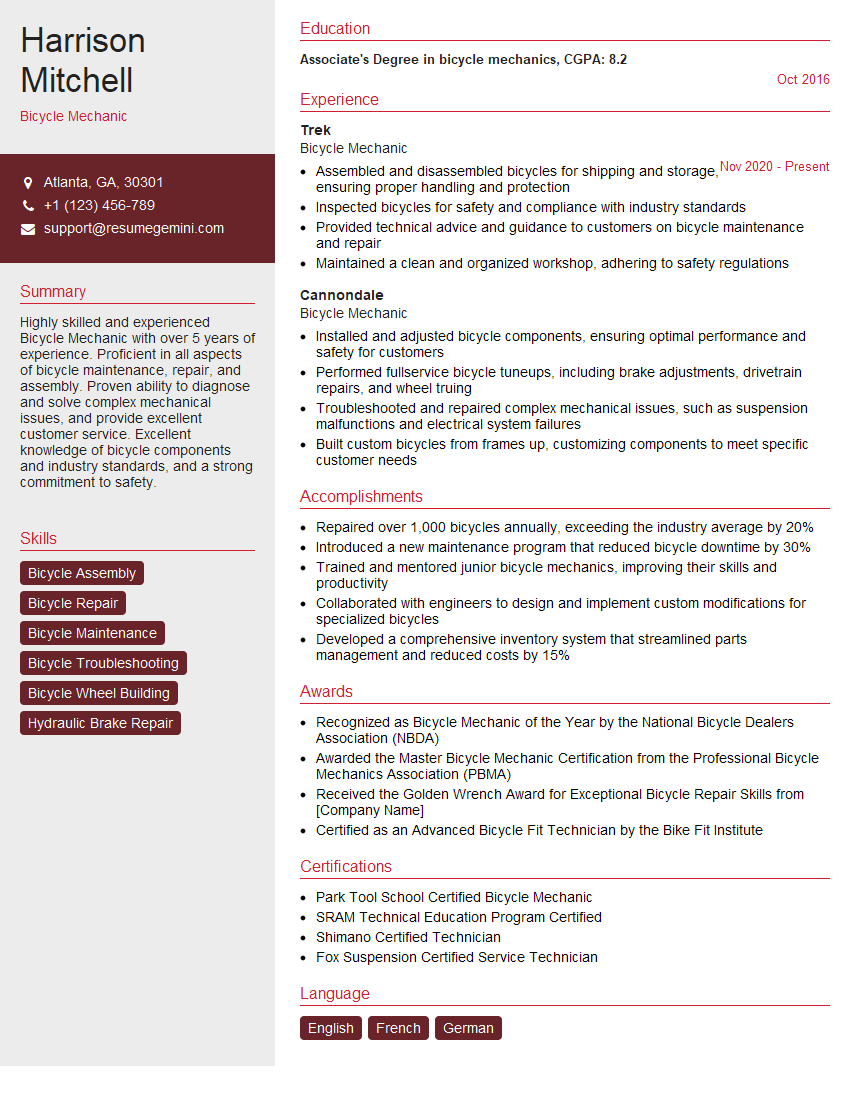
Bicycle Mechanic Resume Sample

Appliance Repair Technician Resume Sample
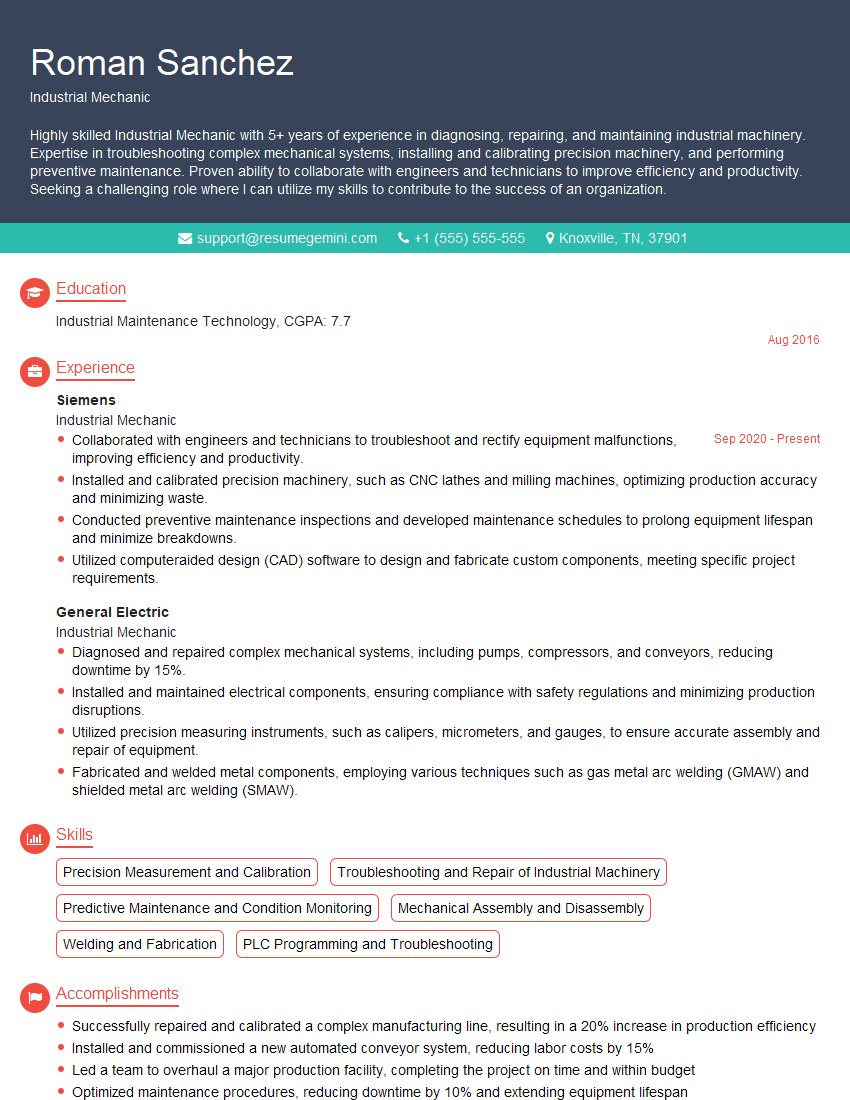
Industrial Mechanic Resume Sample

Facilities Maintenance Technician Resume Sample

Plant Mechanic Resume Sample

Mechanical Assembler Resume Sample
- Maintenance Planner
- Maintenance Technician
- Field Service Technician
- Service Technician
- Maintenance Mechanic
- Repair Technician
- Mechatronics Technician
- Small Engine Mechanic
- Bicycle Mechanic
- Appliance Repair Technician
- Industrial Mechanic
- Facilities Maintenance Technician
- Plant Mechanic
- Mechanical Assembler
Explore more articles
Users Rating of Our Blogs
Share Your Experience
We value your feedback! Please rate our content and share your thoughts (optional).
What Readers Say About Our Blog
Really detailed insights and content, thank you for writing this detailed article.
IT gave me an insight and words to use and be able to think of examples