Cracking a skill-specific interview, like one for Locomotive Mechanics, requires understanding the nuances of the role. In this blog, we present the questions you’re most likely to encounter, along with insights into how to answer them effectively. Let’s ensure you’re ready to make a strong impression.
Questions Asked in Locomotive Mechanics Interview
Q 1. Explain the function of a locomotive’s air brake system.
A locomotive’s air brake system is crucial for safe and controlled stopping. It’s a pneumatic system using compressed air to apply brakes to the locomotive and its coupled cars. Think of it like a giant, interconnected network of air hoses and valves, all working together.
The system relies on compressed air stored in reservoirs. When the engineer releases air pressure, the brakes engage. The system includes various components: the air compressor, which builds up pressure; reservoirs, which store the compressed air; brake cylinders, which translate air pressure into braking force; and control valves, managing air flow to control braking.
A key aspect is its fail-safe nature. If there’s a leak or failure in one part of the system, the brakes automatically apply, preventing runaway trains. Different types of valves like the automatic brake valve and the independent brake valve allow for precise control of braking force and emergency stops.
Q 2. Describe the process of diagnosing a faulty diesel engine.
Diagnosing a faulty diesel engine involves a systematic approach. It starts with gathering information – what are the symptoms? Is the engine running rough, producing unusual smoke, failing to start, or showing reduced power? We listen carefully for unusual noises, check for leaks, and carefully inspect the engine’s vital components.
We then use diagnostic tools like engine monitoring systems, which provide real-time data on parameters like fuel pressure, oil pressure, and exhaust temperature. These readings help pinpoint the problem area. For instance, low fuel pressure points toward a faulty fuel pump or clogged filter. High exhaust temperature might indicate combustion issues or a cooling system problem.
Further diagnostics might involve compression tests to check cylinder health, fuel injector testing for proper spray pattern and atomization, and careful examination of the turbocharger and air intake system for restrictions. Sometimes, the issue might be as simple as a loose connection or a blown fuse, while other times, it could involve complex engine component repair or replacement.
Q 3. What are the common causes of locomotive wheel slippage?
Locomotive wheel slippage, also known as wheel spin, occurs when the driving wheels lose traction on the rails. This significantly reduces the locomotive’s ability to accelerate and can cause damage to the wheels and track.
- High Power Output: Attempting to start or accelerate with excessive power, especially on wet or icy rails, can easily lead to slippage.
- Poor Rail Conditions: Wet, icy, or greasy rails dramatically reduce friction, making slippage more likely. Loose ballast or damaged rails also contribute.
- Excessive Weight on Driving Wheels: An uneven weight distribution across the axles, potentially caused by overloading the locomotive or a mechanical issue, can lead to increased slip.
- Problems with the Traction System: Issues with the locomotive’s traction control system, or faulty components in the system itself, can lead to inconsistent power delivery and wheel slippage.
Preventing slippage often involves adjusting power application, sand application on the rails to increase friction, or addressing underlying mechanical issues.
Q 4. How do you troubleshoot a malfunctioning locomotive electrical system?
Troubleshooting a malfunctioning locomotive electrical system requires a methodical approach, combining visual inspection, diagnostic tools, and a thorough understanding of the system’s schematics.
We start with a visual inspection, checking for loose connections, damaged wiring, burned-out fuses, or corrosion. A multimeter is essential for checking voltage, current, and continuity. We work systematically, tracing circuits from the power source to the affected component. For example, a problem with the headlight might involve checking the headlight switch, wiring, fuses, and the headlight itself.
More complex issues may require using specialized diagnostic tools to pinpoint problems within the complex control systems. These tools can scan for error codes, helping to isolate the problem. For instance, an issue with the locomotive’s speed control could be traced using such tools and the information from the engine control unit (ECU).
Safety is paramount during electrical troubleshooting. Always disconnect the power source before working on any electrical components to avoid electrical shock.
Q 5. What safety procedures must be followed when working on a locomotive?
Safety is the absolute top priority when working on a locomotive. Neglecting safety procedures can lead to severe injuries or fatalities. Here are some crucial steps:
- Lockout/Tagout Procedures: Before commencing any work, ensure all power sources to the locomotive are completely isolated and locked out using lockout/tagout procedures. This prevents accidental energizing of the system.
- Proper Personal Protective Equipment (PPE): Always wear appropriate PPE, including safety glasses, gloves, hearing protection, steel-toed boots, and a high-visibility vest.
- Awareness of Surroundings: Maintain awareness of the surrounding environment, especially for moving trains or other potential hazards in the yard.
- Following Railroad Safety Rules: Adhere strictly to all railroad safety rules and regulations.
- Trained Personnel: Only trained and qualified personnel should perform locomotive maintenance and repairs.
Regular safety training and adherence to established procedures are essential to ensuring a safe working environment.
Q 6. Describe your experience with locomotive preventative maintenance.
Preventative maintenance is the cornerstone of reliable locomotive operation. My experience includes developing and implementing comprehensive maintenance schedules, encompassing routine inspections, lubrication, and component replacements.
I’ve overseen the inspection of critical components such as brakes, wheels, axles, engines, and electrical systems. This involves checking for wear and tear, leaks, and potential problems before they escalate into major failures. We use checklists and documented procedures to ensure consistency and thoroughness.
For example, we regularly inspect and lubricate bearings to prevent overheating and failure. We meticulously clean air filters and regularly change engine oil and fuel filters to maintain optimal engine performance. Detailed records are kept for each maintenance activity, enabling predictive maintenance strategies and identifying trends.
This proactive approach minimizes downtime, extends the lifespan of locomotive components, and ultimately enhances safety and operational efficiency.
Q 7. Explain the different types of locomotive traction motors.
Locomotive traction motors convert electrical energy into mechanical energy to drive the wheels. Several types exist, each with its strengths and weaknesses:
- DC Series Motors: These were common in older locomotives. They are simple and relatively inexpensive but can draw high currents, requiring robust control systems.
- AC Motors: These are now the most prevalent type, offering advantages like high efficiency, better power-to-weight ratios, and precise control using electronic systems.
- DC Traction Motors with Electronic Controls: Modern versions of DC motors use advanced electronic controls to improve efficiency and operational flexibility.
- Synchronous Motors: These offer highly efficient operation but generally require more sophisticated control systems.
- Asynchronous (Induction) Motors: These are robust and require less maintenance but may not be as efficient as other types.
The choice of traction motor depends on factors like the locomotive’s design, power requirements, and operating conditions. The trend is towards AC motors due to their overall efficiency and ability to precisely control power delivery for optimal performance.
Q 8. How do you identify and address issues with locomotive braking systems?
Identifying and addressing issues with locomotive braking systems requires a systematic approach. Locomotive brakes primarily rely on compressed air, so diagnosing problems often involves checking air pressure, inspecting components for leaks or damage, and testing the functionality of various valves and actuators.
Initial Steps: I begin by checking the main reservoir air pressure. Low pressure points to leaks in the system. A leak test, using soapy water to identify escaping air, is crucial. I then check the brake pipe pressure, ensuring it’s within the specified range. Malfunctioning components like pressure gauges, valves (e.g., brake valves, control valves), and air hoses are checked for leaks, cracks, or damage.
Addressing Specific Issues: If a leak is found, I’ll locate the source and repair or replace the damaged component. This could range from tightening a loose fitting on an air hose to replacing a damaged valve. If the brake system isn’t releasing properly, I would investigate the release valves and actuators. Sticking or faulty components could be cleaned, lubricated, or replaced. Testing the entire system after repairs, using appropriate diagnostic tools and procedures, is crucial to ensure everything functions correctly before the locomotive is put back into service. For instance, I’ve had to troubleshoot a situation where a faulty brake valve was causing inconsistent braking on one axle; identifying and replacing the faulty valve solved the problem. Safety is paramount, and all repairs must adhere to strict safety regulations and maintenance schedules.
Q 9. What are the common problems associated with locomotive fuel systems?
Common problems with locomotive fuel systems can broadly be categorized into fuel supply issues, fuel quality problems, and component failures.
Fuel Supply Issues: These often stem from clogged fuel filters, restrictions in fuel lines, or problems with the fuel pumps. Clogged filters reduce fuel flow, impacting engine performance and potentially leading to engine stall. Restricted lines, possibly due to debris or corrosion, can produce similar problems. Malfunctioning fuel pumps fail to supply adequate fuel pressure.
Fuel Quality Issues: Contaminated fuel, containing water or sediment, can severely damage fuel injectors, leading to poor combustion and potential engine damage. Water contamination can lead to corrosion and freezing in cold climates.
Component Failures: Fuel injectors, which atomize fuel for efficient combustion, are prone to failure due to wear and tear, contamination, or electrical problems. Fuel tanks can develop leaks, compromising fuel integrity and causing environmental hazards. I’ve encountered instances where a faulty fuel injector caused rough idling and black smoke, highlighting the importance of regular maintenance and fuel quality control.
Troubleshooting Approach: Diagnosing fuel system issues involves systematic checks of fuel pressure, fuel flow, filter condition, and a visual inspection of fuel lines, tanks, and injectors. Fuel quality is checked regularly, and any contamination requires prompt action, including draining and cleaning of the fuel system.
Q 10. Describe your experience with repairing locomotive air compressors.
My experience with repairing locomotive air compressors is extensive. These compressors are vital for supplying compressed air to the braking system, and their proper function is crucial for safety.
Common Repairs: I regularly handle repairs involving worn-out piston rings, damaged valves, leaks in the air tanks or lines, and problems with the unloader valve (which controls the compressor’s on/off cycle). I’m proficient in disassembling the compressor, replacing worn components, and performing leak tests to ensure air tightness. I also address issues related to the compressor’s drive mechanism, whether it’s a belt drive or directly connected to the engine.
Diagnostic Procedures: Diagnosis starts with checking the compressor’s output pressure and comparing it to the manufacturer’s specifications. Abnormal sounds, excessive vibration, or overheating point towards internal problems. I use specialized tools to measure air pressure and flow, and I’m skilled in interpreting these readings to pinpoint the faulty component. For example, a consistently low output pressure could indicate a problem with the intake valves or piston rings, whereas irregular pressure fluctuations might point to a faulty unloader valve.
Safety Precautions: Safety is always my primary concern. Before starting any repair, I ensure the compressor is isolated from the power source and depressurized. I always follow manufacturer’s safety guidelines and use appropriate personal protective equipment (PPE) such as safety glasses and gloves.
Q 11. Explain the function of a locomotive’s cooling system.
A locomotive’s cooling system is critical for maintaining optimal operating temperatures for the engine and other vital components. Overheating can lead to significant damage and operational failures.
System Components: The system usually involves a radiator, a water pump, a fan (often driven by a separate electric motor or directly connected to the engine), a thermostat, and various hoses and sensors. The coolant (typically a mixture of water and antifreeze) circulates through the engine block, absorbing heat, and then flows to the radiator where the heat is dissipated to the atmosphere.
Function: The water pump forces the coolant through the engine block and radiator, while the thermostat regulates the flow, ensuring the engine stays within its operational temperature range. The fan assists in heat dissipation, particularly at low speeds or under heavy load conditions. Sensors monitor coolant temperature, and any significant deviation triggers alarms or automatic shutdown mechanisms.
Practical Application: I’ve worked on instances where a faulty water pump caused insufficient coolant circulation, leading to engine overheating. Similarly, a clogged radiator, due to mineral deposits or corrosion, would reduce heat dissipation. In such cases, replacing or cleaning the problematic component effectively restored proper cooling. Regular maintenance, including checking coolant levels and inspecting hoses and components for leaks or damage, is crucial for preventing major problems.
Q 12. How do you perform a pre-trip inspection of a locomotive?
A pre-trip inspection is a crucial safety procedure, and it’s the foundation of responsible locomotive operation. I follow a standardized checklist, ensuring thorough coverage of all critical systems.
Inspection Steps: The inspection starts with a visual examination of the locomotive’s exterior, checking for any signs of damage, leaks, or unusual conditions. I then inspect the undercarriage, paying close attention to the wheels, bearings, and brakes. I’ll use a visual inspection, along with specialized testing equipment when required.
System Checks: I check the locomotive’s air pressure system for leaks and proper function. I test the brakes to confirm they are working correctly and respond effectively. I also check the fuel level, oil levels, and coolant levels. I verify that all lights and signals are functioning as intended. Any discrepancies or potential issues are noted and addressed before the locomotive is moved.
Documentation: All findings from the pre-trip inspection are meticulously documented, providing a clear record of the locomotive’s condition before commencing operation. Any repairs or adjustments made are also recorded. My experience has shown that this rigorous inspection process is invaluable in preventing potential accidents and ensuring safe operation.
Q 13. What are the common causes of locomotive overheating?
Locomotive overheating can stem from several factors, and addressing the root cause is essential for preventing further damage.
Common Causes: Insufficient coolant levels, a malfunctioning cooling system (e.g., faulty water pump, clogged radiator, or a malfunctioning thermostat), restricted airflow around the radiator, and issues with the engine itself (e.g., low oil pressure, worn piston rings, or inadequate lubrication) can all lead to overheating. In some cases, problems with the fan or its drive mechanism (in the case of electric fan drives) can also be significant contributors.
Environmental Factors: High ambient temperatures can exacerbate overheating issues, especially when the locomotive is operating under heavy load or for extended periods.
Troubleshooting: Diagnosing the cause of overheating requires a careful examination of the cooling system, checking coolant levels, inspecting for leaks, and verifying the functionality of the pump, radiator, and thermostat. Testing the engine oil pressure and analyzing the engine’s performance also provides valuable clues. In a past instance, I traced overheating to a faulty thermostat that wasn’t opening sufficiently, causing the coolant to remain at elevated temperatures. Replacing it promptly resolved the problem.
Q 14. Describe your experience with working on different types of locomotives (diesel, electric).
My experience encompasses both diesel and electric locomotives, allowing me to effectively diagnose and repair a wide range of issues across different technologies.
Diesel Locomotives: My expertise includes working on the diesel engine itself, addressing issues related to fuel injection, lubrication, and air intake. I’m proficient in troubleshooting problems with the engine’s control system, including electronic components and sensors. Understanding the intricacies of the diesel engine’s combustion cycle, the operation of its ancillary systems, and the interaction between various components is a crucial part of my work with these locomotives.
Electric Locomotives: With electric locomotives, my experience extends to working on traction motors, electric control systems, and auxiliary power systems. I’m familiar with the complexities of high-voltage systems and the safety procedures required for their maintenance and repair. Diagnosing issues within the power electronics, rectifiers, and other critical electrical components demands a comprehensive understanding of electrical circuits and their interactions.
Cross-Technology Skills: Although the core technologies differ, many principles of maintenance and repair are transferable between diesel and electric locomotives. For instance, troubleshooting electrical problems, understanding safety procedures, and utilizing diagnostic tools are skills relevant across both types of locomotives. My experience working with both types makes me highly adaptable to diverse maintenance challenges.
Q 15. How do you troubleshoot a problem with a locomotive’s dynamic braking system?
Troubleshooting a locomotive’s dynamic braking system requires a systematic approach. Dynamic braking uses the traction motors as generators to slow the locomotive, converting kinetic energy into heat. Problems can range from simple electrical issues to more complex mechanical failures.
My troubleshooting process typically begins with a thorough inspection of the system’s components. This includes visually checking for obvious damage to wiring, connectors, and the braking resistors themselves. I’ll then use diagnostic tools, such as a multimeter and a dedicated locomotive diagnostic system (often computerized), to check for voltage, current, and resistance readings at various points in the circuit. This allows me to pinpoint the exact location of the fault. For example, if I find low voltage at the braking resistor, I’ll investigate the wiring and connectors leading to it. If there’s a short circuit, I’ll use a continuity tester to isolate the faulty section of wiring. If the problem is related to the control system, a sophisticated diagnostic system will provide codes and data that help determine the cause.
Let’s say the dynamic braking is completely inoperative. My first step is to verify that the system is properly engaged. Next, I’d check the main power supply to ensure sufficient voltage is available. Then, I’d move systematically through the control circuit, verifying each component’s operation using my diagnostic equipment. I might find a blown fuse, a malfunctioning relay, or even a faulty control unit. Once the fault is identified, the repair involves replacing the faulty component and testing the system to ensure proper functionality before returning the locomotive to service.
Career Expert Tips:
- Ace those interviews! Prepare effectively by reviewing the Top 50 Most Common Interview Questions on ResumeGemini.
- Navigate your job search with confidence! Explore a wide range of Career Tips on ResumeGemini. Learn about common challenges and recommendations to overcome them.
- Craft the perfect resume! Master the Art of Resume Writing with ResumeGemini’s guide. Showcase your unique qualifications and achievements effectively.
- Don’t miss out on holiday savings! Build your dream resume with ResumeGemini’s ATS optimized templates.
Q 16. Explain the different types of locomotive couplers and their functions.
Locomotive couplers are crucial for connecting locomotives and cars within a train. The two main types are the Janney coupler (also known as the knuckle coupler) and the AAR (Association of American Railroads) type couplers.
- Janney Coupler: This is the most common type in North America. It’s characterized by a knuckle that rotates, allowing for both vertical and horizontal movement during coupling and uncoupling. This flexibility is essential for handling curves and variations in track alignment. It’s relatively simple to operate, requiring manual engagement and disengagement. Safety features include locking mechanisms to ensure secure coupling and prevent accidental separation.
- AAR Couplers: These couplers provide a stronger, more robust coupling mechanism than Janney couplers. They are often used in heavy-haul applications where stronger coupling forces are involved. The design incorporates features that improve reliability and durability under extreme stress and are typically used in conjunction with other coupling devices.
The choice of coupler depends on the type of service. For instance, Janney couplers are suitable for most general freight and passenger trains, while AAR couplers may be preferred for heavy freight operations. Understanding the differences and limitations of each type is crucial for safe and efficient train operation.
Q 17. Describe your experience with using diagnostic tools for locomotives.
Throughout my career, I’ve extensively used various diagnostic tools for locomotives. This ranges from simple multimeters to advanced, computerized diagnostic systems specific to each locomotive manufacturer’s models.
For example, I’ve used multimeters to test for voltage, current, and continuity in electrical circuits, locating faulty wires, fuses, or other electrical components. I’ve also employed sophisticated diagnostic systems that can read data from the locomotive’s onboard computer. These systems can identify fault codes, providing specific information about the problem, often with repair suggestions. They can read real-time data like engine speed, fuel consumption, and brake pressure, enabling predictive maintenance and helping to identify potential issues before they become major problems.
One memorable instance involved a locomotive experiencing intermittent power loss. The onboard diagnostic system revealed a fault code related to a faulty sensor in the fuel injection system. By utilizing this information, I replaced the sensor, resolving the intermittent power failures and preventing costly delays.
Q 18. How do you handle emergency situations while working on a locomotive?
Emergency situations on a locomotive require quick thinking and decisive action. My approach is based on the principles of safety and risk mitigation.
First and foremost, securing the area is paramount. I would immediately shut down the locomotive’s power and activate the emergency brakes. If there’s a fire, I’d utilize the on-board fire suppression system and evacuate the area, calling for emergency services. If there’s a mechanical failure that could lead to derailment or other dangerous outcomes, I would follow established emergency protocols and contact dispatch immediately.
Clear communication is essential. I’d ensure I’m in constant communication with my supervisor, dispatch, and emergency responders to provide updates and receive guidance. My experience has taught me that proper training, adherence to safety procedures, and clear communication protocols are essential to handling emergency situations effectively and minimizing risks.
Q 19. What are the safety regulations related to working on locomotives?
Safety regulations for working on locomotives are extremely stringent and rightfully so. These regulations are in place to protect the mechanics and the public. They cover various aspects, including:
- Lockout/Tagout Procedures: Before working on any electrical or mechanical system, lockout/tagout procedures are mandatory to prevent accidental energization or movement of equipment. This involves physically locking and tagging out the power source to prevent accidental operation.
- Personal Protective Equipment (PPE): Appropriate PPE is crucial. This includes safety glasses, gloves, hearing protection, steel-toed boots, and sometimes respirators, depending on the task. Specific PPE requirements vary based on the nature of the work being performed.
- Confined Space Entry: If the work involves entering confined spaces within the locomotive, specific training and procedures must be followed to ensure the safety of the personnel involved. This includes proper ventilation and monitoring of the atmospheric conditions inside the confined space.
- Hot Work Permits: If the task involves welding, cutting, or any other activity that produces sparks or flames (hot work), a hot work permit must be obtained. This permit ensures that proper fire prevention measures are in place before the work commences.
- Compliance with Federal Regulations: Locomotive maintenance is subject to strict federal regulations, such as those outlined by the Federal Railroad Administration (FRA). Adherence to these regulations is non-negotiable and crucial for safe operation.
Regular training and refresher courses are essential to stay updated on safety procedures and regulations. The consequence of non-compliance can range from disciplinary actions to severe injuries or fatalities.
Q 20. Explain your experience with maintaining locomotive wheel sets.
Maintaining locomotive wheel sets is a critical aspect of locomotive maintenance, ensuring safe and efficient operation. This involves regular inspections and repairs to detect and address any issues that may compromise the integrity of the wheel sets.
My experience includes visual inspections for cracks, wear, and flat spots on the wheel treads and flanges. I’m proficient in using specialized tools to measure wheel diameter, flange thickness, and wheelset alignment. Any defects discovered, whether minor or major, are carefully documented and addressed according to the manufacturer’s specifications. This might involve wheel truing (machining to remove flat spots), replacing worn or damaged wheels, or repairing axle defects.
One example involved a wheel set that showed excessive wear on one wheel. Careful inspection revealed a slight misalignment in the wheelset, which led to uneven wear. The wheelset was removed, the alignment was corrected, and the worn wheel was replaced. This prevented a potentially catastrophic failure and ensured the continued safe operation of the locomotive.
Q 21. Describe your experience with repairing locomotive bogies.
Locomotive bogies (also known as trucks) are the undercarriage assemblies that support the locomotive’s weight and allow it to move along the tracks. Repairing bogies involves a range of tasks, including component inspection, lubrication, and replacement of worn or damaged parts.
My experience includes diagnosing and repairing a variety of bogie components. I can inspect and replace bearings, springs, dampers, and other components. I’m proficient in using specialized tools and equipment to align the bogie components precisely to maintain proper track contact and ensure stability during operation. I also have experience dealing with more complex repairs like repairing cracked or broken bogie frames. These repairs often involve specialized welding techniques and rigorous testing to ensure structural integrity.
In one instance, a locomotive experienced excessive lateral motion (swaying) while in operation. Upon inspection, I discovered that the bogie’s lateral dampers were worn out, leading to insufficient damping. Replacing the dampers immediately rectified the problem, ensuring stable and safe locomotive operation.
Q 22. How do you ensure the safety and reliability of locomotive components?
Ensuring the safety and reliability of locomotive components is paramount. It’s a multifaceted process involving preventative maintenance, rigorous inspection, and adherence to strict safety regulations. Think of it like maintaining a high-performance race car – regular check-ups are crucial to prevent catastrophic failures.
- Preventative Maintenance: This involves scheduled inspections and servicing according to manufacturer’s recommendations. This includes checking critical components like wheels, brakes, axles, and engine parts for wear and tear, and replacing parts before they fail.
- Non-Destructive Testing (NDT): Techniques like ultrasonic testing, magnetic particle inspection, and liquid penetrant inspection help detect hidden flaws in components without damaging them. Imagine it as an internal ‘x-ray’ for the locomotive parts, identifying cracks or weaknesses before they lead to failure.
- Strict Adherence to Regulations: Following federal and industry regulations is vital. These regulations dictate inspection frequencies, maintenance procedures, and safety standards that must be met. This ensures consistency and reduces the risk of accidents.
- Data-driven Maintenance: Modern locomotives use onboard diagnostics to monitor the health of various systems. This data allows for predictive maintenance, anticipating potential issues before they become critical failures. Think of it as your car’s ‘check engine’ light, but much more sophisticated.
For example, regularly inspecting wheel bearings and proactively replacing them when wear exceeds a certain threshold prevents derailments. Similarly, frequent brake inspections and adjustments ensure braking efficiency, contributing to the overall safety of the locomotive and the train.
Q 23. What are your troubleshooting skills when dealing with locomotive hydraulic systems?
Troubleshooting locomotive hydraulic systems requires a systematic approach. It’s like detective work – you need to gather clues and systematically eliminate possibilities. I typically follow these steps:
- Identify the symptom: What exactly is malfunctioning? Is there a leak? Is there a loss of pressure? Is a function not working?
- Check for obvious issues: Look for leaks, loose connections, or damaged hoses. Often, the problem is more straightforward than it initially seems.
- Consult schematics and manuals: Understanding the hydraulic system’s layout and component function is essential. The schematic is your roadmap.
- Use diagnostic tools: Pressure gauges, flow meters, and leak detectors are indispensable tools for pinpointing the source of the problem.
- Systematic component testing: Once you have identified a potentially faulty component, test it using appropriate methods to confirm whether it’s the cause of the issue.
- Repair or replace: Once the faulty component is identified, it needs to be repaired or replaced, adhering to safety protocols.
For instance, if a locomotive’s braking system is malfunctioning, I might first check the hydraulic reservoir level, then examine the lines and connections for leaks. Using pressure gauges, I can then determine if the pump is delivering sufficient pressure, or if a valve is malfunctioning. The systematic approach ensures efficient and effective troubleshooting.
Q 24. What experience do you have with pneumatic systems in locomotives?
My experience with pneumatic systems in locomotives is extensive. Pneumatic systems control various functions, such as air brakes, door operation, and even the horn. Think of it as the ‘air muscles’ of the locomotive.
- Air Brake Systems: I’m proficient in diagnosing and repairing air brake system components, including air compressors, reservoirs, valves, and brake cylinders. Ensuring the air brake system’s reliability is critical for safe operation.
- Pneumatic Controls: I have experience troubleshooting and maintaining pneumatic control systems for various locomotive functions. This involves understanding the logic and operation of pneumatic circuits.
- Leak Detection and Repair: Locating and repairing air leaks is a crucial skill. A small leak can lead to significant performance issues or safety hazards.
For example, I’ve successfully troubleshot a situation where a locomotive’s air compressor failed to reach the required pressure. By systematically checking the compressor’s components, I identified a faulty pressure switch and replaced it, restoring the system’s functionality.
Q 25. How familiar are you with different locomotive control systems?
I’m familiar with a range of locomotive control systems, from older electromechanical systems to modern computer-controlled systems. The evolution mirrors the broader shift in technology across industries.
- Electromechanical Systems: I understand the principles behind older electromechanical systems, involving relays, contactors, and circuit breakers. These systems, though simpler, require a solid understanding of electrical circuits.
- Microprocessor-Based Systems: I have experience working with modern microprocessor-based control systems that utilize advanced diagnostics and monitoring capabilities. This includes understanding the software and hardware interfaces.
- Computerized Monitoring Systems: I’m comfortable interpreting data from computerized monitoring systems to diagnose and predict potential problems. This data-driven approach improves efficiency and reduces downtime.
For example, in one instance, a locomotive experienced intermittent power failures. Using diagnostic tools connected to the computerized control system, I pinpointed a faulty power module, which was replaced, resolving the issue.
Q 26. Describe your experience with welding and fabrication in locomotive repair.
Welding and fabrication are essential skills in locomotive repair. I’m proficient in various welding techniques, including MIG, TIG, and stick welding, and have experience fabricating components for locomotives.
- MIG Welding: I’m skilled in MIG welding for joining various metals frequently found in locomotives, ensuring strong and reliable welds.
- TIG Welding: For applications requiring precision and high-quality welds, TIG welding is my go-to method. This is particularly valuable for repairing complex parts.
- Stick Welding: I also employ stick welding for situations where MIG or TIG welding is not feasible, demonstrating adaptability in diverse situations.
- Fabrication: I have experience in fabricating replacement parts using blueprints and specifications. This involves cutting, shaping, and assembling metal components to create functional parts.
For instance, I once fabricated a custom bracket for a locomotive’s air compressor mount after the original bracket was damaged beyond repair. The fabricated part met the original specifications and restored the compressor’s functionality safely and securely.
Q 27. How do you stay updated on the latest technologies and regulations in locomotive maintenance?
Staying current with the latest technologies and regulations in locomotive maintenance is crucial. I employ several strategies to ensure my knowledge remains up-to-date:
- Professional Development Courses: I regularly attend professional development courses and workshops offered by industry organizations and manufacturers to learn about new technologies and maintenance techniques.
- Industry Publications and Journals: I stay informed by reading industry publications and journals that highlight new trends and best practices.
- Manufacturer’s Manuals and Updates: I consult manufacturers’ manuals and software updates to keep up with changes in locomotive designs and maintenance procedures.
- Online Resources and Forums: I utilize online resources and forums to learn about new tools, techniques, and challenges faced by other professionals in the field.
- Networking with Colleagues: Sharing knowledge and experiences with colleagues through professional networks keeps my skills sharp and broadens my understanding.
For example, recently, I completed a course on the latest advancements in locomotive braking systems, which enhanced my ability to diagnose and repair issues with modern braking technology.
Q 28. Explain your approach to diagnosing and resolving complex locomotive problems.
My approach to diagnosing and resolving complex locomotive problems is systematic and methodical. It’s akin to solving a complex puzzle, requiring careful observation, logical deduction, and a deep understanding of the locomotive’s systems.
- Gather Information: I begin by thoroughly gathering information about the problem. This includes reviewing maintenance logs, talking to operators, and gathering data from onboard diagnostics systems.
- Isolate the Problem: Based on the gathered information, I systematically isolate the potential source of the problem. This might involve checking various systems, sensors, and components.
- Develop a Hypothesis: I develop a hypothesis about the root cause of the problem based on the evidence and my experience.
- Test the Hypothesis: I rigorously test my hypothesis using diagnostic tools and techniques. This might involve testing individual components or simulating specific conditions.
- Implement Solution: Once the root cause is confirmed, I implement the necessary repair or replacement, ensuring adherence to safety procedures.
- Verify Solution: After completing the repair, I thoroughly verify that the solution has resolved the problem and that the locomotive is operating safely and efficiently.
For example, a locomotive once experienced unexpected shutdowns. Through a thorough investigation involving data analysis and component testing, I discovered a faulty temperature sensor that was triggering the shutdowns. Replacing the sensor resolved the problem, illustrating the importance of a systematic approach.
Key Topics to Learn for Your Locomotive Mechanics Interview
Preparing for a Locomotive Mechanics interview requires a comprehensive understanding of both theory and practical application. The following areas are crucial for demonstrating your expertise and securing your desired role:
- Locomotive Systems: Master the intricacies of diesel and electric locomotive systems, including their components, functionalities, and interactions. Be prepared to discuss troubleshooting common malfunctions within these systems.
- Diesel Engine Operation & Maintenance: Understand the principles of diesel engine operation, focusing on fuel systems, lubrication, cooling, and air intake. Practice explaining preventative maintenance procedures and diagnosing performance issues.
- Electrical Systems & Diagnostics: Gain a solid understanding of locomotive electrical systems, including generators, motors, control circuits, and safety systems. Develop your ability to troubleshoot electrical faults using diagnostic tools.
- Pneumatic & Hydraulic Systems: Familiarize yourself with the pneumatic and hydraulic systems within locomotives, their functions, and maintenance requirements. Be ready to discuss troubleshooting issues related to brakes, suspension, and other pneumatic/hydraulic components.
- Safety Regulations & Procedures: Demonstrate a thorough understanding of all relevant safety regulations and procedures related to locomotive maintenance and operation. This includes both theoretical knowledge and practical application.
- Problem-Solving & Troubleshooting: Interviewers will assess your ability to approach and solve complex mechanical problems. Prepare examples showcasing your logical thinking, diagnostic skills, and effective troubleshooting techniques.
- Preventive Maintenance Schedules: Familiarize yourself with the importance of preventative maintenance and its role in ensuring locomotive reliability and safety. Understanding common maintenance schedules and procedures is key.
Next Steps: Fuel Your Career Growth
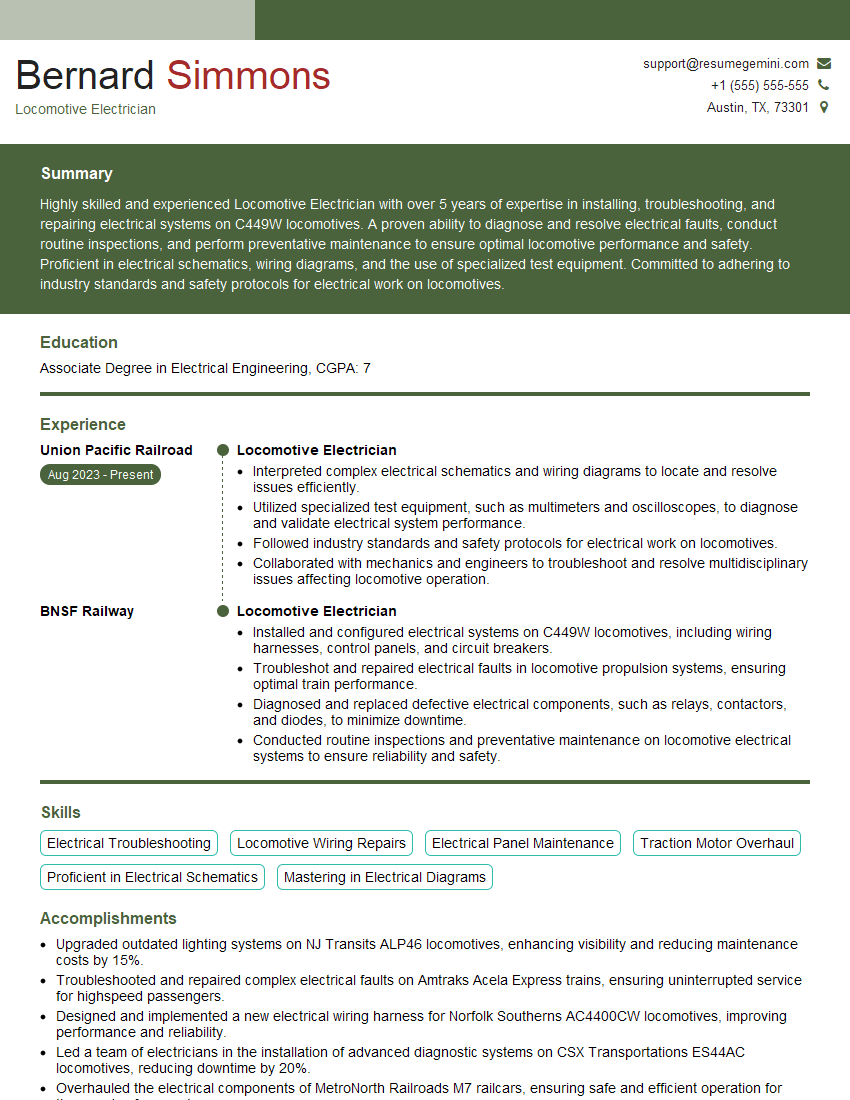
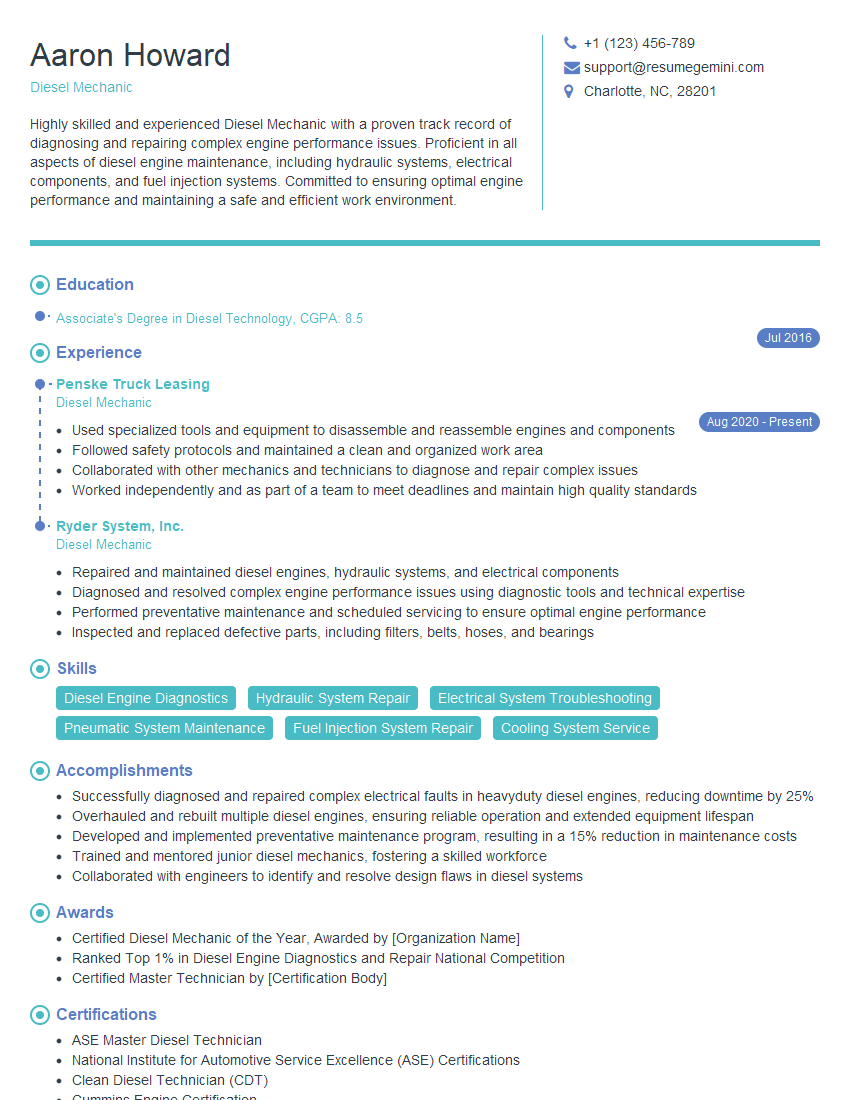
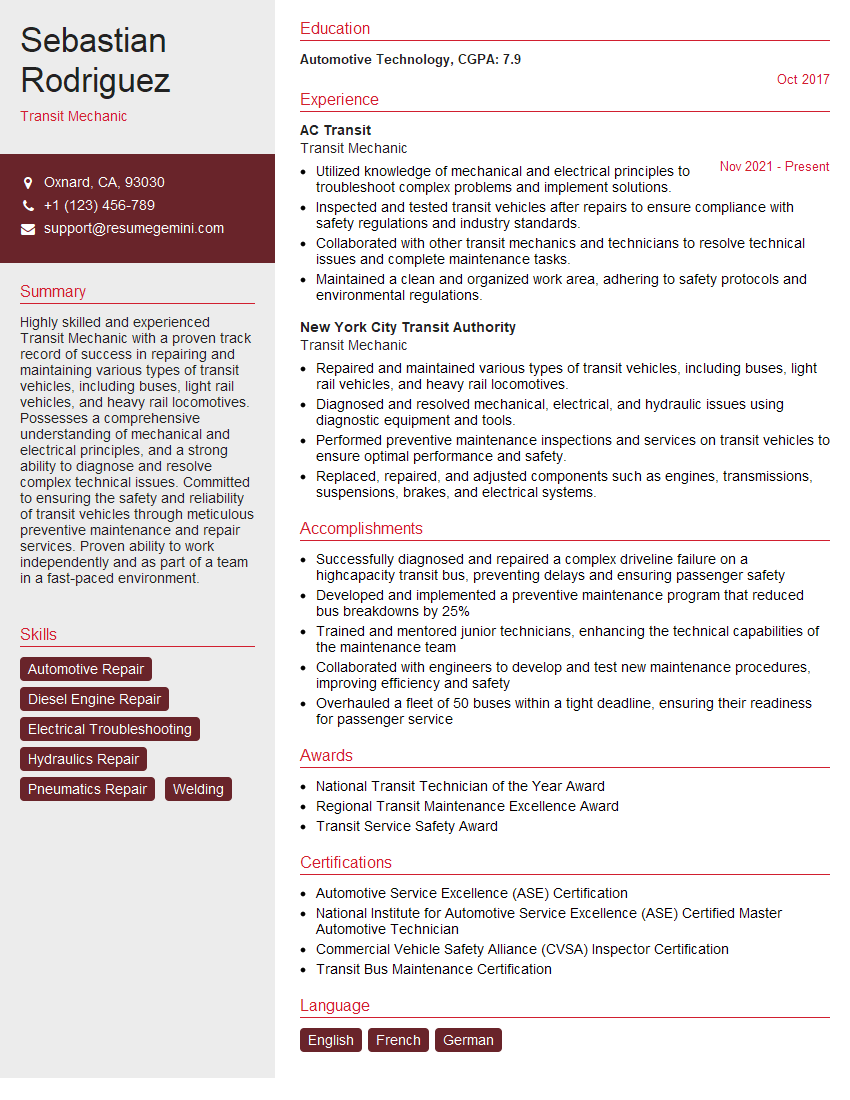
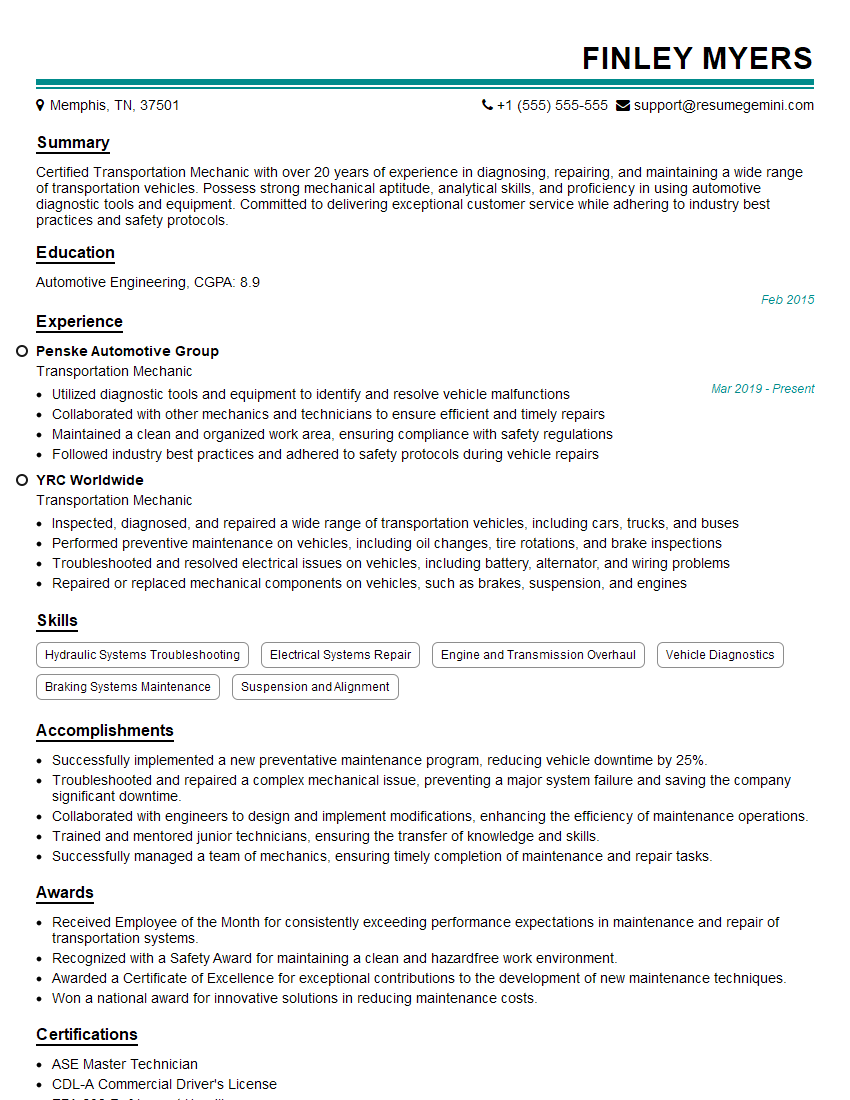
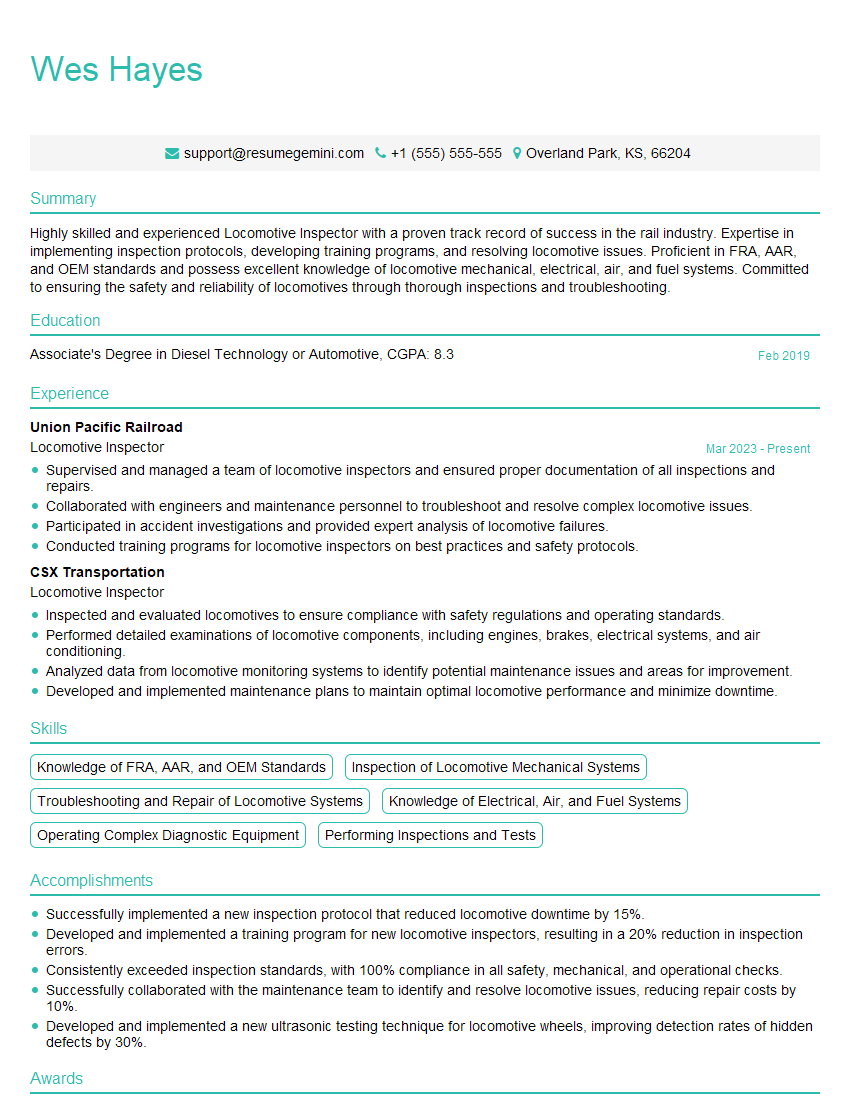
Mastering Locomotive Mechanics opens doors to a rewarding and challenging career with excellent growth potential. To maximize your chances of landing your dream job, invest time in crafting a compelling, ATS-friendly resume that showcases your skills and experience effectively. ResumeGemini is a trusted resource that can help you build a professional, impactful resume tailored to the specific requirements of Locomotive Mechanics positions. Examples of resumes specifically designed for this field are available to guide you.

Explore more articles
Users Rating of Our Blogs
Share Your Experience
We value your feedback! Please rate our content and share your thoughts (optional).
What Readers Say About Our Blog
Really detailed insights and content, thank you for writing this detailed article.
IT gave me an insight and words to use and be able to think of examples