The thought of an interview can be nerve-wracking, but the right preparation can make all the difference. Explore this comprehensive guide to Maintaining Sampling Equipment interview questions and gain the confidence you need to showcase your abilities and secure the role.
Questions Asked in Maintaining Sampling Equipment Interview
Q 1. Describe your experience with preventative maintenance of sampling equipment.
Preventative maintenance is the cornerstone of ensuring reliable sampling equipment. It’s about proactively addressing potential issues before they become costly breakdowns. My approach involves a multi-faceted strategy combining regular inspections, cleaning, lubrication, and component replacement according to manufacturer recommendations and best practices. For example, I regularly inspect all seals and connections on a peristaltic pump used for liquid sampling, checking for leaks or wear, replacing worn parts before they fail and cause contamination or sample loss. I also maintain detailed logs of all maintenance activities, including dates, components serviced, and any findings. This allows for trend analysis and helps to predict future maintenance needs, optimizing operational efficiency and minimizing downtime.
- Visual Inspections: Checking for corrosion, damage, leaks, and loose connections.
- Functional Tests: Verifying the equipment operates within specified parameters.
- Lubrication: Applying appropriate lubricants to moving parts to reduce wear and tear.
- Calibration: Ensuring accuracy and precision through regular calibration procedures.
Q 2. What are the common causes of failure in [specific type of sampling equipment, e.g., liquid samplers]?
Liquid samplers, particularly those used in harsh environments, face several common failure points. One major culprit is corrosion. Exposure to corrosive chemicals can damage pumps, tubing, and valves. Another significant issue is clogging, often caused by particulate matter in the sampled liquid. This can block flow lines or damage pump impellers. Wear and tear on moving parts, such as seals and pump diaphragms, also contributes to failures. Finally, improper handling or lack of maintenance can lead to premature failures. For instance, neglecting to flush the system after sampling can leave residue that hardens and damages components.
- Corrosion: Caused by exposure to acidic or alkaline liquids.
- Clogging: Due to particulate matter in the sample.
- Wear and Tear: From repeated use and lack of lubrication.
- Improper Handling: Leading to damage or leaks.
Q 3. How do you troubleshoot malfunctioning sampling probes?
Troubleshooting malfunctioning sampling probes requires a systematic approach. I begin by visually inspecting the probe for obvious damage, such as bends, cracks, or blockages. I then check the connections, ensuring secure fittings and no leaks. If the problem persists, I test the probe’s electrical connections if applicable and check the functionality of any associated sensors. If the issue involves a blockage, I attempt to clear it using appropriate cleaning methods, following manufacturer guidelines. For example, if a probe is clogged with a viscous substance, I might use a suitable solvent to dissolve it. If none of these steps solve the problem, I might need to replace the probe or seek expert assistance.
- Visual Inspection: Check for physical damage.
- Connection Check: Ensure secure fittings and absence of leaks.
- Electrical Test (if applicable): Verify proper functioning of electrical components.
- Blockage Removal: Attempt to clear any obstructions.
- Component Replacement: Replace damaged parts if necessary.
Q 4. Explain the process of calibrating a [specific type of sampling instrument, e.g., flow meter].
Calibrating a flow meter, such as a rotameter, involves verifying its accuracy against a known standard. The process typically includes several steps. First, I prepare the flow meter and the calibration equipment (usually a precision-calibrated volume measurement device). Then, I establish a range of flow rates to be tested. Next, I carefully adjust the flow to each test point, recording both the flow meter reading and the corresponding volume measured by the standard. The difference between these values represents the error at that flow rate. I plot these values to create a calibration curve, which is then used to correct future measurements or identify the need for repair or replacement of the meter.
- Prepare equipment: Gather necessary tools and materials.
- Establish test points: Define a range of flow rates.
- Measure flow: Record readings from the flow meter and a standard.
- Compare readings: Calculate the error at each point.
- Create calibration curve: Plot the data to obtain a correction curve.
Q 5. What safety precautions do you take when maintaining sampling equipment?
Safety is paramount when maintaining sampling equipment. I always follow a strict safety protocol, including the use of personal protective equipment (PPE), such as safety glasses, gloves, and respirators, depending on the substances being handled. I also ensure the equipment is de-energized before any maintenance is performed and I always follow lockout/tagout procedures to prevent accidental start-up. Working areas must be well-ventilated, especially when dealing with volatile or hazardous materials. Regular safety training keeps my knowledge and practices current, helping me mitigate potential risks. I thoroughly document all safety measures taken for each maintenance activity.
- PPE: Using appropriate safety equipment.
- Lockout/Tagout: Preventing accidental equipment startup.
- Ventilation: Ensuring adequate airflow in the work area.
- Material Safety Data Sheets (MSDS): Consulting MSDSs for handling hazardous materials.
Q 6. How do you identify and address potential hazards related to sampling equipment?
Identifying and addressing potential hazards involves a thorough risk assessment before any work begins. I review the equipment’s Material Safety Data Sheet (MSDS) and assess the potential for exposure to hazardous materials, electrical shocks, or mechanical injuries. This includes considering the specific environment in which the equipment is used and identifying potential hazards from pressure vessels, moving parts, or electrical components. Appropriate controls are implemented, including guarding, personal protective equipment (PPE), and procedural safeguards to mitigate those risks. Regular inspections help to proactively identify and address emerging hazards. For instance, I might notice a frayed electrical cord during a routine inspection, immediately prompting its replacement to prevent a potential electrical shock hazard.
- Risk Assessment: Identifying potential hazards.
- Control Measures: Implementing appropriate safeguards.
- Regular Inspections: Identifying and addressing emerging hazards.
- Documentation: Recording all hazards and mitigation measures.
Q 7. What are the key components of a routine maintenance schedule for sampling equipment?
A routine maintenance schedule is critical for prolonging the life and ensuring the accuracy of sampling equipment. It should include regular inspections, cleaning, lubrication, calibration, and component replacement as needed. The frequency of these tasks depends on the type of equipment, its usage intensity, and the environmental conditions. A well-defined schedule includes specific tasks, responsible personnel, and deadlines. Using a computerized maintenance management system (CMMS) can significantly improve efficiency and help track all maintenance activities. This enables the team to predict when repairs or replacements are required, optimizing maintenance costs and preventing unexpected downtime.
- Regular Inspections: Visual checks for wear and tear, leaks, and damage.
- Cleaning: Removing debris and contaminants.
- Lubrication: Applying lubricants to moving parts.
- Calibration: Verifying accuracy and precision.
- Component Replacement: Replacing worn or damaged parts.
- Documentation: Maintaining detailed records of all maintenance activities.
Q 8. Describe your experience with repairing damaged sampling equipment.
Repairing damaged sampling equipment requires a systematic approach combining diagnostic skills, technical expertise, and a thorough understanding of the equipment’s operational principles. My process typically begins with a visual inspection to identify the extent of the damage. This could range from a simple leak in a tubing connection to a more complex malfunction in the internal mechanisms of a pump or analyzer.
For example, I once encountered a malfunctioning water sampler where the peristaltic pump had failed. After a visual inspection revealed a worn-out pump tube, I replaced the tube, and the sampler functioned correctly. In another instance, a gas chromatograph’s detector was producing erratic readings. Through systematic troubleshooting – checking gas flows, column integrity, and detector settings – I pinpointed a faulty detector component, ultimately requiring its replacement.
More serious damage might involve replacing faulty electronic components, requiring specialized tools and knowledge of circuit boards. I’m proficient in using multimeters, oscilloscopes, and other diagnostic tools to isolate the problem and effect a proper repair. Safety is always paramount; I strictly adhere to safety protocols when handling potentially hazardous materials or working with high-voltage equipment.
Q 9. How do you maintain accurate records of sampling equipment maintenance?
Maintaining accurate records is crucial for ensuring the reliability of sampling data and complying with regulatory requirements. I utilize a computerized maintenance management system (CMMS) to meticulously document all maintenance activities. This system allows me to track equipment calibration dates, repairs, preventative maintenance schedules, and any observed anomalies. Each entry includes details such as the date, time, type of maintenance performed, parts replaced (with serial numbers if applicable), and the technician’s initials.
For example, the CMMS might show that a specific air sampler underwent a filter change on October 26th, 2023, by technician John Doe, using filter part number XYZ123. The system also generates automated alerts for upcoming maintenance tasks, such as calibrations, preventing potential equipment failures and ensuring data integrity. This digital system greatly improves efficiency and minimizes the risk of human error compared to manual record-keeping.
Q 10. Explain your understanding of different sampling techniques and their associated equipment.
My understanding of sampling techniques encompasses a wide range of methods, each requiring specific equipment. For example, grab sampling involves collecting a single sample at a specific point in time, often using simple containers or specialized samplers depending on the material (liquid, solid, gas). Composite sampling involves combining multiple grab samples to represent an average over a period. This technique frequently utilizes automated samplers programmed to collect samples at predetermined intervals.
More complex techniques include continuous monitoring using online analyzers which provide real-time data. This typically involves sophisticated equipment such as gas chromatographs (GCs) for analyzing volatile organic compounds or spectrophotometers for measuring concentrations of dissolved substances. I’m also experienced with specialized sampling techniques for environmental monitoring, including soil coring, water profiling, and air sampling using specialized filters and pumps. Choosing the appropriate sampling technique and equipment depends heavily on the nature of the sample, the desired level of accuracy, and the specific research or regulatory requirements.
Q 11. How do you ensure the accuracy and reliability of sampling data?
Ensuring the accuracy and reliability of sampling data is paramount. This involves a multi-pronged approach beginning with meticulous calibration and validation of all sampling equipment. This includes regularly checking and documenting the accuracy of flow meters, balances, temperature sensors, and other critical components. Preventative maintenance plays a crucial role. Regular servicing, cleaning, and lubrication prevent equipment failure and ensure consistent performance.
Further, proper sampling procedures are vital. This means adhering strictly to protocols for sample collection, preservation, and transportation to avoid contamination or degradation. Blank samples and field replicates are often used to assess the presence of contamination and the precision of the sampling process. Finally, data analysis involves quality control checks to identify outliers or inconsistencies that might indicate equipment malfunction or procedural errors. Through careful attention to every stage of the sampling process, from equipment maintenance to data analysis, I strive to ensure the highest level of data quality and reliability.
Q 12. What are your skills in using diagnostic tools for sampling equipment?
My diagnostic skills encompass a wide range of tools and techniques for various sampling equipment. For electronic components, I use multimeters to measure voltage, current, and resistance, identifying short circuits or open connections. Oscilloscopes help analyze signal waveforms, identifying issues with timing or amplitude. Specialized diagnostic software is often used to troubleshoot issues with programmable logic controllers (PLCs) or data acquisition systems.
For mechanical components, I use calipers and micrometers to check dimensions and identify wear or damage. Leak detection tools, such as pressure gauges and bubble detectors, are used to find leaks in tubing or connections. I am also proficient in interpreting diagnostic codes displayed by the equipment itself, often pinpointing the source of a malfunction. Understanding the schematics and operational principles of the equipment is essential to effectively utilize these tools and accurately diagnose and resolve issues.
Q 13. Describe your experience working with different types of sampling equipment.
My experience spans a diverse array of sampling equipment. I’ve worked extensively with automated water samplers, both for surface water and groundwater, using a variety of sampling bottles and peristaltic pumps. I’m experienced with air samplers employing different filter types for particulate matter, gases, and volatile organic compounds. I’m also familiar with soil sampling equipment including hand augers, corers, and specialized probes for different soil types.
Furthermore, my experience includes working with various types of analyzers such as gas chromatographs, spectrophotometers, and ion chromatographs, used for analyzing the collected samples. This experience covers both routine maintenance and troubleshooting. This broad experience enables me to adapt quickly to new equipment and challenges, making me a versatile asset in a sampling environment.
Q 14. How do you prioritize maintenance tasks on multiple pieces of sampling equipment?
Prioritizing maintenance tasks across multiple pieces of sampling equipment requires a strategic approach. I use a risk-based prioritization system, considering factors such as the criticality of the equipment, its frequency of use, its potential impact on data quality if it fails, and the urgency of upcoming sampling events. Equipment critical to ongoing research or regulatory compliance gets top priority.
For example, a high-volume air sampler used for continuous monitoring of particulate matter would be prioritized over a less frequently used grab sampler. I use the CMMS to schedule preventative maintenance tasks and set reminders for upcoming calibrations or servicing. This ensures that all equipment receives the necessary attention while addressing the most critical needs first. Emergency repairs, of course, take immediate precedence, regardless of pre-existing schedules.
Q 15. Explain your knowledge of relevant safety regulations for handling sampling equipment.
Safety is paramount when handling sampling equipment. My knowledge encompasses a wide range of regulations, including OSHA (Occupational Safety and Health Administration) guidelines for hazardous materials handling, and specific industry standards relevant to the type of sampling being conducted (e.g., environmental sampling, food safety, etc.). This includes understanding and adhering to protocols for:
- Personal Protective Equipment (PPE): Proper use of respirators, gloves, safety glasses, and other PPE depending on the sampled material’s hazards.
- Lockout/Tagout Procedures: Ensuring equipment is properly de-energized and locked out before maintenance or repair to prevent accidental startup and injury.
- Hazardous Waste Disposal: Safe and compliant disposal of any contaminated samples or materials following all relevant local, state, and federal regulations.
- Emergency Response: Familiarity with emergency procedures, including spill response, first aid, and contacting emergency services if needed.
For example, when working with volatile organic compounds (VOCs), I would always ensure the use of appropriate respirators and work in well-ventilated areas, following specific safety data sheets (SDS) instructions for the VOC being sampled. I also conduct thorough risk assessments before each sampling operation to identify and mitigate potential hazards.
Career Expert Tips:
- Ace those interviews! Prepare effectively by reviewing the Top 50 Most Common Interview Questions on ResumeGemini.
- Navigate your job search with confidence! Explore a wide range of Career Tips on ResumeGemini. Learn about common challenges and recommendations to overcome them.
- Craft the perfect resume! Master the Art of Resume Writing with ResumeGemini’s guide. Showcase your unique qualifications and achievements effectively.
- Don’t miss out on holiday savings! Build your dream resume with ResumeGemini’s ATS optimized templates.
Q 16. What is your experience with different types of sampling system designs?
My experience encompasses a variety of sampling system designs, tailored to different applications. I’ve worked with:
- Grab samplers: Simple devices for collecting a single, representative sample at a specific point in time and location. These are useful for quick assessments but might not capture the full variability of the sample source.
- Composite samplers: Combine multiple grab samples to provide a more representative average over a period or location. This is better for reducing variability than a single grab sample.
- Automatic samplers: Programmable systems that collect samples at pre-determined intervals and volumes. These are ideal for continuous monitoring and long-term data collection, reducing human error and increasing efficiency.
- Integrated sampling systems: These systems often incorporate multiple components, such as sample conditioning, flow monitoring, and data logging capabilities, for complex sampling requirements. They usually require specialized knowledge to maintain and operate.
I’m also familiar with designing and implementing sampling systems for various matrices, including liquids, gases, solids, and aerosols, always considering factors like the sample’s properties, required accuracy, and environmental conditions.
Q 17. Describe a time you had to troubleshoot a complex sampling equipment problem.
I once encountered a situation where an automatic water sampler failed to function during a critical environmental monitoring project. The system would initiate a sampling cycle, but the pump wouldn’t engage, resulting in no sample collection. After systematically checking the power supply, wiring, and pump itself (following the manufacturer’s troubleshooting guide), I discovered the issue was a clogged inlet filter. The filter was severely obstructed with sediment, preventing water flow.
My approach involved:
- Isolate the Problem: I methodically checked each component, starting with the simplest aspects and eliminating possibilities based on observations and testing.
- Consult Documentation: I carefully reviewed the sampler’s operation manual and electrical schematics to identify potential causes and safe access procedures.
- Implement Solution: After identifying the clogged filter, I followed the prescribed procedure for filter replacement, ensuring all connections were secure and the system was properly cleaned.
- Verification and Testing: I meticulously tested the system again to ensure its proper operation after the filter replacement, observing the entire sampling cycle.
This experience highlighted the importance of thorough documentation, systematic troubleshooting, and careful adherence to safety protocols.
Q 18. How do you stay updated on the latest advancements in sampling equipment technology?
Staying updated is crucial in this field. I regularly attend industry conferences and workshops, participate in online professional development courses, and subscribe to relevant journals and publications. I also actively network with colleagues and participate in professional organizations, which keeps me aware of the latest advancements. For example, I recently completed a course on the application of IoT sensors in environmental sampling, greatly improving the efficiency and accuracy of remote monitoring systems.
Q 19. Explain your proficiency in interpreting maintenance manuals and schematics.
Interpreting maintenance manuals and schematics is essential for my role. I’m proficient in understanding technical drawings, diagrams, and written instructions. I can read and interpret hydraulic, pneumatic, and electrical schematics. My ability to decipher these documents allows me to accurately diagnose problems and perform effective repairs. I view these documents as roadmaps, guiding me step-by-step through the process, which is crucial for ensuring safety and efficiency. I often use highlighting and notes within the manuals to aid my understanding and tracking of progress.
Q 20. How do you handle situations where you encounter unexpected equipment failures?
Unexpected failures demand a calm and methodical approach. I begin by ensuring the safety of myself and those around me. Then, I carefully assess the situation, documenting the nature of the failure and any visible damage. I will check for any error codes or logs the system might generate. Next, I consult the equipment’s maintenance manual and any relevant troubleshooting guides. If the problem persists, I’ll escalate it to my supervisor or seek expert advice if required. The key is to avoid hasty actions that might worsen the situation or create further risks.
For example, during a field deployment, I experienced a sensor malfunction. Instead of attempting immediate repairs, I recorded the malfunction’s nature and the relevant environmental conditions, and then replaced the sensor with a backup unit to ensure data collection continued without interruption. I later sent the failed sensor back for analysis to determine the root cause and prevent future issues.
Q 21. What software programs are you proficient in using for maintaining sampling equipment?
My proficiency extends to various software programs used for maintaining and managing sampling equipment. I’m skilled in using Computerized Maintenance Management Systems (CMMS) software such as [Mention specific examples, e.g., SAP PM, Maximo, Fiix], which allows me to track equipment history, schedule preventative maintenance, manage parts inventory, and generate reports. I also have experience using data acquisition and analysis software such as [Mention examples, e.g., LabVIEW, Matlab] for monitoring real-time sensor data and conducting post-sampling analysis. These software skills allow for efficient equipment management and effective data analysis.
Q 22. Describe your experience with pneumatic and hydraulic systems within sampling equipment.
Pneumatic and hydraulic systems are crucial in many sampling devices, providing the power for sample acquisition and processing. Pneumatic systems use compressed air or gas to drive mechanisms like pumps, valves, and actuators. Hydraulic systems utilize pressurized liquids, typically oil, offering greater force for heavier-duty applications.
My experience spans various applications. For instance, I’ve worked extensively with pneumatic systems in automated soil sampling equipment, where compressed air powers the drill and sample collection mechanism. I’ve also maintained hydraulic systems in large-scale liquid sampling systems, ensuring precise sample volumes are drawn and transferred. Troubleshooting these systems requires understanding pressure regulators, filters, actuators, and the potential for leaks or component failure. For example, I once diagnosed a malfunction in a pneumatic sampler by systematically checking each component, identifying a faulty air filter that was restricting air flow and causing inconsistent sample collection.
Regular maintenance, including leak checks, filter replacements, and lubrication, is paramount for both pneumatic and hydraulic systems to prevent downtime and maintain accuracy.
Q 23. How do you ensure compliance with industry standards and regulations in sampling equipment maintenance?
Compliance with industry standards and regulations is fundamental to ensuring the integrity of the sampling process and the validity of subsequent analyses. This involves adherence to standards like ISO 9001 (Quality Management Systems), relevant industry-specific guidelines (e.g., EPA methods for environmental sampling), and any applicable local or national regulations.
My approach includes regular calibration of sampling equipment against traceable standards, meticulous record-keeping of maintenance activities, and thorough documentation of calibration results. I also ensure that all personnel involved in sampling and equipment maintenance are trained on the correct procedures and safety protocols. We utilize a computerized maintenance management system (CMMS) to schedule preventative maintenance, track repairs, and ensure compliance. For example, we recently implemented a new CMMS which sends automated alerts for calibration due dates, ensuring timely compliance with our accreditation standards.
Regular audits and internal quality checks are also crucial to identify areas needing improvement and to ensure ongoing compliance.
Q 24. What is your experience working with automated sampling systems?
I possess significant experience with automated sampling systems, ranging from simple automated liquid samplers to complex robotic systems for environmental monitoring. These systems improve efficiency, reduce human error, and allow for consistent, high-throughput sampling. My experience includes programming and troubleshooting Programmable Logic Controllers (PLCs) which control many automated systems.
For example, I was involved in the commissioning of a fully automated water sampling system for a large industrial plant. This involved configuring the PLC to control the sampling intervals, sample volume, and cleaning cycles. Troubleshooting included diagnosing a malfunctioning sensor by analyzing the PLC program and reviewing sensor calibration records, ultimately replacing a faulty level sensor.
My expertise extends to integrating various automated sampling systems with data acquisition and management systems, ensuring seamless data flow and analysis.
Q 25. How familiar are you with different types of sample containers and their applications?
Different samples require specific containers to maintain their integrity and prevent contamination. My familiarity spans a wide range of container types, including glass vials for liquid samples, polyethylene bottles for environmental samples, stainless steel containers for corrosive materials, and specialized cryogenic vials for temperature-sensitive samples.
The choice of container depends on factors such as the sample type, its chemical properties, the required storage temperature, and the analysis to be performed. For example, glass vials are preferred for trace metal analysis because of their inert nature, minimizing the risk of contamination, while polyethylene bottles are commonly used for organic analysis due to their resistance to many solvents.
I’m also familiar with the importance of proper labeling and chain of custody procedures, which ensures traceability throughout the sampling and analysis process.
Q 26. Describe your experience with cleaning and sterilizing sampling equipment.
Cleaning and sterilizing sampling equipment is crucial for preventing cross-contamination and maintaining the accuracy of results. The cleaning procedures vary depending on the material of the equipment and the nature of the previous sample. For instance, glass or stainless steel equipment can be cleaned with detergents and acid washes, followed by thorough rinsing with deionized water.
Sterilization techniques can include autoclaving, using specialized cleaning solutions, or dry heat sterilization, depending on the sensitivity of the equipment. After cleaning and sterilization, thorough drying and proper storage are essential to prevent recontamination.
I have developed and implemented standard operating procedures (SOPs) for cleaning and sterilizing our sampling equipment to ensure consistency and compliance. We regularly review these procedures and make improvements based on best practices and emerging technologies.
Q 27. How do you ensure the proper handling and storage of samples collected?
Proper handling and storage of samples is vital to preserving their integrity and maintaining the validity of analytical results. This involves carefully following established protocols for sample transportation, storage temperature, and handling to prevent degradation or contamination.
For instance, temperature-sensitive samples require immediate refrigeration or freezing, depending on their stability, with a dedicated chain of custody document meticulously tracking the sample’s journey. We use calibrated temperature loggers within the sample transport containers and storage freezers to ensure the integrity of samples is maintained.
Furthermore, appropriate labeling and documentation, including unique sample identifiers and complete chain-of-custody records, are crucial for maintaining traceability and ensuring accountability.
Q 28. What is your experience with regulatory compliance related to sample collection and analysis?
Regulatory compliance related to sample collection and analysis is paramount, particularly in industries like pharmaceuticals, environmental monitoring, and food safety. I’m familiar with regulations from agencies such as the EPA (Environmental Protection Agency), FDA (Food and Drug Administration), and various international standards organizations.
My experience involves ensuring that all sampling procedures adhere to these regulations. This includes using validated sampling methods, proper documentation, ensuring qualified personnel perform sampling tasks, and maintaining a comprehensive quality management system. We conduct regular audits to check for compliance and identify areas for improvement.
Staying up-to-date on the latest regulations and guidelines is crucial, and we participate in relevant training and workshops to maintain our knowledge base.
Key Topics to Learn for Maintaining Sampling Equipment Interview
- Equipment Calibration and Validation: Understanding calibration procedures, frequency, and documentation; interpreting calibration data and identifying potential issues; knowing different validation techniques for ensuring accuracy.
- Preventative Maintenance Schedules and Procedures: Developing and implementing preventative maintenance plans; understanding the importance of regular cleaning, lubrication, and part replacement; troubleshooting common equipment malfunctions.
- Safety Procedures and Regulations: Adhering to safety protocols during maintenance; handling hazardous materials safely; understanding relevant industry regulations and compliance requirements.
- Troubleshooting and Repair: Diagnosing and resolving common equipment problems; utilizing technical manuals and schematics; identifying and ordering replacement parts efficiently.
- Data Management and Record Keeping: Properly documenting maintenance activities, calibration results, and repair logs; maintaining accurate records for compliance and auditing purposes; utilizing relevant software or systems for data management.
- Quality Control and Assurance: Understanding quality control processes related to sampling equipment; identifying and addressing potential sources of error; ensuring the accuracy and reliability of sampling data.
- Different Types of Sampling Equipment: Familiarity with various sampling techniques and the equipment used (e.g., automated samplers, manual samplers, specific equipment for different materials); understanding the strengths and limitations of each type.
Next Steps
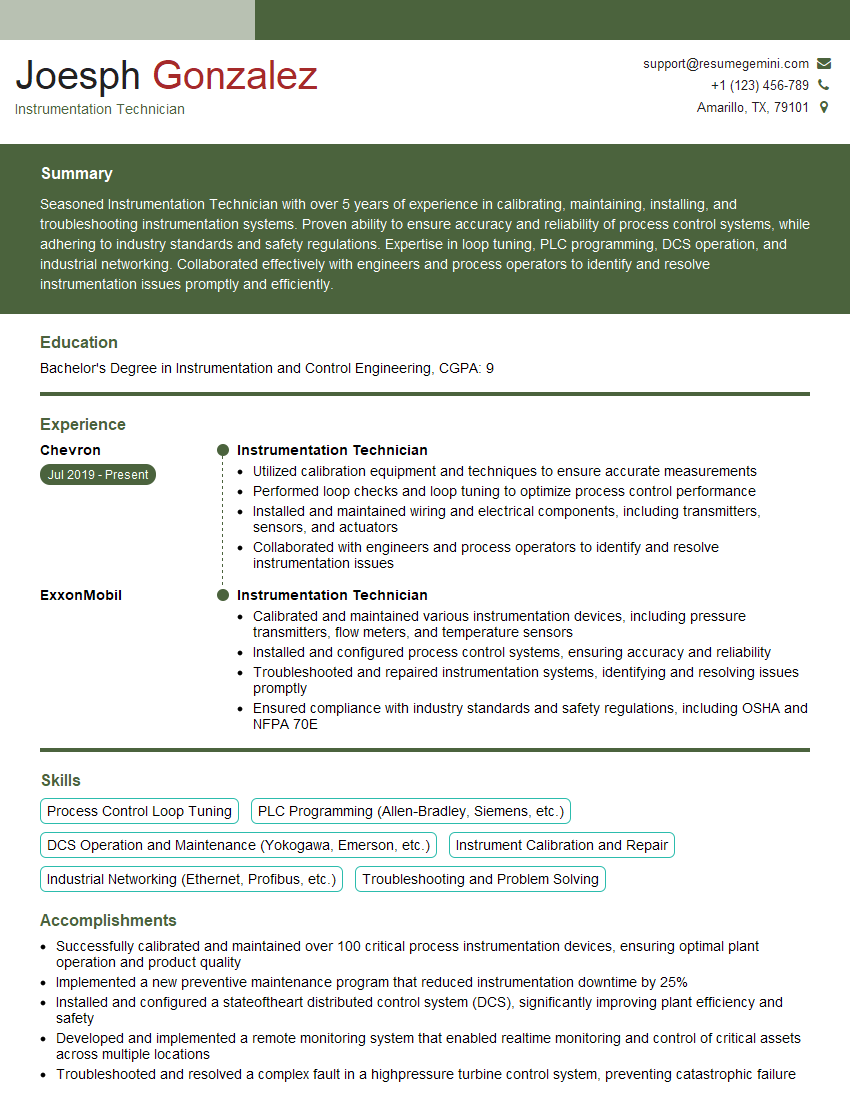
Mastering the maintenance of sampling equipment is crucial for career advancement in many scientific, industrial, and environmental fields. A strong understanding of these procedures demonstrates reliability, attention to detail, and a commitment to quality—highly valued attributes in today’s competitive job market. To significantly improve your job prospects, crafting an ATS-friendly resume is essential. ResumeGemini is a trusted resource to help you build a professional and effective resume that highlights your skills and experience. Examples of resumes tailored to Maintaining Sampling Equipment are available within ResumeGemini to further assist you in showcasing your qualifications.
Explore more articles
Users Rating of Our Blogs
Share Your Experience
We value your feedback! Please rate our content and share your thoughts (optional).
What Readers Say About Our Blog
Really detailed insights and content, thank you for writing this detailed article.
IT gave me an insight and words to use and be able to think of examples