The right preparation can turn an interview into an opportunity to showcase your expertise. This guide to Malting and Brewing Science interview questions is your ultimate resource, providing key insights and tips to help you ace your responses and stand out as a top candidate.
Questions Asked in Malting and Brewing Science Interview
Q 1. Explain the diastatic power of malt and its importance in brewing.
Diastatic power refers to the ability of malt to convert complex carbohydrates, like starch, into simpler fermentable sugars (primarily maltose). This conversion is crucial in brewing because yeast, the workhorse of fermentation, thrives on these simple sugars. The higher the diastatic power, the more efficiently the malt can break down starch, leading to a higher yield of fermentable sugars and ultimately, a more efficient and successful brewing process.
Imagine starch as a large, intricate puzzle. The enzymes in malt act like puzzle-solving experts, carefully breaking the large pieces into smaller, usable parts (sugars). Malt with high diastatic power has many such experts, leading to a faster and more complete breakdown of the starch puzzle. A low diastatic power would mean fewer experts, resulting in less efficient sugar production, potentially impacting the final beer’s body and alcohol content.
In practice, brewers monitor diastatic power to ensure sufficient sugar conversion during mashing. They might choose malts with varying diastatic power depending on the beer style. For example, a high diastatic power malt is often preferred for all-grain brewing, allowing for complete conversion of starch from the grain, while lower diastatic power specialty malts can be used to add specific characteristics like color and flavor.
Q 2. Describe the different types of malt and their applications in beer production.
Malt comes in many varieties, each offering unique properties impacting the final beer. The most common types include:
- Base Malt: Forms the foundation of most beer recipes. It provides the bulk of fermentable sugars, body, and color. Pale malt is a prime example, offering a neutral flavor profile.
- Crystal Malt (Caramel Malt): Produced by heating malted barley at specific temperatures and times. This process contributes color and a range of flavors, from light caramel to rich toffee notes, depending on the degree of roasting. It’s less fermentable than base malt.
- Chocolate Malt: Heavily roasted malt producing intense dark color and a chocolatey flavor, contributing richness and complexity but limited fermentability.
- Roasted Barley: Similar to chocolate malt but often lacks the sweet, caramel notes and contributes more roasty, bitter, and sometimes smoky characteristics. It’s virtually unfermentable.
- Munich Malt: A medium-kilned malt which imparts a rich malt character, body and slight sweetness to the beer. Often used in stronger beers.
For instance, a light lager might primarily use pale malt, while a robust stout would incorporate substantial quantities of chocolate and roasted barley malts to achieve its dark color and intense roasted flavor. Blending different malt types allows brewers to precisely control the color, flavor, and body of their beers.
Q 3. What are the key factors influencing wort production?
Wort production, the stage where sugars are extracted from the malt, is influenced by several key factors:
- Mash Temperature: Precise temperature control during mashing activates different enzyme systems in the malt, impacting the type and amount of sugars released. Incorrect temperatures can lead to incomplete starch conversion or the production of unwanted byproducts.
- Mash pH: The acidity (pH) of the mash influences enzyme activity. An optimal pH range ensures efficient enzymatic action, while deviations can hinder sugar release and alter flavor profiles.
- Malt Quality: The diastatic power and overall quality of the malt significantly impact sugar yield and wort composition. Damaged or low-quality malt can negatively affect wort production.
- Water Chemistry: The mineral content of brewing water plays a critical role. Different ions can influence enzyme activity, pH, and even the final beer’s flavor.
- Mash Time: The duration of the mashing process allows for the enzymes to fully work their magic. Sufficient time allows for the complete conversion of starches to sugars.
Consider brewing a pale ale. A carefully controlled mash temperature profile would favor the production of fermentable sugars while ensuring minimal production of undesirable off-flavors. Conversely, a poor mash, perhaps with incorrect pH, might result in a less fermentable wort and a beer with a noticeable blandness or undesirable flavors.
Q 4. Explain the process of mashing and its impact on beer quality.
Mashing is a crucial step where crushed malt is mixed with hot water to release sugars. This process involves a series of temperature-controlled steps designed to activate specific enzymes in the malt. These enzymes break down complex starches into simple sugars, proteins into amino acids and other important compounds necessary for fermentation.
The process typically begins with a protein rest followed by a sacchrification rest at a higher temperature, and potentially a mash-out step to halt enzymatic activity. These rest steps are important to maintain optimal temperature ranges for enzymes and allow for efficient enzymatic action. The mash is then lautering (separation of the wort from the spent grains).
The impact on beer quality is significant. Proper mashing ensures sufficient sugar production for fermentation, influencing the final beer’s alcohol content, body, and mouthfeel. Moreover, it impacts the flavor profile; enzyme activity during mashing determines the creation of certain desirable compounds, impacting the sweetness, maltiness, and overall balance. An improperly mashed wort will often result in poor fermentation, undesirable flavors, and an overall unbalanced beer.
Q 5. Describe the different types of yeast used in brewing and their characteristics.
Yeast is the heart of beer fermentation, transforming sugars into alcohol and carbon dioxide. Two main categories dominate brewing:
- Ale Yeast (Saccharomyces cerevisiae): Generally ferments at warmer temperatures (15-24°C) and produces a wide range of esters and other flavor compounds. This results in beers with fruitier, fuller-bodied profiles. Different strains of ale yeast give rise to beers from light and refreshing to big and bold.
- Lager Yeast (Saccharomyces pastorianus): Ferments at cooler temperatures (8-15°C) producing cleaner, crisper flavor profiles with less pronounced fruity esters and higher carbonation. This is why lagers often exhibit a smoother, cleaner taste compared to ales.
Imagine baking bread. The yeast (in this case, a different type) causes the bread to rise. Similarly, in brewing, yeast’s metabolism transforms the wort’s sugars, resulting in the characteristic flavors and alcohol content of the final beer. The choice of yeast strain is a critical decision for brewers as it directly impacts the final beer’s style and character.
Q 6. Explain the process of fermentation and the factors that affect it.
Fermentation is the transformation of sugars in the wort into alcohol and carbon dioxide by yeast. This complex biological process is influenced by numerous factors:
- Yeast Strain: The chosen yeast strain dictates fermentation rate, temperature preferences, and the production of various flavor compounds.
- Temperature: Maintaining optimal fermentation temperature is vital. Too high, and off-flavors can develop; too low, and fermentation might stall.
- Wort Composition: The concentration of sugars, nutrients, and other compounds in the wort affects yeast activity and the final beer’s characteristics.
- Oxygen Levels: Yeast requires oxygen for initial growth, but excessive oxygen can lead to oxidation and undesirable flavors. Careful aeration of the wort before fermentation is important but requires careful consideration.
- Sanitation: Contamination by unwanted microorganisms (bacteria, wild yeast) can ruin the fermentation process. Maintaining strict hygiene is essential.
Picture fermentation as a delicate dance between yeast and wort. A perfectly choreographed dance (optimal conditions) results in a balanced and flavorful beer. However, a poorly managed dance (incorrect temperatures, contamination) could lead to off-flavors, incomplete fermentation, or even a spoiled batch.
Q 7. What are the common beer defects and their causes?
Beer defects can range from subtle to significant, significantly impacting quality and drinkability. Some common defects and their causes include:
- Infection (sourness, off-odors): Caused by bacterial or wild yeast contamination during any stage of the brewing process, from grain handling to fermentation.
- DMS (dimethyl sulfide): A cooked corn or vegetable-like aroma, often resulting from improper mashing techniques or prolonged boiling.
- Diacetyl (buttery flavor): A buttery or butterscotch aroma arising from incomplete fermentation or improper yeast management.
- Staling (papery, cardboard-like): Develops over time due to oxidation, often accelerated by exposure to light and air.
- Acetaldehyde (green apple, solvent-like): An off-flavor caused by insufficient fermentation or exposure to high temperatures during fermentation.
Consider a sour beer. While some sourness is desirable in specific styles (like Berliner Weisse), uncontrolled lactic acid bacteria growth could result in extreme sourness, unpleasant flavors and potentially even spoilage. The cause would likely be inadequate sanitation during brewing or fermentation, leading to bacterial contamination.
Q 8. How do you control the pH during the brewing process?
Controlling pH during brewing is crucial because it significantly impacts enzyme activity, yeast health, and the final flavor profile of the beer. Think of pH as the ‘sweet spot’ for all the biochemical reactions happening in your brew. We generally aim for a slightly acidic environment.
Mash pH: The pH of the mash (the mixture of crushed malt and hot water) is particularly important. A mash pH of around 5.2 to 5.6 is ideal for optimal enzyme activity, ensuring efficient conversion of starches to fermentable sugars. We control this using various methods. One common approach is adjusting the water chemistry beforehand. If the water is too alkaline (high pH), we might add lactic acid. If it’s too acidic, we can use calcium carbonate (chalk) to increase the pH. We also consider the type of malt used, as different malts have different pH buffering capacities.
Wort pH: After lautering (separating the wort – the sugary liquid – from the spent grains), the pH of the wort is further monitored. Adjustments might be made here, though less frequently, depending on the desired beer style and the impact of the mash pH.
Fermentation pH: During fermentation, yeast activity subtly alters the pH. We monitor this but usually don’t make direct adjustments. Maintaining a healthy yeast population is key, and this is often influenced more by temperature and nutrient levels than by direct pH control.
Tools and Measurement: Accurate pH measurement is key. We use calibrated pH meters to ensure precision and consistency. Regularly calibrating these instruments is essential for reliable readings.
Q 9. Explain the role of hop acids in beer flavor and aroma.
Hop acids are the key contributors to beer’s bitterness, aroma, and preservation qualities. They’re responsible for that characteristic ‘hoppy’ taste we appreciate in many beers. These acids are largely alpha acids (like humulone and cohumulone) and beta acids (like lupulone and adlupulone).
Alpha Acids and Bitterness: Alpha acids are primarily responsible for the bitterness in beer. During the boiling process, they isomerize (their chemical structure changes), forming iso-alpha acids, which are more soluble in water and impart the characteristic bitterness we taste. The amount of alpha acids in hops is measured as a percentage (AA%), a crucial factor in hop selection for brewers.
Beta Acids and Aroma: While less bitter, beta acids contribute significantly to the aroma of the beer, especially during fermentation and aging. They’re more volatile and release a wider range of aromatic compounds. These contribute to complex fruity, floral, and spicy notes in various hop varieties.
Preservation: The hop acids also act as natural preservatives, inhibiting the growth of unwanted bacteria and extending the beer’s shelf life. This is a crucial aspect of ensuring the quality and safety of the finished product.
Example: A brewer aiming for a strongly bitter IPA will choose hop varieties with high alpha acid content, like Citra or Simcoe. For a more aromatic pale ale, they might favor varieties with a good balance of alpha and beta acids, such as Cascade or Centennial.
Q 10. What are the different methods of hop utilization in brewing?
Brewers utilize hops in various ways to achieve specific flavor and aroma profiles. The method significantly impacts the resulting beer.
- Hop Additions During the Boil: This is the most common method. Hops are added at different stages of the boil to influence bitterness, aroma, and flavor. Early additions (60 minutes) contribute mainly to bitterness, while later additions (15-0 minutes) impart more aroma. This allows for precise control over the balance of the finished beer. The boil also helps to isomerize alpha acids and extract desirable volatile compounds.
- Dry Hopping: This technique involves adding hops to the fermenter after primary fermentation is complete or during secondary fermentation. It is primarily used to impart aroma and flavor, without significant bitterness. Dry hopping is favored for obtaining complex and intense aromatic characteristics, particularly fruity and floral notes.
- Hop Back: In this method, hops are added to a vessel that the beer flows through after fermentation. This is a less common technique but allows for a delicate and intense aroma contribution with minimal bitterness, similar to dry hopping. A well designed hop back can avoid potential negative impacts on clarity.
- First Wort Hopping: Hops are added at the very beginning of the boil to extract bitterness and some aromatic compounds. This method is less commonly used but can create a more robust and lingering bitterness.
The choice of hop utilization method depends on the brewer’s goals for the beer style and the desired balance of bitterness, aroma, and flavor.
Q 11. Describe the process of beer filtration and clarification.
Beer filtration and clarification are essential steps in producing a clear, stable, and appealing final product. They remove yeast cells, hop particles, protein haze, and other solids, extending shelf life and improving the visual appeal of the beer.
Methods:
- Plate Filtration: This is a common method using a stack of plates with filtering media (e.g., diatomaceous earth or perlite). Beer is forced through the plates under pressure, trapping solids and producing a very clear beer. This is effective but requires specialized equipment and careful handling of the filtering media.
- Sheet Filtration: Similar to plate filtration, but using larger filter sheets. It provides slightly less clarity but can handle higher volumes and is more cost-effective for smaller breweries.
- Centrifugation: This method uses centrifugal force to separate solids from the beer. It’s quick and efficient, and it doesn’t require the use of filtering media. It’s often used as a pre-filtration step or in combination with other methods.
- Polishing Filtration: This is a final step for removing any remaining fine particles. Often uses membrane filtration to achieve maximum clarity.
Considerations: The choice of filtration method depends on factors such as beer style, desired clarity, brewery size, and budget. Over-filtration can remove desirable compounds, affecting flavor and aroma, so a balanced approach is crucial.
Clarity vs. Flavor: While clarity is desirable, brewers must balance it with preserving the nuances of flavor and aroma. Some craft brewers opt for minimal or no filtration to maintain a fuller, more natural flavor profile.
Q 12. Explain the role of packaging in preserving beer quality.
Packaging plays a critical role in preserving beer quality, protecting it from light, oxygen, and microbial contamination. The choice of packaging significantly impacts the shelf life and overall sensory experience.
Bottles: Glass bottles offer excellent protection from oxygen and light, but they are fragile and can be heavy to transport. Brown or green glass provides better light protection than clear glass.
Cans: Aluminum cans offer superior protection against light and oxygen, better portability, and less breakage. Their lightweight nature also makes them environmentally friendlier in terms of transportation.
Kegs: Kegs provide a protected environment and minimize oxygen exposure, ideal for draft beer in bars and restaurants. They typically have a short shelf life once tapped.
Oxygen Barriers: Regardless of the packaging type, minimizing oxygen exposure during the filling process is paramount. Modern filling systems utilize techniques like nitrogen flushing to purge oxygen from the package before filling.
Light Protection: Light exposure can lead to the formation of skunky compounds, affecting the flavor and aroma of the beer. Brown glass and aluminum cans offer excellent protection against light degradation.
Proper Storage: Regardless of packaging, storing beer in a cool, dark place away from extreme temperatures will significantly extend its shelf life and maintain its quality. A well-packaged beer stored appropriately will retain its original quality for considerably longer.
Q 13. How do you manage water chemistry for optimal brewing?
Water chemistry is a fundamental aspect of brewing, significantly impacting the final beer’s flavor, color, and overall quality. It’s often called the ‘secret ingredient’ because of its profound influence.
Key Parameters: The main parameters to manage are:
- pH: As discussed previously, pH directly influences enzyme activity and yeast health.
- Calcium (Ca2+): Important for enzyme activity and stability during the mash.
- Magnesium (Mg2+): Essential for yeast health and fermentation.
- Sulfates (SO42-): Enhance hop bitterness and dryness.
- Chlorides (Cl–): Contribute to maltiness and body.
- Bicarbonates (HCO3–): Can act as a buffer, influencing pH and overall balance.
Adjustments: Brewers can adjust their water profile using various methods: adding salts (like calcium chloride or gypsum) to increase desired mineral levels, using acid blends to lower pH, or employing water filtration to reduce unwanted minerals. These adjustments are carefully calculated based on the desired beer style and the characteristics of the water source.
Water Profiles: Different beer styles benefit from specific water profiles. For example, pale ales often prefer a balanced profile, while IPAs might benefit from a higher sulfate concentration for enhanced hop bitterness. Stouts often use softer, less mineral-rich water.
Water Analysis: Regular water analysis is crucial for maintaining consistent beer quality. This enables brewers to understand their base water’s characteristics and adjust accordingly.
Q 14. Describe the different types of beer styles and their characteristics.
Beer styles are incredibly diverse, categorized by ingredients, fermentation methods, and resulting characteristics. Here are some major categories:
- Ales: Fermented with top-fermenting yeast at warmer temperatures, resulting in a wide range of flavors and aromas, from fruity esters and spicy phenols (e.g., Belgian ales) to malty sweetness (e.g., English bitters) to hoppy bitterness (e.g., IPAs).
- Lagers: Fermented with bottom-fermenting yeast at cooler temperatures, typically producing cleaner, crisper, and more balanced flavors. Examples include Pilsners, Märzens, and Bock beers, each with distinct characteristics.
- Wheat Beers (Weizen): Typically made with a significant proportion of wheat malt, resulting in a cloudy appearance and unique flavors often described as bready, spicy, and slightly fruity.
- Stouts & Porters: Dark beers made with roasted barley, imparting rich, dark flavors often associated with chocolate, coffee, or roasted nuts.
- Sours: Beers intentionally soured through lactic acid bacteria, resulting in a tart, acidic profile. These can range from simple Berliner Weisses to complex, aged blends.
- IPAs (India Pale Ales): Known for their intense hop bitterness and aroma, showcasing a variety of hop profiles.
Variations Within Styles: Each of these broad categories further branches into countless sub-styles with subtle variations in flavor, aroma, and appearance. The sheer variety of beer styles reflects the creativity and innovation of brewers worldwide.
Example: An English Bitter is a classic ale characterized by its malty sweetness and moderate hop bitterness, while a West Coast IPA features pronounced hop bitterness, assertive aroma, and a dryer finish.
Q 15. What are the quality control measures implemented during the brewing process?
Quality control in brewing is paramount, ensuring consistent product quality and safety. It’s a multifaceted process spanning the entire brewing chain, from raw material selection to final packaging. We employ a range of measures at each stage.
Raw Material Analysis: Thorough testing of incoming barley (or other grains), hops, and water. This includes assessing moisture content, protein levels, enzymatic activity (in barley), alpha acids (in hops), and mineral content (in water). Discrepancies trigger adjustments to the brewing process or rejection of substandard materials.
In-Process Monitoring: Continuous monitoring of temperature, pH, gravity, and other critical parameters throughout mashing, lautering, boiling, fermentation, and maturation. Automated systems and manual checks ensure these parameters remain within defined ranges. Deviations are investigated and corrected promptly.
Microbial Control: Regular microbiological testing of wort and beer samples to detect any unwanted microorganisms. This includes both aerobic and anaerobic bacteria, as well as wild yeasts. Strict sanitation protocols and preventative measures are essential to maintain a pure yeast culture.
Sensory Evaluation: Trained sensory panelists evaluate beer samples at various stages for aroma, appearance, flavor, and mouthfeel. This provides valuable subjective data to complement objective measurements. This can help identify subtle off-flavors or defects that may not be apparent through chemical analysis.
Finished Product Testing: Final quality checks include alcohol content, bitterness (IBU), color (SRM), and stability testing to ensure the beer meets specifications and will remain shelf-stable. This often involves sophisticated analytical techniques.
For example, if the mash temperature is consistently too low, we might adjust the heating schedule or investigate issues with our mash tun. Similarly, if sensory analysis reveals a persistent off-flavor, we trace back through the process to identify the root cause – perhaps an issue with hop quality, sanitation, or yeast health.
Career Expert Tips:
- Ace those interviews! Prepare effectively by reviewing the Top 50 Most Common Interview Questions on ResumeGemini.
- Navigate your job search with confidence! Explore a wide range of Career Tips on ResumeGemini. Learn about common challenges and recommendations to overcome them.
- Craft the perfect resume! Master the Art of Resume Writing with ResumeGemini’s guide. Showcase your unique qualifications and achievements effectively.
- Don’t miss out on holiday savings! Build your dream resume with ResumeGemini’s ATS optimized templates.
Q 16. Explain the importance of sanitation in brewing.
Sanitation is absolutely crucial in brewing. Unwanted microorganisms can ruin a batch, leading to off-flavors, spoilage, and potentially even unsafe product. Think of it like this: we’re cultivating a specific type of yeast to create the beer, but numerous other microbes are also present and eager to compete. Effective sanitation removes these unwanted competitors.
Our sanitation program incorporates several key steps:
Cleaning-in-Place (CIP): Automated systems use hot water, caustic solutions, and acids to thoroughly clean brewing equipment. This process removes protein, carbohydrates, and other organic materials that microbes feed on.
Disinfection: Following cleaning, we use sanitizing agents like iodophor or peracetic acid to kill any remaining microorganisms. The concentration and contact time are critical for efficacy.
Hygiene Practices: Strict adherence to hygiene protocols by all personnel is vital. This includes proper handwashing, wearing clean clothing, and following established sanitation procedures.
A single lapse in sanitation can result in a sour, infected beer, rendering an entire batch unusable. The costs associated with this – waste of materials, lost production time, and potential reputational damage – underscore the importance of a robust sanitation program.
Q 17. How do you troubleshoot common brewing problems?
Troubleshooting brewing problems requires a systematic approach. It’s like detective work, tracing back through the process to pinpoint the root cause. We use a combination of observation, data analysis, and experience.
Identify the Problem: Start with a precise description of the issue: off-flavor, haze, low gravity, etc. Gather data: temperature logs, pH readings, sensory notes.
Analyze the Data: Examine the data for clues. Were there any unusual temperature fluctuations? Did the pH fall outside the normal range? Were there any issues with raw materials?
Isolate the Source: Consider all possible causes. For instance, a sour taste could stem from bacterial infection, a problem with the malt, or improper sanitation. A cloudy beer may be due to protein haze or infection.
Test Hypotheses: Design and perform experiments to test potential causes. This may involve re-brewing a small batch with modifications to the process or analyzing samples for microbial contamination.
Implement Corrective Actions: Once the problem is identified, implement appropriate corrective actions. This might involve adjusting process parameters, changing raw materials, or improving sanitation practices.
Prevent Recurrence: Document the issue, root cause, and corrective actions to prevent future occurrences. This might involve updating standard operating procedures or investing in new equipment.
For instance, if a beer is consistently coming out too bitter, we might investigate hop additions, boiling time, or the use of different hop varieties. If a persistent haze appears, we might adjust our lautering process or consider using fining agents.
Q 18. What is the role of a Brewmaster?
The Brewmaster is the heart of a brewery, responsible for the overall quality and consistency of the beer. It’s a multifaceted role demanding technical expertise, leadership skills, and a passion for brewing. Key responsibilities include:
Recipe Development and Optimization: Creating and refining beer recipes based on market trends, ingredient availability, and consumer preferences. This often involves experimentation and fine-tuning.
Brewhouse Management: Overseeing the brewing process from grain handling to fermentation, ensuring that all stages are executed correctly and efficiently.
Quality Control: Implementing and monitoring quality control measures throughout the brewing process, ensuring the beer consistently meets specifications and safety standards.
Team Management: Leading and motivating a team of brewers, ensuring effective collaboration and adherence to safety and hygiene protocols.
Troubleshooting: Identifying and resolving any brewing problems that arise, ensuring minimal production downtime and waste.
Cost Control: Optimizing resource utilization and minimizing waste to maintain profitability.
The Brewmaster is not just a technical expert but also a creative leader who ensures that the brewery produces high-quality, consistent beer while inspiring their team.
Q 19. What are your experiences in different brewing processes like all grain, partial mash etc?
My experience encompasses a wide range of brewing processes. I’ve worked extensively with all-grain brewing, partial mash brewing, and extract brewing, each offering unique advantages and challenges.
All-Grain Brewing: Offers the greatest control over the brewing process, allowing for precise adjustments to the mash profile and resulting in a more nuanced and complex beer. This method requires more time and specialized equipment but yields superior results.
Partial Mash Brewing: A blend of all-grain and extract brewing. Part of the mash is made using crushed grains, while the rest employs malt extract, providing a good compromise between control and convenience. It’s a great option for homebrewers wanting to increase complexity while maintaining relative simplicity.
Extract Brewing: Utilizes pre-made malt extracts, simplifying the brewing process. While this lacks the control of all-grain brewing, it’s a great starting point for beginners. I’ve used this technique to produce a variety of beers, demonstrating efficiency when time is limited, especially in larger-scale operations where speed and consistency are critical.
I’ve successfully used all these methods to produce various beer styles, adapting my approach to suit the specific recipe and desired outcome. My experience has highlighted the importance of understanding the nuances of each technique to optimize results and efficiency.
Q 20. How do you manage a brewing team?
Managing a brewing team requires a blend of technical expertise, strong communication skills, and effective leadership. It’s about fostering a collaborative environment where everyone feels valued and empowered.
Clear Communication: Establishing clear expectations, providing regular feedback, and actively listening to team members’ concerns are vital for successful team management. We utilize daily production meetings to discuss progress, challenges, and solutions.
Training and Development: Investing in the training and development of team members ensures that everyone possesses the necessary skills and knowledge to perform their roles effectively. Cross-training is beneficial for handling workload fluctuations.
Motivation and Recognition: Recognizing individual and team achievements boosts morale and fosters a positive work environment. Celebrating successful batches or improvements in efficiency contributes to team unity.
Safety and Hygiene: Maintaining a safe and hygienic work environment is paramount. Strict adherence to safety protocols and regular sanitation practices are critical not only for product quality but also for employee well-being. We use regular safety audits and training to reinforce these protocols.
Problem-Solving: Facilitating a collaborative approach to problem-solving empowers team members and fosters a sense of ownership. Openly discussing challenges helps identify solutions and prevent future issues. We implement a ‘lessons learned’ system to address problems systematically.
By fostering a supportive and collaborative environment, I’ve successfully led teams to achieve high-quality beer production while maintaining efficiency and employee satisfaction.
Q 21. Explain your experience in using different brewing equipment.
My experience spans a diverse range of brewing equipment, from traditional systems to modern automated setups. This includes familiarity with different types of mash tuns, lauter tuns, kettles, fermenters, and packaging equipment.
Mash Tuns: I’ve worked with both traditional and automated mash tuns, understanding the nuances of each and their impact on mash efficiency and wort quality. This includes optimizing the temperature profiles and adjusting grain bills based on the equipment.
Fermenters: Experience ranges from traditional open fermenters to modern jacketed stainless steel vessels, including the ability to manage temperature control, yeast pitch rates, and fermentation profiles efficiently.
Automated Systems: I’ve worked with breweries utilizing SCADA (Supervisory Control and Data Acquisition) systems, which enhance monitoring, control, and data analysis throughout the brewing process. This includes troubleshooting automated equipment and optimizing its settings for maximum efficiency.
Packaging Equipment: I’m proficient in operating and maintaining various packaging systems, ensuring quality and consistency in bottling, canning, and kegging processes. This also involves understanding packaging materials, seal integrity, and production line efficiency.
My broad equipment experience enables me to adapt quickly to different brewery setups and optimize processes for efficient production and consistent quality. This includes troubleshooting issues with both older and newer equipment, ensuring minimal downtime and maintaining high-quality beer production.
Q 22. Describe your understanding of beer sensory evaluation.
Beer sensory evaluation is a crucial aspect of brewing, encompassing the systematic assessment of a beer’s appearance, aroma, flavor, and mouthfeel. It’s not simply about personal preference; it’s a scientific process used to objectively characterize and compare beers. Think of it like a detailed tasting note, but with a structured approach to ensure consistency and accuracy.
The process typically involves trained panelists who evaluate beers using standardized scorecards or descriptive analysis methods. Appearance factors include color, clarity, and head retention. Aroma evaluation involves identifying specific volatile compounds, such as esters, phenols, and hop aromas. Flavor analysis is even more complex, looking for bitterness, sweetness, maltiness, acidity, and other characteristics. Finally, mouthfeel assesses factors like body, carbonation, and astringency.
For example, a panel might describe a specific beer as having a deep amber color, a persistent white head, an aroma of caramel malt and citrus hops, a balanced flavor profile with medium bitterness and sweetness, and a smooth, creamy mouthfeel. These detailed descriptions help brewers understand the impact of various ingredients and brewing processes on the final product and identify potential flaws or areas for improvement. Using standardized methods and properly trained panelists allows for reliable and repeatable evaluations, enabling brewers to maintain consistency and quality in their product.
Q 23. How would you improve efficiency in a brewing process?
Improving efficiency in brewing involves optimizing various stages of the process. One key area is process automation and control. Implementing automated systems for tasks like mashing, lautering, and fermentation can lead to significant time and labor savings, ensuring consistency and reducing human error. This can involve using programmable logic controllers (PLCs) and sophisticated sensors to monitor and control critical parameters.
Another crucial aspect is optimization of energy usage. This can involve implementing energy-efficient equipment, improving insulation, and utilizing waste heat recovery systems. For example, using efficient heat exchangers can reduce energy consumption in the heating and cooling stages of the brewing process. In addition, optimizing the brewing process itself, by carefully controlling parameters like mash temperature and fermentation time and temperature, can also boost efficiency by improving yield and quality.
Furthermore, regular preventative maintenance of equipment, along with efficient cleaning and sanitation practices, minimizes downtime and reduces waste. Finally, a well-designed brewery layout can also improve workflow and reduce material handling times, enhancing overall efficiency.
For instance, in a brewery I worked at, we implemented an automated system for grain handling and mashing which reduced brewing time by 15% and manpower needs by 10%. This kind of systematic improvement in processes contributes significantly to higher efficiency.
Q 24. What are your experience in Quality Control of brewing and malting processes?
My experience in quality control (QC) for both brewing and malting involves comprehensive testing and analysis at each stage of production. In malting, this includes checking parameters such as germination rate, diastatic power, and moisture content, ensuring that the malt meets the required specifications for brewing. This often involves using sophisticated analytical equipment such as spectrophotometers and analytical balances. Problems such as insufficient modification or high levels of pre-harvest sprouting can be detected and addressed at this early stage.
During brewing, QC measures focus on aspects like the pH and gravity of the wort, the efficiency of the mash and lautering, and the progress of fermentation. We utilize various techniques, from simple hydrometer readings to sophisticated laboratory tests, for measuring parameters like alcohol content, bitterness, and color in the finished beer. Microscopic examination of yeast health during fermentation is another essential aspect of QC. Regular sampling and analysis at each stage helps to identify and resolve any deviation from the expected values, preventing defects in the final product. Comprehensive record-keeping is crucial to track trends and identify potential issues proactively.
I’ve been involved in developing and implementing robust QC programs that not only ensure product quality but also help to minimize waste and maintain regulatory compliance. One particular example was implementing a new method of analyzing for off-flavors in the early stages of fermentation, which significantly reduced instances of beer spoilage and associated losses.
Q 25. What are your skills in brewing software and data analysis?
My skills in brewing software and data analysis are extensive. I’m proficient in using various brewing process control software packages to manage and monitor brewing operations, from recipe formulation to fermentation tracking. This includes software like Brewtarget, BeerSmith, and specialized process control systems used in larger breweries.
In data analysis, I’m adept at utilizing statistical methods to analyze brewing data, including process parameters, sensory evaluation results, and quality control data. This allows for identifying trends, correlations, and areas for improvement. I utilize various statistical software packages such as R and Minitab for this purpose. Furthermore, my experience includes creating and analyzing reports to identify bottlenecks and trends that can be used to fine-tune the brewing process.
For example, using statistical process control (SPC) charts I was able to identify that a particular batch of malt significantly affected the fermentation efficiency, allowing for corrective actions to be taken immediately. I can also develop custom databases and spreadsheets to track and analyze production data, which makes trend identification easier and more intuitive.
Q 26. Describe your knowledge of beer microbiology and contamination prevention.
Understanding beer microbiology is paramount for preventing contamination and ensuring consistent product quality. The brewing process involves several stages where microbial contamination can occur, including raw materials, water, equipment, and the fermentation environment. Key contaminants include wild yeasts, lactic acid bacteria, and acetic acid bacteria, which can significantly impact the beer’s flavor and shelf life.
Prevention is crucial and involves maintaining strict sanitation protocols throughout the entire process. This includes regular cleaning and sanitization of all equipment using appropriate chemical agents. Proper water treatment, including chlorination or UV sterilization, is vital. Controlling the fermentation environment, including temperature and oxygen levels, helps to favor the growth of desirable yeast strains and inhibits the growth of undesired microorganisms. Regular microbiological testing of raw materials, wort, and beer samples allows for early detection of contamination and timely intervention. Implementing good manufacturing practices (GMPs) is also integral to prevent and control contamination.
For instance, I once dealt with a case of off-flavors in a lager caused by infection with a wild yeast. By carefully analyzing the microbiology of the infected beer and tracing back the source, I was able to pinpoint the contamination to a poorly cleaned fermentation tank. Implementing more stringent sanitation procedures helped to prevent this problem from recurring.
Q 27. How would you adapt to different styles of beers while maintaining quality?
Adapting to different beer styles while maintaining quality necessitates a thorough understanding of the unique characteristics of each style. This involves adjusting recipes and brewing processes to achieve the desired flavor profile, color, and mouthfeel. For instance, brewing a stout requires different malt selection and mashing techniques than brewing a pilsner. A stout utilizes roasted malts for dark color and intense flavors, while a pilsner emphasizes pale malts for light color and crispness.
Maintaining quality throughout style changes involves consistent application of quality control measures and rigorous sanitation practices. Each style has specific quality parameters; careful monitoring is essential to ensure adherence to those standards. For instance, the bitterness level in an IPA is much higher than in a wheat beer, and this must be precisely controlled during brewing. The yeast selection also greatly impacts the final product, with different yeast strains producing different esters and phenols. Thorough knowledge of yeast strains and their effects is crucial.
My experience includes adapting processes from brewing lagers and stouts to pale ales, sours, and even experimental styles. For example, when we started brewing a sour beer, I had to adapt the entire process to incorporate the appropriate bacteria, control pH levels, and manage the aging process. By carefully planning and controlling every aspect of the process, I was able to maintain consistency and high-quality across these diverse beer styles.
Q 28. Explain your experience with different malting methods and their impact on beer.
My experience encompasses various malting methods, each impacting the final beer’s characteristics. Traditional floor malting, a slow and labor-intensive process, produces malt with unique flavor characteristics due to the natural microbial activity during the process. This method allows for more complex flavor profiles but is less efficient than modern methods.
Modern malting methods, such as drum malting and pneumatic malting, utilize controlled environments for increased efficiency and consistency. Drum malting involves rotating drums to improve aeration and temperature control during germination. Pneumatic malting uses air to control the germination process, offering excellent control over parameters like temperature and moisture. Each method produces malt with slightly different characteristics in terms of diastatic power, color, and flavor compounds.
The choice of malting method significantly affects the final beer. Floor-malted barley often results in beers with more complex and nuanced flavors. Modern methods, while efficient, may produce a malt with slightly less complex flavors but offer better consistency in product quality. The choice depends on the desired beer style and the brewer’s priorities. For example, for a traditional beer style, where unique flavor is highly prized, floor malting might be considered despite its lower efficiency. For mass production, modern methods offer much-needed consistency and speed.
Key Topics to Learn for Your Malting and Brewing Science Interview
- Malting Processes: Understand the fundamental stages of malting (steeping, germination, kilning), their impact on barley quality, and the control of enzymatic activity.
- Brewhouse Operations: Master the principles of mashing, lautering, boiling, and wort handling. Be prepared to discuss practical challenges and solutions related to these processes, such as optimizing enzyme activity or managing wort clarity.
- Yeast Fermentation: Familiarize yourself with yeast physiology, fermentation kinetics, and the factors affecting fermentation performance (temperature, aeration, nutrient availability). Be ready to discuss different yeast strains and their impact on beer characteristics.
- Quality Control and Assurance: Understand the key parameters used to monitor and control the quality of raw materials, process parameters, and finished products. Discuss methods for analyzing grain, wort, and beer.
- Beer Styles and Flavor Profiles: Demonstrate a comprehensive understanding of various beer styles, their key characteristics, and the raw materials and processes that contribute to their unique flavor profiles.
- Sensory Evaluation: Be familiar with techniques for evaluating beer sensory attributes (appearance, aroma, flavor, mouthfeel), and the role of sensory evaluation in quality control.
- Troubleshooting and Problem-solving: Prepare to discuss common brewing challenges and your approaches to identifying and resolving issues related to process optimization and quality control.
- Process Optimization and Efficiency: Discuss methods for enhancing process efficiency, minimizing waste, and maximizing yield in malting and brewing operations.
- Advanced topics (depending on the role): Consider exploring areas like brewing microbiology, advanced analytical techniques, or sustainable brewing practices.
Next Steps
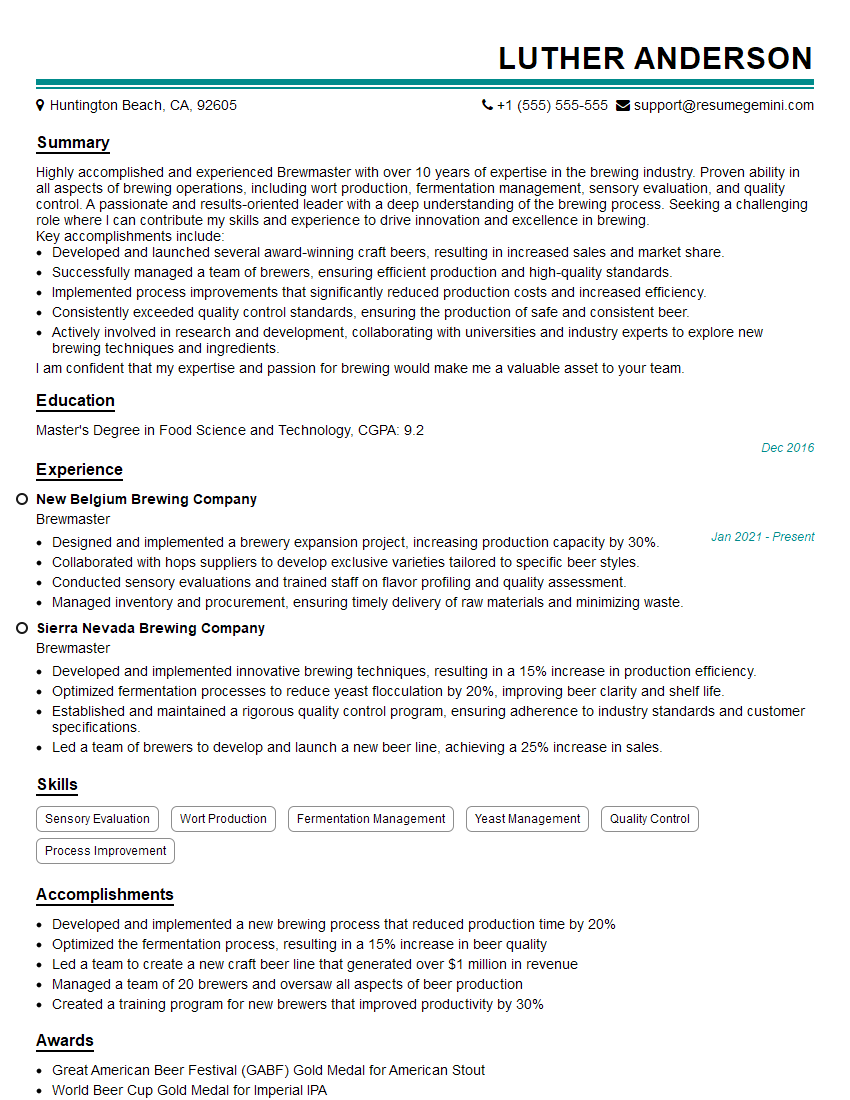
Mastering Malting and Brewing Science is crucial for a successful and rewarding career in this fascinating field. It opens doors to exciting roles in production, quality control, research and development, and more. To significantly boost your job prospects, it’s essential to create an Applicant Tracking System (ATS)-friendly resume that highlights your skills and experience effectively. ResumeGemini is a trusted resource that can help you build a professional and impactful resume tailored to the specific demands of the Malting and Brewing industry. Examples of resumes specifically crafted for Malting and Brewing Science positions are available – take advantage of this valuable tool to present yourself in the best possible light!
Explore more articles
Users Rating of Our Blogs
Share Your Experience
We value your feedback! Please rate our content and share your thoughts (optional).
What Readers Say About Our Blog
Really detailed insights and content, thank you for writing this detailed article.
IT gave me an insight and words to use and be able to think of examples