Cracking a skill-specific interview, like one for Material Handling and Conveyor Systems, requires understanding the nuances of the role. In this blog, we present the questions you’re most likely to encounter, along with insights into how to answer them effectively. Let’s ensure you’re ready to make a strong impression.
Questions Asked in Material Handling and Conveyor Systems Interview
Q 1. Explain the different types of conveyor systems and their applications.
Conveyor systems are the backbone of efficient material handling, automating the movement of goods. They come in various types, each suited to different applications.
- Belt Conveyors: These are the most common, using a continuous loop of belts to transport items. Applications range from simple package handling in a small warehouse to complex, high-speed systems in manufacturing plants. Think of the checkout belt at a grocery store – that’s a basic belt conveyor.
- Roller Conveyors: These use rollers to support the items being moved, allowing them to roll along by gravity or with minimal power. They are ideal for lighter items and situations where gentle handling is required, like in an order fulfillment center handling fragile goods.
- Screw Conveyors: These use a rotating helical screw blade to move bulk materials, like powders or grains, in a trough. This is perfect for transferring materials in food processing or chemical industries where bulk handling is a necessity.
- Chain Conveyors: These utilize chains with attached components to transport items. Variations include overhead chain conveyors, often used in manufacturing assembly lines, and floor chain conveyors for heavier loads. A classic example is the system used in car manufacturing plants to move vehicle bodies through assembly stations.
- Chute Conveyors: These are simple gravity-fed systems that use inclines to move items downwards. They’re often used as part of a larger system, for example, feeding items from an upper floor to a lower floor conveyor system.
- Bucket Elevators: These lift materials vertically using buckets attached to a continuously moving belt or chain. These are commonly used in mines, grain silos and cement plants to move materials between levels.
The choice of conveyor system depends heavily on factors like material characteristics (size, weight, fragility), throughput requirements, space constraints, and budget.
Q 2. Describe your experience with conveyor system design and layout.
My experience in conveyor system design and layout encompasses a wide range of projects. I leverage AutoCAD and specialized simulation software to create efficient and safe layouts. This includes considering factors such as:
- Material flow analysis: Mapping the entire process from receiving to shipping, identifying bottlenecks and optimizing the path of materials.
- Space utilization: Maximizing space efficiency while ensuring sufficient access for maintenance and repairs.
- Ergonomics: Designing systems that minimize strain on workers, such as proper height placement and efficient access points.
- Safety considerations: Incorporating safety features like emergency stops, guarding, and proper lighting.
- Capacity planning: Determining the appropriate conveyor capacity to meet throughput requirements, considering peak demand periods.
For example, in one project, we redesigned a warehouse conveyor system, using simulation software to identify areas where congestion occurred. By strategically adjusting the layout and adding a secondary conveyor, we improved throughput by 25% and reduced material handling time.
Q 3. How do you troubleshoot common conveyor system malfunctions?
Troubleshooting conveyor malfunctions requires a systematic approach. I start by identifying the problem’s nature, location, and severity. My process usually looks something like this:
- Visual inspection: Check for obvious problems like belt damage, misalignment, or obstructions.
- Check control system: Examine PLC programs, sensors, and switches to identify any errors or malfunctions. This often involves using diagnostic tools to check for error codes.
- Examine drive components: Check motors, reducers, and other drive components for proper operation. Look for unusual noise or vibrations that could indicate a problem.
- Check the material flow: Ensure proper material flow and check for jams or blockages along the conveyor.
- Review maintenance logs: Check maintenance records to find out if similar issues have occurred in the past and their resolution.
For example, if a belt conveyor stops unexpectedly, I would check the motor, the emergency stop switch, and then look for any material jamming the system. This systematic approach allows for quick identification and resolution of the issue, minimizing downtime.
Q 4. What are the safety regulations and considerations for conveyor systems?
Safety is paramount in conveyor system design and operation. Regulations vary depending on location but generally include:
- Guards and enclosures: To prevent accidental contact with moving parts.
- Emergency stops: Easily accessible and clearly marked emergency stop buttons at regular intervals.
- Warning signs and labels: Clearly indicating potential hazards.
- Lockout/Tagout procedures: Ensuring safe maintenance and repair procedures.
- Regular inspections and maintenance: To identify and address potential hazards before they cause accidents.
- Training and education: Providing workers with proper training on safe operation and maintenance procedures.
Ignoring safety can lead to severe injuries or fatalities. I always design systems with safety as a top priority, integrating safety features seamlessly into the system’s design.
Q 5. Explain your understanding of material handling equipment selection criteria.
Selecting the right material handling equipment involves careful consideration of several factors:
- Material characteristics: Size, weight, fragility, and abrasiveness of the material being handled. This dictates the type of conveyor and other equipment needed.
- Throughput requirements: The volume of material that needs to be moved per unit time. This determines the capacity and speed required.
- Space constraints: Available space for equipment installation. This influences layout design and equipment selection.
- Budget: Cost of equipment, installation, and maintenance. This requires careful cost-benefit analysis.
- Maintenance requirements: Ease of maintenance and repair. Choosing equipment that’s easy to maintain can reduce downtime.
- Integration with existing systems: Compatibility with existing material handling systems in the facility.
For example, when choosing between a roller conveyor and a belt conveyor, the fragility of the material might dictate the choice of roller conveyor to avoid damaging the product.
Q 6. Describe your experience with PLC programming for conveyor systems.
I have extensive experience in PLC programming for conveyor systems, using platforms like Allen-Bradley and Siemens. My expertise includes:
- Developing control logic: Creating programs to control motor speed, direction, start/stop sequences, and emergency stops.
- Integrating sensors and actuators: Connecting sensors (e.g., photoelectric sensors, proximity sensors) and actuators (e.g., solenoids, pneumatic cylinders) to control material flow and system operation.
- Implementing safety features: Programing safety interlocks, light curtains, and other safety features to prevent accidents.
- Troubleshooting and debugging: Using diagnostic tools to identify and resolve program errors and system malfunctions.
- Data acquisition and reporting: Collecting data on system performance and generating reports for analysis and optimization.
For instance, I once programmed a PLC to manage a complex system of conveyors and sorters in a distribution center. The program incorporated sensors to detect product jams, automatically stopping the system and signaling maintenance personnel. This improved efficiency and minimized downtime.
//Example PLC code snippet (pseudocode): IF (photoelectric_sensor_1 = ON) THEN start_conveyor_1; ELSE stop_conveyor_1; ENDIF;Q 7. How do you optimize material flow in a warehouse or distribution center?
Optimizing material flow in a warehouse or distribution center is crucial for efficiency. My approach involves a combination of strategies:
- Layout optimization: Strategically arranging equipment to minimize travel distances and avoid bottlenecks. This includes using simulation software to model different layouts and identify the most efficient configuration.
- Slotting optimization: Organizing storage locations to maximize picking efficiency. Frequently accessed items should be located closer to picking stations.
- Conveyor system optimization: Ensuring sufficient conveyor capacity, appropriate speeds, and efficient routing of materials.
- Inventory management: Utilizing inventory management systems to optimize stock levels and minimize storage space requirements.
- Process improvement: Streamlining workflows to reduce handling time and improve overall efficiency. This might involve implementing lean manufacturing principles.
- Data analysis: Using data on material flow and warehouse operations to identify areas for improvement.
For example, I helped a client optimize their warehouse layout by implementing a cross-docking system. This allowed them to bypass traditional storage, significantly reducing handling time and improving overall throughput.
Q 8. What are the key performance indicators (KPIs) for material handling systems?
Key Performance Indicators (KPIs) for material handling systems are crucial for evaluating efficiency, productivity, and overall effectiveness. They provide a quantifiable measure of performance against established goals. These KPIs can be broadly categorized into:
- Throughput & Capacity: Units handled per hour, order fulfillment rate, and the maximum capacity of the system. For example, a poorly designed system might struggle to meet peak demand, leading to bottlenecks and order delays. A well-designed system will have sufficient capacity with room for future growth.
- Cost Efficiency: Cost per unit handled, labor costs, maintenance costs, and energy consumption. Analyzing these KPIs helps identify areas for cost optimization. Imagine a system with high energy consumption – optimizing it using energy-efficient motors and controls could drastically reduce operational costs.
- On-Time Delivery: Percentage of orders delivered on time, order cycle time, and lead times. Meeting delivery deadlines is critical for customer satisfaction and reputation. An efficient system with minimal delays ensures on-time delivery.
- Accuracy & Error Rates: Order accuracy, damage rates, and misplacement rates. High accuracy minimizes rework, reduces waste, and boosts customer confidence. Real-time tracking and verification systems are vital for maintaining accuracy.
- Safety & Compliance: Number of safety incidents, compliance with regulations, and adherence to safety protocols. Prioritizing safety is paramount. A system with inadequate safety features can lead to workplace accidents and operational downtime.
- Equipment Utilization: Percentage of time equipment is in active use, equipment downtime, and mean time between failures (MTBF). Maximizing equipment utilization improves ROI and minimizes idle time. Regular preventative maintenance significantly impacts equipment utilization.
By monitoring these KPIs regularly, businesses can identify areas for improvement and make data-driven decisions to optimize their material handling operations.
Q 9. Explain your experience with conveyor system maintenance and preventative maintenance programs.
My experience encompasses both reactive and preventative conveyor system maintenance. In reactive maintenance, I’ve addressed breakdowns, component failures (like motor replacements or belt repairs), and safety hazards. One example involved diagnosing a recurring belt slippage issue on a high-speed roller conveyor. Through systematic troubleshooting – checking belt tension, pulley alignment, and drive motor performance – we identified misaligned pulleys as the root cause, resolving the issue and preventing further downtime.
Preventative maintenance is where I see the most significant impact. I’ve designed and implemented comprehensive programs that include:
- Regular Inspections: Scheduled visual inspections to identify wear and tear, loose components, and potential issues before they escalate.
- Lubrication Schedules: Establishing precise lubrication schedules for bearings, chains, and other moving parts to minimize friction and prolong equipment lifespan.
- Component Replacement: Proactive replacement of components nearing the end of their expected lifespan (e.g., belts, rollers, chains) before they fail.
- Data Monitoring: Using sensors to monitor key performance indicators like motor current, belt speed, and vibration levels to detect anomalies and predict potential failures. This proactive approach is crucial for preventing unexpected downtime.
I’ve utilized CMMS (Computerized Maintenance Management System) software to manage maintenance schedules, track work orders, and maintain detailed equipment history, enhancing efficiency and facilitating preventative actions.
Q 10. Describe your experience with different types of conveyors (roller, belt, chain, etc.)
My experience covers a wide range of conveyor types, including:
- Roller Conveyors: These are simple, gravity-fed systems ideal for light to medium-weight items. I’ve worked on projects involving both powered and gravity roller conveyors, optimizing their design for specific applications and throughput requirements.
- Belt Conveyors: Highly versatile for various loads and distances. My experience includes designing belt conveyors for different materials, using various belt types (e.g., rubber, fabric) tailored to the specific application’s requirements. I have experience optimizing belt tension, tracking, and cleaning systems for different material characteristics.
- Chain Conveyors: Suitable for heavy-duty applications or specialized handling needs. I’ve worked with various types of chain conveyors, including slat, apron, and flight conveyors, selecting the appropriate type for moving different products and materials.
- Screw Conveyors: Used to transport bulk materials like powders or granules, this has involved designing systems that avoid clogging and ensure uniform material flow. This often includes selecting appropriate screw geometry and speed based on material characteristics.
- Overhead Conveyors: Efficient for moving materials in high-density environments. I have been involved in projects designing and implementing overhead monorail systems, focusing on maximizing space usage and optimizing flow efficiency.
My expertise allows me to select the most appropriate conveyor type based on factors such as product characteristics, throughput requirements, space constraints, and budget considerations. Selecting the wrong conveyor type can lead to significant inefficiencies and costs.
Q 11. How do you calculate conveyor system capacity and throughput?
Calculating conveyor system capacity and throughput involves considering several factors:
- Conveyor Speed: Measured in feet per minute (fpm) or meters per minute (mpm).
- Belt Width: The width of the conveyor belt affects how many items can be transported simultaneously.
- Item Dimensions: The size and shape of the items being conveyed impact the number of items that can fit on the belt.
- Item Spacing: Maintaining safe spacing between items is crucial to prevent jams and damage.
- Conveyor Efficiency: This considers factors like downtime and maintenance.
Throughput is calculated as:
Throughput = (Conveyor Speed) x (Belt Width) x (Items per Unit Width) x (Efficiency)
For example, let’s assume:
- Conveyor speed: 100 fpm
- Belt width: 18 inches
- Items per unit width: 1 (assuming items are 18 inches wide)
- Efficiency: 95% (considering some downtime)
Throughput = (100 fpm) x (18 inches) x (1 item/18 inches) x (0.95) = 95 items per minute
Capacity is the maximum throughput the system can handle under ideal conditions (100% efficiency). In this example, capacity would be 100 items per minute. Understanding both throughput and capacity is crucial for planning and optimizing material flow.
Q 12. What is your experience with material handling software and WMS integration?
I have extensive experience integrating material handling software and Warehouse Management Systems (WMS). This experience includes:
- WMS Integration: I’ve worked on projects integrating conveyor systems with WMS solutions to track materials in real-time, optimize inventory management, and automate tasks like order picking and shipping. This involves using APIs and data exchange protocols to seamlessly integrate the systems.
- SCADA Systems: I’m proficient in using Supervisory Control and Data Acquisition (SCADA) systems to monitor and control conveyor systems, gathering real-time data on performance metrics, detecting issues, and triggering alerts.
- Material Tracking Systems: Experience with implementing RFID (Radio-Frequency Identification) or barcode tracking systems to ensure accurate item tracking throughout the conveyor system. This is crucial for inventory control and order accuracy.
- Data Analysis: I utilize data from the software to analyze system performance, identify bottlenecks, and optimize material flow, leading to significant improvements in efficiency and productivity. For instance, I’ve identified and eliminated unnecessary conveyor segments using data analysis, resulting in significant energy savings and improved throughput.
Integration of software solutions adds a layer of intelligence to material handling, enabling greater control and optimized performance.
Q 13. Explain your experience with automated guided vehicles (AGVs) or automated storage and retrieval systems (AS/RS).
I possess substantial experience with Automated Guided Vehicles (AGVs) and Automated Storage and Retrieval Systems (AS/RS).
AGVs: I’ve worked on projects involving the implementation and integration of AGVs into warehouse operations, optimizing their routing and scheduling to minimize travel time and maximize throughput. This often includes considering factors like traffic flow, obstacle avoidance, and battery charging strategies. One project involved integrating a fleet of AGVs into an existing warehouse to automate the transportation of goods, significantly reducing manual labor and improving efficiency.
AS/RS: My experience includes designing, implementing, and maintaining high-bay AS/RS systems. This involves selecting appropriate storage and retrieval technologies (e.g., cranes, stacker cranes), designing efficient storage layouts, and optimizing retrieval algorithms to maximize storage capacity and throughput. I have worked on several projects where implementing an AS/RS drastically improved storage capacity and order fulfillment times compared to traditional manual methods.
In both AGV and AS/RS projects, I emphasize safety protocols and maintenance strategies to minimize downtime and ensure optimal operational performance. The complexity and safety requirements demand rigorous planning and careful execution. The improved efficiency and reduced labor costs generally far outweigh the initial investment in these automated systems.
Q 14. How do you ensure the efficiency and effectiveness of material handling processes?
Ensuring efficient and effective material handling processes requires a holistic approach. It involves:
- Process Mapping and Optimization: Carefully analyzing existing material flow, identifying bottlenecks, and optimizing layouts to streamline the process. This can involve techniques like value stream mapping to identify areas for waste reduction and improvement.
- Technology Integration: Leveraging material handling software, WMS, AGVs, and AS/RS systems to automate tasks, improve accuracy, and gain greater control over the process.
- Preventative Maintenance: Implementing a robust preventative maintenance program to minimize equipment downtime and maximize equipment lifespan.
- Training and Employee Engagement: Training employees on proper operating procedures, safety protocols, and the effective use of equipment and technology. Employee buy-in is critical for successful implementation and ongoing efficiency.
- Continuous Improvement: Regularly monitoring KPIs, analyzing performance data, and making data-driven decisions to continuously improve efficiency and effectiveness. This involves implementing a continuous improvement methodology like Kaizen to identify and address small but significant inefficiencies.
- Safety First: Prioritizing safety throughout the entire process by implementing appropriate safety measures, training employees, and regularly reviewing safety procedures. Ignoring safety concerns not only damages morale but can lead to expensive and potentially dangerous consequences.
By focusing on these key areas, businesses can create a highly efficient and effective material handling system that optimizes throughput, minimizes costs, and ensures customer satisfaction.
Q 15. Describe your experience with lean manufacturing principles in material handling.
Lean manufacturing principles are crucial for optimizing material handling. My experience involves applying techniques like 5S (Sort, Set in Order, Shine, Standardize, Sustain) to improve workplace organization and efficiency. This means eliminating unnecessary movements and waste in the material flow. I’ve also implemented Value Stream Mapping to visualize the entire material flow process, identify bottlenecks (areas where materials are unnecessarily delayed), and suggest improvements. For example, in a previous project, VSM revealed that a significant delay occurred during the transfer between two conveyor systems. By implementing a buffer zone and optimizing the speed of both conveyors, we reduced the processing time by 15%.
Furthermore, I’ve actively used Kaizen, a continuous improvement methodology, to implement small, incremental changes. In one case, we identified a recurring issue with package jams on a specific conveyor section. Through Kaizen events, involving operators and engineers, we identified the root cause and implemented a simple guide rail adjustment, significantly reducing jams. Lean principles are not just about efficiency; they also contribute to safety by reducing the risk of accidents caused by clutter or inefficient workflows.
Career Expert Tips:
- Ace those interviews! Prepare effectively by reviewing the Top 50 Most Common Interview Questions on ResumeGemini.
- Navigate your job search with confidence! Explore a wide range of Career Tips on ResumeGemini. Learn about common challenges and recommendations to overcome them.
- Craft the perfect resume! Master the Art of Resume Writing with ResumeGemini’s guide. Showcase your unique qualifications and achievements effectively.
- Don’t miss out on holiday savings! Build your dream resume with ResumeGemini’s ATS optimized templates.
Q 16. What are the common challenges in implementing new conveyor systems?
Implementing new conveyor systems presents various challenges. Integration with existing systems is often a major hurdle. It requires careful planning to ensure seamless material flow between the new and old equipment, including considerations for data exchange and control systems. Another common issue is accurate capacity planning. Underestimating throughput requirements can lead to bottlenecks and delays, while overestimating can result in unnecessary costs. Properly assessing peak demand and future scalability needs is critical.
Budget constraints can limit the scope and quality of the project. Finding the right balance between cost and functionality is crucial. Space limitations within the facility can also impact the layout and type of conveyor system that can be implemented. Finally, regulatory compliance is vital. Conveyor systems need to meet safety standards (OSHA, etc.), and this needs to be considered during the design and installation phases. Thorough risk assessment and proper safety mechanisms are critical to ensure a safe working environment.
Q 17. How do you handle unexpected downtime in conveyor systems?
Unexpected downtime in conveyor systems requires a structured approach. My first step is to isolate the problem. This involves quickly assessing the system to pinpoint the source of the failure. We use a combination of diagnostic tools, operator feedback, and historical data to identify the cause. Simultaneously, I initiate a rapid response team composed of skilled maintenance technicians and engineers to address the issue. Our approach includes established protocols for common issues, such as sensor failures or belt misalignments.
We prioritize repair speed, but safety is always paramount. Temporary workarounds may be implemented to minimize disruption, but only if they don’t compromise safety. Once the problem is resolved, we conduct a root cause analysis to understand why the failure occurred and prevent similar incidents in the future. This includes documentation, updates to maintenance schedules, and potentially operator training to identify potential issues early. The entire process is carefully tracked to analyze downtime duration and implement improvements to minimize future disruptions.
Q 18. Explain your knowledge of different types of sorting systems.
Sorting systems are crucial for efficient order fulfillment and distribution. I have experience with several types, including:
- Cross-belt sorters: These use a series of belts moving at different speeds to divert items to different chutes. They are highly adaptable to varying package sizes and throughput needs.
- Pusher-type sorters: These utilize pushers to divert items into different lanes. They’re suitable for high-volume applications with relatively uniform packages.
- Pop-up wheel sorters: These employ rotating wheels to lift and direct packages onto diverging conveyors. They are efficient and handle various package types effectively.
- Tilt-tray sorters: These use angled trays to divert items gently onto different chutes, suitable for fragile items.
The choice of sorting system depends on factors such as throughput requirements, package characteristics, space constraints, and budget. I carefully assess these parameters to select the most efficient and cost-effective solution for each specific application.
Q 19. Describe your experience with conveyor system upgrades and modifications.
My experience with conveyor system upgrades and modifications is extensive. This often involves improving efficiency, throughput, or integrating new technologies. The process begins with a thorough needs assessment to identify the areas needing improvement and define project goals. This includes analyzing current system performance, identifying bottlenecks, and assessing future needs.
Next, we develop detailed design specifications, including selecting appropriate components, considering compatibility with existing systems, and ensuring compliance with safety regulations. The implementation phase requires careful project management, including scheduling, resource allocation, and risk mitigation. Following installation, we conduct rigorous testing and commissioning to verify system performance and functionality. Finally, we provide training to operators on the upgraded system to ensure proper usage and maintenance. For example, a recent upgrade involved replacing outdated PLC controllers with modern SCADA systems for improved monitoring and remote control.
Q 20. How do you ensure the safety of personnel working around conveyor systems?
Safety is paramount in any conveyor system operation. My approach focuses on multiple layers of protection. Firstly, we implement robust engineering controls, such as emergency stop buttons readily accessible throughout the system, light curtains and sensors to detect personnel intrusion, and interlocks to prevent accidental startups. Secondly, we ensure proper guarding of all moving parts to prevent accidental contact. We use appropriate guard materials and designs to ensure safety without hindering access for maintenance.
Thirdly, we provide comprehensive operator training, covering safe operating procedures, emergency response, and lockout/tagout procedures. This includes both classroom training and hands-on demonstrations. Regular safety audits and inspections are performed to identify potential hazards and address them promptly. Documentation is critical, including safety manuals, emergency procedures, and maintenance logs. We also maintain open communication channels for reporting any safety concerns or near-miss incidents, fostering a strong safety culture within the team and promoting proactive safety measures.
Q 21. What are your preferred methods for managing conveyor system projects?
My preferred methods for managing conveyor system projects are based on a structured approach utilizing project management methodologies like Agile or PMBOK. This starts with defining clear project objectives, scope, and deliverables. A detailed work breakdown structure (WBS) is created to break down the project into manageable tasks. A realistic schedule is developed, incorporating potential delays and unforeseen circumstances.
Regular project meetings are held with all stakeholders to track progress, address challenges, and make necessary adjustments. Risk management is integrated throughout the project lifecycle, identifying potential problems and developing mitigation strategies. Cost control is ensured through budgeting, cost tracking, and value engineering. Throughout the process, I maintain clear and consistent communication with clients and team members to ensure everyone is informed and aligned. The final stage involves thorough testing, commissioning, and handover to the client, coupled with comprehensive documentation and support.
Q 22. How do you prioritize maintenance tasks for conveyor systems?
Prioritizing conveyor system maintenance is crucial for maximizing uptime and minimizing costly breakdowns. I use a risk-based approach, combining factors like criticality, age, and condition to rank tasks. This isn’t a simple checklist; it involves a structured process.
- Criticality Analysis: Identifying conveyors essential for production. A main line conveyor feeding a packaging line has much higher priority than a secondary transfer system.
- Predictive Maintenance: Utilizing data from sensors, vibration analysis, and thermal imaging to predict potential failures before they occur. This allows for scheduled maintenance, reducing unexpected downtime.
- Preventive Maintenance: Implementing a regular schedule for lubrication, inspections, and component replacements based on manufacturer recommendations and historical data. This prevents minor issues from escalating into major problems. For instance, regular belt cleaning prevents build-up that could lead to slippage or damage.
- Condition-Based Maintenance: Monitoring the condition of components through regular inspections and testing. This allows for maintenance only when necessary, optimizing resource allocation. For example, analyzing motor current can reveal early signs of bearing wear.
- CMMS Software: Employing Computerized Maintenance Management Systems (CMMS) to track work orders, schedule maintenance, and manage inventory. This provides a centralized system for managing all maintenance tasks and data.
For example, in a food processing plant, I might prioritize the sanitation of conveyors handling raw ingredients over a less critical internal transfer system, even if both are due for maintenance around the same time. The potential for contamination in the former necessitates faster action.
Q 23. Explain your understanding of different types of palletizing and depalletizing systems.
Palletizing and depalletizing systems automate the process of stacking and unstacking products onto pallets, significantly increasing efficiency and reducing labor costs. The choice of system depends heavily on factors like product type, throughput requirements, and available space.
- Types of Palletizing Systems:
- Robotic Palletizing: Highly flexible and adaptable to various product shapes and sizes. They provide speed and precision but can be more expensive.
- Layer Palletizing: Uses a pusher or rotary head to create layers on the pallet. Suitable for uniform products and high throughput.
- Conventional Palletizers: Utilize a combination of conveyors, pushers, and rotating arms to build pallets. A more cost-effective choice but may lack the flexibility of robotic systems.
- Types of Depalletizing Systems:
- Robotic Depalletizing: Similar advantages to robotic palletizing – great flexibility and speed, but higher investment cost.
- Vacuum Depalletizers: Ideal for handling fragile or oddly shaped products. Using vacuum cups to grip and move products.
- Clamp Depalletizers: Use mechanical clamps to pick up and move products, suitable for heavier and more robust items.
For example, a beverage company might choose a high-speed layer palletizer for its uniform cases, while a distribution center handling mixed pallets of diverse goods might opt for a more versatile robotic system. Depalletizing needs would align similarly; a bakery handling delicate cakes may choose vacuum, while bricks might use a clamp system.
Q 24. What are your experiences with different types of conveyor components (e.g., rollers, belts, motors)?
My experience encompasses a wide range of conveyor components, and understanding their interplay is crucial for efficient system design and maintenance. Each component has unique characteristics and failure modes.
- Rollers: I’ve worked with various roller types, including gravity rollers, powered rollers, and specialized rollers for specific products (e.g., flighted rollers for bulk materials). Maintenance focuses on lubrication, alignment, and replacing worn rollers.
- Belts: I have experience with different belt materials (PVC, polyurethane, fabric), each suited to specific applications and environments. Factors like belt tension, tracking, and cleaning are critical for belt maintenance. Splices, if needed, require specific techniques to ensure smooth operation.
- Motors: I’m familiar with AC and DC motors, gear motors, and servo motors, understanding their respective applications and maintenance requirements. Regular lubrication, vibration analysis, and monitoring of current draw help prevent motor failures.
- Other Components: My experience also covers other crucial parts such as drives, sensors, controls, and safety devices. Regular inspection and calibration are paramount to ensure safety and system reliability.
For instance, in a manufacturing plant with a high-temperature environment, I would select polyurethane belts for their heat resistance. In a food processing facility, I would prioritize hygienic, easily cleanable rollers.
Q 25. How do you assess the ROI of a new conveyor system or material handling improvement?
Assessing the ROI of a new conveyor system or material handling improvement involves a thorough cost-benefit analysis. It’s not just about the initial investment; it considers long-term savings and productivity gains.
- Cost Calculation: This includes equipment costs, installation, training, and ongoing maintenance. I also factor in potential disruption to production during installation.
- Benefit Quantification: This is the most crucial aspect and involves identifying and quantifying all potential benefits. Examples include:
- Reduced Labor Costs: Automation typically reduces labor needs.
- Increased Throughput: Faster and more efficient material flow leads to higher production.
- Reduced Waste: Minimized product damage and spoilage.
- Improved Safety: Reducing workplace accidents and associated costs.
- Lower Inventory Costs: Improved flow often leads to smaller buffer stocks.
- ROI Calculation: A simple ROI calculation is:
(Total Benefits - Total Costs) / Total Costs. A more sophisticated approach might use discounted cash flow analysis to account for the time value of money.
For instance, a project that costs $100,000 and yields annual savings of $25,000 will have a simple payback period of four years and a higher overall ROI over a longer timescale by incorporating additional benefits, like safety improvements.
Q 26. Describe your experience working with different types of conveyors in different industries.
My experience spans various industries, each with unique material handling challenges and requirements. The type of conveyor used is tailored to the specific application.
- Manufacturing: In manufacturing plants, I’ve worked with roller conveyors, belt conveyors, and specialized conveyors (e.g., accumulation conveyors, chain conveyors) for moving parts, assemblies, and finished goods. High throughput and efficiency are key.
- Warehousing and Distribution: Here, I’ve implemented sortation systems, palletizing and depalletizing systems, and high-density storage solutions. Focus here is on optimizing space, minimizing handling, and streamlining order fulfillment.
- Food Processing: In food processing facilities, sanitary design is paramount, requiring specialized conveyors that are easy to clean and maintain, constructed of materials resistant to corrosion and food-grade lubricants.
- Postal Services: I’ve worked on high-speed sortation systems for mail and parcels, requiring robust and reliable equipment capable of handling large volumes of items.
The conveyors used in a food plant will differ significantly from those in a manufacturing plant producing heavy machinery due to factors like sanitation, product fragility, and load-bearing capacity. My experience allows me to match the system to the unique demands of each setting.
Q 27. How do you stay up-to-date on the latest technologies and trends in material handling?
Staying current in material handling requires a multifaceted approach. The field is constantly evolving with technological advancements.
- Industry Publications and Journals: I regularly read industry magazines and journals like Modern Materials Handling and others to stay abreast of new technologies and best practices.
- Trade Shows and Conferences: Attending trade shows (e.g., MODEX) and conferences provides firsthand exposure to the latest equipment and innovations and offers opportunities for networking.
- Online Resources and Webinars: Many organizations offer webinars and online resources on topics related to material handling.
- Manufacturer Websites and Documentation: I regularly consult manufacturer websites for specifications, updates, and case studies showcasing new technologies and applications.
- Professional Organizations: Membership in organizations like the Material Handling Industry of America (MHIA) provides access to resources, networking, and educational opportunities.
This continuous learning ensures I am aware of emerging trends, such as the increasing use of robotics and automation, the application of AI for predictive maintenance, and the development of more sustainable material handling solutions.
Q 28. What are your problem-solving skills related to material handling and conveyor systems breakdowns?
My problem-solving approach to conveyor system breakdowns is systematic and focuses on quick diagnosis and efficient repair. It’s about minimizing downtime.
- Safety First: Securing the area to ensure worker safety is always the priority before beginning troubleshooting.
- Data Gathering: Collecting information from operators, maintenance logs, and sensors to understand the nature of the problem. This might include error codes from the PLC (Programmable Logic Controller).
- Visual Inspection: A thorough visual inspection to identify obvious issues, such as damaged components, obstructions, or misalignments.
- Systematic Troubleshooting: Employing a methodical approach, checking each component in a logical sequence (power supply, motor, sensors, controls, etc.). I might use flow charts or diagnostic tools to guide this process.
- Root Cause Analysis: Once the immediate problem is solved, I delve into the root cause. Was it a single component failure, or was it a symptom of a larger issue? This prevents recurrence.
- Documentation: Thorough documentation of the issue, diagnosis, and repair process is essential for future reference and continuous improvement.
For example, a conveyor stopping might initially seem like a motor failure. However, after investigation, the root cause could be a jammed roller caused by a build-up of material, highlighting the importance of regular cleaning and preventive maintenance.
Key Topics to Learn for Material Handling and Conveyor Systems Interview
- Conveyor Types and Selection: Understanding the various types of conveyors (roller, belt, chain, screw, etc.) and their suitability for different applications. Consider factors like material characteristics, throughput requirements, and budget constraints.
- Material Flow Design and Optimization: Analyzing material flow within a facility and designing efficient conveyor systems to minimize bottlenecks and maximize throughput. This includes understanding concepts like line balancing and lean manufacturing principles.
- Safety and Regulations: Familiarity with OSHA regulations and safety procedures related to conveyor systems, including lockout/tagout procedures, guarding requirements, and emergency shutdown mechanisms.
- Troubleshooting and Maintenance: Understanding common conveyor system problems, preventative maintenance schedules, and troubleshooting techniques. This includes familiarity with various sensors, actuators, and control systems.
- Automation and Control Systems: Knowledge of Programmable Logic Controllers (PLCs), SCADA systems, and other automation technologies used to control and monitor conveyor systems. Be prepared to discuss integration with other warehouse management systems (WMS).
- Material Handling Equipment: Beyond conveyors, understanding other material handling equipment such as forklifts, automated guided vehicles (AGVs), and robotic systems, and their integration with conveyor systems.
- Cost Analysis and ROI: Ability to assess the cost-effectiveness of different conveyor system designs and justify investments based on return on investment (ROI) calculations.
Next Steps
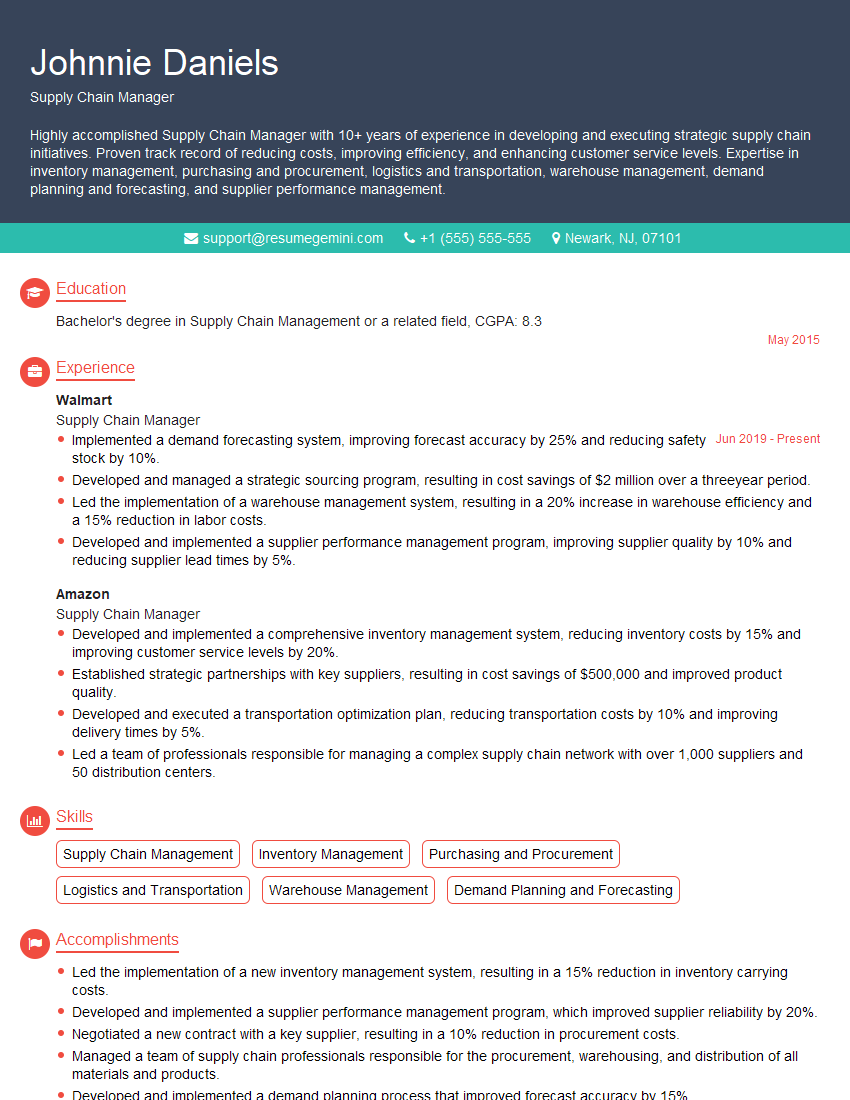
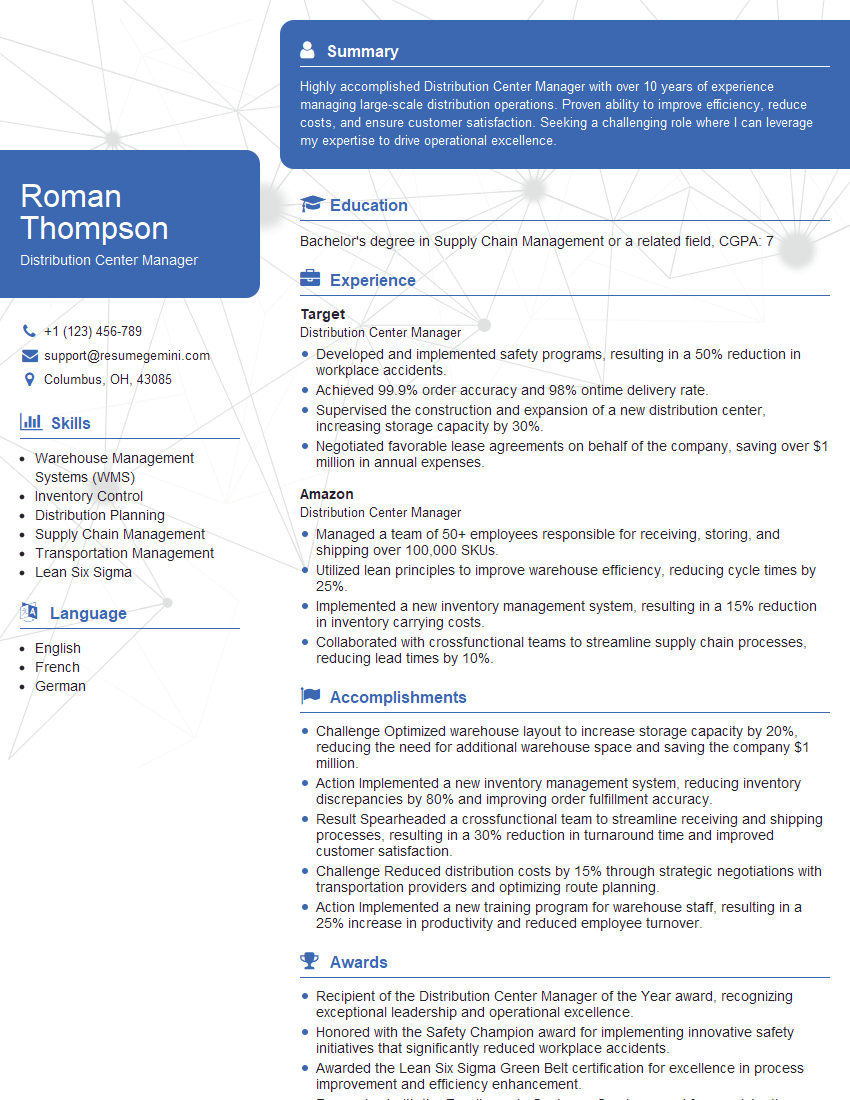
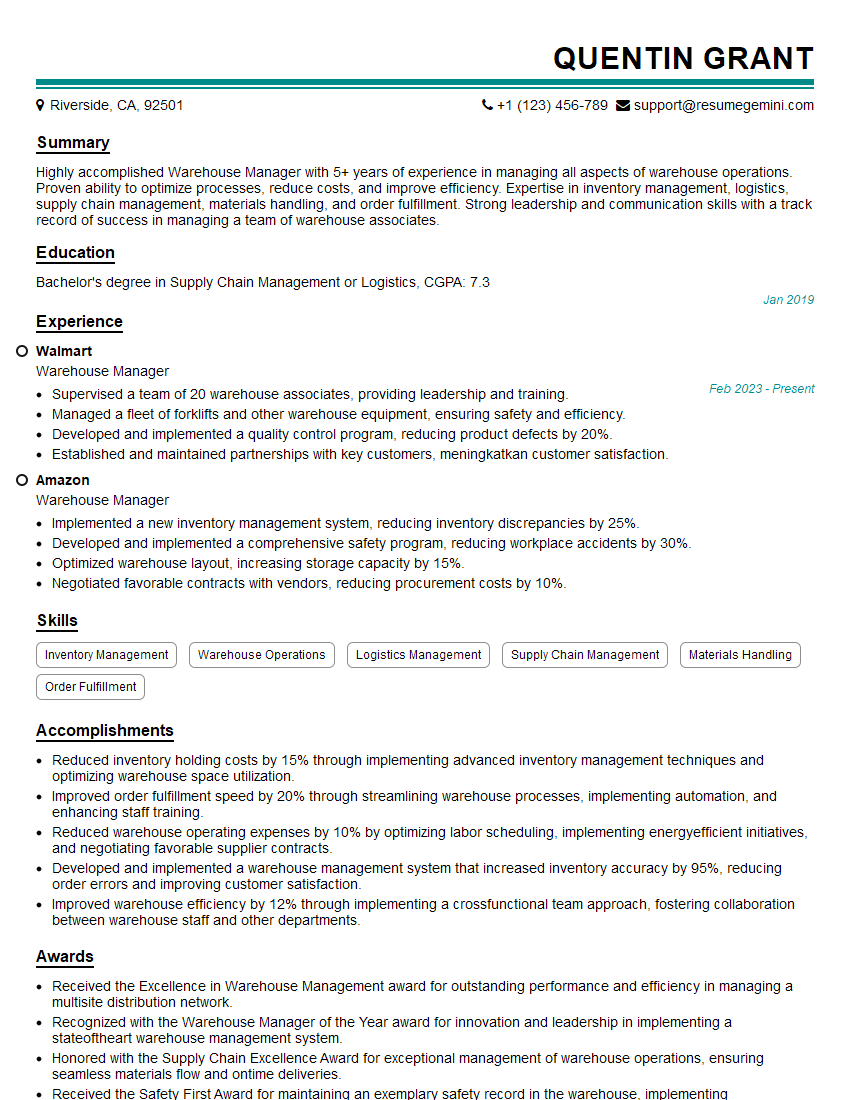
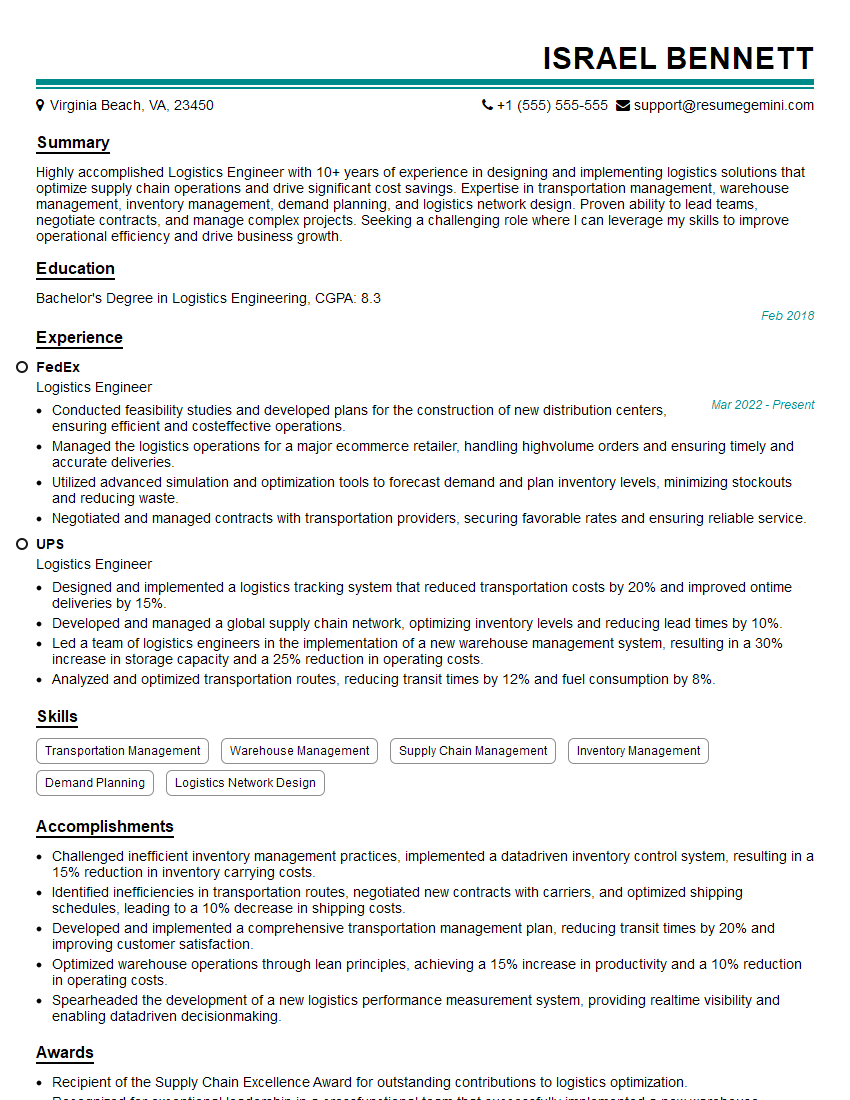
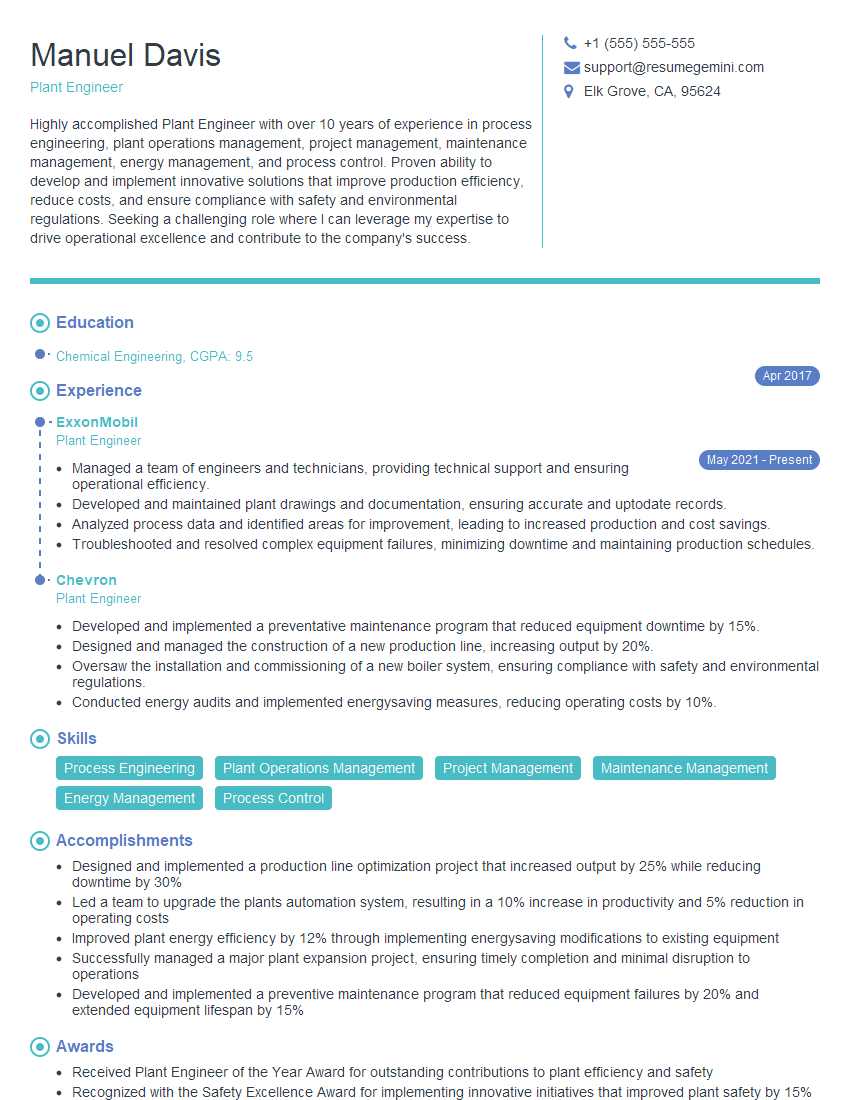
Mastering Material Handling and Conveyor Systems opens doors to exciting career opportunities in manufacturing, logistics, and distribution. A strong understanding of these systems is highly valued, leading to increased earning potential and career advancement. To maximize your job prospects, crafting an ATS-friendly resume is crucial. ResumeGemini can help you build a professional resume that highlights your skills and experience effectively, significantly increasing your chances of landing an interview. ResumeGemini provides examples of resumes tailored to the Material Handling and Conveyor Systems industry, giving you a head start in showcasing your qualifications.

Explore more articles
Users Rating of Our Blogs
Share Your Experience
We value your feedback! Please rate our content and share your thoughts (optional).
What Readers Say About Our Blog
Really detailed insights and content, thank you for writing this detailed article.
IT gave me an insight and words to use and be able to think of examples